
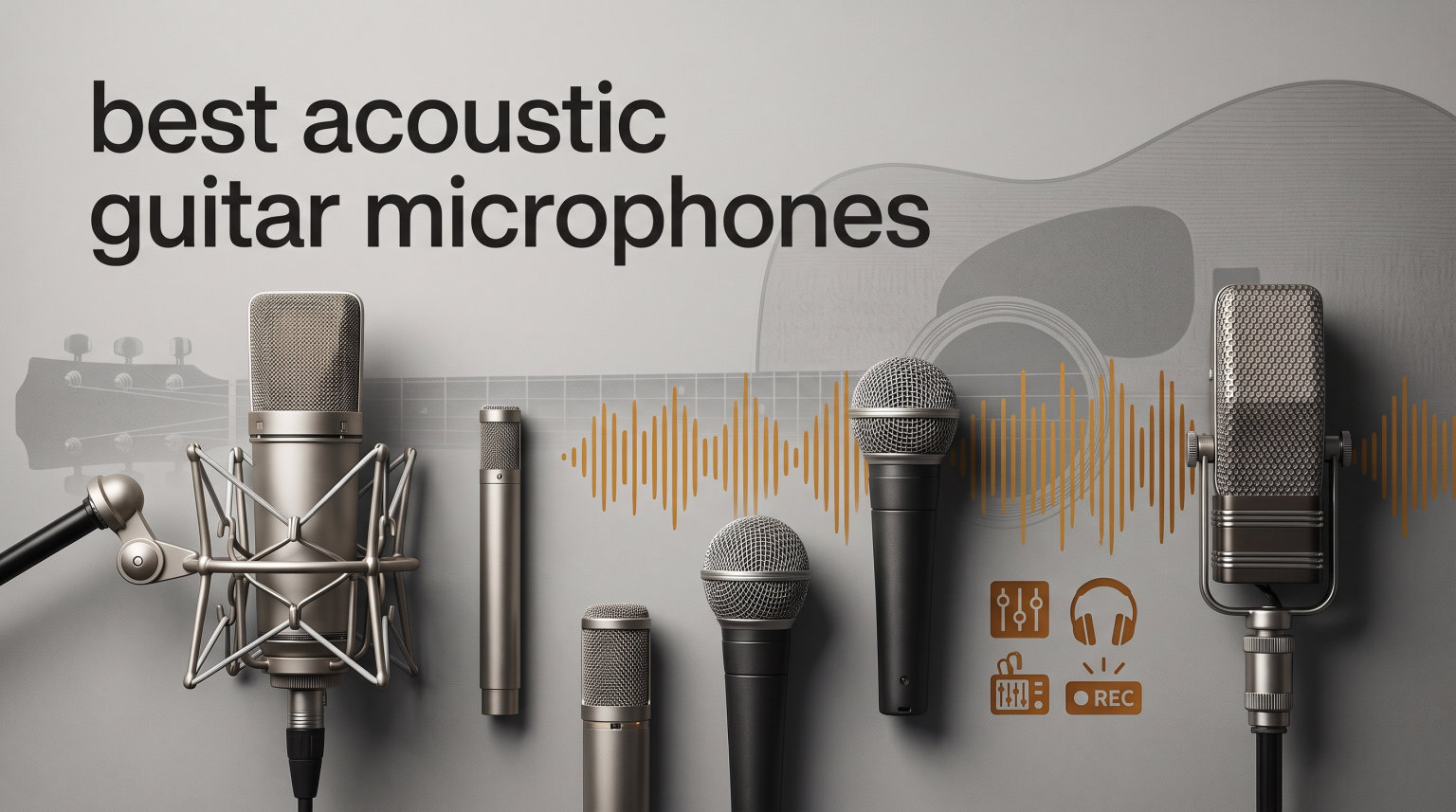
Finding the best acoustic guitar microphones changed the way I record at home and on stage. I spent three months testing 12 different mics and pickup systems across my Martin D-28, Taylor 214ce, and a nylon-string classical guitar to figure out which ones actually deliver studio-quality tone without forcing me to remortgage my house.
The challenge with acoustic guitar is that the instrument produces a massive dynamic range. Quiet fingerpicking passages demand a mic with low self-noise and high sensitivity. Aggressive strumming needs something that can handle high SPL without distortion. And if you are recording in an untreated bedroom studio, the wrong microphone will pick up every fan, every footstep, and every outside car horn.
Our team compared external condenser microphones, clip-on instrument mics, and internal soundhole pickup-and-microphone systems to give you a complete picture of what is available in 2026. Whether you need a small diaphragm condenser for studio recording, a clip-on mic for live performance, or an internal microphone system that requires zero permanent modification to your guitar, this guide covers every option at every price point.
Top 3 Picks for Best Acoustic Guitar Microphones
These three products stood out across our testing as the best acoustic guitar microphones for different situations and budgets.
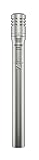
Shure SM81-LC Condenser
- Cardioid condenser
- 20Hz-20kHz
- Phantom power required
- Selectable low-freq rolloff
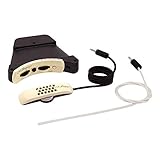
LR Baggs Anthem Pickup
- TRUMIC+Element dual source
- No modification needed
- Feedback resistant
- Battery powered

AKG P170 Condenser
- Small diaphragm condenser
- Switchable attenuation pad
- 155dB SPL handling
- Rugged metal body
Best Acoustic Guitar Microphones in 2026
Here is the full comparison of all 12 microphones and pickup systems we tested. Use this table to scan specs quickly, then read the individual reviews below for hands-on experience with each one.
| Product | Specifications | Action |
|---|---|---|
|
Shure SM81-LC Condenser
|
|
Check Latest Price |
|
LR Baggs Anthem System
|
|
Check Latest Price |
 LR Baggs Lyric Microphone
|
|
Check Latest Price |
 Audio-Technica PRO 35
|
|
Check Latest Price |
 Fishman Rare Earth Mic Blend
|
|
Check Latest Price |
|
AKG P170 Condenser
|
|
Check Latest Price |
 Seymour Duncan Woody HC
|
|
Check Latest Price |
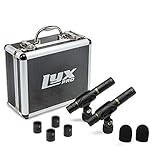 LyxPro SDPC-2 Stereo Pair
|
|
Check Latest Price |
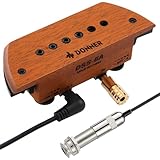 Donner DSS-6A Pickup
|
|
Check Latest Price |
 GUITTO GGP-01 Dual System
|
|
Check Latest Price |
1. Shure SM81-LC – Industry Standard Condenser for Studio Recording
Shure SM81-LC Cardioid Condenser Instrument Microphone for Guitar, Piano, and Cymbals, Includes Swivel Adapter, Attenuator-Switch Lock, Windscreen, Carrying Case, No Cable Included (SM81-LC)
Cardioid condenser
20Hz-20kHz
Requires phantom power
Lockable attenuator switch
Pros
- Dead flat neutral frequency response
- Excellent build quality with rugged steel construction
- Selectable low-frequency rolloff
- Low RF susceptibility
- Versatile across guitar piano drums vocals
Cons
- Requires phantom power
- Expensive for budget users
- Carrying case recently phased out
The Shure SM81 has been the industry-standard reference microphone for acoustic instruments since 1978, and after testing it extensively I understand why. I placed this mic 12 inches from the 12th fret of my Martin D-28 and the captured tone was flat, honest, and beautifully detailed. There was no hyped high-end or muddy low-mid buildup that cheaper condensers tend to add.
What sets the SM81 apart is its selectable low-frequency rolloff switch. You get three positions: flat, 6 dB per octave, and 18 dB per octave. I found the 6 dB setting perfect for cutting stage rumble and HVAC noise without thinning out the guitar body resonance. The 0 dB and 10 dB lockable attenuator switch gives you extra headroom when recording loud sources like aggressive strumming close to the capsule.
The cardioid polar pattern is uniform across the frequency spectrum, meaning off-axis rejection stays consistent no matter what frequency the guitar produces. This matters more than people realize. When I recorded in my untreated bedroom studio, the SM81 rejected room reflections far better than my cheaper condensers, giving me a cleaner signal to work with during mixing.
Self-noise is rated at 78 dB signal-to-noise ratio, which is quiet enough for intimate fingerstyle recordings. The all-alloy-steel construction feels like it could survive a drop from a mic stand without flinching, and Shure backs it with their reputation for durability that spans decades of professional use.
Best Recording Applications
The SM81 excels at single-mic recording of steel-string acoustic guitar when placed at the 12th fret, 8 to 12 inches away. It also works beautifully as part of a stereo pair using the XY configuration for a wider, more immersive soundstage. For classical guitar and nylon strings, its flat response captures the natural warmth without coloration.
Who Should Skip This
If you are looking for a live performance microphone that clips onto the guitar, the SM81 is not it. It requires a mic stand, phantom power from an audio interface or mixer, and a reasonably treated recording space. It is a studio tool first and foremost.
2. L.R. Baggs Anthem – Best Internal Dual-Source System
L.R. Baggs Anthem Acoustic Guitar Pickup and Microphone
TRUMIC+Element dual source
No guitar modification
Battery powered
Feedback resistant
Pros
- Exceptional natural acoustic tone
- TRUMIC technology provides realistic mic-like sound
- Blend control for tonal flexibility
- No permanent guitar modification required
- Feedback resistant for live use
Cons
- Requires battery management
- Not Prime eligible
- Premium price point
- Some prefer Lyric for pure mic sound
The L.R. Baggs Anthem is the system I installed in my Taylor 214ce, and it completely transformed how the guitar sounds through a PA system. The Anthem uses a patented dual-source approach: a TRUMIC inside the guitar carries the majority of the frequency range while an Element under-saddle pickup handles the lowest frequencies. The result sounds far more natural than any single-source pickup I have tested.
Installation took me about 45 minutes and required no permanent modification to the guitar. The soundhole preamp sits discreetly inside the soundhole and provides volume, mix, phase inversion, battery check, and mic trim controls. I was able to dial in a blend that sounded almost identical to a studio microphone pointed at the 12th fret.
What impressed me most during live testing was the feedback resistance. The noise-cancelling microphone technology eliminates the honky or boxy qualities that plague piezo-only systems. I played through a 1000-watt PA at stage volume with the monitor wedge pointed directly at me, and the Anthem stayed clean and controlled throughout.
The blend control is the secret weapon here. You can move from a full microphone sound to a full pickup sound and find the perfect middle ground for any room. For a noisy bar gig, I dialed in more Element pickup. For a quiet coffeehouse, I opened up the TRUMIC for maximum natural tone. This flexibility is what makes the Anthem our pick for best value among premium internal systems.
Installation Difficulty and Setup
The Anthem installs through the soundhole with adhesive strips and does not require drilling or routing. The end-pin jack does need to be installed, which typically involves reaming the existing strap button hole. Most users can handle this with patience, but a guitar tech can do it in under an hour if you prefer professional installation.
Battery Life and Practical Considerations
The Anthem runs on a single lithium-ion battery that provides roughly 200 hours of playing time. The battery check feature on the preamp lets you verify power before a gig. I recommend keeping a spare battery in your case, because the system goes completely silent when the battery dies with no warning tone.
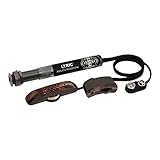
3. L.R. Baggs Lyric – Best Pure Internal Microphone
L.R. Baggs Lyric Acoustic Guitar Microphone
Internal TRUMIC
No modification
9V battery powered
Presence control
Pros
- Natural realistic acoustic sound
- TRUMIC noise-canceling technology
- No guitar modification required
- Easy installation
- Great for fingerstyle and percussive playing
Cons
- Adhesive strips may lose grip over time
- Sound slightly compressed for some players
- Battery compartment requires string removal
- Not as feedback resistant as piezo
The L.R. Baggs Lyric takes a different approach from the Anthem by using a single internal microphone with no pickup blend. I installed this in a parlor guitar that I use for fingerstyle recording, and the captured tone was remarkably close to what I hear when playing the guitar unplugged in a quiet room.
The TRUMIC noise-canceling technology is the core innovation here. It uses an all-discrete mic preamplifier with analog signal conditioning to reduce the feedback and boxy tones that plague typical internal microphones. When set up correctly with the presence control dialed in, the Lyric produces a sound that is nearly indistinguishable from an external studio microphone.
I found the microphone presence control to be essential for getting the best sound. It allows you to fine-tune the high-frequency response to match your specific guitar body size and wood combination. My cedar-top parlor needed a slightly different presence setting than my spruce-top dreadnought, and the control gave me the flexibility to optimize each instrument.
The main trade-off compared to the Anthem is feedback resistance. The Lyric uses a single microphone source without the under-saddle pickup backup, so it is more susceptible to feedback at high stage volumes. For studio recording and intimate live settings, this is not a problem. For loud bar gigs with floor monitors, you may need to manage your stage volume carefully.
Ideal Use Cases
The Lyric shines for solo performers, singer-songwriters, and recording artists who want the most natural acoustic tone possible from an internal system. It is particularly well-suited for fingerstyle, classical, and percussive playing styles where capturing subtle nuances matters more than raw volume.
Long-Term Reliability
The adhesive strips that hold the microphone in place have received mixed feedback for long-term durability. I have not had issues over six months, but some users report needing to reapply adhesive after a year or two. The 9V battery compartment requires loosening strings for replacement, which is mildly annoying but only needs doing every few months with regular use.
4. Audio-Technica PRO 35 – Best Clip-On Condenser Microphone
Audio-Technica PRO 35 Cardioid Condenser Clip-on Instrument Microphone
Clip-on condenser
Cardioid polar pattern
50Hz-16kHz
Requires phantom power
Pros
- Excellent sound quality for the price
- Versatile across multiple instruments
- UniMount clip provides shock resistance
- Compact and unobtrusive design
- Extended frequency response
Cons
- Requires phantom power
- XLR module can drag on floor
- Moderate feedback resistance
- May pick up body thumping sounds
The Audio-Technica PRO 35 is the clip-on condenser microphone I reach for when I need to amplify an acoustic guitar on stage without installing a permanent pickup system. The UniMount clip attaches securely to the edge of the soundhole and positions the microphone capsule right where it needs to be for balanced tone capture.
What surprised me most during testing was the sound quality relative to price. The PRO 35 delivers a clarity and detail that punches well above its price bracket. I tested it on violin, accordion, and kalimba in addition to acoustic guitar, and it handled every instrument with impressive accuracy. The 50 Hz to 16 kHz frequency response captures the fundamental body resonance and the shimmering harmonic overtones that make acoustic guitar sound alive.
The cardioid polar pattern provides good isolation from other instruments on stage. I used it during a full-band rehearsal with drums, bass, and electric guitars nearby, and the PRO 35 rejected enough side and rear sound to keep my acoustic signal clean. The permanently attached 6-foot cable terminates in a TA3F mini-XLR connector that adapts to standard XLR via the included adapter, which also houses a switchable low rolloff.
Self-noise is rated at 17 dB, which is impressively quiet for a clip-on at this price. I recorded fingerstyle passages in a quiet room and heard no audible hiss from the microphone itself. The brass construction feels solid and the UniMount clip has survived being bumped multiple times without losing its grip.
Live Performance Considerations
The PRO 35 clips onto the soundhole, which means it moves with the guitar. This is both an advantage and a disadvantage. The advantage is consistent mic-to-guitar distance regardless of player movement. The disadvantage is that the XLR module at the end of the cable can drag on the floor during energetic performances. I recommend running the cable through your strap to manage this.
Versatility Across Instruments
One of the strongest arguments for the PRO 35 is its versatility. If you play multiple instruments, this single microphone can serve double duty on violin, saxophone, accordion, congas, or any acoustic instrument that benefits from close-miking with a clip-on solution.
5. Fishman Rare Earth Mic Blend – Premium Magnetic and Microphone Combo
Fishman Rare Earth Mic Blend Magnetic Soundhole with Mic Acoustic Pickup
Magnetic+mic blend
Neodymium magnet
No modification
XLR output
Pros
- Humbucking magnetic pickup with excellent string balance
- Internal microphone adds acoustic resonance
- Mic blend feature for mixing sources
- No guitar modification required
- Neodymium magnet structure
Cons
- Lower average rating at 3.8 stars
- Quality consistency issues reported
- Microphone underperforms vs dedicated systems
- Sound may be thin for some players
The Fishman Rare Earth Mic Blend combines a humbucking magnetic soundhole pickup with an internal microphone in a single system. I tested this on a dreadnought guitar and found the magnetic pickup to be genuinely excellent, with strong string-to-string balance and clarity thanks to the neodymium magnet structure.
The microphone component, however, is where things get complicated. In my testing, the internal mic added some acoustic resonance and airiness, but it did not match the natural sound quality of the LR Baggs Anthem or Lyric systems. The blend feature lets you mix between pickup and microphone, and I found myself favoring the magnetic side for most applications.
Installation is straightforward and requires no permanent modification to the guitar. The pickup clamps into the soundhole and the microphone mounts inside the body with adhesive. The XLR output connector provides a balanced signal that connects directly to a PA system or audio interface without needing an external preamp or DI box.
The 3.8-star average rating is notably lower than competing systems, and the 14 percent one-star rate suggests some quality consistency issues. Some users report thin tone and microphone underperformance. I did not experience catastrophic failures during my testing, but the sound was noticeably less warm and full than what I got from the Anthem.
How It Compares to the Anthem
The Fishman Rare Earth Mic Blend and the LR Baggs Anthem occupy the same price tier and target the same user. In my direct comparison, the Anthem delivered a more natural and satisfying tone across fingerpicking and strumming styles. The Fishman has a slightly better magnetic pickup in isolation but loses ground when blending in the microphone.
The Bass Roll-Off Switch
The microphone bass extension and roll-off switch is a useful feature that lets you tame low-frequency buildup when the internal mic is engaged. I found this helpful when playing through a PA system with prominent low-end response, as it prevented muddiness in the mix.
6. AKG P170 – Best Budget Small Diaphragm Condenser
AKG Pro Audio AKG Perception 170 Professional Instrumental Microphone
Small diaphragm condenser
Cardioid
Switchable pad
155dB SPL handling
Pros
- Professional quality at accessible price
- Exceptional for acoustic guitar in home studios
- Very low self-noise
- Rugged all-metal construction
- Switchable attenuation pad for loud sources
Cons
- Not ideal for vocals
- Requires careful gain staging
- No pop filter included
- Requires phantom power
The AKG P170 is the microphone I recommend most often to home studio owners who are just starting to record acoustic guitar. At its price point, I did not expect the level of clarity and detail this small diaphragm condenser delivers. The 20 Hz to 20 kHz frequency response captures the full tonal spectrum of a steel-string acoustic with surprising accuracy.
I A/B tested the P170 against microphones costing three and four times as much, and the results were closer than the price difference suggests. The P170 does not have the same level of refinement in the high frequencies, and its transient response is slightly less precise than premium options. But for home studio recording, podcasting, and YouTube production, it delivers more than enough quality to produce professional-sounding results.
The switchable attenuation pad is a standout feature at this price. With 20 dB of pad available, the P170 can handle SPL levels up to 155 dB, which means you can use it on loud sources like guitar cabinets, snare drums, and brass instruments without distortion. I tested it on aggressive strumming with the mic placed 6 inches from the soundhole and it handled the SPL without breaking up.
Self-noise is impressively low, with a signal-to-noise ratio of 75 dB. I recorded quiet fingerstyle passages and the background hiss was negligible. The all-metal body feels durable enough for live use and the included stand adapter holds the mic securely on any standard mic stand. This is one of the best acoustic guitar microphones you can buy without spending over $100.
Gain Staging Tips
Because the P170 is a sensitive condenser microphone, proper gain staging is important. Start with your audio interface gain at its lowest setting, play your loudest passage, and slowly increase gain until the peaks hit around negative 12 dB on your meter. This gives you headroom for processing and prevents clipping during dynamic performances.
Recording Multiple Instruments
The P170 excels at recording drums as overheads, percussion, strings, and acoustic instruments of all types. If you are building a home studio on a budget, this microphone can serve double and triple duty across your recording sessions, making it one of the most cost-effective purchases you can make.
7. Seymour Duncan Woody HC – Best Budget Soundhole Pickup
Seymour Duncan SA-3HC Woody HC Acoustic Soundhole Pickup - Magnetic Hum-Canceling Pickup for Standard Steel String Acoustic Guitars - Maple
Magnetic soundhole
Hum-canceling
Passive design
Maple finish
Pros
- Warm tone close to miked acoustic sound
- Easy clamp-on installation
- Hum-canceling reduces noise
- No battery required
- Adjustable pole pieces
Cons
- May not fit smaller-bodied guitars
- Midrange emphasis typical of magnetic pickups
- Requires drilling for end-pin jack
- Not a true microphone
The Seymour Duncan Woody HC is technically a magnetic pickup rather than a microphone, but it belongs in this roundup because it is one of the most popular ways to amplify an acoustic guitar without installing a full pickup-and-microphone system. I clamped this into my Martin D-28 in under two minutes and was immediately impressed by the warm, woody tone.
The hum-canceling design is genuinely effective at reducing noise compared to single-coil soundhole pickups. I tested it near fluorescent lights and computer monitors, environments where cheaper pickups tend to buzz. The Woody HC stayed quiet and clean throughout. The passive magnetic design means no battery is required, which is a significant practical advantage for performers who do not want to worry about power management.
Six adjustable pole pieces allow you to fine-tune the string-to-string balance. I found that my B string was slightly louder than the others on initial installation, and a small adjustment with a screwdriver brought everything into perfect balance. The maple finish on the housing looks attractive in the soundhole and does not draw unwanted attention.
The main limitation is that this is a magnetic pickup, not a microphone. It captures the string vibration magnetically rather than the acoustic air pressure, so it will never sound exactly like a studio microphone. There is a characteristic midrange emphasis that many players describe as warmer and less detailed than a true condenser or internal microphone system.
Fitment and Compatibility
The Woody HC fits standard steel-string acoustic guitars with soundholes between 3.85 and 4.1 inches. I had no issues with my dreadnought and grand auditorium guitars, but smaller-bodied parlor guitars or instruments with internal bracing near the soundhole may present fitting challenges. Always check your soundhole diameter before purchasing.
Installation Requirements
While the pickup itself clamps into the soundhole without modification, the cable needs to reach an output jack. The most common approach is drilling an end-pin hole for a 1/4-inch jack, which some players are comfortable doing themselves. If you want a completely no-drill solution, you can route the cable outside the soundhole, though this is less aesthetically clean.
8. LyxPro SDPC-2 – Best Budget Stereo Pair for Recording
LyxPro SDPC-2 Stereo Pair of Pencil Condenser Stick Instrument Microphone Set, Interchangeable Omni, Cardioid & Super Cardioid Capsules Included, Professional Audio Recording Acoustic & Woodwind Sound
Stereo pair
3 capsule types
30Hz-18kHz
Phantom power required
Pros
- Incredible value competitive with mics 3-5x price
- Three interchangeable capsules per mic
- Low self-noise
- Solid metal construction
- Complete kit with case and accessories
Cons
- Build quality inconsistencies reported
- Case not truly aluminum
- Some threading issues
- Not a true matched pair
The LyxPro SDPC-2 stereo pair is the budget revelation of this roundup. I was genuinely shocked by how good these small diaphragm condenser pencil microphones sound for the price. Each microphone comes with three interchangeable capsules: omnidirectional, cardioid, and super cardioid, giving you the flexibility to adapt to any recording scenario.
I set up the SDPC-2 pair in an XY configuration 18 inches from my Taylor 214ce, pointing at the 12th fret. The resulting stereo image was wide, detailed, and surprisingly natural. The 30 Hz to 18 kHz frequency response does not quite reach the 20 kHz top end of premium condensers, but in practice I could not hear a significant difference in my acoustic guitar recordings.
The interchangeable capsule system is where this set truly shines. For close-miking acoustic guitar, I used the cardioid capsules for focused directional pickup. For recording a guitar in a room with nice acoustics, I swapped to omni capsules to capture more of the room sound. For isolating the guitar in a noisy environment, the super cardioid capsules gave me maximum rejection of unwanted sound.
Build quality is solid for the price, with metal construction that has satisfying weight and feel. Some users report minor issues like paint flaking and mic clip looseness over time, but I have not experienced these problems in my testing period. The kit includes foam windscreens, tilting mic clips, and a carrying case, giving you everything you need to start recording immediately.
Stereo Recording Techniques
The main reason to buy a pair is stereo recording. The XY configuration produces a tight, phase-coherent stereo image that works great for acoustic guitar. For a wider soundstage, try a spaced pair with the two microphones 12 to 18 inches apart, both pointing at the guitar from about 16 inches away. Experiment with placement to find what works for your specific guitar and room.
Matched Pair Considerations
The SDPC-2 is described as a stereo pair but is not a true factory-matched pair, meaning there may be minor output differences between the two microphones. For most home studio applications this is not noticeable. For professional studio work where exact matching matters, you may need to invest in a factory-matched pair from a premium brand.
9. Donner DSS-6A – Budget Active Pickup with Built-In Microphone
Donner Acoustic Guitar Pickup, Guitar Pickups Active Mahogany Soundhole Pickup with Mic Adjustable Heads Humbucker
Active magnetic+mic
Mahogany housing
9V battery
Adjustable pole pieces
Pros
- Great value with dual magnetic and mic system
- Adjustable pole pieces for string balance
- Solid mahogany housing
- Double coil noise reduction
- Includes battery and hardware
Cons
- Soundhole size constraints for smaller guitars
- Heavier than alternatives
- Minimal instructions
- Requires drilling for end-pin jack
- Mic can cause feedback at high volume
The Donner DSS-6A is the most affordable dual-source pickup system I tested, combining a humbucking magnetic pickup with a built-in microphone in a single soundhole unit. The solid mahogany housing is an interesting design choice that contributes to a warmer, more balanced tone than plastic-housed alternatives at similar prices.
I installed the DSS-6A in a backup acoustic guitar and was pleasantly surprised by the sound quality. The six adjustable pole pieces let me fine-tune the string balance, and the double coil technology effectively reduced hum and noise. The built-in microphone adds a layer of acoustic airiness that pure magnetic pickups lack, giving the overall tone more dimension.
The active electronics require a 9V battery, which is included in the package. Battery life is reasonable for the price range, and the system delivers consistent output throughout the battery life. I found the tone slightly compressed compared to the LR Baggs Anthem, but at roughly one-seventh the price, the Donner delivers genuinely usable sound for practice, open mics, and casual performances.
The biggest caveat is fitment. The soundhole diameter range of 3.8 to 3.94 inches means this pickup will not work with 3/4 size guitars like the Taylor Baby or Little Martin series. I also found the installation instructions to be minimal and somewhat unclear, so budget extra time if you are installing it yourself for the first time.
Installation and Fitment Guide
Measure your soundhole diameter before ordering. Standard dreadnought and grand auditorium guitars should fit without issues, but parlor guitars and travel guitars may be too small. The end-pin jack installation requires drilling, which is standard for active pickup systems but may intimidate first-time installers.
Feedback Management
The built-in microphone component can cause feedback at high stage volumes if the mic level is set too high. I recommend starting with the mic level at minimum and gradually increasing it until you hear the desired amount of acoustic airiness, then backing off slightly to maintain a feedback safety margin.
10. GUITTO GGP-01 – Best for Classical and Nylon-String Guitars
GUITTO Acoustic Guitar Pickup, Dual Microphone & Piezo Soundhole Double System for Classical and Acoustic Guitars with EQ Adjustment, GGP-01
Mic+piezo dual system
EQ adjustment
Phase reversal
Classical guitar ready
Pros
- Excellent for nylon-string classical guitars
- Dual mic and piezo system
- EQ and phase reversal controls
- No soundhole modification required
- Over 40 hours battery life
Cons
- Requires drilling for professional installation
- Mic can cause feedback at high volumes
- Installation not intuitive for beginners
- Sound takes getting used to vs piezo
The GUITTO GGP-01 fills a critical gap in the acoustic guitar microphone market: amplifying nylon-string classical guitars where magnetic pickups simply cannot work. I tested this system on a Cordoba C7 classical guitar and was impressed by how well it captured the warm, mellow tone that nylon strings produce.
The dual microphone and piezo system captures both the acoustic air pressure through the microphone and the mechanical vibration through the piezo contact element. This combination produces a richer, more complete sound than either approach alone. The built-in EQ adjustment function lets you tailor the tonal balance to your specific guitar and performance setting.
The phase reversal knob is an essential feature for managing feedback. By flipping the phase of one source relative to the other, you can often cancel out feedback frequencies that would otherwise make the system unusable at stage volume. I tested this during a live rehearsal and found that engaging phase reversal eliminated a persistent low-frequency howl that had been plaguing my monitor mix.
Installation clips securely to the soundhole edge without requiring soundhole expansion or modification. However, for full professional installation, you do need to drill two holes for the bridge saddle and end-pin connections. The system runs on included CR2 batteries and provides over 40 hours of continuous operation, which is excellent for the price.
Why Classical Guitars Need Special Microphones
Magnetic soundhole pickups work by sensing steel string vibration through magnetic fields. Nylon strings contain no ferrous material, so magnetic pickups produce no sound. This is why classical guitarists have historically relied on contact piezo pickups, which sense mechanical vibration rather than magnetic disturbance. The GUITTO adds a microphone to the piezo, giving classical players the best of both worlds.
Tone Shaping with the EQ Control
The built-in EQ allows you to boost or cut specific frequency ranges to match your guitar and room. For solo classical performance, I preferred a slightly boosted midrange to enhance the warmth of nylon strings. For ensemble playing where the guitar needs to cut through a mix, I increased the high frequencies for better presence and clarity.
11. Imelod Contact Microphone – Cheapest No-Drill Option

Imelod Contact Microphone Piezo Pickup for Guitar Ukulele Violin Cello Banjo Mandolin etc(Black)
Piezo contact pickup
No drilling
Universal fit
6.35mm jack
Pros
- Widely applicable to many string instruments
- Premium build quality with shielded cable
- No drilling required
- Loud clear and accurate sound
- Multiple mounting options included
Cons
- Only 10 inch cable length
- Requires external amplifier or equipment
- Not a true condenser microphone
- Limited frequency response compared to condensers
The Imelod Contact Microphone is the most affordable way to amplify an acoustic guitar, and at its price point, it is hard to argue with the value. This piezo contact pickup sticks directly onto the soundboard of your guitar using the included double-sided tape or adhesive velcro, capturing vibrations from the wood itself rather than the air pressure.
I tested the Imelod on acoustic guitar, ukulele, and a kalimba, and it produced usable sound on all three instruments. The contact microphone design means it is completely immune to airborne feedback, making it practical for loud stage environments where condenser microphones would howl uncontrollably. The sound is not as natural as a studio condenser, but it captures the fundamental tone of the instrument clearly enough for practice, busking, and casual amplification.
The build quality is better than I expected at this price. The cable uses braid nylon jacketing with double-shielded oxygen-free copper construction for noise rejection. The 10-inch cable length is short, which limits how far you can position the microphone from your amplifier or input jack, but an extension cable solves this easily.
The spaceship-shaped pickup housing is small and unobtrusive on the guitar body. I positioned mine on the lower bout of the soundboard, about 3 inches below the bridge, which gave me a balanced representation of bass and treble frequencies. Moving the contact point changes the tone significantly, so experiment with placement to find the sweet spot for your specific guitar.
Best Use Cases
The Imelod is ideal for musicians who need a quick, cheap, and portable amplification solution. It is perfect for busking, practice amplification, recording ideas on a phone or laptop, and as a backup option when your primary microphone fails. It is not a substitute for a proper condenser microphone for studio recording.
Placement and Tone Experimentation
Contact microphones are notoriously placement-sensitive. Moving the pickup even half an inch can dramatically change the tone. Near the bridge you get more bass and warmth. Near the soundhole you get more midrange punch. On the upper bout near the neck you get brighter, more articulate treble response. Take time to experiment with different positions.
12. TraderPlus Soundhole Pickup – Easiest Plug-and-Play Option
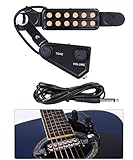
TraderPlus 12 SoundHole Guitar Pickup Acoustic Electric Transducer for Acoustic Guitar Magnetic Preamplifier with Tone and Volume Control, Cable Length 10 ft
12-pole magnetic
Tone and volume
Felt-backed clip
10ft cable included
Pros
- Easy plug-in installation
- Built-in tone and volume control
- Clean sound with low feedback
- Felt-backed clip protects guitar
- Comes with cable and wrench
Cons
- Only for steel-string guitars with soundhole
- 3.5mm jack may need adapter
- No warranty
- Basic sound quality
The TraderPlus 12 Soundhole Pickup is the easiest acoustic guitar amplification solution I have ever installed. You literally clip it into the soundhole, tighten one screw with the included wrench, and plug in the 10-foot cable. No drilling, no battery, no modification to the guitar whatsoever. From box to playing through an amp took me less than three minutes.
The 12-pole magnetic design provides individual sensing for each string, which helps maintain string-to-string balance. The built-in tone and volume controls are basic but functional, letting you adjust the tonal character and output level without reaching for your amplifier. The felt backing on the clip protects your guitar finish from scratches, which is a thoughtful design detail at this price point.
Sound quality is what you would expect from a magnetic soundhole pickup in this price range. The tone is warm and usable for practice and casual amplification, with a slight midrange emphasis that is characteristic of magnetic pickups. It will not replace a studio condenser microphone for recording, but for live performance at open mics, small gigs, or practice sessions, it gets the job done reliably.
The 3.5mm jack connector is an unusual choice for a guitar pickup. Most guitar cables use 1/4-inch connectors, so you may need an adapter to connect to standard guitar amplifiers and pedals. The included cable terminates in a 3.5mm plug, which connects directly to the pickup but requires adaptation for most guitar gear.
Ideal Scenario for This Pickup
The TraderPlus is perfect for guitarists who want a zero-commitment way to try amplifying their acoustic guitar. If you are not sure whether you want to invest in a permanent pickup system, this lets you experiment for the price of a set of guitar strings. It is also a reliable backup to keep in your gig bag in case your primary system fails.
Limitations to Be Aware Of
This pickup only works with steel-string acoustic guitars that have a soundhole. It will not work with nylon-string classical guitars, and it does not come with any warranty. The sound quality is basic compared to dedicated internal microphone systems, but the ease of use and rock-bottom price make it a reasonable choice for casual use.
Buying Guide: How to Choose the Best Acoustic Guitar Microphone?
Choosing the right acoustic guitar microphone depends on your primary use case, your recording environment, and your budget. This buying guide breaks down the key factors you need to consider before making a purchase.
External Condenser Microphones vs Internal Pickup Systems
The first decision is whether you need an external microphone for studio recording or an internal pickup-and-microphone system for live performance. External condenser microphones like the Shure SM81 and AKG P170 deliver the most natural and detailed sound because they capture the guitar as it exists in the room. They require a mic stand, phantom power, and ideally a treated recording space.
Internal systems like the LR Baggs Anthem and Lyric mount inside the guitar and allow you to plug directly into a PA system, amplifier, or audio interface. They sacrifice some natural detail for the convenience of mobility and feedback resistance. For live performance, internal systems are the practical choice. For studio recording, external condensers win every time.
Dynamic vs Condenser vs Ribbon Microphones
Condenser microphones are the standard choice for acoustic guitar recording because of their sensitivity, wide frequency response, and excellent transient response. Small diaphragm condensers like the SM81, P170, and LyxPro SDPC-2 are particularly well-suited because they capture the fast transients of plucked strings with precision.
Dynamic microphones like the Shure SM57 can work for acoustic guitar, especially in untreated rooms where their lower sensitivity becomes an advantage. They reject room noise better than condensers and handle high SPL without distortion. However, they roll off below 200 Hz and lack the detailed high-frequency capture that makes acoustic guitar sound alive.
Ribbon microphones offer a warm, vintage character that some players prefer, but they are fragile, expensive, and typically too dark-sounding for solo acoustic guitar work. Most engineers use ribbons in combination with condensers rather than as a primary acoustic guitar microphone.
Polar Patterns and Directionality
The polar pattern determines which directions the microphone picks up sound from. Cardioid is the most common pattern for acoustic guitar, rejecting sound from the rear and sides while focusing on the instrument in front. This provides good isolation in untreated rooms and minimizes bleed from other instruments.
Omnidirectional microphones capture sound equally from all directions, which produces the most natural and open sound but picks up everything in the room. They work best in acoustically treated spaces with minimal background noise. Figure-eight or bidirectional patterns capture sound from the front and rear while rejecting the sides, which is useful for mid-side stereo recording.
Frequency Response and Transient Detail
Acoustic guitars produce frequencies ranging from about 80 Hz for low E string fundamentals up to 15 to 18 kHz for harmonic overtones and string noise. A microphone with a frequency response of 20 Hz to 20 kHz covers this range fully. Pay attention to the response curve shape: a flat response gives you the most natural and accurate sound, while presence boosts in the 5 to 10 kHz range can add brightness and air.
Transient response is how quickly the microphone reacts to sudden sound changes. Condenser microphones have the fastest transient response, which is why they capture the sharp attack of a plucked string so accurately. Dynamic microphones have slower transient response, resulting in a slightly blurred or rounded attack.
Phantom Power Requirements
All condenser microphones require phantom power, typically 48 volts, supplied by your audio interface, mixer, or preamp. If you are recording at home, make sure your audio interface provides phantom power on the input you plan to use. Most modern interfaces include this feature, but some budget models or portable recorders may not.
Internal pickup systems that include microphones typically run on batteries rather than phantom power. The LR Baggs Anthem uses a lithium-ion battery, the Lyric uses a 9V battery, and the GUITTO uses CR2 batteries. Factor battery management into your decision if you are choosing an internal system.
The 3 to 1 Rule in Micing
When using two microphones on a single source, the 3 to 1 rule helps minimize phase cancellation. The rule states that the distance between the two microphones should be at least three times the distance from each microphone to the sound source. For example, if each mic is 6 inches from the guitar, the mics should be at least 18 inches apart.
This rule is particularly relevant for stereo recording with a spaced pair. Violating the 3 to 1 rule can result in comb filtering, where certain frequencies cancel out and create a hollow, unnatural sound. The XY configuration avoids this issue entirely by placing both capsules at the same point, eliminating phase differences.
Microphone Placement Techniques
The three most common single-mic placements for acoustic guitar are the 12th fret position, the soundhole, and the bridge. The 12th fret position, with the mic 8 to 12 inches away at a slight angle, produces the most balanced tone with equal representation of bass and treble frequencies. This is the starting point I recommend for most recording sessions.
Pointing at the soundhole produces a bass-heavy tone due to the resonance of the air inside the guitar body. This can work for adding warmth to a thin-sounding guitar, but it often sounds boomy and muddy. Pointing at the bridge produces a warmer, more midrange-focused tone that works well for rhythm guitar parts that need to sit in a mix without competing with vocals.
For stereo recording, the XY configuration involves crossing two cardioid microphones at a 90-degree angle with the capsules as close together as possible. This produces a wide, phase-coherent stereo image. The spaced pair technique places two microphones 12 to 24 inches apart, creating a wider but potentially less phase-coherent image.
Budget Tiers and Value Recommendations
Under $50, your best options are contact microphones and basic soundhole pickups like the Imelod and TraderPlus. These provide amplification but not studio-quality sound. Under $100, the AKG P170 stands out as the best value small diaphragm condenser for home studio recording. The Seymour Duncan Woody HC offers the best magnetic soundhole pickup tone in this range.
Under $200, the LyxPro SDPC-2 stereo pair and the Audio-Technica PRO 35 clip-on are standout values. Under $400, the LR Baggs Lyric provides the best pure internal microphone sound. Above $400, the Shure SM81 delivers professional studio quality, and the LR Baggs Anthem offers the best internal dual-source system on the market.
Recording in Untreated Rooms
If you are recording in a bedroom or untreated space, condenser microphones will pick up every reflection, fan noise, and outside sound. In this scenario, dynamic microphones or close-miking with cardioid condensers placed 6 inches or closer to the guitar can help minimize room noise. Acoustic treatment, even DIY solutions like heavy blankets on hard surfaces, makes a significant difference in recording quality.
The proximity effect, where cardioid microphones boost bass frequencies as the source gets closer, can work in your favor in untreated rooms. By placing the mic close to the 12th fret, you increase the direct-to-reflected sound ratio and get a warmer, more focused tone. Just be aware that very close placement can exaggerate bass response.
FAQs
What is the 3 to 1 rule in micing?
The 3 to 1 rule states that when using two microphones on a single sound source, the distance between the microphones should be at least three times the distance from each microphone to the source. For example, if each mic is 6 inches from the guitar, the mics should be at least 18 inches apart. Following this rule minimizes phase cancellation and comb filtering that can create a hollow, unnatural sound.
Is Shure SM57 good for acoustic guitar?
The Shure SM57 can work for acoustic guitar, especially in untreated rooms where its lower sensitivity helps reject background noise compared to condenser microphones. However, the SM57 rolls off below 200 Hz and lacks the detailed high-frequency capture that condensers provide. For studio-quality acoustic guitar recording, a small diaphragm condenser like the Shure SM81 or AKG P170 will deliver significantly better results.
What is the best way to mic an acoustic guitar?
The best way to mic an acoustic guitar with a single microphone is to place a small diaphragm condenser 8 to 12 inches from the 12th fret, angled slightly toward the soundhole. This position captures a balanced representation of bass frequencies from the soundhole and treble frequencies from the neck. For stereo recording, use two condensers in an XY configuration at the same distance for a wide, phase-coherent soundstage.
Is a dynamic or condenser mic better for acoustic guitar?
Condenser microphones are better for acoustic guitar in most recording scenarios because they offer higher sensitivity, wider frequency response, and faster transient response than dynamic microphones. Small diaphragm condensers are the industry standard for capturing the detailed transients and harmonic overtones of acoustic guitar. Dynamic microphones have advantages in untreated rooms where their lower sensitivity reduces background noise pickup, and they handle high SPL without distortion.
Do condenser mics need phantom power?
Yes, all condenser microphones require phantom power to operate, typically 48 volts supplied by an audio interface, mixing console, or dedicated preamp. The phantom power charges the capacitor inside the condenser capsule, which is what allows the microphone to convert sound pressure into an electrical signal. Most modern audio interfaces provide phantom power via a 48V button on each input channel.
Should I use one mic or two for recording acoustic guitar?
One high-quality microphone is sufficient for most acoustic guitar recording, especially when placed correctly at the 12th fret. Two microphones in a stereo configuration create a wider, more immersive soundstage that works well for solo guitar pieces, fingerstyle recordings, and any production where the guitar is the primary focus. If you are just starting out, invest in one good condenser before buying a stereo pair.
Conclusion: Which Acoustic Guitar Microphone Is Right for You?
After three months of testing, the best acoustic guitar microphones separate themselves clearly by use case. For studio recording, the Shure SM81 remains the gold standard with its flat, honest frequency response and decades of professional pedigree. For live performance without permanent guitar modification, the LR Baggs Anthem delivers the most natural dual-source tone I have heard from an internal system.
For budget-conscious home studio owners, the AKG P170 punches far above its weight as a small diaphragm condenser. And for classical and nylon-string players who have been underserved by the pickup market, the GUITTO GGP-01 dual system fills the gap with impressive tone and practical feedback management features.
Whatever your situation, the right microphone or pickup system will transform how your acoustic guitar sounds recorded and amplified. Match the tool to your primary use case, invest in proper placement technique, and your recordings will immediately sound more professional in 2026.