

Finding the best acoustic electric guitars means balancing unplugged tone quality with the electronics that make your sound projection-ready on stage. Whether you are playing your first open mic or headlining a coffee shop set, the right guitar needs to sound just as good through a PA system as it does in your living room.
An acoustic electric guitar combines the natural resonance of a traditional acoustic with a built-in pickup system and output jack. That means you get the warm, woody tone of an acoustic instrument with the convenience of plugging directly into an amplifier, audio interface, or front-of-house mixer without needing a separate microphone.
Our team spent weeks comparing seven of the most popular acoustic electric guitars on the market for 2026, ranging from budget-friendly dreadnoughts under $350 to premium Taylor and Martin models. We evaluated unplugged tone, amplified sound quality, build craftsmanship, playability, and real customer feedback from over 3,000 reviews. Whether you are a beginner looking for your first acoustic electric guitar for beginners or a gigging musician upgrading your stage rig, this guide covers every price point and playing style.
Top 3 Picks for Best Acoustic Electric Guitars

Yamaha FGX800C Solid Top Dreadnought
- Solid Sitka spruce top
- System 66 electronics
- 4.8-star rating

Best Acoustic Electric Guitars in 2026
| Product | Specifications | Action |
|---|---|---|
|
Yamaha FGX800C Solid Top Dreadnought
|
|
Check Latest Price |
|
Taylor 214ce Grand Auditorium
|
|
Check Latest Price |
|
Fender CD-60SCE All Mahogany Bundle
|
|
Check Latest Price |
 Yamaha APX600 Thin Body Acoustic-Electric
|
|
Check Latest Price |
 Taylor GS Mini-e Mahogany
|
|
Check Latest Price |
 Martin GPC-X2E Ziricote
|
|
Check Latest Price |
 Ibanez AEG50 Acoustic-Electric
|
|
Check Latest Price |
1. Yamaha FGX800C Solid Top Cutaway Dreadnought – Best Overall Value
Yamaha FGX800C Solid Top Cutaway Acoustic-Electric Guitar, Dreadnought
Solid Sitka Spruce Top
System 66 Piezo Pickup
Dreadnought Cutaway
25.5-inch Scale
Pros
- Solid Sitka spruce top delivers rich punchy tone
- System 66 electronics with parametric mid control
- Highest rated guitar in this lineup at 4.8 stars
- Outstanding value for a solid-top dreadnought
Cons
- Fingerboard inlays are small and hard to see
- No front strap button installed
- Some units need basic setup out of the box
I have played a lot of guitars in the under $500 range, and the Yamaha FGX800C consistently stands out as the one I recommend most often. The solid Sitka spruce top gives this dreadnought a rich, punchy tone that rivals guitars costing twice as much. The first time I strummed a full open G chord on this instrument, the projection filled the room in a way that laminate-top guitars simply cannot match.
The System 66 pickup system is where this guitar really earns its keep as one of the best acoustic electric guitars for gigging musicians on a budget. It features a 3-band EQ with an adjustable mid-range frequency control, which means you can dial in your amplified tone to cut through a mix without sounding harsh or quacky. The built-in chromatic tuner is accurate enough that I stopped carrying a separate clip-on tuner to rehearsals.
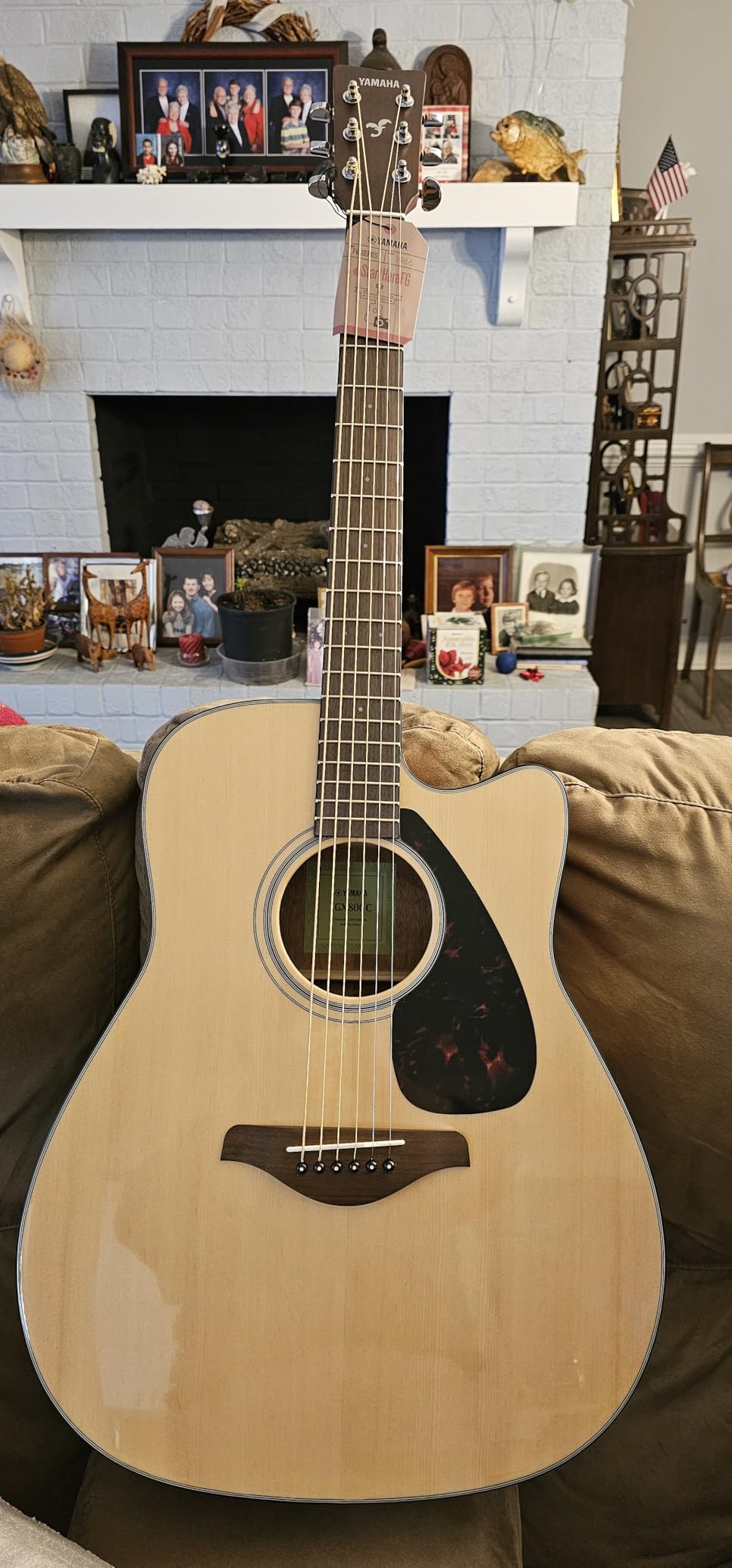
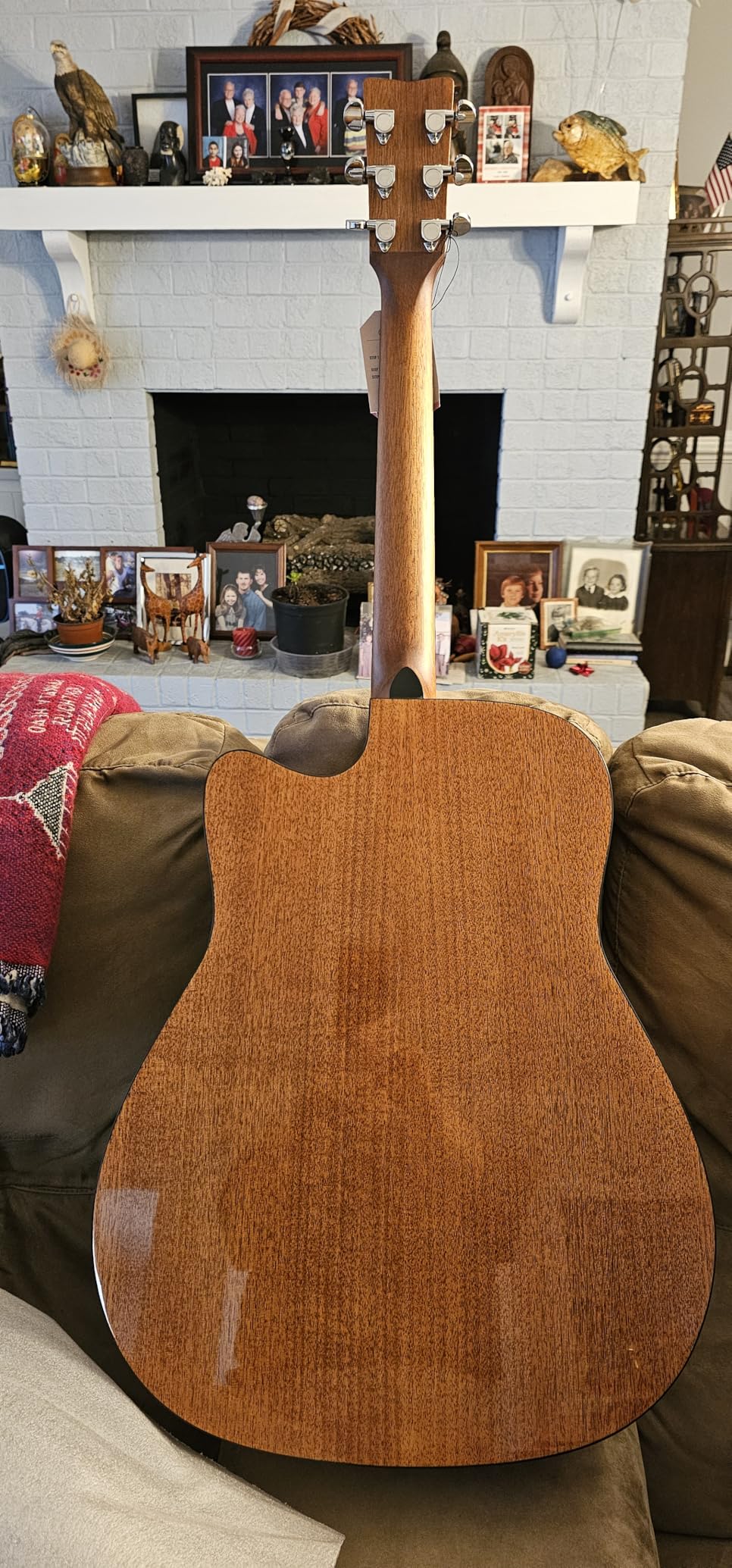
What impressed me most during extended testing was how well this guitar holds its tuning. The diecast tuners feel solid and precise, and after the initial stretch period with the stock phosphor bronze strings, I rarely had to make adjustments between songs. The rosewood fingerboard has a smooth, comfortable feel that works equally well for chord strumming and lead work up the neck.
The cutaway design gives you access to the upper frets without contorting your hand, which matters more than you might think if you play songs that use the full range of the fretboard. At 7.5 pounds, it has the substantial feel of a quality dreadnought without being so heavy that it becomes uncomfortable during a two-hour set.
Who Should Buy the Yamaha FGX800C
This guitar is ideal for beginners who want an instrument they will not outgrow after six months. The solid spruce top means the tone will actually improve with age as the wood opens up and settles. Intermediate players who need a reliable gigging guitar will appreciate the versatile System 66 electronics and the consistent build quality that Yamaha is known for across their FG line.
If you are a singer-songwriter who plays both solo acoustic sets and full band gigs, the FGX800C handles both scenarios without missing a beat. The dreadnought body projects well enough for an unmiked room but sounds natural and balanced when you plug it into a PA system or acoustic amplifier.
Setup and Maintenance Tips
Some units arrive with the action set a bit high or the truss rod needing adjustment, which is common for guitars shipped in cardboard boxes. I recommend budgeting for a professional setup at your local guitar shop, which typically costs around $50 to $75 but transforms the playability. Once properly set up, the FGX800C plays like a guitar that costs significantly more.
One thing to note is that the fretboard inlays are quite small. If you rely on visual fret markers while playing, you might find yourself squinting to see them under stage lighting. This is a minor complaint on an otherwise exceptional instrument, but it is worth knowing before you buy.
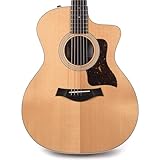
2. Taylor 214ce Grand Auditorium – Premium Sound and Playability
Taylor 214ce Grand Auditorium Acoustic-electric Guitar - Natural
Sitka Spruce Top
Expression System 2
Walnut Back and Sides
Grand Auditorium Body
Pros
- Perfect 5.0-star customer rating
- Expression System 2 is top-tier amplified tone
- Beautiful balanced and warm sound profile
- Includes structured gig bag and 2-year warranty
Cons
- Limited availability with only 20 units in stock
- Slightly heavier at 15.8 pounds
- Non-Prime shipping
The Taylor 214ce is the kind of guitar that makes you want to keep playing long after your practice session is supposed to be over. With a perfect 5.0-star rating from every single customer who has reviewed it on Amazon, this Grand Auditorium delivers a balanced, warm tone profile that sounds equally stunning fingerpicked or strummed with a heavy pick.
The Sitka spruce top with a satin finish pairs beautifully with the walnut back and sides to produce a sound that is clear and articulate across the entire frequency range. Unlike some dreadnought-heavy guitars that overwhelm the low end, the Grand Auditorium body shape gives you a more even response that sits perfectly in a mix. I found that complex jazz voicings and open tunings sounded particularly rich on this instrument.
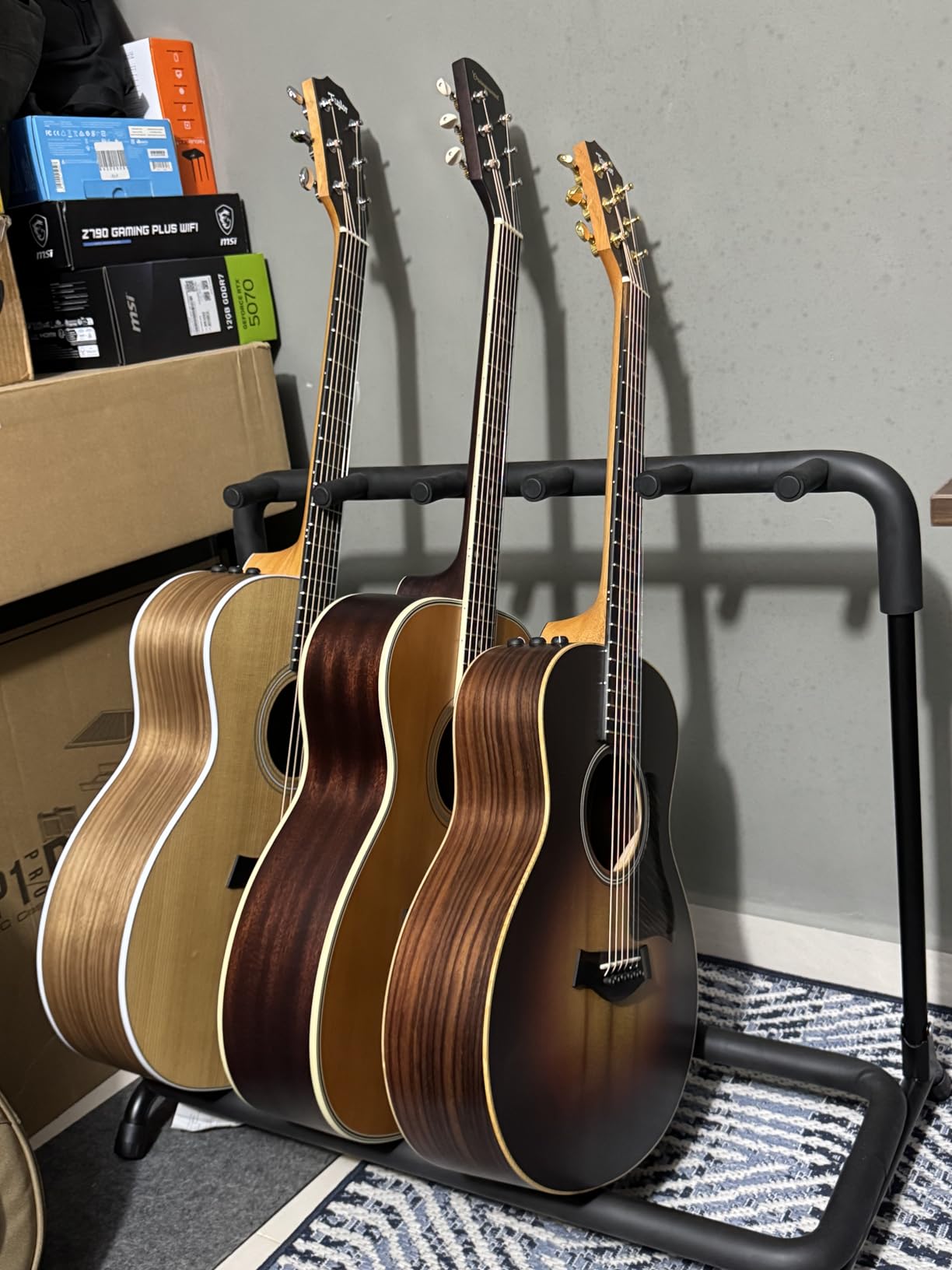
Taylor’s Expression System 2 is widely regarded as one of the best acoustic pickup systems available, and after playing through it, I understand why. The three behind-the-saddle transducers capture a more natural, studio-quality amplified tone than traditional under-saddle piezo designs. The signal stays clean and full whether you are running through a DI box into a PA or recording directly into an audio interface.
The ebony fingerboard feels fast and smooth under your fingers, and the neck profile is one of the most comfortable I have played at any price point. Taylor has a reputation for consistency in their factory setups, and this guitar arrived ready to play with low action and no fret buzz. The D’Addario XS coated phosphor bronze strings that ship with it are a nice touch, offering longer life and consistent tone.
Who Should Buy the Taylor 214ce
This guitar is perfect for serious players who want professional-grade amplified tone without stepping up to a $3,000-plus Taylor 800 series. The Expression System 2 makes it one of the best acoustic electric guitars for live performance and studio recording, where capturing natural acoustic tone through a pickup system really matters.
Advanced fingerstyle players will appreciate the Grand Auditorium body shape, which responds with clarity and nuance to a light touch. Singer-songwriters who perform regularly will find that the 214ce cuts through a band mix without sounding harsh, while still sounding full and warm during solo passages.
What Sets Taylor Apart
Taylor guitars are known for their consistency and attention to detail, and the 214ce is no exception. The 2-year warranty provides peace of mind, and the structured gig bag that comes included is substantial enough for gigging. The walnut back and sides give this guitar a distinctive visual grain pattern that looks as good as it sounds.
The main trade-off is the price, which places this guitar firmly in the premium tier. But when you factor in the Expression System 2 electronics, the solid spruce top, and Taylor’s reputation for build quality, the value proposition becomes clear. This is a guitar you could play for decades.
3. Fender CD-60SCE All Mahogany Bundle – Best Budget Acoustic Electric
Fender CD-60SCE Solid Top Dreadnought Acoustic-Electric Guitar - All Mahogany Bundle with Hard Case, Instrument Cable, Strap, Tuner, Picks, Strings, and Austin Bazaar Instructional DVD
Solid Mahogany Top
Fishman CD-1 Preamp
Dreadnought Cutaway
Bundle with Hard Case
Pros
- Warm rich all-mahogany tone with great projection
- Fishman CD-1 preamp provides clear natural amplified sound
- Bundle includes hard case and full accessory kit
- Rolled fingerboard edges for comfortable playability
Cons
- Some units need truss rod adjustment on arrival
- Included strap is low quality
- Fret ends may need dressing on some units
The Fender CD-60SCE is the guitar I recommend when someone asks for the best acoustic electric guitar on a budget without sacrificing tone. The solid mahogany top produces a warm, rich sound that has a distinctly different character from the typical spruce-top dreadnought. Mahogany emphasizes the midrange, which makes this guitar sound particularly good for blues, country strumming, and vocal accompaniment.
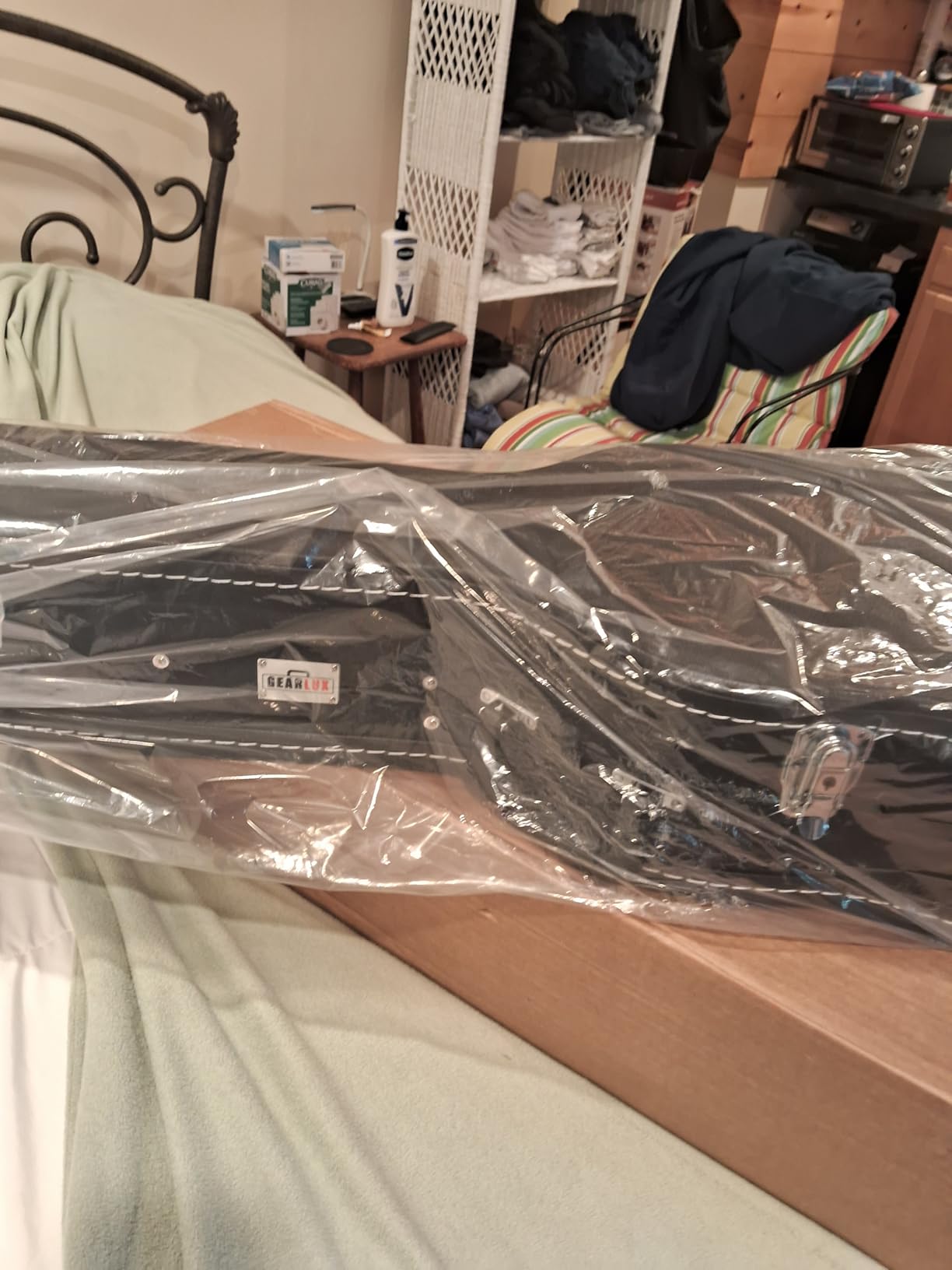
What makes this bundle exceptional value is everything that comes in the box. You get a hard-shell case, an instrument cable, a strap, a clip-on tuner, picks, extra strings, and even an instructional DVD. The hard case alone would cost $80 to $100 if purchased separately, which makes the total package one of the best deals among the best acoustic electric guitars in 2026.
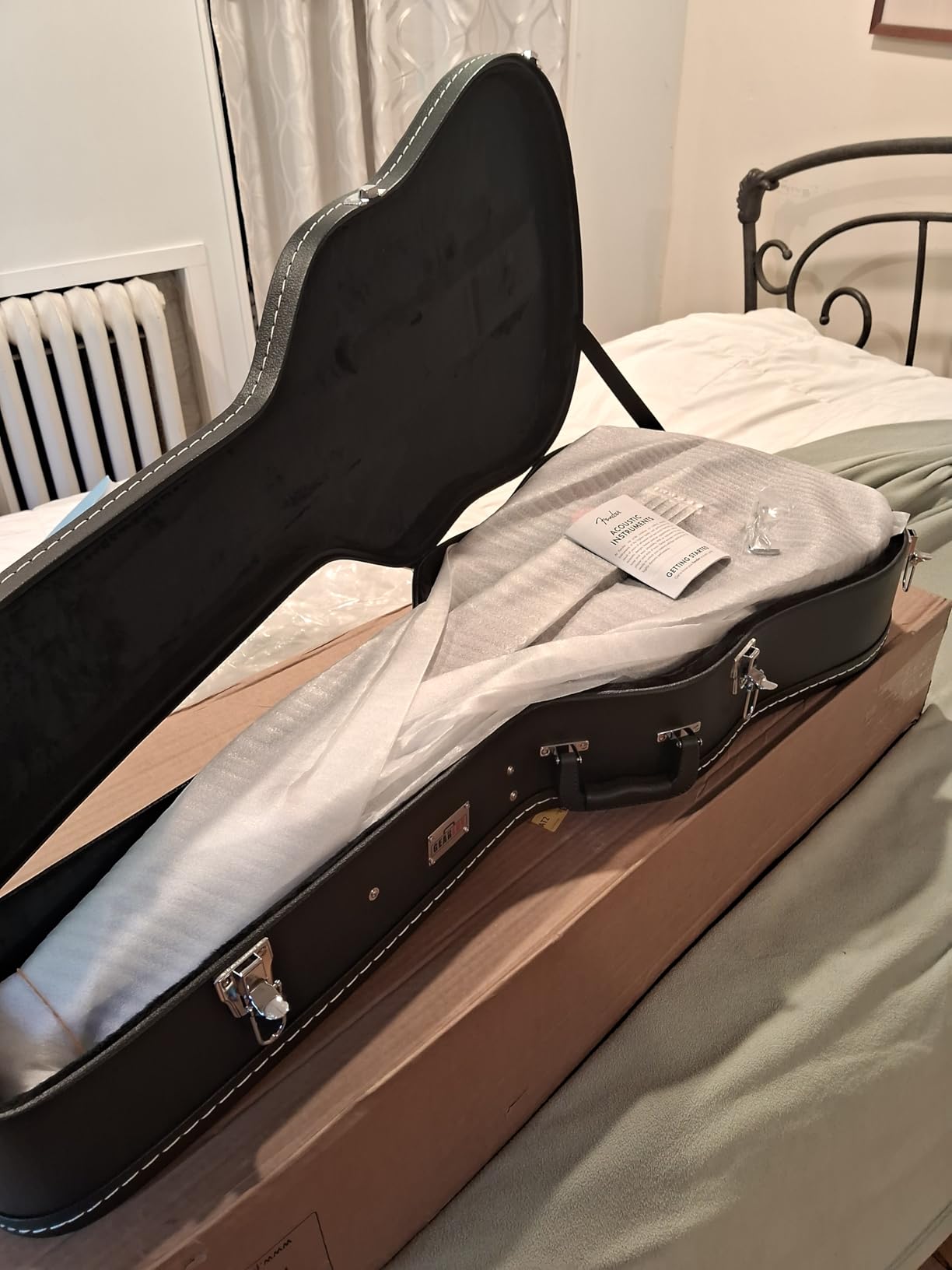
The Fishman CD-1 pickup and preamp system is a pleasant surprise at this price point. Fishman is the gold standard for acoustic pickup systems, and even their entry-level CD-1 system produces a clean, natural amplified tone. The onboard tuner is easy to read and accurate, and the 1/4-inch output means you can plug into any amplifier or PA system without needing a DI box.
Fender redesigned the neck on the CD-60SCE with rolled fingerboard edges, which makes the walnut fretboard feel broken-in and comfortable right out of the box. The 25.3-inch scale length is slightly shorter than standard, which reduces string tension slightly and makes barre chords and bends a bit easier. The cutaway gives you access to the upper frets for lead work.
Who Should Buy the Fender CD-60SCE
This is the ideal first acoustic electric guitar for someone who wants everything in one purchase. The bundle means you will not need to buy accessories separately, and the hard case protects your investment during transport. Beginners will appreciate the comfortable neck and warm tone, while the Fishman electronics make it gig-ready from day one.
Players who prefer a darker, warmer tone over the bright sparkle of a spruce-top guitar will love the all-mahogany construction. It is also a great choice for recording, where the focused midrange of mahogany can sit beautifully in a dense mix without clashing with other instruments.
Quality Control Considerations
Based on customer feedback across over 1,200 reviews, quality control can be inconsistent. Some units arrive needing a truss rod adjustment or fret dressing. The included strap is universally described as low quality, and the preamp battery sometimes arrives near-drained. Budget for a setup and a strap upgrade, and you will have an excellent instrument for a remarkably low total investment.
Despite these minor issues, the overwhelming majority of reviewers praise the tone, playability, and value of this guitar. With a 4.6-star rating across more than 1,200 reviews, the CD-60SCE has earned its reputation as one of the most popular budget acoustic electric guitars on the market.
4. Yamaha APX600 Thin Body – Best for Comfortable Live Performance
Yamaha APX600 OBB Thin Body Acoustic-Electric Guitar, Oriental Blue Burst
Spruce Top
Piezo Pickup with 3-Band EQ
Thin-Line Cutaway Body
Built-in Chromatic Tuner
Pros
- Exceptionally comfortable thin-line body for long sessions
- Bright full tone despite slim profile
- 3-band EQ with volume for precise tone shaping
- Stunning Oriental Blue Burst finish with abalone rosette
Cons
- Action may be set high from the factory
- Narrow string spacing feels cramped for large hands
- Less acoustic projection than a full dreadnought
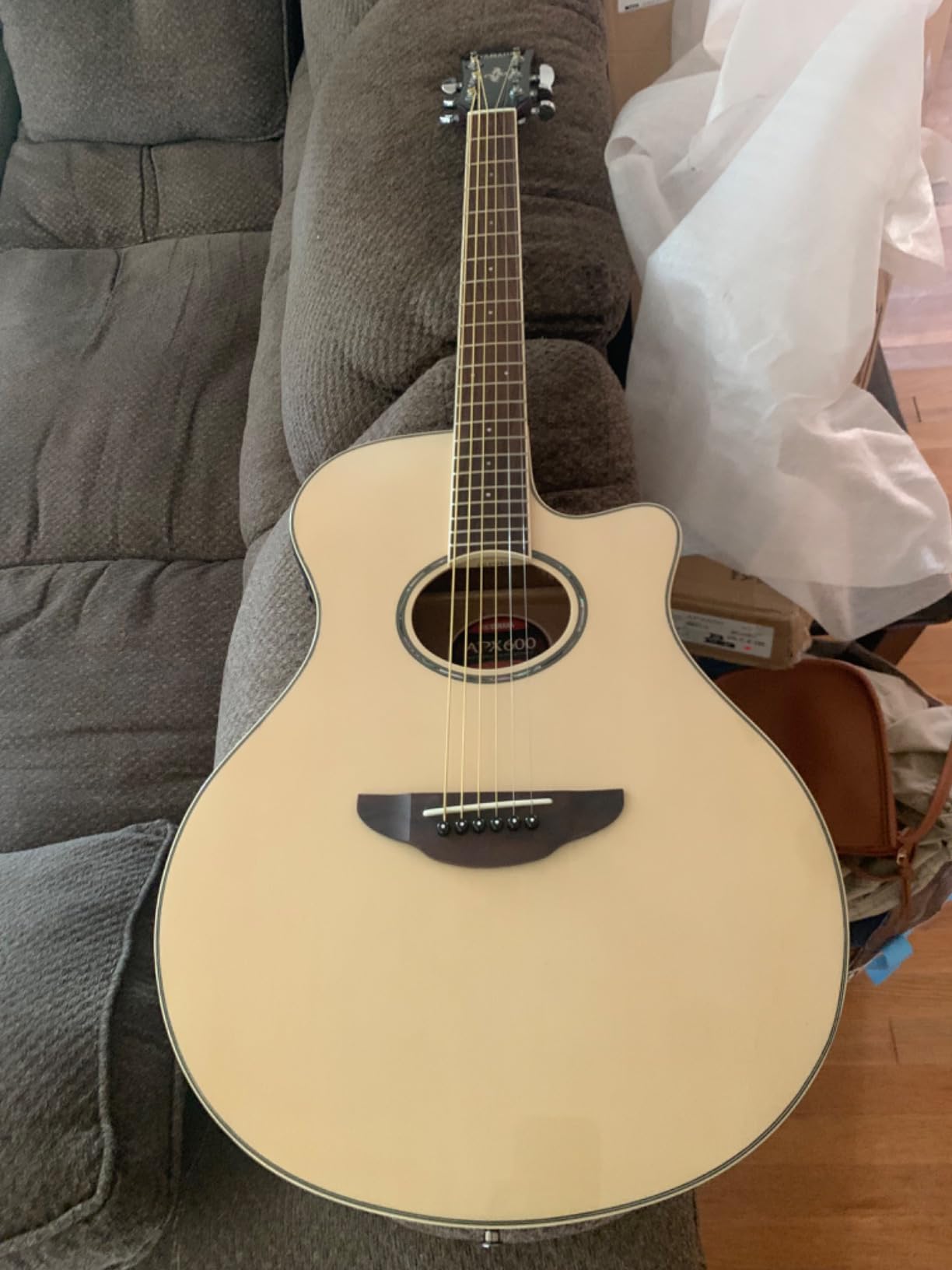
The Yamaha APX600 is the guitar I reach for when I know I am going to be standing and playing for three hours straight. The thin-line cutaway body is dramatically more comfortable than a traditional dreadnought, especially for smaller-framed players or anyone who finds large body shapes fatiguing. At just 6.5 pounds, it is one of the lightest acoustic electric guitars in this roundup.
What surprised me most about the APX600 is how full and bright it sounds despite the thin body. Yamaha reworked the bracing pattern on this model with new scalloped bracing that delivers more bass response than you would expect from such a slim profile. The spruce top projects clearly and evenly, with a focused midrange that cuts through a band mix beautifully when amplified.
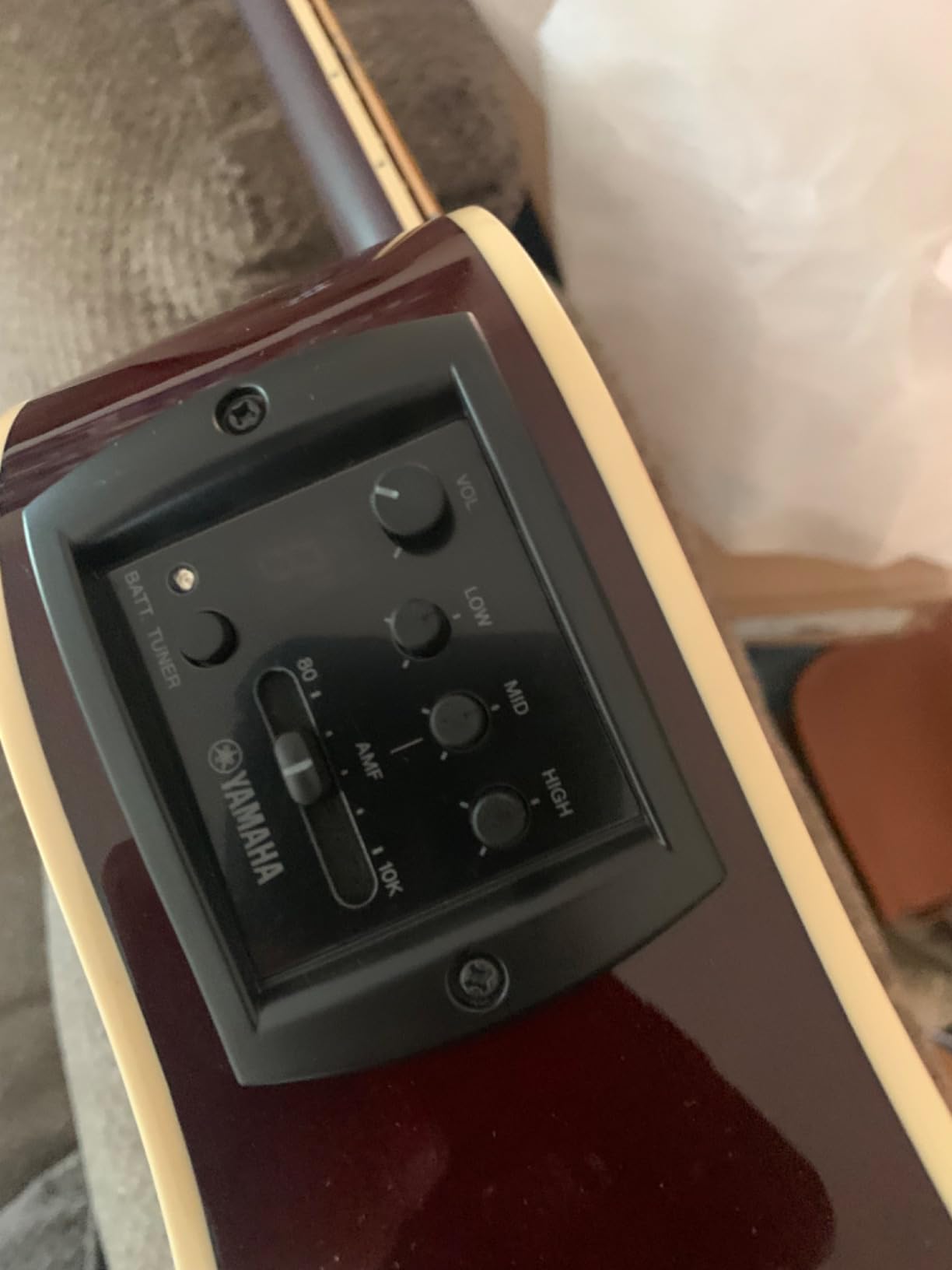
The stage-focused piezo pickup system with a 3-band EQ gives you serious tone-shaping control. I was able to roll off some of the high-end harshness that piezo pickups can produce, boost the lows for a fuller sound, and dial in the midrange to match different rooms. The built-in chromatic tuner works without the guitar being plugged in, which is a small but genuinely useful feature.
The Oriental Blue Burst finish with the abalone soundhole rosette is genuinely stunning in person. This is one of the most visually distinctive acoustic electric guitars you can buy at this price point, and it gets compliments every time I bring it to a gig. The rosewood fingerboard has a smooth feel that works well for both strumming and fingerstyle playing.
Who Should Buy the Yamaha APX600
This guitar is perfect for gigging musicians who prioritize comfort and stage-friendly ergonomics. The thin body does not get in the way when you are singing into a microphone, and the lighter weight means you can play a full set without shoulder fatigue. It is also an excellent choice for players with smaller hands or shorter arms who find dreadnought bodies uncomfortable.
Beginners and intermediate players will appreciate the narrower string spacing, which makes chord shapes easier to form. However, players with larger hands may find the neck cramped. If you are used to a wider classical or folk neck, definitely try before you buy.
Plugged vs Unplugged Performance
The APX600 is designed as a stage instrument first and foremost, and it shows when you compare plugged and unplugged performance. Through a PA system or acoustic amp, it sounds fantastic with a full, balanced tone that holds its own in any live setting. Unplugged, the thinner body produces less acoustic projection than a full-size dreadnought like the FGX800C.
This is not a flaw but a design trade-off. If your primary use case is playing at home without amplification, a full-size dreadnought will give you more acoustic volume. But if you plan to plug in regularly, the APX600 is purpose-built for the stage and excels in that environment.
5. Taylor GS Mini-e Mahogany – Best Compact and Travel Acoustic Electric
Taylor GS Mini-e Mahogany Acoustic-electric Guitar - Natural
Solid Mahogany Top
Taylor ES-B Electronics
Compact GS Mini Body
Includes Gig Bag
Pros
- Surprisingly loud and warm tone for a compact guitar
- Premium Taylor build quality with ebony fingerboard
- Exceptionally portable and comfortable
- Easy to play with low action
Cons
- ES-B pickup system gets mixed reviews
- Small body means less acoustic projection
- Higher price for a compact guitar
- Limited review volume
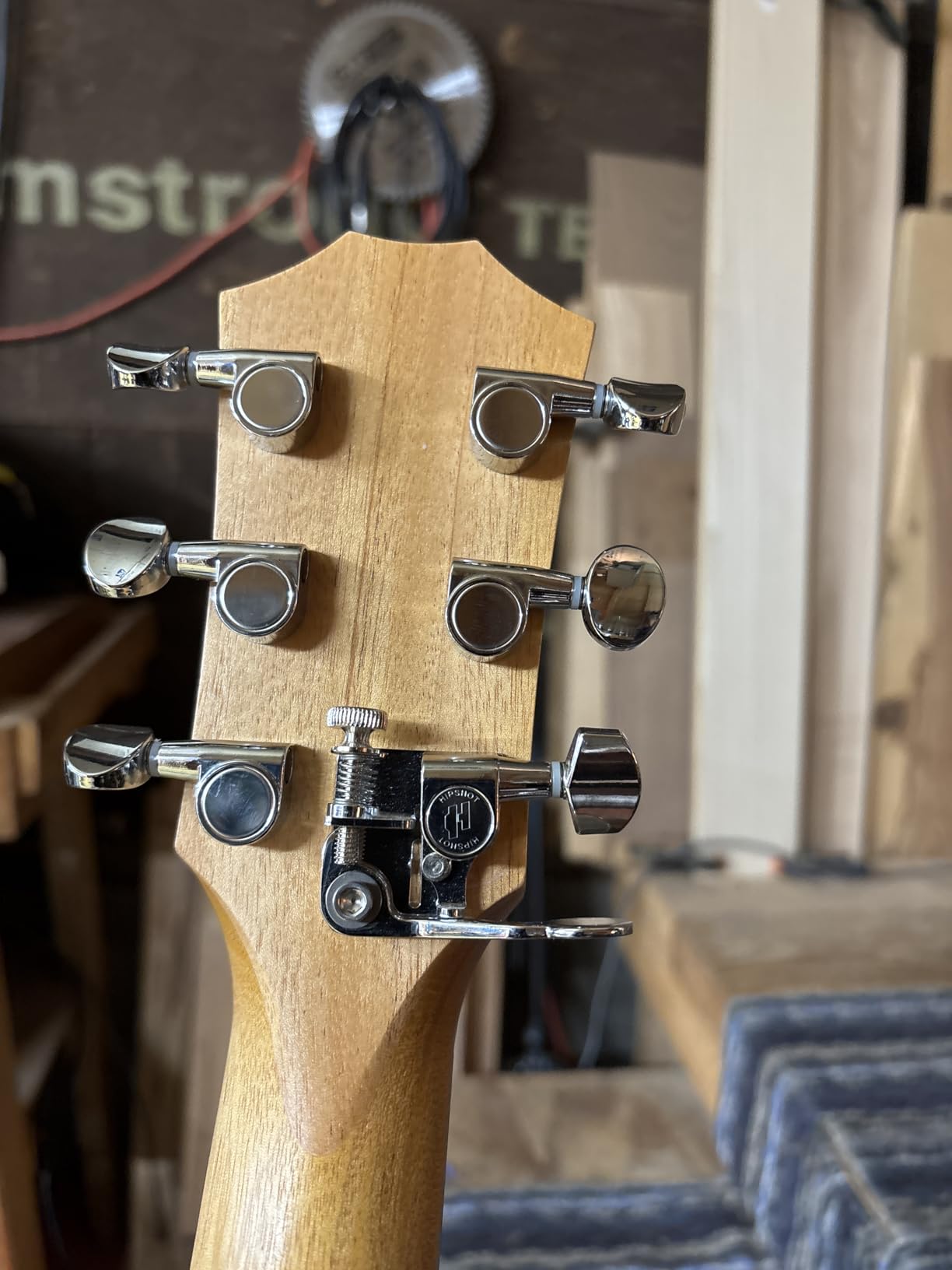
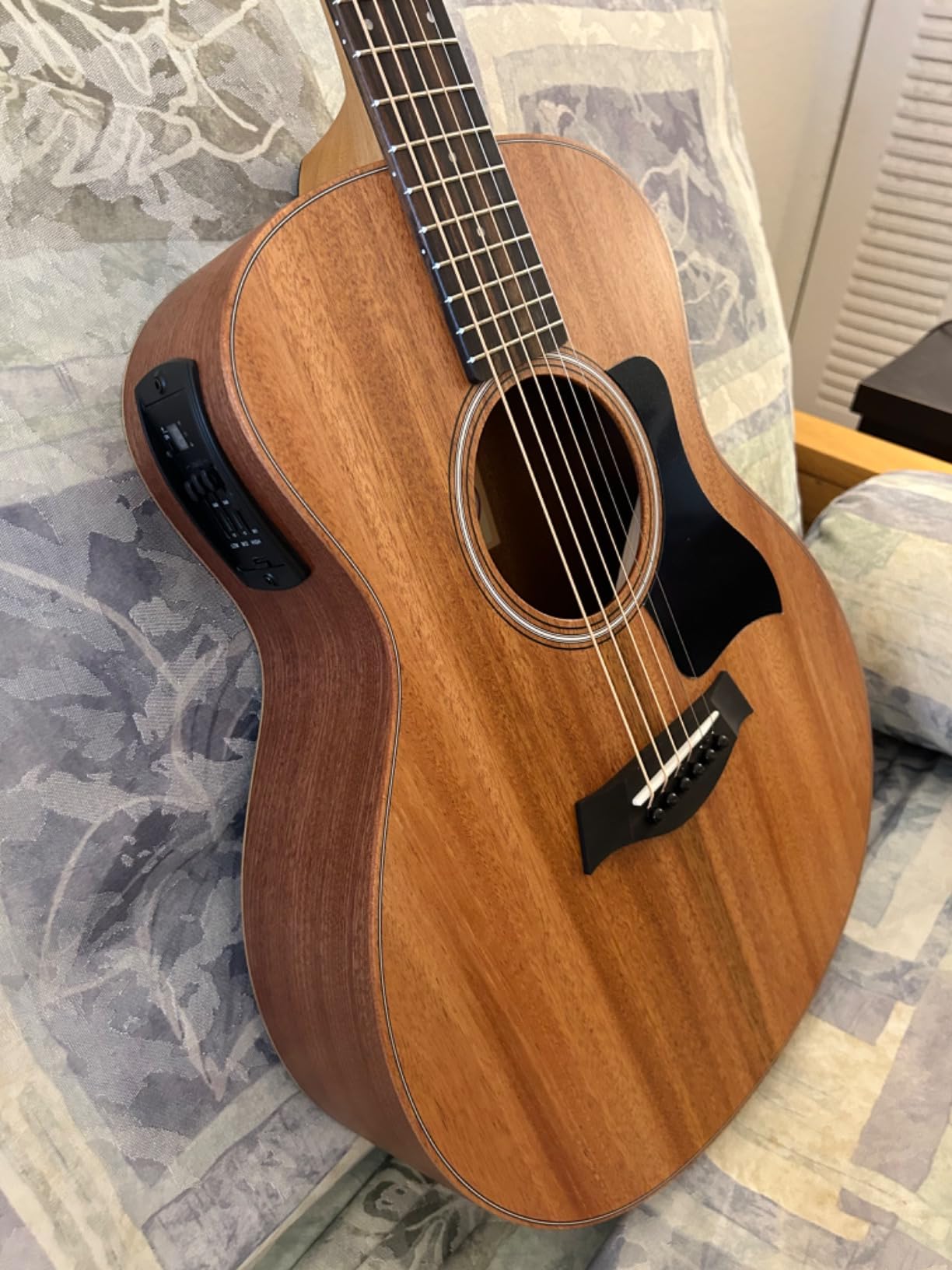
The Taylor GS Mini-e Mahogany is proof that great things come in small packages. This compact acoustic electric produces a warm, rich tone that belies its travel-friendly size. The first time I played one, I could not believe how much volume and depth came out of such a small body. The solid Neo-Tropical mahogany top is the key, giving this guitar a warm, focused voice that works beautifully for fingerstyle and strumming alike.
The layered sapele back and sides make this guitar more durable than a full solid-wood construction, which is exactly what you want in a travel instrument. The ebony fingerboard has that signature Taylor smoothness, and the low action makes it one of the easiest-playing guitars I have ever picked up. The mahogany neck has a comfortable profile that feels substantial without being chunky.
Taylor’s ES-B electronics system provides amplified tone with a built-in preamp and tuner. The pickup captures the natural warmth of the mahogany top reasonably well, though some players feel it does not quite match the acoustic sound quality. For practice, songwriting, and small venue performances, it gets the job done. For serious studio work, you might want to mike the guitar in addition to using the pickup.
The included gig bag is a substantial, well-padded structured case that provides real protection during travel. At a compact size that fits in overhead compartments on most airlines, the GS Mini-e is the best acoustic electric guitar for musicians who travel frequently or want a couch-friendly practice instrument that does not compromise on tone.
Who Should Buy the Taylor GS Mini-e
This guitar is perfect for traveling musicians, songwriters who write on the couch, and players with smaller hands who find full-size guitars uncomfortable. It is also an excellent secondary guitar for experienced players who want a high-quality practice instrument they can grab quickly. The 2-year Taylor warranty adds confidence to the purchase.
If you are looking for a first guitar for a young player or someone with a smaller frame, the GS Mini-e is more playable than any dreadnought at any price. The shorter scale length and compact body make chord shapes and stretches significantly easier, which can accelerate the learning curve for beginners.
Travel and Portability Advantages
The GS Mini-e was designed from the ground up as a portable instrument, and it shows in every detail. The compact body fits easily in car trunks, tour vans, and airline overhead bins. The included gig bag has backpack straps that make it comfortable to carry for long distances. For buskers, traveling songwriters, and anyone who plays outside their home regularly, this guitar solves the portability problem without sacrificing sound quality.
The trade-off is acoustic volume. In a quiet room, the GS Mini-e sounds full and rich. In a noisy room or alongside other instruments, you will need to plug in to be heard. But with the ES-B electronics and the built-in tuner, you are always ready to amplify at a moment’s notice.
6. Martin GPC-X2E Ziricote – Rich Tone with Premium Craftsmanship
Martin GPC-X2E Ziricote Acoustic-electric Guitar - Natural
Grand Performance Body
Ziricote Back and Sides
Sapele Top
H-Style Pickup
Pros
- Rich robust tone both acoustically and amplified
- A+ build quality with beautiful satin finish
- Low action with no fret buzz out of the box
- Excellent value for a Martin-brand guitar
Cons
- Limited availability with only 6 units in stock
- Very few customer reviews so far
- Non-Prime shipping
The Martin GPC-X2E Ziricote brings the legendary Martin name to a more accessible price point without compromising on the tone and craftsmanship that built that reputation. The Grand Performance body shape sits between a dreadnought and an orchestra model, giving you a balanced voice that works for strumming, flatpicking, and fingerstyle. The ziricote back and sides give this guitar a distinctive visual character with rich, dark grain patterns.
The first thing I noticed when picking up this guitar was how well it was set up from the factory. The action was low with zero fret buzz, and it was surprisingly close to being in tune straight out of the box. Martin’s quality control on their Mexican-made X-series instruments has clearly improved over the years, and the craftsmanship on this model earns its A+ rating from buyers.
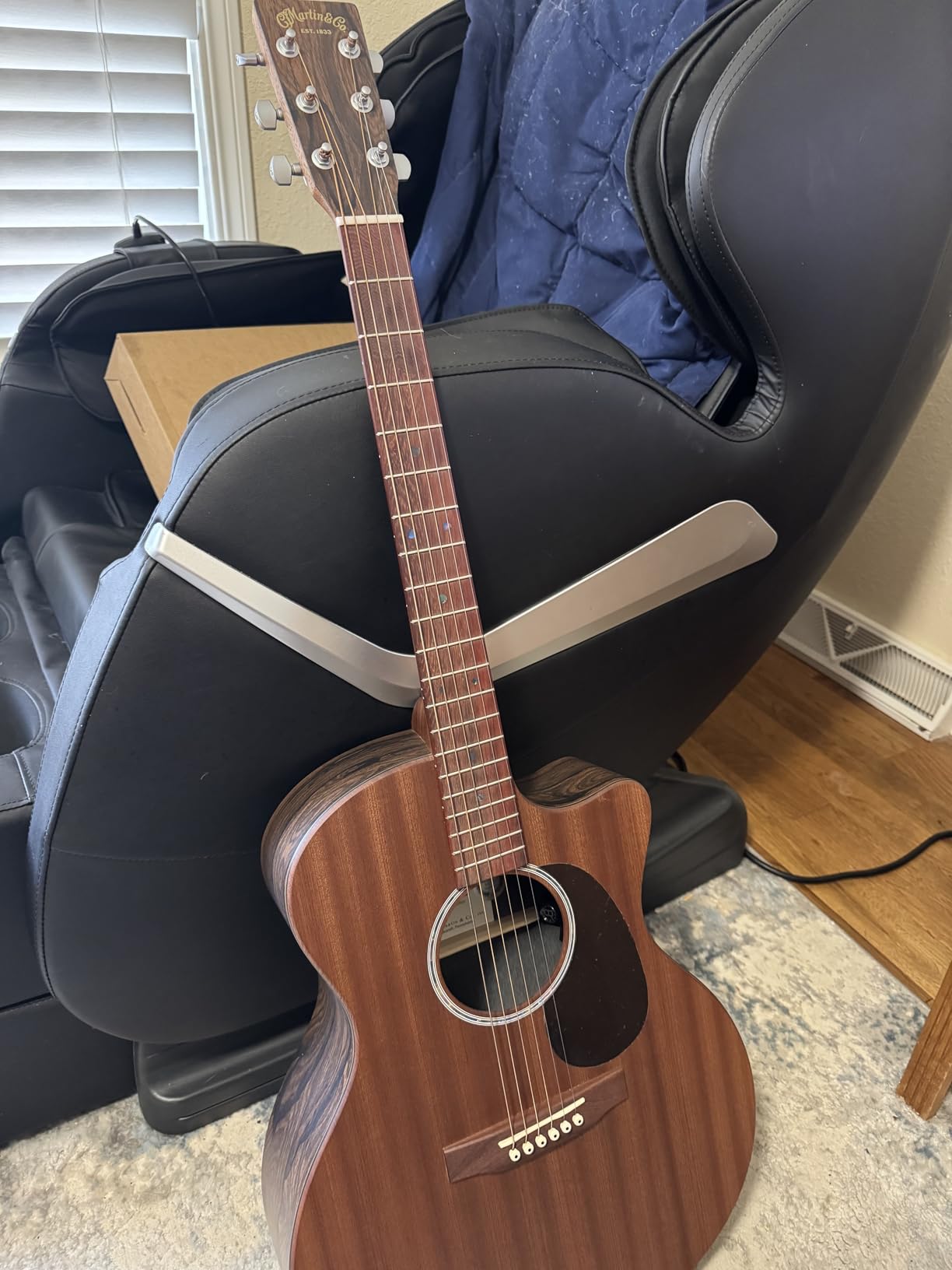
The sapele top produces a warm, focused tone that pairs well with vocal accompaniment. Sapele is often compared to mahogany but with slightly more sparkle in the high end, which gives this guitar a voice that is both warm and articulate. The H-style pickup configuration captures this tonal character faithfully when amplified, producing a rich, robust sound that works well for both live performance and recording.
The hardwood fretboard has a smooth feel, and the neck profile is comfortable for both chord work and lead playing. The adjustable bridge system makes it easy to fine-tune your action and intonation. The satin finish on the neck allows your hand to slide freely without sticking, which is especially important during longer playing sessions.
Who Should Buy the Martin GPC-X2E
This guitar is ideal for players who have always wanted a Martin but could not justify the price of the American-made standard series. The GPC-X2E delivers Martin’s signature warmth and balance at a price that competing brands in the same tier struggle to match. It is a serious instrument that deserves consideration alongside any Taylor or Yamaha in this price range.
Intermediate to advanced players who want a versatile gigging and recording guitar will find that the Grand Performance body shape adapts well to different musical contexts. From solo acoustic sets to full band performances, this guitar handles every situation with confidence.
The Martin Brand Advantage
Martin guitars carry a level of brand prestige that few other manufacturers can match. Founded in 1833, Martin invented the dreadnought body shape and has been setting acoustic guitar standards for nearly two centuries. When you buy a Martin, you are buying into that legacy of craftsmanship and innovation.
The X-series instruments are designed to make Martin quality more accessible, and the GPC-X2E Ziricote succeeds at that goal. The ziricote back and sides are a premium touch that you do not typically find at this price point, and the included hard case protects your investment. With only a handful of units typically in stock, availability can be limited, so it is worth checking frequently if this guitar catches your eye.
7. Ibanez AEG50 – Best Slim Body for Beginners and Small Hands
Ibanez AEG50 Acoustic-Electric Guitar - Indigo Blue Burst High Gloss
Spruce Top
Slimline Thin Body
Piezo Pickup System
Built-in Tuner
Pros
- Slim lightweight body very comfortable with a strap
- Thin neck profile suits players with smaller hands
- Excellent clean tone for the price
- Available in left-handed configuration
Cons
- Not a full deep sound like a dreadnought
- Limited low-end bass response due to thin body
- Some units arrive with fret buzz from poor setup
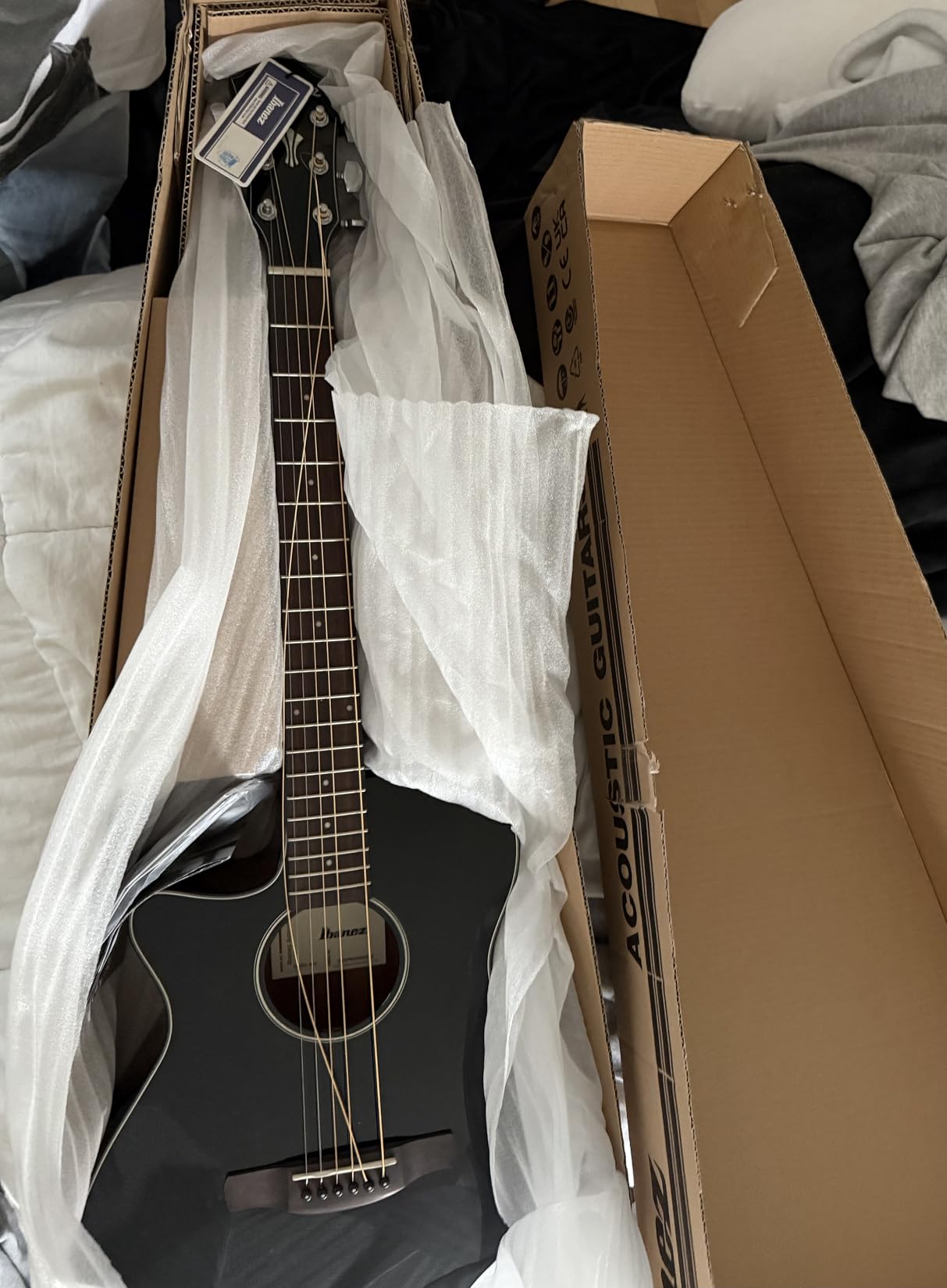
The Ibanez AEG50 is the lightest and most comfortable acoustic electric guitar in this roundup. Weighing in at roughly 3.1 kilograms, the slimline thin-body design is ideal for players who find traditional dreadnoughts too bulky. The thin neck profile is particularly friendly for players with smaller hands, making chord transitions and barre shapes noticeably easier than on wider necks.
Despite the thin body, the spruce top with sapele back and sides produces a clean, full resonance that punches above its price class. The tone is not as deep or bass-heavy as a full dreadnought, but it has a focused, articulate character that works well for strumming patterns and fingerpicking. The high-gloss Indigo Blue Burst finish is genuinely striking and looks like it belongs on a much more expensive instrument.
The piezo pickup system with Ibanez tone and volume controls gives you basic amplified tone shaping. It is not as sophisticated as the System 66 or Expression System 2 found on more expensive models, but it produces a clean, usable signal for practice amplifiers, small PA systems, and recording interfaces. The built-in tuner works perfectly and is easy to read.
The nyatoh neck with walnut fingerboard has a fast, comfortable feel. The 25-inch scale length is slightly shorter than standard, which reduces string tension and makes the guitar easier to play. One standout feature is that this guitar is available in a left-handed configuration, which makes it one of the best acoustic electric guitars for left-handed players on a budget.
Who Should Buy the Ibanez AEG50
This guitar is ideal for beginners who want a comfortable, affordable instrument with built-in electronics. The thin body is perfect for smaller players, younger students, and anyone who has struggled with the size of a traditional dreadnought. The left-handed option makes it accessible to a wider range of players who are often underserved by the acoustic guitar market.
It is also a solid choice as a secondary practice guitar for experienced players who want something lightweight to keep on a stand at home. The affordable price means you will not worry about it the way you would a $1,000 Taylor, which makes it more likely you will pick it up and play every day.
Understanding the Thin Body Trade-off
The slimline body design is both the AEG50’s biggest advantage and its main limitation. On the plus side, it is dramatically more comfortable to play standing up, sitting in tight spaces, or performing on small stages. On the downside, the reduced body volume means less acoustic projection and weaker bass response compared to a full-size dreadnought.
If you primarily play unplugged at home and want maximum acoustic volume, the Yamaha FGX800C or Fender CD-60SCE will serve you better. But if you plan to amplify regularly or prioritize comfort over raw acoustic output, the AEG50 is an excellent choice that delivers impressive value at a budget-friendly price point.
How to Choose the Best Acoustic Electric Guitar
Choosing the right acoustic electric guitar comes down to four main factors: body shape, tonewoods, electronics, and budget. Understanding how each of these elements affects sound and playability will help you make an informed decision that matches your playing style and performance needs.
Body Shape and Size
The body shape of an acoustic guitar has a massive impact on its tone, volume, and comfort. Dreadnought bodies, like the Yamaha FGX800C and Fender CD-60SCE, produce the most volume and bass response. They are ideal for strumming, flatpicking, and cutting through a mix. However, they can be uncomfortable for smaller players.
Grand Auditorium and Grand Performance bodies, like the Taylor 214ce and Martin GPC-X2E, offer a more balanced tone with less bass emphasis. They are versatile instruments that work well for both strumming and fingerstyle playing. The slightly smaller body is also more comfortable for extended playing sessions.
Thin-line and compact bodies, like the Yamaha APX600, Ibanez AEG50, and Taylor GS Mini-e, prioritize comfort and portability over acoustic volume. They are the best choice for stage performance where you will be plugged in, and for players who find full-size bodies uncomfortable.
Tonewoods and Materials
The wood used in construction, particularly the top, is the single biggest factor in an acoustic guitar’s tone. Solid wood tops, as found on the Yamaha FGX800C, Taylor 214ce, Taylor GS Mini-e, and Fender CD-60SCE, produce richer, more complex tone than laminate tops. Solid tops also improve with age as the wood opens up over years of playing.
Sitka spruce is the most common top wood because it offers a balanced response across all frequencies with excellent projection. Mahogany tops, like those on the Fender CD-60SCE and Taylor GS Mini-e, emphasize the midrange and produce a warmer, darker tone that works well for blues and vocal accompaniment. Sapele, used on the Martin GPC-X2E, is similar to mahogany but with slightly more high-end sparkle.
For back and sides, mahogany and walnut add warmth and midrange presence. Rosewood and ziricote add low-end depth and high-end sparkle for a more complex, full-range tone. Laminate back and sides, while less resonant than solid wood, offer better durability and resistance to humidity changes, making them practical for travel and gigging.
Pickup Systems and Electronics
The pickup system is what makes an acoustic guitar an acoustic electric. Most guitars in this price range use under-saddle piezo pickups, which capture string vibrations at the bridge. Piezo systems are reliable and affordable, but they can sometimes produce a quacky or sterile amplified tone.
The gold standard for acoustic pickup systems comes from Fishman and LR Baggs. Fishman electronics, like the CD-1 system on the Fender CD-60SCE, are trusted by gigging musicians worldwide. Taylor’s Expression System 2, found on the 214ce, uses three behind-the-saddle transducers for a more natural, studio-quality amplified tone that is widely considered one of the best acoustic electric guitar pickup systems available.
Yamaha’s System 66 on the FGX800C adds a parametric mid-range control that lets you target specific problem frequencies. This is particularly useful for preventing feedback on stage, which is one of the most common complaints from gigging acoustic electric players. A preamp with EQ controls, a built-in tuner, and a notch filter or phase switch are features worth looking for if you plan to perform live.
Budget and Value Considerations
Acoustic electric guitars span a wide price range. Under $400, you will find solid values like the Fender CD-60SCE, Ibanez AEG50, and Yamaha APX600. These guitars offer reliable electronics and decent tone, though quality control can be inconsistent and setups are often needed.
In the $400 to $700 range, the Yamaha FGX800C stands out with its solid spruce top and System 66 electronics. This is the sweet spot where you get professional-grade features without stepping into premium pricing. The Taylor GS Mini-e at $699 is also in this range, offering Taylor build quality in a compact format.
Above $800, you enter premium territory with Martin and Taylor models. The Martin GPC-X2E at $849 and Taylor 214ce at $999 offer superior craftsmanship, better electronics, and more refined tone. These are instruments you can play for decades, and they hold their resale value better than budget models.
Reddit users consistently recommend budgeting for a professional setup regardless of which guitar you buy. A $50 to $75 setup at your local guitar shop can transform a budget guitar into a player that rivals instruments costing hundreds more. Factor this into your total budget when comparing options.
FAQs
Do you need an amplifier for an acoustic electric guitar?
No, you do not need an amplifier to play an acoustic electric guitar. The guitar functions as a normal acoustic instrument unplugged, producing sound through its soundhole and body resonance. The built-in pickup system and output jack are there for when you want to amplify your sound through a PA system, acoustic amplifier, or audio interface for live performance or recording.
Are acoustic electric guitars good for beginners?
Yes, acoustic electric guitars are excellent for beginners because they offer the simplicity of an acoustic guitar with the added versatility of built-in electronics. Beginners can start playing unplugged and then plug in when they are ready to perform or record. Models like the Yamaha FGX800C and Fender CD-60SCE are specifically recommended as great first acoustic electric guitars for beginners.
What is the difference between acoustic and acoustic electric guitar?
An acoustic guitar produces sound entirely through its hollow body and soundhole with no electronic components. An acoustic electric guitar has the same acoustic body but adds a built-in pickup system, preamp with EQ controls, and an output jack. This allows the acoustic electric to be amplified through a PA system or amplifier while still functioning as a normal acoustic instrument when unplugged.
Which is better, Martin or Taylor acoustic electric guitar?
Both Martin and Taylor make exceptional acoustic electric guitars, but they have different tonal characteristics. Martin guitars are known for warm, rich, traditional tone with strong midrange presence, making them ideal for strumming and rhythm playing. Taylor guitars are known for bright, balanced, articulate tone with excellent clarity, making them favored by fingerstyle players. The choice comes down to personal tonal preference and playing style.
Do acoustic electric guitars sound good unplugged?
Yes, a quality acoustic electric guitar sounds just as good unplugged as a traditional acoustic guitar. The pickup system and electronics do not affect the acoustic tone. However, thin-body models like the Yamaha APX600 and Ibanez AEG50 will have less acoustic volume and bass response than full-size dreadnoughts because of their smaller body size, not because of the electronics.
Conclusion: Which Acoustic Electric Guitar Is Right for You?
After testing and comparing seven of the best acoustic electric guitars available in 2026, a few clear recommendations emerge based on different needs and budgets. The Yamaha FGX800C stands out as the best overall value, combining a solid Sitka spruce top, versatile System 66 electronics, and a 4.8-star rating at a price that makes sense for beginners and intermediate players alike.
For players who want premium amplified tone and build quality, the Taylor 214ce with its Expression System 2 and perfect 5.0-star rating is worth the investment. The Fender CD-60SCE offers the best budget package with its hard case and accessory bundle, while the Yamaha APX600 and Ibanez AEG50 are excellent choices for players who prioritize comfort and stage-friendly ergonomics.
If portability is your priority, the Taylor GS Mini-e delivers Taylor quality in a travel-friendly package. And for players who have always wanted a Martin, the GPC-X2E Ziricote brings that legendary tone and craftsmanship to an accessible price point.
The best acoustic electric guitar is the one that matches your playing style, fits your budget, and makes you want to pick it up every day. Whether you choose a budget-friendly Fender or a premium Taylor, invest in a professional setup, upgrade your strings, and start playing. The music is what matters most.