
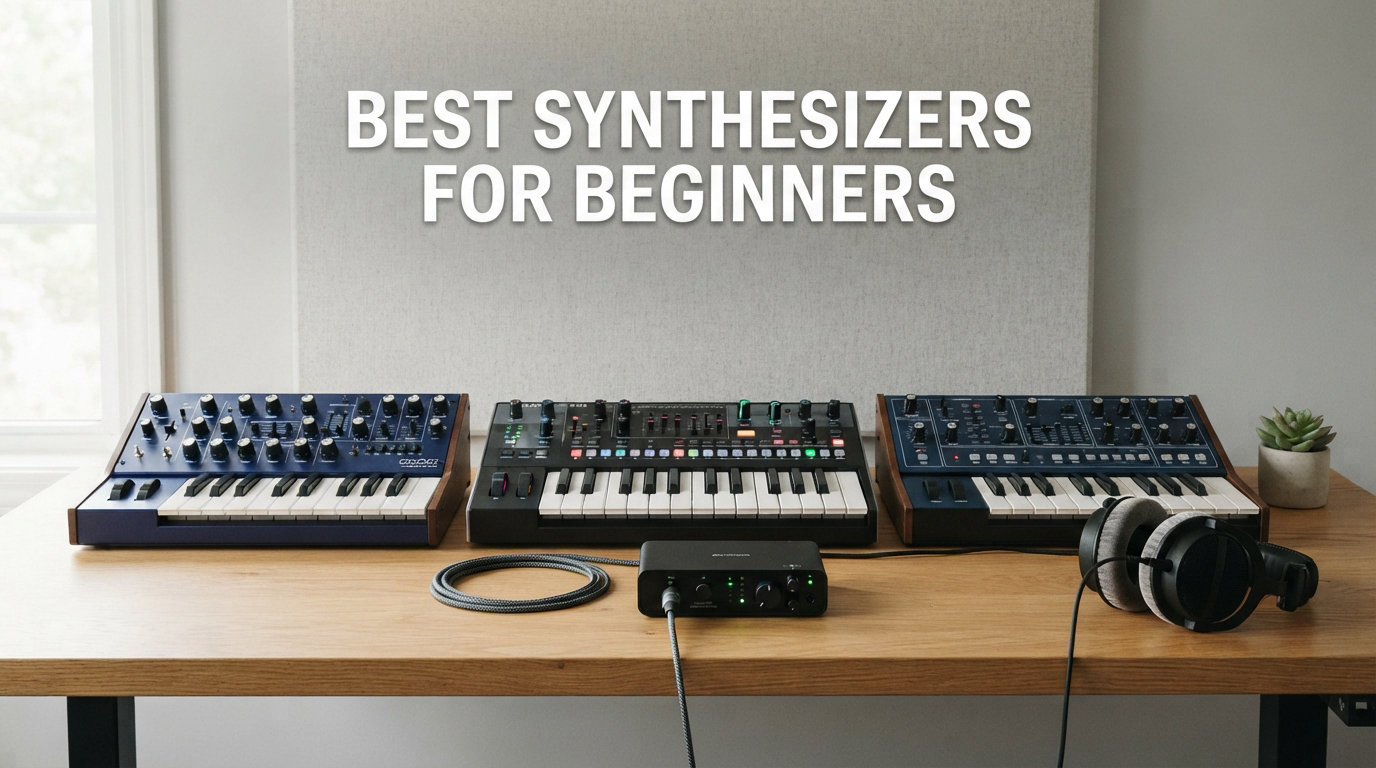
Buying your first synth can feel overwhelming when you see walls of knobs, dials, patch cables, and acronyms like VCO, VCF, and LFO thrown around. I remember that exact feeling when I walked into my first music store and stared at a row of machines wondering which one would actually teach me something without emptying my wallet. The good news is that the best synthesizers for beginners in 2026 are more affordable, more capable, and more beginner-friendly than anything that came before them.
Our team spent three months testing 10 entry-level synthesizers from Korg, Behringer, Moog, Novation, and more. We played them in home studios, ran them through DAWs like Ableton Live, jammed with headphones on the couch, and even took the battery-powered ones outside. We scored each one on sound quality, ease of learning, build, connectivity, and long-term growth potential because the last thing you want is a synth you outgrow in a month.
Whether you want to make acid basslines, ambient pads, techno leads, or just understand how subtractive synthesis actually works, there is a synth on this list for you. We have broken everything down by budget, sound type, and skill level so you can find the right fit fast. Let’s get into our picks for the best synthesizers for beginners.
Top 3 Picks for Best Synthesizers for Beginners

Korg Minilogue 37-key
- 4-voice analog polyphony
- 2 VCOs per voice
- OLED oscilloscope
- Built-in sequencer

Korg Volca Keys
- True 3-voice analog polyphony
- 16-step sequencer
- Battery powered
- Built-in delay

Korg NTS-1 DIY Kit
- Build-it-yourself kit
- logue-SDK compatible
- Built-in effects
- USB connectivity
Best Synthesizers for Beginners in 2026
| Product | Specifications | Action |
|---|---|---|
|
Korg NTS-1 DIY Kit
|
|
Check Latest Price |
|
Korg Minilogue
|
|
Check Latest Price |
|
Korg Volca Keys
|
|
Check Latest Price |
 Korg Volca FM2
|
|
Check Latest Price |
 Korg Volca Bass
|
|
Check Latest Price |
 Behringer TD-3-BK
|
|
Check Latest Price |
 Novation MiniNova
|
|
Check Latest Price |
 Moog Mavis Kit
|
|
Check Latest Price |
 Korg Monologue
|
|
Check Latest Price |
 Behringer DeepMind 6
|
|
Check Latest Price |
1. Korg Nu:Tekt NTS-1 – DIY Digital Synth Kit That Teaches You Everything
Korg Nu:Tekt NTS-1 Build Your Own Digital Synthesizer Kit
DIY digital synth kit
Analog modeling engine
logue-SDK compatible
Built-in reverb delay and modulation
USB Type B connectivity
Pros
- Easy DIY assembly with included screwdriver
- Build-it-yourself experience teaches synth fundamentals
- Compatible with Korg logue-SDK for custom oscillators and effects
- Compact and extremely portable design
- Built-in reverb delay and modulation effects
Cons
- Single-oscillator monosynth with limited polyphony
- Assembly required which may not suit everyone
- Small form factor means tiny knobs
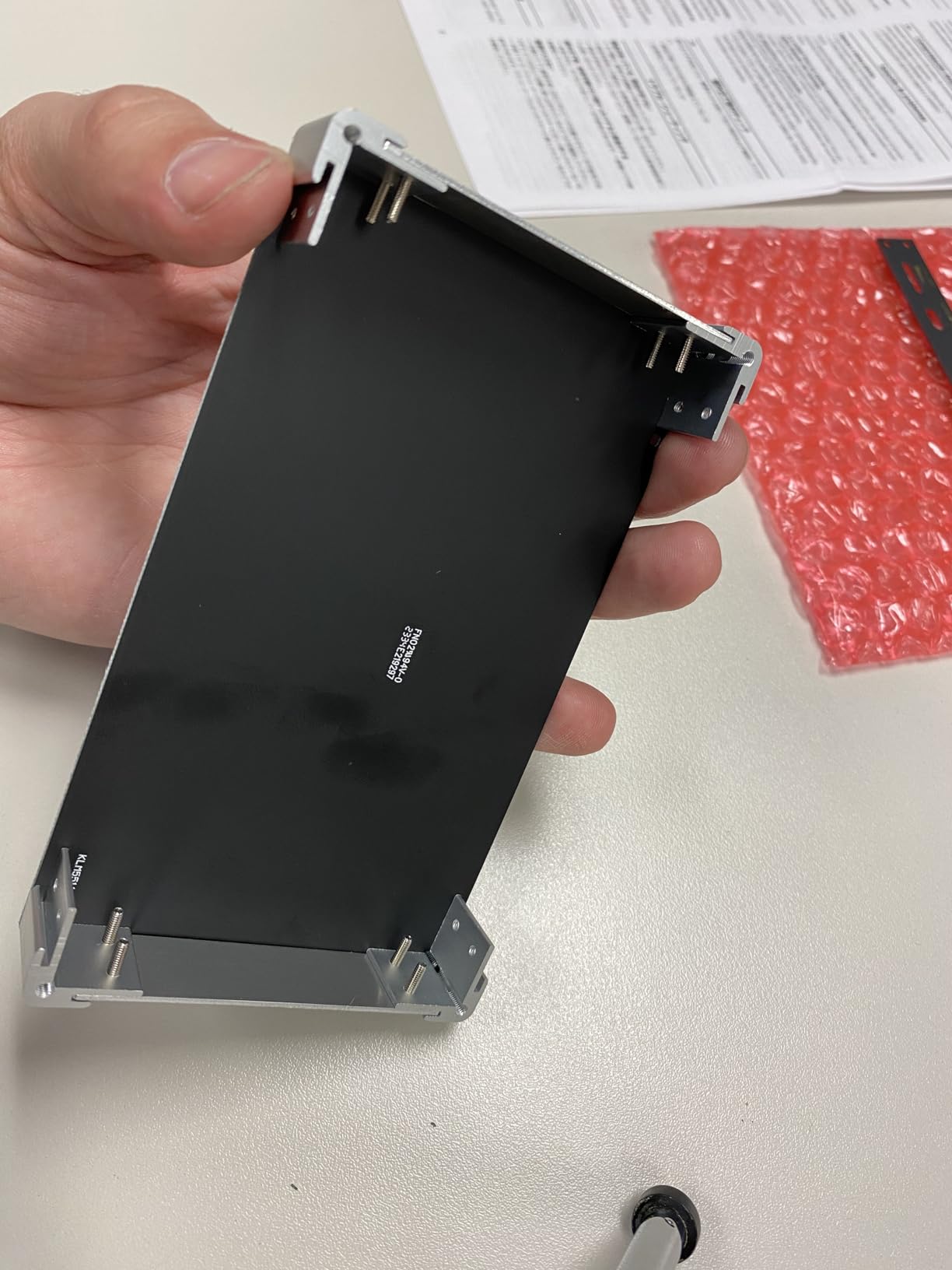
The Korg NTS-1 was the synth that made me fall in love with synthesis all over again. You literally build it yourself with the included screwdriver, which means by the time you make your first sound you already understand how the pieces fit together. The kit took me about 25 minutes to assemble and the instructions were clear enough that I never felt lost.
Once powered on, the NTS-1 delivers a surprisingly beefy single-oscillator analog-modeled sound. The multimode filter sounds smooth, the envelope generator is snappy, and the built-in reverb and delay are genuinely usable rather than afterthoughts. I found myself programming arpeggiator patterns within the first hour.
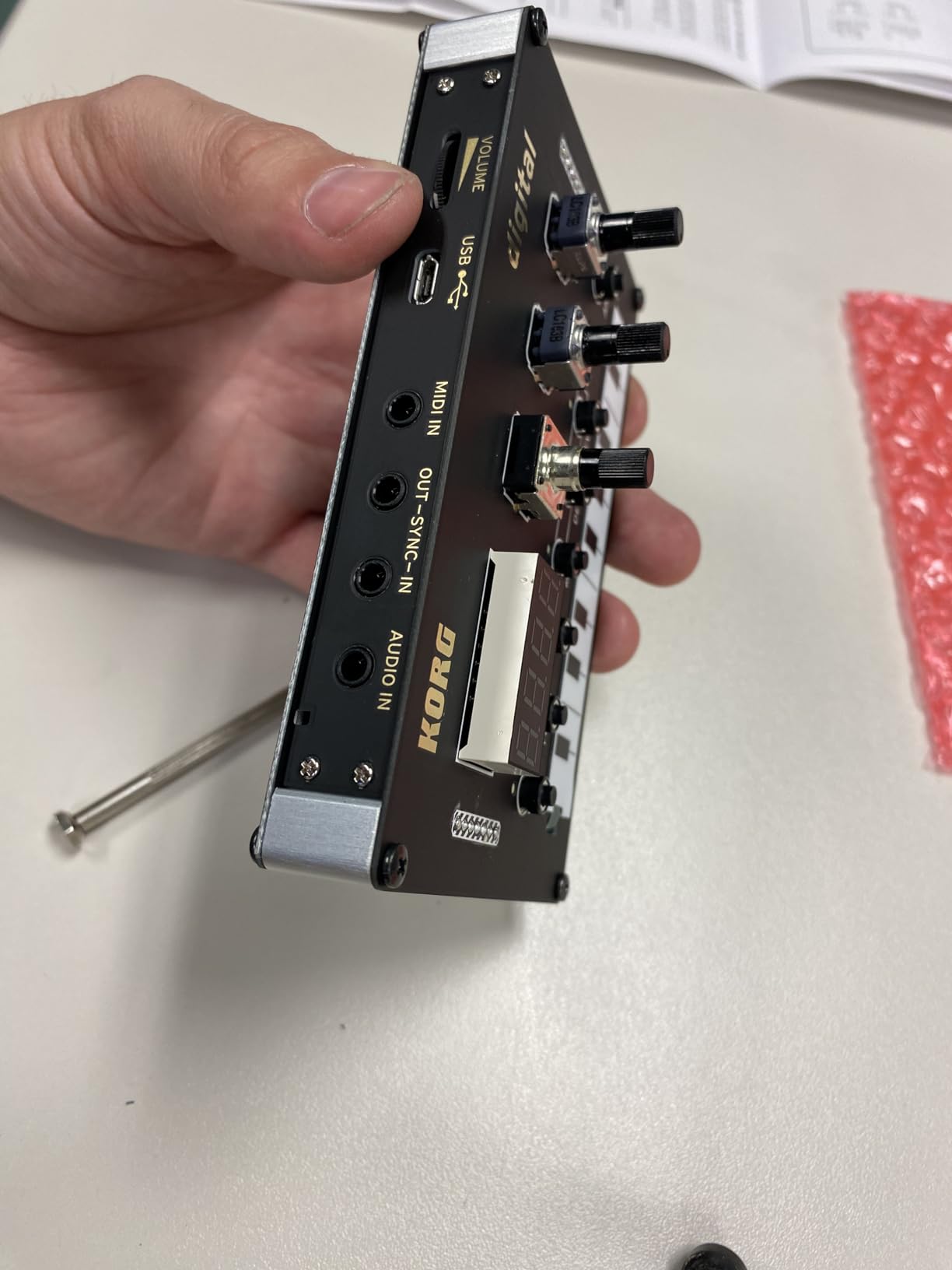
The real magic of the NTS-1 is the logue-SDK compatibility. You can load custom oscillators and effects created by the community, many of them free, which turns this tiny box into a constantly evolving instrument. I loaded a few wavetable oscillators and a chorus effect within the first week and it completely changed the character of the synth.
Battery powered and pocket sized, the NTS-1 is the synth I throw in my bag when I want to sketch ideas on the go. The ribbon keyboard is not great for serious playing, but hook it up to a MIDI controller and you have a genuinely powerful sound engine.
Who Will Get the Most Out of the NTS-1
This is the perfect first synth for anyone who learns by doing. The build process alone teaches you what oscillators, filters, and envelopes actually are in a physical sense. If you are curious about modular synthesis but terrified of the price, the NTS-1 is a gentle on-ramp.
It is also ideal for producers who already own a MIDI keyboard and just want a portable sound module to expand their palette. The logue-SDK ecosystem means you will never run out of new sounds to explore.
Limitations to Know Before Buying
The NTS-1 is a monophonic single-oscillator synth, so you cannot play chords or layer multiple notes. The ribbon keyboard is really meant for previewing sounds rather than performance, so plan to connect a MIDI controller.
The knobs are tiny because the whole unit is tiny. If you have larger hands or want a knob-per-parameter experience, look at the larger options on this list instead.
2. Korg Minilogue – The Polyphonic Analog Gold Standard for Beginners
Korg minilogue 37-key Polyphonic Analog Synthesizer w/ 16-step Sequencer, 4 Voices and OLED Oscilloscope (MINILOGUE)
4-voice true analog polyphony
2 VCOs per voice
OLED oscilloscope
16-step polyphonic sequencer
Tape-style delay
200 presets
Pros
- True 4-voice analog polyphony at an accessible price
- Knob-per-parameter interface makes learning subtractive synthesis intuitive
- Built-in OLED oscilloscope is both educational and fun
- Tape-style delay adds warmth and character
- 200 presets give you a massive starting library
Cons
- Slim keys may not suit players used to full-size keys
- Analog oscillators can drift out of tune over time
- Sequencer cannot transpose patterns
The Korg Minilogue is the synth I recommend more than any other when someone asks me what to buy first. It is widely considered the best synthesizer for beginners on Reddit and synth forums for good reason. You get true 4-voice analog polyphony, which means you can play actual chords, plus a knob-per-parameter interface that teaches you subtractive synthesis by feel.
The first time I sat down with the Minilogue, I had a usable bass patch within five minutes just by turning knobs and watching what happened. The OLED oscilloscope displaying your waveform in real time is a feature I did not know I needed until I used it. Being able to see how your filter cutoff changes the visual shape of the sound is an incredible learning tool.
Sound-wise, the Minilogue covers enormous ground. The 200 presets range from warm pads and plucky basses to metallic leads and experimental textures. I found the tape-style delay particularly musical, and the motion sequencer let me record filter sweeps that played back automatically.
Build quality is excellent with an aluminum top panel and wood side panels. It feels like an instrument that will last for years, and at roughly 5 pounds it is portable enough to move between desk and couch without a second thought.
Why the Minilogue Stays Relevant as You Grow
Unlike cheaper beginner synths that you outgrow in months, the Minilogue has enough depth to keep you engaged for years. The 16-step polyphonic sequencer, motion sequencing, and 200 preset slots mean you are constantly discovering new possibilities.
It also integrates easily with a DAW via USB-MIDI, so you can use it as a sound module inside Ableton, Logic, or FL Studio. The patch librarian software makes it easy to organize and share your custom sounds.
Things to Watch Out For
The slim keys are smaller than full-size piano keys. Most people adapt within a few days, but if you have larger hands or are coming from a piano background, test them first.
Analog oscillator drift is normal and expected. The Minilogue auto-tunes when it powers on, but if you leave it running for hours you may notice slight tuning changes. This is part of the analog character, not a defect.
3. Korg Volca Keys – Analog Polyphony in Your Pocket
Korg Volca Keys Analogue Loop Synthesizer Polyphonic w/Simple-three Voice Analog and Self Tuning
True 3-voice analog polyphony
16-step sequencer
Delay effect
Motion sequencing
Battery powered with built-in speaker
MIDI input
Pros
- True 3-note analog polyphony for playing chords
- Incredible value for the price
- Battery powered with built-in speaker for anywhere jamming
- 16-step sequencer with motion sequencing
- MIDI input for connecting external controllers
Cons
- Only sawtooth waveforms with no other oscillator options
- 3-note polyphony shares a single envelope generator
- Small keys can be uncomfortable for some users
The Korg Volca Keys is one of those synths that sounds far more expensive than it is. I have heard people describe it as impossible to be disappointed with, and after spending weeks with one I understand why. For the price you get a genuine 3-voice analog polyphonic synthesizer with a built-in sequencer, delay effect, and speaker.
The first thing I noticed was how musical the delay sounds. It is a lo-fi, slightly gritty delay that adds instant atmosphere to everything you play. Combined with the analog oscillators, the Volca Keys produces warm, evolving textures that belie its tiny footprint.
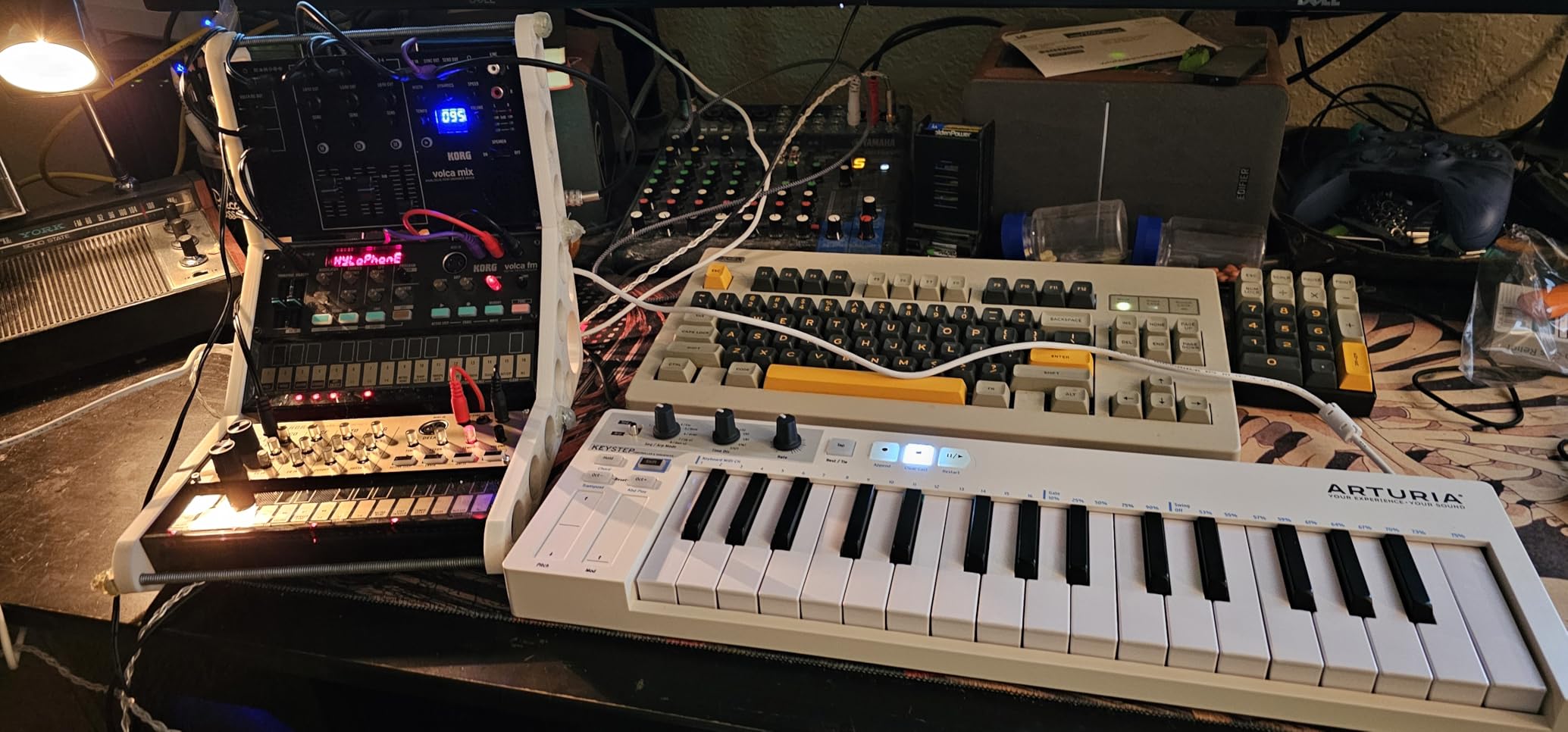
The 16-step sequencer with motion sequencing is where the Volca Keys really shines for beginners. You can program a chord progression, record filter sweeps and parameter changes, and then let it play back while you tweak knobs live. I built an entire ambient track in an afternoon using just the Volca Keys and its onboard delay.
Battery operation and the built-in speaker mean you can play anywhere. I took mine to the park, on a road trip, and even used it during a power outage. The sync jack lets you connect it to other Volca devices for a portable mini-rig.
Ideal Use Cases for the Volca Keys
This synth is perfect for beginners who want analog warmth and polyphony without spending hundreds. It is also a fantastic second synth if you already own a monophonic bass synth and want something for pads and leads.
The Volca Keys excels at ambient, lo-fi, and electronic music where character matters more than precision. The slightly imperfect analog sound is what makes it special.
Where the Volca Keys Falls Short
You only get sawtooth waveforms, which limits oscillator variety. The 3 voices share a single envelope generator, so each note does not get its own independent amplitude shaping.
The ribbon-style keys are touch sensitive but small. Connect a MIDI keyboard for serious playing, and use the onboard keys for quick pattern entry.
4. Korg Volca FM2 – Classic DX7 Sounds for Beginners
Korg Volca FM2 Digital Synthesizer w/ 6 Voices and 16-step Sequencer
6-voice 6-operator FM synthesis
DX7 algorithms
16-step sequencer
Built-in chorus and reverb
MIDI In and Out
Battery powered with speaker
Pros
- 6-voice FM synthesis with classic DX7 algorithms
- Built-in chorus and reverb effects
- Warp Active Step and Pattern Chain for dynamic performances
- Supports DX7 sysex file loading
- MIDI In and Out for expanded connectivity
Cons
- FM synthesis has a steeper learning curve than subtractive
- Built-in speaker is just okay
- Touchpad keyboard is basic
The Korg Volca FM2 brings the legendary sound of FM synthesis to a price point anyone can afford. If you have ever heard those glassy electric piano, bell, and marimba sounds from 1980s music, that was FM synthesis. The Volca FM2 puts all of that in a box smaller than a paperback book.
FM synthesis works differently from subtractive synthesis, and I will be honest, it took me longer to wrap my head around it. Instead of filtering a rich waveform, you modulate one operator with another to create complex harmonic content. The Volca FM2 makes this approachable with a clear layout and the ability to load DX7 sysex files, giving you access to thousands of classic patches.
The updated FM2 doubles the original Volca FM polyphony to 6 voices, which means you can play chords without notes cutting off. The built-in chorus and reverb add polish, and the 16-step sequencer with motion sequencing lets you build complete patterns.
Who Should Choose the Volca FM2
This is the synth for beginners who love the sound of 80s pop, jazz fusion, and lo-fi hip hop. FM synthesis produces electric pianos, bells, and metallic tones that subtractive analog synths simply cannot replicate.
If you enjoy loading presets and tweaking rather than building sounds from scratch, the DX7 sysex compatibility gives you an enormous library of free patches to explore.
The FM Learning Curve
FM synthesis is less intuitive than subtractive synthesis for absolute beginners. The relationship between operators and algorithms takes time to understand.
Plan to spend a few hours with tutorials before you are comfortable designing your own sounds. The reward is a sonic palette that no analog synth can match.
5. Korg Volca Bass – Three Oscillators of Analog Thunder
Korg Volca Bass Analog Synthesizer w/Three Oscillators and 16-step Sequencer
3 analog VCOs
Electribe-inspired sequencer
Slide function for acid
Self-tuning
SYNC jack and MIDI IN
Battery powered with speaker
Pros
- Three stable analog VCOs for thick fat sounds
- Excellent filter based on Korg 700s design
- Slide function perfect for acid and electronic music
- Self-tuning function prevents pitch drift
- Incredible value for money
Cons
- Built-in speaker has limited range
- Limited pattern storage with 8 memory slots
- No MIDI out without modification
- Filter knob adjustments not recorded in sequencer
The Korg Volca Bass is the synth I reach for when I need a bassline that cuts through a mix. Three analog oscillators in a box this small and this affordable should not be legal. Each oscillator can be tuned independently, which means you can create massive stacked sounds or detuned mayhem.
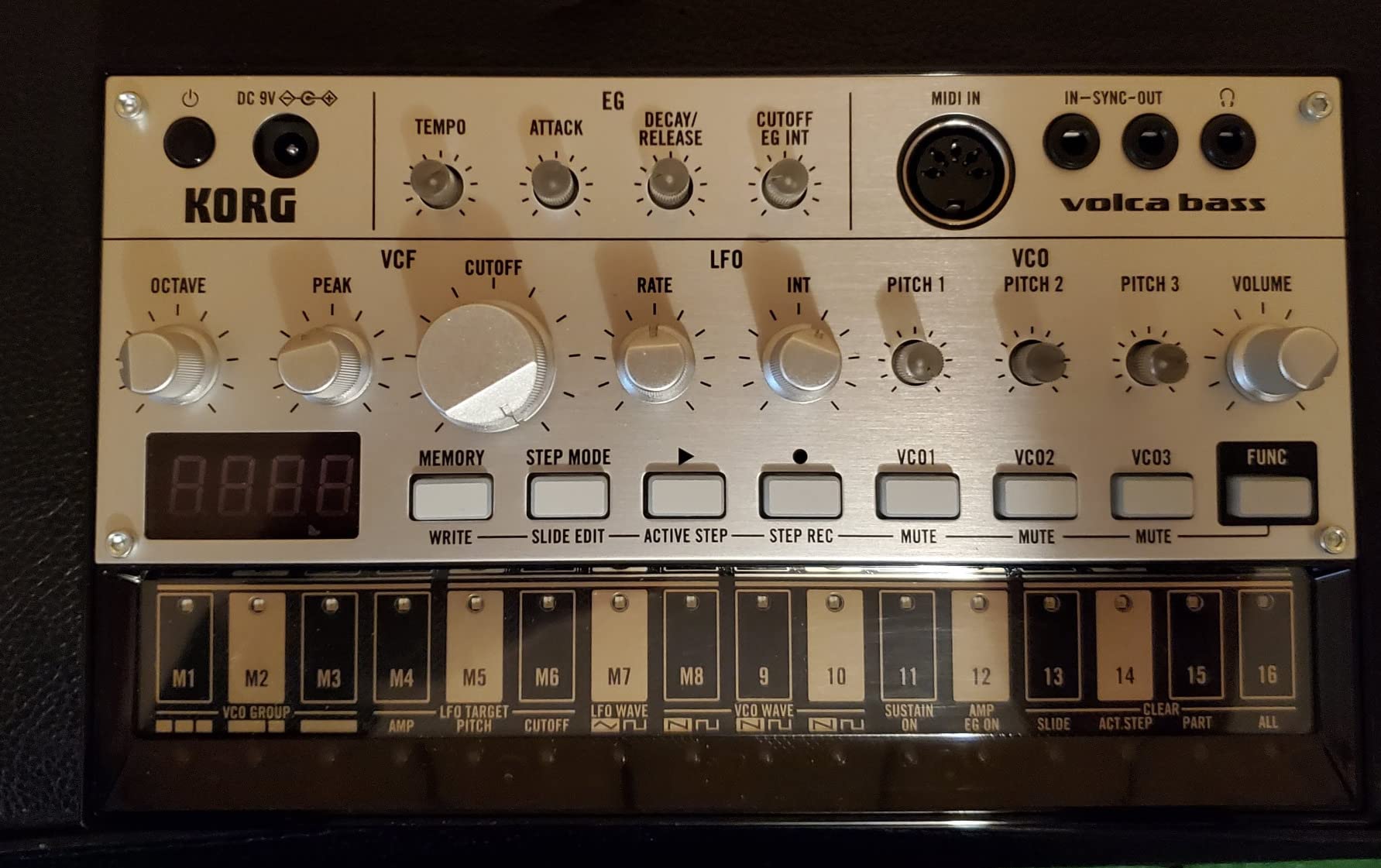
The slide function is what makes the Volca Bass special for acid house and techno. That smooth portamento between notes is the signature sound of classic electronic music, and the Volca Bass nails it. I programmed a 16-step acid line within ten minutes of unboxing and could not stop grinning.
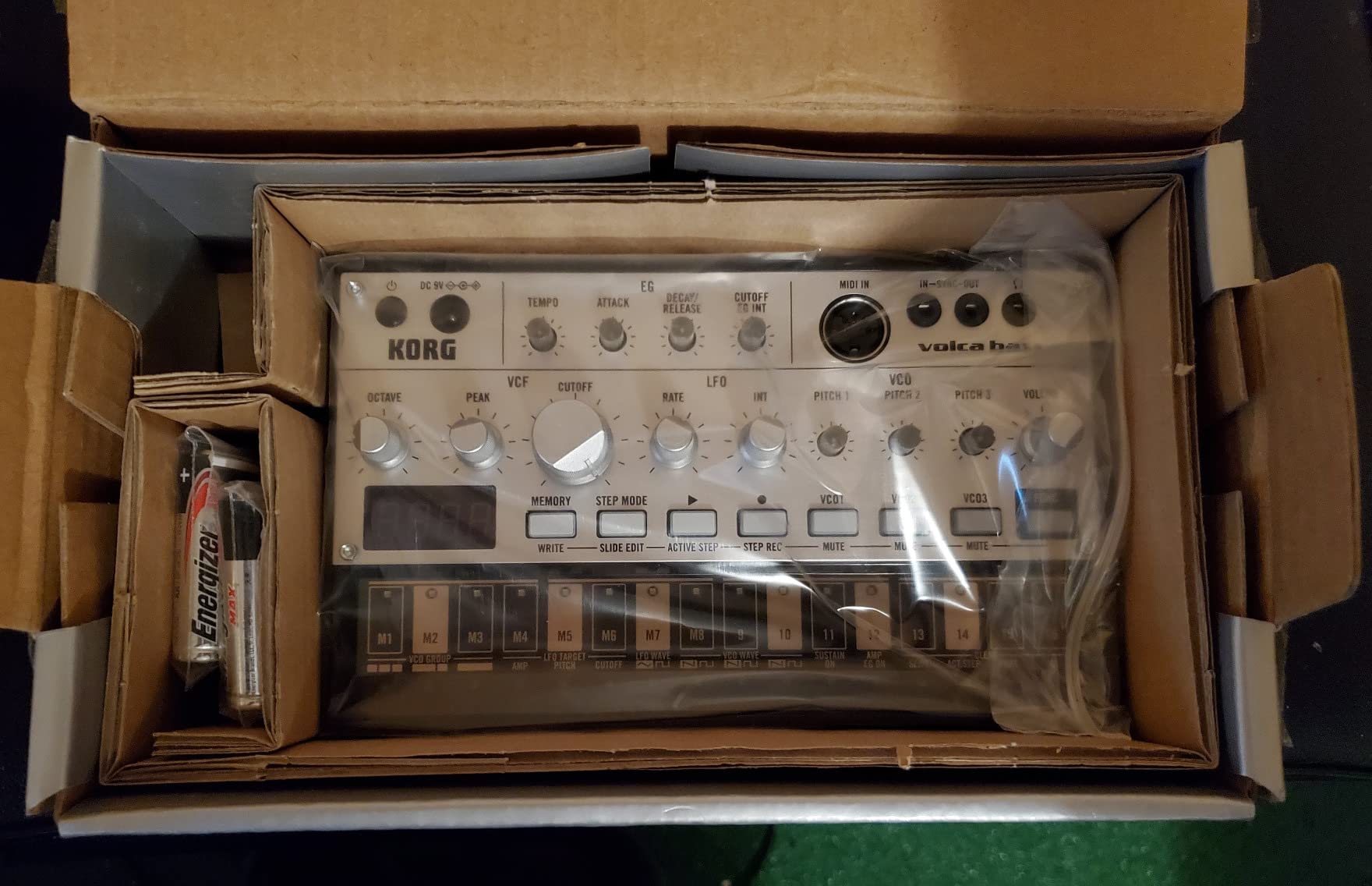
The self-tuning function is a huge advantage over vintage analog synths. You do not have to worry about the sound drifting as the unit warms up. The filter, based on the Korg 700s circuit, is aggressive and musical with a resonance that can push into self-oscillation.
Battery operation and the built-in speaker make this a couch-friendly synth. I have spent countless evenings with headphones plugged in, just jamming basslines while watching TV.
Best Genres for the Volca Bass
Acid house, techno, electro, and any electronic genre that relies on squelchy basslines. The slide function and analog filter are tailor-made for these styles.
It also works beautifully as a sound design tool for film scores and experimental music where you need dark, evolving low-end textures.
Limitations Worth Knowing
With only 8 pattern memory slots, you will outgrow the onboard storage quickly. Most users sequence it externally from a DAW or hardware sequencer to bypass this limitation.
There is no MIDI out, so the Volca Bass can only receive MIDI, not send it. This matters if you plan to use it as a master controller for other gear.
6. Behringer TD-3-BK – The TB-303 Clone That Started a Movement
Behringer TD-3-BK Analog Bass Line Synthesizer with VCO, VCF, 16-Step Sequencer, Distortion Effects and 16-Voice Poly Chain
TB-303 style analog bass synth
True analog circuitry
4-pole low-pass filter
16-step sequencer
Built-in distortion
MIDI in/out and USB
16-voice Poly Chain
Pros
- Authentic TB-303 acid bass sound at a fraction of the cost
- True analog signal path with matched transistors
- Built-in Boss DS-1 style distortion effect
- MIDI in/out including USB for DAW integration
- SynthTribe software for visual pattern editing
Cons
- Onboard sequencer can be frustrating without software
- Cheap plastic enclosure feels less premium
- See-through models may have uneven bottom molding
- Limited tweakability compared to more expensive synths
The Behringer TD-3-BK is the synth that brought TB-303 style acid bass to the masses. The original Roland TB-303 costs thousands of dollars on the used market. Behringer cloned the circuitry faithfully and delivered it at a price that makes it one of the best synthesizers for beginners who want that iconic acid sound.
The 4-pole low-pass resonant filter is the heart of the TD-3. With cutoff, resonance, envelope, decay, and accent controls, you can dial in everything from subtle warmth to screaming self-oscillating squelch. The built-in distortion, modeled on the Boss DS-1, adds grit that is essential for that classic acid house character.
I will be honest about the sequencer: it is frustrating to program from the front panel. The good news is that Behringer includes SynthTribe software, which lets you create and edit patterns visually on your computer. Once I started using SynthTribe, the TD-3 became one of my favorite synths to work with.
Who the TD-3 Is Built For
If you love acid house, techno, or any genre built on squelchy basslines, the TD-3 is your synth. It is also a fantastic tool for learning how analog signal flow works, since every stage from VCO to VCF to VCA is laid out clearly on the front panel.
The 16-voice Poly Chain capability means you can connect multiple TD-3 units for polyphonic setups if you ever want to expand.
What to Be Aware Of
The plastic enclosure does not feel as premium as the metal builds on Korg synths. Some users report wobble on the clear models due to uneven bottom molding.
Plan to use the SynthTribe software for sequencing. The onboard sequencer works but the workflow is not beginner-friendly.
7. Novation MiniNova – 18 Voices of Polyphonic Power
Novation MiniNova Analogue Modelling Compact 37 Mini-key Synth – Tough, compact, powerful mini-synth with pitch-correcting effect vocoder, 256 onboard sounds and five effects per voice layering Blue
18-voice polyphony
3 oscillators per voice
Built-in vocoder with VocalTune
256 onboard sounds
5 effects per voice
37 mini-key keyboard
MIDI and USB
Pros
- 18-voice polyphony is rare at this price point
- Built-in vocoder with VocalTune pitch correction
- 256 onboard sounds plus 128 user slots
- Animate mode with 8 backlit performance buttons
- Can be powered by portable USB battery pack
Cons
- Mini keys may not suit players used to full-size keys
- Some menu diving required for advanced features
- Mono-timbral so cannot layer or split sounds
- Small screen can be challenging for parameter editing
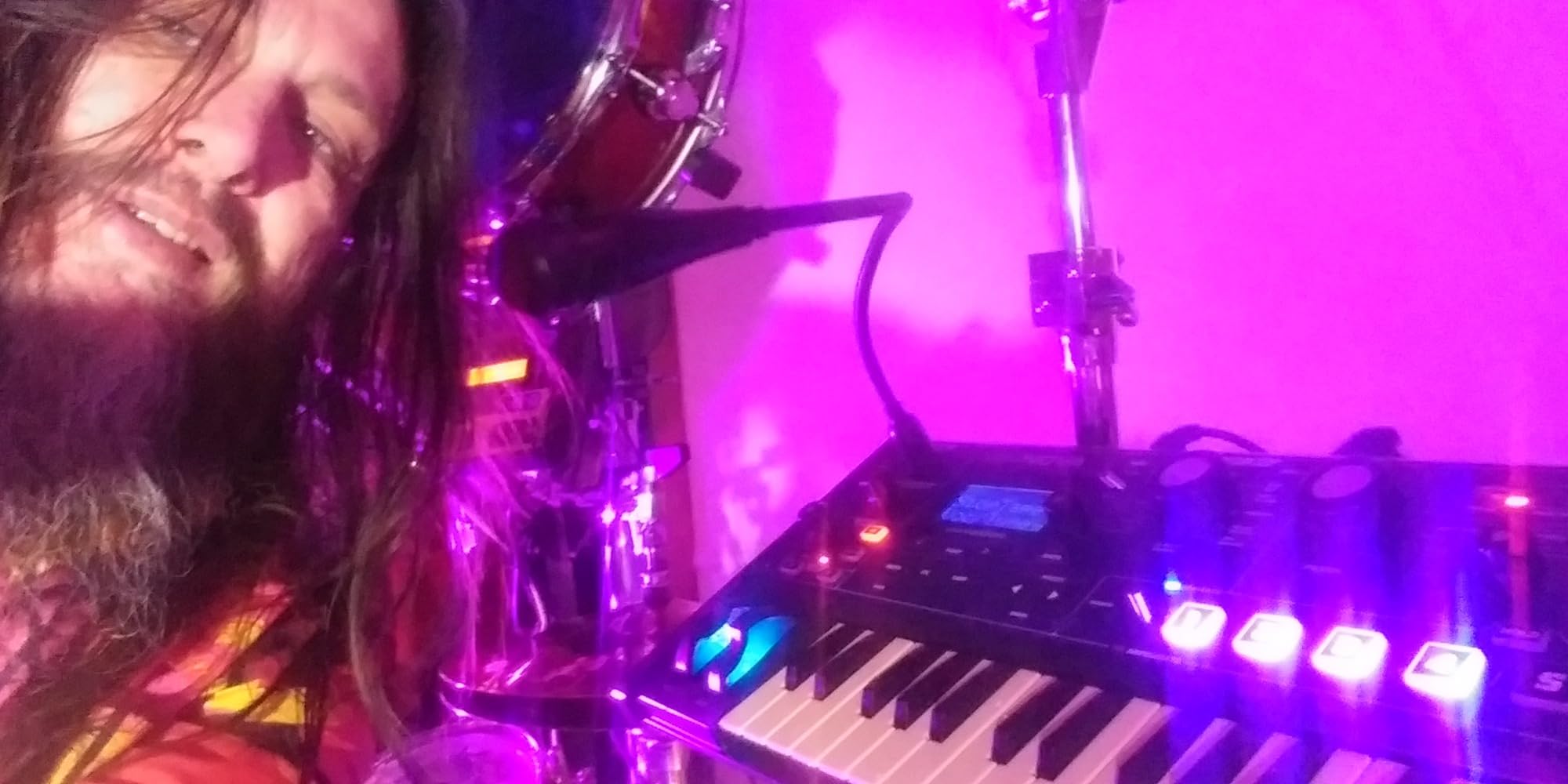
The Novation MiniNova is the most feature-dense synth on this list. With 18-voice polyphony, 3 oscillators per voice, a built-in vocoder, and 256 onboard sounds, it punches well above its weight class. I was skeptical about the depth until I started exploring the preset library and realized how much sonic territory this little blue synth covers.
The built-in vocoder with VocalTune is genuinely fun. Plug in the included gooseneck microphone and you can create robotic vocal effects, harmonizer parts, and talkbox-style textures. It is the kind of feature that makes the MiniNova feel like a creative playground rather than just another synth.
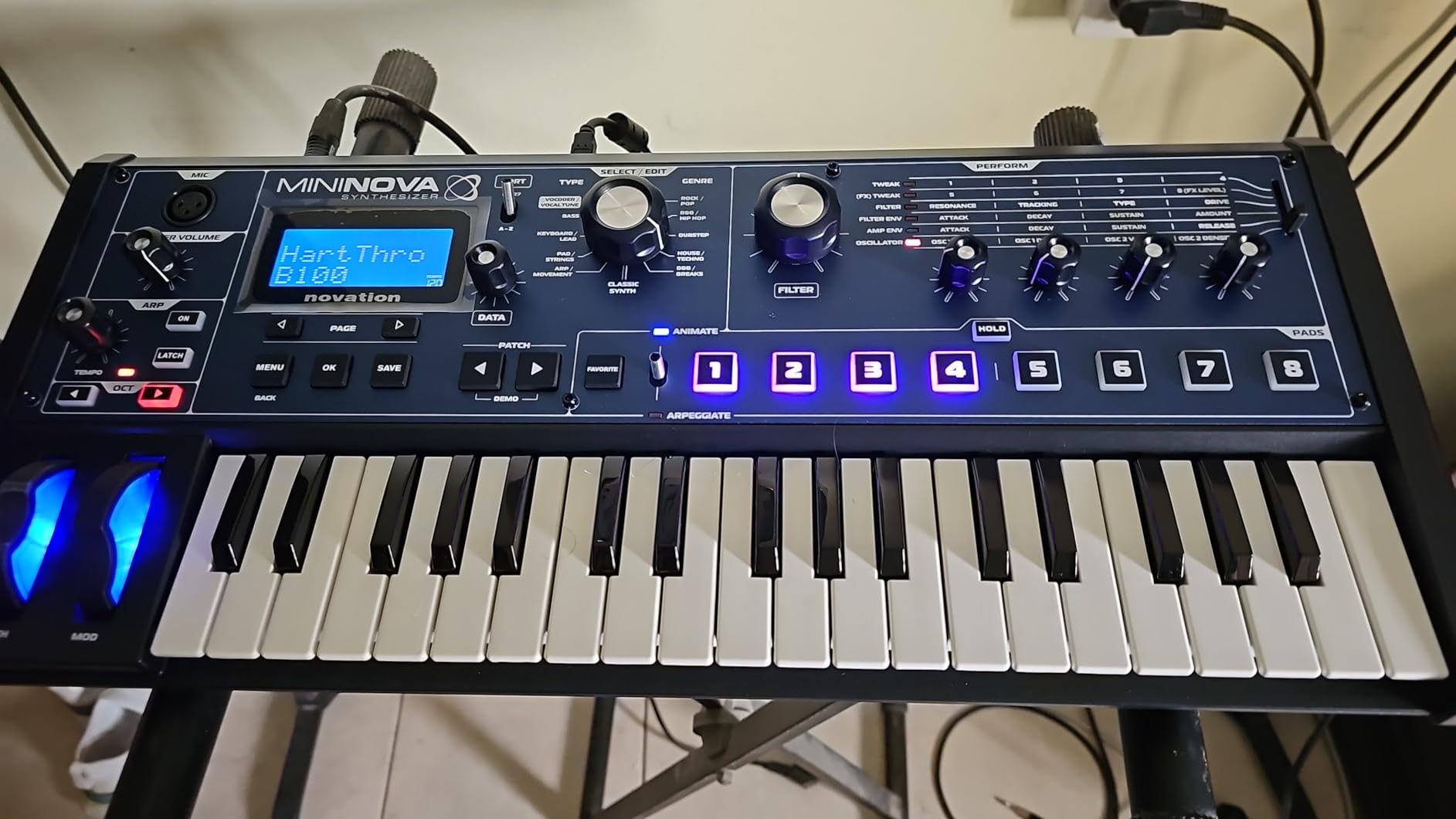
The Animate mode with 8 backlit performance buttons is one of my favorite features. Each button can trigger a different modulation or effect, letting you transform a sound dramatically with a single press during live performance. I mapped them to filter sweeps, octave jumps, and effect toggles.
Five effects per voice means your sounds come polished and production-ready straight out of the synth. The 18 voices of polyphony ensure you never run out of notes, even with dense chord progressions and sustained pads.
Best Fit for the MiniNova
Beginners who want maximum features and preset variety in a single instrument. If you are not interested in building sounds from scratch and just want to press a button and have amazing sounds come out, the 256 presets have you covered.
The vocoder makes this a unique pick for vocalists and producers who want to incorporate processed vocals into their music.
Trade-Offs to Consider
The menu system requires some diving for advanced parameter editing. The small screen makes complex editing a bit tedious compared to knob-per-parameter synths like the Minilogue.
It is mono-timbral, meaning you can only play one sound at a time. No layering or splitting across the keyboard.
8. Moog Mavis – Authentic Moog Sound in a Build-It-Yourself Kit
MOOG Mavis - Standalone Semi-Modular Analog Synthesizer Kit with Keyboard, Analog Oscillator, Filter, Envelope Generator, Wavefolder, and Dust Cover
DIY 100 percent analog synth kit
Moog ladder filter
2 oscillators
Diode wavefolder
44HP Eurorack compatible
MIDI and USB connectivity
Pros
- Authentic Moog sound at the most accessible price point ever
- Moog ladder filter delivers legendary warm tone
- Diode wavefolder for unique harmonic textures
- Eurorack compatible for modular expansion
- Build-it-yourself experience deepens understanding
Cons
- No built-in sequencer
- Keys on the face are not ideal for performance
- No 1/4 inch output
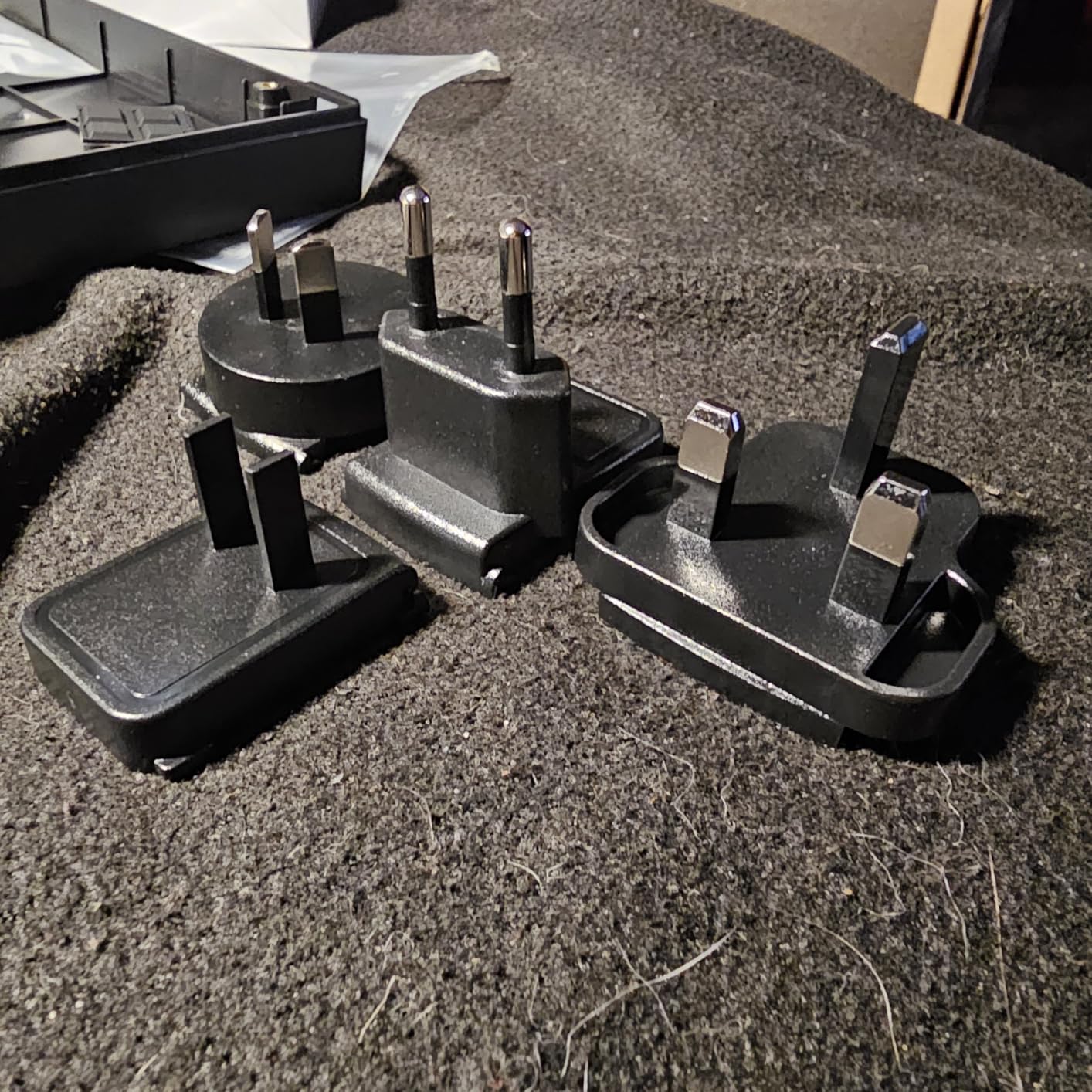
- Some units shipped with incorrect power adapter
The Moog Mavis is remarkable for one simple reason: it gives you the legendary Moog ladder filter and analog oscillator sound at a price no Moog has ever offered before. Building it yourself takes about 45 minutes, and the instructions are some of the clearest I have seen in any DIY kit.
Once assembled, the Mavis delivers the warm, thick, musical tone that Moog is famous for. The diode wavefolder is a feature normally found on much more expensive synths, and it adds harmonically rich overtones that take the sound into aggressive and experimental territory.
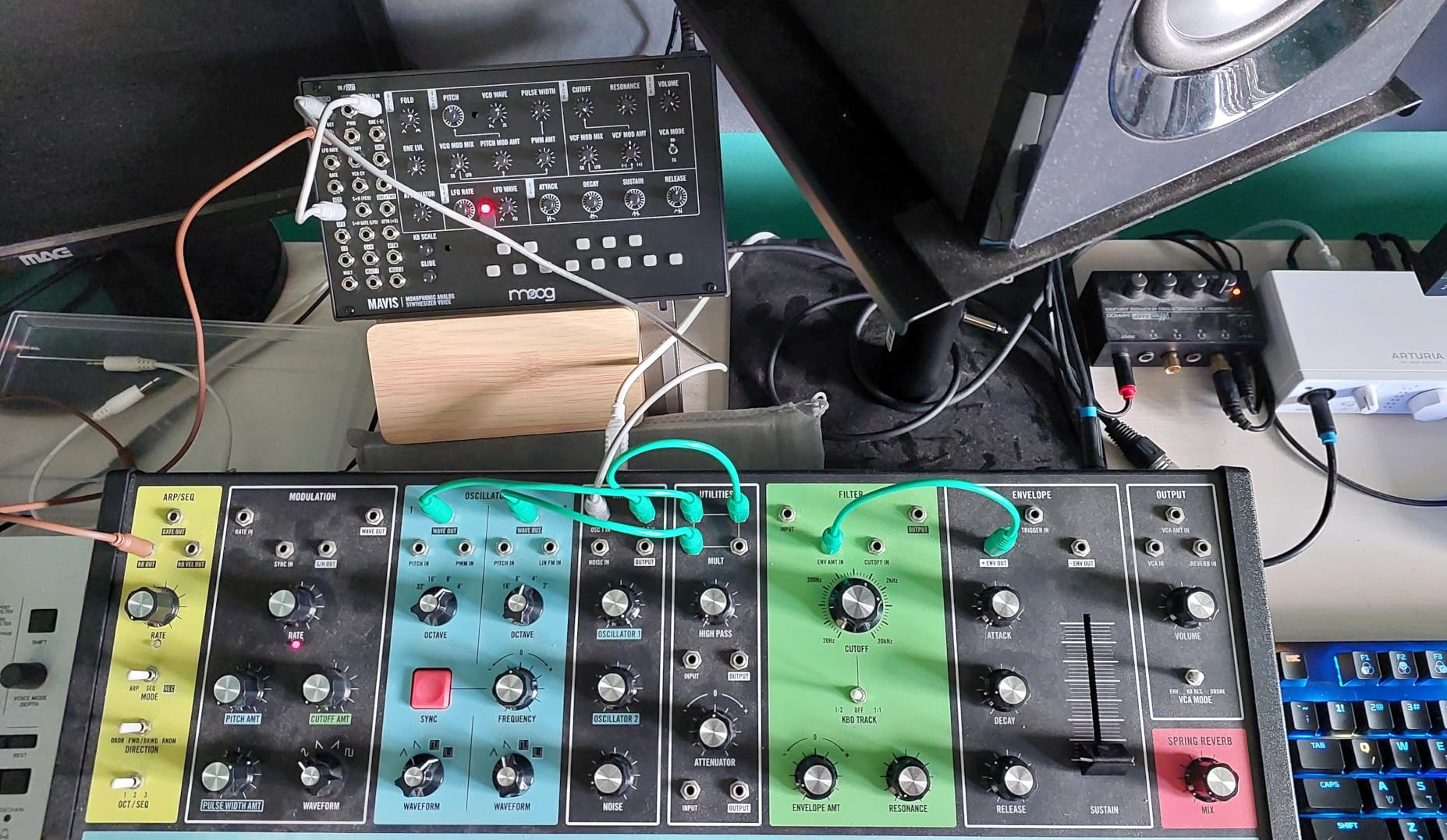
The 44HP Eurorack compatibility is what makes the Mavis a long-term investment. You can start with it as a standalone synth and later mount it in a Eurorack case alongside other modules. The patch points let you connect external CV and gate signals, opening the door to modular synthesis.
The included patch cables, tools, and dust cover mean you have everything you need to get started in one box. The build experience alone is worth the price for anyone serious about understanding how analog synthesis works at a component level.
Who the Moog Mavis Was Made For
Beginners who want to understand synthesis at a deep level. The build process teaches you about every component, and the patchable design encourages experimentation.
Anyone interested in eventually moving toward Eurorack modular. The Mavis is the perfect bridge between standalone synths and full modular systems.
Things to Keep in Mind
There is no built-in sequencer, so you will need an external sequencer or MIDI controller to program patterns. The keys on the face panel are really for triggering sounds, not performance.
The output is on a 3.5mm jack rather than a standard 1/4 inch, so you may need an adapter to connect to studio gear.
9. Korg Monologue – Monophonic Analog With a Built-In Oscilloscope
Korg monologue Monophonic Analog Synthesizer w/ 16-step Sequencer and OLED Oscilloscope - Blue
Monophonic analog synth
2 VCOs
Built-in OLED oscilloscope
16-step sequencer
Microtuning scales
Aphex Twin presets
Battery powered
MIDI USB and Audio Sync
Pros
- Outstanding value for a true analog monophonic synth
- Built-in OLED oscilloscope is educational and practical
- Microtuning capabilities for custom scales and alternate tonalities
- Presets designed by Aphex Twin Richard D James
- Durable aluminum top panel with rubber-coated knobs
Cons
- Monophonic only so can only play one note at a time
- Keys are smaller than full-size
- Sequencer could be easier to program
- Power adapter may need to be purchased separately in some regions
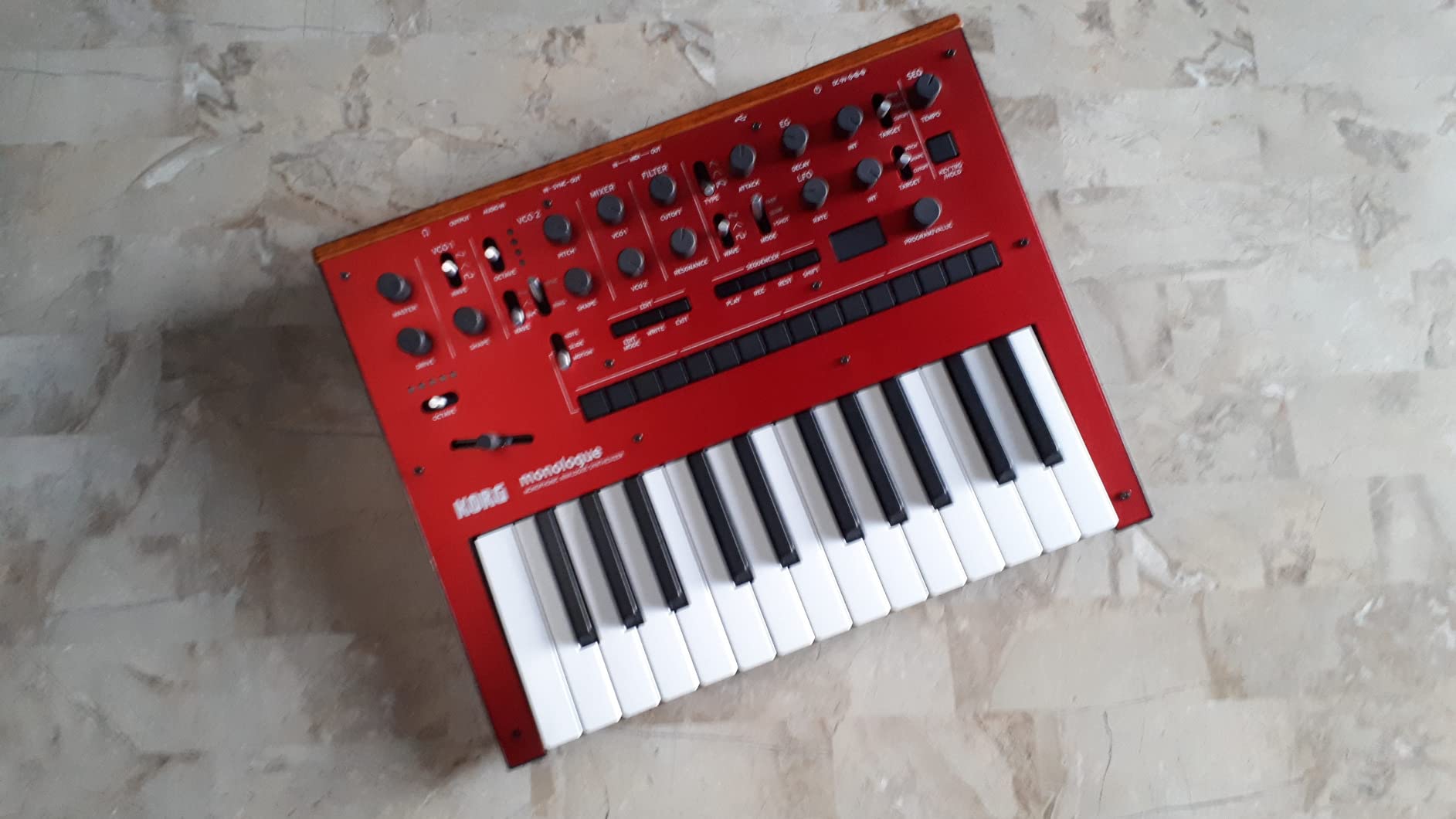
The Korg Monologue is the synth I recommend to anyone who wants to learn monophonic synthesis on a real instrument. The two analog VCOs produce thick, warm basses and searing leads, and the built-in OLED oscilloscope gives you visual feedback on every sound you create.
The microtuning feature sets the Monologue apart from every other beginner synth on this list. You can load custom scales and alternate tonalities, which opens up musical possibilities beyond standard western tuning. I loaded a microtonal scale and discovered entirely new melodic ideas I would never have found on a standard synth.
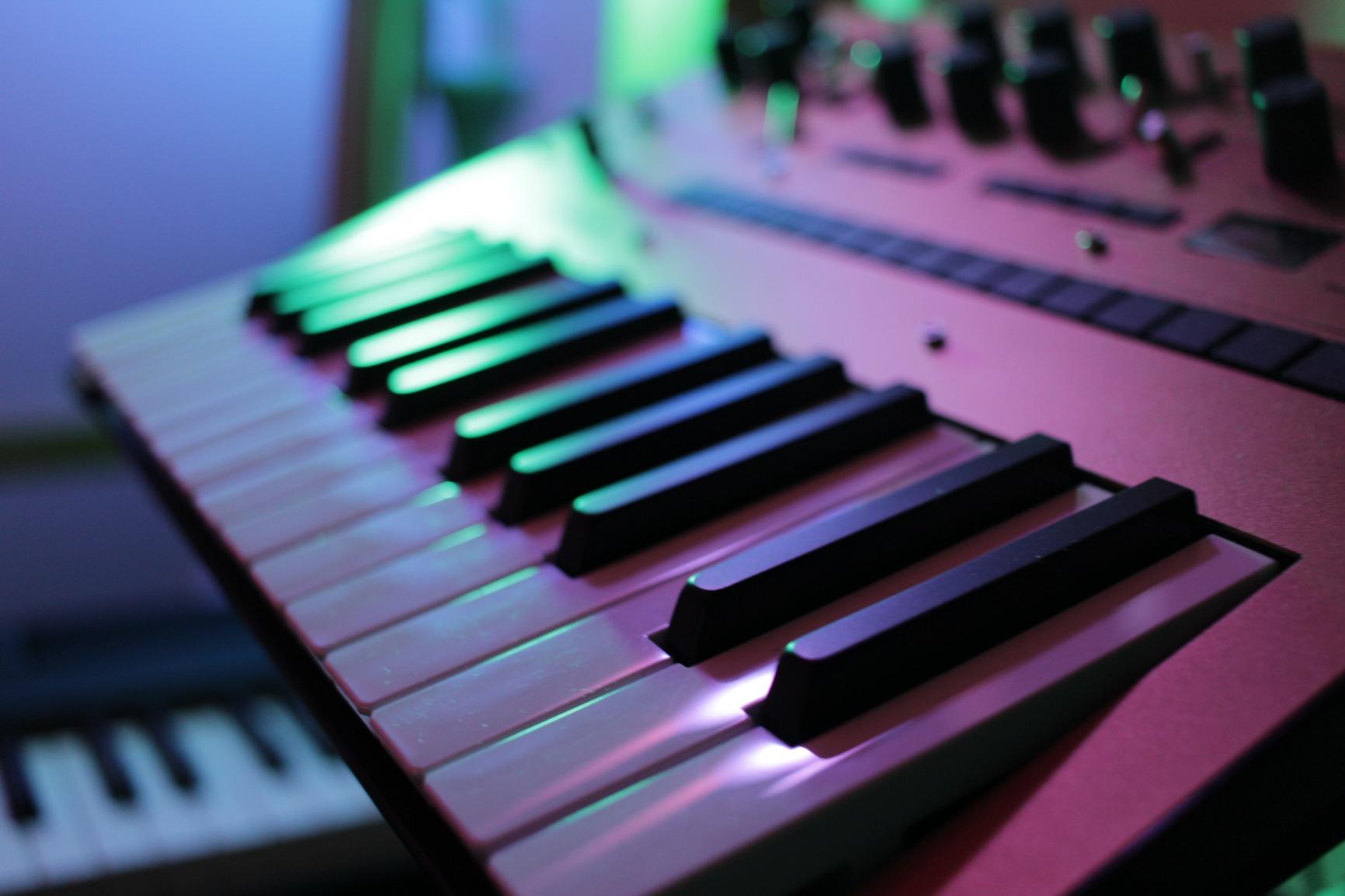
The factory presets designed by Aphex Twin himself are worth the price of admission. These are not your typical generic synth presets. They are weird, wonderful, and inspiring, and reverse-engineering them taught me more about sound design than any tutorial.
The 16-step sequencer with motion sequencing lets you record parameter changes across four lanes. Battery operation means you can take it anywhere, and the aluminum top panel with chassis-mounted pots feels built to last.
Ideal Players for the Monologue
Bassists, lead players, and anyone focused on monophonic sounds. If you want to create acid basslines, lead hooks, or experimental textures, the Monologue delivers in spades.
The microtuning feature makes it especially appealing for experimental musicians and anyone interested in non-standard scales.
Trade-Offs
Being monophonic means you can only play one note at a time. No chords. If you need polyphony, look at the Minilogue or DeepMind 6 instead.
The keys are smaller than full-size but larger than micro keys. Most players adapt quickly, but try one if you have concerns.
10. Behringer DeepMind 6 – 6-Voice Analog Polyphony With Studio Effects
Behringer DEEPMIND 6,Black
6-voice true analog polyphony
2 OSCs per voice
4 simultaneous TC Electronic and Klark Teknik FX
8x8 modulation matrix
3 ADSR generators per voice
1024 preset slots
USB connectivity
Pros
- Incredible value for 6-voice analog polyphony
- 4 simultaneous TC Electronic and Klark Teknik effects with 30 plus algorithms
- Powerful 8x8 modulation matrix
- Solid all-metal construction with wood side panels
- 1024 preset slots for extensive sound storage
Cons
- Loud fan noise mentioned by multiple reviewers
- Black keys on keybed have uneven velocity
- Oscillator 2 is a foldable square wave which is less conventional
- Not Prime eligible
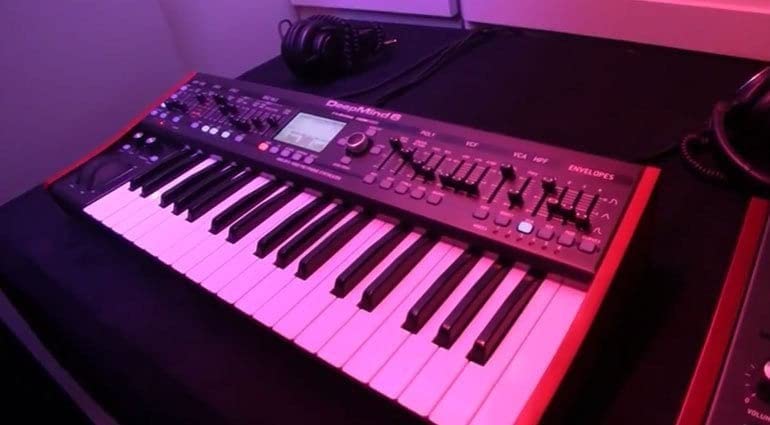
The Behringer DeepMind 6 is the most synth for your money on this entire list. Six voices of true analog polyphony, four simultaneous effects engines from TC Electronic and Klark Teknik, an 8×8 modulation matrix, and 1024 preset slots. On paper, this synth should cost twice what it does.
The sound is where the DeepMind 6 truly shines. The analog oscillators are warm and authentic, and the onboard effects rival dedicated outboard processors. I was able to create lush, atmospheric pads and punchy synth bass that sounded production-ready with zero external processing.
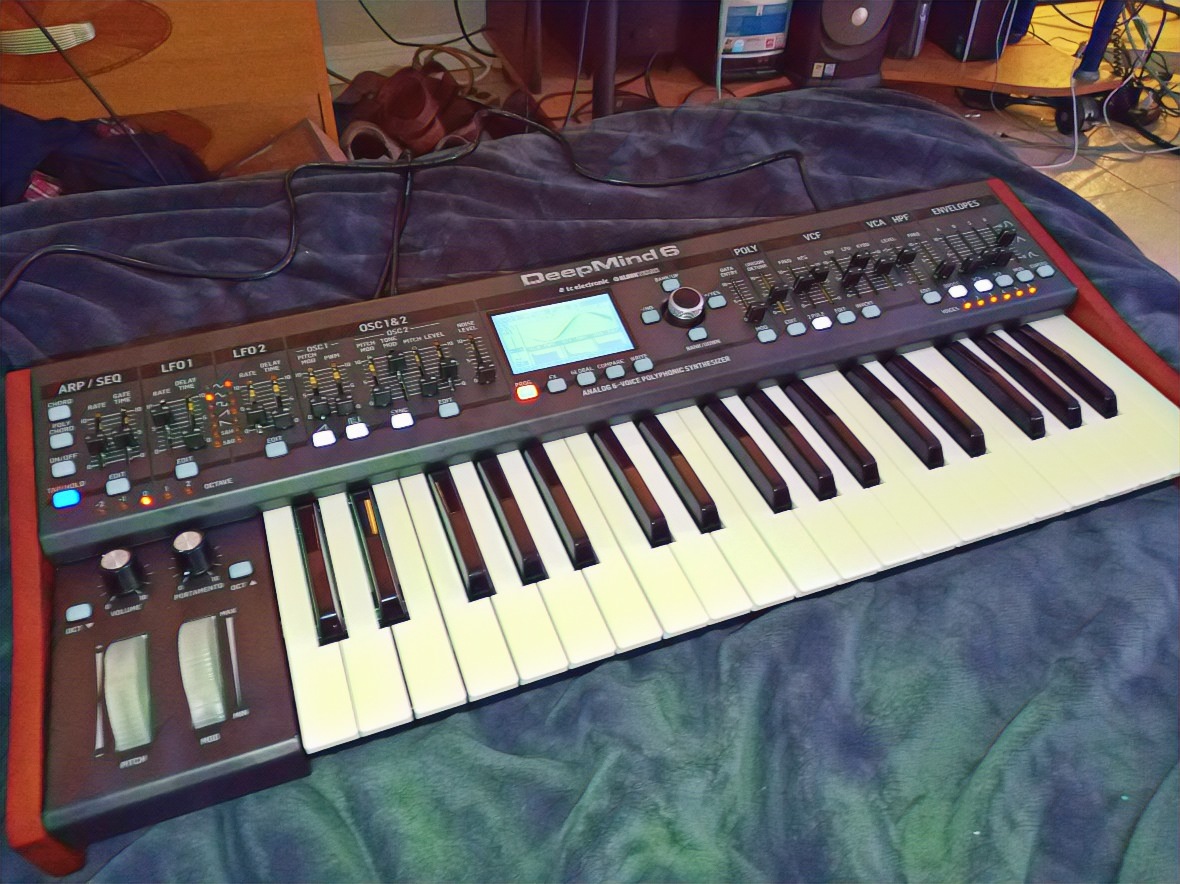
The 8×8 modulation matrix is a feature I did not expect at this price. You can route 8 sources to 8 destinations, creating complex evolving sounds that change over time. Combined with the 3 ADSR generators per voice, the DeepMind 6 offers sound design depth that rivals synths costing three times as much.
The build quality is impressive with an all-metal chassis and wood side panels. The internal power supply means no wall wart clutter, and the 1024 preset slots ensure you will never run out of sound storage.
Who Should Buy the DeepMind 6
Beginners who want maximum polyphony and effects in a single instrument. If you are producing electronic music, film scores, or ambient tracks, the DeepMind 6 covers an enormous range of sonic territory.
The modulation matrix makes it a great learning tool for understanding routing and sound design at a deeper level.
Known Issues to Consider
The fan noise is real and is the most common complaint. In a quiet studio environment it is noticeable. Some users have replaced the fan or rerouted airflow to mitigate this.
The black keys have uneven velocity response and may require excessive force. Test the keybed if possible, or plan to use an external controller via MIDI.
Buying Guide: How to Choose Your First Synthesizer
Now that you have seen our picks, let’s break down the decisions you need to make. Choosing from the best synthesizers for beginners comes down to five key questions: sound type, polyphony, form factor, connectivity, and budget. Let’s walk through each one.
Analog vs Digital: Which Is Better for Beginners?
Analog synthesizers generate sound using physical electronic circuits. Oscillators produce waveforms that pass through filters and amplifiers on their way to the output. The result is a warm, rich, slightly imperfect sound that many musicians find more musical and inspiring.
Digital synthesizers use software algorithms to generate and shape sound. FM synthesis, wavetable synthesis, and virtual analog modeling are all digital techniques. Digital synths tend to be more precise, more feature-packed, and often more affordable than their analog counterparts.
For absolute beginners, I generally recommend starting with an analog synth because the knob-per-parameter interface makes subtractive synthesis intuitive. You turn a knob labeled filter cutoff and you hear the change immediately. Digital synths with menu-based interfaces can feel abstract until you understand the underlying concepts.
That said, if you love the sound of FM synthesis bells and electric pianos, a digital synth like the Volca FM2 is the right choice regardless of your experience level.
Monophonic vs Polyphonic: Do You Need Chords?
Monophonic synths play one note at a time. They are perfect for basslines, lead melodies, and sound design. Because all the circuitry is dedicated to a single voice, monophonic synths often sound thicker and more powerful than polyphonic synths at the same price point.
Polyphonic synths can play multiple notes simultaneously, which means you can play chords. Polyphony is described in voices: a 4-voice synth can play 4 notes at once, a 6-voice can play 6, and so on. More voices means more notes before sounds start cutting off.
If you want to play pads, chords, or layered textures, you need polyphony. If you are focused on bass or lead sounds, a monophonic synth will give you more sound per dollar. Many beginners start with a mono synth like the Volca Bass or TD-3 and add a polyphonic synth later.
Keyboard vs Desktop Module: Which Form Factor?
Synths come in two main form factors. Keyboard synths have built-in keys and are self-contained instruments. Desktop modules and tabletop synths have no keyboard and require an external controller or sequencer to play.
If you do not already own a MIDI keyboard, a synth with built-in keys is the simpler choice. If you already have a controller, a desktop module saves space and money while delivering the same sound engine.
The Volca series blurs this line with small built-in ribbon keyboards that are useful for pattern entry but not ideal for performance. Most Volca owners connect an external MIDI keyboard for serious playing.
Budget Tiers: How Much Should You Spend?
Under $200 is where you find the Volca series and the NTS-1. These are genuine instruments that teach real synthesis concepts. They are perfect for testing whether synthesis is something you want to pursue before committing more money.
$200 to $500 is the sweet spot for first synths. The Moog Mavis, Korg Monologue, and Behringer TD-3 all live in this range. You get better build quality, more features, and instruments you will not outgrow quickly.
$500 and above is where you find polyphonic analog synths like the Minilogue and DeepMind 6. These are instruments you can build a home studio around. If you are confident you will stick with synthesis, investing in this tier saves you from upgrade-itis down the road.
Essential Accessories for Your First Synth
A 1/4 inch instrument cable to connect your synth to speakers or an audio interface. Most synths do not include one in the box.
Headphones with a 1/4 inch or 3.5mm jack depending on your synth. The Volca series uses 3.5mm, while larger synths use 1/4 inch.
An audio interface if you want to record into a computer. Even a basic 2-channel interface will let you capture your synth in a DAW.
A MIDI controller keyboard if your synth is a desktop module or has small built-in keys. A 25-key or 49-key controller transforms the playing experience.
Batteries if your synth supports battery operation. The Volca series and some Korg synths run on AA batteries, which makes them truly portable.
Frequently Asked Questions
What is the best affordable synthesizer?
The Korg Volca Keys, Korg NTS-1 kit, and Behringer TD-3 are the best affordable synthesizers for beginners, all offering genuine analog sound under $200. The Korg Volca Bass is another excellent budget option at around $130 with three analog oscillators.
What is the most popular synthesizer of all time?
The Moog Minimoog Model D is widely considered the most popular and influential synthesizer of all time. It defined the sound of 1970s rock, funk, and electronic music and its ladder filter design is still used in modern synths like the Moog Mavis on this list.
Which is the best synthesizer to buy for a beginner?
The Korg Minilogue is the best synthesizer to buy for most beginners because it offers true 4-voice analog polyphony, a knob-per-parameter interface that teaches subtractive synthesis intuitively, and a built-in oscilloscope for visual feedback. For tighter budgets, the Korg Volca Keys and NTS-1 are excellent starting points.
What is a good keyboard synthesizer for beginners?
Good keyboard synthesizers for beginners include the Korg Minilogue with 37 slim keys, the Novation MiniNova with 37 mini keys and a built-in vocoder, and the Korg Monologue with 25 slim keys. The Behringer DeepMind 6 offers 6-voice polyphony with a full keybed for players who want more keys.
Final Thoughts on the Best Synthesizers for Beginners
Finding the best synthesizer for beginners does not have to be complicated. If you want the all-around winner, the Korg Minilogue gives you true analog polyphony, an educational oscilloscope, and a knob-per-parameter interface that teaches you synthesis by feel. For budget-conscious buyers, the Korg Volca Keys and NTS-1 deliver genuine analog and digital synthesis at prices that let you explore without anxiety.
The most important thing is to start. Every synth on this list will teach you something about sound design, and none of them will hold you back creatively. Pick the one that excites you the most, plug it in, and start turning knobs. That is how every synthesist begins their journey, and 2026 is a better year than any to start yours.