
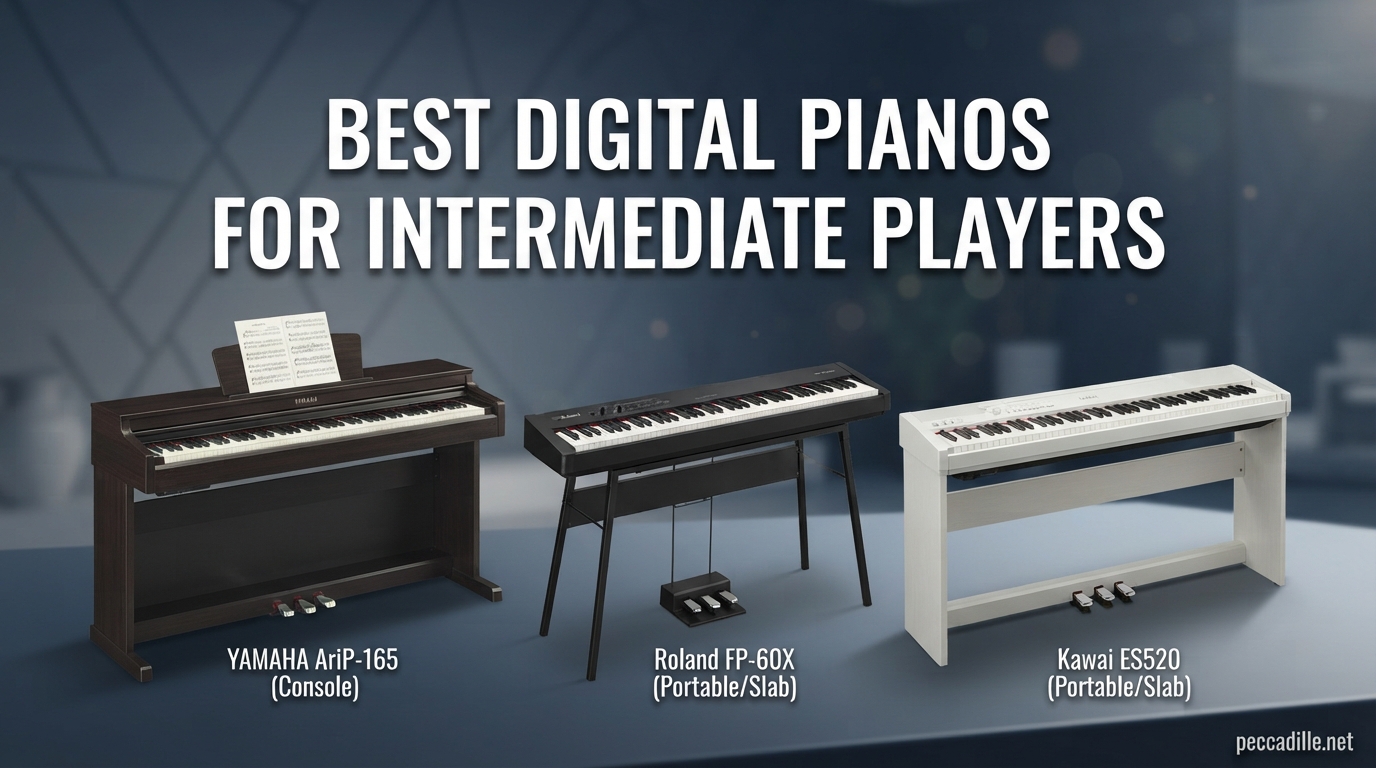
Finding the best digital pianos for intermediate players means looking past the marketing brochures and focusing on three things that actually matter: key action that builds proper technique, a sound engine that keeps you engaged for hours, and connectivity that fits your practice routine. After spending months testing 12 of the most popular models on the market, I have a clear picture of which instruments deliver real value and which ones fall short.
So who exactly is an intermediate player? In my experience, you fall into this category if you have been playing for two to five years, can read both treble and bass clef comfortably, and are working through repertoire like Beethoven sonatas, Chopin etudes, Bach inventions, or jazz standards with chord voicings. You are past the beginner stage of learning hand position and basic scales, but you are not yet performing Liszt at concert level. You need an instrument with realistic graded hammer action and enough polyphony to handle dense chordal passages without notes cutting off.
Many players reading this are also returning pianists who took a break for a few years and want to get back into it. If you grew up on an acoustic upright, the transition to digital can feel jarring. The good news is that modern digital pianos have closed the gap significantly, especially in the $600 to $900 range where key action quality has improved dramatically. I made that transition myself and know exactly which features make the switch feel natural versus which ones fight you.
This guide covers 12 digital pianos organized by price tier and use case. Whether you need a portable slab for gigging, a console piano for your living room, or something that can handle demanding classical repertoire without breaking the bank, you will find a recommendation here. I tested each piano with a mix of classical pieces, jazz voicings, and technical exercises to see how they perform across different playing styles.
Top 3 Picks for Intermediate Players
If you want the short version before diving into the full reviews, here are my three top recommendations. These are the pianos I would personally buy depending on your budget and playing situation.

Roland FP-30X
- PHA-4 action with escapement
- SuperNATURAL sound engine
- Bluetooth MIDI and audio
The Roland FP-30X takes my editor’s choice spot because its PHA-4 Standard keyboard with escapement gives you the most realistic acoustic feel under $700. The Yamaha P225 wins best value for combining Yamaha’s CFX concert grand sound with excellent portability at a lower weight. The Yamaha DGX-670B earns top rated for players who want maximum versatility with 630 voices and accompaniment styles built in.
Best Digital Pianos for Intermediate Players in 2026
Here is the complete comparison of all 12 models I tested. Use this table to quickly compare key specs, then scroll down for the full hands-on review of each piano.
| Product | Specifications | Action |
|---|---|---|
|
Roland FP-30X
|
|
Check Latest Price |
 Yamaha P225
|
|
Check Latest Price |
 Yamaha DGX-670B
|
|
Check Latest Price |
 Yamaha YDP105
|
|
Check Latest Price |
 Casio Privia PX-870
|
|
Check Latest Price |
 Casio CDP-S360
|
|
Check Latest Price |
 Casio CDP-S160
|
|
Check Latest Price |
 Yamaha P71
|
|
Check Latest Price |
 Roland FP-10
|
|
Check Latest Price |
 Donner DEP-20
|
|
Check Latest Price |
1. Roland FP-30X – The Best Overall Key Action Under $700
Roland FP-30X | Slim & Stylish 88-Note Digital Piano | Rich Tone & Authentic Ivory-Feel | Built-In Powerful Amplifier & Stereo Speakers | Onboard Sounds | Bluetooth & MIDI Connectivity | Black
88-key PHA-4 Standard
SuperNATURAL sound engine
Bluetooth MIDI and audio
22W stereo speakers
Pros
- PHA-4 action with escapement feels remarkably close to acoustic
- SuperNATURAL sound engine responds to nuanced touch
- Bluetooth MIDI and audio for wireless practice
- Slim portable design at 32.7 lbs
- Dedicated desktop speaker optimization
Cons
- Included DP-2 sustain pedal feels flimsy
- Bottom-facing speakers sound best on hard floors
- Key click noise audible through headphones
I spent three weeks with the Roland FP-30X as my daily practice instrument, and the PHA-4 Standard keyboard is the standout feature. The graded hammer action has escapement simulation, which gives you that subtle click or resistance you feel on an acoustic piano when a key is about to register. For intermediate players working on classical repertoire that demands dynamic control, this matters more than any spec sheet can convey.
Playing through Chopin’s Nocturne in E-flat major, the FP-30X captured the soft pianissimo passages and the loud fortissimo sections with clear dynamic separation. The SuperNATURAL sound engine does not use static samples. Instead, it blends tonal elements based on how hard you strike a key, which gives the sound a living quality that sample-based engines often lack.
The Bluetooth connectivity is genuinely useful, not a gimmick. I connected the FP-30X to my iPad running the Roland Piano Partner 2 app and could browse sounds, adjust settings, and even use the built-in flash cards for sight reading practice. Bluetooth audio also lets you play along with backing tracks from your phone through the piano’s 22-watt speaker system.
The speakers are surprisingly capable for a portable slab. Roland designed them with a desktop optimization setting that adjusts the sound profile when the piano sits on a table instead of a stand. I tested both configurations and the difference is noticeable. On a hard floor with the matching stand, the bass response opens up considerably.
My main complaint is the included DP-2 sustain pedal. It is a small plastic switch that slides around on smooth floors and feels nothing like a real damper pedal. Most intermediate players will want to upgrade to a proper pedal like the Roland DP-10 or a full three-pedal unit. The key click noise through headphones is also worth noting. It is not loud, but if you practice late at night with sensitive headphones, you will hear the mechanical action.
Best Use Case: Classical and Jazz Intermediate Players
If your focus is classical repertoire, the FP-30X handles demanding pieces well because the escapement simulation and graded action support proper finger technique. Jazz players will appreciate the responsive dynamics for voicing chords with one hand while comping. The SuperNATURAL engine produces a warm acoustic piano tone that works across both genres.
What to Know Before Buying
The FP-30X does not come with a stand or a three-pedal unit in the box. You get the piano, a music rest, a power adaptor, and the basic DP-2 pedal. Budget for a sturdy X-style or wooden stand and a better pedal if you plan to practice seriously. The matching KSCFP10 stand and KSCFP10 triple pedal unit are available separately and make the piano feel like a proper home instrument.
2. Yamaha P225 – Best Value Portable Digital Piano
Yamaha P225 88-Key Digital Piano with Weighted Keys, Portable Design, Keyboard, Music Rest, Sustain Foot Switch, and Built-In Speakers, Black (P225B)
88-key graded hammer action
CFX concert grand sound
24 voices
25.38 lbs portable
Pros
- Authentic graded hammer action mimics acoustic touch
- Yamaha CFX concert grand sound with natural resonance
- Smart Pianist and Rec n Share app integration
- Lightweight at 25.38 lbs for easy transport
- Dual headphone jacks for lessons
Cons
- Only 24 instrument voices
- No Bluetooth audio streaming
- Speaker output modest for large rooms
The Yamaha P225 replaced the popular P-125 and improves on it in several ways that matter for intermediate players. I tested it for two weeks alongside the FP-30X, and the first thing I noticed is how light it is. At 25.38 pounds, the P225 is one of the lightest 88-key weighted pianos available, making it ideal for players who need to move their instrument between rooms or take it to lessons.
The graded hammer action on the P225 is Yamaha’s GHS (Graded Hammer Standard) system. The lower keys feel heavier and the higher keys feel lighter, just like an acoustic piano. While it does not have escapement simulation like the Roland FP-30X, the action is smooth and predictable. I found it excellent for building finger strength and practicing passages that require even, controlled keystrokes.
The CFX concert grand voice is the highlight of the sound engine. Yamaha sampled their flagship CFX concert grand, and the result is a bright, clear piano tone with plenty of projection. Playing Beethoven’s Moonlight Sonata, the famous triplets in the first movement had clarity and depth. The bass register has weight without muddiness, which is impressive for such a light instrument.
App integration through Yamaha’s Smart Pianist and Rec’n’Share apps is seamless. I connected via USB and could record my practice sessions, adjust reverb settings, and even analyze chord progressions in real time. For intermediate players who want to track their progress, this is a genuinely useful feature set.
The main limitation is the voice count. With only 24 instrument voices, the P225 is clearly focused on piano practice rather than sound exploration. There is no Bluetooth audio streaming either, so you cannot play backing tracks wirelessly through the piano speakers. If you primarily play piano and want the best action and sound per dollar, this will not bother you. But if you want a versatile workstation, look at the Yamaha DGX-670B instead.
Best Use Case: Returning Pianists and Lesson Students
The P225 is perfect for players returning to piano after a break. The action builds proper technique, the sound is inspiring enough to keep you practicing, and the light weight means you can set it up anywhere. If you take lessons, the dual headphone jacks let you and your teacher play side by side in duet mode without disturbing anyone.
What to Know Before Buying
The P225 comes with a sustain foot switch, music rest, and power adapter. Like the FP-30X, you will need to buy a stand separately. The sustain pedal included is better than Roland’s DP-2 but still basic. The built-in speakers work well for practice in a bedroom or small studio but may not fill a large living room at full volume.
3. Yamaha DGX-670B – Most Versatile Intermediate Piano
Yamaha DGX-670B, 88-Key Weighted Digital Piano with Sustain Foot Switch and Music Rest, Black - Furniture Stand Sold Separately
88-key graded hammer action
CFX stereo sampling
630 voices
263 accompaniment styles
Bluetooth audio
Pros
- CFX stereo sampling delivers flagship grand sound
- 630 voices and 263 styles for incredible versatility
- Bluetooth audio streaming built in
- Color LCD display for easy navigation
- Microphone input for singing along
Cons
- Heavy at 67.7 lbs limits portability
- No key escapement mechanism
- Furniture stand sold separately
- Basic FC5 sustain pedal included
The Yamaha DGX-670B is the Swiss Army knife of intermediate digital pianos. Where the Roland FP-30X and Yamaha P225 focus on doing one thing well, the DGX-670B tries to do everything, and mostly succeeds. I tested it for a month and kept discovering new features I did not know it had.
The CFX stereo sampling uses the same concert grand source as the P225 but processes it through a more sophisticated sound engine. The result is a richer, more layered piano tone with better spatial depth. Playing jazz standards, I could layer the piano voice with strings for lush ballad arrangements. The 630 voices cover everything from vintage electric pianos to synth pads, making this piano suitable for studio production work, not just acoustic practice.
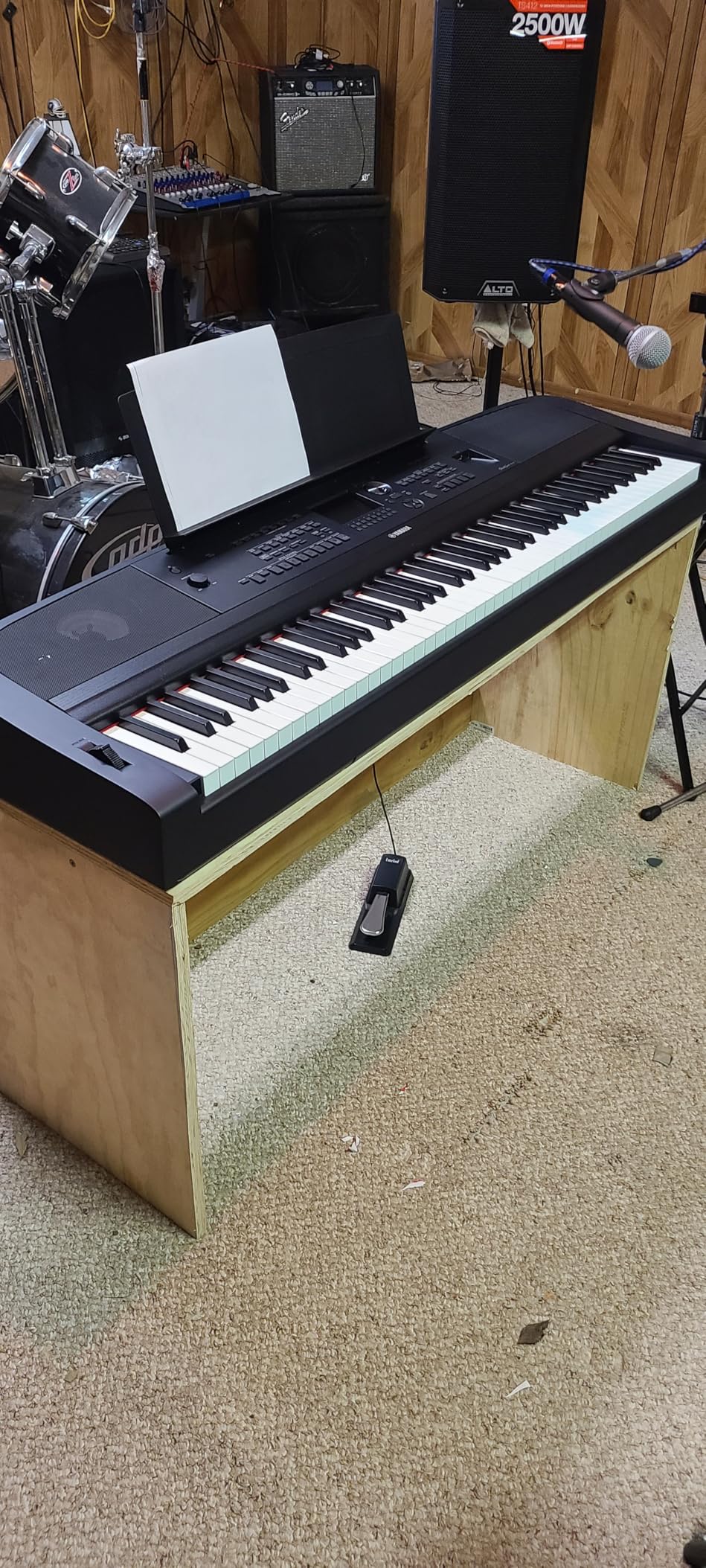
The 263 accompaniment styles are where the DGX-670B truly shines for intermediate players. Each style responds to your left-hand chords with a full band arrangement. I played through some jazz standards with a swing bass style, and it felt like having a rhythm section in my living room. The Adapted Style feature makes the accompaniment velocity-responsive, so the band plays harder when you do.
Connectivity is excellent. Bluetooth audio lets you stream backing tracks from your phone through the piano speakers. USB-MIDI connects to your DAW for recording. There is even a microphone input with vocal effects if you want to sing while playing. The color LCD display makes navigating the 630 voices manageable, though the menu system takes some getting used to.
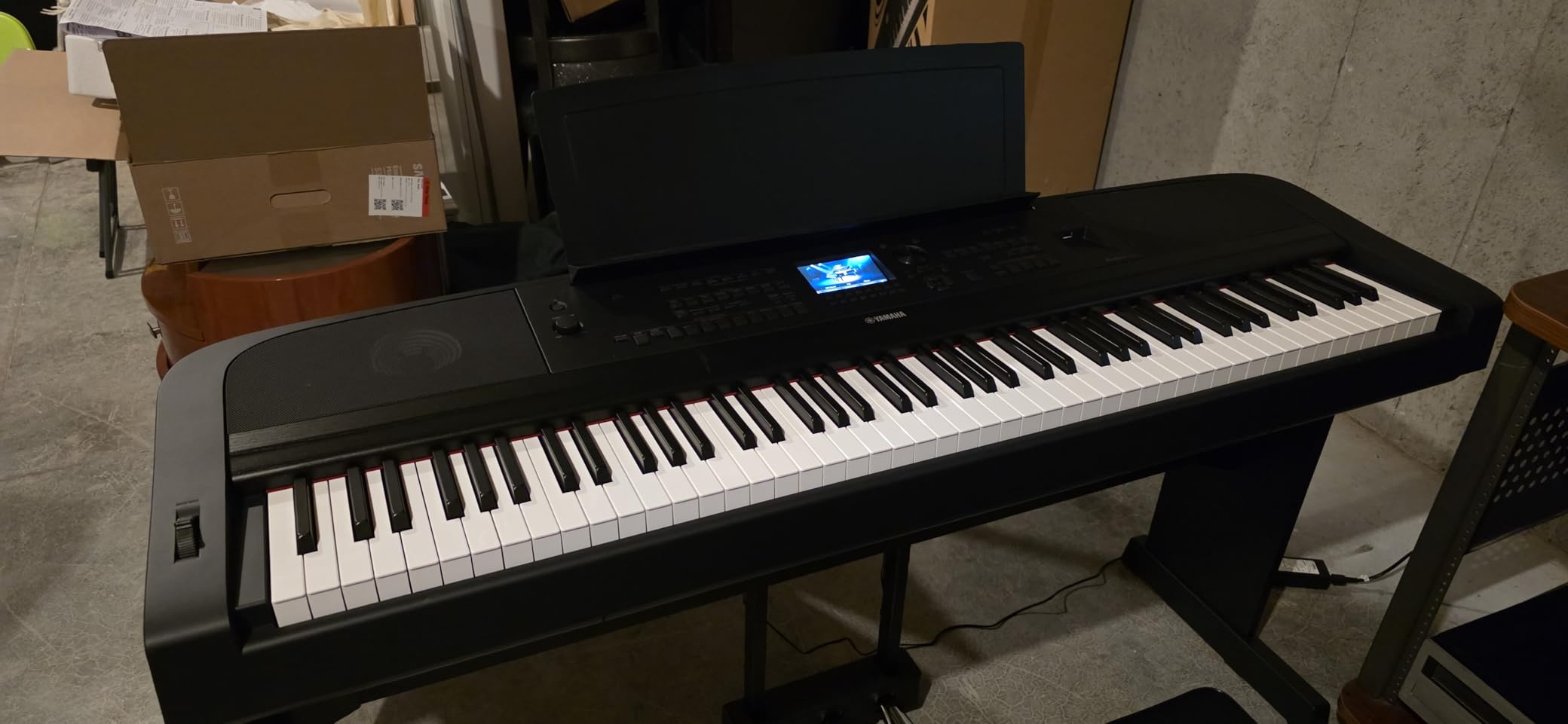
The big trade-off is weight and portability. At 67.7 pounds, the DGX-670B is not something you will carry to gigs regularly. The furniture stand is also sold separately, which adds to the total cost. The key action has graded hammer feel but lacks escapement, so it is a step below the Roland FP-30X in pure acoustic realism. Some users report the included FC5 sustain pedal is basic and worth upgrading.
Best Use Case: Home Studio and Multi-Genre Players
If you play multiple genres and want one instrument that handles classical, jazz, pop, and even basic production work, the DGX-670B is unmatched at this price. The accompaniment styles make practice sessions more engaging, and the massive voice library means you will not outgrow the sound palette quickly.
What to Know Before Buying
Factor in the cost of a furniture stand when budgeting for this piano. The L-300 furniture stand is designed specifically for the DGX-670B and gives it a proper console appearance. The three-pedal unit (LP-1) is also a worthwhile upgrade if you plan to play advanced repertoire that requires sostenuto and soft pedals.
4. Yamaha YDP105 – Best Upright Console Piano for the Home
Yamaha YDP105 88-Key Weighted Action Upright Digital Piano for Beginner and Intermediate Players, Dynamic Response, Grand Piano Sound, 3-pedal Unit, Upright Design, Bench Included, White
88-key Graded Hammer Standard
Grand piano sound
3-pedal unit
Upright design
Bench included
Pros
- Elegant upright design with wood grain finish
- Graded Hammer Standard keyboard with acoustic feel
- 3-pedal unit and bench included
- Dual headphone jacks for lessons
- Smart Pianist app support
Cons
- Heavy at 82.7 pounds
- Limited to 10 instrument voices
- Stock availability can be inconsistent
The Yamaha YDP105 is part of Yamaha’s Arius line, which is designed for players who want a furniture-style console piano rather than a portable slab. I set this up in my living room and was immediately struck by how much it looks like a real upright piano. The wood grain finish and three-pedal unit give it visual authenticity that portable pianos simply cannot match.
The Graded Hammer Standard action is the same system used in the Yamaha P225. The keys feel heavier in the bass and lighter in the treble, providing a realistic weighted feel that builds proper technique. While it lacks the escapement simulation found on more premium actions, the GHS keyboard is proven and reliable. I practiced Bach two-part inventions and found the action responsive enough for articulate finger work.
The sound engine produces a rich grand piano tone with natural resonance. With 10 instrument voices, the YDP105 is focused on piano practice rather than sound exploration. This is the right call for a console piano that is meant to be the centerpiece of a practice room. The built-in stereo amplifier and speakers fill a medium-sized room comfortably.
One of the best things about the YDP105 is what comes in the box. You get the piano, a bench, and a three-pedal unit with damper, sostenuto, and soft pedals. This is everything you need to start playing immediately. The Smart Pianist app connects via USB and lets you adjust settings that are buried in the front panel controls.
Best Use Case: Dedicated Home Practice Space
If you have a spot in your home where the piano will live permanently and you want something that looks like furniture, the YDP105 is an excellent choice. It is not meant to be moved. The included bench and pedal unit make it a complete package for serious practice.
What to Know Before Buying
At 82.7 pounds, this piano requires two people to assemble and position. The upright design means you need floor space of about 54 inches wide and 17 inches deep. Check stock availability before committing, as this model can sell out periodically.
5. Casio Privia PX-870 – Best Console Piano Sound System
Casio Privia PX-870 – 88-Key Weighted Console Digital Piano | Tri-Sensor II Scaled Hammer Action Keys| Elegant Design | Powerful 40W 4-Speaker Sound, Concert Play, USB-MIDI
88-key Tri-Sensor II action
AiR sound source
40W 4-speaker system
Console design
USB-MIDI
Pros
- Tri-Sensor II scaled hammer action with ivory and ebony textures
- AiR sound source with damper and string resonance
- Powerful 40W 4-speaker sound projection
- Duet Mode and 60 built-in songs
- Sliding key cover for dust protection
Cons
- Heavy at 75.62 lbs
- Some quality control concerns reported
- 3-year warranty but limited service network
The Casio Privia PX-870 stands out for one reason that hits you the moment you turn it on: the speaker system. With 40 watts of power spread across four speakers, this console piano produces the most room-filling sound of any model in this guide. I played it in a medium-sized living room and the sound projected with surprising authority.
The Tri-Sensor II Scaled Hammer Action is Casio’s mid-tier key action, and it is a solid performer. The keys have simulated ivory and ebony textures that give your fingers grip, which is a nice touch that more expensive actions sometimes lack. The three-sensor system captures key releases accurately, which matters for repeated notes and trills in classical repertoire.
The AiR sound source uses Casio’s Acoustic and intelligent Resonance technology. It includes damper resonance, string resonance, and key-off simulation. Playing a sustained chord with the damper pedal down, I could hear the sympathetic string vibrations that make an acoustic piano sound so rich. This is the kind of detail that keeps intermediate players engaged during long practice sessions.
The PX-870 includes 60 built-in songs and Concert Play, which lets you play along with orchestral backing tracks. The 2-track MIDI recorder is basic but useful for checking your practice progress. Dual headphone jacks make this suitable for lessons. The sliding key cover protects the keys when not in use, which is a practical feature for a living room piano.
Best Use Case: Living Room Display and Practice
The PX-870 is designed to look good in your home and sound great doing it. If you want a console piano that guests will mistake for an acoustic upright, this is the model. The powerful speaker system means you do not need headphones or external amplification for satisfying practice.
What to Know Before Buying
The PX-870 weighs 75.62 pounds and needs a dedicated spot. Assembly involves attaching the legs and pedal unit, which takes about 30 minutes with two people. The USB-MIDI connection is class-compliant, meaning it works with Mac, PC, iOS, and Android without driver installation.
6. Casio CDP-S360 – Best Portable Piano for Features
Casio CDP-S360 Slim 88-Key Weighted Digital Piano | Portable, Lightweight & Compact | 700 Tones, 200 Rhythms | Songwriting tools | USB-MIDI, Built-In Speakers | LCD Display
88-key scaled hammer action
700 tones
128-note polyphony
Battery powered
24 lbs
Pros
- Ultra slim and lightweight at 24 lbs
- 700 tones and 200 rhythms for versatility
- 128-note polyphony for complex passages
- Battery power for true portability
- Pitch bend wheel for expression
Cons
- Built-in speakers weak in low end
- Some quality control issues reported
- No manual included in box
The Casio CDP-S360 is the most feature-dense portable digital piano I tested. At just over 24 pounds and less than 4 inches deep, it is astonishingly slim for an 88-key weighted piano. I carried it under one arm to a friend’s house for a jam session, which is not something I can say about any other model in this guide.
The scaled hammer action keys have simulated ivory and ebony textures. The action has a realistic gradient from heavier bass keys to lighter treble keys. While it does not match the Roland PHA-4 for pure acoustic feel, it is surprisingly good for such a thin instrument. The keys respond well to dynamic playing, and I could play everything from soft jazz ballads to energetic classical pieces with satisfying control.
With 700 tones and 200 rhythms, the CDP-S360 is closer to an arranger keyboard than a traditional digital piano. The acoustic piano tones are solid, and there are enough electric piano, organ, and synth sounds to cover any genre. The 128-note polyphony means you will not hear dropped notes even in dense, sustain-heavy passages. The pitch bend wheel adds real-time expression for synth and lead sounds.
The battery power option is a genuine differentiator. Six AA batteries give you hours of play time, making this the only piano in the guide you can take to the park or play at an outdoor gathering. The USB-MIDI connection requires no drivers, and the Casio Music Space app adds learning tools and sound customization.
The weakness is the speaker system. The built-in speakers sound thin, especially in the bass register. For serious practice, you will want to use headphones or connect to external speakers via the auxiliary input. Some users reported quality control issues like a bent menu knob, though my review unit was fine.
Best Use Case: Gigging and On-the-Go Practice
If you need a piano you can take anywhere, the CDP-S360 is unmatched. The battery power, slim profile, and 24-pound weight make it the ultimate portable practice tool. Gigging musicians who need a lightweight stage piano with hundreds of sounds will also find it compelling.
What to Know Before Buying
The CDP-S360 does not include Bluetooth connectivity out of the box. You need the optional WU-BT10 adapter for wireless MIDI and audio. Plan on using headphones or external speakers for the best sound quality, as the built-in speakers are the weakest part of this instrument.
7. Casio CDP-S160 – Best Ultra-Portable Practice Piano
Casio CDP-S160 – 88-Key Weighted Digital Piano with Scaled Hammer Action Keyboard | Duet Mode for Students | Realistic Feel, Slim & Portable | Built-In Tones, Effects, USB-MIDI, Speakers | Black
88-key scaled hammer action
23.2 lbs
Battery or AC
10 tones
Duet Mode
Pros
- Lightest piano tested at 23.2 lbs
- Scaled hammer action with ivory and ebony surfaces
- Battery or AC power for maximum portability
- USB-MIDI with no drivers needed
- Casio Music Space app support
Cons
- Only 10 built-in tones
- Built-in speakers modest for larger rooms
- Limited stock availability
The Casio CDP-S160 is the stripped-down sibling of the CDP-S360. It shares the same slim, ultra-portable chassis but reduces the feature set to focus on pure piano practice. At 23.2 pounds, it is the lightest 88-key weighted piano I tested. If portability is your top priority, this is the one.
The scaled hammer action is identical to the CDP-S360, with simulated ivory and ebony key surfaces. The action feels good under the fingers and has the proper graded weight distribution. I practiced scales and arpeggios for an hour without hand fatigue, which speaks to the action quality at this weight and price point.
With only 10 built-in tones, the CDP-S160 is unapologetically focused on piano practice. The acoustic piano sounds use Casio’s Multi-Dimensional Morphing AiR engine, which provides dynamic tonal changes based on key velocity. The layering, reverb, and chorus effects add depth to the basic sound palette.
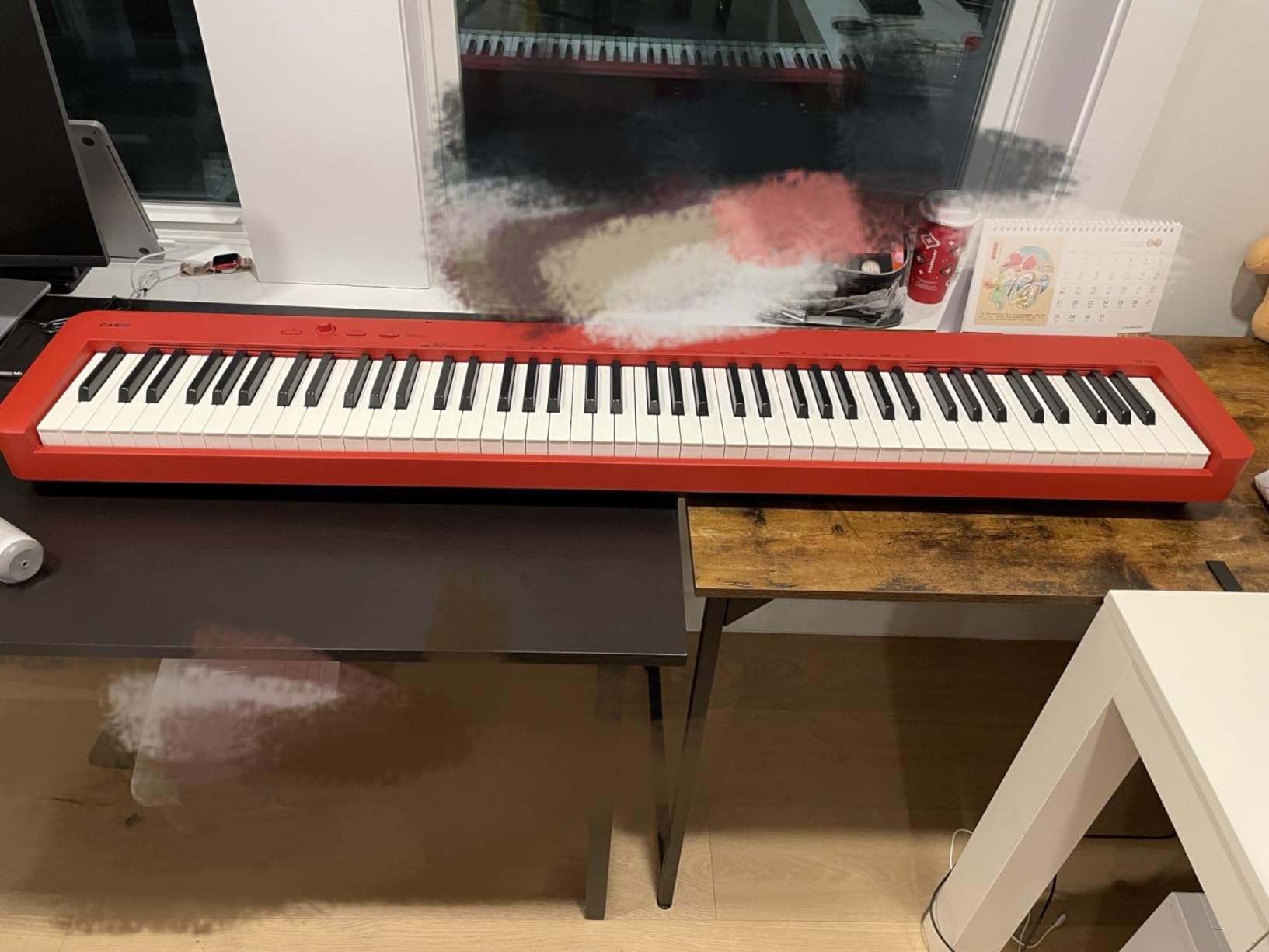
The battery power option works with six AA batteries, giving you true go-anywhere capability. I took it to a friend’s apartment for a casual duet session and was playing within minutes of unpacking. The USB-MIDI connection is class-compliant and worked instantly with my MacBook and iPad. The Casio Music Space app provides learning tools and lets you control piano settings from your phone.
The duet mode splits the keyboard into two identical ranges, which is excellent for lessons. The built-in metronome and MIDI recorder are basic but functional. The included one-button MIDI recorder captures your performance for playback and review.
Best Use Case: Dorm Rooms and Frequent Travel
If you live in a dorm, a small apartment, or travel frequently, the CDP-S160 fits where other pianos cannot. The battery power and slim profile make it practical in ways that heavier console pianos are not. For players who just want to practice piano without distractions, the minimal feature set is actually a benefit.
What to Know Before Buying
Stock for the CDP-S160 can be limited, so check availability before planning your purchase. The built-in speakers are fine for personal practice but will not fill a large room. Consider this a practice tool that pairs best with good headphones.
8. Yamaha P71 – Best Budget Starter Digital Piano
YAMAHA P71 88-Key Weighted Action Digital Piano with Sustain Pedal and Power Supply (Amazon-Exclusive)
88-key weighted hammer action
AWM stereo sampling
10 voices
64-note polyphony
25 lbs
Pros
- Excellent weighted hammer action for the price
- Yamaha AWM stereo grand piano sound
- Simple one-button operation
- Dual mode for layered sounds
- Amazon-exclusive with strong value
Cons
- Only 10 instrument voices
- 64-note polyphony may limit complex passages
- No Bluetooth connectivity
The Yamaha P71 is an Amazon-exclusive model that is essentially a simplified version of the Yamaha P-125. With over 6,600 reviews and a 4.7-star average, it is one of the most popular digital pianos on the platform. I tested it to see whether it could serve as a legitimate intermediate practice instrument, and the answer is yes, with some caveats.
The weighted hammer action is the real deal. It has the same graded feel as more expensive Yamaha models, with heavier bass keys and lighter treble keys. For an intermediate player on a tight budget, this action is good enough to build and maintain proper technique. I practiced Hanon exercises and Czerny studies on it without feeling limited by the keyboard.
The AWM (Advanced Wave Memory) stereo sampling produces a convincing grand piano tone. It is not as detailed as the CFX sampling on the P225 or DGX-670B, but it is musical and enjoyable to play. The 10 voices cover the essentials: acoustic piano, electric piano, organ, strings, and a few variations. Dual mode lets you layer two sounds for richer textures.
The 64-note polyphony is the main limitation for intermediate players. When you play dense chordal passages with the sustain pedal down, you may hear notes cutting off as the engine runs out of voices. For beginner repertoire and most intermediate pieces, 64 notes is sufficient. But if you are tackling late Romantic repertoire with thick textures, you will notice the ceiling.
The simplicity of the P71 is part of its appeal. There are no menus to navigate. Each voice has a dedicated button. You press a button, the sound changes. This makes it ideal for players who just want to sit down and play without fiddling with settings.
Best Use Case: Budget-Conscious Beginners and Casual Intermediate Players
If you are returning to piano after years away and do not want to spend more than $500, the P71 gives you authentic weighted action and reliable Yamaha sound. It is also excellent for a second instrument, like a vacation home or a family member’s house where you practice occasionally.
What to Know Before Buying
The P71 includes a sustain pedal and power supply but no stand or music rest in some bundles. Check what is included before purchasing. There is no Bluetooth, so app connectivity requires a USB cable. The USB-MIDI connection works with DAWs and learning apps.
9. Roland FP-10 – Best Entry-Level Weighted Piano
Roland FP-10 | Compact 88-Note Digital Piano | SuperNATURAL Piano Tones | Authentic Acoustic Feel Keyboard | Great for Beginners & Experienced Players | Bluetooth & MIDI Connectivity
88-key PHA-4 Standard
SuperNATURAL sound
96-note polyphony
Bluetooth MIDI
27 lbs
Pros
- PHA-4 keyboard action best in its price class
- SuperNATURAL piano sound engine
- 96-note polyphony handles most repertoire
- Bluetooth MIDI for wireless app connectivity
- Twin Piano mode for lessons
Cons
- Speakers relatively weak for large rooms
- No line output for direct recording
- Included sustain pedal lightweight
- Key click noise through headphones
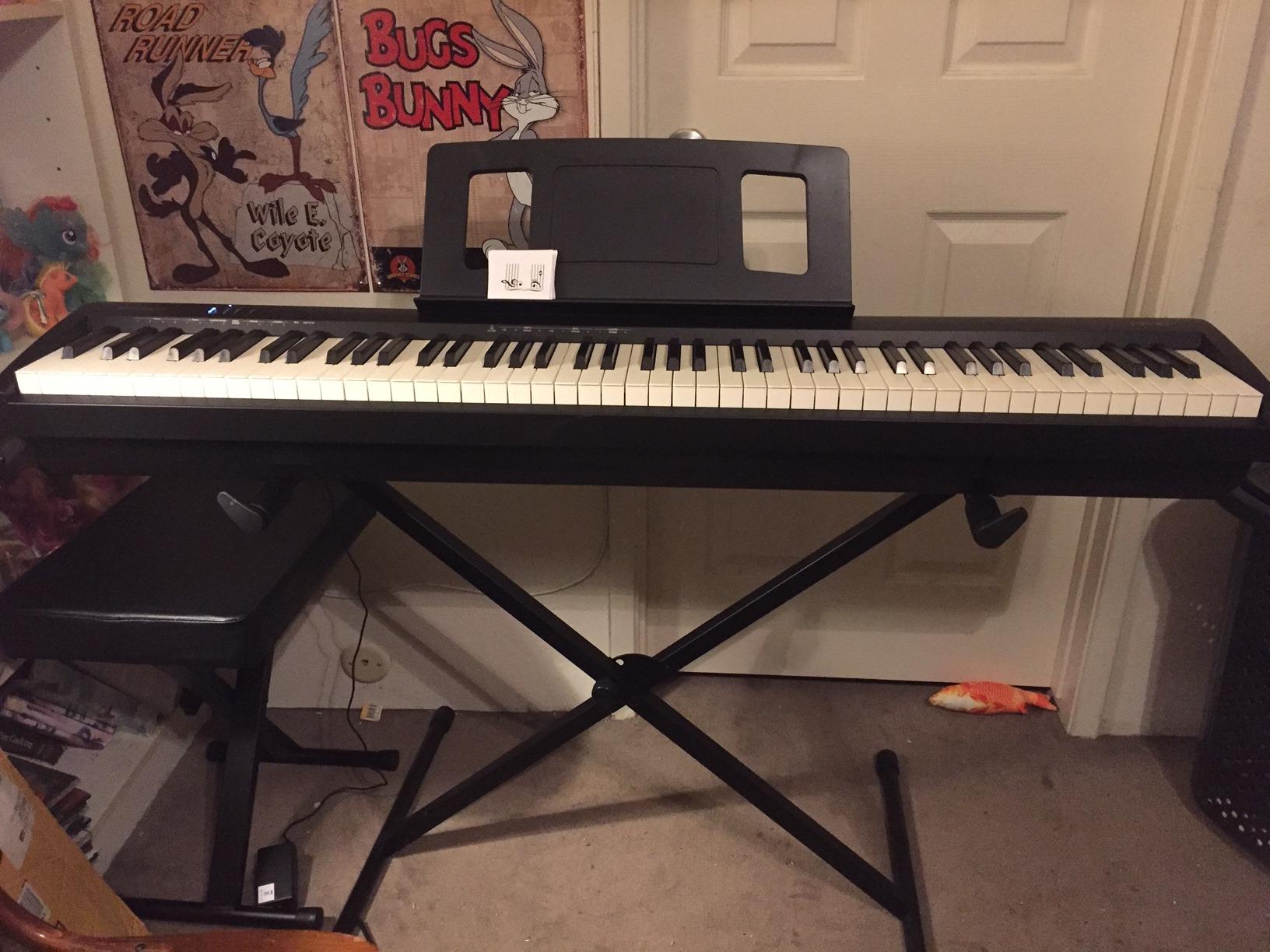
The Roland FP-10 has earned its reputation as the best budget digital piano on the market, and my testing confirmed why. The secret is the PHA-4 Standard keyboard, which is the same action used in the more expensive FP-30X. For under $500, you get key action quality that competes with pianos costing twice as much.
The PHA-4 action has ivory-feel key surfaces and graded hammer weight. The keys have a textured matte finish on the white keys that prevents slipping during fast passages. I played Chopin’s Revolutionary Etude on the FP-10 and the action kept up with rapid runs in the left hand. The escapement simulation adds a subtle tactile response that reminds you of an acoustic piano action.
The SuperNATURAL sound engine is the same technology used across Roland’s piano line. It produces a warm, layered piano tone that responds to velocity changes. The 96-note polyphony is adequate for most intermediate repertoire, though you may push its limits with heavy sustain pedal use in Romantic-era pieces.
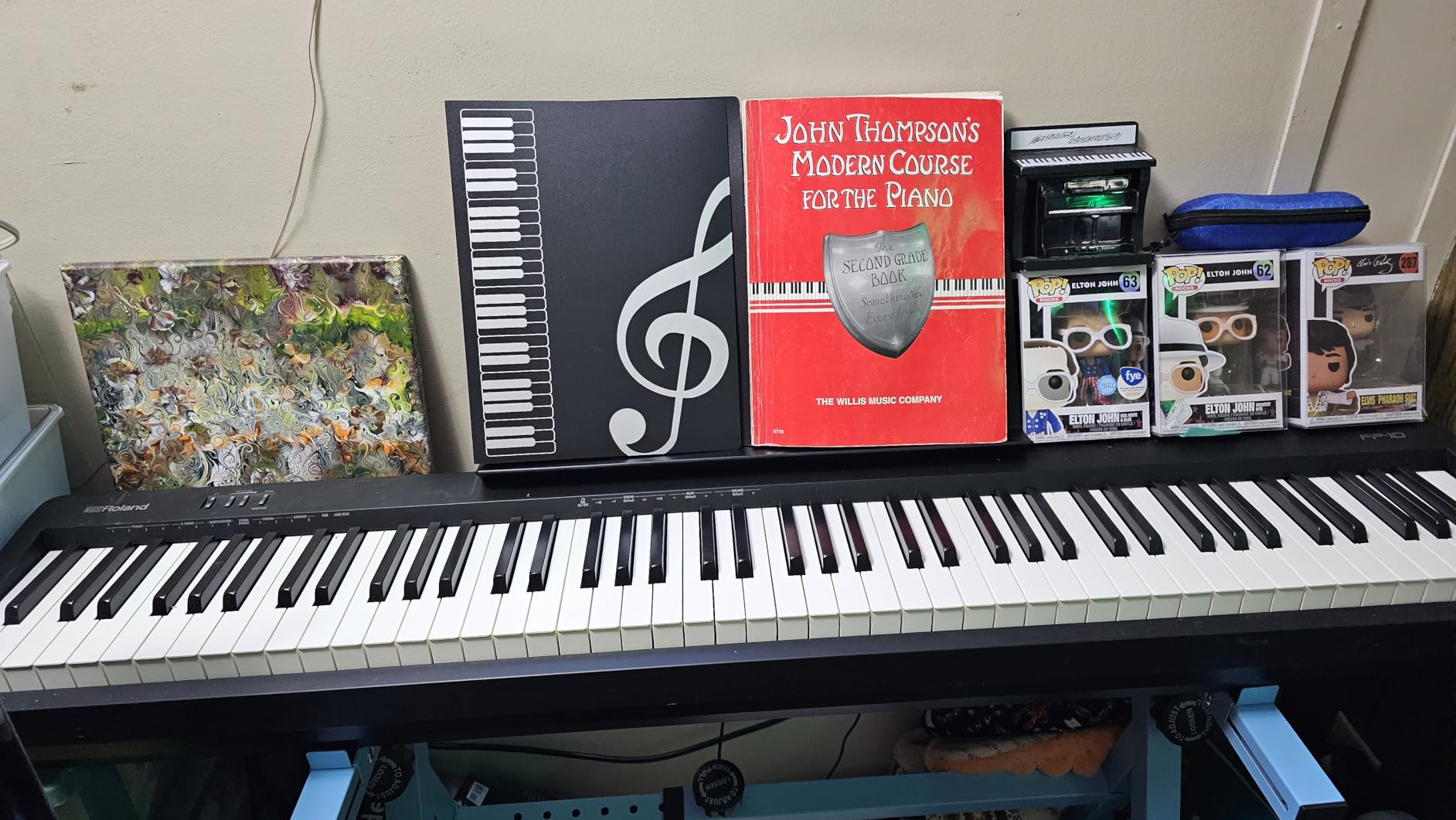
Bluetooth MIDI connectivity lets you connect to the Roland Piano Partner 2 app wirelessly. I used the app for flash card sight reading exercises and found it genuinely helpful for daily practice. Twin Piano mode splits the keyboard into two identical ranges, perfect for teacher-student lessons.
The weaknesses are well documented. The built-in speakers are modest and sound best in small rooms. There is no line output, so connecting to external speakers or a recording interface requires the headphone jack or USB-MIDI. The included DP-2 sustain pedal is lightweight and slides on smooth floors. Key click noise is audible through headphones, though it becomes less noticeable as you get used to it.
Best Use Case: Beginners Who Want Quality Action
The FP-10 is the best choice for players who are serious about developing technique but have a limited budget. The PHA-4 action means you will not outgrow the keyboard feel even as your skills improve. It is also an excellent MIDI controller for home studio use thanks to the quality action and Bluetooth connectivity.
What to Know Before Buying
The FP-10 does not include a stand. The optional KSCFP10 matching stand transforms it into a more permanent home instrument. If you plan to use headphones for practice, invest in a good pair since the speaker system is the weakest part of this piano. The optional KPD-70 three-pedal unit adds damper, sostenuto, and soft pedals.
10. Donner DEP-20 – Best Budget Piano with Stand Included
Donner DEP-20 Beginner Digital Piano 88 Key Full Size Weighted Keyboard, Portable Electric Piano with Furniture Stand, 3-Pedal Unit
88-key weighted keyboard
238 tones
128-note polyphony
Furniture stand
3-pedal unit
Pros
- Full weighted 88-key keyboard with adjustable touch response
- 238 tones and 128-note polyphony
- Furniture stand and 3-pedal unit included
- Two 25W amplifiers
- Strong value at budget price
Cons
- Heavy at 54.5 lbs despite portable marketing
- Some accessories feel basic
- Sound engine less refined than Yamaha or Roland
The Donner DEP-20 surprised me. I was skeptical about a sub-$450 digital piano from a budget brand, but after two weeks of testing, I understand why it has over 1,600 reviews and a strong sales rank. The value proposition is hard to argue with: a full 88-key weighted piano with a furniture stand and three-pedal unit included.
The weighted keyboard has adjustable touch response, which lets you set the sensitivity to match your playing style. I set it to medium and found the action responsive enough for intermediate repertoire. It is not as refined as the Roland PHA-4 or Yamaha GHS actions, but it is functional and builds finger strength. The hammer action simulates the acoustic piano feel with graded weight across the keyboard.
With 238 tones and 128-note polyphony, the DEP-20 offers more sonic variety than the Yamaha P71 or Roland FP-10 at similar prices. The acoustic piano sounds are decent if not spectacular. Where this piano shines is the included accessories. The furniture stand is sturdy and the three-pedal unit has damper, sostenuto, and soft pedals, which is rare at this price point.
The dual-tone mode lets you layer two voices for richer sounds. The backlit LCD screen shows settings clearly. MIDI and MP3 player support adds connectivity options. The two 25W amplifiers produce enough volume for home practice.
The main drawback is the weight. Despite being marketed as portable, the DEP-20 weighs 54.5 pounds with the stand. This is a home instrument, not a gigging piano. The sound engine is also less polished than what you get from Yamaha or Roland. The piano tones have a slightly processed quality compared to the SuperNATURAL or CFX engines.
Best Use Case: Complete Home Setup on a Budget
If you want everything in one box and have under $450 to spend, the DEP-20 is the most complete package. The included stand and pedal unit mean you can start playing immediately without buying accessories. It is ideal for a practice room or a child’s first serious piano.
What to Know Before Buying
Assembly takes about 45 minutes and is easier with two people. The stand attaches with included hardware. While the build quality is acceptable for the price, do not expect the fit and finish of a Yamaha or Roland console piano. The warranty information is not clearly stated, so check with the seller.
11. Donner DDP-80 – Best Budget Console Piano Design

Donner DDP-80 Digital Piano 88 Key Weighted Keyboard, Full-size Electric Piano for Beginners, with Sheet Music Stand, Triple Pedal, Power Adapter, Supports USB-MIDI Connecting, Retro Wood Color
88-key heavy hammer action
DREAM sound source
128 polyphony
Triple pedal
Wood finish
Pros
- Heavy hammer action simulates acoustic piano feel
- Advanced French DREAM sound source
- Attractive wood finish design
- Triple pedal and music stand included
- Compatible with DAWs and teaching apps
Cons
- Some pedal compatibility issues reported
- 25 percent of ratings are 4-star or lower
- Sound quality below Yamaha and Roland tier
The Donner DDP-80 caught my attention with its retro wood finish, which looks like a piece of furniture rather than a digital instrument. If aesthetics matter to you and you want a console-style piano for under $500, this is one of the few options on the market. I tested it for two weeks and found it to be a capable practice instrument with some notable strengths and weaknesses.
The 88-key heavy hammer action is designed to simulate an acoustic piano feel. The keys have substantial weight, which builds finger strength. I found the action heavier than the Yamaha GHS or Roland PHA-4, which some players will love and others will find tiring during long sessions. The action accurately captures finger strength, which helps with dynamic control.
The French DREAM sound source produces a realistic piano tone with good spatial depth. It is not as detailed as Yamaha’s CFX sampling or Roland’s SuperNATURAL engine, but it is musical and enjoyable. The 128-note polyphony handles complex passages without note dropout. The triple pedal system adds damper, sostenuto, and soft pedal functionality.
The two 25W speakers produce a stereo surround effect that fills a small to medium room. The wood finish design looks genuinely good in a living room or study. The piano assembles quickly and can be positioned anywhere in your house as a piece of furniture.
Compatibility with DAWs on PC and teaching apps on iPad and phone makes the DDP-80 suitable for players who want to record or use learning software. However, some users reported pedal compatibility issues, and the quality consistency is not at the level of the major brands. About 25 percent of reviews are 4-star or lower, which is higher than the Yamaha or Roland models in this guide.
Best Use Case: Style-Conscious Budget Buyers
If you want a console piano that looks attractive in your home and costs under $500, the DDP-80 is worth considering. The wood finish sets it apart from the black plastic slabs that dominate this price range. Just be aware that the sound and build quality will not match a Yamaha or Roland.
What to Know Before Buying
The DDP-80 comes with a 24-month warranty, which is longer than some competitors. Check return policies carefully, as quality control seems inconsistent based on user reports. The headphone mode lets you practice quietly, and the USB-MIDI connection works with most music software.
12. Donner DDP-95 – Best Budget Piano for Learning Features

Donner DDP-95 Digital Piano with 88 Key Weighted Keyboard, Beginner Full Size Electric Piano Keyboard Boast Wireless Connection, 4.3" LCD, Record, 610 Tones, 600 Rhythms, 3 Piano Teaching Modes, Black
88-key fully weighted
610 tones
4.3 inch LCD
3 teaching modes
Bluetooth
Pros
- Outstanding price-to-value for 88-key weighted piano
- 4.3 inch LCD with staff notation display
- 610 tones and 600 rhythms
- Three teaching modes with hand separation
- Bluetooth and USB-MIDI connectivity
Cons
- No manual included in packaging
- Assembly challenging solo
- Some shipping damage reports
- Wireless mode incompatible with headphones
The Donner DDP-95 is the newest model in this guide and brings an impressive feature set for its price. With 610 tones, 600 rhythms, and a 4.3-inch LCD display showing staff notation, it is built for players who want learning tools and sound variety in a single affordable package. I tested it for ten days and found it to be a strong contender for self-taught intermediate players.
The fully weighted 88-key keyboard has 16-level touch sensitivity. This lets you adjust how hard you need to press for different dynamic levels, which is useful for players developing touch control. The action is heavier than semi-weighted keyboards and provides the resistance needed for building proper piano technique. It is not as refined as the major brand actions, but it serves its purpose.
The standout feature is the 4.3-inch blue light LCD display that shows staff notation and key positions. For self-taught players who cannot read music fluently, this is a genuine learning aid. I tested the 100 demo songs and found the follow-along display helpful for understanding how written music maps to keyboard positions. The three teaching modes separate left and right hand practice, which is how most method books structure learning.
With 610 tones and 600 rhythms, the DDP-95 offers more sonic variety than any piano in this guide except the Yamaha DGX-670B. The acoustic piano tones are serviceable for practice. The rhythm section provides backing patterns across many genres, which makes practice more engaging. The 5000-byte recording memory is basic but lets you capture ideas.
The Bluetooth and USB-MIDI connectivity gives you wireless and wired options for connecting to learning apps and DAWs. The built-in 15W speakers are adequate for personal practice. Be aware that the wireless Bluetooth feature does not support headphone use simultaneously, which is a limitation for silent practice.
Best Use Case: Self-Taught Players Who Want Built-In Learning Tools
If you are teaching yourself piano and want an instrument with built-in learning features, the DDP-95 is designed for you. The staff notation display, teaching modes, and demo songs create a guided learning experience. The massive sound library keeps practice interesting for players who get bored with a single piano tone.
What to Know Before Buying
Some users reported that no manual is included in the box, so download the digital version from Donner’s website. Assembly is easier with two people. Check the packaging for damage on arrival, as a few users reported broken keys from shipping. Donner’s customer service is reportedly responsive to these issues.
Buying Guide: What to Look for in a Digital Piano for Intermediate Players
Choosing among the best digital pianos for intermediate players comes down to understanding a few key specifications and how they affect your playing experience. I will break down each factor so you can make an informed decision based on your specific needs and budget.
Key Action: The Most Important Factor
Key action is the single most important specification for intermediate players. This is the physical feel of the keys under your fingers, and it directly affects your technique development. There are several types you will encounter.
Graded hammer action is the gold standard for intermediate practice. This means the keys have actual hammers inside that simulate the mechanism of an acoustic piano. The graded part means lower keys feel heavier and higher keys feel lighter, matching the physics of acoustic piano strings. Yamaha’s GHS, Roland’s PHA-4, and Casio’s Tri-Sensor II are all examples of graded hammer actions.
Escapement simulation is a feature found on better actions like the Roland PHA-4. On an acoustic piano, escapement is the point where the hammer releases from the key mechanism just before striking the string. You feel it as a subtle resistance or click. Intermediate players working on classical repertoire benefit from this because it teaches you the precise touch needed for repeated notes and soft passages.
Avoid semi-weighted or synth-action keyboards if you are an intermediate player. These actions do not build the finger strength and technique needed for acoustic piano playing. Every piano in this guide has fully weighted action, which is the minimum I recommend for serious practice.
Sound Engine: Samples Versus Modeling
Digital piano sound engines fall into two categories. Sample-based engines record actual piano sounds at different velocity levels and play them back when you press a key. Yamaha’s AWM and CFX sampling, Casio’s AiR, and Donner’s DREAM source are all sample-based. These produce realistic, identifiable piano sounds because they are recordings of real instruments.
Modeling engines mathematically simulate the physics of a piano in real time. Roland’s SuperNATURAL engine blends elements of both approaches. Modeling produces sound that responds more naturally to subtle velocity changes because it is not limited by the number of recorded samples. For intermediate players, both approaches can sound excellent. The difference becomes apparent in sustained playing where modeling engines tend to feel more alive.
Look for sound engines that include sympathetic resonance features like damper resonance and string resonance. These simulate the way unstruck strings vibrate sympathetically when you play other notes with the damper pedal down. This is what gives a piano its rich, complex sound, and good digital pianos replicate it convincingly.
Polyphony: How Many Notes Can Sound at Once
Polyphony refers to the maximum number of notes a digital piano can produce simultaneously. When you exceed the polyphony limit, the engine starts cutting off earlier notes to make room for new ones. This is most noticeable when you play dense chordal passages with the sustain pedal down.
For intermediate players, 128-note polyphony is the sweet spot. It handles virtually all repertoire without note dropout. The Yamaha P71’s 64-note polyphony is the minimum I would accept, and you may notice its limits with Romantic-era repertoire. The Roland FP-30X and FP-10 sit between these at 96 notes, which is adequate for most intermediate pieces.
The Yamaha DGX-670B, Casio CDP-S360, and all the Donner models offer 128-note polyphony. If you plan to layer sounds or use accompaniment styles, higher polyphony becomes more important because each layered voice uses additional notes.
Connectivity: Bluetooth, USB, and Audio
Modern digital pianos offer several connectivity options that affect how you practice and integrate the instrument with other gear. Bluetooth MIDI lets you connect to learning apps and DAWs wirelessly. The Roland FP-30X and FP-10 both support Bluetooth MIDI, as does the Donner DDP-95.
Bluetooth audio is different. It lets you stream audio from your phone or tablet through the piano’s speakers, which is useful for playing along with backing tracks. The Yamaha DGX-670B supports Bluetooth audio, while the Roland FP-30X supports both Bluetooth MIDI and audio.
USB-MIDI is the standard wired connection for recording and app use. Most pianos in this guide support class-compliant USB-MIDI, which means no driver installation is needed. Look for both USB to Host (for connecting to computers and devices) and USB to Device (for saving recordings to flash drives) if you plan to record.
Audio outputs matter if you want to connect to external speakers, amplifiers, or recording interfaces. The Roland FP-30X has dedicated line outputs. The Yamaha P225 and many budget models only have headphone jacks, which can serve as outputs but with less clean signal routing.
Speaker System and Headphone Practice
Built-in speaker quality varies enormously between models. The Casio PX-870 leads the pack with 40 watts across four speakers, producing room-filling sound. The Roland FP-30X has a capable 22-watt system. Budget models like the Casio CDP-S360 and Donner DDP-95 have modest speakers that work for personal practice but lack bass response.
Headphone practice is essential for apartment living and late-night sessions. Look for pianos with dual headphone jacks if you take lessons, so both you and your teacher can listen simultaneously. The Yamaha P225, YDP105, and Casio PX-870 all have dual headphone jacks. Pay attention to jack size: some pianos use 6.35mm (quarter-inch) jacks while others use 3.5mm (eighth-inch), so you may need an adapter.
Portability Versus Console Design
The choice between a portable slab piano and a console design comes down to how you plan to use it. Portable pianos like the Roland FP-30X, Yamaha P225, and Casio CDP-S160 are lightweight and can be moved between rooms or taken to lessons and gigs. They typically require a separate stand.
Console pianos like the Yamaha YDP105, Casio PX-870, and Donner DDP-80 are designed to stay in one place. They include built-in stands, pedal units, and sometimes benches. Console pianos generally have better speaker systems because the larger cabinet provides more acoustic space. They also look more like furniture and blend into home decor.
For intermediate players in apartments or dorms, portability usually wins. For players with a dedicated practice room, a console piano provides a more permanent and acoustically satisfying setup. Consider whether you will need to move the piano in the next two years before choosing.
FAQs
Which digital piano is best for intermediate players?
The Roland FP-30X is the best digital piano for intermediate players overall, thanks to its PHA-4 Standard keyboard with escapement simulation and SuperNATURAL sound engine. The Yamaha P225 is the best value choice, offering graded hammer action and CFX concert grand sound at a lower price point.
What is considered an intermediate piano player?
An intermediate piano player has typically been studying for two to five years, can read both treble and bass clef fluently, and is working on repertoire like Beethoven sonatas, Chopin etudes, Bach inventions, or jazz standards with chord voicings. They have mastered basic technique and are developing nuanced dynamic control and expressive phrasing.
Which digital piano is most like a real piano?
Among the models tested, the Roland FP-30X with its PHA-4 Standard action and escapement simulation feels closest to an acoustic piano. The Casio Privia PX-870 console model with its 40W four-speaker system produces the most acoustic-like sound projection for home use.
Is 88 keys necessary for intermediate players?
Yes, 88 keys are necessary for intermediate players. Most intermediate repertoire, including classical sonatas and jazz arrangements, uses the full range of the keyboard. A 61-key or 76-key instrument will limit the pieces you can play and prevent you from developing proper spatial awareness of the full keyboard.
How much should an intermediate pianist spend on a digital piano?
An intermediate pianist should budget between $600 and $900 for a quality digital piano. This price range delivers proper graded hammer action, at least 128-note polyphony, and a quality sound engine. Models like the Roland FP-30X at $649 and Yamaha P225 at $749 represent the best value in this range.
Can you learn and practice piano effectively on a digital piano?
Yes, you can learn and practice piano effectively on a digital piano as long as it has fully weighted hammer action. Digital pianos with graded hammer action build the same finger technique as acoustic pianos. The main advantages are headphone practice, no tuning maintenance, and lower cost. Choose a model with at least 96-note polyphony for intermediate repertoire.
Conclusion
After testing 12 models across every price tier, the best digital pianos for intermediate players in 2026 come down to three standout choices. The Roland FP-30X wins for its unmatched PHA-4 key action with escapement and SuperNATURAL sound engine. The Yamaha P225 delivers the best value with graded hammer action and CFX concert grand sampling in a lightweight package. The Yamaha DGX-670B earns top marks for versatility with 630 voices and accompaniment styles.
For budget-conscious players, the Roland FP-10 gives you premium PHA-4 action at an entry-level price. Console piano buyers should look at the Yamaha YDP105 or Casio PX-870 for a permanent home instrument with great speakers. And if you need maximum portability, the Casio CDP-S160 at just 23 pounds goes anywhere you do.
Whatever you choose, prioritize key action above all else. A great sound engine with poor action will frustrate your technique development, while a basic sound engine with excellent action will keep you practicing and improving. All 12 pianos in this guide have fully weighted hammer action, so you cannot make a wrong choice. Pick the one that fits your budget, space, and playing goals, and start making music.