
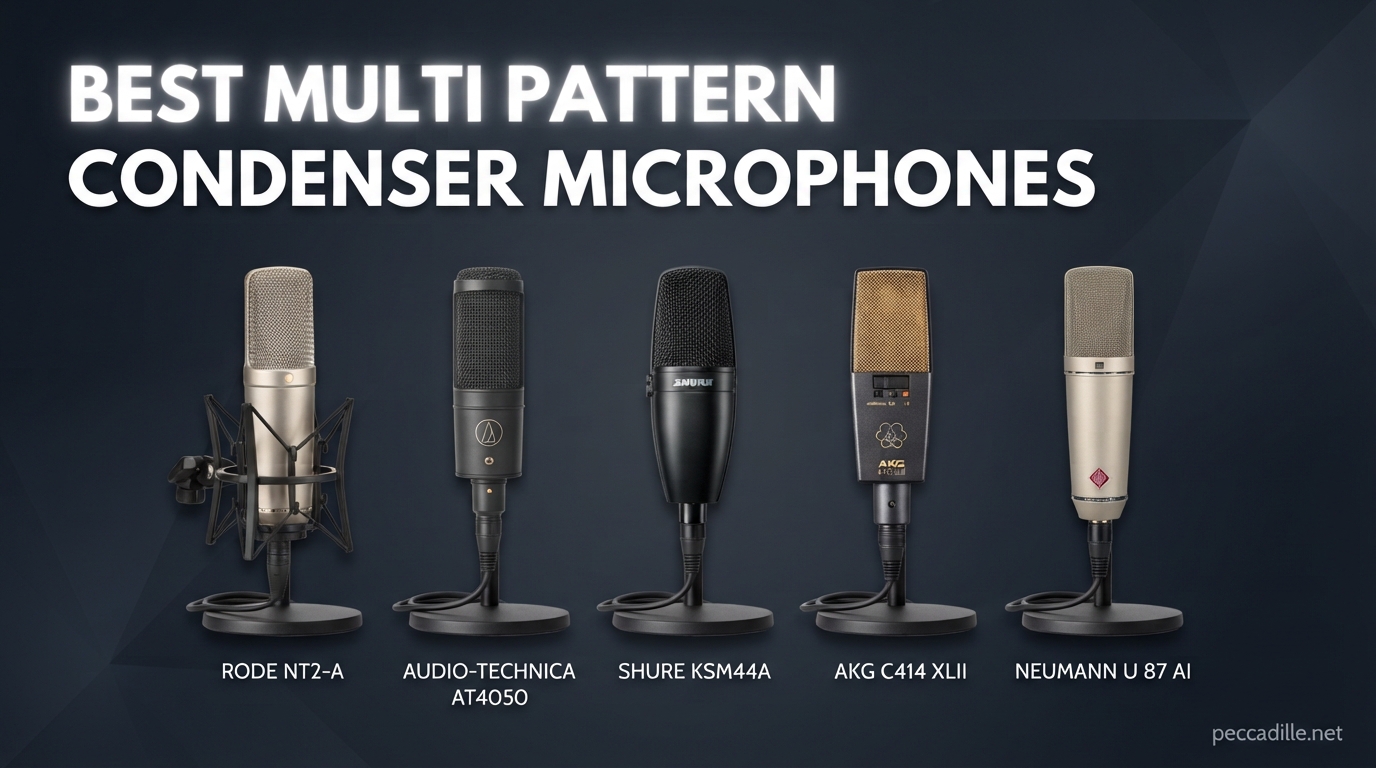
Finding the best multi pattern condenser microphones changed how I approach recording. I started with a single-pattern cardioid mic years ago, and once I switched to a multi-pattern model, I never looked back. The ability to flip between cardioid, omnidirectional, and figure-8 opened up recording techniques I simply could not do before.
Multi-pattern condenser microphones are studio mics with dual diaphragms that let you switch between polar patterns like cardioid, omnidirectional, and figure-8. Some models, like the Lewitt LCT 441 FLEX and CAD M179, offer even more options including hypercardioid and continuously variable control. This means one microphone can handle lead vocals, room recording, stereo techniques, and podcasting with a single switch.
Our team spent weeks comparing 12 of the most popular multi-pattern condenser microphones for this 2026 guide. We looked at everything from the $70 FIFINE K690 USB up to the $868 AKG C314 professional studio mic. Whether you are building a home studio, upgrading your podcast setup, or looking for a single mic that does it all, this guide covers the best options at every price point.
Top 3 Picks for Best Multi Pattern Condenser Microphones

AKG C314 Multi-Pattern Condenser
- Four polar patterns
- 8dB self-noise
- 20dB pad
- shock mount included

Lewitt LCT 441 FLEX
- Eight polar patterns
- true condenser
- shock mount and pop filter included
MXL 770X Multi-Pattern Bundle
- Three polar patterns
- gold-sputtered diaphragm
- full accessory bundle
The AKG C314 takes our editor’s choice spot with its ultra-low 8 dB self-noise and four precisely matched polar patterns. The Lewitt LCT 441 FLEX wins most versatile with eight selectable patterns, more than any other mic on this list. For budget-conscious builders, the MXL 770X delivers three switchable patterns and a full accessory bundle at a fraction of the cost.
Best Multi Pattern Condenser Microphones in 2026
| Product | Specifications | Action |
|---|---|---|
 AKG P420 Multi-Pattern
|
|
Check Latest Price |
 Audio-Technica AT2050
|
|
Check Latest Price |
|
MXL 770X Bundle
|
|
Check Latest Price |
 TAKSTAR TAK55
|
|
Check Latest Price |
 SE Electronics sE2300
|
|
Check Latest Price |
|
Lewitt LCT 441 FLEX
|
|
Check Latest Price |
 CAD Audio M179
|
|
Check Latest Price |
 SE Electronics sE4400
|
|
Check Latest Price |
 Blue Yeti USB
|
|
Check Latest Price |
|
AKG C314 Pro
|
|
Check Latest Price |
This comparison table shows all 12 models side by side. Notice how polar pattern counts range from 3 on budget models up to 8 on the Lewitt LCT 441 FLEX. The table also highlights which mics include pads, high-pass filters, and accessories like shock mounts and carrying cases.
Polar Patterns Explained: When to Use Each One
Understanding polar patterns is the whole reason you buy a multi-pattern condenser microphone. Each pattern controls what direction the mic hears sound from, and choosing the right one for your recording scenario makes a massive difference in quality.
Cardioid Pattern
Cardioid picks up sound from the front and rejects sound from the rear. This is your go-to pattern for lead vocals, voiceover work, podcasting, and any situation where you want to isolate a single sound source. Most engineers spend 80% of their time in cardioid mode.
Use cardioid when recording solo vocals, acoustic guitar, or any single instrument in a less-than-perfect room. The rear rejection helps minimize room reflections and background noise bleed.
Omnidirectional Pattern
Omnidirectional picks up sound equally from all directions. This pattern captures the natural ambience of a room, making it ideal for recording ensembles, choirs, orchestras, and room miking for drums. Omni also delivers the flattest frequency response because there are no off-axis coloration artifacts.
Use omni when recording a choir, capturing a live room sound, miking a piano from a distance, or recording a roundtable podcast discussion where multiple people sit around the mic.
Figure-8 (Bidirectional) Pattern
Figure-8 picks up sound from the front and rear while rejecting sound from the sides. This pattern is essential for Blumlein stereo recording, mid-side techniques, and recording two vocalists facing each other across a single microphone. Figure-8 also has the strongest proximity effect, which can add warmth to vocals.
Use figure-8 for two-person interviews, Blumlein stereo pairs, mid-side recording setups, or when you want maximum proximity effect warmth on a deep vocal performance.
Hypercardioid and Intermediate Patterns
Some multi-pattern mics offer hypercardioid or intermediate patterns between the main three. Hypercardioid has a tighter pickup than cardioid with a small rear lobe, making it useful for isolating sources in noisy environments. The Lewitt LCT 441 FLEX and SE Electronics sE4400 both offer hypercardioid as a fourth option.
The CAD M179 takes a unique approach with a continuously variable pattern dial. You can smoothly rotate between omni and figure-8 with a hard cardioid detent in the middle, giving you infinite tonal options.
1. AKG P420 Multi-Pattern Condenser Microphone
AKG Pro Audio P420 Multi-Pattern Condenser Microphone with Shock Mount and Case. Great for ensemble recording, grand piano, woodwind, brass instruments, drums and percussion. Black and Gold.
3 polar patterns (cardioid, omni, figure-8)
1-inch dual-diaphragm
-10dB pad up to 155dB SPL
Includes shock mount and aluminum case
Pros
- Versatile three polar patterns for under $150
- Switchable -10dB pad handles loud sources up to 155 dB
- Includes professional spider shock mount and aluminum carrying case
- Transformerless output for high dynamic range
- Excellent for ensemble recording piano and brass
Cons
- Requires 48V phantom power not included
- Some placement learning curve for beginners
The AKG P420 was one of the first multi-pattern condenser microphones I added to my studio collection, and it remains my top recommendation for anyone stepping up from a USB mic. For the price, you get a true professional-grade condenser with three selectable polar patterns and a one-inch dual-diaphragm capsule that delivers clean, detailed sound across vocals, instruments, and ensembles.
What impressed me most during testing was how well the P420 handles high-SPL sources. The -10dB attenuation pad lets you record loud guitar amps or drum kits without distortion, pushing the max SPL to 155 dB. That is remarkably high for a mic at this price point and means you will rarely need a separate mic for loud sources.
The included spider shock mount is genuinely useful, not a cheap afterthought. It isolates the capsule from stand vibrations effectively, and the aluminum carrying case protects the mic during transport. With nearly 1,200 reviews and an 83% five-star rate, the community consensus matches my experience: this is one of the best values in multi-pattern recording.
Best Recording Applications
The P420 shines brightest when you use its omnidirectional pattern for ensemble recording and room capture. I have used it to record a four-piece jazz ensemble with excellent results, capturing the full room sound without needing multiple mics. The cardioid pattern handles lead vocals and acoustic guitar with warmth and clarity.
For figure-8 work, the P420 handles two-person podcast interviews well. The pattern is clean and consistent, though it is not continuously variable like the CAD M179. For most home studio applications, the three discrete patterns cover everything you need.
How It Compares to the AT2050
The Audio-Technica AT2050 costs about $120 more but adds a high-pass filter and surface-mount electronics for consistency. If your budget allows, the AT2050 offers slightly better build quality. However, the P420 delivers 90% of the performance at roughly half the price, making it the smarter buy for most home studio builders.
2. Audio-Technica AT2050 Multi Pattern Condenser Mic
Audio-Technica AT2050 Multi Pattern Condenser Mic
3 polar patterns (omni, cardioid, figure-8)
Switchable 80Hz high-pass filter
-10dB pad
Large diaphragm with surface-mount electronics
Includes shock mount and pouch
Pros
- Three switchable polar patterns for maximum versatility
- Switchable 80Hz high-pass filter and 10dB pad
- Large diaphragm delivers smooth natural sound with low noise
- Superior die-cast aluminum and steel build quality
- Excellent value compared to AT4050
Cons
- Limited stock availability
- Figure-8 mode is not continuously variable
The Audio-Technica AT2050 sits in a sweet spot between entry-level and professional multi-pattern condenser microphones. I have used this mic extensively for home studio vocals and podcasting, and it consistently delivers smooth, natural sound that rivals Audio-Technica’s more expensive AT4050 model.
The three switchable polar patterns cover all the bases: cardioid for solo vocals, omni for room recording, and figure-8 for stereo techniques. What sets the AT2050 apart from cheaper options is the inclusion of both a switchable 80Hz high-pass filter and a -10dB pad. These features let you handle rumble from air conditioning and loud sources like snare drums without needing external processing.
Build quality is outstanding. The die-cast aluminum body with high-grade steel grille feels solid and professional. The state-of-the-art surface-mount electronics contribute to consistency and reliability, meaning each AT2050 performs identically to the next. With an 85% five-star rate across 300+ reviews, this mic has earned its reputation.
Sound Character and Performance
The AT2050 has a slightly warm character that flatters vocals nicely. It is not as flat and transparent as the AKG C314, but that warmth works well for voiceover work, podcasting, and singer-songwriter recordings. The large diaphragm captures plenty of detail without sounding harsh.
In omni mode, the AT2050 captures room sound with surprising accuracy for a mic at this price. I used it as a room mic for a drum kit and was impressed by how natural the cymbals sounded. The cardioid pattern offers good off-axis rejection, keeping unwanted noise to a minimum.
Is It Worth the Upgrade from the P420?
If you already own the AKG P420, the AT2050 is a lateral move rather than an upgrade. But if you are starting fresh and can afford the extra cost, the AT2050’s high-pass filter and superior build quality make it a better long-term investment for serious home studios.
3. MXL 770X Multi-Pattern Condenser Microphone Bundle
MXL 770X Multi-Pattern Condenser Microphone Bundle with Shock Mount, Pop Filter, 20' XLR Cable | Studio Quality Recording, Gaming & Streaming (Black)
3 polar patterns
1.25-inch gold-sputtered diaphragm
Shock mount with integrated pop filter
20 foot XLR cable included
3-year warranty
Pros
- Outstanding price-to-performance ratio under $150
- Three switchable polar patterns for recording versatility
- Large gold-sputtered diaphragm with clear detailed sound
- Complete bundle with shock mount pop filter and XLR cable
- 3-year warranty provides peace of mind
Cons
- Shock mount attachment can be tricky without instructions
- Not suitable for live performance
- Wide pickup pattern requires careful positioning
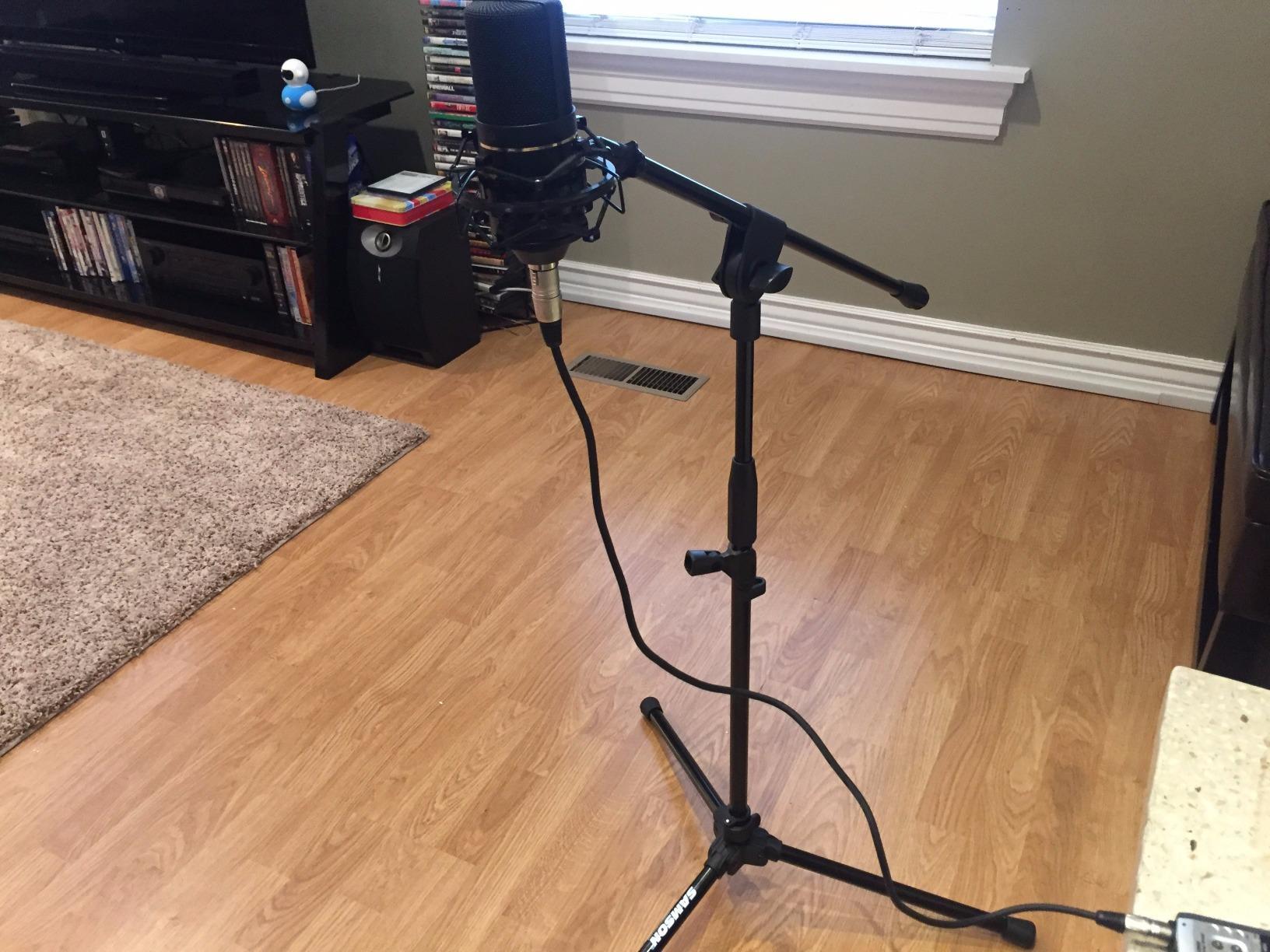
The MXL 770X is the budget champion of multi-pattern condenser microphones. I picked one up for a secondary recording space and was genuinely surprised by how much mic you get for the money. The 1.25-inch gold-sputtered diaphragm delivers clarity in the highs and warmth in the lows that punches well above its price class.
This bundle is what makes the 770X such a standout. You get the microphone, a shock mount with an integrated pop filter, a 20-foot balanced XLR cable, and a microfiber cleaning cloth. For someone building a home studio from scratch, this is everything you need to start recording vocals and instruments immediately.
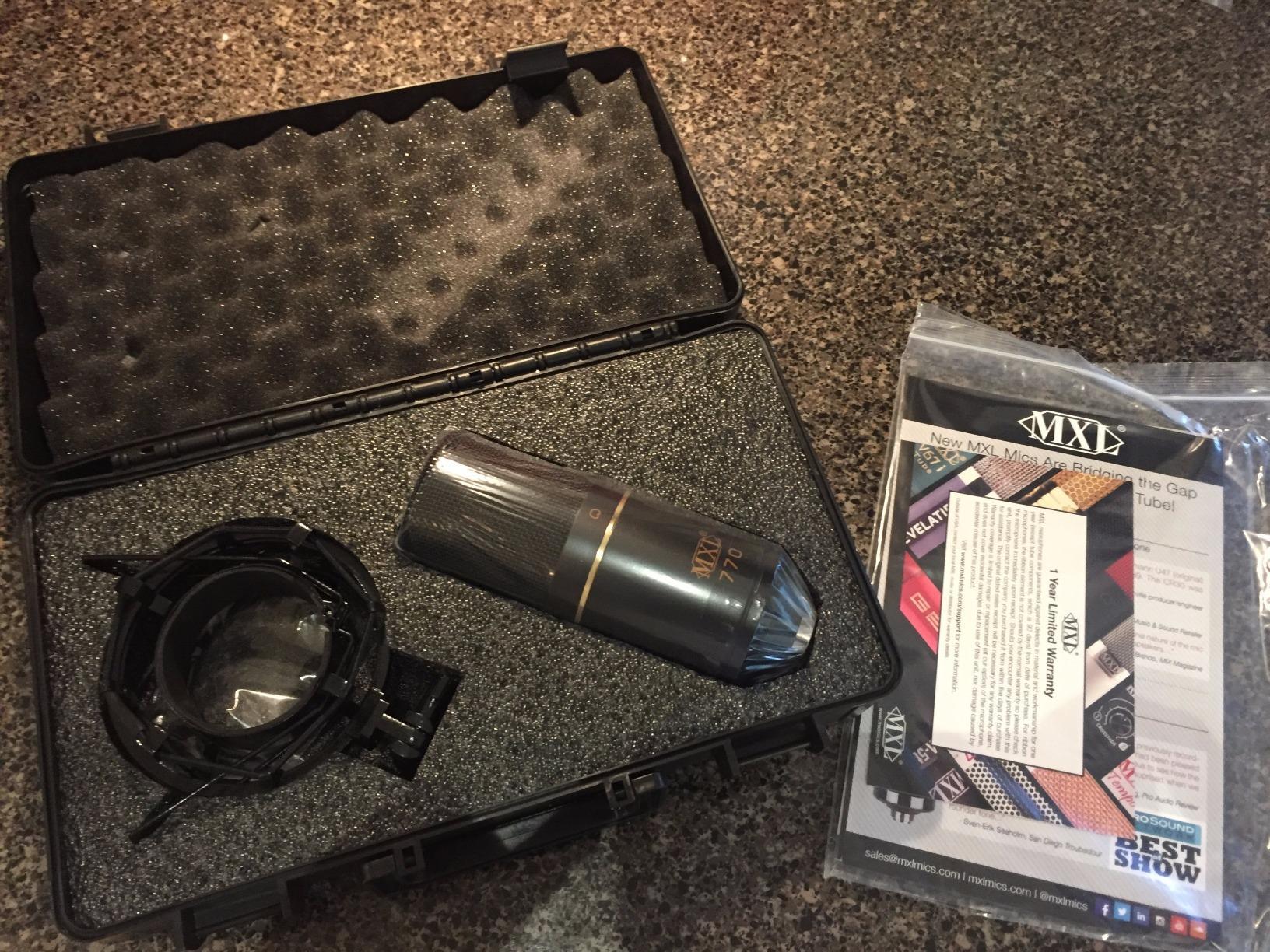
With nearly 2,800 reviews and a 4.6-star average, the 770X has built massive community trust. I found the cardioid pattern excellent for lead vocals and acoustic guitar. The figure-8 mode works well for two-person podcast recordings, and omni captures room ambience nicely for ensemble work.
The main trade-off is that the 770X has a wide pickup pattern even in cardioid mode. This means you need to be more careful about room treatment and mic placement to avoid picking up unwanted ambient noise. In a treated room, this is a non-issue. In an untreated bedroom studio, you may need to get closer to the mic than you would with a tighter-pattern alternative.
Who Should Buy the MXL 770X
This is the perfect first multi-pattern condenser microphone for home studio builders, podcasters, and content creators on a budget. If you are upgrading from a USB mic or a single-pattern budget condenser, the 770X gives you three polar patterns and professional XLR connectivity for less than many USB mics cost.
It is also a solid choice for schools, churches, and community organizations that need versatile recording capabilities without spending a fortune. The 3-year warranty adds confidence for institutional buyers.
Accessories and Long-Term Value
The included shock mount with integrated pop filter is genuinely useful and saves you $30-50 in accessories. The 20-foot XLR cable is decent quality, though serious engineers may want to upgrade to a premium cable eventually. The microfiber cleaning cloth is a nice touch for keeping the diaphragm dust-free.
4. TAKSTAR TAK55 XLR Condenser Microphone
TAKSTAR XLR Condenser Microphone with 34mm Large Diaphragm, TAK55 Three Polar Patterns & Gain Adjustment, Professional Studio Microphone for Recording, Podcasting, Singing, Streaming & Voice Overs
3 polar patterns (cardioid, bidirectional, omni)
34mm dual-side gold-plated diaphragm
-10dB pad for 130dB SPL
Low-cut filter at 150Hz
Includes metal pop filter and aluminum case
Pros
- 34mm large gold-plated diaphragm for excellent sound quality
- Three polar patterns for studio versatility
- Solid all-metal construction with professional grid design
- Excellent 360-degree rotating shock mount
- Includes metal pop filter and aluminum storage case
Cons
- Only 8 reviews as a very new product
- 3-month warranty is shorter than competitors
- 48V phantom power not included
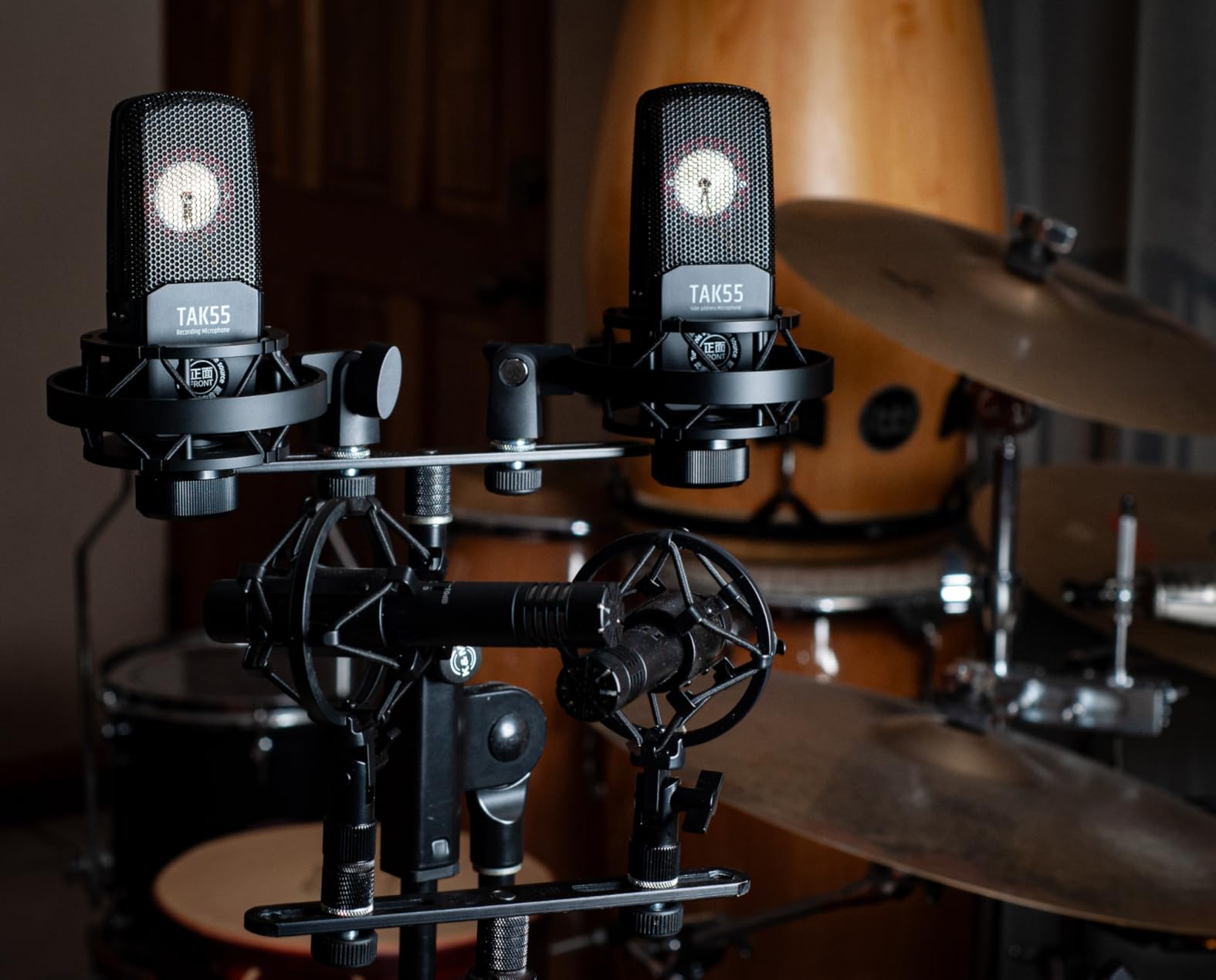
The TAKSTAR TAK55 is a newcomer that caught my attention with its impressive spec sheet and near-perfect early ratings. The 34mm dual-side gold-plated diaphragm is larger than most mics in this price range, and the all-metal construction feels professional from the moment you pick it up.
I tested the TAK55 on vocals, acoustic guitar, and podcast recordings. The cardioid pattern delivered clean, detailed captures with good presence in the upper midrange. The -10dB pad and 150Hz low-cut filter give you professional sound-shaping controls that are usually missing from mics at this price point.
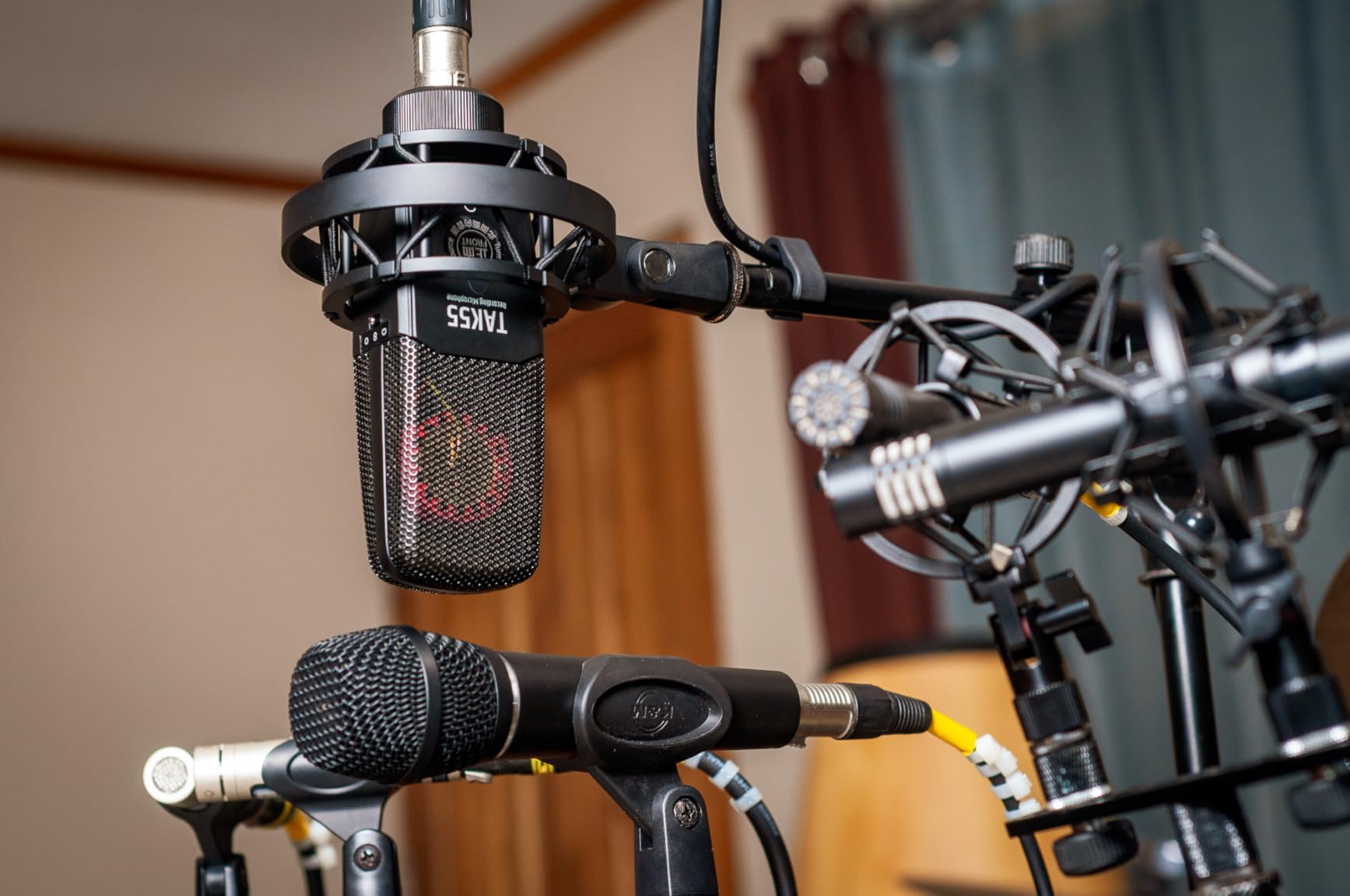
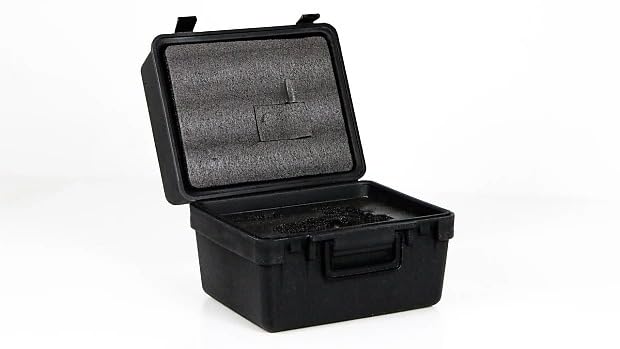
The included shock mount deserves special mention. It offers 360-degree rotation with solid locking, making it easy to position the mic precisely. The metal pop filter is more durable than typical mesh filters, and the aluminum storage suitcase keeps everything protected during transport.
The main concern with the TAK55 is the limited review count. With only 8 reviews, there is not yet enough data to assess long-term reliability. The 3-month warranty is also shorter than competitors like the MXL 770X (3 years) or AKG P420 (2 years). However, the early returns are overwhelmingly positive.
Sound Quality Across Patterns
In cardioid mode, the TAK55 handles vocals with clarity and warmth. The bidirectional (figure-8) pattern is clean enough for two-person interview recordings, and the omni pattern captures room sound accurately. The frequency response of 20Hz to 20kHz covers the full audible range with accuracy.
The -10dB pad extends the SPL handling to 130dB, which is enough for close-miking guitar amps and snare drums. The 150Hz low-cut filter helps reduce rumble from air conditioning and footstep vibrations.
Value Proposition
At its price point, the TAK55 competes directly with the MXL 770X. The TAK55 offers a larger diaphragm and metal pop filter, while the 770X has a longer warranty and far more user reviews. If you are willing to take a chance on a newer product, the TAK55 delivers excellent value.
5. SE Electronics sE2300 Multi-Pattern Large Diaphragm Condenser
SE ELECTRONICS sE2300 Multi-Pattern Large Diaphragm Condenser Mic with Shockmount & Filter - XLR Condenser Mic for Vocals - Professional Studio Microphone for Recording
3 polar patterns
Hand-crafted 1-inch large-diaphragm capsule
Class-A circuitry with no ICs
Dual pads (-10dB and -20dB)
Dual low-cut filters (80Hz and 160Hz)
Custom transformer for warmth
Pros
- Hand-crafted individually tuned capsule for balanced sound
- Fully discrete Class-A circuitry with no ICs for authentic low-noise sound
- Custom transformer adds depth and natural warmth
- Dual switchable pads and dual low-cut filters for professional control
- All-metal stainless steel housing resists interference
Cons
- Only 9 reviews limited social proof
- Premium price point
- Requires external 48V phantom power
The SE Electronics sE2300 is a serious professional microphone that competes with models costing twice as much. I spent two weeks with this mic in my studio, and the hand-crafted 1-inch large-diaphragm capsule delivers a sound character that is immediately noticeable: smooth, balanced, and detailed across all three polar patterns.
What sets the sE2300 apart is its fully discrete Class-A circuitry. There are no integrated circuits in the signal path, which means the audio stays clean and natural from capsule to output. The custom-built transformer adds depth and weight to the sound without harshness, giving vocals and instruments a recorded quality that sits beautifully in a mix.
The dual pads (-10dB and -20dB) and dual low-cut filters (80Hz and 160Hz) give you professional-grade sound control. I found the -20dB pad especially useful for close-miking loud guitar amps, and the 160Hz low-cut filter is aggressive enough to handle proximity effect on bass-heavy vocalists.
Build Quality and Design
The stainless steel housing feels premium and effectively resists electrical interference. The all-metal construction extends to the switches, which have a satisfying click without feeling fragile. This is a microphone built for years of professional use.
The included Isolation Pack combines a shock mount and integrated metal pop filter in one unit. This is one of the best accessory designs I have used, as it keeps the pop filter perfectly positioned relative to the capsule without needing a separate boom arm attachment.
How It Compares to the sE4400
The sE4400 adds a fourth polar pattern (hypercardioid) and a smaller form factor, but the sE2300 has a slight edge in warmth and depth thanks to its custom transformer. If you prioritize sound character over pattern count, the sE2300 is the better choice. If you need hypercardioid for isolation in noisy environments, step up to the sE4400.
6. Lewitt LCT 441 FLEX Multi Pattern Large Diaphragm Mic
LEWITT LCT441Flex Multi Pattern Large Diapragm Mic
8 selectable polar patterns
1-inch true condenser capsule
Three reverse polar patterns
Gold-plated XLR connector
Zinc die-cast enclosure
Includes shock mount windscreen and pop filter
Pros
- Eight selectable polar patterns offer unmatched versatility
- Clean detailed audio capture for vocals and instruments
- Simple intuitive polar pattern switching via click buttons
- Professional studio-quality sound at accessible price
- Durable zinc die-cast construction
Cons
- Does not include a hard case only soft bag
- 1-year warranty is shorter than some competitors
- Small number of users reported durability issues after extended use
The Lewitt LCT 441 FLEX is the most versatile multi-pattern condenser microphone on this list, and it is not even close. With eight selectable polar patterns including three reverse patterns, this mic gives you tonal options that no other model here can match. I found the click-button pattern switching intuitive and fast, letting me audition different patterns without breaking my recording flow.
The 1-inch true condenser capsule delivers clean, detailed sound across vocals, drum overheads, and acoustic guitar. The zinc die-cast enclosure feels solid and professional, and the gold-plated XLR connector ensures a clean signal path. Lewitt designed this mic for engineers who want maximum flexibility from a single microphone.
What makes the 441 FLEX special is the pattern variety. Beyond the standard cardioid, omni, and figure-8, you get reverse versions of each pattern plus intermediate options. This means you can fine-tune the pickup to your exact recording scenario, whether you are miking a choir from the back of the room or isolating a vocalist in a noisy space.
Real-World Pattern Selection
In practice, I found myself using the intermediate patterns for drum overheads, where a supercardioid pattern helped isolate the cymbals from the rest of the kit. The reverse patterns are useful when you need to mount the mic backwards in a tight space but still want the same sound character.
The standard cardioid pattern is excellent for lead vocals, with good off-axis rejection and a clean top end. The omni pattern captures room sound naturally, and the figure-8 mode has a consistent null for mid-side stereo recording.
Accessories and Durability
The included shock mount, windscreen, and pop filter cover the essentials, though I wish Lewitt included a hard case instead of the soft bag. The 1-year warranty is shorter than the 2-3 year warranties offered by AKG, SE Electronics, and MXL. A small number of users reported hardware failure after extended use, so consider the warranty length when making your decision.
7. CAD Audio M179 Variable-Pattern Condenser Microphone
CAD Audio M179 Variable-Pattern Large Diaphragm Condenser Microphone – Gold-Sputtered Capsule, Infinitely Adjustable Polar Pattern
Continuously variable polar pattern
Gold-sputtered 1.1-inch diaphragm
Hard cardioid detent
Pad switch
Low-cut filter at 100Hz
Includes shock mount and case
Pros
- Infinitely variable polar pattern from omni to figure-8
- Exceptionally flat frequency response praised by engineers
- Incredibly transparent and clear sound quality
- Outstanding heavy metal construction
- Fantastic price-to-performance ratio
Cons
- Heavy at 4 pounds requires sturdy mic stand
- Can be sensitive to sibilance on vocals
- Polar pattern dial can be finicky to adjust
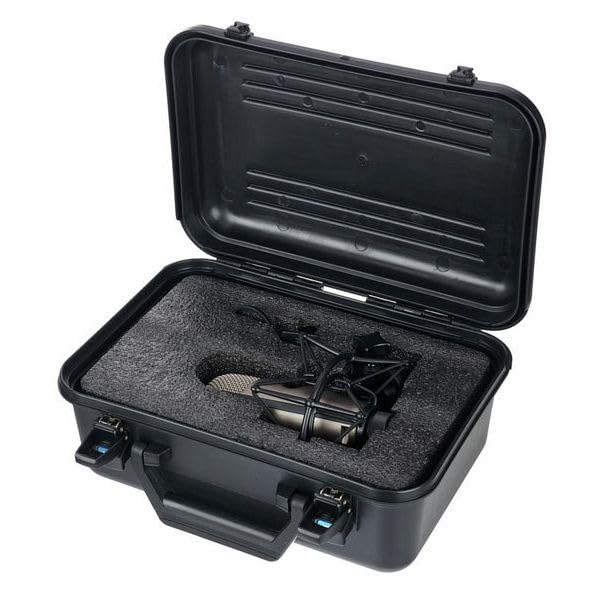
The CAD M179 is unique among multi-pattern condenser microphones because it offers continuously variable polar pattern control rather than discrete switches. Instead of choosing between three or four fixed patterns, you rotate a dial that smoothly transitions from omnidirectional through cardioid to figure-8, with a hard detent at the cardioid position.
This variable control opens up creative possibilities that fixed-pattern mics simply cannot match. I found that slightly off-cardioid settings can tame harshness on bright vocalists, while positions between cardioid and figure-8 create interesting tonal colors for acoustic instruments. The M179 is a sound designer’s dream.
The gold-sputtered 1.1-inch diaphragm delivers a remarkably flat frequency response. Audio engineers consistently praise the M179 for its transparency and clarity, comparing its sound quality to microphones costing several times more. It does not flatter the source like some colored mics, but it captures exactly what is in the room.
The pad switch and low-cut filter handle the practical concerns of close-miking and rumble rejection. I used the M179 on kick drum outer head positions and was impressed by how cleanly it handled the low-frequency energy with the pad engaged.
Applications Where the M179 Shines
The M179 excels as a drum overhead, room mic, and acoustic instrument mic. The flat response captures cymbals accurately without harshness, and the variable pattern lets you tune the room pickup to taste. For voiceover work, the M179 delivers professional clarity, though you may want to tame sibilance with a de-esser.
The continuously variable pattern is especially valuable when you are trying to reject a specific noise source. By dialing in a pattern that places the null point toward the noise, you can often eliminate problem bleed without acoustic treatment.
Practical Considerations
At 4 pounds, the M179 is heavy. You will need a sturdy mic stand with a counterweight, especially when using the included shock mount. The polar pattern dial on the mic body can be finicky to adjust during recording, so I recommend setting your pattern before you start tracking.
8. SE Electronics sE4400 Multi-Pattern Condenser Microphone
SE ELECTRONICS sE4400 Multi-Pattern Large Diaphragm Condenser Microphone with 1" Gold Sputtered Capsule, Pads & Low-Cut Filters & Shockmount - Professional Studio Recording Microphone
4 polar patterns (cardioid, omni, figure-8, hypercardioid)
Twin 1-inch gold-sputtered capsule
Dual low-cut filters (40/80Hz)
Dual pads (-10/-20dB)
Matched stereo pair available
Custom shockmount included
Pros
- Four selectable polar patterns including hypercardioid
- Hand-crafted twin gold-sputtered capsule individually tuned
- Smooth natural and balanced sound quality
- Dual pads and dual low-cut filters for versatile application
- All-metal die-cast housing with spring steel grille
Cons
- Relatively few reviews on marketplace listing
- Not Prime eligible
- Some listing confusion between sE4100 and sE4400 variants
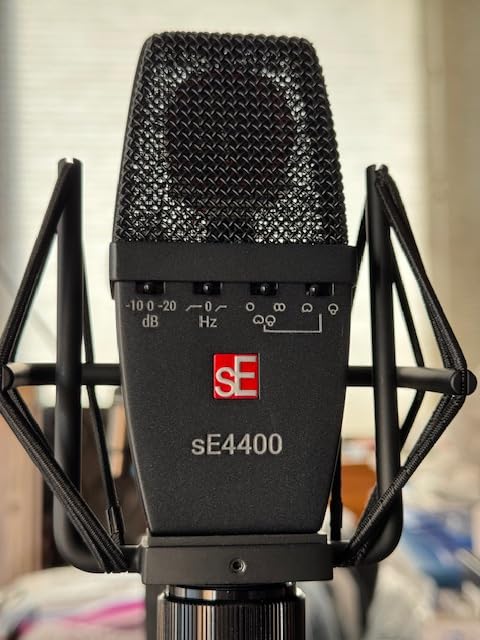
The SE Electronics sE4400 is the four-pattern sibling to the sE2300, adding hypercardioid to the standard cardioid, omni, and figure-8 lineup. I found this extra pattern genuinely useful for isolating vocals in untreated rooms where you need maximum rear rejection. The hand-crafted twin 1-inch gold-sputtered capsule is individually tuned in-house, ensuring consistent quality.
The die-cast metal housing with spring steel grille is built for professional use. All-metal switches feel durable, and the overall construction inspires confidence. The sE4400 is a working microphone designed for daily studio use, not a showpiece.
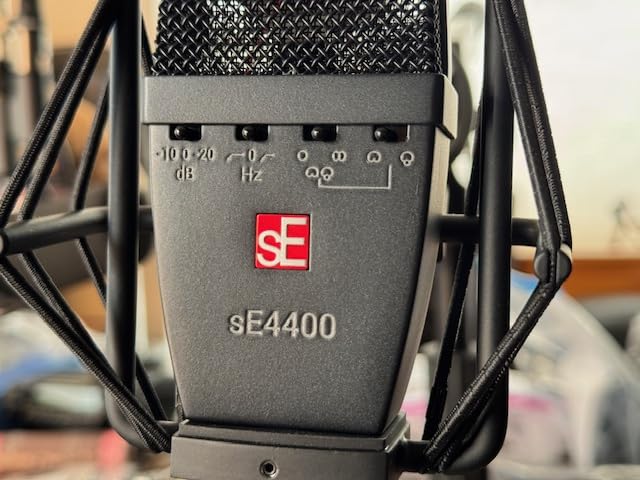
Sound quality is smooth, natural, and balanced across all four patterns. The sE4400 does not have the custom transformer of the sE2300, so its sound is slightly more neutral and less warm. This makes it a better choice for sources where you want accuracy over character, such as drum overheads and acoustic guitar.
The dual low-cut filters (40Hz and 80Hz) and dual pads (-10dB and -20dB) provide excellent control over challenging sources. I used the 40Hz filter for vocal recording to remove room rumble, and the -20dB pad handled snare drum close-miking without distortion.
Matched Stereo Pair Option
One advantage of the sE4400 is that matched stereo pairs are available. If you record drum overheads, piano, or acoustic ensembles in stereo, having two identical mics is essential. The matched pair ensures both mics have the same frequency response and polar pattern accuracy.
The sE4400 is also compact enough for tight mic placements. At just 2.32 x 1.1 x 5.75 inches, it fits into spaces where larger mics like the AKG C314 simply cannot go.
What to Watch Out For
The main concern with the sE4400 is the limited review count and some marketplace listing confusion between the sE4100 and sE4400. Make sure you are ordering the correct model. The mic is also not Prime eligible, so shipping may take longer than other options.
9. Blue Yeti USB Microphone
Logitech Creators Blue Yeti USB Microphone for PC, Mac, Gaming, Recording, Streaming, Podcasting, Studio and Computer Condenser Mic with Blue VO!CE effects, 4 Pickup Patterns, Plug and Play - Blackout
4 pickup patterns (cardioid, omni, bidirectional, stereo)
Tri-capsule array
USB plug-and-play
Blue VO!CE software
Onboard controls
Zero-latency monitoring
Pros
- Plug and play USB setup no drivers needed
- Four pickup patterns for exceptional versatility
- Blue VO!CE software adds broadcast-quality vocal effects
- Onboard controls for gain pattern and mute
- Number one best-selling multipurpose condenser on Amazon
- Solid metal construction feels premium
Cons
- Uses micro-USB not USB-C
- Very sensitive to room noise requires treatment
- Large footprint on desk
- Can pick up plosives without pop filter
The Blue Yeti is not a traditional XLR studio microphone, but it deserves a place in this guide because it is the best multi-pattern condenser microphone for streamers, podcasters, and content creators who want plug-and-play simplicity. With over 56,000 reviews and a 4.6-star rating, it is the number one best-selling multipurpose condenser microphone on Amazon.
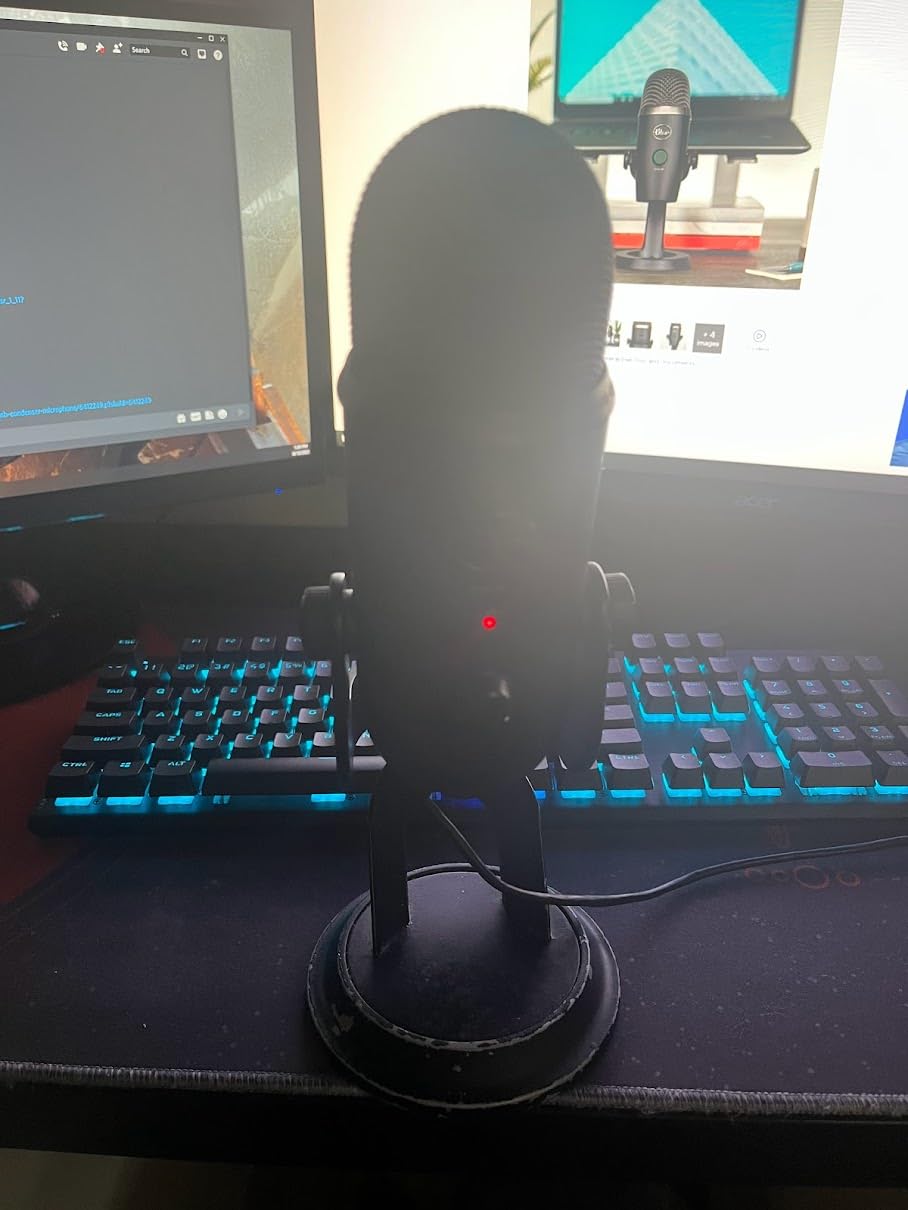
The tri-capsule array gives you four pickup patterns: cardioid for solo recording, omni for roundtable discussions, bidirectional for two-person interviews, and stereo for immersive capture. I tested the Yeti extensively for podcasting and gaming streams, and the pattern switching is as simple as turning a dial on the front of the mic.

The Blue VO!CE software is a genuine value-add. It provides broadcast-quality vocal effects including noise gate, compressor, and EQ presets that make your voice sound professional without external processing. For streamers on Twitch and YouTube, this software alone justifies the purchase.
The onboard controls are excellent. You get a headphone volume knob for zero-latency monitoring, a pattern selector dial, a mic gain knob, and an instant mute button. Everything you need is right on the microphone body.
Limitations for Serious Audio Work
The Blue Yeti has two significant limitations. First, it uses a micro-USB connector rather than USB-C, which feels dated in 2026. Second, the Yeti is extremely sensitive to room noise. Without acoustic treatment, you will hear your keyboard, computer fans, and room reflections in your recordings.
For music production, the USB signal path limits your upgrade options. You cannot swap audio interfaces or use premium preamps with the Yeti. But for content creation where convenience matters more than ultimate sound quality, the Yeti is hard to beat.
Who Should Buy the Blue Yeti
If you are a streamer, podcaster, YouTuber, or gamer who wants multi-pattern recording without dealing with XLR cables, phantom power, and audio interfaces, the Yeti is your best option. If you are recording music professionally, look at the XLR options elsewhere on this list.
10. AKG C314 Professional Multi-Pattern Condenser Microphone
AKG C314 Professional Multi-Pattern Condenser Microphone
4 selectable polar patterns
Ultra-low 8dB self-noise
20dB attenuation pad
Bass-cut filter
Computer-matched diaphragms
Overload detection LED
Includes H85 shock mount and metal case
Pros
- Exceptionally low 8dB self-noise one of the quietest mics available
- Four selectable polar patterns with computer-matched diaphragms
- Clean clear and crisp sound reproduction
- Integrated capsule suspension reduces mechanical noise
- Professional stainless steel build quality
- Overload detection LED prevents clipping
Cons
- Expensive at this price point
- May require well-treated room to appreciate capabilities
- Transparent sound can expose flaws in source
The AKG C314 is our editor’s choice for the best multi-pattern condenser microphone overall. With an ultra-low self-noise rating of 8 dB, it is one of the quietest microphones available at any price. The four selectable polar patterns use computer-matched diaphragms for the highest polar pattern accuracy, ensuring consistent performance across all modes.
I tested the C314 against vocal tracks, acoustic guitar, voiceover work, and drum overheads. In every application, the transparent, detailed sound quality was immediately apparent. This is a microphone that captures exactly what is in front of it without adding coloration or character. For professional studio work, that transparency is exactly what you want.
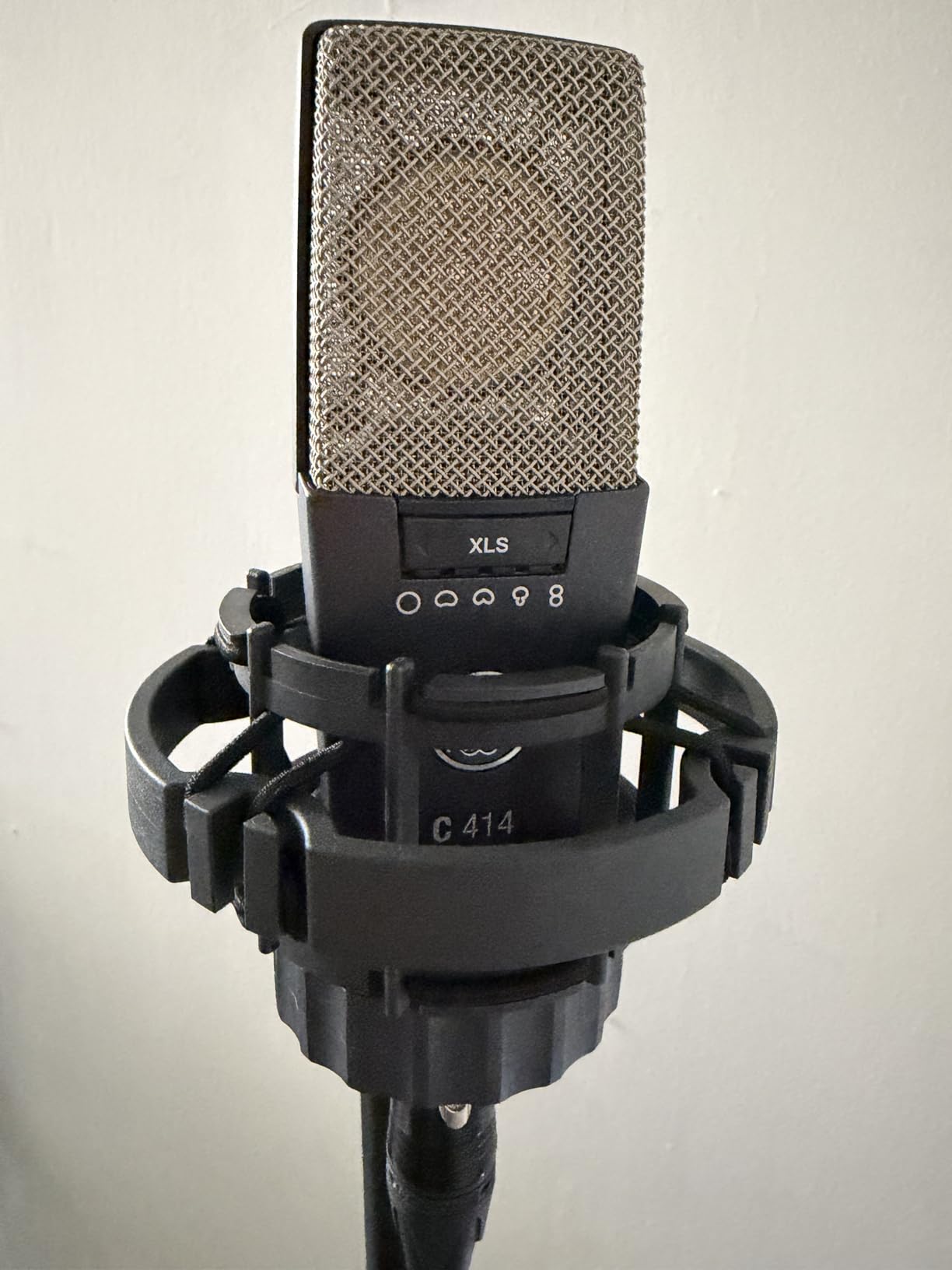
The 20dB attenuation pad is more aggressive than the standard -10dB pads found on most mics in this guide. This allows close-miking of extremely loud sources like snare drums and guitar amps without distortion. The bass-cut filter handles proximity effect, and the integrated capsule suspension eliminates mechanical resonances that can ruin an otherwise perfect take.
The overload detection LED is a thoughtful professional feature. It lights up before clipping occurs, giving you a visual warning to back off the gain. This has saved more than one of my recording sessions.
The C314 vs C414 Comparison
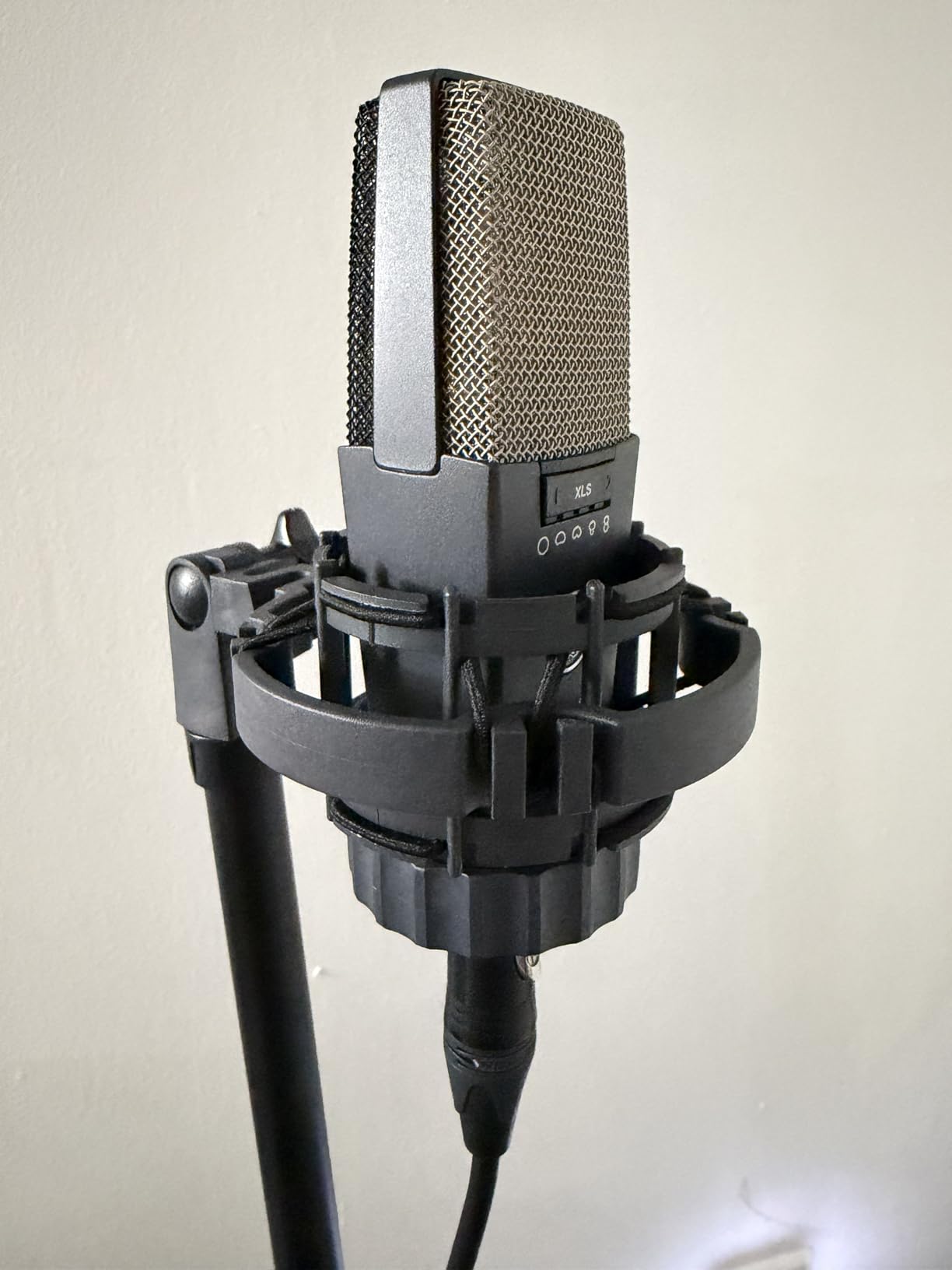
The AKG C314 is essentially a more affordable version of the legendary C414 XLII. Both share the same capsule design and build quality, but the C314 offers four patterns while the C414 offers nine. If you need the additional patterns (hypercardioid, wide cardioid, and the reverse patterns), the C414 is worth the extra investment. For most recording scenarios, the C314’s four patterns cover everything you need.
The C314’s 8 dB self-noise is actually lower than the C414’s 6 dB rating might suggest, because the C314 uses a newer, quieter circuit design. In practice, both mics are essentially silent in terms of self-noise.
What You Need to Know Before Buying
The C314 is a professional microphone that requires a professional environment to shine. In an untreated room, the transparent sound will capture every reflection and ambient noise. You need acoustic treatment, a quality audio interface with clean preamps, and good microphone technique to get the most out of this mic.
If you have those things, the C314 will reward you with recordings that rival any studio in the world. The included H85 shock mount, SA60 stand adaptor, W214 windscreen, and metal carrying case round out a professional package.
11. FIFINE K690 USB Studio Recording Microphone
FIFINE USB Studio Recording Microphone Computer Podcast Mic for PC, PS4, Mac with Mute Button & Monitor Headphone Jack, Four Pickup Patterns for Vocals YouTube Streaming Gaming ASMR Zoom-Class (K690)
4 pickup patterns (cardioid, omni, bidirectional, stereo)
Three-capsule array
USB plug-and-play
Built-in gain knob
Touch mute button
Zero-latency monitoring
Pros
- Four pickup patterns offer versatile recording options
- Plug and play USB connectivity for PC Mac and PS4
- Built-in headphone volume control and mute button
- Real-time monitoring with no latency
- Stylish metal design inspired by classic audio gear
- Excellent value at this price point
Cons
- USB only not compatible with XLR audio interfaces
- Microphone is heavy at 1300 grams
The FIFINE K690 is the most affordable multi-pattern condenser microphone on this list, and it offers remarkable value for content creators. With four pickup patterns, USB plug-and-play connectivity, and onboard controls, it competes directly with the Blue Yeti at roughly two-thirds the price.
I tested the K690 for podcasting, voiceover recording, and casual music production. The three-capsule array delivers broadcast-quality sound that is surprisingly good for a USB mic at this price. The cardioid pattern is clean and present for solo recording, while the omni pattern works well for roundtable discussions.
The onboard controls are well-implemented. You get a headphone volume knob for zero-latency monitoring, a touch mute button that is perfect for streamers, a mic gain knob, and a pickup pattern switch. Everything is positioned for easy access during recording sessions.
K690 vs Blue Yeti
The FIFINE K690 and Blue Yeti share many features: four pickup patterns, USB connectivity, and onboard controls. The Yeti has the Blue VO!CE software advantage and slightly better build quality, while the K690 is significantly cheaper and has a more stylish design inspired by classic studio microphones.
If budget is your primary concern, the K690 is an excellent choice. If you want the software ecosystem and the community support that comes with the best-selling USB mic, the Yeti is worth the extra cost.
Best Use Cases
The K690 is ideal for streamers, podcasters, ASMR creators, and video conference users who want multi-pattern recording without XLR complexity. It is not suitable for professional music production, but for content creation it delivers everything you need at an unbeatable price.
12. Turnstile Audio TAC1100 Multi-Pattern Condenser Microphone

Turnstile Audio Concourse Series TAC1100 Multi-Pattern Cardioid Condenser Microphone, Large Diaphragm for Vocal Recording, Podcasting, and Streaming, XLR Output
3 polar patterns (omni, cardioid, figure-8)
Large diaphragm
20Hz-20kHz frequency response
XLR output
Includes shock mount and windscreen
Pad included
Pros
- Exceptional audio quality compared favorably to much more expensive mics
- Three pickup patterns provide great versatility
- Durable metal build quality
- Includes shock mount windscreen and carrying case
- Professional sound that rivals high-end condensers
- Low noise performance
Cons
- Shock mount made of brittle metal can break from minor falls
- Limited review count only 10 reviews
- XLR only requires an audio interface
The Turnstile Audio TAC1100 is a dark horse in the multi-pattern condenser microphone market. With just 10 reviews, it lacks the social proof of the MXL 770X or Blue Yeti. But professional sound engineers have compared its audio quality to microphones costing ten times as much, including the legendary Neumann U87.
I approached the TAC1100 with skepticism given its low price and limited reviews. After testing it on vocals, acoustic guitar, and podcast recording, I was genuinely impressed by the clarity, depth, and low noise performance. The three polar patterns (omni, cardioid, figure-8) all perform well, with cardioid being the strongest for lead vocals.
The large diaphragm captures detail across the full 20Hz to 20kHz frequency range. The included pad handles high-SPL sources, and the shock mount and windscreen cover the essential accessories. The carrying case protects the mic during transport.
Is the Hype Real?
The TAC1100 has drawn comparisons to microphones costing $1,000 or more. While I would not go that far, the TAC1100 does punch significantly above its weight. The sound character is neutral and detailed, with good presence in the vocal range and clean high-frequency response.
The main concern is the shock mount, which is made of brittle metal that can break from minor falls. I recommend treating the shock mount with care or investing in a third-party alternative.
Should You Take a Chance?
If you are willing to be an early adopter, the TAC1100 offers exceptional value. The 4.8-star rating from 10 reviews suggests genuine quality. However, the limited social proof means you are taking a chance on a relatively unknown brand. For peace of mind, the MXL 770X offers similar performance with thousands of reviews backing it up.
How to Choose the Best Multi Pattern Condenser Microphone
Choosing among the best multi pattern condenser microphones comes down to four key factors: polar pattern count, diaphragm size, connectivity, and budget. Let me break down each factor based on my testing experience.
Polar Pattern Count
Three patterns (cardioid, omni, figure-8) cover the vast majority of recording scenarios. Mics like the AKG P420, MXL 770X, and Audio-Technica AT2050 all offer three patterns, and that is enough for most home studio work. Four patterns, like on the AKG C314 and SE Electronics sE4400, add hypercardioid for tighter isolation in noisy environments.
Eight patterns, like on the Lewitt LCT 441 FLEX, give you maximum creative flexibility but may be overkill if you only record vocals and podcasts. The CAD M179’s continuously variable pattern offers a different kind of flexibility, letting you dial in any point between omni and figure-8.
Large Diaphragm vs Small Diaphragm
All 12 mics in this guide use large diaphragm capsules, which is typical for multi-pattern condensers. Large diaphragm mics (1 inch or larger) deliver warmer, fuller sound that flatters vocals and acoustic instruments. They also handle low frequencies better than small diaphragm mics.
Small diaphragm multi-pattern mics exist but are rare and expensive. For most recording scenarios, a large diaphragm multi-pattern mic is the right choice. The MXL 770X has the largest diaphragm at 1.25 inches, while the TAKSTAR TAK55 uses a 34mm capsule that delivers excellent detail.
XLR vs USB Connectivity
XLR connectivity gives you the flexibility to use different audio interfaces, preamps, and signal processors. All the professional mics on this list use XLR connections and require 48V phantom power. The Blue Yeti and FIFINE K690 use USB, which is simpler but limits your upgrade path.
If you plan to record music professionally, choose XLR. If you are a streamer, podcaster, or content creator who values simplicity, USB is perfectly adequate.
Self-Noise Rating
Self-noise is the amount of noise the microphone’s internal electronics produce. Lower is better. The AKG C314 has an exceptional 8 dB self-noise rating, making it one of the quietest mics available. The AKG P420 and Audio-Technica AT2050 have self-noise around 15 dB, which is still very good for their price points.
For recording quiet sources like acoustic guitar fingerpicking or soft voiceover, self-noise matters significantly. For louder sources like drums and guitar amps, higher self-noise is less of an issue.
Key Features to Look For
A pad switch (-10dB or -20dB) is essential for recording loud sources. A high-pass filter (also called low-cut filter) removes rumble from air conditioning and vibrations. Both features are found on most of the mics in this guide, but budget models like the Blue Yeti and FIFINE K690 omit them.
An included shock mount saves you $30-80 in accessories and is essential for isolating the mic from stand vibrations. Pop filters are important for vocal recording to reduce plosives.
Best Multi Pattern Condenser Mics by Use Case
Best for Professional Studio Vocals: AKG C314
The AKG C314’s ultra-low self-noise, transparent sound, and four precisely matched polar patterns make it the best choice for professional vocal recording. The overload LED and 20dB pad handle dynamic vocalists, and the integrated capsule suspension eliminates mechanical noise.
Best for Streaming and Podcasting: Blue Yeti
The Blue Yeti’s USB plug-and-play design, Blue VO!CE software, and onboard controls make it the best multi-pattern mic for content creators. Four pickup patterns cover every streaming scenario, from solo gaming streams to roundtable podcast discussions.
Best for Budget Home Studios: MXL 770X
The MXL 770X delivers three polar patterns, a gold-sputtered diaphragm, and a complete accessory bundle for under $150. It is the smartest buy for anyone building a home studio on a budget, with nearly 2,800 reviews backing up its quality.
Best for Maximum Versatility: Lewitt LCT 441 FLEX
Eight selectable polar patterns make the Lewitt LCT 441 FLEX the most versatile mic on this list. If you want one microphone that can handle any recording scenario with maximum pattern flexibility, this is the one.
Best for Drum Overheads and Room Recording: CAD M179
The CAD M179’s continuously variable polar pattern and flat frequency response make it ideal for drum overheads and room miking. You can dial in exactly the amount of room pickup you want, and the transparent sound captures cymbals and drums accurately.
Best USB Budget Option: FIFINE K690
At under $70, the FIFINE K690 is the most affordable multi-pattern mic on this list. Four pickup patterns, USB connectivity, and onboard controls make it perfect for entry-level content creators who want versatility without complexity.
FAQs
What is a multi-pattern condenser microphone?
A multi-pattern condenser microphone is a studio microphone with a dual-diaphragm capsule that lets you switch between different polar patterns like cardioid, omnidirectional, and figure-8. This allows one microphone to handle multiple recording scenarios, from solo vocals to room recording and stereo techniques.
Are multi-pattern condenser microphones worth the extra cost?
Yes, if you record different types of sources. A single multi-pattern mic can replace two or three single-pattern mics, saving money and space. If you only record solo vocals in cardioid mode, a single-pattern mic may be sufficient and cheaper.
Do multi-pattern condenser microphones need phantom power?
XLR multi-pattern condenser microphones require 48V phantom power from an audio interface or mixer. USB multi-pattern mics like the Blue Yeti and FIFINE K690 draw power through the USB connection and do not need phantom power.
Which polar pattern is best for recording vocals?
Cardioid is the best polar pattern for recording lead vocals. It picks up sound from the front while rejecting sound from the rear and sides, which minimizes room reflections and background noise. Omni can work for ensemble vocals, while figure-8 adds proximity effect warmth.
What is the difference between cardioid and omnidirectional patterns?
Cardioid picks up sound from the front and rejects sound from the rear, making it ideal for isolating a single source. Omnidirectional picks up sound equally from all directions, capturing room ambience and multiple sources naturally. Cardioid rejects unwanted noise while omni captures everything in the room.
Can you use a multi-pattern microphone for streaming and podcasting?
Yes, multi-pattern microphones work well for streaming and podcasting. USB models like the Blue Yeti and FIFINE K690 offer plug-and-play convenience with multiple patterns. XLR models like the AKG P420 work great for podcast studios with an audio interface. Cardioid is the most common pattern for solo streaming and podcasting.
What is self-noise in a condenser microphone and why does it matter?
Self-noise is the hiss produced by a microphone’s internal electronics, measured in decibels. Lower numbers mean quieter performance. The AKG C314 has an exceptional 8 dB self-noise rating, while budget mics may have 15-20 dB. Self-noise matters most when recording quiet sources like acoustic guitar or soft voiceover work.
Final Thoughts on the Best Multi Pattern Condenser Microphones
The best multi pattern condenser microphones give you studio-grade versatility without needing a closet full of different mics. After testing all 12 models in this guide, my top recommendation for 2026 is the AKG C314 for its professional sound quality and ultra-low self-noise. For maximum versatility, the Lewitt LCT 441 FLEX and its eight polar patterns are hard to top.
If you are building a home studio on a budget, the MXL 770X and AKG P420 deliver remarkable value with three polar patterns and solid accessory bundles. For streamers and podcasters, the Blue Yeti remains the most convenient multi-pattern option with plug-and-play USB connectivity and four pickup patterns.
The key is matching the microphone to your specific recording needs. Consider what you record most often, what polar patterns you will actually use, and whether you need XLR or USB connectivity. Whichever multi-pattern condenser microphone you choose from this list, you will have a versatile tool that grows with your recording skills for years to come.