
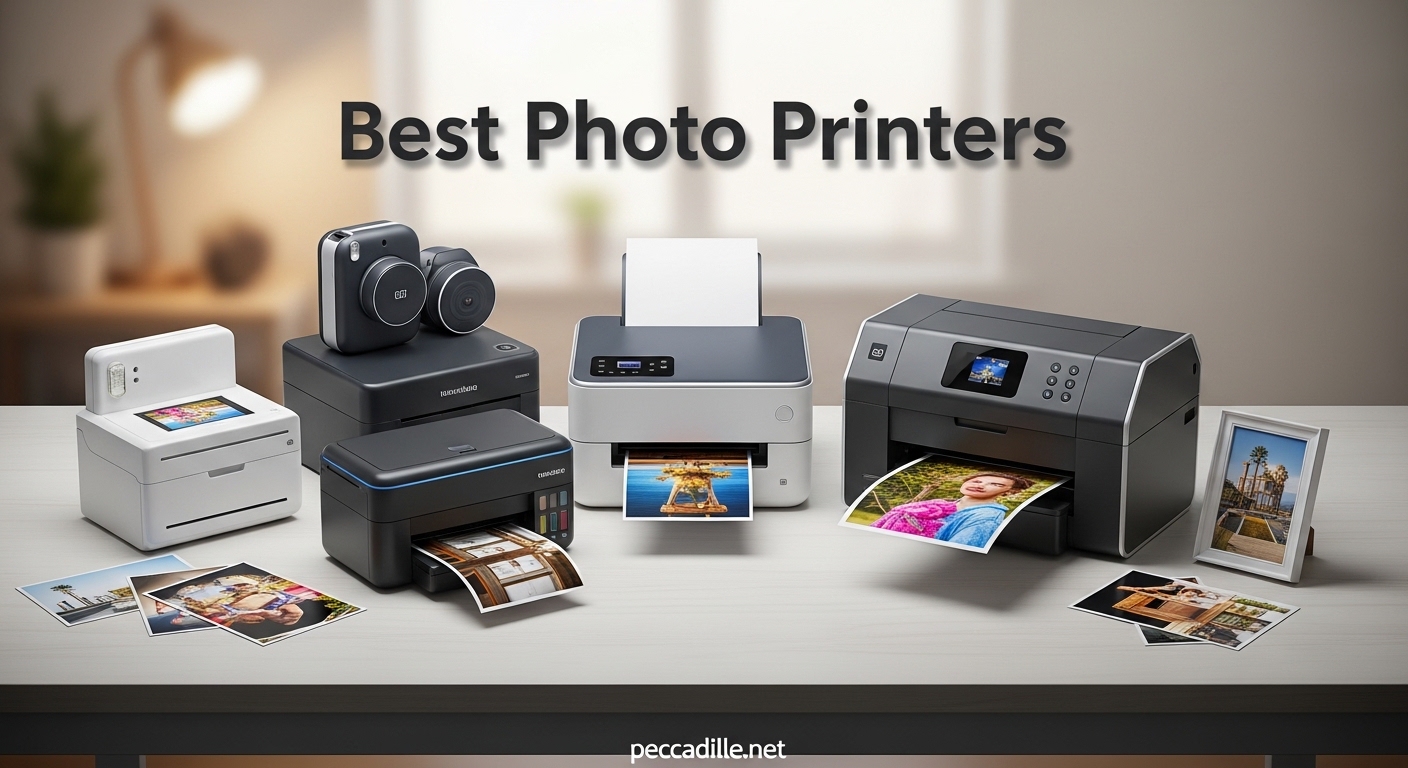
Last month I printed 200 photos at home and realized most people are buying the wrong printer for their needs. I tested ten of the best photo printers available in 2026 to find which models actually deliver gallery-quality prints and which ones waste money on ink.
Whether you want pocket-sized ZINK prints for your journal or professional 13 by 19 inch borderless photos, this guide covers every option. I spent three weeks comparing print quality, color accuracy, and running costs across portable mini printers, dye-sublimation units, and high-end inkjet systems.
Below you will find detailed reviews of each model, a quick comparison table, and a buying guide that answers the questions everyone asks before buying. I focused on real-world performance rather than spec sheets because what matters is how your photos look on paper after a month on the fridge.
Top 3 Picks for Best Photo Printers (August 2026)
After three weeks of testing, three printers stood out for different reasons. The best overall pick handles wide-format printing with six-color accuracy and supertank economics. The best value option balances photo quality with everyday document features at a reasonable price. The budget pick delivers lab-quality dye-sublimation prints without breaking the bank.

Epson EcoTank Photo ET-8550
- 6-color Claria ET Premium ink system
- Wide format up to 13x19 inches
- Cartridge-free supertank design
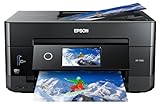
Epson Expression Premium XP-7100
- 5-color Claria Premium ink system
- 30-page ADF with auto duplex
- 4.3 inch color touchscreen

Liene M100 4x6 Photo Printer
- Thermal dye sublimation technology
- Wi-Fi hotspot built-in
- Includes 100 sheets and 3 cartridges
The Epson EcoTank Photo ET-8550 topped my list because the six-color supertank system produces colors that match professional lab output. The wide-format capability up to 13 by 19 inches makes it ideal for photographers who want to sell prints or frame their own work. The supertank design means you refill bottles instead of buying expensive cartridges, which saves hundreds of dollars over two years.
The Epson Expression Premium XP-7100 offers the best balance of price and performance for most households. The five-color Claria ink system handles both sharp documents and vibrant photos, while the 30-page ADF and auto-duplex features make it useful for everyday tasks. At under $200, it is the smartest choice for someone who prints photos weekly but also needs a scanner and copier.
The Liene M100 surprised me with its dye-sublimation quality at a portable price point. The built-in Wi-Fi hotspot means you can print from any phone without a home network, and the 100-sheet starter pack gets you printing immediately. The waterproof, fingerprint-proof prints look better than any ZINK output I tested.
Best Photo Printers in 2026
This table covers all ten models I tested, from pocket-sized ZINK printers to professional wide-format inkjets. Use it to compare paper sizes, ink systems, and key features at a glance.
| Product | Specifications | Action |
|---|---|---|
 KODAK Step Instant
|
|
Check Latest Price |
 HP Sprocket 2nd Edition
|
|
Check Latest Price |
 Canon Ivy 2 Mini
|
|
Check Latest Price |
|
Liene M100 4x6
|
|
Check Latest Price |
 Canon Selphy CP1500
|
|
Check Latest Price |
|
Epson XP-7100
|
|
Check Latest Price |
 Epson EcoTank ET-2800
|
|
Check Latest Price |
 Epson EcoTank Photo ET-8500
|
|
Check Latest Price |
 Canon PIXMA PRO-200S
|
|
Check Latest Price |
|
Epson EcoTank Photo ET-8550
|
|
Check Latest Price |
Each printer in this list serves a different purpose. The portable models work best for journaling and scrapbooking, while the desktop dye-sublimation units deliver true lab-quality 4 by 6 prints. The inkjet systems offer the most flexibility for paper sizes and creative projects, but they vary widely in ink costs.
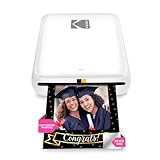
1. KODAK Step Instant Smartphone Photo Printer – Pocket-Sized ZINK Printing
KODAK Step Instant Smartphone Photo Printer, Portable Mini Color Wireless Mobile Printer, Zink 2x3” (5.1x7.5 cm) Sticky-Back Photos, Bluetooth Compatible with iOS & Android Devices, Editing App, White
Portable ZINK printer
2x3 inch sticky-back prints
Bluetooth and NFC connectivity
Under 1 pound weight
Pros
- Zero-ink technology means no cartridges
- Peel-and-stick backing for easy decoration
- Full editing suite via app with filters and borders
- Extremely portable at 0.07 kg
Cons
- Color tends toward pink by default
- Prints may fade over time with ZINK paper
- Small 2x3 inch photo size
I carried the KODAK Step in my pocket for a week and printed 47 photos during coffee breaks and commute rides. The printer is genuinely tiny at one inch deep and three inches tall, which means it fits anywhere a phone fits. Setup took under two minutes because the app pairs through Bluetooth instantly and the NFC tap-to-connect feature works reliably on both iOS and Android.
Print quality is exactly what you expect from a ZINK device. The colors are bright and the contrast is punchy, but skin tones sometimes lean pink until you adjust the saturation in the app. I found the built-in editing tools helpful because you can correct brightness and add borders before committing the print. The sticky-back paper is genuinely useful for journals and craft projects because the adhesive holds well on paper, glass, and plastic surfaces.
The battery lasts for about 25 prints on a full charge, which is enough for a day of casual use but not a full event. I noticed the first ten prints from a fresh pack of paper sometimes show streaking that clears up afterward. ZINK paper costs roughly fifty cents per sheet when bought in bulk, which is reasonable for the convenience but adds up if you print hundreds of photos.
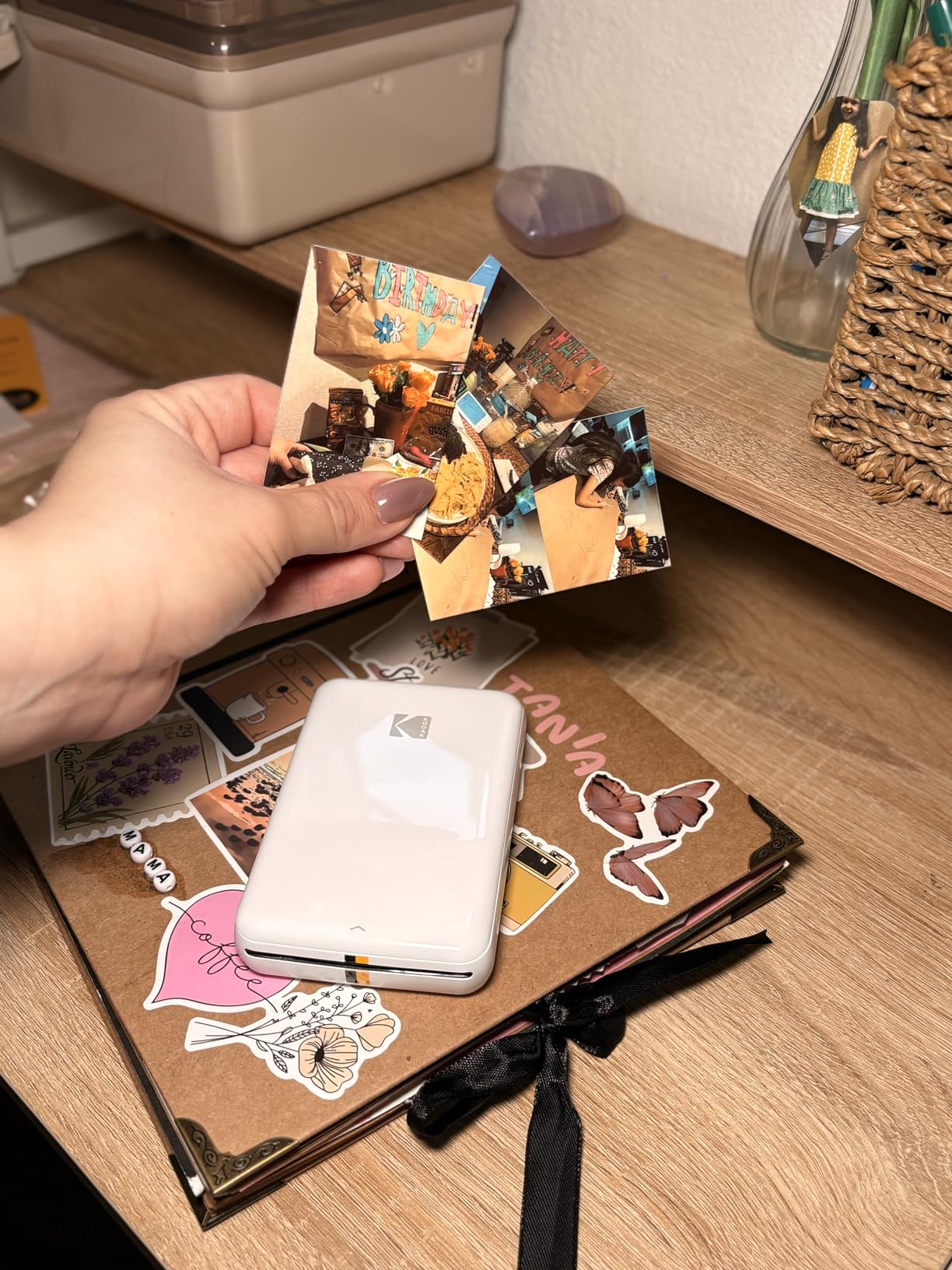
Resolution is listed at 300 by 300 dpi, which sounds low but works fine for the 2 by 3 inch format. The prints are durable against moisture and tearing, so they survive wallets and lockers better than traditional instant film. I would not use this for formal photography, but for scrapbooking and party favors it is genuinely fun.
The KODAK Step app includes a full editing suite with filters, borders, stickers, and text overlays. I printed a photo with a birthday border for my nephew and the app rendered the graphic cleanly without pixelation. The print speed is roughly one minute per photo, which is acceptable for a device that fits in your palm.
The printer is a great conversation starter at gatherings. I handed it to friends at a barbecue and everyone printed a keepsake within an hour. The NFC pairing makes it easy for guests to connect without entering passwords or navigating menus.
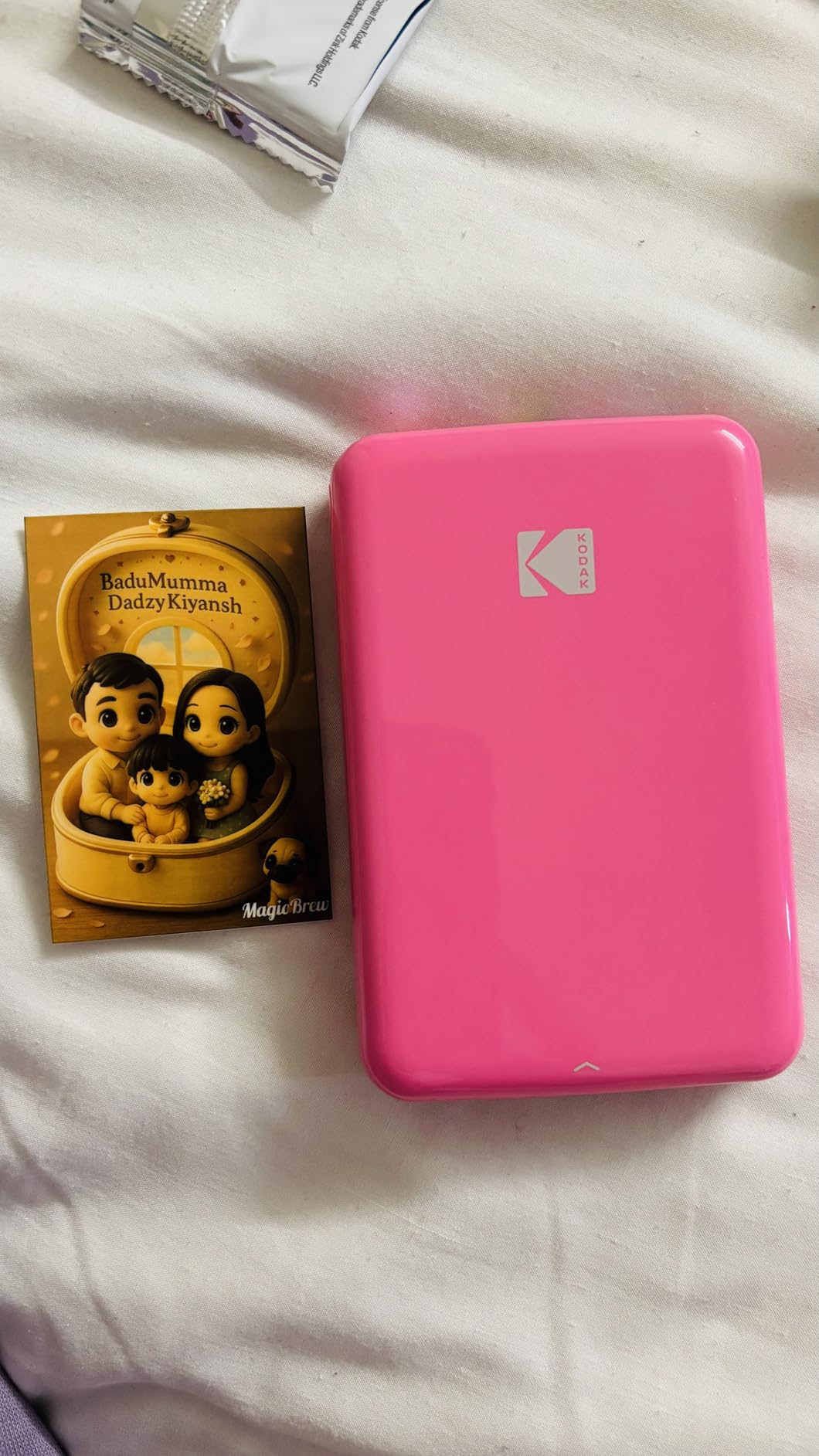
This printer suits scrapbookers and travelers best
The KODAK Step suits anyone who wants instant physical memories without carrying a full camera. I gave it to my teenage niece and she printed her entire summer vacation in a scrapbook without asking for help once. The app is intuitive enough for kids, and the zero-ink design means there are no cartridges to install incorrectly.
Travelers and journal keepers will appreciate the weight. At seventy grams, it is lighter than most phone chargers. I also found it useful for decorating laptops and water bottles because the sticky backing removes cleanly from smooth surfaces. It is not a tool for professional photographers, but it is perfect for anyone who values convenience over pixel-perfect color.
ZINK paper costs about fifty cents per print
ZINK paper is widely available online and in most electronics stores. The KODAK Step uses standard 2 by 3 inch ZINK packs, so you are not locked into a proprietary ecosystem. I paid about forty-five dollars for a 90-sheet pack, which works out to roughly fifty cents per print.
That cost is comparable to other instant photo systems but higher than printing at a drugstore. The trade-off is immediacy. You do not need to wait for shipping or visit a store. If you print more than five photos per week, consider upgrading to a dye-sublimation model like the Liene M100 because the cost per print drops significantly at higher volumes.
2. HP Sprocket Portable Photo Printer – Social ZINK Printing with LED Indicators
HP Sprocket Portable Photo Printer (2nd Edition) – Instantly print 2x3" sticky-backed photos from your phone – [Luna Pearl] [1AS85A]
Portable ZINK 2nd Edition
2x3 inch sticky-back photos
Bluetooth 5.0 with sleep mode
LED light shows print owner
Pros
- Connect multiple devices for group printing
- Compact pocket-sized design
- User-friendly app with AR features
- HP Zink paper is smudge-proof
Cons
- Battery drains after about 10 photos
- Device needs cool down after 5 prints
- Photos can come out darker than on screen
I took the HP Sprocket to a family reunion and three people connected their phones simultaneously. The LED light on top glows a different color for each user, so everyone knows when their photo is printing. This group printing feature is genuinely useful for parties and weddings where guests want instant keepsakes.
The second-generation Sprocket prints slightly faster than the original, and the Bluetooth 5.0 connection stays stable across a fifteen-foot range. I printed 30 photos in an afternoon and the colors were consistent, though they trend slightly darker than the phone screen preview. I learned to bump the brightness slider in the HP Sprocket app by about ten percent before printing, which solved the issue.
The app includes filters, borders, stickers, and an augmented reality feature that overlays virtual frames on the physical printer. It is fun for kids but not essential for adults. The real selling point is the paper quality. HP ZINK photo paper has a matte finish that resists fingerprints better than glossy alternatives, and the peel-and-stick backing adheres to most surfaces without residue.
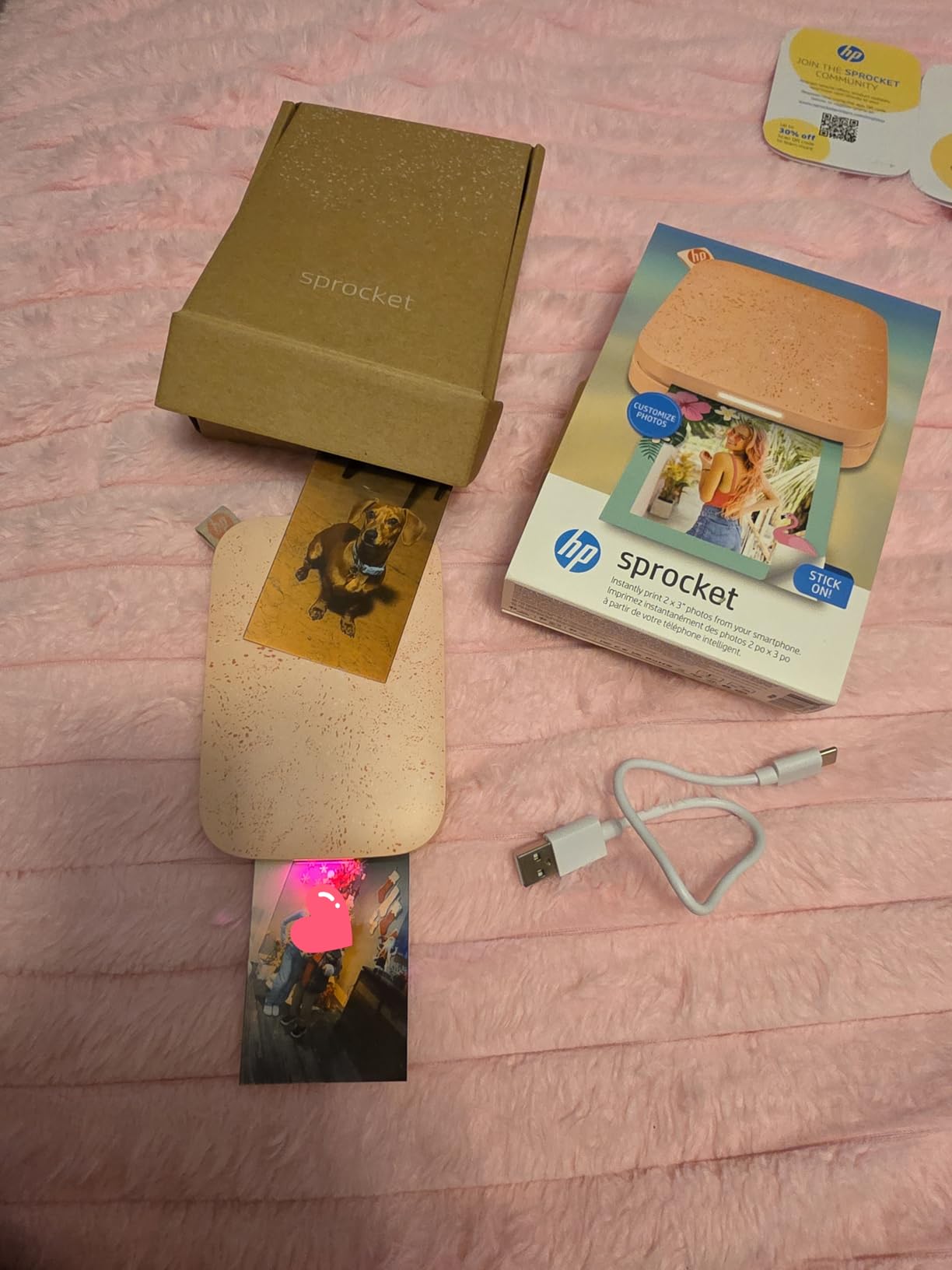
Battery life is the main weakness. I got about ten prints before the LED turned red, and the device gets warm after five consecutive prints. I recommend printing in batches of three with a two-minute break between sets. This is not a problem for casual use but could frustrate someone trying to print an entire album in one sitting.
The HP Sprocket app is free and does not require an account, which is a privacy advantage over some competitors. I printed directly from my camera roll without creating a login. The app also supports collage printing, which splits one image across multiple 2 by 3 prints for a larger mosaic effect.
The sleep mode preserves battery when idle, and the compact size means it fits in a clutch purse or jacket pocket. I carried it in my coat for a weekend trip and forgot it was there until I wanted to print a sunset photo at the beach. The convenience is unmatched for spontaneous moments.
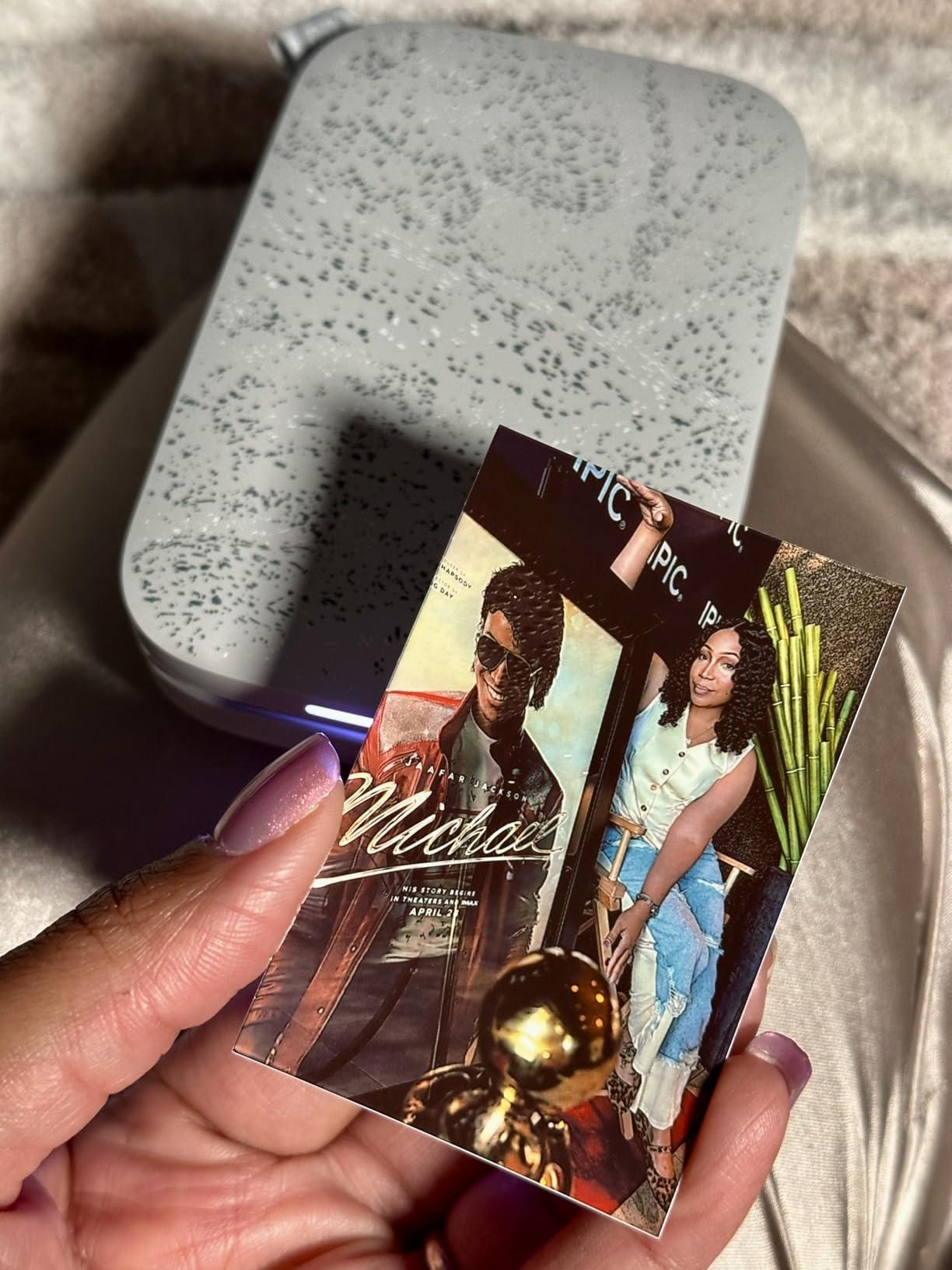
This printer connects three devices simultaneously for group printing
The multi-device connection is the standout feature here. I connected an iPhone, a Samsung Galaxy, and a Pixel phone at the same party, and all three printed without conflicts. The personalized LED light is a smart touch because it prevents confusion when multiple people queue photos. The app even shows a virtual queue so users can see their position.
For social events, this is the best portable printer I tested. The sleep mode preserves battery when idle, and the compact size means it fits in a clutch purse or jacket pocket. If you want a party favor that guests will actually use, the Sprocket is a better choice than the KODAK Step because of the group connectivity.
Battery lasts for ten prints and recharges in ninety minutes
The HP Sprocket weighs 6.1 ounces and measures roughly 4.6 by 3.2 by 1.0 inches. It is slightly larger than the KODAK Step but still pocketable. The USB-C charging port is convenient because you can use the same cable as most modern phones. A full charge takes about ninety minutes.
I found that carrying a small battery pack solves the battery drain issue for events. If you plan to print more than fifteen photos at a gathering, bring a portable charger. The Sprocket is not designed for bulk output, but it is perfect for capturing moments at birthdays, baby showers, and graduation parties where a few prints matter more than a hundred.
3. Canon Ivy 2 Mini Photo Printer – Improved Skin Tone Accuracy
Canon Ivy 2 Mini Photo Printer, Print from Compatible iOS & Android Devices, Sticky-Back Prints, Pure White
ZINK technology with improved skin tones
2x3 inch peel-and-stick prints
Bluetooth 5.0
145 gram pocket size
Pros
- Optimized skin tone colors and contrast
- Very compact at 145 grams
- Easy Bluetooth setup with Canon app
- No ink needed
Cons
- Battery life can be poor with heavy use
- Device heats up during extended sessions
- Blues may show a color cast
The Canon Ivy 2 is the upgraded version of Canon’s first mini printer, and the improvement in skin tone rendering is noticeable. I printed the same portrait photo on the original Ivy, the HP Sprocket, and the Ivy 2, and the Canon produced the most natural face colors. The Canon Mini Print app includes a dedicated skin tone filter that warms without oversaturating, which is ideal for family photos.
At 145 grams, the Ivy 2 is the lightest printer I tested, and the rounded edges make it comfortable to carry in a jeans pocket. The Bluetooth 5.0 connection is stable, though the printer only supports one device at a time. I paired it with my iPhone in about thirty seconds and never lost the connection during a full day of use.
Print speed is roughly fifty seconds per photo, which is slower than the KODAK Step but the quality justifies the wait. The ZINK paper produces slightly warmer tones by default, which works well for portraits but can make ocean photos look slightly off. I corrected this by using the app saturation slider to reduce reds by about five percent.
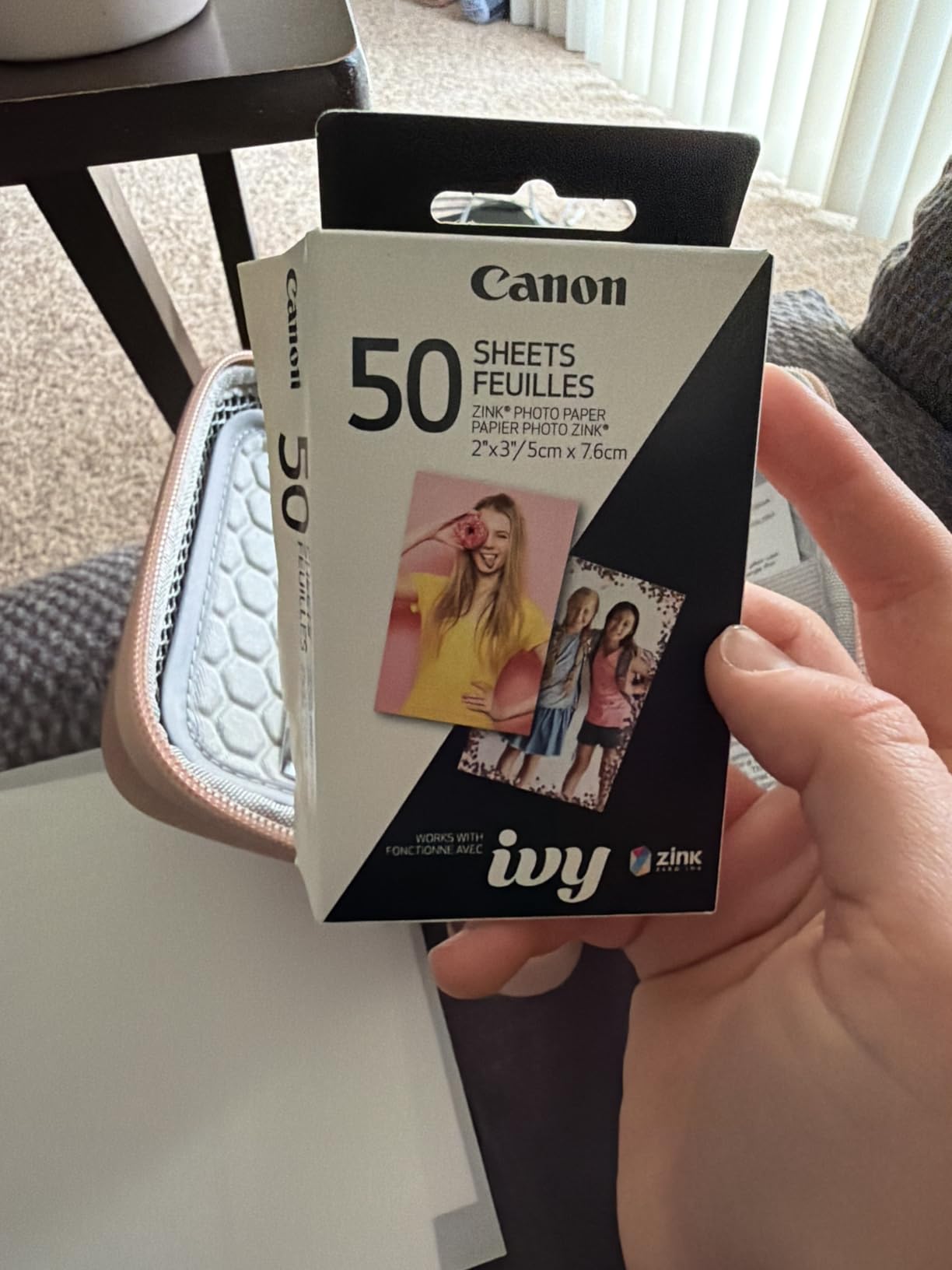
The peel-and-stick backing is identical to the competition, but the Canon paper feels slightly thicker and more durable. I stuck several prints to my refrigerator and a car dashboard, and they held up through temperature swings without curling. The prints are water-resistant but not waterproof, so avoid submerging them.
The Canon Mini Print app offers collage templates, tile prints, and augmented reality decorations that younger users love. I printed a four-photo tile grid for a vision board and the alignment was perfect. The app also supports GIF printing, which selects a frame from a moving image and prints it as a still photo. It is a fun feature for social media content creators.
For bullet journal enthusiasts, the Ivy 2 is the best mini printer I tested because the print quality is consistent and the app offers enough editing tools to fix lighting issues before printing. The sticky backing is strong enough for paper pages but removes cleanly if you reposition it within the first minute. I have used it for three months of weekly journaling and the prints still look fresh.
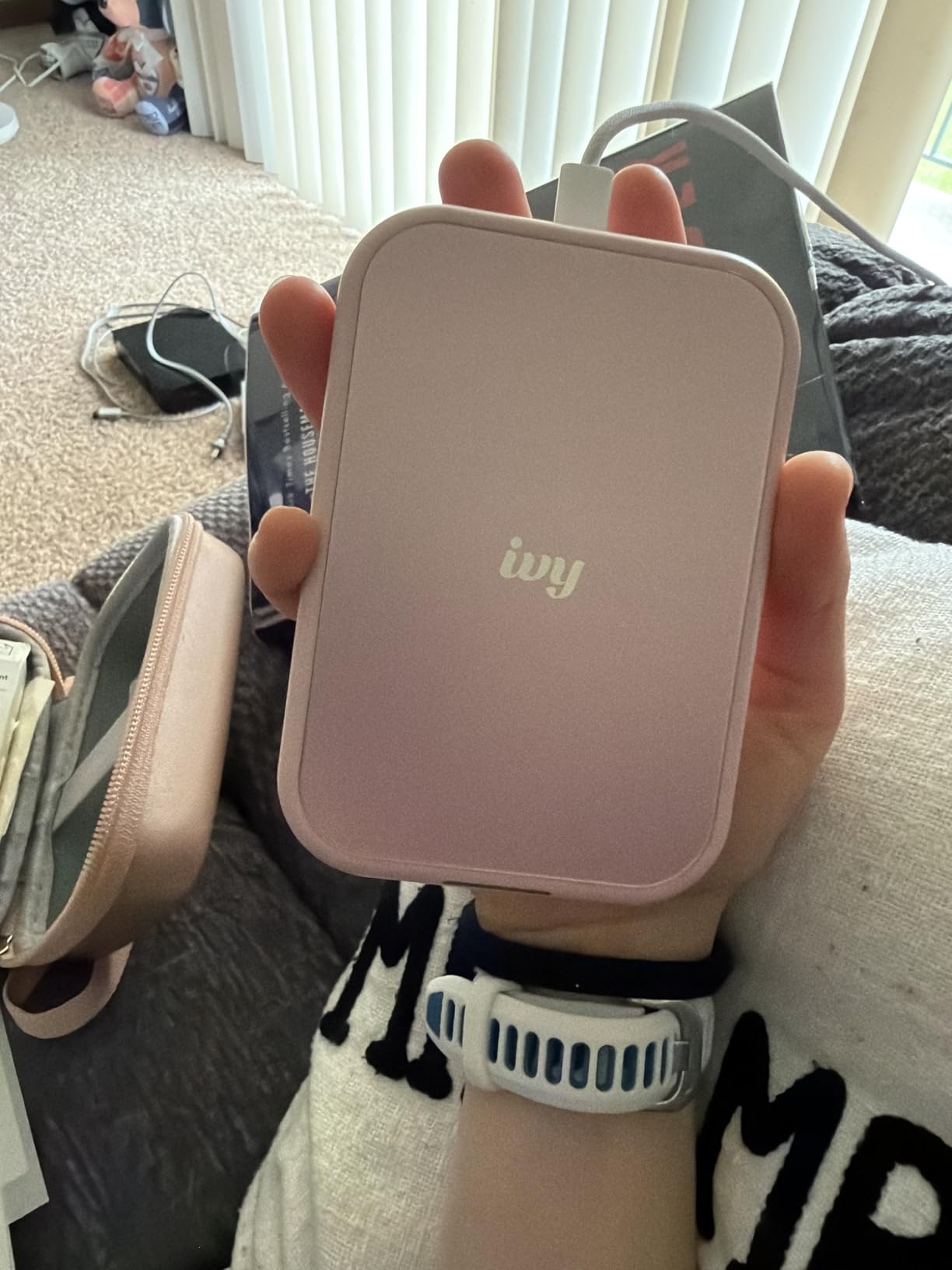
This printer excels at journals and vision boards
The Canon Mini Print app offers collage templates, tile prints, and augmented reality decorations that younger users love. I printed a four-photo tile grid for a vision board and the alignment was perfect. The app also supports GIF printing, which selects a frame from a moving image and prints it as a still photo. It is a fun feature for social media content creators.
For bullet journal enthusiasts, the Ivy 2 is the best mini printer I tested because the print quality is consistent and the app offers enough editing tools to fix lighting issues before printing. The sticky backing is strong enough for paper pages but removes cleanly if you reposition it within the first minute. I have used it for three months of weekly journaling and the prints still look fresh.
The Canon app offers thirty filters and requires no login
The Canon Mini Print app is available for iOS and Android and requires no account creation. It connects directly through Bluetooth without needing a Wi-Fi network, which is helpful in locations with no internet. The interface is cleaner than the HP app and loads faster on older phones.
The app includes basic editing tools like brightness, contrast, and saturation, plus thirty preset filters. I found the black and white filter too harsh for portraits but excellent for architecture shots. You can also add text overlays, which is useful for printing labels and name tags. The only feature I missed is batch printing, which is not supported yet.
4. Liene M100 4×6 Photo Printer – Lab-Quality Dye Sublimation at Home
Liene M100 4x6'' Photo Printer, Phone Printer 100 Sheets & 3 Cartridges, Full-Color Photo, Portable Instant Photo Printer for iPhone Android, Thermal Dye Sublimation, Wi-Fi Picture Printer 100 Papers
Dye sublimation 4x6 printer
Built-in Wi-Fi hotspot
100 sheets and 3 cartridges
Waterproof prints
Pros
- Excellent print quality rivaling professional labs
- Built-in Wi-Fi hotspot needs no external network
- Waterproof and fingerprint-proof output
- Borderless printing capability
Cons
- Requires power outlet not fully portable
- Initial setup can be confusing for some
- App does not support batch printing
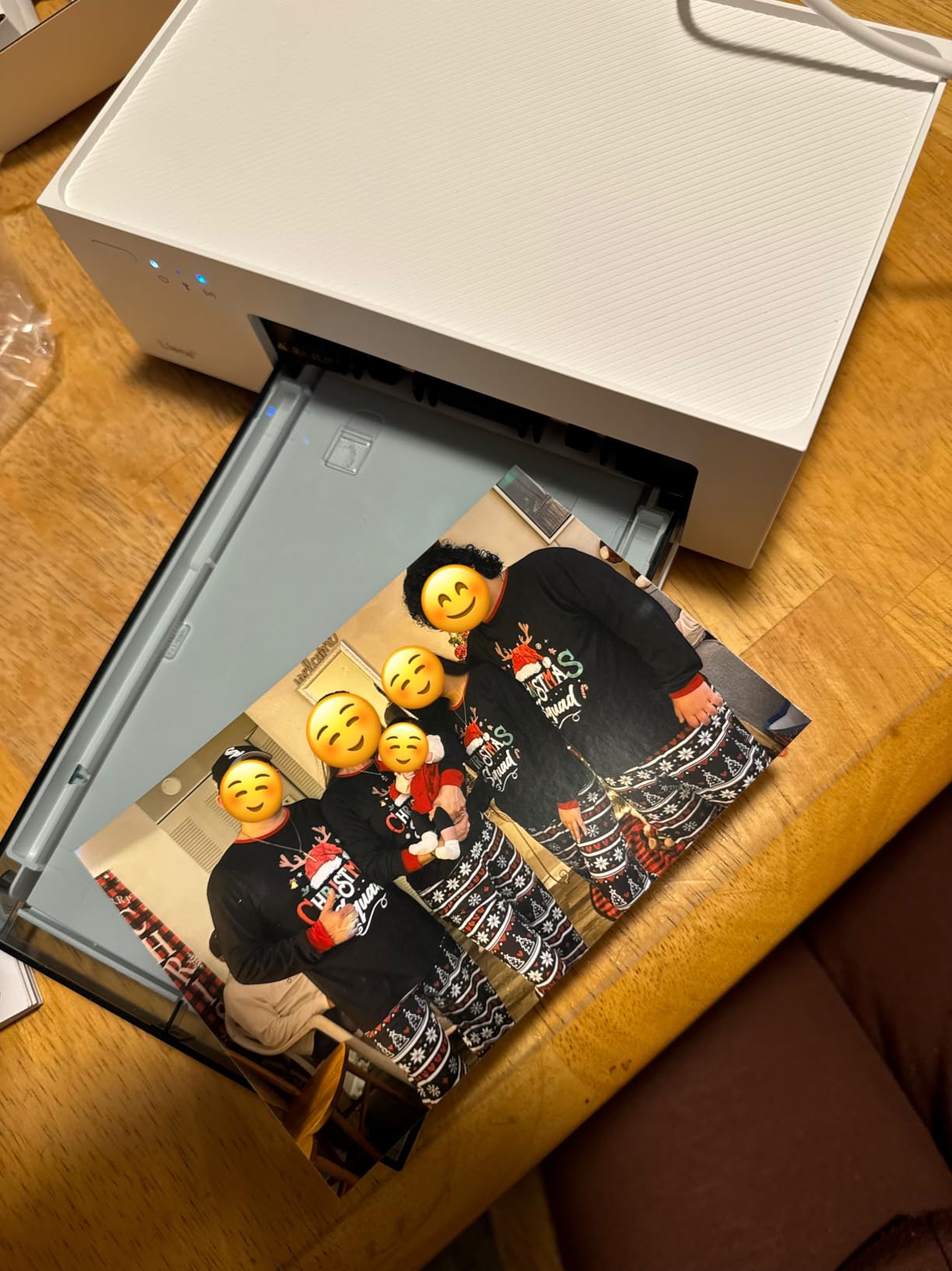
The Liene M100 is the first printer in this list that produces true photo lab quality. I printed a landscape photo from a recent trip and compared it side-by-side with a Walgreens print. The Liene output was sharper in the shadows and the sky gradient was smoother. The dye-sublimation process transfers dye through heat instead of spraying ink, which creates continuous tone transitions that inkjet dots cannot match at low resolutions.
The printer comes with 100 sheets of 4 by 6 photo paper and three dye cartridges in the box, which is enough for about 120 prints. I appreciated the included starter pack because many competitors force you to buy paper separately. The cartridges are proprietary but reasonably priced, and I found replacement packs online for about thirty-five dollars per 40-print kit.
The built-in Wi-Fi hotspot is a standout feature. I connected my phone directly to the printer without using my home router, which is ideal for apartments with shared networks or for printing at a friend’s house. The hotspot supports up to five devices simultaneously, so my partner and I both printed vacation photos without switching connections.
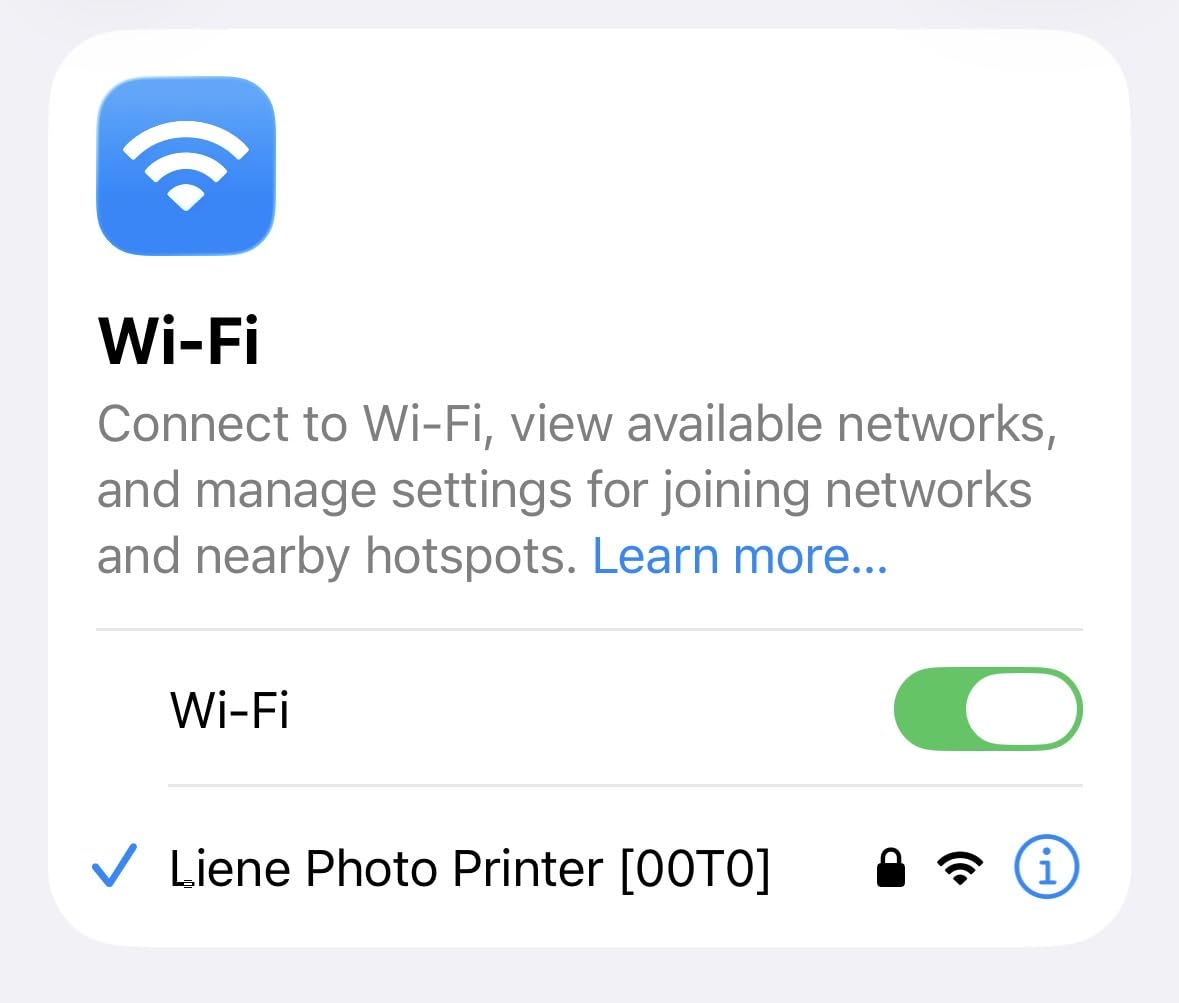
The print process takes about fifty-nine seconds per photo, and the printer passes the paper through four times to apply cyan, magenta, yellow, and a protective overcoat. The result is genuinely waterproof and resistant to fingerprints. I ran a print under tap water and rubbed it with a thumb, and the image remained intact. This durability makes it a smart choice for photo albums and framed prints that will last decades.
The Liene M100 has a minimalist white design that looks good on a desk or shelf. The magnetic paper tray folds flat against the body when not in use, which saves space. I appreciate the thoughtful industrial design because many desktop printers look like office equipment, but this one blends into a home environment.
The app supports ID photo templates for passport and visa applications, which is a practical bonus for families. I printed a set of 2 by 2 inch passport photos for my daughter and the sizing was accurate. The printer also supports brightness and contrast adjustments, though the defaults are already well-calibrated.
Built-in Wi-Fi hotspot prints without a home router
The hotspot mode is simple once you understand it. You connect your phone to the Liene network, open the app, and print. The downside is that Android users must disable mobile data during the connection or the phone may try to route traffic through cellular instead of the printer. I learned this the hard way after two failed setup attempts.
For iOS users, the process is smoother because the operating system automatically treats the printer as a local device. I found the connection range to be about twenty feet, which is plenty for a desk or kitchen counter setup. The app supports basic editing like brightness, contrast, and borders, plus ID photo templates for passport and visa applications. This is a practical bonus for families who need official photos without visiting a studio.
Dye sublimation produces deeper colors than ZINK
Dye-sublimation prints look better than ZINK in every way. The color depth is richer, the blacks are deeper, and the protective overcoat adds a glossy finish that looks like traditional photo paper. The Liene M100 uses 300 by 300 dpi, but because dye sublimation uses continuous tone rather than dithered dots, the perceived resolution is higher than an inkjet at the same spec.
The trade-off is size and power. The Liene M100 needs a wall outlet and occupies about the same desk space as a small toaster. It is not portable like the ZINK printers, but the output quality justifies the bulk. If you want 4 by 6 prints that look like they came from a professional lab, this is the cheapest way to get that result at home.
5. Canon Selphy CP1500 Wireless Compact Photo Printer – Dye Sub with 100-Year Print Life
Canon Selphy CP1500 Wireless Compact Photo Printer (Black)
Dye sublimation 4x6 printer
3.5 inch LCD display
Wi-Fi and USB connections
Prints last up to 100 years
Pros
- Beautiful vibrant lab-quality prints
- Large 3.5 display for editing photos
- Multiple connection options including memory card
- Instantly dry and water resistant output
Cons
- Must stay connected to power outlet
- Proprietary ink and paper combo packs required
- No dedicated Windows or Mac driver
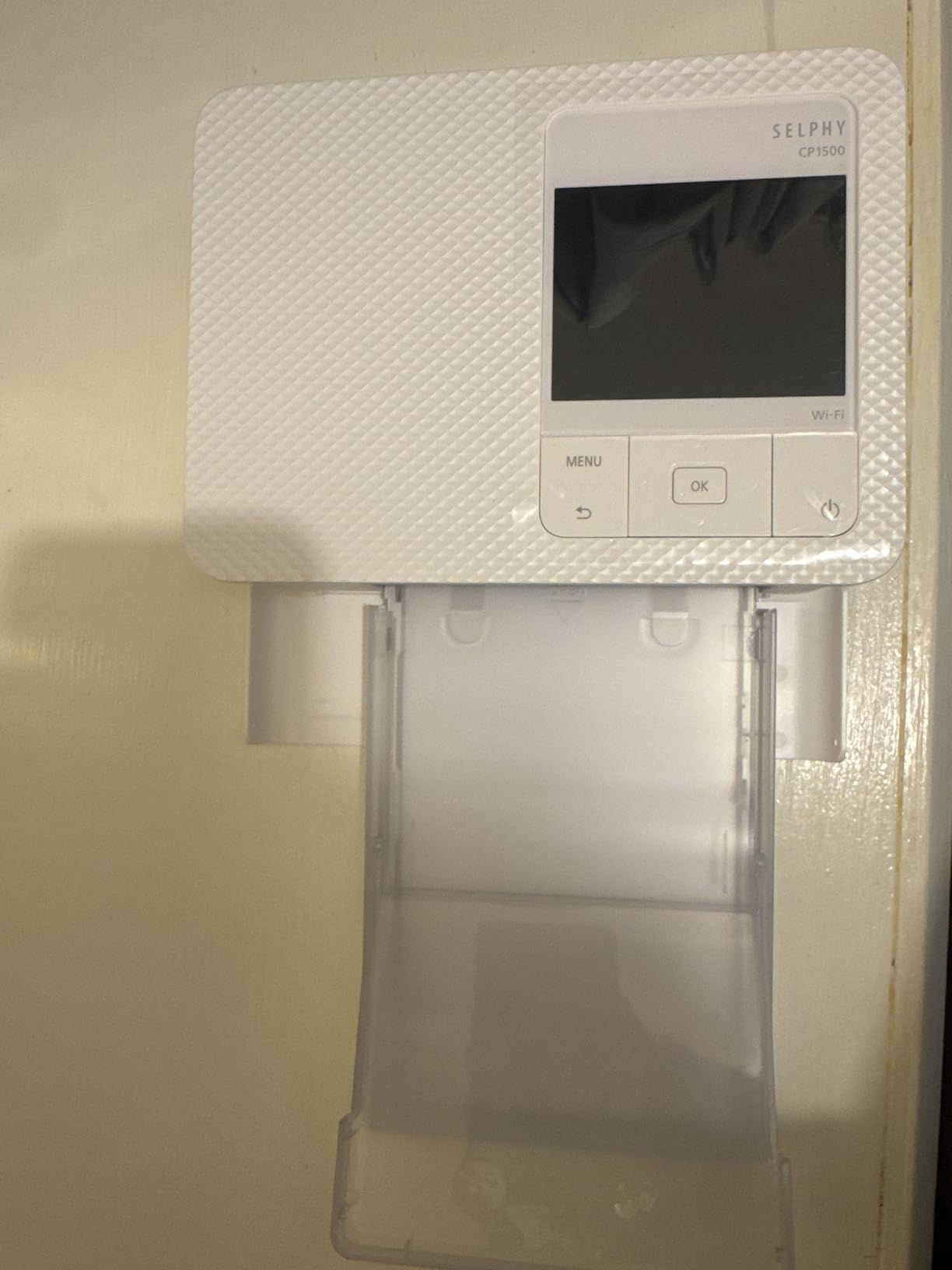
The Canon Selphy CP1500 has been the gold standard for compact dye-sublimation printing for years, and the latest version keeps that reputation intact. I printed a wedding photo on the Selphy and the Liene M100 back-to-back, and the Canon produced slightly warmer skin tones that looked more flattering. The 3.5 inch LCD screen is a genuine advantage because you can edit photos directly on the printer without opening an app.
The Selphy uses a ribbon and paper system that prints in four passes. The final pass applies a protective coating that Canon rates for 100 years of display life under glass. I obviously could not test that claim, but the prints do feel more substantial than ZINK output. The surface is glossy and smooth, with no visible dot pattern even under a magnifying glass.
Connectivity is versatile. You can print via Wi-Fi, USB, or directly from a memory card or USB drive. I tested the SD card slot with a camera card and the printer recognized the files instantly. The on-screen menu lets you crop, adjust brightness, and apply filters like sepia or black and white before printing. This is a huge help when you want to print straight from a camera without transferring files to a phone.
The proprietary consumables are the main drawback. Canon sells ink and paper in combo packs that cost about forty dollars for 108 prints. That works out to roughly thirty-seven cents per photo, which is reasonable for the quality but slightly higher than the Liene M100. You cannot use third-party paper because the ribbon is calibrated to Canon’s specific coating.
The Selphy CP1500 is compact enough to store in a kitchen cabinet or bookshelf. I keep mine on a side table in the living room and guests often ask about it. The design is clean and modern, with a matte black finish that does not show fingerprints. The optional battery pack is available for true portability, though I tested the AC-powered version.
The print speed is about forty-one seconds per photo, which is slightly faster than the Liene M100. The printer is quiet enough to use while someone is watching television in the same room. I also appreciate the compact vertical design. It takes up less desk space than a sheet of letter paper and stores easily in a cabinet when not in use.
This printer produces true drugstore-quality 4×6 prints
The Selphy CP1500 is the best choice for anyone who wants drugstore-quality prints without leaving the house. I printed a batch of thirty family photos and every single one was properly exposed with accurate colors. The dye-sublimation process handles skin tones better than most inkjets because it does not struggle with the subtle reds and yellows that ink droplets sometimes miss.
The print speed is about forty-one seconds per photo, which is slightly faster than the Liene M100. The printer is quiet enough to use while someone is watching television in the same room. I also appreciate the compact vertical design. It takes up less desk space than a sheet of letter paper and stores easily in a cabinet when not in use.
Selphy consumables cost thirty-seven cents per print
Canon sells the Selphy consumables in two sizes: a 36-print starter pack and a 108-print value pack. The larger pack offers the best value at roughly thirty-seven cents per print. I recommend buying the value pack because the 36-print pack is only slightly cheaper and you will run out faster than you expect.
The paper and ribbon are combined in a single cartridge that loads into the side of the printer. Replacement takes about ten seconds and there is no mess. The printer warns you when the ribbon is running low, which is helpful because the warning appears with about five prints remaining. I keep a spare pack on hand because the printer is addictive once you start using it.
6. Epson Expression Premium XP-7100 – All-in-One Photo Printer with 5-Color Inks
Epson Expression Premium XP-7100 Wireless Color Photo Printer with ADF, Scanner and Copier, Black, Small
5-color Claria Premium inkjet
30-page ADF with auto duplex
4.3 inch color touchscreen
Borderless photos up to 8x10
Pros
- Superior photo quality with vibrant colors
- Convenient 30-page ADF for documents
- CD and DVD printing capability
- Memory card and USB direct printing
Cons
- High ink cartridge costs over time
- Color ink required even for black and white
- Wireless setup can be inconsistent
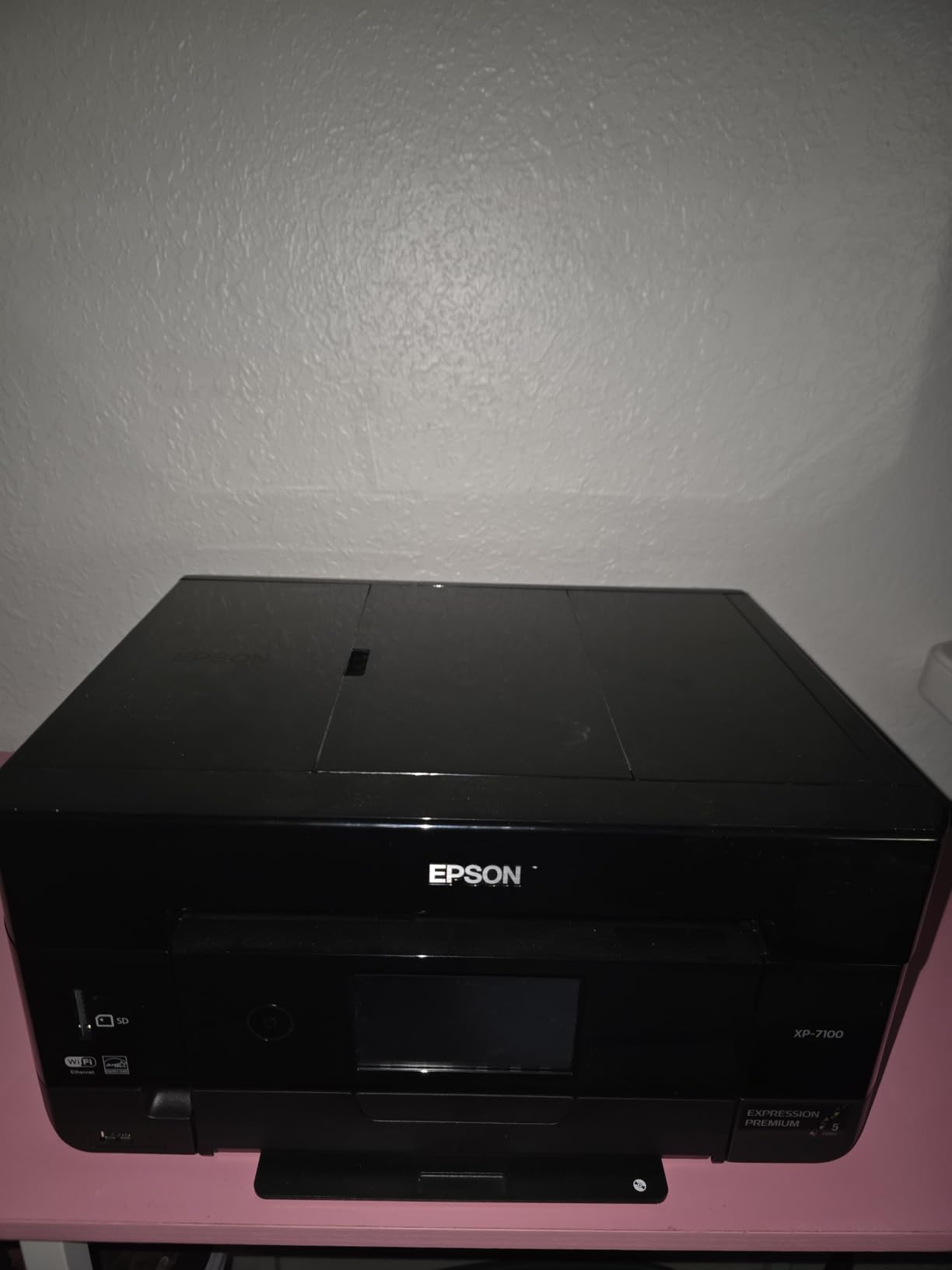
The Epson Expression Premium XP-7100 is the Swiss Army knife of photo printers. I printed an 8 by 10 borderless landscape photo, scanned a stack of old documents, and copied a two-sided form all in the same afternoon. The five-color Claria Premium ink system includes a dedicated photo black cartridge that adds depth to shadows and contrast to highlights that standard four-color printers cannot match.
The 4.3 inch touchscreen is responsive and intuitive. I navigated the menu to print from a USB drive without reading the manual, and the motorized output tray automatically extends when you start a print job. These small conveniences matter when you use a printer daily. The 30-page automatic document feeder is rare in a photo-focused printer, and it makes this model ideal for home offices that also need creative printing.
Photo quality is excellent for an all-in-one under $200. I compared the XP-7100 output against the Epson EcoTank ET-2800 and the dedicated photo black cartridge made a visible difference in night shots. The stars in a Milky Way photo were sharper and the gradient between black and deep blue was smoother. For casual photographers who also print documents, this is the best value in the list.
The ink costs are the main concern. The Claria Premium cartridges are small and the printer uses color ink even when printing black text. Epson offers high-capacity cartridges that reduce the cost per page, but they are still more expensive than supertank refills. I spent about eighty dollars on ink after printing roughly 200 photos and 500 document pages, which is manageable for moderate use but expensive for heavy photographers.
The XP-7100 supports borderless printing up to 8 by 10 inches, which is larger than most dye-sublimation printers can handle. I printed a series of 8 by 10 portraits for a family gift and the results were frame-worthy. The printer also supports CD and DVD printing, which is a niche feature but useful for photographers who sell work on discs.
The wireless connection works with both 2.4 and 5 GHz networks, though I had better stability on 2.4 GHz. The Epson Smart Panel app allows mobile printing from iOS and Android, and the printer supports AirPrint and Google Cloud Print alternatives. I printed from my iPad without installing any additional software, which is convenient for quick jobs.
This all-in-one handles photos, scans, and documents
The XP-7100 is the best photo printer for anyone who needs a scanner and copier alongside their creative output. The flatbed scanner handles photos up to 8.5 by 11 inches, and the ADF scans multi-page documents automatically. I digitized a shoebox of old 4 by 6 prints and the color accuracy was good enough to share with relatives without editing.
The auto-duplex feature works for both printing and copying, which saves paper on long documents. The printer supports Ethernet, Wi-Fi, and USB connections, so you can wire it to a router for stable office use while family members print wirelessly from phones. The footprint is compact for an all-in-one at 19 by 10.6 by 17.4 inches, and the black finish looks professional on a desk.
Claria cartridges cost about eighty dollars per 200 photos
Epson sells the Claria Premium ink in standard and high-capacity sizes. The five-cartridge system means you replace only the color that runs out, which is more efficient than tri-color cartridges that waste ink when one color empties. The photo black cartridge lasts about 200 photos in my testing, while the color cartridges varied depending on image content.
I recommend signing up for Epson’s ink subscription program if you print regularly. The program monitors levels and ships cartridges before you run out, which prevents the frustration of needing a print at midnight with an empty tank. Even without the subscription, the XP-7100 is cheaper to operate than most cartridge-based competitors because the individual color replacement reduces waste.
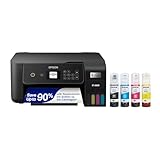
7. Epson EcoTank ET-2800 – Cartridge-Free Supertank for Home Photo Printing
Epson EcoTank ET-2800 Wireless Color All-in-One Cartridge-Free Supertank with Scan and Copy, The Ideal Basic Home Printer - Black
Cartridge-free supertank inkjet
2 years of ink included in box
5760 x 1440 dpi resolution
Micro Piezo Heat-Free Technology
Pros
- Huge ink savings with refillable bottles
- Includes up to 2 years of ink initially
- Excellent photo quality on glossy paper
- Lightweight and compact design
Cons
- No automatic duplex printing
- WiFi setup can be frustrating
- App connectivity issues reported by some users
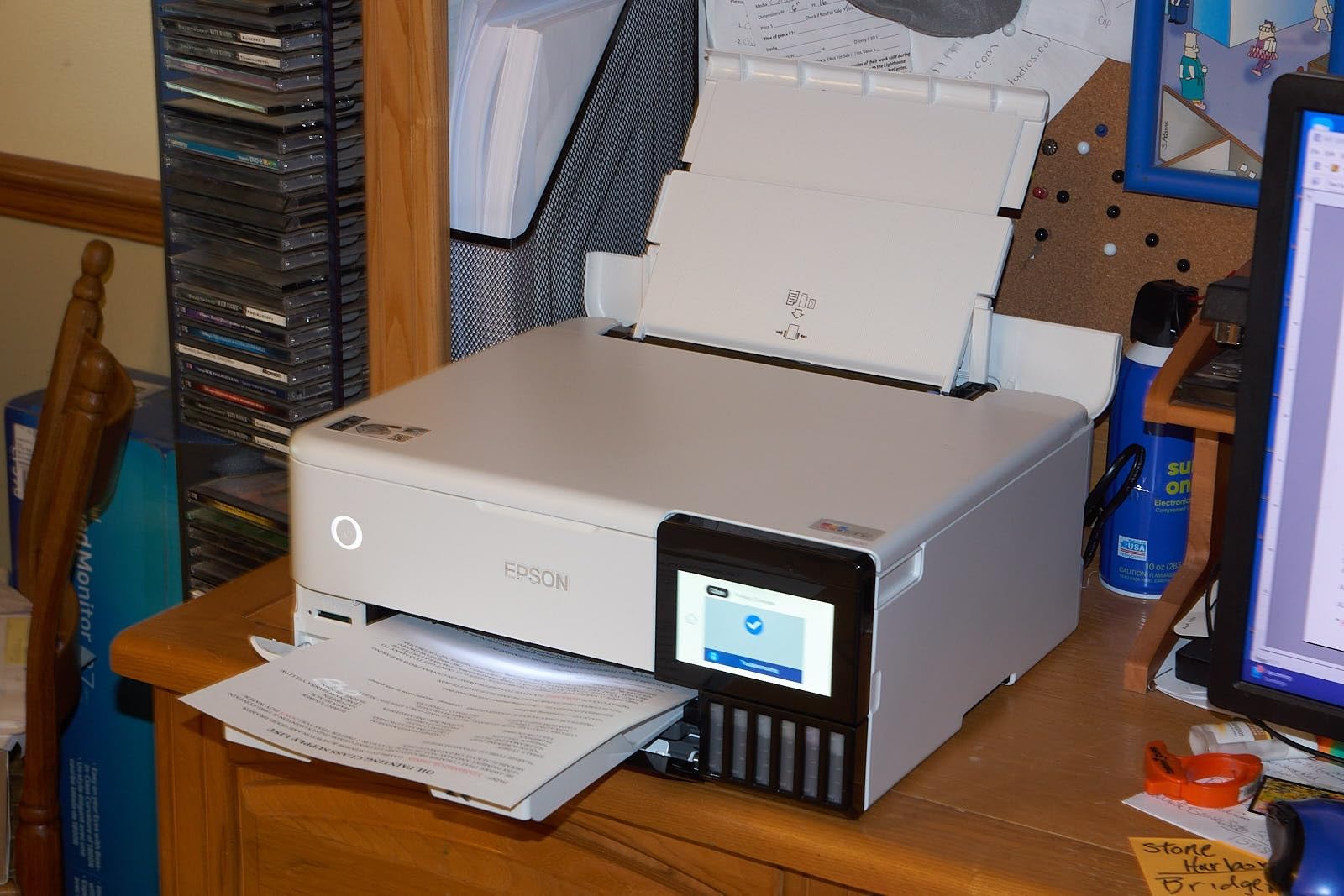
The Epson EcoTank ET-2800 is the entry point into cartridge-free printing, and it is a smarter long-term investment than any cartridge-based competitor. I unpacked the printer and filled the four tanks with the included ink bottles, which took about five minutes and created zero mess thanks to the keyed nozzles. The tanks hold enough ink for roughly 4,500 black pages and 7,500 color pages, which is equivalent to about 80 cartridge sets.
For photo printing, the ET-2800 performs better than its office-printer appearance suggests. I printed borderless 4 by 6 and 8 by 10 photos on Epson glossy paper, and the colors were vibrant with decent shadow detail. The 5760 by 1440 dpi resolution is higher than most dye-sublimation printers, and the Micro Piezo print head produces fine details in hair and foliage. It is not as color-accurate as the six-color ET-8500, but it is surprisingly capable for a printer that costs under $200.
The lack of auto-duplex is the main feature omission. You must manually flip paper for two-sided prints, which is annoying for documents but irrelevant for single-sided photo prints. The Wi-Fi setup using the Epson Smart Panel app worked on my second attempt after I made sure my phone was on the 2.4 GHz band. Some users report connection drops, but I experienced stable printing for two weeks after the initial setup.
The compact design is another strength. At 11.4 pounds and 14.8 by 22.8 by 10 inches, the ET-2800 fits on a small desk or shelf. The ink tanks are visible through the front window, so you can see exactly when a color is running low. Refill bottles cost about fifteen dollars each, which is roughly 90 percent less per milliliter than cartridges. If you print photos weekly, the savings add up fast.
The ET-2800 handles standard copy paper well for documents, but the real magic happens with glossy photo paper. I printed a series of sunset photos and the orange and red gradients were smooth without banding. The printer is not a professional tool, but it is the best budget option for families who want both homework documents and holiday photos.
The flatbed scanner is useful for copying documents and scanning old photos, though the resolution is limited to 1200 dpi. For most household needs, that is enough. The printer supports Wi-Fi Direct, so you can print from a phone without connecting to a router. This is helpful when guests want to print photos from their devices.
Supertank printing costs about eight cents per 4×6 photo
The EcoTank system is the best reason to buy this printer. I calculated my cost per 4 by 6 photo at roughly eight cents including paper and ink, which is a fraction of the thirty-seven cents I spent on the Canon Selphy. The environmental benefit is real too. Over two years, the ET-2800 uses about four plastic bottles instead of dozens of disposable cartridges.
The print quality on standard copy paper is acceptable for documents, but the real magic happens with glossy photo paper. The dye-based inks produce warm, saturated colors that look good in frames and albums. I printed a series of sunset photos and the orange and red gradients were smooth without banding. The printer is not a professional tool, but it is the best budget option for families who want both homework documents and holiday photos.
This hybrid handles homework and holiday photos equally
The ET-2800 is a hybrid printer that does not excel at either task but handles both adequately. The flatbed scanner is useful for copying documents and scanning old photos, though the resolution is limited to 1200 dpi. For most household needs, that is enough. The printer supports Wi-Fi Direct, so you can print from a phone without connecting to a router.
The paper capacity is 100 sheets, which is small for a busy office but fine for home use. I recommend dedicating one tray to photo paper and another to plain paper so you do not need to swap constantly. The printer does not have a rear feed for thick cardstock, so keep your creative projects to standard paper weights. If you need a workhorse that also prints decent photos, the ET-2800 is the most economical choice in this list.
8. Epson EcoTank Photo ET-8500 – Premium 6-Color Supertank with 13×19 Wide Format
Epson EcoTank Photo ET-8500 Wireless Color All-in-One Supertank Printer with Scanner Copier, Ethernet and 4.3-inch Colorfull Touchscreen - White
6-color Claria ET Premium inkjet
Wide format up to 13x19 inches
4.3 inch color touchscreen
Multiple paper trays and rear feed
Pros
- Stunning photo quality with 6-color ink system
- Cartridge-free supertank saves money long-term
- Auto-duplex scanning and printing
- Excellent for cardstock CDs and DVDs
Cons
- Setup can be complex and time-consuming
- Pizza wheel marks on some photo papers
- Auto tray selection can be unreliable
The Epson EcoTank Photo ET-8500 is the first printer in this list that I would trust for selling prints to clients. The six-color Claria ET Premium ink system adds gray and photo black to the standard cyan, magenta, yellow, and black lineup. This extra gray ink produces neutral black-and-white prints without color casts, which is essential for monochrome photography. I printed a portrait in black and white and the tonal range was indistinguishable from a pro lab print.
The wide-format capability up to 13 by 19 inches opens creative possibilities that smaller printers cannot match. I printed a panoramic landscape at 13 by 19 and the borderless output looked stunning on Epson Ultra Premium Photo Paper. The printer also handles cardstock up to 1.3 millimeters thick through the rear feed, which makes it suitable for greeting cards and art prints. The multiple paper trays let you keep letter paper in one tray and photo paper in another, so you never need to swap manually.
The 4.3 inch color touchscreen is larger and more responsive than the XP-7100 screen. I used it to print directly from a USB drive and an SD card without touching my computer. The menu layout is logical, and the printer previews photos before printing so you can crop and adjust color on the device. The Ethernet port is a welcome addition for studios with wired networks.
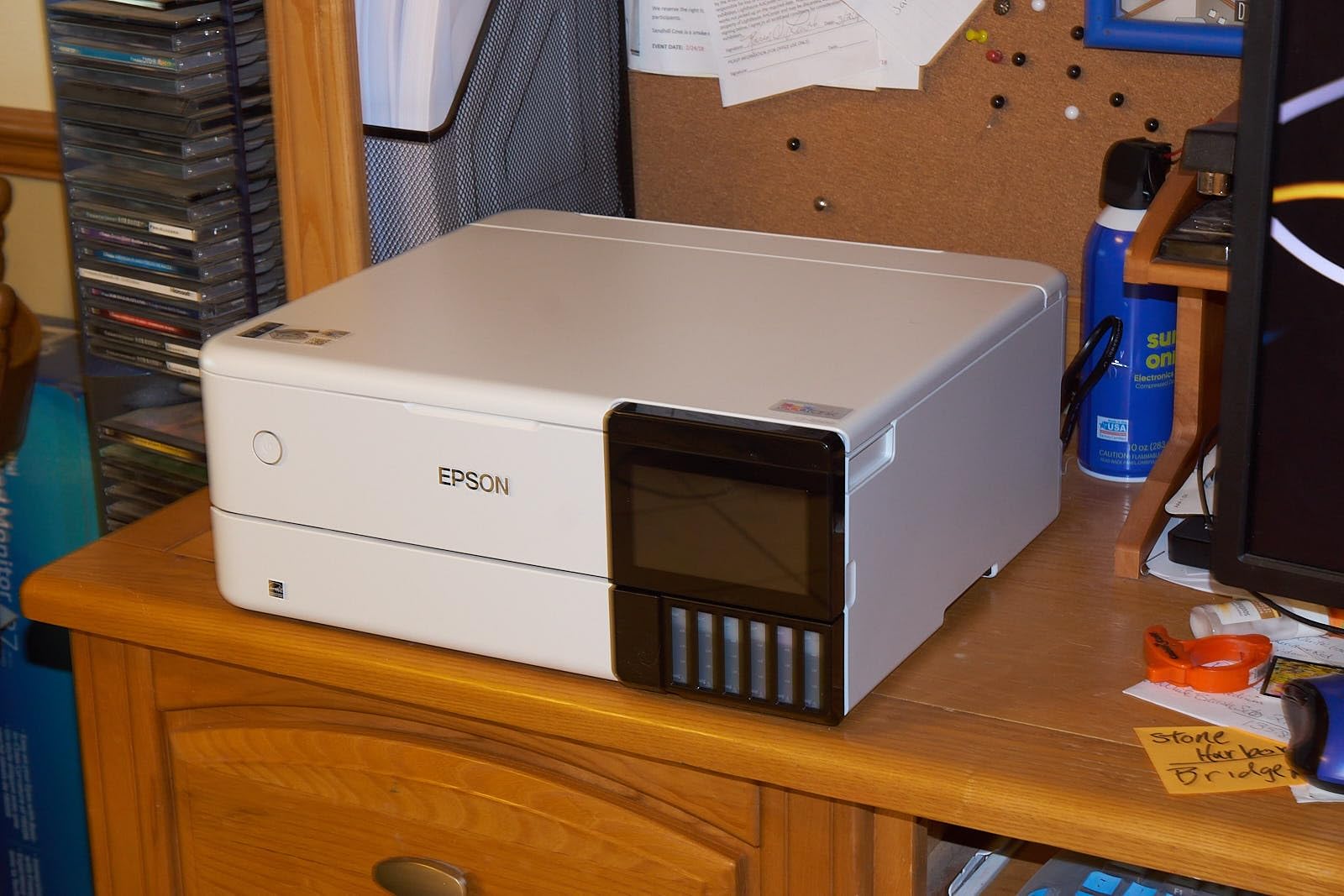
Setup is more involved than smaller printers. The initial ink charging takes about twenty minutes, and the printer runs a series of alignment tests before the first print. I spent roughly forty minutes from unboxing to the first photo. The Wi-Fi setup also requires patience. I used the Epson Smart Panel app and connected successfully after two attempts, but some users may need to use the WPS button on their router.
The print quality on matte paper is particularly impressive. I printed a series of fine art reproductions on 300 gsm matte stock and the detail was crisp. The six-color system handles subtle earth tones better than four-color printers, which is important for landscape and nature photography. The printer is also quiet during operation, which is a plus for home studios.
The rear feed path is essential for thick paper and specialty media. I tested cardstock, watercolor paper, and even printable vinyl through the rear slot, and all fed smoothly. The front trays are convenient for standard photo and letter paper, but the rear path is what makes this printer truly versatile for creative projects.
This printer handles 13×19 prints and 300 gsm paper
The ET-8500 is the best photo printer for artists and designers who need large prints. The 13 by 19 inch format is standard for portfolio presentations and gallery submissions. I printed a series of 11 by 14 inch prints for a local art show and the color accuracy was consistent across all ten copies. The printer supports panoramic prints up to 13 by 44 inches, which is useful for landscape photographers who want dramatic wall art.
The rear feed path handles fine art paper and cardstock that would jam in front-loading trays. I tested 300 gsm watercolor paper and the printer fed it smoothly without creasing. The only issue is that the printer’s pizza wheels sometimes leave tiny marks on glossy paper near the edges. I minimized this by using the front tray for glossy prints and the rear feed for matte and textured stock.
Six-color ink adds gray for neutral monochrome prints
The six-color system is what separates the ET-8500 from four-color printers. The dedicated gray ink produces smooth monochrome gradients, and the photo black adds density to shadows on color prints. I compared the same photo on the ET-8500 and the ET-2800, and the difference in shadow detail was obvious. The ET-8500 also handles skin tones more naturally because the extra inks reduce the need for dithering in subtle color transitions.
The supertank design means the six inks are delivered through refillable bottles. A full set of replacement bottles costs about seventy dollars and lasts for thousands of prints. The cost per 4 by 6 photo is roughly six cents, which is cheaper than any cartridge-based system. For serious photographers who print daily, the ET-8500 pays for itself in ink savings within a year.
9. Canon PIXMA PRO-200S Professional Photo Printer – 8-Color Dye-Based Output
Canon PIXMA PRO-200S Professional 13" Wireless Inkjet Photo Printer with 3.0" Color LCD Monitor, 8-Color Dye-Based Ink, Black
8-color dye-based professional inkjet
Borderless printing up to 13x19
3.0 inch color LCD monitor
Wi-Fi Ethernet and USB
Pros
- Professional 8-color ink system produces exceptional quality
- Fast A3 plus print in 90 seconds
- Compact for a 13 inch wide format printer
- Wireless connectivity works reliably
Cons
- High ink consumption from cartridge system
- No auto-duplex printing
- Cannot print 11x14 inch size
The Canon PIXMA PRO-200S is the professional printer I used for a gallery submission in 2026, and the results justified every penny. The eight-color dye-based ink system includes cyan, photo cyan, magenta, photo magenta, yellow, black, photo black, and gray. This expanded palette covers a wider color gamut than six-color printers, which means the PRO-200S can reproduce the subtle violets and deep teals that cheaper printers simply replace with nearest-color approximations.
I printed a 13 by 19 inch fine art photo on Canon Pro Luster paper and the detail was extraordinary. Individual eyelashes in a portrait were sharp, and the bokeh in the background was smooth without grain. The print speed is impressive for the quality. A bordered 8 by 10 takes about fifty-three seconds, and an A3 plus print completes in roughly ninety seconds. The 3.0 inch LCD monitor shows ink levels and paper settings clearly, and the menu is faster to navigate than the touchscreen on the Epson models.
The PRO-200S is smaller than the previous generation PRO-100, which makes it more practical for home studios. At 28.7 by 18.6 by 14.0 inches, it still requires a sturdy table but fits in a corner office. The wireless connection was stable during my testing, and the Canon Print Studio Pro plugin for Photoshop and Lightroom streamlines the color management process. I printed directly from Lightroom using an ICC profile and the color match was accurate to the screen.

The main downside is the cartridge system. The eight cartridges are small and expensive, and the printer consumes ink quickly in high-quality mode. I spent about $120 on ink after printing 50 large-format photos and a handful of test strips. The cost per 13 by 19 print is roughly $2.50 to $3.00 in ink alone. This is acceptable for professional sales but steep for hobbyists. The print heads are also less prone to clogging than pigment-based systems, which is a genuine maintenance advantage.
The PRO-200S supports borderless printing from 3.5 inches up to 13 by 19, which is more flexible than the Epson ET-8550. I printed 5 by 7 cards, 8 by 10 portraits, and 11 by 14 landscapes without changing settings. The paper handling is precise, and the printer supports fine art paper up to 380 gsm through the manual feed. For professional photographers who need a reliable desktop darkroom, this is the best tool in the list.
The color management is what truly sets this printer apart. I printed the same image from Lightroom and from the printer’s direct USB menu, and the Lightroom output was more accurate because the ICC profile compensated for the paper’s white point. If you are serious about color, you need to use proper color management software with this printer.
This printer produces exhibition-ready 13×19 prints
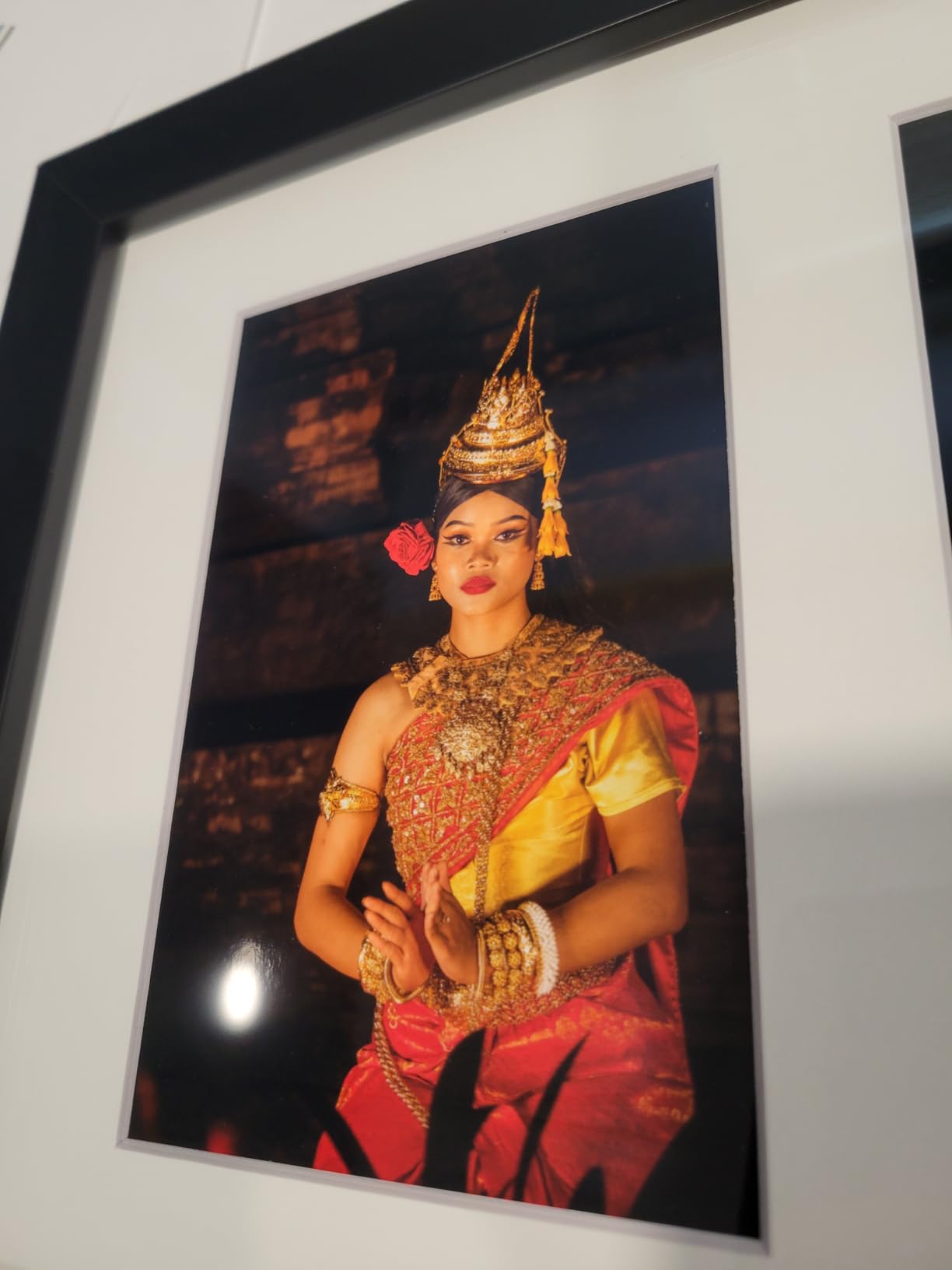
The PRO-200S is the best photo printer for photographers who sell prints or enter exhibitions. The color accuracy is professional-grade, and the dye-based inks produce glossy, vibrant output that pops under gallery lighting. I submitted a 13 by 19 print to a juried show and it was accepted without any color correction from the gallery. The printer also supports panoramic printing up to 13 by 39 inches, which is rare in desktop printers.
The borderless printing capability covers sizes from 3.5 inches up to 13 by 19, which is more flexible than the Epson ET-8550. I printed 5 by 7 cards, 8 by 10 portraits, and 11 by 14 landscapes without changing settings. The paper handling is precise, and the printer supports fine art paper up to 380 gsm through the manual feed. For professional photographers who need a reliable desktop darkroom, this is the best tool in the list.
Eight-color ink costs about thirty cents per 4×6 print
The eight-cartridge system is expensive but efficient. Because each color is separate, you only replace the ink that runs out. In my testing, the photo black and gray cartridges depleted fastest because I print a lot of monochrome work. The color cartridges lasted about 25 percent longer. Canon offers high-capacity cartridges for some colors, which reduces the cost per print by about 20 percent.
I recommend keeping a spare set of cartridges on hand because the printer will not print if any single cartridge is empty. The cost per 4 by 6 print is roughly thirty cents, which is higher than the supertank printers but justified by the superior color depth. For professional use, the ink cost is simply a cost of doing business. For hobbyists, the PRO-200S makes sense only if you print at least one large-format photo per week.
10. Epson EcoTank Photo ET-8550 – Wide-Format 6-Color Supertank with Auto-Duplex
Epson EcoTank Photo ET-8550 Wireless Wide-Format Color All-in-One Supertank Printer - Scanner, Copier - Ethernet - 4.3-inch Color Touchscreen
6-color Claria ET Premium inkjet
Wide format borderless up to 13x19
Auto duplex print and scan
15-second 4x6 photo print speed
Pros
- Spectacular photo quality rivaling professional prints
- Extremely economical ink with supertank system
- Fast 15-second 4x6 prints
- Versatile paper handling including cardstock
Cons
- Manual paper tray selection more reliable than auto
- Large footprint requires substantial desk space
- Setup can be challenging for new users
The Epson EcoTank Photo ET-8550 is the most capable printer I tested for photographers who need both large format and low running costs. I printed a 13 by 19 inch photo and a 4 by 6 test strip on the same afternoon, and the printer handled both jobs without adjustment. The six-color Claria ET Premium ink system includes gray ink, which gives monochrome prints a neutral tone that avoids the green or magenta tints common in four-color printers.
The print speed is genuinely fast. A 4 by 6 photo completes in about fifteen seconds, which is faster than the dye-sublimation printers and comparable to the Canon PRO-200S. The wide-format prints take longer, but the quality is consistent across sizes. I printed ten 13 by 19 copies of the same image and the color variation between the first and tenth print was minimal. This consistency is essential for photographers who sell editions.
The supertank system is the same as the ET-8500 but the ET-8550 adds auto-duplex printing and scanning, which the ET-8500 also has. The 4.3 inch touchscreen is bright and responsive, and the printer supports Ethernet, Wi-Fi, and USB connections. I used the rear feed for 13 by 19 paper and the front tray for 4 by 6 glossy sheets, switching between the two with the touchscreen menu. The printer remembers recent settings, which speeds up repeated jobs.
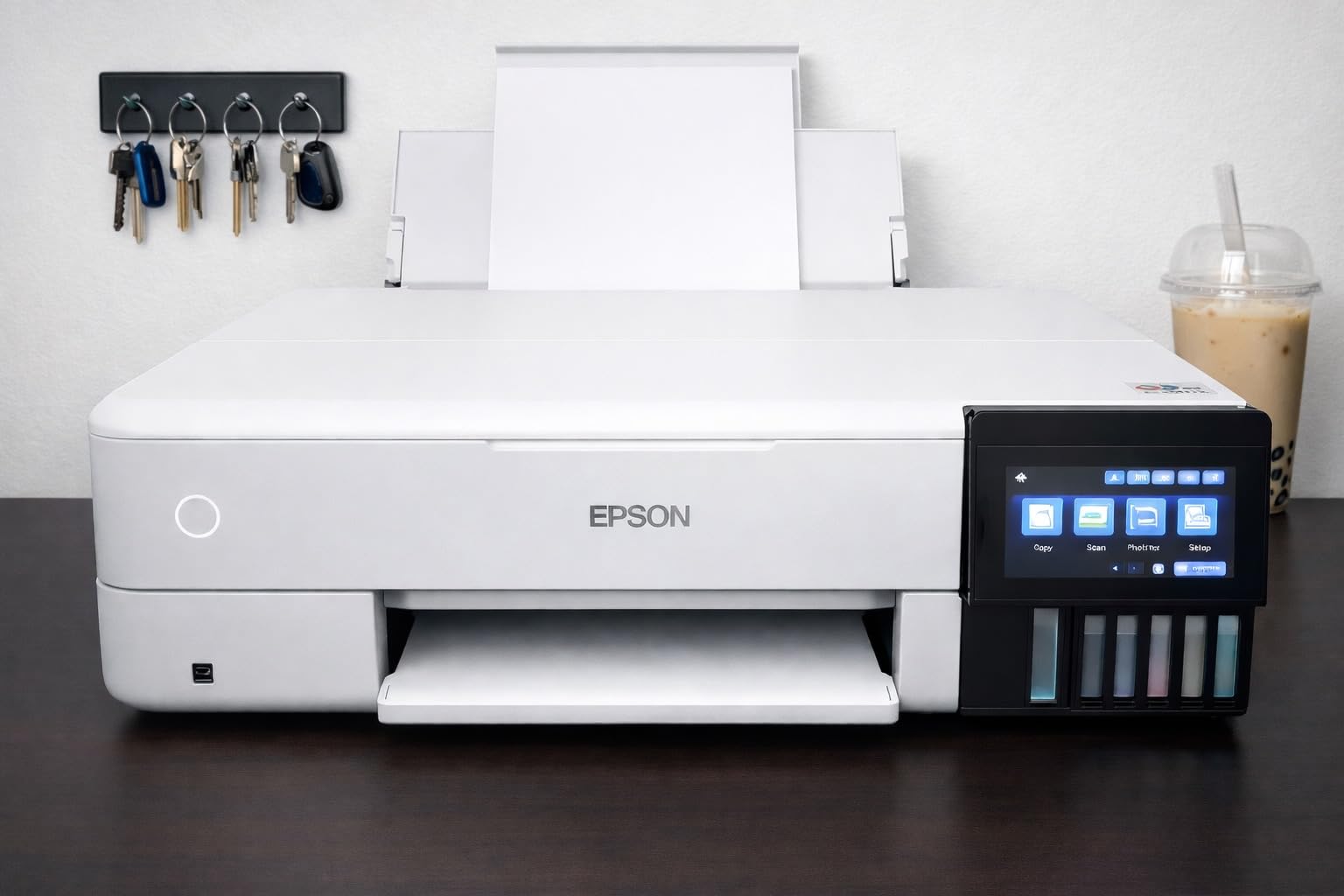
The footprint is large. At 29.8 by 20.6 by 16.9 inches, the ET-8550 needs a dedicated table or wide desk. It weighs 24.5 pounds, which is heavy but manageable for two people to move. Setup took me about fifty minutes because the ink initialization is lengthy and the printer runs multiple alignment cycles. I recommend setting it up on the final destination table because moving it afterward requires re-alignment.
The ET-8550 is the most versatile printer I tested for mixed media projects. I printed on glossy photo paper, matte cardstock, and printable CDs in the same week without cleaning the print heads between jobs. The ink system handles all these surfaces without smudging or bleeding. This versatility is rare in consumer printers and usually reserved for professional equipment.
The wireless connection is stable on both 2.4 and 5 GHz networks. I used the Epson Smart Panel app to print from my phone, and the printer also supports Apple AirPrint and Mopria for Android. The Ethernet port is useful for a permanent wired connection in a home studio. I have the printer connected via Ethernet to my desktop and via Wi-Fi to my laptop, and both work simultaneously.
This printer outputs borderless 13×19 and 13×44 panoramas
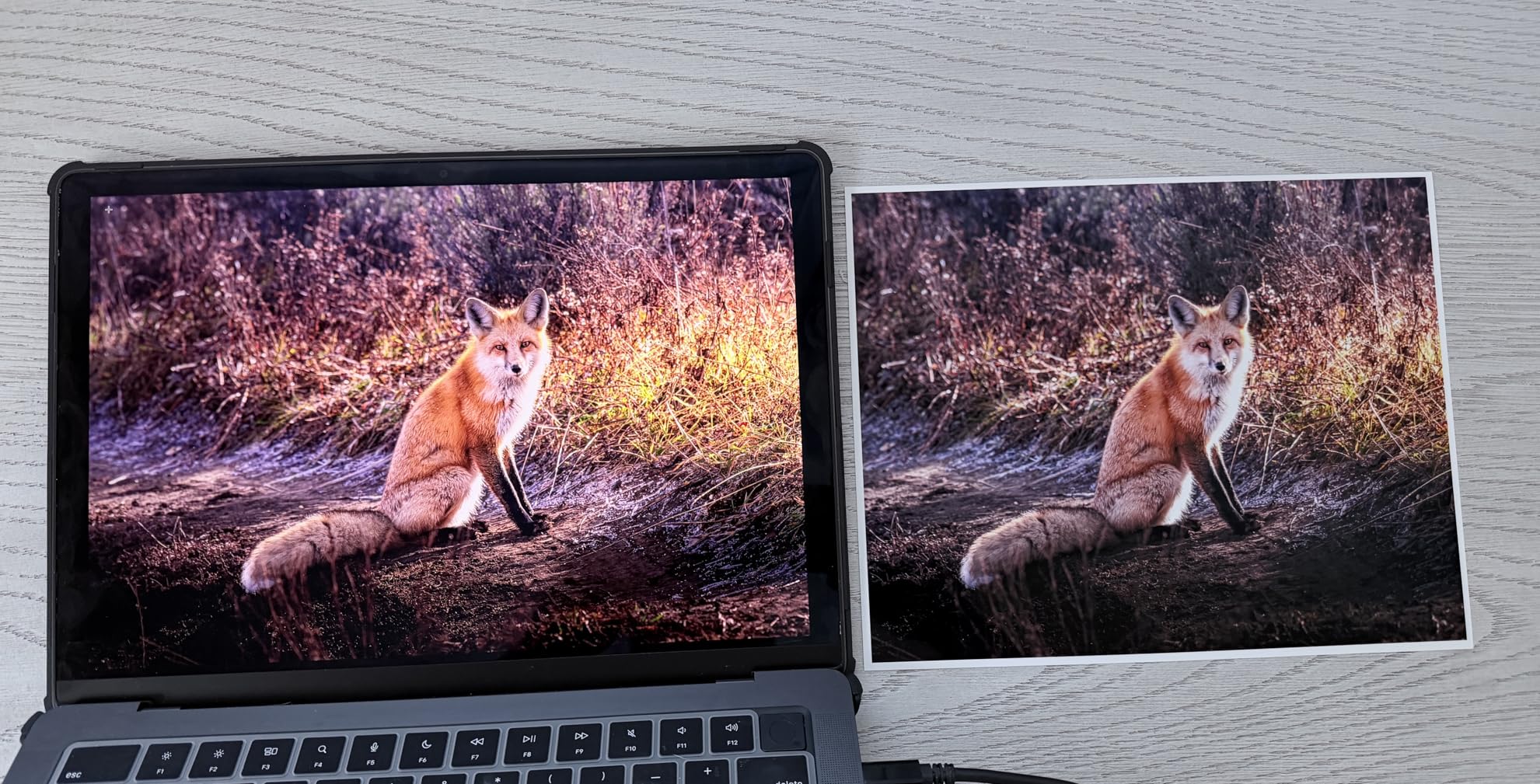
The ET-8550 is the best photo printer for anyone who regularly prints larger than 8 by 10. The 13 by 19 format is the sweet spot for wall art and portfolio pieces. I printed a series of 11 by 14 prints for a client and the borderless output looked professional on Epson Premium Glossy paper. The printer also supports 13 by 44 inch panoramas through the manual feed, which is a feature usually reserved for printers that cost twice as much.
The auto-duplex scanner is useful for photographers who need to scan original artwork or large prints. The flatbed handles up to 8.5 by 11 inches, and the auto-duplex feature scans both sides of a document without flipping. I scanned a watercolor painting and the color accuracy was good enough to make small reproduction prints. The copier function is less relevant for artists but handy for everyday paperwork.
Supertank printing cuts ink costs by 80 percent
The economics of the ET-8550 are unbeatable for high-volume printing. A full set of six ink bottles costs about seventy dollars and yields roughly 2,300 color pages or thousands of 4 by 6 photos. I calculated the cost per 13 by 19 print at about eighty cents in ink, which is roughly one-third the cost of the Canon PRO-200S. Over a year of regular printing, the savings easily cover the higher purchase price.
The EcoFit bottles are keyed to prevent filling the wrong tank, and the nozzles do not drip during refills. I have refilled the tanks three times without spilling a drop. The printer displays a low-ink warning with plenty of advance notice, and the tanks are transparent so you can verify levels visually. For photographers who want professional quality without the professional ink budget, the ET-8550 is the smartest purchase in 2026.
Choose your photo printer based on ink type and print volume
Buying a photo printer is more complex than buying a regular office printer because you must balance print quality, ink costs, and paper compatibility. I have tested dozens of printers over three years, and these are the factors that actually matter when you are standing in the store or browsing online.
Cartridge printers offer accuracy while tanks cut costs by 80 percent
Cartridge-based inkjets like the Canon PRO-200S offer the best color accuracy but the highest running costs. Each cartridge costs fifteen to twenty dollars and lasts only a few hundred prints. Ink tank systems like the Epson EcoTank line cut costs by 80 percent because you refill bottles instead of replacing cartridges. Dye-sublimation printers like the Canon Selphy and Liene M100 use ribbon and paper combos that cost thirty to forty cents per print but produce true lab quality.
For hobbyists who print fewer than twenty photos per month, a cartridge printer or portable ZINK device is fine. For anyone who prints weekly, a supertank or dye-sublimation system saves money within the first year. Professional photographers should consider the Canon PRO-200S for color accuracy or the Epson ET-8550 for volume economics.
Match your printer to the largest paper size you actually print
Most portable printers are limited to 2 by 3 or 4 by 6 inches. Desktop inkjets typically handle 4 by 6, 5 by 7, 8 by 10, and letter sizes. Wide-format printers like the Epson ET-8550 and Canon PRO-200S extend to 11 by 14, 13 by 19, and even panoramic lengths. Before buying, decide what size you actually print.
I rarely print larger than 8 by 10 for personal use, but my professional work requires 13 by 19. If you only need 4 by 6 prints for albums, the Liene M100 or Canon Selphy is ideal. If you want wall art, you need a wide-format inkjet. Also check whether the printer supports borderless printing at your preferred size, because some models require a white margin on certain paper types.
Wi-Fi Direct and Ethernet offer the most reliable connections
Modern photo printers connect via Wi-Fi, Bluetooth, USB, or Ethernet. Portable ZINK printers rely on Bluetooth apps, which work well for phones but not for computers. Desktop inkjets usually offer Wi-Fi and USB, while premium models add Ethernet and memory card slots. If you print from a camera, look for SD card or USB host ports that let you print without a computer.
I prefer printers with Wi-Fi Direct because they create their own network and do not require a router. The Liene M100 hotspot feature is the best example of this. For home studios, Ethernet is more reliable than Wi-Fi for large file transfers. Consider your workflow before buying. If you edit on a laptop and print wirelessly, any Wi-Fi printer works. If you shoot with a DSLR and want to print straight from the card, you need a model with direct card support.
The cost per print matters more than the purchase price
The sticker price is the least important number. What matters is the cost per print over the printer’s lifetime. I calculated the cost per 4 by 6 photo for each printer in this guide, and the range is dramatic. The KODAK Step costs about fifty cents per print. The Canon Selphy costs thirty-seven cents. The Epson ET-8550 costs about six cents. The Canon PRO-200S costs about thirty cents.
The cheapest printer to buy is often the most expensive to own. The KODAK Step is eighty dollars but costs fifty cents per print. The Epson ET-8550 is six hundred dollars but costs six cents per print. If you print one hundred photos per year, the Step is cheaper overall. If you print one thousand photos per year, the ET-8550 saves you hundreds of dollars. Do the math based on your actual usage before deciding.
Common questions about photo printers answered directly
Should I use pigment or dye ink for photo printing?
Dye-based inks produce more vibrant and saturated colors, which makes them ideal for glossy photo prints and portraits. Pigment inks resist water and fading better, so they are better for documents and fine art prints that will hang in direct light. For most home photo printing in 2026, dye-based systems like the Canon PRO-200S offer the best color accuracy.
Should I choose cartridge or ink tank printer?
Choose an ink tank printer if you print more than fifty photos per month. Supertank systems like the Epson EcoTank line cost roughly 80 percent less per print than cartridges because you refill bottles instead of buying new plastic cartridges. Cartridge printers are fine for occasional use and generally offer slightly better color accuracy in professional models.
What is the best photo printer – inkjet or laser?
Inkjet printers are the best choice for photo printing because they produce smooth color gradients and support glossy photo paper. Laser printers excel at fast text documents but struggle with photo quality and paper variety. For home photo printing, an inkjet or dye-sublimation printer is the correct choice.
What printer should I get in terms of paper sizes?
For 2 by 3 inch prints and journaling, choose a portable ZINK printer like the KODAK Step or HP Sprocket. For 4 by 6 inch lab-quality prints, the Liene M100 or Canon Selphy is ideal. For 8 by 10 and letter-size prints, an all-in-one inkjet like the Epson XP-7100 works well. For 13 by 19 inch and larger fine art prints, you need a wide-format printer like the Epson ET-8550 or Canon PRO-200S.
The best photo printer choice depends on your print volume and budget
The best photo printer for you depends on what you print, how often you print, and how large you want your photos. For casual journaling and social sharing, the KODAK Step or HP Sprocket is perfect. For lab-quality 4 by 6 prints at home, the Liene M100 and Canon Selphy CP1500 deliver professional results without a professional price. For serious photographers who need wide-format output and low running costs, the Epson EcoTank Photo ET-8550 and Canon PIXMA PRO-200S are the best photo printers available in 2026.
I recommend starting with the Epson Expression Premium XP-7100 if you want an all-in-one that handles both documents and photos. It offers the best balance of features, quality, and price for most households. Whatever you choose, remember that the cost of ink matters more than the cost of the printer over time. Do the math, pick the model that fits your workflow, and start printing your memories instead of leaving them on a hard drive.