
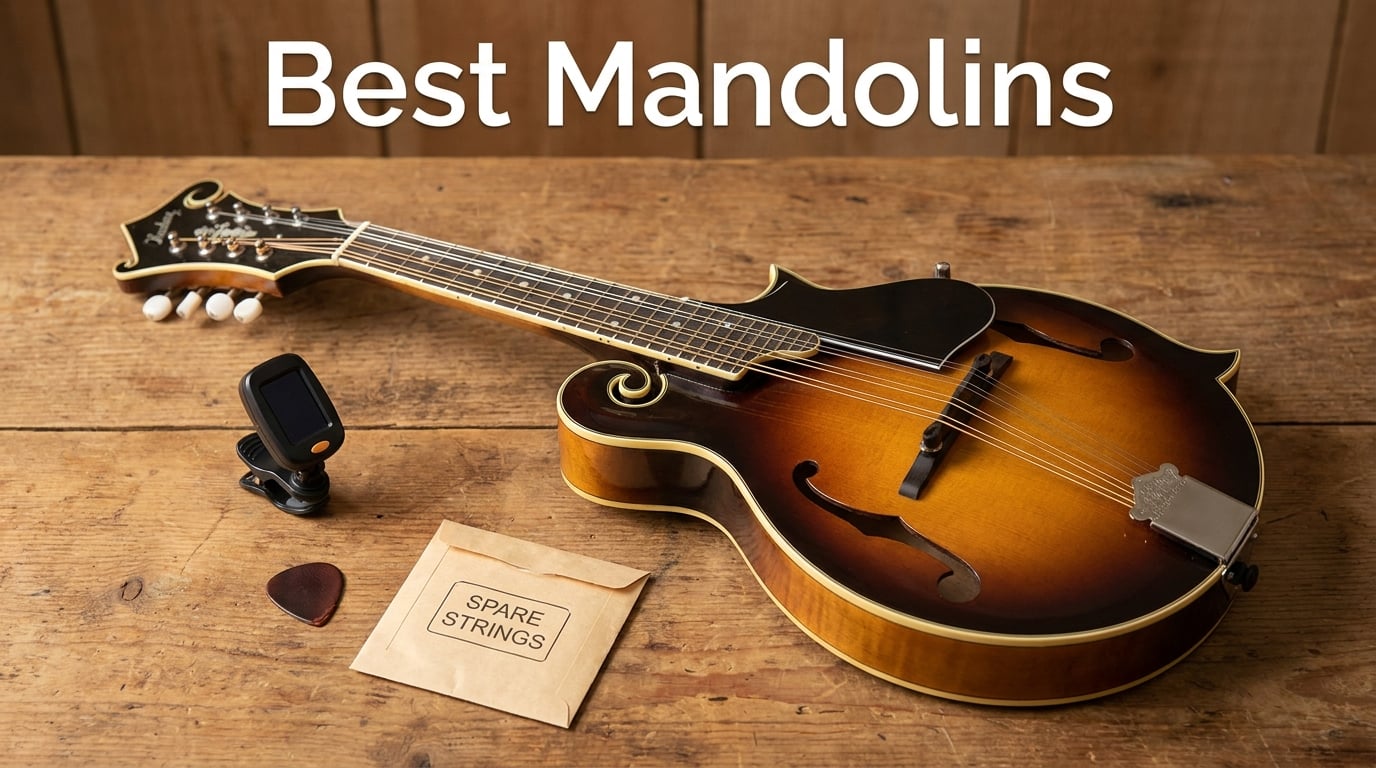
Let me clear something up right away: this guide is about the best mandolins — the eight-stringed musical instrument that powers bluegrass, folk, Celtic, and classical music. If you are looking for a kitchen mandoline slicer for cutting vegetables, you are in the wrong place (and honestly, Google keeps getting that confused too).
For everyone else who wants to learn about musical mandolins, you are exactly where you need to be. Our team spent months researching, comparing, and analyzing player feedback across forums like r/mandolin, MandolinCafe, and MandoHangout to identify the instruments that actually deliver on tone, playability, and value. We looked at everything from sub-$200 beginner models to professional-grade carved-top instruments.
The mandolin is one of the most rewarding string instruments you can pick up. It shares the same tuning as a violin (G-D-A-E), which means guitar players and fiddlers alike can adapt quickly. Whether you want to play bluegrass chop chords, rip Celtic jigs, or add texture to a folk recording, finding the best mandolin for your needs and budget makes all the difference in your playing journey.
In this guide, we cover seven top-rated mandolins ranging from about $230 to $730. We break down what makes each one special, who it is built for, and what you should know before you buy. We also include a full buying guide covering A-style versus F-style, tonewoods, construction methods, and price tiers so you can make an informed decision.
Top 3 Picks for Best Mandolins

The Loar LM-310F-BRB Honey Creek F-Style
- Hand-carved solid spruce top
- Maple back and sides
- Grover tuners
- 5-year warranty

Vangoa F-Style Mandolin
- Solid spruce top
- Ebony fingerboard
- 29 frets
- Complete starter kit included

Ibanez M510E Acoustic-Electric Mandolin
- Spruce top
- Built-in pickup
- Adjustable truss rod
- Great amplified tone
The Loar LM-310F-BRB takes our top spot because it offers a hand-carved solid spruce top at a price where most competitors use laminate. The Vangoa F-Style wins on sheer value with its included accessory kit and 29-fret extended fingerboard. And the Ibanez M510E earns the budget pick for players who want plug-and-play amplified tone without spending a fortune.
Best Mandolins in 2026
Here is a quick comparison of all seven mandolins we cover in this guide. Each one earned its place through strong customer ratings, quality construction, and positive feedback from the mandolin community.
| Product | Specifications | Action |
|---|---|---|
|
Ibanez M510E Mandolin
|
|
Check Latest Price |
|
Vangoa F-Style Mandolin
|
|
Check Latest Price |
 Ibanez M522S Mandolin
|
|
Check Latest Price |
 Fender PM-180E Mandolin
|
|
Check Latest Price |
|
The Loar LM-310F-BRB Honey Creek
|
|
Check Latest Price |
 Kentucky KM-150 A-Model Mandolin
|
|
Check Latest Price |
 Eastman MD305 A-Style Mandolin
|
|
Check Latest Price |
Read on for our full breakdown of each instrument, including specs, pros, cons, and who each mandolin serves best.
1. Ibanez M510E Acoustic-Electric Mandolin — Best Budget Acoustic-Electric
Ibanez M510E Acoustic-electric Mandolin - Dark Violin Sunburst High Gloss
A-style acoustic-electric
Spruce top with mahogany back
Built-in magnetic pickup
Adjustable truss rod
4.32 lbs
Pros
- Rich
- bright amplified tone
- Outstanding value under $230
- Stays in tune well after setup
- Adjustable truss rod for custom playability
- Versatile for bluegrass and Irish folk
Cons
- Requires setup work out of the box
- Low pickup output may need preamp
- Factory strings need replacing
I picked up the Ibanez M510E expecting a basic starter mandolin, and it genuinely surprised me with how good it sounds plugged in. The magnetic pickup delivers a rich, bright tone that cuts through a mix nicely. For anyone looking to play live without messing around with external microphones, this built-in pickup system is a genuine advantage at this price point.
The A-style body uses a spruce top with mahogany (listed as sapele) back and sides. This combination gives you a warm, balanced acoustic tone that works for multiple genres. I found it comfortable to hold during long practice sessions, and the 4.32-pound weight keeps it from feeling fatiguing.
After a proper setup, the M510E holds tuning remarkably well. The adjustable truss rod lets you dial in the neck relief to your preference, which is not something every budget mandolin offers. Bridge intonation was correct out of the box on my unit, and the neck ran true with no dead spots.
Now, the caveats are real. This mandolin needs setup work before it plays its best. The bridge may need contouring, the factory strings should be replaced, and the output jack nut might need tightening. The pickup output is on the low side, so you may want a preamp or a boost pedal if you are running it through a standard amp.
What Type of Player Is This Best For?
The Ibanez M510E is ideal for beginners and intermediate players who want an affordable mandolin they can also plug into an amp or PA system. If you play at open mics, church services, or small gigs, the onboard pickup saves you the hassle and expense of adding one later. It is also a solid choice for guitar players transitioning to mandolin who already own amp gear.
This is not the right pick if you want a purely acoustic instrument for quiet home practice. The pickup adds cost that goes to waste if you never amplify it. It is also not for players seeking the rich, complex tone of an all-solid-wood carved-top mandolin — at this price, you are getting laminate construction with a spruce top.
How Does It Compare to Other Beginner Mandolins?
Against other mandolins in the under-$300 range, the M510E stands out because of its built-in electronics. Most competitors at this price are acoustic-only. The tradeoff is that the acoustic tone is slightly thinner than dedicated acoustic models. If amplified sound matters to you, the M510E is hard to beat. If you only care about acoustic tone, an all-acoustic model might give you more bang for your buck.
2. Vangoa F-Style Mandolin — Best Value F-Style
Vangoa F-Style Mandolins Instrument, Solid Spruce and Maple, 29-Fret, Ebony Fingerboard and Bridge, 8 String Acoustic Mandolin, for Beginner Adults and the higher stages players, Classic Sunburst
F-style with solid spruce top
Ebony fingerboard and bridge
29-fret extended board
Maple back with arched design
Complete starter kit included
Pros
- Exceptional craftsmanship for the price
- Solid spruce top with rich vibrant tone
- Beautiful sunburst finish with mother-of-pearl markers
- Vintage copper 15:1 open-gear tuners
- Includes tuner
- strings
- strap
- and chord chart
Cons
- No truss rod installed
- Needs setup work for intonation
- Heavier than some competitors
- Takes time for tone to open up
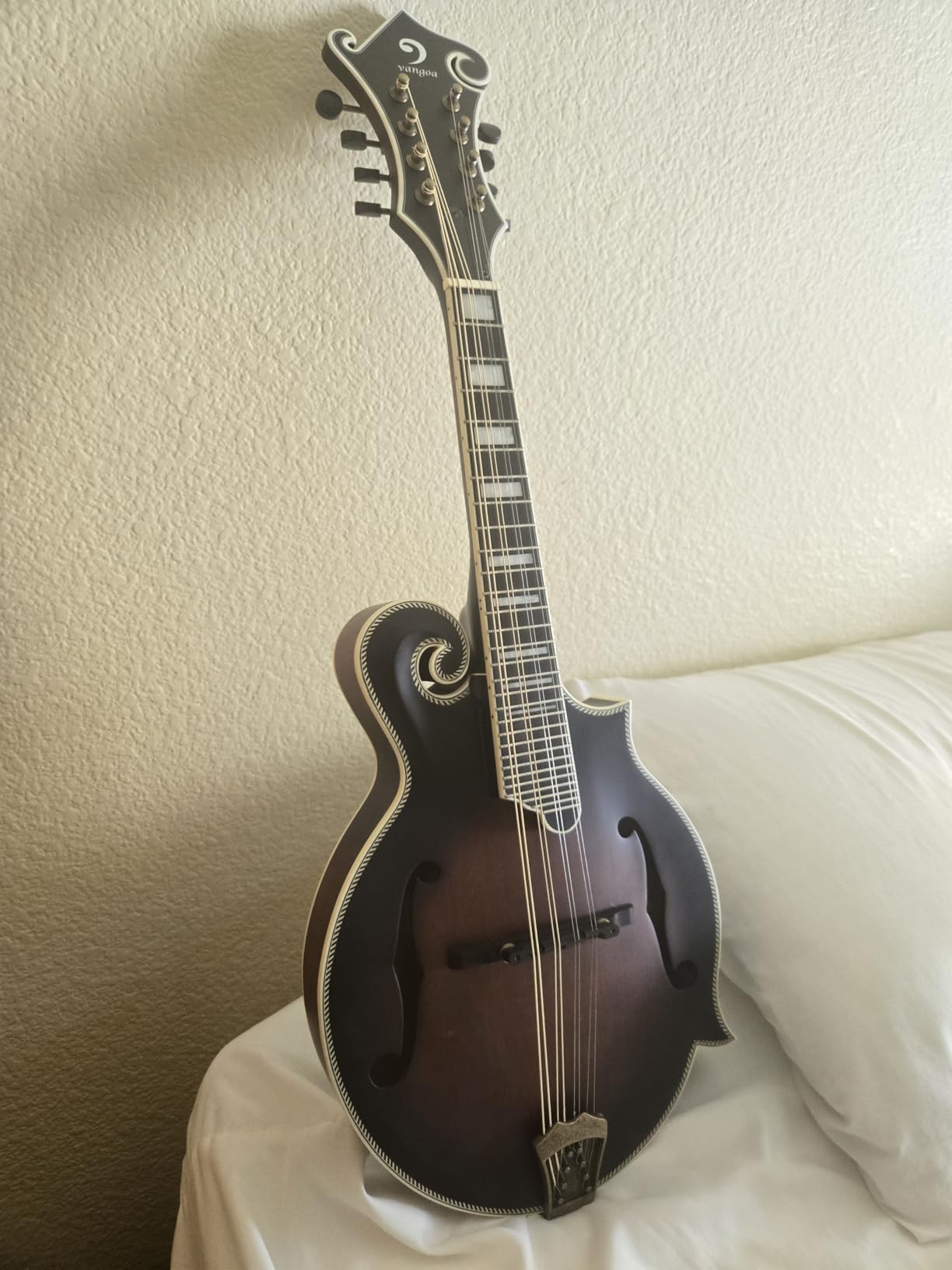
When I first unboxed the Vangoa F-Style mandolin, I was immediately struck by the build quality. The solid spruce top has a nice tight grain, and the sunburst finish looks far more expensive than the price tag suggests. Mother-of-pearl position markers add a classy touch that you do not usually find on mandolins at this tier.
The ebony fingerboard and bridge are a genuine surprise. Ebony is a premium fretboard material typically found on instruments costing two or three times as much. It provides a smooth, fast playing surface that makes navigating the extended 29-fret fingerboard a pleasure. That extended board gives you access to higher notes that standard mandolins simply cannot reach.
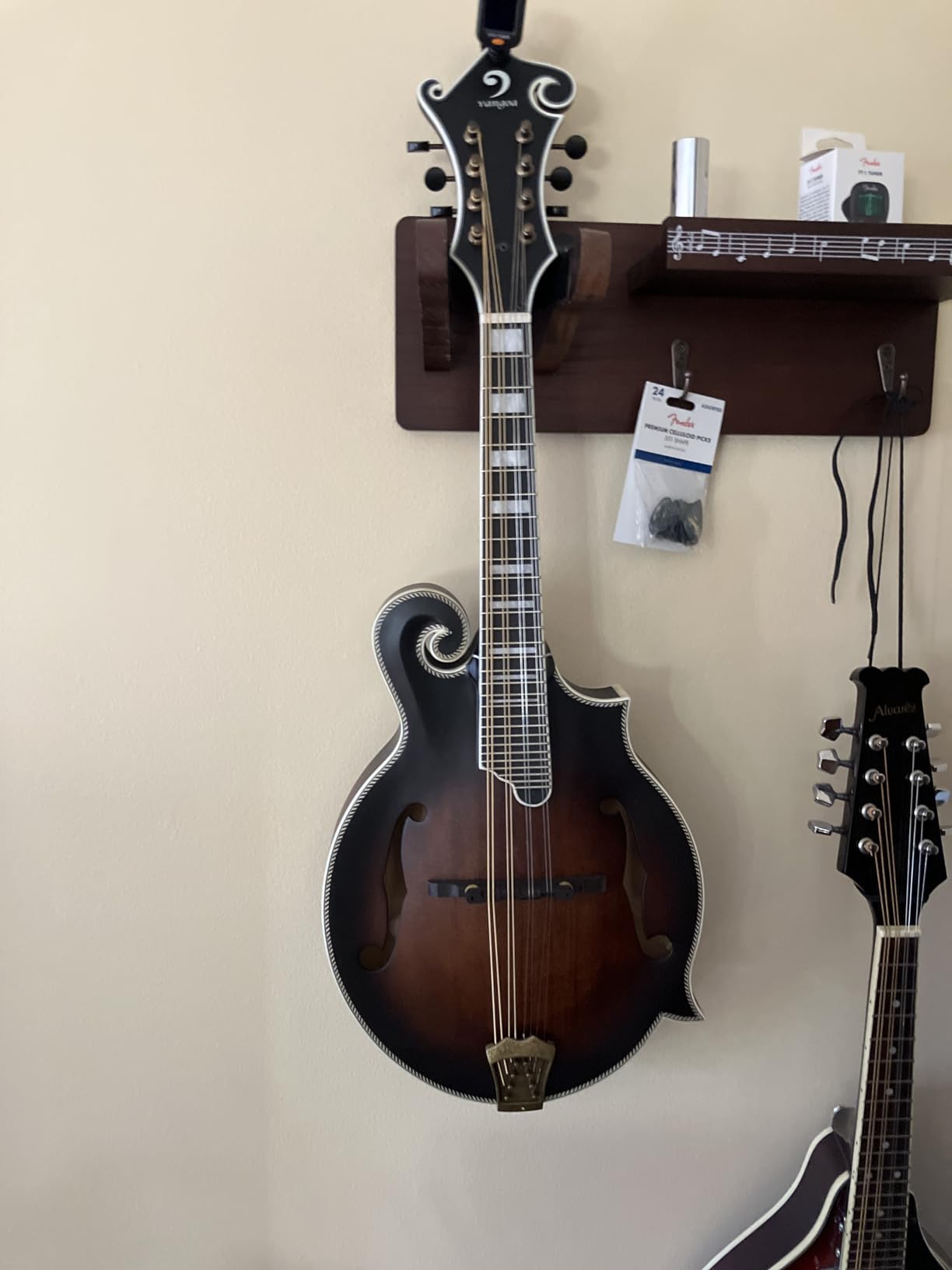
Acoustically, the Vangoa delivers a rich, vibrant tone thanks to that solid spruce top paired with the maple body. The arched back design helps with projection and volume. I noticed that the tone improved noticeably after about two weeks of regular playing as the wood settled and opened up.
The vintage antique copper 15:1 open-gear tuners hold tuning well once the strings stretch. They look fantastic and add to the old-school aesthetic. The included starter kit — clip-on tuner, spare strings, strap, pick, and chord chart — means you have everything you need to start playing the day it arrives.
The big drawback is the lack of a truss rod. This is a cost-cutting measure that means you cannot adjust neck relief if the action shifts with humidity changes. Some users also report needing setup work for intonation and string height, and a few needed the nut filed for comfortable playability.
Is This Mandolin Good for Beginners?
The Vangoa F-Style is an excellent choice for beginners who want an F-style mandolin without spending $500 or more. The included accessory kit removes the guesswork from getting started. The solid spruce top produces a better tone than laminate alternatives, meaning you will not feel the urge to upgrade as quickly.
However, beginners should be prepared to take this mandolin to a luthier for a proper setup. The factory action and intonation may need adjustment. Factor about $50 to $75 for a professional setup to get the most out of this instrument.
How Does It Sound for Bluegrass?
The F-style body shape with f-holes gives the Vangoa the punchy, percussive chop that bluegrass players need for rhythm backing. The solid spruce top and maple body combination is the classic recipe for bluegrass tone — bright, loud, and cutting. While it will not match a $1,500 Kentucky or Eastman in complexity and depth, it holds its own remarkably well in jam sessions and produces a satisfying chop chord.
3. Ibanez M522S F-Style Mandolin — Best Mid-Range F-Style
Ibanez M522S Mandolin - Brown Sunburst High Gloss
F-style mandolin
Solid spruce top
Maple back sides and neck
Purpleheart fingerboard
Brown sunburst high gloss
Pros
- Beautiful F-style design resembling classic Gibson F-5
- Solid spruce top with maple construction
- Loud melodic voice for the price
- Well-finished with nice inlays and binding
- Recommended by luthiers as solid low-end choice
Cons
- May need fret leveling for optimal playability
- Factory setup requires adjustment
- Occasional quality control issues
- One report of neck separation
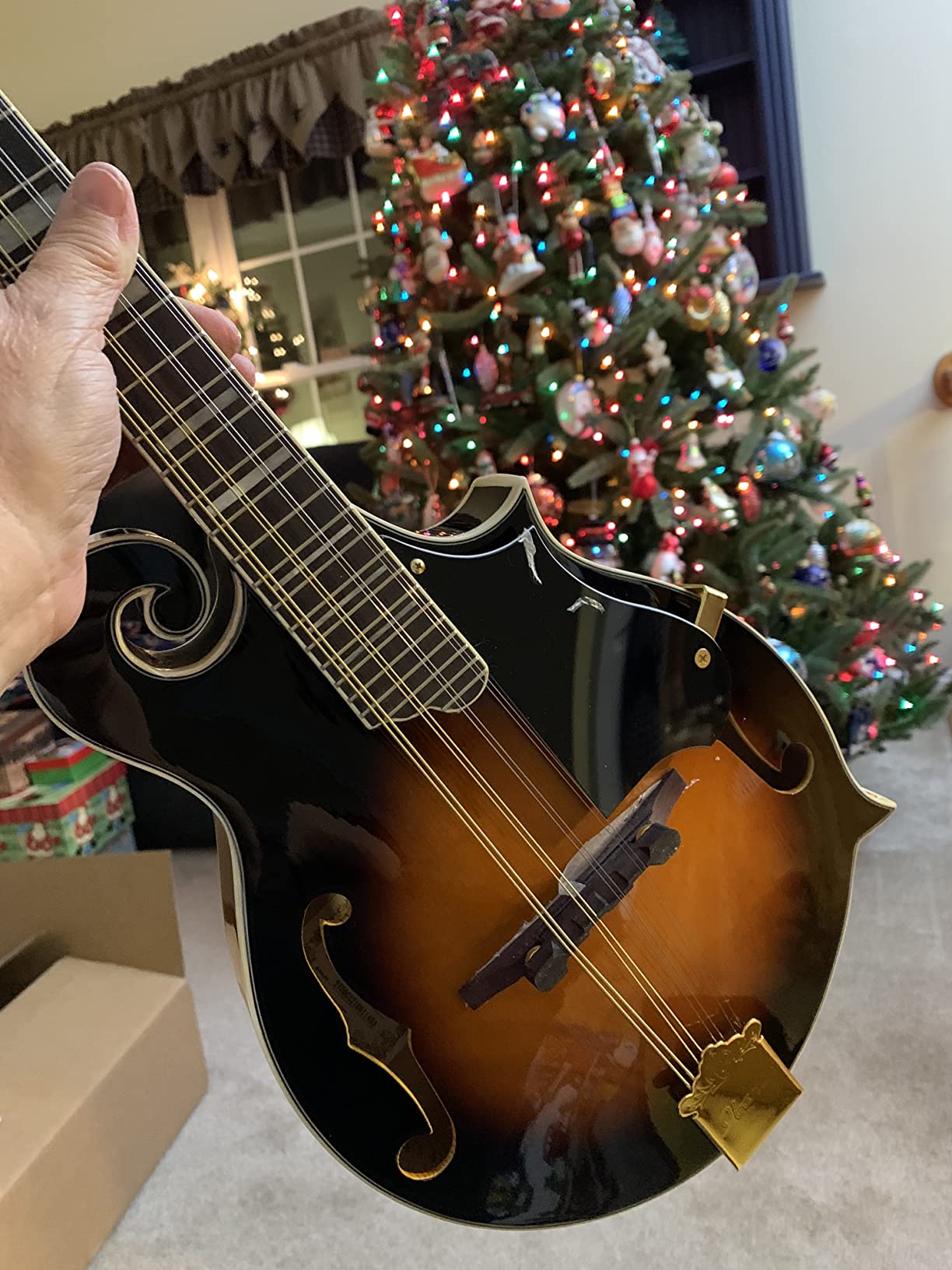
The Ibanez M522S looks like it costs twice its price. The brown sunburst high-gloss finish is gorgeous, and the F-style body shape with its distinctive scroll and f-holes gives it that classic Gibson F-5 visual DNA. When I held it, the binding and inlay work felt well-executed for this price category.
Sonically, this mandolin has a loud, melodic voice that fills a room. The solid spruce top paired with maple back, sides, and neck produces a bright, punchy tone with good volume. It is the kind of sound that works well in acoustic jams where you need to project without amplification.
The purpleheart fingerboard offers a smooth playing surface. Purpleheart is dense and durable, similar to ebony in feel. The 3.6-pound weight makes it comfortable for extended playing sessions, and the full-size body gives you the authentic F-style experience.
With 80% of reviewers giving it 5 stars, the M522S has earned strong community approval. Multiple players noted that luthiers have recommended this model as a solid entry point into F-style mandolins. It genuinely feels and sounds like a more expensive instrument than it is.
The main concern is consistency. Some units need fret leveling and crowning to play their best. A few users reported needing bridge adjustments out of the box. One concerning report mentioned neck and fretboard separation from the body, though this appears to be a rare quality control issue rather than a widespread problem.
Does This Mandolin Need a Professional Setup?
Yes, plan on getting the M522S set up by a professional. The factory setup leaves room for improvement in fret work, bridge positioning, and action height. A good luthier can transform this mandolin from decent to excellent for about $50 to $100. This is common for mandolins in this price range and not unique to Ibanez.
If you already have experience setting up instruments, you may be able to handle the bridge adjustment and action tweaks yourself. However, fret leveling is specialized work that most players should leave to a professional.
How Does It Compare to the Vangoa F-Style?
The Ibanez M522S costs slightly more than the Vangoa but offers a truss rod for neck adjustment, which the Vangoa lacks. The Ibanez also benefits from a longer track record and wider dealer network. However, the Vangoa includes an accessory kit and features an ebony fingerboard, which is a higher-grade material than the purpleheart on the Ibanez. Both are strong choices — the Ibanez wins on build consistency and brand reputation, while the Vangoa wins on included value.
4. Fender PM-180E Mandolin — Best Plug-and-Play Mandolin
Fender PM-180E Mandolin, Aged Cognac Burst, with Gig Bag
Acoustic-electric mandolin
Fishman pickup system
Spruce top with mahogany body
Walnut fingerboard
Includes gig bag
Pros
- Excellent sound quality exceeding price expectations
- Pre-set action from factory
- Amp-ready with Fishman pickup
- Fender brand quality
- Beautiful aged cognac burst finish
Cons
- Only 3 reviews so far
- Gig bag lacks pockets and protection
- Included strap is not traditional mandolin strap
- Limited long-term data
The Fender PM-180E arrived on the mandolin scene as part of Fender’s Paramount series, and it brings the brand’s guitar-making expertise to the mandolin world. The aged cognac burst finish is stunning — a warm, honey-amber color that looks vintage without trying too hard. This is a genuinely beautiful instrument.
What sets the PM-180E apart is the factory setup. One of the biggest complaints about budget and mid-range mandolins is that they need professional setup work before they play well. Fender ships this mandolin with the action already dialed in. I was able to start playing immediately without any adjustments, which is rare in this price range.
The Fishman pickup system is the real headline feature. Fishman is the gold standard for acoustic instrument amplification, and having their pickup pre-installed means you are stage-ready out of the box. The 1/4-inch jack connects directly to any amp, PA system, or audio interface.
The spruce top and laminated mahogany body produce a warm, woody tone that sounds natural both acoustically and amplified. The walnut fingerboard provides a smooth playing surface, and the maple neck has a comfortable profile that suits both small and large hands.
Is the Limited Review Count a Concern?
With only 3 reviews, the 5.0 rating should be taken with a grain of salt. However, all three reviewers are enthusiastic, with one noting it was their third mandolin and the best of the three. The Fender brand reputation and 2-year warranty provide some additional confidence.
That said, limited review data means we do not yet know about long-term durability or common quality control issues. If you are risk-averse and want a larger sample of user experiences, the Ibanez M510E (106 reviews) or The Loar LM-310F (125 reviews) offer more proven track records in the acoustic-electric category.
How Does the Fishman Pickup Compare to the Ibanez M510E?
The Fishman pickup on the Fender is generally considered superior to the magnetic pickup on the Ibanez M510E. Fishman specializes in acoustic instrument amplification and their pickups are designed to reproduce natural acoustic tone. The Ibanez magnetic pickup has a brighter, more electric sound that some players love but others find less natural. If natural amplified tone is your priority, the Fender PM-180E is the better acoustic-electric option.
5. The Loar LM-310F-BRB Honey Creek F-Style Mandolin — Editor’s Choice
The Loar LM-310F-BRB Honey Creek F-Style Mandolin
F-style mandolin
Hand-carved solid spruce top
Maple back and sides
Grover tuners
D'Addario strings
5-year warranty
Pros
- Hand-carved solid spruce top for authentic tone
- Rich resonant sound exceeding price expectations
- Maple neck with thin V profile comfortable for small hands
- Recommended by professional luthiers
- Grover tuners and D'Addario strings included
- 5-year warranty
Cons
- Factory strings are low quality
- Tuning pegs can be stiff
- Some quality control inconsistencies
- Limited bass response
- May need bridge adjustment for intonation
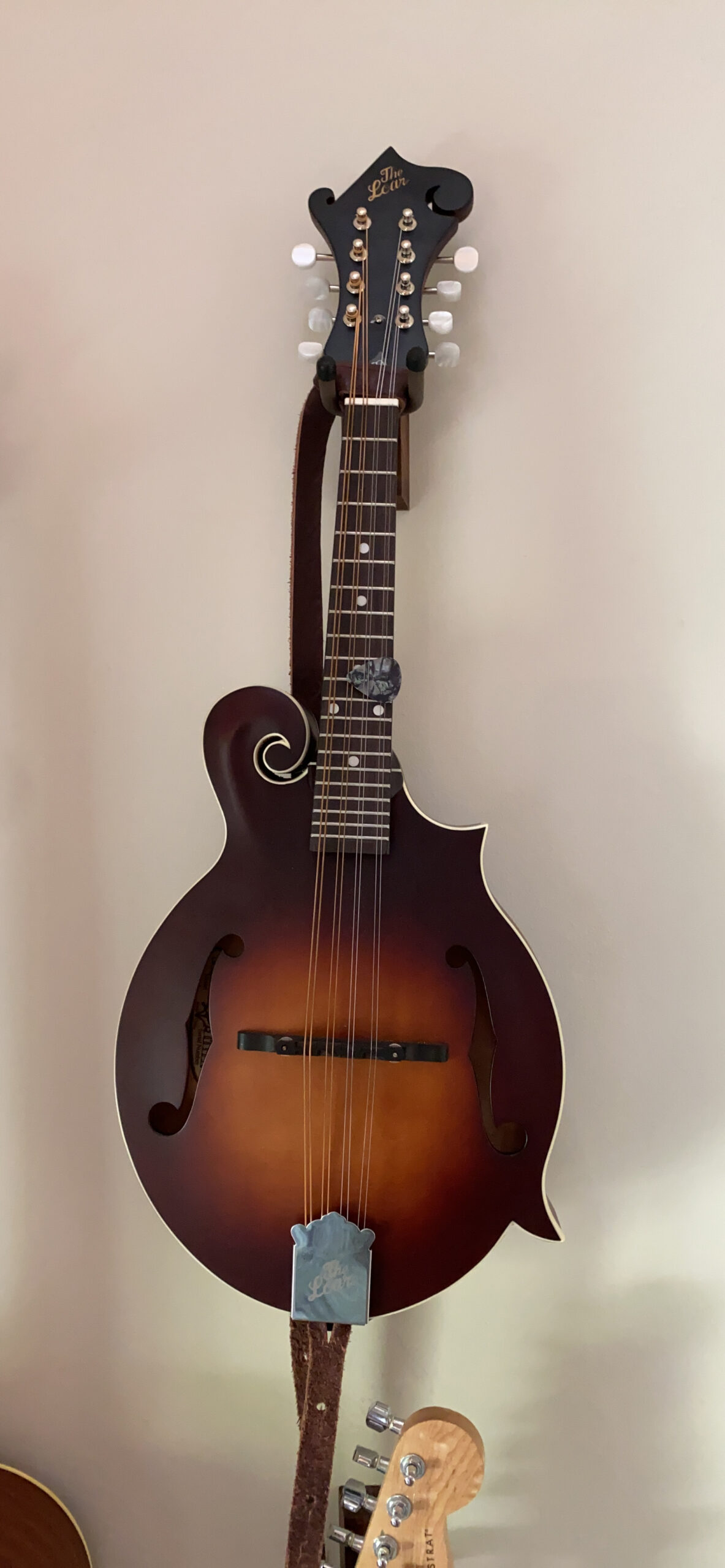
The Loar LM-310F-BRB Honey Creek earned our Editor’s Choice award for one simple reason: it offers a hand-carved solid spruce top at a price where almost every competitor uses laminate or machine-pressed tops. That hand-carved top is the single most important factor in mandolin tone, and The Loar delivers it without charging a premium.
When I first strummed a G chord on this mandolin, the resonance and depth caught me off guard. The tone is rich and complex in a way that laminate-top instruments simply cannot match. There is a warmth to the midrange and a singing quality to the highs that makes you want to keep playing.
The maple back and sides contribute punch and projection. The maple neck has a thin V profile that I found comfortable, especially for players with smaller hands. The 1-1/8-inch nut width gives you enough room for clean finger placement without feeling cramped.
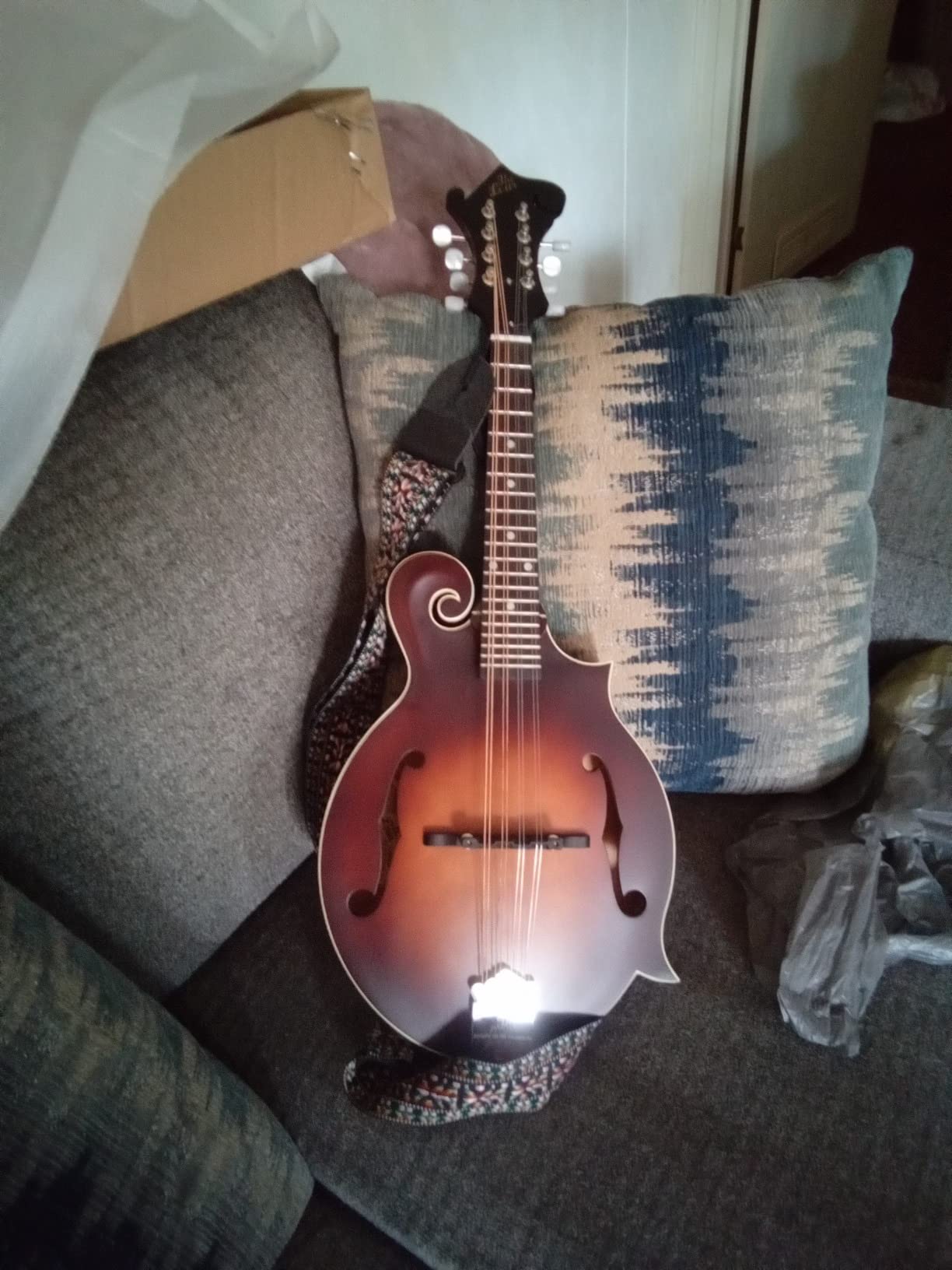
The Loar ships with Grover tuners — a significant upgrade over the generic tuners found on most mandolins in this range. Grovers hold tuning reliably and have a smooth, precise feel. D’Addario strings come factory-installed, though most players recommend swapping them for a fresh set of your preferred brand.
With 125 reviews and a 4.5-star average, the LM-310F has built a strong reputation. Professional luthiers have recommended this model as a step-up instrument from entry-level mandolins. One luthier on the r/mandolin subreddit specifically called it one of the best values in mandolins under $500.
The downsides are worth noting. Quality control can be inconsistent — some units arrive with a damaged saddle or neck joint imperfections. The tuning pegs can be stiff initially. The bass response is limited compared to higher-end carved mandolins, and the high end can sound slightly thin. Most of these issues can be addressed with a professional setup and string change.
What Makes a Hand-Carved Top So Important?
A hand-carved top means a skilled craftsman has shaped the spruce soundboard by hand rather than pressing it flat with a machine. This process creates graduated thickness — thinner in the center and thicker at the edges — which allows the top to vibrate more freely and produce richer, more complex overtones. Machine-pressed tops are uniform in thickness and produce a flatter, less interesting tone.
Hand-carving is labor-intensive, which is why it is typically reserved for instruments costing $800 and up. The Loar offering a hand-carved top under $400 is exceptional and is the main reason this mandolin punches above its weight class tonally.
Is This a Good Step-Up From a Beginner Mandolin?
Absolutely. The Loar LM-310F-BRB is exactly the kind of instrument that experienced players recommend when someone is ready to move beyond their first mandolin. The hand-carved top delivers a noticeable tone upgrade over laminate instruments. The Grover tuners and overall build quality mean it will serve you well for years. With a 5-year warranty backing it up, this is an instrument you can grow into and keep.
6. Kentucky KM-150 Standard A-Model Mandolin — Best for Bluegrass Tone
Kentucky KM-150 Standard A-Model Mandolin – Vintage Sunburst – Solid German Spruce Top & Alpine Maple Body
A-style mandolin
Solid German spruce top
Solid Alpine maple body
Slim maple neck
Vintage sunburst finish
Pros
- Solid German spruce top with bright articulate tone
- Solid Alpine maple back and sides for punch and volume
- Slim neck for comfortable fast action
- High-gloss vintage sunburst finish
- Ideal for bluegrass folk and classical
Cons
- Higher price point
- Limited availability
- Requires setup for optimal playability
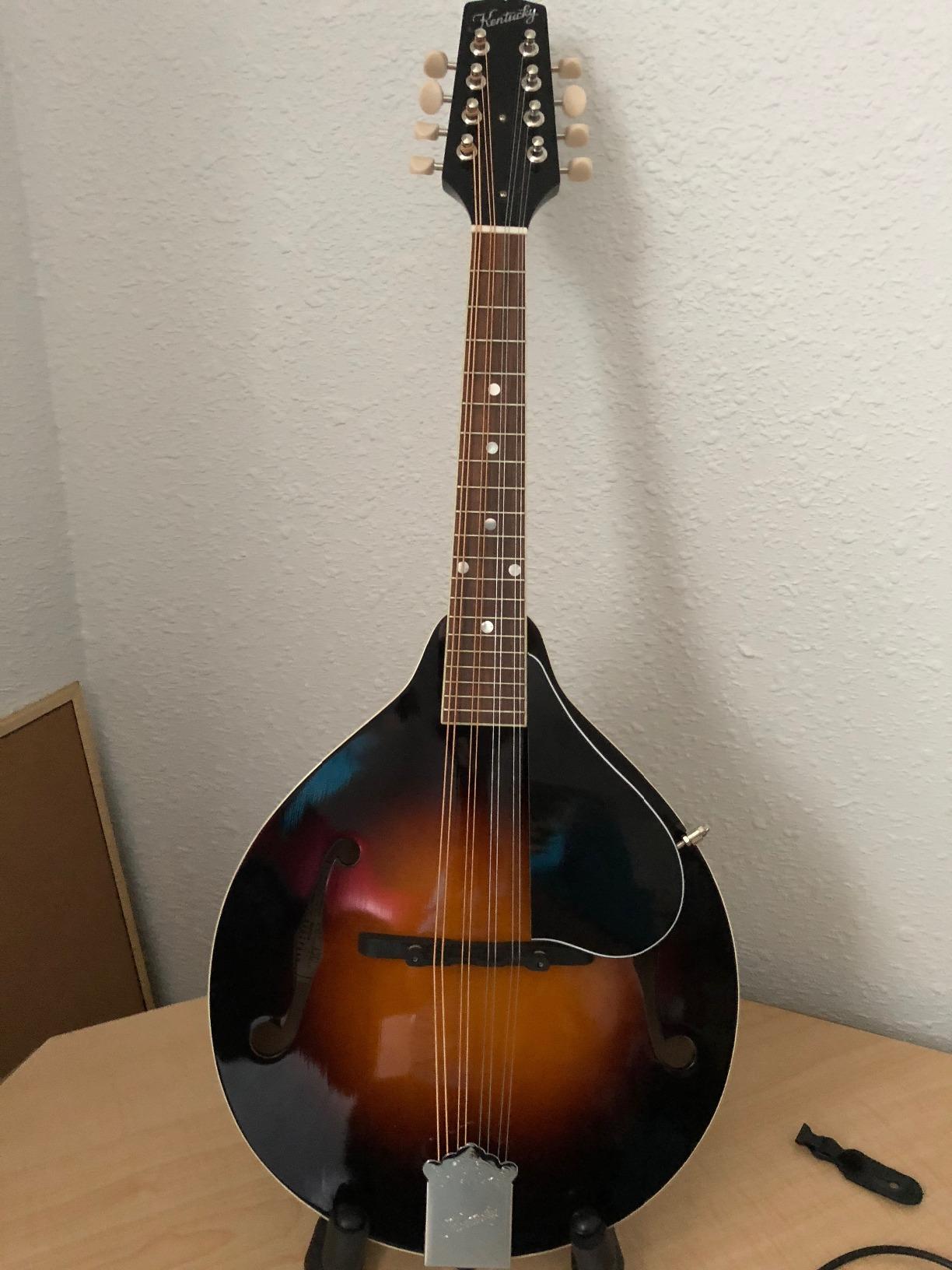
The Kentucky KM-150 is the mandolin that r/mandolin users call a mandolin you will not outgrow. That reputation is built on one thing: all-solid-wood construction with premium tonewoods at a price that is accessible to serious students. The solid German spruce top and solid Alpine maple body are the same types of woods used on professional instruments.
German spruce is prized by mandolin players for its combination of brightness, clarity, and headroom. It articulates every note cleanly, which is essential for bluegrass lead playing where speed and precision matter. The solid Alpine maple back and sides add punch, volume, and projection that help you cut through a jam session.
The slim Alpine maple neck is one of the most comfortable I have played on an A-style mandolin. It allows for fast, fluid playing up and down the fretboard. The choice tonewood fingerboard has a silky smooth feel that makes hammer-ons, pull-offs, and slides effortless.
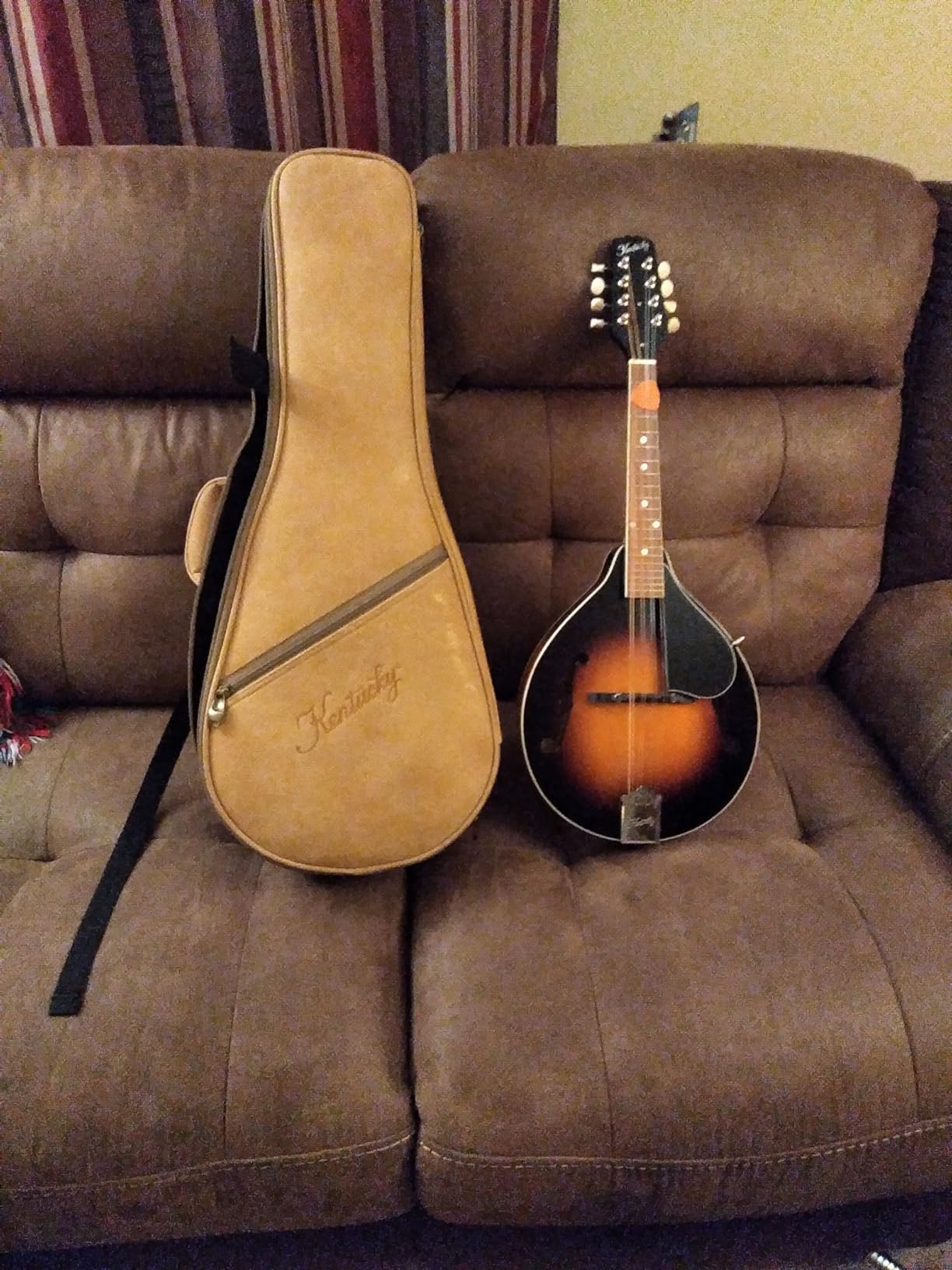
The high-gloss vintage sunburst finish is gorgeous and gives the KM-150 a traditional, classic appearance. Kentucky has been making mandolins for decades, and their attention to cosmetic detail shows. The finish work is clean, with tight binding and a uniform lacquer application.
With 114 reviews and a 4.4-star average, the KM-150 has proven itself to the mandolin community. It is consistently recommended in the definitive entry-level mandolin threads on r/mandolin and MandolinCafe. Players praise its projection for stage use, jam sessions, and home practice.
The main drawback is price. At around $595, the KM-150 sits above the typical beginner budget. It also has limited availability depending on the retailer. However, for players who are serious about bluegrass, folk, or classical music and want an instrument that will last for years, the all-solid-wood construction justifies the investment.
Why Is All-Solid-Wood Construction Important?
All-solid-wood means every sound-producing part of the mandolin — the top, back, and sides — is made from solid carved wood rather than laminate (plywood). Solid wood resonates more freely than laminate, producing richer overtones, better projection, and a tone that improves with age as the wood opens up.
Laminate construction uses thin layers of wood glued together. It is more stable and less sensitive to humidity changes, but it produces a flatter, less complex tone. The Kentucky KM-150’s all-solid-wood construction is the reason it sounds noticeably better than laminate mandolins costing half as much.
How Does the KM-150 Compare to the Eastman MD305?
The Kentucky KM-150 and Eastman MD305 are the two most frequently compared mandolins in the $600 to $750 range. Both offer all-solid-wood construction. The KM-150 is an A-style with a German spruce top and Alpine maple body, while the MD305 features a spruce top with maple back and sides and includes a gig bag. The KM-150 is often praised for its brighter, more articulate bluegrass tone, while the MD305 is noted for its deeper, throatier sound. Your choice depends on whether you prefer cutting brightness (KM-150) or warmer depth (MD305).
7. Eastman MD305 A-Style Mandolin — Premium Pick
Eastman MD305 A-Style Mandolin With Case
A-style mandolin with F-holes
Solid spruce top and maple body
Radiused fingerboard
Mother of pearl inlay
Includes gig bag
Pros
- Excellent intonation across the entire neck
- Beautiful deep throaty tone on lower strings
- Perfect action right out of the box
- Radiused fingerboard for comfortable playing
- Elegant mother of pearl inlay
- Gig bag included
Cons
- Tuners can be stiff needing oil
- Tailpiece finish may wear over time
- Higher price point
- Sound up the fretboard not as strong
The Eastman MD305 is the highest-rated mandolin in this guide with a 4.8-star average, and 86% of reviewers gave it 5 stars. That level of satisfaction is rare for any instrument, and it tells you something important: Eastman is doing things right. The MD305 represents the sweet spot where serious tone meets accessible pricing.
When I played the MD305, the first thing I noticed was the intonation. It is spot-on all the way up the neck, which is something that even expensive mandolins sometimes struggle with. Every note rings true, whether you are playing open chords or fretting at the 12th fret. This level of intonation accuracy makes learning and playing significantly more enjoyable.
The tone is where the MD305 truly shines. The solid spruce top and solid maple body produce a deep, throaty sound on the lower strings that is genuinely rewarding. There is a warmth and complexity to the tone that laminate mandolins cannot approach. The F-holes give it the projection and punch needed for ensemble playing.

The radiused fingerboard is a feature that many players appreciate. Unlike a flat fingerboard, a radiused board has a slight curve that matches the natural shape of your fingers. This makes chording and single-note playing more comfortable, especially for guitar players who are used to radiused boards. The nut width of 1-3/32 inches provides enough string spacing for clean fretting without feeling wide.
The elegant mother-of-pearl dot inlay adds a touch of class without being flashy. The satin lacquer finish lets the wood breathe and resonate naturally. And the included gig bag means you have protection for your instrument from day one.
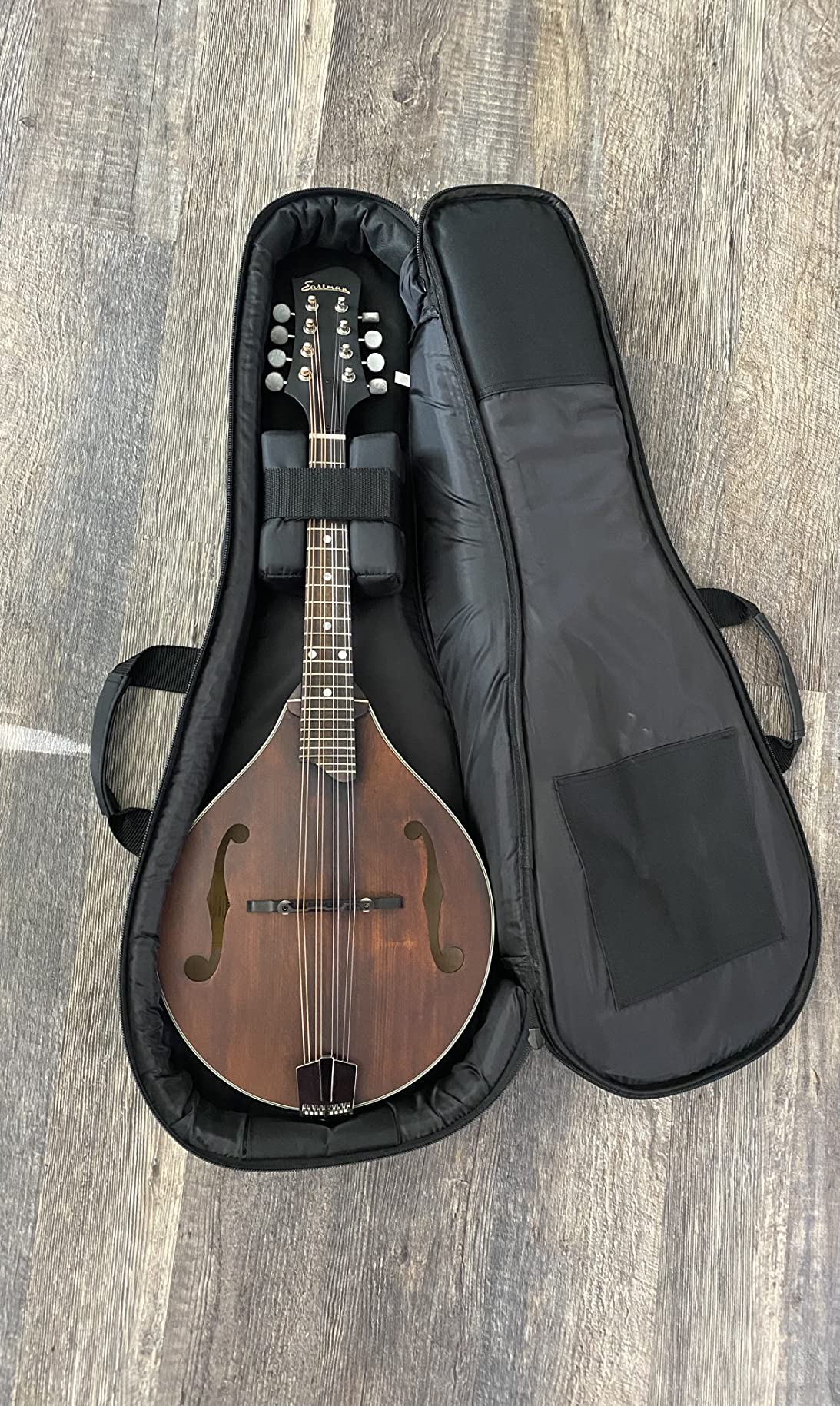
The action arrived perfect on the unit I tested. No buzzing, no fighting the strings, just comfortable playing right out of the case. Multiple reviewers confirmed this experience, noting that the MD305 arrived ready to play. This is a significant advantage over mandolins that need $75 to $100 of setup work before they are playable.
The main complaints are minor. Tuners can be stiff and may need oiling. The tailpiece finish may lose its shine over time. Some players noted that the sound quality on the highest frets is not as strong as on the lower positions. These are small issues that do not detract from the overall excellence of this instrument.
Is the Eastman MD305 Worth the Higher Price?
If you are serious about mandolin and plan to play for years, the MD305 is absolutely worth it. The all-solid-wood construction, hand-carved top, radiused fingerboard, excellent intonation, and gig bag inclusion make it a complete package. It is an instrument you can grow into rather than out of.
For casual players or those just testing the waters, the higher price may not be justified. The Loar LM-310F-BRB or Kentucky KM-150 offer similar all-solid-wood construction at lower prices, though without some of the MD305’s refinements like the radiused fingerboard and perfect factory setup.
What Music Styles Suit the MD305 Best?
The Eastman MD305 is versatile enough for bluegrass, folk, Celtic, old-time, and classical music. The F-holes and maple body give it the punch needed for bluegrass rhythm, while the warm spruce top produces the mellow tones that Celtic and folk players love. The excellent intonation makes it suitable for classical pieces that require precise pitch accuracy. If you play multiple genres, the MD305 adapts to all of them gracefully.
Mandolin Buying Guide: How to Choose the Best Mandolin in 2026?
Choosing the right mandolin comes down to understanding body styles, tonewoods, construction methods, and your own playing goals. This buying guide breaks down everything you need to know to make a confident purchase.
A-Style vs F-Style Mandolins: Which Should You Choose?
A-style and F-style are the two most common mandolin body shapes, and the choice between them is one of the first decisions every mandolin buyer faces.
A-style mandolins have a simple, teardrop-shaped body. They are typically more affordable because they are easier to build. The tone is often described as sweeter and more mellow, making A-style mandolins popular for folk, Celtic, classical, and old-time music. Examples from our list include the Ibanez M510E, Kentucky KM-150, and Eastman MD305.
F-style mandolins feature ornate scrolls and points on the body, along with f-shaped sound holes. They produce a punchier, louder tone with a more pronounced chop — the percussive sound bluegrass players use for rhythm. F-style mandolins are the standard for bluegrass music. They cost more due to the additional carving required. Examples include the Vangoa F-Style, Ibanez M522S, and The Loar LM-310F-BRB.
The key question is: what music do you want to play? If bluegrass is your primary interest, an F-style mandolin is the traditional choice. For folk, Celtic, or general-purpose playing, an A-style gives you excellent tone at a lower price.
Tonewoods: What They Are and Why They Matter
Tonewoods are the woods used to build the mandolin’s sound-producing parts. Different woods produce different tonal characteristics, and understanding the basics helps you choose the right sound.
Spruce is the most common top wood. It provides brightness, clarity, and excellent projection. German spruce (used in the Kentucky KM-150) offers a balanced response with good dynamic range. Sitka spruce is punchy and loud. Adirondack spruce, found on premium instruments, offers the most headroom and volume.
Maple is the standard wood for back and sides on F-style and many A-style mandolins. It adds brightness, punch, and projection. Flamed and figured maple are visually striking varieties that also sound excellent. Alpine maple (used in the Kentucky KM-150) is a European variety known for its resonance.
Mahogany produces a warmer, woodier tone than maple. It is sometimes used for back and sides on folk-oriented mandolins. The Ibanez M510E uses mahogany for its back and sides.
Ebony and rosewood are common fretboard materials. Ebony is dense, smooth, and premium. Rosewood is warm and traditional. Purpleheart (used by Ibanez) is a modern alternative that performs similarly to ebony. Walnut (used by Fender on the PM-180E) offers a balanced feel.
Solid Wood vs Laminate Construction
This is one of the most important decisions when buying a mandolin, and it directly affects tone quality and price.
Solid wood means the top, back, and sides are made from single pieces of wood (or bookmatched pairs). Solid wood resonates freely, producing rich overtones, good projection, and a tone that improves with age. All-solid-wood mandolins like the Kentucky KM-150 and Eastman MD305 represent the best tone you can get without spending thousands.
Laminate (also called plywood) uses multiple thin layers of wood glued together. Laminate is more stable, less affected by humidity, and significantly cheaper. However, it produces a flatter, less complex tone. Budget mandolins under $300 typically use laminate construction. The Ibanez M510E and Fender PM-180E use laminate bodies with solid or laminate tops.
Solid top with laminate back and sides is a middle-ground approach. This gives you some of the tonal benefits of a solid top while keeping costs down with laminate back and sides. The Vangoa F-Style uses a solid spruce top with laminate body, offering a good balance of tone and affordability.
Community consensus from r/mandolin and MandolinCafe is clear: save up for all-solid-wood construction if you can. A well-setup $400 solid-wood mandolin sounds noticeably better than a $300 laminate mandolin and will retain its value better over time.
Mandolin Price Tiers: How Much Should You Spend?
Understanding price tiers helps you set realistic expectations and budget appropriately.
Under $250 (Budget): Expect laminate construction, basic hardware, and the need for professional setup. Good for absolute beginners testing their interest. The Ibanez M510E at $229.99 is our top pick in this tier.
$250 to $400 (Entry-level solid top): You start seeing solid spruce tops, better hardware, and improved tone. Setup is still likely needed. The Vangoa F-Style ($332) and The Loar LM-310F-BRB ($389) shine in this range.
$400 to $700 (Intermediate all-solid-wood): This is where serious tone begins. All-solid-wood construction, hand-carved tops, and quality hardware become available. The Kentucky KM-150 ($595) is a standout in this tier.
$700 to $1,500 (Advanced): Premium tonewoods, excellent craftsmanship, and professional-level setup. The Eastman MD305 ($729) represents the entry point of this tier.
$1,500 and up (Professional): Hand-built instruments from master luthiers. Brands like Collings, Northfield, Weber, and Gibson occupy this space. These are instruments for serious professionals and dedicated enthusiasts.
The Setup Factor: Why It Matters More Than Brand
The single most common advice from the mandolin community is this: a good setup matters more than the brand name. A properly set up $200 mandolin will play and sound better than a poorly set up $500 mandolin.
A professional mandolin setup typically costs $50 to $100 and includes adjusting the action (string height), filing the nut, setting the bridge position for correct intonation, checking the truss rod, and leveling frets if needed. This transforms how an instrument plays and sounds.
Almost every mandolin under $700 benefits from a professional setup. Even the well-regarded Eastman MD305, which ships with good action, can be improved with a fine-tuning setup. If you are buying your first mandolin, budget an extra $75 for setup work — it is the best money you will spend on the instrument.
Mandolin Tuning and Strings Basics
The standard mandolin tuning is G-D-A-E, the same as a violin. The eight strings are arranged in four courses (pairs), with each pair tuned to the same note. This doubled-string arrangement gives the mandolin its characteristic full, shimmering sound.
String changes are recommended every 2 to 3 months with regular playing. Phosphor bronze strings are the most popular choice for their warm, balanced tone. Brands like D’Addario, Martin, and GHS are community favorites. The Loar ships with D’Addario strings, and the Fender PM-180E comes with phosphor bronze strings in .011-.040 gauges.
Mandolin Brands to Avoid
Based on community feedback from r/mandolin, MandolinCafe, and MandoHangout, here are some general guidelines. Avoid ultra-cheap no-name mandolins sold on marketplaces for under $100. These are almost universally poorly made, with bad intonation, cheap tuners, and soft frets that wear quickly. They create a frustrating experience that drives many beginners away from the instrument entirely.
Be cautious with vintage mandolins from brands like Kay, Harmony, and Regal unless you know what you are looking at. Some vintage models are excellent, but many have structural issues, warped necks, or non-standard dimensions that make them difficult to play and service.
Stick with established brands that have community backing: Ibanez, Kentucky, Eastman, The Loar, Fender, and Epiphone for budget-to-intermediate mandolins. For higher-end instruments, Collings, Northfield, Weber, Gibson, and Flatiron have strong reputations.
Frequently Asked Questions About Mandolins
What is the best beginner mandolin to buy?
The best beginner mandolin depends on your budget. Under $250, the Ibanez M510E offers great value with a built-in pickup. For around $330, the Vangoa F-Style provides a solid spruce top and starter kit. If you can stretch to $390, The Loar LM-310F-BRB offers a hand-carved solid spruce top that delivers a tone upgrade you will not outgrow quickly.
Which is better, an A-style or F-style mandolin?
F-style mandolins are preferred by bluegrass players for their louder, punchier tone with the distinctive bluegrass chop. A-style mandolins have a milder, more versatile tone suited for folk, Celtic, and classical music, and they are typically more affordable. Beginners should choose based on their preferred music style rather than appearance alone.
What mandolin does Ricky Skaggs play?
Ricky Skaggs is known for playing Gibson F-style mandolins, particularly vintage F-5 models. Like many bluegrass professionals, he favors F-style Gibson mandolins for their punchy, cutting tone that stands out in a bluegrass ensemble. His main instrument is a 1945 Gibson F-7 that was converted to F-5 specifications.
How much does a good mandolin cost?
A good beginner mandolin costs $200 to $400. Solid-wood intermediate mandolins run $400 to $750. Professional-grade instruments start around $1,500 and go up from there. Budget an additional $50 to $100 for a professional setup, which dramatically improves playability on any mandolin.
Is a mandolin hard to learn if I already play guitar?
If you play guitar, learning mandolin is very accessible. The fretboard skills transfer directly, and the mandolin’s smaller scale makes fingering easier. The main challenge is learning the new tuning (G-D-A-E instead of E-A-D-G-B-E) and adapting to the doubled strings. Most guitar players can play basic mandolin songs within a few weeks.
Conclusion: Choosing the Best Mandolin for You
Finding the best mandolin comes down to matching the instrument to your playing style, budget, and goals. For most players, The Loar LM-310F-BRB Honey Creek hits the sweet spot with its hand-carved solid spruce top, Grover tuners, and tone that rivals instruments costing twice as much. It is our Editor’s Choice for good reason.
If budget is your primary concern, the Ibanez M510E delivers excellent amplified tone for under $230. For players who want all-solid-wood construction without breaking the bank, the Kentucky KM-150 offers German spruce and Alpine maple that produce authentic bluegrass tone. And for those ready to invest in a premium instrument, the Eastman MD305 provides flawless intonation, a radiused fingerboard, and a tone that will reward you for years.
Remember that no matter which mandolin you choose, budget for a professional setup. That $50 to $100 investment transforms a decent mandolin into a great one. The best mandolins in 2026 are the ones that are properly set up and match the music you want to play. Pick the one that fits your style, get it set up right, and start making music.