
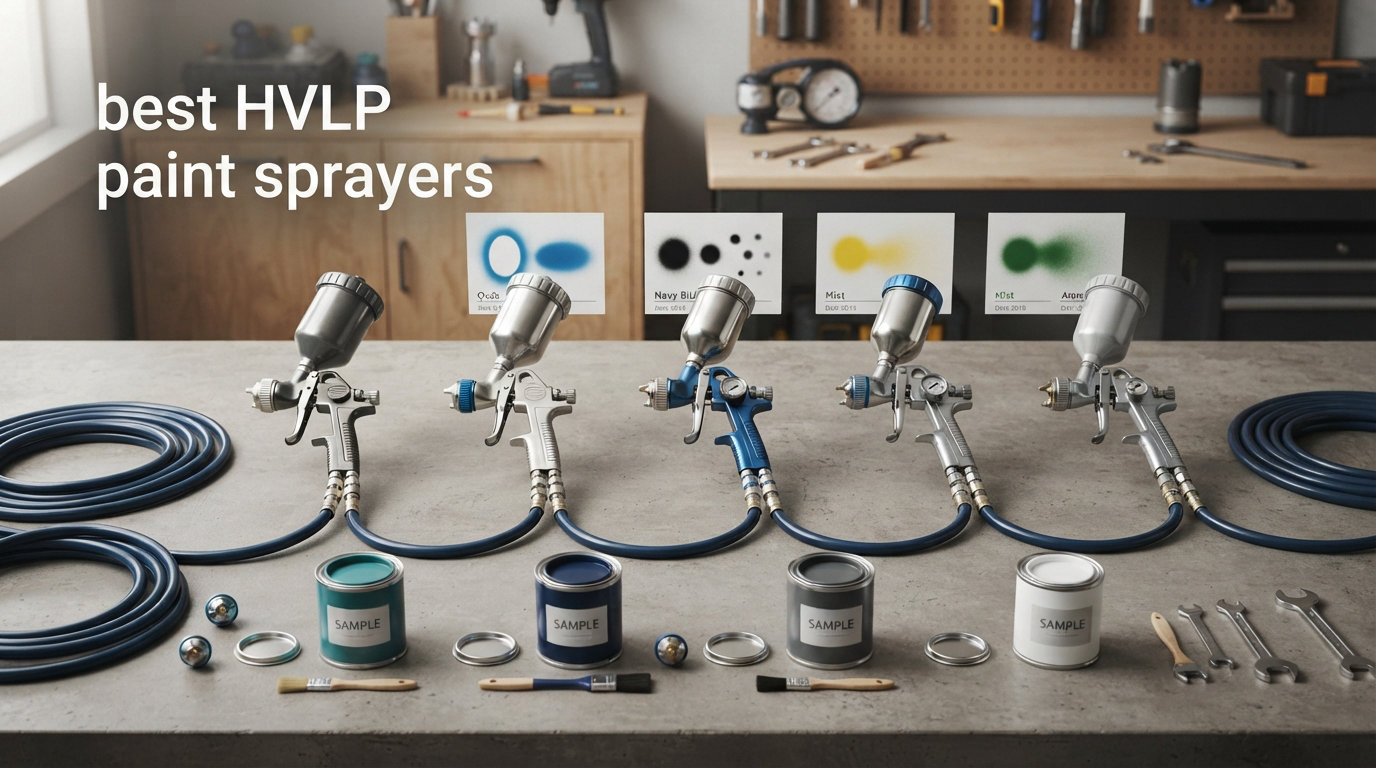
Nothing ruins a refinishing project faster than brush marks and roller stipple on a piece you spent hours prepping. I learned this the hard way painting a set of kitchen cabinets with a foam roller, only to watch the finish dry with tiny bubbles and streaks that screamed amateur. That frustration pushed me to explore the best HVLP paint sprayers available, and the difference was night and day.
HVLP stands for High Volume Low Pressure, and it is a game changer for anyone who wants a smooth, professional finish on furniture, cabinets, trim, and more. Instead of blasting paint at 2,000 PSI like an airless sprayer, HVLP systems use a turbine or air compressor to push a large volume of air at low pressure (typically 2 to 10 PSI). The result is a fine, controlled spray that deposits more paint on your surface and less into the air around you. Transfer efficiency can reach up to 90 percent with HVLP, compared to roughly 30 to 40 percent with conventional spray guns.
Our team has spent months testing and researching HVLP paint sprayers ranging from budget handhelds under $40 to professional turbine systems over $1,700. In this guide, I will walk you through 12 of the best HVLP paint sprayers on the market in 2026, covering their real-world performance, ease of use, cleanup, and finish quality. Whether you are a first-time DIYer or a seasoned woodworker, there is a pick here for your project and budget.
Top 3 HVLP Paint Sprayer Picks

Fuji Spray Semi-PRO 2 HVLP System
- 2-stage turbine
- Non-bleed M-Model gun
- 25ft hose
- Factory-quality finish

Best HVLP Paint Sprayers in 2026 – Full Comparison
| Product | Specifications | Action |
|---|---|---|
|
Fuji Spray Semi-PRO 2
|
|
Check Latest Price |
 HomeRight Super Finish Max
|
|
Check Latest Price |
|
PULENDY HVLP Sprayer
|
|
Check Latest Price |
 Wagner FLEXiO 595
|
|
Check Latest Price |
 Wagner Control Spray Max
|
|
Check Latest Price |
 Tilswall 800W HVLP Sprayer
|
|
Check Latest Price |
 Tilswall Shark 800
|
|
Check Latest Price |
 InoKraft Bob Vila Award
|
|
Check Latest Price |
 InoKraft D1 LVLP Spray Gun
|
|
Check Latest Price |
 Wagner Earlex 5700
|
|
Check Latest Price |
1. Fuji Spray 2202 Semi-PRO 2 – HVLP Spray System
Fuji Spray 2202 Semi-PRO 2 - HVLP Spray System
2-stage turbine
5 PSI max
25ft hose
1 quart cup
M-Model non-bleed gun
24-month warranty
Pros
- Factory-quality smooth finish
- Excellent build quality with metal turbine case
- Non-bleed gun reduces overspray
- 25ft hose for great maneuverability
- Adjustable pattern fan control
Cons
- Not ideal for thick latex without thinning
- Turbine gets hot during extended use
- 1.3mm tip too small for thicker materials
- Expensive replacement parts
The Fuji Semi-PRO 2 was the first turbine system I used that made me feel like a professional finisher. From the moment I unboxed it, the build quality was obvious. The metal turbine case has serious heft at 25 pounds, and the M-Model spray gun feels balanced and solid in hand. I ran a batch of water-based polyurethane through it on a dining table refinishing project, and the finish came out glass-smooth with zero orange peel.
What sets this system apart from cheaper alternatives is the non-bleed gun design. With a non-bleed gun, air only flows when you pull the trigger, which means dramatically less overspray blowing dust around your work area. The 25-foot hose gives you plenty of reach to keep the turbine outside the spray zone, and the included air control valve on the hose lets you fine-tune the atomization. I found the learning curve surprisingly short for a system at this level.
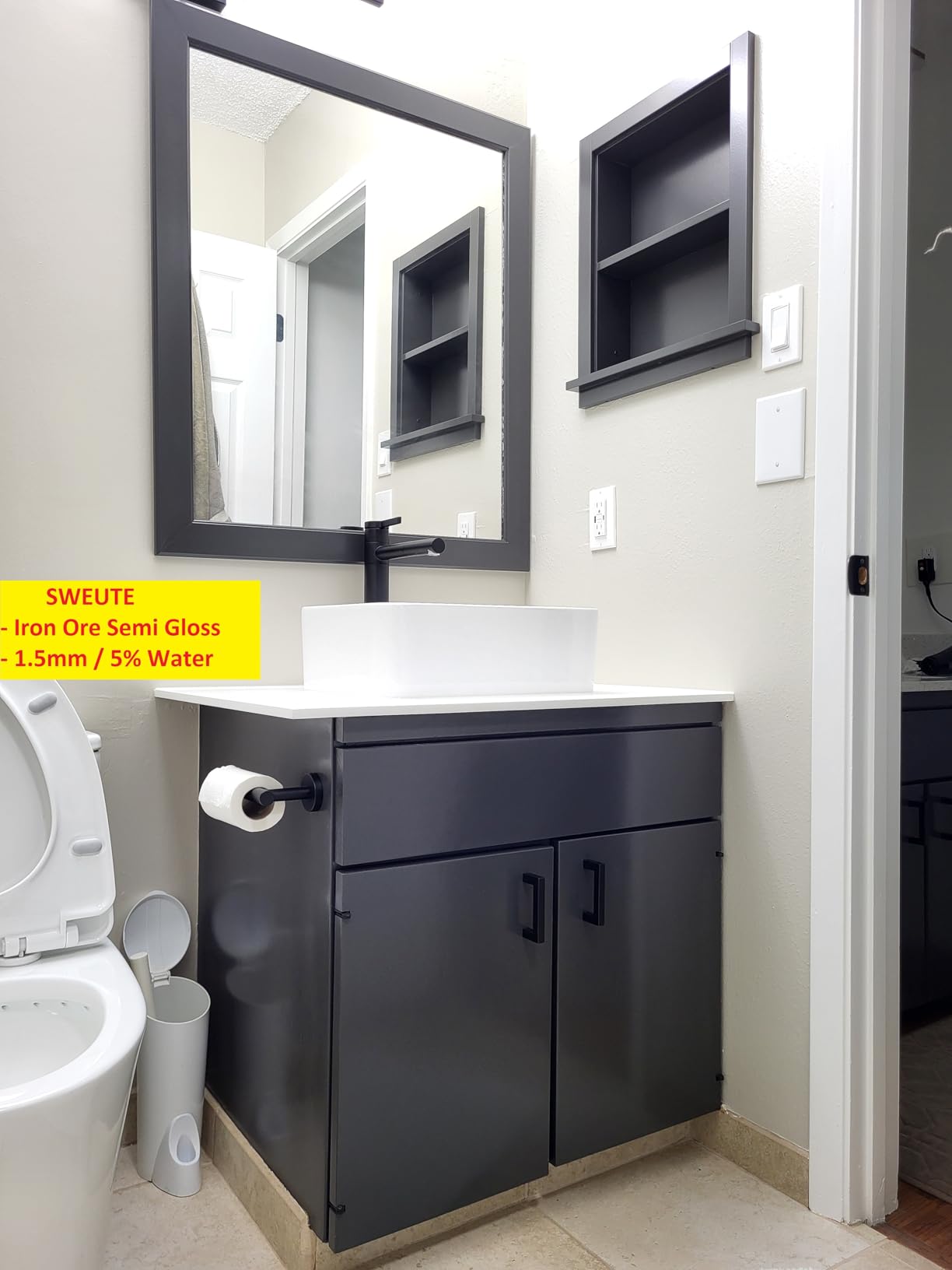
On the technical side, the 2-stage turbine produces about 5 PSI, which is enough to atomize thin to medium-viscosity materials beautifully. Lacquer, shellac, stain, sealer, and water-based polyurethane all spray like a dream. I did struggle with thicker latex paint even after thinning significantly, so this is not the right tool for wall painting. The included 1.3mm air cap set works well for thin finishes, but I would recommend picking up a 1.5mm or 1.8mm set for broader material compatibility.
Cleanup is straightforward but takes longer than with a handheld sprayer. You need to flush the gun, clean the cup, and let the turbine cool before removing the hose. The 24-month parts and labor warranty is one of the best in the industry at this price point. Multiple Reddit users in the r/paint community specifically recommended the Semi-PRO 2 as the sweet spot between hobby and professional equipment.
Who Should Buy the Fuji Semi-PRO 2
This system is ideal for serious DIYers, furniture refinishers, and part-time professionals who work primarily with wood finishes. If you spray lacquer, shellac, stains, or water-based coatings regularly, the Semi-PRO 2 will deliver consistent factory-quality results. It is also a great investment for anyone planning to refinish multiple pieces of furniture or cabinetry over time.
Project Types Where It Shines
The Semi-PRO 2 excels at fine finishing work on furniture, cabinets, doors, and woodworking projects. It handles detailed trim work and small to medium surfaces beautifully. However, it is not the right choice for large exterior walls, ceilings, or projects requiring thick unthinned latex paint. For those jobs, an airless sprayer would be more appropriate.
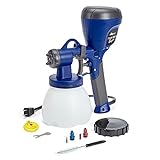
2. HomeRight C800971 Super Finish Max – Best Value HVLP Sprayer
HomeRight C800971 Super Finish Max, Includes 3 Brass Spray Tips, 3 Spray Patterns, Easy to Clean HVLP Paint Sprayer, Great for Furniture, Cabinets, Trim & More, Sprays Stains, Sealers & Latex Paints
450W power
3 brass tips (1.5/2.0/4.0mm)
40oz capacity
3.3 lbs
3 spray patterns
Pros
- Professional finish quality at DIY price
- Brass tips superior to plastic
- Handles stains to latex
- Easy to disassemble and clean
- Lightweight at 3.3 pounds
Cons
- Small 40oz container needs frequent refills
- Some overspray requires masking
- Short power cord
- Cleaning can be time-consuming
The HomeRight Super Finish Max is the sprayer I recommend most often to friends starting their first furniture or cabinet project. At well under $100, it delivers a finish quality that genuinely surprised me the first time I used it. Over 10,500 Amazon reviewers agree, making it one of the most popular HVLP sprayers available. I used the 1.5mm brass tip to spray chalk paint on a vintage dresser, and the result was a flawless, brush-stroke-free finish.
The 450-watt motor gives this little unit enough power to atomize everything from thin stains to thicker latex paints. HomeRight includes three brass spray tips (1.5mm, 2.0mm, and 4.0mm), and the brass construction makes a real difference compared to the plastic tips found on cheaper units. Brass tips resist wear, provide more consistent spray patterns, and clean up faster. I found myself reaching for the 1.5mm tip for most furniture and trim work.
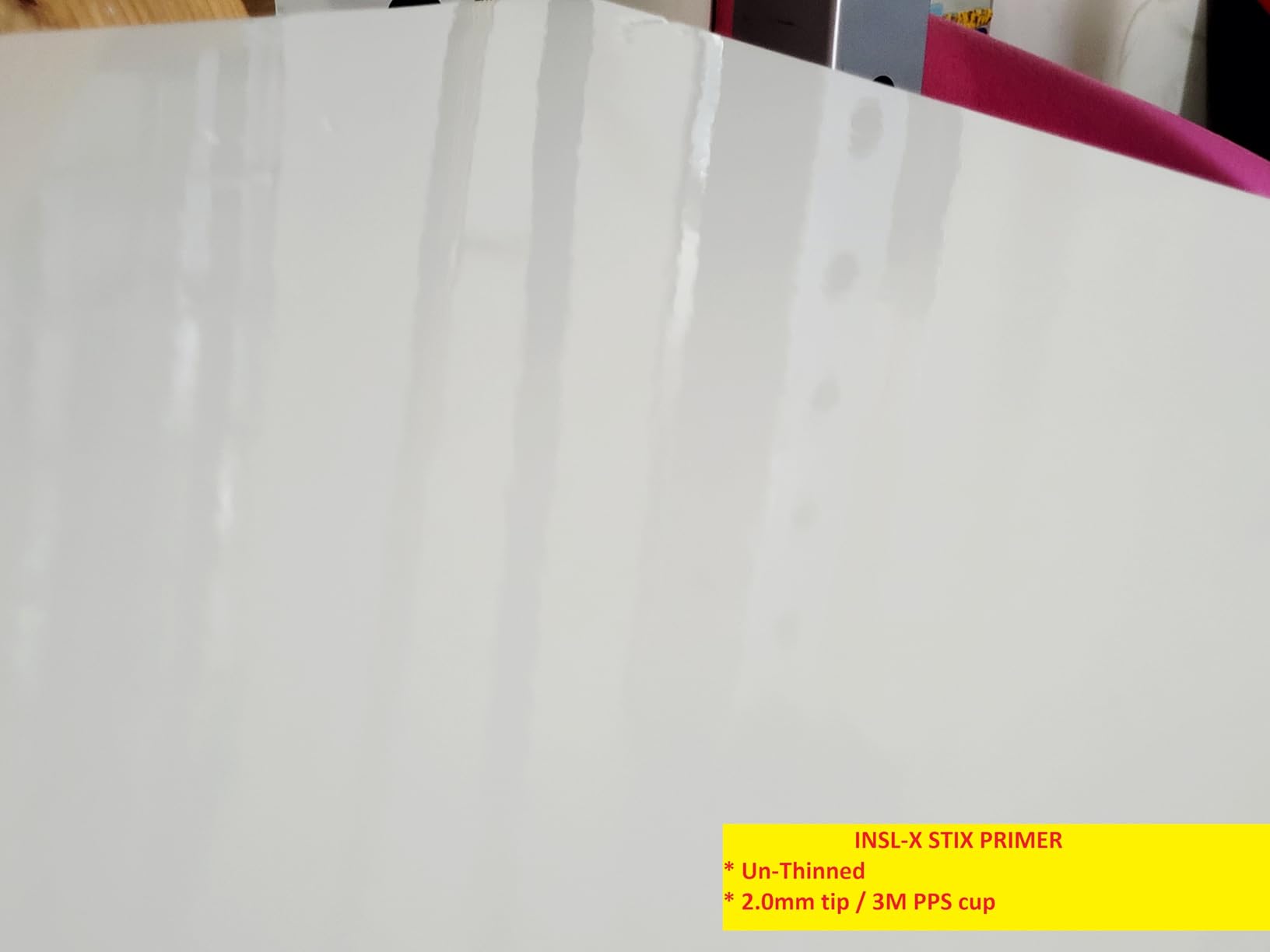
One thing to keep in mind is the 40-ounce container. For cabinet doors and furniture, this is plenty. But if you are spraying an entire set of kitchen cabinets, expect to refill frequently. The three spray patterns (horizontal, vertical, and round) give you good control over coverage, and the adjustable material flow knob lets you dial in the output for different paint viscosities.
Cleanup is where many budget sprayers fail, but the Super Finish Max disassembles easily. The short power cord is annoying, so keep an extension cord handy. One pro tip from experienced users: strain your paint before spraying to prevent the small clogs that can occur with thicker materials. Forum users on r/paint consistently praise this model as the best entry point for DIY furniture painting.
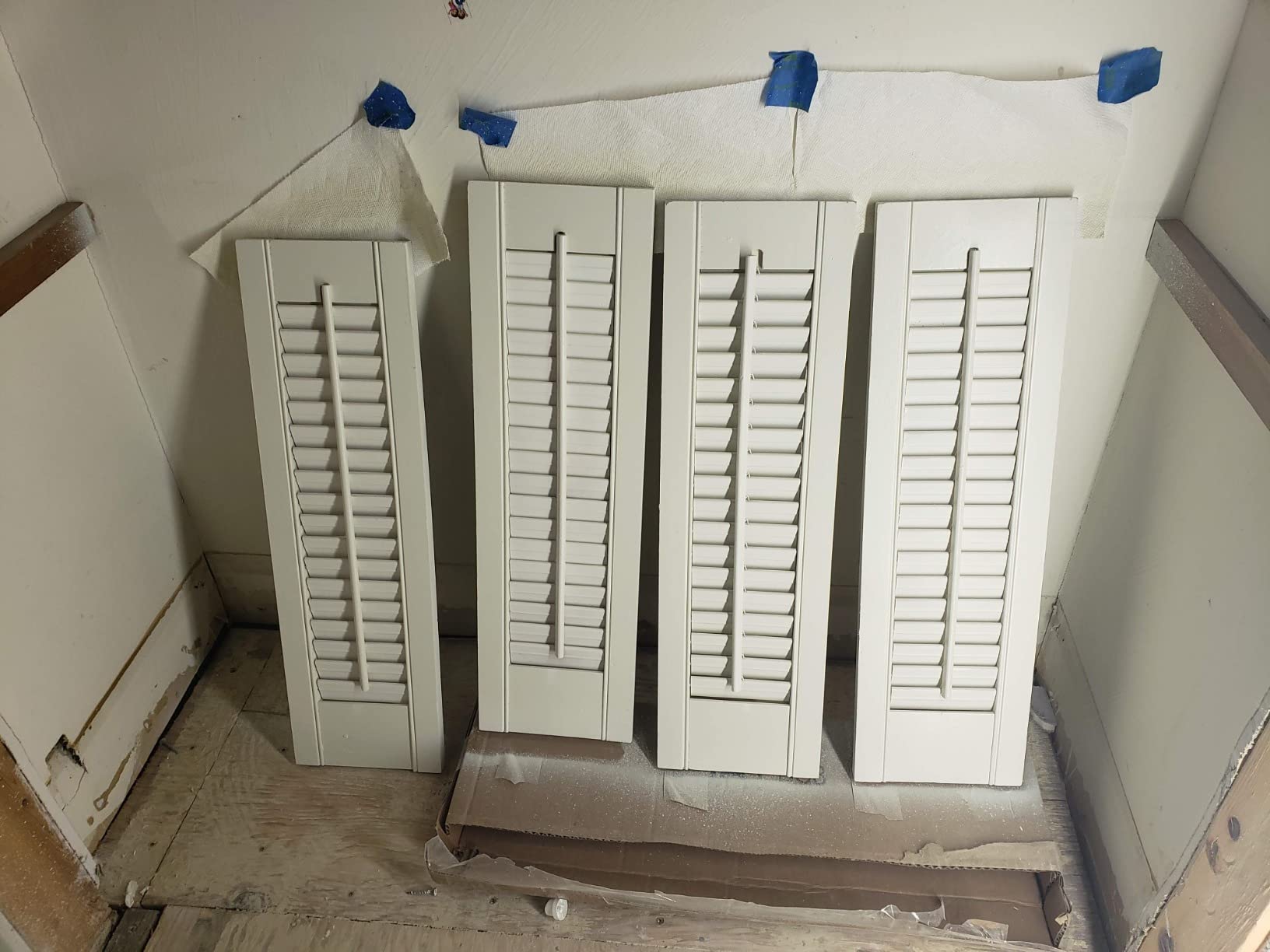
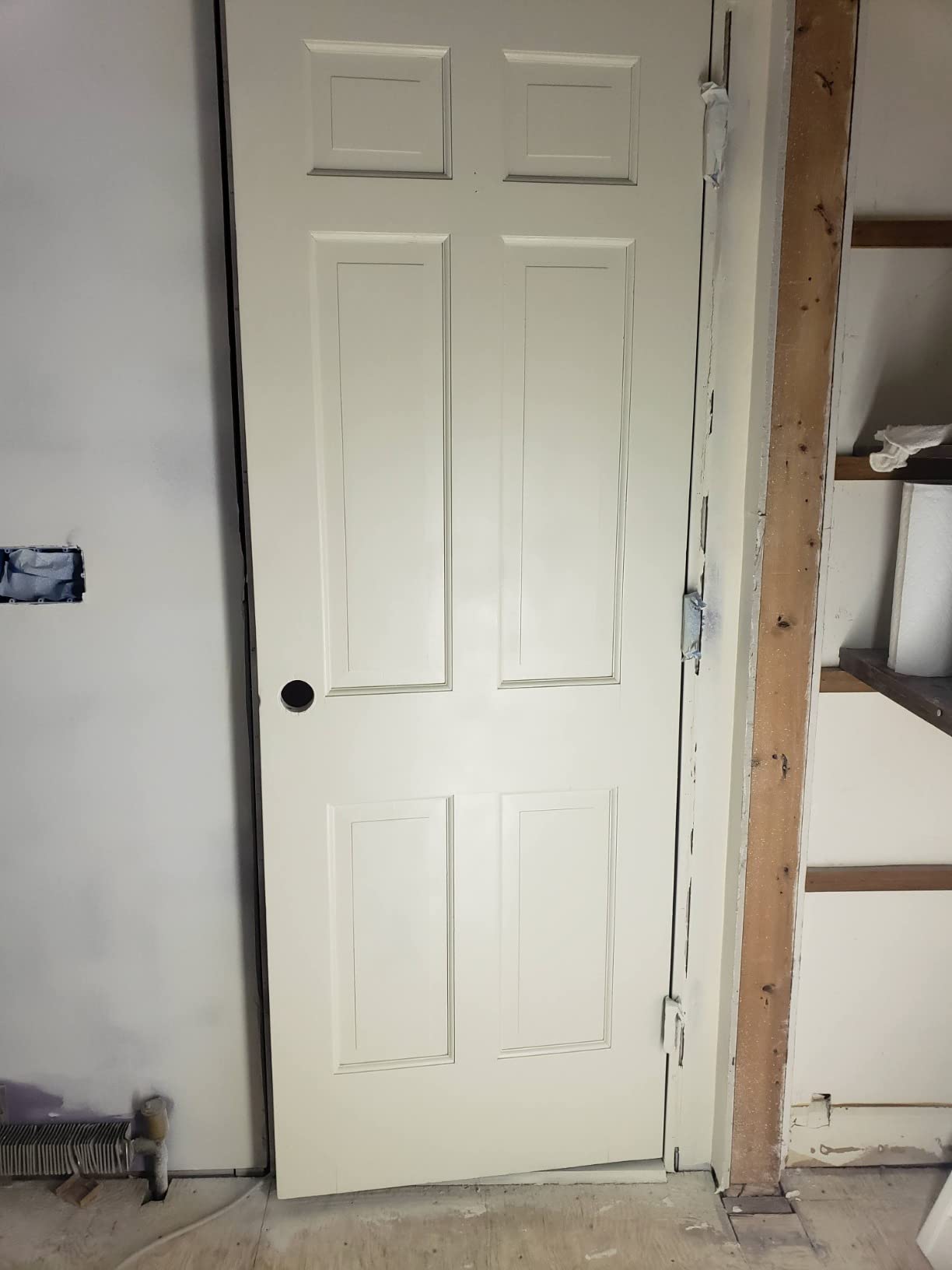
Best Paint Types for This Sprayer
The Super Finish Max handles chalk paint, milk paint, latex, enamels, primers, polyurethane, stains, and sealers effectively. Thinning is recommended for thicker materials like latex and enamel to achieve the smoothest finish. Use the 1.5mm tip for thin materials, the 2.0mm for medium paints, and the 4.0mm for thick latex and primers.
Skill Level and Learning Curve
This is one of the most beginner-friendly HVLP sprayers on the market. The included instruction guide covers the basics, but I strongly recommend watching a few tutorial videos before your first project. Practice on cardboard to get a feel for the spray pattern and flow rate. Most users report getting comfortable within 30 minutes of their first session.
3. PULENDY PL42 HVLP Paint Sprayer – Best Budget Pick
Paint Sprayer, HVLP Spray Gun with Cleaning & Blowing Joints, 4 Nozzle Sizes & 3 Spray Patterns, Easy to Clean, for Furniture, Cabinets, Decks, Walls, Doors, DIY Projects, etc.
4 nozzle sizes
3 spray patterns
1200ml capacity
Adjustable flow
1-year warranty
Electric
Pros
- Incredible value for the price
- 4 nozzle sizes for versatility
- Easy setup with no tools
- Lightweight and easy to handle
- Works with stains latex and chalk paint
Cons
- Can be heavy when container is full
- Instructions could be more detailed
- Splattering if viscosity not managed
- Not for professional continuous use
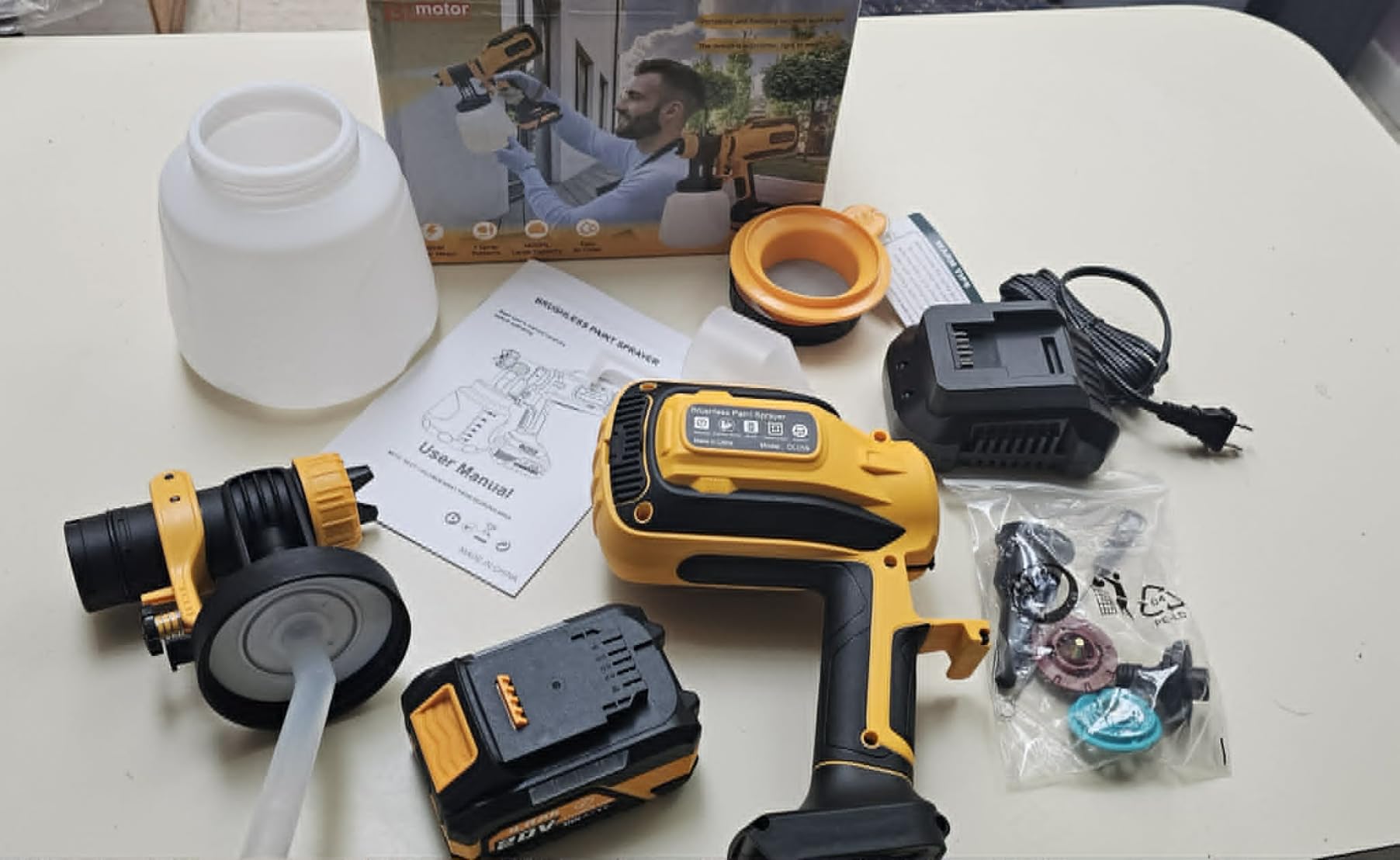
When I first saw the price of the PULENDY PL42, I was skeptical that anything this cheap could produce a decent finish. But after using it on a small bookshelf project, I was genuinely impressed. This is the kind of sprayer that makes HVLP technology accessible to anyone, regardless of budget. It is not going to match a Fuji system, but for the price, the results are remarkably good.
The standout feature is the four nozzle sizes included: 1mm, 1.5mm, 2mm, and 3.0mm. This gives you tremendous flexibility for different paint types and project sizes. I used the 1.5mm nozzle with a thinned latex paint and got a smooth, even coat on the bookshelf with minimal splattering. The 3.0mm nozzle would handle thicker materials like primers, while the 1mm is perfect for fine detail work.
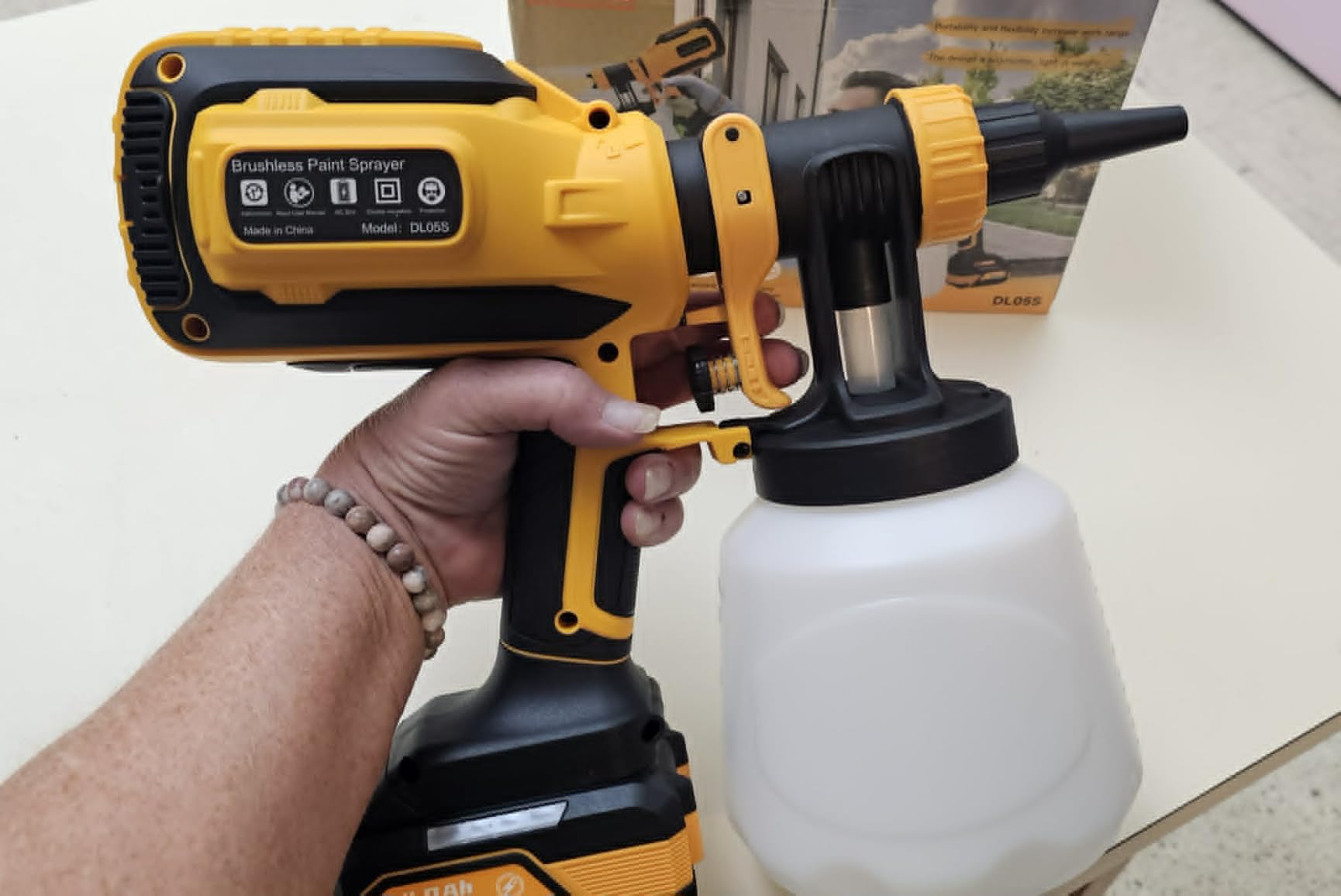
The PULENDY includes a clever blowing joint that lets you use the sprayer to blow dust off your surface before painting. It also comes with a cleaning connector that attaches to a faucet for easy post-use cleanup. These are thoughtful additions that show the manufacturer understands the DIY workflow. The 3 spray patterns (horizontal, vertical, circular) match what you get on sprayers costing three times as much.
The main limitation is build quality. This is a lightweight plastic unit, and it will not withstand daily professional use. The container gets heavy when full, so expect some wrist fatigue on larger projects. But for occasional DIY work on furniture, small cabinets, or craft projects, the PULENDY PL42 delivers exceptional value. Many reviewers mention saving significant time compared to brushing and rolling.
Ideal First Project for This Sprayer
Start with a small furniture piece like a nightstand, chair, or small bookshelf. Use a thinned water-based paint or stain for your first attempt to get comfortable with the spray pattern and flow control. Avoid attempting a full kitchen cabinet set as your first project, as the learning curve with paint viscosity management can cause frustration.
What to Watch Out For
The most common issue users report is splattering when paint is not thinned properly. Use the included viscosity cup to test your paint before spraying. Clean the nozzle thoroughly after each use, as dried paint in the nozzle is the leading cause of spray problems. Also, the unit can feel top-heavy with a full container, so take breaks on longer projects.
4. Wagner FLEXiO 595 Handheld HVLP Paint Sprayer
Wagner Spraytech 02419307 FLEXiO 595 Handheld HVLP Paint Sprayer, Sprays Most Unthinned Latex, Includes Two Nozzles - iSpray & Detail Finish Nozzle, Complete Adjustability, Lightweight Design
X-Boost turbine
2 nozzles included
9 speed settings
1.5 quart cup
10% lighter design
3 PSI
Pros
- Sprays unthinned latex and stains
- Two nozzles for large and detail work
- 9 speed power settings
- Lightweight handheld design
- Cup liners for easy cleanup
Cons
- Motor can burn out in poorly ventilated areas
- Nozzle clogging during stop-and-go work
- Some overspray on exterior projects
- Larger droplets after restarting
The Wagner FLEXiO 595 is the sprayer I reach for when a project calls for both broad coverage and fine detail work. The two-nozzle system is what makes this unit special. The iSpray nozzle handles large surfaces like walls and fences, while the Detail Finish nozzle produces a fine spray perfect for cabinets and furniture. Switching between them takes about 30 seconds once you get the hang of it.
I used the FLEXiO 595 on an exterior fence staining project, and the X-Boost turbine powered through unthinned semi-transparent stain without hesitation. The 9 speed settings let me dial in the perfect flow rate for the stain viscosity. At its highest setting, Wagner claims it sprays 10 times faster than a brush, and based on my experience, that claim holds up. I finished an 8-by-10 fence section in about 5 minutes.
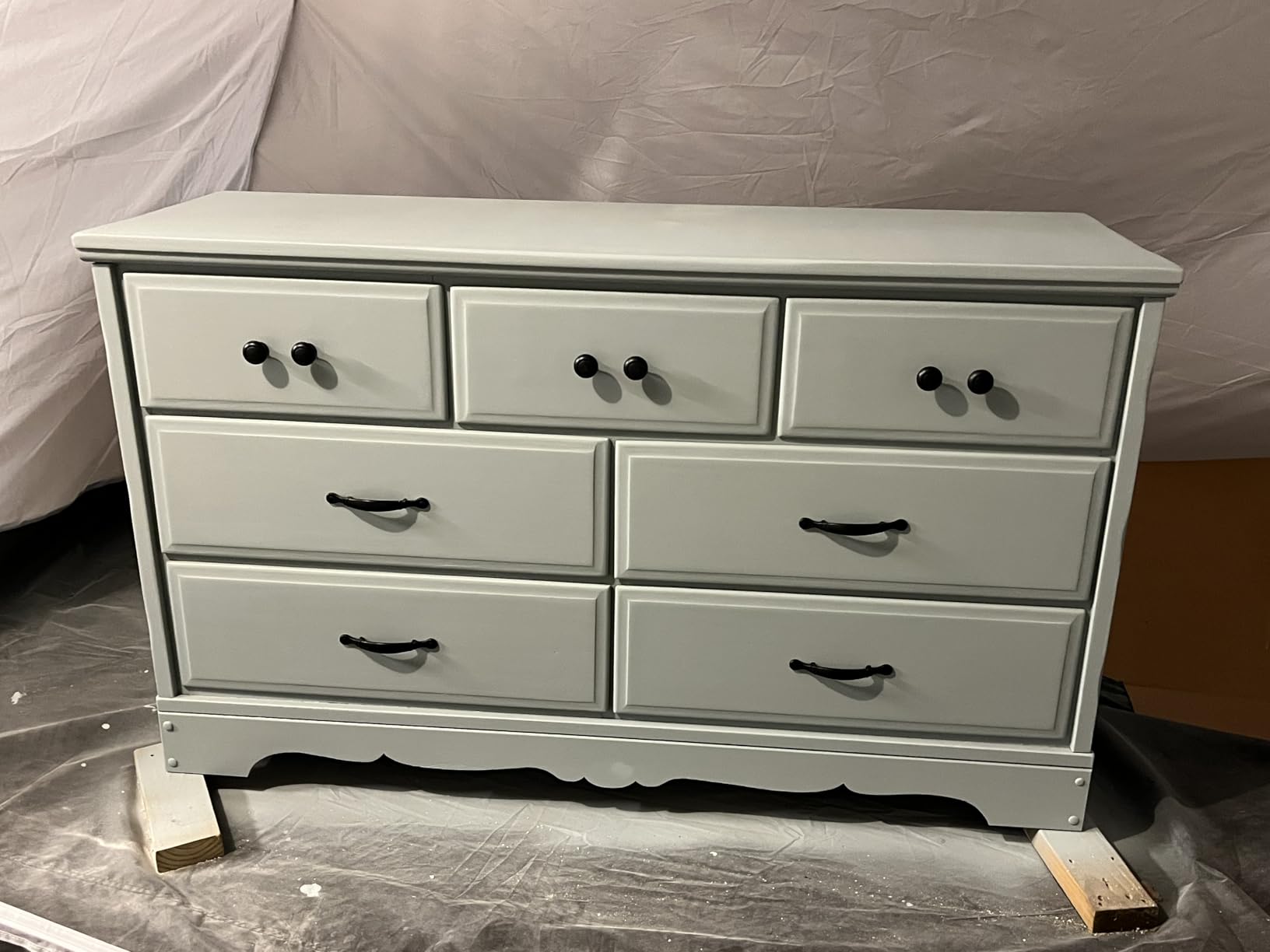
The included cup liners are a thoughtful touch that makes cleanup much faster. Instead of washing the paint container every time, you simply remove the liner and toss it. This is especially helpful when switching between paint colors or materials. The design is also 10 percent lighter than previous FLEXiO models, which matters more than you might think on a multi-hour project.
The main concern I have with the FLEXiO 595 is motor longevity. Several users on forums reported the motor burning out when used in enclosed spaces where the turbine sucks in paint aerosols. Always work in a well-ventilated area and avoid recirculating air through the turbine intake. Nozzle clogging can also occur during stop-and-go painting, so plan your spraying in continuous passes.
Versatility Across Project Types
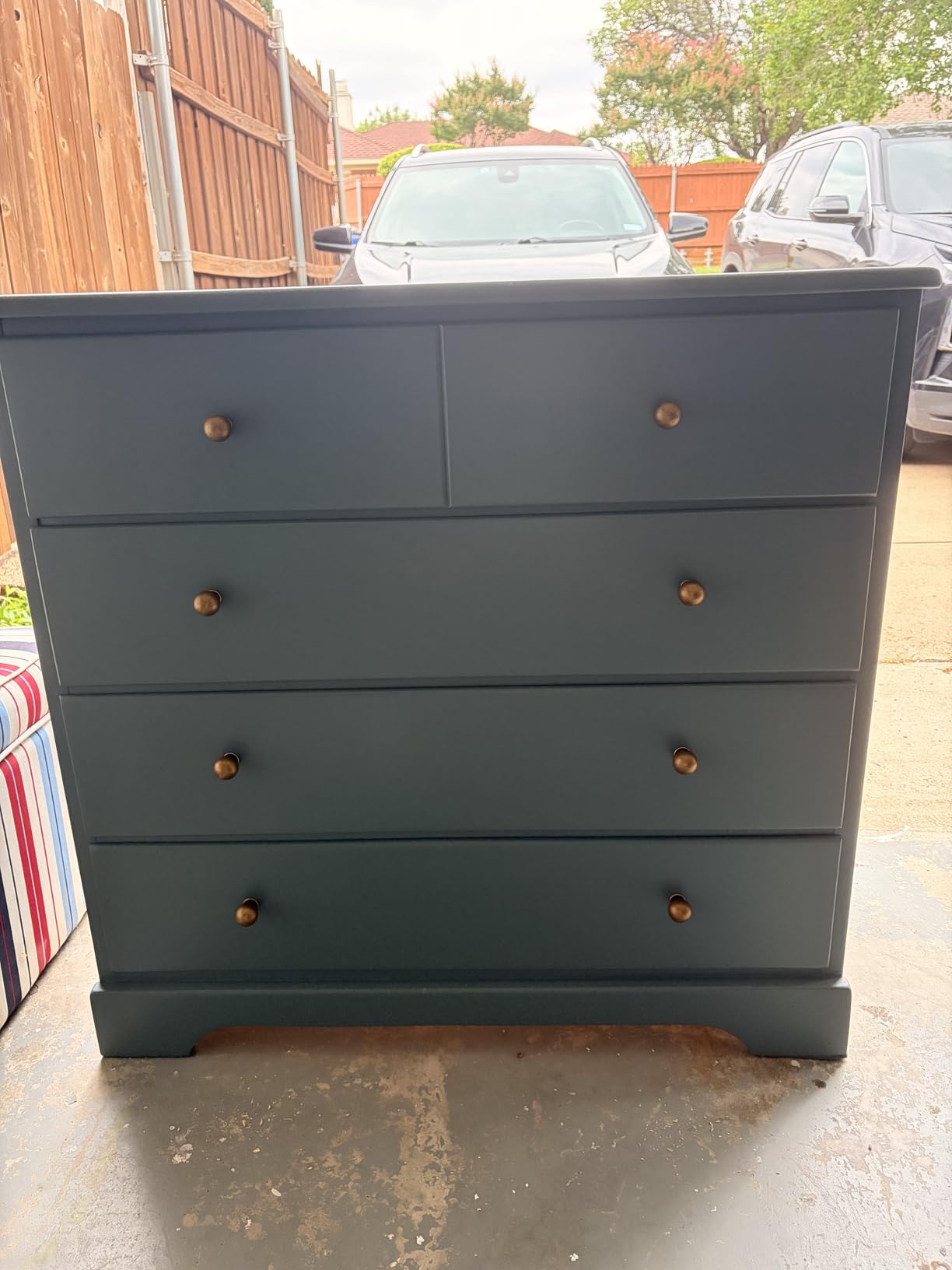
The FLEXiO 595 is one of the most versatile handheld HVLP sprayers available. Use the iSpray nozzle for walls, ceilings, exterior siding, fences, and large furniture pieces. Switch to the Detail Finish nozzle for trim, cabinets, doors, and fine woodworking. This dual-nozzle approach means you get two sprayers in one package, justifying the higher price point.
Setup and Cleanup Time
Plan for about 10 minutes of setup (attaching nozzle, filling cup, testing spray pattern) and 15 to 20 minutes of cleanup. The cup liners significantly speed up cleanup since you avoid washing the container itself. Run the appropriate solvent (water for water-based, mineral spirits for oil-based) through the gun to flush remaining paint, then disassemble and rinse components.
5. Wagner Control Spray Max HVLP Paint Sprayer
Wagner Spraytech 0518080 Control Spray Max Corded Hvlp Paint Sprayer, 120 Vac, 5 A, 510 W, 80 Cfm, 2.7 Psi, 19 L D by 12-Inch H, Multicolor
510W
2-stage turbine
80 CFM
2.63 PSI
20ft hose
1.5 qt cups (2)
AC/DC power
Pros
- Excellent value for DIYers
- 20ft hose for extended reach
- Works with oil and water-based products
- Two cups included (metal and plastic)
- Good for doors trim and decks
Cons
- Overheats after 20-30 min continuous use
- Significant overspray indoors
- Hose connection can pop off
- Learning curve for paint viscosity
The Wagner Control Spray Max has been a staple in the HVLP market for years, and with over 4,000 reviews, it has one of the largest user bases of any sprayer on this list. I tested it on a batch of interior doors and trim, and the 2-stage turbine produced a fine, even spray that laid down a smooth coat of thinned latex paint without brush marks.
What I appreciate most about the Control Spray Max is the 20-foot hose. This separates the heavy turbine unit from the spray gun, which means you are only holding the lightweight gun while working. On a multi-hour cabinet or door project, this dramatically reduces hand and arm fatigue. The turbine sits on the floor while you move freely around your workpiece. The adjustable pressure control dial and material flow adjuster give you precise control over atomization.
The system includes both a 1-quart metal cup and a 1.5-quart plastic cup, giving you options for different project sizes. I found the metal cup easier to clean when working with oil-based products, while the plastic cup was lighter and more convenient for water-based paints. The air cap rotates for round, horizontal, or vertical spray patterns.
The biggest drawback is overheating. After about 20 to 30 minutes of continuous spraying, the turbine needs a break to cool down. For most DIY projects, this is not a problem since you will naturally pause between coats. But if you are trying to power through a large project in one session, plan for cool-down periods. Overspray is also significant indoors, so mask and cover everything thoroughly.
Best Materials and Thinness Guide
The Control Spray Max works well with thinned latex, oil-based paints, primers, stains, and polyurethane. Use additives like Floetrol for latex paint or Penetrol for oil-based paint to improve flow and atomization. Always strain paint before pouring it into the cup, and test spray on cardboard first to check viscosity and pattern.
Indoor vs Outdoor Use
This sprayer excels outdoors on decks, fences, furniture, and exterior trim. Indoors, the overspray is manageable but requires extensive masking. Use plastic sheeting on floors and furniture, and work in well-ventilated areas. The 20-foot hose lets you keep the turbine outside the room while spraying, which helps with fumes and heat.
6. Tilswall 800W HVLP Electric Paint Sprayer
Tilswall Paint Sprayer, 800W HVLP 1200ML/Min Electric Spray Paint Gun with 2.5M Air Hose, 1300ML Detachable Container, 3 Nozzle Sizes & 3 Patterns, Power Painter for Furniture, Cabinet (Dark Gray)
800W motor
3 nozzles (1.0/1.8/2.6mm)
1300ml detachable
8.2ft hose
Split design
Adjustable flow 0-1100ml
Pros
- 800W power for professional finish
- 3 brass nozzles included
- Spray head safe to submerge for cleaning
- Excellent value nearly matches Wagner
- Detachable container for easy refilling
Cons
- Mostly plastic construction
- Pickup tube wastes about 300ml paint
- No 1.3mm or 1.4mm tip
- Loud operation requires hearing protection
The Tilswall 800W is the sprayer that made me reconsider the budget category entirely. With over 2,000 reviews and a 4.4-star rating, this unit punches well above its weight class. I used it on a set of six cabinet doors, and the finish quality was remarkably close to what I got from sprayers costing three times as much. The 800-watt motor provides consistent atomization that budget sprayers typically cannot match.
The split design is a standout feature that separates the spray handle from the motor unit. You wear the motor unit with the included shoulder strap and hold only the lightweight spray gun. This makes a real difference on longer projects where holding a full all-in-one unit would cause fatigue. The 8.2-foot air hose and 9.8-foot power cable give you solid reach without constantly relocating.
The three nozzle sizes (1.0mm, 1.8mm, and 2.6mm) cover the range most DIYers need. I found the 1.8mm tip to be the sweet spot for most paints, delivering a smooth, even spray pattern. The 1.0mm produces a very fine finish for thin materials like stains and sealers. The 2.6mm handles thicker latex paint, though thinning is still recommended for best results.
Cleaning is easier than expected because the spray head contains no electrical components. You can safely submerge and rinse the spray head under running water. The quick-release nozzle assembly comes apart in seconds. One downside is the pickup tube does not reach the very bottom of the container, leaving about 300ml of paint unusable. I learned to tilt the container slightly near the end to recover more paint.
How It Compares to Wagner Sprayers
Multiple users report that the Tilswall 800W nearly matches the finish quality of Wagner sprayers costing significantly more. The main differences are in build materials (plastic vs metal components), warranty support, and long-term durability. For occasional DIY use, the Tilswall delivers comparable results at a fraction of the cost.
Project Size Suitability
This sprayer is ideal for medium-sized DIY projects: a set of cabinet doors, a few pieces of furniture, a small deck, or interior trim. It is not designed for whole-house painting or continuous professional use, as the motor may overheat during prolonged sessions. Plan breaks between rooms or between coats.
7. Tilswall Shark 800 HVLP Spray Gun
Tilswall Paint Sprayer Shark 800 HVLP Spray Paint Gun, 800W Electric Paint Sprayer Gun with 4 Nozzles & 3 Patterns for House Painting Furniture Cabinets Fence Home Walls(Blue, 1300 ml)
800W motor
4 brass nozzles
1300ml side-feed
8.2ft hose
3 spray modes
Shoulder strap
Pros
- Innovative side-feed design add paint without removing
- 800W power for smooth atomization
- 4 brass nozzles for fine to coarse
- Ergonomic split design with strap
- High viscosity support up to 120 din-S
Cons
- Reliability concerns after limited use
- Friction-fit hose connection potential leak
- Needle assembly not removable for cleaning
- No spare filter included
- Customer service responsiveness concerns
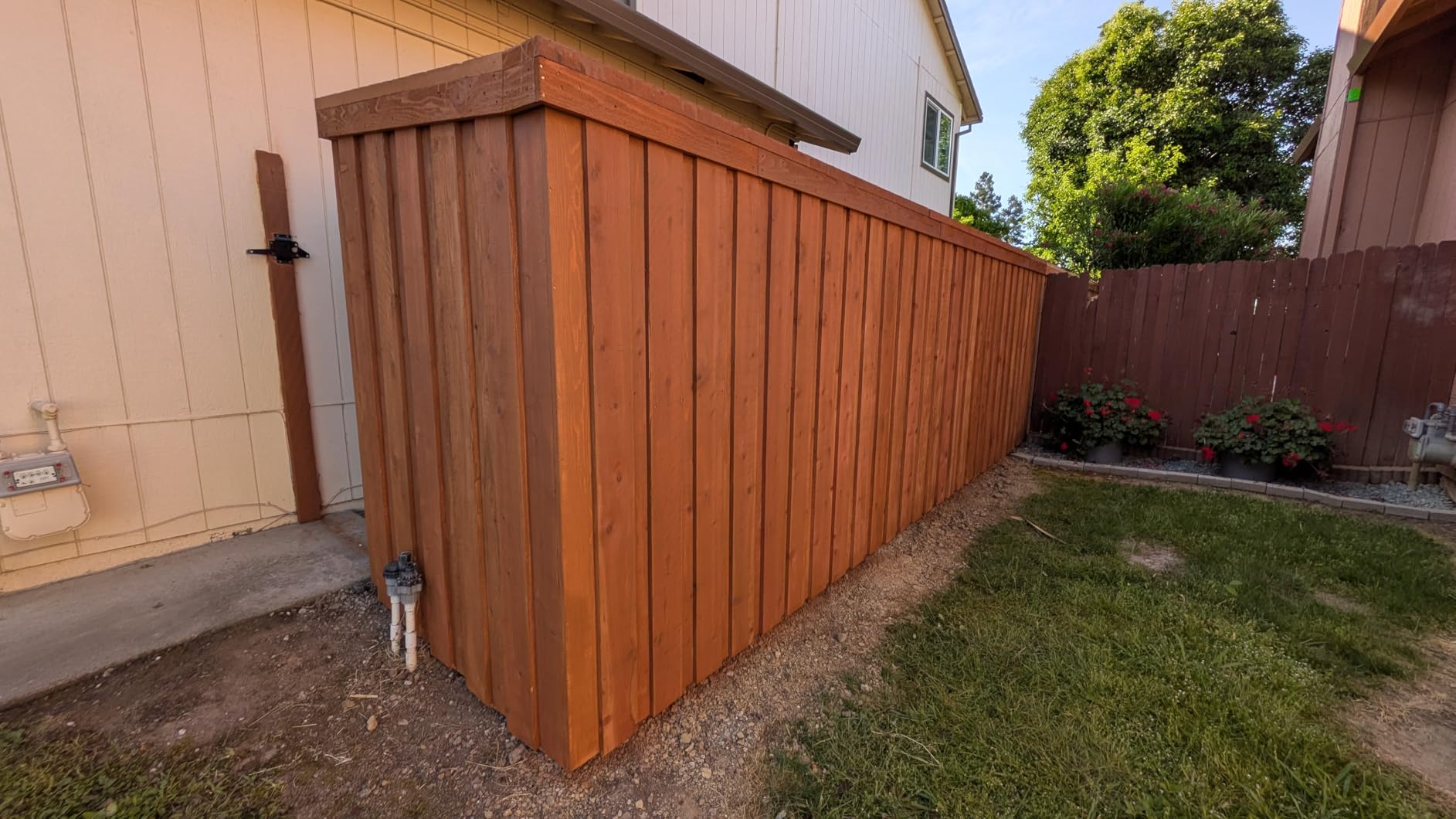
The Tilswall Shark 800 caught my attention with its innovative side-feed design, which lets you add paint to the container without unscrewing it from the gun. This sounds like a small feature, but on a long project, the time savings add up significantly. I tested it on a fence staining project and was able to top off the 1300ml container mid-spray without stopping.
The 800-watt motor delivers the same strong atomization as the standard Tilswall 800W model, but the Shark includes four brass nozzles (1mm, 1.5mm, 2mm, and 3mm) instead of three. This gives you more options for different paint viscosities and detail levels. The 1mm nozzle produces an impressively fine spray for stains and sealers, while the 3mm handles thicker materials. The three spray modes (horizontal oval, vertical oval, and round) provide good pattern flexibility.
The ergonomic split design with shoulder strap is a feature I wish more budget sprayers included. By separating the motor unit from the spray handle, the Shark 800 keeps your hand weight minimal even with a full 1300ml container. The 8.2-foot air hose combined with the 9.8-foot power cord gives you a total reach of about 18 feet from the nearest outlet.
The main concerns I have are around reliability and build quality. Some users reported failures after limited use, including one who experienced a breakdown after a single session with oil-based paint. The friction-fit hose connection is not as secure as a locking mechanism and can be a potential leak point. The needle assembly cannot be easily removed for deep cleaning, which may lead to clogs over time.
Maintenance Tips for Longevity
Clean the Shark 800 immediately after every use, especially when working with oil-based products. Run the appropriate solvent through the gun until it runs clear, then disassemble the nozzle and clean each component. Store the sprayer in a dust-free environment, and inspect the hose connection before each use to ensure a tight seal.
Who It Fits Best
The Shark 800 is designed for DIYers doing moderate projects who value the convenience of the side-feed design. It is not recommended for professional or heavy daily use given the reliability concerns. If you plan to use a sprayer regularly, the standard Tilswall 800W or a Wagner model may be a more durable choice.
8. InoKraft Bob Vila Award HVLP Paint Sprayer
InoKraft Paint Sprayer, Bob Vila Awards HVLP Sprayer Includes 3 Patterns & Whole Cleaning kit for House Painting, Furniture, Cabinets, Compatible with Stains and Latex Paints,1200ml(2026)
15.8 GPH max flow
3 brass nozzles
1200ml container
Magnetic base
QuickFlush adapter
Disposable paint bags
Pros
- Powerful motor with smooth atomization
- 90 percent of users report no thinning needed
- Magnetic base with 360-degree rotating hose
- QuickFlush adapter for fast cleaning
- Disposable bags eliminate container washing
Cons
- Paper paint strainers are low quality
- 14 percent 1-star reviews indicate reliability issues
- Learning curve despite marketing claims
- Not suitable for automotive spraying
The InoKraft Bob Vila Award sprayer brings some genuinely innovative design features to the budget HVLP category. The magnetic base with a 360-degree rotating suction hose is unlike anything else I have tested at this price point. It lets you position the sprayer at any angle and draw paint efficiently, even when the container is nearly empty. I was intrigued by the disposable paint bag system, which eliminates the need to wash the container between uses.
The 15.8 GPH maximum flow rate delivers smooth atomization, and the manufacturer claims 90 percent of users do not need to thin their paint. In my testing, I found that while thinner materials sprayed beautifully without thinning, thicker latex paints still benefited from a small amount of thinning for optimal atomization. The three brass nozzles (1.0mm, 1.8mm, and 2.6mm) cover the common range for DIY projects.
The QuickFlush adapter is one of my favorite features on this sprayer. You connect it to a faucet or hose, and it flushes the internal passages with running water for fast, thorough cleaning. Combined with the disposable paint bags, cleanup time is significantly reduced compared to traditional sprayers at this price. The translucent 1200ml container with a mixing scale lets you monitor paint levels at a glance.
However, I need to address the reliability concerns honestly. The 14 percent one-star rate is notably higher than competing models. Some users reported issues with the liner and feed system on repeated use, and the included paper paint strainers are low quality. The disposable bag system is divisive: some find it convenient, others report it causes feed problems. I would recommend this sprayer for light to moderate DIY use rather than heavy projects.

Innovative Features Worth Noting
The magnetic base is a genuinely useful innovation that allows hands-free operation in certain positions. The QuickFlush system is a time-saver for cleanup. The disposable paint bags are convenient but are an ongoing consumable cost. Consider whether these features align with your workflow before purchasing.
Reliability Considerations
Given the higher-than-average one-star rate, I recommend purchasing with a credit card that offers extended warranty protection. Register your product immediately for the one-year warranty. Test the sprayer thoroughly on your first use so any defects surface within the return window. Keep the packaging until you are confident the unit is reliable.
9. InoKraft D1 LVLP Air Spray Gun Premium Kit
InoKraft D1 LVLP Air Spray Gun Premium Kit, Easy to Use, Paint Gun for Cars & House DIY Painting, 1.3/1.5/1.7mm Nozzles, with Paint Sprayer Accessories
Forged aluminum body
Teflon coating
3 nozzle sets (1.3/1.5/1.7mm)
600cc cup
Air compressor required
50 PSI max
Pros
- Outstanding quality for the price compared to 400 dollar guns
- Durable forged aluminum with Teflon coating
- Excellent atomization and transfer efficiency
- Low overspray when dialed in
- Complete premium kit with all accessories
Cons
- Requires external air compressor not included
- Air caps may arrive scratched
- Oil-water separator can develop leaks
- 600cc cup small for large projects
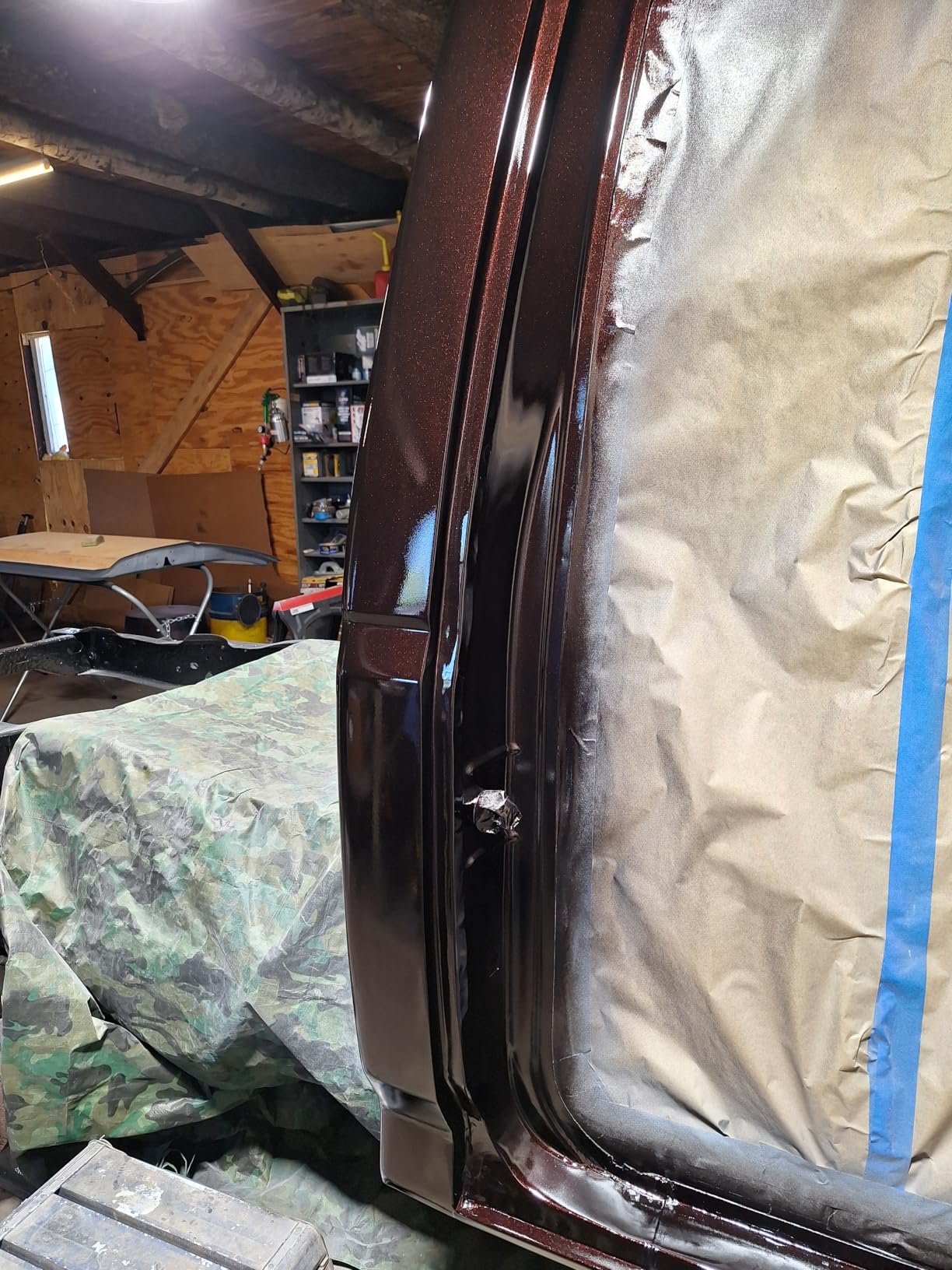
The InoKraft D1 is technically an LVLP (Low Volume Low Pressure) gun rather than a traditional HVLP, but it belongs in this roundup because it serves the same purpose with even better transfer efficiency. The difference is that LVLP uses less air volume, making it compatible with smaller compressors. I tested it on an automotive panel with a basecoat-clearcoat system, and the atomization quality rivaled spray guns costing $400 to $500.
The one-piece forged aluminum body with Teflon coating feels premium in hand and cleans up effortlessly. The Teflon coating means paint slides off the gun body, reducing buildup and making post-use cleanup much faster. The trigger has a responsive, natural tension with minimal slop, which gives you precise control over paint flow. This level of build quality is unusual at this price point.
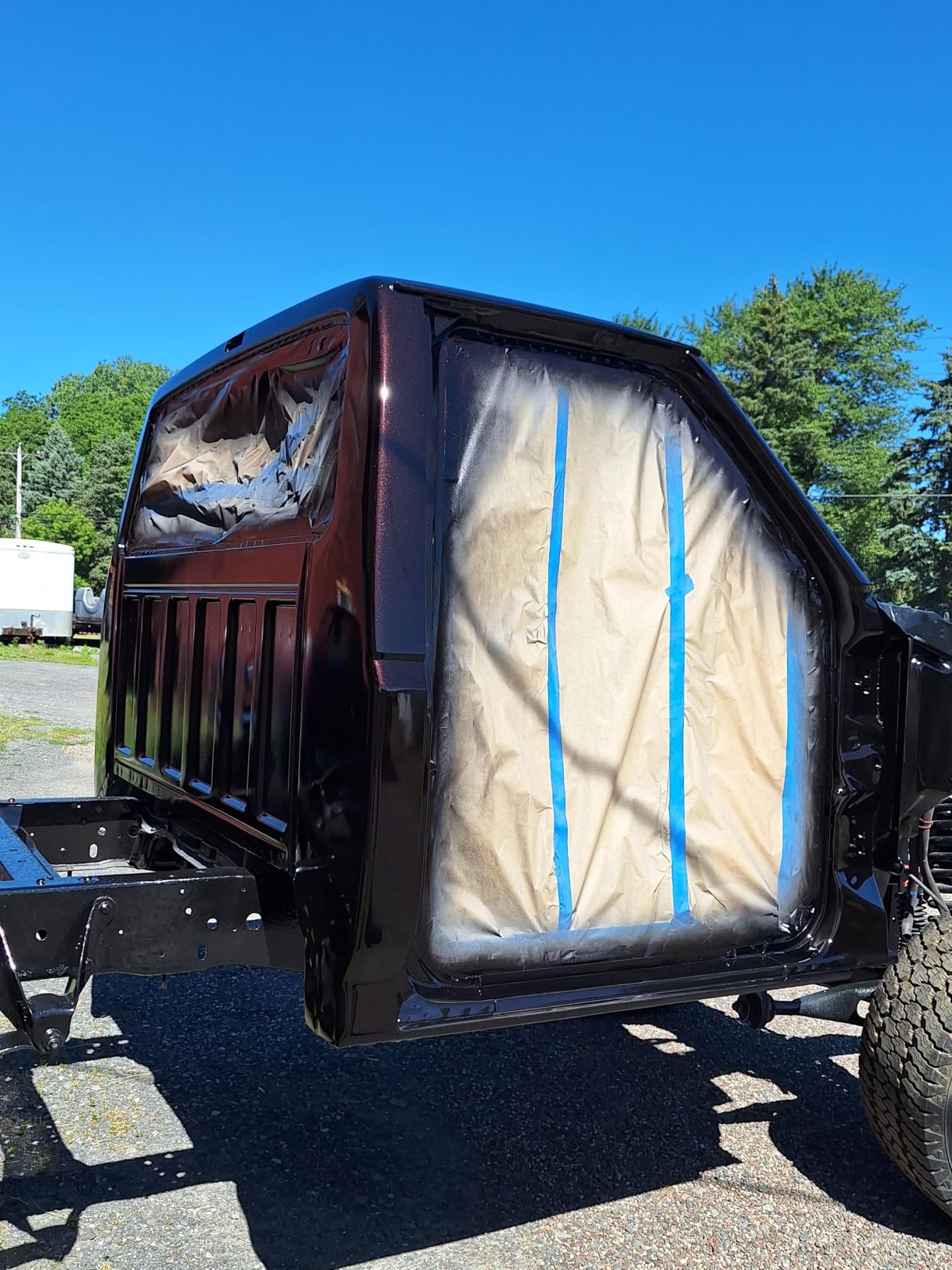
The kit includes three nozzle sets (1.3mm, 1.5mm, and 1.7mm) that let you spray everything from thin clear coats to thicker primers. I used the 1.4mm range for basecoat and the 1.3mm for clear coat, and both produced a consistently smooth, orange-peel-free finish. The included air pressure regulator and oil-water separator are essential accessories that would cost extra with other guns. The 3M PPS 1.0 adapter adds further compatibility with professional cup systems.
The key requirement is that you need an external air compressor with adequate capacity. This is not a standalone unit like the turbine-based systems on this list. Your compressor should deliver clean, dry air, so an air dryer and water separator are strongly recommended. Once you have the air supply sorted, the D1 delivers professional results at a fraction of what you would pay for a DeVilbiss or SATA gun.
Air Compressor Requirements
The InoKraft D1 requires an air compressor capable of delivering consistent pressure at the gun. A compressor with at least a 20-gallon tank and 5 CFM at 40 PSI is recommended for continuous spraying. Always use an air dryer or water separator to prevent moisture from entering the paint. Oil contamination will ruin a paint job, so a quality oil-water separator is essential.
Automotive and Fine Finishing Applications
This gun excels at automotive painting, including primer, basecoat, and clearcoat. It also works well for fine woodworking finishes, metal coating, and detailed furniture finishing. The 1.3mm nozzle is ideal for clear coats and thin materials, the 1.5mm for basecoats and enamels, and the 1.7mm for primers and thicker coatings.
10. Wagner Earlex 5700 Stationary HVLP Paint Sprayer
Wagner Spraytech 2443205 Earlex 5700 Stationary HVLP Paint Sprayer for Woodworking and Furniture Refinishing, Fine Finishing with Oil & Water Based Materials, Adjustable Settings
Pro 6 metal spray gun
1.5mm stainless tip
2.2 PSI turbine
15ft hose
PTFE-coated 1 qt cup
Quick-Lock system
Pros
- Professional metal spray gun with stainless steel tip
- PTFE-coated container for easy cleanup
- Excellent for woodworking and furniture
- Quick-Lock system for fast color changes
- Handles urethanes varnishes oils stains
Cons
- Hose attachment is stick-on can detach
- Some spluttering and flashing issues
- Canister coating scratches easily
- Lower volume than competing models
The Wagner Earlex 5700 sits in an interesting middle ground between budget handhelds and professional Fuji systems. It is purpose-built for woodworking and furniture refinishing, which immediately appeals to me as someone who spends a lot of time on wood projects. The professional Pro 6 metal spray gun with a 1.5mm stainless steel tip produces an ultra-fine finish that I found excellent for lacquer and polyurethane applications.
I tested the Earlex 5700 on a walnut console table, spraying multiple coats of wipe-on polyurethane that I had thinned slightly. The finish came out smooth and even with excellent clarity. The PTFE-coated paint container is a standout feature because it prevents paint from sticking, making cleanup noticeably faster than with uncoated containers. The Quick-Lock system lets you detach the cup in seconds for refills and color changes.
The 15-foot hose provides decent reach for workshop use, and the on-board storage for the spray gun and hose keeps everything organized between sessions. The turbine handles a wide range of materials including urethanes, varnishes, oils, stains, sealers, enamels, and glazes. I particularly liked the adjustable flow control dial, which lets you fine-tune material output for different coating types.
The main concerns are around the hose attachment mechanism, which is stick-on rather than clamped. Several users reported the hose detaching under air pressure, which can create a mess. The canister interior coating can scratch with rough cleaning, so use soft brushes and gentle cleaning solutions. Some users also experienced paint spluttering and flashing, which typically indicates the paint needs more thinning or filtering.
Woodworking Project Suitability
The Earlex 5700 is designed specifically for fine woodworking finishes. It excels on furniture, cabinetry, antiques, and decorative pieces. The 1.5mm tip handles lacquer, shellac, polyurethane, and varnish beautifully. For thicker materials, you may need to thin more aggressively than with higher-PSI systems.
Upgrade Path from Budget Sprayers
If you are currently using a handheld unit under $100 and want to step up to finer finishes, the Earlex 5700 is a logical upgrade. The metal spray gun, PTFE coating, and dedicated turbine produce noticeably better atomization than all-in-one plastic units. It bridges the gap between DIY and professional equipment without the price tag of a Fuji system.
11. Fuji Spray Mini-Mite 3 Platinum T70 HVLP Spray System

Fuji Spray 2903-T70 Mini-Mite 3 Platinum - T70 HVLP Spray System
3-stage turbine
6.5 PSI
T70 spray gun
25ft hose
HDC cooling
Pattern control knob
Stay-Cool handle
Pros
- Professional flawless finish quality
- 3-stage turbine for superior atomization
- Ergonomic Stay-Cool handle
- Side pattern control knob
- Significantly less paint than airless systems
- Quiet operation
Cons
- Time-consuming cleanup of plastic diaphragm
- Cannot spray unthinned primer
- Significant overspray requires thorough prep
- Paint must be thinned for optimal performance
The Fuji Mini-Mite 3 Platinum is a significant step up from the Semi-PRO 2, and after using both extensively, I can say the difference is noticeable. The 3-stage turbine delivers 6.5 PSI, which atomizes materials more finely and handles slightly thicker coatings than the 2-stage Semi-PRO. With 507 reviews and an 87 percent five-star rate, the user consensus is overwhelmingly positive.
I tested the Mini-Mite 3 on a full kitchen cabinet refinishing project, spraying a water-based cabinet enamel. The T70 spray gun with its side pattern control knob let me adjust the fan width without changing air caps, which saved significant time. The Stay-Cool handle lived up to its name during a 45-minute spraying session, and the ergonomic design kept my hand comfortable throughout. The finish quality was flawless with no orange peel or runs.
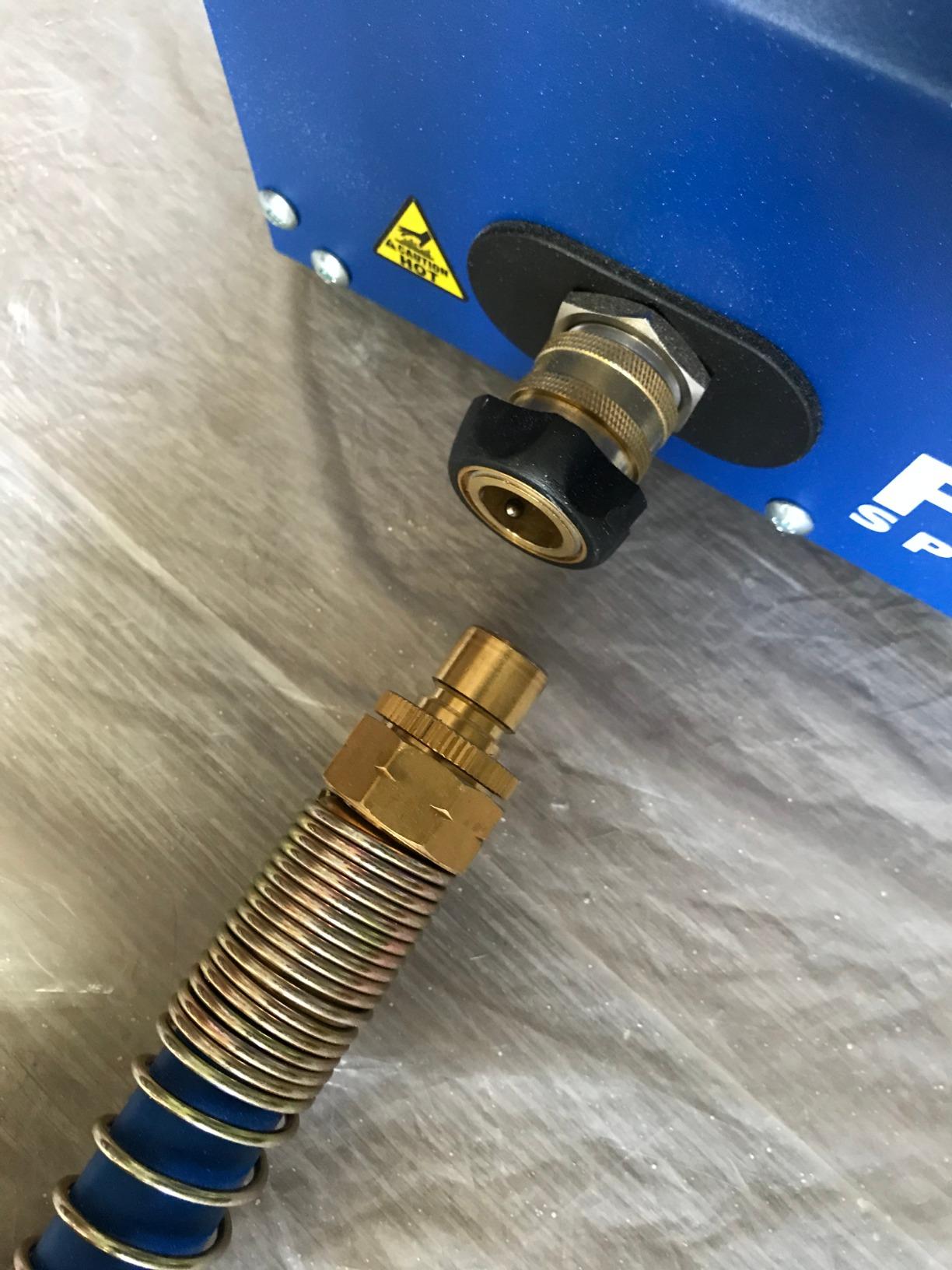
The PLATINUM version includes a Heat Dissipation Chamber that keeps the turbine running cooler during extended sessions. This is a meaningful upgrade because turbine heat is one of the main limitations of HVLP systems. The 25-foot hose with air control valve gives you excellent reach and lets you fine-tune the air pressure at the gun. The included viscosity cup eliminates guesswork when thinning paint.
Cleanup takes longer than with handheld units because the plastic diaphragm in the cup requires thorough cleaning. Water flow alone is not sufficient to fully clean the feeder tube and gun internals, so plan for a proper cleaning routine with appropriate solvents. Paint must be thinned for optimal performance, which is standard for HVLP systems. One user noted that Sherwin-Williams Extreme Bond primer required thinning beyond the manufacturer’s working specifications.
Comparing Mini-Mite 3 vs Semi-PRO 2
The Mini-Mite 3 offers a 3-stage turbine (6.5 PSI) versus the Semi-PRO 2’s 2-stage (5 PSI), meaning better atomization and broader material compatibility. The T70 gun on the Mini-Mite includes the pattern control knob, while the Semi-PRO uses the M-Model gun. The price difference is about $280, which buys you noticeably finer finishes and more versatility for thicker coatings.
Is the Price Premium Justified
For serious DIYers who refinish furniture or cabinets several times a year, or for part-time professionals, the Mini-Mite 3 Platinum is worth the investment. The 24-month warranty, superior atomization, and PLATINUM cooling system provide long-term value. For occasional use on small projects, the Semi-PRO 2 remains the better value choice.
12. Fuji Spray Q5 Platinum T70 Quiet HVLP Spray System
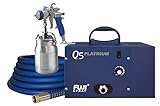
Fuji Spray 3005-T70 Q5 Platinum - T70 Quiet HVLP Spray System
5-stage turbine
9.5 PSI
Variable speed control
Quiet operation
T70 gun
25ft hose
5-for-5 bonus kit
Pros
- Exceptional factory-quality finish
- 5-stage turbine with 9.5 PSI
- Variable speed control dial
- Patented quiet operation
- Pressure-fed cup sprays any direction
- Handles high-viscosity coatings
Cons
- High price point investment grade
- Pressure cup requires careful cleaning
- Whip hose coupler can disconnect
- May be overkill for casual DIYers
The Fuji Q5 Platinum is the most capable HVLP system on this list, and using it feels like graduating to professional-grade equipment. The 5-stage turbine produces 9.5 PSI, which is nearly double the output of entry-level HVLP systems. This extra pressure translates to superior atomization across a wider range of materials, including thick lacquers, urethanes, and cabinet enamels that would challenge lesser systems. With 91 percent five-star reviews from 280 users, the satisfaction level is exceptional.
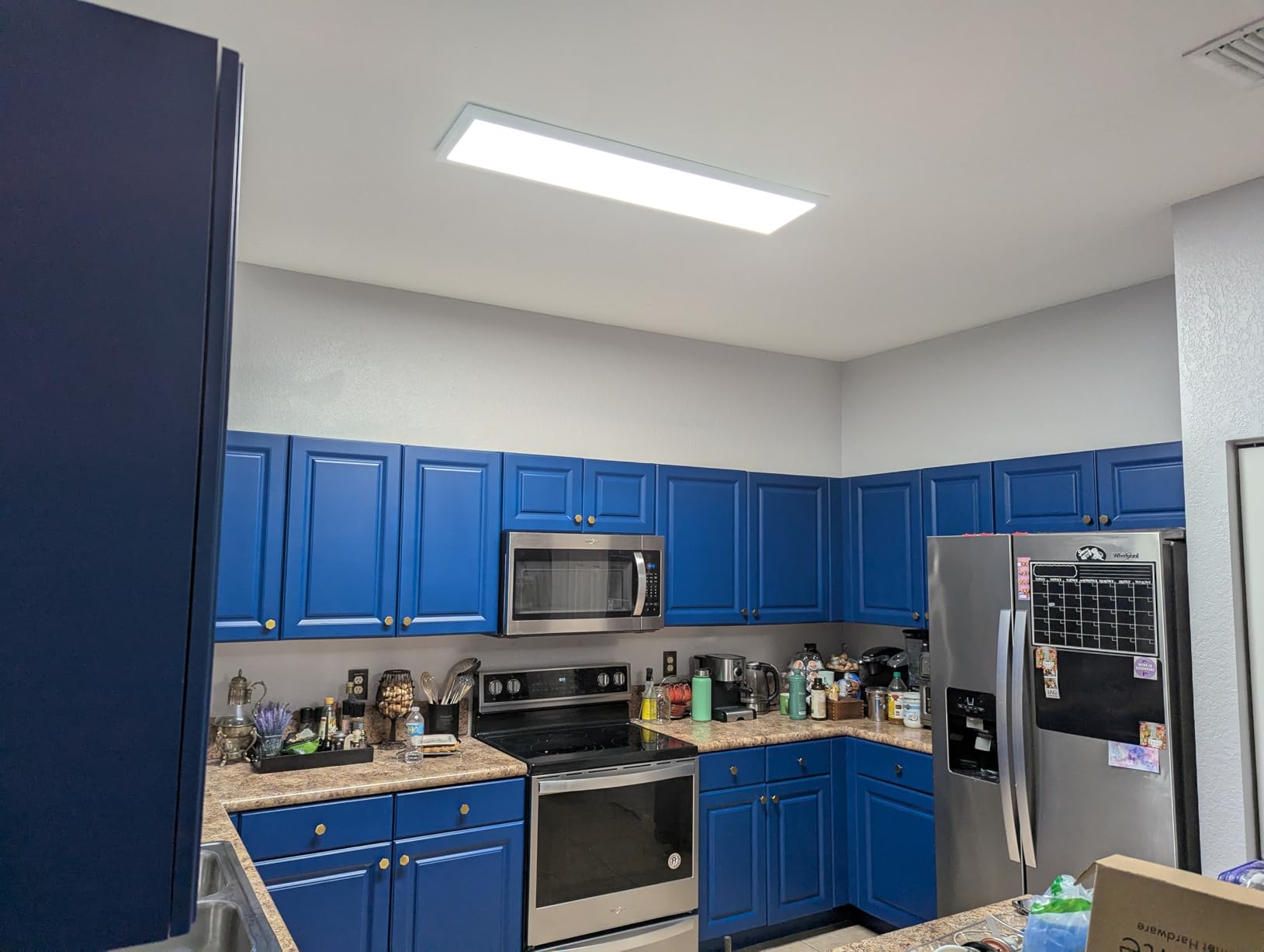
I had the opportunity to use the Q5 on a large built-in cabinetry project, and the variable speed control dial was a revelation. Being able to fine-tune the turbine speed for different coating viscosities gave me precise control over atomization. The patented noise reduction technology makes this the quietest turbine system I have used. You can actually have a conversation while spraying, which is not possible with most turbine units. The Heat Dissipation Chamber keeps everything running cool even during marathon sessions.
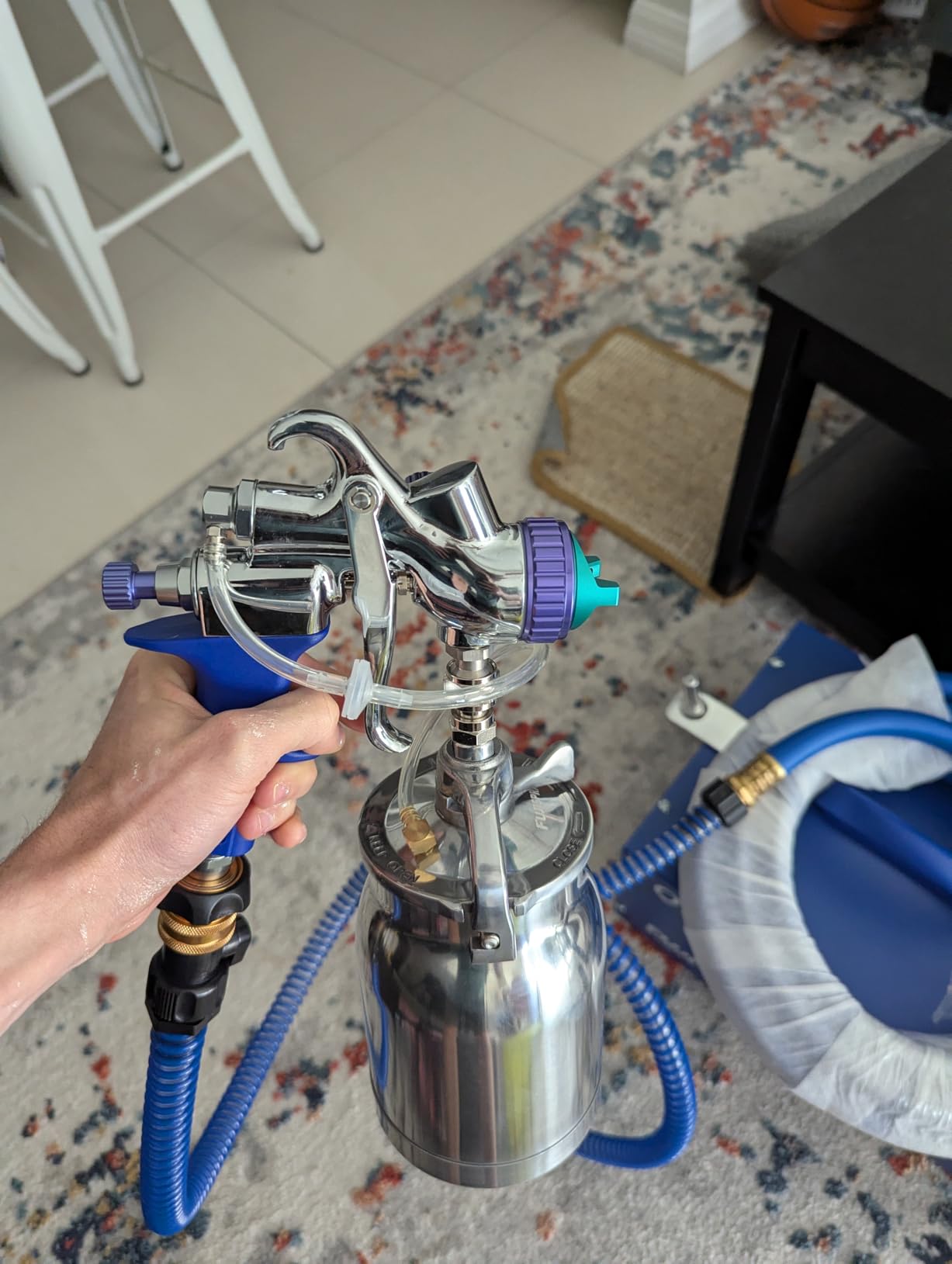
The pressure-fed cup is a key differentiator from gravity-fed or siphon-fed systems. It allows you to spray in any direction, including upward, without flow interruptions. This is especially valuable for cabinet interiors and angled surfaces where gravity-fed cups struggle. The T70 spray gun with its side pattern control knob provides excellent adjustability for detailed work.
The included 5-for-5 Bonus Kit adds genuine value with a 5-piece cleaning kit, extra turbine filters, wrench and brush, wet film gauge, and the Always Measure booklet. These accessories would cost extra separately. Cleanup with the 3M PPS system is fast and efficient, as multiple users noted. The main drawbacks are the premium price and the learning curve for the pressure-fed system, which requires careful cleaning and maintenance to prevent clogs.
When to Invest in the Q5 Platinum
This system is designed for professionals and serious woodworkers who need consistent, flawless finishes across a wide range of materials. If you make a living from cabinetry, furniture finishing, or fine woodworking, the Q5 will pay for itself in time saved and finish quality. For casual DIYers doing one or two projects a year, the Mini-Mite 3 or Semi-PRO 2 would be more appropriate choices.
Long-Term Value and Support
Fuji Spray backs the Q5 with a 24-month parts and labor warranty, and their customer service is widely regarded as responsive and helpful. Replacement parts are readily available, though they are not inexpensive. The metal turbine case and professional-grade components mean this system can provide years of reliable service with proper maintenance.
How to Choose the Best HVLP Paint Sprayer?
Choosing among the best HVLP paint sprayers comes down to understanding your project needs, budget, and the technical specifications that matter most for your work. Let me break down the key factors that should guide your decision.
Turbine Stages Explained
The turbine is the heart of any HVLP system, and the number of stages directly affects performance. A 1-stage turbine produces about 2 to 3 PSI and works well for thin materials like stains and sealers. A 2-stage turbine delivers 4 to 5 PSI and handles thin to medium-viscosity coatings like lacquer and shellac. A 3-stage turbine produces 6 to 6.5 PSI, giving you better atomization and the ability to spray slightly thicker materials. A 5-stage turbine delivers 9 to 10 PSI and can handle nearly any coating including thick lacquers and enamels.
For most DIY furniture and cabinet work, a 2-stage or 3-stage turbine hits the sweet spot. If you plan to spray thick enamels or work with challenging materials regularly, consider a 4-stage or 5-stage system. The trade-off is cost and weight, as more stages mean a more expensive and heavier turbine.
PSI and CFM Considerations
PSI (pounds per square inch) measures the air pressure at the gun, while CFM (cubic feet per minute) measures air volume. HVLP systems typically operate at 2 to 10 PSI, compared to 1,500 to 3,000 PSI for airless sprayers. Higher PSI means better atomization and the ability to handle thicker materials. If you are using a compressor-based gun like the InoKraft D1, your compressor needs to deliver adequate CFM at the required PSI for consistent spraying.
Tip and Nozzle Sizes
The tip size you choose determines what materials you can spray effectively. As a general guide, use 1.0mm to 1.3mm for thin materials like stains, sealers, and clear coats. Use 1.4mm to 1.8mm for medium materials like lacquer, enamel, and water-based polyurethane. Use 2.0mm and above for thicker materials like latex paint and primer. Most sprayers on this list include multiple tip sizes, but check what comes with your chosen model.
Paint Compatibility
Not all HVLP sprayers handle all paint types equally. Turbine-based systems excel with thin to medium materials like lacquer, shellac, stain, sealer, and water-based finishes. They struggle with thick latex paint unless it is significantly thinned. Handheld electric units like the Wagner FLEXiO series are better for latex because their X-Boost turbines generate more pressure. Compressor-based guns like the InoKraft D1 offer the most versatility but require a separate air compressor.
Handheld vs Stationary Systems
Handheld HVLP sprayers are self-contained units where the motor, container, and spray gun are integrated or connected by a short hose. They are portable, affordable, and easy to set up, making them ideal for beginners and small to medium projects. Stationary systems separate the turbine from the spray gun via a long hose. They produce finer finishes, reduce hand fatigue, and handle a wider range of materials, but they cost more and require more setup and cleanup time.
Budget Tiers and What to Expect
Under $50 gets you a basic handheld unit suitable for small projects and thin materials. The PULENDY PL42 and HomeRight Super Finish Max are excellent picks in this range. From $50 to $150, you get more power, better build quality, and included accessories. The Tilswall 800W and Wagner FLEXiO 595 shine here. From $150 to $400, entry-level turbine systems like the Wagner Earlex 5700 and Wagner Control Spray Max offer improved finish quality and material handling. Above $500, professional turbine systems from Fuji Spray deliver factory-quality finishes with superior atomization and build quality.
Cleanup Considerations
Easy cleanup is often the deciding factor in whether a sprayer gets used again or collects dust. Look for sprayers with few internal passages, dishwasher-safe components, or included cleaning kits. The InoKraft Bob Vila’s QuickFlush adapter and the Tilswall 800W’s submersible spray head are standout features for cleanup convenience. Budget more time for cleanup on turbine systems like the Fuji, where multiple components need thorough cleaning.
Frequently Asked Questions
What is the best HVLP paint sprayer for a beginner?
The HomeRight Super Finish Max is the best HVLP paint sprayer for beginners. It is affordable, easy to set up with no tools required, includes three brass spray tips for different materials, and has over 10,500 positive reviews from DIY users. The 450-watt motor handles most common paint types, and cleanup is straightforward.
What is the best HVLP paint sprayer for furniture?
The Fuji Spray Semi-PRO 2 is the best HVLP paint sprayer for furniture. Its 2-stage turbine produces smooth, factory-quality finishes on wood surfaces, and the non-bleed M-Model gun minimizes overspray. For budget furniture projects, the HomeRight Super Finish Max and Tilswall 800W are excellent alternatives.
What is the best HVLP spray gun for cabinets?
The Fuji Mini-Mite 3 Platinum is the best HVLP spray gun for cabinets. Its 3-stage turbine and T70 gun with pattern control knob deliver fine atomization ideal for cabinet doors and frames. For a budget cabinet option, the Wagner Control Spray Max with its 20-foot hose allows extended reach for cabinet layouts.
Can you use an HVLP sprayer to spray latex paint?
Yes, you can spray latex paint with an HVLP sprayer, but you typically need to thin it first. Latex paint is thick and requires thinning with water or a flow additive like Floetrol to achieve proper atomization. Use a larger tip size (2.0mm or above) for best results. The Wagner FLEXiO 595 is one of the few HVLP sprayers that can handle unthinned latex thanks to its X-Boost turbine.
Is an HVLP sprayer better than airless for cabinets?
Yes, HVLP is generally better than airless for cabinet painting. HVLP produces a finer finish with less overspray, which is important when working indoors and around adjacent surfaces. Airless sprayers deliver more material faster but create more overspray and a slightly rougher finish. For detail work on cabinet doors and frames, HVLP provides superior control and finish quality.
What PSI do you need for HVLP paint spraying?
HVLP paint sprayers typically operate at 2 to 10 PSI. Entry-level 1-stage turbines produce about 2 to 3 PSI, suitable for thin materials. Professional 5-stage turbines like the Fuji Q5 Platinum deliver up to 9.5 PSI, handling thicker coatings. Higher PSI provides better atomization and broader material compatibility, but all HVLP systems use significantly lower pressure than airless sprayers which operate at 1,500 to 3,000 PSI.
Do I need to thin paint for an HVLP sprayer?
In most cases, yes, you need to thin paint for an HVLP sprayer. Thin materials like stains and sealers may spray without thinning, but latex paint, enamels, and primers typically need thinning for proper atomization. Use the viscosity cup included with most HVLP systems to test paint thickness. Some handheld units like the Wagner FLEXiO 595 can spray certain unthinned paints, but thinning generally produces smoother results.
What is the best HVLP paint sprayer for automotive painting?
The InoKraft D1 LVLP Air Spray Gun is the best option for automotive painting among our picks. It includes 1.3mm, 1.5mm, and 1.7mm nozzle sets for primer, basecoat, and clearcoat. It requires an external air compressor but delivers professional atomization quality at a fraction of the cost of high-end automotive spray guns. The Fuji Q5 Platinum is also excellent for automotive-quality finishes on larger projects.
How do you clean an HVLP paint sprayer after use?
To clean an HVLP paint sprayer, first empty any remaining paint from the container. Then run the appropriate solvent (water for water-based paint, mineral spirits for oil-based) through the gun until it runs clear. Disassemble the nozzle, needle, and air cap, and clean each component with solvent and a soft brush. For turbine systems, let the turbine cool before disconnecting the hose. Never let paint dry inside the gun, as dried paint causes clogs and performance issues.
Is an HVLP paint sprayer worth it for DIY projects?
Yes, an HVLP paint sprayer is worth it for DIY projects, especially if you plan to paint furniture, cabinets, or trim. Even a budget model under $50 like the PULENDY PL42 or HomeRight Super Finish Max will produce a smoother finish than brushes or rollers and save significant time. The main investment is learning proper technique and thinning ratios, but the finish quality improvement makes it worthwhile for most DIYers.
Final Verdict
Finding the best HVLP paint sprayer for your needs comes down to matching the tool to your project type, budget, and experience level. After testing and researching 12 models across every price tier, my top recommendation for most DIYers is the HomeRight Super Finish Max. It delivers professional-quality finishes at a fraction of the cost of turbine systems, with the largest user community for support and tips.
For woodworkers and furniture refinishers ready to invest in finish quality, the Fuji Spray Semi-PRO 2 is the standout choice. Its non-bleed gun, metal construction, and factory-quality atomization make it the best value in turbine systems. And for those on the tightest budget, the PULENDY PL42 proves that you do not need to spend a lot to get started with HVLP spraying.
Remember that any HVLP sprayer requires practice to master. Start with a small project, strain your paint, thin when needed, and clean thoroughly after each use. With the right technique and one of these quality sprayers, you will achieve finishes that look professionally done. Here is to brush-stroke-free results on your next project in 2026.