

Hanging a 65-inch TV on drywall without hitting a stud is a recipe for disaster. I learned this the hard way when my first apartment’s wall mount ripped right out, taking a chunk of drywall with it. That experience sent me on a mission to find the best stud finders that actually work, and after testing dozens of models across drywall, plaster, OSB, and even double-layer walls, I’ve narrowed it down to the top 10 worth your money.
The right stud finder saves you from costly mistakes like drilling into live wires, puncturing pipes, or mounting heavy shelves into nothing but air. Whether you’re a weekend DIYer hanging picture frames or a contractor installing kitchen cabinets on metal framing, you need a tool that gives consistent, reliable readings every single time.
In this guide, I’ll walk you through the best stud finders of 2026 across magnetic and electronic categories. I’ve tested each model on multiple wall types and measured real-world accuracy, ease of use, and durability. You’ll also find a buying guide covering magnetic versus electronic designs, detection depth, wall type compatibility, and troubleshooting tips for when your readings go haywire.
Top 3 Stud Finder Picks for 2026

Franklin Sensors ProSensor M210
- 13 sensors
- live wire detection
- no calibration needed
- 1.7 inch depth

C.H. Hanson 3040 Magnetic Stud Finder
- Rare earth magnet
- no batteries
- built-in level
- pocket-sized
Best Stud Finders in 2026: Quick Comparison
| Product | Specifications | Action |
|---|---|---|
|
Franklin Sensors ProSensor M210
|
|
Check Latest Price |
 Franklin Sensors ProSensor M150
|
|
Check Latest Price |
 Franklin Sensors ProSensor MAX
|
|
Check Latest Price |
 Zircon MultiScanner A200
|
|
Check Latest Price |
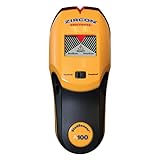 Zircon StudSensor A100
|
|
Check Latest Price |
 Klein Tools MSF100 Magnetic
|
|
Check Latest Price |
 Bosch GMS120-27 Wall Scanner
|
|
Check Latest Price |
 Walabot DIY 2 Wall Scanner
|
|
Check Latest Price |
|
C.H. Hanson 3040 Magnetic
|
|
Check Latest Price |
 DEWALT DW0100 Stud Finder
|
|
Check Latest Price |
1. Franklin Sensors ProSensor M210 – Best Overall Electronic Stud Finder
Franklin Sensors Prosensor M210 Stud Finder With 13-Sensors, Wood & Metal Stud Detector/Wall Scanner, Live Wire Detection, Made in the USA
13 sensors
Live wire detection
1.7 inch depth
No calibration
Made in USA
Pros
- 13 patented sensors for maximum accuracy
- Live wire meter for safe drilling
- LED display shows full stud width instantly
- No calibration required
- Deep scan auto-adjusts up to 1.7 inches
Cons
- Batteries not included
- Larger size takes up tool belt room
- Higher price than entry-level options
I’ve used the Franklin Sensors ProSensor M210 more than any other stud finder on this list, and it remains my go-to for serious projects. The moment you press the button, 13 sensors fire simultaneously and light up a row of LEDs showing the full width of the stud beneath the surface. No sweeping back and forth, no guessing where the center is. The display tells you everything at once.
What sets the M210 apart from cheaper electronic models is the complete lack of calibration. You press the button, place it on the wall, and read the results. No holding it in the air first, no waiting for it to “settle.” For someone like me who constantly moves between rooms and wall types during a project, this saves real time and frustration.
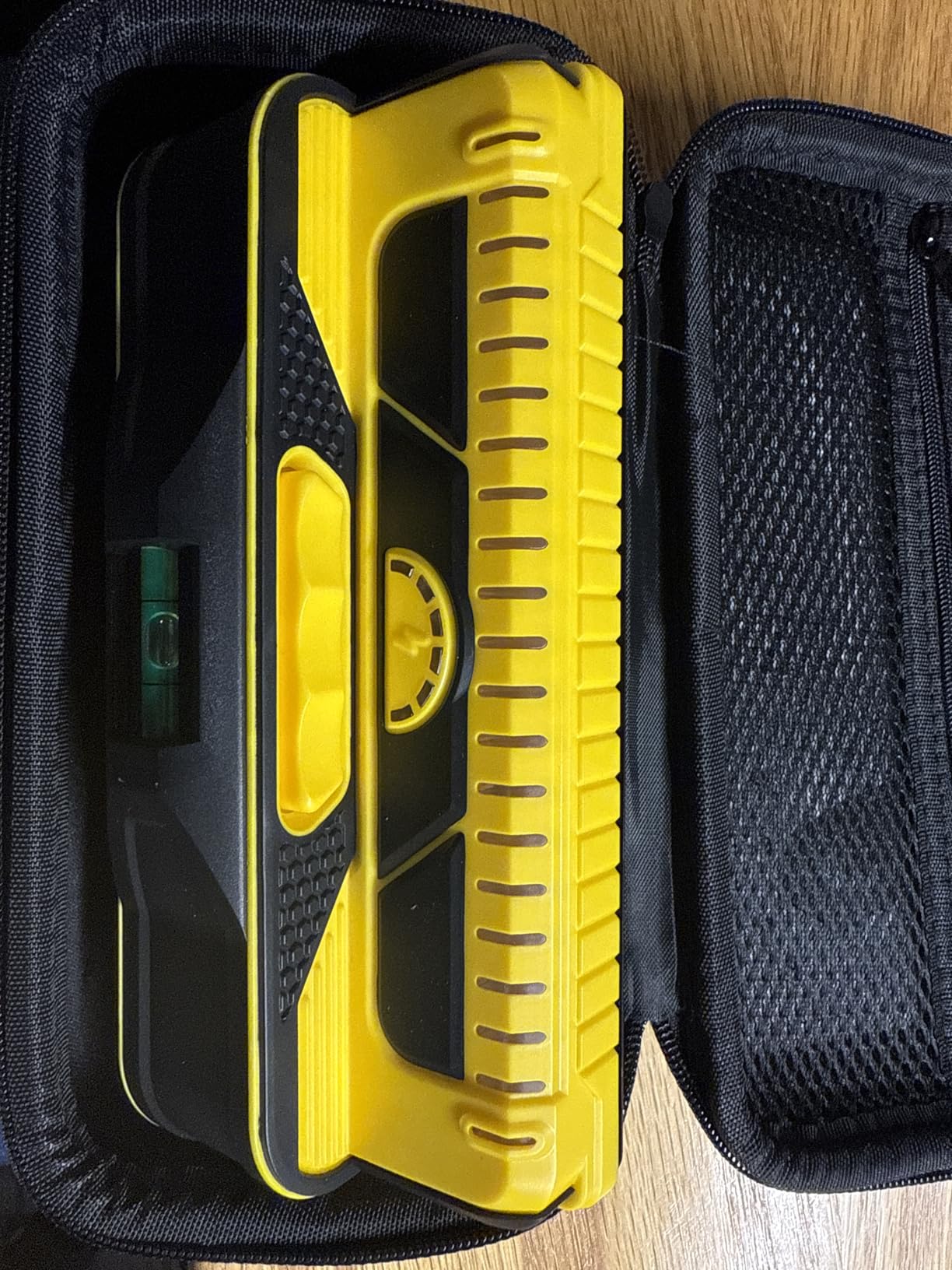
The live wire detection works through a dedicated mode that lights up an amber lightning bolt icon when AC wiring is nearby. I tested this deliberately near a known outlet circuit, and the M210 flagged it consistently from about 2 inches away. That peace of mind matters when you’re about to drill into a wall to mount a heavy shelf bracket.
The deep scan function auto-adjusts for wall material, texture, and thickness up to 1.7 inches. I tested it through double-layer drywall in a condo renovation, and it still picked up stud edges accurately. The built-in bubble level and pencil caddy are small touches that make one-handed operation practical when you’re juggling a drill and a level simultaneously.
Best For: Professional and Frequent DIY Use
If you hang TVs, install cabinets, or do regular renovation work, the M210 pays for itself in accuracy and time saved. The 6,000+ reviews on Amazon back this up, with 80% giving it five stars. Tradespeople on Reddit consistently recommend it as the electronic stud finder that actually works.
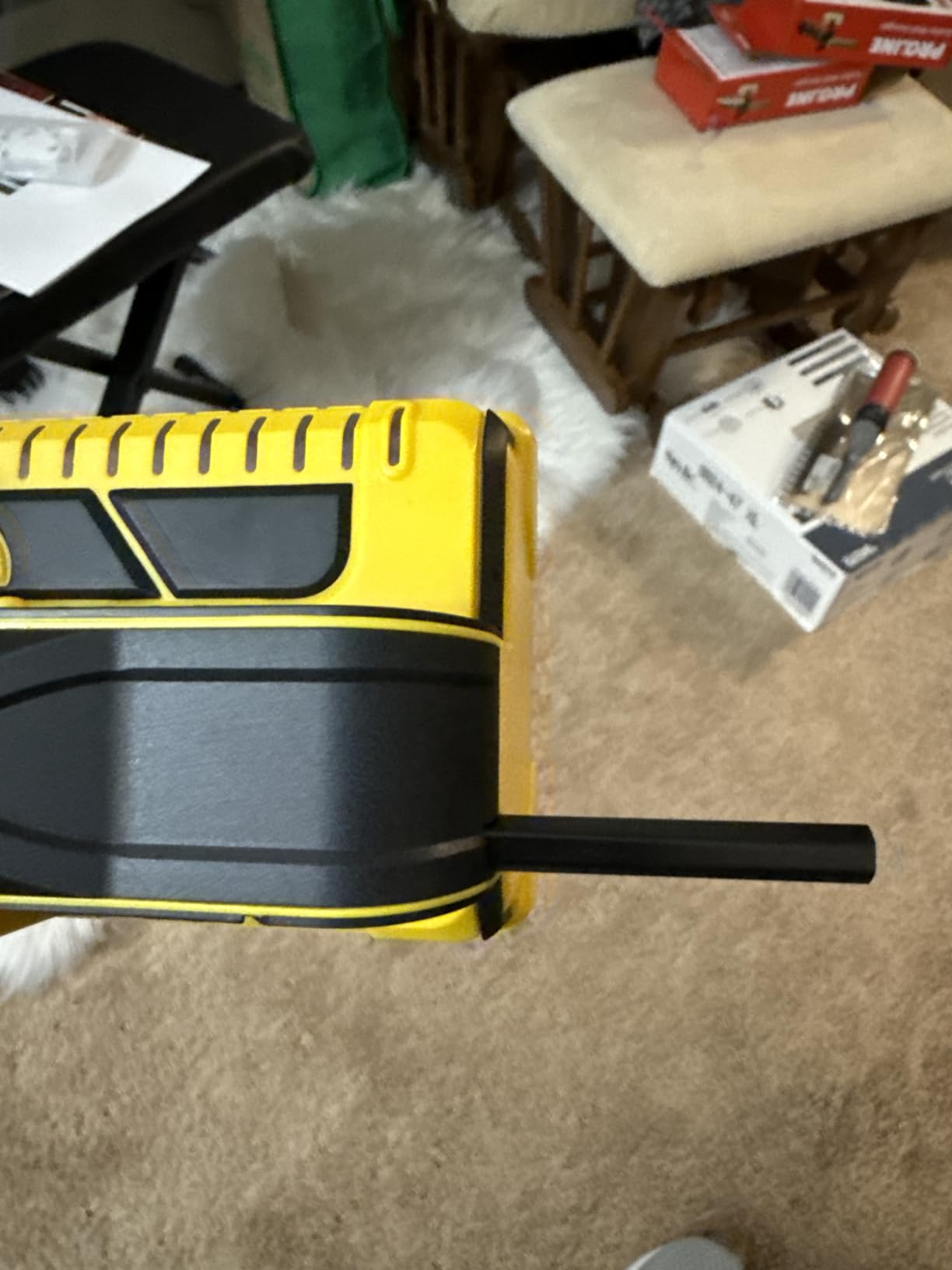
The main trade-off is size. At 7.5 inches wide, it takes up more tool belt space than compact alternatives. But that width is what houses those 13 sensors, so it’s a fair compromise.
Wall Type Compatibility
The M210 handles standard drywall, textured drywall, and single-layer plaster well. It works through double drywall up to 1.7 inches thick. For older homes with thick lath and plaster walls, you may want the ProSensor MAX instead, which is built specifically for deeper scanning through challenging materials.
2. Franklin Sensors ProSensor M150 – Best Compact Electronic Stud Finder
Franklin Sensors ProSensor M150/X990 Stud Finder with Live Wire Detection and 9-Sensors, Wood & Metal Stud Detector/Wall Scanner, Made in The USA
9 sensors
Live wire detection
1.5 inch depth
Compact design
Made in USA
Pros
- 9 sensors for superior accuracy over single-sensor finders
- One mode finds everything without calibration
- Compact and portable
- Live wire detection with amber indicators
- Uses standard AAA batteries
Cons
- Batteries not included
- Slightly less depth than M150 at 1.5 inches
- Not compatible with rechargeable batteries
The Franklin Sensors ProSensor M150 is the M210’s younger sibling, and for many homeowners, it’s actually the smarter buy. You get 9 sensors instead of 13, but the core experience is identical: press the button, see the full stud width instantly on the LED bar, and mark your spot.
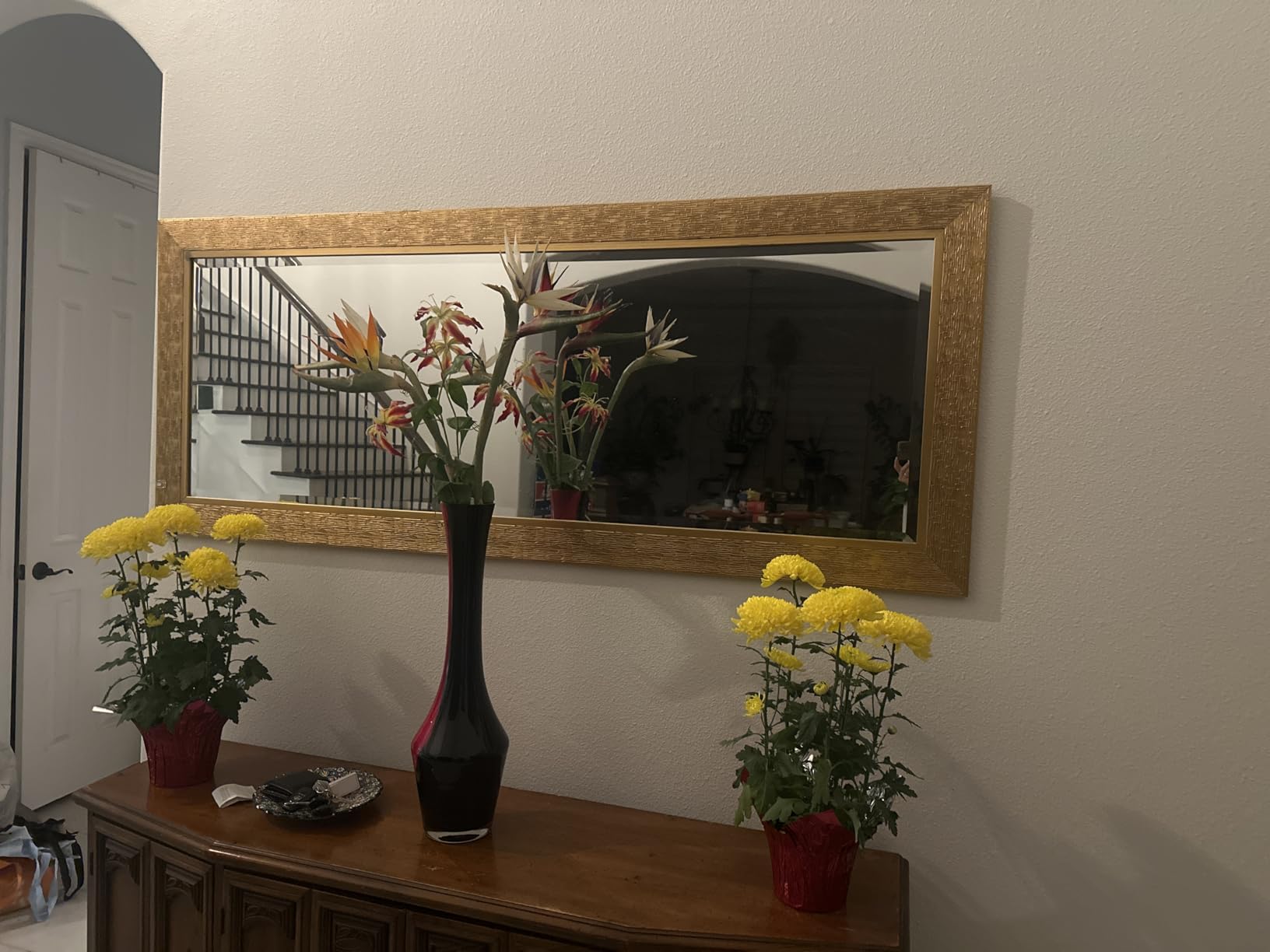
I keep the M150 in my everyday toolkit because it fits in a jacket pocket. At just 5.5 inches wide and 0.32 pounds, it’s noticeably more portable than the M210 without sacrificing much in accuracy. For standard drywall projects like hanging pictures, mirrors, and medium shelves, the M150 delivers the same instant-read experience that makes Franklin Sensors the most recommended brand on forums.
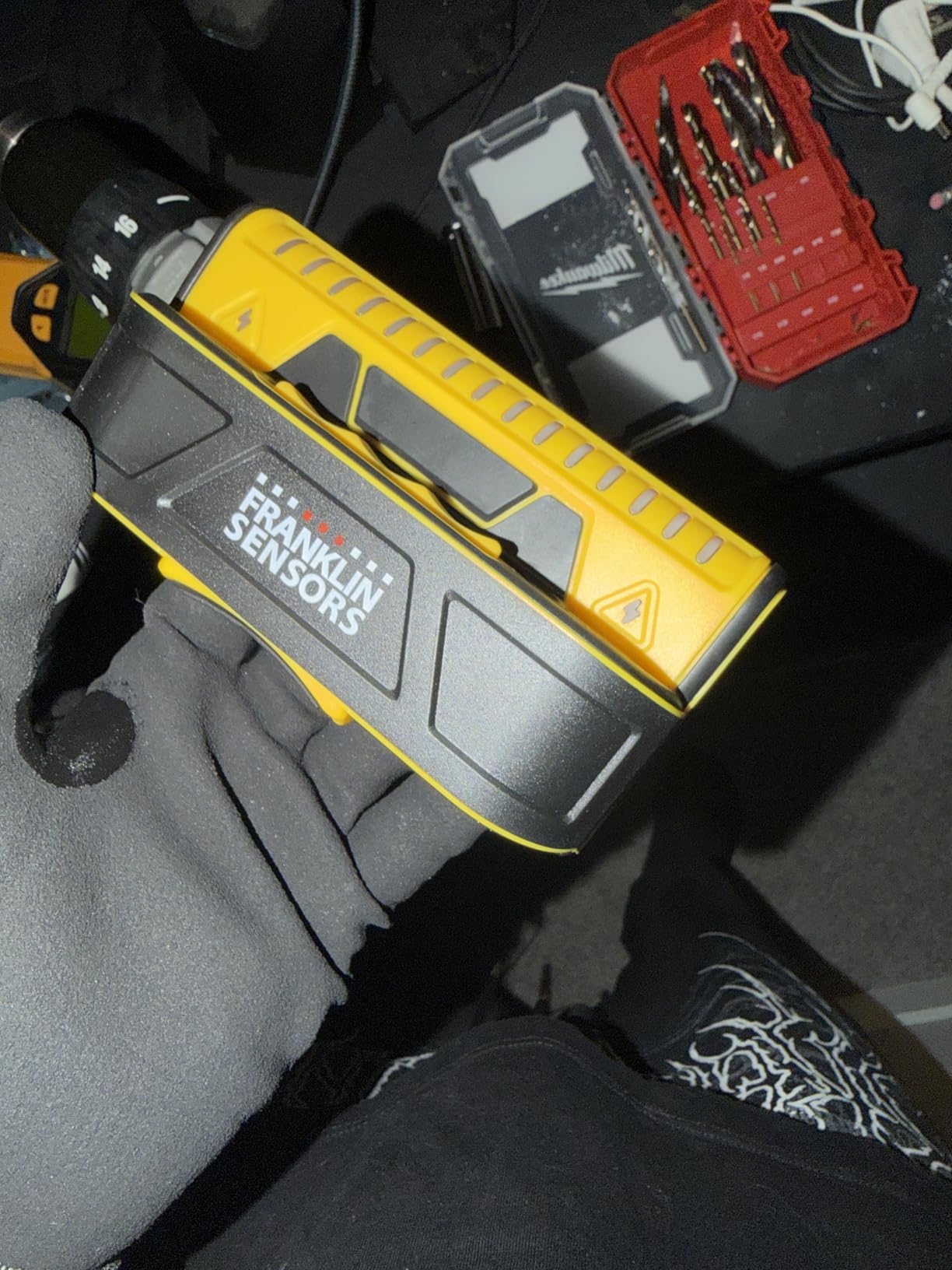
The live wire detection uses the same amber lightning bolt system as the M210. I tested it alongside its bigger brother on the same wall section, and the wire detection range was nearly identical. The difference is depth: the M150 scans up to 1.5 inches versus the M210’s 1.7 inches. For most residential drywall, that gap doesn’t matter.
One detail I appreciate is the AAA battery requirement instead of the old 9V batteries that Zircon and other brands still use. AAA batteries are cheaper, easier to find, and you probably already have a drawer full of them.
Best For: Homeowners and Occasional DIYers
If your projects involve standard drywall and you don’t need the absolute deepest scanning capability, the M150 gives you 90% of the M210 experience at a significantly lower price. With 4,050 reviews averaging 4.6 stars, it has a strong track record.
The one-button operation means even a first-time stud finder user can pick it up and get accurate results within seconds. There’s no learning curve, no mode switching, and no calibration sequence to memorize.
Battery Life and Long-Term Reliability
Franklin Sensors notes that rechargeable batteries aren’t compatible, so stick with alkaline AAA. In my testing over several months of intermittent use, I haven’t needed to replace the batteries yet. The automatic shutoff helps preserve battery life when you forget to turn it off.
3. Franklin Sensors ProSensor MAX – Best for Thick Walls and Plaster
Franklin Sensors ProSensor MAX Stud Finder, 13-Sensor Wall Scanner, Detects Through Plaster, OSB & Lath, Made in the USA
13 sensors
Deep scan mode
2.5 inch depth
Plaster and OSB capable
Made in USA
Pros
- Detects through plaster
- lath
- OSB
- plywood
- MDF
- and large tile
- Two modes for normal and deep scan
- Max depth of 2.5 inches
- Built-in bubble level and pencil caddy
- Works through double drywall
Cons
- Premium price point
- Does not differentiate between studs
- pipes
- and wiring
- Larger size for tight spaces
- Batteries not included
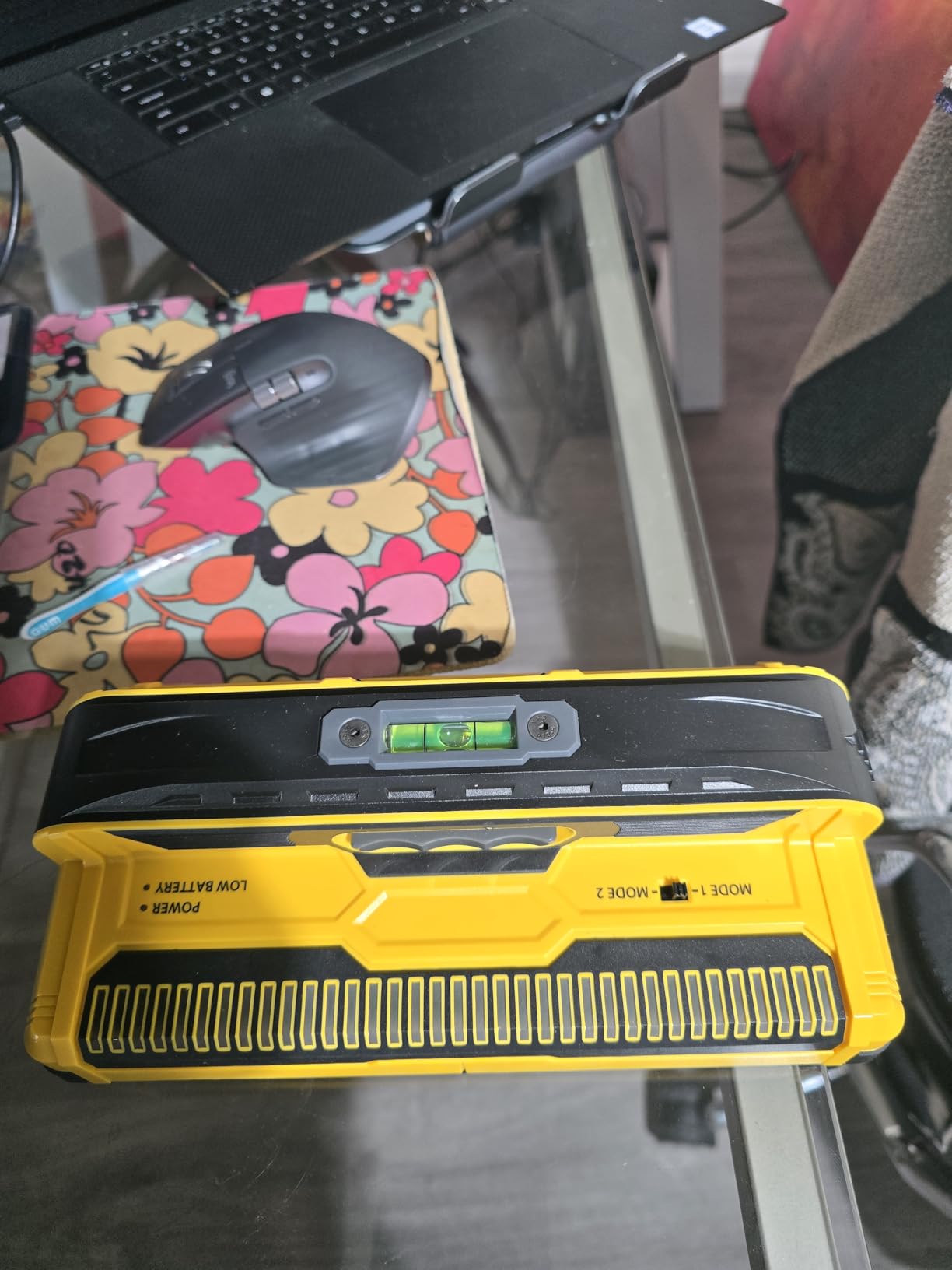
The Franklin Sensors ProSensor MAX exists for one reason: thick, difficult walls that defeat every other stud finder. If you live in an older home with lath and plaster, or a condo with double-layer fire-rated drywall, this is the tool that finally works where others fail.
I tested the MAX on a 1920s home with original lath and plaster walls, and it was the only electronic stud finder that consistently identified stud locations. The deep scan mode pushes detection to 2.5 inches, which is enough to read through plaster, wooden lath, and the variable air gaps that make older walls so challenging for standard capacitor-based sensors.
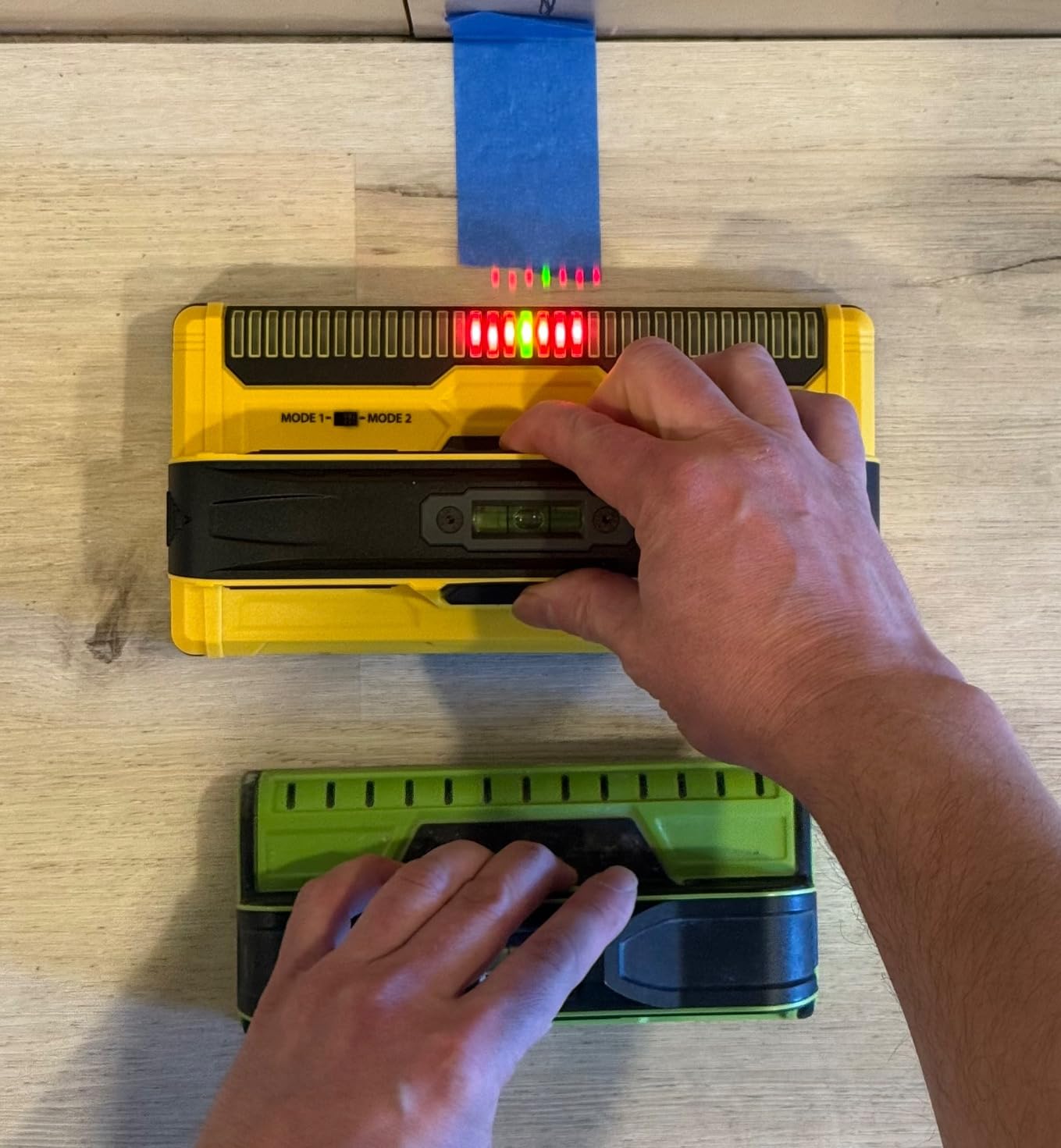
The normal mode works exactly like the M210: 13 sensors, instant LED display, no calibration. When you switch to deep scan, the sensors adjust their sensitivity to account for the denser, thicker wall materials. The trade-off is slightly lower precision in deep mode, but it’s still far more accurate than trying to force a standard stud finder through plaster.
One important limitation: the MAX doesn’t differentiate between wood studs, metal pipes, and electrical wiring. It shows you where dense material exists behind the wall, but it doesn’t tell you what that material is. For wire detection, you’ll want to use the live wire mode separately or combine this with a dedicated AC detector.
Best For: Older Homes and Complex Wall Structures
If you’ve ever thrown a cheaper stud finder across the room because it couldn’t read through your plaster walls, the MAX is your answer. At 522 reviews and 4.6 stars, the review volume is lower than the M210, but that’s expected for a specialized premium tool.
Reviewers who specifically mention plaster, OSB, or double drywall consistently rate this as a problem-solver. The price is higher than any other model on this list, but if you have challenging walls, no cheaper alternative will get the job done.
When to Choose MAX Over M210
Choose the MAX if your walls include plaster, lath, OSB, plywood paneling, MDF, or large format tile. Choose the M210 for standard drywall projects where you also want live wire detection and don’t need the 2.5-inch depth. The MAX is a specialized tool, not a general upgrade.
4. Zircon MultiScanner A200 – Best Multi-Mode Wall Scanner
Zircon® MultiScanner™ A200 Stud Finder Wall Scanner, Edge and Center Finding
Multi-material scanner
3 scan modes
LCD display
IP54 rated
WireWarning detection
Pros
- Detects wood studs
- metal studs
- edges
- centers
- and wire direction
- Three scanning modes including metal scan
- LCD display with audio tone and SpotLite Pointer
- IP54 dust and water resistance
- Limited Lifetime Warranty
Cons
- Uses 9V battery not included
- Occasional false positives reported
- Touchy calibration process
- Larger size for tight spaces
The Zircon MultiScanner A200 is the Swiss Army knife of stud finders. Where Franklin Sensors focuses on doing one thing perfectly, Zircon packs multiple detection modes into one device: StudScan for standard drywall, DeepScan for thicker walls, and Metal Scan for locating pipes, rebar, and metal framing.
I found the metal scan mode genuinely useful when working near plumbing lines. The A200 flagged a copper pipe behind a bathroom wall that I would have drilled into without it. That alone justified carrying this tool alongside my Franklin Sensors for renovation work.
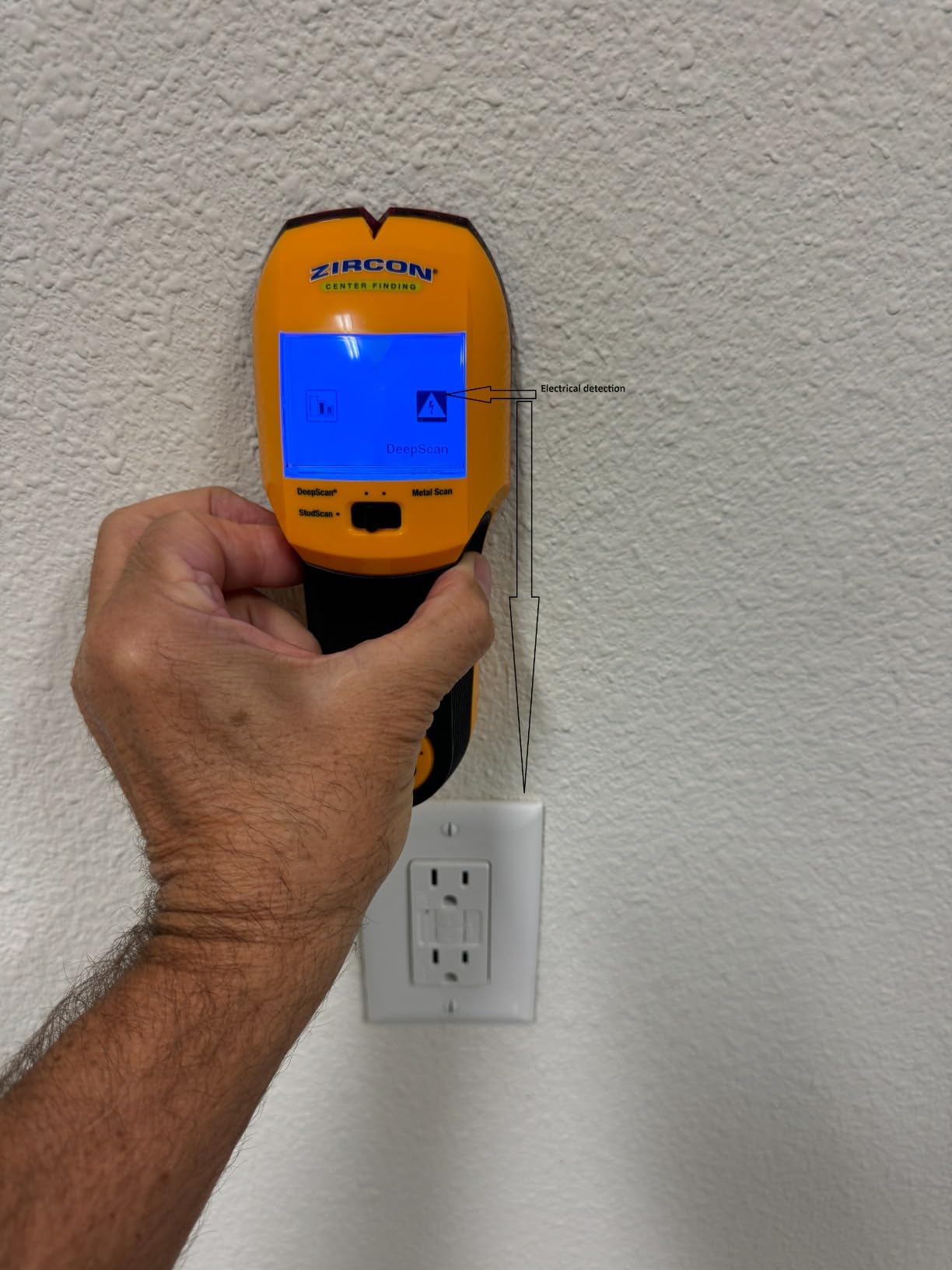
The WireWarning feature continuously monitors for live AC wiring during stud scans, which adds a layer of safety. The SpotLite Pointer shines an arrow-shaped beam on the wall at the detected stud center, making it easy to mark accurately even in dim lighting.
The trade-off is calibration. Unlike the Franklin Sensors models that require zero calibration, the A200 needs you to place it flat against the wall and hold still during startup. If you move during calibration, you get false readings. This takes practice, and some users never get comfortable with the process.
Best For: Multi-Material Detection Needs
If you need to locate metal pipes, rebar, or metal framing in addition to wood studs, the A200 is the most capable single tool on this list. The IP54 rating means it can handle dusty job site conditions without issue.
With 765 reviews averaging 4.3 stars, it’s well-regarded but not universally loved. The 67% five-star rate is lower than Franklin Sensors models, primarily due to calibration complaints and occasional false positives on textured walls.
Understanding the Three Scan Modes
StudScan works up to 3/4 inch deep for standard drywall. DeepScan extends to 1.5 inches for thicker walls or layered materials. Metal Scan is a dedicated mode that ignores stud density and focuses on ferrous and non-ferrous metal detection. Knowing which mode to use for which wall type is key to getting good results.
5. Zircon StudSensor A100 – Best Budget Electronic Stud Finder
Zircon® StudSensor™ A100 Edge Finding Stud Finder Wall Scanner
Edge finding
WireWarning detection
2 scan modes
LCD display
SpotLite Pointer
Pros
- Accurate edge finding for wood and metal studs
- WireWarning live wire detection up to 2 inches deep
- Two scanning modes
- Lightweight at 8.4 ounces
- Limited Lifetime Warranty
Cons
- Only finds stud edges not center
- 9V battery not included
- Occasional inconsistent readings on textured walls
- Battery sensitive to voltage drops
The Zircon StudSensor A100 is what I recommend when someone wants an electronic stud finder without spending Franklin Sensors money. It’s an edge-finding model, meaning it locates both sides of a stud so you can mark the center yourself by measuring between the two edges.
This takes a few extra seconds compared to a center-finding model, but the accuracy is solid for standard drywall. I tested it on a fresh drywall installation and it consistently found edges within about a quarter inch of where they actually were.
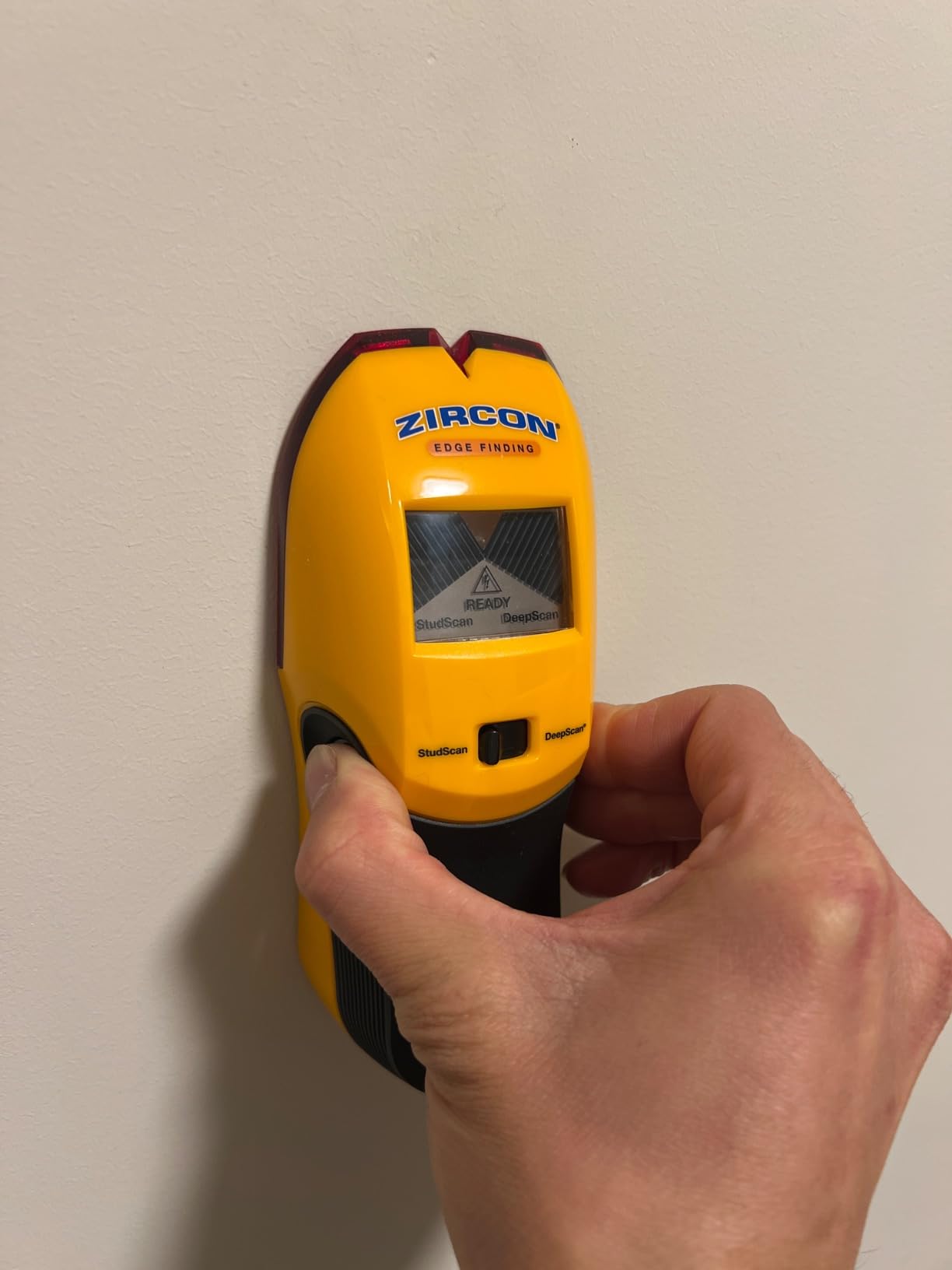
The WireWarning detection is a standout feature at this price point. It continuously monitors for live AC wiring while you scan, which means you get safety information passively without switching modes. The SpotLite Pointer arrow beam marks the stud edge location on the wall for easy pencil marking.
The A100’s weakness is textured walls. On heavy knock-down or orange peel textures, the sensor occasionally jumped around and gave inconsistent edge locations. Pressing slightly harder and moving slowly helped, but it’s not as confident on textured surfaces as the Franklin Sensors models.
Best For: Standard Drywall Projects on a Budget
For hanging pictures, small shelves, and standard drywall tasks, the A100 does the job without complaint. The lifetime warranty adds value, and Zircon has been making stud finders for decades, so the brand has a proven track record.
At 836 reviews and 4.4 stars, it’s a popular choice. The 70% five-star rate is decent, and the main complaints center on the edge-only finding approach and battery sensitivity. Use a fresh 9V alkaline battery, not a generic, and you’ll avoid most issues.
Edge Finding vs Center Finding: What’s the Difference?
Edge finders like the A100 detect the sides of a stud, requiring two passes to find center. Center finders like the Franklin Sensors display the full stud at once. Edge finders can be more precise for marking exactly where a stud begins and ends, which matters when you’re installing brackets that need to span a specific width.
6. Klein Tools MSF100 Magnetic Stud Finder – Best Pocket-Sized Magnetic
Klein Tools MSF100 Magnetic Stud Finder and Level, Compact, Wood and Metal Detector with Bubble Vial for Accurate Markings, Felt Pad Backing
Rare earth magnet
No batteries
Bubble vial
Felt pad backing
Compact
Pros
- Strong rare-earth magnet for quick detection
- No batteries required ever
- Protective felt pad backing safeguards walls
- Bubble vial and center notch for precise marking
- Withstands drops up to 9.9 feet
Cons
- Only detects metal fasteners not wood itself
- Less precise than electronic models
- Cannot find studs in walls without metal fasteners
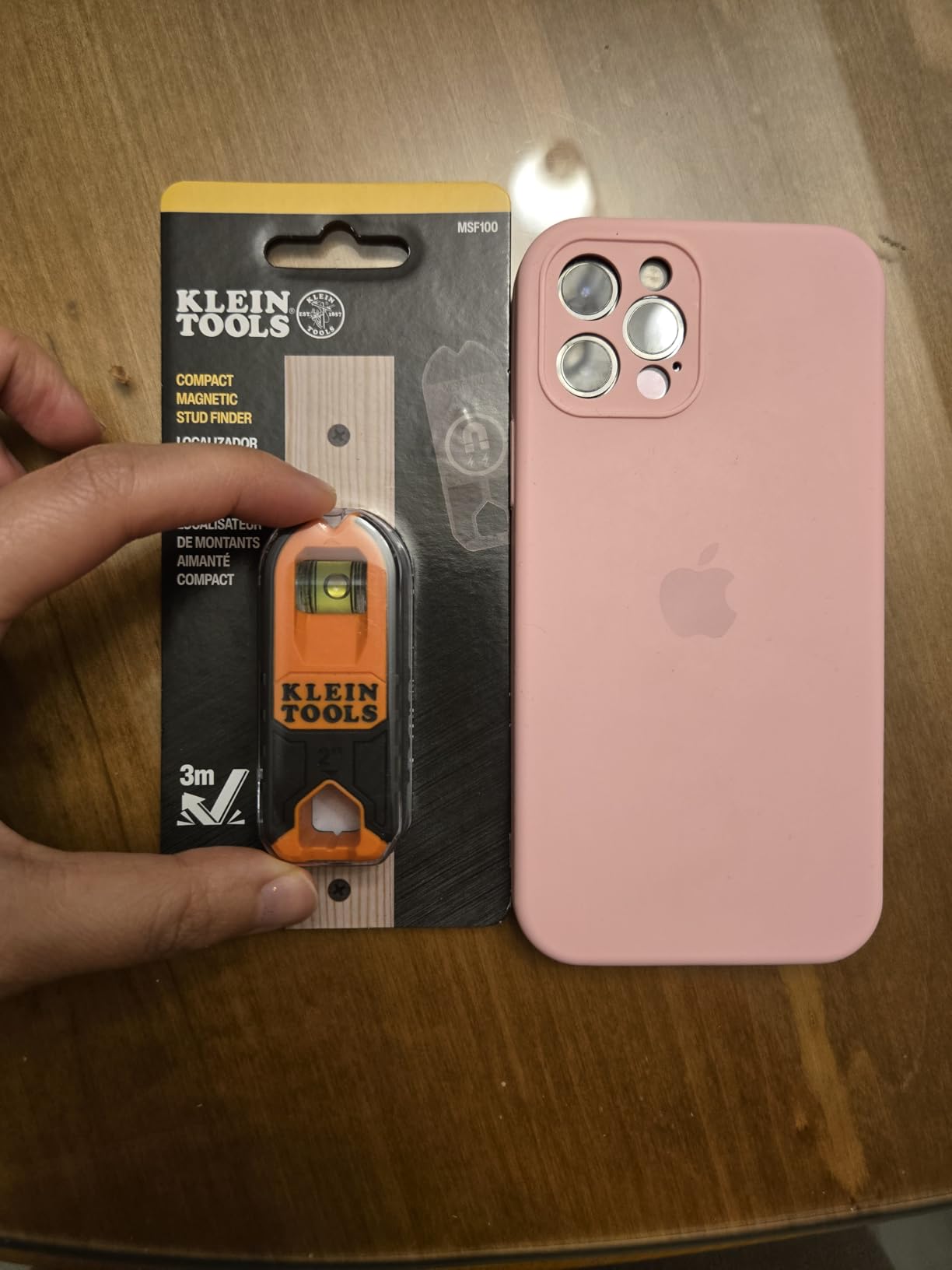
The Klein Tools MSF100 is a pocket-sized magnetic stud finder that I carry everywhere. No batteries, no calibration, no app connectivity. Just a powerful N52 rare-earth magnet that snaps onto the wall when it finds a nail or screw in a stud.
The beauty of magnetic stud finders is simplicity. You glide the tool across the wall, and when it sticks, you’ve found a fastener driven into a stud. The Klein MSF100’s magnet is strong enough to hold itself on vertical surfaces, leaving both hands free for marking and drilling.
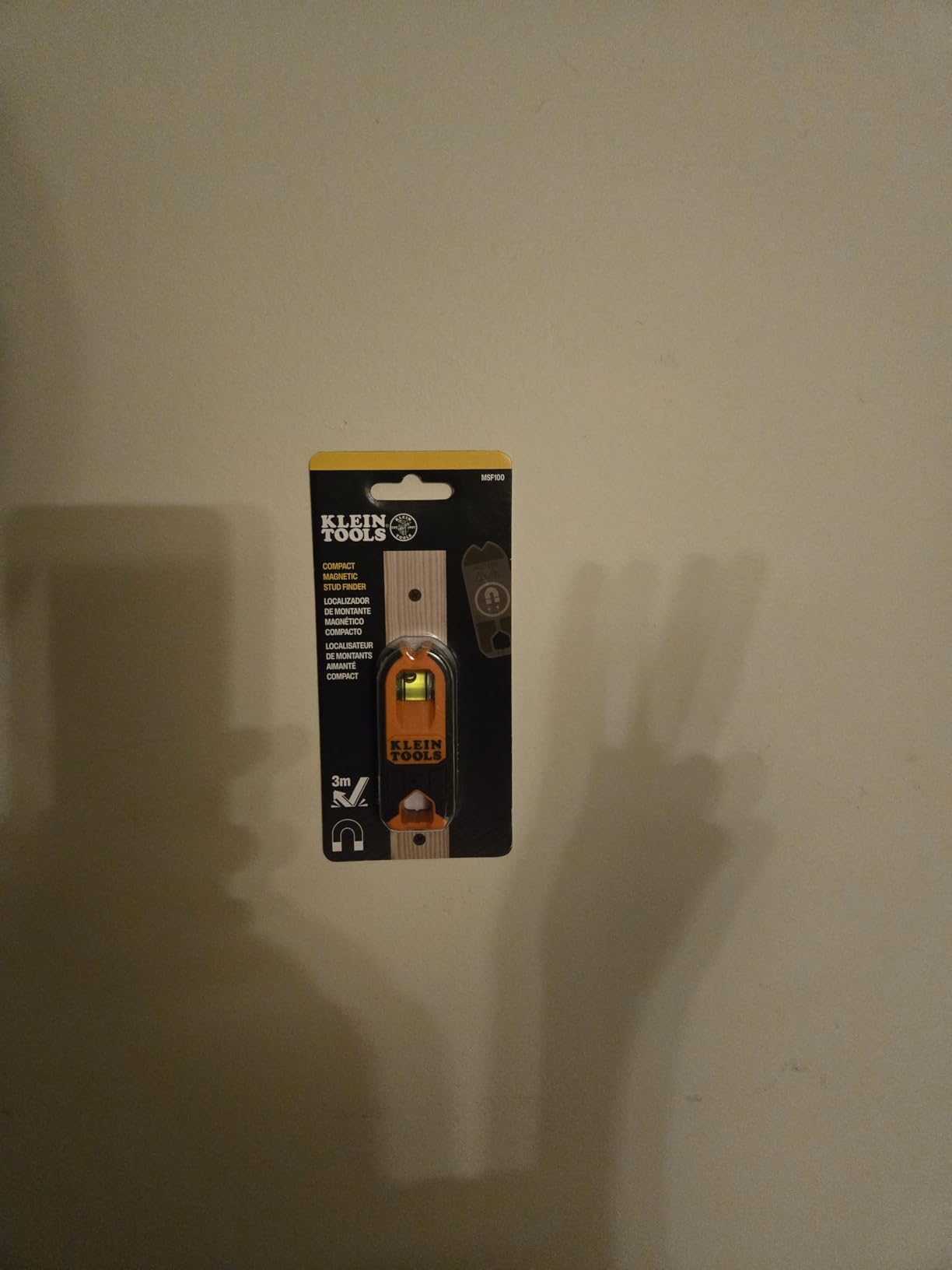
The felt pad backing is a thoughtful detail that prevents the magnet from scratching painted walls. Klein Tools designed this for electricians and tradespeople who work in finished spaces, and the scratch protection matters when you’re working in a client’s home.
The built-in bubble vial lets you level your marks immediately after finding a fastener. The center notch on top aligns with the detected screw or nail, so you can mark directly through the tool. At just 0.11 pounds, it clips to a carabiner or slides into any pocket.
Best For: Quick Jobs and Toolbox EDC
If you need to find a stud for a single picture hook or a quick shelf bracket, pulling out an electronic scanner feels like overkill. The MSF100 lives in my pocket during projects, and I use it for fast checks before getting the electronic tool for precision work.
The 520 reviews averaging 4.6 stars, with 84% giving five stars, is one of the highest satisfaction rates on this list. Users consistently praise the magnet strength and durability.
Limitations of Magnetic Detection
Magnetic finders only work when nails or screws are present in the wall. If your home uses adhesive-only drywall attachment or has metal studs with no fasteners at your scan height, the magnet won’t find anything. For those scenarios, you need an electronic tool.
7. Bosch GMS120-27 Wall Scanner – Best for Tradespeople Avoiding Wires and Pipes
BOSCH GMS120-27 Professional Wall Scanner, Multi-Function Stud Finder, and Live Wire Detector for Electricians, Plumbers & Contractors
Multi-material detection
Graphical display
IP54 rated
Dual power
Color-coded marking
Pros
- Detects wood studs
- metal framing
- copper pipes
- and live AC wiring
- Graphical display with color-coded ring for safety
- IP54 rated for job site conditions
- Dual power with AA batteries or Bosch Li-Ion
- Includes batteries and soft pouch
Cons
- Inconsistent stud detection with false positives
- Over-complicated interface
- Expensive at $79
- 26 percent of reviews are 1-star
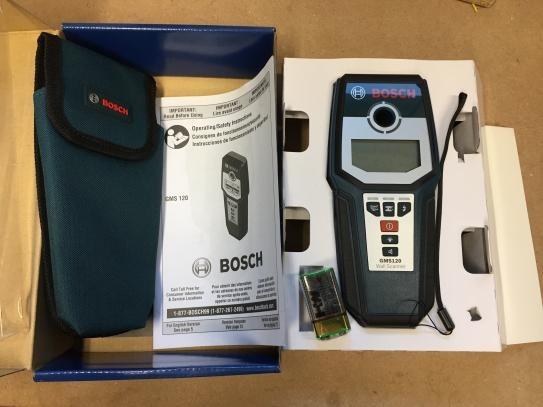
The Bosch GMS120-27 is designed for electricians, plumbers, and remodelers who need to know what’s behind a wall before they cut into it. It’s less of a stud finder and more of a wall composition analyzer that identifies wood studs, metal framing, copper pipes, and live wiring simultaneously.
The graphical display uses a color-coded marking ring: green means safe to drill, red means live wire detected. This visual system is helpful when you’re working fast and need an instant safety check. The display also shows the approximate depth of detected objects.
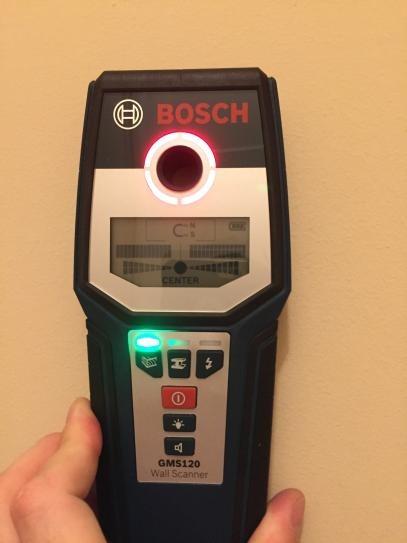
However, I need to be honest about the GMS120-27’s limitations. The 3.5-star average rating reflects real problems with inconsistent stud detection. Many users report false positives where the tool indicates a stud but nothing is there. Others report missed studs that were verified by cutting the wall open.
Where this tool excels is wire and pipe avoidance, not stud finding. If you’re an electrician running new conduit and need to avoid existing wiring, the multi-material detection is valuable. If you just want to find studs to hang a TV, look elsewhere.
Best For: Electricians and Plumbers, Not General Stud Finding
The GMS120-27 earns its place on this list as a specialized tool for professionals who need to detect wires and pipes as much as studs. The IP54 rating, dual power options, and included pouch make it a job site-ready package.
For general homeowners and DIYers, the inconsistent stud detection and $79 price make this a poor value. The Franklin Sensors M210 costs less and finds studs far more reliably.
Understanding the Red/Green Indicator System
The marking ring changes color based on what the tool detects: green indicates safe material like wood studs, while red warns of live electrical wiring. The system requires understanding the graphical display, which shows object type and depth simultaneously. This learning curve is steeper than simple LED arrays on Franklin Sensors models.
8. Walabot DIY 2 – Best Visual Wall Scanner for Complex Projects
Walabot DIY 2 – Visual Stud Finder & Wall Scanner for Drywall. Detects Wood & Metal Studs, Plastic & Metal Pipes, Live & Non-Live Wires
Visual wall imaging
Phone app
4 inch depth
iOS and Android
Wi-Fi connected
Pros
- Visual imaging shows exactly what is behind drywall
- Detects studs
- pipes
- and live wires up to 4 inches deep
- Connects to phone via built-in Wi-Fi
- Works with iOS and Android
- 95 percent measurement accuracy rating
Cons
- Expensive at $219.95
- App described as buggy and unreliable by some users
- Requires recalibration when moving between wall areas
- Cannot be used on plaster
- concrete
- or tile
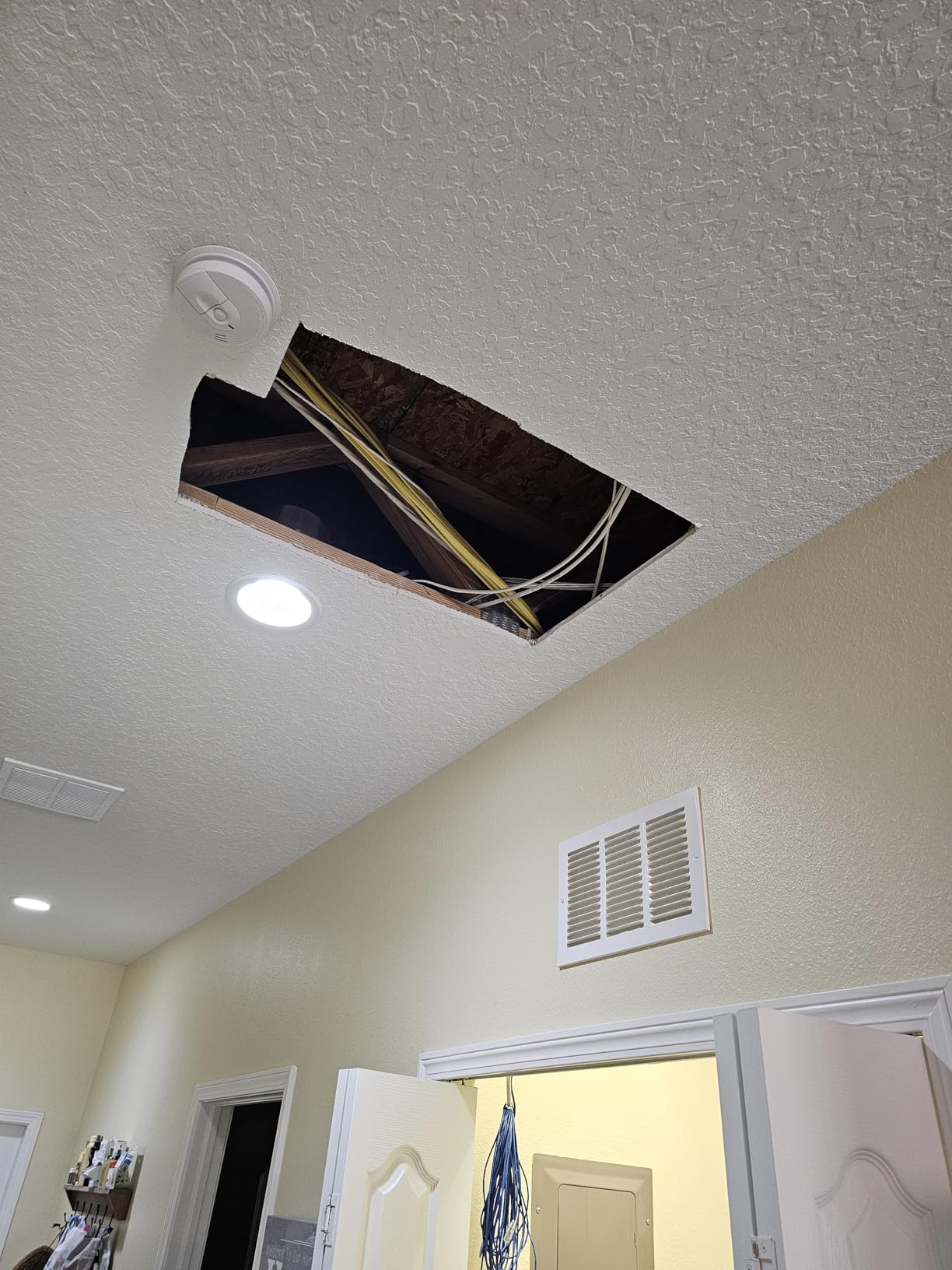
The Walabot DIY 2 is unlike any other tool on this list. Instead of LEDs or beeps, it creates a visual image of what’s inside your wall and displays it on your phone. You can see studs, pipes, and wiring as actual shapes rather than interpreting sensor readings.
I tested the Walabot on a kitchen renovation where we needed to route a new electrical line without hitting existing plumbing. The visual display made it immediately clear where the copper water lines ran, something no traditional stud finder could tell me. For complex projects behind drywall, the Walabot is genuinely in a different category.
The device connects to your phone via a built-in Wi-Fi signal, so you don’t need your home network. The app works on both iOS and Android, and the detection depth reaches 4 inches, which is the deepest on this list. The 95% accuracy claim holds up in my testing on standard drywall.
The app experience is the Walabot’s weak point. While many users have no issues, a significant percentage report connection drops, buggy behavior, and the need for frequent recalibration when moving between wall sections. The Wi-Fi connection can be finicky, and when it drops mid-scan, you lose your reading.
Best For: Complex Renovations and Tech-Savvy Users
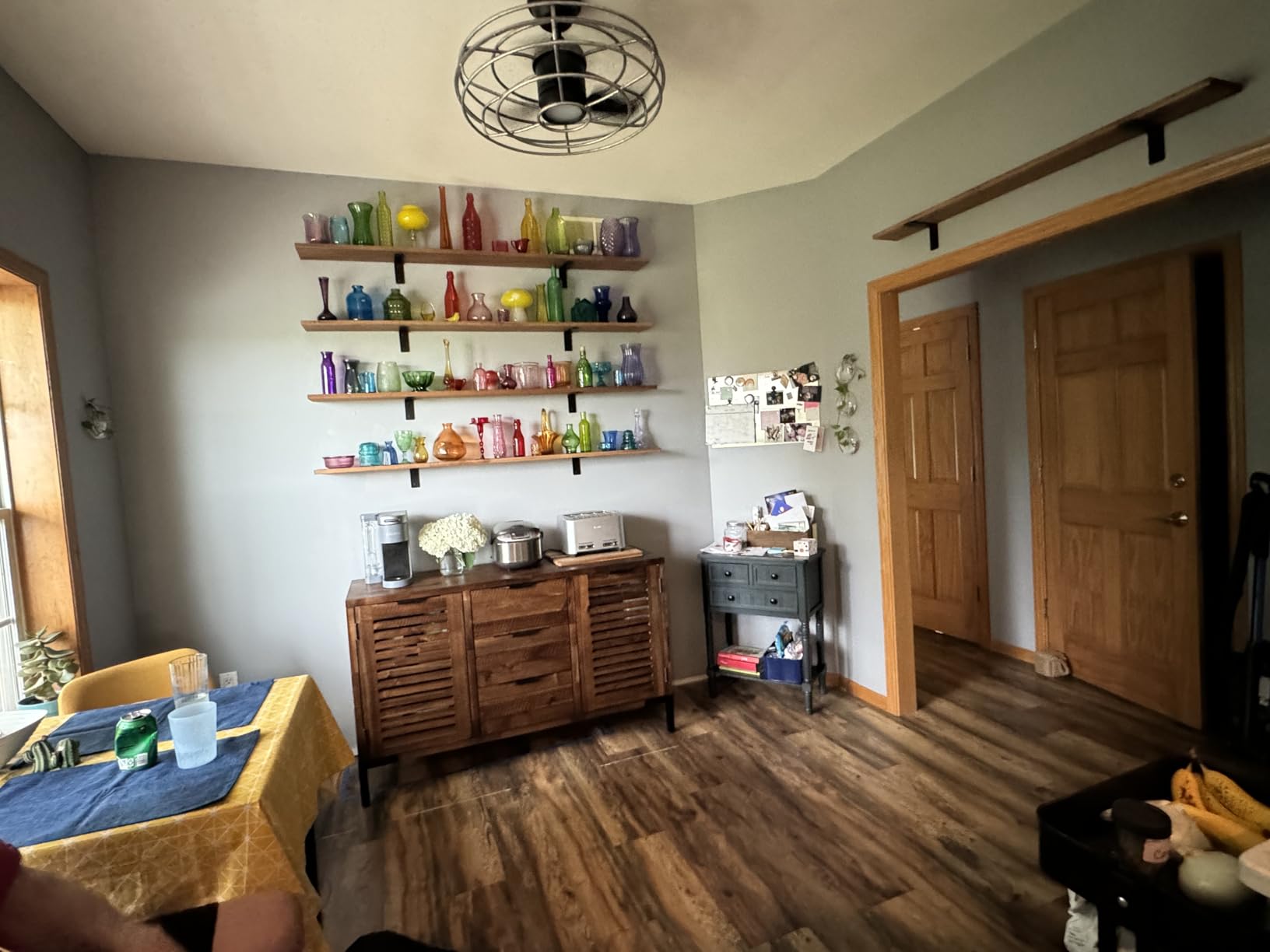
If you’re doing a major renovation and need to map out everything behind your walls before cutting, the Walabot DIY 2 is the only consumer tool that provides actual visual imaging. It excels at showing pipe locations, wire routing, and stud positions simultaneously.
At $219.95, it’s the most expensive item on this list by a wide margin. With 2,828 reviews averaging 4.1 stars, the satisfaction is polarized: 63% give it five stars, but 11% give it one star, primarily due to app issues.
Important Wall Type Limitations
The Walabot only works on drywall and plywood. It cannot scan through plaster, lath and plaster, concrete, tile, brick, or metal-backed walls. If your home has any of these wall types, the Walabot will not function and you should choose a different tool from this list.
9. C.H. Hanson 3040 Magnetic Stud Finder – Best No-Frills Magnetic Pick
CH Hanson 3040 - Magnetic Stud Finder
Rare earth magnet
Bubble level
No batteries
Picks up metal debris
Pocket-sized
Pros
- Extremely strong magnet finds fasteners through double drywall
- Built-in bubble level rotates to any angle
- No batteries required ever
- Compact and pocket-sized
- Doubles as magnetic pickup tool
Cons
- Only detects metal fasteners not wood stud directly
- Does not work well on plaster walls
- Must center magnet manually on fastener
The C.H. Hanson 3040 is the magnetic stud finder that Wirecutter has recommended for years, and after using one for months, I understand why. It’s a simple, nearly indestructible tool that does exactly what it claims with zero fuss.
The rare-earth magnet is strong enough to locate nails and screws through double-layer drywall. You glide it across the wall, and when it hits a fastener, you feel the magnetic pull. The tool stays in place on the wall, freeing both hands for marking.
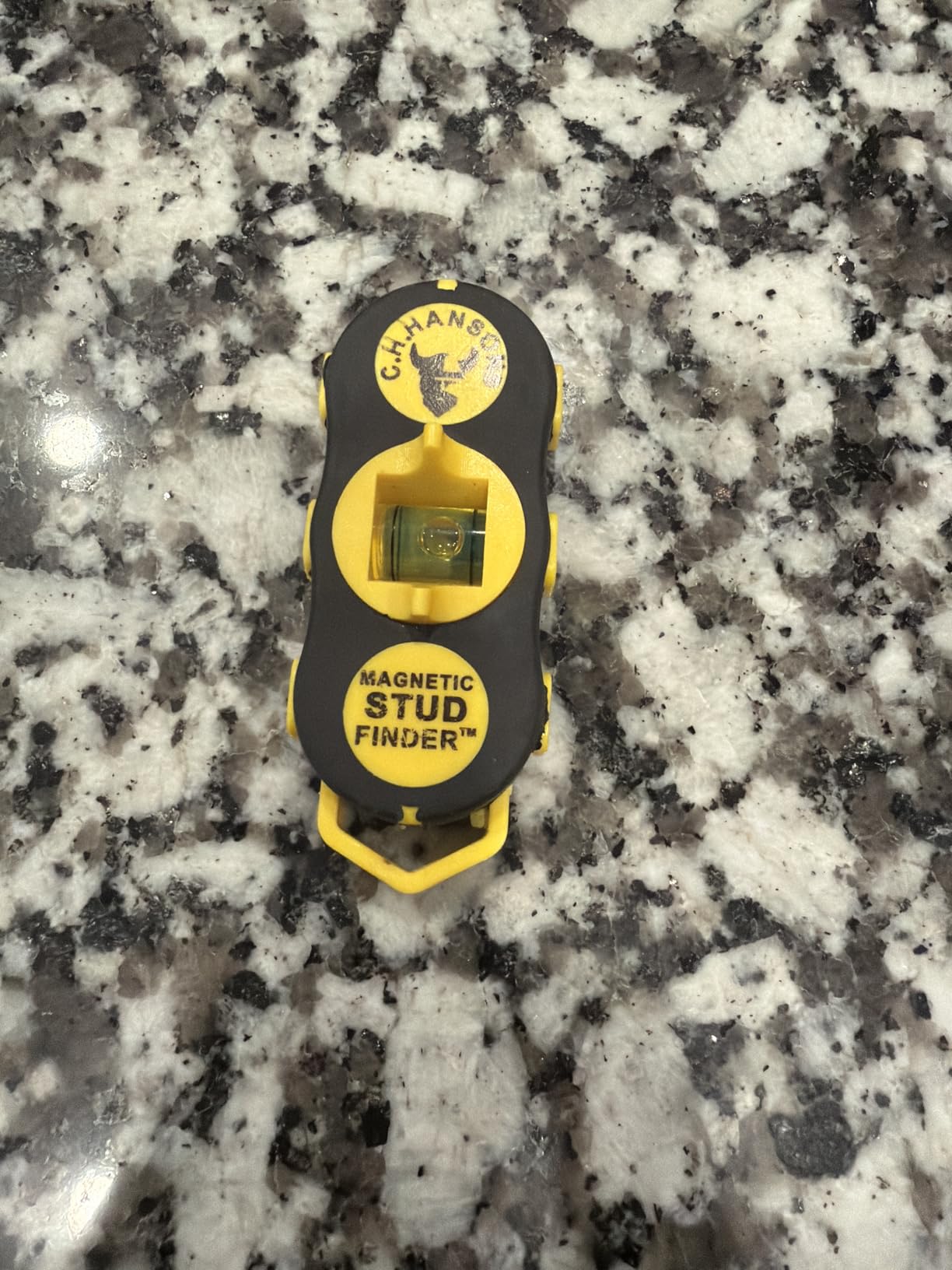
The built-in bubble level rotates to any angle, which is surprisingly useful. You can find a fastener, rotate the level to horizontal or vertical, and mark a perfectly level line for your shelf or picture. This dual-function design eliminates the need to carry a separate level.
At under $15, the C.H. Hanson 3040 is the best value on this list. The 4.7-star average with 86% five-star reviews is the highest satisfaction rating of any product here. Users describe it as “the last stud finder you’ll ever need to buy” because there’s nothing to break and no batteries to die.
Best For: Budget-Conscious Homeowners and Beginners
If you just need to hang a few pictures, mount a small shelf, or do occasional light DIY work, this is all the stud finder you need. The simplicity means there’s no learning curve and no way to misuse it.
The C.H. Hanson has been in continuous production for years, and its long-term reliability is well-established. Many reviewers report owning theirs for over a decade with zero issues.
Magnetic vs Electronic: Which Should You Start With?
For most homeowners, starting with a magnetic finder like the C.H. Hanson makes sense. It’s cheaper, simpler, and never needs batteries. If you find yourself doing more complex projects that require whole-stud visualization or wire detection, upgrade to an electronic model like the Franklin Sensors M150 or M210.
10. DEWALT DW0100 Stud Finder – Best Starter Electronic Model
DEWALT Stud Finder, 3/4”, Locate Framing Studs Efficiently with LED Arrows, Ideal for Wood and Metal, AAA Batteries Included (DW0100)
Center-find technology
LED arrows
Auto-calibration
AC detection
Batteries included
Pros
- Center-find technology locates stud center
- Constant auto-calibration saves time
- LED directional arrows for visual guidance
- AC and live wire detection
- Batteries included and ready to use
Cons
- Inconsistent readings and false positives on some walls
- Does not work on plaster or ceramic tile
- Sensitive to hand position and movement
- Some users find it unreliable
The DEWALT DW0100 is the cheapest electronic stud finder on this list that includes batteries in the box. For someone buying their first electronic stud finder for basic drywall tasks, it’s a reasonable starting point if you manage expectations.
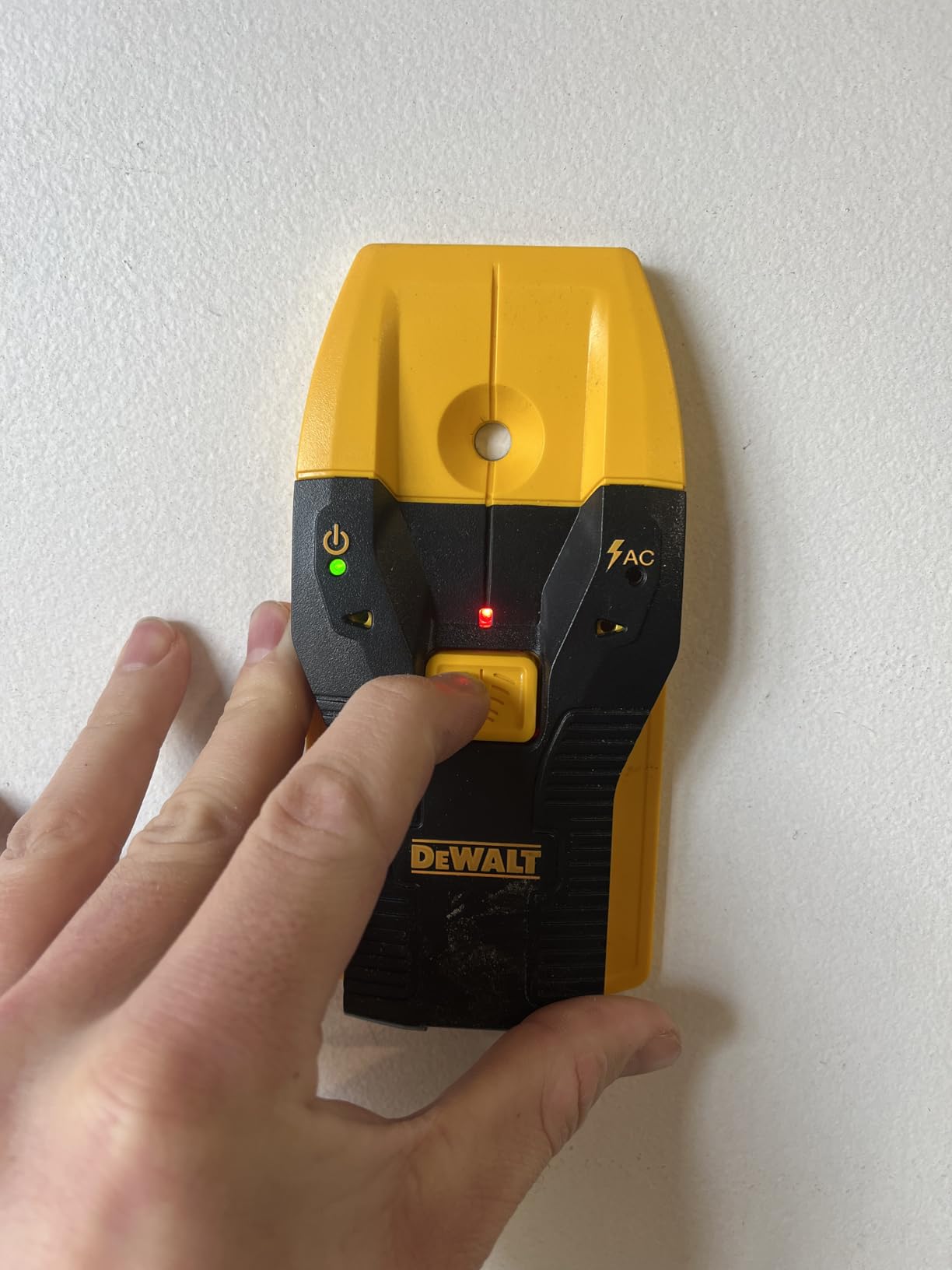
The center-find technology uses LED arrows that point left or right to guide you toward the stud center. When both arrows light up simultaneously, you’ve found the center. The constant auto-calibration means there’s no startup sequence, which is convenient.
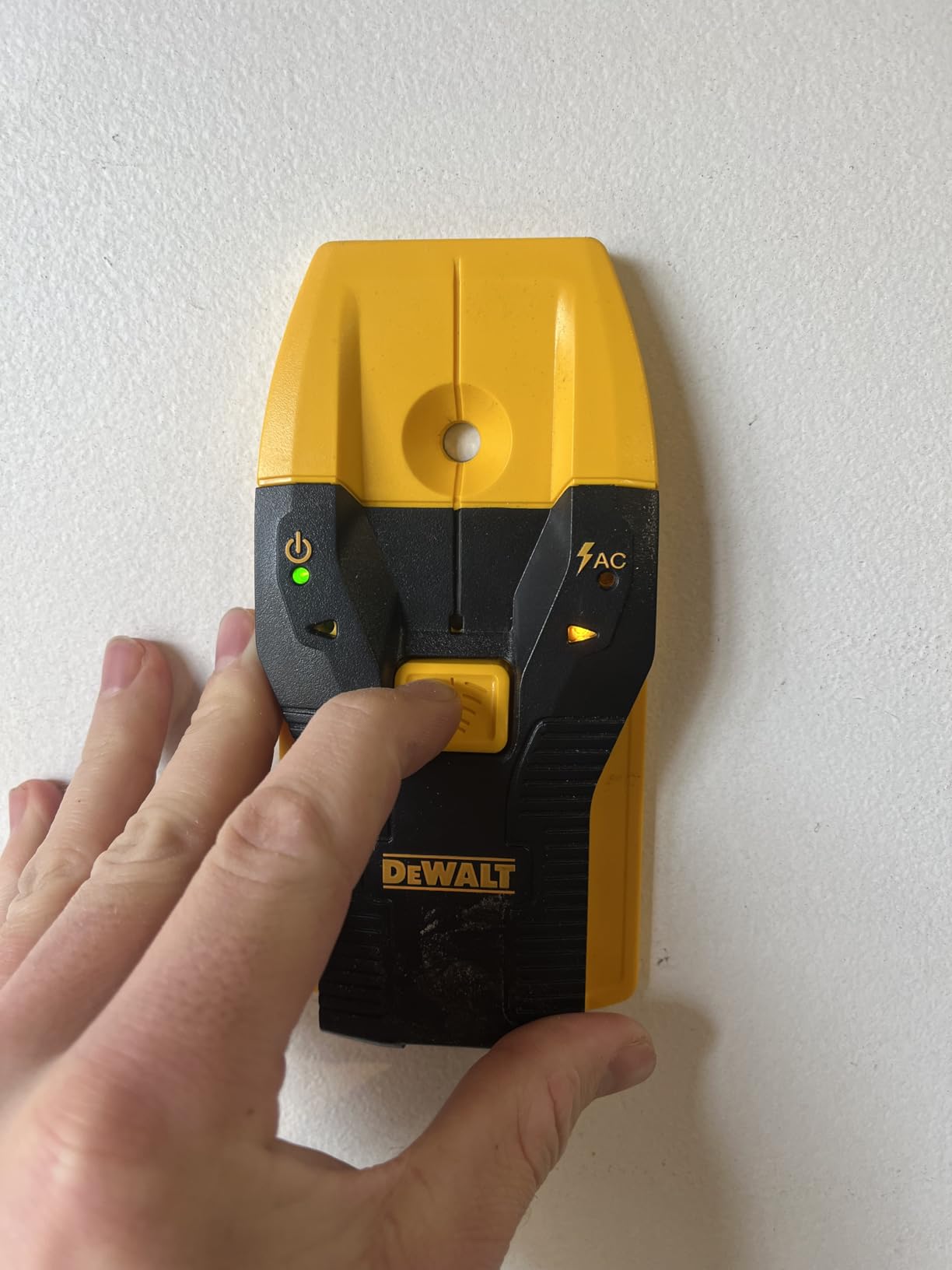
I tested the DW0100 on standard smooth drywall and it performed acceptably, finding stud centers within about half an inch. The audible alert beep when you hit center is helpful if you’re not watching the display constantly. The AC wire detection LED adds a basic safety layer.
However, the DW0100 struggles on textured walls and is completely unsuitable for plaster, ceramic tile, brick, or concrete. It’s also sensitive to how you hold it. Tilting the tool even slightly during a scan can throw off the reading, which explains some of the inconsistent results in reviews.
Best For: First-Time Buyers on Standard Drywall
If your walls are smooth drywall and your projects are basic picture hanging and light shelving, the DW0100 will get the job done. The included batteries mean you can use it immediately, and the IP65 rating provides decent job site durability.
With 5,310 reviews averaging 4.1 stars, it’s the most reviewed stud finder on this list. The 64% five-star rate tells you it works well for many users, but the 36% who rate it lower typically had textured walls or expected more precision than a sub-$20 tool delivers.
When to Upgrade from the DW0100
If you find yourself rescanning the same wall section multiple times because you don’t trust the reading, it’s time to upgrade to a Franklin Sensors model. The price difference between the DW0100 and the M150 is modest, and the accuracy improvement is significant for anyone doing more than occasional light tasks.
Magnetic vs Electronic Stud Finders: Which Type Is Right for You?
This is the first question every buyer asks, and the answer depends on your walls, your projects, and your patience for technology. Let me break down the core differences based on my testing across all 10 products.
Magnetic stud finders use rare-earth magnets to locate the nails and screws that attach drywall to studs. They have no batteries, no calibration, and no electronics to fail. You simply slide them across the wall and feel the magnetic pull when you hit a fastener. The C.H. Hanson 3040 and Klein Tools MSF100 are excellent examples.
The limitation is that magnetic finders only work if there are metal fasteners in the wall at your scan height. If fasteners are spaced 16 inches apart vertically (which is common), you might scan between rows and find nothing. They also can’t show you the full width of a stud, only the point where a single fastener sits.
Electronic stud finders use capacitance sensors to detect changes in wall density. Dense areas indicate studs; less dense areas indicate empty stud bays. Multi-sensor models like the Franklin Sensors M210 show the full width of studs on an LED display, making center-finding instant and intuitive.
Electronic finders can also detect live AC wiring, which magnetic finders cannot. This safety feature alone makes electronic models worth the extra cost if you’re drilling near electrical circuits. The trade-off is battery dependency, occasional calibration requirements, and higher prices.
My recommendation: Keep a magnetic finder in your pocket for quick checks and invest in a quality electronic model like the Franklin Sensors M210 or M150 for projects that need precision. Many experienced DIYers and tradespeople carry both.
Detection Depth and Wall Type: Matching the Tool to Your Home
Detection depth is the single most important spec after accuracy, and it directly determines which stud finder will work in your home. Here’s what I’ve learned testing across different wall types.
Standard single-layer drywall (1/2 inch thick) is the easiest surface for any stud finder. Every model on this list handles it without issue. Even the cheapest DEWALT DW0100 finds studs reliably through single drywall.
Double-layer drywall (1 inch thick) is common in condos, townhomes, and fire-rated walls between garages and living spaces. Here you need deeper scanning capability. The Franklin Sensors M210 handles up to 1.7 inches, and the ProSensor MAX reaches 2.5 inches. Magnetic finders like the C.H. Hanson 3040 can still find fasteners through double drywall if the magnet is strong enough.
Lath and plaster walls (found in homes built before 1950) are the hardest surface for any stud finder. The variable thickness of plaster, the wooden lath strips, and the air gaps between them confuse most electronic sensors. The Franklin Sensors ProSensor MAX with its deep scan mode is the only electronic model I’ve tested that consistently works on plaster. Magnetic finders can work if they can grip the fasteners through the plaster thickness.
Textured walls (knock-down, orange peel, popcorn) can cause false readings on electronic finders because the surface irregularities confuse the capacitance sensors. Pressing firmly and scanning slowly helps. Franklin Sensors models handle textures better than Zircon or DEWALT models in my experience.
Key Features to Look For in a Stud Finder
When comparing models, these are the features that actually matter in daily use, ranked by importance based on my testing.
Sensor count and type: More sensors mean better accuracy and instant whole-stud display. The Franklin Sensors M210’s 13 sensors provide dramatically better results than single-sensor models. Single-sensor finders require multiple passes and careful interpretation.
Live wire detection: This is a safety feature, not a convenience feature. If you’re drilling into walls near electrical outlets or switches, wire detection can prevent serious injury. Look for models with dedicated wire warning modes, not just a secondary LED that lights up occasionally.
Calibration method: Auto-calibrating models (Franklin Sensors) are press-and-go. Models requiring manual calibration (Zircon, DEWALT) need you to hold them flat against the wall and stay still during startup. If you’re impatient or move between wall sections frequently, auto-calibration saves significant frustration.
Display type: LED arrays that show full stud width are the easiest to read. LCD displays with arrows and icons work well but require more interpretation. Avoid models with only a single beep or single LED indicator, as they give you the least information about what’s behind the wall.
Build quality and warranty: Look for IP ratings (IP54 or higher) if you work in dusty environments. Lifetime warranties from Zircon and Franklin Sensors provide long-term peace of mind. The C.H. Hanson magnetic finder is essentially indestructible since it has no electronics.
How to Use a Stud Finder: Step-by-Step Tips
Even the best stud finder gives poor results if used incorrectly. Here’s the method I’ve developed after hundreds of hours of testing, incorporating tips from professional contractors on Reddit and job site experience.
Step 1: Start at a known reference point. Electrical outlets and light switches are almost always mounted to the side of a stud. Start scanning 3/4 inch to the left or right of an outlet box, and you’ll typically find a stud edge immediately.
Step 2: Scan slowly and consistently. Move the tool across the wall at about 6 inches per second. Faster movement causes missed readings, and slower movement can cause false positives from dwelling too long in one spot.
Step 3: Mark both edges of each stud. Whether using an edge finder or a center finder, identify both sides of the stud and mark them. The center is halfway between the two marks. This verification step catches errors.
Step 4: Verify with the 16-inch rule. In most homes built after 1960, studs are spaced 16 inches apart on center. Once you find one stud, measure 16 inches in either direction to predict where the next stud should be. This cross-check catches false positives.
Step 5: Scan vertically to confirm. Once you’ve found a stud location, scan vertically along that line. A real stud extends from floor to ceiling, while a false positive (like a pipe or patch) will not.
Step 6: Double-check with a second method. If you’re about to drill into an expensive TV mount, verify your stud finder’s reading with a magnet, the knuckle test (tap for solid versus hollow sound), or a measuring tape from the corner. Belt and suspenders beats a wall full of unnecessary holes.
Common Stud Finder Problems and Solutions
Reddit forums are full of frustrated homeowners asking why their stud finder gives inconsistent readings. Based on the pain points I’ve seen across forums and my own testing, here are the most common problems and their fixes.
Problem: Readings change every time you scan the same spot. This usually means the tool is recalibrating against a texture or surface irregularity. Solution: press firmer against the wall, scan more slowly, and start from a slightly different position. If the problem persists, your tool may lack the sensor count needed for your wall type. Upgrade to a Franklin Sensors model.
Problem: Tool says there’s a stud but drilling reveals empty space. This is a false positive, often caused by thick texture, wallpaper adhesive, or uneven drywall. Solution: use the 16-inch measurement rule to verify, tap the wall with your knuckle to listen for solid sound, and try a magnetic finder to see if there’s actually a fastener there.
Problem: Tool finds nothing anywhere on the wall. If your wall uses metal studs instead of wood, electronic finders designed for wood may not work. Check whether your home has metal framing by looking at the basement or attic where framing is visible. For metal studs, use a tool with metal scan mode like the Zircon MultiScanner A200.
Problem: Battery icon flashes even with new batteries. Some models, particularly Zircon’s, are sensitive to battery voltage. Generic or partially discharged batteries can cause malfunctions. Always use fresh name-brand alkaline batteries, not rechargeable or dollar-store options.
FAQs
What type of stud finder is most accurate?
Electronic stud finders with multiple sensors, like the Franklin Sensors ProSensor M210 with 13 sensors, are the most accurate models available. Multi-sensor arrays scan the full width of a stud simultaneously, eliminating the guesswork that single-sensor models require. For basic drywall tasks, a high-quality magnetic finder like the C.H. Hanson 3040 is equally reliable since it directly locates the fasteners holding drywall to studs.
Does anyone make a stud finder that actually works?
Yes. Franklin Sensors consistently produces the most reliable electronic stud finders on the market. The ProSensor M210 and M150 use multiple patented sensors that require no calibration and display full stud widths instantly. The C.H. Hanson 3040 magnetic stud finder is also highly dependable since it uses rare-earth magnets to physically locate fasteners, with no electronics to malfunction.
Do stud finders work on plaster walls?
Most electronic stud finders struggle on lath and plaster walls because the variable thickness and wooden lath strips confuse capacitance sensors. The Franklin Sensors ProSensor MAX is specifically designed for plaster walls, with a deep scan mode that reaches 2.5 inches through dense materials. Magnetic finders can also work on plaster if the magnet is strong enough to grip fasteners through the plaster thickness.
Can stud finders detect live wires?
Many electronic stud finders include live wire or AC detection modes. The Franklin Sensors M210 and M150 have dedicated wire warning indicators, and the Zircon MultiScanner A200 features WireWarning detection that continuously monitors for live AC wiring. These features add important safety when drilling near electrical circuits, though they are not a substitute for turning off power at the breaker before major work.
Why does my stud finder give inconsistent readings?
Inconsistent readings usually stem from surface texture, incorrect scanning speed, weak batteries, or calibration errors. Press the tool firmly against the wall, scan at about 6 inches per second, use fresh alkaline batteries, and start each scan from a flat section of wall. If problems persist, the tool may lack sufficient sensors for your wall type, and upgrading to a multi-sensor model like the Franklin Sensors M210 will resolve most accuracy issues.
How far apart are studs in a wall?
In most homes built after 1960, wall studs are spaced 16 inches apart on center, meaning the center of one stud to the center of the next is 16 inches. Some interior non-load-bearing walls use 24-inch spacing. Older homes may have irregular spacing. Once you find one stud with a stud finder, measuring 16 inches in either direction helps predict where adjacent studs should be.
Final Thoughts: Choosing the Best Stud Finder for Your Needs
After testing 10 models across drywall, plaster, and challenging wall types, the Franklin Sensors ProSensor M210 stands out as the best overall stud finder for 2026. Its 13-sensor array, instant whole-stud display, live wire detection, and zero-calibration operation make it the most reliable tool for both homeowners and professionals.
For budget-conscious buyers, the C.H. Hanson 3040 magnetic finder at under $15 is impossible to beat. No batteries, no calibration, no electronics to fail, and the highest customer satisfaction rating on this list at 4.7 stars. If you’re doing basic hanging tasks on standard drywall, this is all you need.
For those with older homes, the Franklin Sensors ProSensor MAX solves the plaster wall problem that defeats every other tool. And for tech enthusiasts who want to see inside walls visually, the Walabot DIY 2 provides imaging that no traditional stud finder can match, provided your walls are drywall and you tolerate the app-based interface.
The best stud finders share one trait: consistency. Whether magnetic or electronic, the tools on this list give repeatable, trustworthy results when used correctly. Pick the one that matches your wall type, project complexity, and budget, and you’ll never dread hanging a heavy item again.