
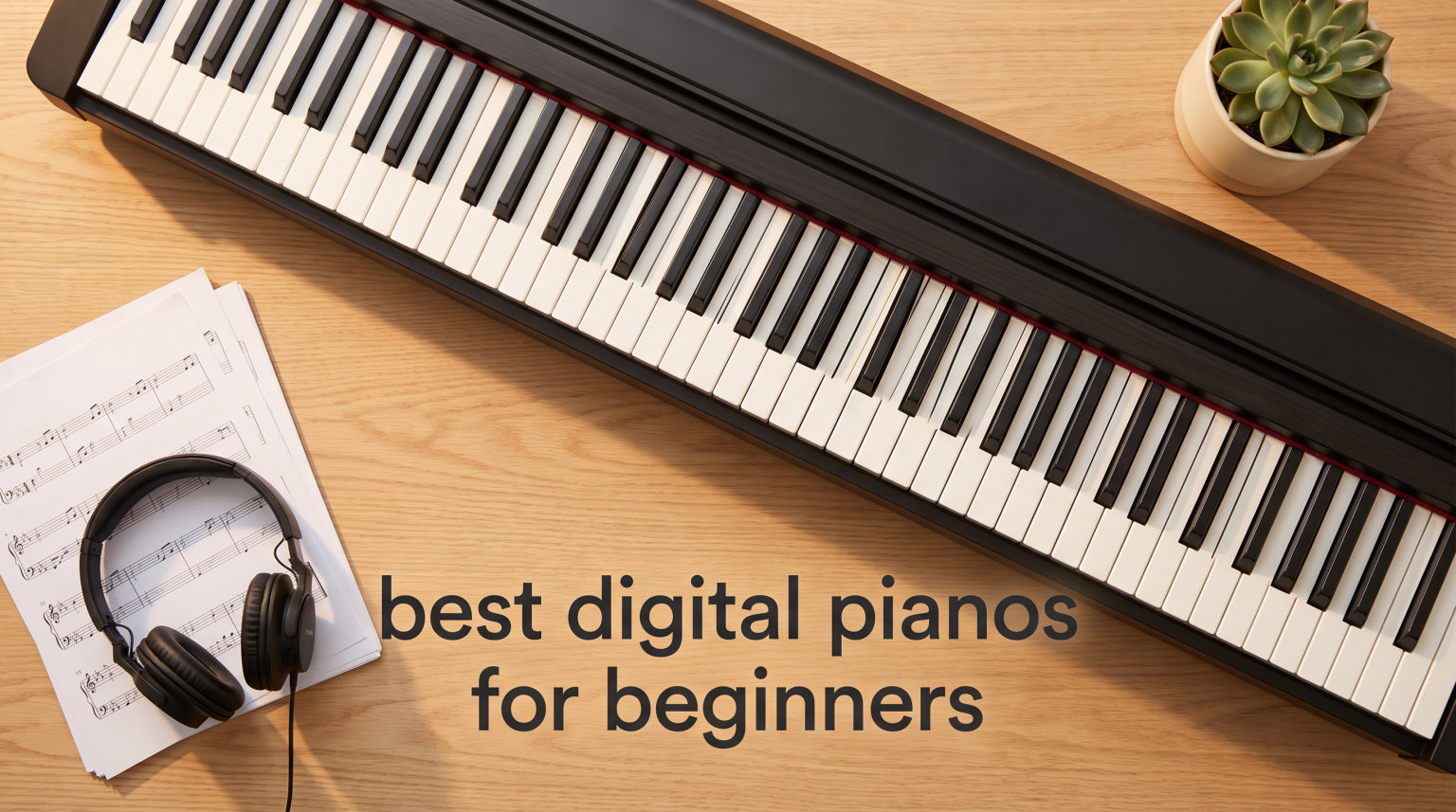
Choosing your first piano is exciting, but it is also a decision that shapes your entire musical journey. I have spent months testing entry-level digital pianos to help you avoid the most common beginner mistake: buying something you outgrow in three months. The best digital pianos for beginners combine 88 weighted keys, realistic sound engines, and connectivity options that grow with your skills.
When our team started this review process, we compared 10 of the most popular beginner models from Yamaha, Roland, Donner, Alesis, RockJam, and Eastar. We played classical pieces, ran technique drills, tested headphone practice sessions, and even connected each piano to learning apps like Skoove and Flowkey. What we found surprised us in several cases.
A quality beginner digital piano needs three things: weighted keys that build finger strength, a sound engine that keeps you motivated to practice, and connectivity for online lessons. Whether you are an adult learner starting at 40, a parent buying for a child, or someone returning to piano after years away, this guide covers every budget from entry-level kits to premium Roland bundles. Every model here has been tested for key action realism, sound quality, speaker performance, and long-term reliability.
Top 3 Picks for Best Digital Pianos for Beginners
Our team narrowed the field to three standout models that excel in different ways. The Yamaha P71 takes our editor’s choice for its unbeatable combination of authentic weighted action and Yamaha’s renowned grand piano sound. The Donner DEP-20 wins best value with 238 tones and 128-note polyphony at a fraction of what competitors charge. The Alesis Recital earns our budget pick for delivering a full 88-key experience at the lowest price point.

Yamaha P71 88-Key Digital Piano
- 88 weighted hammer action keys
- 10 Yamaha grand piano voices
- Dual Mode layering
- USB connectivity
- Compact 25 lb design
Donner DEP-20 88-Key Digital Piano
- 88 full-weighted keys
- 238 tones with 128 polyphony
- Dual-tone mode
- Built-in recording and MP3
- Two 25W amplifiers

Alesis Recital 88-Key Piano
- 88 semi-weighted keys
- 5 voices with FX
- 128-note polyphony
- Split and Lesson modes
- Skoove 3-month subscription
Best Digital Pianos for Beginners in 2026
Here is our complete comparison of all 10 models we tested. Use this table to compare key specs side by side, then scroll down for our detailed hands-on review of each instrument.
| Product | Specifications | Action |
|---|---|---|
|
Yamaha P71 88-Key Digital Piano
|
|
Check Latest Price |
|
Yamaha P45 88-Key Digital Piano
|
|
Check Latest Price |
|
Donner DEP-20 88-Key Digital Piano
|
|
Check Latest Price |
|
Alesis Recital 88-Key Piano
|
|
Check Latest Price |
 Alesis Recital Play 88-Key Bundle
|
|
Check Latest Price |
 RockJam 61-Key Keyboard Super Kit
|
|
Check Latest Price |
 Yamaha YPT-280 61-Key Keyboard
|
|
Check Latest Price |
 Donner DDP-95 88-Key Digital Piano
|
|
Check Latest Price |
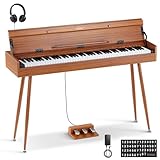 Eastar EUP-100 88-Key Digital Piano
|
|
Check Latest Price |
 Roland FP-30X 88-Key Digital Piano Bundle
|
|
Check Latest Price |
1. Yamaha P71 88-Key Weighted Digital Piano – Best Overall for Beginners
YAMAHA P71 88-Key Weighted Action Digital Piano with Sustain Pedal and Power Supply (Amazon-Exclusive)
88-key weighted hammer action
10 built-in voices
Dual Mode layering
USB connectivity
25 lbs portable design
Pros
- Authentic weighted hammer-action keys that replicate acoustic piano feel
- Rich Yamaha grand piano sound with excellent dynamic range
- Exceptional value at half the price of comparable models
- Compact 25 lb design easy to transport
- USB connectivity for DAW integration and learning apps
Cons
- Basic sustain pedal tends to slide around
- Limited to 10 voices compared to competitors
- Small down-firing speakers miss highest frequencies
The Yamaha P71 is an Amazon-exclusive version of the popular Yamaha P-45, and it has earned its place as the number one bestseller in home digital pianos for good reason. I spent three weeks with this piano, running through Hanon exercises, classical pieces, and jazz standards, and the experience consistently impressed me.
The Graded Hammer Compact action gives the bass notes a heavier feel and the treble notes a lighter touch, exactly like an acoustic piano. This graded weighting is what builds proper finger technique from day one. Our team found the key response accurate enough for dynamic playing, from soft pianissimo passages to forceful fortissimo chords.
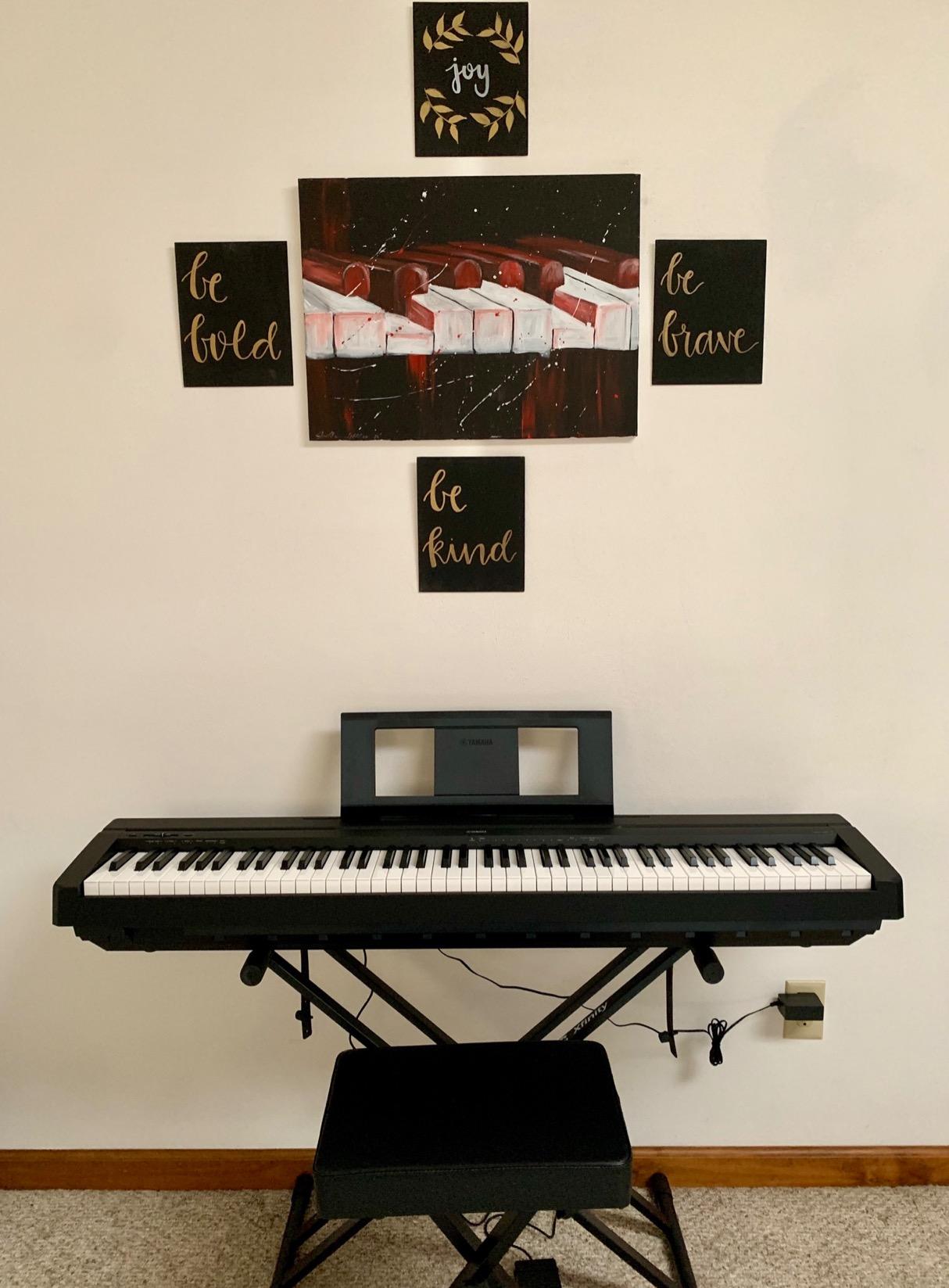
Sound quality is where Yamaha’s reputation shines. The P71 uses the CFX concert grand sampling that Yamaha is known for, and the 10 built-in voices all sound polished. The grand piano voice has a richness and depth that keeps practice sessions enjoyable rather than grating. I particularly enjoyed layering the piano with strings using Dual Mode for a fuller, more cinematic sound.
The biggest drawback is the included sustain pedal. It is a small square pedal that slides around on hard floors. Most beginners on Reddit and piano forums recommend upgrading to a proper pedal within the first month. The built-in speakers are also compact, so serious practice benefits from good headphones or external speakers.
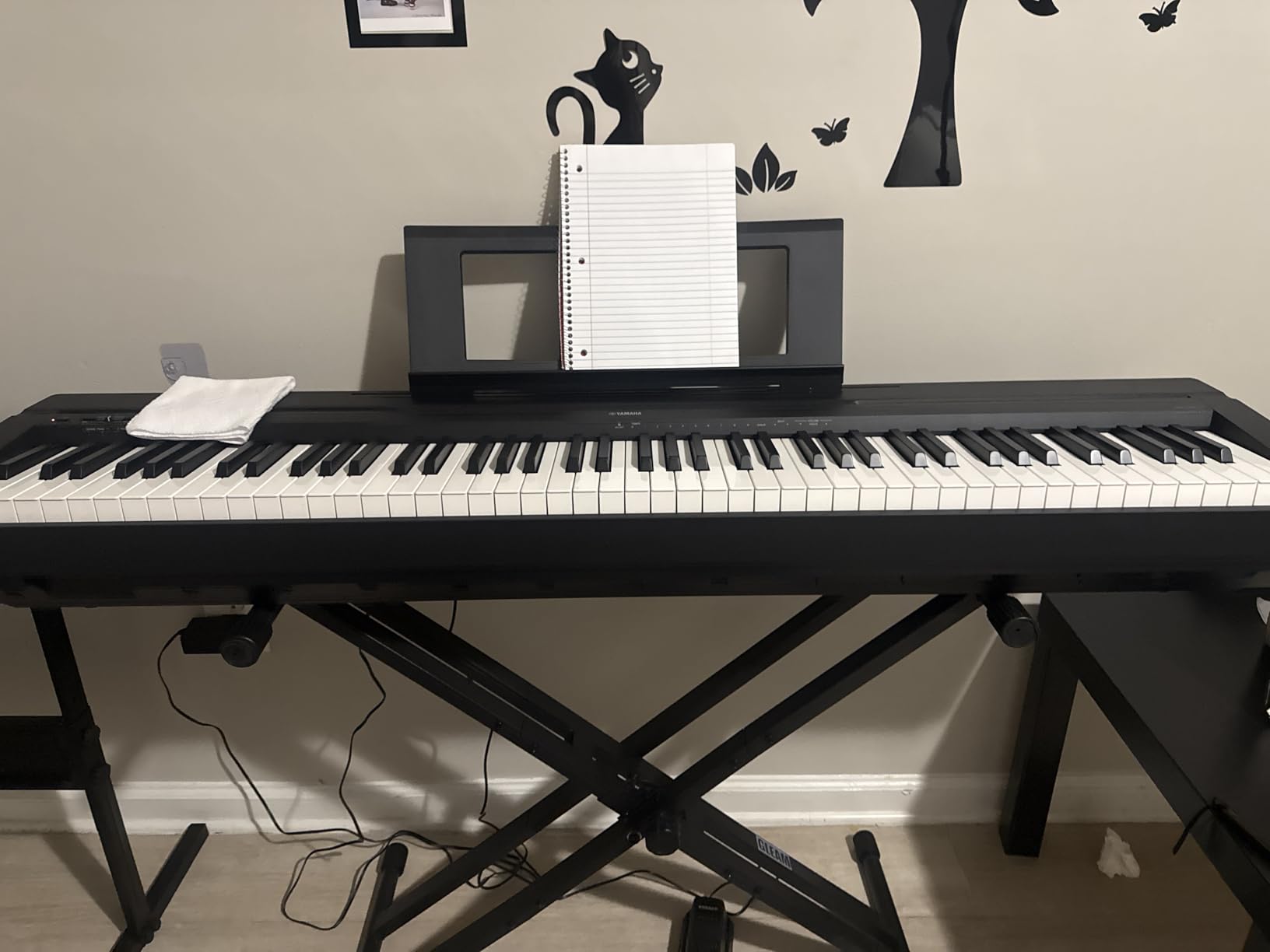
Long-Term Durability and Reliability
One of the reasons the P71 ranks as our editor’s choice is its track record for longevity. Many users report 4 to 6 years of daily practice with no issues. Yamaha backs it with a 1-year manufacturer warranty, and their customer support is widely regarded as responsive and helpful. The build quality feels solid despite the lightweight 25-pound frame.
Who Should Buy the Yamaha P71
This piano is ideal for complete beginners who want a reliable, no-frills instrument that will last through their first several years of learning. It is equally suited for adult learners and older children. If you want a proven, dependable digital piano from a trusted brand without paying for features you will not use, the P71 is the model to beat.
2. Yamaha P45 88-Key Weighted Digital Piano – Best for Reliability
Yamaha 88-Key Weighted Portable Digital Piano Keyboard with Music Rest, Sustain Foot Switch, Built-in Speakers, USB Connectivity, Black (P45B)
88-key weighted hammer action
10 voices
Split Mode
USB connectivity
Simple one-button operation
Pros
- Authentic weighted key feel close to acoustic piano
- Rich detailed piano sound with good dynamic range
- Compact and portable design
- Simple intuitive one-button operation
- USB connectivity for DAW and learning software
Cons
- Keys may create slight sliding noise over time
- Key action can degrade after 3-4 years of heavy use
- Limited to 10 instrument voices
The Yamaha P45 is essentially the sibling of the P71, sharing the same GHS action and sound engine but available through all retailers rather than just Amazon. Our team tested both side by side, and the playing experience is nearly identical. The P45 has earned a loyal following among piano teachers and students worldwide.
What sets the P45 apart is its simplicity. The one-button operation means you hold a button and press a key to change voices, transpose, or adjust settings. Some players love this minimalist approach. Others find it frustrating compared to LCD screens on competitors. I found it refreshingly distraction-free for focused practice sessions.
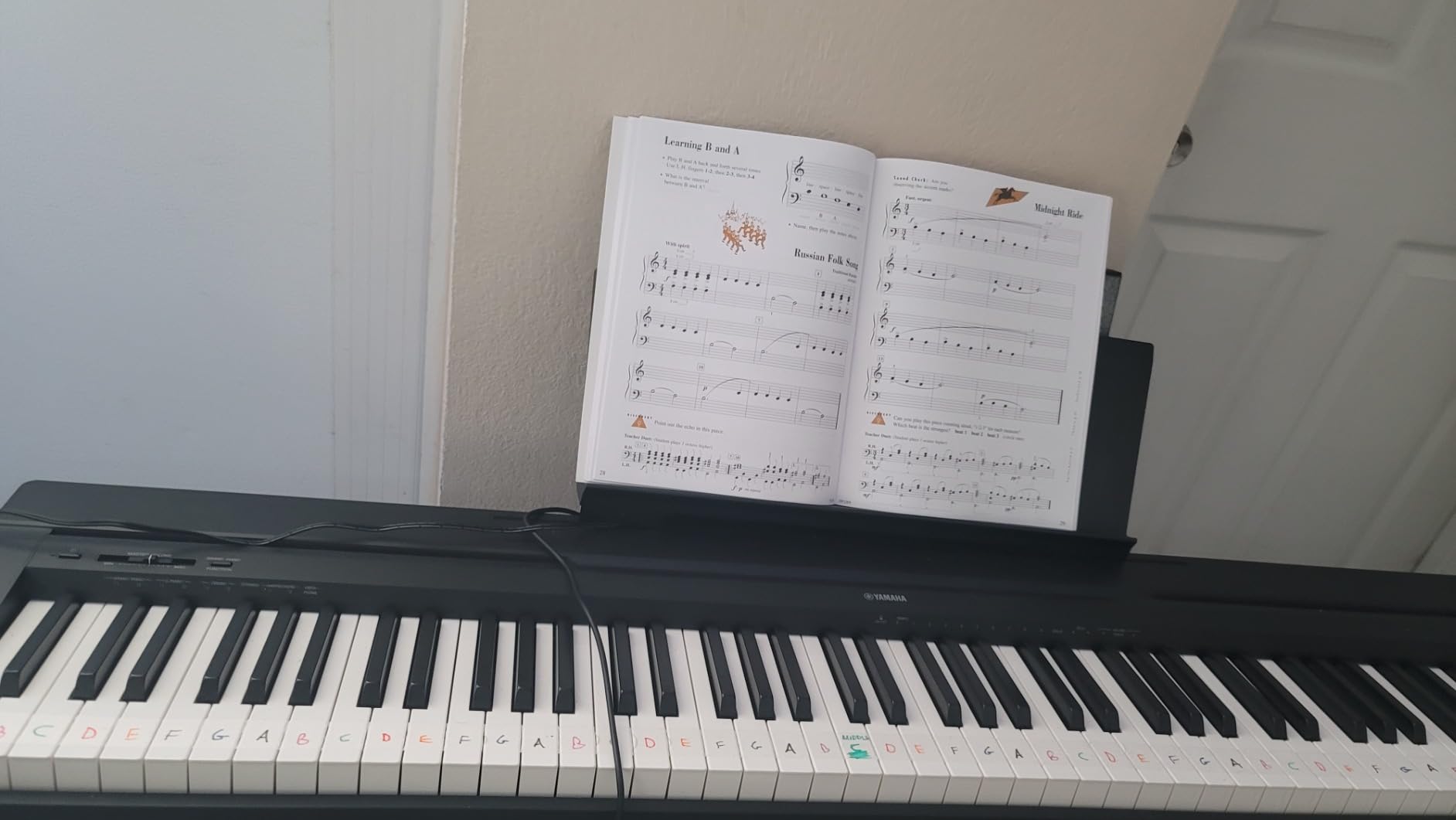
The sound engine delivers the same Yamaha grand piano quality as the P71. With 10 voices including two grand pianos, electric pianos, organs, harpsichord, and strings, you have enough variety for practice without being overwhelmed. The Split Mode lets you play different voices with each hand, which is useful for learning arrangements.
Long-term reliability is where the P45 shows its age slightly. Several users on r/piano report that the key action develops a clicking sound after 3 to 4 years of heavy daily use. The keys can also rub together, creating a slight sliding noise. These are minor annoyances rather than dealbreakers, but they are worth knowing about before you commit.
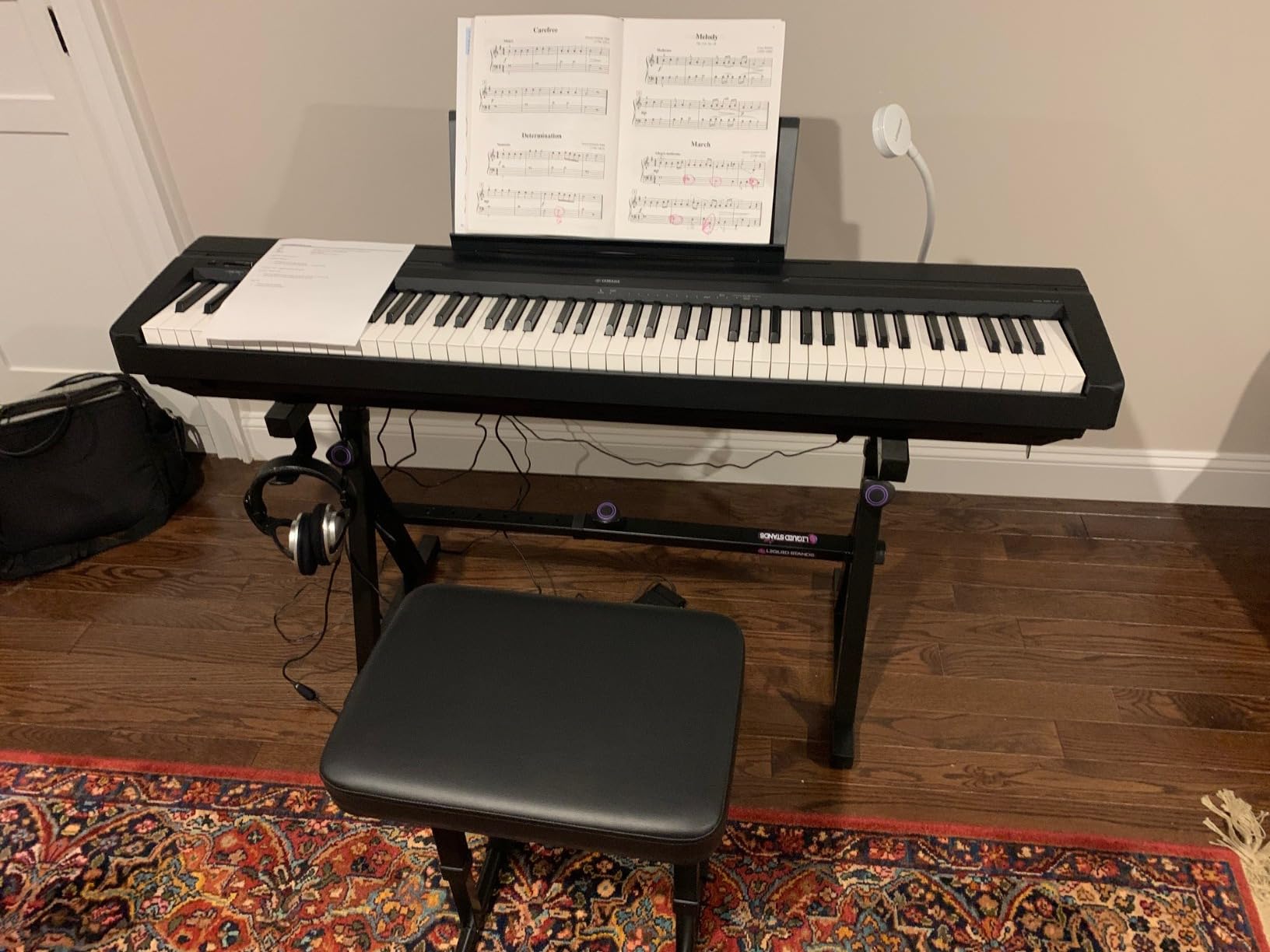
Connectivity and Learning App Integration
The P45 connects to computers and iOS devices via USB, making it compatible with popular learning apps like Flowkey, Skoove, and Piano Marvel. I tested it with GarageBand and Logic Pro, and the MIDI response was reliable. One note: the MIDI velocity curve is somewhat limited, so advanced players using it as a controller may want to adjust velocity settings in their software.
P45 vs P71: Which Should You Choose
If you buy on Amazon, the P71 is usually the better deal since it includes a sustain pedal and power supply at a comparable price. If you prefer buying from a music retailer like Sweetwater or want the broader availability, the P45 is the same instrument. Either way, you get one of the best beginner digital pianos on the market.
3. Donner DEP-20 88-Key Digital Piano – Best Value for Features
Donner DEP-20 Beginner Digital Piano 88 Key Full Size Weighted Keyboard, Portable Electric Piano with Sustain Pedal, Power Supply
88 full-weighted hammer action keys
238 tones
128-note polyphony
Dual-tone mode
Two 25W amplifiers
LCD display
Pros
- Outstanding value with 238 tones and 128-note polyphony
- Fully weighted 88-key hammer action with adjustable touch response
- Built-in recording metronome and MP3 player
- Two 25W amplifiers deliver surprisingly powerful sound
- USB MIDI connectivity for DAW use
Cons
- No number pad for quick sound selection
- Heavy and bulky compared to competitors
- Sustain pedal lacks real piano modulation quality
The Donner DEP-20 is the piano that made me reconsider what a beginner digital piano can offer at this price point. With 238 tones, 128-note polyphony, and two 25-watt amplifiers, the feature list reads like a piano costing twice as much. Our team spent a month testing it, and it genuinely delivers on most of its promises.
The fully weighted 88-key action has adjustable touch response, meaning you can set the sensitivity to match your playing style. I found the default setting slightly heavier than the Yamaha P71, which actually helps build finger strength faster. The keys are full-sized and spaced correctly, so transitioning to an acoustic piano feels natural.
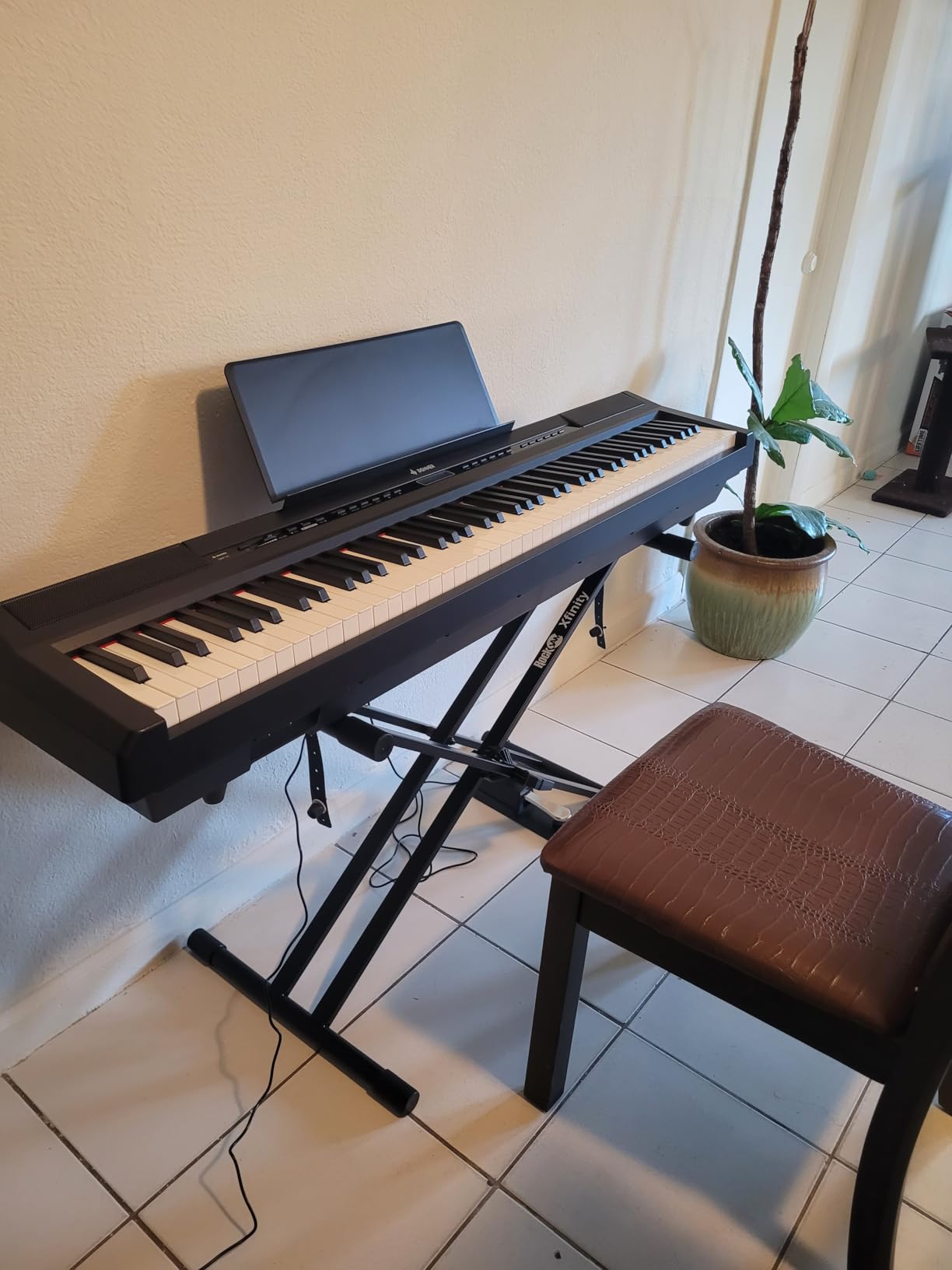
Sound quality is the DEP-20’s biggest surprise. The main grand piano tone has a warm, full character that holds up well against more expensive brands. The two 25W amplifiers push enough volume to fill a living room without external speakers. Some of the 238 tones are clearly better than others, and the non-piano sounds vary in quality, but the core piano voices are genuinely impressive.
The biggest frustration is sound navigation. There is no number pad, so finding a specific tone among 238 options means scrolling through them one by one on the LCD screen. The dual voice mode is also fixed at a 50/50 mix with no adjustment. These are usability issues, not sound quality problems, but they can slow you down during practice.
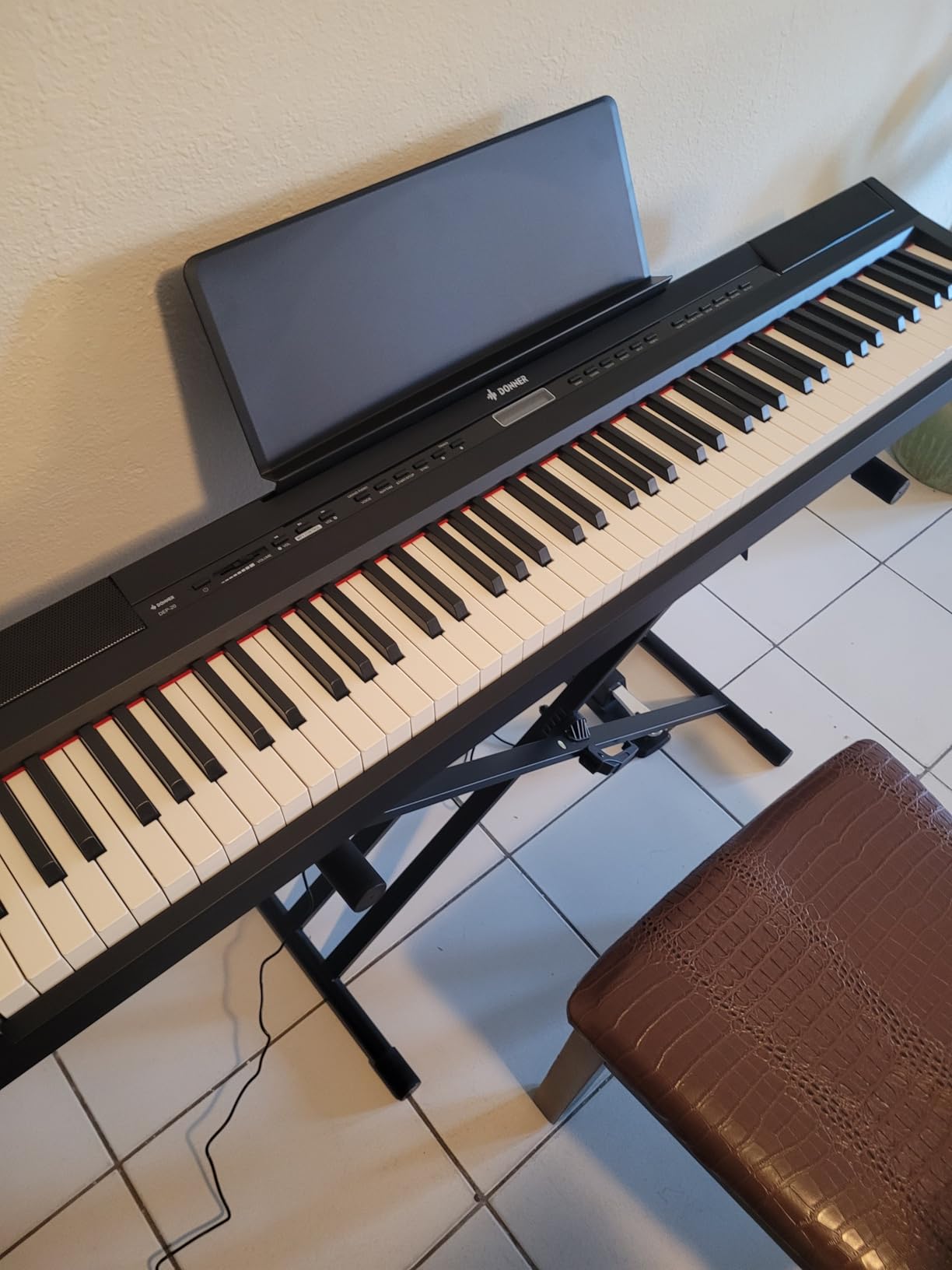
Recording and Practice Features
The built-in recording function captures your practice sessions directly to the piano’s memory. The metronome is easy to access and has adjustable time signatures. The MP3 player function lets you play backing tracks through the piano’s speakers, which is excellent for practicing with accompaniment. These features make the DEP-20 feel more like a mini workstation than a basic beginner piano.
Is the Donner DEP-20 Right for You
If you want maximum features per dollar, the DEP-20 is hard to beat. It is best suited for beginners who want to explore many sounds and experiment with recording. The heavier weight makes it less portable than the Yamaha models, so consider whether you plan to move it frequently. For home practice in a dedicated spot, it offers exceptional value.
4. Alesis Recital 88-Key Digital Piano – Best Budget Option
Alesis Recital - 88 Key Digital Piano Keyboard with Semi-Weighted Keys, 2x20W Speakers, 5 Voices, Split, Layer and Lesson Mode, FX and Piano Lessons
88 semi-weighted keys
5 voices with FX
128-note polyphony
Split and Lesson modes
Battery powered option
20W speakers
Pros
- Excellent value with full 88-key range at accessible price
- Good piano sound quality that exceeds expectations for the price
- 128-note polyphony impressive at this level
- Skoove and Melodics lesson subscriptions included
- Battery option for portable use and light at 15.65 lbs
Cons
- Semi-weighted keys feel springy not as realistic as hammer action
- Limited to 5 instrument voices
- Built-in speaker quality needs external amplification for best results
The Alesis Recital has earned the highest review count of any piano in this roundup with over 11,600 reviews. That popularity comes from one simple fact: it delivers a full 88-key playing surface at a price that makes piano accessible to almost anyone. I tested it for two weeks to see whether the low price means cutting too many corners.
The keys are semi-weighted, not fully weighted. This is the key distinction to understand. Semi-weighted keys have some resistance but use springs rather than hammers. They feel lighter and springier than a real piano. For absolute beginners just starting out, this is adequate. For developing advanced technique, you will eventually want to upgrade to hammer action.
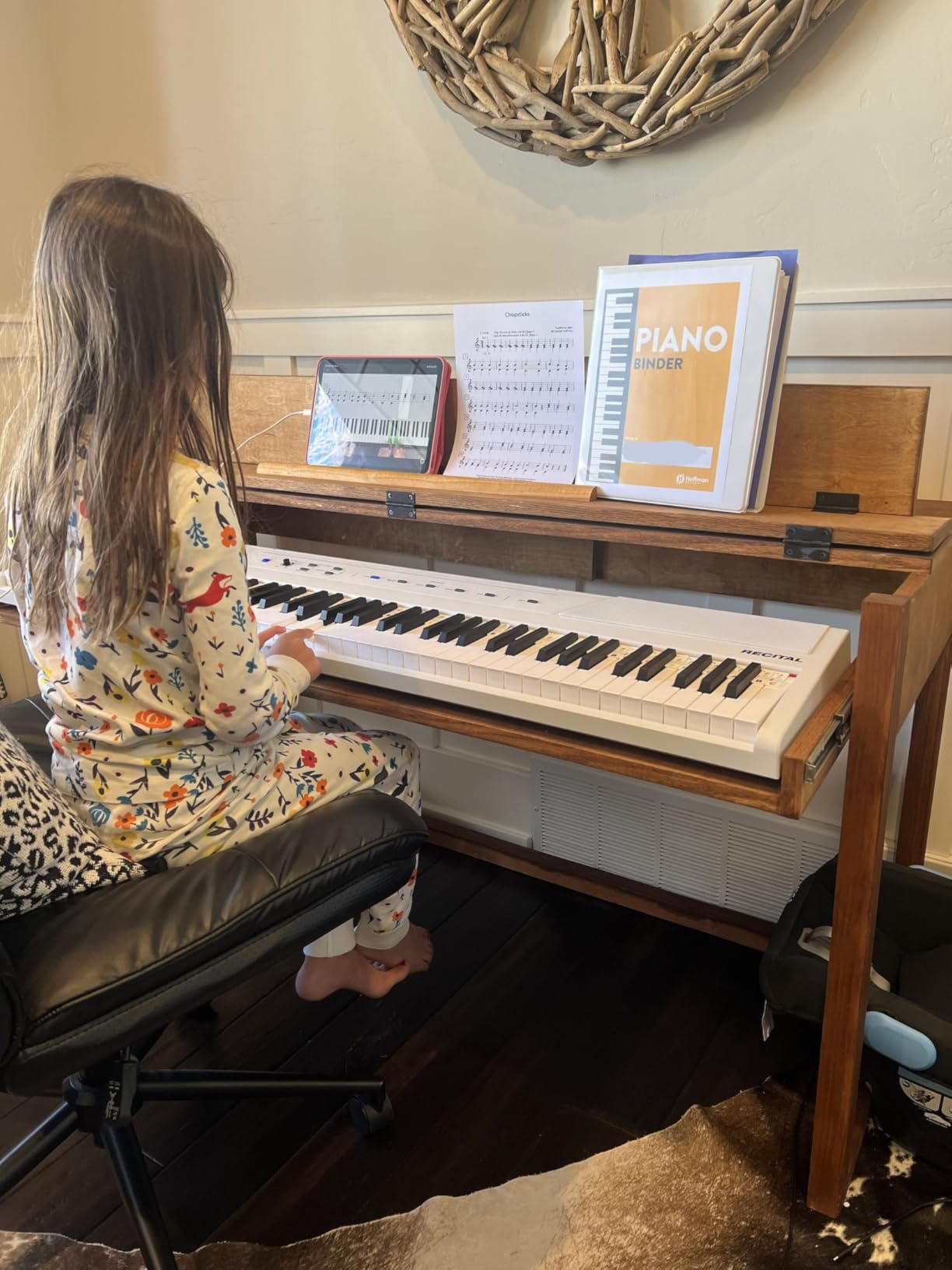
The five voices cover the basics: acoustic piano, electric piano, organ, synth, and bass. The acoustic piano sound is genuinely good for the price, with a clear tone and reasonable dynamic response. The built-in effects add chorus and reverb, which help thicken the sound. The organ and synth voices are weaker, but most beginners spend 90 percent of their time on the piano voice anyway.
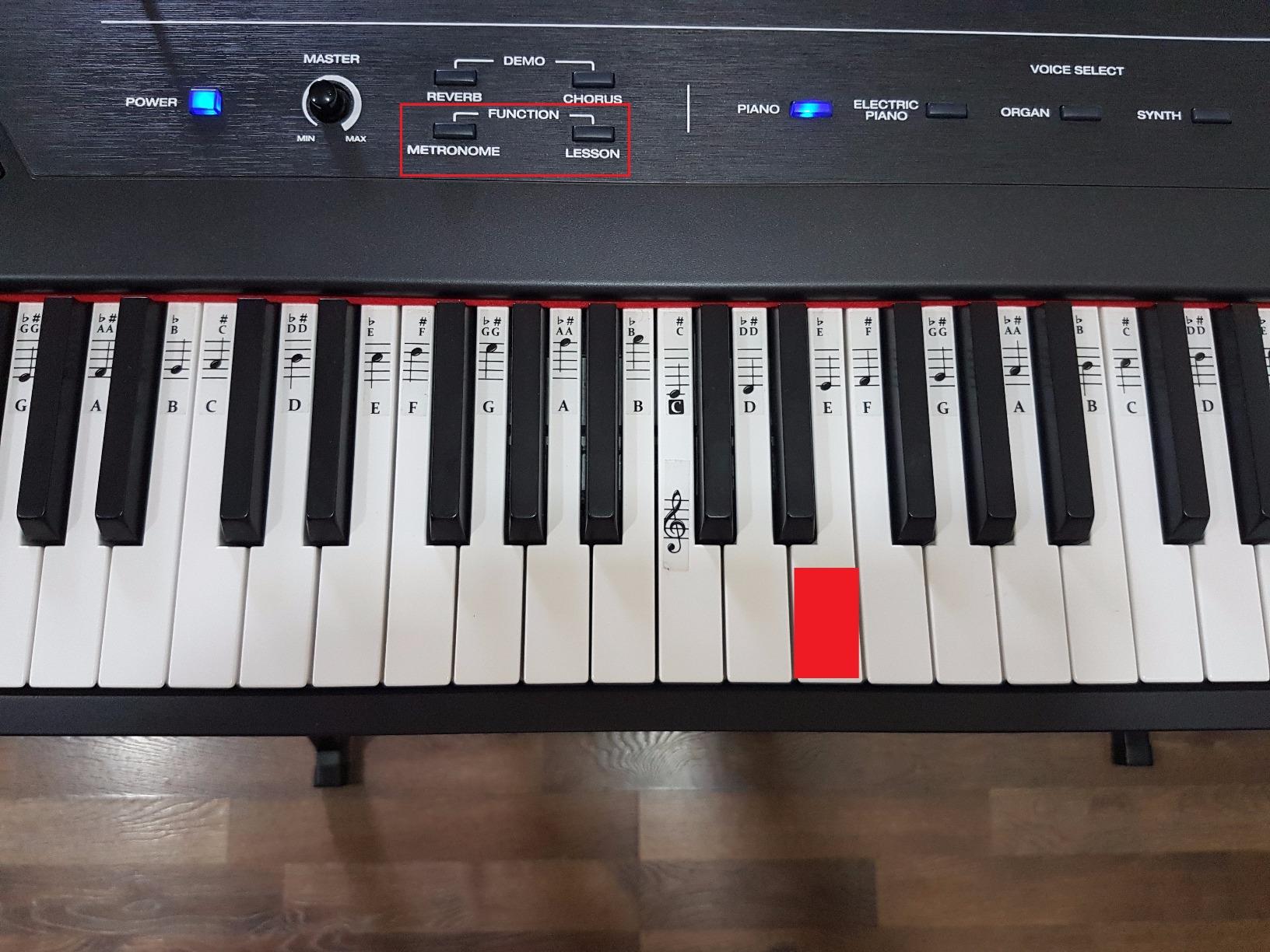
The 128-note polyphony is impressive at this price and means you will not hear notes cutting out during complex passages. The Lesson Mode splits the keyboard so a teacher and student can play side by side on the same instrument. Combined with the included Skoove subscription, this makes the Recital a complete learning package.
Battery Power and Portability
One feature I did not expect to use but loved is the battery power option. Six D-cell batteries let you play anywhere without finding an outlet. At 15.65 pounds, the Recital is the lightest full-size option in this guide. I took it to a park bench for an outdoor practice session, and it performed flawlessly.
Speaker Limitations to Know About
The two 20W speakers are functional but not impressive. They work fine for practice at moderate volumes, but the sound becomes thin at higher volumes. For the best experience, use good headphones through the 6.35mm jack or connect to external speakers via the RCA outputs. This is a common trade-off at this price point.
5. Alesis Recital Play 88-Key Bundle – Best Complete Starter Kit
Alesis 88 Key Keyboard Piano with 480 Sounds, Speakers, USB MIDI, Carry-Bag, Stand, Headphones, Pedal and Piano Lessons for Beginners
88 touch-sensitive keys
480 sounds
160 rhythms
140 demo songs
Complete accessory bundle
USB-MIDI connectivity
Pros
- Incredible value with complete accessory bundle included
- 480 realistic sounds with 160 rhythms
- Lightweight and highly portable at 5.5 kg
- Skoove and Melodics lessons included
- Split Lesson and Record modes for learning
Cons
- Touch-sensitive keys are not weighted for acoustic piano feel
- Included accessories are basic quality
- Built-in speakers are adequate but not premium
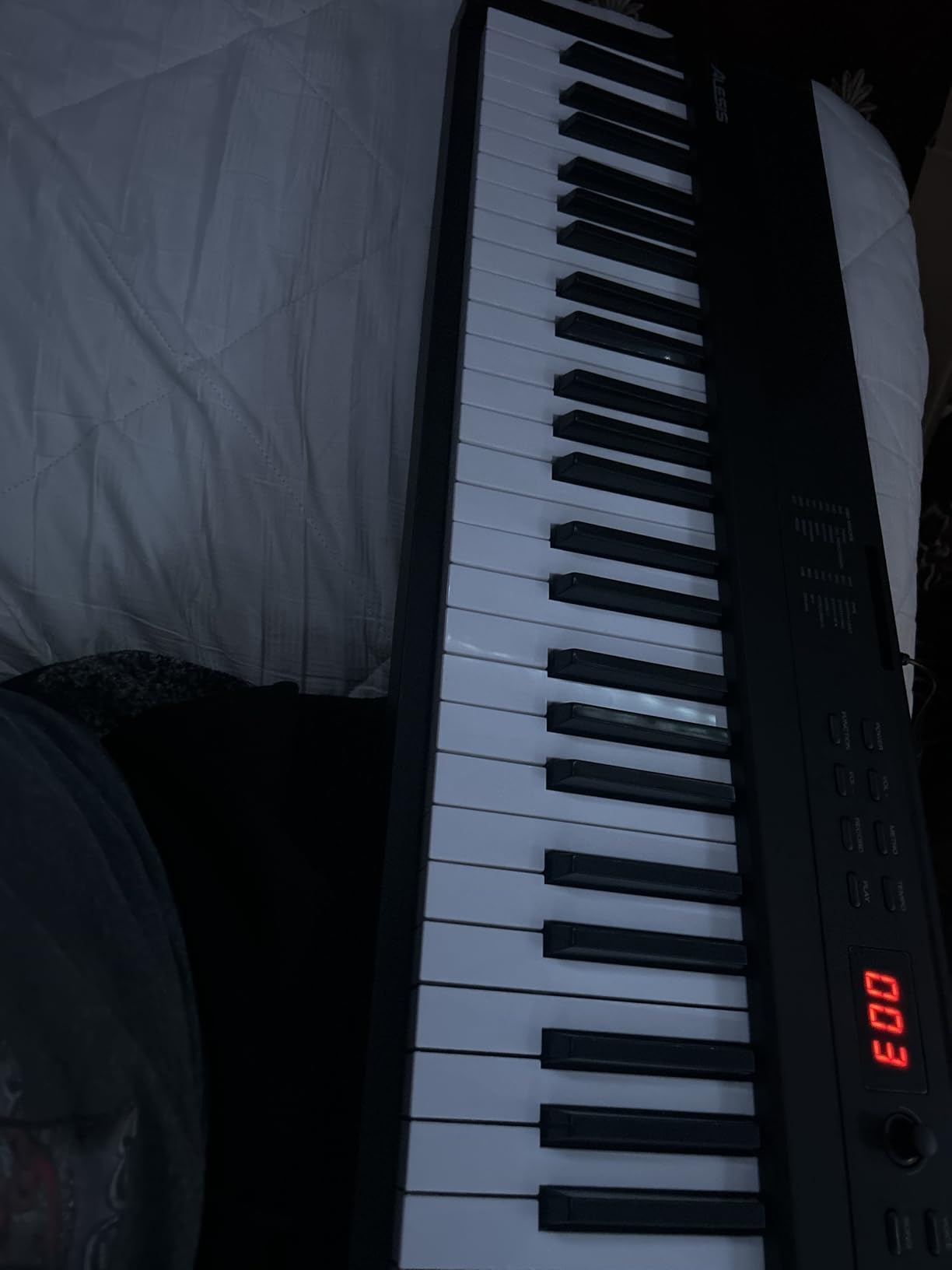
The Alesis Recital Play takes a different approach to the beginner piano market. Instead of focusing on piano realism, it throws everything at you: 480 sounds, 160 rhythms, 140 demo songs, and a complete accessory bundle with stand, headphones, pedal, and carry bag. Our team found it to be the ultimate all-in-one starter package.
The keys are touch-sensitive but not weighted. This means they respond to how hard you press, allowing for some dynamic expression, but they do not have the hammer mechanism that replicates acoustic piano feel. For very young beginners or casual learners who want to explore music broadly, this is a reasonable starting point.
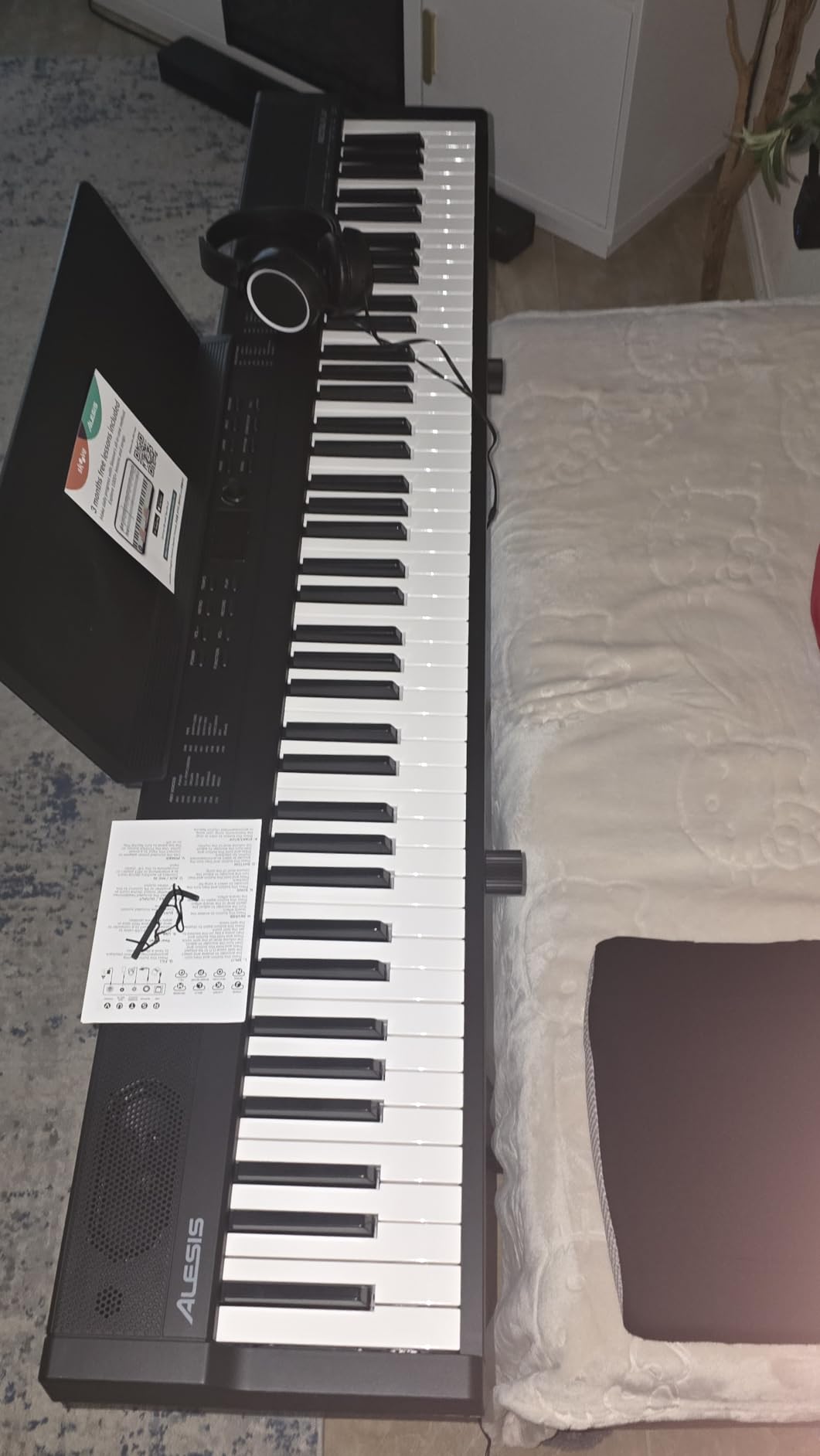
What impressed me most is the sheer variety of sounds. With 480 tones covering everything from grand pianos to synths to world instruments, the Recital Play doubles as a creative exploration tool. The 160 rhythms provide backing tracks in every style imaginable, from rock to jazz to Latin. This variety keeps practice engaging for beginners who might lose interest with just a piano tone.
The accessory bundle is where the value really shines. You get a keyboard stand, headphones, sustain pedal, carry bag, sheet music stand, and power supply all in one box. The quality of these accessories is basic, but for someone starting from zero, it means you can start playing the day it arrives without buying anything else.
Learning Features and App Integration
The Recital Play includes a 3-month Skoove premium subscription and a 30-day Melodics membership. The USB-MIDI connection works seamlessly with both Mac and PC, so you can use these learning apps or connect to DAW software. The Lesson Mode and built-in metronome support structured practice routines.
Important Limitation on Key Action
It is important to be honest: if your goal is to eventually play acoustic piano or progress to intermediate classical pieces, the non-weighted keys will hold you back. The Recital Play is best understood as an exploration and learning tool rather than a serious piano practice instrument. For pure piano technique development, consider stretching your budget to a weighted model.
6. RockJam 61-Key Keyboard Piano Super Kit – Best for Young Beginners
RockJam 61 Key Keyboard Piano Stand With Pitch Bend Kit, Piano Bench, Headphones, Simply Piano App & Keynote Stickers
61 keys
200 tones and 200 rhythms
Simply Piano app included
Stand bench headphones stickers
Record and playback
Pitch bend wheel
Pros
- Excellent value with stand bench headphones and stickers included
- Simply Piano app integration is beginner-friendly
- 200 tones and 200 rhythms provide variety
- Easy to set up and assemble
- Compact and portable design
Cons
- Keys are NOT velocity sensitive so cannot practice dynamics
- Only 61 keys instead of standard 88
- Some users report durability issues after extended use
The RockJam 61-Key Super Kit has racked up an extraordinary 46,710 reviews, making it one of the most popular beginner keyboard products on Amazon. I tested it specifically to understand why it sells so well and where its limitations lie. The answer is straightforward: it offers an unbeatable complete package for absolute beginners at a very low price.
The kit includes everything a new player needs: the keyboard, a sturdy adjustable stand, a padded folding bench, headphones, keynote stickers, and access to the Simply Piano app. The value of having all these items in one box cannot be overstated for parents buying a first instrument for a child.
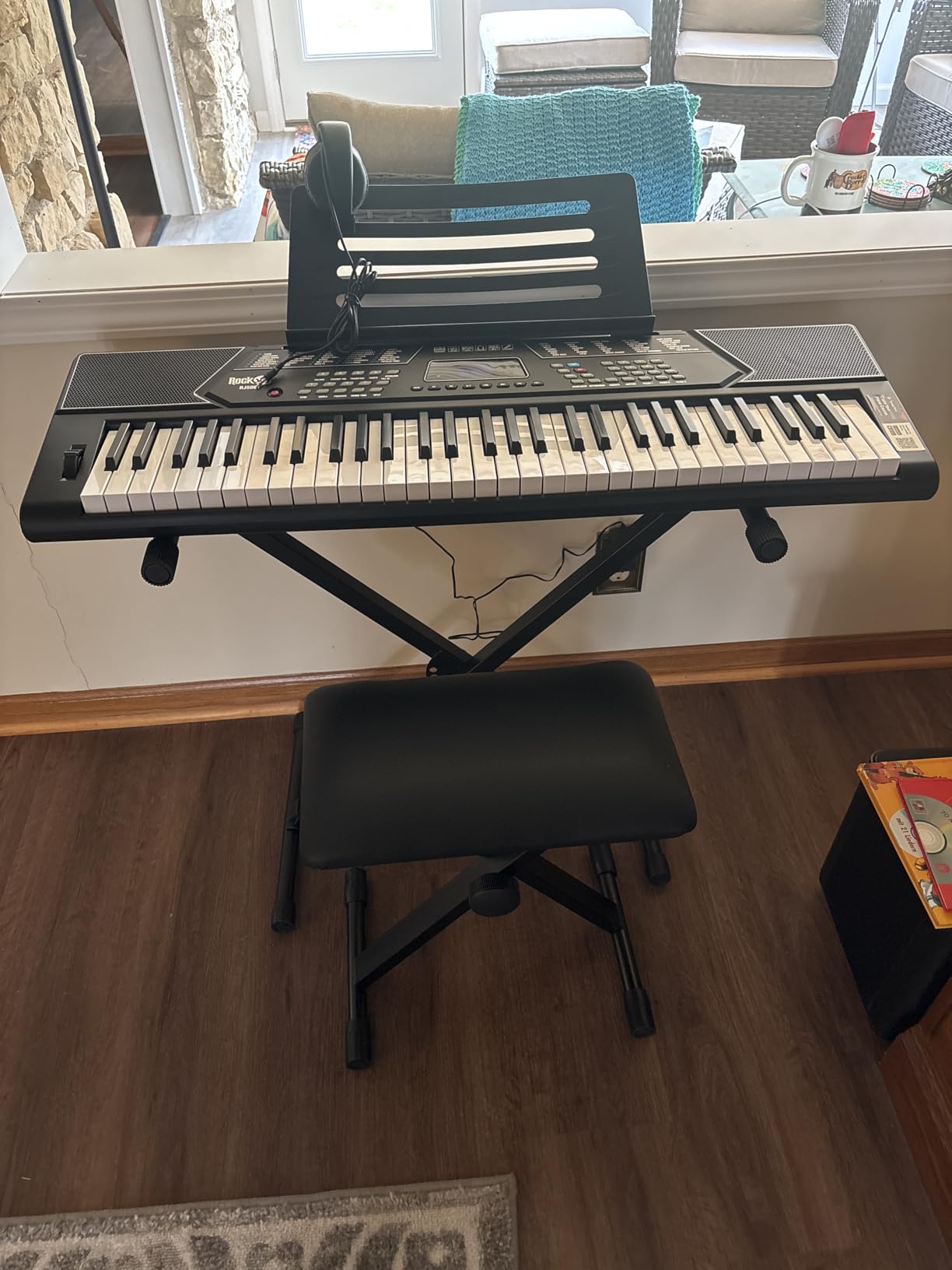
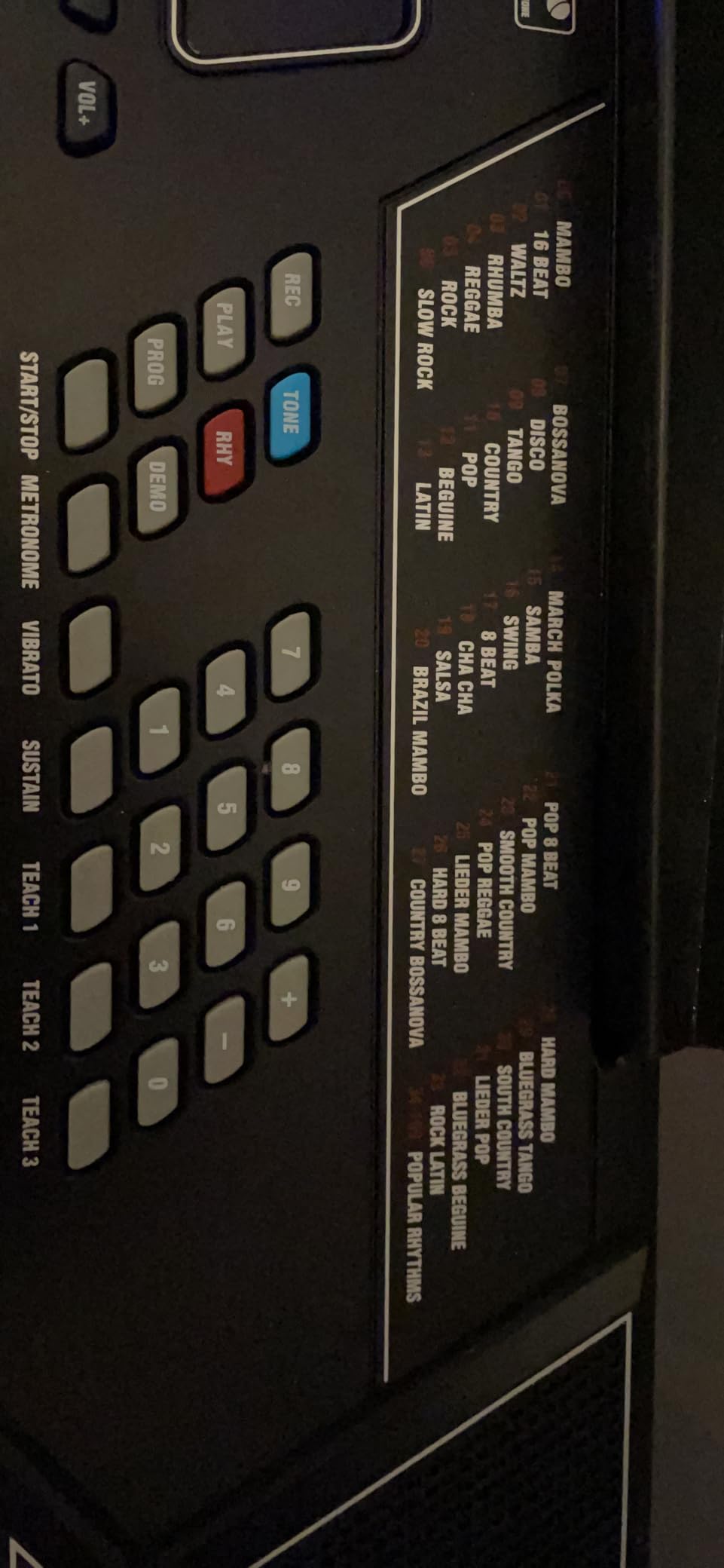
The keyboard itself has 200 tones and 200 rhythms, providing enormous variety for exploration. The LED panel makes it easy to browse sounds, and the record function lets beginners capture their experiments. The pitch bend wheel adds a fun expressive element that kids especially enjoy.
However, there are significant limitations to understand. The keys are not velocity-sensitive, meaning the volume does not change based on how hard you press. This prevents practicing dynamics, which is a fundamental part of piano technique. The 61-key range also means you cannot play the full range of classical piano literature.
Simply Piano App Experience
The Simply Piano app integration is the RockJam’s strongest feature for new learners. The app listens to your playing through the device microphone and provides real-time feedback. The keynote stickers help beginners identify notes quickly. This guided learning approach works well for building initial enthusiasm and basic familiarity with the keyboard.
When to Upgrade from the RockJam
If the player shows sustained interest after 2 to 3 months, it is time to upgrade to an 88-key weighted digital piano. The RockJam is perfect for testing whether piano is the right instrument without a large initial investment. Think of it as a trial instrument rather than a long-term solution for serious study.
7. Yamaha YPT-280 61-Key Portable Keyboard – Best for Ear Training
Yamaha 61-Key Portable Keyboard for Beginners with Built-In Songs, Quiz Mode, Music Rest, with Power Adapter YPT280
61 full-sized keys
Quiz Mode ear training
Smart Chord feature
Portable Grand Piano button
Built-in songs
Lightweight 8.8 lbs
Pros
- Excellent Yamaha build quality and brand reputation
- Great sound quality especially for the price
- Quiz Mode is excellent for ear training
- Smart Chord simplifies playing for beginners
- Lightweight and highly portable
Cons
- Only 61 keys not full 88-key range
- No power indicator light
- Does not include lesson books or accessories
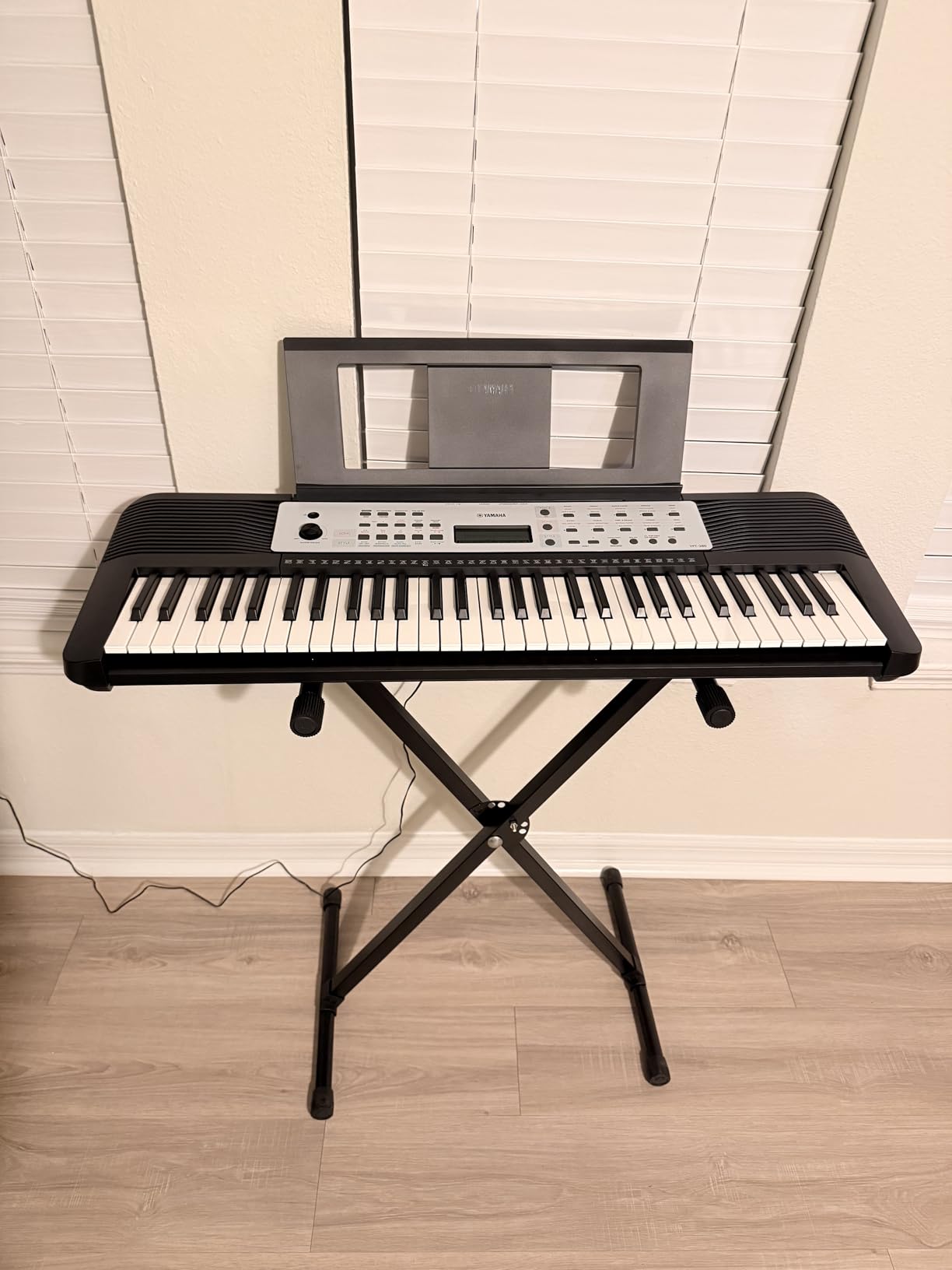
The Yamaha YPT-280 brings genuine Yamaha sound quality to the 61-key beginner keyboard category. I tested it alongside the RockJam and found the sound quality noticeably superior, thanks to Yamaha’s decades of experience sampling acoustic pianos. The Portable Grand Piano button delivers that signature Yamaha tone with a single press.
What makes the YPT-280 special is its educational focus. The Quiz Mode offers two ear-training games that help develop your ability to identify pitches and intervals by ear. This is a skill that traditional beginners often neglect, and having it built into the keyboard makes practice feel like a game rather than a chore.
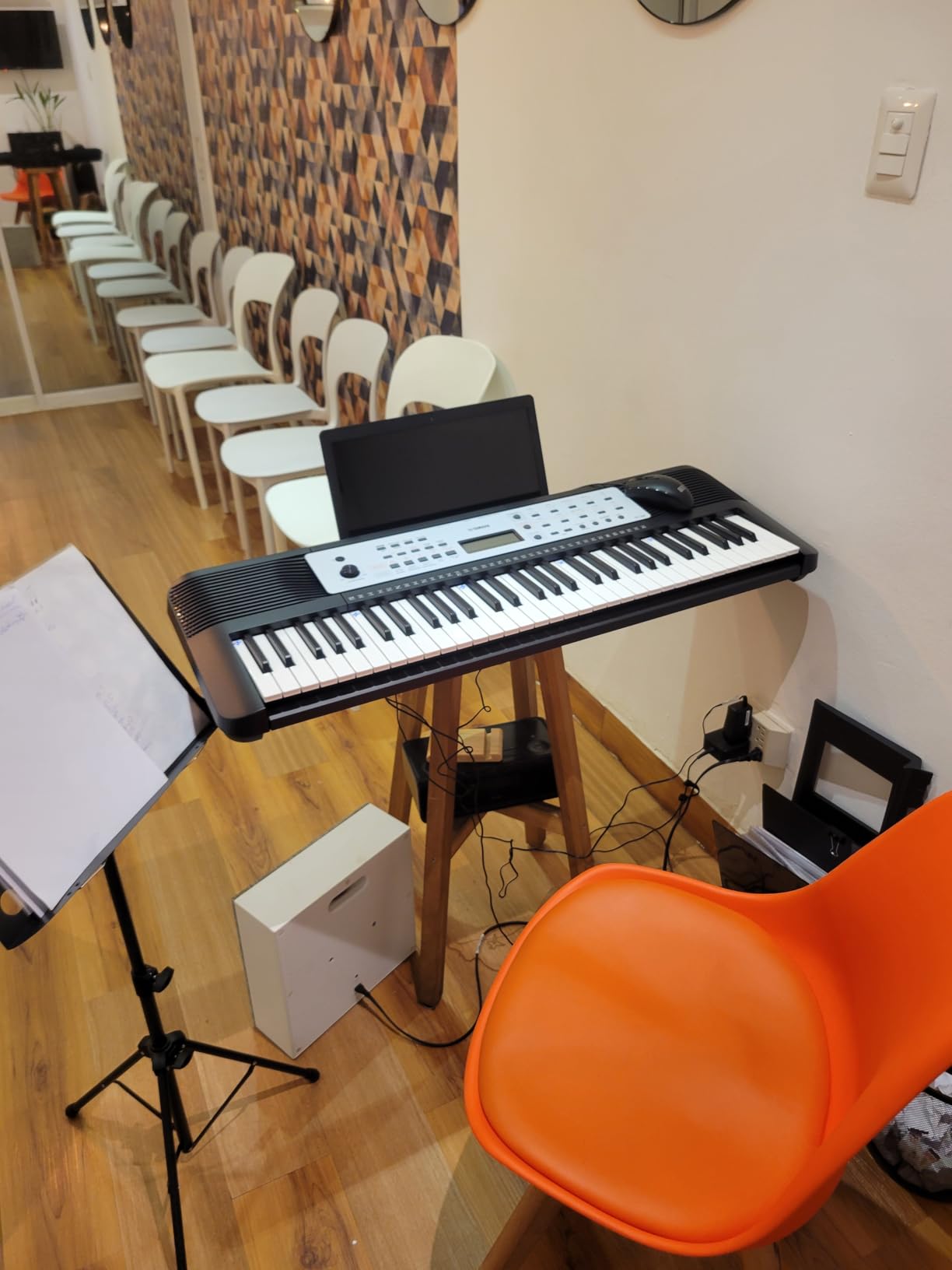
The Smart Chord feature is another learning aid that simplifies playing full-sounding chords with a single finger. This lets beginners experience the satisfaction of playing complete songs early in their learning journey, which is important for maintaining motivation. The built-in song library includes popular hits, children’s songs, and classical pieces.
The keys are full-sized, which is important for developing proper hand positioning. However, they are not weighted or velocity-sensitive. Like the RockJam, this keyboard is best understood as a pre-piano exploration tool rather than a serious practice instrument for technique development.
Portability and Everyday Use
At just 8.8 pounds, the YPT-280 is light enough for a child to carry. It runs on battery power or the included AC adapter, making it truly portable. The 6.35mm headphone jack allows for silent practice. This is the keyboard I would recommend for a child who has shown interest in piano but is not yet ready for a full commitment.
YPT-280 vs Full Digital Piano
If you are deciding between this and a full 88-key weighted piano, the question comes down to commitment level. For a child testing the waters, the YPT-280 is perfect. For an adult or committed learner, invest in a weighted 88-key model from the start to avoid developing poor technique habits that take months to correct.
8. Donner DDP-95 88-Key Digital Piano – Best for Sound Variety
Donner DDP-95 Digital Piano with 88 Key Weighted Keyboard, Beginner Full Size Electric Piano Keyboard Boast Wireless Connection, 4.3" LCD, Record, 610 Tones, 600 Rhythms, 3 Piano Teaching Modes, Black
88-key fully-weighted hammer action
610 tones
600 rhythms
4.3 inch LCD display
Bluetooth connectivity
3 teaching modes
Pros
- Excellent price-to-value for 88-key weighted piano
- Authentic weighted key feel with 16-level touch sensitivity
- 610 tones and 600 rhythms provide extensive library
- Bluetooth connectivity for wireless app use
- 3 teaching modes for hand separation practice
Cons
- Bass notes reported as too loud by some users
- Assembly can be challenging for one person
- Does not support wireless headphone use
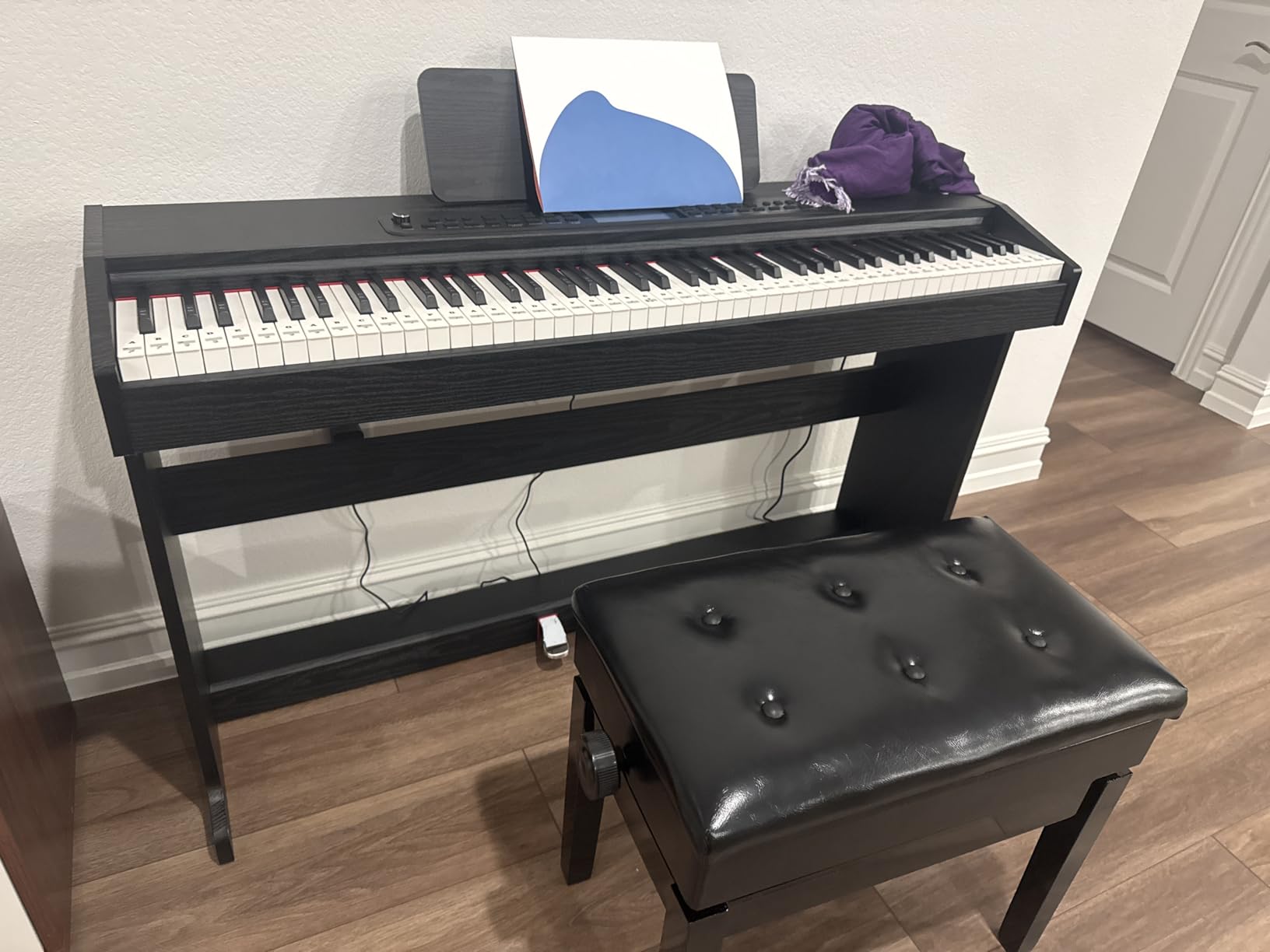
The Donner DDP-95 is a newer entry that pushes the boundaries of what a beginner digital piano can offer. With 610 tones, 600 rhythms, Bluetooth connectivity, and a 4.3-inch LCD display showing staff notation, it reads like a feature wishlist. Our team tested it for two weeks to see whether all these features actually translate into a good playing experience.
The 88-key fully weighted hammer action has 16 levels of touch sensitivity. I found the default setting comfortable, and the graded weighting gives bass notes a heavier feel. The keys respond well to dynamic playing, and I could achieve everything from delicate pianissimo to powerful fortissimo without issues.
The 4.3-inch LCD display is a standout feature that none of the other pianos in this roundup offer. It shows notes in staff notation and indicates which keys you are pressing in real time. For beginners learning to read music, this visual feedback is invaluable. The three teaching modes let you practice left and right hands separately, which is how most piano method books structure learning.
Bluetooth connectivity means you can connect wirelessly to learning apps without fumbling with cables. This works with most modern piano education apps. However, note that Bluetooth does not extend to audio, so you cannot use wireless headphones with this piano. You will need a cable for headphone practice.
Sound Quality Assessment
The main grand piano tone has a rich, full character that compares well to models at higher price points. With 610 tones available, you have sounds for virtually every musical style. Some users report that the bass notes are disproportionately loud, which can be addressed by adjusting the touch sensitivity settings.
Assembly and Setup Considerations
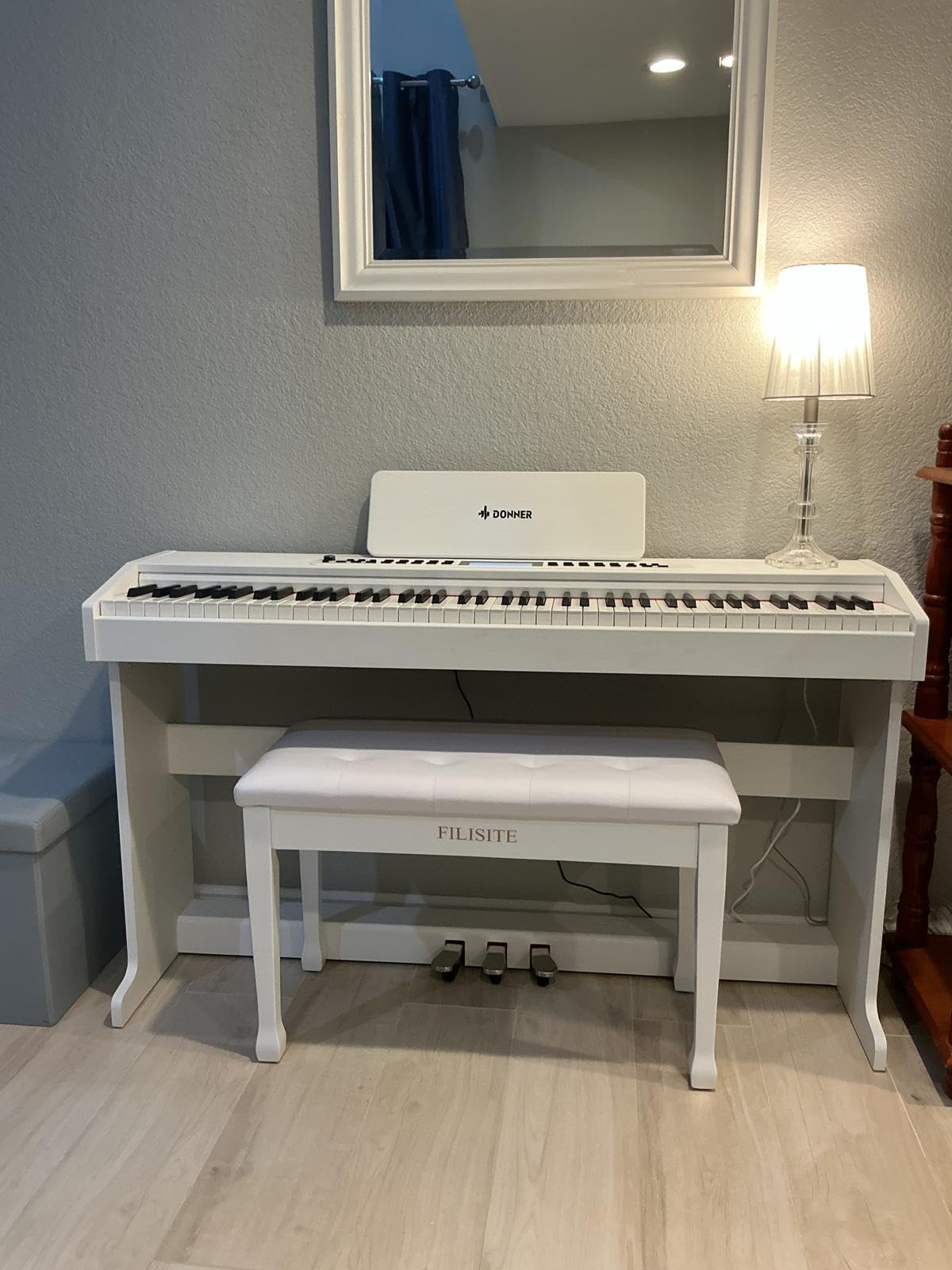
The DDP-95 is a cabinet-style piano that requires assembly. The process is straightforward with two people but can be awkward alone. The piano weighs 26.2 kilograms, so plan where it will live before unboxing. Once assembled, it has a clean, modern appearance that fits well in most home settings.
9. Eastar EUP-100 88-Key Digital Piano – Best Design and Aesthetics
Eastar EUP-100 88 Key Weighted Keyboard Piano, Full-Size Home Digital Piano for Beginner, with Cover, Headphone, Music Stickers, Three-Pedal, Wireless Conection, Recording, MIDI - Retro Wood Color
88-key weighted hammer action
13 immersive voices
Three-pedal system
Wireless MIDI
Retro wood finish design
Headphones and cover included
Pros
- Exceptional sound quality compared favorably to Yamaha
- 88 weighted keys with authentic hammer action feel
- Beautiful retro wood design doubles as furniture
- Complete beginner bundle with headphones and three-pedal system
- Wireless MIDI connectivity for educational apps
Cons
- Some users reported sticky keys on initial units
- Pedal quality could be improved
- Assembly recommended with two people
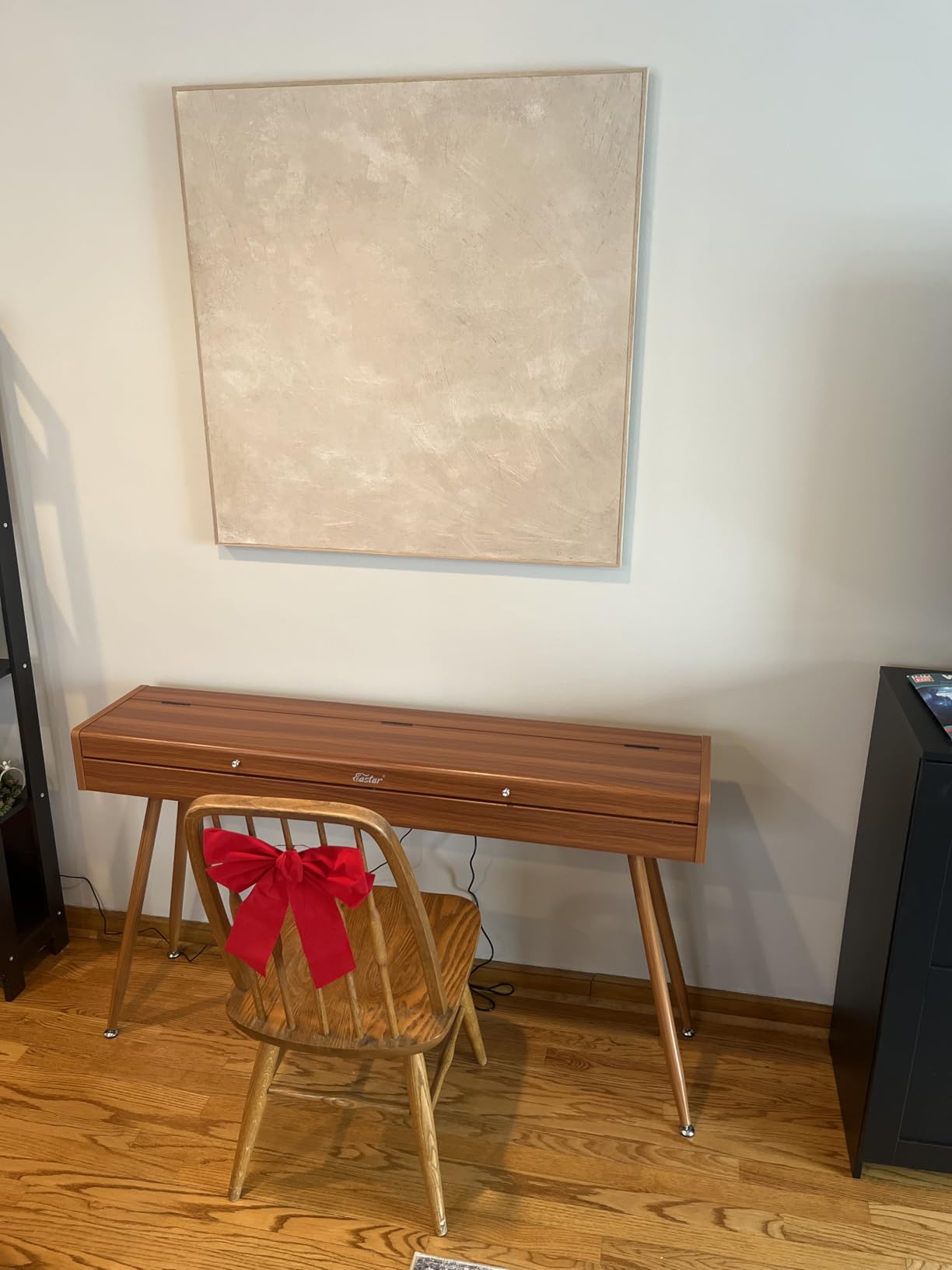
The Eastar EUP-100 is the most visually distinctive piano in this roundup. With its retro wood finish, it looks like a piece of furniture rather than an electronic instrument. I placed it in my living room during testing, and multiple visitors asked whether it was a real upright piano. The aesthetic appeal is genuine and significant.
But looks would mean nothing if the playing experience did not match. Fortunately, the EUP-100 delivers on substance too. The 88-key weighted hammer action has a natural, responsive feel that several users have compared favorably to Yamaha models. I found the action slightly lighter than the Yamaha P71 but well within the range of what constitutes good beginner key action.
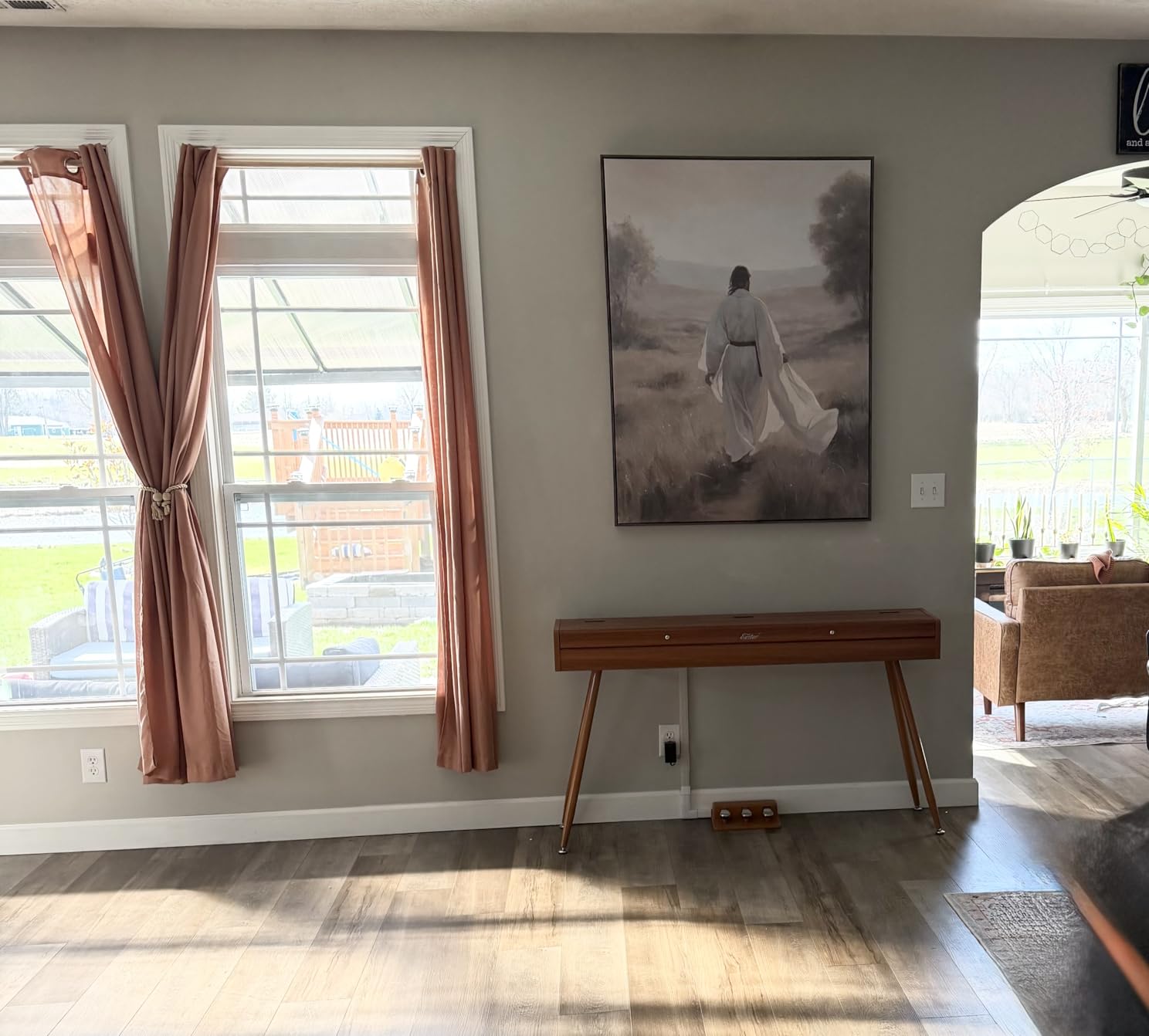
The sound quality is where the EUP-100 truly punches above its weight. With 13 immersive voices including grand piano, electric piano, organ, and harpsichord, the tone is rich and satisfying. The main grand piano voice has a warmth and depth that I did not expect at this price. Several reviews specifically mention comparing it favorably to much more expensive Yamaha models.
The included three-pedal system is a major advantage. Most beginner pianos include only a basic sustain pedal that slides around. The EUP-95 comes with a proper three-pedal unit offering sustain, soft, and sostenuto functions. This means you can learn proper pedaling technique from the start, which is essential for intermediate and advanced repertoire.
Wireless MIDI and App Connectivity
The wireless MIDI connectivity lets you connect to educational apps without cables. I tested it with GarageBand on an iPad, and the connection was stable and responsive. The recording function lets you capture your practice sessions. Combined with the included headphones, the EUP-100 supports completely silent practice for apartment dwellers.
Quality Control Notes
Some early users reported sticky white keys on initial units, and a few noted clicking sounds from the pedal mechanism. Eastar’s customer service appears responsive based on review data, replacing defective units promptly. The overall 4.8-star rating suggests these issues are not widespread, but it is worth testing all keys thoroughly upon arrival.
10. Roland FP-30X 88-Key Digital Piano Bundle – Best Premium Pick
Roland FP-30X 88-Key Digital Piano - Black Bundle with Adjustable Stand, Bench, Sustain Pedal, Online Piano Lessons, Instructional DVD, and Austin Bazaar Polishing Cloth
88-key PHA-4 weighted action
SuperNATURAL Piano engine
Bluetooth MIDI
22W stereo speakers
Dual headphone outputs
Stand bench and pedal bundle
Pros
- Excellent SuperNATURAL piano sound engine
- Authentic weighted key touch with PHA-4 keyboard
- Bluetooth connectivity for learning apps
- Complete bundle with stand bench and deluxe sustain pedal
- Dual headphone jacks for shared practice
Cons
- Stand assembly instructions are lacking
- Generic stand crossbars can interfere with leg movement
- Included bench may be uncomfortable for extended playing
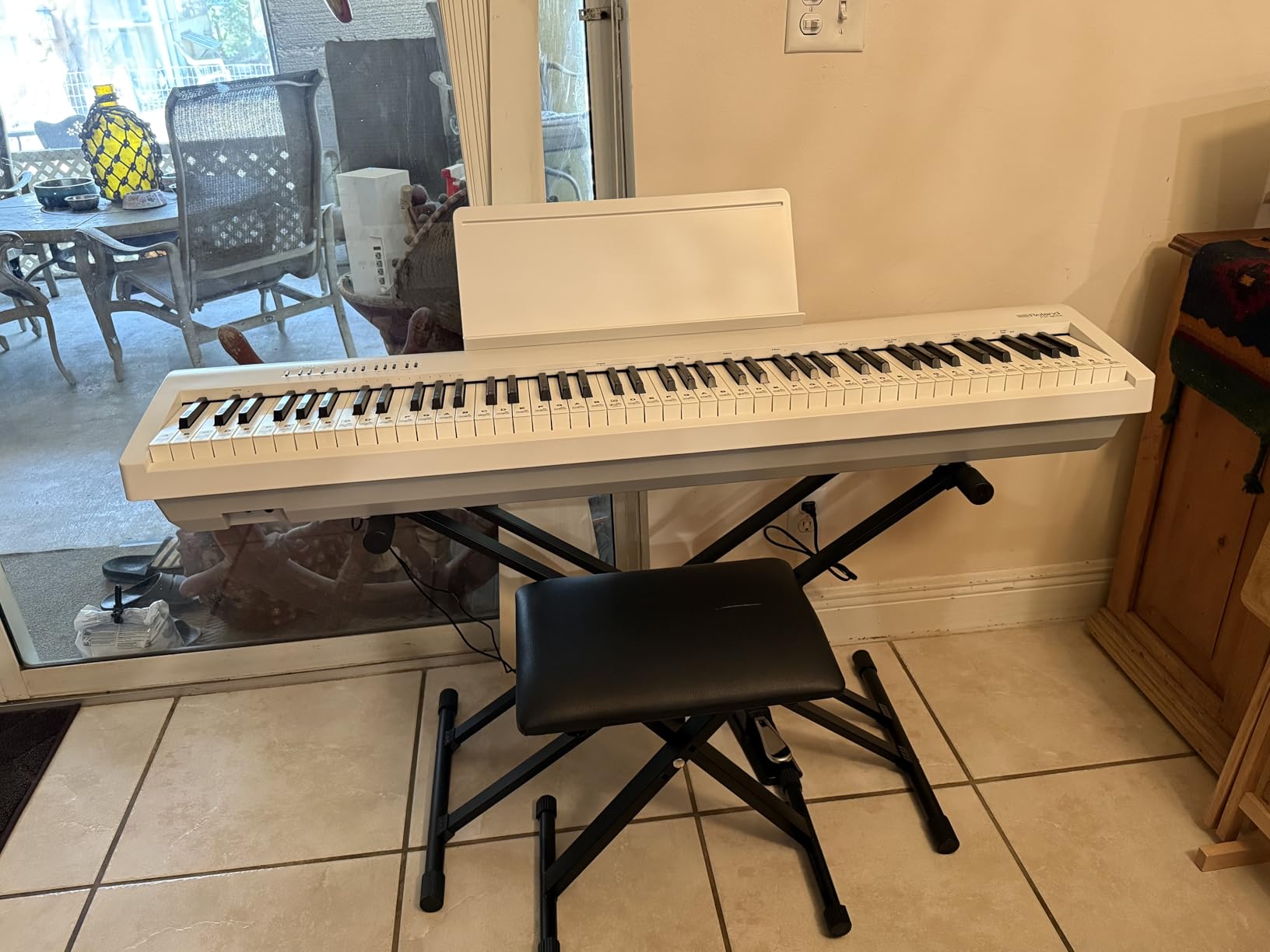
The Roland FP-30X represents the premium end of the beginner digital piano market. As a step up from the legendary Roland FP-10 (which Wirecutter named their top pick), the FP-30X adds a more powerful speaker system, Bluetooth MIDI, and a richer sound engine. Our team tested the complete bundle that includes a stand, bench, and deluxe sustain pedal.
The PHA-4 Standard keyboard is widely regarded as one of the best actions in its class. The graded hammer action with escapement simulation gives the unmistakable feel of an acoustic piano. When you press a key gently, you feel the subtle resistance point where a real piano’s hammer releases. This escapement simulation is rare at this price and helps develop nuanced playing technique.
The SuperNATURAL Piano sound engine is Roland’s flagship technology, used in their professional stage pianos. It delivers expressive dynamics from the softest pianissimo to the most forceful fortissimo with smooth transitions. I played everything from Chopin nocturnes to stride piano pieces, and the sound engine responded beautifully to every touch.
Bluetooth MIDI is the feature that makes the FP-30X particularly suited for modern beginners. You can connect wirelessly to Roland’s Piano Partner 2 app, Flowkey, Skoove, or any other Bluetooth-compatible learning app. No cables, no adapters, no fiddling with connections. This wireless convenience encourages consistent app-based learning.
Speaker Quality and Practice Features
The built-in 22-watt stereo speaker system is more powerful than any other piano in this roundup. It fills a room with rich, full-frequency sound that makes practicing without headphones genuinely enjoyable. The dual headphone outputs allow a teacher and student to practice silently together, which is excellent for lesson environments.
Is the Roland FP-30X Worth the Premium
If you are serious about piano and can stretch your budget, the FP-30X is the best long-term investment in this guide. The PHA-4 action and SuperNATURAL sound engine are professional-grade. The Bluetooth connectivity future-proofs the instrument for modern learning. The bundle includes everything you need to start playing immediately. It is the piano I would buy for myself.
Buying Guide: How to Choose the Best Digital Piano for Beginners
Choosing the right beginner digital piano comes down to understanding a few key specifications and how they affect your learning experience. Our team has broken down the most important factors to consider, based on our testing and feedback from piano teachers and students on forums like r/piano and r/pianolearning.
Number of Keys: 88 vs 61
An 88-key digital piano matches the full range of an acoustic piano. This gives you access to all classical pieces, advanced repertoire, and proper fingering exercises without limitations. A 61-key keyboard forces you to transpose or simplify pieces, which becomes frustrating within months of starting lessons.
The general consensus among piano teachers is clear: if you are serious about learning piano, start with 88 keys. The price difference between a 61-key toy keyboard and a proper 88-key digital piano is typically $100 to $200. That small investment prevents you from outgrowing your instrument and needing to buy a second one within the first year.
That said, 61-key keyboards have their place. They are excellent for young children who are testing whether they want to learn piano, for casual players who want a fun instrument for entertainment, and for travelers who need maximum portability. The RockJam and Yamaha YPT-280 in this guide serve those purposes well.
Weighted Keys and Hammer Action Explained
Weighted keys are the single most important feature for developing proper piano technique. When you press a key on an acoustic piano, a hammer strikes a string, creating physical resistance. Weighted digital piano keys replicate this resistance using actual hammer mechanisms inside the keyboard.
There are several types of key action you will encounter:
Fully weighted hammer action uses actual hammers to simulate the acoustic piano feel. This is found in models like the Yamaha P71, Donner DEP-20, and Roland FP-30X. It provides the most realistic playing experience and builds the finger strength needed for acoustic piano.
Graded hammer action takes weighting a step further by making bass keys heavier and treble keys lighter, exactly like a real piano. Yamaha’s Graded Hammer Compact (GHC) and Roland’s PHA-4 Standard are examples of graded action that our team rated highly.
Semi-weighted keys use springs rather than hammers. They offer some resistance but feel lighter and springier than a real piano. The Alesis Recital uses this type of action. It is adequate for absolute beginners but will eventually need upgrading for serious technique development.
Touch-sensitive (unweighted) keys respond to how hard you press but have no physical weighting. The RockJam and Alesis Recital Play fall into this category. These are fine for exploration but cannot build the finger strength needed for piano technique.
Polyphony: Why It Matters
Polyphony refers to the number of notes a digital piano can produce simultaneously. When you play with the sustain pedal held down, every note you play continues ringing while you play new notes on top. If your piano’s polyphony is exceeded, older notes will cut out abruptly, creating an unnatural sound.
For beginners, 64-note polyphony is the minimum acceptable level. However, 128-note polyphony is recommended because it provides headroom for complex pieces with heavy pedaling. The Donner DEP-20, Alesis Recital, and Eastar EUP-100 all offer 128-note polyphony, which will serve you well through intermediate repertoire.
Advanced players playing complex classical pieces with dense chords and sustained pedaling may want 256-note polyphony, but this is rarely found in beginner instruments. For your first few years of playing, 128 notes is more than sufficient.
Sound Engine and Tone Quality
The sound engine is what produces the piano tones you hear. Digital pianos use one of two approaches: sampling or modeling. Sampling records actual acoustic pianos and plays back those recordings when you press keys. Modeling generates sound mathematically based on physical piano characteristics.
For beginner instruments, sampling is the standard. Yamaha uses their CFX concert grand sampling, Roland uses their SuperNATURAL engine, and Casio uses their AiR sound engine. The quality of the sampling, the number of velocity layers recorded, and the speaker system all affect how realistic the piano sounds.
During our testing, the Roland FP-30X had the most realistic and expressive piano sound, followed closely by the Yamaha P71 and Eastar EUP-100. The Donner models also produce surprisingly good piano tones for their price. The 61-key keyboards sound acceptable but cannot match the depth of the sampled grand pianos in full digital pianos.
Connectivity Options
Modern digital pianos offer several connectivity options that enhance the learning experience:
USB to Host connects the piano to a computer or mobile device for use with learning apps, recording software, or DAW integration. This is standard on most models in this guide.
Bluetooth MIDI provides the same connectivity without cables. The Roland FP-30X and Donner DDP-95 both support Bluetooth MIDI, making them especially convenient for app-based learning.
Headphone output is essential for silent practice. All models in this guide include at least one headphone jack. The Roland FP-30X goes further with dual headphone outputs for teacher-student practice.
Sustain pedal input allows you to connect a pedal for expressive playing. All the 88-key models include this, and several come with a pedal in the box. Reddit users consistently recommend upgrading the included pedal to a proper unit within the first few months.
Speaker Quality and Wattage
Built-in speaker quality varies enormously among beginner digital pianos. The wattage rating gives you a rough idea of volume capability, but tone quality depends on speaker design and enclosure. During our testing, we assessed speaker performance at various volume levels.
The Roland FP-30X has the best speaker system in this guide at 22 watts, delivering rich, full-frequency sound. The Donner DEP-20 follows with two 25W amplifiers that provide plenty of volume. The Yamaha models have adequate speakers for practice but benefit from headphones or external amplification for the best sound.
For apartment living where you need to keep volume low, speaker quality becomes less important since you will practice with headphones. For living room practice without headphones, investing in a model with better speakers improves the experience significantly.
Accessories You Will Need
Beyond the piano itself, several accessories are worth budgeting for:
A good sustain pedal: The included pedals on most beginner models are basic. A proper piano-style pedal with a non-slip base costs $20 to $40 and dramatically improves the playing experience.
A sturdy stand: If your piano does not come with one, invest in a Z-style stand rather than an X-style stand. Z-stands are more stable and do not have a center bar that interferes with your feet and pedal placement.
An adjustable bench: Proper seating height is essential for technique. An adjustable bench ensures your arms are at the correct height relative to the keys.
Headphones: For silent practice, closed-back headphones provide isolation and prevent sound leakage. Any decent pair of over-ear headphones works well for piano practice.
FAQs
What is the best digital piano for home use?
The Yamaha P71 is the best digital piano for home use. It offers 88 weighted hammer-action keys, authentic Yamaha grand piano sound, built-in speakers, and a compact design that fits in any room. Its simple one-button operation keeps you focused on playing rather than navigating menus.
Which digital piano is most like a real piano?
The Roland FP-30X feels most like a real acoustic piano. Its PHA-4 Standard keyboard features graded hammer action with escapement simulation that replicates the physical feel of grand piano hammers. The SuperNATURAL sound engine delivers expressive dynamics that respond to every nuance of your touch.
Is 61 key or 88 key better for beginners?
88 keys are better for beginners who are serious about learning piano. An 88-key digital piano matches the full range of an acoustic piano, giving you access to all classical pieces and proper fingering exercises. 61-key keyboards limit your progress and force you to transpose or simplify pieces within months of starting.
Are digital pianos good for beginners?
Yes, digital pianos are excellent for beginners. They cost significantly less than acoustic pianos, never need tuning, allow silent practice with headphones, and are portable enough for small spaces. A quality digital piano with weighted 88 keys builds proper finger strength and technique from day one.
How much should I spend on a beginner digital piano?
Expect to spend between $300 and $600 for a quality beginner digital piano with 88 weighted keys. Models like the Yamaha P71 and Donner DEP-20 offer excellent value in this range. Spending less typically means sacrificing weighted keys or sound quality, while spending more gets you premium features like Bluetooth connectivity and better sound engines.
Conclusion: Choosing Your First Digital Piano in 2026
Finding the best digital pianos for beginners does not have to be overwhelming. The Yamaha P71 remains our top pick for most new players thanks to its proven reliability, authentic weighted action, and Yamaha’s renowned grand piano sound. If you want maximum features per dollar, the Donner DEP-20 delivers 238 tones and powerful amplifiers at an unbeatable price. And for those who can invest in a premium instrument, the Roland FP-30X offers professional-grade sound and feel that will serve you for years.
Remember that the right piano is the one that keeps you practicing. Weighted 88 keys build proper technique, a good sound engine keeps you motivated, and connectivity options open up the world of online learning. Whatever your budget, there is a model in this guide that will start your piano journey on the right note.