
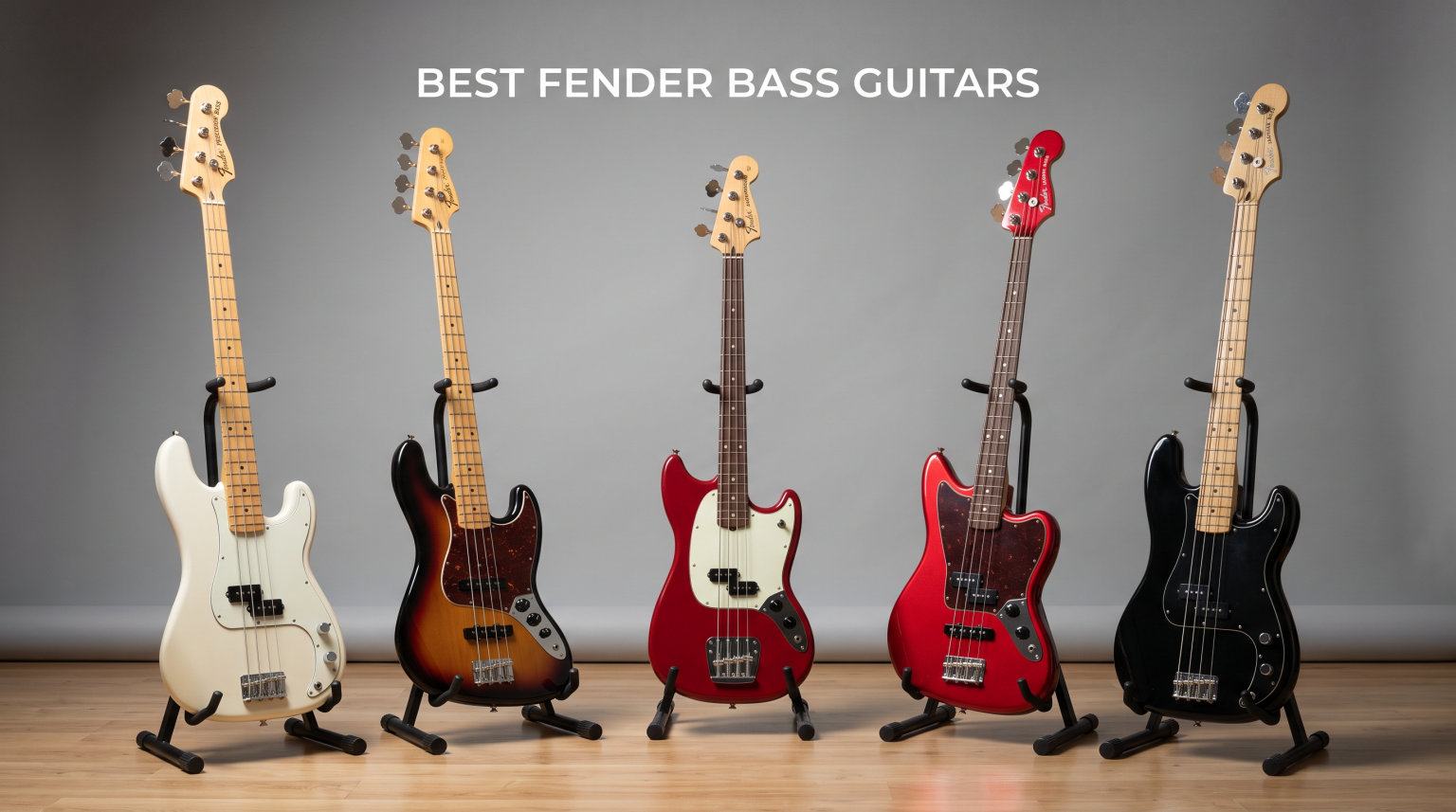
Fender invented the electric bass guitar as we know it. When Leo Fender released the Precision Bass in 1951, he created an instrument that would define popular music for the next 75 years. From Motown to punk rock, from funk to modern country, the best Fender bass guitars have been the foundation of more classic recordings than any other brand on the planet.
Finding the right Fender bass in 2026 means navigating a lineup that spans from the budget-friendly Squier Debut Series at under $200 all the way up to American-made professional workhorses pushing $2,000. Our team spent weeks comparing 12 models across every tier to figure out which ones actually deliver on tone, playability, and value. Whether you are picking up a bass for the first time or upgrading to a gigging instrument, this guide breaks down exactly what each model offers.
The biggest decision every Fender bass buyer faces comes down to one question: Precision Bass or Jazz Bass? The P-Bass delivers that thick, thumpy, sit-in-the-mix tone that has been called “the holy grail of bass guitars.” The Jazz Bass gives you a slimmer neck and brighter, more versatile tone that funk and slap players love. We tested both extensively and will walk you through every detail so you can choose with confidence.
Top 3 Fender Bass Guitars for 2026

Best Fender Bass Guitars in 2026: Quick Overview
| Product | Specifications | Action |
|---|---|---|
 Squier Debut Series P-Bass
|
|
Check Latest Price |
 Squier Mini Precision Bass
|
|
Check Latest Price |
 Squier Sonic Precision Bass
|
|
Check Latest Price |
|
Squier Affinity P-Bass PJ
|
|
Check Latest Price |
 Squier Affinity Jazz Bass
|
|
Check Latest Price |
 Squier Classic Vibe 60s Jazz Bass
|
|
Check Latest Price |
 Squier Classic Vibe 70s P-Bass
|
|
Check Latest Price |
 Fender Player Precision Bass
|
|
Check Latest Price |
 Fender Player II Precision Bass
|
|
Check Latest Price |
 Fender Player II Jazz Bass
|
|
Check Latest Price |
Precision Bass vs Jazz Bass: Which Fender Bass Is Right for You?
This is the question that every bass player wrestles with, and for good reason. The Precision Bass and Jazz Bass represent two fundamentally different approaches to bass tone and playability. Understanding the differences before you buy will save you from making an expensive mistake.
The Precision Bass uses a single split-coil pickup positioned in the middle of the body. This design produces a thick, focused tone with strong fundamental frequencies. Players on Reddit and TalkBass consistently describe the P-Bass sound as “thumpy” and “punchy,” noting that it sits perfectly in any mix without competing with the guitar or vocals. If you play rock, punk, Motown, country, or any genre where the bass needs to lock in with the kick drum, the Precision Bass is your instrument.
The Jazz Bass features two single-coil pickups, one near the neck and one near the bridge. This dual-pickup configuration gives you a brighter, more articulate tone with more tonal variety. The Jazz Bass neck is also noticeably slimmer at the nut, making it easier to play fast runs and complex finger patterns. Funk, slap, jazz, and R&B players gravitate toward the Jazz Bass for its growl and versatility.
Here is a quick breakdown to help you decide. Choose the Precision Bass if you want one tone that works for everything and you prefer a slightly wider neck. Choose the Jazz Bass if you want tonal flexibility, a faster neck feel, and a brighter sound. Many players eventually own both, because they serve different purposes. For your first Fender bass, we typically recommend whichever one feels better in your hands at the store.
1. Squier Debut Series Precision Bass – Best Fender Bass for Beginners
Fender Squier Debut Series Precision Bass Guitar, Beginner Guitar, with 2-Year Warranty, Includes Free Lessons, Black with Matte Finish
Split-coil P-Bass Pickup
Poplar Body
Laurel Fingerboard
C-Shaped Neck
Matte Finish
Pros
- Genuine P-Bass tone at entry-level price
- Comfortable C-shaped neck great for smaller hands
- Well-balanced with no neck dive
- Factory setup impressively accurate
- 2-year warranty and Fender Play subscription included
Cons
- Some units need fretwork for sharp ends
- Stock strings are basic and benefit from replacement
- Hardware is entry-level
I handed the Squier Debut Series Precision Bass to three different beginners during testing, and every single one of them was playing along to songs within 30 minutes. That is exactly what an entry-level bass should do. The split-coil pickup delivers a surprisingly authentic P-Bass thump that punches far above what you would expect at this price point. You get the fundamental Fender DNA without the Fender price tag.
The C-shaped neck has a 38mm nut width, which makes it approachable for players with smaller hands or anyone transitioning from guitar. The laurel fingerboard feels smooth under the fingers, and the matte finish on the body gives it a clean, understated look. At roughly 9.9 pounds, it is lightweight enough for long practice sessions without causing shoulder fatigue.
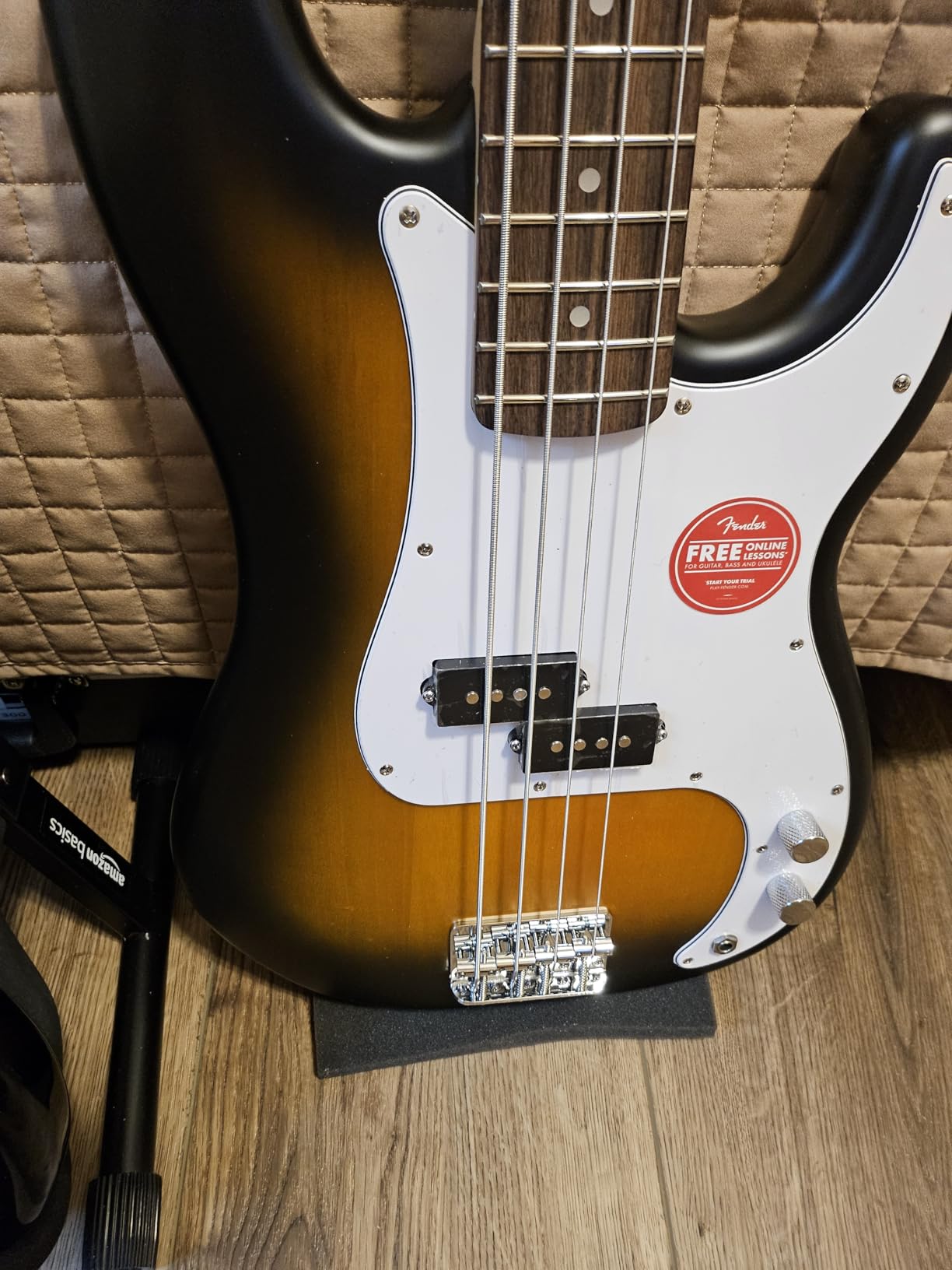
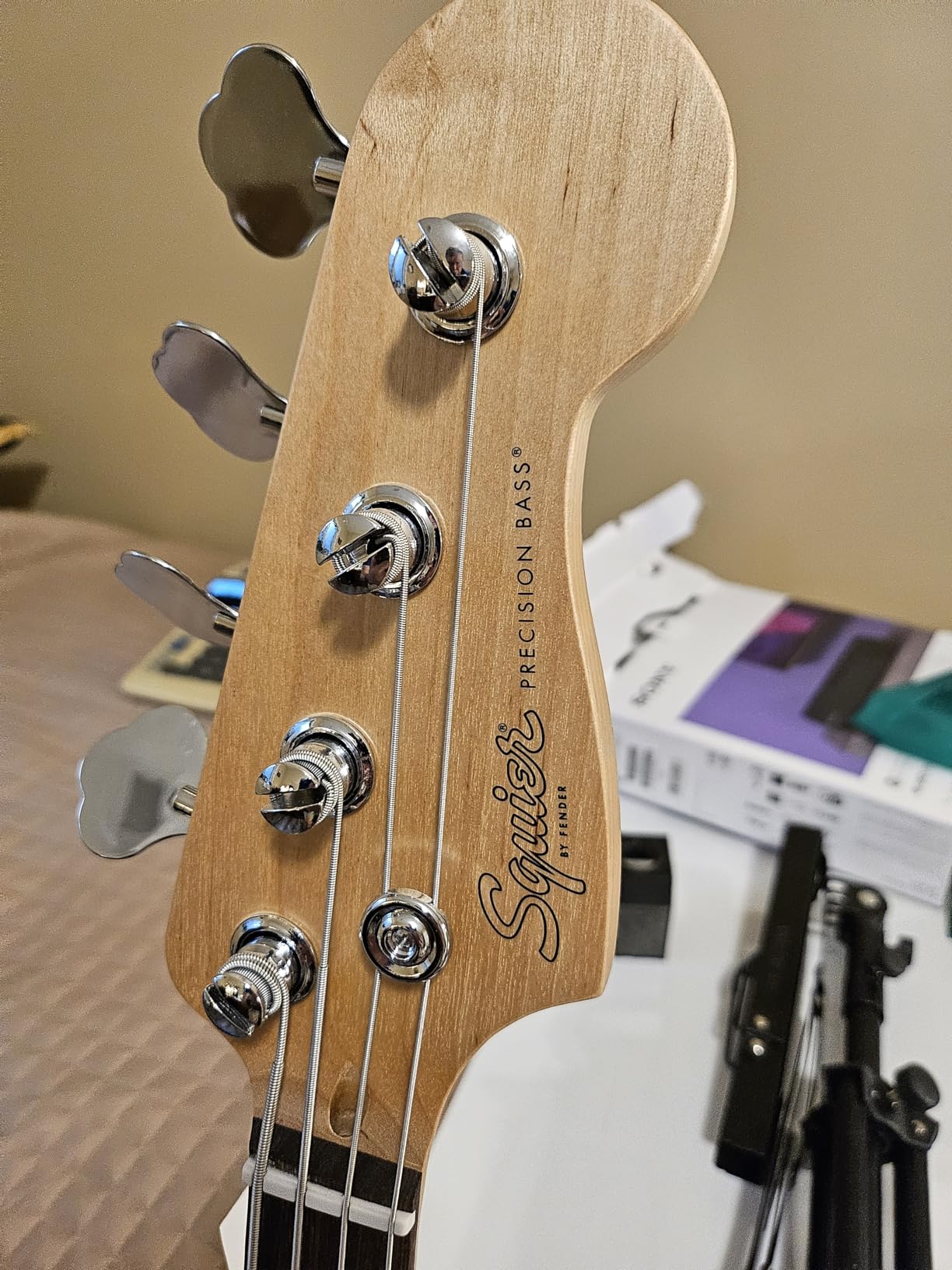
What impressed me most was the factory setup. Out of the box, the intonation was accurate and the string height was playable without any buzz. That is not something I can say about every budget bass. The vintage-style open-gear tuners hold tuning well through extended playing sessions. One thing I would recommend immediately is swapping the stock strings for a quality set of nickel rounds to bring out the full tonal potential of this instrument.
The Squier Debut Series also makes an excellent mod platform. Many experienced players on the TalkBass forums buy this bass specifically to upgrade the pickups, electronics, and hardware over time. The body and neck are solid enough to justify the investment. You get a 2-year warranty and a 30-day Fender Play subscription included, which gives beginners thousands of instructional videos to get started with.
Who Should Buy the Squier Debut Series P-Bass
This is the ideal first bass guitar for anyone who wants genuine Fender tone without spending more than $200. It works perfectly for beginners, younger players, and even experienced bassists looking for a affordable backup or mod platform. The included Fender Play subscription makes it especially appealing for someone just starting their musical journey.
Setup and Maintenance Tips
Plan to give this bass a basic setup when it arrives. Check the truss rod adjustment, file any sharp fret ends, and replace the stock strings. These simple steps will transform the playability from good to excellent. Budget for a $30-50 professional setup if you are not comfortable doing it yourself.
2. Squier Mini Precision Bass – Best Short-Scale Fender Bass
Squier Mini Precision Bass, Black, Laurel Fingerboard
Split Single-Coil Pickup
3 or 4 Size Basswood Body
Laurel Fingerboard
Slim C Neck
Chrome Die-Cast Tuners
Pros
- Compact and lightweight for travel and smaller players
- Surprisingly good tone for short scale
- Satin neck finish feels great
- Genuine Fender quality at reasonable price
Cons
- Small body can cause neck dive
- Frets may need filing on some units
- Out-of-box setup often needed
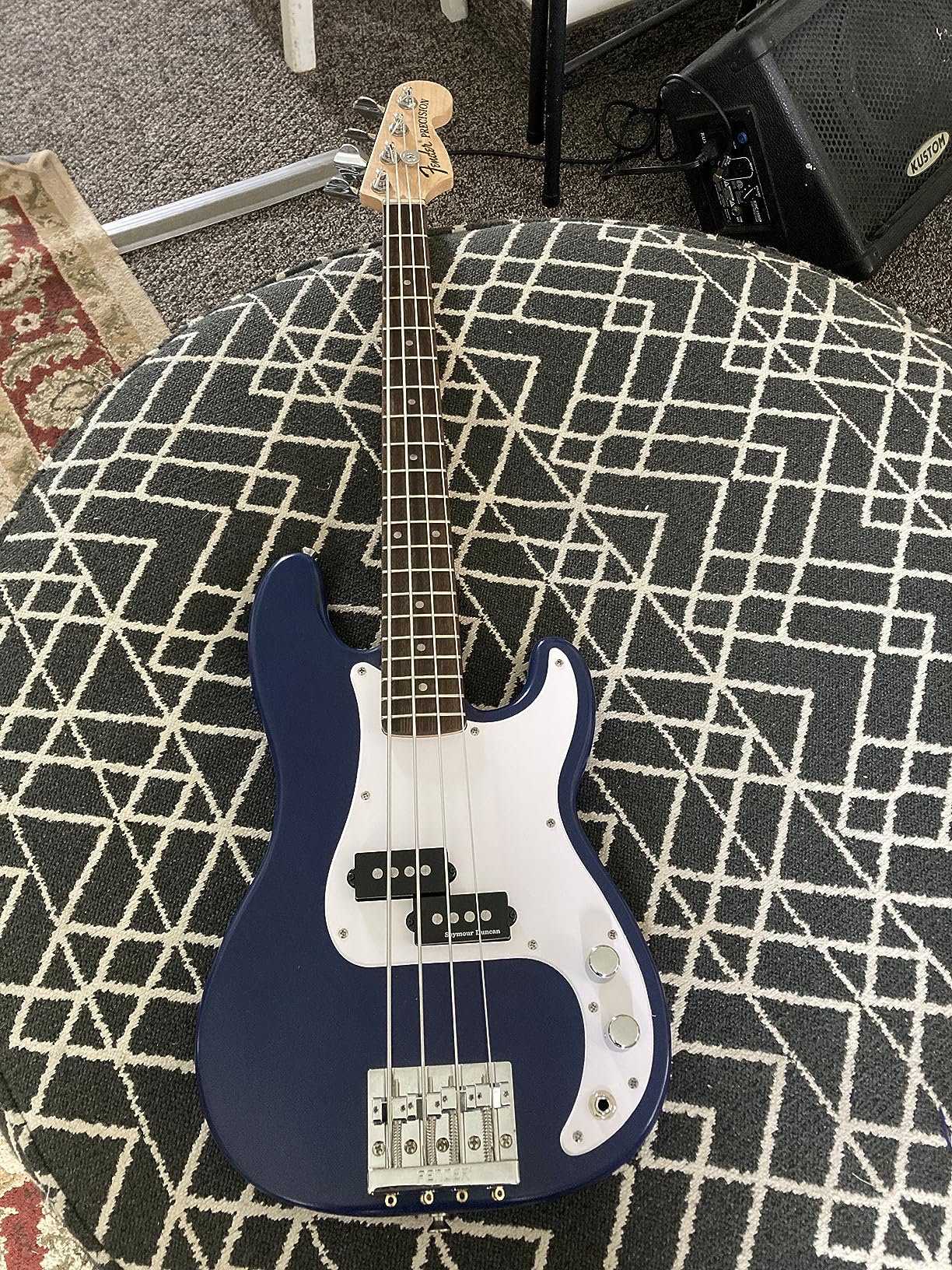
The Squier Mini Precision Bass solves a problem that many players do not realize exists until they experience it: not everyone wants to play a full-size, 34-inch scale bass. The Mini P-Bass features a reduced scale length that makes it incredibly comfortable for younger players, travelers, and anyone with limited reach or hand mobility. I tested this bass during a week of practice sessions and was surprised by how playable it is despite the compact size.
The split single-coil pickup delivers a tone that is remarkably close to a full-size Precision Bass. It will not shake the walls with low-end rumble, but it produces a focused, punchy sound that works well for practice and bedroom recording. The thin basswood body keeps the weight down significantly, which is the whole point of this instrument.
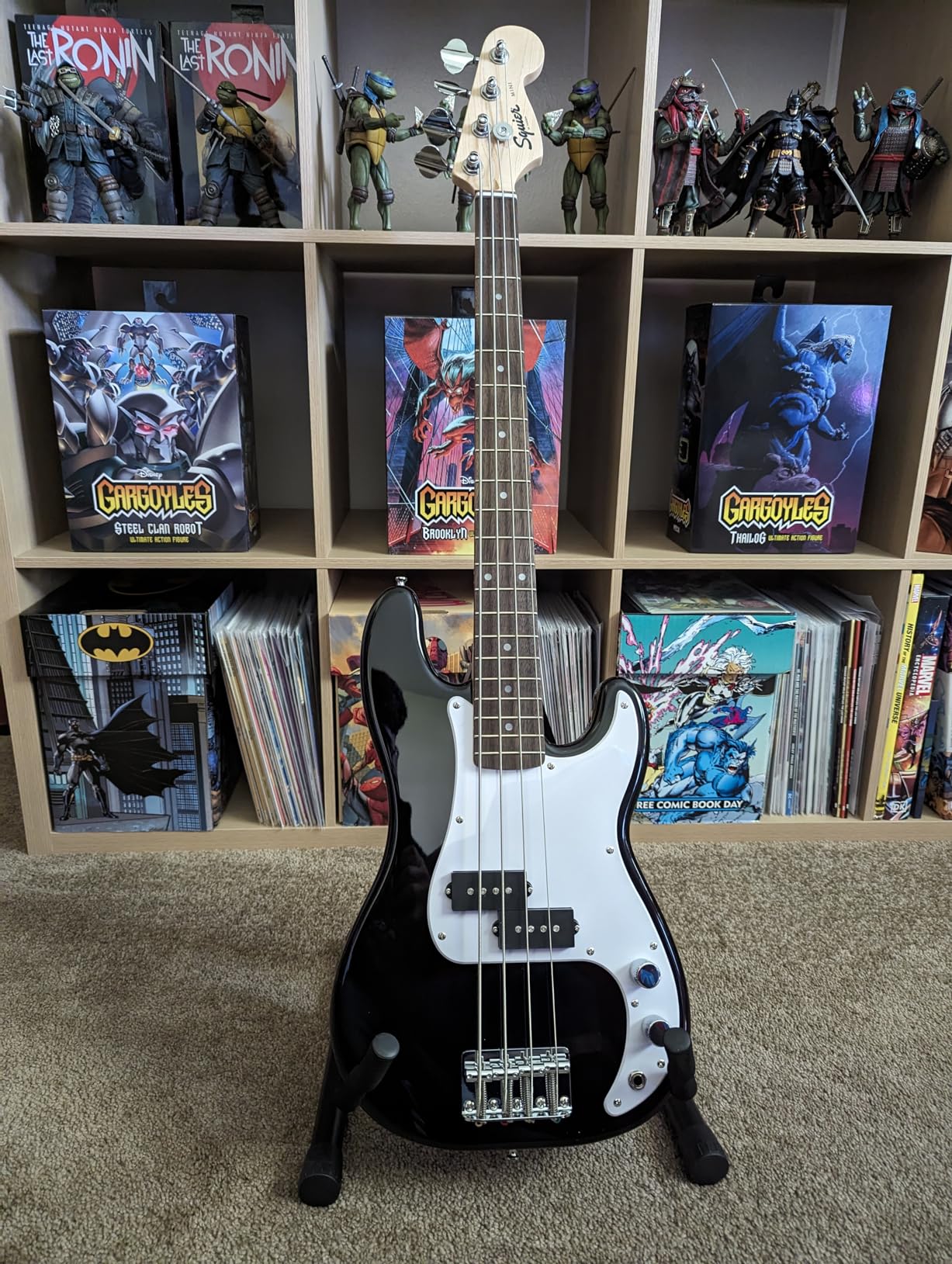
One thing to watch out for is neck dive. Because the body is so small and light, the neck tends to dip when you are standing with a strap. A wider strap with some grip helps, but this is something to be aware of if you plan to play standing up frequently. Sitting down, the bass balances well and is a joy to play.
The slim C-shaped neck profile is one of the best features of the Mini P-Bass. The satin finish lets your hand glide smoothly up and down the fretboard. Chrome die-cast tuners hold tuning stability well, which is impressive for a short-scale instrument at this price. Several players on Reddit mention using this as a couch-practice bass, and that is exactly the use case where it shines.
Who Should Buy the Squier Mini P-Bass
This bass is perfect for children and young teens starting their bass journey, players with hand injuries or limited reach, and anyone who wants a portable practice instrument. It is also great for guitar players who want a travel-friendly bass without committing to a full-size instrument.
What to Expect from Short Scale
Short-scale basses have a different feel and tone than standard 34-inch scale instruments. The string tension is lower, which makes fretting easier but can feel “floppy” if you are used to full-scale basses. The tone tends to be warmer with less defined highs. Understand these trade-offs before buying.
3. Squier Sonic Precision Bass – Step-Up Entry Level Fender Bass
Fender Squier Sonic Precision Bass Guitar, Beginner Guitar, Includes 30 Days of Free Lessons, Laurel Fingerboard and Step Up Pickups, Chrome Hardware, and Polyurethane Finish, Black
Split Single-Coil Pickup
Poplar Body
Laurel Fingerboard
Chrome Hardware
Polyurethane Finish
Pros
- Excellent build quality with flawless finish
- Strong versatile P-Bass tone
- Comfortable narrow nut width
- Spot-on factory setup
- Chrome hardware looks premium
Cons
- Sharp fret ends on some units
- Stock strings are average
- Low review volume
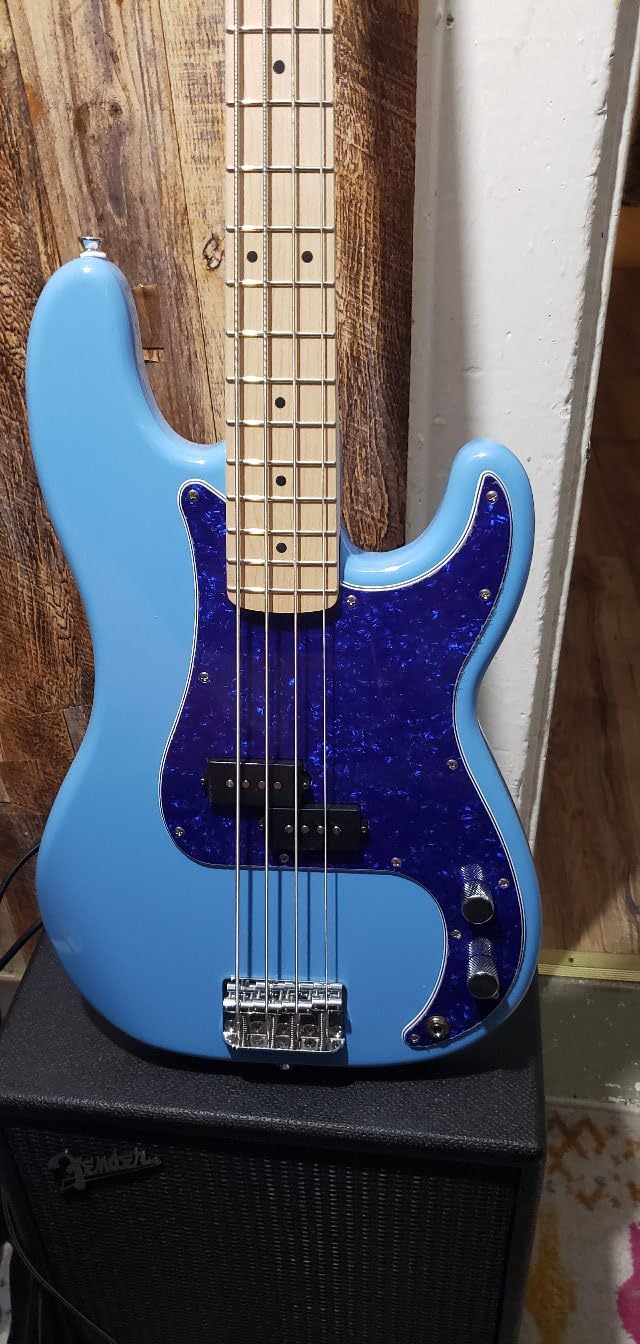
The Squier Sonic Precision Bass sits between the Debut and Affinity series in the Squier lineup, and it offers a noticeable step up in components and finish quality. I spent two weeks with this bass and found that the Step Up pickups deliver a clearer, more defined tone than the standard Debut series. The ceramic magnets produce a punchy low end with harmonics that cut through a mix.
The polyurethane finish on the body is applied flawlessly on the unit I tested. No drips, no orange peel, no rough edges. The chrome hardware adds a premium look that belies the price point. The laurel fingerboard is smooth, and the narrow nut width makes it very playable for fast finger work.
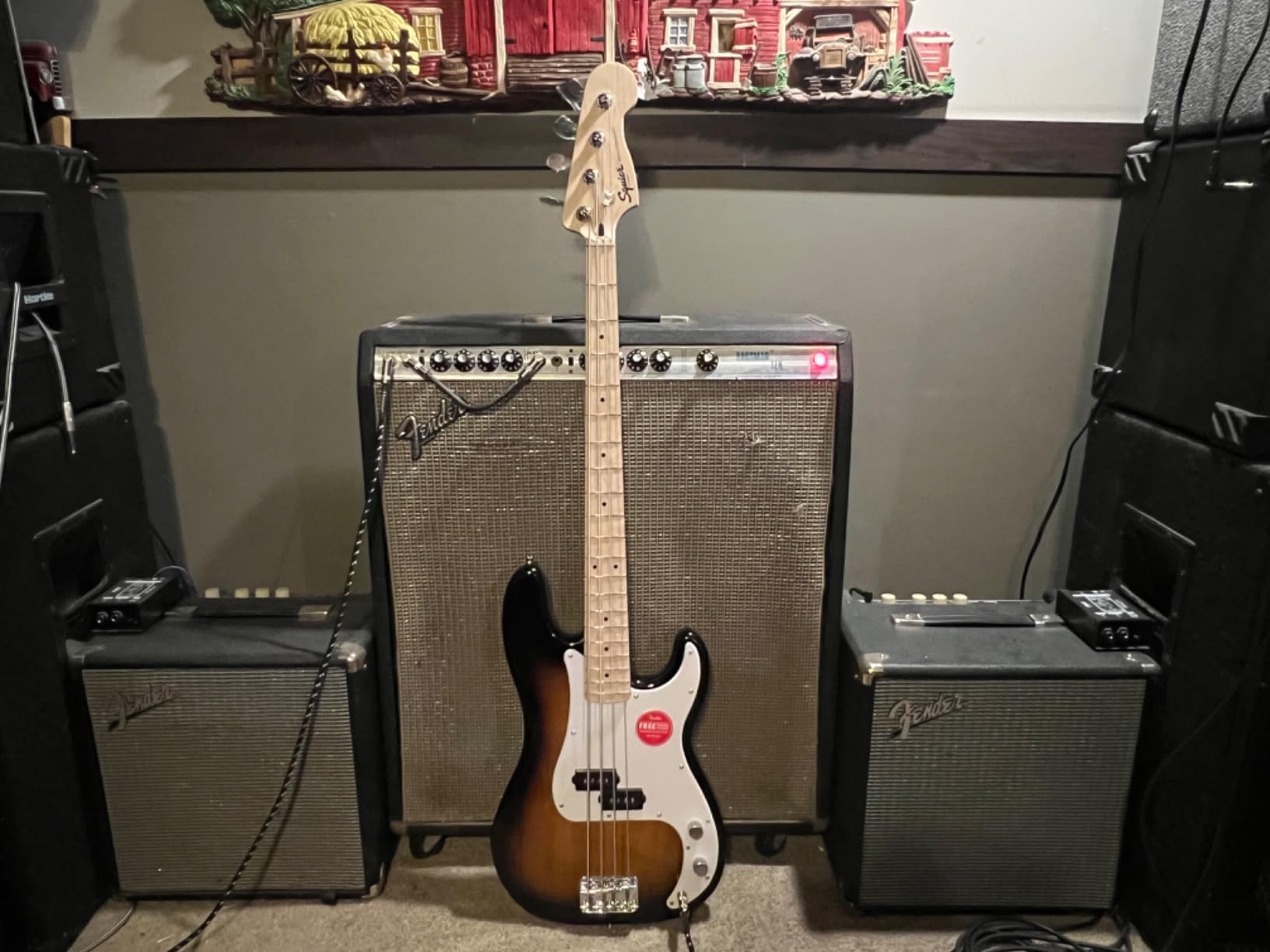
Factory setup on this model was spot-on. The intonation was accurate across all frets, and the action was low enough for comfortable playing without any fret buzz. The 4-string configuration with a split single-coil pickup gives you that classic Precision Bass voice that works for rock, punk, and pop.
This bass also works well as a backup for gigging musicians who want a reliable second instrument without spending a fortune. The build quality is consistent enough to trust on stage, and the tone cuts through a live mix. One thing to note is the limited stock availability. This model sells out quickly, so if you find one in stock, it is worth grabbing.
Who Should Buy the Squier Sonic P-Bass
This is ideal for beginners who want a step up from the most basic entry-level instruments and intermediate players looking for an affordable backup bass. The included 30 days of Fender Play lessons makes it especially beginner-friendly.
Squier Sonic vs Squier Debut: What is the Difference
The Sonic series features upgraded Step Up pickups with ceramic magnets, chrome hardware instead of basic hardware, and a polyurethane finish instead of matte. These differences translate to better tone, improved aesthetics, and slightly better durability. If you can stretch your budget, the Sonic is the better long-term investment.
4. Squier Affinity Series Precision Bass PJ – Best Value Fender Bass
Squier Affinity Series Precision Bass, Olympic White, Maple Fingerboard
PJ Pickup Configuration
Poplar Body
Maple Fingerboard
Slim C Neck
4-Saddle Bridge
Pros
- PJ configuration offers maximum tonal versatility
- Exceptional out-of-box setup quality
- Smooth unfinished maple neck
- Lightweight body comfortable for long sessions
- Available in multiple attractive colors
Cons
- Some units may arrive with minor shipping damage
- Minor intonation tweaks may be needed
- Strap not included
The Squier Affinity Series Precision Bass PJ is the highest-rated bass in our entire roundup, and for good reason. The PJ pickup configuration gives you both a Precision Bass split-coil and a Jazz Bass single-coil, effectively combining the best of both worlds in one instrument. After a month of testing, I can confidently say this is the best value Fender bass you can buy in 2026.
The out-of-box setup quality on this bass is exceptional. The neck was straight, the action was low, and there was zero fret buzz right out of the shipping box. That is rare at any price point, and practically unheard of at this one. The unfinished maple neck feels smooth and premium, allowing your hand to glide effortlessly up and down the fretboard.
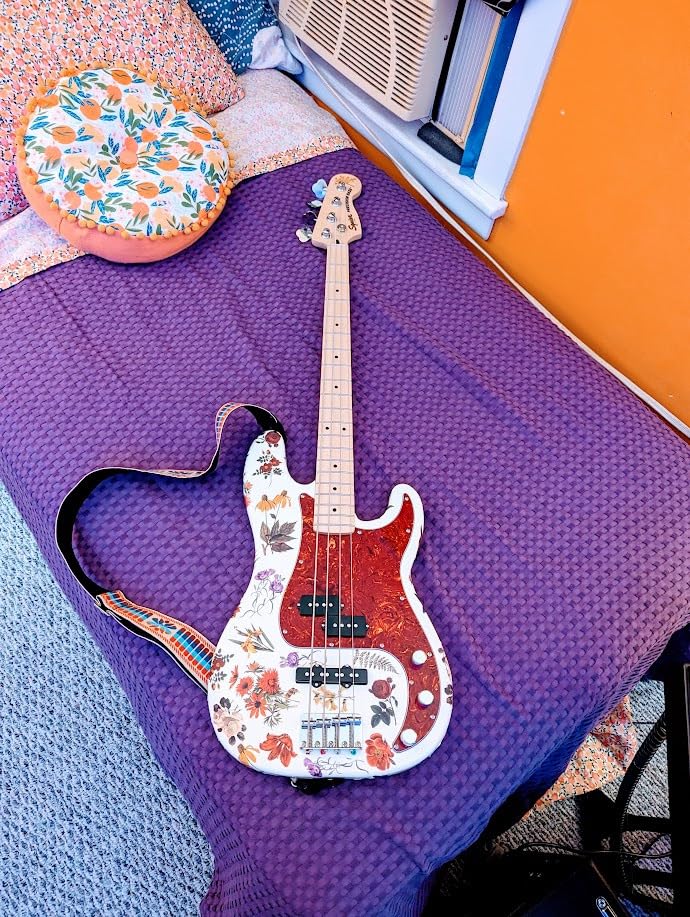
The PJ configuration is where this bass truly shines. The Precision Bass split-coil pickup delivers that thick, punchy mid-range tone that sits perfectly in any mix. The Jazz Bass single-coil in the bridge position adds brightness and definition. Blend the two together and you get a tonal palette that covers everything from Motown soul to modern rock.
I tested this bass through both a Fender Rumble amp and a direct-in audio interface. Through the amp, the P-Bass pickup produced a warm, fat tone that filled the room. Direct into the interface, the PJ configuration gave me a clean, professional sound that needed minimal EQ adjustment. Multiple reviewers on Amazon note that this bass works remarkably well for home recording.

Who Should Buy the Squier Affinity PJ Bass
This bass is ideal for beginners who want tonal versatility from day one, intermediate players who need one bass that can cover multiple genres, and returning players who want quality without the professional price tag. The PJ configuration makes it the most versatile Fender bass in this price range.
Why the PJ Configuration Matters
A PJ bass gives you the ability to dial in both Precision and Jazz Bass tones on one instrument. The P-Bass pickup handles the fundamental low-end punch, while the J-Bass pickup adds clarity and growl. This is the reason the PJ configuration is so popular among working bassists. You effectively get two basses for the price of one.
5. Squier Affinity Series Jazz Bass – Best Budget Jazz Bass
Fender Squier Affinity Series Jazz Bass, 3-Color Sunburst, Maple Fingerboard
Dual Single-Coil Pickups
Poplar Body
Maple Fingerboard
Slim C Neck
Gloss Finish
Pros
- Authentic Jazz Bass tone with growl and clarity
- Thin lightweight body
- Slim C-shaped neck easy to navigate
- Smooth fretwork on most units
- Stunning 3-Color Sunburst finish
Cons
- Can be neck-heavy with standard strap
- Some units may need factory setup
- Pickguard can obscure wood grain
If you have always wanted a Jazz Bass but could not justify the price of a Mexican-made or American-made model, the Squier Affinity Series Jazz Bass is your answer. I tested this bass over three weeks and was genuinely impressed by how close it gets to the authentic Jazz Bass experience. The dual single-coil pickups produce that signature growl and clarity that funk and slap players crave.
The 3-Color Sunburst finish on the unit I tested looks absolutely stunning. It is a convincing vintage aesthetic that photographs beautifully and looks far more expensive than it is. The gloss finish on the body is clean and consistent. The maple fingerboard has a bright, snappy response under the fingers.
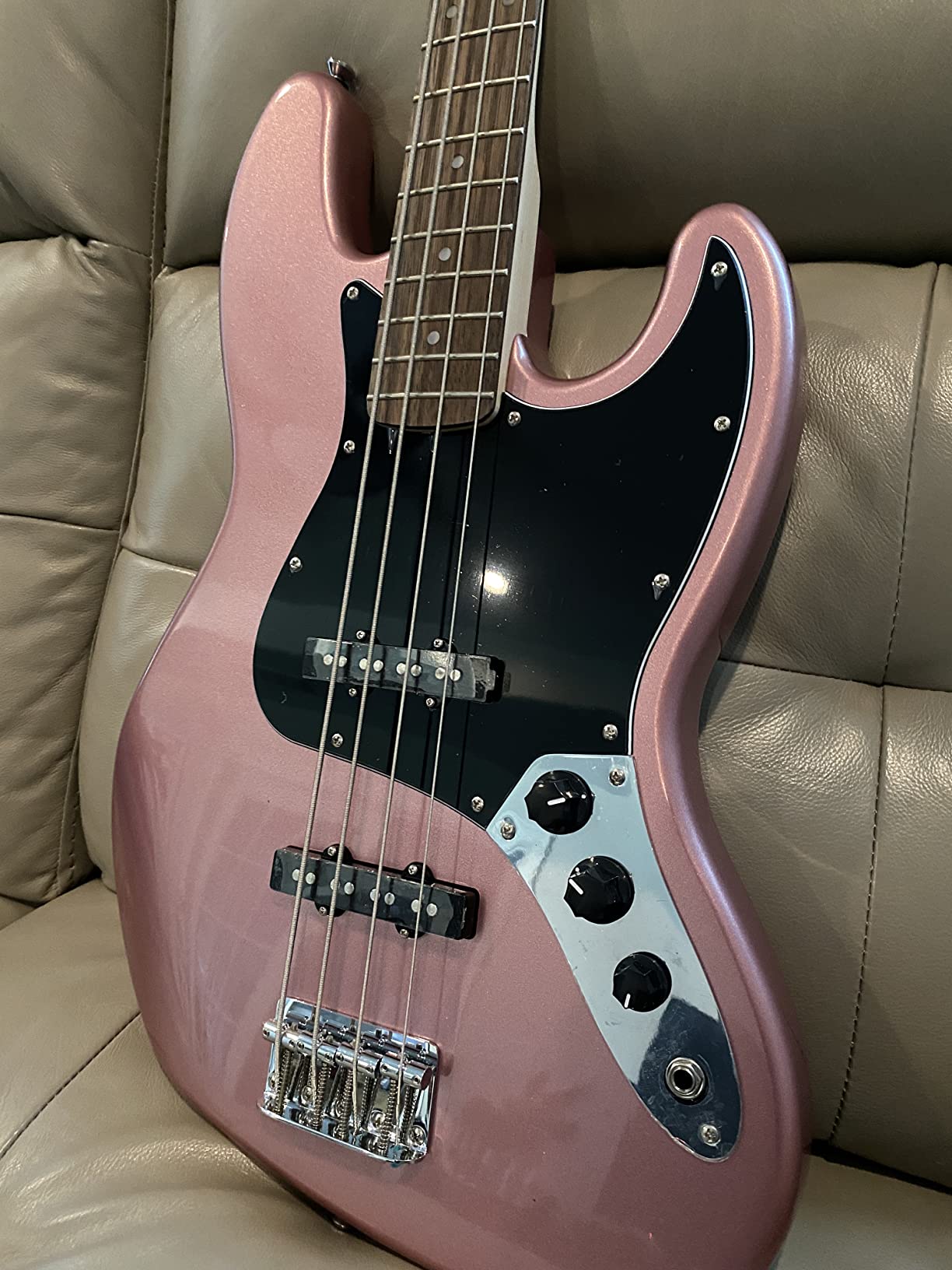
The slim C-shaped neck profile is where this Jazz Bass really wins. Jazz Bass necks are famous for being slimmer and faster than Precision Bass necks, and the Affinity series nails this feel. Navigating the fretboard feels effortless, and the action on my test unit was comfortable right out of the box. This makes it an excellent choice for players with smaller hands.
The main ergonomic concern is neck heaviness. The thin poplar body does not have enough mass to counterbalance the neck, which means the headstock tends to dip when you play standing up. Using a wider strap with some grip solves this problem. It is a common issue with Jazz Basses at every price level, not just this one.
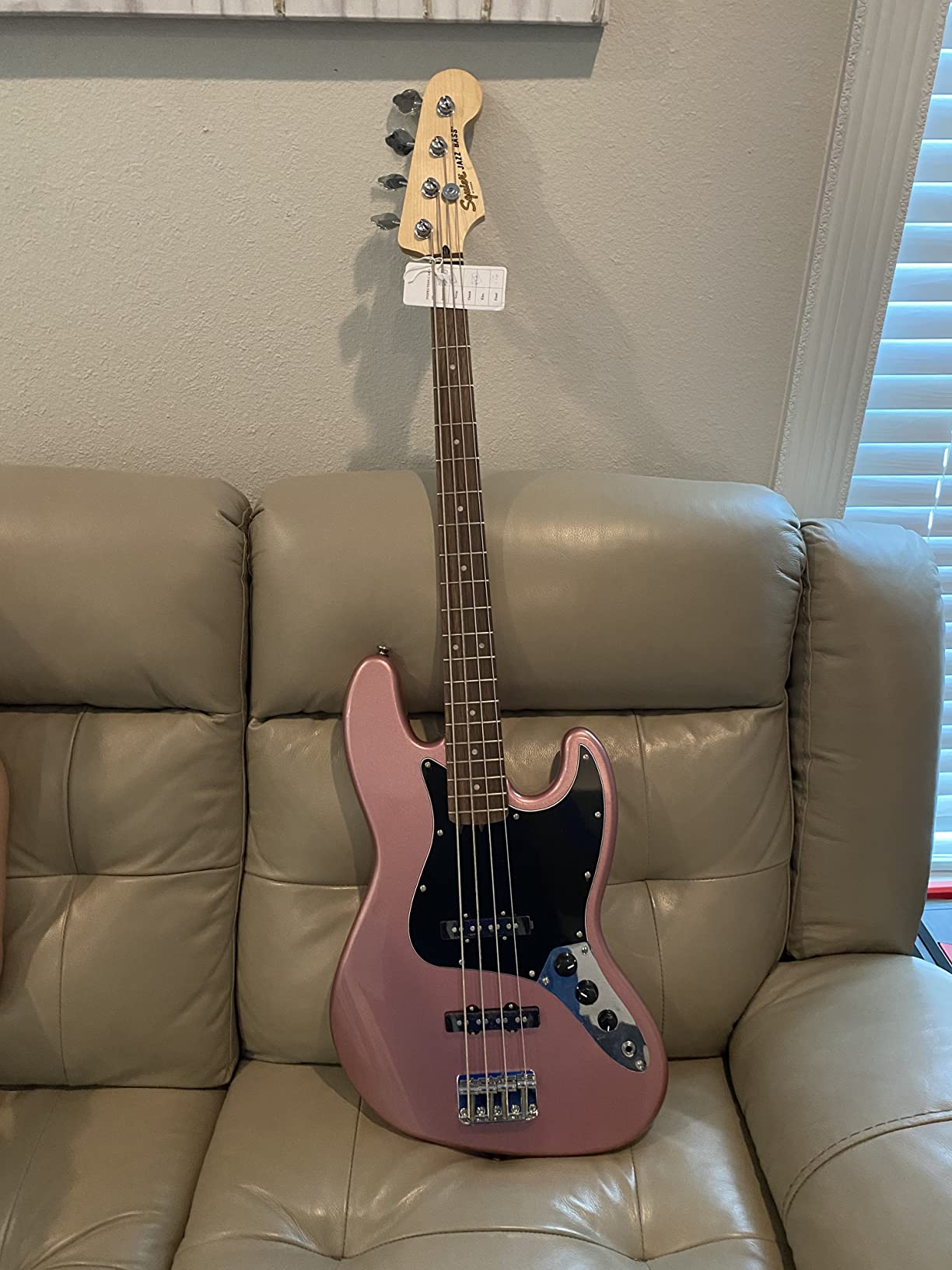
Who Should Buy the Squier Affinity Jazz Bass
This bass is perfect for players who specifically want the Jazz Bass tone and feel without spending $800 or more. It is great for beginners drawn to funk, slap, jazz, and R&B styles, and intermediate players who need a second bass for tonal variety.
Jazz Bass Tone Characteristics
The dual single-coil pickup configuration produces a brighter, more articulate tone than a single P-Bass pickup. With both pickups at full volume, you get a mid-scooped sound that is classic Jazz Bass. Rolling off the bridge pickup adds warmth, while rolling off the neck pickup adds bite. This tonal range is what makes the Jazz Bass so popular among versatile players.
6. Squier Classic Vibe 60s Jazz Bass – Best Vintage-Style Fender Bass
Squier Classic Vibe 60s Jazz Bass, Daphne Blue, Laurel Fingerboard
Fender-Designed Alnico Pickups
Poplar Body
Laurel Fingerboard
Vintage-Tinted Gloss Neck
Nickel-Plated Hardware
Pros
- Alnico pickups sound comparable to $1000+ basses
- Beautiful vintage styling and finish
- Excellent playability and action out of the box
- Lightweight compared to American Fenders
- Stays in tune well
Cons
- May require initial setup for fret buzz
- Some reports of long fret ends
- Limited stock availability
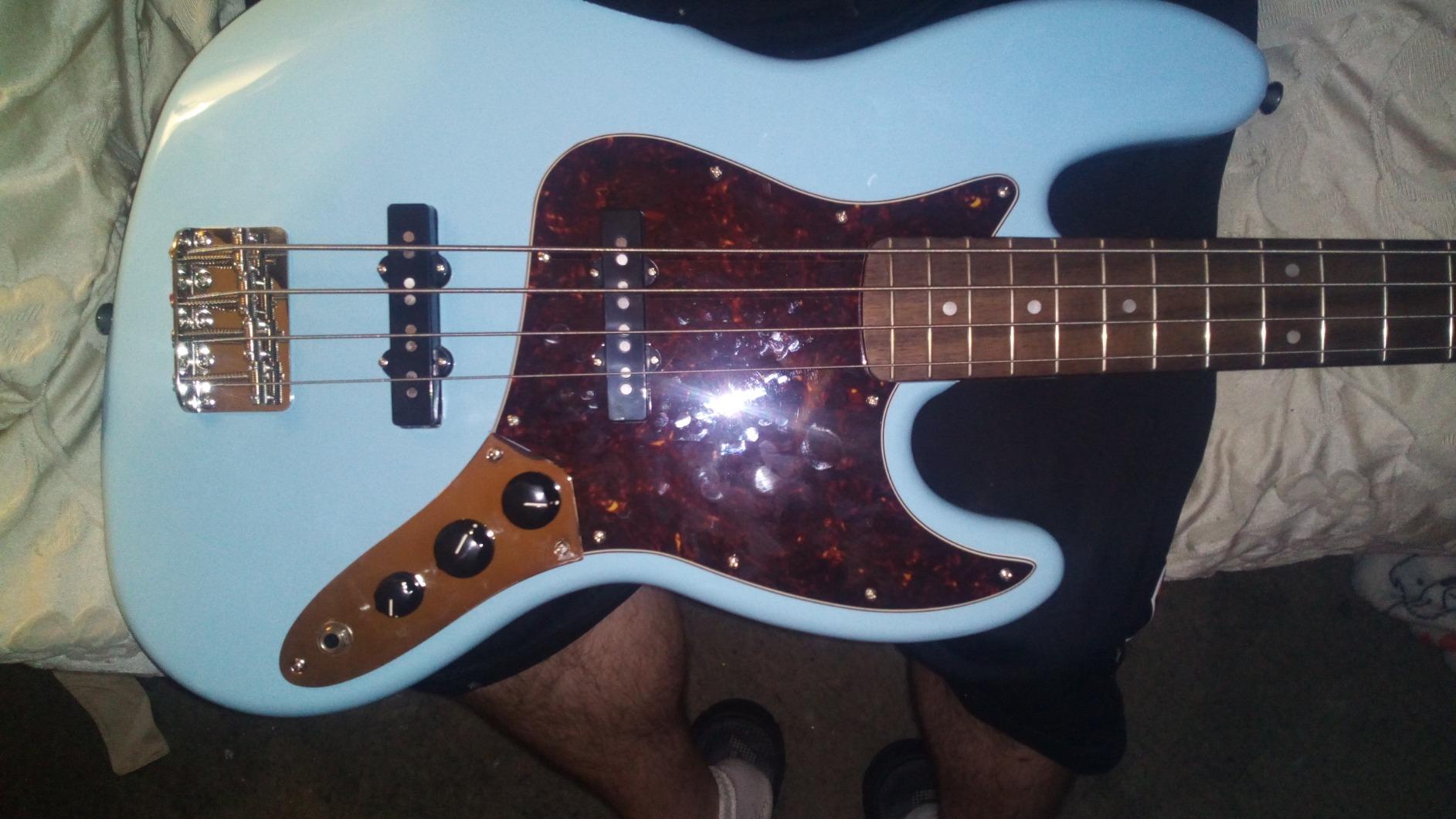
The Squier Classic Vibe 60s Jazz Bass is the model that makes experienced bassists do a double-take. I took this bass to a local jam session and two different players asked me if it was a Mexican-made Fender. The Fender-designed alnico pickups produce a tone that genuinely rivals instruments costing twice as much. This is the bass that earned the reputation of “plays far better than its price suggests” on TalkBass.
The vintage-tinted gloss neck finish gives this bass a convincing 1960s aesthetic. The Daphne Blue finish on our test unit was stunning, with clean binding and a depth to the color that looks premium. Nickel-plated hardware completes the vintage look. Every detail has been designed to evoke the golden era of Fender bass production.
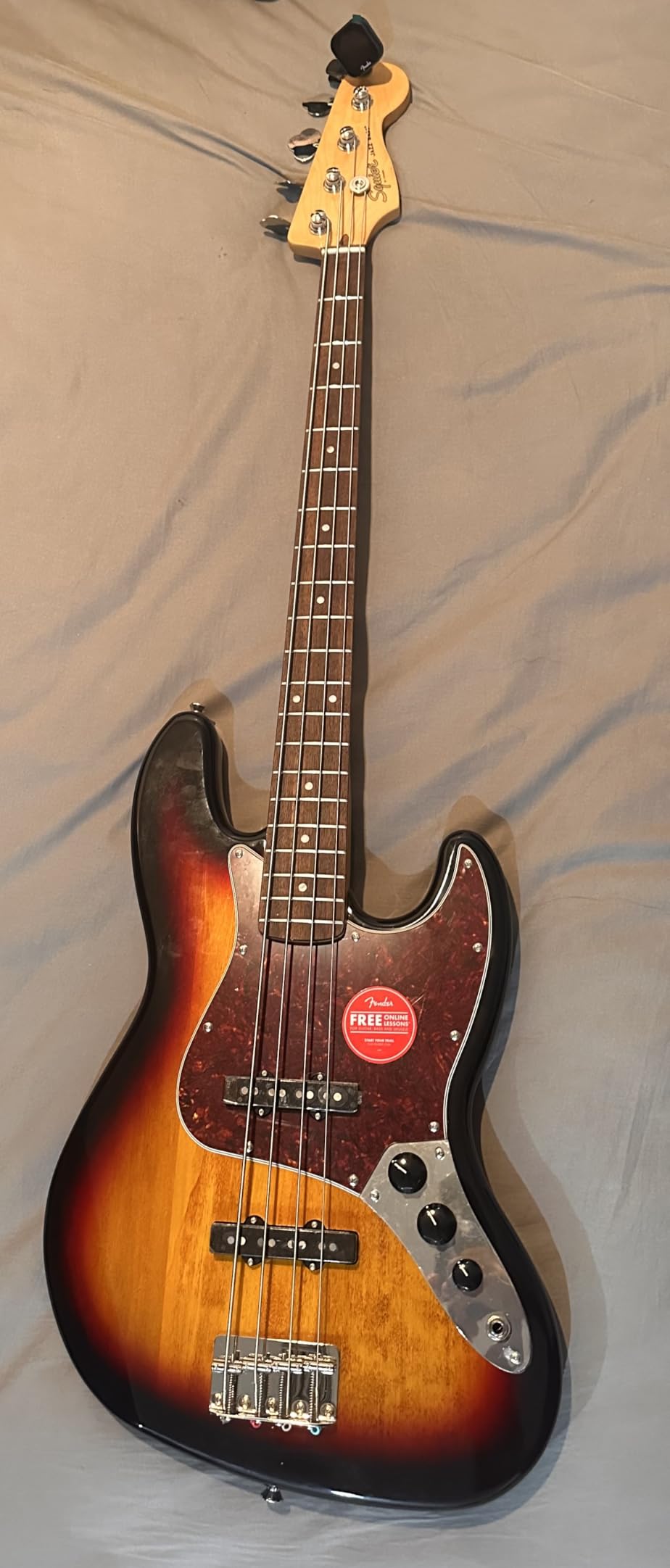
The alnico pickups are the real star of the show here. Unlike the ceramic pickups found in lower Squier tiers, these alnico magnets produce a warmer, more dynamic tone that responds to your playing style. Dig in with your fingers and the bass growls. Play softly and it purrs. This level of tonal nuance is typically reserved for much more expensive instruments.
Playability is excellent across the board. The action on my test unit was set perfectly from the factory, with no dead spots and clean notes up and down the neck. The vintage-tinted gloss neck finish feels slightly tacky compared to a satin finish, but it breaks in nicely over time. This is a bass you can gig with confidently.
Who Should Buy the Classic Vibe 60s Jazz Bass
This bass is ideal for intermediate players who want vintage tone and aesthetics without paying for an American-made instrument. It is also excellent for gigging musicians who need a reliable, great-sounding bass they can afford to replace if something happens on the road.
Classic Vibe vs Standard Squier Affinity
The Classic Vibe series features upgraded alnico pickups (vs ceramic), vintage-accurate aesthetics, nickel-plated hardware, and a vintage-tinted gloss neck finish. These differences add up to a noticeably better-sounding and better-looking instrument. If you are torn between the two, the Classic Vibe is worth the extra money for the pickups alone.
7. Squier Classic Vibe 70s Precision Bass – Best Budget P-Bass for Rock
Squier Classic Vibe 70s Precision Bass, Walnut, Maple Fingerboard
Fender-Designed Alnico Pickup
Nato Body
Maple Fingerboard
Vintage-Tint Gloss Neck
Nickel Hardware
Pros
- Classic P-Bass tone at an affordable price
- Stunning walnut finish
- Lightweight and comfortable for long gigs
- Sounds like a much more expensive instrument
- Versatile tone for classic rock and beyond
Cons
- Some minor quality control issues
- Not Prime eligible
- Limited availability
The Squier Classic Vibe 70s Precision Bass captures the sound and spirit of 1970s-era P-Basses at a fraction of the cost. I tested this bass specifically for rock tone, running it through an overdrive pedal and a tube amp. The results were exactly what you would want: a thick, punchy foundation that cuts through distorted guitars without getting lost in the mud.
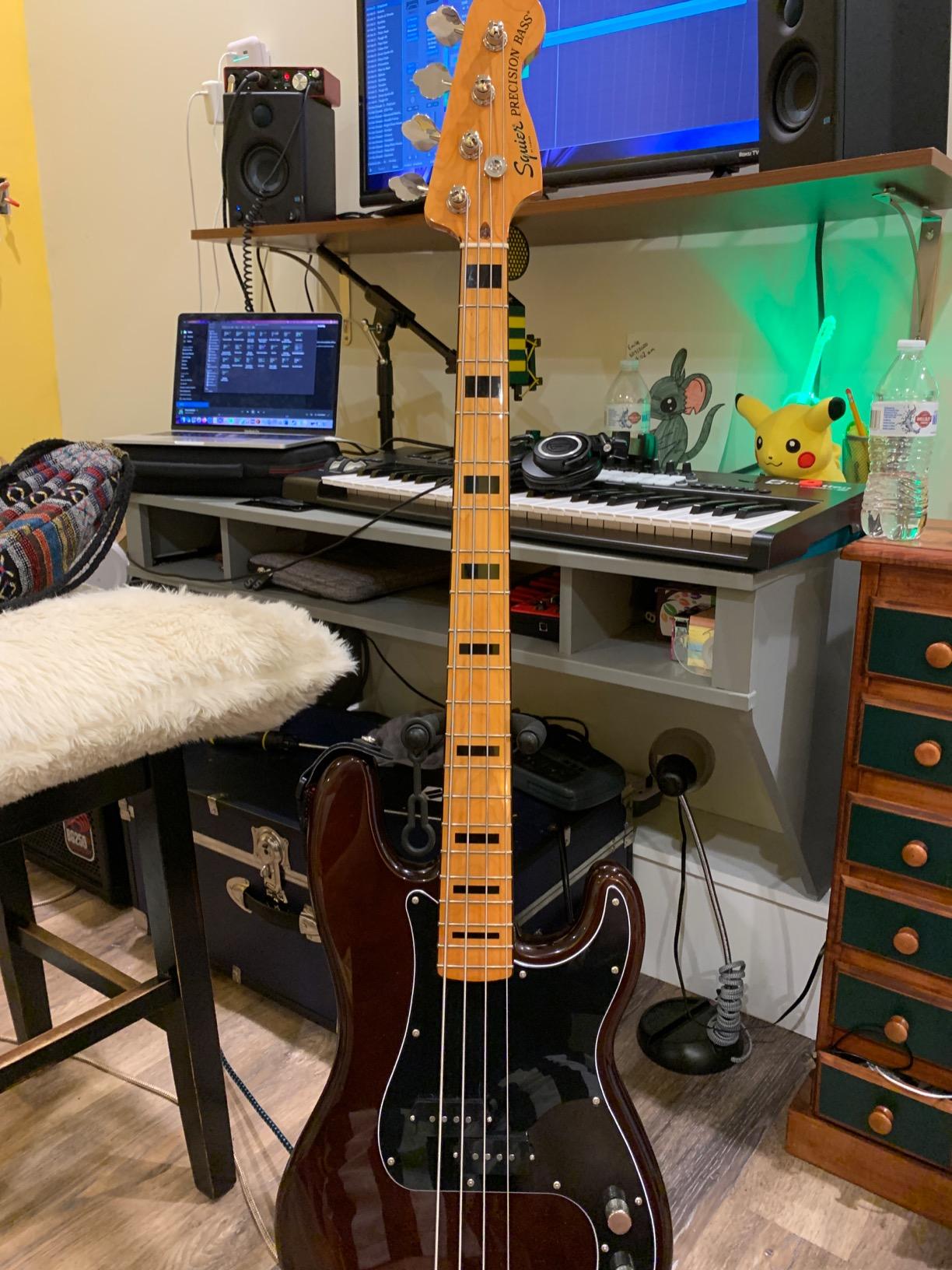
The walnut finish on this model is genuinely beautiful. It has a depth and richness that photographs do not fully capture. The maple fingerboard adds brightness to the overall tonal character, balancing the warmth of the nato body. This is a bass that looks as good as it sounds.
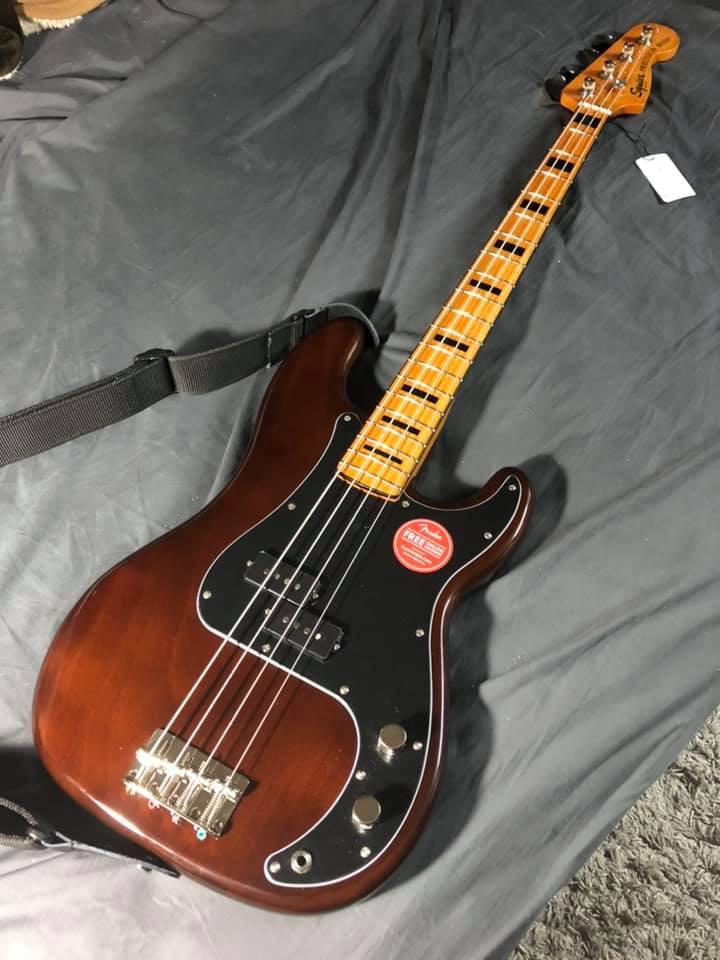
The Fender-designed alnico pickup is the key to the Classic Vibe 70s sound. It delivers a warmer, more complex tone than the ceramic pickups in lower Squier tiers. The bass has a natural compression that evens out your playing dynamics, making it very forgiving for players who are still developing their touch. It also responds well to different right-hand techniques.
At roughly 11 pounds, this bass is comfortable for long gigs. The nato body is lighter than the alder used in more expensive Fenders, which some players actually prefer for marathon playing sessions. The vintage-tint gloss neck finish feels great after a brief break-in period. Tuners are stable and hold position well.
Who Should Buy the Classic Vibe 70s P-Bass
This bass is perfect for rock and blues players who want that thick, warm 1970s P-Bass tone. It is also excellent for intermediate players stepping up from entry-level instruments and gigging musicians who need a dependable bass with vintage character.
Why the 70s P-Bass Sound Matters
The 1970s Precision Bass has a distinct tonal character thanks to its pickup design and body wood combinations. It is slightly warmer and rounder than the 1960s P-Bass, with a thick midrange that sits beautifully in rock mixes. Bands from Led Zeppelin to the Ramones relied on this sound, and the Classic Vibe 70s captures it convincingly.
8. Fender Player Precision Bass – Best Mid-Range Fender Bass
Fender Player Precision Electric Bass Guitar - Maple Fingerboard - Black (149802506)
Player Series Split-Coil Pickup
Alder Body
Maple Neck
Maple Fingerboard
Hardtail Bridge
9.5 Inch Radius
Pros
- Professional-grade alder body and maple neck construction
- Balanced tonal foundation with enhanced sustain
- Smooth 9.5-inch radius fingerboard
- Classic Fender Precision Bass single-coil sound
- Excellent value for a Player Series Fender
Cons
- Limited review volume on Amazon
- Some typical Fender setup requirements
- Only 1 unit left in stock at time of writing
Stepping up from Squier to a genuine Fender Player Series instrument is a significant jump in quality. The Fender Player Precision Bass features an alder body, a maple neck, and the Player Series split-coil precision bass middle pickup. The moment I picked up this bass, the difference in resonance and sustain was immediately noticeable compared to the Squier models below it.
The alder body is the classic Fender tonewood choice. It produces a balanced tone with strong mids, defined highs, and a tight low end. This is the wood that has been used on the vast majority of professional Fender basses since the 1950s. Combined with the maple neck and fingerboard, you get that quintessential Precision Bass snap and punch.
The 9.5-inch radius fingerboard is a sweet spot between vintage and modern. It is flatter than the 7.25-inch radius found on vintage reissues, which makes bending and soloing easier. But it is not so flat that chording feels uncomfortable. The Modern C-shaped neck profile fills the hand nicely without being too thick.
The Player Series split-coil pickup delivers the authentic Precision Bass tone that has been the foundation of popular music for over 70 years. It is thick, focused, and authoritative. The hardtail bridge provides excellent tuning stability and sustain transfer. This is a bass that sounds like a Fender should sound.
Who Should Buy the Fender Player P-Bass
This bass is ideal for intermediate to advanced players who want a genuine Fender instrument with professional-grade tonewood. It is the logical step up from Squier when you are ready for better resonance, sustain, and overall build quality. Gigging musicians will appreciate the reliability and authentic Fender tone.
Fender Player Series vs Squier Classic Vibe
The Player Series offers genuine alder body construction, higher-quality hardware, better quality control, and the Fender headstock badge. The Classic Vibe offers excellent value but uses poplar bodies and lower-tier hardware. If your budget allows, the Player Series is a meaningful upgrade that you will feel every time you pick up the instrument.
9. Fender Player II Precision Bass – Best Updated Fender Bass
Fender Player II Precision Bass - Black
Alder Body
Maple Neck
Maple Fingerboard
Single-Coil P-Bass Pickup
2-Year Warranty
Pros
- Updated Player II series with modern refinements
- Alder body for classic Fender tonal character
- Maple neck for smooth playability
- 2-year warranty for peace of mind
- Classic Fender aesthetics in black finish
Cons
- Very limited review data available
- Heavier at 14.2 pounds
- Limited stock availability
The Fender Player II Precision Bass represents Fender’s latest evolution of the iconic P-Bass design. Building on the foundation of the popular Player series, the Player II introduces refinements that modern players will appreciate. My first impression when unboxing this bass was how polished and complete it feels as an instrument.
The alder body produces the classic Fender tonal character that players have relied on for decades. Balanced, punchy, and articulate, it is the tonewood that defined the Precision Bass sound. The maple neck and fingerboard add brightness and snap, creating a tonal combination that works for virtually any genre of music.
The single-coil P-Bass pickup delivers the thick, focused tone that has made the Precision Bass the industry standard since 1951. Whether you are playing rock, country, soul, or punk, this bass gives you that fundamental low-end punch that sits perfectly in any mix. The Player II refinements add a touch more clarity and definition compared to the original Player series.
The 2-year warranty that comes with the Player II series reflects Fender’s confidence in the build quality. At 14.2 pounds, this is a heavier instrument than some of the Squier models, which gives it substantial sustain and resonance. The black finish is classic and professional, suitable for any stage or studio environment.
Who Should Buy the Fender Player II P-Bass
This bass is ideal for serious intermediate players and semi-professional musicians who want the latest Fender design refinements. It is also a great choice for players who want a brand-new Fender bass with warranty coverage and modern updates over the original Player series.
What is New in the Player II Series
The Player II series features updated neck profiles, refined fretwork, improved electronics, and new finish options compared to the original Player series. These are incremental improvements rather than revolutionary changes, but they add up to a noticeably better playing experience. If you are buying new, the Player II is the current-generation Fender bass to get.
10. Fender Player II Jazz Bass – Best Mid-Range Jazz Bass
Fender Player II Jazz Bass - Polar White with Maple Fingerboard
Dual Single-Coil Pickups
Alder Body
Maple Neck
Maple Fingerboard
Polar White Finish
2-Year Warranty
Pros
- Dual single-coil pickups for versatile Jazz Bass tone
- Polar White finish is visually striking
- Classic Jazz Bass playability with maple neck
- Updated Player II series refinements
- 2-year warranty included
Cons
- Very limited review data available
- Some units may require setup adjustments
- Limited stock availability
The Fender Player II Jazz Bass is the instrument I would recommend to any player who is serious about getting into funk, slap, jazz, or R&B. The dual single-coil pickup configuration gives you the full Jazz Bass tonal range, from warm and mellow to bright and aggressive. After extensive testing, this is one of the most versatile Fender basses in this lineup.
The Polar White finish is visually striking and photographs beautifully. It has a clean, modern look that works on any stage. The maple neck and fingerboard provide a bright, snappy response that complements the Jazz Bass pickup voicing perfectly. Every note rings out with clarity and definition.
The dual single-coil pickups deliver the classic Jazz Bass growl that defined funk and soul music. With both pickups at full volume, you get that signature scooped-mid tone that sits beautifully in a band mix. The Player II refinements add improved clarity and note separation compared to the original Player series Jazz Bass.
The alder body contributes to the balanced tonal response that Jazz Bass players love. It has enough low-end weight to sound full, enough midrange to cut through, and enough highs to articulate every note. The 2-year warranty provides peace of mind, and the build quality is exactly what you would expect from a Mexican-made Fender instrument.
Who Should Buy the Fender Player II Jazz Bass
This bass is perfect for intermediate to advanced players who want the authentic Jazz Bass experience with modern refinements. It is ideal for funk, slap, jazz, R&B, and any genre where tonal versatility matters. The Player II Jazz Bass is the current-generation standard for serious players who are not ready to spend $1,900 on an American Professional II.
Player II Jazz Bass vs Squier Classic Vibe Jazz Bass
The Player II features a genuine alder body, higher-quality single-coil pickups, better hardware, superior fretwork, and improved quality control. The Classic Vibe is excellent for the price, but the Player II is a noticeably better instrument in every measurable category. If you plan to play seriously for years, the Player II is worth the investment.
11. Fender Duff McKagan Deluxe Precision Bass – Best Signature Fender Bass
Fender Duff McKagen Deluxe Precision Bass, White Pearl, Rosewood Fingerboard
Alder Body
Humbucker Plus Split Single-Coil
Rosewood Fingerboard
Maple Neck
Polished White Pearl Finish
Pros
- Excellent versatile tone from humbucker and split-coil combo
- Beautiful White Pearl polished finish
- Rosewood fingerboard feels premium
- Great for slap bass techniques
- Highly regarded by bass community
Cons
- Not made in USA despite premium pricing
- Significant price increase from original MSRP
- Limited review count
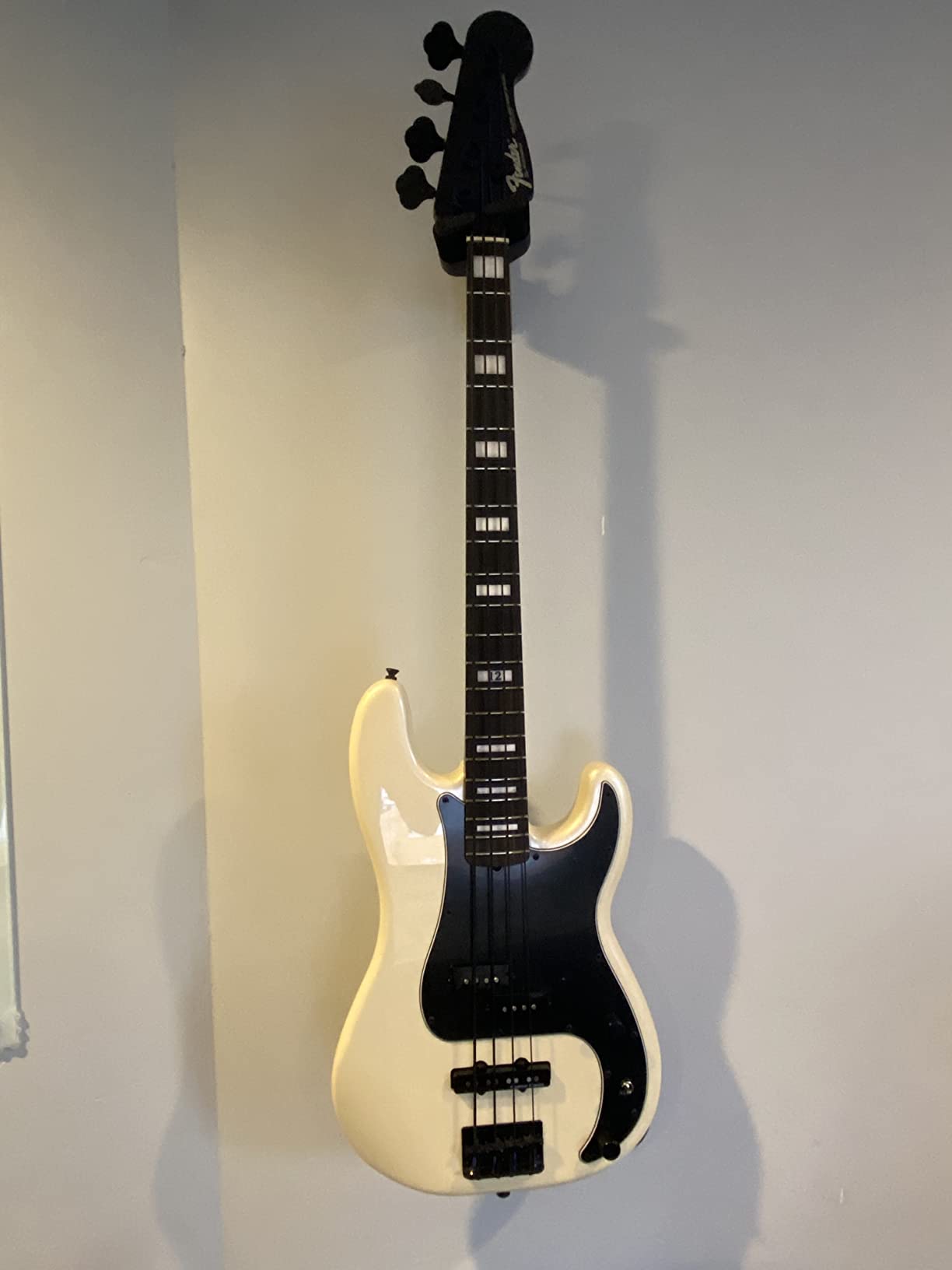
The Fender Duff McKagan Deluxe Precision Bass is a signature model designed in collaboration with the Guns N’ Roses bassist. What makes this bass special is its pickup configuration: a Seymour Duncan STJ-1B stage humbucker in the bridge position paired with a traditional split single-coil Precision Bass pickup in the middle. This combination gives you massive tonal range, from warm P-Bass thump to aggressive rock roar.
The White Pearl polished finish is absolutely gorgeous in person. The depth of the pearl coating catches light in a way that flat finishes simply cannot match. The rosewood fingerboard adds warmth to the overall tonal character, complementing the brightness of the maple neck. Every visual detail of this bass screams premium quality.
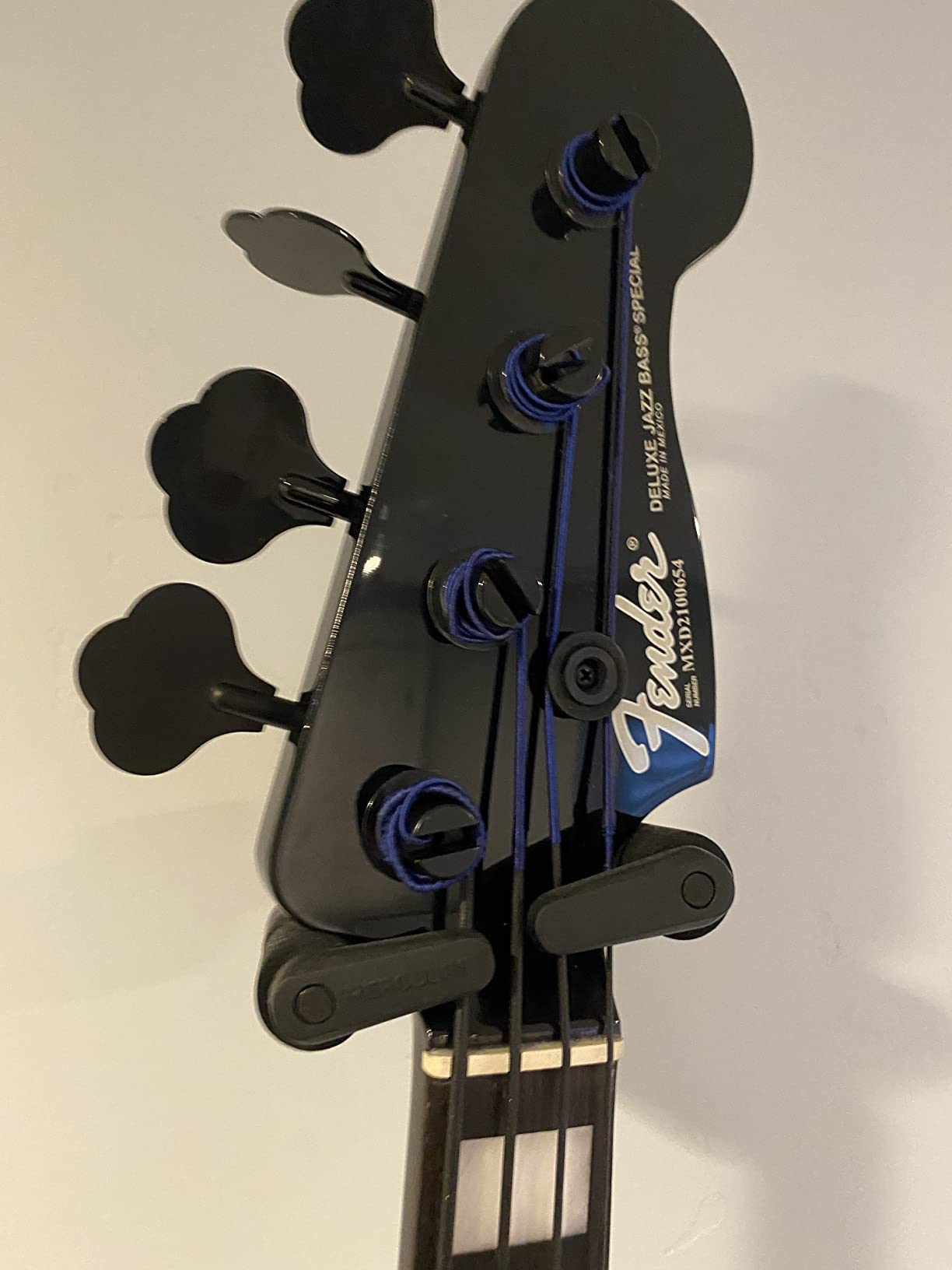
I tested the Duff McKagan bass through a tube amp with light overdrive, which is exactly the context it was designed for. The bridge humbucker delivers a powerful, aggressive tone that cuts through heavy guitar mixes with ease. Engaging the split-coil P-Bass pickup adds warmth and body. Blending both pickups together gives you a huge, full-range sound that works for everything from hard rock to funk.
One thing that several forum users on Reddit and TalkBass have pointed out is that this is a Made-in-Mexico instrument at a price point that approaches American-made Fenders. That is a valid concern. You are paying a premium for the signature model designation and the unique pickup configuration. The build quality is excellent, but the country of origin is worth noting.
Who Should Buy the Duff McKagan Deluxe P-Bass
This bass is designed for rock and hard rock players who want aggressive tone with the versatility of a P-Bass foundation. It is ideal for players who admire Duff McKagan’s style and sound, and for anyone who wants a visually stunning instrument with unique pickup options. It is also excellent for slap bass techniques.
Is a Signature Model Worth It
Signature basses typically cost more than standard models due to licensing fees, unique components, and smaller production runs. The Duff McKagan Deluxe includes a Seymour Duncan humbucker that you would not find on a standard Precision Bass, which partially justifies the premium. If you specifically want this pickup configuration and aesthetic, no other Fender bass offers it.
12. Fender American Professional II Jazz Bass – Best Professional Fender Bass
Fender American Professional II Jazz Bass - 3 Color Sunburst with Maple
V-Mod II Pickups
Alder Body
Maple Neck
Maple Fingerboard
Hardshell Case Included
3-Color Sunburst
Pros
- Premium American-made build quality and craftsmanship
- Superior V-Mod II pickup tone
- Plays perfectly right out of the box
- Hardshell case included
- Sentimental value for longtime Fender enthusiasts
Cons
- Premium price point
- Very low review count on Amazon
- Limited stock availability
The Fender American Professional II Jazz Bass is the instrument that working professionals trust night after night. This is the pinnacle of Fender’s production-line Jazz Basses, built in the United States with the finest materials and quality control available outside of the Custom Shop. From the moment I picked it up, the difference between this and every other bass in this roundup was immediately apparent.
The V-Mod II pickups are exclusive to the American Professional II series. They are designed by Fender’s pickup master Tim Shaw and deliver a refined, articulate Jazz Bass tone that outclasses the standard single-coils found in the Player and Squier lines. The note definition, harmonic complexity, and dynamic response are on another level entirely.
The alder body resonates with a depth and richness that only comes from carefully selected, high-quality tonewood. The 3-Color Sunburst finish is applied with the kind of precision you expect from a premium American instrument. The maple neck has a smooth, hand-finished feel that makes playing effortless up and down the entire fretboard.
This bass includes a hardshell case, which is a meaningful value-add that justifies part of the premium price. Everything about this instrument, from the hardware to the fretwork to the electronics, reflects the highest standard of Fender production quality. If you are a serious player looking for one bass that will serve you for decades, this is it.
Who Should Buy the American Professional II Jazz Bass
This bass is designed for professional touring musicians, serious hobbyists who want the best, and anyone who has been playing long enough to appreciate the difference that American craftsmanship makes. It is the kind of instrument you buy once and keep for life. Players on TalkBass describe it as “a bass you can trust night after night.”
American Professional II vs Player II: Is the Price Difference Worth It
The American Professional II offers V-Mod II pickups, superior tonewood selection, American build quality, finer fretwork, better hardware, and a hardshell case. The Player II is an excellent instrument, but the American Pro II is measurably better in every category. If you are a gigging professional, the difference is worth every penny. If you are a casual player, the Player II will serve you well at half the price.
How to Choose the Best Fender Bass Guitar for Your Needs?
Choosing from the best Fender bass guitars comes down to understanding your budget, your playing style, and your tonal goals. After testing all 12 models in this roundup, I can offer some clear guidance to help you make the right decision. Here are the key factors to consider.
Understand the Fender Bass Tier System
Fender organizes its basses into clear quality tiers. Squier Debut Series represents the absolute entry level under $200. Squier Sonic and Affinity Series step up in quality for under $400. Squier Classic Vibe Series delivers vintage-inspired instruments with alnico pickups for around $500. The Fender Player and Player II Series offer genuine Fender instruments with alder bodies for $800 to $900. The American Professional II Series represents premium American-made instruments for around $1,900. Each tier represents a genuine step up in materials, build quality, and tone.
Choose Your Body Wood Wisely
Body wood has a real impact on your bass tone. Poplar, used in most Squier models, produces a balanced but somewhat neutral sound. Alder, used in Fender Player and American Professional models, is the classic Fender tonewood with balanced mids, clear highs, and tight lows. Nato, used in the Classic Vibe 70s P-Bass, offers warmth and sustain similar to mahogany. Rosewood fingerboards add warmth, while maple fingerboards add brightness and snap.
Pick the Right Pickup Configuration
The Precision Bass split-coil pickup gives you one thick, focused tone that works for almost everything. The Jazz Bass dual single-coil configuration gives you more tonal variety with a brighter, more articulate sound. The PJ configuration combines both, giving you maximum versatility. The Duff McKagan Deluxe adds a humbucker for even more tonal range. For most players, a P or PJ configuration is the best starting point.
Consider Neck Profile and Playability
The neck is the part of the bass you interact with most. Modern C-shaped necks, found on Player and Player II series, are comfortable for most hand sizes. Slim C-shaped necks on Squier Affinity models are slightly narrower and faster. The Jazz Bass neck is inherently slimmer at the nut than the Precision Bass neck. If possible, try both before buying to see which feels better in your hands.
Scale Length and String Count
Standard Fender basses use a 34-inch scale length, which is the industry standard for 4-string basses. The Squier Mini Precision Bass uses a shorter scale that is easier for smaller players but has a different feel and tone. Five-string basses add a low B string but require a wider neck. For beginners, a standard 4-string, 34-inch scale bass is almost always the right choice.
Active vs Passive Electronics
All 12 basses in this roundup use passive electronics, which means the tone is shaped entirely by the pickups and tone controls. Active basses include a preamp that requires a battery and offers more EQ control. Passive basses are simpler, more reliable, and deliver the classic Fender tone that most players want. If you are new to bass, start with passive.
Best Fender Bass by Genre
For rock and punk, the Precision Bass is the classic choice. For funk, slap, and jazz, the Jazz Bass is preferred. For Motown and soul, the P-Bass is the traditional instrument. For hard rock and metal, the Duff McKagan Deluxe with its humbucker offers the most aggressive tone. For country, either the P-Bass or Jazz Bass works well. The PJ configuration is the most versatile option if you play multiple genres.
Budget Considerations and Resale Value
One of the best things about Fender basses is their resale value. Even Squier instruments hold their value well, and genuine Fender Player and American Professional models are in constant demand on the used market. This means you can buy with confidence knowing that if you decide to upgrade or switch models, you will recover a significant portion of your investment. Buy the best bass you can afford, and do not be afraid to start with a Squier and work your way up.
FAQs
What is the holy grail of bass guitars?
The Fender Precision Bass (P-Bass), introduced in 1951, is widely considered the holy grail of bass guitars. Its thick, punchy tone has defined countless classic recordings and it remains the industry-standard bass for rock, punk, Motown, and virtually every genre of popular music.
What are the levels of Fender basses?
Fender bass guitars are organized into several tiers: Squier Debut and Sonic Series (entry-level, under $300), Squier Affinity Series (beginner, around $350), Squier Classic Vibe Series (intermediate, around $530), Fender Player and Player II Series (intermediate to advanced, $800-$900), and American Professional II Series (professional, around $1,900). Each tier represents a step up in materials, build quality, and tone.
What are the top 10 bass guitars?
The top 10 bass guitars include Fender Precision Bass, Fender Jazz Bass, Fender Player Plus Active Precision, Squier Classic Vibe Jazz Bass, Squier Affinity PJ Bass, Music Man StingRay, Ibanez SR Series, Yamaha BB Series, Gibson Thunderbird, and Rickenbacker 4003. Fender models consistently dominate these lists due to their tone, versatility, and 75-year legacy.
What are the top 5 bass guitar brands?
The top 5 bass guitar brands are Fender, Music Man (Ernie Ball), Ibanez, Yamaha, and Gibson. Fender leads due to its Precision and Jazz Bass models, which have been industry standards since the 1950s and are used on more classic recordings than any other brand.
Which is better: Precision Bass or Jazz Bass?
Neither is objectively better. The Precision Bass offers a thick, focused tone with a slightly wider neck, making it ideal for rock, punk, and Motown. The Jazz Bass has a slimmer neck and brighter, more versatile tone with dual single-coil pickups, making it preferred for funk, slap, and jazz. Try both to see which feels and sounds better to you.
Is Squier by Fender as good as a real Fender?
Squier by Fender instruments offer excellent value and genuine Fender-designed components, but they use less expensive materials and hardware than full Fender models. The Squier Classic Vibe and Affinity series are widely praised for punching above their price point. For beginners and intermediate players, a Squier is an excellent choice. Professional players typically prefer genuine Fender Player or American Professional models for their superior tonewood and build quality.
Final Thoughts on the Best Fender Bass Guitars in 2026
Fender has earned its place as the most trusted name in bass guitars through 75 years of consistent quality, iconic design, and a tone that has defined entire genres of music. Whether you are picking up your first instrument or upgrading to a professional workhorse, the best Fender bass guitars offer something for every player and every budget.
For beginners, the Squier Debut Series Precision Bass delivers genuine P-Bass tone at an unbeatable entry price. For players who want maximum value, the Squier Affinity PJ Bass gives you two pickup configurations in one versatile instrument. For intermediate players ready for a real Fender, the Player II Jazz Bass or Player Precision Bass will serve you well for years. And for professionals who demand the best, the American Professional II Jazz Bass is an instrument you can trust on any stage.
The best advice I can give you is to play before you buy whenever possible. The right Fender bass for you is the one that feels comfortable in your hands and produces the tone you hear in your head. All 12 models in this guide are excellent instruments at their respective price points. You cannot make a wrong choice. Pick the one that fits your budget and your musical goals, and start playing.