
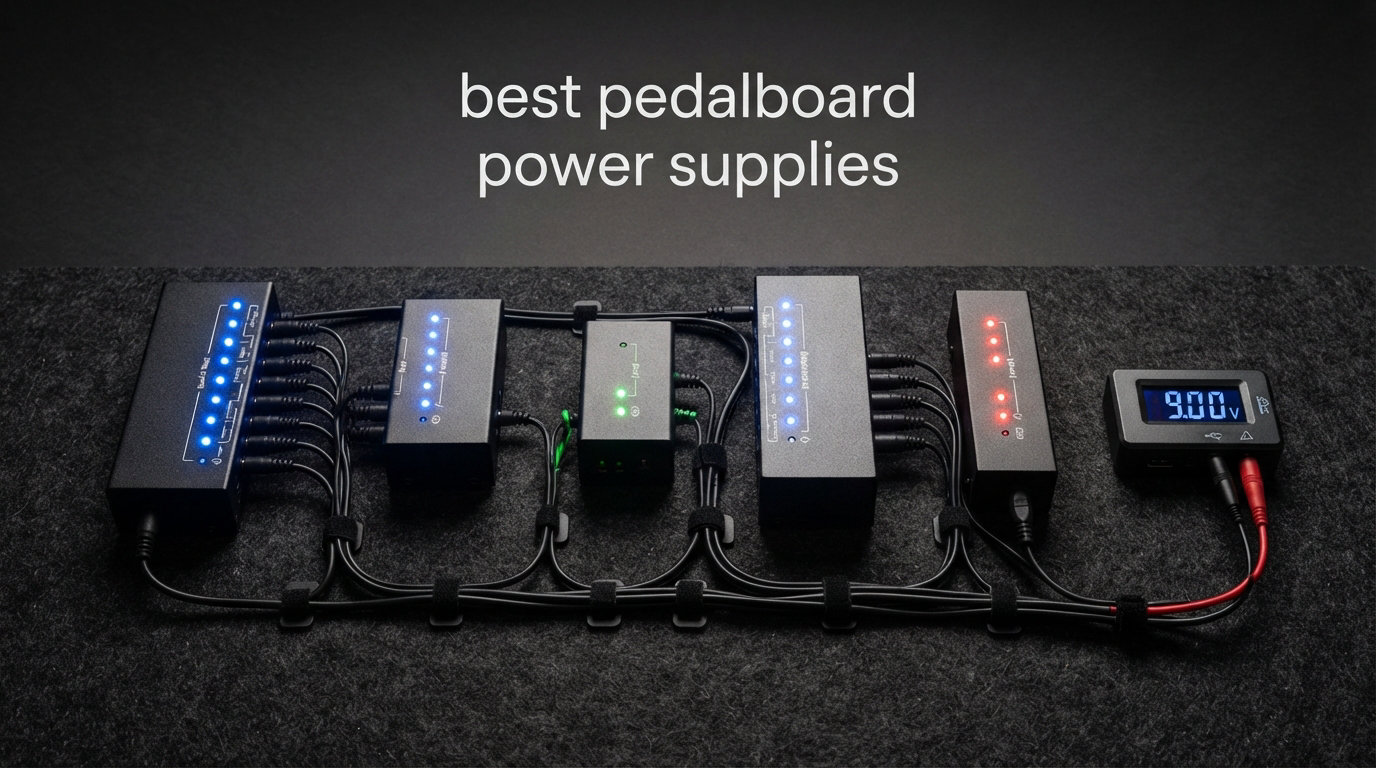
Nothing kills a guitar tone faster than a noisy pedalboard. I spent years battling ground loop hum, digital clock noise, and hiss from cheap daisy-chain setups before I understood what a difference quality pedalboard power supplies make. The right power supply does not just feed electricity to your pedals; it delivers clean, isolated DC power that lets every effect sound the way the designer intended.
If you are running more than three or four pedals, especially modern digital units from Strymon, Eventide, or Line 6, an isolated power supply is not optional. Daisy chains share a single power rail across all your effects, which means ground loops and digital noise bleed straight into your signal chain. I have tested 10 of the most popular options on the market to help you find the best pedalboard power supplies for your rig, budget, and playing style.
This guide covers everything from ultra-premium units like the CIOKS DC7 down to budget-friendly options under $50. I will walk you through real-world testing results, explain the technical specs that actually matter, and help you avoid the mistakes I made when I first started building pedalboards. Whether you have a 4-pedal mini board or a 15-pedal touring rig, there is a power supply here that fits your needs.
Top 3 Pedalboard Power Supplies for 2026

CIOKS DC7 Power Supply
- 48W total output
- 4 selectable voltages per outlet
- Ultra-low noise multistage filtering
Best Pedalboard Power Supplies in 2026
| Product | Specifications | Action |
|---|---|---|
|
CIOKS DC7 Power Supply
|
|
Check Latest Price |
 Strymon Ojai 5-Output Power Supply
|
|
Check Latest Price |
 MXR DC Brick Power Supply
|
|
Check Latest Price |
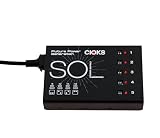 CIOKS SOL Power Supply
|
|
Check Latest Price |
|
Voodoo Lab Pedal Power 2 Plus
|
|
Check Latest Price |
 Truetone 1 SPOT Pro CS12
|
|
Check Latest Price |
 Voodoo Lab Pedal Power X8
|
|
Check Latest Price |
 Strymon Zuma 9-Output Power Supply
|
|
Check Latest Price |
 Ernie Ball Volt Power Supply
|
|
Check Latest Price |
|
Donner DP-1 Guitar Power Supply
|
|
Check Latest Price |
1. CIOKS DC7 Power Supply – Premium Isolated Power
CIOKS DC7 Power Supply
7 isolated outlets
48W total output
4 selectable voltages per outlet
2-stage switch-mode topology
Stainless steel enclosure
Pros
- Ultra-low noise with multistage filtering
- 4 selectable voltages on every outlet
- Compact size fits most pedalboards
- 12 Flex cables included
- 5 year warranty
Cons
- Uses RCA phono plugs not standard barrel
- Included right-angle cables have limited clearance
- Premium price point
The CIOKS DC7 sits at the top of my list for one simple reason: it delivers the cleanest, quietest power I have experienced from any pedalboard PSU. Cioks engineered this unit with a 2-stage switch-mode power supply topology combined with multistage filtering that achieves an impressively low noise floor. When I plugged my Strymon Timeline and Eventide H9 into the DC7, the background hiss that I had accepted as normal simply disappeared.
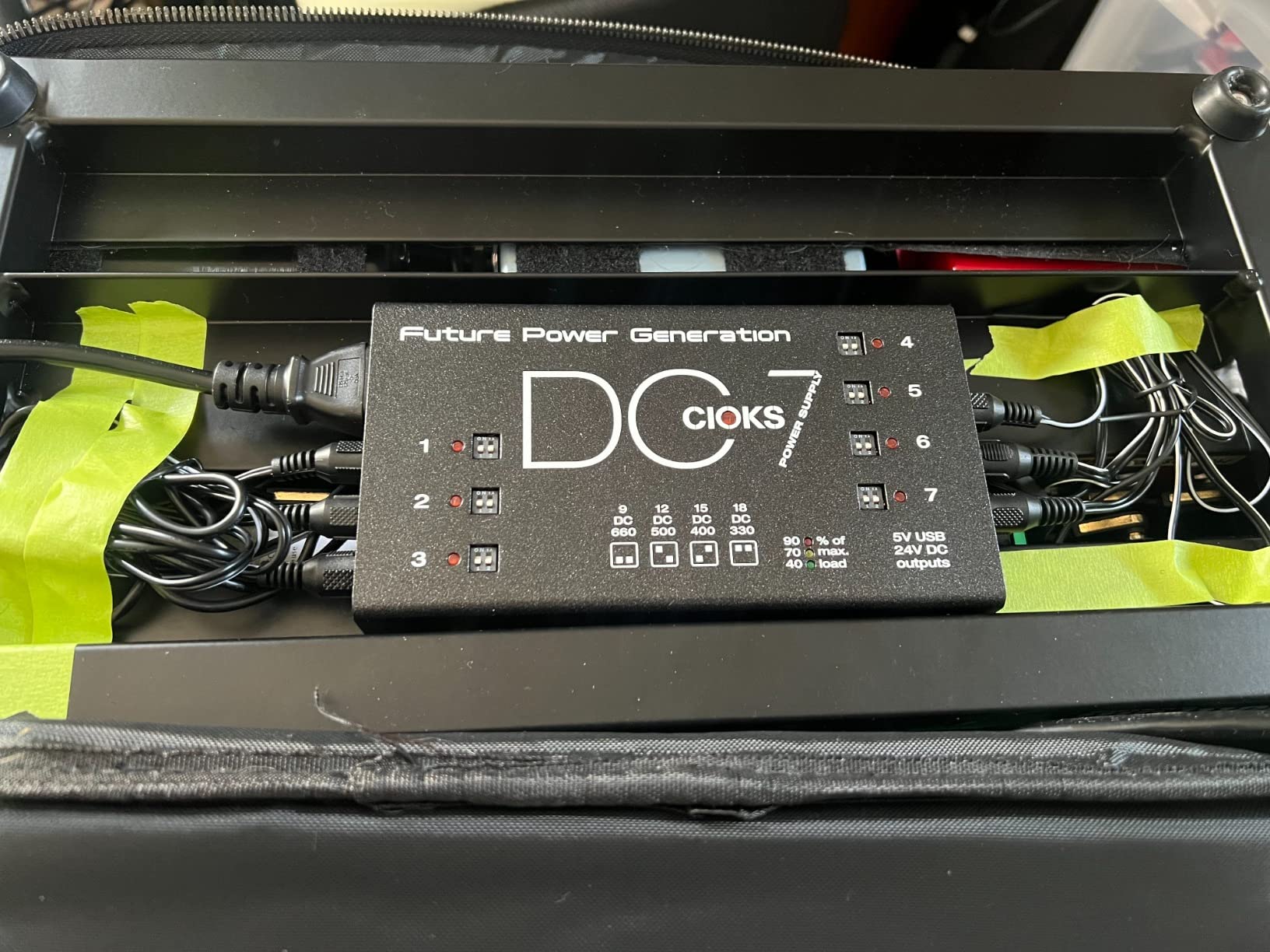
What makes the DC7 special is the flexibility. Each of the 7 outlets can be independently set to 9V, 12V, 15V, or 18V DC. That means you can power everything from a vintage fuzz pedal to an 18V overdrive without needing doubler cables or adapters. The total output power is 48 watts, which is more than enough for even the most demanding pedalboards. I ran 7 power-hungry digital pedals simultaneously without a single hiccup.
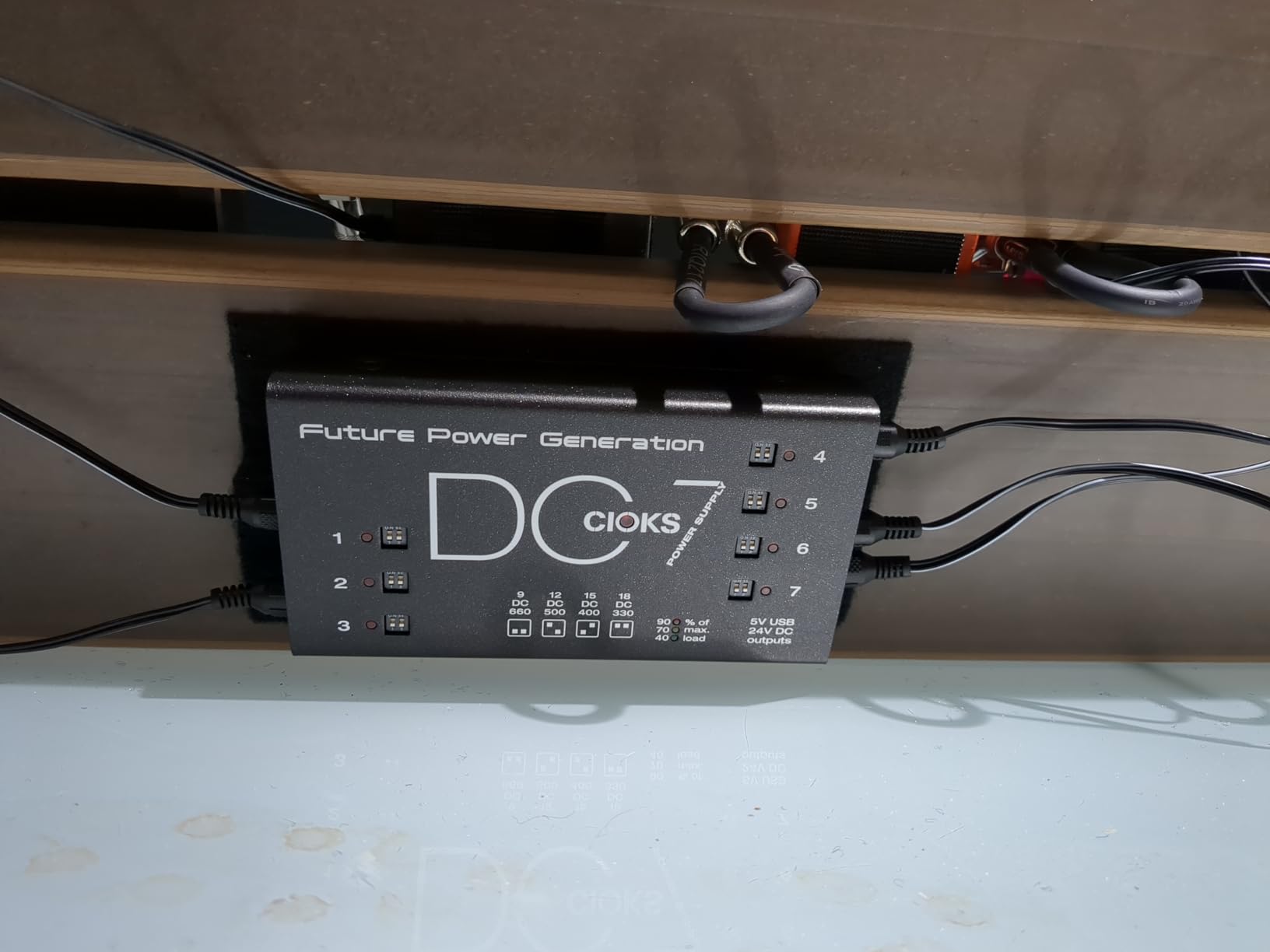
The build quality matches the premium positioning. The stainless steel enclosure feels solid and substantial at just 1 pound. Cioks includes 12 Flex cables in the box, which covers most pedalboard configurations right out of the package. The unit uses a standard IEC power cord, so no bulky wall wart to deal with.
The main downside is the connector type. The DC7 uses RCA phono plugs instead of the standard 2.1mm barrel connectors most guitarists are used to. This is not a deal-breaker since Cioks includes the appropriate cables, but it means you cannot just grab any spare patch cable if you lose one. Some users also noted that the included right-angle cables have limited clearance when mounted under certain pedalboards.
Best Fit for the DC7
This power supply is ideal for musicians running 5 to 7 pedals with mixed voltage requirements. If you have digital pedals drawing 300mA or more alongside analog effects that need different voltages, the DC7 handles it all without breaking a sweat. It is the unit I recommend most for studio setups where absolute silence is the priority.
When to Look Elsewhere
If your pedalboard has more than 7 pedals, you will need an expansion unit like the CIOKS Expansion or a different power supply with more outputs. Similarly, if you are just starting out with 3 or 4 basic 9V pedals, the DC7 is more power supply than you need at this stage.
2. Strymon Ojai – Best Compact High-Current Power Supply
Strymon Ojai 5-Output High Current Guitar Pedal Power Supply
5 isolated outputs
500mA per output
9V DC
Compact stainless steel
22.5W total
Pros
- Super small footprint fits tiny boards
- 500mA per output powers digital pedals
- High quality construction
- Excellent noise performance
Cons
- Only 5 outputs
- Power jack durability concerns over time
- May need compatible cables for some pedals
The Strymon Ojai is the power supply I recommend most often to guitarists building compact pedalboards. At just 1.5 pounds and measuring under 10 inches, it slides neatly under even the smallest Pedaltrain boards. Despite its small footprint, every one of its 5 outputs delivers a full 500mA at 9V DC, which is enough to power the most current-hungry digital pedals on the market.
I tested the Ojai with a Strymon Iridium, an HX Stomp, and a Tonex One, all running simultaneously. Not a hint of noise, no ground loop hum, and zero digital clock bleed. The fully isolated outputs mean each pedal gets its own clean power rail. This is the same power architecture Strymon uses in their larger Zuma unit, just scaled down for smaller boards.
The Ojai earns its reputation as a premium compact option. The stainless steel enclosure feels built to last, and Strymon backs it with a 2-year warranty. The blue finish matches Strymon’s pedal aesthetic if you care about visual coordination on your board. The only real concern I have is the power jack, which some long-term users report can loosen or break after extended gigging.
Best Fit for the Ojai
The Ojai shines on mini and small pedalboards where space is at a premium. If you run 3 to 5 pedals and at least one is a high-current digital unit, this is your ideal power supply. It fits perfectly under Pedaltrain Nano and Metro boards without any modification.
When to Look Elsewhere
If you need more than 5 outputs or require 12V and 18V options alongside 9V, the Ojai will not cover your needs. Consider the Strymon Zuma instead, which offers 9 outputs with multi-voltage support. The Ojai is also a premium-priced unit, so if budget is tight and you only have basic analog pedals, there are cheaper options that work fine.
3. MXR DC Brick (M237) – Best Value Power Supply
MXR® DC Brick™ Power Supply
8x 9V + 2x 18V outputs
144W max power
Short circuit LED indicators
Metal brick enclosure
CE and FCC certified
Pros
- Eliminates hum and noise effectively
- 10 outputs at a great price
- Compact solid-state build
- Works with Boss MXR and common pedals
- Red LED short circuit warning
Cons
- Included cables may not fit larger pedals
- Limited cable variety in box
- Not fully isolated like premium options
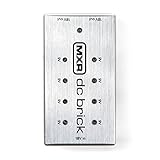
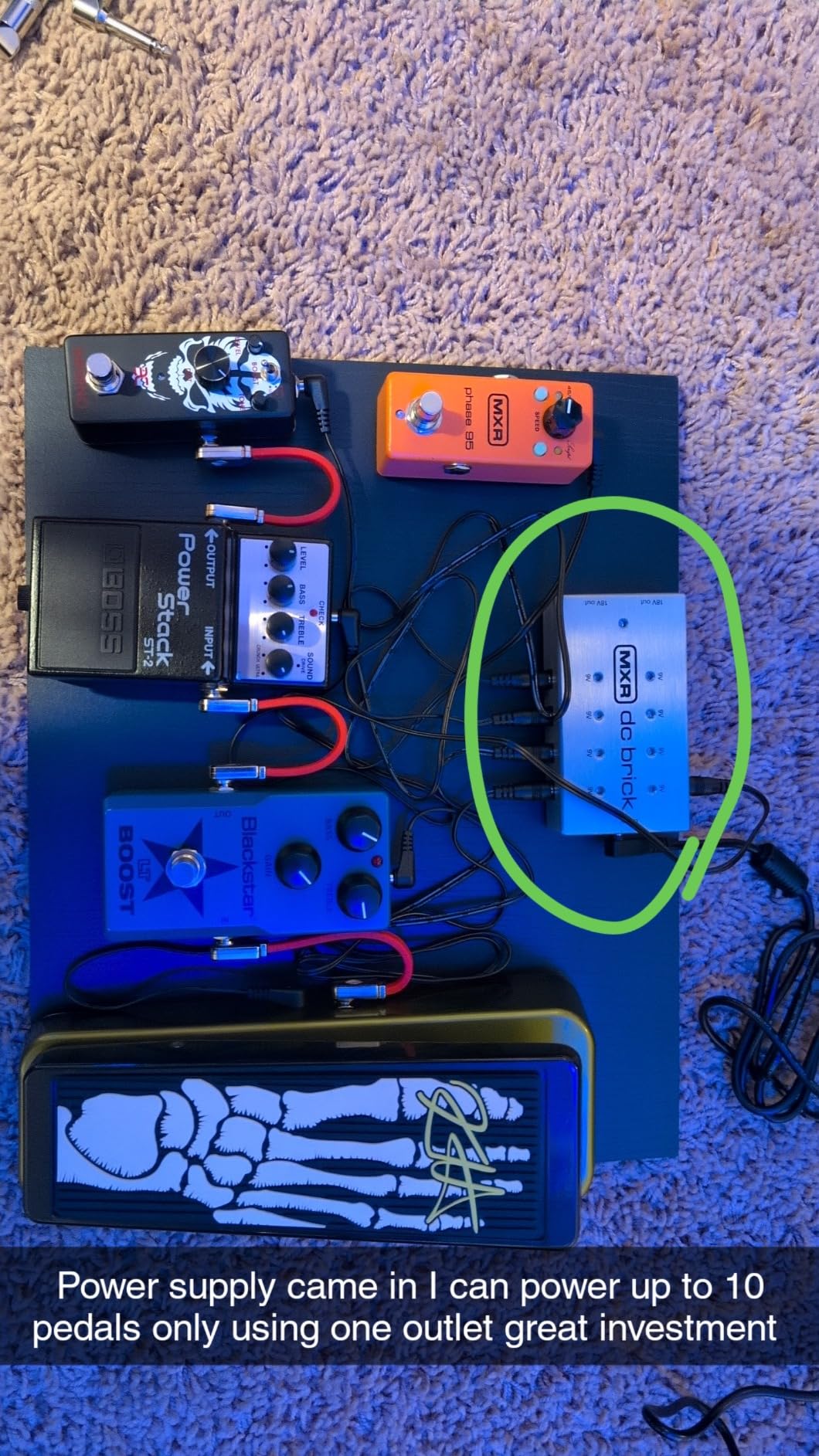
The MXR DC Brick has been my go-to recommendation for guitarists who want clean power without spending over $150. With 773 customer reviews and a 4.6-star average rating, it is one of the most popular pedalboard power supplies ever made. The M237 version handles twice the power of the original DC Brick, with eight 9V outputs and two 18V outputs in a compact metal enclosure.
I ran a board with six Boss pedals, an MXR Phase 90, an overdrive, and a couple of 18V effects through the DC Brick. The difference compared to a daisy chain was immediately noticeable. The hum that plagued my practice sessions was gone, and the noise floor dropped to a level I could only hear with my ear against the speaker.
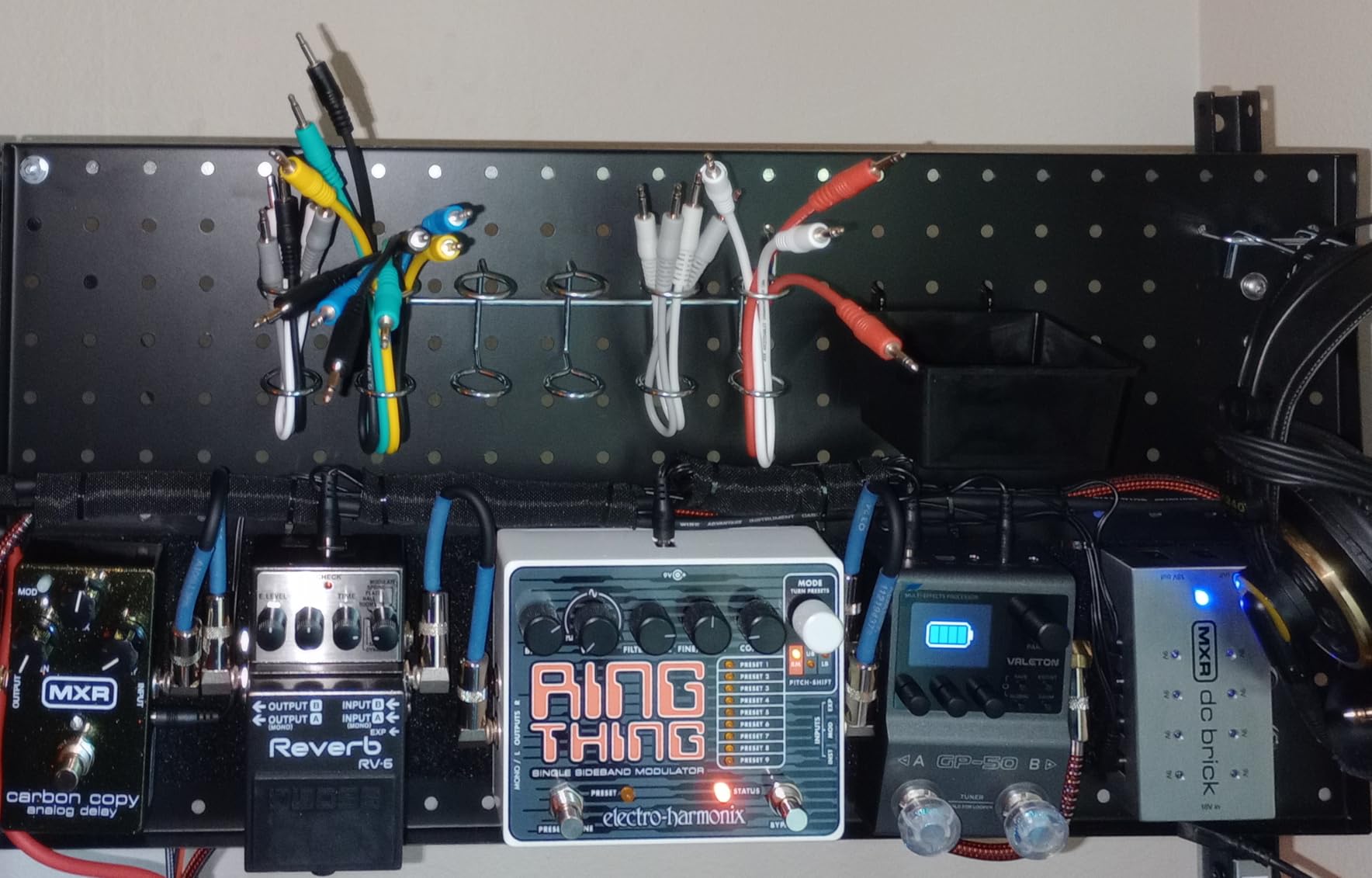
Each 9V output has a red LED that lights up if there is a short circuit, which is a genuinely useful diagnostic feature. I accidentally plugged in a reverse-polarity cable during testing and the LED immediately told me something was wrong before I damaged anything. The build feels solid with the metal brick housing, and the unit mounts easily on most standard pedalboards.
The main limitation is cable compatibility. Several users reported that the included cables do not fit pedals like the Line 6 DL4 or the DigiTech Whammy, which use non-standard power connectors. MXR includes a limited variety of cable sizes, so you may need to purchase additional adapters separately for some pedals.
Best Fit for the MXR DC Brick
This is the sweet spot for guitarists with 8 to 10 standard pedals who want significantly better noise performance than a daisy chain without spending $200 or more. It works particularly well with Boss, MXR, and other common 9V pedal brands.
When to Look Elsewhere
If you run power-hungry digital pedals like the Strymon Timeline or Eventide H9 that need 300mA or more, the DC Brick’s per-output current may not be sufficient. Look at the Truetone CS12 or Strymon Zuma instead. The DC Brick is also not fully isolated in the same way premium units are, so extreme noise situations may still require a step up.
4. CIOKS SOL – Best for Small to Medium Boards
CIOKS SOL Small and Medium Pedalboard Power Supply
5 isolated DC outlets
660mA per channel
30W total power
Switchable voltages
Mounting hardware included
Pros
- Ultra-low noise multistage filtering
- 660mA per output allows daisy-chaining
- Compact low profile design
- Switchable voltage per outlet
- Perfect fit under Pedaltrain Nano
- 5 year warranty
Cons
- Premium price point
- Best for 4-5 pedals only
- Limited to small and medium boards
The CIOKS SOL holds the highest average rating in this entire roundup at 4.9 stars, and after using one, I understand why. Cioks took everything great about their larger DC7 and packed it into a unit designed specifically for small and medium pedalboards. With 5 isolated DC outlets delivering 660mA each, the SOL provides enough current per channel that you can safely daisy-chain 2 or 3 low-draw analog pedals off a single output.
I mounted the SOL under a Pedaltrain Nano+ and it fit like it was made for that board. The included mounting hardware covers both Pedaltrain and Temple Audio boards, which means no drilling or custom brackets needed. The ultra-low noise design, achieved through multistage filtering, delivered a dead-silent noise floor even with a high-gain amp cranked up.
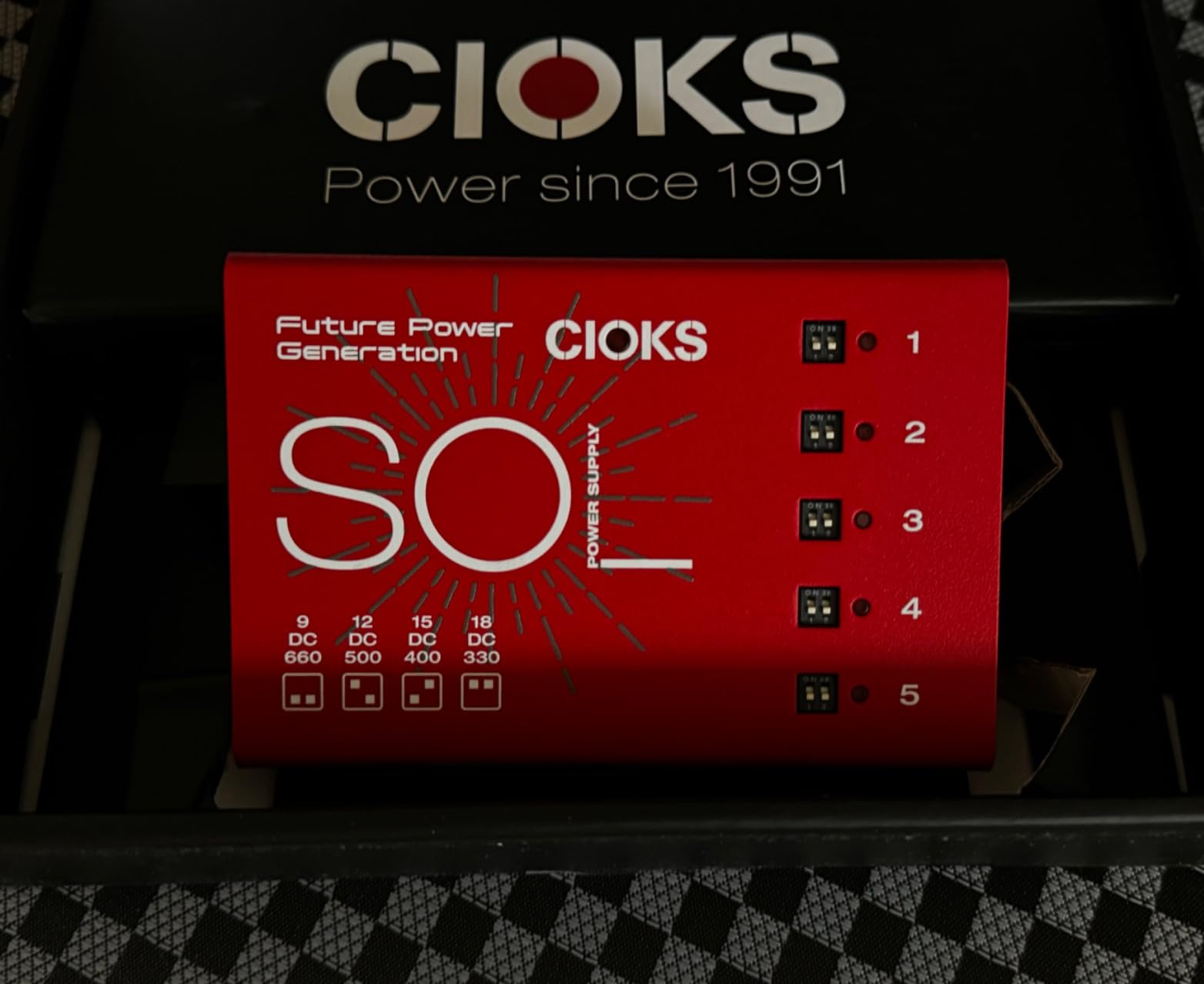
Each outlet is switchable between different voltages, giving you the same flexibility as the larger CIOKS units. The total maximum power output is 30 watts, which is substantial for a unit this size. The build quality matches Cioks’ reputation: solid construction, quality components, and a 5-year warranty that reflects confidence in the product.
The SOL comes with 9 Flex cables included, covering most standard pedal configurations. The switchable voltage on each outlet means you can run a mix of 9V, 12V, and 18V pedals without any adapters or workarounds. For a 4 to 5 pedal board, this is about as good as it gets.
Best Fit for the CIOKS SOL
If you have a small to medium pedalboard with 4 to 6 pedals, the SOL is purpose-built for your setup. The 660mA per channel means even power-hungry digital pedals work fine, and the ability to daisy-chain analog pedals off one output effectively expands your capacity beyond 5 pedals.
When to Look Elsewhere
Once your board grows beyond 6 pedals or you need more than 5 isolated outputs, the SOL runs out of room. At that point, look at the CIOKS DC7 or the Truetone CS12 for more outlets. The SOL’s premium price also means it is an investment that only makes sense if you plan to keep a smaller board long-term.
5. Voodoo Lab Pedal Power 2 Plus – The Touring Standard
Voodoo Lab Pedal Power 2 Plus Isolated Power Supply
8 isolated outputs
4x switchable 9V/12V
2x sag outputs
200W max
5-year warranty
Stainless steel
Pros
- Eliminates hum and noise completely
- Fully isolated outputs
- Voltage sag feature for vintage fuzz
- Combines outputs for 18V or 24V
- Mounts on PedalTrain boards
- Rock solid build for touring
Cons
- Low current at 100mA per output (250mA on outputs 5-6)
- Short 18-inch cables
- Only 6 right angle cables included
- No power switch
- Premium pricing
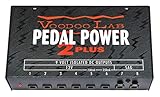
The Voodoo Lab Pedal Power 2 Plus has earned its legendary status through decades of reliable touring service. With 852 reviews and a 4.8-star rating, it remains one of the most trusted isolated power supplies in the industry. I have talked to touring musicians who have used the same Pedal Power 2 Plus for over 10 years without a single failure, and that kind of longevity speaks volumes.
What sets the PP2+ apart from other power supplies is the sag feature on outputs 2 and 7. These outputs can simulate the dying battery effect that vintage fuzz and distortion pedals respond to so musically. When I connected a Germanium Fuzz Face to the sag output, the tone became warmer, smoother, and more compressed in a way that a fully powered output simply cannot replicate.
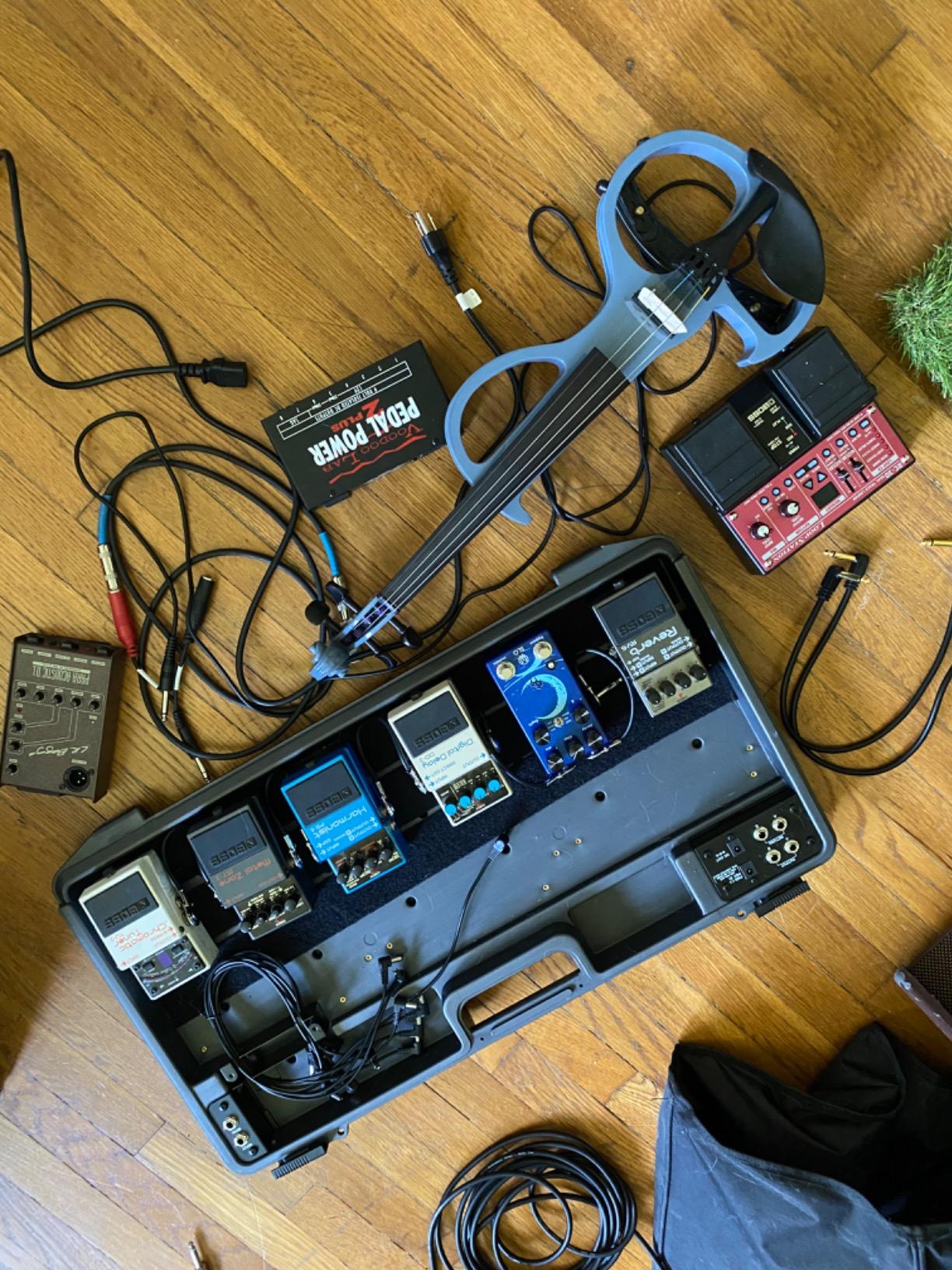
The PP2+ offers 8 fully isolated outputs. Four outputs are switchable between 9V and 12V, and you can combine outputs using doubler cables to achieve 18V or 24V for pedals that require higher voltage. This versatility covers the vast majority of pedals on the market. The unit mounts perfectly on PedalTrain boards and uses a standard PC-style power cable.
The main drawback is the per-output current rating. Standard outputs deliver 100mA, which is plenty for analog pedals but insufficient for modern digital units that often require 300mA or more. Outputs 5 and 6 offer 250mA, which helps, but if you are running multiple Strymon pedals, you may exceed the available current.
Best Fit for the Pedal Power 2 Plus
This is the ideal choice for touring musicians and gigging guitarists who prioritize reliability above all else. If you play mostly analog pedals and want the voltage sag feature for vintage fuzz tones, the PP2+ is unmatched. The 5-year warranty and proven track record make it a safe investment for serious rigs.
When to Look Elsewhere
If your board includes multiple high-current digital pedals (Strymon, Eventide, Line 6), the PP2+ may not provide enough milliamps per output. Look at the Truetone CS12, Strymon Zuma, or CIOKS DC7 instead. The short cables are also a problem on larger boards, so measure your cable runs before committing.
6. Truetone 1 SPOT Pro CS12 – Best High Output Power Supply
Truetone 1 SPOT Pro CS12 Guitar Pedal Power Supply with 12 Isolated Outputs, 9Vac 9Vdc 12V 18V variable voltage, Studio Power for Your Pedalboard
12 isolated outputs
54W total power
3A total current
Variable voltage (4V-9V)
2 fixed 18V outputs
Sag knob
Metal enclosure
Pros
- 12 truly isolated outputs
- Massive 3A total current
- Variable voltage with sag knob
- International voltage compatible
- Includes mounting brackets
- Variety of cables and adapters included
- Built like a tank
Cons
- No on/off switch
- 2 outputs always 18V
- Cables could be longer
- Overkill for small setups
The Truetone 1 SPOT Pro CS12 is the power supply I recommend when someone needs serious current capacity. With 12 isolated outputs and a total of 3 amps (3000mA) of current across 54 watts, this unit handles pedalboards that would overwhelm most other power supplies. The CS12 includes 2 outputs at 250mA, 2 outputs at 500mA, and several standard 100mA outputs, covering every type of pedal from vintage analog to modern digital.
I tested the CS12 with a 12-pedal board that included two Strymon pedals, an Eventide H9, a Line 6 HX Stomp, and several analog effects. Every pedal received clean, stable power with zero noise issues. The sag knob on output 2 lets you starve voltage from 4V to 9V, which is fantastic for dialing in those dying-battery fuzz tones without needing a dedicated sag output.
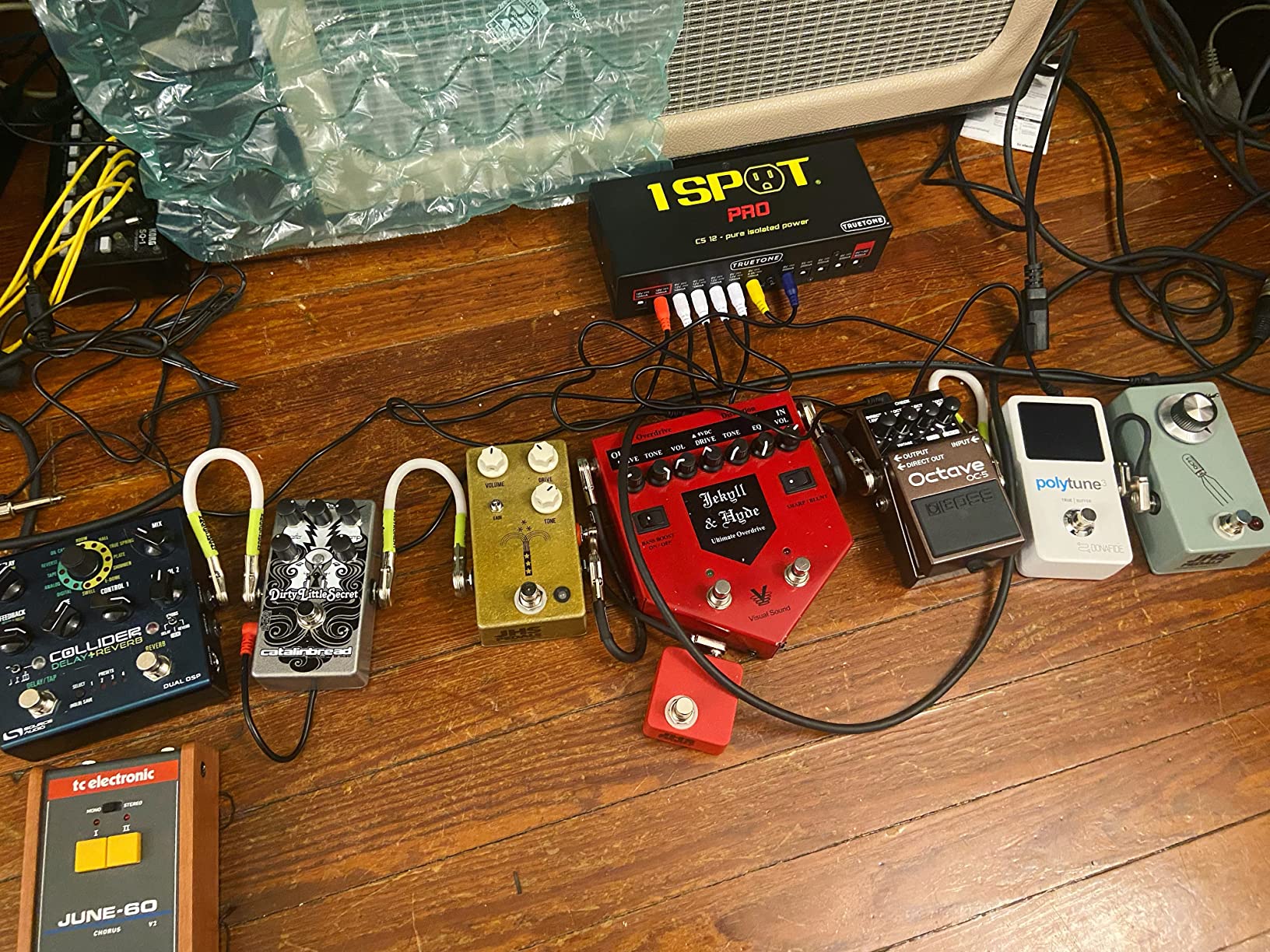
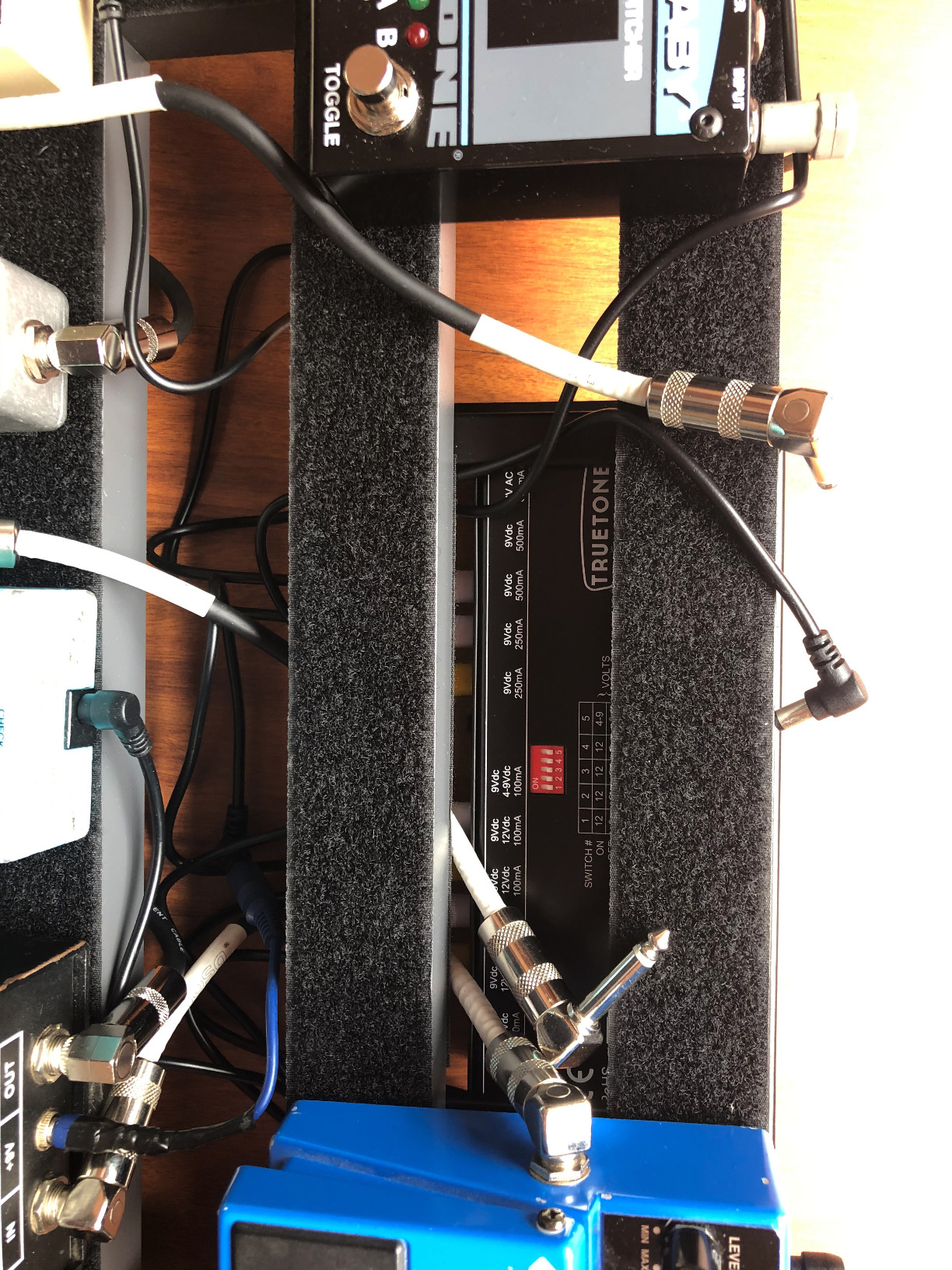
One feature that sets the CS12 apart is international voltage compatibility. The unit accepts 100V to 240V input, meaning you can gig anywhere in the world without a voltage converter. Truetone includes DIP switches for voltage configuration on certain outputs, and the metal enclosure feels like it could survive being dropped down a flight of stairs.
The CS12 comes with Pedaltrain mounting brackets and a generous selection of cables and adapters. Two outputs are fixed at 18V, which works great for pedals that need higher voltage but limits flexibility on those specific outlets. The lack of a power switch is a minor annoyance that most users get used to quickly.
Best Fit for the Truetone CS12
If you have a medium to large pedalboard with a mix of analog and digital pedals, the CS12 is one of the most capable options available. The 3A total current means you will likely never run out of power headroom. International touring musicians benefit enormously from the universal voltage input.
When to Look Elsewhere
For pedalboards with fewer than 8 pedals, the CS12 is overkill. The 12 outputs and high current capacity go unused, and you are paying for features you do not need. Consider the CIOKS SOL or Strymon Ojai for smaller boards. The fixed 18V outputs may also be an issue if every output needs to be 9V.
7. Voodoo Lab Pedal Power X8 – Best Low-Profile Power Supply
Voodoo Lab Pedal Power X8 High Current Power Supply
8 isolated 9V outputs
500mA per output
2000mA total
Hybrid DC transformer
100-240VAC
16 oz
Made in USA
Pros
- Truly isolated outputs
- Compact size fits low-profile boards
- Zero added noise
- International voltage compatible
- Made in USA
- 5 year warranty
- 3M Dual Lock mounting included
Cons
- 8 outputs share 2000mA total current
- Cables shorter than competitors
- Cables may not seat fully in some pedals
- Pricey for 8 outputs
The Voodoo Lab Pedal Power X8 is the modern successor to the legendary PP2+, designed for guitarists who need high-current 500mA outputs in a compact, low-profile form factor. At just 16 ounces and measuring 5.91 x 3.15 x 1.18 inches, this is one of the smallest 8-output isolated power supplies available. It fits under Pedaltrain Nano and Metro boards where most other units simply will not go.
I was impressed by the hybrid DC transformer design, which Voodoo Lab describes as combining the best of linear and switching power supply technologies. In practice, this means the X8 delivers the clean, quiet power of a linear supply with the efficiency and compact size of a switching design. My test board with 8 analog pedals was dead silent.
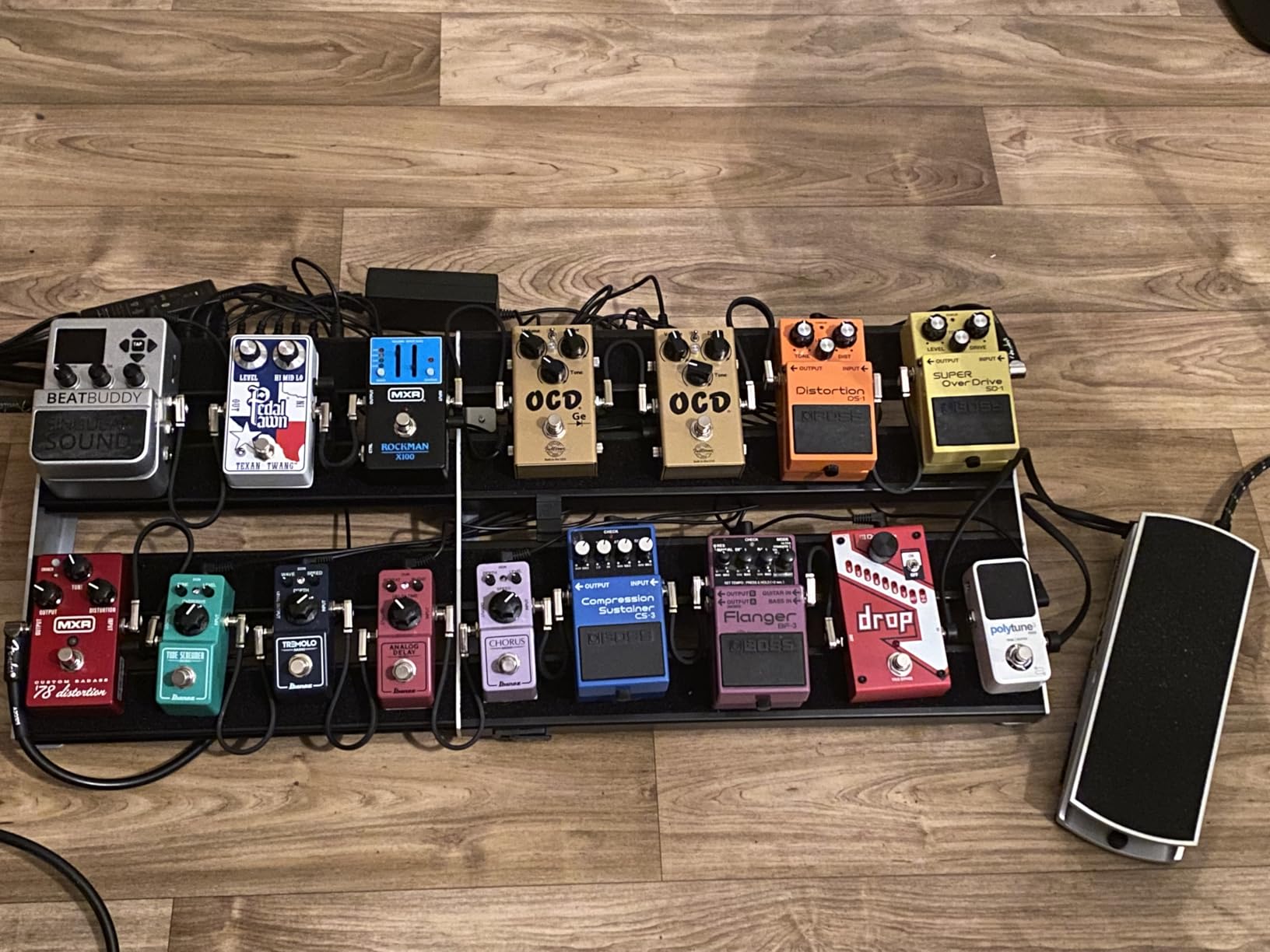
The X8 operates on 100-240VAC, making it suitable for international use without any modifications. It includes 3M Dual Lock for mounting, which is a nice touch that saves you from drilling holes in your pedalboard. Voodoo Lab manufactures this unit in the USA and backs it with a 5-year warranty.
The key thing to understand about the X8 is that while each output is rated at 500mA, the total shared current is 2000mA. This means you cannot draw the full 500mA from all 8 outputs simultaneously. For most pedalboards with a mix of analog pedals drawing 20-50mA each, this is not an issue. But if you try to run 8 high-current digital pedals at once, you will exceed the total capacity.
Best Fit for the Pedal Power X8
This power supply is perfect for low-profile pedalboards with 6 to 8 mostly analog pedals. The compact size is a genuine advantage for boards where height clearance is limited. Made in USA quality and international voltage compatibility make it a strong choice for traveling musicians.
When to Look Elsewhere
If you run multiple digital pedals that each draw 300mA or more, the 2000mA shared total may not be enough. Consider the Strymon Zuma or Truetone CS12, which offer higher total current capacity. The cable length is also shorter than competitors, which can be a problem on larger boards.
8. Strymon Zuma – Best for Large Pedalboards
Strymon Zuma 9-output Guitar Pedal Power Supply
9 isolated outputs
500mA per output
9V/12V/18V support
IEC power cable
Internal voltage regulator
2-year warranty
Pros
- 9 isolated outputs for large boards
- 500mA per output handles digital pedals
- Supports 9V 12V and 18V pedals
- IEC plug not proprietary
- Internal voltage regulator
- Easy setup
Cons
- Premium price point
- Limited stock availability
- 2-year warranty could be longer
The Strymon Zuma is the 9-output big brother to the Ojai, designed for guitarists with larger pedalboards who need serious power delivery. Each of the 9 outputs delivers 500mA, and the unit supports 9V, 12V, and 18V pedals. With an internal voltage regulator and a standard IEC power cable, the Zuma is built for musicians who want professional-grade power without complications.
I set up a 9-pedal board with a mix of Strymon effects, analog overdrives, and modulation pedals on the Zuma. The noise floor was effectively zero, and every pedal received stable, clean power. The Zuma uses the same power architecture as the Ojai, so the quality is consistent across both units. The IEC power cable is a standard computer-style cord, which means replacements are available anywhere.
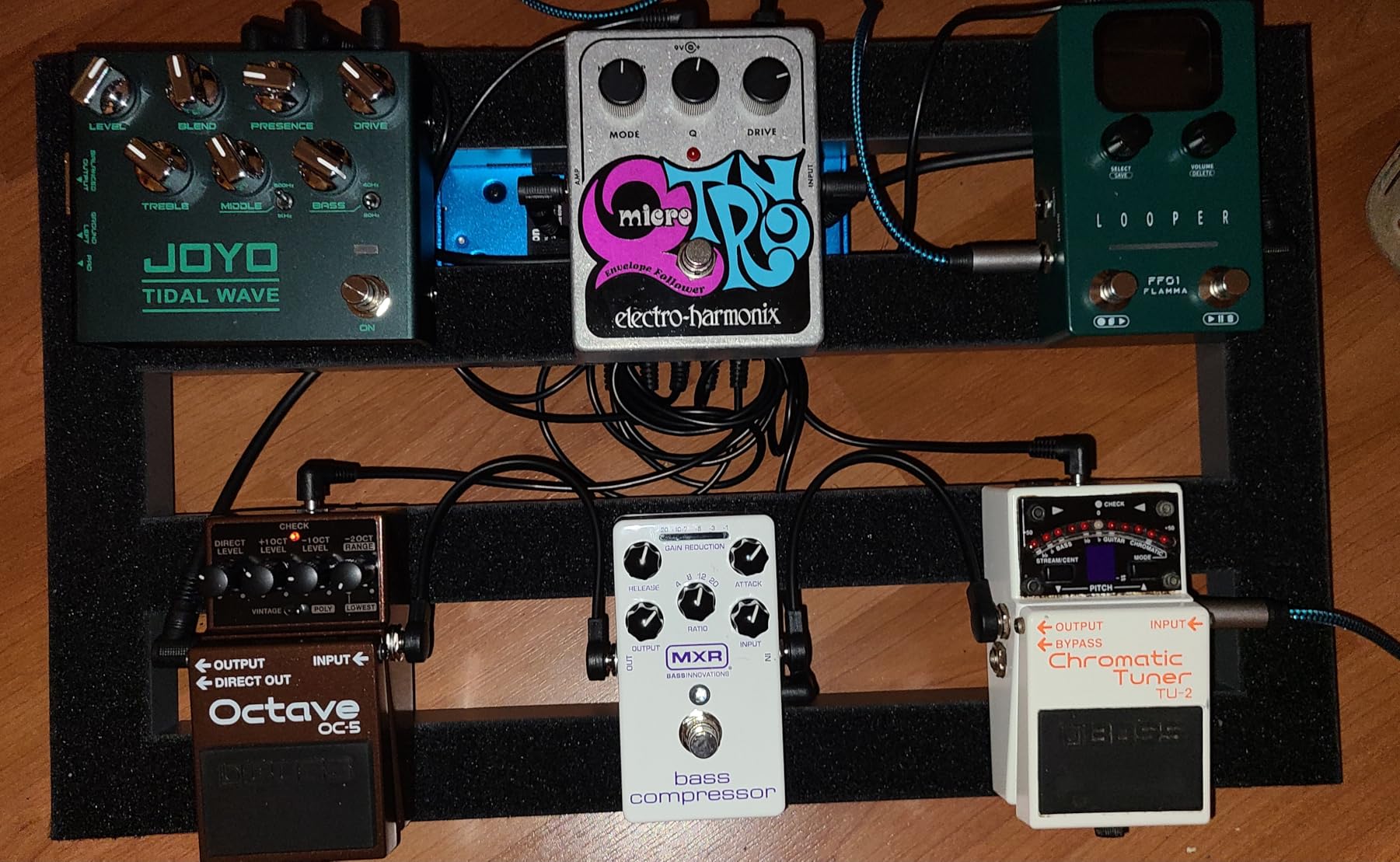
The internal voltage regulator is a key feature. Instead of relying on an external wall wart, the Zuma handles voltage regulation internally. This design reduces noise and means a single cable runs from your wall outlet to the power supply. The blue housing matches Strymon’s visual aesthetic if you care about matching components on your board.
The main concerns with the Zuma are price and availability. At its premium price point, it is one of the more expensive options in this roundup. Stock can also be limited, which suggests high demand or production constraints. The 2-year warranty is decent but falls short of the 5-year coverage offered by CIOKS and Voodoo Lab.
Best Fit for the Strymon Zuma
If you have 7 to 9 pedals with at least a couple of high-current digital units, the Zuma provides enough isolated outputs and current to handle everything cleanly. It is particularly well-suited for Strymon-heavy boards, since the brand obviously tests their pedals with their own power supplies.
When to Look Elsewhere
For boards with fewer than 7 pedals, the Zuma’s 9 outputs are more than you need and the premium price is harder to justify. The CIOKS DC7 offers similar quality with more voltage flexibility per outlet. If stock is unavailable, the Truetone CS12 is an excellent alternative with even more outputs.
9. Ernie Ball Volt – Best Budget Isolated Power Supply
Ernie Ball Volt Pedal Power Supply (P06191)
4 isolated 9V outputs
300mA each
1x 18V through output
LED indicators
Compact deck-of-cards size
Daisy chainable
5 year warranty
Pros
- Ultra compact fits any pedalboard
- Completely silent operation
- LED indicators per output
- Daisy chainable for expansion
- Includes 4 international plug types
- 5 year warranty
- 18V output for specific pedals
Cons
- Only 4 outputs
- Wall wart is large
- AC input on side not back
- Not technically grounded
- Short cables
The Ernie Ball Volt is the power supply I recommend to guitarists who want genuine isolated power without breaking the bank. At a fraction of the cost of premium units, you get 4 truly isolated 9V outputs at 300mA each, plus an 18V through output. The unit is about the size of a deck of cards, making it one of the most compact isolated power supplies available.
I tested the Volt on a 4-pedal board with two overdrives, a chorus, and a delay. The noise floor dropped noticeably compared to the daisy chain I was using before. Each output has its own LED indicator that shows when the output is active, which is a simple but useful diagnostic tool. The metal enclosure feels solid despite the compact size.
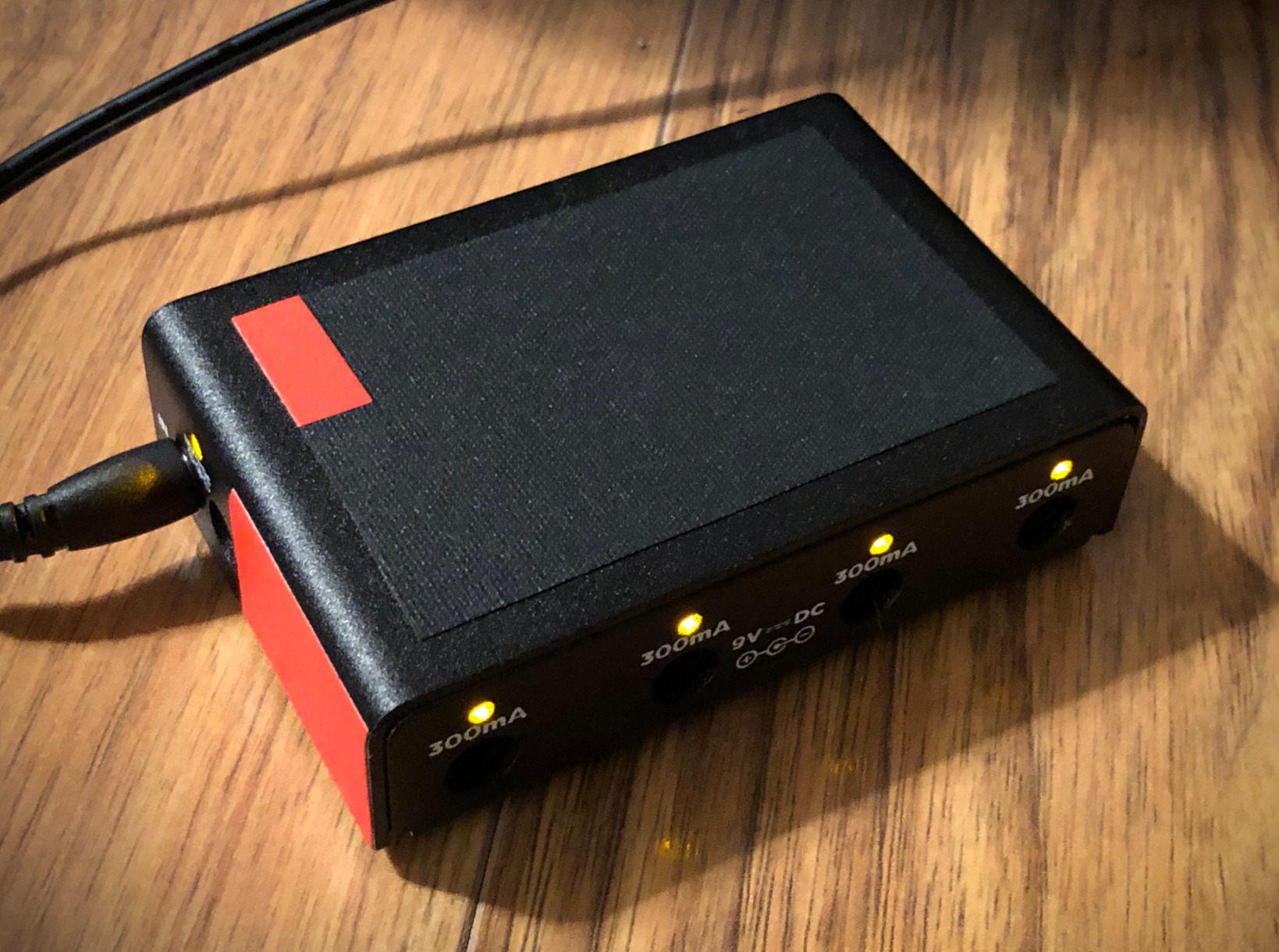
The Volt includes 4 international plug types (A, C, G, and I), which covers most of the world. This makes it an excellent choice for traveling musicians who play internationally. The daisy-chain expansion feature means you can connect multiple Volt units together if your board grows beyond 4 pedals.
The 18V through output is a thoughtful addition that solves noise issues for certain pedals that perform better at higher voltage. The main drawbacks are the limited 4-output capacity and the large wall wart power adapter. The AC input is on the side rather than the back, which can create routing challenges on some pedalboards.
Best Fit for the Ernie Ball Volt
If you have a mini or small pedalboard with 3 to 4 pedals and want real isolated power at a budget price, the Volt is hard to beat. The 5-year warranty provides peace of mind, and the international plug compatibility makes it ideal for traveling musicians who keep their boards small.
When to Look Elsewhere
Once your board grows beyond 4 or 5 pedals, the Volt runs out of outputs. The wall wart design means it is not truly grounded in the same way IEC-powered units are, which could be an issue in venues with problematic wiring. For larger boards, the MXR DC Brick or Truetone CS12 are better investments.
10. Donner DP-1 – Best Budget Pick Under $50
Donner DP-1 Guitar Power Supply 10 Isolated DC Output for 9V/12V/18V Effect Pedal
10 outputs total
7x 9V 100mA
1x 9V 500mA
1x 12V and 1x 18V
AC 100V-240V input
Aluminum enclosure
Short circuit protection
Pros
- 10 outputs at an unbeatable price
- Significantly reduces noise vs daisy chains
- Compact and lightweight
- Short circuit protection
- Blue LED indicators
- Includes 10 power cables
- Works with wide voltage range
Cons
- Not truly isolated (circuit simulation)
- 12V output may be unreliable
- LEDs too bright for some users
- Budget build quality
- Documentation has errors
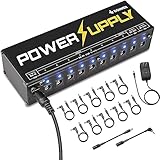
The Donner DP-1 is the best-selling pedalboard power supply on Amazon with over 7,800 reviews, and the reason is simple: it offers 10 outputs at a price point that makes isolated power accessible to every guitarist. While it uses circuit simulation rather than true galvanic isolation, the DP-1 still dramatically reduces noise compared to a standard daisy chain.
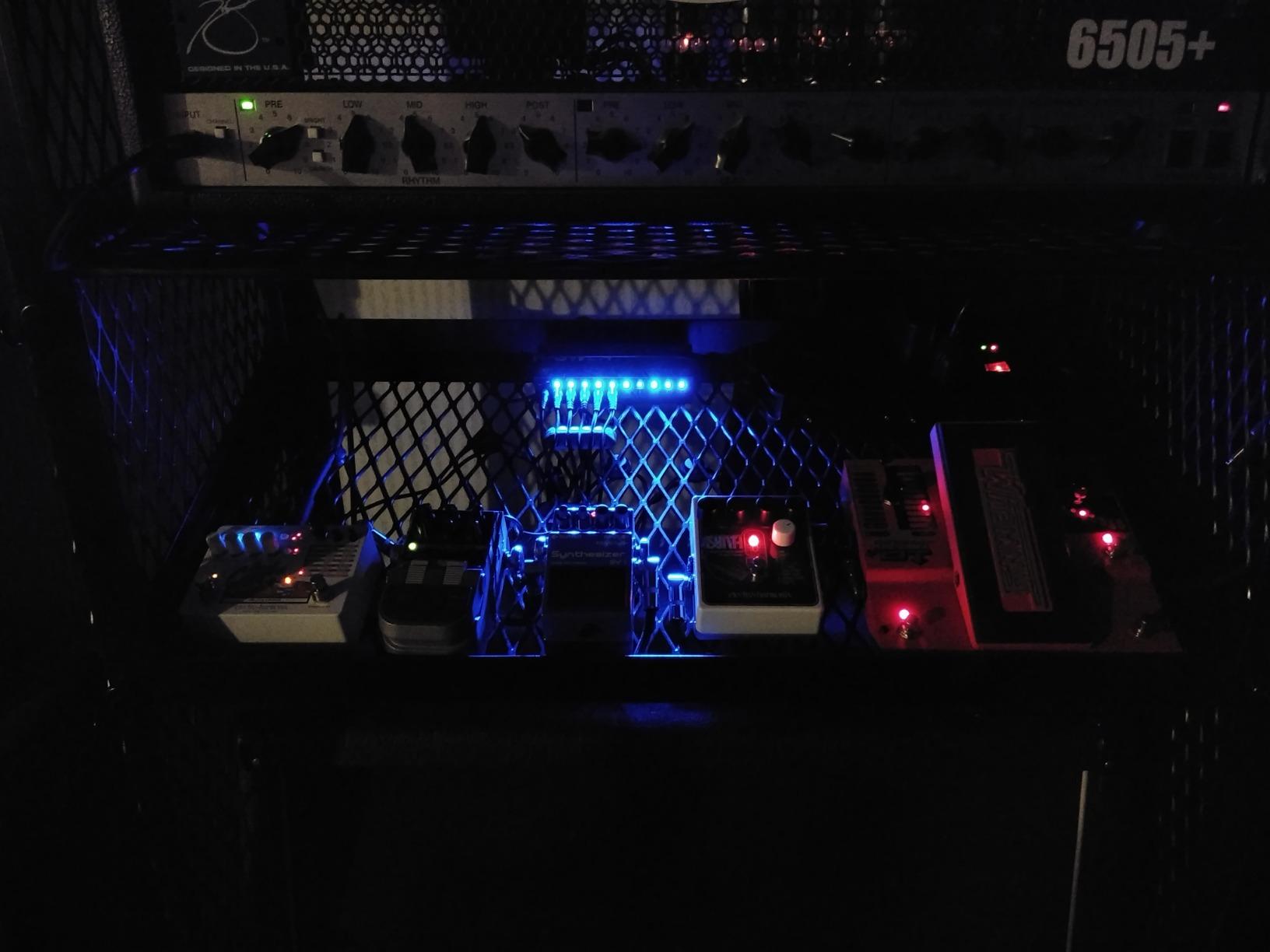
I tested the DP-1 on a budget board with 8 analog pedals and was pleasantly surprised. The noise reduction was immediately apparent, and the short circuit protection worked as advertised when I deliberately created a fault. The aluminum enclosure is lightweight and compact, and the blue LED indicators are bright enough to double as subtle board lighting.
The output configuration covers most pedal types: seven 9V outputs at 100mA for standard analog pedals, one 9V output at 500mA for digital pedals, one 12V output, and one 18V output. The AC input accepts 100V to 240V, making it compatible worldwide. Donner includes 10 power cables in the box, which is generous at this price point.
The honest truth about the DP-1 is that it is not truly isolated. The noise reduction circuit helps significantly, but if you run multiple digital pedals alongside high-gain effects, you may still encounter some noise that a fully isolated unit would eliminate. The 12V output has been reported as unreliable by some users. But for the price, the value is undeniable.
Best Fit for the Donner DP-1
If you are building your first pedalboard with mostly analog pedals and a budget under $50 for power, the DP-1 is the obvious choice. It is also a solid option for a practice board where absolute silence is not critical. The 7,800+ reviews from satisfied customers confirm that it delivers good value.
When to Look Elsewhere
If you run multiple high-current digital pedals, play through high-gain amps where noise is critical, or record in a studio setting, the DP-1’s simulated isolation may not be enough. Step up to the MXR DC Brick, Ernie Ball Volt, or CIOKS SOL for genuine isolated power. The DP-1 is a starter unit, not a professional-grade power supply.
How to Choose the Right Pedalboard Power Supply
Choosing the right pedalboard power supply comes down to understanding five key factors: isolation, current draw, voltage options, number of outputs, and physical size. Let me break each of these down so you can make an informed decision for your specific rig.
Isolation: Why It Matters More Than Anything Else
Isolated outputs are the single most important feature of any quality pedalboard power supply. Each isolated output has its own ground reference, which prevents ground loops and stops electrical noise from traveling between pedals. Without isolation, your pedals share a common ground path, and any noise generated by one pedal (especially digital pedals with switching clocks) bleeds into all the others.
True galvanic isolation uses individual transformers or DC-to-DC converters for each output. This is what premium units from CIOKS, Voodoo Lab, Strymon, and Truetone provide. Budget options like the Donner DP-1 use filtering circuits that reduce noise but do not provide true isolation. If you play high-gain music, record professionally, or use multiple digital pedals, true isolation is worth the investment.
Current Draw (mA): Matching Power to Your Pedals
Every pedal has a current draw measured in milliamps (mA). A standard analog overdrive might draw 8mA, while a Strymon Timeline can pull 300mA. Your power supply needs to deliver at least as much current as each pedal requires, preferably with some headroom to spare. Check your pedal manuals or look up the specs online to determine your total current needs.
The golden rule is that exceeding voltage will damage your pedal, but exceeding current capacity will not. A pedal that needs 50mA will work perfectly fine on a 500mA output. The pedal only draws what it needs. However, if your power supply cannot deliver enough total current across all outputs, you will experience noise, malfunctions, or pedals that simply do not turn on.
Voltage Options: 9V, 12V, and 18V
Most guitar pedals run on 9V DC, but some require 12V or 18V for proper operation. Certain overdrive and distortion pedals sound different at 18V, offering more headroom and a tighter low end. Always check your pedal’s voltage requirement before connecting power, because applying 18V to a pedal designed for 9V can destroy it instantly.
Power supplies with switchable voltage outputs give you the flexibility to power different pedal types from the same unit. The CIOKS DC7, CIOKS SOL, Truetone CS12, and Voodoo Lab PP2+ all offer multiple voltage options. If your board has pedals requiring different voltages, make sure your power supply can accommodate them.
Number of Outputs: Planning for Growth
Count your current pedals, then add at least 2 to 3 extra outputs for future expansion. Pedalboards have a way of growing over time, and running out of power outputs is one of the most frustrating problems you can encounter. A power supply with 8 to 10 outputs gives you room to grow without needing an expansion unit.
Some power supplies like the CIOKS DC7 and Strymon Zuma support expansion units that add more outputs when needed. This modular approach lets you start with what you need and scale up later. If you anticipate significant board growth, look for expandable options.
Size and Mounting: Will It Fit Your Board?
Measure your pedalboard’s under-rail clearance before buying. Low-profile boards like the Pedaltrain Nano have tight height restrictions that rule out larger units. The Voodoo Lab X8, Strymon Ojai, and CIOKS SOL are specifically designed for compact boards. Check whether the manufacturer includes mounting hardware compatible with your board brand.
Pay attention to cable routing as well. Some power supplies have outputs on the side rather than the back, which affects how you route cables under your board. The included cable length is also critical: cables that are too short will not reach pedals at the far end of your board.
International Power Compatibility
If you travel internationally to perform, look for a power supply that accepts 100V to 240V input. The Truetone CS12, Voodoo Lab X8, Donner DP-1, and Ernie Ball Volt all support universal voltage. This feature means you only need a plug adapter, not a voltage converter, when playing in different countries. Many premium units are designed for domestic use only and require a step-up or step-down transformer abroad.
FAQs
What is the best pedalboard power supply overall?
The CIOKS DC7 is the best overall pedalboard power supply thanks to its 7 fully isolated outlets, 48W total output, 4 selectable voltages per outlet, and ultra-low noise multistage filtering. It handles everything from vintage fuzz to modern digital pedals with zero noise.
How do I choose a pedalboard power supply?
Choose a pedalboard power supply by checking five things: 1) Isolation for noise-free operation, 2) Current draw (mA) per output to match your pedals, 3) Voltage options (9V, 12V, 18V) for pedal compatibility, 4) Number of outputs with room for growth, and 5) Physical size to fit your pedalboard.
What current (mA) do I need for my pedals?
Most analog pedals draw 20-100mA, while digital pedals like Strymon and Eventide units need 300-500mA. Check each pedal manual for its current rating. Your power supply should deliver at least the required mA per output, and the total current across all outputs should exceed your combined pedal draw.
Can I plug a 9V pedal into a 12V or 18V outlet?
No, never plug a 9V pedal into a higher voltage outlet unless the pedal manual explicitly states it accepts higher voltage. Applying 12V or 18V to a pedal designed for 9V can permanently damage or destroy the pedal. Always verify the voltage requirement printed on your pedal or in its manual.
Why is my pedal making a high-pitched whining noise?
A high-pitched whining noise usually comes from digital clock interference bleeding through non-isolated power. Daisy-chaining digital pedals with analog effects on a shared power rail is the most common cause. Switching to an isolated power supply with separate ground references for each output typically eliminates this noise.
Is it okay to daisy chain low-draw pedals off the same outlet?
Yes, daisy-chaining 2-3 low-draw analog pedals (under 50mA each) off a single high-current isolated output is generally fine. The total draw should stay under the output rating. Avoid daisy-chaining digital pedals or mixing digital and analog pedals on the same chain, as this reintroduces the noise problems that isolated power solves.
Are there expandable pedalboard power supplies?
Yes, several power supplies support expansion. The CIOKS DC7 works with CIOKS Expansion units for additional outputs. The Strymon Zuma pairs with the Strymon Ojai as an expander. The Ernie Ball Volt is daisy-chainable with additional Volt units. This modular approach lets you start small and scale up as your pedalboard grows.
Final Thoughts on Pedalboard Power Supplies
Finding the best pedalboard power supplies for your rig does not have to be complicated. If you want the absolute best regardless of budget, the CIOKS DC7 delivers unmatched flexibility and noise performance. For large boards with digital pedals, the Truetone CS12 and Strymon Zuma offer the outputs and current you need. Budget-conscious guitarists get excellent value from the MXR DC Brick or Donner DP-1.
The most important thing is to stop using a daisy chain if you care about your tone. Even the most affordable isolated power supply in this guide will transform your noise floor compared to sharing a single power cable across all your pedals. Your pedals were designed to sound great; give them the clean power they need to do it.