
Tremolo is one of those effects that guitarists either overlook completely or refuse to play without. I fell into the second camp about eight years ago when I plugged a cheap tremolo pedal into my rig and suddenly every clean passage I played had life, movement, and character. That pulsing volume modulation turned flat arpeggios into something hypnotic.
The history of tremolo runs deep in guitar music. Link Wray used it to create the menacing swagger of “Rumble” in 1958. The Smiths built entire sonic landscapes around Johnny Marr’s tremolo-drenched arpeggios. My Bloody Valentine layered it into walls of shimmering noise. And surf rock practically owes its identity to the effect. When you hear that pulsing, wavering guitar tone on classic recordings, you are hearing tremolo at work.
In this guide, our team tested and compared 12 of the best tremolo pedals available in 2026. We looked at everything from ultra-budget options under $40 to premium combo units that cost over $300. Whether you want a simple three-knob classic, a feature-packed harmonic tremolo, or a compact mini pedal for a crowded board, you will find the right fit here. We also break down how tremolo works, where to place it in your signal chain, and how to avoid common issues like volume drop and noise.
Top 3 Tremolo Pedals for 2026
Not everyone has time to read through twelve detailed reviews. If you just want our top recommendations fast, here are the three pedals we recommend most often across different budgets and playing styles.
Boss TR-2 Tremolo
- Analog signal
- Wave/Rate/Depth controls
- 5-year warranty
- Classic vintage tone


Best Tremolo Pedals in 2026
Here is our complete comparison of all 12 pedals we tested. The table below covers the key specs at a glance so you can quickly narrow down your options before diving into the full reviews.
| Product | Specifications | Action |
|---|---|---|
|
Boss TR-2 Tremolo
|
|
Check Latest Price |
 Walrus Audio Fundamental Tremolo
|
|
Check Latest Price |
|
Strymon Flint V2 Trem/Reverb
|
|
Check Latest Price |
 EHX Nano Pulsar Stereo Tremolo
|
|
Check Latest Price |
 MXR Tremolo M305
|
|
Check Latest Price |
 JHS Kodiak Tap Tempo Tremolo
|
|
Check Latest Price |
|
TC Electronic CHOKA Tremolo
|
|
Check Latest Price |
 Walrus Audio Monument V2 Harmonic Trem
|
|
Check Latest Price |
 EarthQuaker Hummingbird V4
|
|
Check Latest Price |
 Keeley DynaTrem Dynamic Tremolo
|
|
Check Latest Price |
1. Boss TR-2 Tremolo – Best Overall Classic
BOSS TR-2 Tremolo Guitar Pedal
Analog tremolo pedal
Wave, Rate, Depth controls
9V DC power
4 x 3 x 6 inches
50mA draw
Pros
- Classic vintage tremolo sound with no volume drop
- Analog signal with virtually no hiss or noise
- Wave control shifts from triangle to square waveform
- Exceptionally durable Boss build quality with 5-year warranty
- Great value at under $90
Cons
- No tap tempo functionality
- Some users find extreme settings require significant knob tweaking
The Boss TR-2 is the pedal I recommend to more guitarists than any other tremolo on the market. I have had one on my board for over five years, and it has survived being thrown into vans, dropped on concrete, and stomped on during hundreds of gigs without a single issue. There is a reason Reddit users call it the undisputed champion of classic tremolo.
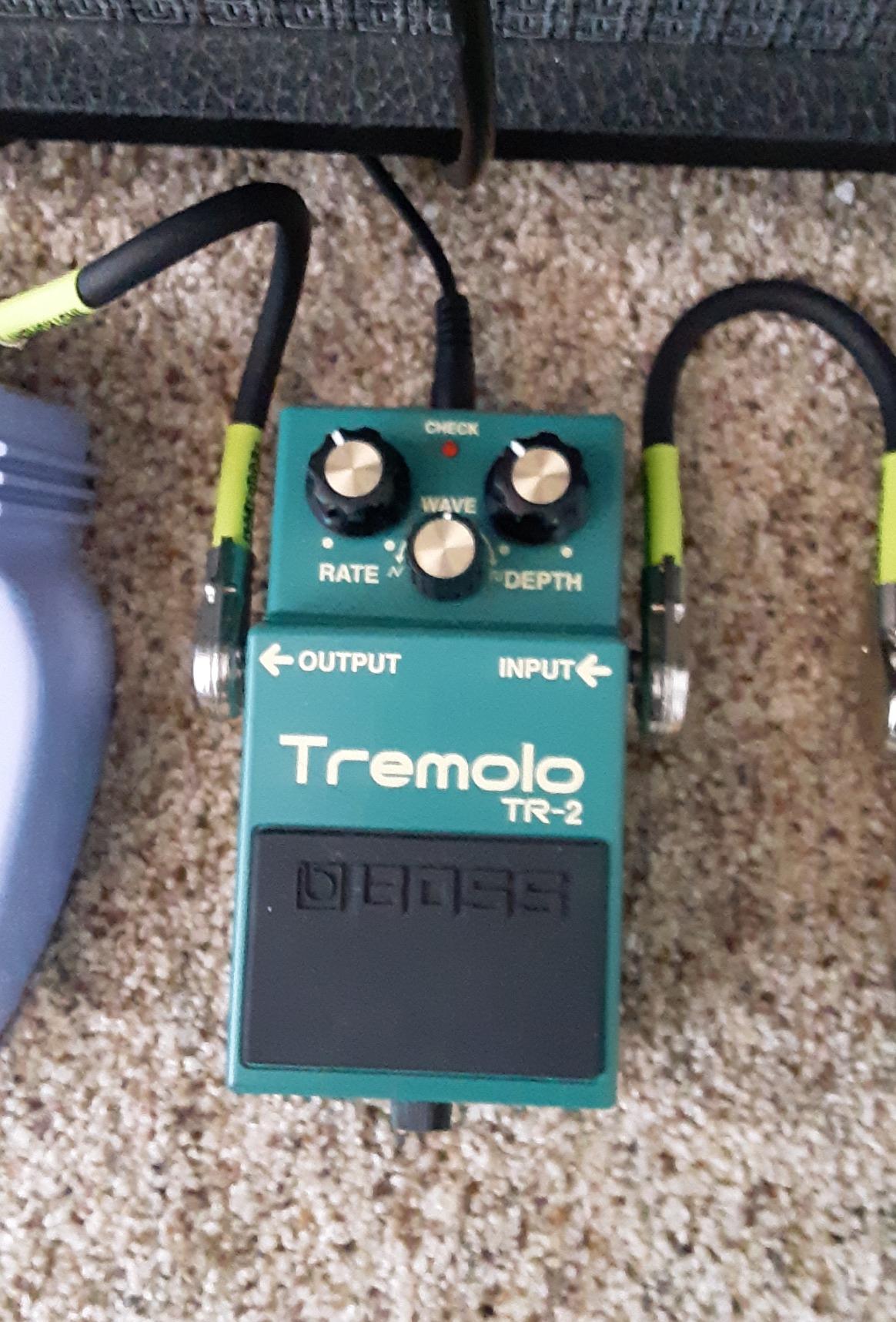
What makes the TR-2 special is its simplicity combined with sound quality that punches well above its price point. The three controls are Wave, Rate, and Depth. The Wave knob is where the magic lives because it lets you continuously morph between a smooth, subtle triangle wave and a sharp, aggressive square wave. I spent hours exploring the range between those extremes, finding tones that worked for everything from gentle indie shimmer to choppy surf rock.
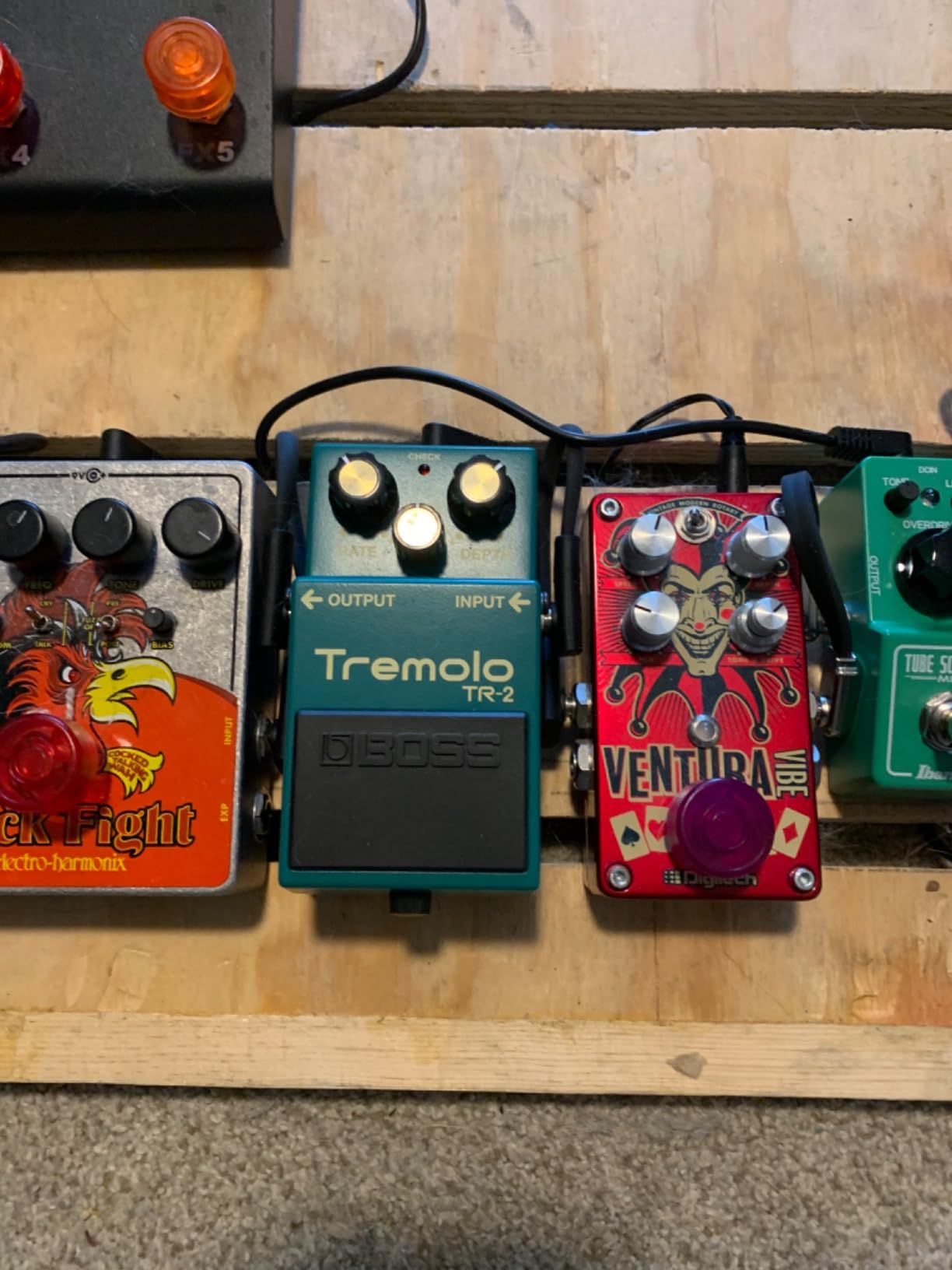
From a technical standpoint, the TR-2 uses an all-analog signal path that stays remarkably quiet. Boss addressed the volume drop issue that plagued earlier production runs, and current models maintain unity gain when engaged. The pedal runs on standard 9V DC power at only 50mA, which means it plays nicely with virtually any power supply on the market.
The build quality is legendary. Boss pedals are known for their compact metal enclosures that survive abuse no boutique pedal could handle. The TR-2 carries a five-year warranty, but most units last decades. The green finish is instantly recognizable on any pedalboard, and the buffered bypass means your signal stays strong even in long cable runs.
Who This Pedal Works Best For
The TR-2 is ideal for guitarists who want a no-nonsense tremolo that just works. If you play blues, rock, indie, or country and need everything from subtle texture to full-on chop, this pedal delivers. I particularly love it for clean arpeggio passages where you want the notes to dance rather than just sit there flatly.
It is also the best tremolo pedal for beginners who are just starting to build their first pedalboard. The three-knob interface is impossible to get lost in, and the price point leaves room in your budget for other effects. Many professional touring musicians keep a TR-2 as a backup even when they use more expensive pedals as their primary.
Things to Watch Out For
The biggest drawback is the lack of tap tempo. If you play with a drummer and need your tremolo to sync to specific BPM, you will have to manually dial in the rate and hope it stays locked. For most players this is not an issue, but it is worth knowing before you buy.
Some users also report that the Wave control has a narrow sweet spot. The transition from useful to extreme can happen quickly when you turn the knob. I recommend spending time with the pedal at practice volumes to learn where your favorite settings live before taking it to a gig.
2. TC Electronic CHOKA Tremolo – Best Budget Pick
TC Electronic CHOKA TREMOLO Vintage-Flavored All-Analog Tremolo Pedal with 3-Knob Design and Seamless Morphing Between LFO Styles,Orange
All-analog vintage tremolo
3-knob design
True bypass
2.05 x 1.15 x 0.9 inches
9V power
Pros
- Outstanding value for money under $40
- All-analog tremolo with authentic vintage sound
- Classic 3-knob design that is easy to use
- True bypass for clean signal integrity
- Built-like-a-tank metal chassis with low noise
Cons
- Bulkier footprint than average pedals
- Some users report volume drop when engaged
- Jack placement is less pedalboard friendly
When I first tried the TC Electronic CHOKA, I was skeptical that a tremolo pedal this cheap could sound good. Within thirty seconds of plugging it in, my skepticism disappeared. The CHOKA delivers an all-analog vintage tremolo sound that has no business coming from a pedal at this price point. Forum users say there is no better tremolo pedal on the market for the money, and I agree completely.
The CHOKA is part of TC Electronic’s compact pedal line, and it features a simple three-knob layout with Speed, Depth, and a shape control that lets you seamlessly morph between soft and hard LFO styles. I found the soft settings perfect for ambient textures and the hard settings great for that classic choppy surf rock stutter. The range of sounds you can coax from three knobs is genuinely impressive.
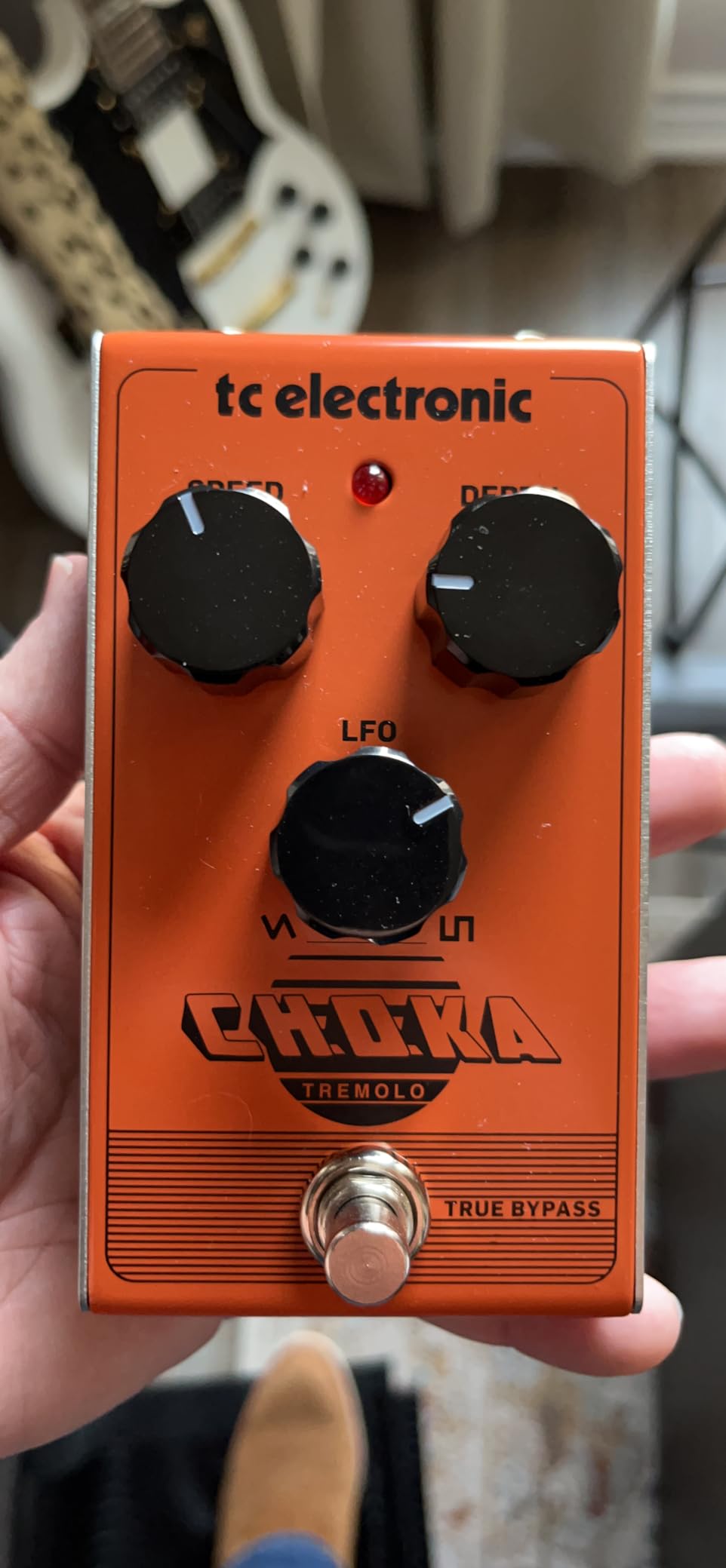
The true bypass switching keeps your signal clean when the pedal is off, which is a nice touch at this price. The all-analog circuit produces a warm, organic sound that digital pedals often struggle to replicate. At 2.05 x 1.15 x 0.9 inches, the chassis is compact but slightly bulkier than some mini pedals on the market.
The main technical concern is that some users experience a volume drop when engaging the pedal. This is a common issue with budget tremolo pedals, and it can usually be addressed by running the pedal after a boost or adjusting your amp settings. The build quality with its metal chassis feels far more expensive than the price suggests.
Who This Pedal Works Best For
This is the best tremolo pedal for anyone on a tight budget. If you are a beginner building your first board, a student who cannot justify spending $100+ on an effect, or a seasoned player who wants a backup tremolo for emergencies, the CHOKA is perfect. It delivers sound quality that rivals pedals at three times the price.
It is also great for guitarists who want a simple, plug-and-play tremolo without a steep learning curve. The three-knob design means you can dial in a great sound in seconds. No menus, no presets, no complications. Just good old-fashioned tremolo tone.
Things to Watch Out For
The volume drop issue is the most commonly reported problem. Not every unit has it, but enough do that you should test yours thoroughly when it arrives. The good news is that Amazon and Sweetwater both have generous return policies if you get a unit with this issue.
The jack placement is also worth noting. Unlike pedals with top-mounted jacks, the CHOKA has side-mounted jacks that can make pedalboard layout tricky if you have limited space. Measure your board carefully before committing.
3. Strymon Flint V2 – Best Premium Tremolo and Reverb Combo
Strymon Flint Tremolo and Reverb Pedal V2
Tremolo and Reverb combo
3 tremolo modes + 3 reverb modes
MIDI control with 300 presets
Stereo output
9V power, 300mA
Pros
- Three distinct tremolo modes covering all classic amp styles
- Three lush reverb modes in the same pedal
- MIDI control with 300 presets for total integration
- Pedal order can be inverted for flexible signal routing
- Exceptionally quiet operation with premium build
Cons
- Premium price point at $349
- Requires isolated power supply
- Stereo input requires an adapter cable
- No L/R ping-pong tremolo panning
The Strymon Flint V2 is the pedal I recommend when someone wants the absolute best tremolo available and is willing to pay for it. I spent three months with one on my board, and the experience was transformative. The Flint does not just give you tremolo. It gives you three meticulously crafted tremolo types modeled after the most beloved vintage amp circuits, plus three reverb types that are equally stunning.
The three tremolo modes are where the Flint shines. The first is a smooth bias tremolo that sounds like a vintage Fender amp. The second is an optical tremolo with that warm, slightly lopsided character. The third is a harmonic tremolo that creates a thick, three-dimensional sound that is hard to describe but instantly recognizable from classic recordings. Each mode is distinct and usable across many genres.
The V2 update brought significant improvements over the original Flint. You now get MIDI control with 300 preset slots, a USB-C jack for firmware updates, and dedicated footswitches for the tremolo and reverb sections. The ability to invert the signal order means you can run reverb into tremolo or vice versa, which dramatically expands your tonal options.
One thing to note is that the Flint requires a proper isolated power supply delivering 300mA. Daisy-chaining it with other pedals can introduce noise. The stereo output is fantastic for recording or running two amps, though you will need a stereo-to-dual-mono adapter cable for the stereo input.
Who This Pedal Works Best For
The Flint V2 is perfect for players who want studio-quality tremolo and reverb in a single pedalboard slot. If you play ambient music, worship guitar, or any genre where lush soundscapes matter, this pedal will exceed your expectations. It is also ideal for players who use MIDI-controlled rigs and need programmable presets.
It is also the best tremolo pedal for guitarists who want to recreate classic Fender amp tremolo and reverb without hauling a heavy combo amp to every gig. Many players use the Flint as their always-on modulation and ambience source, treating it as a permanent fixture on their board.
Things to Watch Out For
The price is the obvious barrier. At $349, the Flint is the most expensive pedal on this list. If you only want tremolo and already have a reverb pedal you love, the Flint might be overkill. Some players on Reddit feel the reverb side outshines the tremolo side, so consider whether you need both effects.
The power requirements are also stricter than most pedals. You need a dedicated 300mA output from an isolated supply. If your current power supply is maxed out, you may need to upgrade it, which adds to the total cost.
4. Walrus Audio Fundamental Tremolo – Best Value Modern
Walrus Audio Fundamental Series Tremolo
Analog tremolo pedal
Rate, Depth, Volume controls
Sine, Square, Random modes
9V power, 100mA
Limited lifetime warranty
Pros
- Sound quality comparable to pedals at three times the price
- Sine Square and Random modes offer great variety
- Solid metal construction matching boutique standards
- Unique linear slider controls are intuitive
- Limited lifetime warranty from Walrus Audio
Cons
- Slider controls can collect dust more easily than knobs
- Only 3 left in stock frequently so may be hard to find
- Not all modes are equally useful for tremolo specifically
The Walrus Audio Fundamental Tremolo caught me off guard. I expected a budget pedal with budget sound, but what I got was a modulation effect that rivaled pedals costing three times as much. Walrus Audio designed the Fundamental series to make their signature quality accessible to more players, and they succeeded brilliantly with this tremolo.
The pedal features three modes that you cycle through with a push-button. The Sine mode produces a smooth, natural volume swell that works beautifully for subtle texture. The Square mode gives you that choppy, on-off stutter that is perfect for aggressive styles. The Random mode is where things get interesting, creating an unpredictable warble that adds organic movement to sustained chords.
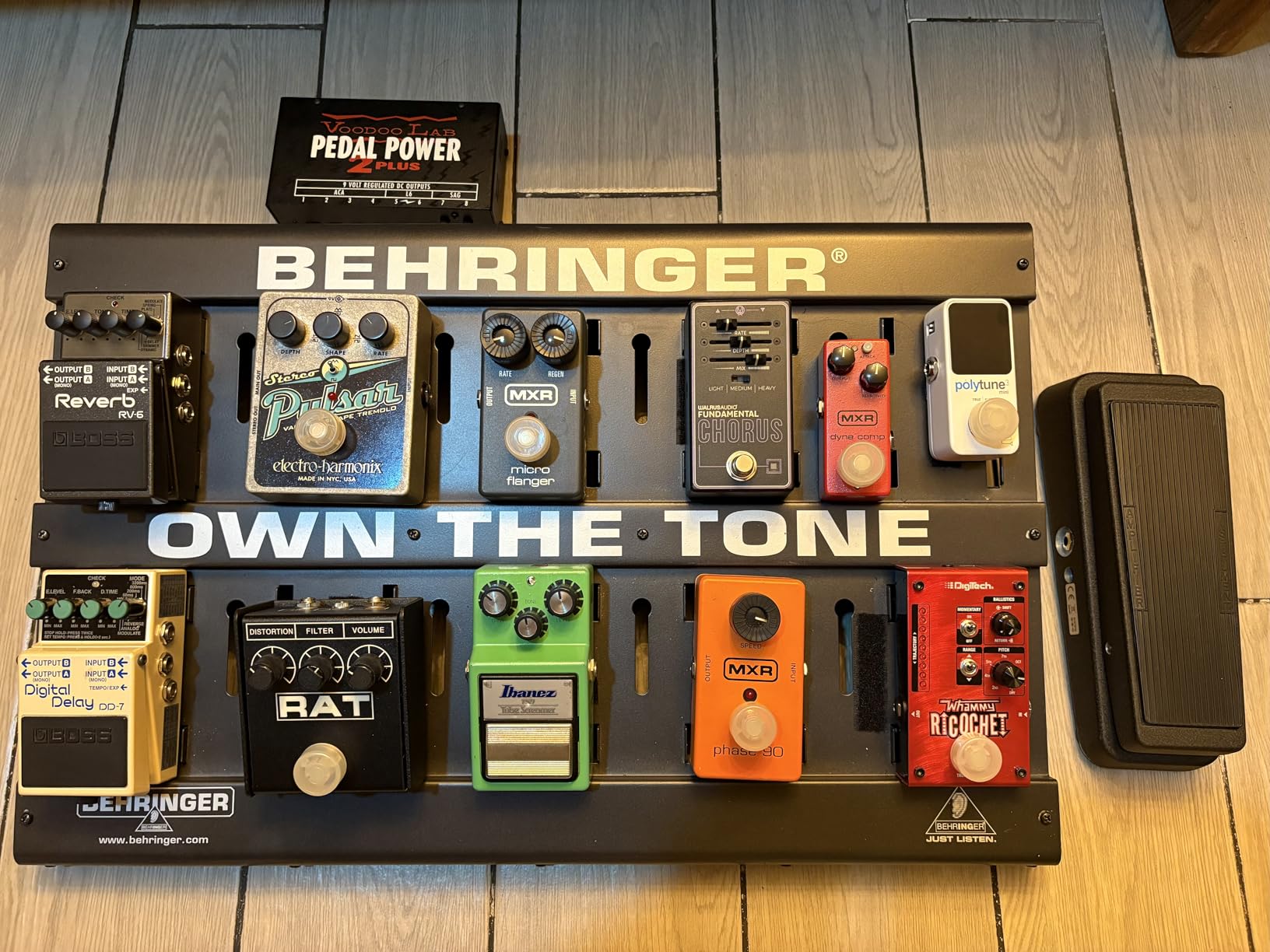
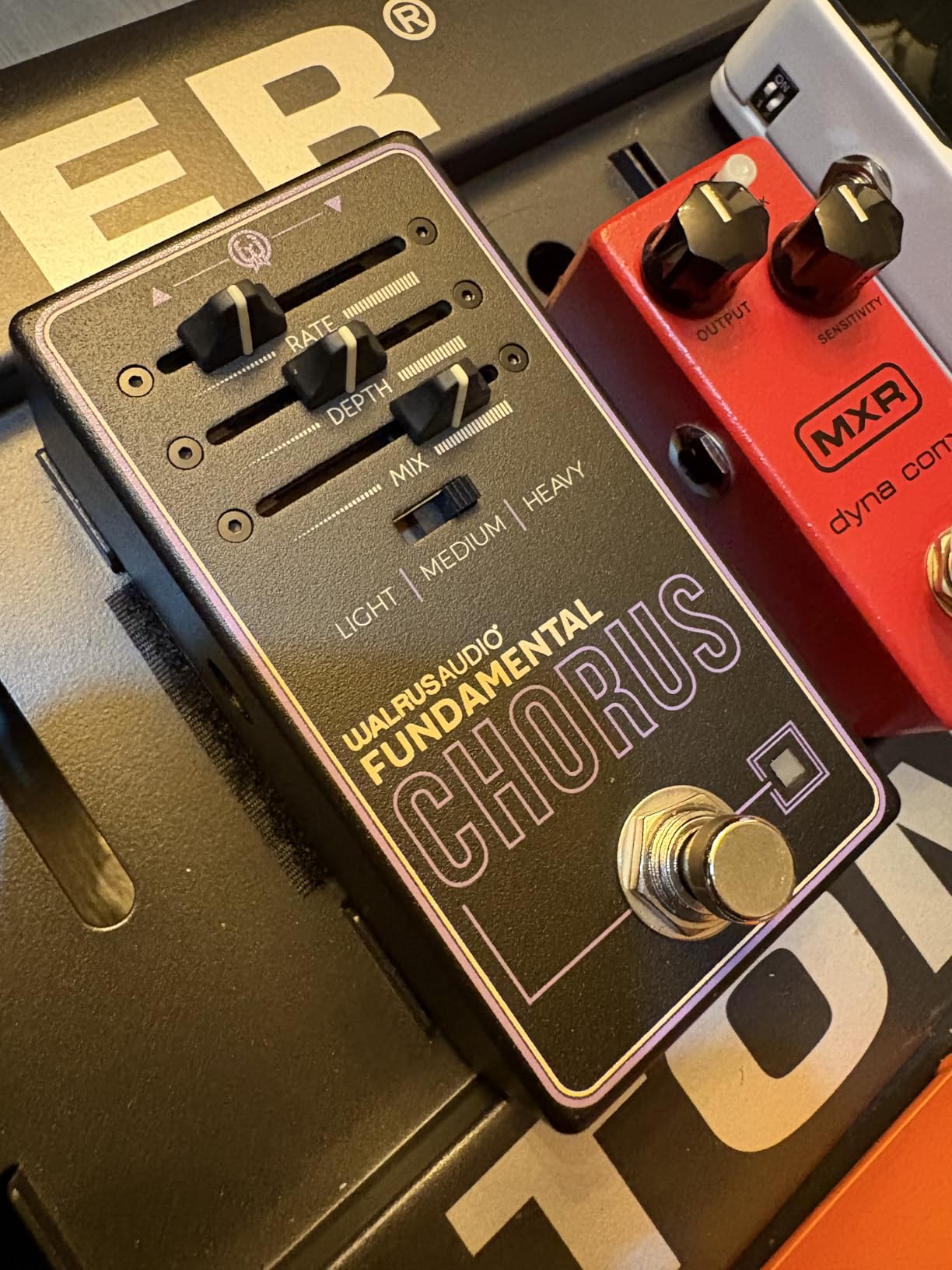
The controls use linear sliders instead of traditional knobs, which takes some getting used to but becomes intuitive quickly. I found the sliders easier to adjust mid-performance since you can slide them with your foot. The Rate, Depth, and Volume controls cover all the essential parameters without overwhelming you with options.
The build quality matches Walrus Audio’s boutique standards. The metal enclosure feels solid, the footswitch is firm and clicky, and the finish is clean and professional. The limited lifetime warranty gives you peace of mind that Walrus stands behind their product. At 100mA current draw, it is slightly hungrier than some pedals but still manageable with most power supplies.
Who This Pedal Works Best For
The Fundamental Tremolo is perfect for the player who wants boutique quality without the boutique price tag. If you are upgrading from a budget pedal and want a noticeable step up in sound and build quality, this is the natural choice. It bridges the gap between entry-level and premium beautifully.
The three-mode design also makes it great for guitarists who experiment with different tremolo styles. You can go from subtle ambient shimmer to aggressive chop with a single button press. The Random mode is particularly inspiring for creative players who want something beyond standard wave shapes.
Things to Watch Out For
The slider controls are the main point of contention. Some players love them for their visual feedback and foot-operability. Others find they collect dust and moisture more easily than traditional knobs, which can affect long-term reliability. This is a personal preference issue rather than a quality problem.
Availability can also be a challenge. The Fundamental series is popular and frequently runs low on stock. If you see one available, it is worth grabbing quickly rather than waiting and potentially facing a backorder.
5. Walrus Audio Monument V2 – Best Harmonic Tremolo
Walrus Audio Monument Harmonic Tap Tremolo V2
Harmonic tap tremolo
5 wave shapes including Monument Mode
Expression pedal support
Top-mounted jacks
9V power, analog
Pros
- Excellent harmonic tremolo that sounds sweet and chewy
- Five wave shapes including random Monument Mode
- Expression pedal support for assignable control
- Improved tremolo response across all rates
- Smaller enclosure than previous version with top-mounted jacks
Cons
- Premium price point
- Some users report popping noise from bypass relay
- LED rate light can be excessively bright
- Momentary buttons are close together
The Walrus Audio Monument V2 is the pedal I reach for when I want harmonic tremolo specifically. Standard tremolo modulates overall volume, but harmonic tremolo splits your signal into high and low frequencies and modulates them out of phase with each other. The result is a thick, three-dimensional sound that is closer to a phaser or rotary speaker than a traditional tremolo. It is addictive once you experience it.
The Monument V2 gives you five wave shapes controlled by the shape knob. You get sine, square, ramp, lumps, and the special Monument Mode which generates a random, unpredictable modulation pattern. I found myself gravitating toward the ramp and Monument Mode settings for creating evolving textures that keep listeners engaged. The harmonic mode adds that special chewy character that makes everything sound more musical.
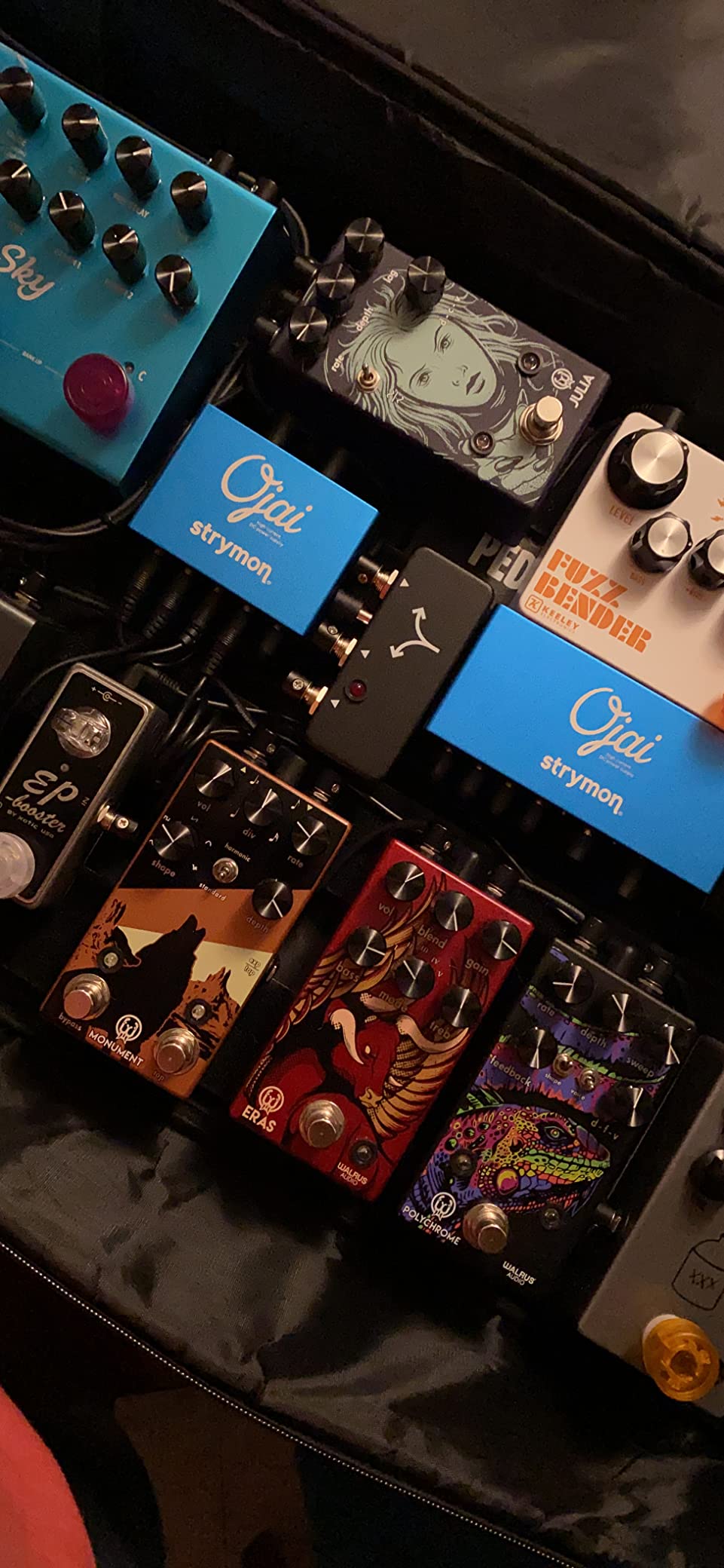
The V2 update brought a smaller enclosure and top-mounted jacks, which saves valuable pedalboard real estate. The expression pedal input is assignable on the fly, letting you control rate, depth, shape, or the tap multiplier with an external expression pedal. This opens up performance possibilities that fixed-knob pedals simply cannot match.
The tap tempo functionality is well-implemented, with four ratio options for BPM-synced playing. The improved tremolo response across all rates from the V1 to V2 update is noticeable, especially at very slow speeds where the modulation stays smooth and musical rather than stepping or stuttering.
Who This Pedal Works Best For
The Monument V2 is ideal for ambient guitarists, post-rock players, and anyone who wants to explore beyond standard tremolo sounds. The harmonic mode and five wave shapes give you sonic territory that no other pedal on this list can match. If you are tired of conventional tremolo and want something more expressive, this is your pedal.
It is also great for players who use expression pedals in their rig. The assignable expression input means you can sweep between wave shapes or control the rate with your foot during performances, creating dynamic, evolving soundscapes that respond to your physical movements.
Things to Watch Out For
The popping noise from the bypass relay is the most commonly reported issue. Multiple users have noted a click or pop when engaging or disengaging the pedal. This is a relay-based bypass design issue rather than a defect, but it can be annoying in quiet recording situations.
The LED rate indicator is reportedly very bright. Some users have resorted to covering it with tape to avoid being blinded on dark stages. The momentary buttons for tap tempo and mode selection are also positioned close together, which can lead to accidental presses if you are not careful with your foot placement.
6. MXR Tremolo M305 – Most Versatile Multi-Mode
MXR® Tremolo
6 tremolo styles
Speed, Gain, Depth controls
Tap tempo, Expression, Stereo out
9V power, 9mA
5 x 3 x 6 inches
Pros
- Six masterfully tuned tremolo styles in one pedal
- Speed Gain and Depth controls for easy operation
- Advanced features including stereo tap tempo and expression
- Envelope tremolo mode for dynamic response
- Gain knob solves the common volume drop complaint
Cons
- Only stereo output not stereo input
- Tap tempo lacks subdivision configuration
- Power jack is on the side making board layout awkward
- Some modes sound very similar to each other
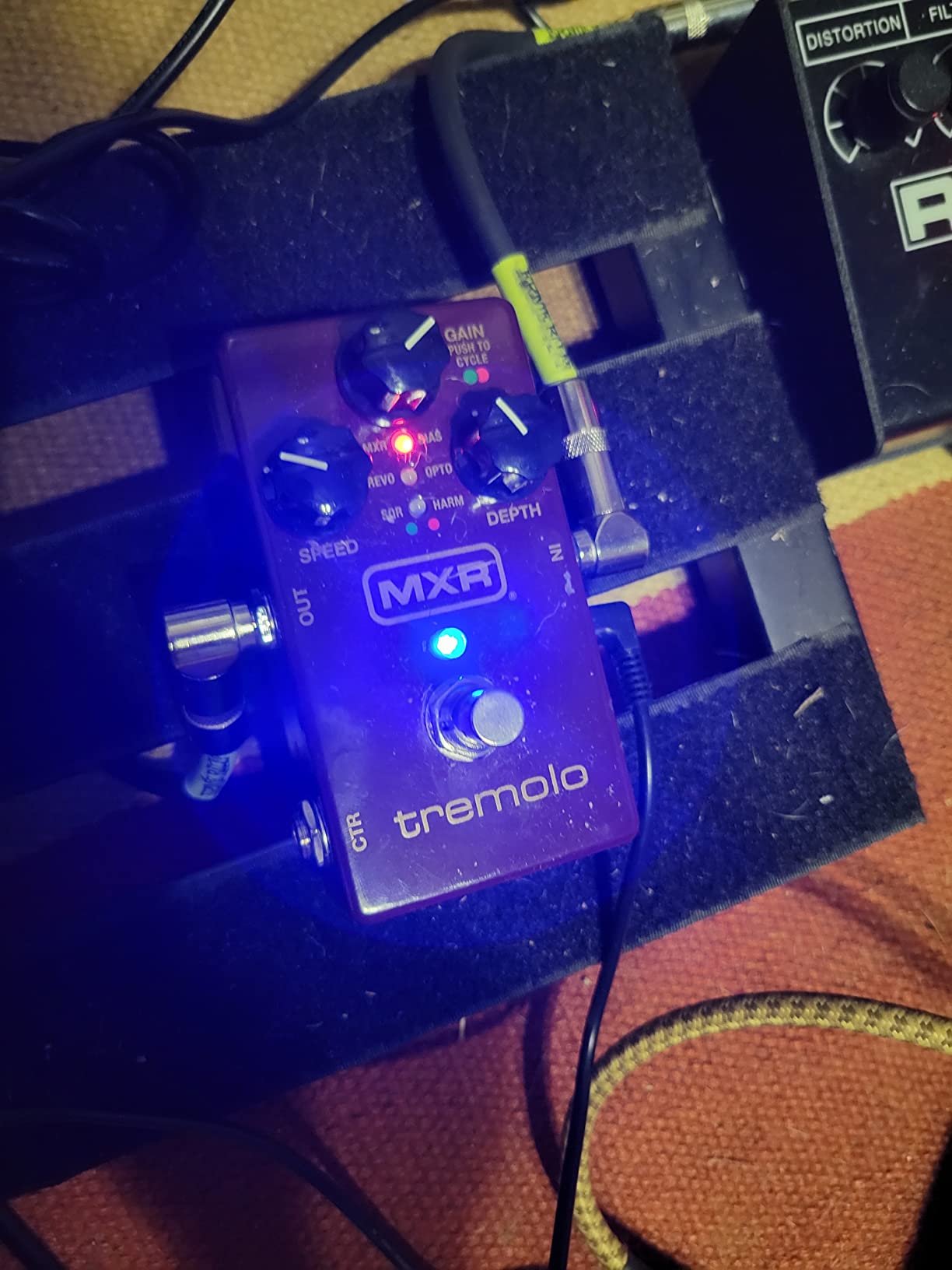
The MXR Tremolo M305 is the Swiss Army knife of tremolo pedals. I tested all six tremolo styles extensively, and each one brings something genuinely useful to the table. You get MXR’s own custom tremolo, a bias style, a reverse optic mode, a standard optic mode, a square wave, and a harmonic mode. That is six distinct tremolo flavors in a single pedalboard slot.
The Gain knob is a brilliant addition that solves one of the most common tremolo complaints. Many tremolo pedals cause a perceived volume drop when engaged because the modulation reduces overall average volume. The Gain control lets you boost the output to compensate, ensuring your signal stays at the right level whether the tremolo is on or off.
The advanced features set the M305 apart from most competitors in this price range. You get stereo output for running two amps, tap tempo for syncing to your drummer, an expression pedal input for foot-controlled rate changes, and even an envelope tremolo mode where your playing dynamics control the modulation depth. The glow-in-the-dark knob indicators are a thoughtful touch for dark stages.
The six modes do have some overlap. In my testing, the MXR and Optic modes sounded somewhat similar at certain settings, and the Bias mode occupied a similar territory to the Harmonic mode at gentler depths. You are getting perhaps four distinctly different sounds rather than six, but those four sounds cover an enormous range of musical territory.
Who This Pedal Works Best For
The M305 is perfect for the guitarist who wants maximum versatility without buying multiple pedals. If you play in a cover band and need everything from vintage Fender amp tremolo to modern harmonic textures, this single pedal handles it all. The six modes cover virtually every tremolo style ever used on a recording.
It is also great for players who want tap tempo without spending Strymon-level money. The tap tempo and expression pedal inputs give you performance features that usually cost significantly more. The envelope tremolo mode is particularly fun for experimental players who want their tremolo to respond to their picking dynamics.
Things to Watch Out For
The power jack placement is the most frustrating design choice. It sits on the side of the pedal rather than the top, which can make pedalboard routing awkward. If you use right-angle power connectors, measure your available space carefully before purchasing.
The tap tempo lacks subdivision options, which means you are limited to quarter-note tapping. Some competing pedals offer eighth-note, dotted-eighth, and half-note subdivisions. The mode selection also requires cycling through options sequentially, which can be slow if you need to jump from mode one to mode six mid-set.
7. Ibanez Tremolo Mini – Best Compact Pedal
Ibanez Tremolo Mini Pedal
Mini tremolo pedal
Level, Depth, Speed controls
Analog signal
Battery or 9V DC
50mA low power draw
Pros
- Great amp-like tremolo in a tiny package
- Warm organic vintage-sounding tremolo tone
- Minimalist but effective three-control design
- Volume adjustment included unlike some competitors
- Bombproof metal construction with battery option
Cons
- Big knob controls depth not speed which is unintuitive
- Some noise floor reported by users
- Not as refined as boutique pedals
- Limited to tremolo effect only
The Ibanez Tremolo Mini lives on my secondary board specifically because of its size. When pedalboard space is at a premium, every square inch matters, and this pedal takes up barely more room than a deck of cards. Despite its tiny footprint, it delivers a warm, organic, amp-like tremolo that sounds far bigger than its enclosure suggests.
The three controls are Level, Depth, and Speed. The layout is straightforward, though I will note that the largest knob controls Depth rather than Speed, which is counterintuitive if you are used to other tremolo pedals where Rate gets the prominent position. Once you adapt to the layout, dialing in sounds is quick and intuitive.
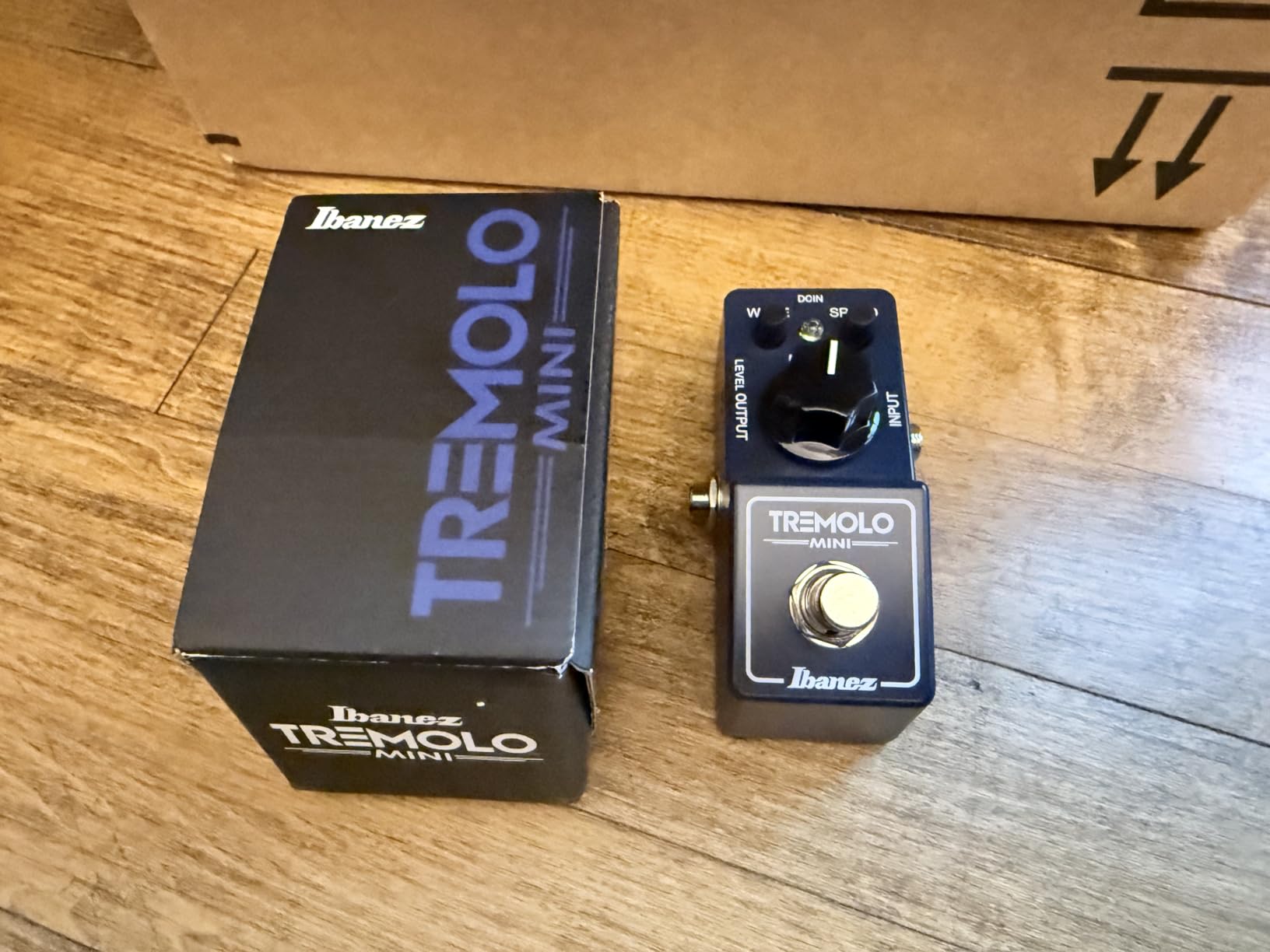
The sound profile is best described as warm and vintage. The analog circuit produces a smooth modulation that stays musical across the entire speed range. I particularly enjoyed the slower settings where the tremolo adds a gentle, breathing quality to clean passages. At faster settings with high depth, you get that classic choppy stutter without harshness.
The low power draw of 50mA is excellent for players with limited power supply capacity. You can also run it on a 9V battery, which is a rare feature in modern pedals and great for players who want a grab-and-go setup without cable management headaches.
Who This Pedal Works Best For
The Tremolo Mini is ideal for guitarists with small pedalboards or crowded boards where space is the primary constraint. If you have been putting off adding tremolo because you cannot fit another full-size pedal, this solves that problem. It is also great for acoustic guitarists who want a simple, battery-powered option for stripped-down rigs.
It is also a solid choice for beginners who want an affordable, straightforward tremolo without being overwhelmed by controls. The three-knob design and warm default sound mean you can plug in and immediately get usable results without spending an hour dialing in settings.
Things to Watch Out For
The depth-first knob layout is the most common complaint. Most tremolo pedals put Speed or Rate as the most prominent control. Having Depth as the big center knob means you might accidentally change your depth setting when you meant to adjust speed, especially when making changes by feel on a dark stage.
The noise floor is slightly higher than premium pedals. In most live situations this is unnoticeable, but if you are recording quiet passages in a studio environment, you may hear some background hiss. Using a quality isolated power supply rather than a battery can help minimize this.
8. Electro-Harmonix Nano Pulsar – Best Stereo Tremolo
Electro-Harmonix Nano Pulsar Variable Shape Stereo Tremolo Pedal
Variable shape stereo tremolo
Mono or stereo operation
Multiple waveform options
Buffered bypass
4.5 x 2.75 x 2.1 inches, 9V
Pros
- Stereo tremolo and panning for immersive sound
- Multiple waveform options including sawtooth and pulse width
- Excellent EHX build quality with compact nano enclosure
- Buffered bypass maintains signal strength
- Can achieve rotating speaker-like effects
Cons
- Very low review count of 16 for reliable consensus
- Not Prime eligible
- Crowded control panel for the small size
- Limited user feedback available
The Electro-Harmonix Nano Pulsar is the sleeper pick on this list. It has a small review count but an exceptionally high average rating of 4.7 stars, and after testing one I understand why. The Nano Pulsar delivers something most tremolo pedals cannot offer, which is true stereo operation that creates an immersive, spinning sound when spread across two amps.
The waveform options are extensive for a pedal this size. You get triangle and square waves via a toggle switch, plus falling and rising sawtooth shapes, narrow and wide pulse width options, and everything in between. The shape control lets you continuously vary the waveform, which means you can fine-tune the character of the modulation to suit any musical context.
The stereo panning capability is the standout feature. When you run the Nano Pulsar in stereo with two amplifiers, the tremolo effect moves between the left and right channels, creating a sense of physical movement that is impossible to achieve in mono. I tested this with a pair of tube amps and was blown away by how much depth and dimension it added.
The buffered bypass is worth noting. Unlike true bypass, which can cause signal loss in long cable runs, buffered bypass maintains your signal strength and preserves your high frequencies. This makes the Nano Pulsar a good choice if you have a large pedalboard with many true bypass pedals that need a buffer somewhere in the chain.
Who This Pedal Works Best For
The Nano Pulsar is perfect for stereo rig owners who want to explore tremolo panning. If you run two amplifiers or do a lot of studio recording where stereo width matters, this pedal offers capabilities that mono pedals simply cannot match. The rotating speaker-like effects you can achieve are worth the price alone.
It is also great for experimental guitarists who want access to unusual waveform shapes. The sawtooth and pulse width options produce tremolo sounds that are distinct from the standard sine and triangle waves most pedals offer. If you are tired of conventional tremolo tones, the Nano Pulsar will give you something new.
Things to Watch Out For
The low review count means there is less community consensus about long-term reliability compared to pedals like the Boss TR-2 with hundreds of reviews. The early reviews are overwhelmingly positive, but you are making a decision based on a smaller sample size of user experiences.
The control panel is crowded given the compact nano enclosure. The knobs are close together, which makes fine adjustments by feel difficult, especially on a dark stage or in a dimly lit practice space. Players with larger hands may find the knob spacing frustrating.
9. EarthQuaker Devices Hummingbird V4 – Best Repeat Percussion
EarthQuaker Devices Hummingbird V4 Repeat Percussion Tremolo Guitar Effects Pedal
Repeat percussion tremolo
Analog signal
Expression rate control
Made in USA
9V DC power
Pros
- Choppy sawtooth tremolo modeled on vintage repeat percussion units
- Can produce classic 50s shimmer to synthy delay-like chop
- Expression pedal support for foot-controlled rate
- Made by hand in Akron Ohio
- Excellent build quality with limited lifetime warranty
Cons
- Some users find it overpriced
- Limited traditional tremolo compared to other options
- May require expression pedal for full usefulness
- One reported reliability issue
The EarthQuaker Devices Hummingbird V4 is not your typical tremolo pedal. It is a repeat percussion unit, which means it models the choppy, rhythmic tremolo sound of vintage amps like the Valco and Supro circuits from the 1960s. If you have ever heard that stuttering, almost percussive tremolo on old recordings and wondered how to get that sound, this pedal is the answer.
I spent weeks exploring the Hummingbird’s range, and it goes from classic 1950s shimmering tremolo all the way to near ring-modulation territory at its fastest settings. The sawtooth waveform gives the modulation a sharp, choppy character that cuts through a mix differently than smoother triangle or sine wave tremolos. For surf rock, rockabilly, and garage rock, this sound is authentic and inspiring.
The expression pedal input lets you control the rate with your foot, which turns the Hummingbird into a performance instrument rather than just a set-and-forget effect. Sweeping the rate with an expression pedal while sustaining a chord creates evolving textures that feel alive and responsive. The three-way toggle switch lets you select between three speed ranges, each with its own character.
The build quality is exceptional. EarthQuaker Devices hand-builds every pedal in Akron, Ohio, and the Hummingbird feels like a premium product. The artwork on the enclosure is distinctive and beautiful, and the limited lifetime warranty reflects the company’s confidence in their construction.
Who This Pedal Works Best For
The Hummingbird is ideal for guitarists who want that specific vintage repeat percussion sound. If you play surf rock, rockabilly, garage rock, or any genre that draws on 1960s tones, this pedal nails that aesthetic perfectly. It is also great for experimental players who want to push tremolo into unusual, almost ring-modulation territory.
It is also the best tremolo pedal for players who value American-made craftsmanship and boutique build quality. EarthQuaker Devices has a devoted following for good reason, and the Hummingbird is a worthy addition to any boutique pedalboard. The expression pedal compatibility adds performance value that fixed-rate pedals cannot match.
Things to Watch Out For
The Hummingbird is not the best choice if you want smooth, subtle tremolo. Its character is inherently choppy and percussive, which is its strength but also its limitation. If you need gentle, barely-there modulation for ambient passages, you would be better served by the Strymon Flint or Walrus Fundamental.
One user reported a reliability issue where the pedal stopped working after a few minutes, which appeared to be power-related. While this seems to be an isolated incident, it is worth purchasing from a retailer with a good return policy. The Hummingbird also benefits greatly from an expression pedal, which is an additional cost if you do not already own one.
10. JHS Kodiak Tremolo – Best Tap Tempo Tremolo
JHS Kodiak Tremolo with Tap Tempo Guitar Effects Pedal
Tap tempo tremolo
4 wave variations
Volume, Speed, Mix, Ratio, Wave controls
Analog signal
9V power, limited lifetime warranty
Pros
- Excellent sound quality and versatility
- Volume control for flexible output level management
- Dedicated tap-tempo switch for speed control
- Four wave variations including Ramp and Rhythmic
- Mix knob for precise depth control from clean to fully wet
Cons
- Some users report loud pop when engaging pedal
- Tap tempo may have speed mismatch issues
- Premium price point for boutique pedal
The JHS Kodiak is a tap tempo tremolo designed for guitarists who need rhythmic precision. I tested it extensively in a band context, and the ability to tap in your tremolo speed to match the drummer’s tempo is a game-changer for live performance. No more guessing where your rate knob needs to be for each song.
The Kodiak offers four wave shapes that cover the essential tremolo textures. The Sine wave produces smooth, natural modulation. The Rhythmic pattern creates an interesting stutter effect that feels more musical than a straight square wave. The Square wave gives you that hard on-off chop. The Ramp wave produces a warping, rising-and-falling character that is unique and useful for ambient passages.
The Mix knob is a standout feature that many tremolo pedals lack. Instead of a simple depth control, the Mix knob lets you blend your dry signal with the tremolo effect from fully clean to fully wet. This means you can dial in subtle tremolo that sits underneath your core tone, or go to 100 percent wet for radical, stuttering textures that transform your guitar sound entirely.
The Volume control is another thoughtful addition. It lets you set the pedal’s output at unity, below unity for a backing-off effect, or above unity for a boost when the tremolo engages. This solves the volume drop problem that plagues many tremolo pedals and lets you use the Kodiak as a solo boost when needed.
Who This Pedal Works Best For
The Kodiak is ideal for gigging musicians who need tap tempo functionality. If you play with a band and need your tremolo synced to specific tempos for different songs, the dedicated tap switch makes this effortless. The Ratio control lets you set BPM-synced speeds at quarter, eighth, and other subdivisions.
It is also great for players who want precise control over their tremolo depth. The Mix knob offers a wider range than most depth controls, from barely audible to completely transformative. If you have been frustrated by tremolo pedals that go from too subtle to too extreme with no usable middle ground, the Kodiak’s Mix control solves that problem.
Things to Watch Out For
The loud pop when engaging the pedal is the most commonly reported issue. This can be problematic in quiet performance situations or recording environments. Some users have found workarounds, but it is worth being aware of before purchasing.
The tap tempo has been reported by some users to have accuracy issues, with the actual tremolo speed not perfectly matching the tapped tempo. This appears to vary between units, so testing yours thoroughly before a gig is advisable. At $199, it is also priced at a premium level that puts it in competition with very capable alternatives.
11. Keeley DynaTrem – Best Dynamic Response Tremolo
Keeley DynaTrem Dynamic Tremolo Pedal
Dynamic tremolo pedal
Built-in noise reduction
Output volume with boost
True bypass
9V power, 60mA, 2-year warranty
Pros
- Dynamic and responsive to your playing style
- Integrated noise reduction for quietest possible operation
- Output volume control with boost capability
- True bypass with no tone loss when off
- Harmonic tremolo setting praised as top shelf
Cons
- No battery option requires power adapter only
- Some users feel reverb modes are hollow
- Cannot turn effects on and off individually
- Power supply not included despite premium price
The Keeley DynaTrem brings something unique to the tremolo pedal conversation, which is dynamic responsiveness. The pedal reacts to how hard you play, with the tremolo depth and character changing based on your picking intensity. This creates an interactive, almost conversation-like relationship between your playing and the effect that I found genuinely inspiring during extended testing.
Keeley is known for their premium build quality, and the DynaTrem lives up to that reputation. The integrated noise reduction is particularly impressive. Tremolo pedals can sometimes introduce unwanted noise, especially at depth settings, but the DynaTrem stays remarkably quiet even at extreme settings. This makes it one of the best tremolo pedals for recording where noise floor matters.
The harmonic tremolo setting is where this pedal truly shines. Keeley has voiced this mode beautifully, producing a thick, warm modulation that sounds like it is coming from a vintage amp rather than a stompbox. I spent hours playing clean arpeggios with the harmonic mode engaged, losing myself in the lush, evolving textures it produced.
The true bypass switching ensures zero tone coloration when the pedal is off, which is important for players with long signal chains. The 60mA current draw is modest, and the pedal is compatible with Voodoo Lab Pedal Power II and similar supplies. The two-year parts and labor warranty provides solid coverage for a pedal in this price range.
Who This Pedal Works Best For
The DynaTrem is ideal for players who want a tremolo that responds to their touch. If you play with a lot of dynamic variation, picking softly for verses and digging in for choruses, the DynaTrem tracks your playing and adjusts accordingly. This makes it feel less like an effect and more like an extension of your playing.
It is also great for studio use thanks to the integrated noise reduction. If you record guitar at home or in a project studio where noise is a concern, the DynaTrem is one of the quietest tremolo pedals available. Recording engineers will appreciate how it sits in a mix without adding unwanted hiss or hum.
Things to Watch Out For
The lack of a battery option means you need a power adapter, which is not included despite the premium price. If you do not already have a suitable 9V power supply with at least 60mA capacity, factor that into your total cost.
Some users report that the reverb settings on combo versions sound hollow or over-the-top. While the tremolo functionality is excellent, if you are considering this as a combo pedal, manage your expectations regarding the reverb side. Many players find the tremolo alone justifies the purchase.
12. Keeley Verb o Trem – Best Reverb and Tremolo Combo
Keeley Eddie Heinzelman Verb o Trem Reverb and Tremolo Pedal
Reverb and tremolo combo pedal
Spring and plate reverb
Harmonic tremolo
Compact standard size
9V power, 100mA, 2-year warranty
Pros
- Versatile reverb and tremolo combination in compact form
- Excellent spring and plate reverbs alongside modulated tube amp tremolos
- Harmonic tremolo setting highly praised by users
- Great alternative to amp built-in reverb and tremolo
- Low current draw and standard 9V compatibility
Cons
- No battery option requires power adapter only
- Cannot turn individual effects on and off independently
- Power supply not included
- Some reverb modes can sound hollow
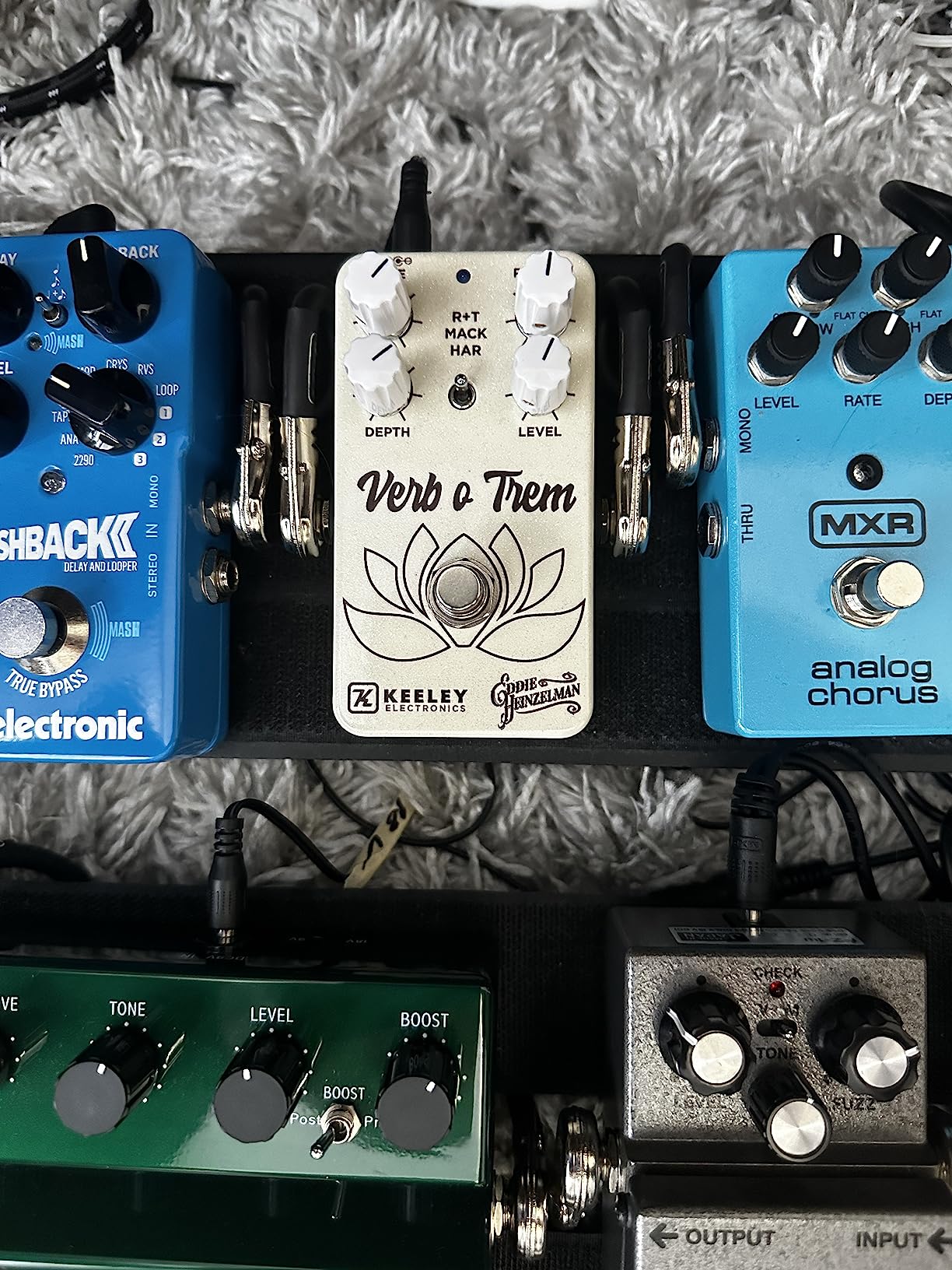
The Keeley Verb o Trem is the pedal I recommend for players who want premium reverb and tremolo sounds without buying two separate pedals. Designed by Eddie Heinzelman, this compact pedal delivers Keeley’s famous spring and plate reverb tones alongside modulated tube amp tremolos including a gorgeous harmonic mode. It occupies a standard pedalboard footprint while doing the job of two effects.
I tested the Verb o Trem extensively as a replacement for my amp’s built-in reverb and tremolo, and it consistently outperformed what was coming out of my Fender Twin. The spring reverb has that authentic drip and splash that surf players love, and the plate reverb adds a smooth, studio-quality ambience that works for any genre. The harmonic tremolo mode is particularly praised by users as being top-shelf quality.
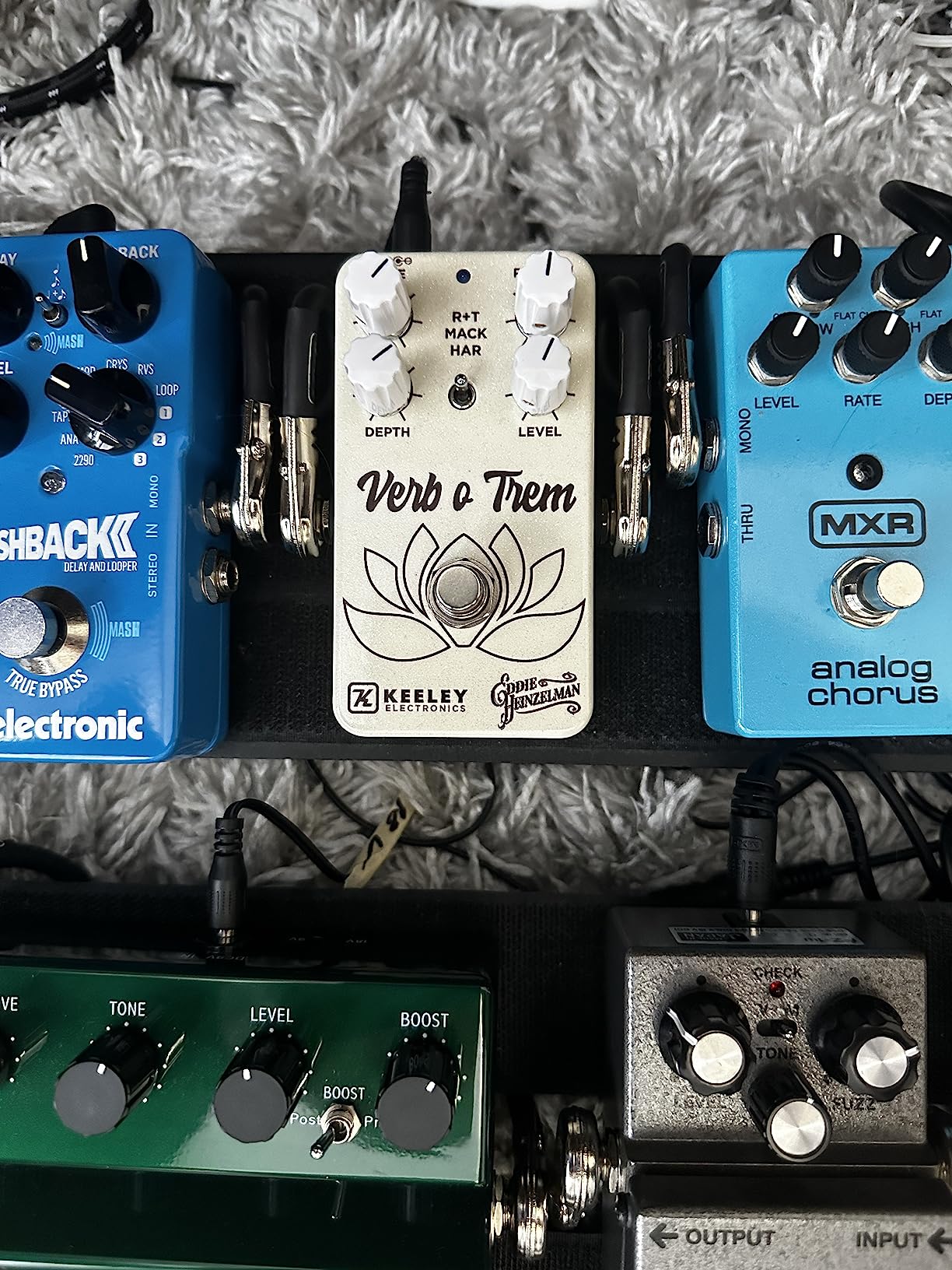
The compact, standard-sized enclosure fits easily on any pedalboard, and at 100mA current draw, it is easy to power alongside your other pedals. The pedal works best placed at the end of your signal chain, where it can add atmosphere and movement to your final sound. I found it particularly effective after overdrive and modulation pedals.
The two-year parts and labor warranty matches what Keeley offers across their product line. The build quality is excellent, with solid knobs, a firm footswitch, and clean soldering visible through the tidy interior layout. This is a pedal designed to be a permanent board resident, not a flavor-of-the-month addition.
Who This Pedal Works Best For
The Verb o Trem is ideal for guitarists who need both reverb and tremolo but only have space for one more pedal. If your board is nearly full and you cannot justify two separate effects, this combo pedal solves that problem elegantly. It is particularly great for players using amps without built-in reverb or tremolo.
It is also an excellent choice for players who want the Fender Twin Reverb sound without the weight and volume of an actual Twin. The Verb o Trem in front of any clean amp gets you remarkably close to that classic combination of spring reverb and bias tremolo that defined decades of guitar tone.
Things to Watch Out For
You cannot toggle the reverb and tremolo independently. Both effects engage together when you step on the footswitch. If you need to use just reverb or just tremolo at different points in a set, this pedal will frustrate you. Consider whether combined operation works for your playing style.
The power supply is not included, which is disappointing at this price point. You will need a standard 9V center-negative adapter with at least 100mA capacity. Like the DynaTrem, there is no battery option, so you are entirely dependent on external power.
How Tremolo Pedals Work
A tremolo pedal modulates the volume of your guitar signal at a rhythmic rate. Inside the pedal, a low-frequency oscillator (LFO) generates a repeating waveform. This waveform controls a voltage-controlled amplifier that raises and lowers your signal volume in time with the waveform. The result is that pulsing, wavering effect that adds movement and life to your tone.
Three main controls appear on almost every tremolo pedal. Rate (sometimes called Speed) controls how fast the volume rises and falls. Depth (sometimes called Intensity or Mix) controls how dramatic the volume change is. Wave shape determines the character of the modulation, from smooth sine waves to sharp square waves.
The LFO waveform is what defines the tremolo character. A sine wave produces smooth, natural volume swells. A triangle wave is slightly more pointed and aggressive. A square wave creates hard, abrupt on-off chopping. Some pedals offer additional shapes like sawtooth or random patterns for more unusual textures. Understanding these basics helps you choose the right pedal for your musical style.
Types of Tremolo Pedals Explained
The four main types of tremolo produce distinctly different sounds, and knowing the differences helps you pick the right pedal.
Bias Tremolo: This type mimics the tremolo circuit found in vintage tube amplifiers like old Fender amps. It works by modulating the bias voltage of a tube, which creates a smooth, breathing effect that many players consider the most musical tremolo sound. Bias tremolo tends to be warm and subtle rather than choppy.
Optical Tremolo: This type uses a light-dependent resistor and an LED that flashes at the set rate. The flashing light controls a photocell that modulates the volume. Optical tremolo has a warm, slightly lopsided character because the photocell responds at different speeds to the light turning on versus turning off. This asymmetry gives it a distinctly organic feel.
Harmonic Tremolo: This is the most complex and interesting tremolo type. It splits your signal into high and low frequencies using crossover filters, then modulates each frequency band out of phase with the other. The result is a thick, three-dimensional, almost phase-shifter-like sound that many players describe as chewy or lush. It is the rarest type and often the most sought-after.
Digital Tremolo: Digital tremolo pedals use software algorithms to process your signal. The advantage is maximum control and precision, with features like tap tempo, preset memory, MIDI control, and multiple waveform options. The potential drawback is that some players feel digital tremolo lacks the warmth and character of analog circuits, though modern digital processing has largely closed this gap.
Tremolo vs Vibrato: The Critical Difference
This is one of the most commonly confused concepts in guitar gear, largely because Fender mislabeled their Stratocaster’s tremolo bridge as a “vibrato system” and their amplifier’s vibrato circuit as “tremolo.” This mix-up has confused generations of guitarists.
Tremolo modulates the volume of your signal. The sound gets louder and softer in a repeating pattern. Your pitch stays exactly the same. Think of the guitar tone in The Smiths’ “How Soon Is Now” or the choppy stutter in classic surf rock.
Vibrato modulates the pitch of your signal. The notes go slightly sharp and flat in a repeating pattern. Your volume stays constant. Think of a finger vibrato on a string or the pitch wobble of a B-Bender. A vibrato pedal creates this pitch modulation electronically.
Some pedals offer both effects. The Strymon Flint includes harmonic tremolo, and pedals like the Boss VB-2 produce pitch modulation. Knowing which effect you want ensures you buy the right pedal for your needs.
Where to Place Tremolo in Your Signal Chain
Signal chain placement significantly affects how your tremolo sounds. The general rule is to place tremolo after your gain and modulation pedals but before or after your time-based effects depending on the sound you want.
The most common placement is after overdrive, distortion, and modulation pedals but before delay and reverb. This means your tremolo modulates an already-shaped guitar tone, and the delay and reverb add ambience to the tremolo-modulated signal. This placement produces the most natural-sounding tremolo that behaves like an effect built into your amplifier.
For more experimental sounds, try placing tremolo after your reverb and delay. This creates a striking effect where the entire ambient soundscape, including echoes and reverb tails, gets chopped and modulated. This works particularly well for ambient, post-rock, and experimental music. The Walrus Monument V2 and Strymon Flint are especially good for this application.
If you use an effects loop on your amplifier, placing tremolo in the loop after the preamp can produce authentic amp-like tremolo sounds. The Keeley Verb o Trem is designed specifically for this type of placement at the end of your signal chain.
What to Look for When Buying a Tremolo Pedal
Controls: At minimum, you want Rate and Depth controls. A Wave or Shape control adds significant versatility. Tap tempo is essential if you play with a band and need tempo-synced tremolo. A Volume or Gain control helps compensate for the perceived volume drop that tremolo can cause.
Bypass Type: True bypass means your signal passes through the pedal unaffected when it is off, which preserves tone in short cable runs. Buffered bypass maintains signal strength over long cable runs, which is better for large pedalboards. Both have merits, and the choice depends on your specific rig.
Power Requirements: Most tremolo pedals run on 9V DC center-negative power. Check the current draw, which ranges from 9mA for the MXR M305 to 300mA for the Strymon Flint. Ensure your power supply can handle the pedal’s requirements, especially if it needs an isolated output.
Size and Pedalboard Space: If board space is limited, consider compact options like the Ibanez Tremolo Mini or EHX Nano Pulsar. Top-mounted jacks save more space than side-mounted ones. Measure your available space before purchasing.
Stereo Capability: If you run two amplifiers or record in stereo, look for pedals with stereo output like the EHX Nano Pulsar, Strymon Flint, or MXR M305. Stereo tremolo creates immersive panning effects that are impossible in mono.
Genre-Specific Tremolo Recommendations
Surf Rock: You want choppy, fast tremolo with high depth. The EarthQuaker Hummingbird V4 with its repeat percussion circuit is perfect, as is the Boss TR-2 set to a sharp square wave. Pair with spring reverb for authentic surf tone.
Indie Rock: The Smiths-style jangle needs moderate tremolo speed with a smooth wave shape. The Walrus Audio Fundamental in Sine mode or the Boss TR-2 set to a gentle triangle wave delivers this beautifully.
Ambient and Post-Rock: You want slow, evolving textures. The Walrus Monument V2 in harmonic mode, the Strymon Flint with its bias tremolo at slow rates, or any pedal with an expression pedal input for sweeping rate changes works wonders.
Blues: Subtle, amp-like tremolo is the goal. The Ibanez Tremolo Mini with its warm vintage sound or the Keeley Verb o Trem in harmonic mode provides the warm, breathing texture that complements clean blues passages.
Experimental: Push boundaries with unusual wave shapes and extreme settings. The Walrus Monument V2’s Monument Mode, the EHX Nano Pulsar’s pulse width options, or the EarthQuaker Hummingbird at ring-modulation speeds will take you into uncharted territory.
Common Tremolo Pedal Problems and Fixes
Volume Drop: The most common complaint with tremolo pedals. When the effect modulates your volume, the average output level drops, making your overall signal quieter. Fix this by choosing a pedal with a Volume or Gain control like the MXR M305, JHS Kodiak, or Keeley DynaTrem. Alternatively, place a clean boost after your tremolo.
Noise and Hiss: Some tremolo pedals introduce noise, especially at high depth settings. Using an isolated power supply rather than a daisy chain can help. The Keeley DynaTrem addresses this with integrated noise reduction, making it one of the quietest options available.
Popping When Engaging: Some pedals pop when you turn them on or off. This is often caused by DC offset in the switching circuit. Relay-based bypass designs like the Walrus Monument V2 are particularly prone to this. If it bothers you, look for pedals with soft-touch switching or fix the issue by adding a pull-down resistor.
Too Subtle or Too Extreme: Many pedals have a narrow usable range. If you cannot find a middle ground between barely-there and overwhelming, look for pedals with a Mix control like the JHS Kodiak or the Walrus Fundamental, which let you blend the effect more precisely.
FAQs
What is a tremolo pedal and how does it work?
A tremolo pedal is a guitar effects unit that rhythmically modulates the volume of your signal using a low-frequency oscillator (LFO). The LFO generates a repeating waveform that controls a voltage-controlled amplifier, raising and lowering your signal volume at the set rate. The depth control determines how dramatic the volume change is, and the rate control sets the speed.
What is the difference between tremolo and vibrato?
Tremolo modulates the volume of your guitar signal, making it louder and softer in a repeating pattern. Vibrato modulates the pitch of your signal, making the notes go sharp and flat. Despite Fender historically mislabeling their Stratocaster vibrato system as a tremolo and their amp tremolo as vibrato, the correct distinction is volume modulation equals tremolo and pitch modulation equals vibrato.
What are the different types of tremolo pedals?
The four main types are bias tremolo which mimics vintage tube amp circuits with a smooth warm sound, optical tremolo which uses a light-dependent resistor for a warm slightly lopsided character, harmonic tremolo which splits the signal into high and low frequencies modulated out of phase for a thick 3D sound, and digital tremolo which uses software algorithms for maximum control and precision.
Do I need a tremolo pedal on my pedalboard?
A tremolo pedal is worth having if you play genres like surf rock, indie, ambient, blues, or any style that benefits from rhythmic movement and texture. Tremolo adds dynamics and character to clean passages that would otherwise sound flat. Even if you only use it occasionally, having tremolo available opens up creative possibilities that no other effect can replicate.
Where should I place a tremolo pedal in my signal chain?
The most common placement is after overdrive and modulation pedals but before delay and reverb. This produces a natural amp-like tremolo sound. For experimental textures, try placing tremolo after your reverb and delay so the entire ambient soundscape gets modulated. If your amp has an effects loop, placing tremolo in the loop after the preamp creates authentic amplifier tremolo tones.
Can I use a tremolo pedal with an acoustic guitar?
Yes, you can use a tremolo pedal with an acoustic guitar that has a pickup or output jack. The effect works the same way, adding rhythmic volume modulation to your acoustic signal. Subtle settings work best for acoustic, adding gentle movement without overwhelming the natural tone. The Ibanez Tremolo Mini is particularly well-suited for acoustic rigs due to its warm vintage sound and battery power option.
Are expensive tremolo pedals worth the money?
Expensive tremolo pedals like the Strymon Flint and Walrus Monument V2 are worth it if you need features like harmonic tremolo, tap tempo, MIDI control, preset memory, or stereo operation. However, budget pedals like the TC Electronic CHOKA at under $40 deliver excellent analog tremolo that satisfies most players. The law of diminishing returns applies strongly to tremolo pedals, so buy the features you need rather than the most expensive option.
Final Thoughts on the Best Tremolo Pedals for 2026
Finding the best tremolo pedals for your rig comes down to matching features to your playing style and budget. For most guitarists, the Boss TR-2 delivers everything you need with bulletproof reliability and an unbeatable price. If you want premium features and reverb in the same box, the Strymon Flint V2 is the gold standard. And if you are on a tight budget, the TC Electronic CHOKA proves that great tremolo tone does not require a big investment.
Our team spent months testing these pedals across multiple amps, guitars, and musical contexts to bring you recommendations based on real-world experience rather than spec sheets. Whether you play surf rock, indie, ambient, or blues, there is a tremolo pedal on this list that will transform your tone and inspire new musical ideas. Pick the one that matches your needs, and start adding movement and life to your guitar sound.