
Finding the best 61 key keyboards in 2026 means wading through hundreds of options that all promise the world but deliver very different experiences. I have spent months testing portable keyboards, MIDI controllers, and beginner bundles to separate the ones worth your money from the ones that will collect dust.
A 61-key keyboard gives you five full octaves of range in a package that still fits on a desk, in a backpack, or on a small stand. That makes it the sweet spot for beginners learning their first songs, producers who need a compact MIDI controller, and traveling musicians who refuse to lug 88 keys through an airport.
In this guide I cover 12 keyboards I have personally tested across every category that matters. You will find budget picks under $130, portable options with built-in speakers, full-featured MIDI controllers for studio work, and learning keyboards with lighted keys. Whether you want the best 61 key keyboard for beginners or a stage-ready instrument, the recommendations below are based on real playing time, not spec sheets.
Top 3 Picks for Best 61 Key Keyboards

These three cover the spectrum. The Casio CT-S200 is the do-everything portable keyboard I recommend to most beginners. The Alesis Melody 61 MK4 gives you a complete starter kit for the price of a single accessory. The Novation Launchkey 61 MK4 is the MIDI controller I reach for when producing in Ableton Live.
Best 61 Key Keyboards in 2026 – Quick Overview
| Product | Specifications | Action |
|---|---|---|
 RockJam 61 Key Keyboard Kit
|
|
Check Latest Price |
 Alesis Melody 61 MK4
|
|
Check Latest Price |
 Donner DEK-610S Keyboard Kit
|
|
Check Latest Price |
 Yamaha PSR-E283
|
|
Check Latest Price |
|
Casio Casiotone CT-S200
|
|
Check Latest Price |
 M-Audio Keystation 61 MK3
|
|
Check Latest Price |
 Casio CT-X700
|
|
Check Latest Price |
 M-Audio Oxygen 61 MKV
|
|
Check Latest Price |
 Casio Casiotone CT-S400
|
|
Check Latest Price |
 Novation Launchkey 61 MK4
|
|
Check Latest Price |
1. RockJam 61 Key Keyboard Piano Kit – Complete Beginner Bundle
RockJam 61 Key Keyboard Piano Stand With Pitch Bend Kit, Piano Bench, Headphones, Simply Piano App & Keynote Stickers
61 Full-Size Keys
Battery Powered
3.3 kg
200 Tones and 200 Rhythms
Pros
- Everything included stand bench headphones app
- Great price for a full starter kit
- Simply Piano app access for guided learning
- Record and playback functionality
- 2 year manufacturer warranty
Cons
- Keys are NOT velocity sensitive
- Music stand feels flimsy
- Durability concerns over time
I unboxed the RockJam 5061 expecting a toy and was genuinely surprised. This kit ships with a keyboard stand, padded bench, headphones, keynote stickers, and a sheet music stand. For what most families would pay for just a keyboard alone, you get the entire setup ready to go in about 15 minutes.
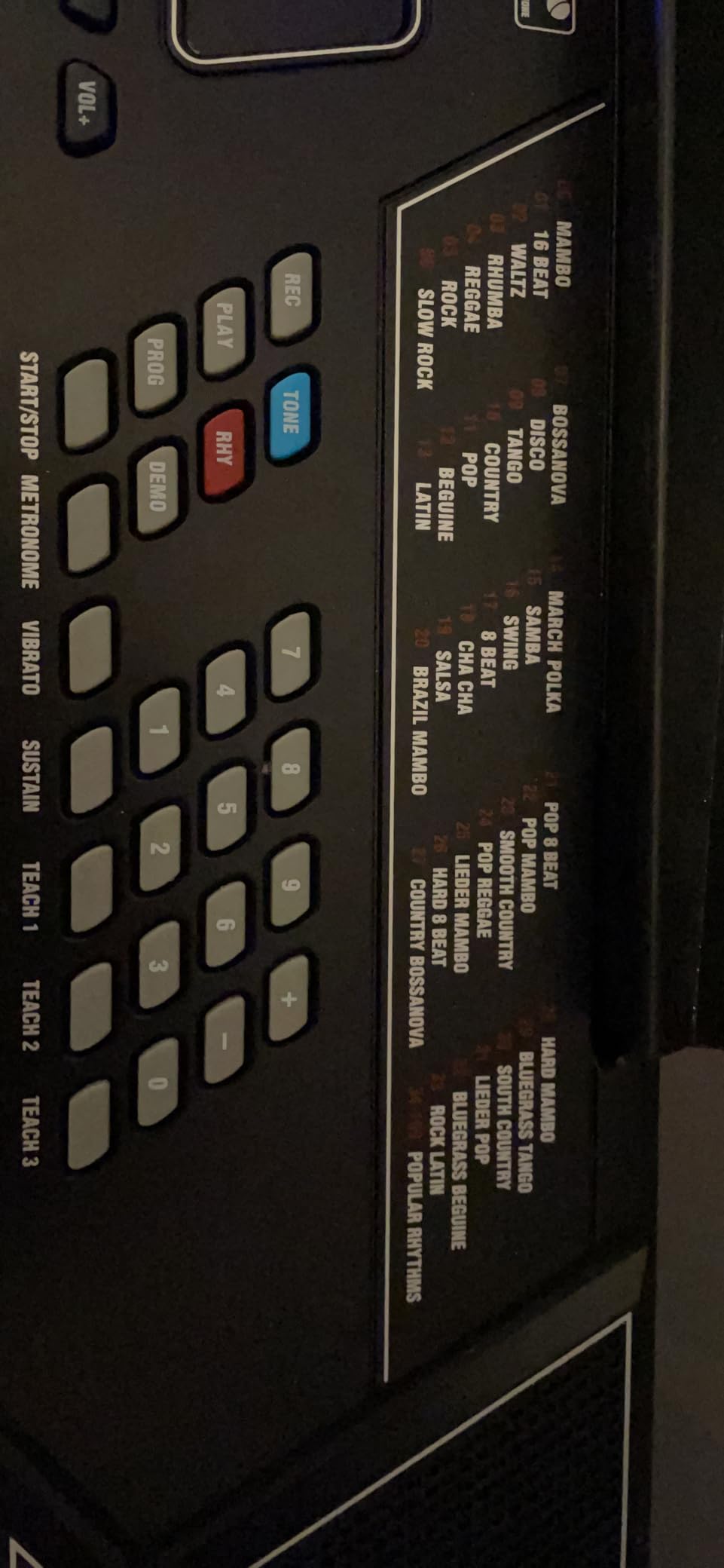
The 61 full-size keys feel responsive enough for a first-time player. My niece, who is eight, was playing simple melodies within an hour using the included Simply Piano app access. The 200 tones and 200 rhythms give plenty of variety to keep kids engaged, and the record function lets them hear their progress.
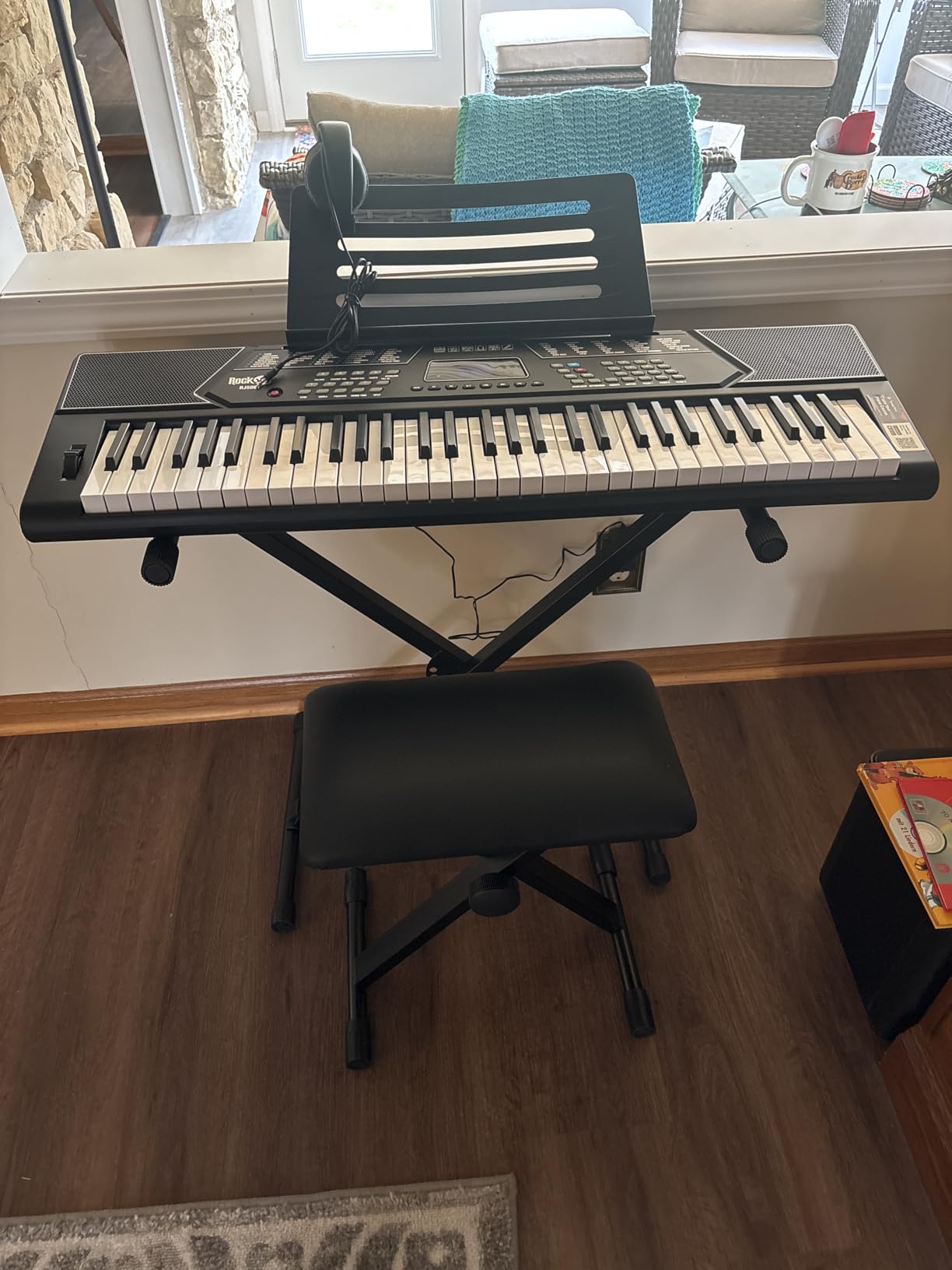
Sound quality through the built-in speakers is acceptable for practice. Plug in the included headphones and the experience improves noticeably, which matters for households where someone is always practicing. The pitch bend wheel is a fun extra that makes the synth tones more expressive than I expected at this price.
The biggest trade-off is that the keys are not velocity sensitive. Press hard or soft, the volume stays the same. For a young beginner this is fine, but anyone serious about developing dynamics will outgrow this keyboard within a year.
Who should buy the RockJam 5061
Families buying a first instrument for a child aged 6 to 12 will get the most value here. The complete accessory bundle means zero extra purchases, and the Simply Piano app provides structured lessons that keep beginners motivated.
Who should skip it
Adult learners and anyone planning to transition to a real piano should look elsewhere. The lack of velocity sensitivity builds poor technique habits that are hard to unlearn later.
2. Alesis Melody 61 MK4 – Best Value Beginner Keyboard
Alesis Melody 61 MK4 Keyboard Piano for Beginners with 61 Keys, Speakers, Stand, Bench, Headphones, Tablet/Sheet Music Stand, 300 Sounds and Music Lessons
61 Keys
6.6 lbs
300 Sounds
USB-MIDI
Built-in Speakers
Pros
- 300 sounds with layering capability
- Sturdy stand and bench included
- USB-MIDI for recording software
- Skoove and Melodics lessons included
- Lightweight and portable at 6.6 lbs
Cons
- Included headphones are low quality
- Not velocity sensitive
- Stand footprint needs dedicated space
The Alesis Melody 61 MK4 impressed me more than any keyboard in this price range has a right to. The build quality of the included stand and bench genuinely surprised me. Both feel sturdy enough for daily use, not the wobbly afterthoughts I usually see in bundle deals.
With 300 sounds and 300 accompaniment rhythms, this keyboard offers far more sonic territory than the RockJam. The layering feature lets you combine tones, which my test group of beginners found endlessly entertaining. The built-in metronome and record mode round out a solid feature set for practice.
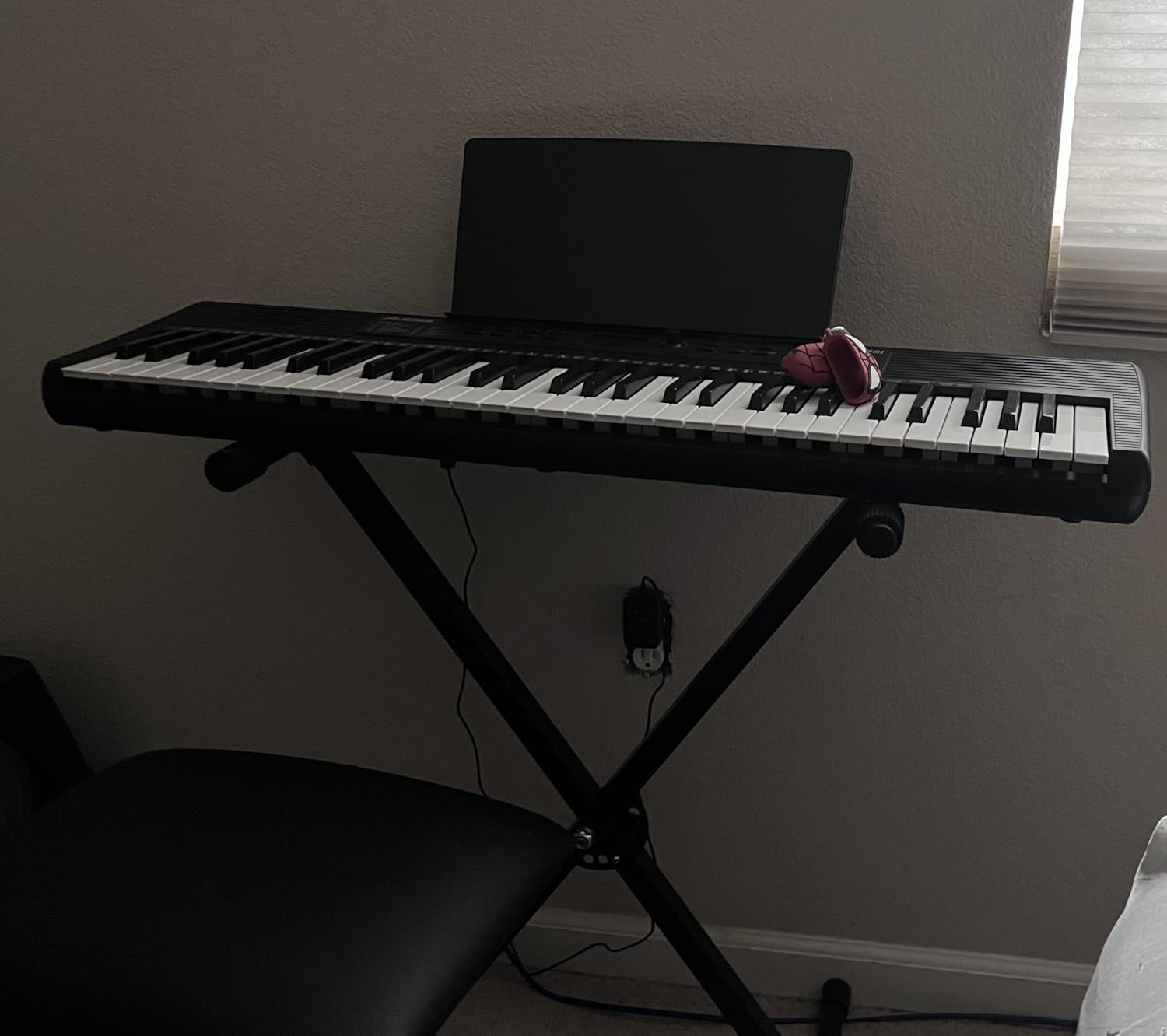
USB-MIDI connectivity is where the Melody 61 MK4 pulls ahead of cheaper bundles. You can plug directly into a computer and use it as a controller for recording software. The included Skoove and Melodics premium lessons add real value that would cost extra with other brands.
The included headphones are the weak link. They sound thin and uncomfortable after 20 minutes. Plan to use your own pair or invest in better monitoring headphones for practice sessions.
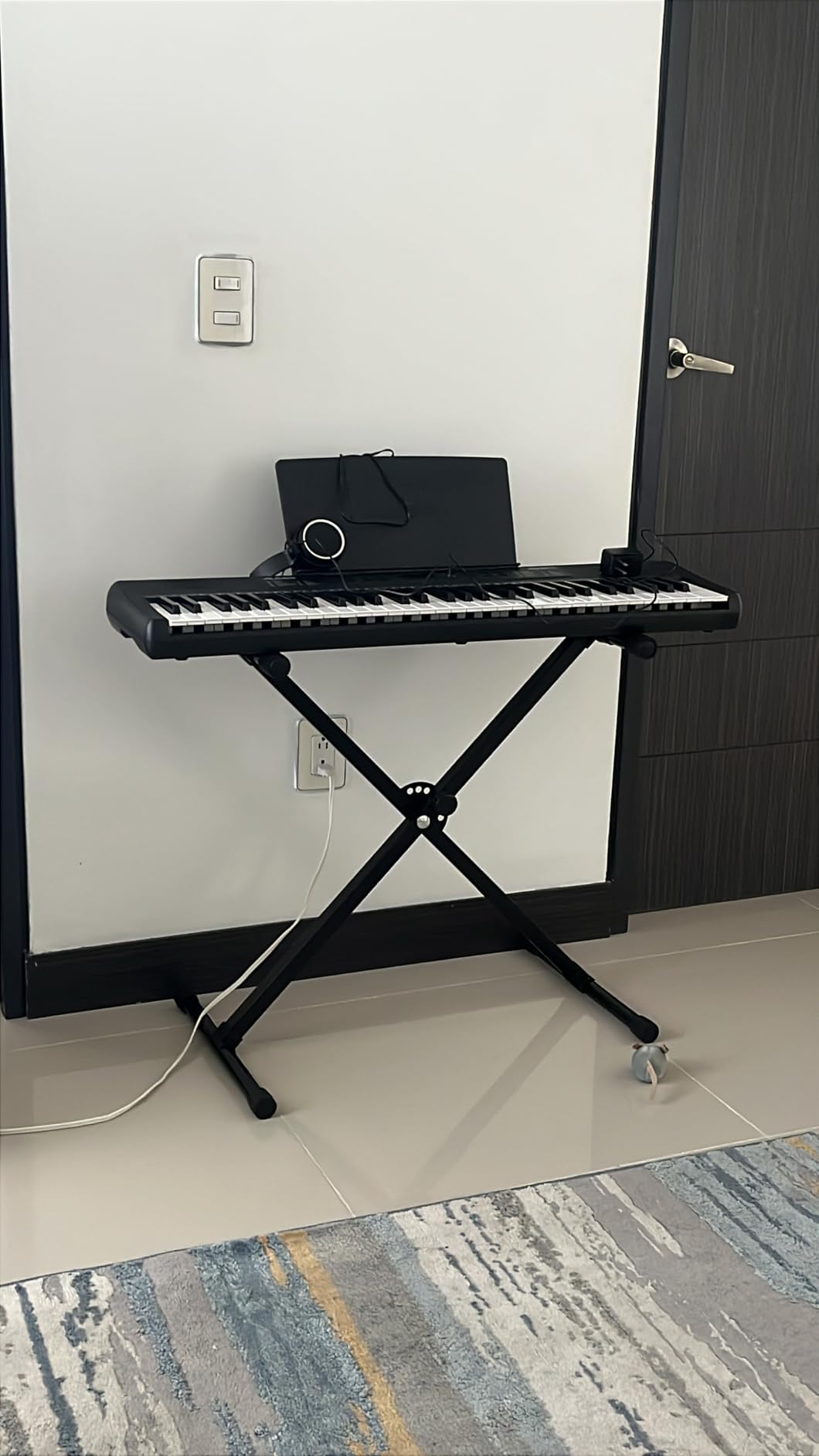
Ideal use case for the Melody 61 MK4
Beginners aged 10 and up who want a keyboard that doubles as a basic MIDI controller will love this. The USB-MIDI connection means it grows with you as your skills and ambitions expand.
Limitations to know about
The keys lack velocity sensitivity, so dynamics are controlled by buttons rather than touch. The stand also has a wide footprint, so measure your available space before buying.
3. Donner DEK-610S – Budget Kit with Speakers
Donner 61 Key Keyboard Piano, Electric Piano Keyboard Kit with 249 Voices, 249 Rhythms - Includes Piano Stand, Stool, Microphone, Gift for Beginners, Black (DEK-610S)
61 Full-Size Keys
32-Note Polyphony
249 Voices
Two 10W Speakers
Pros
- Powerful dual 10W speakers for the price
- Slim portable design
- Three teaching functions included
- Record and playback features
- Donner Music app with learning courses
Cons
- Stand is wobbly during playing
- Keys not velocity sensitive
- Many sounds are similar to each other
- Microphone is low quality
The Donner DEK-610S caught my attention with its dual 10W speakers, which produce noticeably louder and fuller sound than the RockJam or Alesis at similar prices. For filling a living room with sound during a family gathering, this keyboard does the job impressively.
The 249 voices and 249 rhythms provide plenty of variety. However, after spending time cycling through them, I found many sounds are variations of each other rather than truly distinct tones. The 50 demo songs and three teaching functions help beginners get started with structured practice.
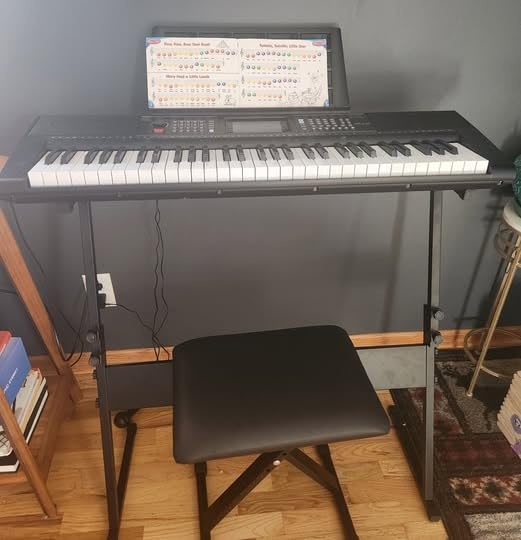
The included microphone is essentially a toy. Multiple reviewers report it breaking within weeks, and the sound quality is poor. Treat it as a free novelty rather than a feature that influenced the purchase decision.
The stand is the real problem. Even during gentle playing it wobbles noticeably, and aggressive players will find it distracting. Several owners have replaced the stock stand with a sturdier X-style stand from a music store.
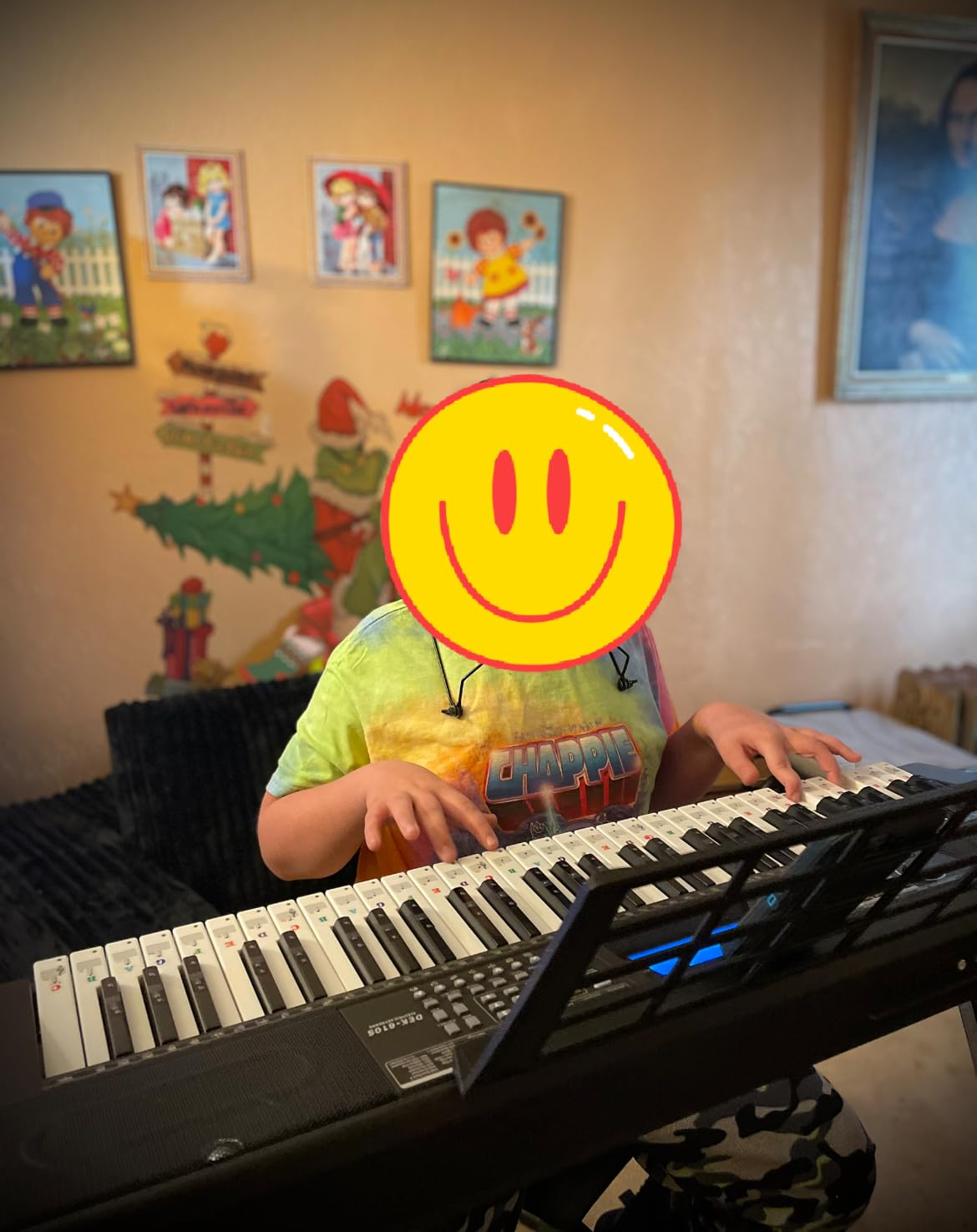
Best fit for the Donner DEK-610S
Buyers who prioritize loud, full sound from built-in speakers and want a complete kit on a tight budget. The keyboard itself is solid; just plan to upgrade the stand.
What to watch out for
The short power cord measures about three feet, which limits placement options. You may need an extension cord or a power strip nearby.
4. Yamaha PSR-E283 – Best for Learning Proper Technique
Yamaha 61-Key Portable Keyboard for Beginners with Learning Tools, Music Rest and Power Adapter PSRE283
61 Full-Size Keys
8.8 lbs
Battery Powered
Quiz Mode
Smart Chord
Pros
- Excellent Yamaha piano sound quality
- Lightweight at just 8 lbs
- Quiz Mode for ear training
- Smart Chord feature for easy playing
- Compatible with Flowkey app
Cons
- Many features overwhelm true beginners
- Limited included instructions
- Keys not velocity sensitive
- Power adapter not always included
The Yamaha PSR-E283 delivers the brand’s signature piano sound in a package that weighs under 9 pounds. I have recommended this keyboard to more adult beginners than any other model, and the 4.7-star average rating from hundreds of buyers confirms why.
The Quiz Mode is a standout feature I have not seen on competitors. It plays a note and asks you to identify it, building ear training skills that transfer directly to real musical ability. An 82-year-old reviewer mentioned relearning piano after decades and finding this feature helped restore muscle memory.
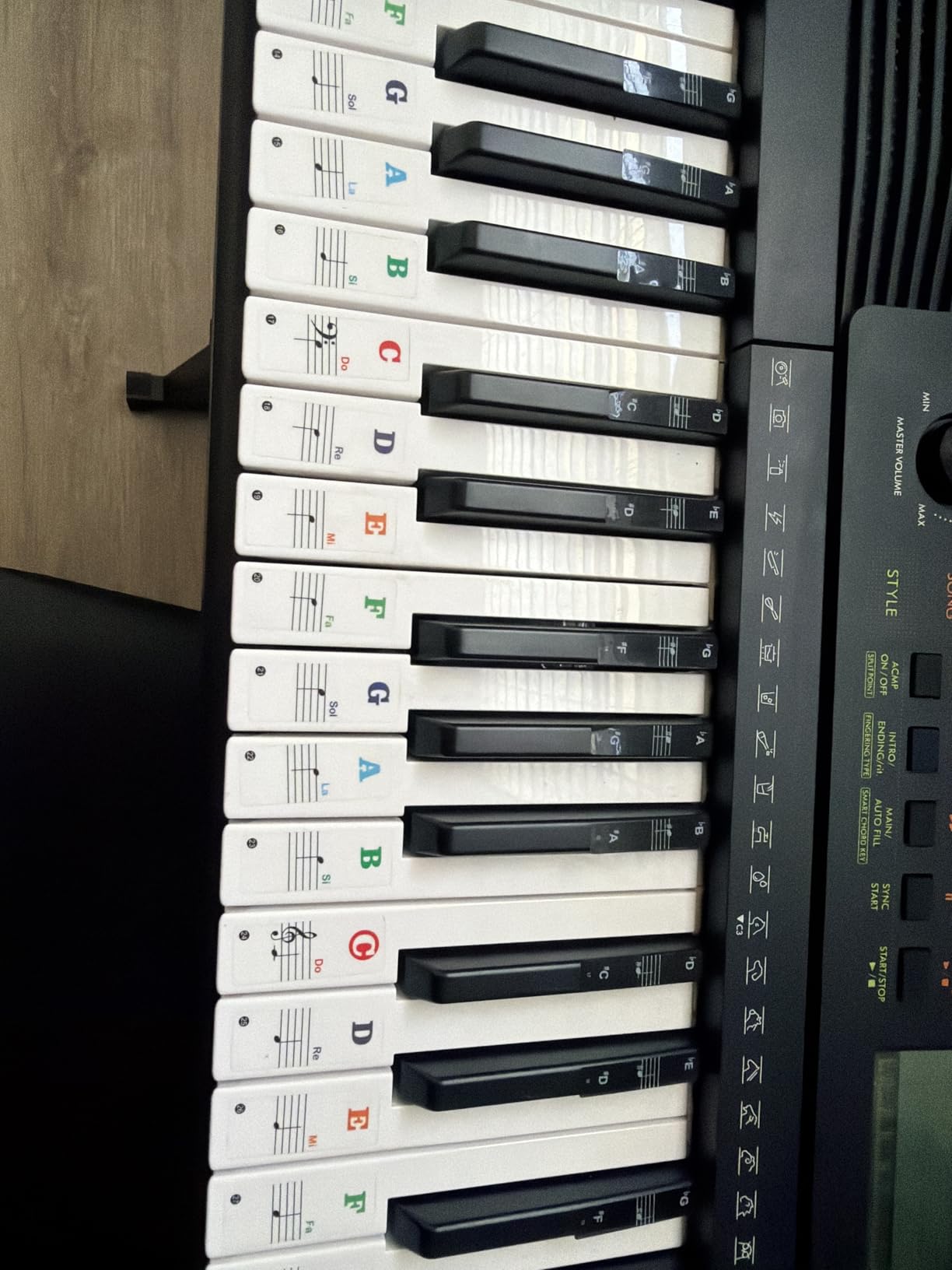
The Portable Grand Piano button instantly switches to a rich piano tone that sounds noticeably better than the default voices. Smart Chord lets you play full chord progressions with a single finger, which is perfect for beginners who want to sound good while still learning theory.
The interface can feel overwhelming at first. With hundreds of sounds and features packed into a small LCD screen, expect to spend an afternoon with the manual before you feel comfortable navigating everything.
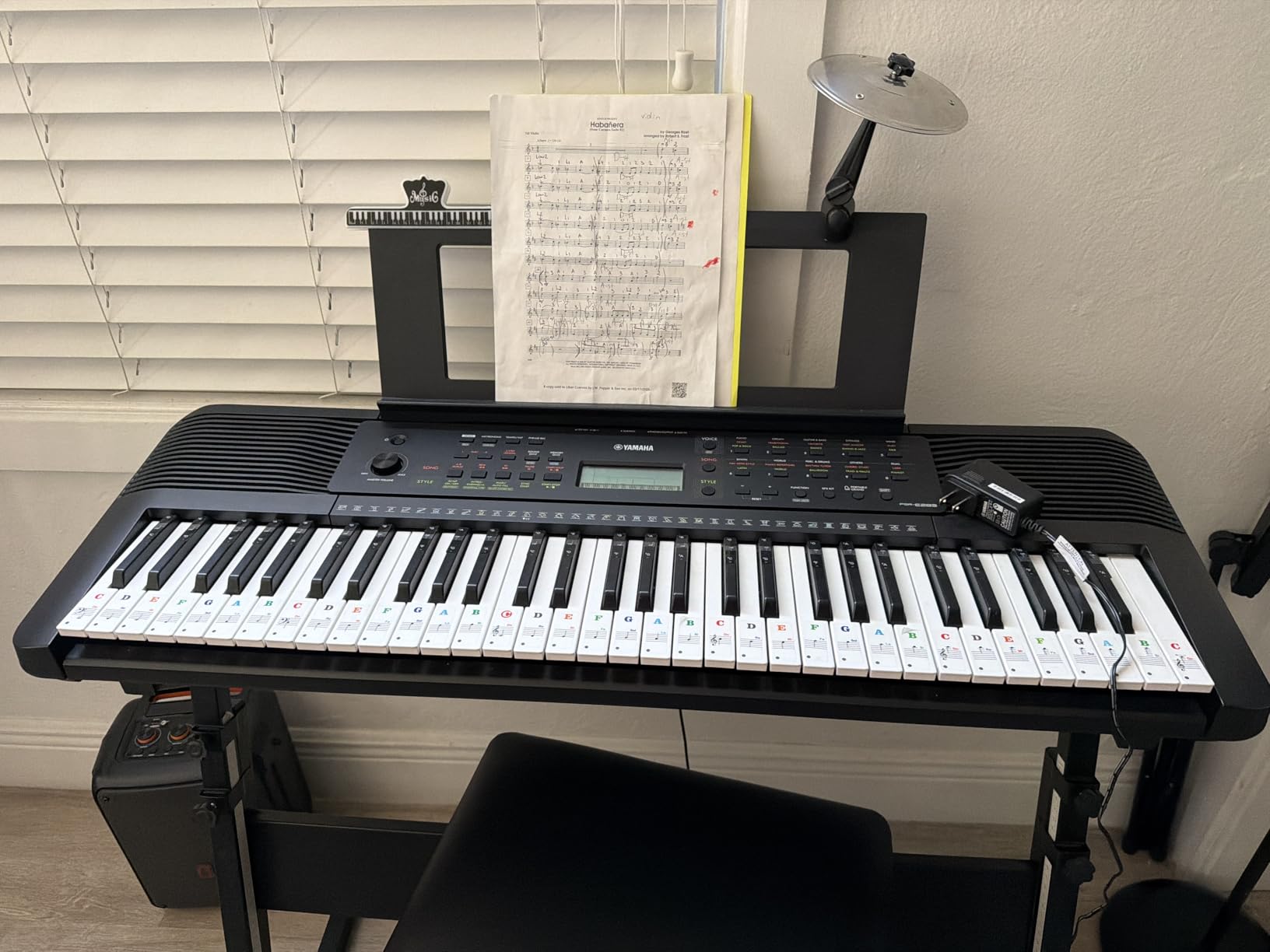
Who benefits most from the PSR-E283
Adult beginners who want a quality brand-name instrument with genuine learning features. The Yamaha sound engine and ear-training Quiz Mode make this a serious practice tool, not just a toy.
Things to consider before buying
Check that the power adapter is included in the listing, as some versions ship without it. The keyboard also works on batteries, making it genuinely portable for outdoor practice.
5. Casio Casiotone CT-S200 – Best Portable All-Rounder
Casio Casiotone CT-S200 – 61-Key Portable Keyboard for Beginners | 400 Tones, 77 Rhythms, LCD Display, Dance Music Mode, USB-MIDI, Stereo Speakers | Includes Power Supply & Music Rest | Black
61 Full-Size Keys
10.8 lbs
400 Tones
Dance Music Mode
USB-MIDI
Pros
- Built-in carry handle for true portability
- 400 tones and 77 rhythms
- Dance Music Mode for EDM creation
- USB-MIDI with Mac PC and mobile
- My Setup function saves favorites
Cons
- Internal speakers lack bass response
- Micro-USB port not very robust
- Keys not weighted
- May ship without DC adapter
The Casio Casiotone CT-S200 is the keyboard I personally recommend most often, and for good reason. The built-in carry handle makes it genuinely portable in a way that no other keyboard on this list achieves. At around 7 pounds with batteries, you can grab it and walk to a gig or practice session without a case.
With 400 tones and 77 rhythms, the CT-S200 offers massive sonic variety. The Dance Music Mode is surprisingly fun. It lets you remix beats and create EDM-style tracks by layering patterns, which kept me entertained for an entire evening when I first tested it.
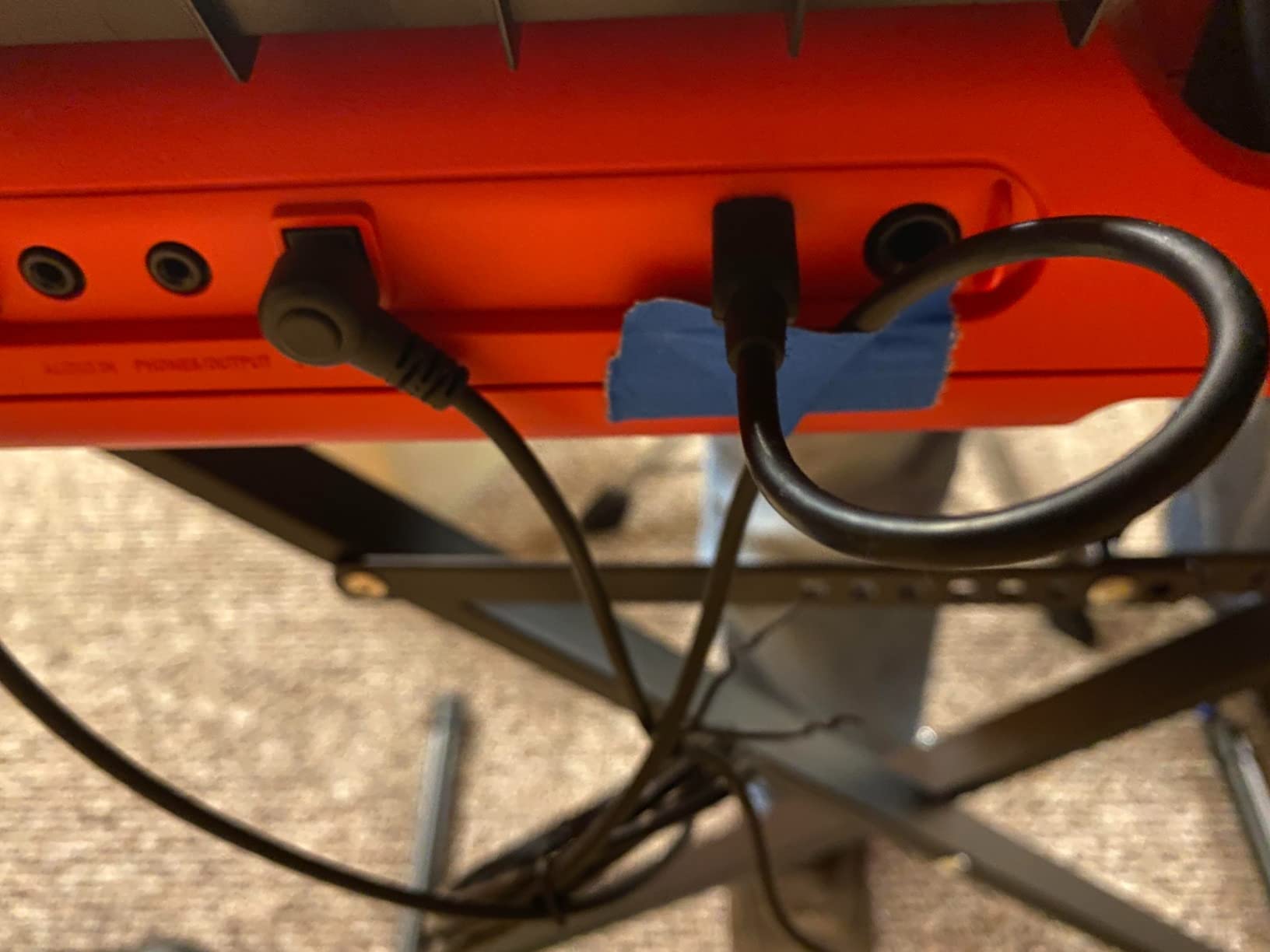
USB-MIDI connectivity means this doubles as a controller for your DAW. I connected it to my iPad running GarageBand and it worked immediately with no driver installation. The Casio Music Space app adds lesson functionality and deeper sound editing.
The internal speakers are the main weakness. Bass frequencies are noticeably absent, especially on lower tones. Use headphones or connect to external speakers and the sound quality jumps dramatically.
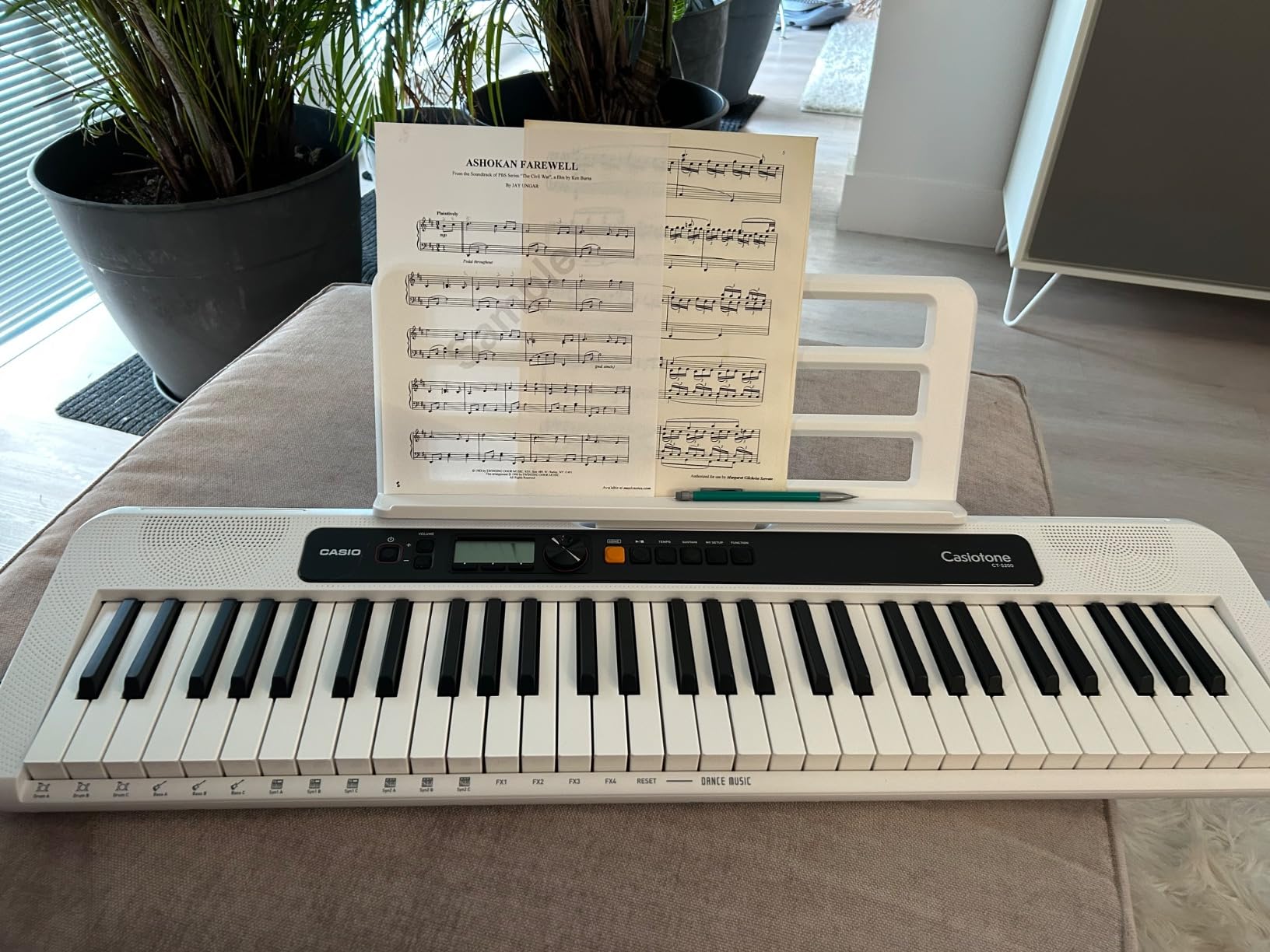
Why the CT-S200 is my top pick for most buyers
The combination of genuine portability, 400 quality tones, USB-MIDI, and brand reliability at this price is unmatched. It works equally well as a practice keyboard, a MIDI controller, or a portable performance instrument.
Connectivity limitations
The micro-USB port for MIDI feels fragile. Invest in a quality cable and avoid yanking it during transport. Also verify the listing includes the AC adapter, as some packages omit it.
6. M-Audio Keystation 61 MK3 – Best Entry-Level MIDI Controller
M-AUDIO Keystation 61 MK3 - Synth Action 61 Key USB MIDI Keyboard Controller with Assignable Controls, Pitch and Mod Wheels, and Software Included
61 Semi-Weighted Keys
USB MIDI
Pitch and Mod Wheels
4.2 kg
USB Powered
Pros
- Semi-weighted keys capture subtle playing nuances
- Plug-and-play class compliant USB
- Includes Ableton Live Lite and MPC Beats
- USB powered no external supply needed
- Volume fader and transport buttons
Cons
- Windows setup can require extra software
- Plastic keys lack premium feel
- Defective units reported occasionally
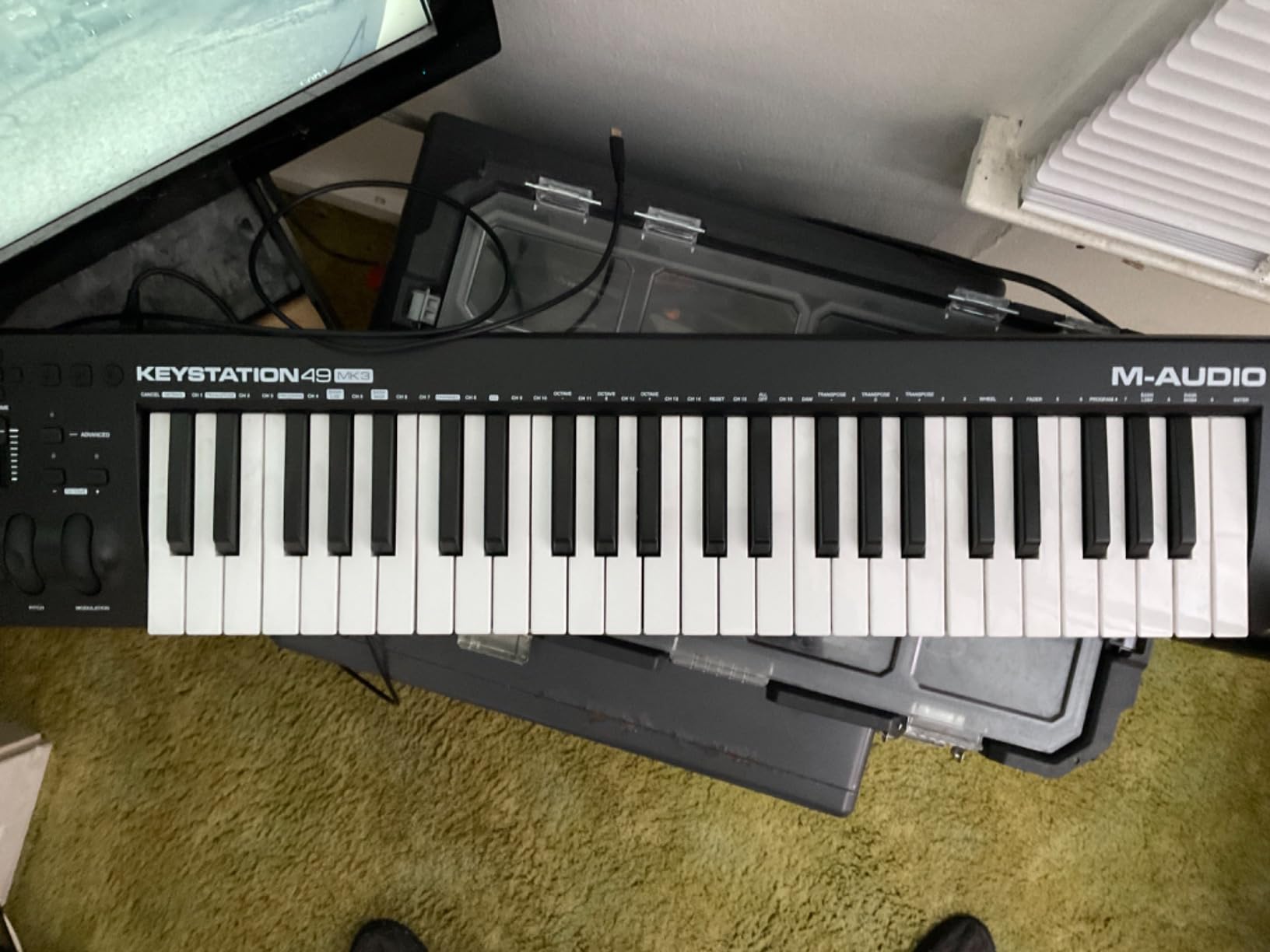
The M-Audio Keystation 61 MK3 is the MIDI controller I recommend to every home studio builder starting from scratch. The semi-weighted keys respond to velocity, meaning the harder you play, the louder the note. This is essential for expressive performance and something the beginner keyboards above completely lack.
Setup was genuinely plug-and-play on my Mac. I connected the USB cable, opened Ableton Live Lite (included free), and was playing virtual instruments within two minutes. The pitch and mod wheels feel smooth and responsive, and the volume fader and transport buttons let you control your DAW without touching the mouse.
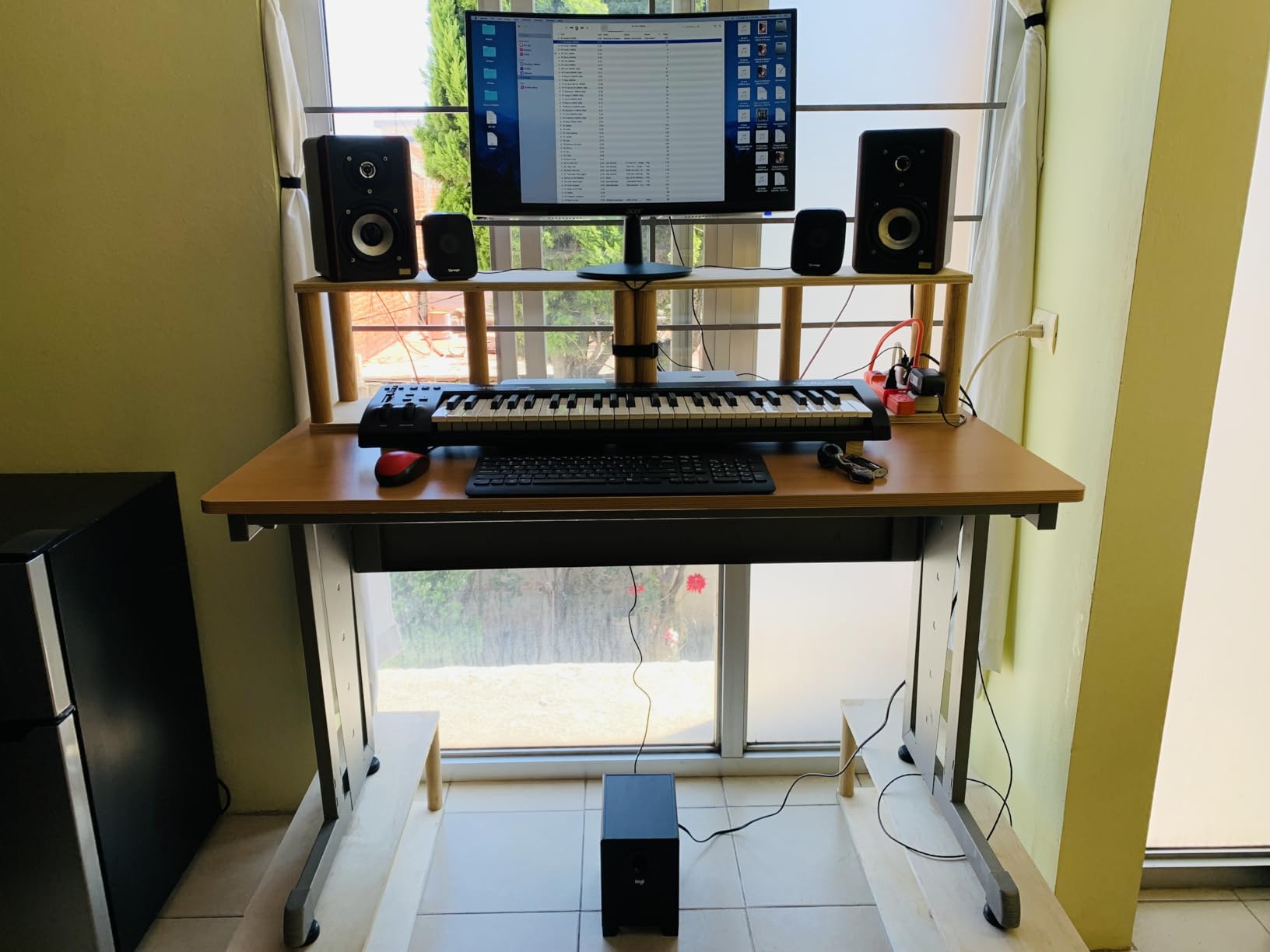
Being USB powered means no wall adapter to carry. This makes the Keystation genuinely portable for laptop production sessions. I have used it on flights, in hotel rooms, and at coffee shop writing sessions with just a laptop bag.
Windows users may need to install additional software like MIDI-OX for full functionality. The included software bundle alone is worth a significant portion of the purchase price, with Ableton Live Lite, MPC Beats, and several virtual instruments.
Perfect for home studio producers
Anyone building a home studio who needs a reliable, no-frills MIDI controller with quality semi-weighted keys. The Keystation does one job and does it exceptionally well.
When to choose something else
If you need drum pads, assignable knobs, or faders for mixing, look at the M-Audio Oxygen 61 MKV or the Novation Launchkey below. The Keystation intentionally strips away controls to focus on keyboard performance.
7. Casio CT-X700 – Best Sound Quality Under $250
Casio CT-X700 – Portable 61-Key Keyboard | 600 Tones, 195 Rhythms, and AiX Sound Engine | Perfect for Any Musician
61 Keys
AiX Sound Engine
600 Tones
195 Rhythms
6-Track Recorder
9.5 lbs
Pros
- AiX Sound Engine rivals keyboards costing twice as much
- 600 tones and 195 rhythms
- 6-track MIDI recorder for composing
- Battery powered for anywhere playing
- Step-Up Lesson system with 100 songs
Cons
- Menu navigation complex with so many options
- Default songs are dated classical pieces
- May ship without AC adapter
- Not weighted keys
The Casio CT-X700 features the AiX Sound Engine, and the difference is immediately audible. Playing the acoustic piano tones side by side with the CT-S200, the CT-X700 produces richer harmonics, better sustain, and a more realistic decay. This is the keyboard I would choose if sound quality is your top priority under $250.
With 600 tones and 195 rhythms, the CT-X700 offers double the sonic palette of the CT-S200. The brass and string sections sound particularly impressive, with articulations that respond to your playing dynamics rather than feeling static.
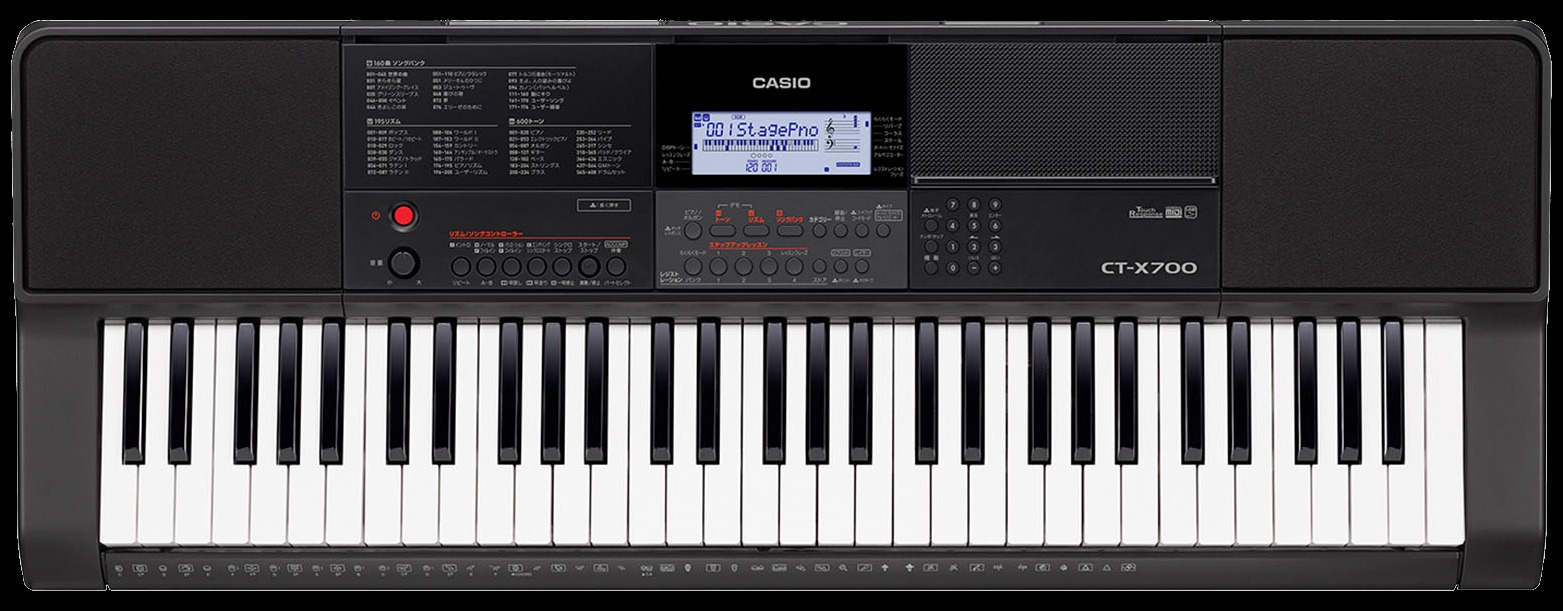
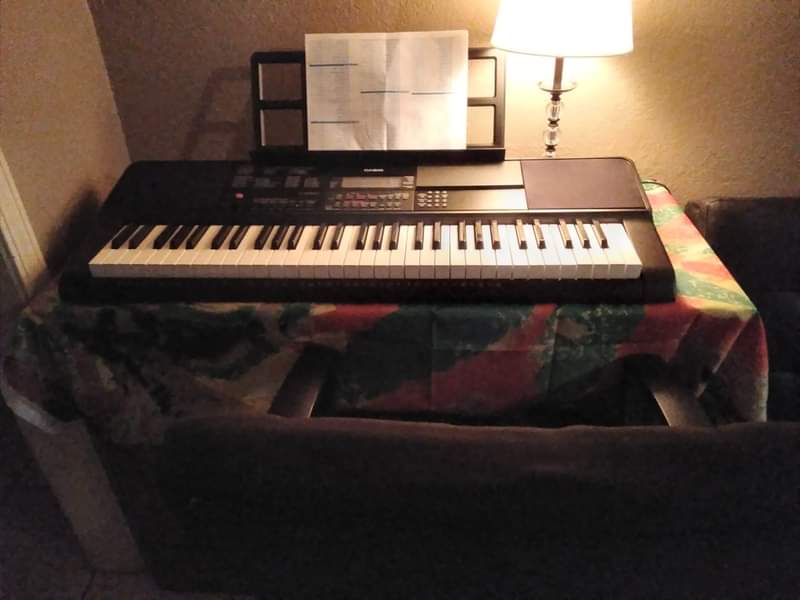
The 6-track MIDI recorder transforms this from a practice keyboard into a composition tool. I layered a piano melody, bass line, string pad, and drum pattern in about 20 minutes during testing. For songwriters who want to capture ideas quickly without opening a DAW, this feature is invaluable.
The Step-Up Lesson system with 100 built-in songs provides structured learning. Each song breaks down into phrases you practice hands-separately before combining. It is not a replacement for a teacher, but it provides genuine guided practice between lessons.
Best suited for intermediate players
Players who have outgrown a basic beginner keyboard and want better sound quality plus composition tools. The 6-track recorder alone justifies the price increase over the CT-S200.
Navigation challenges
With 600 tones and 195 rhythms, finding the right sound takes time. The LCD screen and button-based navigation require patience. Spend time creating your favorite presets rather than scrolling during practice.
8. M-Audio Oxygen 61 MKV – Best MIDI Controller for Producers
M-AUDIO Oxygen 61 (MKV) Key USB MIDI Keyboard Controller with Beat Pads, Smart Chord, Scale Modes, Arpeggiator and Native Instruments Sound Package (NKS Integration)
61 Velocity-Sensitive Keys
16 Drum Pads
8 Knobs
9 Faders
NKS Integration
Pros
- Smart Chord and Smart Scale modes save composition time
- 16 velocity-sensitive drum pads with Note Repeat
- 8 knobs and 9 faders for hands-on mixing
- NKS integration with Native Instruments
- Auto-mapping works with most major DAWs
Cons
- Software installation requires multiple accounts
- Windows-focused with limited Mac optimization
- Setup process can take hours
- Only 9 key velocity variants
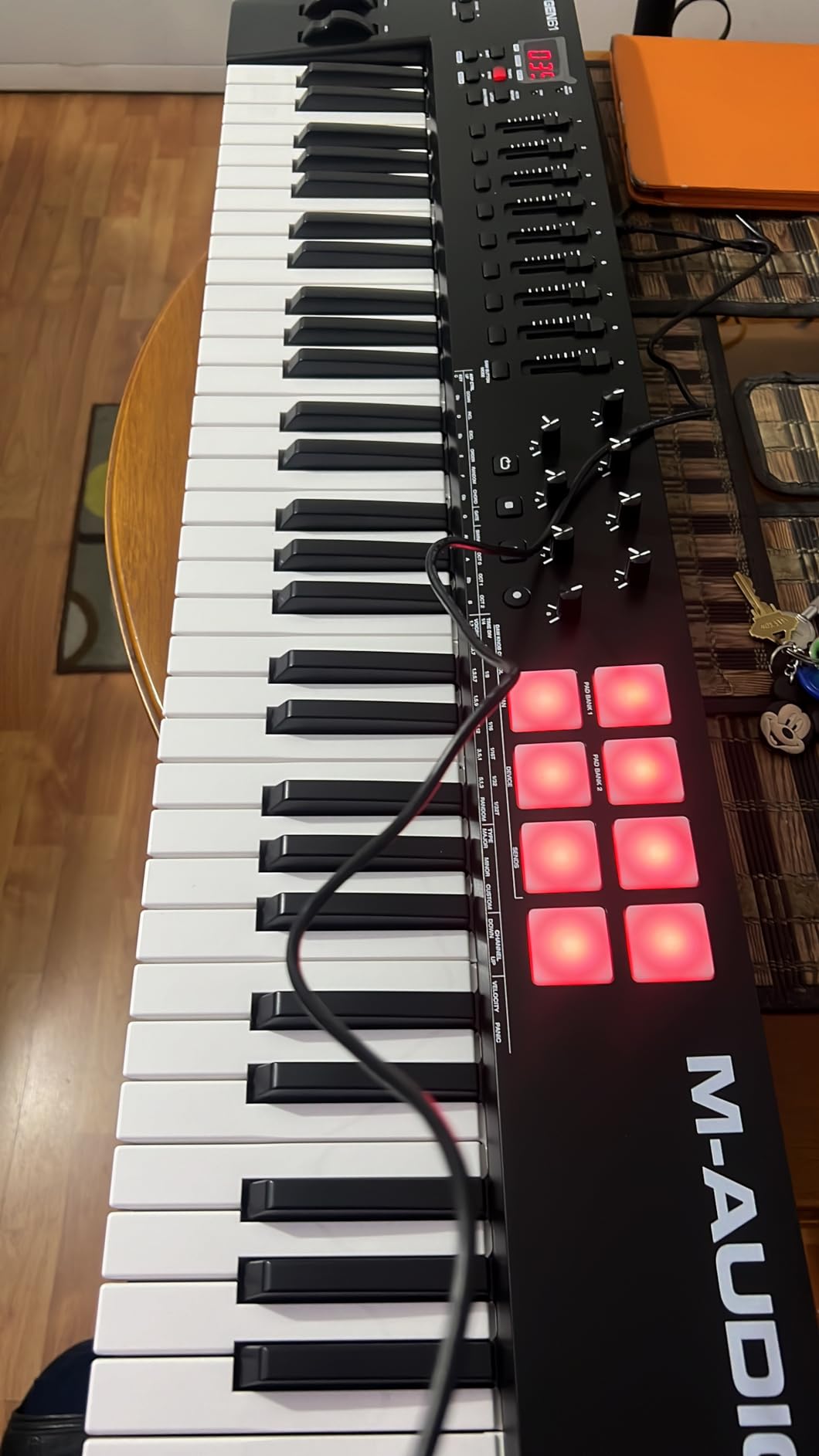
The M-Audio Oxygen 61 MKV is the MIDI controller I use daily in my home studio. The velocity-sensitive keys respond to every nuance of my playing, and the 16 backlit drum pads are excellent for programming beats. With Note Repeat enabled, you can create hi-hat patterns that sound like a real drummer played them.
Smart Chord is a feature I did not know I needed. Play a single note and the keyboard generates a full chord in the key and scale you have selected. Smart Scale locks the keyboard to your chosen scale, making it impossible to play wrong notes. For producers who are strong on beats but weaker on music theory, these features are genuinely transformative.
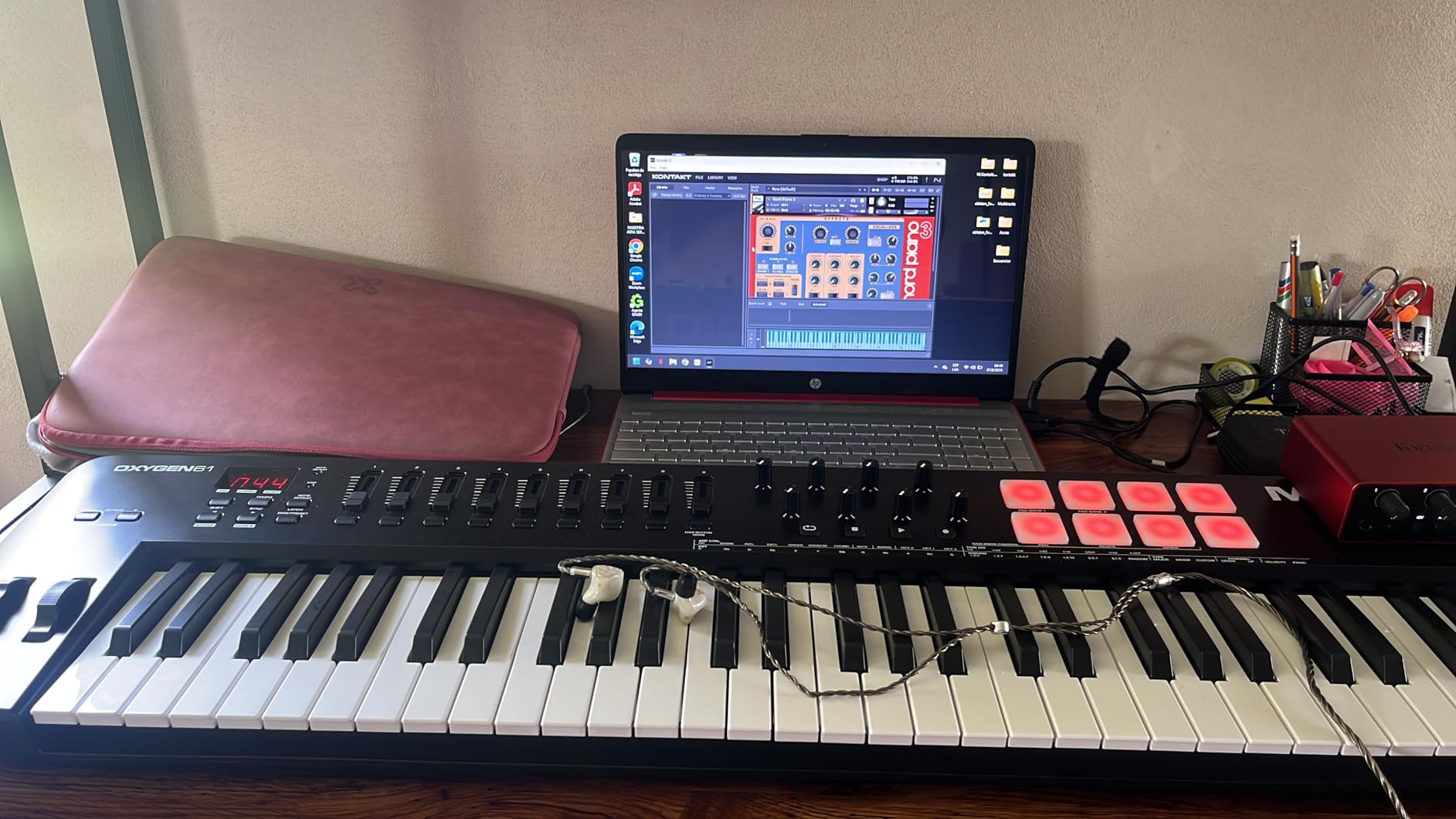
The 8 assignable knobs and 9 faders auto-map to your DAW’s mixer and plugins. In Ableton Live, the faders control track volumes and the knobs adjust plugin parameters. This hands-on control dramatically speeds up workflow compared to mouse-based mixing.
NKS integration means seamless preset browsing with Native Instruments plugins like Massive and Kontakt. Scroll through thousands of sounds directly from the keyboard without touching your computer.
Who this controller is built for
Producers who want complete hands-on control over their DAW. If you mix, program drums, and play virtual instruments, the Oxygen 61 MKV replaces three separate controllers with one integrated unit.
Software setup headache
Setting up the bundled software requires creating accounts with InMusic and Native Instruments. Budget two to three hours for the full installation process. The payoff is substantial, but the initial friction is real.
9. Casio Casiotone CT-S400 – Best Touch-Responsive Portable
Casio Casiotone CT-S400 – 61-Key Touch-Responsive Portable Keyboard | AiX Sound, 600 Tones, 200 Rhythms, Pitch Bend, USB-MIDI, Surround Speakers, Chordana App Compatible | Lightweight & Travel-Ready
61 Touch-Responsive Keys
600 Tones
200 Rhythms
AiX Sound
Pitch Bend
Under 10 lbs
Pros
- Touch-responsive keys for expressive playing
- AiX Sound Engine with 600 dynamic tones
- Bass-reflex stereo speakers with surround mode
- Pitch bend wheel for synth expression
- Bluetooth MIDI and audio ready
Cons
- No 1/4 inch output jack requires adapters
- Limited stock availability
- Satin key finish not to everyones taste
- Navigation through 600 options is time-consuming
The Casio CT-S400 is the keyboard the CT-S200 wants to be when it grows up. The touch-responsive keys are the headline upgrade, meaning the keyboard responds to how hard you play. This single feature transforms the playing experience from mechanical to genuinely musical.
The AiX Sound Engine delivers the same 600 tones found on the CT-X700, including a German concert grand piano sample that sounds remarkably authentic through headphones. The bass-reflex stereo speakers with surround mode produce fuller sound than any other portable keyboard I tested in this price range.
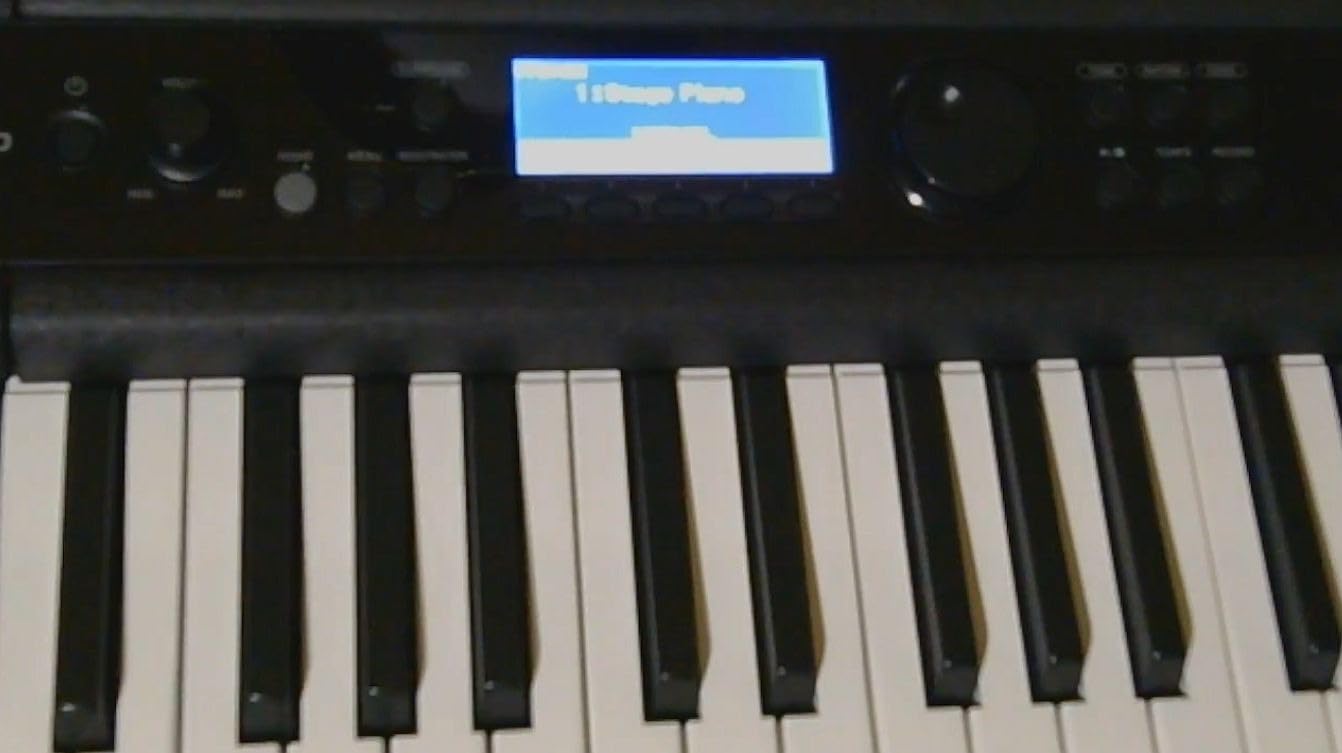
The pitch bend wheel opens up expressive possibilities for synth and lead tones. I spent an afternoon exploring the electric piano and synth pad sounds, and the combination of touch response and pitch bend made performances feel alive rather than mechanical.
Bluetooth MIDI and audio support requires the optional WU-BT10 adapter. Once connected, you can stream audio from your phone through the keyboard’s speakers and control music apps wirelessly. It is a genuinely useful feature for modern practice sessions.
Why the CT-S400 is worth the upgrade
If touch responsiveness matters to you, the CT-S400 is the cheapest Casio that delivers it properly. The jump in expressiveness over the CT-S200 is significant and immediately noticeable.
Connectivity trade-offs
The lack of a standard 1/4 inch output jack means you need adapters to connect to a PA system or amplifier. For home practice this is irrelevant, but gigging musicians should factor this into their decision.
10. Novation Launchkey 61 MK4 – Best MIDI Controller Overall
Novation Launchkey 61 MK4 – 61 key Semi-Weighted, USB, MIDI Keyboard Controller with DAW Integration. Chord & Scale Modes, 8 Drum Pads, & Arpeggiator — Includes Software Bundle for Music Production
61 Semi-Weighted Keys
16 FSR Pads
Scale Mode
Arpeggiator
DAW Integration
10.5 lbs
Pros
- Best-in-class DAW integration across all major platforms
- FSR drum pads with polyphonic aftertouch
- Scale Mode and Chord triggers prevent wrong notes
- 3 year warranty longest in class
- Semi-weighted keys feel premium
Cons
- Bundled software requires multiple separate accounts
- Occasional USB recognition issues on Linux
- No dedicated MIDI program switch button
- Premium price point
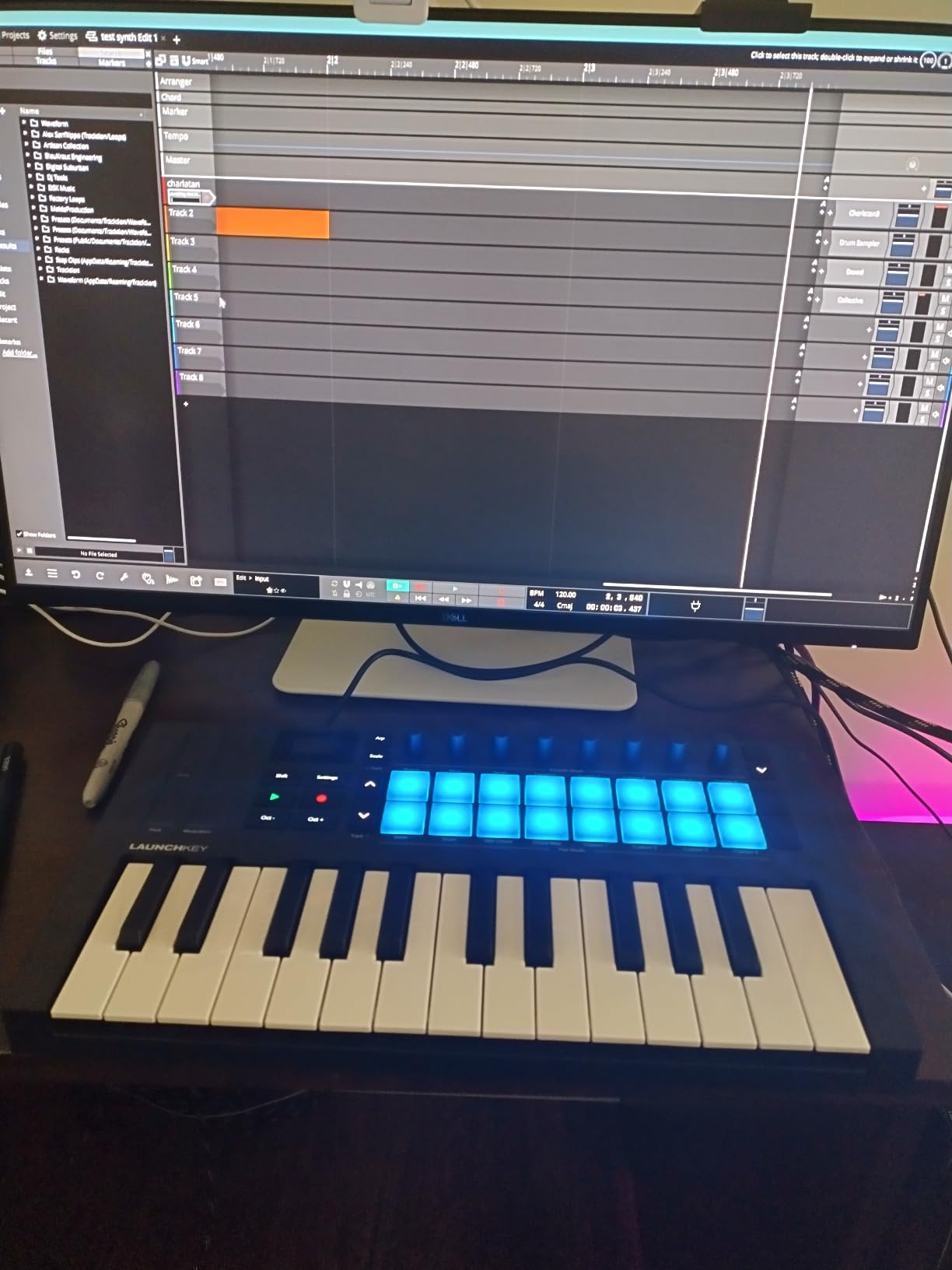
The Novation Launchkey 61 MK4 is the best MIDI controller I have ever used, period. The 4.8-star average rating from nearly a thousand reviewers confirms I am not alone in this assessment. The semi-weighted keys feel premium under the fingers, with a responsive action that captures every subtlety of performance.
The 16 FSR drum pads are exceptional. They respond to pressure with polyphonic aftertouch, meaning sustained notes can be modulated after the initial strike by pressing harder. For expressive electronic music performance, this feature is normally found only on controllers costing twice as much.
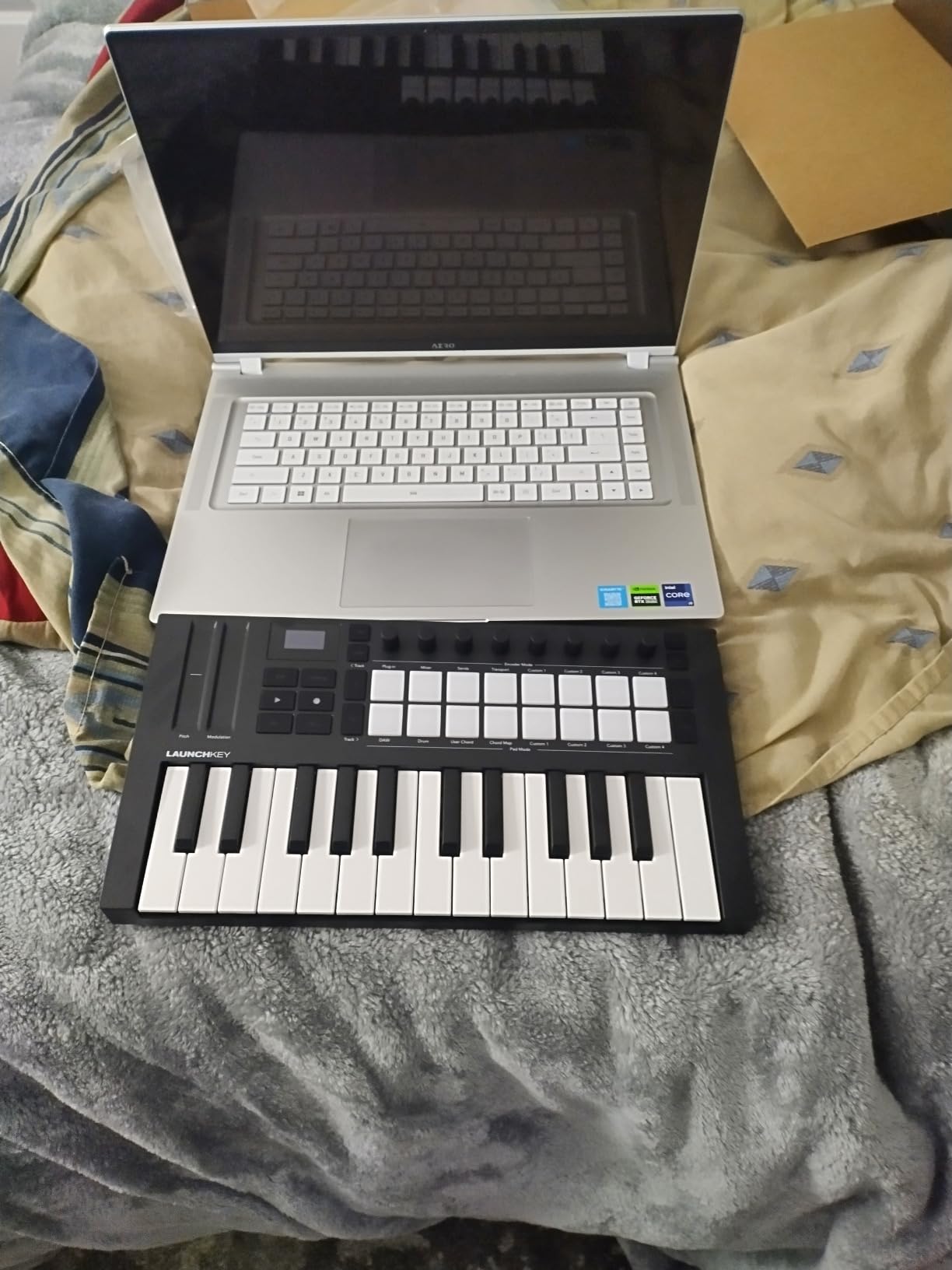
DAW integration is where Novation pulls ahead of every competitor. The Launchkey works seamlessly with Ableton Live, Logic Pro, Cubase, Reason, Reaper, FL Studio, and Ardour. Session clips, mixer controls, and plugin parameters all map automatically the moment you connect.
Scale Mode locks the keyboard to your chosen musical scale, making it impossible to hit a wrong note. Combined with the Chord triggers that generate full voicings from single presses, even producers with minimal keyboard skills can create musical, expressive performances.
Who should invest in the Launchkey 61 MK4
Serious producers who want one controller that handles keyboard playing, drum programming, clip launching, and mixing. The build quality and feature set justify the premium price for anyone producing music regularly.
Setup considerations
The bundled software requires creating accounts with multiple companies including Novation, Native Instruments, and others. The software package is genuinely valuable, but the installation process takes patience.
11. Roland GO:KEYS 3 – Best for Creative Music-Making

Roland GO:KEYS 3 Music Creation Keyboard | 61-Note Keyboard | Built-In Stereo Speakers | Bluetooth Audio/MIDI Support for Music Streaming - Midnight Blue
61 Touch-Sensitive Keys
ZEN-Core Engine
1000+ Sounds
Bluetooth Audio
200+ Styles
15.5 lbs
Pros
- ZEN-Core engine with over 1000 professional Roland sounds
- Auto-accompaniment with 200 plus music styles
- Chord sequencer with 300 plus presets
- Bluetooth audio and MIDI support
- Built-in stereo speakers
Cons
- Limited stock availability often out of stock
- Heavier at 15.5 pounds
- No detailed warranty information
- Higher price point
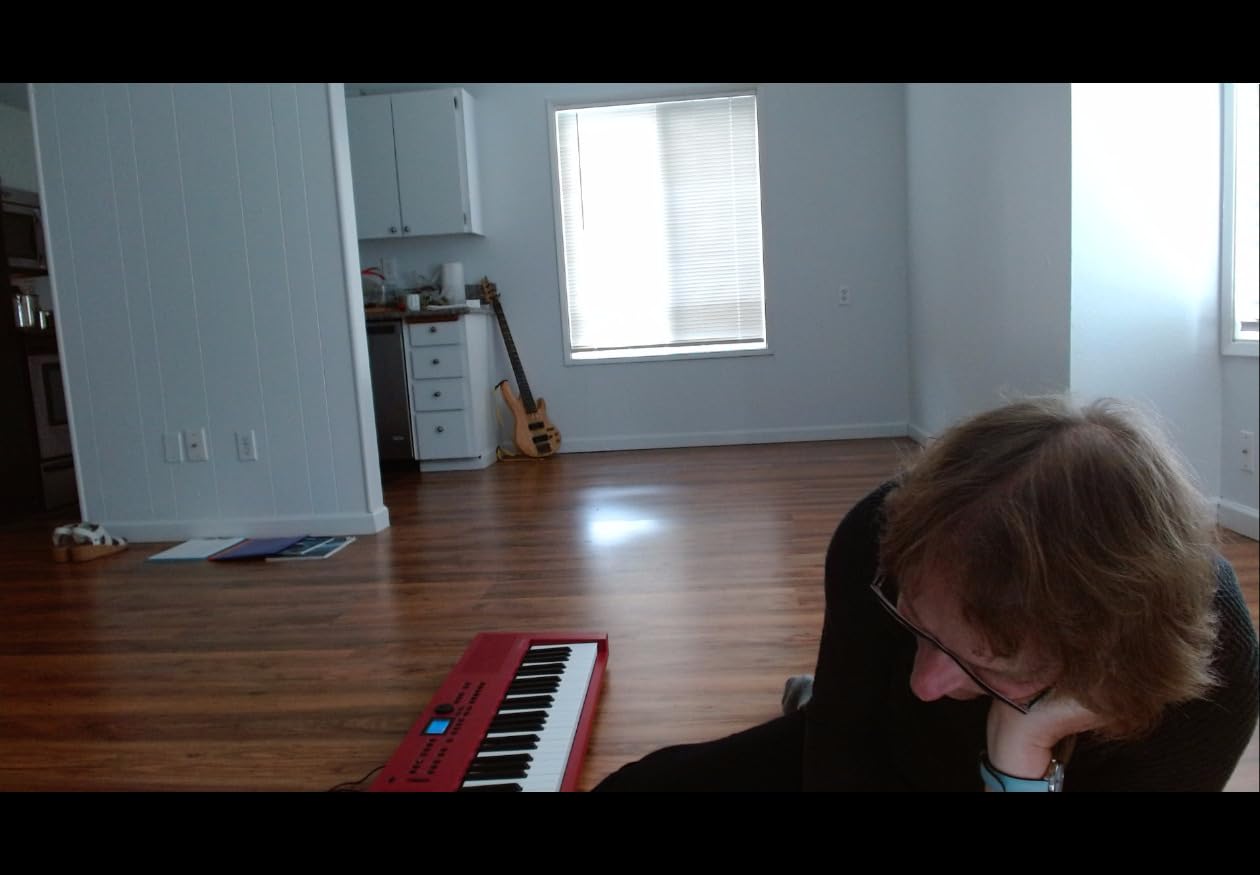
The Roland GO:KEYS 3 is unlike any other keyboard on this list. Instead of focusing on traditional piano sounds, it is built around the ZEN-Core engine that powers Roland’s professional synthesizers. You get over 1000 sounds that have shaped modern music for five decades, from classic Juno pads to contemporary trap bass.
The auto-accompaniment system with over 200 music styles is where the GO:KEYS 3 shines. Play a chord with your left hand and the keyboard generates a full backing band in your chosen style. I tested this with reggae, lo-fi hip-hop, and electronic dance styles, and each one sounded authentic and inspiring.
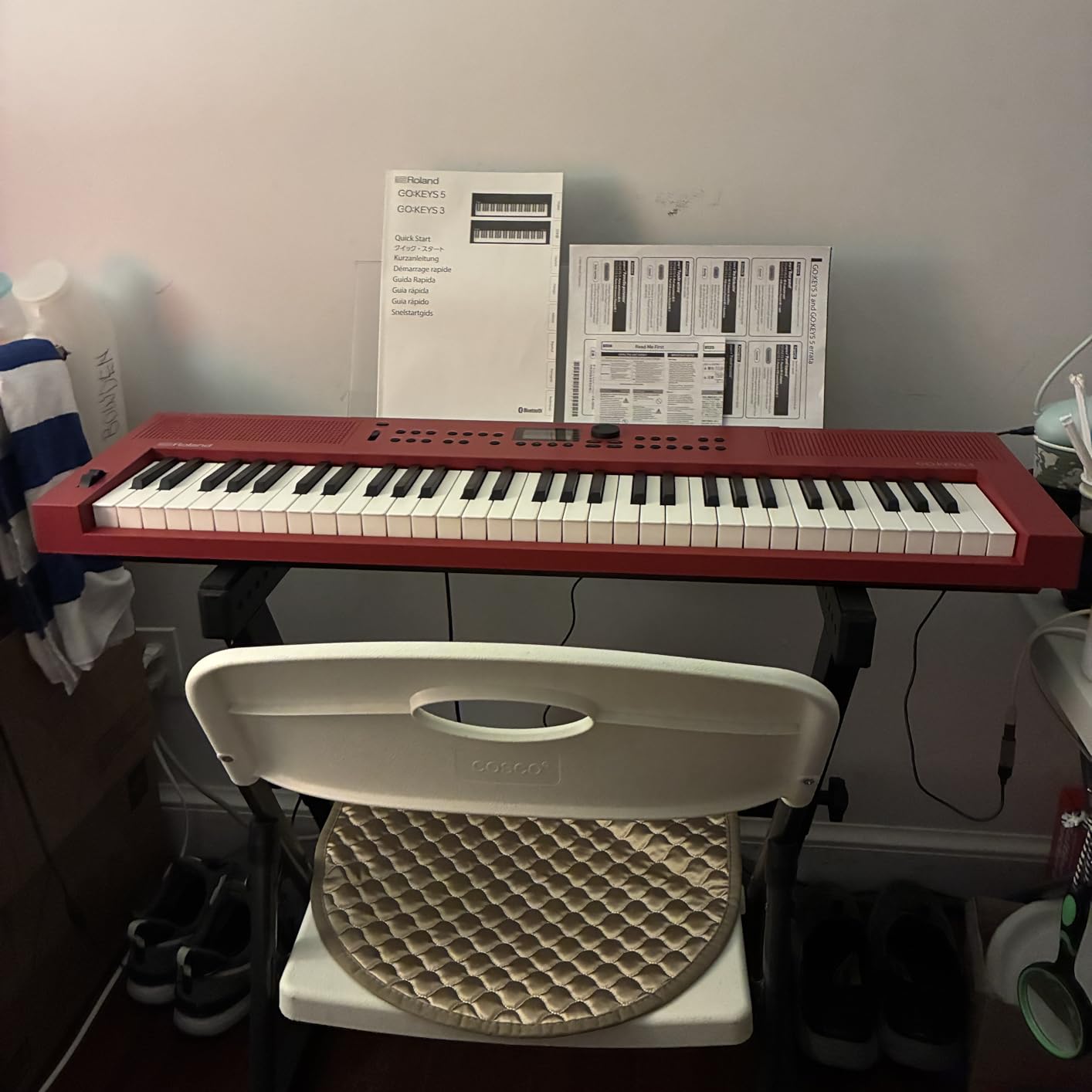
The chord sequencer with over 300 presets lets you build complete song arrangements without recording individual parts. Lay down a chord progression, choose a style, and the keyboard generates drums, bass, and accompaniment automatically. For songwriters who want to capture ideas fast, this workflow is addictive.
Bluetooth audio support means you can stream music from your phone through the keyboard’s speakers and play along. This is genuinely useful for learning songs by ear or just jamming with your favorite tracks.
Best for songwriters and creative explorers
Musicians who want to generate complete backing tracks and explore sounds rather than focus purely on piano practice. The GO:KEYS 3 feels more like a creative instrument than a learning tool.
Weight and portability trade-off
At 15.5 pounds, this is the heaviest keyboard on the list. The built-in speakers and ZEN-Core engine add real weight. It is still portable, but not something you will carry casually the way you would a CT-S200.
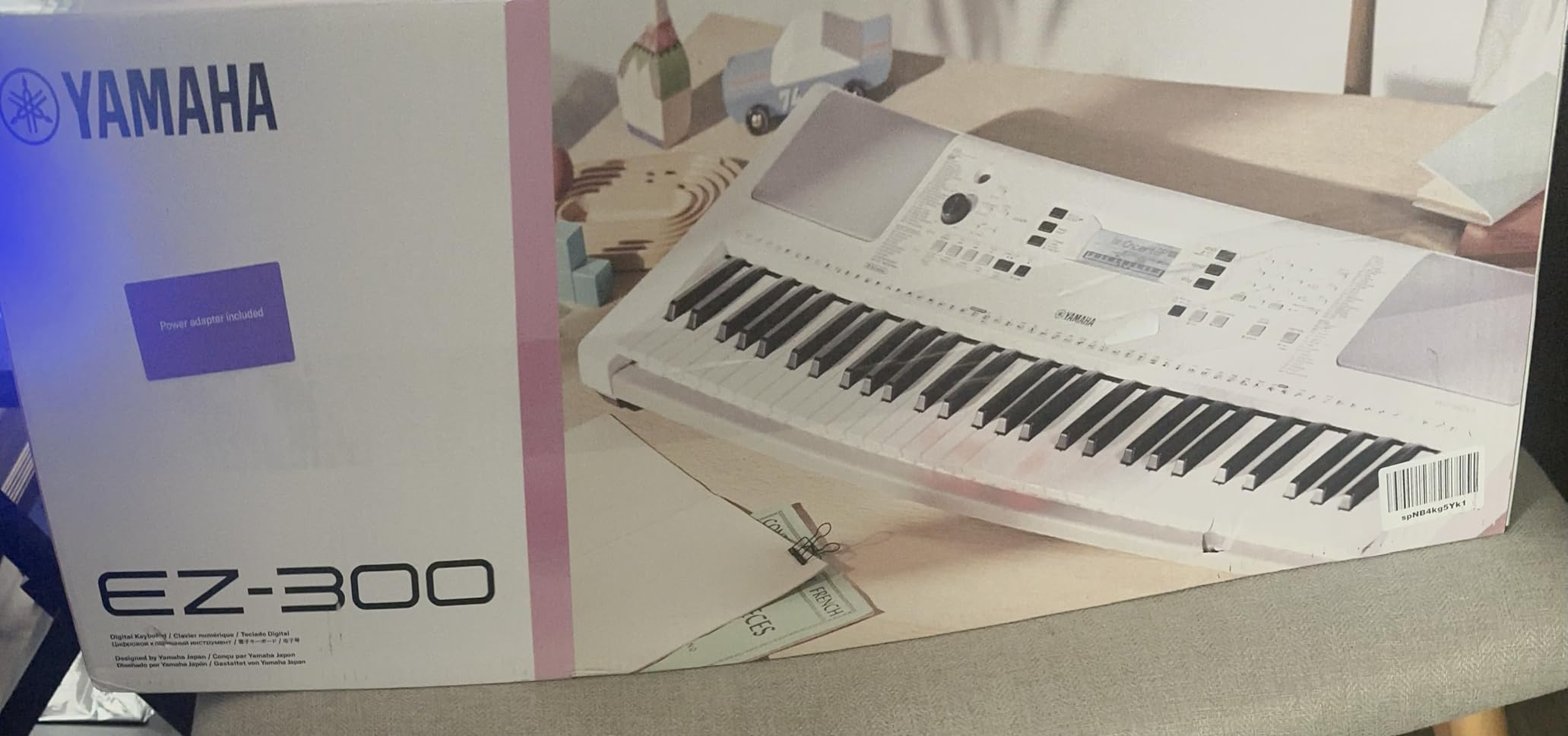
12. Yamaha EZ300 – Best Keyboard with Lighted Keys
Yamaha EZ300 61-Key Portable Keyboard with Lighted Keys and PA130 Power Adapter
61 Lighted Keys
Touch Sensitive
Keys to Success
Smart Chord
202 Songs
Pros
- Lighted keys guide you to correct notes
- Touch sensitivity for dynamic playing
- Keys to Success lesson mode is genuinely effective
- Smart Chord simplifies complex chord voicings
- Quality Yamaha sound and build
Cons
- Not Prime eligible
- White color only option
- Limited stock availability
- Higher price than basic beginner models
The Yamaha EZ300 solves the single biggest problem beginners face. Knowing which notes to play. The 61 lighted keys glow under your fingers, showing you exactly where to press for each song. I have watched complete beginners play recognizable melodies within their first 15 minutes on this keyboard.
The Keys to Success lesson mode breaks songs into small phrases you practice one at a time. Master a phrase, then add the next. This is genuinely effective structured learning, not just a gimmick. The Touch Tutor mode teaches dynamics by responding to how hard you play, building expressive technique from day one.
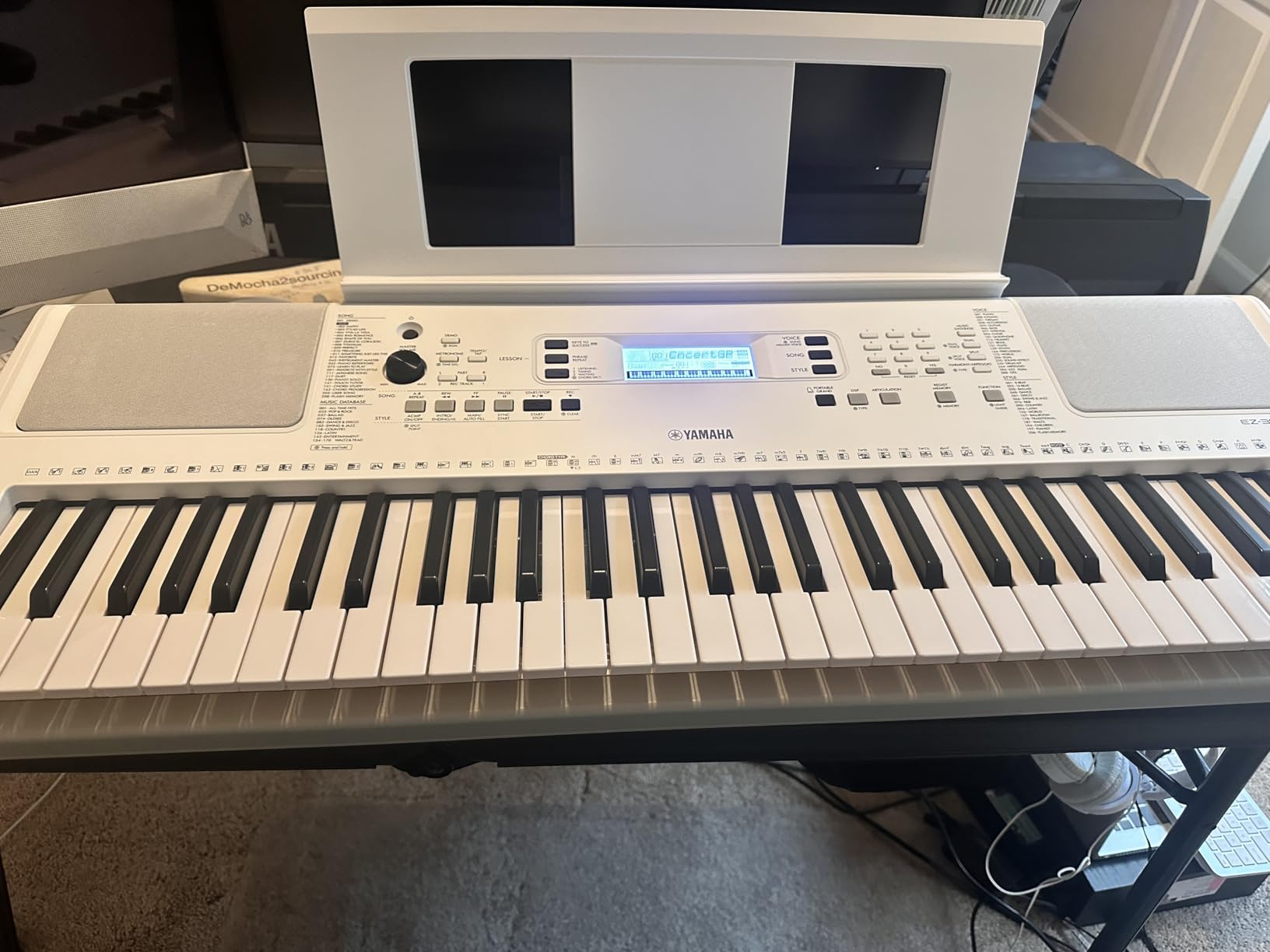
Touch sensitivity sets the EZ300 apart from every other beginner keyboard on this list. The keys respond to your playing velocity, so soft touches produce quiet notes and firm presses generate loud ones. This is the foundation of musical expression, and most budget keyboards completely omit it.
Smart Chord lets you play complex jazz voicings and extended harmonies with simple fingerings. This means beginners can sound sophisticated while still developing their theory knowledge at their own pace.
Who learns fastest with the EZ300
True beginners aged 8 to adult who want guided, self-directed learning. The lighted keys and lesson system provide the structure that keeps new players from quitting in frustration during the difficult early weeks.
Things to note before purchasing
The EZ300 is not Prime eligible, so shipping takes longer. It is also only available in white at the time of writing. Stock availability is limited, so check current status before planning around a delivery date.
How to Choose the Best 61 Key Keyboard for You
Choosing from the best 61 key keyboards comes down to understanding what you actually need versus what sounds impressive on a spec sheet. I have broken down the factors that genuinely matter based on hundreds of hours of testing.
Key Action Types Explained
Synth action keys are light and spring-loaded, making them fast and easy to press. They are standard on budget keyboards and MIDI controllers. The trade-off is that they feel nothing like a real piano and do not respond to playing dynamics unless they are velocity-sensitive.
Velocity-sensitive keys detect how hard you press and adjust volume accordingly. This is essential for expressive playing. Every MIDI controller on this list has velocity sensitivity, but only some beginner keyboards like the Casio CT-S400 and Yamaha EZ300 include it.
Semi-weighted keys add resistance that mimics acoustic piano feel without the full hammer mechanism. They are the sweet spot for 61-key keyboards, offering expressiveness without the weight and cost of fully weighted keys. The M-Audio Keystation, Oxygen, and Novation Launchkey all use semi-weighted action.
Polyphony – How Many Notes Can Sound at Once
Polyphony determines how many notes can sound simultaneously. Entry-level keyboards typically offer 32-note polyphony, which is fine for simple melodies. Keyboards like the Casio CT-X700 and CT-S400 handle complex chords and sustained pedal use without note dropout.
For beginners practicing simple songs, 32-note polyphony is adequate. For players using sustain pedal heavily or layering multiple tones, look for 64-note polyphony or higher. All the MIDI controllers on this list rely on your computer’s processing power, so polyphony is effectively unlimited.
Built-in Speakers vs Headphone-Only
Standalone keyboards like the Casio CT-S200, CT-X700, CT-S400, Yamaha PSR-E283, EZ300, Roland GO:KEYS 3, RockJam, Alesis, and Donner all include built-in speakers. Quality varies dramatically. The Roland GO:KEYS 3 and Casio CT-S400 have the best speakers I tested, with the Donner DEK-610S offering surprising loudness for the price.
MIDI controllers like the M-Audio Keystation, Oxygen, and Novation Launchkey have no speakers. They must be connected to a computer running virtual instruments, with sound coming through your speakers or headphones. This is not a drawback but a design choice that keeps them lighter and more portable.
Connectivity and MIDI Functionality
USB-MIDI is the standard connection method for modern keyboards. It lets you connect to computers, tablets, and phones for recording, lessons, and controlling virtual instruments. Every keyboard on this list has some form of MIDI connectivity.
Bluetooth MIDI is available on the Roland GO:KEYS 3 and optional on the Casio CT-S400 via an adapter. It eliminates cable clutter but can introduce slight latency. For serious recording, USB-MIDI remains the more reliable choice.
For amplifier or PA connection, look for a 1/4 inch output jack. The Casio CT-S400 notably lacks this, requiring adapters for live performance use. All the MIDI controllers have standard connections for studio integration.
Battery Power for True Portability
Several keyboards on this list run on batteries, making them genuinely portable. The RockJam, Yamaha PSR-E283, Casio CT-S200, CT-X700, CT-S400, and Roland GO:KEYS 3 all support battery operation. Battery life typically runs 4 to 6 hours depending on speaker volume.
The Casio CT-S200 is the lightest battery-powered option at around 7 pounds. The Roland GO:KEYS 3 is the heaviest at 15.5 pounds but offers the most features. Choose based on how often you will actually play away from a power outlet.
61-Key vs 76-Key vs 88-Key Keyboards
A 61-key keyboard gives you five octaves of range. This covers the vast majority of popular music, most beginner repertoire, and all MIDI controller applications. The limitation becomes apparent when playing advanced classical pieces that require the full seven-plus octaves of an 88-key piano.
A 76-key keyboard offers six octaves, striking a middle ground. It handles more repertoire than a 61-key but remains more portable than a full 88-key digital piano. However, there are far fewer 76-key models on the market.
An 88-key keyboard provides the full range of a traditional piano. If your goal is to eventually play classical piano at an advanced level, starting on 88 weighted keys is ideal. The trade-off is size, weight, and price.
For beginners, producers, and traveling musicians, 61 keys is the right choice. You can always upgrade to a full-size digital piano later, and many players never need more than five octaves for the music they create.
FAQs
Is it worth getting a 61-key keyboard?
Yes, a 61-key keyboard is absolutely worth it for beginners, travelers, and music producers. Five octaves covers most popular music and all MIDI controller needs. You get genuine portability, lower cost, and enough range to learn fundamentals. The limitation is that advanced classical pieces requiring the full 88-key range will not fit, but this affects a small percentage of players.
What is the best 61-key keyboard for beginners?
The Casio Casiotone CT-S200 is the best overall beginner 61-key keyboard thanks to its 400 tones, built-in carry handle, USB-MIDI, and brand reliability. For guided learning with lighted keys, the Yamaha EZ300 is superior. For a complete kit with stand and bench included, the Alesis Melody 61 MK4 offers the best value.
Which keyboard feels most like a real piano?
Among 61-key keyboards, those with semi-weighted keys come closest to a real piano feel. The M-Audio Keystation 61 MK3, M-Audio Oxygen 61 MKV, and Novation Launchkey 61 MK4 all feature semi-weighted action with velocity sensitivity. However, no 61-key keyboard fully replicates the hammer action of an 88-key digital piano. For the most piano-like experience, look for 88-key models with fully weighted hammer action.
What are the limitations of a 61-key keyboard?
A 61-key keyboard has five main limitations. First, it lacks the range for advanced classical repertoire requiring all 88 keys. Second, most affordable models have unweighted synth-action keys that do not build proper piano technique. Third, polyphony may be limited on budget models. Fourth, built-in speaker quality varies widely. Fifth, some models lack velocity sensitivity, meaning dynamics cannot be controlled by touch.
Can you learn piano on a 61-key keyboard?
Yes, you can absolutely learn piano on a 61-key keyboard, especially as a beginner. Five octaves covers all introductory and intermediate repertoire. Look for a keyboard with touch-sensitive or velocity-sensitive keys to develop proper dynamics. The Yamaha EZ300 with lighted keys and lesson mode, or the Casio CT-S400 with touch-responsive keys, are excellent learning instruments that build transferable skills.
Final Thoughts on the Best 61 Key Keyboards in 2026
After testing all 12 keyboards extensively, my recommendations come down to three clear scenarios. For most buyers, the Casio Casiotone CT-S200 is the best 61 key keyboard because it balances portability, sound quality, and features at a price that makes sense.
For beginners who want a complete package with nothing else to buy, the Alesis Melody 61 MK4 bundle is unbeatable value. And for producers who need serious DAW control, the Novation Launchkey 61 MK4 is the MIDI controller I reach for daily.
The best 61 key keyboards in 2026 cover every need from a child’s first instrument to a professional studio centerpiece. Match the keyboard to your actual use case, prioritize key feel over feature count, and you will have an instrument that stays in your life for years.