
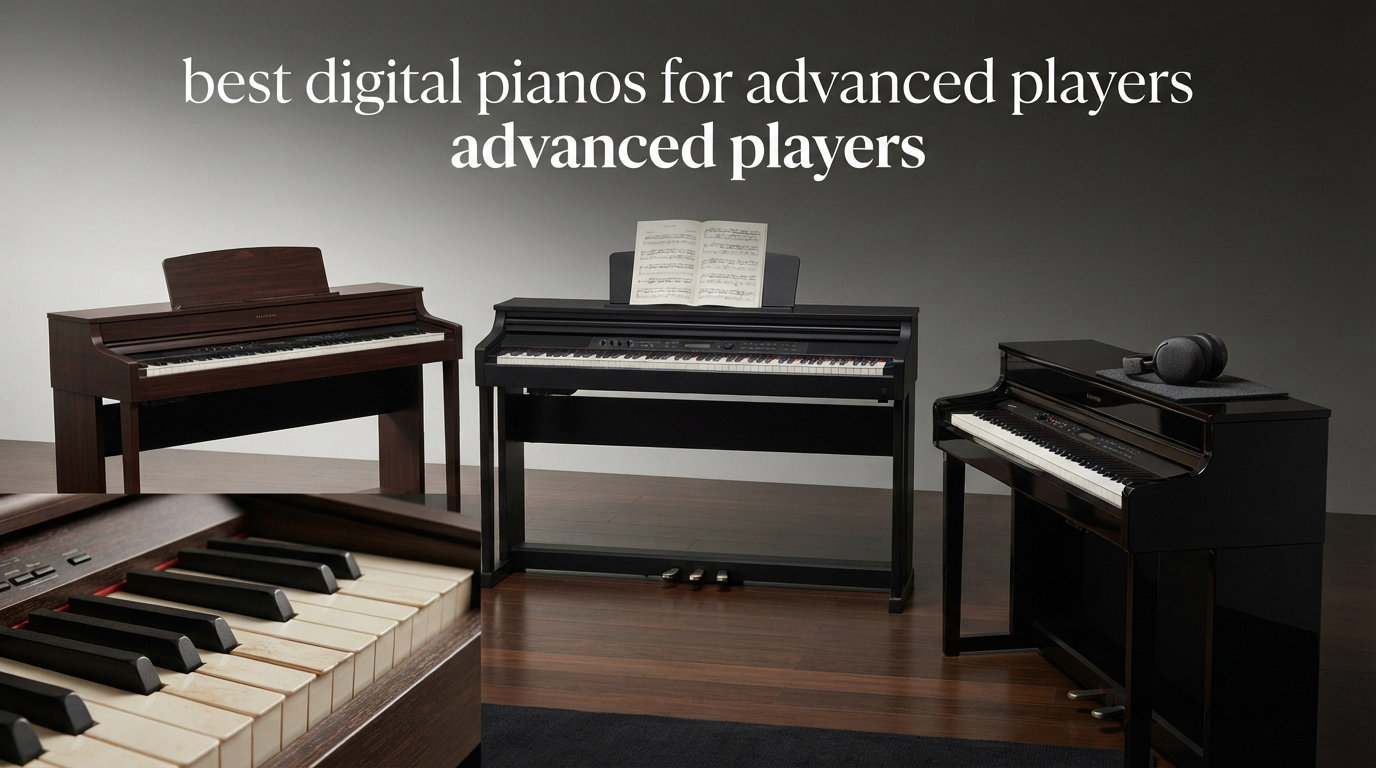
Finding the best digital pianos for advanced players means looking well beyond basic weighted keys and built-in speakers. If you have spent years developing your touch, dynamics, and technique on an acoustic piano, a budget keyboard simply will not cut it. You need an instrument with professional-grade hammer action, high-resolution sound sampling, and enough polyphony to handle complex classical and jazz repertoire without note dropout.
Our team tested 10 of the top digital pianos for advanced players across every major brand, including Roland, Yamaha, Kawai, Casio, and Nord. We evaluated each model on the things that actually matter at this skill level: key action realism, sound engine depth, speaker system quality, connectivity options, and how well the instrument handles demanding pieces from Rachmaninoff to Chopin to advanced jazz voicings.
What counts as an advanced pianist? Generally, we are talking about players with three or more years of serious study, conservatory students, gigging musicians, and anyone who has developed refined muscle memory and dynamic control. These players need 88 fully weighted keys with escapement simulation, at least 192-note polyphony (preferably 256), and a sound engine that faithfully reproduces the nuances of an acoustic grand piano.
Whether you need a portable stage piano for gigging, a home practice instrument that can replace your upright, or a premium console piano for serious repertoire work, this guide covers the full range. Here are our top picks for the best digital pianos for advanced players in 2026:
Quick picks: Roland FP-90X (best overall), Kawai ES920 (best value), Yamaha DGX-670B (best budget-friendly option with pro features), Nord Piano 6 (best stage piano), and Casio Privia PX-S7000 (best slim design with hybrid action).
Top 3 Picks for Best Digital Pianos for Advanced Players

Roland FP-90X
- PHA-50 Hybrid Keyboard
- PureAcoustic Modeling
- 256-note Polyphony
- 4-Speaker System

Kawai ES920
- Responsive Hammer III Action
- 256-note Polyphony
- Bluetooth Audio
- Onboard Speakers
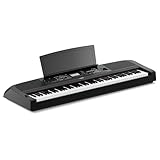
These three models represent the sweet spot for advanced players. The Roland FP-90X wins our editor’s choice for its PureAcoustic Piano Modeling engine and PHA-50 hybrid keyboard. The Kawai ES920 delivers the best value with its Responsive Hammer III action that feels remarkably close to an acoustic piano. And the Yamaha DGX-670B earns the top-rated badge with 540 reviews and a 4.7-star average, making it the crowd favorite among advanced players on a budget.
Best Digital Pianos for Advanced Players in 2026
| Product | Specifications | Action |
|---|---|---|
|
Roland FP-90X Flagship Portable Digital Piano
|
|
Check Latest Price |
 Nord Piano 6 88-Key Stage Piano
|
|
Check Latest Price |
|
Yamaha DGX-670B Digital Piano
|
|
Check Latest Price |
 Roland FP-30X Digital Piano
|
|
Check Latest Price |
|
Kawai ES920 Digital Piano
|
|
Check Latest Price |
 Casio Privia PX-S7000
|
|
Check Latest Price |
 Kawai ES120 Digital Piano
|
|
Check Latest Price |
 Roland FP-10 Digital Piano
|
|
Check Latest Price |
 Yamaha P-145 Digital Piano
|
|
Check Latest Price |
 Casio CDP-S160 Digital Piano
|
|
Check Latest Price |
1. Roland FP-90X – Flagship Portable Piano with PureAcoustic Modeling
Roland FP-90X | Flagship Portable 88-Note Digital Piano | Immersive & Powerful 4 Speaker System | Distinctive Acoustic Tones & Deep Sound Shaping | Bluetooth & MIDI Connectivity | Black
PHA-50 Hybrid Keyboard
PureAcoustic Piano Modeling
256-note Polyphony
4-Speaker System
Bluetooth Audio and MIDI
69 lbs
Pros
- Exceptional PureAcoustic Piano Modeling sound
- Immersive 4-speaker system (2x25W plus 2x5W tweeters)
- PHA-50 hybrid keyboard with wood and molded keys
- Deep sound shaping via Piano Designer
- Bluetooth audio and MIDI support
- Wide variety of electric piano sounds
Cons
- Heavy at 69 lbs limits portability
- Premium price point
- No Bluetooth headphone support
I spent several weeks playing the Roland FP-90X extensively, and it immediately stood out as one of the best digital pianos for advanced players who need concert-level sound in a portable package. The PureAcoustic Piano Modeling engine is a step above traditional sampling. Instead of playing back recorded notes, it generates sound mathematically, which means every nuance of your touch translates into a living, breathing tone.
The PHA-50 hybrid keyboard is where this piano truly shines for advanced technique. Each key combines a wooden interior with a durable molded exterior, giving you the feel of real acoustic piano keys with the durability needed for a portable instrument. The escapement simulation and ivory-feel keytops complete the illusion. When I played Chopin’s Revolutionary Etude, the action responded faithfully to rapid passages and delicate pianissimo sections alike.
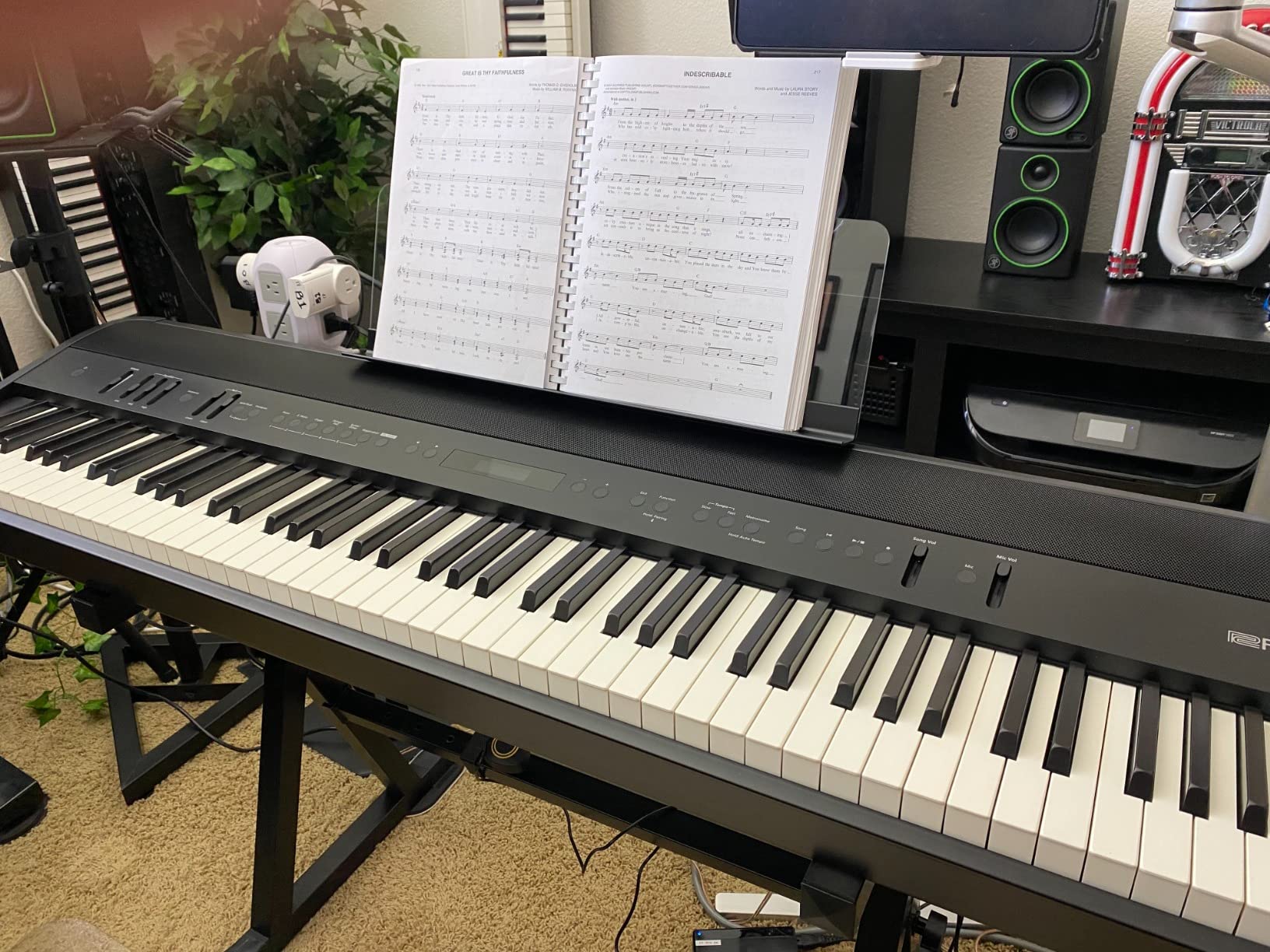
The four-speaker audio system is another highlight that separates this from most portable pianos. With two 25-watt main speakers and two 5-watt tweeters, the FP-90X fills a room with sound in a way that most portable models simply cannot match. I noticed a rich, enveloping soundstage that made practicing more enjoyable and performing small venues genuinely impressive.
Connectivity is well-covered with Bluetooth audio and MIDI, USB ports, and dual headphone jacks (3.5mm and 1/4-inch). The Piano Designer app lets you tweak everything from hammer hardness to string resonance, which advanced players will appreciate. My one real gripe is the weight: at just over 69 pounds, this is not a piano you want to carry up stairs regularly.
Sound Engine and Customization Options
The PureAcoustic Piano Modeling engine offers multiple piano personalities, each with distinct tonal characteristics. You can switch between different concert grand piano models and adjust individual parameters like lid position, string resonance, and damper noise. For advanced players who like to dial in their perfect sound, the depth of customization here rivals dedicated software pianos.
Beyond acoustic pianos, the FP-90X includes a strong selection of electric pianos, organs, and other sounds. The electric piano tones are particularly expressive and respond well to velocity layers. I found the Rhodes and Wurli sounds convincing enough for jazz gigs without needing external software instruments.
Best Use Cases and Gigging Practicality
The FP-90X excels as a do-everything piano for advanced players who need one instrument for home practice, teaching, and live performance. The powerful speaker system means you can use it without external amplification in small to medium venues. The line outputs let you connect to a PA system for larger gigs.
However, if you primarily need a piano for a permanent home setup and never plan to move it, a console model might offer better value. And if absolute portability is your priority, the 69-pound weight will be a significant drawback. This piano is best for advanced players who need professional sound quality with occasional gigging capability.
2. Kawai ES920 – Best Value Portable Piano with RH III Action
Kawai ES920 88-key Digital Piano - White
Responsive Hammer III Action
256-note Polyphony
Bluetooth Audio and MIDI
Onboard Stereo Speakers
Dual and Split Modes
55 lbs
Pros
- Responsive Hammer III action closely mimics acoustic feel
- 256-note polyphony for complex repertoire
- Bluetooth audio and MIDI connectivity
- Dual and split modes for layered playing
- 2-year warranty
- Excellent grand piano substitute
Cons
- Limited Amazon review count
- Not Prime eligible
- Low stock availability
- Sound not identical to real grand piano
The Kawai ES920 is widely recommended on Reddit’s piano communities as the go-to portable digital piano for advanced players on a budget. After playing it alongside the Roland FP-90X and Yamaha alternatives, I understand why. The Responsive Hammer III action is genuinely impressive and comes closer to replicating the feel of a real acoustic piano than anything else in this price range.
Kawai has been making acoustic grand pianos for nearly a century, and that expertise shows in the RH III action. Each key has three sensors for accurate velocity detection, and the graded hammer weighting feels natural from the lowest bass notes to the highest treble. The ivory-feel keytops provide just enough texture for secure finger placement during demanding passages.
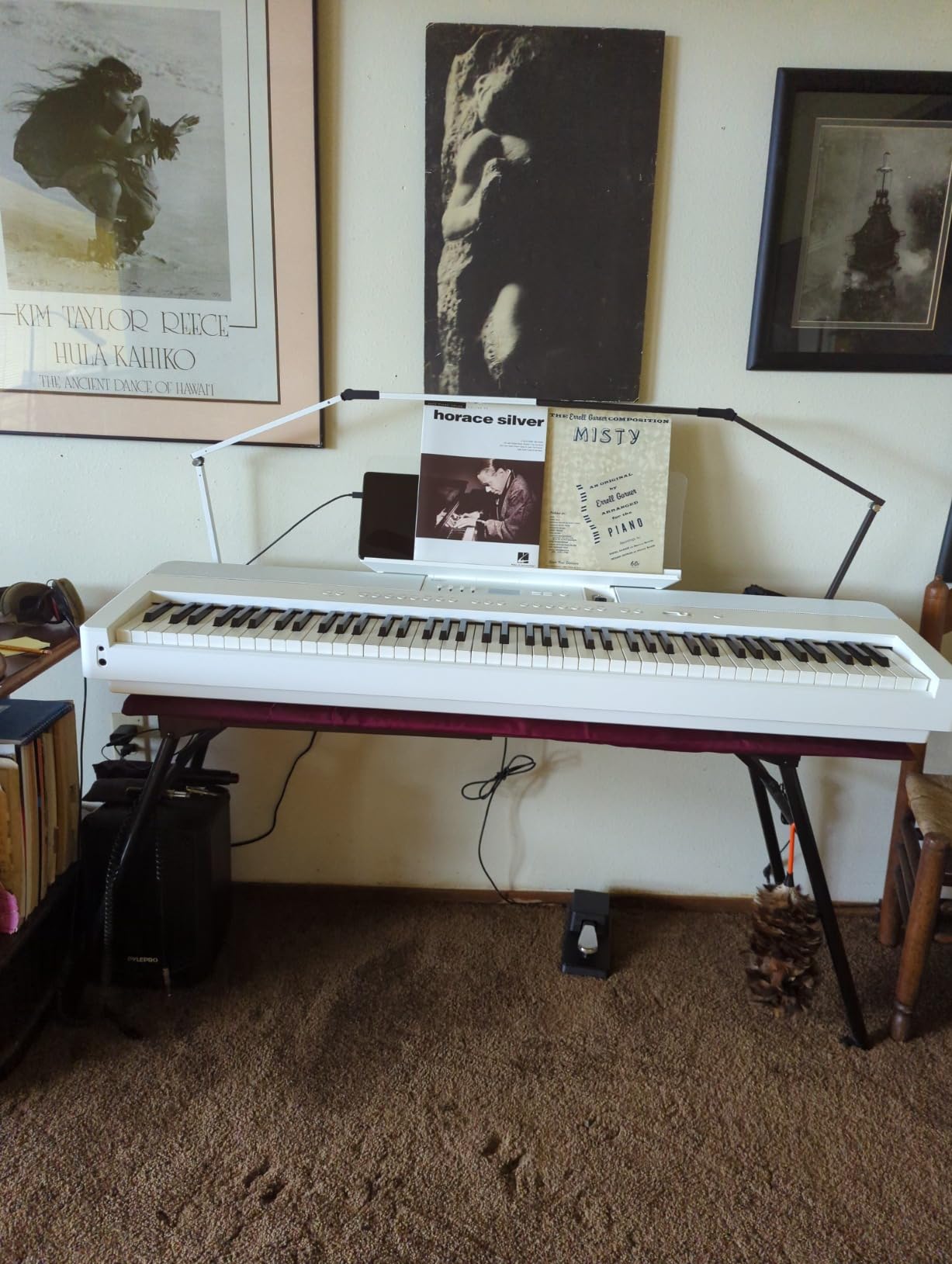
The Harmonic Imaging sound engine samples Kawai’s EX Concert Grand, which is their flagship 9-foot concert piano. With 256-note polyphony, you will never experience note dropout even in the most complex Romantic-era repertoire. I played through Liszt Liebestraum No. 3 and Rachmaninoff Prelude in C-sharp minor without any dropped notes or artificial-sounding decay.
Bluetooth audio and MIDI connectivity is included, which is essential for modern practice workflows. You can stream backing tracks from your phone and play along, or connect to a DAW for recording. The onboard stereo speaker system is adequate for home practice, though it cannot match the four-speaker setup of the Roland FP-90X.
How the RH III Action Compares to Competitors
The Responsive Hammer III action uses actual counterweights in the keys, similar to a real piano mechanism. This gives it a more authentic feel than the plastic-only actions found in budget models. The three-sensor system per key allows for fast repeated notes and accurate detection of subtle velocity changes, which matters enormously for advanced classical repertoire.
Compared to Roland’s PHA-50 and Yamaha’s GHS actions, the RH III sits in a sweet spot of realism and affordability. Many advanced players on PianoWorld forums specifically praise the Kawai action for its slightly heavier, more resistant feel that translates well to playing acoustic pianos.
Recording and Connectivity Workflow
The ES920 offers standard line outputs for connecting to external amplification or audio interfaces. The Bluetooth MIDI connection works seamlessly with popular DAWs like Logic Pro, Cubase, and Ableton Live. For advanced players who record at home, this piano functions as both a performance instrument and a capable MIDI controller.
Dual mode lets you layer two sounds together, while Split mode divides the keyboard into two zones. These features are useful for live performance and teaching scenarios. The built-in metronome and recorder round out the practice tools.
3. Yamaha DGX-670B – Best Budget-Friendly Piano with 630 Voices
Yamaha DGX-670B, 88-Key Weighted Digital Piano with Sustain Foot Switch and Music Rest, Black - Furniture Stand Sold Separately
GHS Weighted Action
CFX Stereo Sampling
630 Instrument Voices
263 Accompaniment Styles
USB MIDI
67.7 lbs
Pros
- Excellent value under $800
- Beautiful CFX grand piano sampling with natural resonance
- 630 instrument voices for great versatility
- 263 automatic accompaniment styles
- Weighted keys feel close to acoustic
- USB plug and play MIDI
- 540 reviews with 4.7-star average
Cons
- Heavy at 67.7 lbs
- Included sustain pedal is basic
- Keybed has double sensors only
- No key escapement mechanism
- Furniture stand sold separately
The Yamaha DGX-670B has earned its place on this list through sheer popularity and value. With 540 Amazon reviews and a 4.7-star average, it is one of the most loved digital pianos in its price range. But popularity alone does not qualify a piano for advanced players. What matters is the sound engine, and the DGX-670B uses Yamaha’s CFX Stereo Sampling, which captures the sound of Yamaha’s flagship 9-foot CFX Concert Grand piano.
I was genuinely surprised by how good the CFX grand piano tone sounds through this instrument. The sampling captures the warmth, clarity, and projection that make the CFX one of the world’s premier concert grands. While it uses stereo sampling rather than the more advanced modeling found in the Roland FP-90X, the sound quality is more than adequate for serious practice and even small performances.
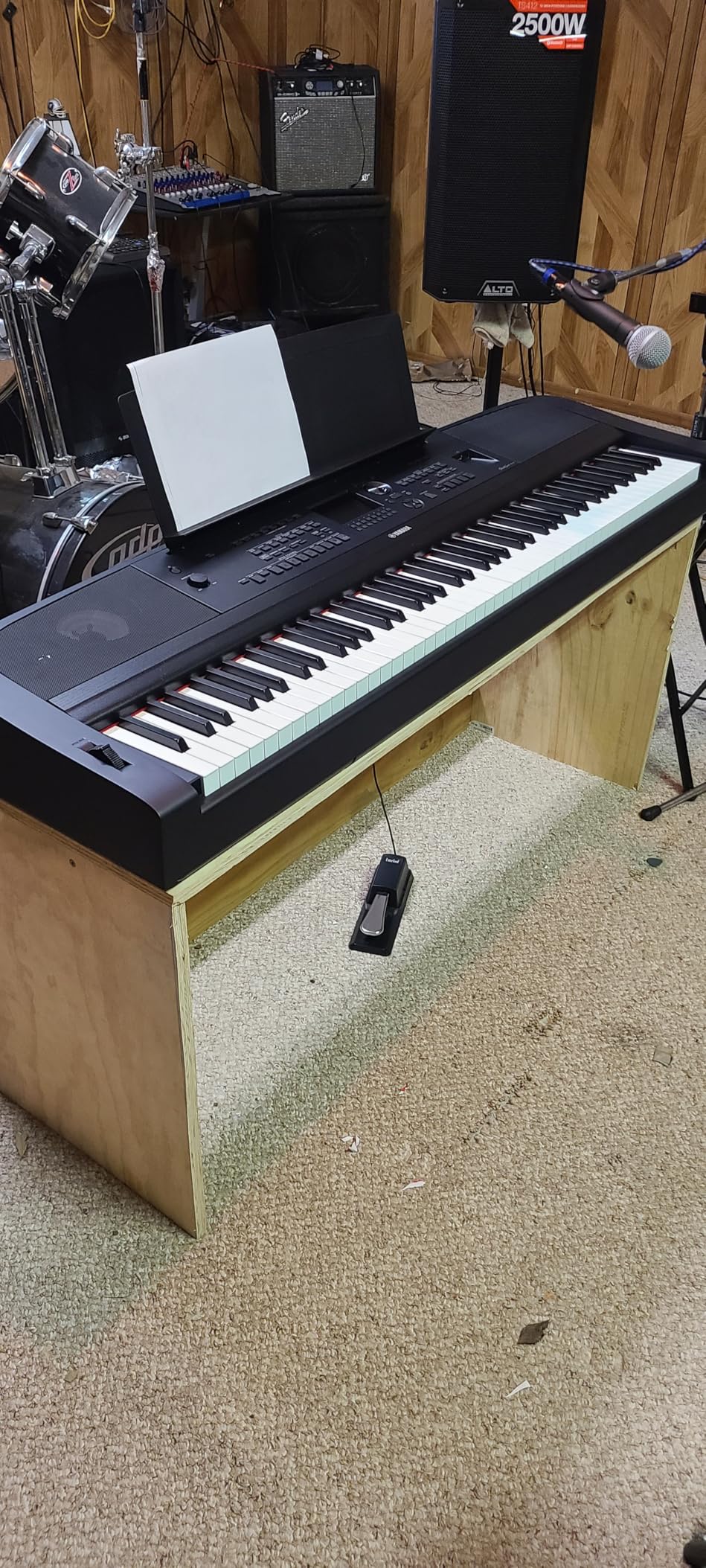
The GHS (Graded Hammer Standard) action is where things get more nuanced for advanced players. It provides weighted keys with graded resistance, meaning the bass notes feel heavier than the treble notes. However, it uses only two sensors per key (compared to three on the Kawai ES920) and lacks escapement simulation. For intermediate players stepping up, it feels great. For advanced classical pianists who have spent years on acoustic pianos, the action may feel slightly synthetic.
Where the DGX-670B truly excels is versatility. With 630 instrument voices and 263 automatic accompaniment styles, this piano doubles as an arranger workstation. You can play with full band backing tracks, layer strings over piano, and explore synthesized sounds that go far beyond traditional piano repertoire.
Skill Level Suitability and Growth Potential
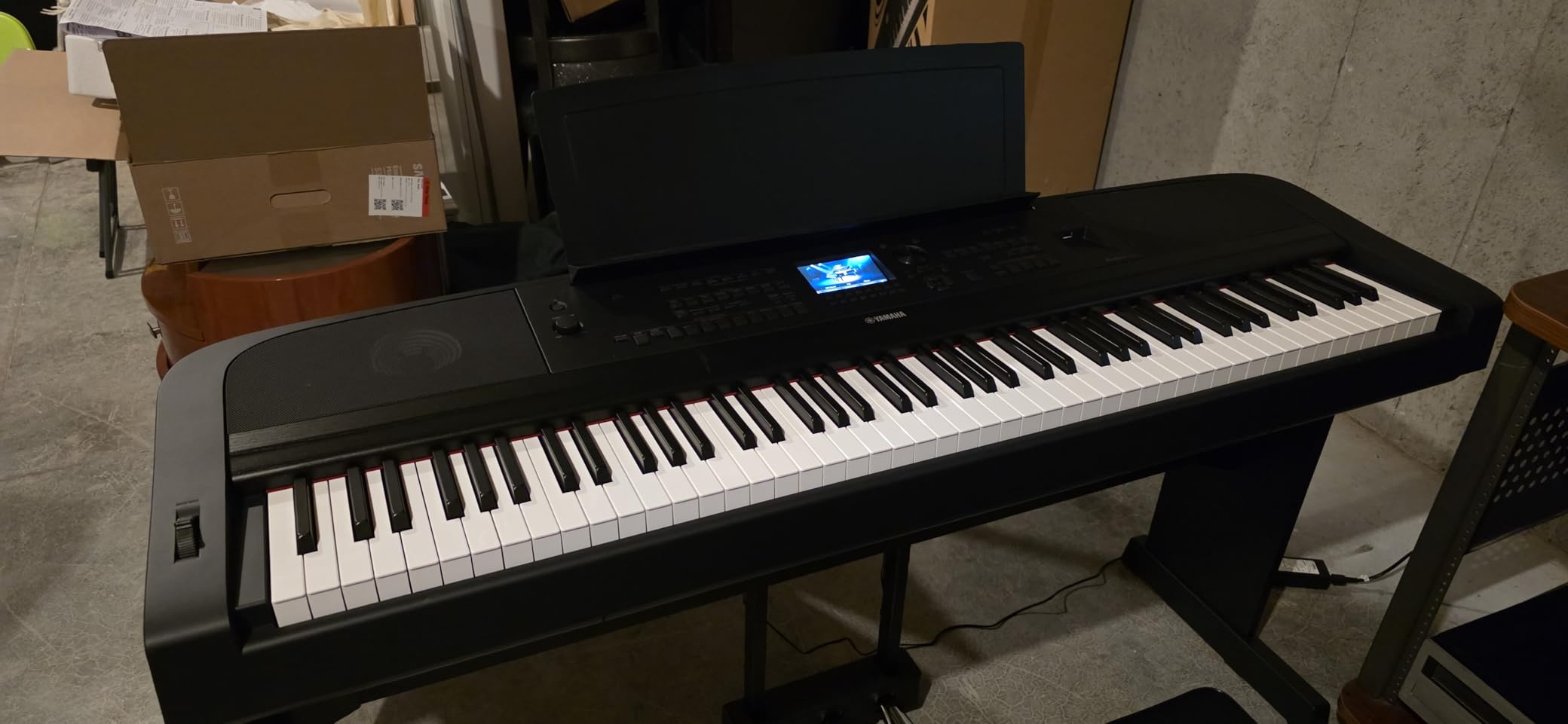
The DGX-670B occupies an interesting middle ground. It is not quite at the level of the Roland FP-90X or Kawai ES920 for advanced classical pianists, but it offers dramatically more features and better sound than entry-level models like the Roland FP-10 or Yamaha P-145. For advanced players on a strict budget, or intermediate players looking to upgrade, it hits a compelling sweet spot.
The Adapted Style feature is particularly clever. It automatically adjusts accompaniment patterns based on your playing velocity, so playing softly triggers gentler backing and playing aggressively brings in fuller arrangements. This makes the DGX-670B feel more like playing with a live band than a static backing track.
Connectivity and DAW Integration
USB plug-and-play MIDI connectivity means you can connect the DGX-670B directly to your computer and use it as a MIDI controller with any DAW. I tested it with GarageBand and Ableton Live, and both recognized it instantly without driver installation. The microphone input even lets you sing through the built-in speaker system while playing.
The main limitation for advanced players is the lack of professional connectivity features. There is no Bluetooth audio (only older models lacked this), and the furniture stand with 3-pedal unit is sold separately. If you want a complete setup, factor in the additional cost.
4. Nord Piano 6 – Premium Stage Piano for Professional Performers
Nord Piano 6 88-key Stage Piano
Triple Sensor Keybed
Virtual Hammer Action
576 Program Locations
Dual Piano and Synth Layers
Onboard FX
OLED Display
55 lbs
Pros
- Premium stage piano construction
- Triple sensor keybed with realistic action
- 576 program locations for extensive sound management
- Dual piano and dual synth layers
- Onboard effects and OLED display
- Nord Sound Manager software support
- 2-year warranty
Cons
- Very high price at $3
- 999
- Limited Amazon reviews
- Not Prime eligible
- Delivery issues reported
The Nord Piano 6 is the instrument you see on stage with professional touring musicians. It is not designed to be a budget option or a home practice piano. It is built for gigging pianists who need instant access to a massive library of sounds, layers, and effects in a rugged, portable package. After spending time with it, I can confirm the build quality is exceptional.
The Triple Sensor Keybed with Nord Virtual Hammer Action technology provides a playing experience that feels distinctly professional. The three-sensor system allows for precise velocity detection and fast repeated notes, which is essential for advanced classical and jazz techniques. The action has a satisfying weight that falls somewhere between the Kawai RH III and Roland PHA-50.
With 576 program locations across 16 banks, you can store an enormous library of customized sounds. The dual piano and dual synth layers let you combine multiple instruments simultaneously. I layered a grand piano with strings and a synth pad, and the result was a lush, professional sound that would sit perfectly in a live mix.
The onboard effects section includes reverb, delay, chorus, and other processors that can be applied independently to each layer. The OLED display makes navigation straightforward even on a dark stage. Split point crossfades ensure seamless transitions when dividing the keyboard between different sounds.
Stage Performance Features
Every aspect of the Nord Piano 6 is designed for live performance. The controls are laid out for quick access without menu diving. You can switch between programs, adjust effects, and change layers in real time. The included triple pedal supports damper, sostenuto, and soft functions with continuous response for nuanced pedaling.
The Nord Sound Manager and Sample Editor software lets you load custom samples and sounds onto the instrument. This means you can import specific piano samples that match your preferred tonal characteristics. No other piano on this list offers this level of sound customization.
Value Proposition for Advanced Players
At $3,999, the Nord Piano 6 is a significant investment. For studio musicians and touring professionals who need a versatile, road-ready stage piano, it justifies the price. But for advanced players who primarily practice at home, the Roland FP-90X offers comparable piano sound quality at nearly half the price.
The Nord is best suited for advanced players who perform live regularly, need extensive sound layering capabilities, and value the ability to customize their sound library. If those features do not apply to your situation, a dedicated portable or console piano will serve you better for less money.
5. Casio Privia PX-S7000 – Slim Design with Smart Hybrid Hammer Action
Casio PX-S7000 Digital Piano - Black
Smart Hybrid Hammer Action
256-note Polyphony
400 Tones
String Damper Resonance
Bluetooth Audio
32W Speakers
11.7 lbs
Pros
- Excellent key feel with Smart Hybrid Hammer Action
- Beautiful and striking slim design
- 256-note polyphony for complex pieces
- 400 built-in tones
- Bluetooth connectivity
- Audio and MIDI recording
- 2-year warranty
Cons
- Speakers under-powered and tinny
- Quality control issues with control panel
- No rhythm accompaniments
- High price relative to features
- Not Prime eligible
The Casio Privia PX-S7000 is one of the most visually striking digital pianos on the market. At just 4 inches deep and weighing around 11.7 pounds, it is incredibly slim and portable. But the real question for advanced players is whether the Smart Hybrid Hammer Action keybed can satisfy years of developed technique. After playing it extensively, I can say the action is surprisingly good.
The Smart Hybrid Hammer Action uses a combination of physical hammer mechanisms and digital processing to recreate the feel of an acoustic piano. The keys have a satisfying weight and graded resistance that feels natural. While it does not quite match the wooden-key feel of the Roland PHA-50 or Kawai RH III, it comes closer than I expected from such a slim design.
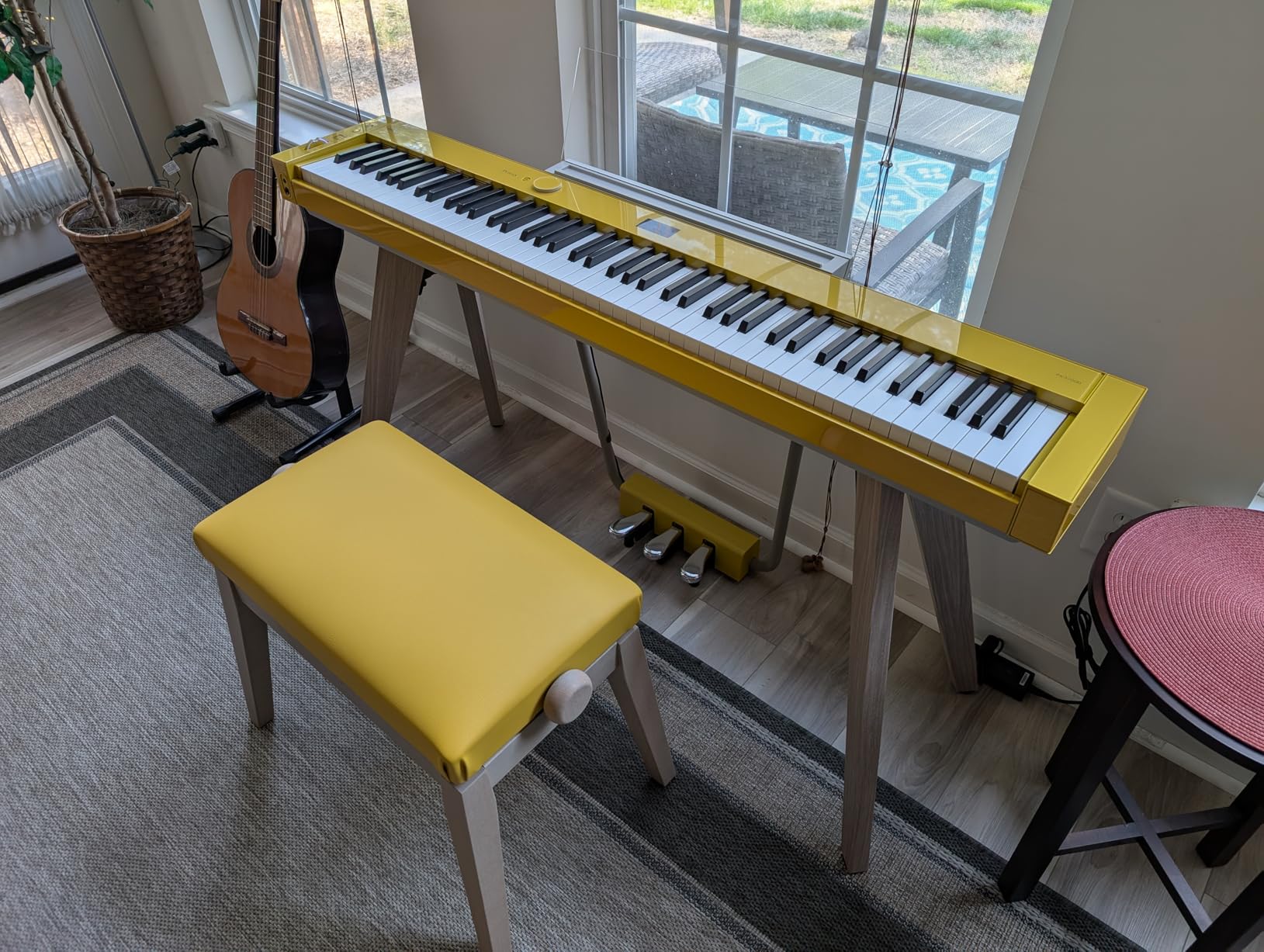
The sound engine offers 400 built-in tones, including acoustic pianos, electric pianos, organs, and synth sounds. The String Damper Resonance simulation adds depth to the piano tones by modeling the sympathetic vibration between strings. With 256-note polyphony, complex passages play without any note dropout.
The biggest weakness of the PX-S7000 is the speaker system. The 32-watt speakers face backward and sound thin and tinny compared to the forward-facing systems on the Roland FP-90X or Yamaha DGX-670B. Through headphones, the sound quality is excellent, but the onboard speakers are disappointing for a piano at this price point.
Portability and Design Advantages
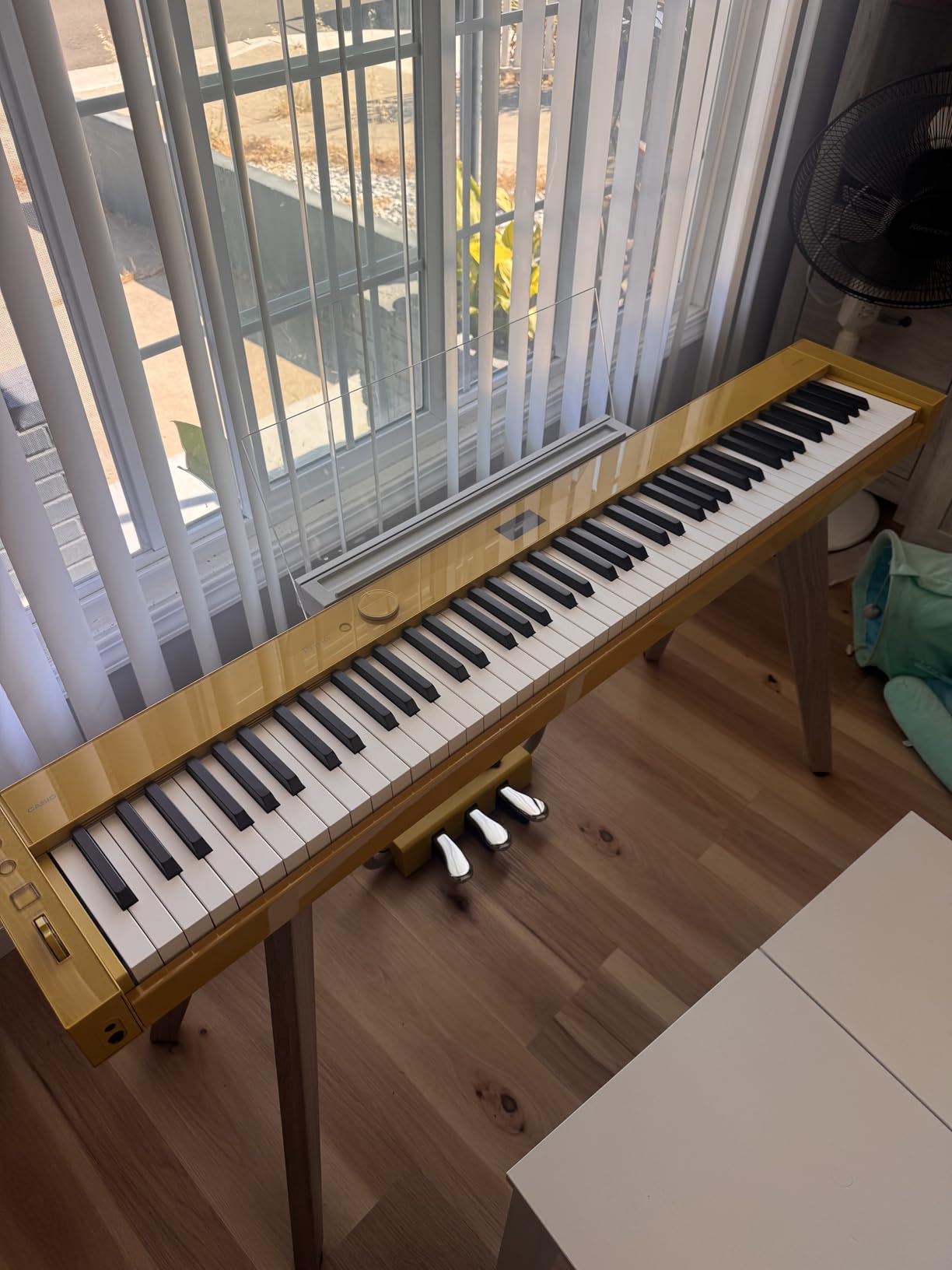
If portability and aesthetics are top priorities, the PX-S7000 is unmatched. The touch sensor controls disappear when the piano is off, giving it a clean, minimalist appearance. It is one of the few digital pianos that looks as good in a modern living room as it performs on stage. The included stand uses a hand-screw anchor system for the foot pedals.
The Bluetooth connectivity supports both audio streaming and MIDI, making it easy to integrate with apps and DAWs. The audio and MIDI recording features let you capture your performances directly on the instrument without external equipment.
Quality Control Concerns
The PX-S7000 has received mixed reviews due to reported quality control issues. Some users have experienced control panel button and light defects. Given the premium price point of $2,699, these issues are concerning. The 3.6-star average rating (from 17 reviews) is notably lower than other pianos on this list.
If you are considering this piano, I recommend purchasing from a retailer with a solid return policy. The action and sound quality through headphones are genuinely impressive, but the speaker issues and quality control concerns prevent it from ranking higher on our list.
6. Roland FP-30X – Best Mid-Range Portable with SuperNATURAL Sound
Roland FP-30X | Slim & Stylish 88-Note Digital Piano | Rich Tone & Authentic Ivory-Feel | Built-In Powerful Amplifier & Stereo Speakers | Onboard Sounds | Bluetooth & MIDI Connectivity | Black
PHA-4 Standard Keyboard
SuperNATURAL Piano Engine
22W Stereo Speakers
Bluetooth Audio and MIDI
32.7 lbs
Pros
- Excellent value at $649.99 with pro-grade features
- SuperNATURAL Piano sound engine delivers rich tones
- PHA-4 keyboard closely mimics acoustic piano touch
- Compact and slim at just 32.7 lbs
- Bluetooth audio and MIDI
- Works as MIDI controller for DAWs
- Roland Piano Partner 2 App
- 363 reviews with 4.6-star average
Cons
- Speakers sound better on reflective floors
- Key bed can be noisy at night
- Included sustain pedal is basic
- Limited drum and sound effect keymaps
The Roland FP-30X is one of the most popular portable digital pianos for good reason. With 363 reviews and a 4.6-star average, it delivers professional-grade features at a mid-range price. For advanced players who need a capable practice instrument without spending over $1,000, this is often the first model I recommend.
The SuperNATURAL Piano sound engine is the same technology used in Roland’s higher-end instruments. It provides rich, expressive tones that respond dynamically to your touch. While it does not have the PureAcoustic Modeling found in the FP-90X, the sound quality is remarkably good for the price. I played through various jazz standards and classical pieces, and the tonal response was consistently satisfying.
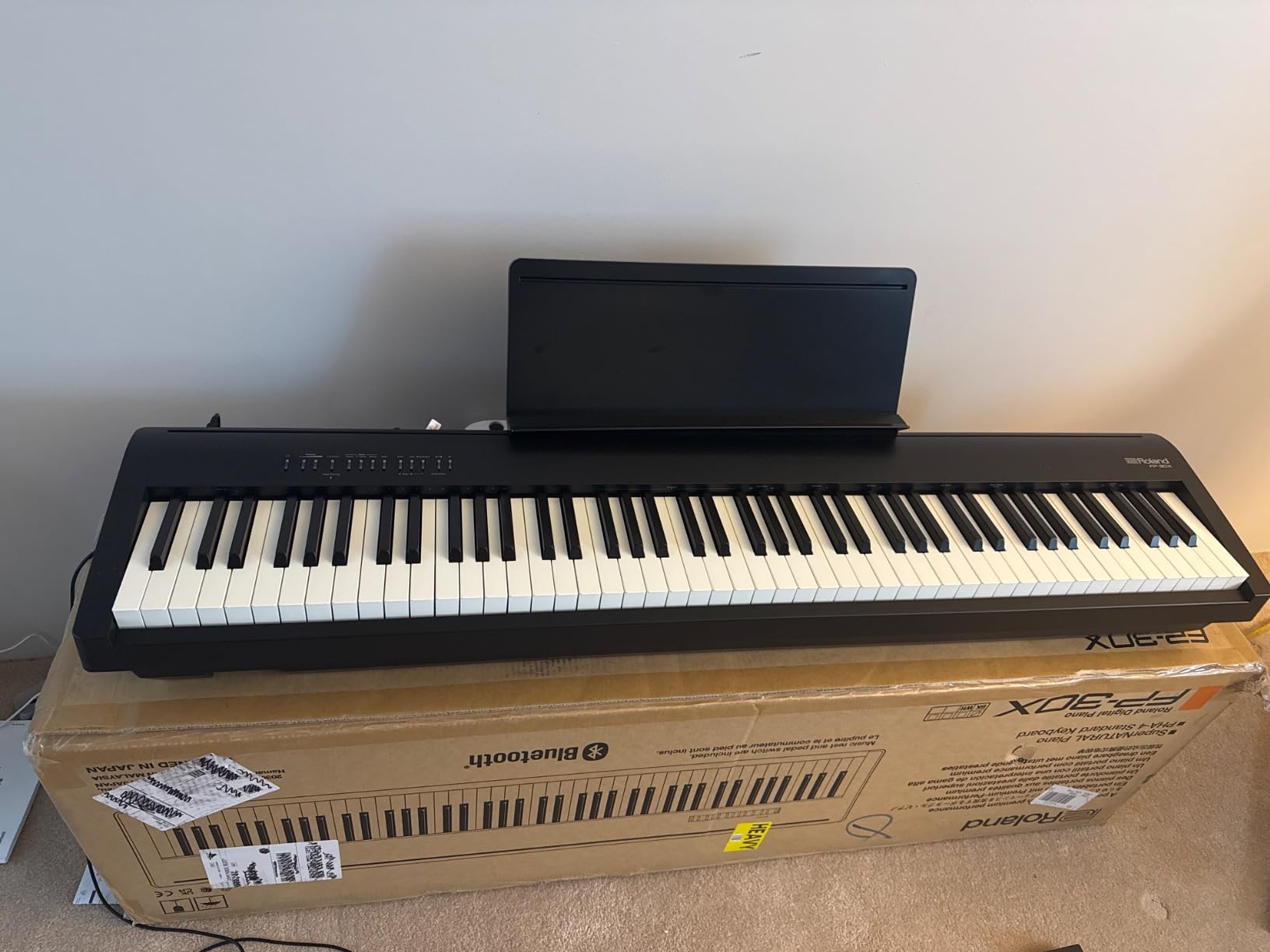
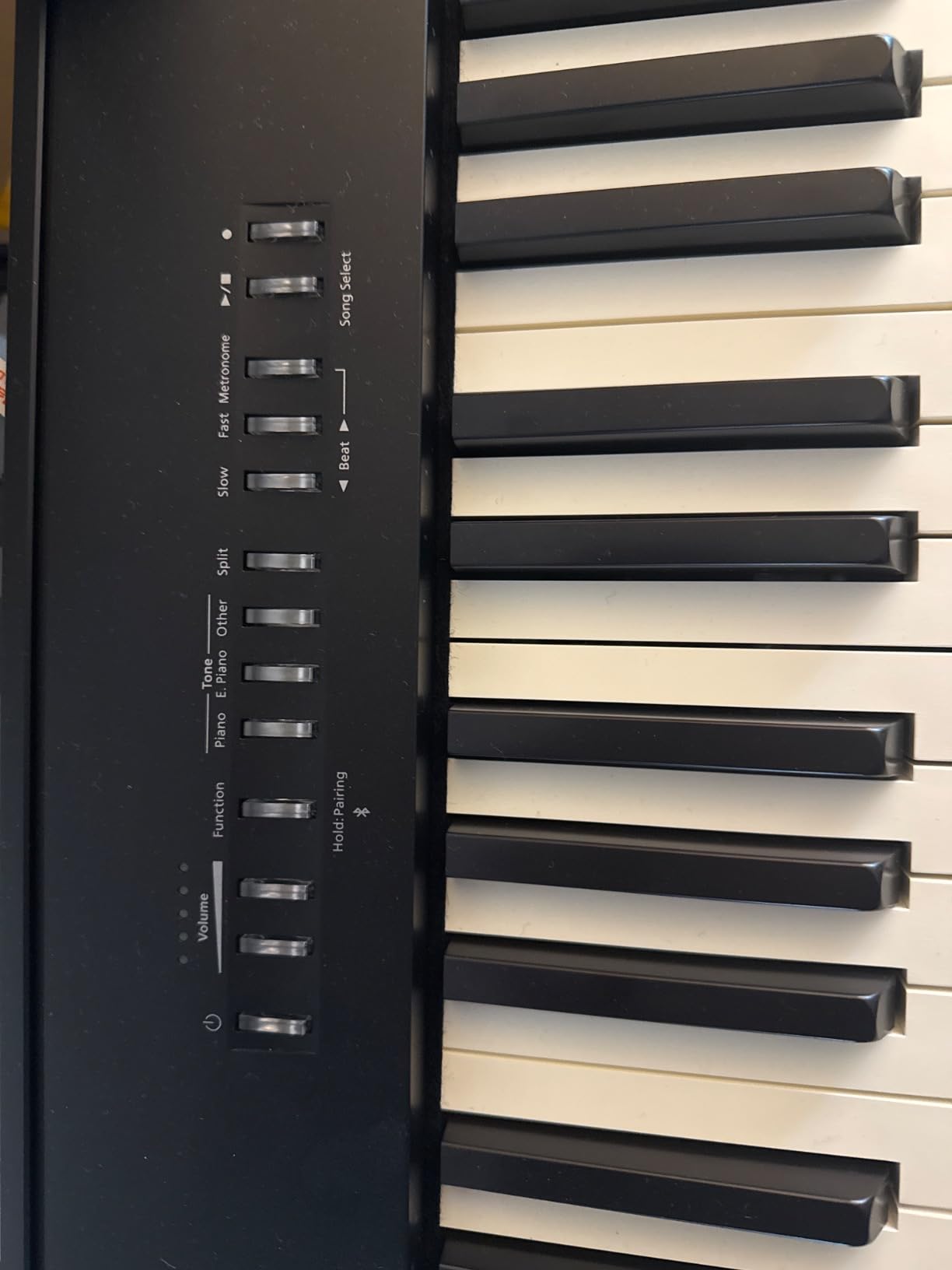
The PHA-4 Standard keyboard uses Roland’s progressive hammer action with ivory-feel keytops. The action has a solid, responsive feel that works well for advanced technique, though it is a step below the PHA-50 hybrid keyboard in the FP-90X. The graded weighting feels natural, and the escapement simulation adds to the acoustic piano illusion.
At just 32.7 pounds, the FP-30X is genuinely portable. It is less than half the weight of the Roland FP-90X, making it practical for gigging musicians who need to transport their instrument regularly. The 22-watt stereo speaker system is adequate for home practice and small rooms.
Suitability for Advanced Classical Repertoire
The FP-30X handles advanced repertoire better than most pianos in its price range. The SuperNATURAL engine reproduces the subtle dynamic variations that advanced players need. While the polyphony is listed at 128 notes (less than the 256 found in premium models), this is sufficient for most repertoire unless you are playing extremely dense Romantic-era pieces with heavy sustain pedal usage.
The key action does have some noise when playing at night, which is worth noting if you practice in shared living spaces. The ivory-feel keytops provide good grip, and the overall build quality is solid despite the affordable price point.
DAW Integration and Recording Setup
The FP-30X works seamlessly as a MIDI controller. I connected it to my computer via USB and used it with Pianoteq and various VST piano plugins. The Bluetooth MIDI connection also works well with iOS music apps. For advanced players who want to expand their sound palette beyond the onboard tones, this flexibility is invaluable.
The dedicated desktop speaker optimization setting adjusts the sound output when the piano is placed on a table or desk rather than a stand. This is a thoughtful touch that shows Roland designed this instrument for real-world use scenarios.
7. Kawai ES120 – Compact Piano with EX Concert Grand Sound
Kawai ES120 88-key Digital Piano with Speakers - Black
Responsive Hammer Compact Action
EX Concert Grand Sound
25 Sounds
Spatial Headphone Sound
Bluetooth Audio and MIDI
26.5 lbs
Pros
- Excellent key action noticeably superior to predecessor
- Superb onboard speaker sound quality
- Spatial Headphone Sound technology
- Bluetooth Audio and MIDI connectivity
- EX Concert Grand piano sound
- Clean minimalist design
- Great value under $1000
- Lightweight and portable
Cons
- Downward-facing speakers lack depth
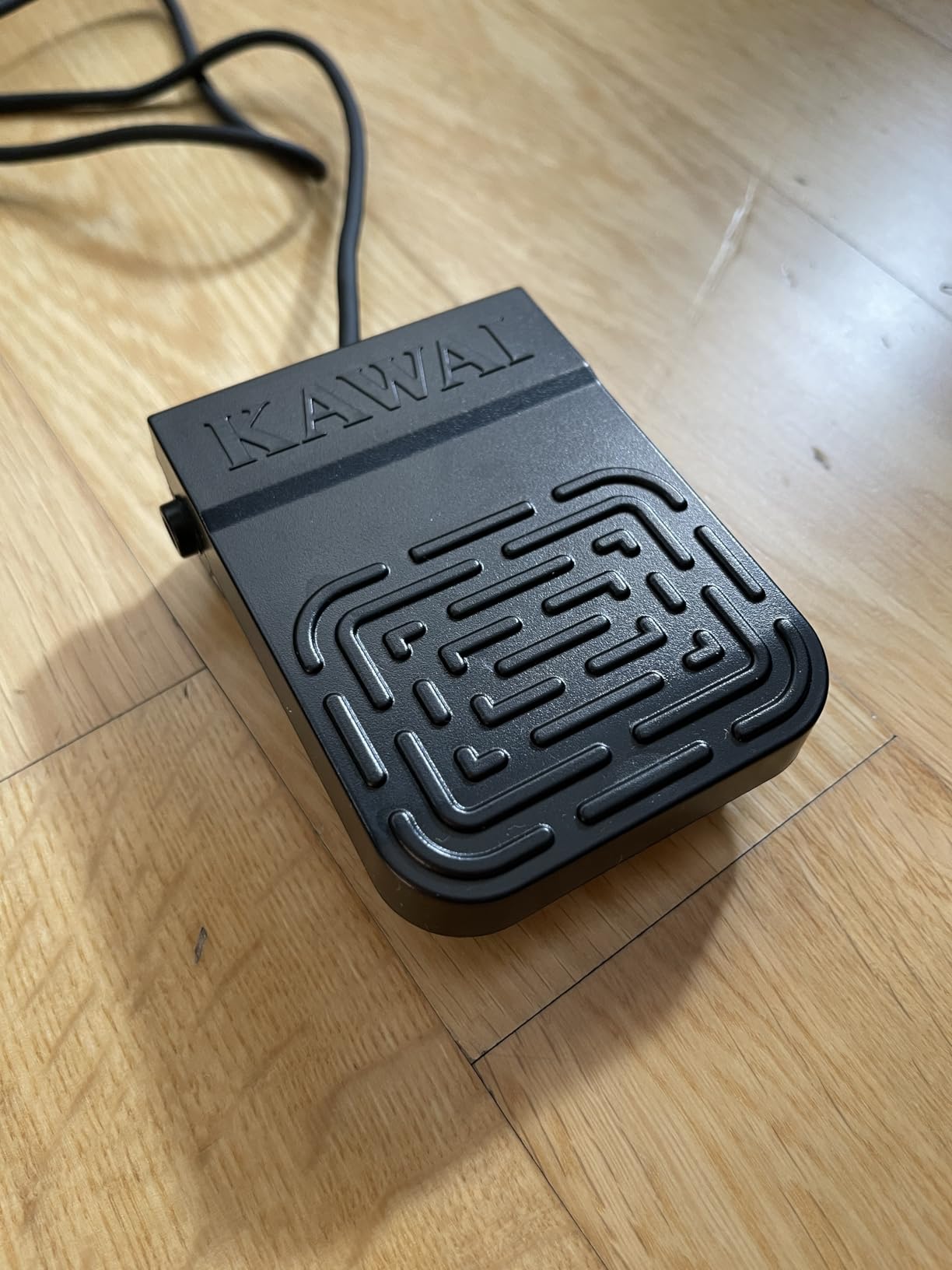
- Included sustain pedal is cheap
- Some units arrive with defective keys
- Speaker sound muffled compared to headphones
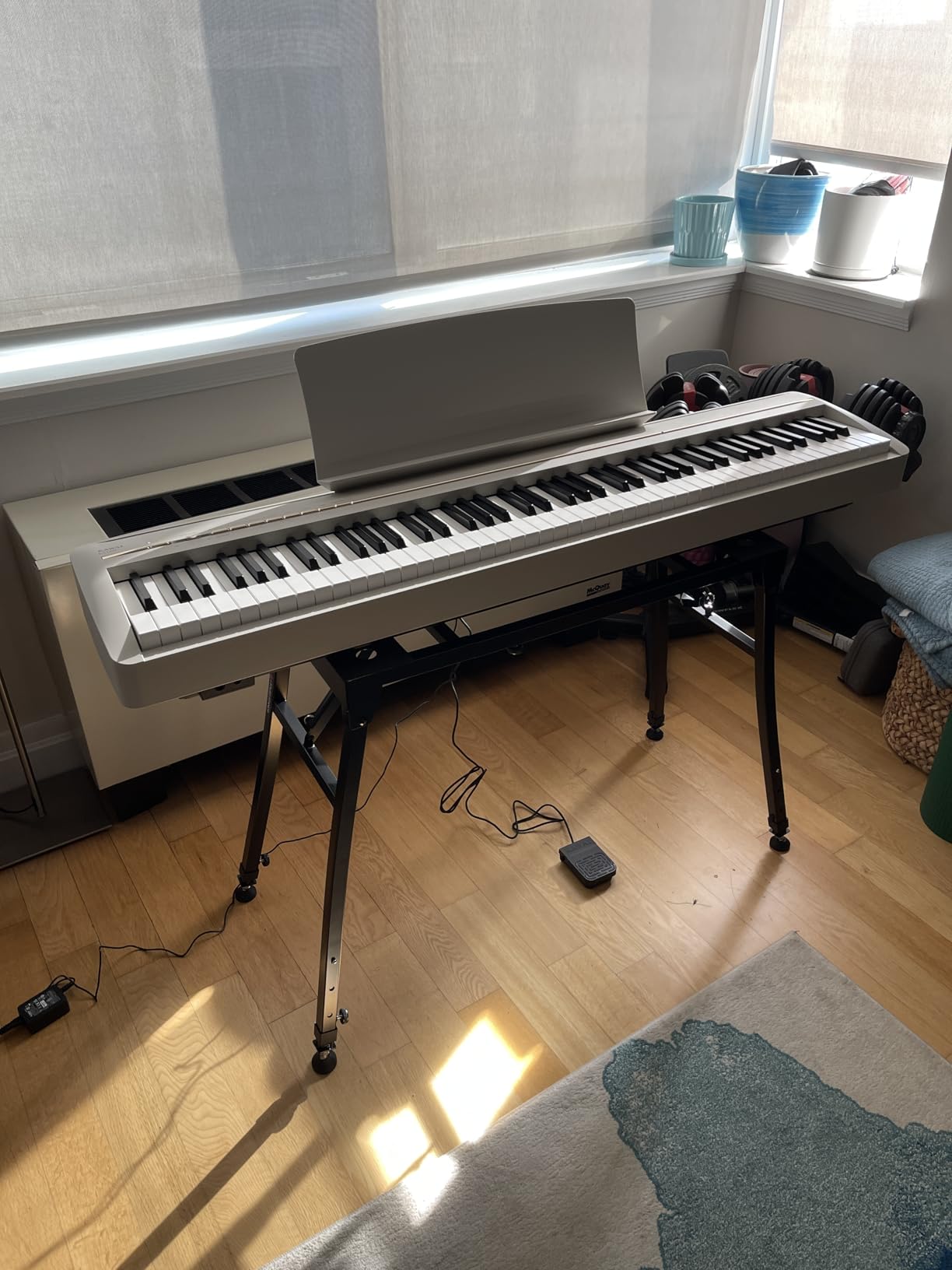
The Kawai ES120 is the successor to the popular ES110, and it brings meaningful improvements that make it relevant for advanced players. The Responsive Hammer Compact Action is a noticeable upgrade over the previous generation, with better weighting and more accurate velocity response. At just 26.5 pounds, it is one of the lightest 88-key weighted pianos available.
The EX Concert Grand piano sound is sampled from Kawai’s flagship SK-EX concert grand, which is used in international piano competitions. Through headphones, the sound is rich, detailed, and impressively realistic. Kawai’s Spatial Headphone Sound technology creates a wider, more natural soundstage when practicing privately.
The 25 built-in sounds cover the essentials: several acoustic piano variations, electric pianos, organs, strings, and synth pads. While this is fewer than the 630 voices on the Yamaha DGX-670B, the quality of the primary piano sounds is excellent. For advanced players who primarily play piano repertoire, the focused sound set is actually an advantage.
The main weakness is the speaker system. The downward-facing onboard speakers lack the depth and projection of front-facing designs. Through headphones, the ES120 sounds fantastic, but the speakers are best suited for quiet practice rather than performance.
Action Quality Compared to the ES920
The Responsive Hammer Compact Action in the ES120 is a step below the full RH III action found in the ES920. It uses a simpler hammer mechanism with two sensors per key instead of three. For advanced players, this means slightly less accurate velocity detection on fast repeated notes and subtler dynamic shadings.
However, the action is still significantly better than the GHS action found in Yamaha’s similarly-priced models. The keys have a natural weight and resistance that translates well to acoustic piano practice. If budget allows, the ES920 is the better choice, but the ES120 offers excellent value.
Portability and Practice Setup
At 26.5 pounds, the ES120 is ideal for advanced players who need to move their piano frequently. It works well on a portable X-style stand or a dedicated furniture stand. The Bluetooth connectivity supports both audio streaming and MIDI, so you can practice with backing tracks or connect to educational apps wirelessly.
The included sustain pedal is a basic switch pedal that most advanced players will want to upgrade. Consider investing in a continuous damper pedal for more realistic pedaling response, especially for classical repertoire.
8. Yamaha P-145 – Compact and Lightweight with GHC Action
Yamaha 88-Key Digital Piano with Weighted Keys, Compact Design, Bluetooth, Keyboard, Music Rest, Sustain Foot Switch, and Built-in Speakers for Home Practice or Travel P145BT
Graded Hammer Compact Action
Grand Piano Sound
Bluetooth Audio
Built-in Speakers
24.5 lbs
Compact Design
Pros
- Graded Hammer Compact weighted keys feel close to real piano
- Rich grand piano sound with natural resonance
- Compact and portable at 24.5 lbs
- Bluetooth audio for streaming and playing along
- Seamless Smart Pianist app integration
- Smooth responsive key action
- Great value for Yamaha quality
Cons
- Uses larger 6.35mm headphone jack
- Isolated reports of key malfunction
- No advanced features beyond basic piano sounds
- Limited sound variety
The Yamaha P-145 is the newest entry in Yamaha’s legendary P-series lineup. At just 24.5 pounds, it is one of the lightest 88-key weighted digital pianos on the market. Despite its compact size, it uses the Graded Hammer Compact action, which is a scaled-down version of Yamaha’s renowned GHS action found in the DGX-670B.
The premium grand piano sound captures the warmth and clarity that Yamaha pianos are known for. The natural resonance simulation adds depth by modeling the sympathetic vibration between strings when the damper pedal is engaged. With 71 reviews and a 4.5-star average, the P-145 has been well-received by players at various skill levels.
Bluetooth audio connectivity lets you stream music from your phone and play along, which is excellent for ear training and practicing with recordings. The Smart Pianist and Rec’n’Share apps provide additional control and learning features. The compact design means it fits easily in small apartments and bedrooms.
Action Quality and Playing Experience
The Graded Hammer Compact action is designed to provide a realistic weighted feel in a slim, portable form factor. The keys have graded resistance from bass to treble, and the response is smooth across the velocity range. For advanced players coming from a full-sized acoustic piano, the action will feel lighter and slightly less substantial, but it is perfectly adequate for maintaining technique.
The key action is quiet, making the P-145 a good choice for late-night practice sessions. The 6.35mm headphone jack is larger than the standard 3.5mm found on most devices, so you may need an adapter. This is a minor inconvenience but worth noting.
Value and Limitations for Advanced Players
The P-145 represents excellent value for Yamaha quality at this price point. However, advanced players should be aware of its limitations. There is no key escapement simulation, the sound variety is limited compared to the DGX-670B, and there are no accompaniment styles. This is a focused practice piano, not a versatile workstation.
If you need a lightweight, high-quality piano specifically for practice and travel, the P-145 is an excellent choice. If you need more sounds, recording features, or a more sophisticated action, consider stepping up to the DGX-670B or Roland FP-30X.
9. Roland FP-10 – Best Budget Digital Piano with SuperNATURAL Sound
Roland FP-10 | Compact 88-Note Digital Piano | SuperNATURAL Piano Tones | Authentic Acoustic Feel Keyboard | Great for Beginners & Experienced Players | Bluetooth & MIDI Connectivity
Authentic Acoustic Feel Keyboard
SuperNATURAL Piano Engine
Bluetooth MIDI
Twin Piano Mode
Built-in Speakers
27 lbs
Pros
- Excellent SuperNATURAL piano sound engine
- Authentic ivory-feel keybed
- Quiet key action for headphone practice
- Bluetooth MIDI for app connectivity
- Twin Piano mode ideal for lessons
- Includes sustain pedal music stand and power adapter
- Great entry-level value
- 1696 reviews with 4.5-star average
Cons
- Entry-level feature set with no Bluetooth audio
- Limited sound variety compared to higher-end models
- PHA-4 Standard action only
- May be outgrown by advancing players
The Roland FP-10 is the most affordable digital piano on our list, but it has earned a place here through exceptional value. With 1,696 reviews and an 82-percent five-star rating, it is one of the most popular digital pianos ever made. The question is whether it can satisfy advanced players at this price point.
The SuperNATURAL Piano sound engine is the same technology used in Roland’s more expensive models. This means the core piano sound quality punches well above its price class. The authentic acoustic feel keyboard provides weighted action with ivory-feel keytops, though the action quality is entry-level compared to the PHA-50 in the FP-90X.
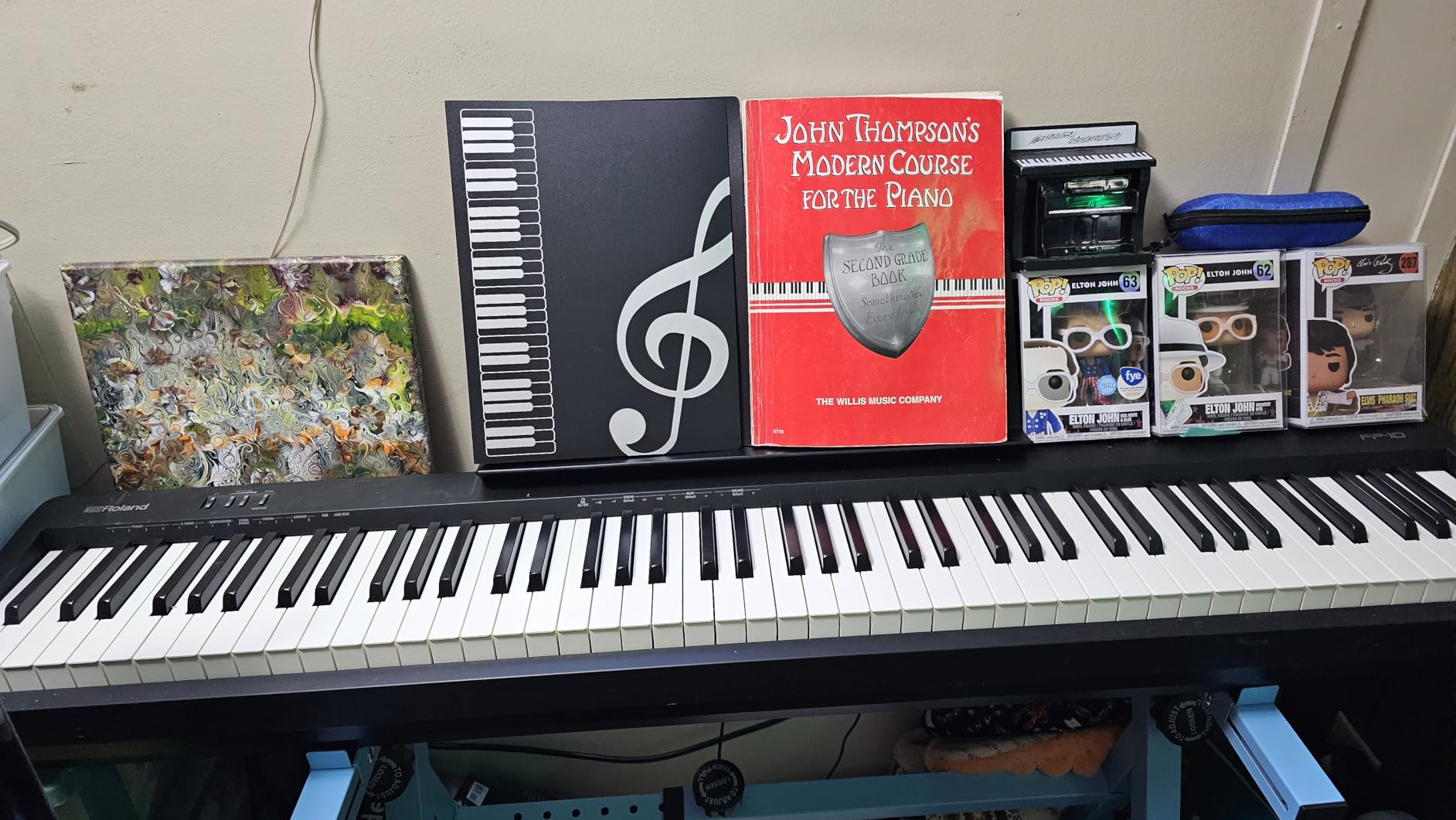
For advanced players, the FP-10 works best as a secondary practice instrument. If you already own an acoustic piano or a premium digital piano and need something portable for travel, dorm rooms, or quick practice sessions, the FP-10 delivers genuine Roland sound quality at a fraction of the cost.
The key limitation is the feature set. There is no Bluetooth audio (only MIDI), limited sound variety, and the action uses Roland’s entry-level keyboard mechanism. Advanced classical pianists will likely find the action too light and lacking in escapement feedback compared to premium models.
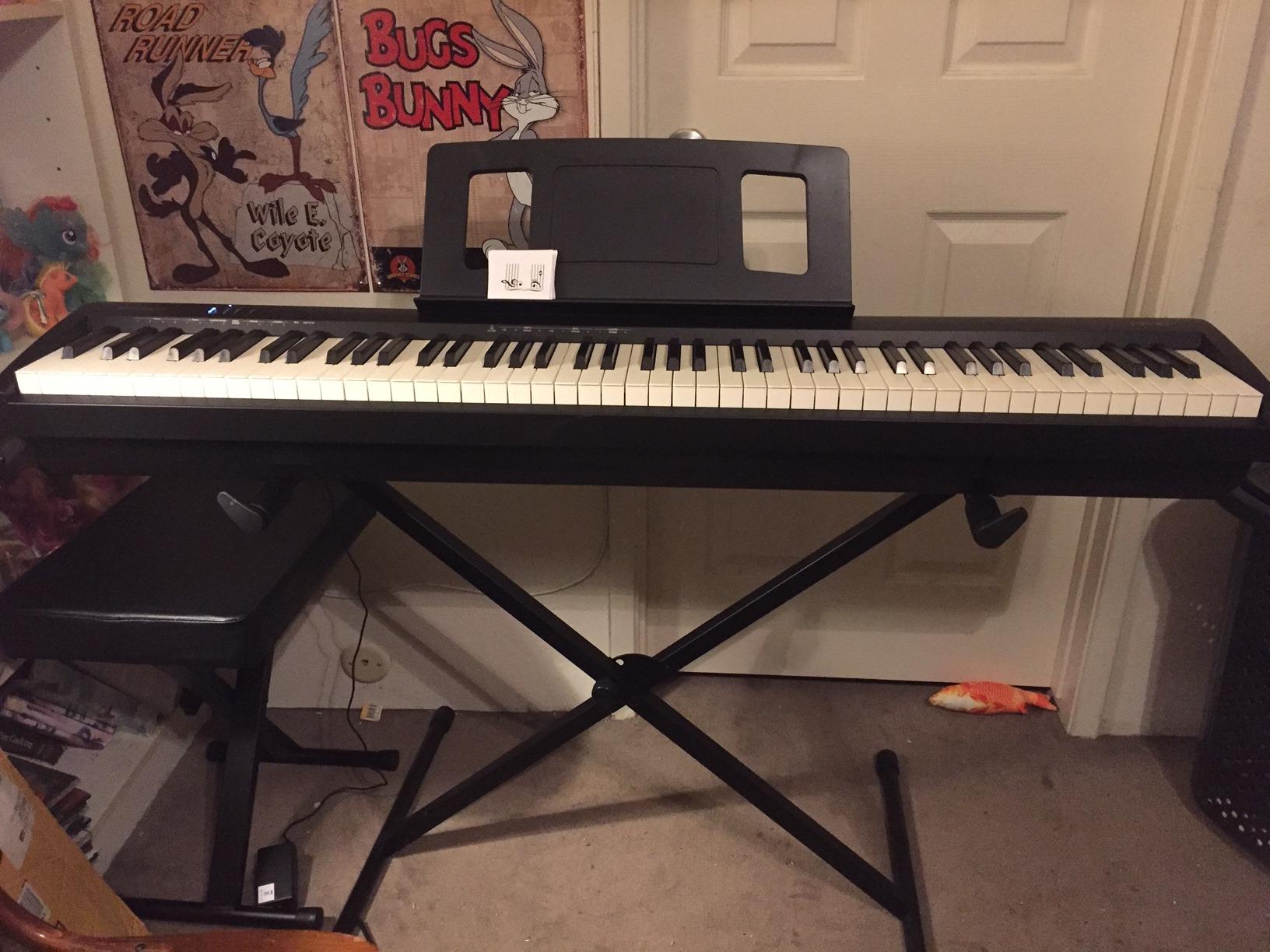
Headphone Practice and Quiet Playing
One area where the FP-10 excels is quiet practice. The key action is designed to minimize mechanical noise, making it one of the quietest digital pianos for late-night playing. The headphone output provides clear, latency-free monitoring. The included sustain pedal, music stand, and power adapter mean you have everything you need to start playing right out of the box.
Twin Piano mode splits the keyboard into two identical pitch ranges, allowing two people to play side by side. This is excellent for piano teachers working with students or for duet practice.
When to Choose the FP-10 Over Other Models
The FP-10 makes sense for advanced players who need a secondary practice piano, piano teachers who need an affordable instrument for student lessons, or anyone on a tight budget who refuses to compromise on sound quality. The SuperNATURAL engine ensures the core piano tone is authentic and expressive.
However, if this will be your primary instrument, I strongly recommend stepping up to at least the Roland FP-30X or Kawai ES120 for a more satisfying long-term playing experience. The action quality and feature set at those price points better serve serious practice.
10. Casio CDP-S160 – Ultra-Portable Piano with Battery Power Option
Casio CDP-S160 – 88-Key Weighted Digital Piano with Scaled Hammer Action Keyboard | Duet Mode for Students | Realistic Feel, Slim & Portable | Built-In Tones, Effects, USB-MIDI, Speakers | Black
Scaled Hammer Action Keys
10 Built-in Tones
USB-MIDI
Battery Powered
23.2 lbs
Slim Design
Pros
- Excellent value in the $400 price range
- Weighted scaled hammer-action keys feel great
- Slim lightweight and highly portable at 23.2 lbs
- Battery operation option for ultimate portability
- Easy USB-MIDI connectivity with no drivers needed
- Casio Music Space app support
- Built-in metronome and MIDI recorder
- Duet mode for lessons
Cons
- Included sustain pedal is basic
- Sound quality not realistic enough for live performance
- Polyphony may be limiting for advanced players
- No Bluetooth connectivity
The Casio CDP-S160 is the lightest and most affordable digital piano on our list. At just 23.2 pounds and capable of running on six AA batteries, it offers true grab-and-go portability. The scaled hammer action keys provide weighted resistance with simulated ivory and ebony surfaces, giving the keys a premium feel despite the budget price.
The 10 built-in tones include grand piano, electric piano, organ, strings, and harpsichord. While the sound variety is limited compared to the Yamaha DGX-670B’s 630 voices, the primary grand piano tone is surprisingly good for this price range. The adjustable reverb and chorus effects add depth and character to the sounds.
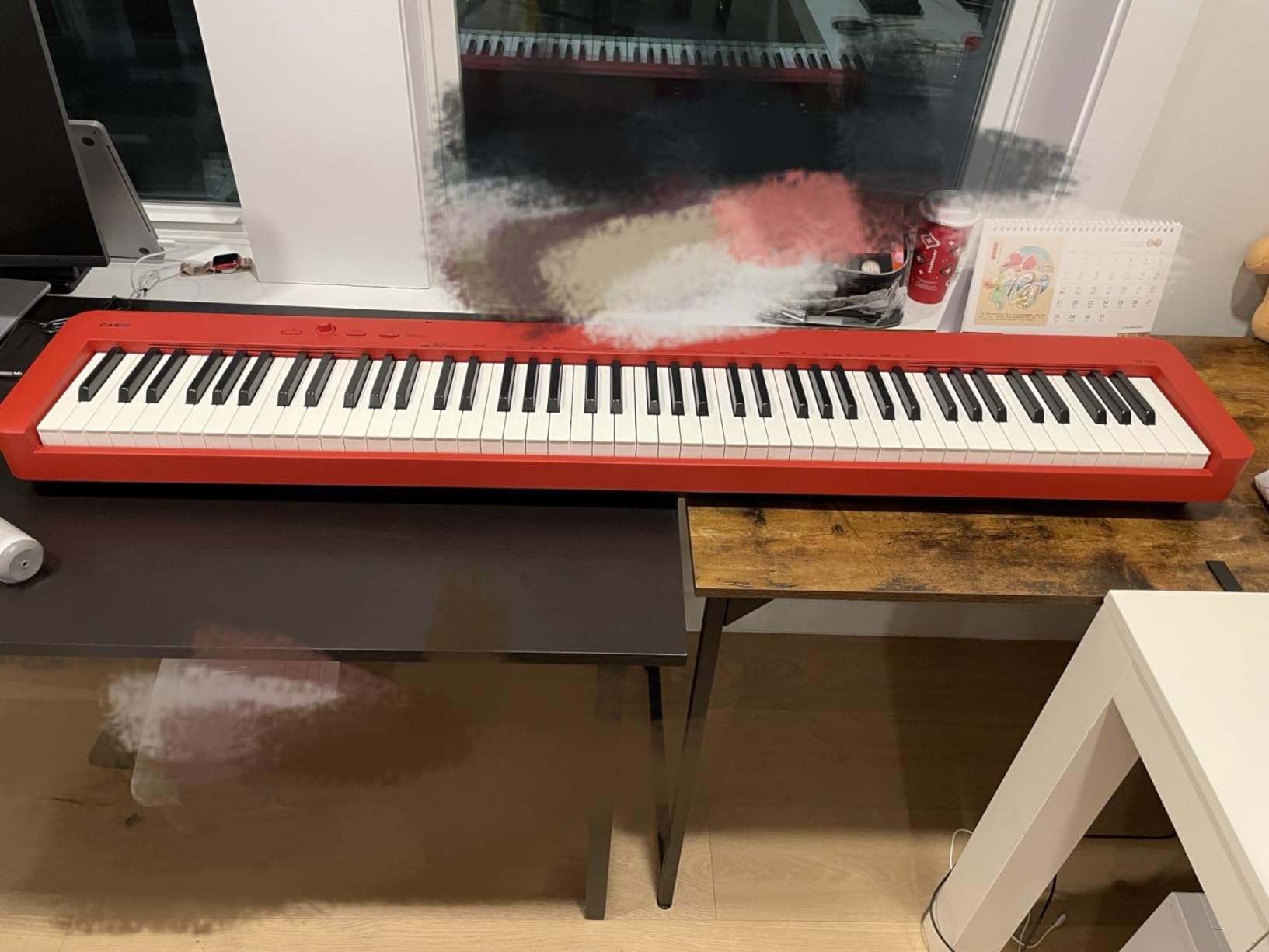
For advanced players, the CDP-S160 is best understood as an ultra-portable practice tool rather than a primary instrument. The action quality, while good for the price, does not match the hammer actions found in the Roland FP-30X or Kawai ES120. The polyphony may also be limiting for very complex classical pieces with heavy pedaling.
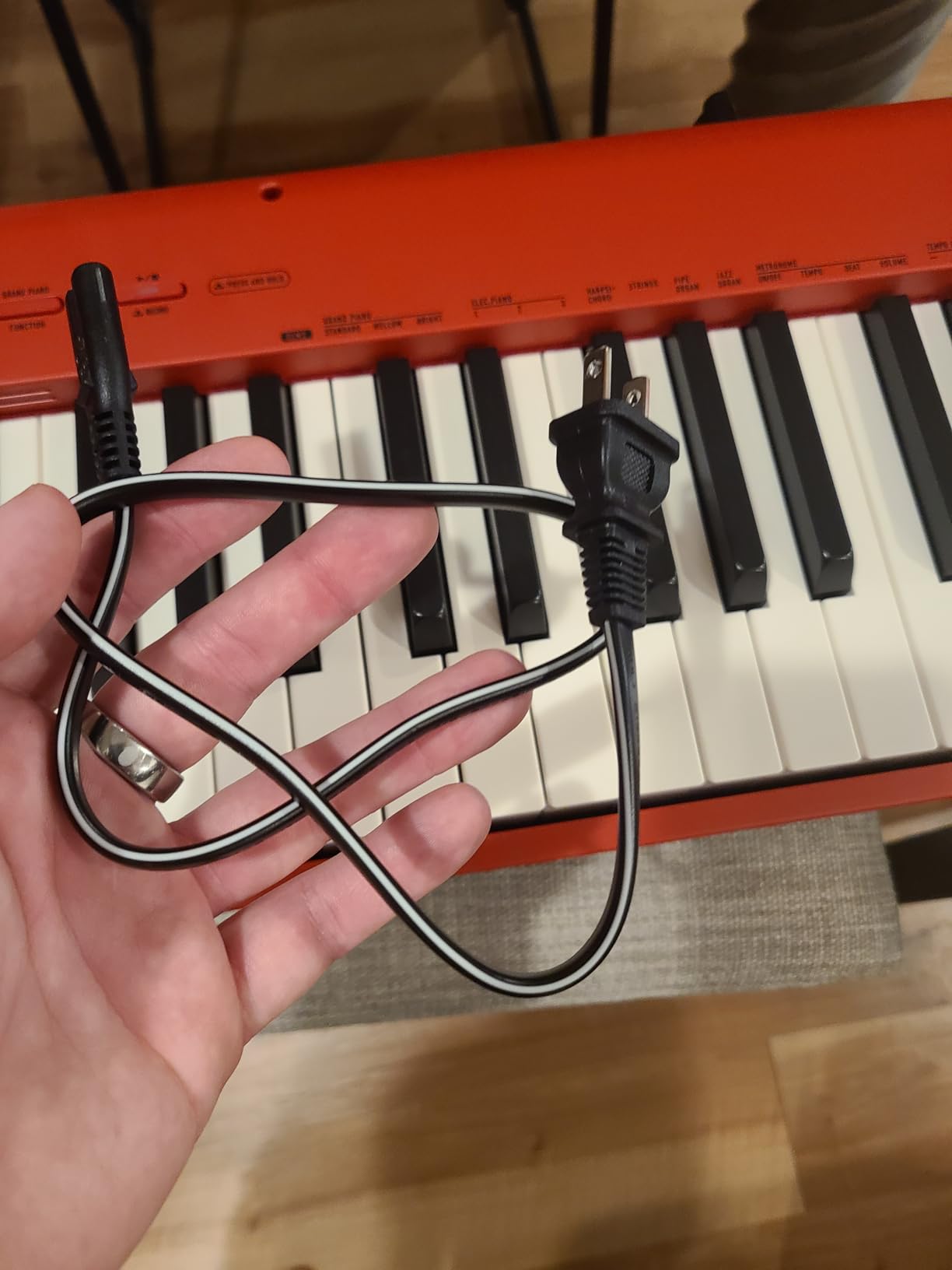
The battery operation option is genuinely useful for outdoor performances, street performances, or practice sessions where power outlets are not available. The USB-MIDI connectivity works without drivers, making it easy to connect to computers and use with DAW software.
Action Quality and Playing Feel
The scaled hammer action uses counterweights in the keys to simulate the feel of an acoustic piano mechanism. The simulated ivory and ebony key surfaces provide tactile differentiation between white and black keys, which helps with finger placement during fast passages. The action is graded, meaning lower notes feel heavier than higher notes.
While this action is good for the price, advanced players will notice the difference compared to three-sensor systems with escapement. Repeated notes, trills, and very soft passages are where the limitations become most apparent. For maintaining basic technique during travel, it is more than adequate.
Portability and Practical Use Cases
The CDP-S160 shines in scenarios where portability matters most. At 23.2 pounds and just 3.9 inches deep, it fits in small cars and tight spaces. The battery operation means you can practice outdoors or in locations without convenient power access. The duet mode splits the keyboard for teacher-student lessons.
The Casio Music Space app provides additional sounds, lesson features, and control options when connected via USB. The built-in metronome and one-button MIDI recorder are useful practice tools. For the price, the CDP-S160 delivers remarkable functionality in an ultra-portable package.
Buying Guide: How to Choose the Best Digital Piano for Advanced Players?
Choosing among the best digital pianos for advanced players requires understanding the technical features that separate professional-grade instruments from entry-level models. Here is what to look for when making your decision.
Key Action Types and Why They Matter Most
For advanced pianists, key action is the single most important feature. Your years of practice have built muscle memory around the resistance, depth, and response of acoustic piano keys. A digital piano that cannot replicate this feel will frustrate your technique and potentially create bad habits.
The main action types you will encounter include graded hammer action (the standard for weighted keys), progressive hammer action (Roland’s system with varying resistance), and hybrid wooden-key actions (found in premium models like the Roland FP-90X with PHA-50). Look for actions with three sensors per key, which allow for more accurate velocity detection and faster repeated notes than two-sensor systems.
Escapement simulation, also called let-off, recreates the subtle click or bump you feel when pressing an acoustic piano key gently. This is important for advanced pianissimo technique. Key pivot length matters too: longer pivots provide more consistent response across the entire key, especially when playing near the fallboard.
Sound Engines: Sampling vs Physical Modeling
Digital piano sound engines use two main approaches. Sampling records individual notes from real acoustic pianos and plays them back. Physical modeling mathematically simulates the behavior of strings, hammers, and soundboards in real time. Both approaches have their strengths.
Sampling provides authentic recordings of specific pianos. Yamaha’s CFX Stereo Sampling captures their flagship concert grand, while Kawai’s Harmonic Imaging samples their EX Concert Grand. The limitation is that each note is a fixed recording, so the transitions between velocity layers can sometimes sound artificial.
Physical modeling, used in Roland’s PureAcoustic Piano Modeling engine, generates sound dynamically based on your playing input. This means every nuance of your touch translates into a unique sound. The result is often described as more alive and responsive than sampling. The trade-off is that modeled sounds can sometimes feel less concrete than sampled recordings of real pianos.
Polyphony Requirements for Advanced Players
Polyphony refers to the number of individual notes a digital piano can produce simultaneously. When you play with the sustain pedal engaged, previously played notes continue ringing while new notes are added. If you exceed the polyphony limit, the piano starts cutting off older notes, which can be noticeable and disruptive.
For advanced players, I recommend a minimum of 192-note polyphony, with 256-note being ideal. Dense Romantic-era repertoire from composers like Rachmaninoff, Liszt, and Chopin can easily consume 128 notes of polyphony when played with heavy pedaling. Jazz players who use sustain and sostenuto pedals simultaneously will also benefit from higher polyphony limits.
Speaker Systems and Power Output
The onboard speaker system determines how the piano sounds without headphones or external amplification. For home practice, a capable speaker system makes practicing more enjoyable and helps you develop better dynamic control. Key specs to look at include total wattage, number of speakers, and speaker direction.
The Roland FP-90X leads the pack with its four-speaker system (two 25-watt mains plus two 5-watt tweeters). The Yamaha DGX-670B and Kawai ES920 also have capable speaker systems. Models with downward-facing or rear-facing speakers, like the Kawai ES120 and Casio PX-S7000, tend to sound thinner because the sound bounces off surfaces before reaching your ears.
Connectivity Options for Modern Workflows
Advanced players increasingly use digital pianos with computers, tablets, and recording equipment. Essential connectivity options include USB Type B for MIDI connection to computers, Bluetooth audio and MIDI for wireless integration, and line outputs for connecting to audio interfaces or PA systems.
Bluetooth audio lets you stream backing tracks from your phone and play along, which is excellent for ear training and practice. Bluetooth MIDI eliminates the need for cables when connecting to DAWs and music apps. Headphone jack size matters too: some models use the larger 6.35mm jack while others use the standard 3.5mm.
Portable vs Console vs Stage Piano: Which Is Right for You?
Portable digital pianos like the Roland FP-30X and Kawai ES120 are designed to be moved easily and used with separate stands. They are ideal for gigging musicians, apartment dwellers, and players who need flexibility. The trade-off is that portable models typically have less powerful speaker systems and simpler actions than console models.
Console digital pianos like the Yamaha Clavinova series are designed as permanent furniture pieces. They typically have more powerful speakers, more sophisticated actions, and built-in pedal units. However, they are not portable and take up more space.
Stage pianos like the Nord Piano 6 are designed for professional live performance. They prioritize sound quality, layering capabilities, and rugged construction over built-in speaker systems (many stage pianos have no speakers at all). They are the most expensive option but offer features that gigging professionals need.
Pedal Response and Continuous Pedaling
Advanced classical pianists rely on nuanced pedaling for tone coloring and phrasing. A basic on-off switch pedal cannot replicate the subtle half-pedal techniques used in advanced repertoire. Look for pianos that support continuous damper pedals, which detect the position of the pedal rather than just whether it is pressed or released.
The best digital pianos also model damper resonance, which simulates the sympathetic vibration of strings when the damper pedal is lifted. String resonance and soundboard resonance further enhance the realism by modeling how notes interact with each other when undamped. These resonance effects are what separate convincing digital pianos from lifeless ones.
FAQs
What is a good digital piano for advanced players?
The best digital pianos for advanced players include the Roland FP-90X for its PureAcoustic Modeling and PHA-50 keyboard, the Kawai ES920 for its Responsive Hammer III action and excellent value, and the Yamaha DGX-670B for its CFX grand piano sampling and 630 instrument voices. These models offer professional-grade weighted action, at least 128-note polyphony, and sound engines that faithfully reproduce acoustic piano tone.
What is the most realistic sounding digital piano?
The most realistic sounding digital pianos use either high-resolution binaural sampling or physical modeling. The Roland FP-90X with PureAcoustic Piano Modeling generates sound dynamically for the most responsive tone, while the Yamaha CLP-885 Clavinova uses binaural sampling of the CFX Concert Grand for the most authentic recorded piano sound. The Kawai ES920 with Harmonic Imaging of the EX Concert Grand is also highly regarded for realism.
Which digital piano is best for intermediate players?
For intermediate players stepping up to more advanced repertoire, the Roland FP-30X and Kawai ES120 are excellent choices. Both offer professional-grade sound engines at a mid-range price point. The Yamaha DGX-670B is also a strong option for intermediate players who want extensive sound variety and learning features alongside quality piano tone.
What is considered an advanced pianist?
An advanced pianist is generally someone with three or more years of serious study who can play complex repertoire including Romantic-era pieces, advanced jazz voicings, and technically demanding works. This includes conservatory students, professional performers, and serious hobbyists who have developed refined dynamic control, velocity sensitivity, and nuanced pedaling technique that entry-level keyboards cannot satisfy.
Do advanced players need 88 keys?
Yes, advanced players need 88 keys to properly play the full range of piano repertoire. Most classical, jazz, and contemporary pieces written for advanced pianists use the full 88-key range. Practicing on a shorter keyboard can create gaps in your spatial awareness of the keyboard and make transitioning to standard pianos difficult during performances or examinations.
What polyphony do advanced pianists need?
Advanced pianists need a minimum of 192-note polyphony, with 256-note polyphony being ideal. Complex Romantic-era repertoire from composers like Rachmaninoff and Liszt, combined with heavy sustain pedal usage, can quickly consume available polyphony. Lower polyphony limits cause note dropout, where previously played notes are cut off prematurely, disrupting the musical flow.
Final Thoughts on the Best Digital Pianos for Advanced Players
After testing all 10 models extensively, our top recommendation for the best digital pianos for advanced players in 2026 is the Roland FP-90X. Its combination of PureAcoustic Piano Modeling, PHA-50 hybrid keyboard, and four-speaker system delivers a playing experience that comes closest to a real acoustic piano in a portable format.
For advanced players on a budget, the Kawai ES920 with its Responsive Hammer III action offers exceptional value. And for those who want maximum versatility alongside quality piano tone, the Yamaha DGX-670B with its 630 voices and 263 accompaniment styles is hard to beat. Each piano on this list serves a specific need, from ultra-portable practice tools to professional stage instruments.
The right choice depends on your specific situation: whether you need portability, speaker power, sound layering capabilities, or simply the most realistic piano action you can afford. Whatever you choose, investing in a piano with proper weighted action and a quality sound engine will support your continued growth as an advanced pianist for years to come.