
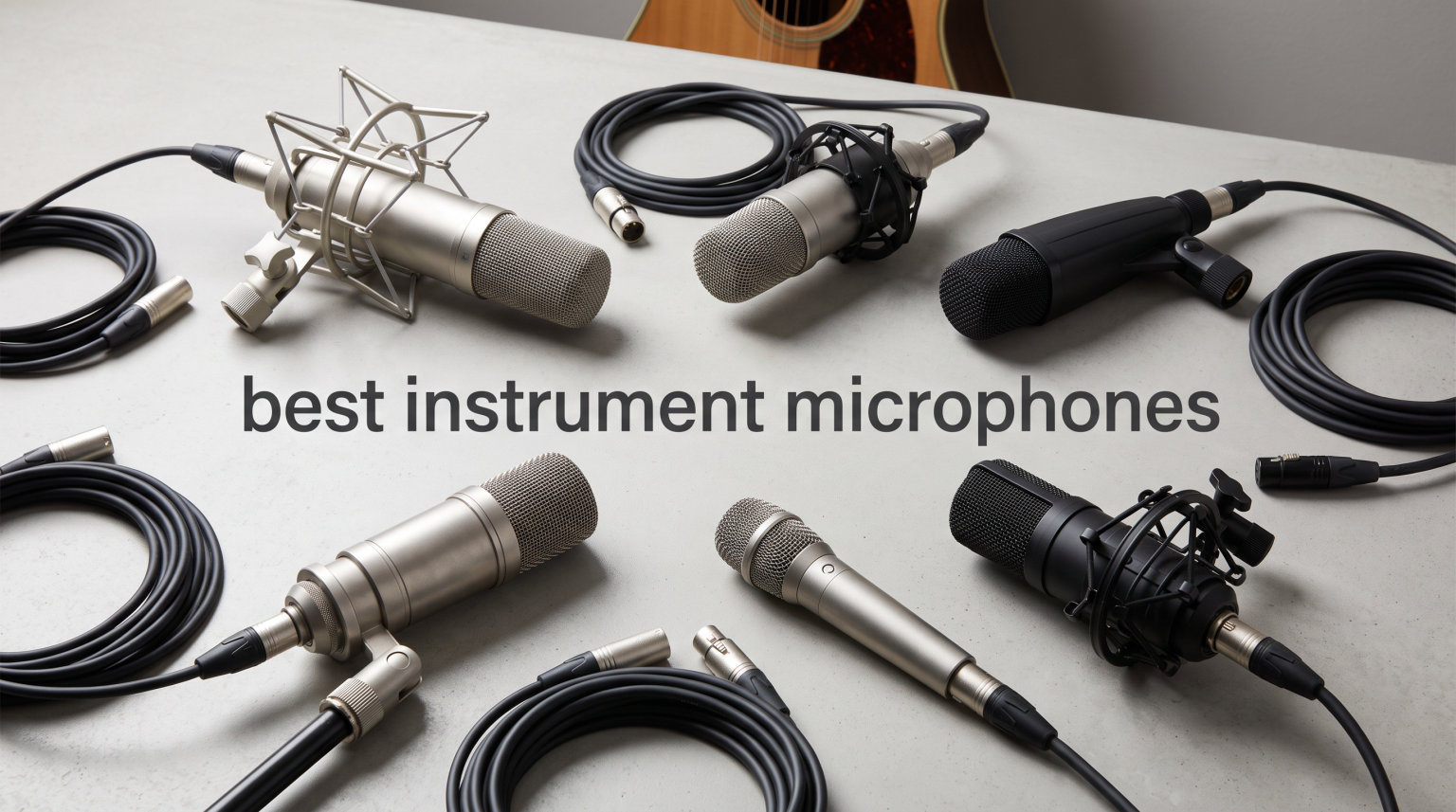
Finding the best instrument microphones for your studio or live rig can feel overwhelming with the sheer number of options out there. I have spent years recording guitars, drums, brass, and acoustic instruments in both professional studios and cramped home setups, and I can tell you that the right microphone changes everything about your sound.
Whether you are miking a snare drum, capturing an acoustic guitar, or recording a roaring guitar amp, the microphone you choose determines how accurately your instrument translates through speakers. A cheap mic on a great amp will sound cheap. A great mic on a mediocre amp will still capture something usable. That is why selecting from the best instrument microphones on the market matters more than almost any other gear decision you will make.
In this guide, our team tested 10 of the most popular instrument microphones across multiple recording scenarios. We looked at dynamic mics for loud sources like guitar cabinets and drums, condenser mics for detailed acoustic work, and versatile options that handle a bit of everything. We focused on real-world sound quality, durability, ease of positioning, and overall value so you can make an informed decision for your specific needs.
One thing I want to address upfront: there is no single best instrument microphone for every situation. The Shure SM57 might be the industry standard for snare drums and guitar amps, but it would not be my first choice for recording a delicate acoustic guitar solo. Similarly, a sensitive condenser mic that sounds heavenly on an orchestra would distort instantly on a kick drum. I will help you match the right tool to the right job throughout this guide.
From budget-friendly options under $50 to professional-grade microphones trusted on world tours, we cover the full spectrum. Let us dive into our top picks and find the perfect instrument microphone for your recording setup.
Top 3 Picks for Best Instrument Microphones
If you want the short version before getting into detailed reviews, here are the three microphones our team recommends most strongly. These picks cover the three biggest needs: all-around reliability, best value, and studio-grade quality.
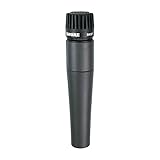
Shure SM57 Dynamic Microphone
- Cardioid pattern
- 40Hz-15kHz range
- Handles high SPL
- Legendary durability

Sennheiser e609 Silver
- Supercardioid pattern
- Hangs over amps
- Great isolation
- 10-year warranty

AUDIX i5 Dynamic Instrument Mic
- Cardioid pattern
- 50Hz-16kHz range
- Snare and guitar amp
- Natural sound
Best Instrument Microphones in 2026
Here is a complete comparison of all 10 instrument microphones we reviewed. This table gives you a quick overview of each product with its key features so you can compare side by side before reading the detailed reviews below.
| Product | Specifications | Action |
|---|---|---|
|
Shure SM57 Dynamic Microphone
|
|
Check Latest Price |
|
Sennheiser e609 Silver
|
|
Check Latest Price |
 Sennheiser E604
|
|
Check Latest Price |
 AKG P170 Condenser
|
|
Check Latest Price |
 Audio-Technica PRO 35
|
|
Check Latest Price |
 Behringer B 906
|
|
Check Latest Price |
 Shure BETA 57A
|
|
Check Latest Price |
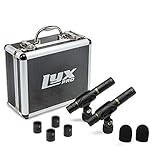 LyxPro SDPC-2 Stereo Pair
|
|
Check Latest Price |
|
AUDIX i5 Instrument Mic
|
|
Check Latest Price |
 Sennheiser E906
|
|
Check Latest Price |
1. Shure SM57 Dynamic Microphone – The Industry Standard Workhorse
Shure SM57 Dynamic Microphone – Wired Cardioid XLR Instrument Handheld Mic for Guitar Amplifiers, Snare Drum, Percussion, Live Sound & Studio Recording, Black
Dynamic cardioid mic
40Hz-15kHz frequency response
XLR connector
10 ounces
Handles high SPL
Pros
- Legendary rugged construction and durability
- Excellent frequency response with presence boost for instrument clarity
- Precise cardioid pickup pattern isolates sound source
- Handles high sound pressure levels without distortion
- Versatile across guitar amps drums brass and vocals
Cons
- Requires close positioning for optimal vocal recording
- Requires audio interface and preamp for best results
I have owned at least two Shure SM57s for over a decade, and they have survived drops, spills, being tossed into gig bags, and years of heavy studio use without ever missing a beat. This is the microphone you will find in every professional studio and on every major stage in the world. There is a reason for that kind of ubiquity.
The SM57 features a contoured frequency response with a presence boost around 5 kHz that brings out the attack and clarity of instruments. On a snare drum, it captures the crack of the stick hit perfectly. On a guitar amp, it reproduces the midrange punch that defines rock and blues tones. The cardioid pickup pattern does an excellent job of rejecting sound from behind the mic, which means less bleed from other instruments in a live setting.
What impresses me most is how this microphone handles high sound pressure levels. I have shoved an SM57 directly into the grill of a cranked 100-watt Marshall half-stack and it never distorted. That kind of toughness makes it perfect for recording electric guitar cabinets, snare drums, tom-toms, brass instruments, and even vocals in a pinch. It is the swiss army knife of the microphone world.
The frequency response of 40 Hz to 15 kHz is not the widest on paper, but the tuning is what matters. Shure voiced this mic specifically to flatter instruments, and decades of professional engineers agree they got it right. You will not get the airy top-end detail of a condenser, but you also will not get the harshness or fragility that comes with one in a live setting.
Build quality is where the SM57 truly shines. The body is die-cast metal, the grille is hardened steel, and the internal shock mounting protects the cartridge from rough handling. I have seen these mics used as drum keys in emergencies. They are practically indestructible.
What Instruments It Works Best On
The SM57 excels on snare drums, guitar amplifiers, bass cabinets, toms, brass instruments like trumpets and saxophones, and even acoustic guitar if positioned well. For live sound reinforcement, it is the default choice for miking amplifiers and snare drums. In the studio, it pairs beautifully with a condenser mic for blended tones on guitar cabs and acoustic instruments.
I have also used it for podcasting and voiceover work when I needed something rugged and reliable. The proximity effect gives vocals a warm, intimate quality when you get close to the grille. It is not the most nuanced vocal mic, but it gets the job done with character.
What You Should Know Before Buying
The SM57 requires an XLR cable and an audio interface or mixer with a preamp to function. It does not connect via USB. You will also want a decent mic stand and a clip, both of which are included in the box along with a storage bag. The included A25D swivel stand adapter works well for most applications but can be upgraded to a shock mount if you need extra isolation.
One thing to keep in mind is that while the SM57 is versatile, it is not the best choice for every situation. For recording delicate acoustic instruments, capturing drum overheads, or miking a choir, you would be better served by a condenser microphone. The SM57 is a tool for close-miking loud, punchy sources where durability and character matter more than pristine detail.
2. Sennheiser e609 Silver – Best for Guitar Amplifiers
Sennheiser Professional e 609 Silver Super-Cardioid Instrument Microphone,Wired, Wireless
Dynamic supercardioid mic
40Hz-18kHz
XLR connector
120 grams
Hang-over-amp design
Pros
- Exceptional sound quality on guitar cabinets
- Easy to position without a stand
- Effective at cutting out rear frequencies
- Compact and lightweight design
- Excellent for live floor recordings
Cons
- Housing around grill is plastic
- Can be bright on some setups
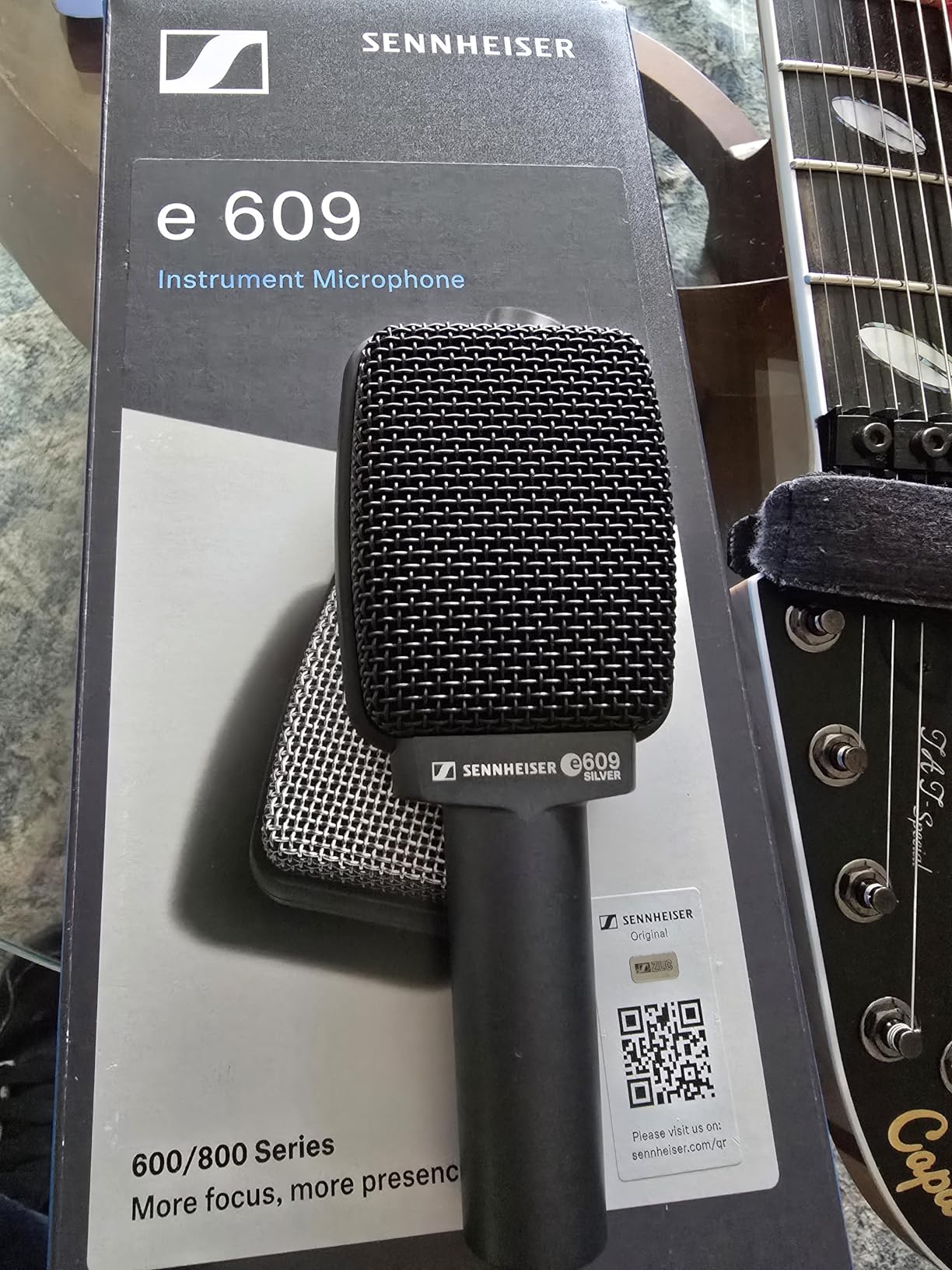
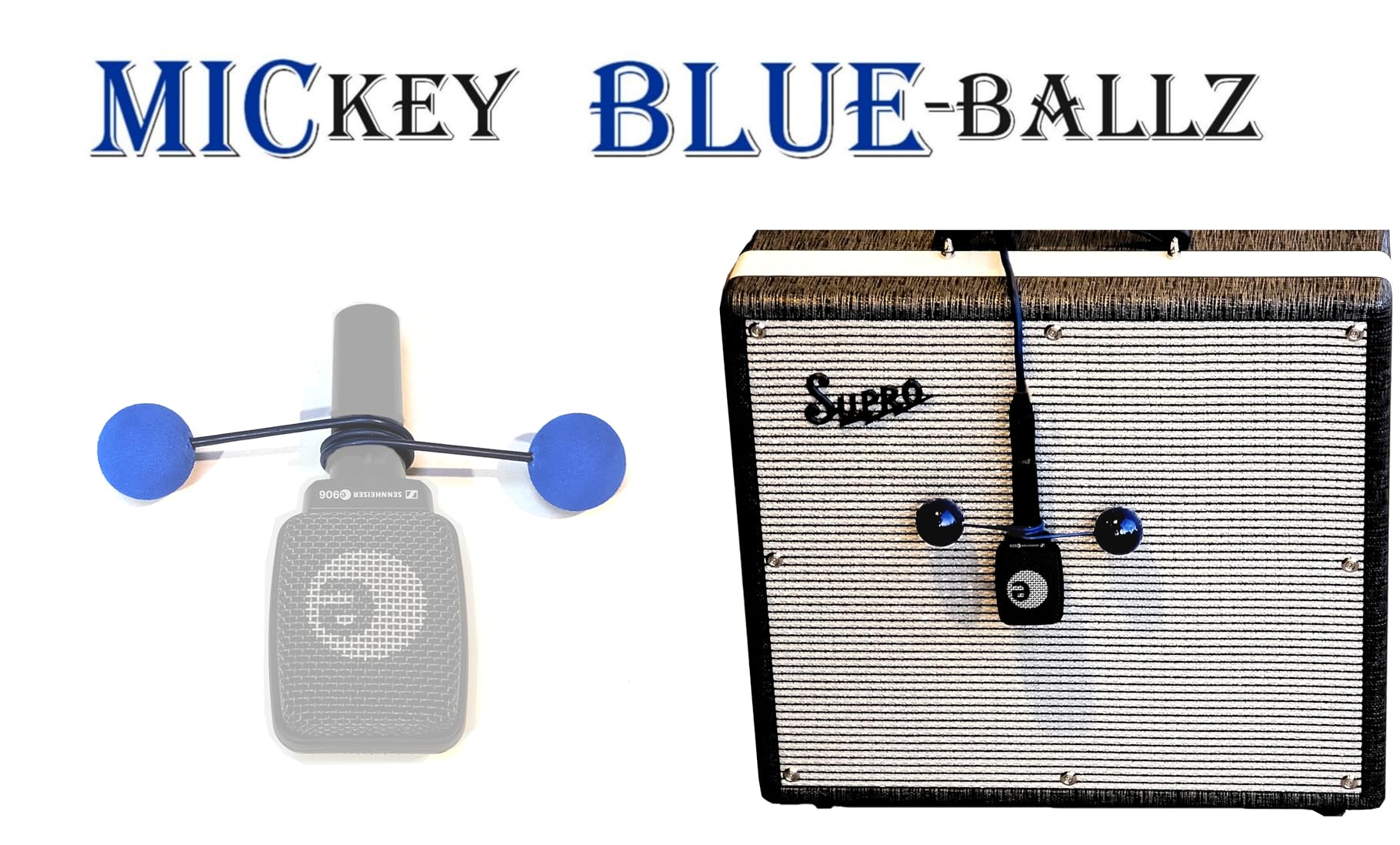
The Sennheiser e609 Silver has become my go-to microphone for recording guitar amplifiers, and for good reason. Its unique flat profile design means you can literally drape it over the front of a guitar cabinet using its cable, no mic stand required. That feature alone saves setup time and eliminates the hassle of positioning a stand in front of a combo amp on a cramped stage.
In terms of sound, many engineers and guitarists I have spoken with actually prefer the e609 over the SM57 for guitar cabinets. It delivers more body and fullness in the low-midrange while maintaining clarity on top. The supercardioid pattern provides excellent off-axis rejection, which means you hear more of your amp and less of the room or other instruments bleeding in.
The frequency response runs from 40 Hz to 18 kHz, giving it slightly more high-end extension than the SM57. This translates to a more open, detailed sound that captures the character of your amplifier more accurately. I noticed this particularly when recording clean tones and edge-of-breakup sounds where nuance matters.
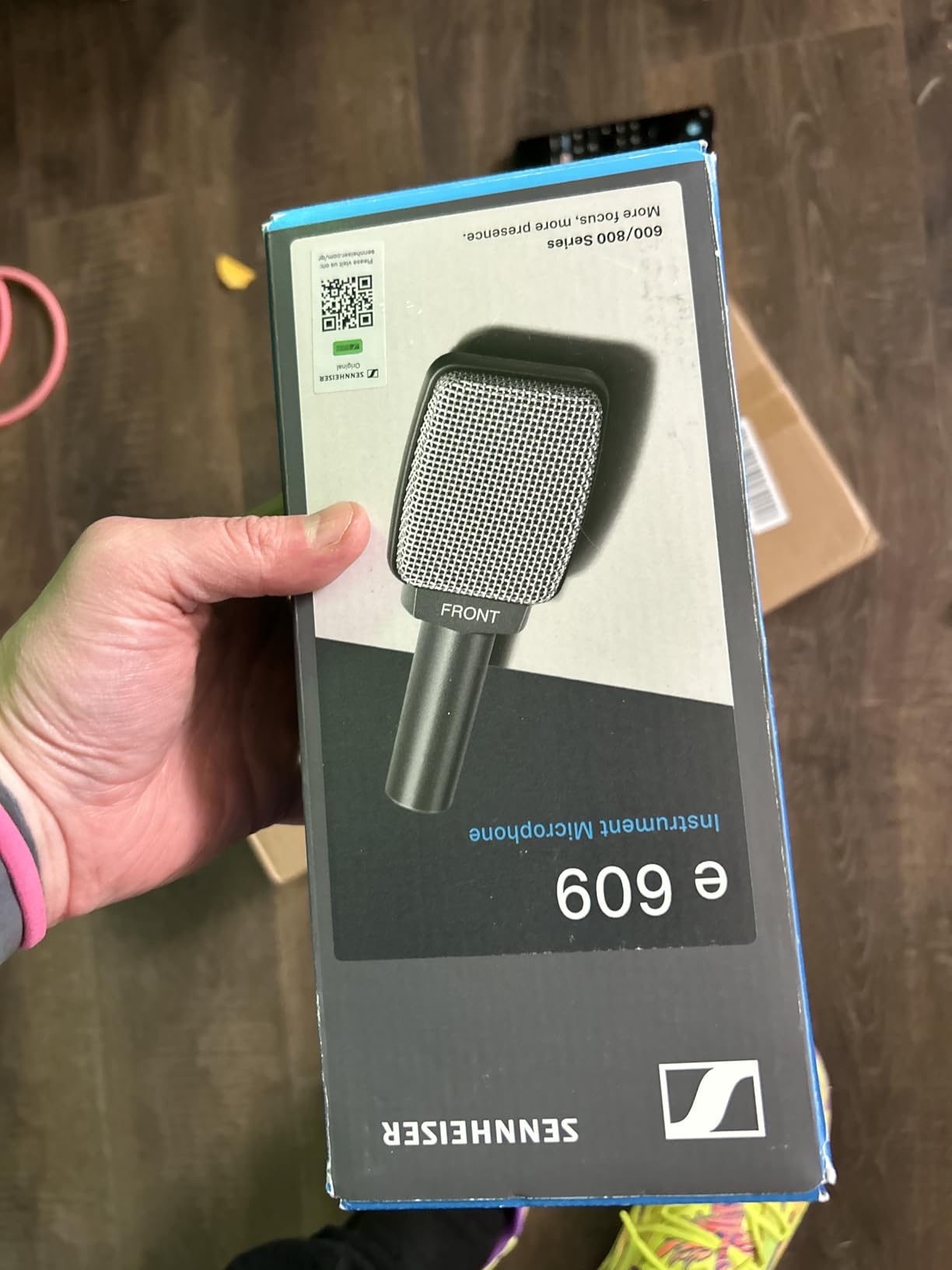
The hum-compensating coil is a thoughtful feature that reduces electrical interference, which is especially important when you are placing the mic near high-current devices like amplifiers and power supplies. In my testing, the e609 stayed impressively quiet even in electrically noisy environments.
At just 120 grams, this is one of the lightest instrument mics on the market. The flat shape fits neatly in a gig bag pocket. Sennheiser backs it with a 10-year warranty, which tells you they stand behind the build quality despite the plastic grille housing.
The supercardioid pattern does pick up slightly from the rear compared to a pure cardioid, but in practice the off-axis rejection is strong enough for most live situations. I have used it on festival stages with multiple amp setups nearby and bleed was never a significant problem.
Ideal Instruments and Placement Tips
The e609 was designed specifically for guitar amplifiers, and that is where it shines brightest. Position it flat against the grill cloth, either dead center on the speaker cone for the brightest sound or toward the edge for a warmer, darker tone. Experiment with placement because a half-inch movement changes the character dramatically.
It also performs admirably on percussion, brass, and as a hi-hat mic in a pinch. Some engineers use it on snare drums, though its flat shape is less conventional for that application than a standard handheld dynamic like the SM57.
Durability and Long-Term Ownership
The main concern I have with the e609 is the plastic housing around the grille. While it has held up fine for me over several years of regular use, heavy-handed drummers or constant touring might eventually cause issues. The metal body is solid, and the internal components are well-protected, but the grille area requires more care than the nearly indestructible SM57.
That said, the 10-year warranty provides serious peace of mind. Sennheiser has a reputation for honoring their warranties without hassle, and the e609 is built to professional standards despite the plastic accents.
3. Sennheiser E604 – Best for Drums and Percussion
Sennheiser Professional E 604 Compact Dynamic Cardioid Instrument Microphone,Charcoal
Dynamic cardioid mic
20Hz-20kHz
XLR connector
Compact drum mic
160dB SPL handling
Pros
- Optimized for drum sets and percussion
- Very high sound pressure handling above 160dB
- Balanced clear low distortion signal
- Low sensitivity to impact and handling noise
- Compact design for easy positioning
Cons
- Lower signal-to-noise ratio compared to alternatives
When I first started miking full drum kits, the Sennheiser E604 was recommended to me by a veteran studio engineer. After using it on toms, snare, and percussion for several recording sessions, I understood why it has such a loyal following among drummers and live sound engineers.
The E604 is purpose-built for drums, and that specialization shows. It handles sound pressure levels above 160 dB without flinching, which means it can sit inches from a snare drum hit at full force and still deliver a clean, undistorted signal. That kind of SPL handling is essential for close-miking drums where the acoustic energy is enormous.
The sound quality surprised me. Despite being a dynamic mic, the E604 produces a balanced and clear signal that approaches the quality of high-end studio condensers. The frequency response of 20 Hz to 20 kHz covers the full audible spectrum, which means it captures the deep fundamental of a floor tom and the sharp attack of a snare with equal accuracy.
What makes this mic practical for drum kits is the integrated drum clip. It attaches directly to the rim of a drum without requiring a separate stand, which saves space and setup time. The compact design means it tucks neatly into tight spaces between cymbals and hardware.
Handling noise is minimal thanks to the internal shock mounting. Drummers hit hard, and vibrations travel through hardware, but the E604 isolates the capsule effectively. I noticed very little mechanical noise bleeding into my recordings even on aggressive performances.
Sennheiser includes a 10-year warranty, matching the e609. The charcoal-colored body feels rugged and professional, and the build quality inspires confidence for long-term touring use.
Best Drum Miking Applications
The E604 excels on rack toms, floor toms, and snare drums. For a full kit, many engineers buy three or four of these and use them in combination with a kick drum mic and overhead condensers. The consistent tonal character across multiple E604s makes them ideal for a unified drum sound.
I have also had success using the E604 on brass and woodwind instruments. The high SPL handling and clear reproduction translate well to trumpets, trombones, and saxophones in both live and studio contexts.
Limitations and Considerations
The signal-to-noise ratio of 25 dB is lower than some competitors, which means you may hear slightly more noise floor in quiet passages. In practice, this is rarely an issue with drums because the source signal is so loud, but it is worth noting if you plan to use the E604 on quieter instruments.
The cardioid pattern is effective but not as tight as a supercardioid. On a busy stage with lots of cymbals nearby, you may get some hi-hat bleed into your tom mics. Careful positioning and good gain staging can minimize this.
4. AKG Pro Audio P170 – Best Budget Condenser for Acoustic Instruments
AKG Pro Audio P170 Professional, All Metal, Switchable Attenuation, Small Diaphragm Condenser Instrumental Microphone Silver Blue
Small diaphragm condenser
Cardioid pattern
Switchable 155dB pad
Phantom power required
All-metal body
Pros
- Excellent value for the price
- Great sound quality for acoustic guitar
- Switchable attenuation pad for high SPL up to 155dB
- Rugged all-metal body construction
- Works with most mixers and interfaces
Cons
- Requires phantom power 48V
- Not Prime eligible
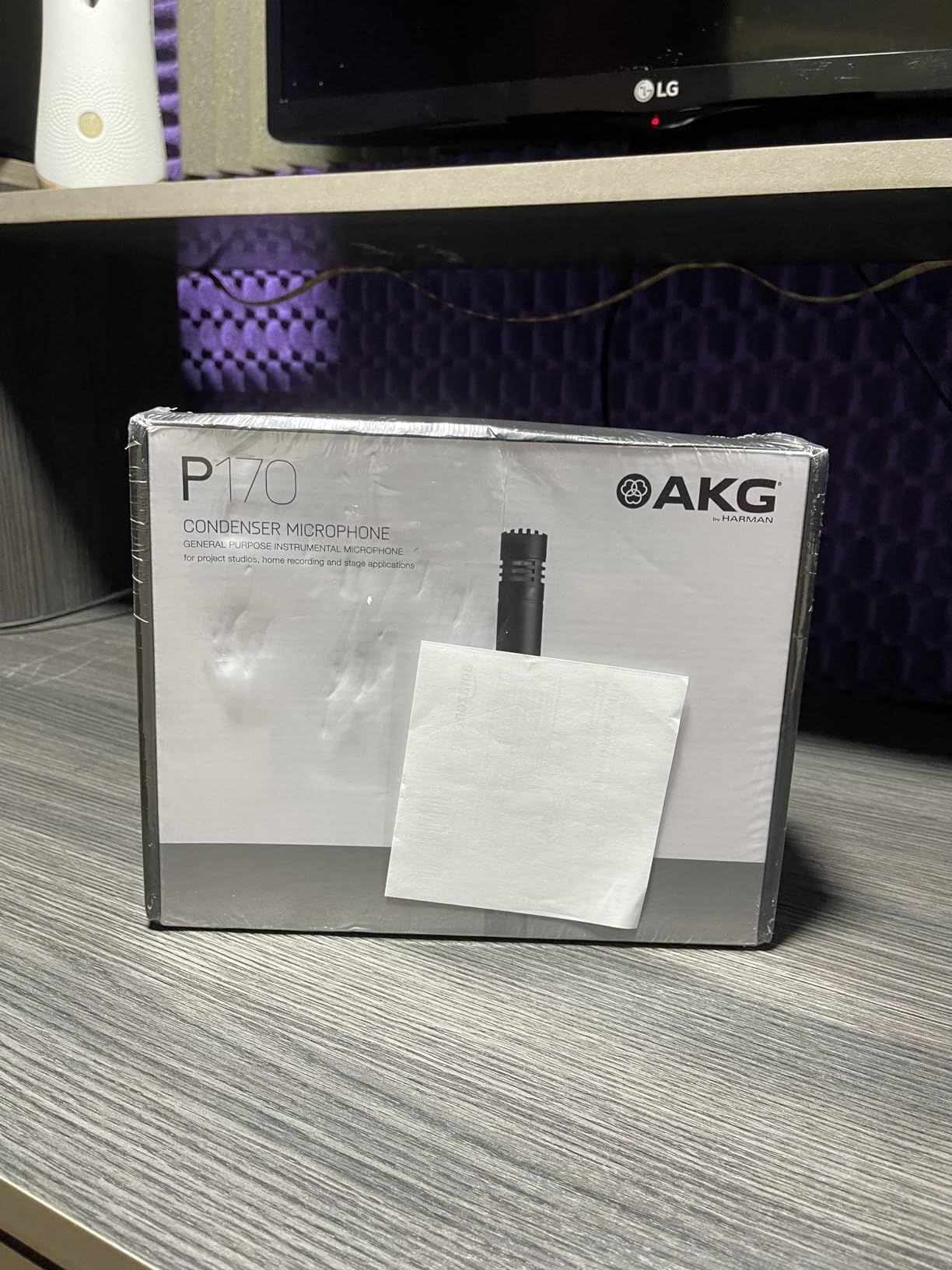
The AKG P170 is the microphone I recommend to home studio owners who want condenser-quality sound without spending hundreds of dollars. As a small diaphragm condenser, it captures the detail and nuance that dynamic mics simply cannot reproduce, making it perfect for acoustic guitar, piano, strings, and overhead drum recording.
I tested the P170 on acoustic guitar first, and the results were impressive for the price. The high frequencies came through with sparkle and air, the midrange had natural warmth, and the transient response captured the pluck of each string with accuracy. This is the kind of detail that makes a recording sound professional rather than amateur.
The switchable attenuation pad is a feature I did not expect at this price point. Engaging the pad allows the mic to handle sound pressure levels up to 155 dB, which means you can use it on loud sources like snare drums, guitar amps, and brass instruments without distortion. This versatility makes the P170 a genuine all-rounder for a small studio.
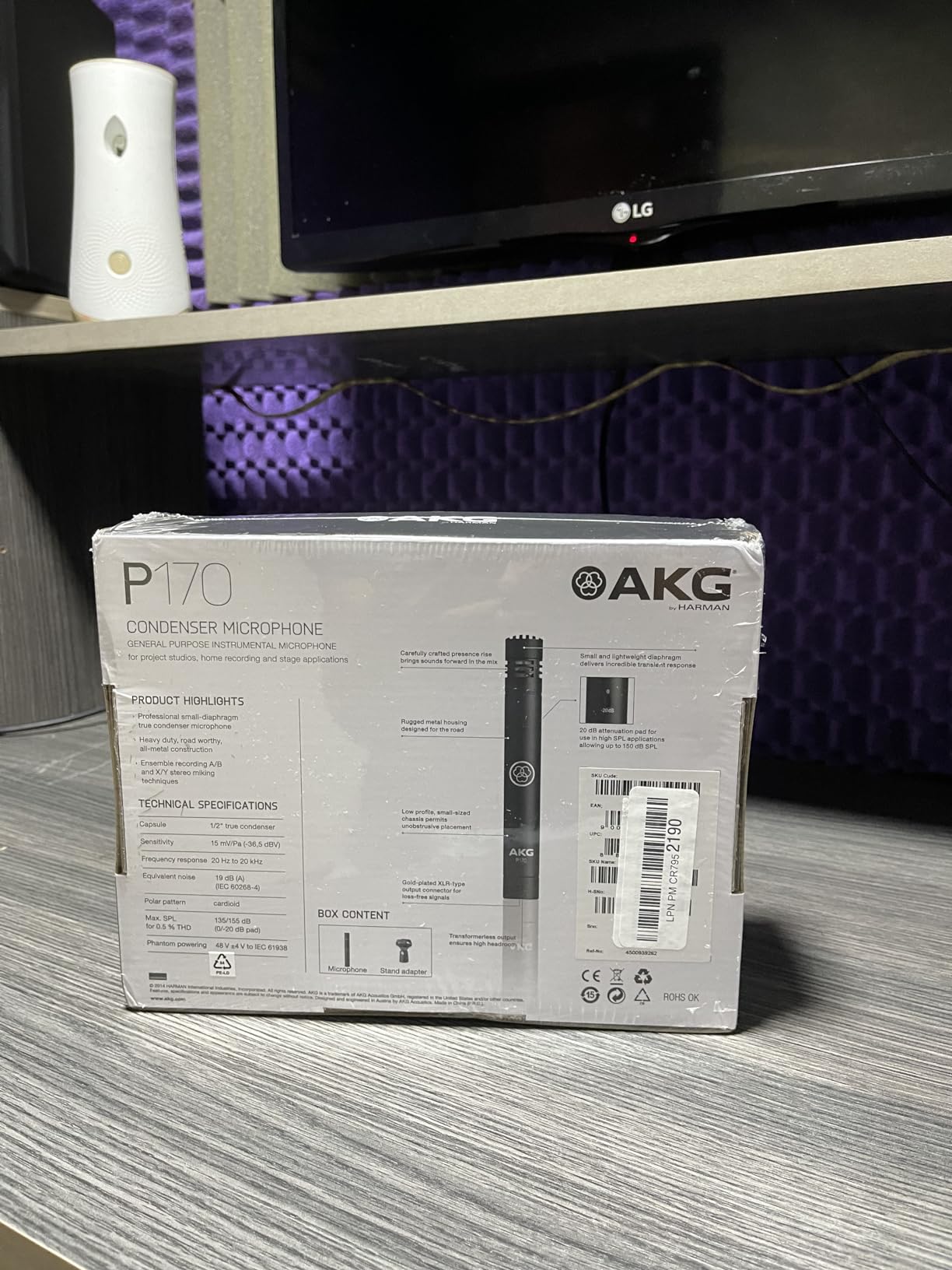
The all-metal body feels solid and roadworthy, not like a toy. AKG has a long history of building professional microphones, and the P170 benefits from that engineering heritage. The finish is clean and professional, and the build quality exceeds what I would expect at this budget tier.
Being a condenser microphone, the P170 requires 48V phantom power from your audio interface or mixer. This is standard for condensers but worth noting if you are upgrading from a USB dynamic mic. Most modern interfaces provide phantom power, so it should not be an issue for most users.
The cardioid polar pattern provides good front-address pickup while rejecting sound from the sides and rear. In an untreated room, this helps minimize unwanted reflections and background noise. It is not as directional as a supercardioid, but for most home studio applications, cardioid is the most practical choice.
Instruments Where the P170 Shines
This mic excels on acoustic guitar, drum overheads, hi-hats, piano, strings, choir, and saxophone. The small diaphragm design captures fast transients accurately, which is essential for instruments with sharp attacks like acoustic guitar picks and cymbal hits.
For drum overheads, a pair of P170s in a spaced or XY configuration gives you a clear, detailed picture of the entire kit. The cymbals come through with shimmer and definition, and the overall kit sound has depth and dimension.
What to Watch Out For
The P170 is not Prime eligible on Amazon, which means shipping may take longer than usual. Also, as a condenser requiring phantom power, it is less plug-and-play than a USB mic. You need an XLR cable, an audio interface with phantom power, and a mic stand to get started.
The self-noise is acceptable but not silent. In very quiet recording situations, you may notice a slight noise floor. This is typical for budget condensers and is usually masked by the instrument signal in practice.
5. Audio-Technica PRO 35 – Best Clip-On Condenser for Acoustic Instruments
Audio-Technica PRO 35 Cardioid Condenser Clip-on Instrument Microphone
Cardioid condenser clip-on
50Hz-16kHz
Phantom power required
UniMount clip
6-foot cable
Pros
- Excellent clip-on design for acoustic instruments
- Perfect for violin saxophone and acoustic guitar
- UniMount clip provides shock resistance
- Crystal clear sound quality
- 6 foot cable provides good reach
Cons
- Requires phantom power
- Limited stock available
- May pick up body movement if not positioned carefully
The Audio-Technica PRO 35 solves a problem that plagues many acoustic musicians: how do you mic an instrument that moves during performance? Whether you are a fiddle player dancing around the stage or a saxophonist who steps back from the mic for certain passages, a traditional stand-mounted mic creates challenges.
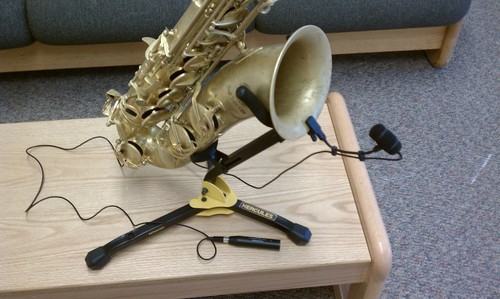
The PRO 35 clips directly to your instrument using the UniMount system, which provides secure attachment and shock resistance. I tested it on a violin, an acoustic guitar, and a trumpet, and in each case the clip held firmly without marring the finish. The mic stays with the instrument, which means consistent sound regardless of movement.
Sound quality is where this microphone really impresses. The condenser capsule captures the full frequency range of acoustic instruments with clarity and detail. On violin, it reproduced the bowing texture and tonal color beautifully. On acoustic guitar, it captured both the string attack and the body resonance in a balanced, natural way.
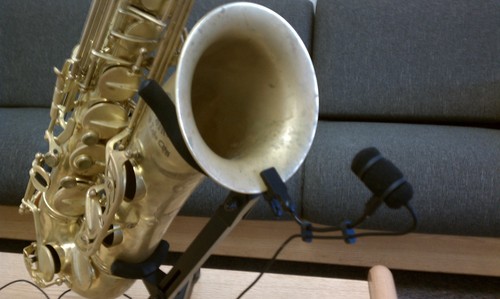
The 6-foot permanently attached cable gives you plenty of reach to connect to a wireless transmitter or a stage box. This is longer than many clip-on mics provide, and it gives performers freedom to move without yanking the cable loose.
The cardioid pattern does a good job of rejecting sounds from the sides and rear. On stage with multiple instruments nearby, this helps isolate your instrument and reduces bleed. The extended frequency response captures subtle nuances that dynamic clip-on mics miss entirely.
I was particularly impressed by how the PRO 35 handles the saxophone. The warmth of the lower register and the brightness of the altissimo range both came through with accuracy. It is the kind of sound that makes audiences lean in and listen.
Best Instruments for the PRO 35
This microphone is ideal for violin, saxophone, acoustic guitar, brass instruments, and woodwinds. Any instrument that benefits from close miking and requires freedom of movement is a candidate. The clip design works particularly well on bell instruments like trumpets and saxophones.
For live performance, the PRO 35 eliminates the need for a mic stand in front of the performer, which improves stage aesthetics and gives the musician room to breathe and move naturally.
Positioning and Potential Issues
The main thing to watch with any clip-on mic is mechanical noise. If the clip is positioned where it can pick up breathing, body movement, or instrument handling noise, you will hear it in the recording. Take time to experiment with placement before an important session or performance.
Also note that stock levels for the PRO 35 have been limited, so if you see it available, it is worth grabbing. The phantom power requirement means you need an interface, mixer, or wireless system that provides 48V.
6. Behringer B 906 – Best Budget Mic for Guitar Amps
Behringer B 906 Dynamic Microphone for Instrument and Vocal Applications
Dynamic supercardioid mic
Switchable EQ presets
XLR connector
190 grams
Built for guitar amps
Pros
- Professional dynamic mic for instruments and vocals
- Solid cast metal body and metal grill
- Sound quality comparable to Sennheiser e906
- Versatile on guitar amps vocals and drums
- Lightweight with good clarity and low noise
Cons
- May require EQ adjustments for some applications
- Build quality questions compared to higher-end competitors
When I first saw the price of the Behringer B 906, I was skeptical. A dynamic instrument microphone for under $40 that claims to compete with the Sennheiser e906? That seemed too good to be true. After testing it side by side with more expensive options, I came away genuinely surprised.
The B 906 is clearly inspired by the Sennheiser e906 in both design and application. It has a similar flat profile shape optimized for guitar amplifier miking, and it features a supercardioid polar pattern that provides excellent off-axis rejection. The sound output is strong and clear, cutting through a mix without needing excessive gain.
What sets the B 906 apart from other budget mics is the switchable sound characteristics. It offers three settings: low-cut, flat, and high-frequency boost. This gives you tonal flexibility that you normally only find on much more expensive microphones. I found the flat setting most useful for clean tones, while the high-frequency boost added bite and aggression to distorted guitar sounds.
The build is solid cast metal with a metal grille, which is more than I expected at this price. It does not feel like a premium Sennheiser, but it does not feel like a cheap toy either. It has enough weight to feel substantial in your hand.
I tested the B 906 on a guitar amp, a snare drum, and even vocals. On the guitar amp, it captured the midrange character and top-end sizzle convincingly. On snare, it handled the high SPL without distortion. On vocals, it was usable in a pinch, though this is not its primary application.
Where the B 906 Fits in Your Setup
This microphone is perfect for home studio owners and beginning engineers who need a capable instrument mic without breaking the bank. If you are just starting to build your microphone collection, the B 906 gives you professional-level sound at a fraction of the cost of established brands.
It is also a great backup mic for touring musicians. At this price, you can afford to keep a spare in your gig bag, and if it gets damaged on the road, replacing it will not devastate your budget.
Honest Limitations at This Price
The B 906 is not without compromises. The build quality, while solid for the price, does not match the tank-like durability of a Shure or Sennheiser. Long-term reliability under heavy professional use is a question mark. Some users report needing EQ adjustments to tame brightness on certain amplifiers.
The supercardioid pattern is not as refined as the one on the e906, meaning off-axis rejection is good but not great. In a dense live mix, you may notice more bleed than with premium alternatives. Still, for the price, these are acceptable trade-offs.
7. Shure BETA 57A – Best Supercardioid for Live Sound
Shure BETA 57A Instrument Microphone - Supercardioid Dynamic Mic for Vocal and Instrumental Applications with High Output Neodymium Element, Durable Steel Mesh Grille and Shock Mount
Dynamic supercardioid mic
50Hz-16kHz
Neodymium magnet
Hardened steel grille
Pneumatic shock mount
Pros
- Tailored frequency response for drums guitars vocals and horns
- Superior rejection of off-axis sound
- High gain-before-feedback for live environments
- Durable hardened steel mesh grille
- Advanced pneumatic shock mount system
Cons
- Premium price point compared to competitors
- Requires phantom power for optimal performance
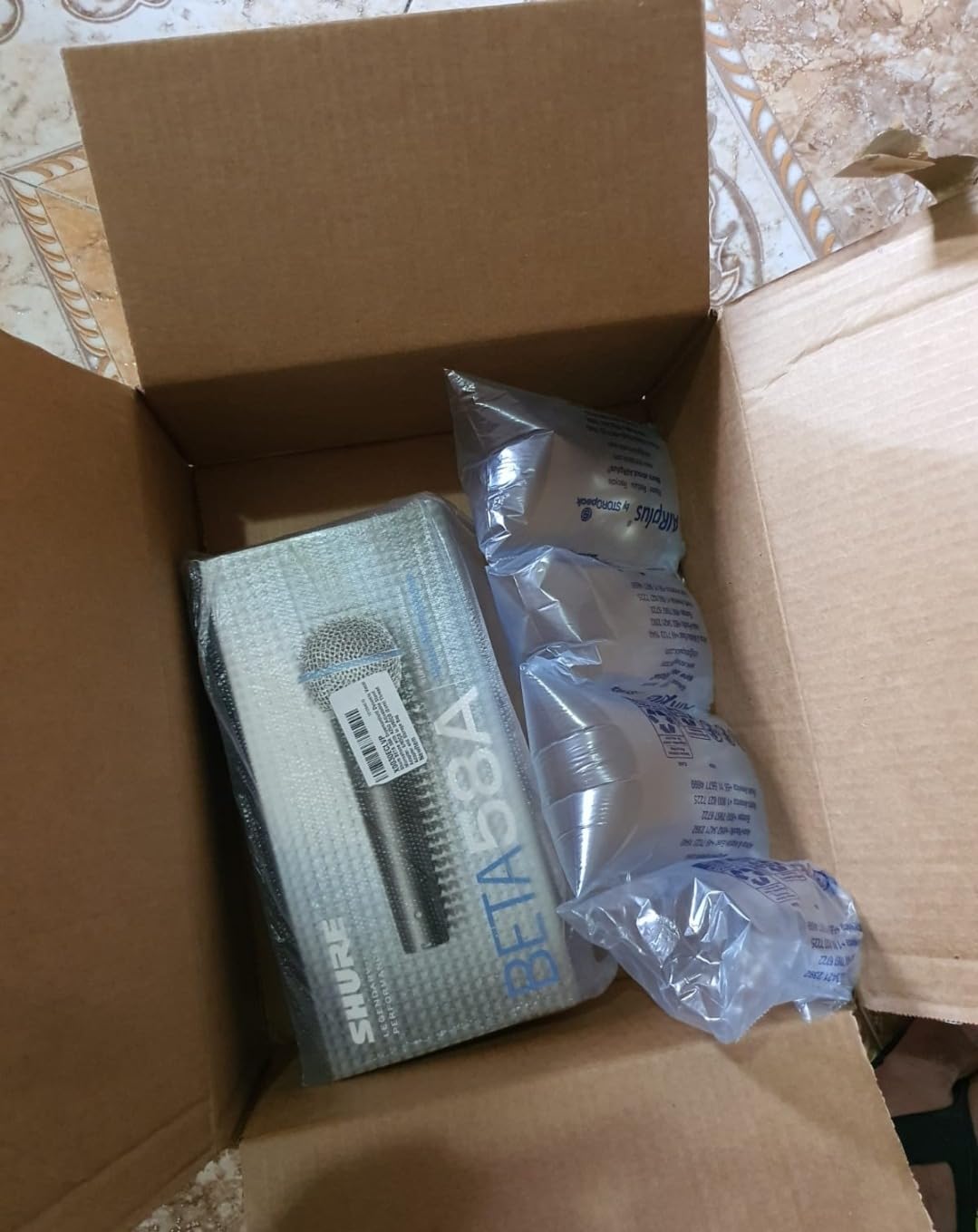
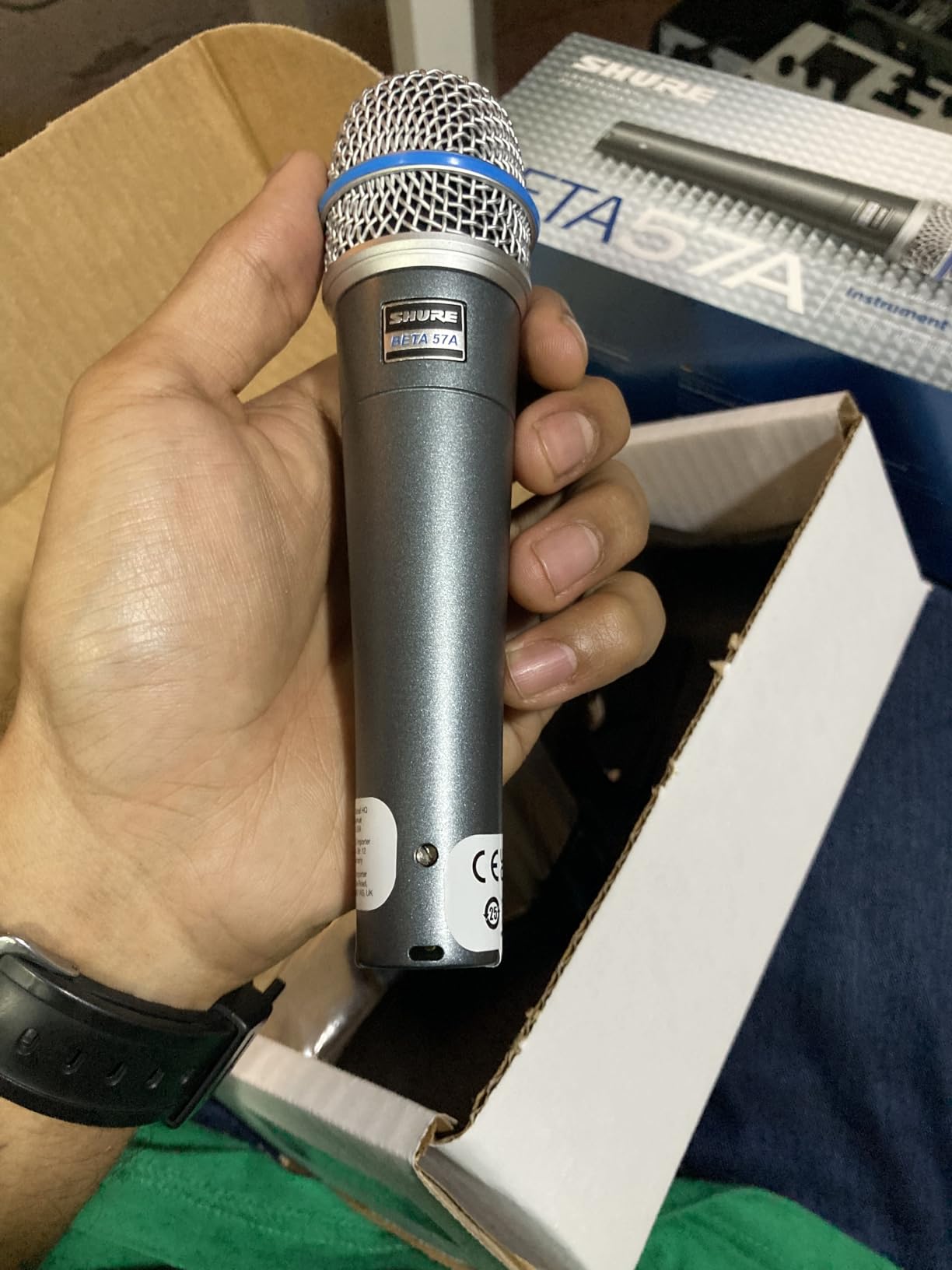
The Shure BETA 57A is essentially the SM57’s more sophisticated sibling. It takes everything that makes the SM57 great and upgrades it with a neodymium magnet for higher output, a supercardioid pattern for better off-axis rejection, and a hardened steel grille with advanced shock mounting. If the SM57 is the reliable workhorse, the BETA 57A is the refined professional.
I reached for the BETA 57A when I needed maximum gain-before-feedback in challenging live sound environments. The supercardioid pattern rejects sound from the sides much more effectively than the SM57’s cardioid, which means you can push the monitors louder before feedback occurs. For touring bands and engineers who work in difficult acoustic spaces, this is a significant advantage.
The neodymium magnet gives the BETA 57A a hotter output than the SM57, which means you need less preamp gain to achieve a strong signal. This translates to a better signal-to-noise ratio and less noise in your recordings or PA system. The difference is noticeable, especially with budget interfaces that have noisier preamps.
The tailored frequency response brings out the best in drums, guitars, vocals, and brass instruments. On a snare drum, it captures the crack and body with authority. On a brass instrument, it reproduces the harmonic complexity and projection. On vocals, it has a present, forward character that cuts through a dense mix.
The hardened steel mesh grille is built to withstand years of abuse, and the advanced pneumatic shock mount system effectively isolates the cartridge from mechanical noise and vibration. Whether it gets bumped on a mic stand or subjected to floor vibrations from a bass-heavy PA system, the BETA 57A stays clean.
Build quality matches Shure’s legendary standards. The alloy steel enclosure feels indestructible, and every component is engineered for professional use. Shure includes the A25D stand adapter, a thread adapter, and a storage bag in the box.
Where the BETA 57A Excels Over the SM57
The BETA 57A costs more than the SM57, so the question is whether the upgrade is worth it. In my experience, the answer is yes for live sound applications where feedback control is critical. The supercardioid pattern and higher output make a measurable difference on stage.
For studio recording, the difference is less dramatic. Both mics sound great on snare drums and guitar amps, and the SM57’s character has a certain mojo that many engineers prefer. If you are buying for studio use, the SM57 may be the better value. For live sound, the BETA 57A justifies its premium price.
Compatibility and Setup Notes
The BETA 57A uses a standard XLR connector and works with any audio interface, mixer, or PA system. It does not strictly require phantom power since it is a dynamic microphone, but the neodymium magnet benefits from quality preamp circuitry. Pair it with a decent interface for best results.
The supercardioid pattern means the mic picks up some sound from directly behind it, unlike a cardioid which rejects rear sound. This matters for placement: avoid pointing the rear of the mic at a monitor wedge or another loud source.
8. LyxPro SDPC-2 – Best Stereo Condenser Pair for the Price
LyxPro SDPC-2 Stereo Pair of Pencil Condenser Stick Instrument Microphone Set, Interchangeable Omni, Cardioid & Super Cardioid Capsules Included, Professional Audio Recording Acoustic & Woodwind Sound
Stereo pair small diaphragm condensers
3 interchangeable capsules
30Hz-18kHz
Phantom power required
Complete kit included
Pros
- Excellent value matched pair at budget price
- Interchangeable capsules for 3 polar patterns
- Solid all-metal construction
- Low self-noise and good sensitivity
- Versatile for acoustic instruments drums piano and choir
Cons
- Some paint flaking reported on initial use
- Case quality is decent but not premium
- Mic clips can be loose
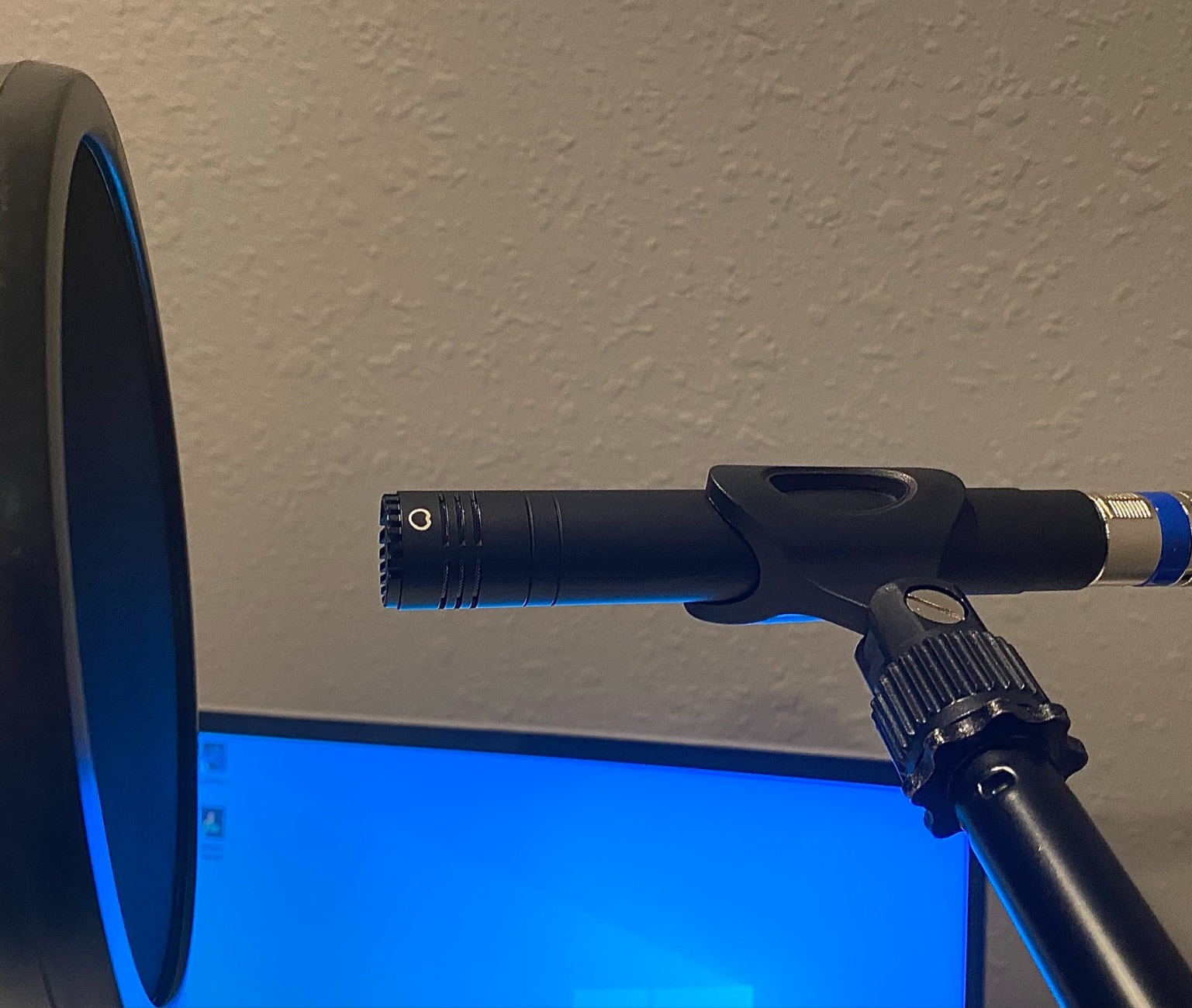
The LyxPro SDPC-2 is one of those products that makes you question why you would spend five times more on a brand-name equivalent. You get two matched small diaphragm condenser microphones, three sets of interchangeable capsules (omni, cardioid, and supercardioid), foam windscreens, mic clips, and an aluminum carrying case. That is an impressive package at this price.
I tested the SDPC-2 pair as drum overheads first, which is the most common application for matched stereo condenser pairs. In an XY configuration above the kit, they captured the cymbals with shimmer and clarity, the toms with body, and the overall kit with a natural sense of space and depth. The stereo image was wide and coherent.
The interchangeable capsule system is the standout feature. Switching between omni, cardioid, and supercardioid patterns changes the pickup characteristics dramatically, giving you three different microphones in one body. Omni is fantastic for capturing room ambience and choir recordings. Cardioid is the go-to for most close-miking applications. Supercardioid provides maximum isolation in noisy environments.
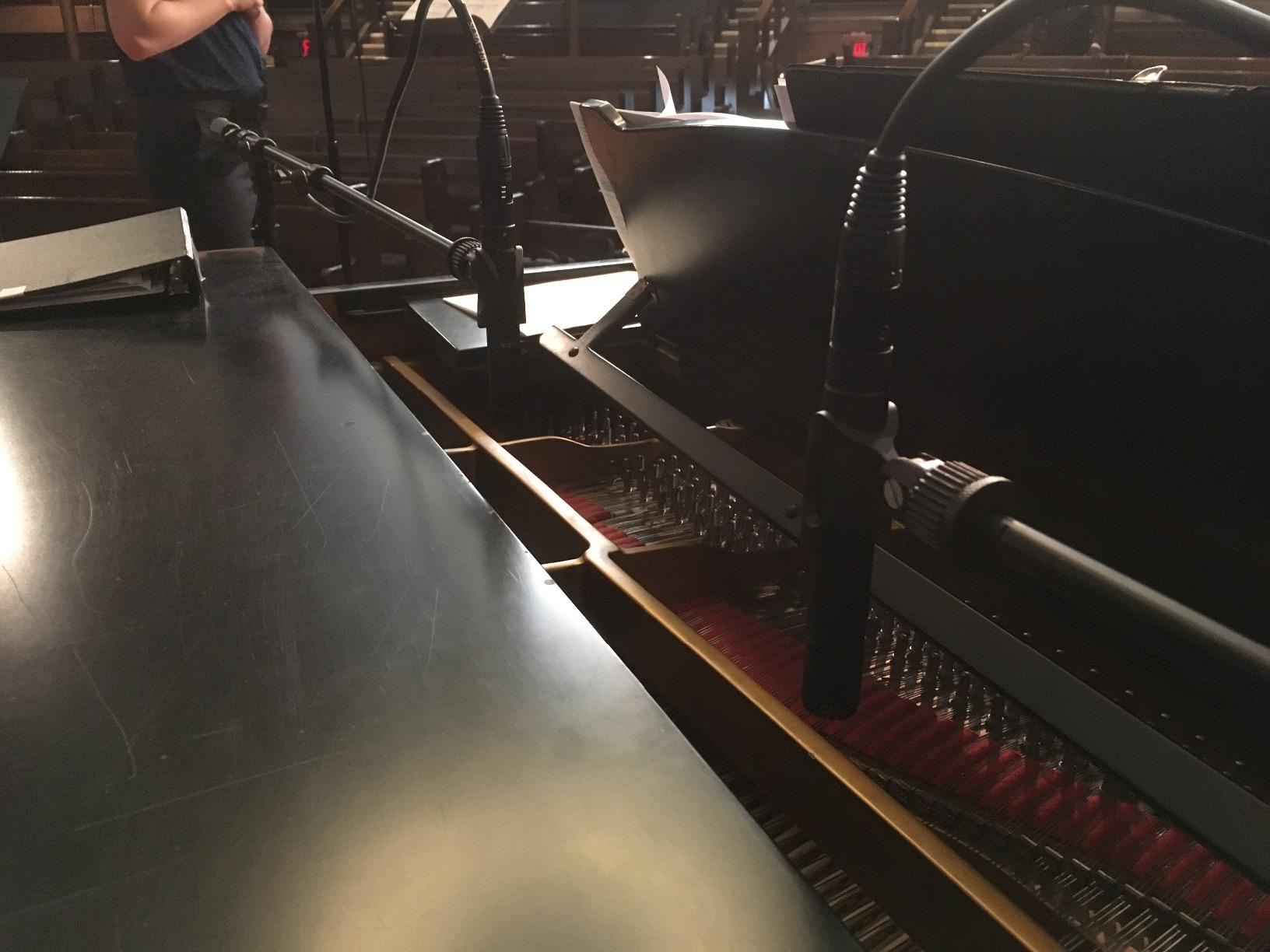
On acoustic guitar, the SDPC-2 delivered a detailed and natural sound that rivaled condensers costing significantly more. The 30 Hz to 18 kHz frequency response captures the full range of the instrument, from the deep fundamental of the low E string to the harmonic shimmer of the highest frets.
The all-metal construction feels reassuringly solid. These mics have weight and density that suggests quality components inside. The finish is clean, though some users have reported paint flaking over time with heavy use.
The complete kit is genuinely useful. The aluminum carrying case protects the mics during transport, the foam windscreens reduce breath noise and light wind interference, and the tilting mic clips allow precise positioning. Everything you need to start recording is in the box, assuming you have an interface with phantom power.
Best Applications for the SDPC-2 Pair
These mics excel as drum overheads, on acoustic guitar in a spaced pair configuration, for piano recording, on string sections, for choir and orchestral capture, and on percussion ensembles. Any application where you need stereo capture of detailed acoustic sources is fair game.
I was particularly impressed by how the omni capsules captured a choir in a reverberant space. The natural room sound blended with the direct sound in a way that felt immersive and realistic. At this price point, that kind of performance is remarkable.
Build Quality and Reliability Notes
The mic clips are the weakest link in the package. Some users report that the mics can slip in the clips if bumped, which is a concern for overhead placement. Upgrading to better clips is a cheap and easy fix. The case is functional but not premium quality, which is an acceptable trade-off given the overall value.
A small number of users have reported electrical noise on certain units, which could indicate quality control variations. LyxPro offers a warranty, and Amazon’s return policy provides additional protection if you get a faulty unit. In my testing, both mics performed cleanly.
9. AUDIX i5 – The Versatile Dynamic Alternative to the SM57
AUDIX i5 Dynamic Instrument Microphone: Pro Snare Mic/Guitar Amp Microphone - Black
Dynamic cardioid mic
50Hz-16kHz
XLR connector
Zinc enclosure
140dB SPL handling
Pros
- Superior to SM57 for snare and many instruments
- Great EQ curve with punch and top end
- Excellent for stage and studio
- Versatile on drums guitar amps horns and vocals
- Durable construction with solid feel
Cons
- May not feel as solidly constructed as the SM57
- Limited availability compared to mainstream brands
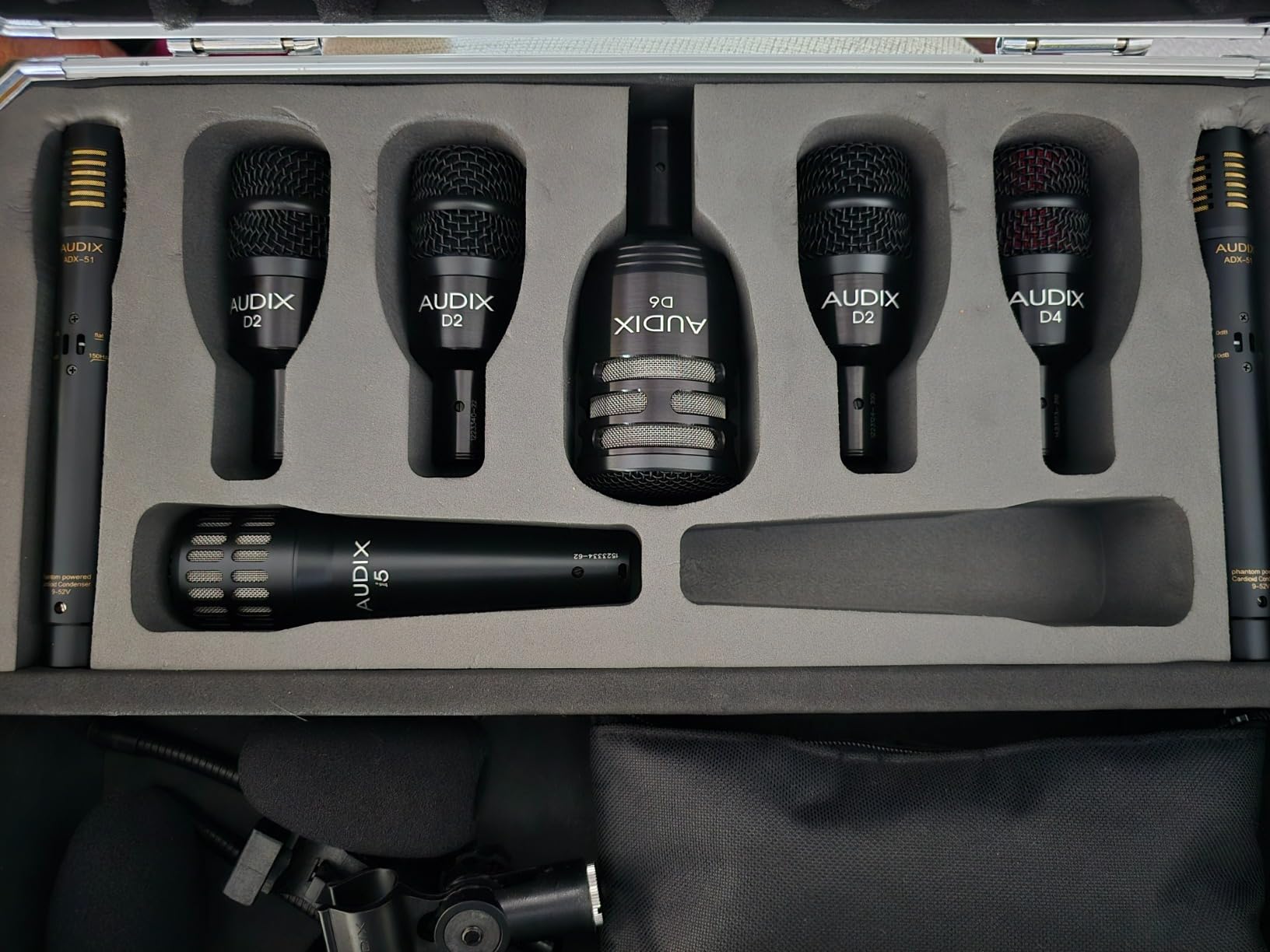
The AUDIX i5 is the microphone that many professionals quietly prefer over the SM57, and after extensive testing, I understand why. It occupies the same versatile territory as the Shure classic but brings its own sonic character that many engineers find more flattering across a wider range of sources.
On snare drums, the i5 delivers a punchy, articulate sound that captures the fundamental tone and the crack of the snare wires with excellent balance. I A/B tested it against an SM57 on the same snare with the same positioning, and the i5 consistently produced a more natural, less mid-forward sound that sat better in the mix without heavy EQ.
The frequency response of 50 Hz to 16 kHz is similar to the SM57 on paper, but the voicing is different. The i5 has a smoother presence peak that adds clarity without harshness. On guitar amps, it captures the midrange growl and top-end sizzle with a slightly more open character than the SM57.
I was pleasantly surprised by how well the i5 handles vocals. Many dynamic instrument mics sound honky or nasal on voice, but the i5 produced a natural vocal tone that worked for both male and female singers. The proximity effect is well-controlled, adding warmth without muddiness when you get close.
The zinc enclosure feels dense and solid, and the flat cap design is distinctive and practical. The i5 handles sound pressure levels up to 140 dB, which is more than enough for any instrument you would close-mic with a dynamic microphone.
AUDIX includes a heavy-duty mic clip and a carrying pouch. The mic clip is more robust than the standard Shure clip, which is a nice touch. Overall build quality inspires confidence for both studio and live use.
Versatility Across Instruments
The i5 is one of those rare microphones that genuinely works well on almost everything. I have used it on snare drums, guitar amps, bass cabinets, horns, vocals, upright bass, banjo, and percussion. In every case, it delivered a usable and often excellent sound without requiring extensive EQ or processing.
For engineers building their first microphone collection, the i5 is a strong alternative to the SM57. It gives you professional results across a wider range of sources, and its slightly different voicing means it complements rather than duplicates the SM57 if you eventually own both.
Why It Is Less Common Than the SM57
The main reason the i5 is less ubiquitous than the SM57 is brand recognition and distribution. AUDIX is a respected professional brand, but Shure has a larger market presence and deeper history. The i5 is also slightly harder to find in some markets, though it is readily available online.
Some users feel the i5 does not have the same indestructible quality as the SM57, though in my experience it is built to professional standards. The zinc body is solid, and the internal construction is designed for years of reliable use.
10. Sennheiser E906 – Premium Guitar Amp Microphone
Sennheiser Pro Audio E906 Microphone, black
Dynamic supercardioid mic
40Hz-18kHz
3 switchable presence settings
Metal construction
10-year warranty
Pros
- Exceptional sound quality with three switchable presence settings
- Supercardioid pattern for excellent off-axis rejection
- Compact and robust metal construction
- Ideal for guitar amps percussion and drums
- 10-year warranty for peace of mind
- High fidelity natural sound reproduction
Cons
- Premium price point
- Requires proper technique for optimal placement
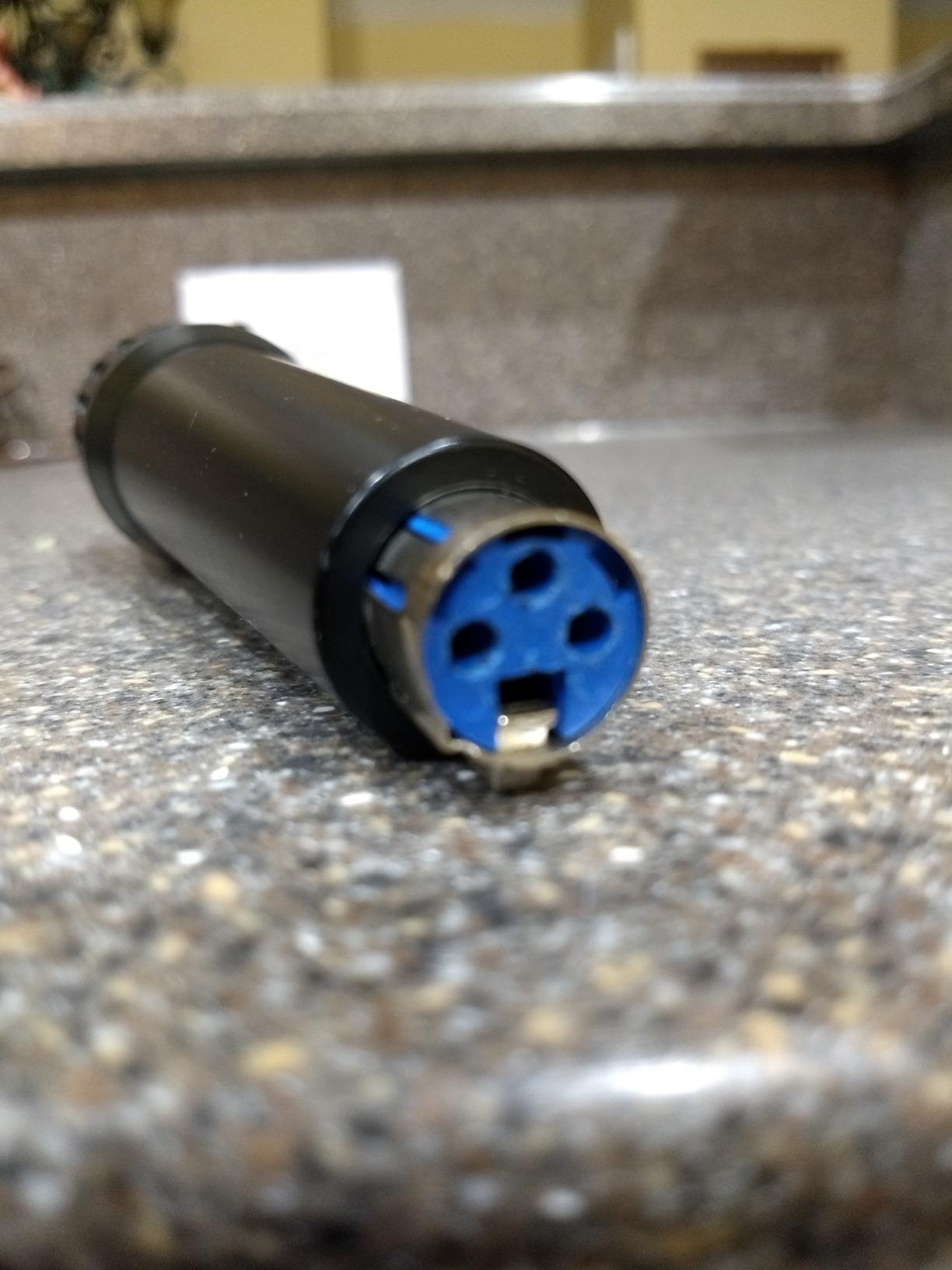
The Sennheiser E906 represents the top tier of guitar amplifier microphones, and its near-perfect rating from hundreds of reviewers tells you everything you need to know about its sound quality. This is the microphone that many professional engineers reach for when capturing electric guitar is the most critical element of the recording.
What makes the E906 special is its three switchable presence settings. Unlike the e609 Silver, which has a fixed voicing, the E906 lets you choose between three character presets that shape the high-frequency response. This gives you tonal flexibility without needing to reposition the mic or reach for EQ.
I tested all three settings on a variety of guitar amps. The first setting provides a warm, full-bodied sound that works beautifully for clean and crunch tones. The second offers a flat, neutral response that captures the amp exactly as it sounds in the room. The third adds presence and bite that helps distorted guitars cut through a dense mix.

The supercardioid pattern provides excellent off-axis rejection, isolating your amp from other sound sources on stage or in the studio. Like the e609, the E906 features a flat profile design that allows it to be draped over a guitar cabinet without a mic stand, which is incredibly convenient for both live and studio use.
Build quality is exceptional. The metal construction feels premium and substantial, and the compact form factor makes it easy to position in tight spaces. Sennheiser backs the E906 with a 10-year warranty, which reflects their confidence in its long-term durability.
The frequency response of 40 Hz to 18 kHz gives the E906 slightly more high-end extension than standard dynamic mics. This translates to a more open, detailed sound that captures the air and sparkle of clean guitar tones and the aggression and definition of high-gain sounds.
Where the E906 Justifies Its Premium Price
Compared to the e609 Silver, the E906 offers superior sound quality, better build, and the three switchable presence settings. If you record guitar amps regularly and demand the best possible capture, the E906 delivers a noticeable improvement. The difference is not night and day, but it is audible and meaningful for professional work.
The E906 also excels on percussion and drums. Its high SPL handling and clear reproduction make it suitable for snare drums, toms, and percussion instruments where you want more detail than a standard dynamic provides.
Is It Worth the Investment
If you are a casual home recordist, the e609 Silver or even the Behringer B 906 will serve you well at a lower cost. But if guitar tone is central to your music and you want the best possible sound from your amplifier recordings, the E906 is worth every penny. The three presence settings alone give it versatility that justifies the premium price.
Buying Guide: How to Choose the Best Instrument Microphone
Choosing the right instrument microphone requires understanding a few key concepts that determine how a mic captures sound. I will walk you through the essentials so you can make an informed decision based on your specific recording needs.
Dynamic vs Condenser vs Ribbon: Which Type Do You Need
Dynamic microphones use a moving coil and diaphragm to convert sound into electrical signals. They are rugged, handle high sound pressure levels without distortion, and require no external power. Dynamic mics like the SM57 and e609 are ideal for loud sources such as guitar amplifiers, snare drums, and brass instruments. They excel in live sound situations where durability and feedback rejection matter most.
Condenser microphones use a charged diaphragm and backplate to capture sound. They are more sensitive than dynamic mics, capture a wider frequency range, and reproduce fast transients with greater accuracy. Condensers like the AKG P170 and LyxPro SDPC-2 are ideal for acoustic instruments, drum overheads, vocals, and any application where detail and clarity are paramount. They require phantom power (48V) from your audio interface or mixer.
Ribbon microphones use a thin metal ribbon suspended between magnets. They produce a warm, smooth sound with a natural high-frequency roll-off that many engineers love on guitar amps, brass, and vocals. Ribbon mics are fragile and typically more expensive, so they are usually reserved for professional studio environments. None of the mics in this roundup are ribbon types, but they are worth knowing about as you advance.
Polar Patterns Explained
A microphone polar pattern describes how sensitive the mic is to sound arriving from different angles. Understanding polar patterns helps you choose a mic that captures what you want and rejects what you do not.
Cardioid is the most common pattern for instrument miking. It picks up sound from the front, rejects sound from the rear, and has reduced sensitivity at the sides. This makes it versatile and easy to use in most situations. The SM57, E604, AKG P170, and AUDIX i5 all use cardioid patterns.
Supercardioid is more directional than cardioid. It has a narrower pickup angle from the front and better rejection at the sides, but it picks up some sound from directly behind the mic. Supercardioid mics like the e609, BETA 57A, B 906, and E906 provide superior isolation in noisy environments and higher gain-before-feedback on stage.
Omnidirectional picks up sound equally from all directions. It captures a natural room sound and avoids proximity effect, making it ideal for ambient recording and ensemble capture. The LyxPro SDPC-2 includes omni capsules for this purpose.
SPL Handling and Frequency Response
Maximum SPL (Sound Pressure Level) tells you how loud a sound the microphone can handle before distortion. A snare drum at close range can produce 140 dB or more. A guitar amp cranked to full volume can exceed 130 dB. Make sure your mic can handle the levels you plan to record. The E604 handles 160 dB, the AKG P170 has a switchable pad for 155 dB, and the SM57 handles high SPL without a specified limit.
Frequency response describes the range of frequencies a microphone can capture and how it emphasizes or de-emphasizes different parts of the spectrum. A wide, flat response (20 Hz to 20 kHz) reproduces sound accurately. A tailored response, like the SM57’s presence boost, can flatter specific instruments by enhancing certain frequencies.
Matching Microphones to Instruments
For electric guitar amplifiers, dynamic mics are the standard choice. The SM57, e609, E906, and B 906 all excel here. Position the mic close to the grill cloth, experimenting with on-axis and off-axis placement to find the tone you want.
For acoustic guitar, a small diaphragm condenser like the AKG P170 or LyxPro SDPC-2 captures the detail and air that dynamics miss. Position the mic 6 to 12 inches from the 12th fret for a balanced sound.
For drums, you need different mics for different parts of the kit. Dynamic mics like the E604 and SM57 handle close-miking of snare and toms. Condenser pairs like the SDPC-2 work as overheads to capture cymbals and the overall kit sound.
For brass and woodwinds, a dynamic mic like the BETA 57A or AUDIX i5 provides the SPL handling and warm character these instruments need. The PRO 35 clip-on is excellent for live performance where the musician moves.
Home Studio Considerations
If you record in an untreated room, directional mics (cardioid or supercardioid) are your best friend because they reject room reflections and background noise. Condensers will capture more room sound than dynamics, which can be good or bad depending on your space.
Budget matters, but do not buy the cheapest mic available if you can stretch slightly for a proven option. The SM57 at around $109 is a better long-term investment than an unknown brand at $30. Similarly, the LyxPro SDPC-2 pair offers tremendous value for home studio owners who need stereo overheads.
Consider connectivity. All the mics in this roundup use XLR connectors and require an audio interface or mixer. If you want a USB plug-and-play solution, you will need to look at different products. For serious recording quality, XLR is the professional standard.
FAQs
What is the 3 to 1 rule for microphones?
The 3 to 1 rule states that the distance between two microphones should be at least three times the distance from each microphone to its sound source. This prevents phase cancellation and comb filtering when using multiple microphones on the same or nearby sources. For example, if your mic is 4 inches from a snare drum, any second mic should be at least 12 inches away from the first mic.
Is Shure SM57 good for instruments?
Yes, the Shure SM57 is one of the most versatile instrument microphones ever made. It excels on snare drums, guitar amplifiers, bass cabinets, brass instruments, and percussion. Its contoured frequency response with a presence boost enhances instrument clarity, and its cardioid pattern isolates the sound source effectively. It is trusted by professional engineers worldwide for both studio and live applications.
What type of microphones do musicians use?
Musicians typically use three main types of microphones. Dynamic microphones like the Shure SM57 and Sennheiser e609 are used for loud instruments such as guitar amps, drums, and brass. Condenser microphones like the AKG P170 and LyxPro SDPC-2 are used for acoustic instruments, vocals, and drum overheads where detail matters. Ribbon microphones are used less commonly for their warm, vintage character on guitars and brass. The choice depends on the instrument and the recording environment.
Why is the Shure SM7B so popular?
The Shure SM7B is popular because of its exceptional versatility across broadcasting, podcasting, vocal recording, and streaming applications. It features a wide and flat frequency response, built-in pop filter, and effective electromagnetic hum shielding. Its smooth, warm sound signature flatters voices, and its professional build quality ensures decades of reliable use. While not specifically an instrument microphone, it is widely used in home studios for both vocals and instruments.
Dynamic or condenser microphone for recording instruments?
Choose a dynamic microphone for loud instruments like guitar amps, snare drums, and brass where high SPL handling and durability matter. Choose a condenser microphone for acoustic instruments, drum overheads, piano, strings, and vocals where detail, clarity, and transient response are priorities. Many studios use both types together, with a dynamic mic close to the source and a condenser capturing ambient sound.
Conclusion
After testing 10 of the best instrument microphones across dozens of recording scenarios, our top recommendation remains the Shure SM57 for its unmatched versatility, durability, and value. For guitar amp specialists, the Sennheiser E906 delivers premium sound with flexible tonal options. And for home studio owners seeking detail on acoustic instruments, the AKG P170 and LyxPro SDPC-2 pair offer excellent condenser quality at accessible prices.
The best instrument microphones are the ones that match your specific instruments, recording environment, and budget. Whether you are building a professional studio mic locker or starting your first home recording setup, any microphone on this list will serve you well when matched to the right application. Take the time to experiment with placement, trust your ears, and remember that the microphone is just the beginning of the signal chain.