
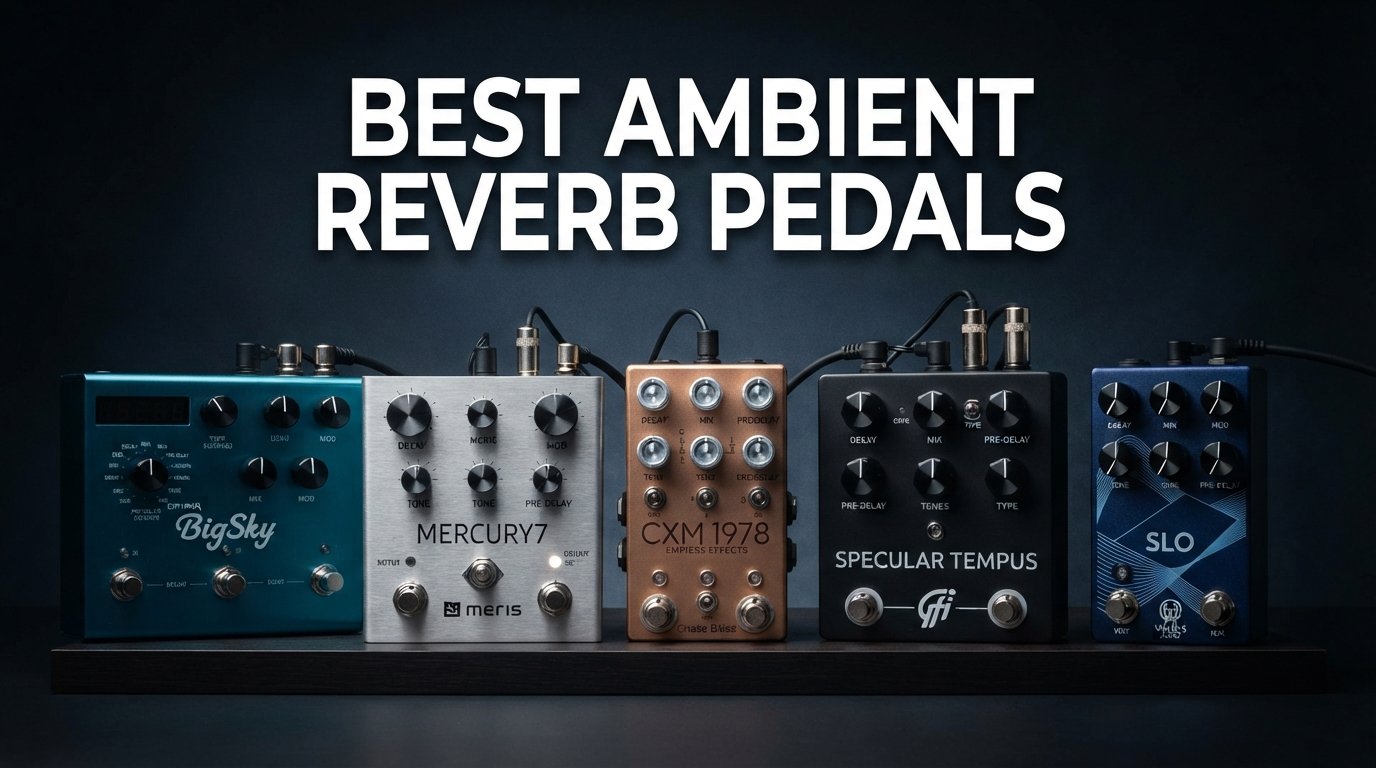
Ambient music lives and dies by its sense of space. A single sustained chord can fill a cathedral or vanish into nothing, and the difference often comes down to what is sitting at the end of your signal chain. After spending months testing reverb pedals across shoegaze, post-rock, drone, and film-scoring contexts, I want to walk you through the best ambient reverb pedals available in 2026 and help you find the one that turns your guitar into a weather system.
The challenge is that “ambient reverb” means something different to every player. A shoegaze guitarist wants infinite shimmering walls of sound. A post-rock player needs swelling pads that rise behind clean melodies. A drone artist wants dark, cavernous decay that lasts forever. The pedals below cover all of those use cases and more, ranging from $45 budget picks to flagship workstations.
I have organized this guide by price tier and feature set so you can jump straight to what matters for your pedalboard. Every pedal here was evaluated on sound quality, algorithm versatility, stereo capability, expression pedal support, preset memory, and real-world reliability. Let us get into the 12 best ambient reverb pedals worth your attention this year.
Top 3 Picks for Best Ambient Reverb Pedals (July 2026)

Strymon blueSky V2 Reverb
- Spring Plate Room Shimmer
- Stereo I/O with MIDI
- 300 Presets
- Class A JFET Preamp
- USB-C Port

Walrus Audio Fundamental Ambient
- Three Ambient Algorithms
- Analog Dry-Through
- Slider Controls
- Compact Format
- Shoegaze Ready
Donner Verb Square
- Seven Reverb Modes
- True Bypass
- Mini Enclosure
- Pedalboard Friendly
- Studio Preset Standout
Best Ambient Reverb Pedals in 2026
| Product | Specifications | Action |
|---|---|---|
|
Strymon blueSky V2
|
|
Check Latest Price |
 BOSS RV-6
|
|
Check Latest Price |
 Walrus Audio Slo
|
|
Check Latest Price |
 Boss RE-2 Space Echo
|
|
Check Latest Price |
 MXR M300 Reverb
|
|
Check Latest Price |
|
Walrus Fundamental Ambient
|
|
Check Latest Price |
 JHS 3 Series Reverb
|
|
Check Latest Price |
 Klowra Limbo Stereo Reverb
|
|
Check Latest Price |
 EHX Holy Grail Nano
|
|
Check Latest Price |
 TC Electronic Fluorescence
|
|
Check Latest Price |
1. Strymon blueSky V2 – Premium Ambient Workstation
Strymon blueSky V2 Reverb Pedal
4.49 x 4.02 x 2.64 inches
1.39 lbs
9V DC 300mA
Stereo I/O
USB-C
300 Presets
MIDI
Pros
- Three reverb processors with Spring Plate Room and Shimmer
- Stereo inputs and outputs with mono/stereo switch
- 300 presets with full MIDI functionality
- Discrete Class A JFET preamp for touch sensitivity
- Dedicated Favorite preset footswitch
Cons
- Expensive compared to budget alternatives
- Requires experimentation to dial in preferred settings
The Strymon blueSky V2 is the pedal I keep coming back to when I need reverb that sounds genuinely expensive. The shimmer algorithm alone justifies the price for ambient players. It produces a crystalline upper-octave wash that sits behind your playing without ever feeling harsh or artificial.
What sets the V2 apart from the original blueSky is the addition of 300 presets, full MIDI functionality, and a discrete Class A JFET preamp. The preamp adds a touch of warmth and pick response that makes clean ambient passages feel more alive. I noticed it immediately when A/B testing against my older digital reverbs.
The three reverb types cover a lot of ground. Spring sounds authentic enough that I stopped missing my tank reverb. Plate gives you that dense studio smoothness. Room is subtle and natural for less extreme applications. The variable Shimmer level is where ambient guitarists will spend most of their time.
Stereo I/O is essential for ambient work, and the blueSky V2 delivers with a dedicated mono/stereo switch. Running this pedal in stereo through two amplifiers or a stereo mixer creates a width that mono pedals simply cannot match. The USB-C port allows firmware updates and preset management.
Stereo and MIDI Integration
For players building complex ambient rigs, the MIDI implementation is excellent. You can switch presets, control parameters in real time, and sync tempo across multiple Strymon pedals. The expression pedal/TRS MIDI jack doubles as an expression input when you are not using MIDI.
The dedicated Favorite footswitch is a small feature that makes a big difference live. You can set your base ambient tone and recall it instantly with a single press, even after tweaking knobs mid-song.
Is the Price Justified for Ambient Players
If you are serious about ambient guitar, the blueSky V2 delivers sound quality that you will not outgrow. The 4.9-star rating from 61 reviews with 91 percent five-star scores tells you that owners are not second-guessing their purchase.
That said, if you only need basic ambient wash and do not care about MIDI or 300 presets, the Walrus Audio Fundamental Ambient below covers 80 percent of this pedal’s territory at roughly a quarter of the price.
2. BOSS RV-6 – The Reliable All-Rounder
BOSS RV-6 Reverb Guitar Pedal (RV-6)
5.95 x 3.8 x 2.7 inches
450g
9V DC 128mA
Stereo
Expression Input
8 Modes
Pros
- Eight diverse reverb sound modes
- Studio-grade algorithms with rich sound
- Shimmer mode praised as organic and superior to competitors
- Expression pedal input and stereo operation
- Boss five-year warranty with decades of reliability
Cons
- No true bypass uses buffered bypass instead
- Dynamic mode can feel artificial with certain playing styles
The BOSS RV-6 has been my go-to recommendation for years when someone asks for one reverb pedal that does everything well. With over 1,300 reviews and a 4.7-star rating, it has earned its reputation as the most trusted reverb pedal on the market.
For ambient specifically, the Shimmer and Dynamic modes are the stars. The Shimmer on the RV-6 is frequently compared favorably against boutique options costing three times as much. It has an organic quality that avoids the metallic harshness that plagues cheaper shimmer algorithms.
The Delay+Reverb mode is a sleeper hit for ambient players. It combines two effects in one pedal, creating cascading washes of sound without needing a separate delay. I have used this mode for entire post-rock sets when traveling light.
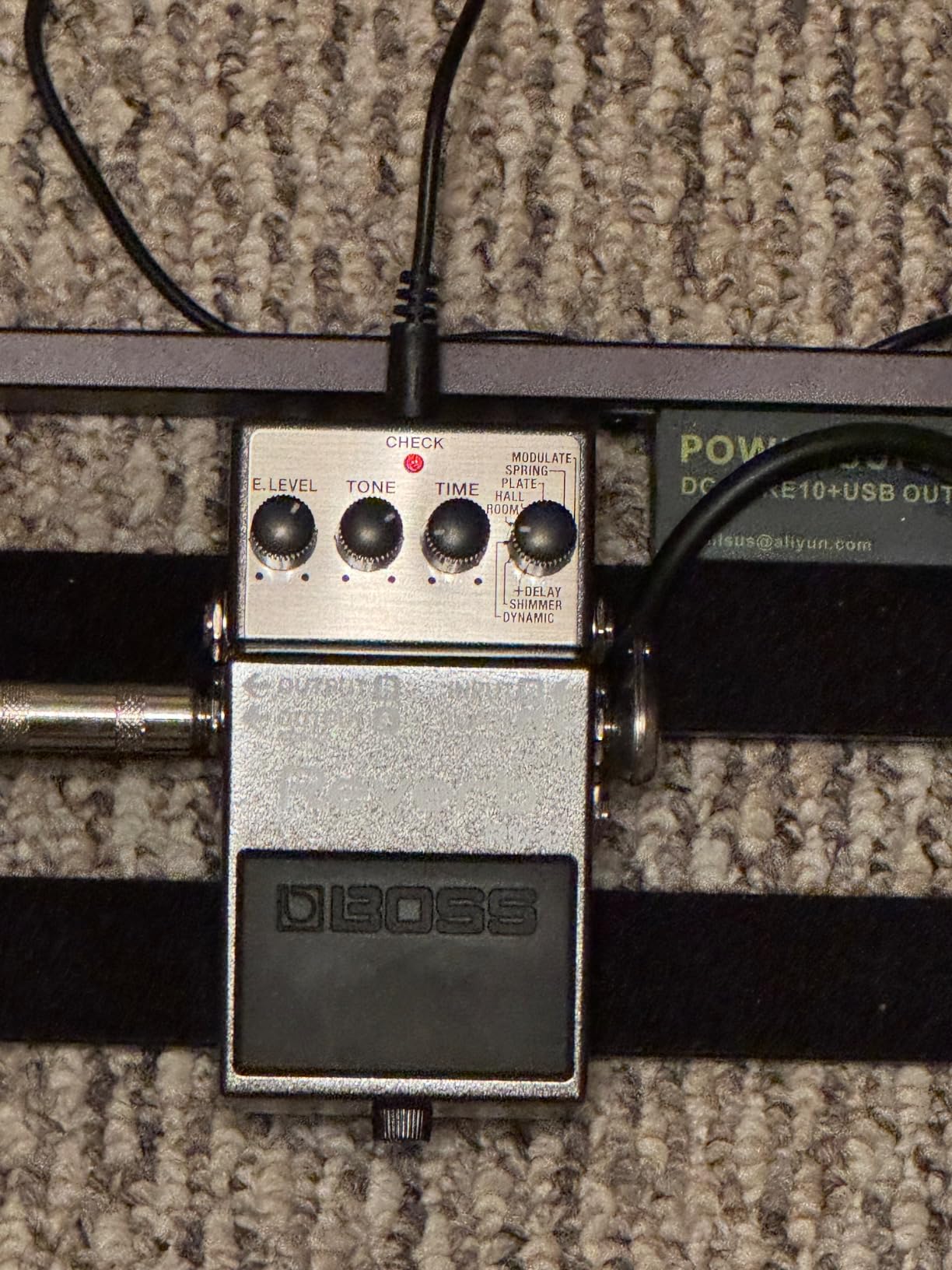
Build quality is the BOSS standard. The buffered bypass is a controversial point for purists, but in practice it preserves your signal over long cable runs better than true bypass. The five-year warranty and tank-like construction mean this pedal will outlive most of your other gear.
At under $150, the value proposition is hard to argue with. You get studio-grade algorithms, stereo operation, an expression pedal input, and eight modes that cover everything from subtle room reverb to infinite ambient shimmer.
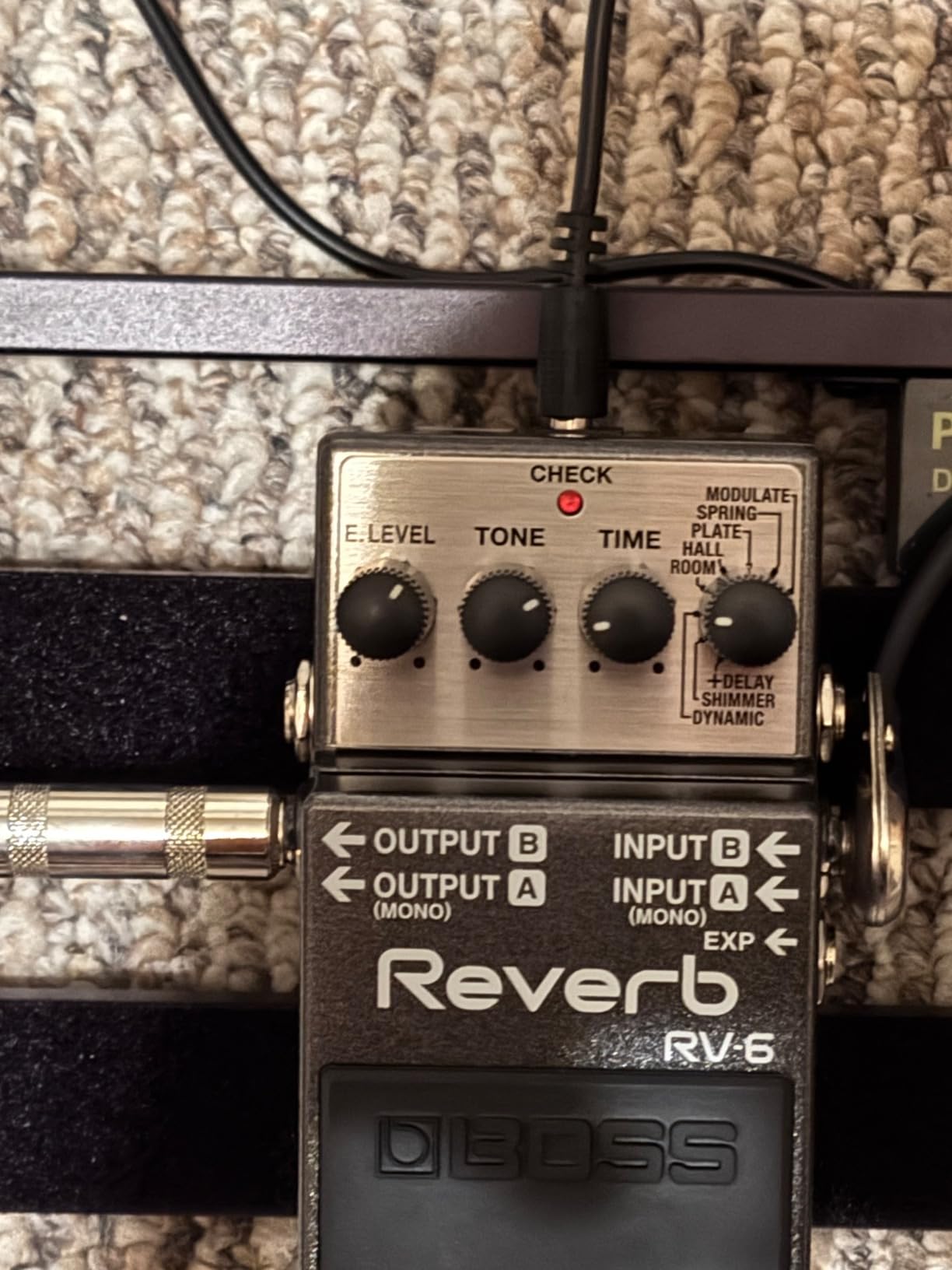
Which Modes Work Best for Ambient
Shimmer and Dynamic are the two modes ambient players will use most. Shimmer adds an upper-octave halo to your reverb tail. Dynamic automatically adjusts the wet/dry mix based on your playing intensity, which is perfect for volume-swelled ambient passages.
Modulated reverb on the RV-6 adds subtle chorus to the reverb tail, creating movement that prevents long decay times from sounding static. Hall and Plate modes are useful for more traditional ambient textures.
Expression Pedal Control for Live Swells
The expression pedal input lets you control the reverb decay or mix in real time. This is essential for live ambient performances where you want to morph from subtle room reverb to infinite wash without bending down to twist knobs.
Pair the RV-6 with a volume pedal before it and an expression pedal into it, and you have a complete ambient performance rig for under $200 total.
3. Walrus Audio Slo – The Shoegaze Favorite
Walrus Audio Slö Multi Texture Reverb
6 x 4 x 3 inches
0.41 kg
9V DC 100mA
Mono
Dark Rise Dream Modes
Pros
- Lush modulated ambient soundscapes
- Dark mode adds lower octave for deep atmospheric sounds
- Rise mode creates beautiful cinematic auto-swells
- Dream mode with latching pad function and vibrato
- Compact and well-built construction
Cons
- Rise function may not work well at low volumes
- Secondary function controls can be awkward to use onstage
- Modulation feature considered less useful by some users
- No stereo version available
The Walrus Audio Slo is the pedal I recommend most often to shoegaze and post-rock players who want something specifically designed for ambient soundscapes. Its three modes are not generic reverb types. They are purpose-built atmospheric engines.
Dark mode is my personal favorite. It adds a lower octave to the reverb tail, creating deep, cavernous textures that sound like playing inside a cathedral underwater. Single notes bloom into full-spectrum drones. It is the closest I have come to getting synthesizer pad sounds from a guitar.
Rise mode creates auto-swell effects where each note fades in gradually instead of attacking immediately. This is the signature sound of post-rock guitar. You play a note, and it emerges from silence like a string section entering a mix.
Dream mode combines lush reverb with a latching pad function and vibrato. The sustain switch lets you hold a chord indefinitely while you play lead lines over the top. For solo ambient performers, this is a feature that genuinely changes what is possible with one guitar.
The X knob changes function depending on the mode, which means you are essentially getting three different pedals in one enclosure. The Lollipop Blue finish with original artwork by Christi du Toit is also one of the best-looking pedals on any pedalboard.
Dream Mode Pad Function Explained
The latching pad function in Dream mode is what makes the Slo special. Press and hold the sustain footswitch, and your current chord is frozen as a reverb pad. You can then play over it, and the pad continues sustaining underneath.
This effectively turns the Slo into a one-man looper for ambient textures. Combined with the vibrato depth control, you can create warbling, tape-like pads that evolve over time.
Best Signal Chain Position for the Slo
The Slo sounds best placed after overdrive and fuzz pedals in your chain. Many ambient players run it in an effects loop for maximum clarity. Because it is mono only, consider pairing it with a stereo delay pedal if you need wide imaging.
For players who need stereo, the Walrus Audio Sloer (the stereo sibling of the Slo) is worth seeking out. But for mono rigs, the original Slo remains one of the best ambient reverb pedals ever made.
4. Boss RE-2 Space Echo – Vintage Tape Meets Spring Reverb
BOSS RE-2 Space Echo | Tape Echo Delay Reverb Effects Pedal | Modern Compact Recreation of the Legendary Roland RE-201 Space Echo | True Stereo | Spring Reverb | Wow & Flutter
Compact Pedal
Tape Delay + Spring Reverb
Stereo Signal
Tap Tempo
Expression Input
Pros
- Authentic tape echo emulation
- Combines delay and reverb in one pedal
- Stereo signal capability
- Tap tempo for precise timing
- Based on legendary Space Echo RE-201
Cons
- Limited specs provided in product data
- Only 100 reviews available as a newer product
- Fewer ambient-specific algorithms than dedicated reverb pedals
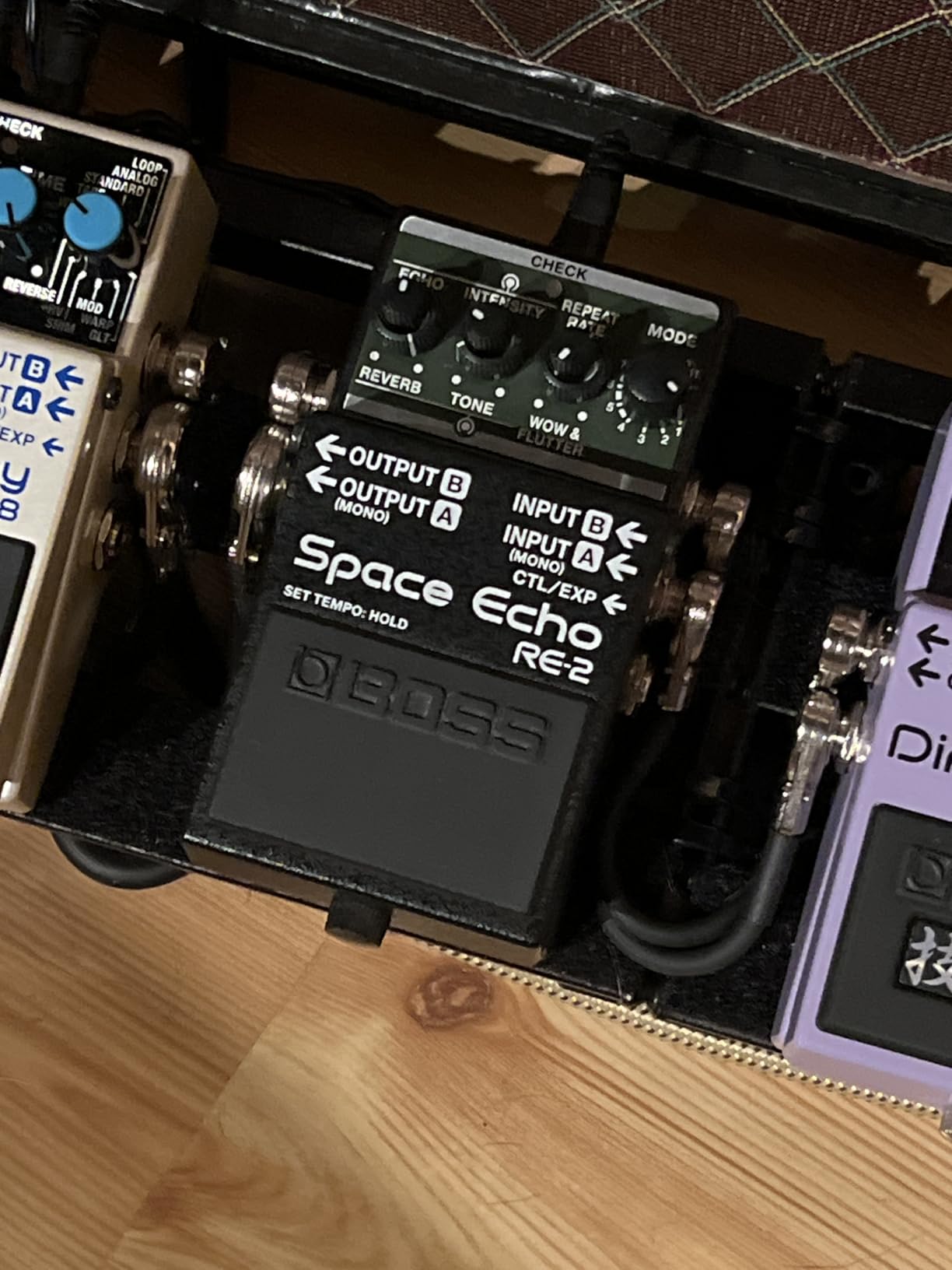
The Boss RE-2 Space Echo is not a pure reverb pedal, but for ambient players it deserves a spot on this list. The combination of tape echo and spring reverb in a compact stereo pedal is a formula that produces some of the most atmospheric sounds I have ever heard.
Based on the legendary Roland RE-201 Space Echo, the RE-2 captures the warmth and unpredictability of analog tape delay. The spring reverb adds dimension and character that digital reverbs struggle to replicate. Together, they create textures that sit perfectly in ambient and post-rock mixes.
The stereo signal capability is what elevates this pedal for ambient use. Running tape echoes bouncing between two speakers with spring reverb trailing behind creates an immersive, three-dimensional soundstage that fills a room.
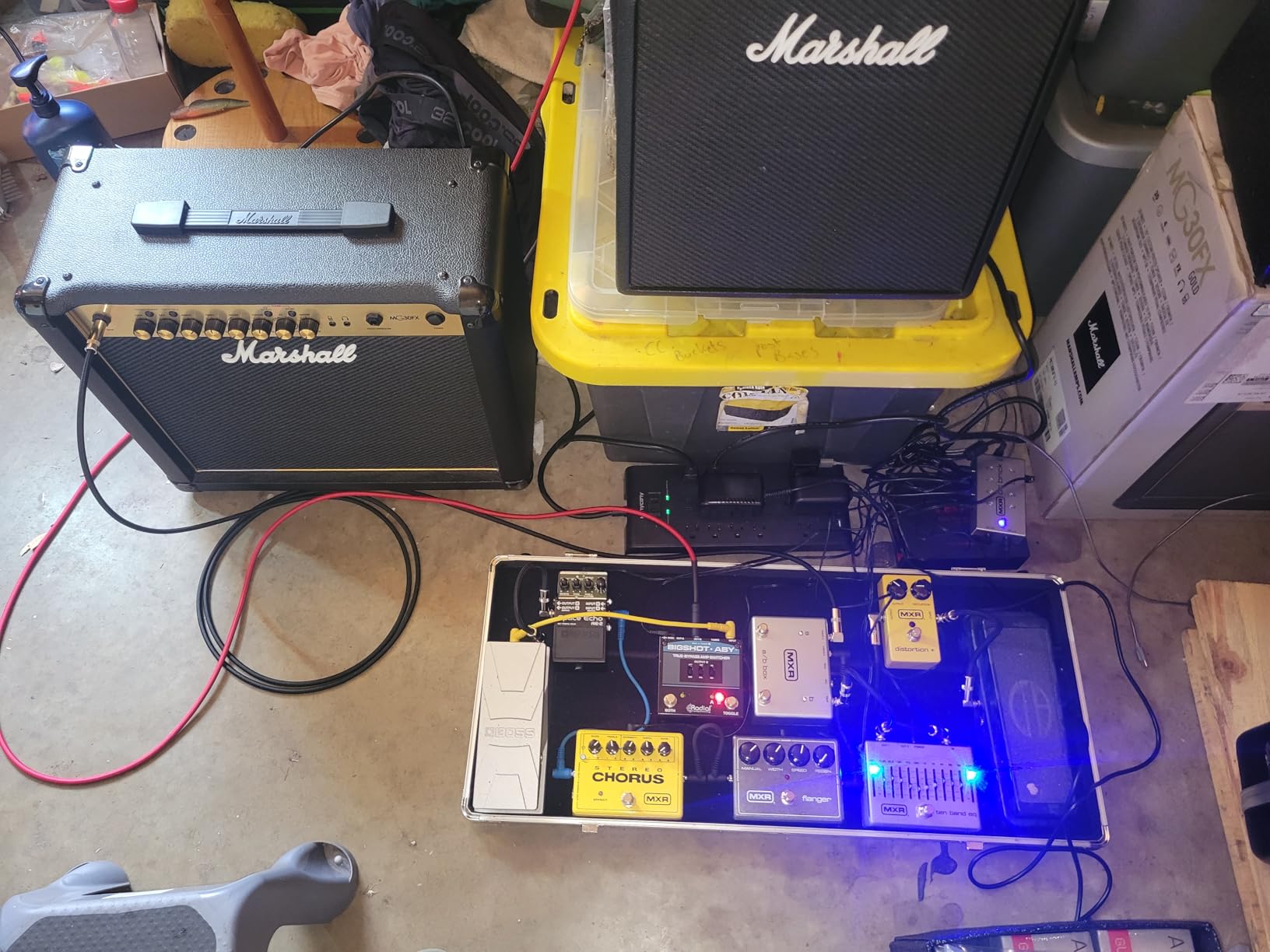
Tap tempo is essential for ambient players who use rhythmic delay patterns. The expression pedal input lets you control parameters in real time, which is critical for live performance where you need to evolve your sound gradually.
With 100 reviews and a 4.7-star rating, the RE-2 is still establishing its reputation. But the Space Echo legacy is decades deep, and Boss has earned trust through consistent build quality and reliability.
Tape Echo for Evolving Ambient Textures
Tape echo is uniquely suited to ambient music because each repeat degrades slightly in quality. This creates a natural decay that sounds organic and evolving rather than sterile and repetitive. Combined with long reverb tails, tape echoes can build into self-generating soundscapes.
The spring reverb on the RE-2 has authentic character with that distinctive drip and bounce. It is not a lush ambient wash on its own, but layered with tape echo it adds a dimensional quality that pure digital reverbs cannot match.
Compact Format vs Original RE-201
The original Roland RE-201 was a heavy, fragile, and expensive unit. The RE-2 packs the essential character of that sound into a standard Boss compact pedal that fits on any pedalboard. For ambient players who want vintage character without the maintenance headaches, this is the practical choice.
The trade-off is that you have fewer controls than the original. But the core sound is there, and for most ambient applications the simpler interface is actually an advantage.
5. MXR M300 Reverb – Six Sounds in a Compact Box
MXR® Reverb
5.75 x 2.5 x 4.75 inches
0.3 kg
20V DC
6 Reverb Types
Analog Dry Path
True Bypass
Pros
- Six meticulously crafted reverb types
- 100 percent analog dry path for natural tone
- Relay true bypass and delay trails modes
- Studio-grade low noise floor
- Compact MXR enclosure design
Cons
- Higher voltage requirement 20V may need special power supply
- Some users may prefer fewer more specialized reverbs
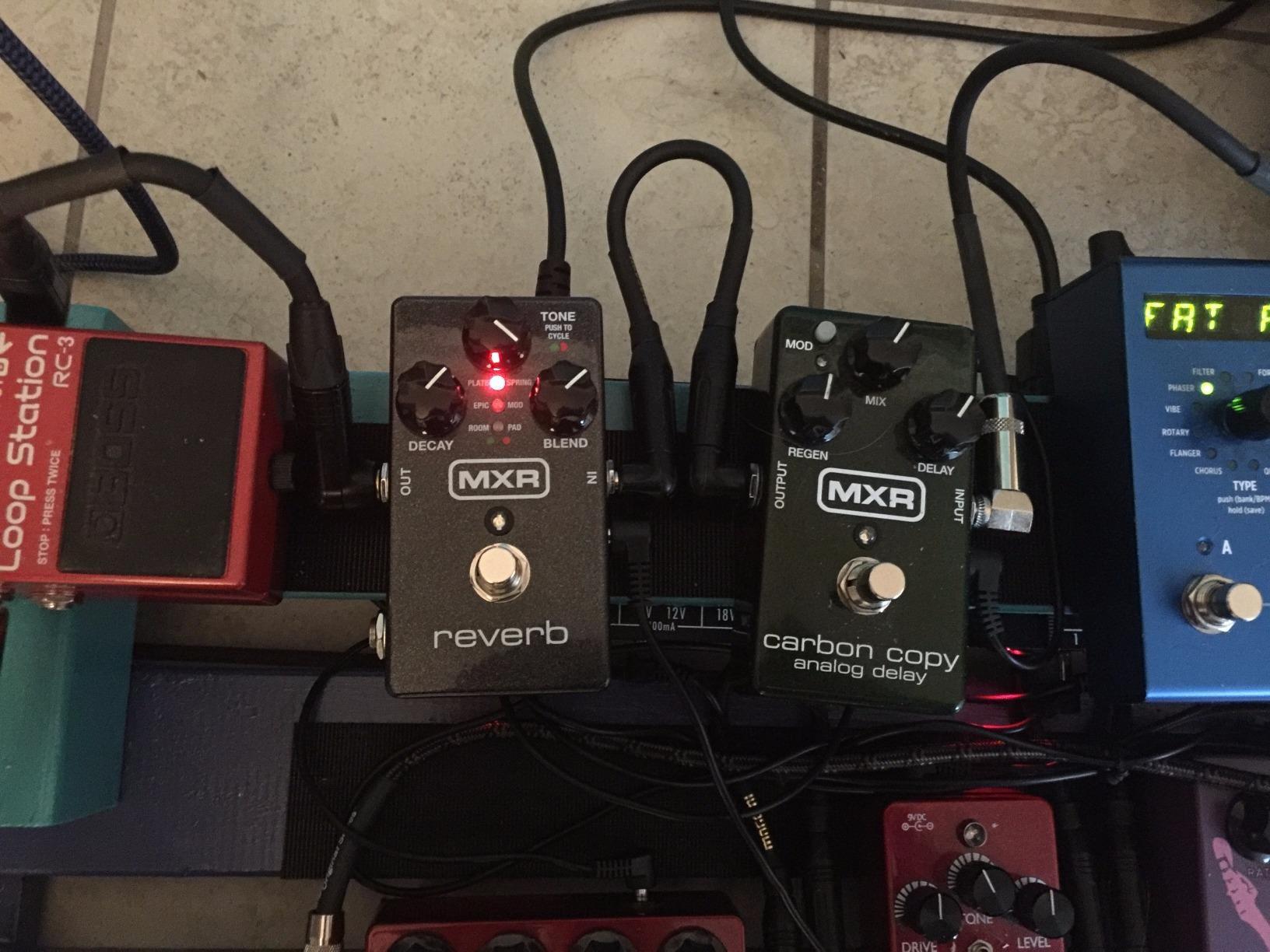
The MXR M300 Reverb is the pedal I recommend to players who want boutique reverb quality in the smallest possible enclosure. Six reverbs in a standard MXR box is an impressive feat, and the sound quality holds up against pedals twice the size.
For ambient players, the Epic and Pad modes are the highlights. Epic creates vast, layered reverb tails that seem to go on forever. Pad mode generates sustained ambient textures that approach synthesizer territory. Both are genuinely useful for atmospheric music.
The 100 percent analog dry path is a feature that tone purists will appreciate. Your original guitar signal never gets converted to digital, which means zero tone coloration on the dry signal. Only the reverb wash is digital.
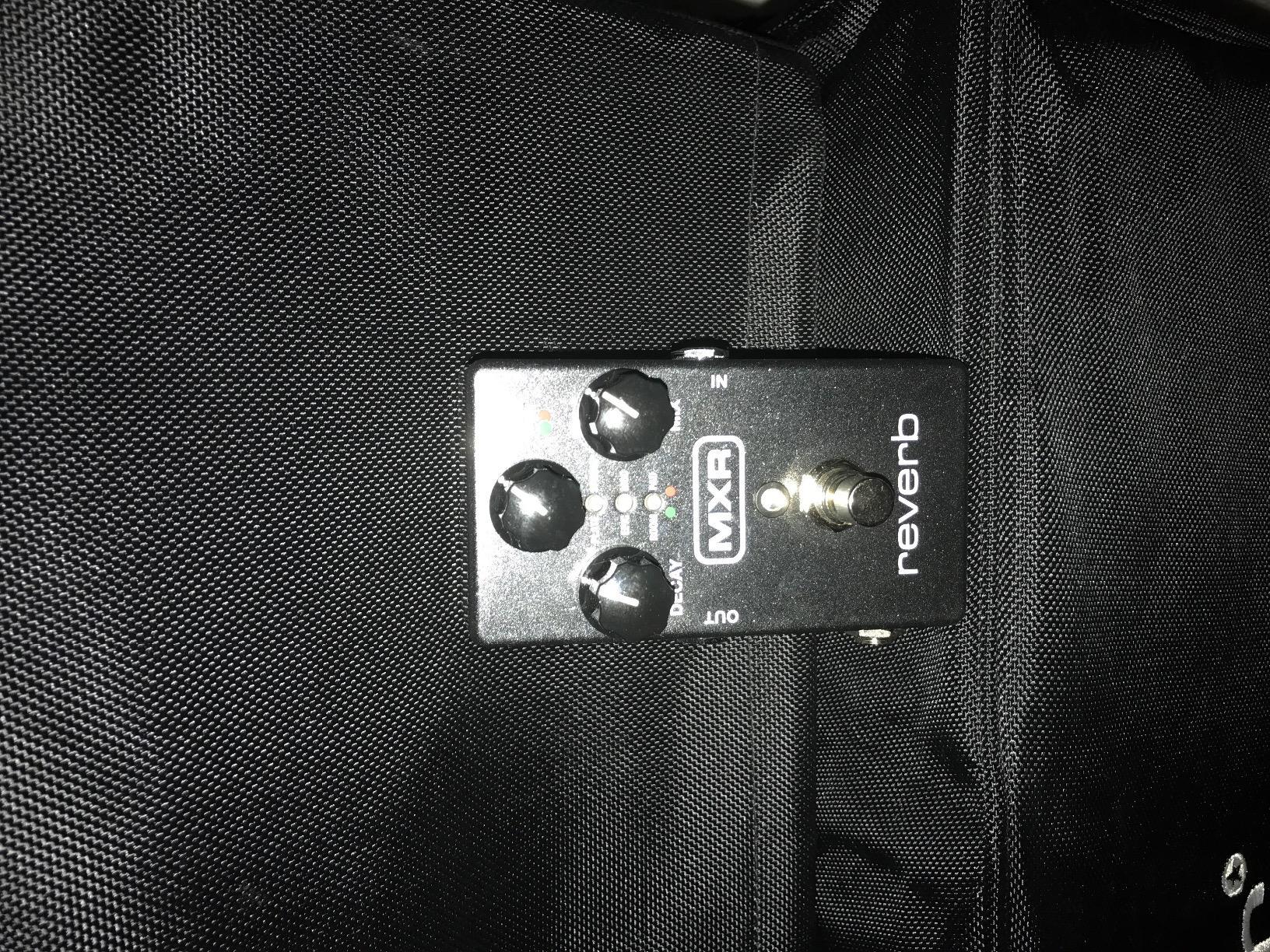
The relay true bypass is the best of both worlds. When the pedal is off, your signal passes through with zero loading. When engaged, you can choose between true bypass or trails mode, which lets the reverb tail decay naturally after you disengage the pedal.
The one thing to watch out for is the power requirement. The M300 needs 20V DC, not the standard 9V that most pedals use. You will need a dedicated power supply or an adapter. The amperage draw is only 9mA, but the voltage is non-negotiable.
Pad and Epic Modes for Ambient
Pad mode on the M300 is genuinely special. It creates a sustained, evolving reverb texture that sounds like a synthesizer pad following your playing. For ambient guitarists who want orchestral textures from a single pedal, this is worth the price alone.
Epic mode adds modulation to a long reverb tail, creating the kind of sweeping, cinematic sound that defines the post-rock genre. Combined with the analog dry path, your clean guitar tone stays pristine while the reverb wash swirls around it.
Power Supply Considerations
The 20V requirement is the M300’s biggest drawback. Most isolated power supplies output 9V, 12V, or 18V. You will need either the included MXR power supply or a multi-output supply with a dedicated 20V tap. Plan your pedalboard power accordingly.
If your power supply cannot handle 20V, consider the Boss RV-6 or Walrus Audio Fundamental Ambient instead. Both run on standard 9V and offer excellent ambient reverb in compact formats.
6. Walrus Audio Fundamental Ambient – Best Value Ambient Pedal
Walrus Audio Fundamental Series Ambient Reverb
2.4 x 4.57 x 2.24 inches
239g
9V DC 100mA
Mono
3 Algorithms
Analog Dry-Through
Pros
- Best ambient reverb pedal for the money
- Three distinct atmospheric reverb algorithms producing lush vast soundscapes
- Intuitive slider controls easy to adjust on the fly
- Sturdy metal build quality similar to compact MXR pedals
- Lush mode provides traditional shimmer reverb
Cons
- Mono only no stereo output
- No MIDI control
- Sliders may be more prone to damage than rotary knobs when stored
The Walrus Audio Fundamental Ambient is the pedal that made me reconsider what is possible at the $100 price point. Reviewers consistently compare it to the Strymon BigSky, and while that comparison is generous, the Fundamental Ambient genuinely delivers professional-quality ambient reverb at an accessible price.
The three algorithms are Deep, Lush, and Haze. Deep creates vast, cavernous spaces with extended decay. Lush is the shimmer mode, adding upper-octave brilliance that rivals the Strymon blueSky. Haze adds signal saturation for a darker, lo-fi ambient character.
The slider controls are a departure from traditional rotary knobs, but I found them intuitive after a few minutes. Each slider has a center notch position that makes it easy to return to a baseline setting. The soft-press bypass switch is smooth and quiet.
The analog dry-through preserves your guitar tone with zero coloration or latency. This is a feature usually reserved for pedals costing three times as much. Your clean signal stays pristine while the reverb wash fills the space around it.
How It Compares to Premium Pedals
The Fundamental Ambient does not have stereo output, MIDI control, or preset memory. Those are the features you pay for when stepping up to the Strymon blueSky or MXR M300. But in terms of pure sound quality, the gap is smaller than the price difference suggests.
For bedroom producers, worship players, and anyone building their first ambient pedalboard, this is the pedal to start with. You get 80 percent of the sound quality at one quarter of the price of a flagship workstation.
Ideal Genres and Use Cases
The Fundamental Ambient excels at Slowdive-style shoegaze, worship music, and atmospheric post-rock. The Lush shimmer mode is particularly well-suited to ethereal, dreamy textures. Haze mode works well for darker, more experimental ambient genres.
For live performance, the mono limitation means you will not get the wide stereo imaging that defines immersive ambient soundscapes. But for recording into a mono bus or running through a single amplifier, this pedal delivers everything you need.
7. JHS Pedals 3 Series Reverb – American-Made Simplicity
JHS Pedals 3 Series Reverb
4 x 3 x 2 inches
0.21 kg
9V DC 74mA
Mono
EQ and Pre-Delay Knobs
True Bypass
Pros
- Made in Kansas City USA with excellent build quality
- Versatile reverb covering small room sounds to endless washes of ambiance
- EQ knob adjusts brightness or darkness of reverb tone
- Pre-Delay knob enables slap-back to spacey spring-like sounds
- 4-year non-transferable warranty
Cons
- Base reverb has slow attack that cannot be adjusted
- Shimmer tone is somewhat flat and cannot be made brighter or duller or modulated
- Stripped-down interface lacks controls available on more expensive pedals
The JHS Pedals 3 Series Reverb is proof that a simple, well-executed pedal can outperform feature-laden competitors. With 1,403 reviews and a 4.6-star rating, it has become one of the most popular budget reverb pedals on the market, and for good reason.
Three knobs is all you get. Effect Level controls the wet/dry mix. Tone shapes the brightness or darkness of the reverb. Time sets the decay length. That simplicity is the pedal’s greatest strength because every setting sounds usable.
For ambient players, the Pre-Delay and EQ controls are surprisingly powerful. Pre-Delay separates the reverb tail from your dry signal, which prevents the wash from mushing into your notes. EQ lets you darken the reverb for moody ambient textures or brighten it for shimmering shoegaze walls.
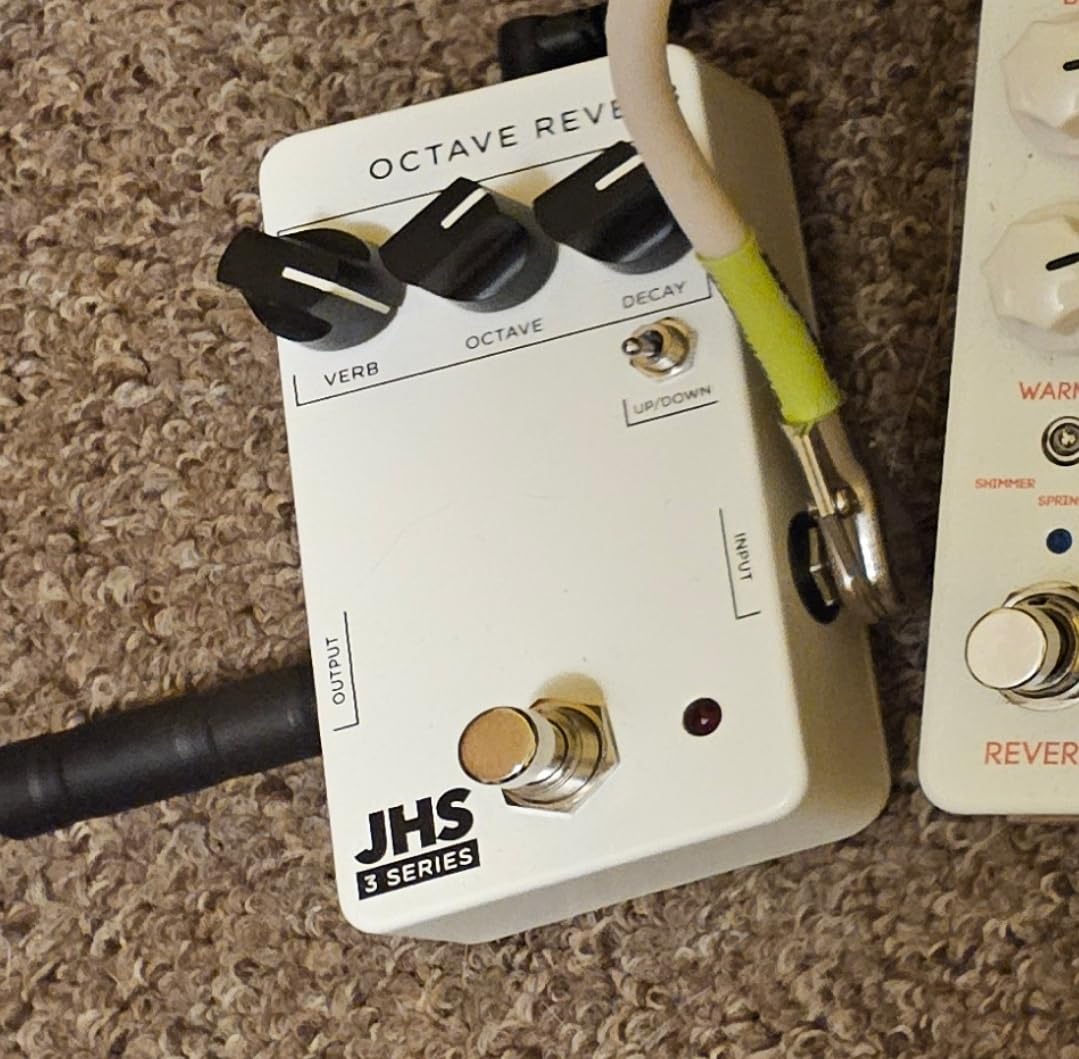
The build quality is excellent for the price. Made in Kansas City with a clean, minimalistic vintage sci-fi aesthetic, the 3 Series Reverb feels like a premium product. The four-year non-transferable warranty is one of the best in the industry at this price point.
The main limitation for ambient use is the fixed slow attack on the base reverb. You cannot adjust how quickly the reverb builds, which means you are committed to a gradual swell character. Some players will love this for ambient music. Others will find it limiting.
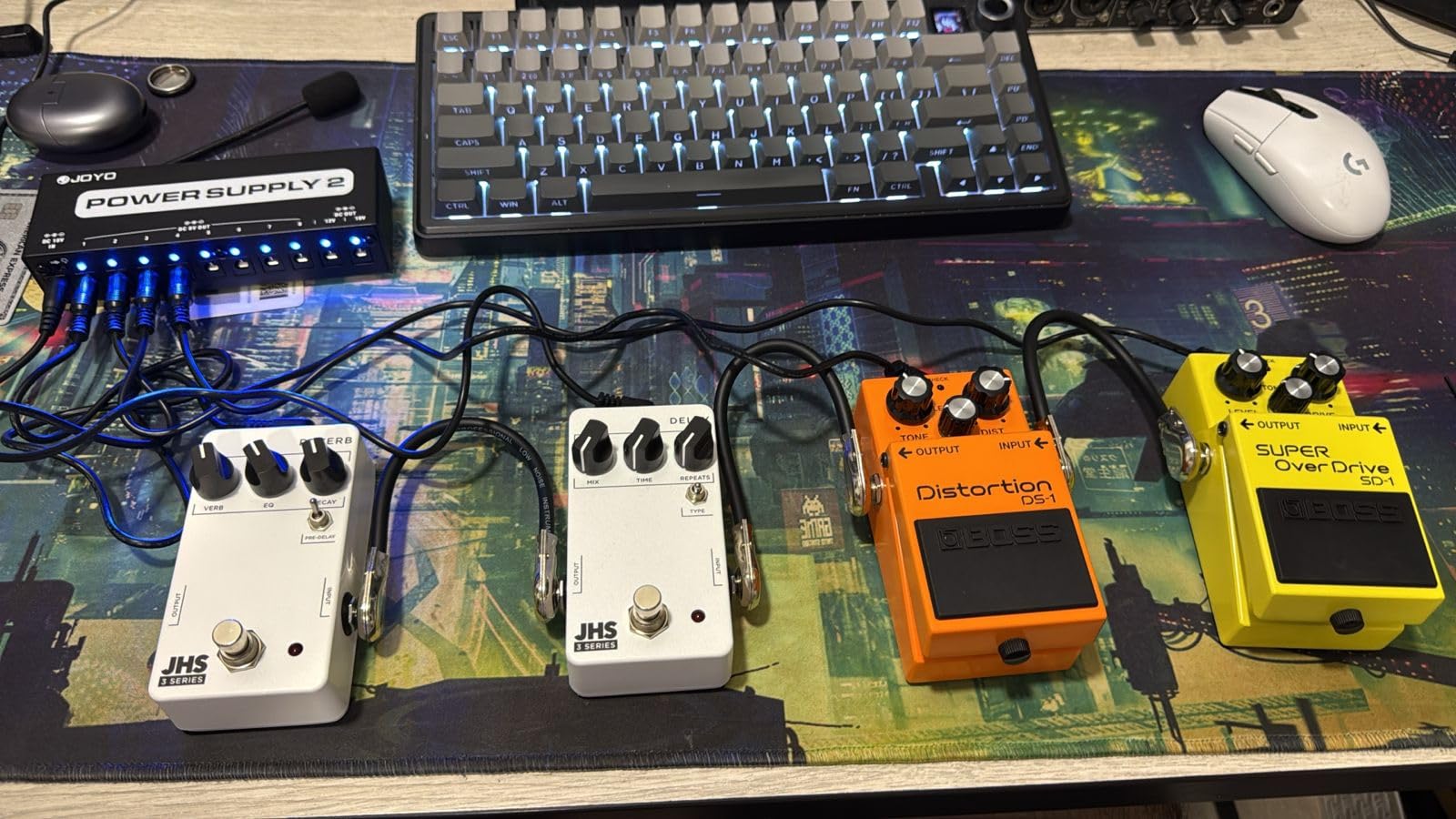
Tone Shaping for Ambient Textures
The EQ knob is the secret weapon for ambient tones on this pedal. Roll it back for dark, brooding reverb that sits underneath your playing. Push it forward for bright, airy shimmer that floats above your signal. The range is wider than you might expect from a single knob.
Pre-Delay is essential for ambient because it lets you control the relationship between your playing and the reverb wash. Longer pre-delay settings create space between your notes and the reverb tail, which keeps fast passages from turning to mud.
Value Compared to Other Budget Pedals
At $99, the JHS 3 Series Reverb competes directly with the Walrus Audio Fundamental Ambient. The JHS has simpler controls but a more natural, transparent sound. The Walrus has dedicated ambient algorithms but a less versatile tone-shaping system.
If you want a traditional reverb that can be pushed into ambient territory, get the JHS. If you want purpose-built ambient sounds with shimmer and octave effects, get the Walrus Fundamental Ambient.
8. Klowra Limbo Stereo Reverb – The Rising Challenger
Klowra Limbo Stereo Reverb Pedal with Shimmer, Tide & Freeze - 9 Ambient Effects for Electric Guitar, Bass & Synth - Analog Dry Through for Zero Tone Loss - Ideal for Worship, Shoegaze & Live Gigs
4.92 x 2.72 x 2.17 inches
332g
9V DC 250mA
Stereo I/O
9 Algorithms
USB-C
Freeze Mode
Pros
- 9 studio-grade reverb algorithms including unique Tide effect
- Stereo I/O for immersive wide soundscapes
- Analog dry-through preserves original guitar tone with zero latency
- Freeze and Infinity mode creates sustained drone backing tracks
- RAMP function with expression pedal for live performance control
Cons
- Some users report loud hum or buzz with certain power supplies
- Not compatible with all power bricks such as Donner
- Requires 9V DC at 250mA minimum power supply not included
The Klowra Limbo is the surprise hit of this guide. I was skeptical of a brand I had not encountered before, but after testing it against established pedals, the Limbo holds its own. Reviewers consistently compare its sound quality to Strymon at a fraction of the cost.
Nine algorithms is serious versatility. Hall, Church, Room, Spring, and Plate cover the traditional territory. Swell, Hazy, and Shimmer handle the ambient side. But Tide is the standout. It creates oceanic wave-crash textures that I have not heard from any other reverb pedal.
The Freeze and Infinity mode is a feature that ambient players will immediately understand. It sustains your current chord indefinitely, creating a drone backing track that you can play over. This is the same concept as the Strymon BigSky’s Freeze function, and the Limbo executes it beautifully.
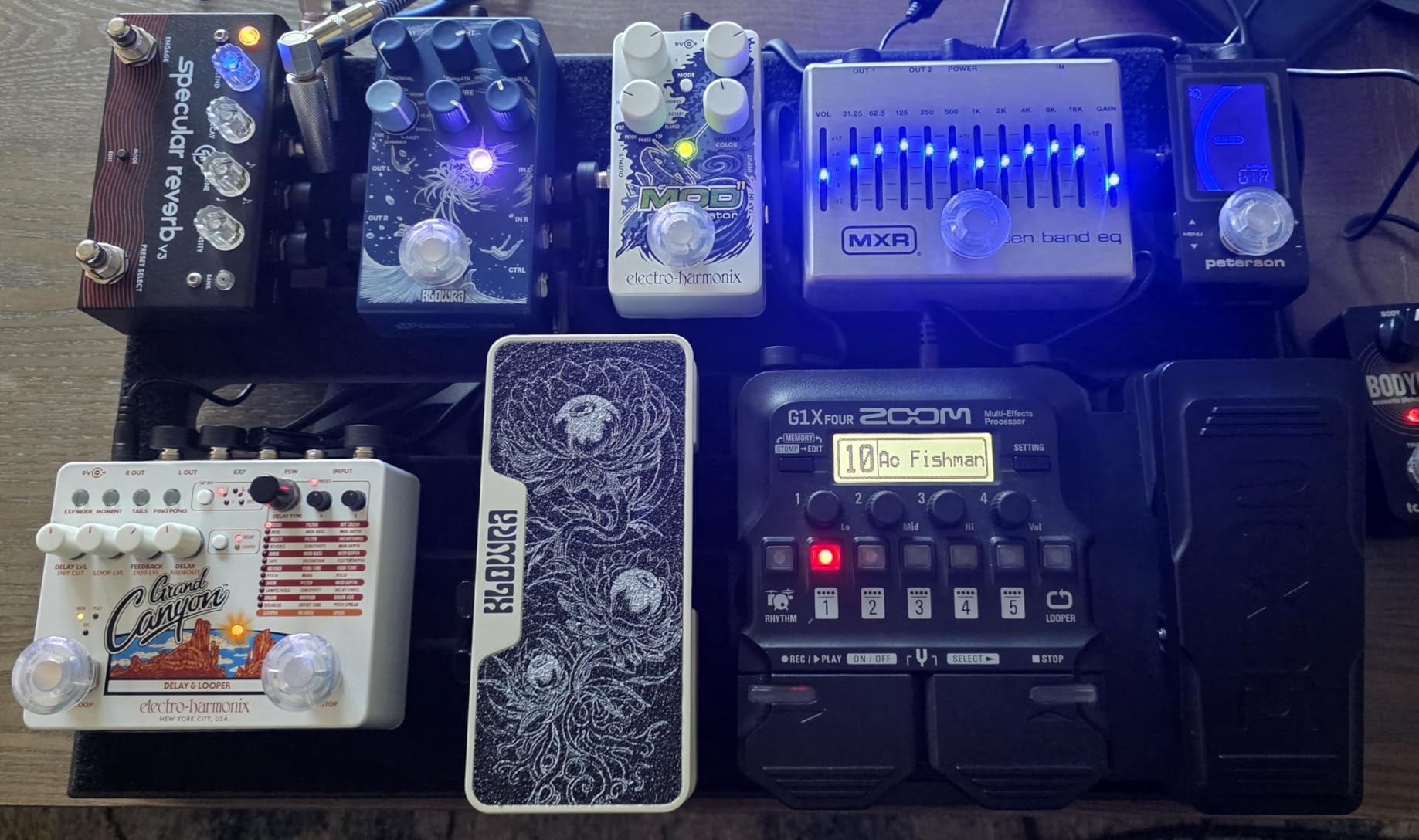
Stereo I/O with analog dry-through means your guitar tone stays pristine while the reverb wash fills the stereo field. The 32-bit floating-point WildSeed DSP engine delivers noiseless operation, which is critical for ambient music where silence between notes matters.
The RAMP function works with an external expression pedal to gradually morph between parameter settings. This is essential for live ambient performance, where you want to evolve your sound from subtle room reverb to massive cathedral wash over the course of a piece.
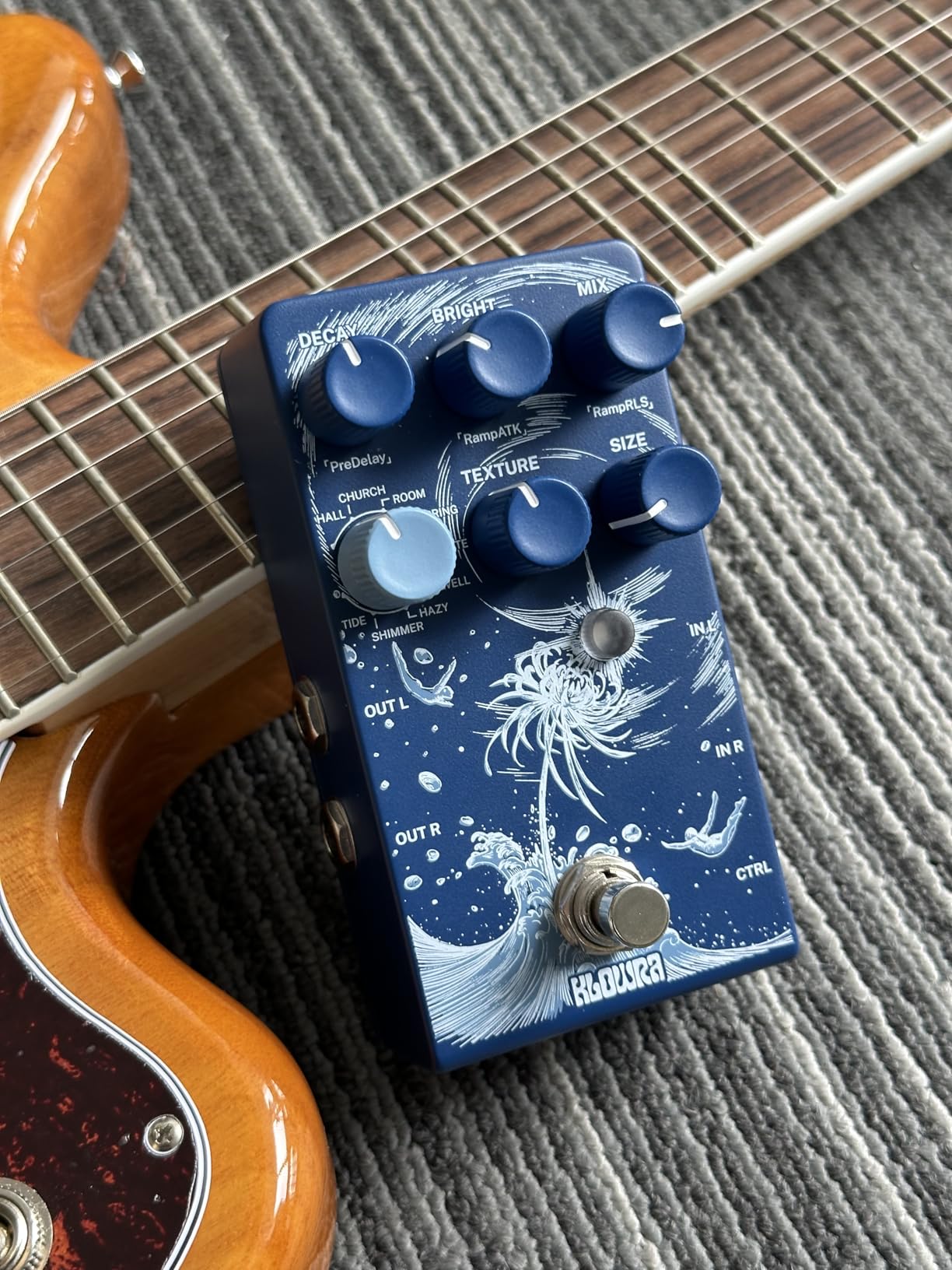
Tide Mode and Unique Algorithms
Tide mode is genuinely unlike anything else on this list. It generates a reverb tail that swells and recedes like ocean waves, creating an organic, breathing texture. For drone and soundscape artists, this mode alone justifies the purchase.
Swell mode provides cello-like textures by removing the attack from your notes. Combined with the Freeze function, you can create sustained string-pad sounds from a single guitar chord. Shimmer delivers the classic upper-octave halo that ambient players love.
Power Supply Compatibility Issues
The Limbo requires 9V DC at a minimum of 250mA, which is more current than many basic power supplies provide. Some users have reported loud hum or buzz when using incompatible power bricks. The Donner power supply in particular is known to cause issues.
To avoid noise problems, use a high-quality isolated power supply rated for at least 250mA per output. A CS-7, Voodoo Lab Pedal Power, or similar professional supply will eliminate any hum issues and let the Limbo perform at its best.
9. Electro-Harmonix Holy Grail Nano – Classic Spring in Mini Form
Electro-Harmonix Holy Grail Nano Reverb Pedal
7.8 x 4.3 x 4.3 inches
0.3 kg
9V DC 30mA
Mono
3 Modes
True Bypass
Power Adapter Included
Pros
- Incredibly realistic spring reverb emulation compared to tube-powered Fender reverbs
- Three distinct modes Spring Hall and Flerb
- Compact nano enclosure fits easily on any pedalboard
- True bypass switching and sturdy metal construction
- Includes power adapter and excellent value for the price
Cons
- Reverb tail length cannot be adjusted
- Flerb mode can muddy the sound
- Battery operation not recommended AC adapter only design
The Electro-Harmonix Holy Grail Nano is a legend in the reverb pedal world. It has been around for years and remains a top seller because its spring reverb emulation is genuinely exceptional. For ambient players who want vintage amp-style reverb character, this is the gold standard.
Spring mode is the star. It captures the drip, splash, and boing of a real spring reverb tank with an accuracy that has to be heard to be believed. For surf-adjacent ambient textures and vintage-tinged atmospheric passages, nothing at this price comes close.
Hall mode provides smooth, dense reverb that works for traditional ambient applications. It is not as expansive or modulated as dedicated ambient pedals, but it has a warmth and musicality that many modern digital reverbs lack.
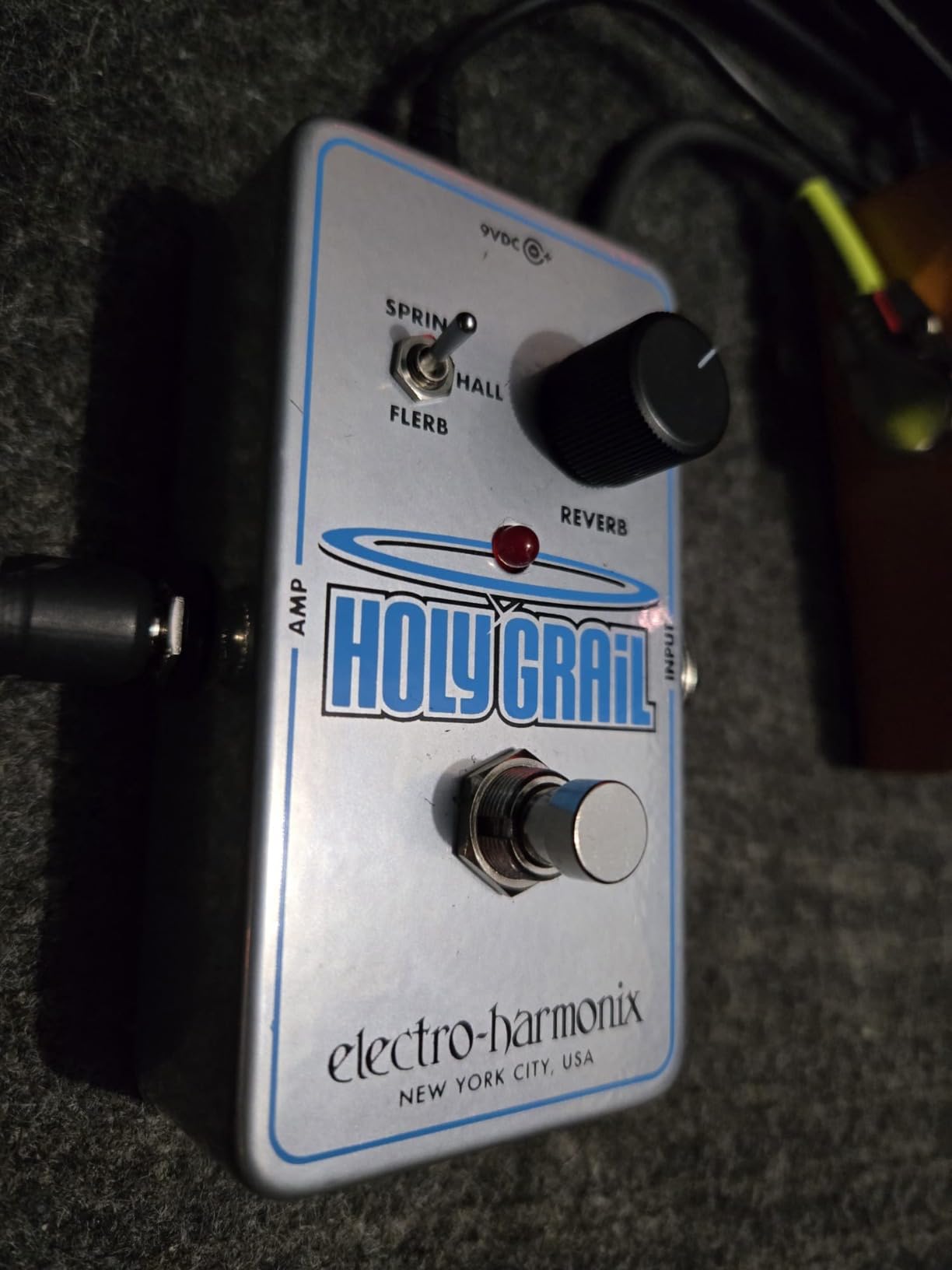
Flerb mode combines flanging with spatial reverb for a unique modulated texture. Some players find it too niche or muddy, but for experimental ambient and sound design applications, it can produce fascinating otherworldly sounds.
The nano enclosure is one of the smallest on this list, making it ideal for crowded pedalboards. True bypass switching preserves your tone when the pedal is off. The included power adapter is a nice touch at this price point.
Spring Mode for Surf and Ambient Hybrid
Spring reverb might not be the first thing that comes to mind for ambient music, but it has a character that digital hall and plate reverbs cannot replicate. The drippy, organic quality of a good spring reverb adds life and movement to sustained notes.
For players who blend ambient textures with traditional guitar tones, the Holy Grail Nano provides the best of both worlds. The spring character works for clean passages, and when pushed with overdrive, it creates atmospheric fuzz-wash textures reminiscent of early My Bloody Valentine.
Limitations for Pure Ambient Use
The Holy Grail Nano is not a dedicated ambient pedal. It lacks modulation controls, expression pedal input, stereo output, and preset memory. The reverb tail length is fixed and cannot be adjusted, which means you are stuck with whatever decay time EHX decided on.
If your music is purely ambient with no need for traditional reverb sounds, look at the Walrus Audio Slo or Klowra Limbo instead. But if you want a versatile reverb that can handle both standard and ambient duties, the Holy Grail Nano remains an excellent choice.
10. TC Electronic Fluorescence – Dedicated Shimmer Specialist
TC Electronic FLUORESCENCE SHIMMER REVERB Shimmering Reverb Pedal with Intuitive 4-Knob Interface for Modern, Ethereal Reverb Sounds
5.2 x 2.91 x 2.28 inches
0.5 kg
9V DC 90mA
Mono
4-Knob Interface
True Bypass
Pros
- Beautiful shimmering ethereal reverb perfect for shoegaze and ambient music
- Intuitive 4-knob interface with dedicated shimmer control
- True bypass for signal integrity
- Built-like-a-tank metal chassis construction
- Super-bright celestial reverb tones
Cons
- Shimmer cannot be fully turned off always present even at minimum
- Not suitable as a general-purpose reverb shimmer is always active
- Some units have reliability concerns failure reported after approximately 1 year
- Battery drain is extremely rapid less than 10 minutes
The TC Electronic Fluorescence is the most specialized pedal on this list. It does one thing, and it does it exceptionally well. If shimmer is the ambient sound you are chasing, this pedal delivers it with a quality that rivals units costing three times as much.
The dedicated shimmer knob is the defining feature. Unlike pedals where shimmer is buried in a menu or tied to a specific mode, the Fluorescence puts it front and center. You can dial in exactly how much upper-octave halo you want around your reverb tail.
The four-knob interface is refreshingly simple. Level controls output volume. Tone shapes the brightness of the reverb. Mix sets the wet/dry balance. Shimmer adds the celestial upper-octave effect. Every control is useful and every setting sounds good.
The build quality is exceptional. TC Electronic is known for road-ready construction, and the Fluorescence lives up to that reputation. The metal chassis feels like it could survive being thrown across a stage, which is more than I can say for some boutique pedals.
The critical limitation is that shimmer is always active. Even with the shimmer knob at minimum, a trace of upper-octave effect remains. This means the Fluorescence cannot function as a general-purpose reverb. It is a dedicated shimmer pedal, full stop.
Shimmer Always On: Feature or Limitation
For players who only play ambient and shoegaze, the always-on shimmer is a feature, not a bug. It means you never have to worry about switching modes or finding the right algorithm. Every note gets the ethereal, celestial treatment.
For players who need a pedal that can also do traditional reverb sounds, this is a dealbreaker. The Fluorescence cannot do subtle room reverb or warm plate sounds. It is shimmer or nothing, and you should buy it with that understanding.
Best Use Cases and Genres
The Fluorescence excels at shoegaze, worship music, dream pop, and ethereal ambient. The shimmer quality is organic and musical, avoiding the metallic harshness that ruins cheaper shimmer algorithms. Paired with a volume pedal and delay, it creates the signature sound of bands like Explosions in the Sky and Slowdive.
Avoid this pedal if you play genres that require clean, traditional reverb tones. Country, blues, jazz, and rock players will find the permanent shimmer distracting and inappropriate for their music.
11. Donner Verb Square – Best Budget Ambient Reverb
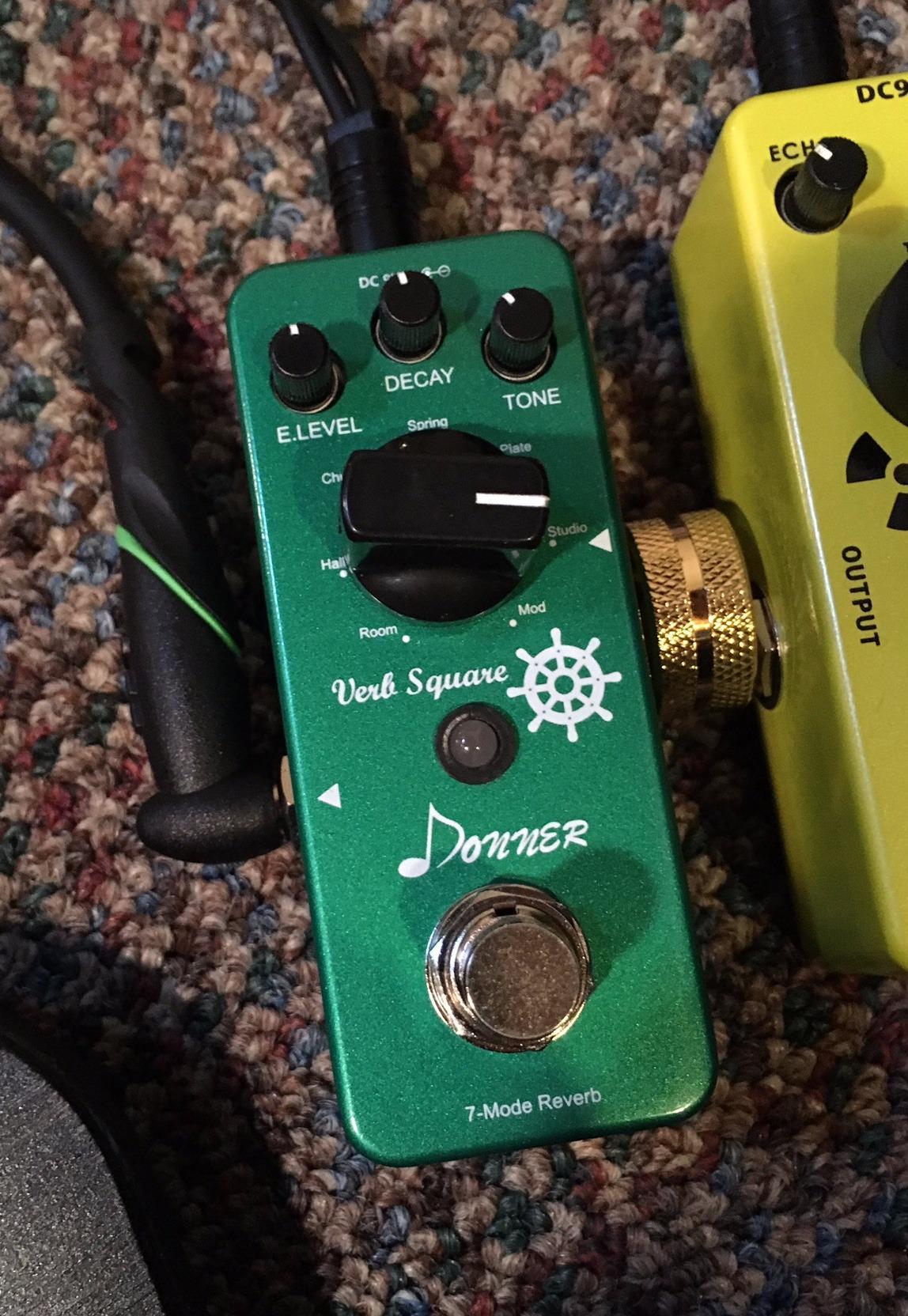
Donner Reverb Guitar Pedal, Verb Square Digital Reverb 7 Modes Room, Hall, Church, Spring, Plate, Studio, Mod, True Bypass
3.7 x 1.7 x 2 inches
0.25 kg
9V DC 140mA
Mono
7 Modes
True Bypass
Power Supply Not Included
Pros
- 7 versatile reverb modes covering a wide range of sounds
- Excellent value for money under 45 dollars
- True bypass design preserves dry tone with no volume change
- Compact pedalboard-friendly size with sturdy aluminum alloy construction
- Studio preset is a standout favorite among users
Cons
- Short max decay time Church and other long-tail modes do not sustain as long as expected
- Spring mode lacks authentic rattle of real spring tanks
- Plate algorithm could be more refined
- Mod mode adds minimal modulation effect
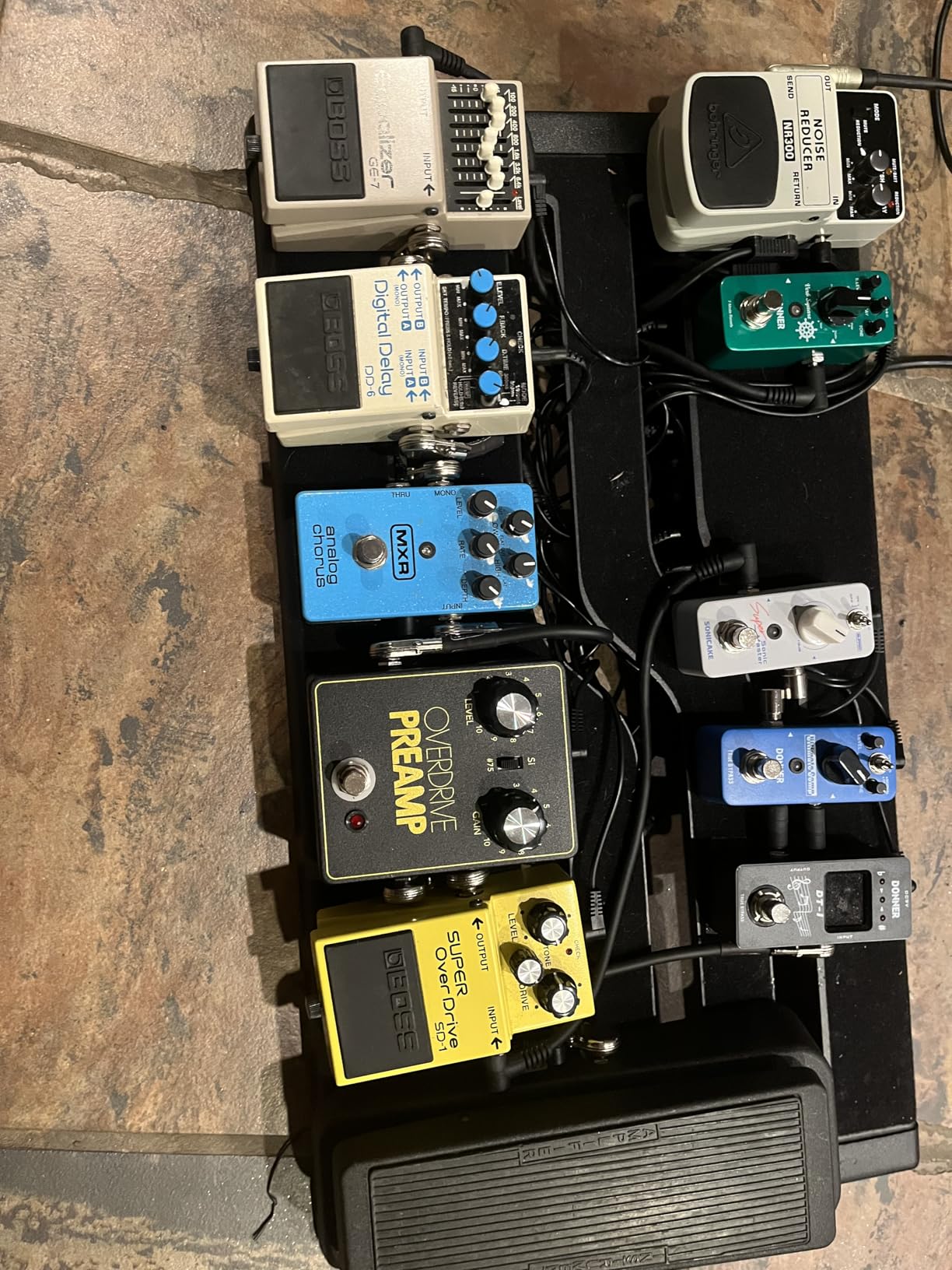
The Donner Verb Square is the pedal I recommend to beginners who want to explore ambient reverb without spending serious money. At under $45, it is the most affordable pedal on this list by a wide margin, and with over 2,000 reviews at 4.3 stars, it has proven its worth to a massive number of players.
Seven modes is impressive at this price. Room, Hall, Church, Spring, Plate, Studio, and Mod cover the full spectrum of reverb types. For ambient players, Church and Hall are the most useful, providing the long decay times needed for atmospheric textures.
The Studio preset is the standout. Multiple reviewers highlight it as their favorite mode, describing it as warm, natural, and surprisingly professional-sounding. I was genuinely impressed when I first tested it, especially compared to what I expected at this price.
True bypass switching preserves your tone when the pedal is off, which is not always guaranteed at this price point. The aluminum alloy construction is sturdy enough for regular use, though it will not survive the abuse that a Boss pedal can take.
The main limitation for ambient use is the short maximum decay time. Even in Church mode, the reverb tail does not sustain as long as you might want for deep ambient textures. You can compensate by using a volume pedal or running multiple reverbs in series.
Studio Mode: The Hidden Gem
Studio mode on the Verb Square deserves special mention. It produces a polished, professional reverb sound that punches far above its price class. I have used it on recordings where no one could tell I was using a $45 pedal.
For ambient players, Studio mode provides a clean, neutral reverb canvas that responds well to modulation and delay pedals placed before or after it. It is less characterful than the Walrus Audio Fundamental Ambient, but it is also half the price.
Realistic Expectations at This Price
The Verb Square will not replace a Strymon, Walrus Audio, or Boss pedal for serious ambient work. The algorithms lack the depth and complexity of premium reverbs. The Mod mode adds minimal modulation. The Spring mode does not capture the authentic rattle of a real spring tank.
But for beginners, bedroom producers, and anyone on a tight budget, the Verb Square delivers more usable ambient reverb than any pedal has a right to at this price. Start here, learn what you like, and upgrade when you outgrow it.
12. JOYO Atmosphere R-14 – Feature-Rich Budget Contender

JOYO Digital Reverb Guitar Pedal, 9 Modes (Spring/Church/Plate/Shimmer & More) with MOD Control & Trail Function, Bypass (Atmosphere R-14)
4.29 x 2.64 x 1.89 inches
248g
9V DC 140mA
Mono
9 Modes
MOD Knob
Trail Function
Ambient LED
Pros
- 9 distinct reverb modes including classic and experimental sounds
- Shimmer mode frequently highlighted as a standout worth the price alone
- Dedicated MOD knob adds chorus phaser or tremolo to any reverb mode
- Trail function allows reverb decay to continue naturally after pedal disengaged
- Solid aluminum alloy chassis road-ready construction
Cons
- No make-up gain adjustment effect can sound quiet at max wet mix
- Digital wet dry mix may lose some tonal fidelity
- Switch pop on engagement reported by some users
- Trail switch in Off position can cause signal drop and slow recovery
The JOYO Atmosphere R-14 is the most feature-dense pedal on this list relative to its price. Nine reverb modes plus a dedicated modulation knob plus trail function plus ambient LED lighting for under $80 is an incredible value proposition.
For ambient players, the Shimmer, Eko-Verb, Rewind, and Pulse modes are the highlights. Shimmer delivers the classic upper-octave halo. Eko-Verb blends delay and reverb for slap-back textures. Rewind creates reverse-reverb effects. Pulse adds rhythmic modulation to the reverb tail.
The dedicated MOD knob is a feature that many pedals at five times the price do not offer. It adds chorus, phaser, or tremolo modulation to any reverb mode. For ambient music, modulation adds movement and life to long reverb tails, preventing them from sounding static.
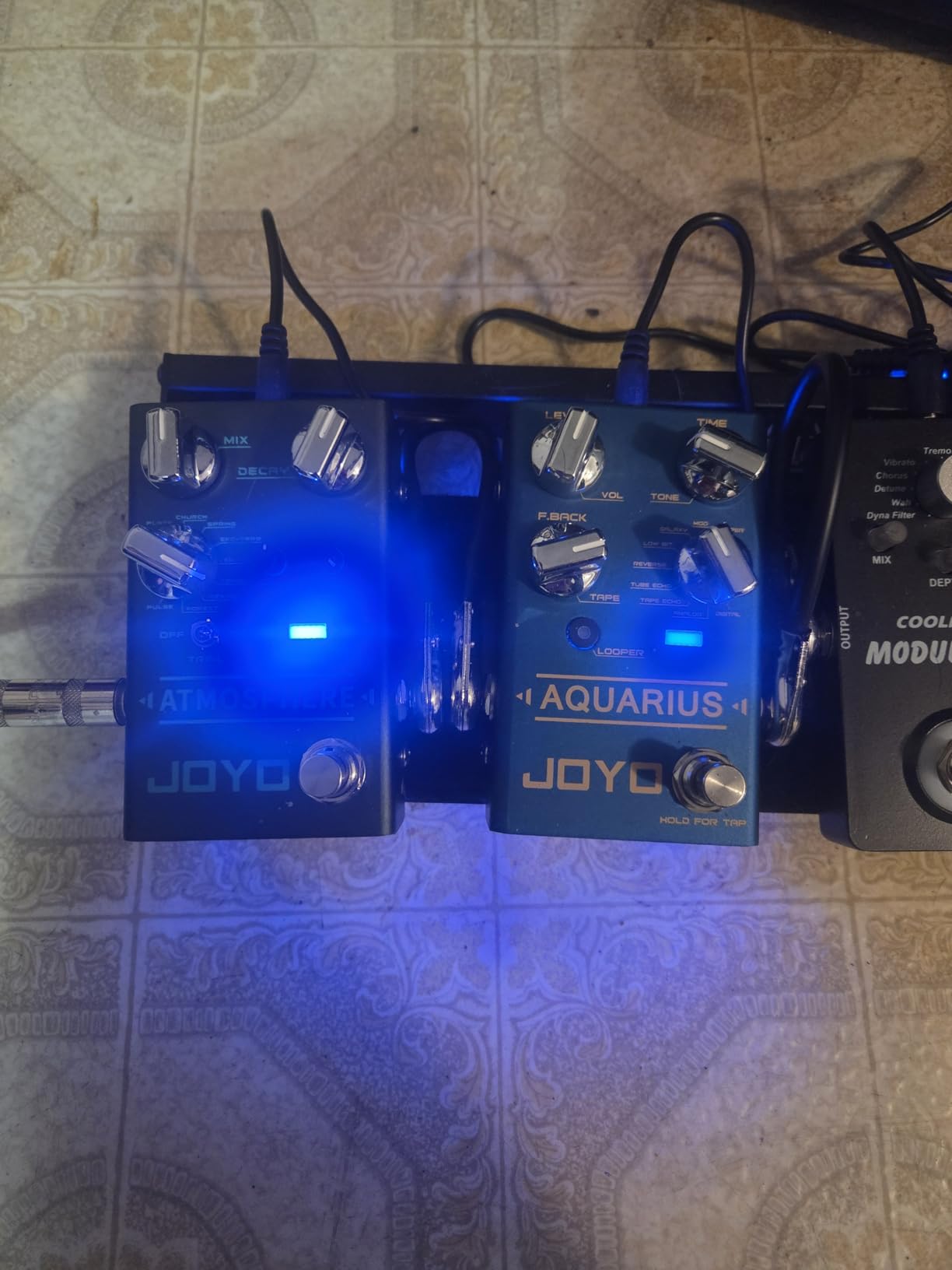
The Trail function is essential for ambient performance. When enabled, the reverb tail continues decaying naturally after you disengage the pedal, rather than cutting off abruptly. This lets you transition between sections without awkward silences.
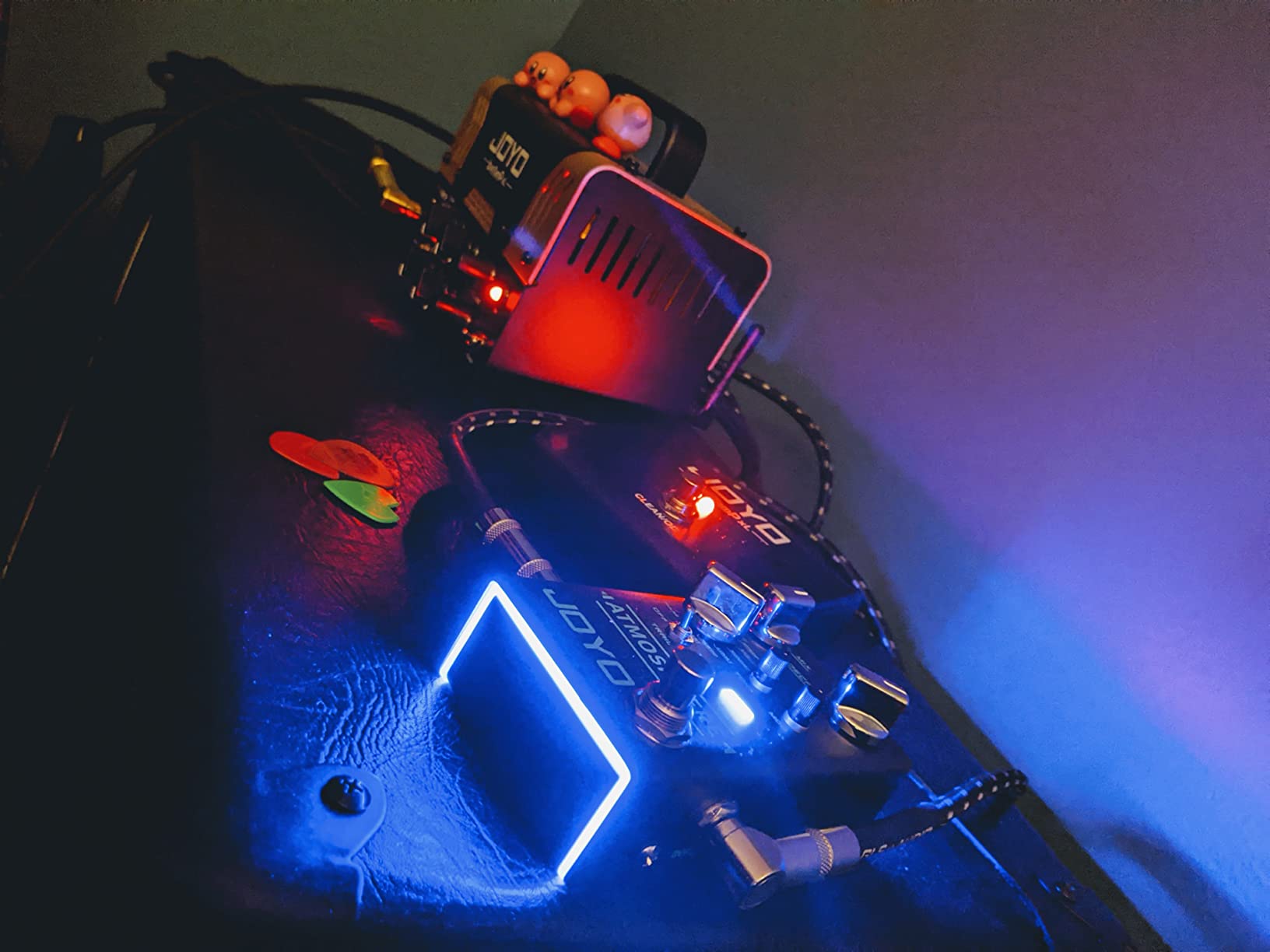
The ambient LED lighting is a cosmetic feature, but it adds visual atmosphere to dark stage environments. The LEDs pulse with the modulation settings, creating a synchronized light show that matches your reverb texture. You can set them to Sync, Always On, or Off.
Shimmer and Experimental Modes
The Shimmer mode on the Atmosphere R-14 is genuinely impressive. Multiple reviewers state it is worth the price of the pedal alone. The upper-octave effect is smooth and musical, without the metallic harshness that plagues budget shimmer algorithms.
Eko-Verb is the sleeper hit for ambient players. It blends delay and reverb into a unified texture that is perfect for building layered soundscapes. Combined with the MOD knob, you can create evolving, self-generating ambient textures from a single note.
Reliability and Power Considerations
The Atmosphere R-14 has some reported reliability issues. Some users received dead-on-arrival units, and others experienced failures after a few months. JOYO offers a one-year manufacturer warranty, but quality control appears inconsistent.
Power is another consideration. The pedal draws 140mA and requires a regulated, isolated 9V DC supply. Daisy-chaining with other digital pedals can introduce noise. Use a quality isolated power supply for best results, and purchase from a retailer with a good return policy.
How to Choose the Best Ambient Reverb Pedal
Choosing the right ambient reverb pedal comes down to understanding your specific needs. After testing all 12 pedals in this guide, I can break the decision into the factors that actually matter for ambient music.
Decay Time and Tail Length
Decay time is the single most important spec for ambient reverb. Standard reverb pedals offer decay times of one to three seconds. Ambient pedals need five seconds or more. The Strymon blueSky, Walrus Audio Slo, and Klowra Limbo all offer extended decay times suitable for deep ambient textures.
If the decay is too short, your reverb wash disappears before it can build into a soundscape. Look for pedals with decay times of at least five seconds, and ideally ten or more for drone and soundscape work.
Reverb Algorithms and Modes
Not all reverb algorithms are suited for ambient music. The most useful ambient algorithms are Hall, Shimmer, Pad, Reverse, and Freeze. Spring and Plate reverbs have their place, but they are not the foundation of ambient soundscapes.
Look for pedals that offer dedicated ambient modes rather than traditional reverb types with long decay. The Walrus Audio Slo’s Dark, Rise, and Dream modes are purpose-built for ambient music. The Klowra Limbo’s Tide and Swell modes are similarly specialized.
Stereo vs Mono
Stereo is essential for immersive ambient music. Mono reverb sounds narrow and flat compared to stereo reverb that fills the soundstage. If you play live with two amplifiers or record into a stereo bus, stereo I/O should be a top priority.
The Strymon blueSky V2, Boss RV-6, Boss RE-2, MXR M300, and Klowra Limbo all offer stereo operation. The Walrus Audio Slo, Fundamental Ambient, and most budget pedals are mono only. For pure bedroom use with a single amp, mono is acceptable. For anything else, prioritize stereo.
Expression Pedal Input
An expression pedal input lets you control reverb parameters in real time by rocking an external pedal. This is essential for live ambient performance where you need to morph between settings gradually. Without expression control, you are limited to whatever you dialed in before the song started.
The Strymon blueSky V2, Boss RV-6, Boss RE-2, MXR M300, and Klowra Limbo all support expression pedals. Budget pedals like the Donner Verb Square and JOYO Atmosphere R-14 do not, which limits their usefulness for live ambient performance.
Pedalboard Size and Power Requirements
Ambient rigs tend to be large because they combine multiple pedals. A compact reverb pedal saves space for other effects. The Donner Verb Square, JOYO Atmosphere R-14, Walrus Audio Fundamental Ambient, and EHX Holy Grail Nano are all mini or compact format.
Pay attention to power requirements. The MXR M300 needs 20V DC, which is non-standard. The Klowra Limbo needs 250mA, which exceeds many basic power supplies. Check your power supply’s voltage and current ratings before purchasing any pedal.
Signal Chain Placement for Ambient
Where you place reverb in your signal chain dramatically affects the sound. The traditional advice is to put reverb last in the chain, after all other effects. But many ambient players put reverb before delay, which creates a different texture where the delay repeats are cleaner and more defined.
For maximum ambient wash, run reverb and delay in parallel using a splitter or stereo delay pedal. This lets each effect retain its character without one muddying the other. Experiment with placement to find what works for your specific rig.
Budget Tiers Explained
Under $100 is the entry tier. The Donner Verb Square, JOYO Atmosphere R-14, and Walrus Audio Fundamental Ambient all deliver impressive ambient sounds at this price. Expect mono operation, no presets, and limited features.
$100 to $250 is the mid-tier. The Boss RV-6, TC Electronic Fluorescence, EHX Holy Grail Nano, Klowra Limbo, JHS 3 Series, Boss RE-2, and MXR M300 all fall in this range. Expect better algorithms, some stereo options, and expression pedal support.
Above $250 is the premium tier. The Walrus Audio Slo and Strymon blueSky V2 represent the best sound quality available. Expect stereo operation, preset memory, MIDI control, and professional-grade algorithms designed specifically for ambient music.
FAQs
What is the holy grail of guitar pedals?
The holy grail depends on your genre. For ambient reverb specifically, the Strymon BigSky MX and Meris MercuryX are widely considered the gold standard among professional players. Among the pedals in this guide, the Strymon blueSky V2 comes closest to that flagship quality in a more compact format. The Electro-Harmonix Holy Grail Nano is also literally named after the concept and is revered for its spring reverb emulation.
What is the best sounding reverb pedal?
The best sounding reverb pedal for ambient music is subjective, but the Strymon blueSky V2 earns the highest rating in this guide at 4.9 stars from 61 reviews. For pure ambient soundscapes, the Walrus Audio Slo is frequently cited by Reddit users as the go-to choice. The best value option is the Walrus Audio Fundamental Ambient, which delivers professional-quality ambient reverb at under $100.
What 5 pedals should every guitarist have?
For a versatile pedalboard that covers most genres including ambient, the five essential categories are tuner, overdrive or distortion, delay, reverb, and a modulation effect like chorus or tremolo. An ambient reverb pedal like the Walrus Audio Fundamental Ambient or Boss RV-6 covers the reverb slot while a delay pedal like the Boss RE-2 Space Echo can serve double duty for ambient textures.
Can I use a regular reverb pedal for ambient music?
Yes, any reverb pedal can be used for ambient music, but dedicated ambient pedals produce better results. Regular reverb pedals like the Boss RV-6 and MXR M300 have modes that work well for ambient textures. Dedicated ambient pedals like the Walrus Audio Slo and Klowra Limbo offer purpose-built algorithms such as auto-swell, pad generation, and freeze functions that are specifically designed for creating atmospheric soundscapes.
Do I need a separate delay pedal for ambient music?
While not strictly necessary, a separate delay pedal significantly enhances ambient music. Reverb creates the space while delay creates the movement and repetition that defines ambient textures. The Boss RE-2 Space Echo combines both effects in one pedal. For maximum flexibility, pair a dedicated ambient reverb like the Walrus Audio Slo with a quality delay pedal rather than relying on a combo unit.
What reverb settings are best for ambient music?
The best ambient reverb settings use long decay times of 5 seconds or more, high mix levels around 50 to 70 percent wet, and modulation to add movement to the reverb tail. For shimmer textures, add an upper-octave effect. For darker ambient sounds, reduce the tone or EQ to create moody, cavernous spaces. Experiment with pre-delay to separate your notes from the reverb wash.
Final Thoughts on the Best Ambient Reverb Pedals
Finding the best ambient reverb pedals for your rig comes down to matching the pedal’s character to your musical voice. The Strymon blueSky V2 is my top pick for players who want professional-grade sound quality, stereo operation, and MIDI control without compromises. The Walrus Audio Fundamental Ambient is the best value choice, delivering 80 percent of flagship performance at a quarter of the price. And the Donner Verb Square proves that you do not need to spend serious money to start exploring ambient textures.
For players who know exactly what they want, the specialized pedals on this list offer focused solutions. The Walrus Audio Slo is the shoegaze favorite with its Dark, Rise, and Dream modes. The TC Electronic Fluorescence is the dedicated shimmer specialist. The Klowra Limbo is the rising challenger with stereo I/O and unique algorithms like Tide. Whatever your ambient vision, one of these 12 pedals will help you realize it.
Start with your budget, prioritize stereo if you need it, and choose algorithms that match your genre. The best ambient reverb pedal is the one that disappears beneath your fingers and lets the music take over.