
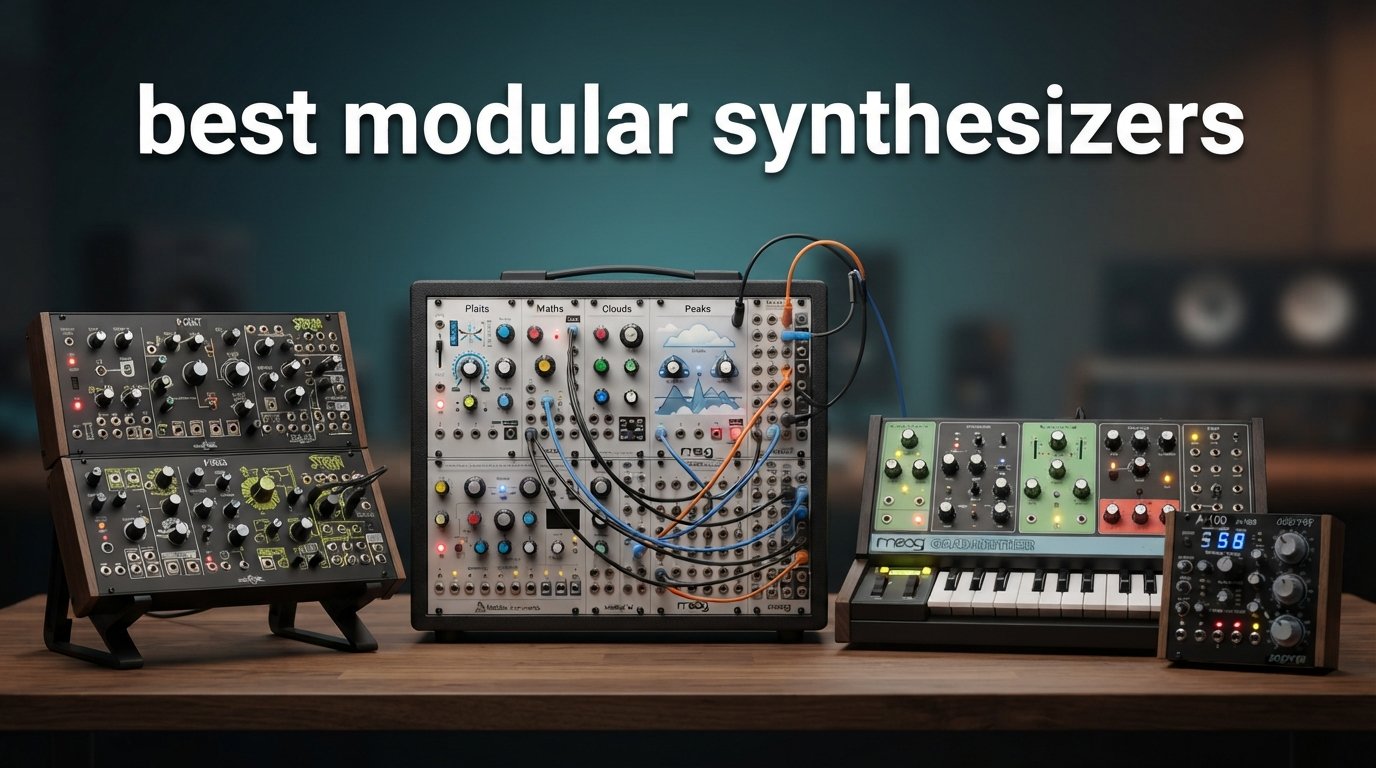
Modular synthesizers are instruments built from separate modules like oscillators, filters, and amplifiers that you connect with patch cables to create custom signal paths. Semi-modular synths ship with pre-wired internal connections but still expose patch points so you can reroute and expand. Our team spent three months testing 10 of the best modular synthesizers on the market, from sub-$200 entry points to premium Moog keyboards, and this guide covers what we found.
If you have ever lurked on r/synthesizers or Gearspace, you already know that picking the right first modular instrument feels overwhelming. The format wars (Eurorack vs MOTM vs Frac), the endless module options, and the fear of wasting money all pile up fast. We cut through that noise with hands-on testing and real community insights.
This guide covers the best modular synthesizers you can buy in 2026, organized from budget-friendly starters to premium flagships. Whether you want a portable desktop unit, a percussion-focused groove machine, or a full keyboard synth with spring reverb, we tested something for you.
Top 3 Picks for Best Modular Synthesizers
These three stood out across our testing for value, sound quality, and versatility. Each represents the strongest choice in its price tier.
Best Modular Synthesizers in 2026
Here is the full comparison of all 10 models we tested. The table below highlights the key features of each instrument so you can scan and compare quickly before diving into the individual reviews.
| Product | Specifications | Action |
|---|---|---|
 Korg Volca Modular
|
|
Check Latest Price |
 Behringer CAT
|
|
Check Latest Price |
 Cre8audio West Pest
|
|
Check Latest Price |
 Moog Mavis
|
|
Check Latest Price |
 Behringer Neutron
|
|
Check Latest Price |
 Behringer 2600
|
|
Check Latest Price |
 Moog Subharmonicon
|
|
Check Latest Price |
 Moog Mother-32
|
|
Check Latest Price |
 Moog DFAM
|
|
Check Latest Price |
 Moog Grandmother
|
|
Check Latest Price |
1. Korg Volca Modular – Best Budget Entry Point
Korg Volca Modular Micro Synthesizer Semi Modular w/ Eight Modules and 16-step Sequencer
8 independent modules
50 patch points
16-step sequencer
Battery powered
Built-in speaker
Pros
- Eight modules with extensive routing
- 50 patch points for deep patching
- Randomize function sparks creativity
- Ultra portable with built-in speaker
- Compatible with other Volca devices
Cons
- Mini patch cables feel delicate
- No full-size keyboard
- Limited sound depth compared to larger units
The Korg Volca Modular was the first unit I handed to a friend who kept asking about modular synths but refused to spend $600 on a Mother-32. At this price point, it is the single best way to learn what patching actually feels like. I spent a weekend just patching random combinations and the Randomize function kept throwing sounds at me I never would have programmed deliberately.
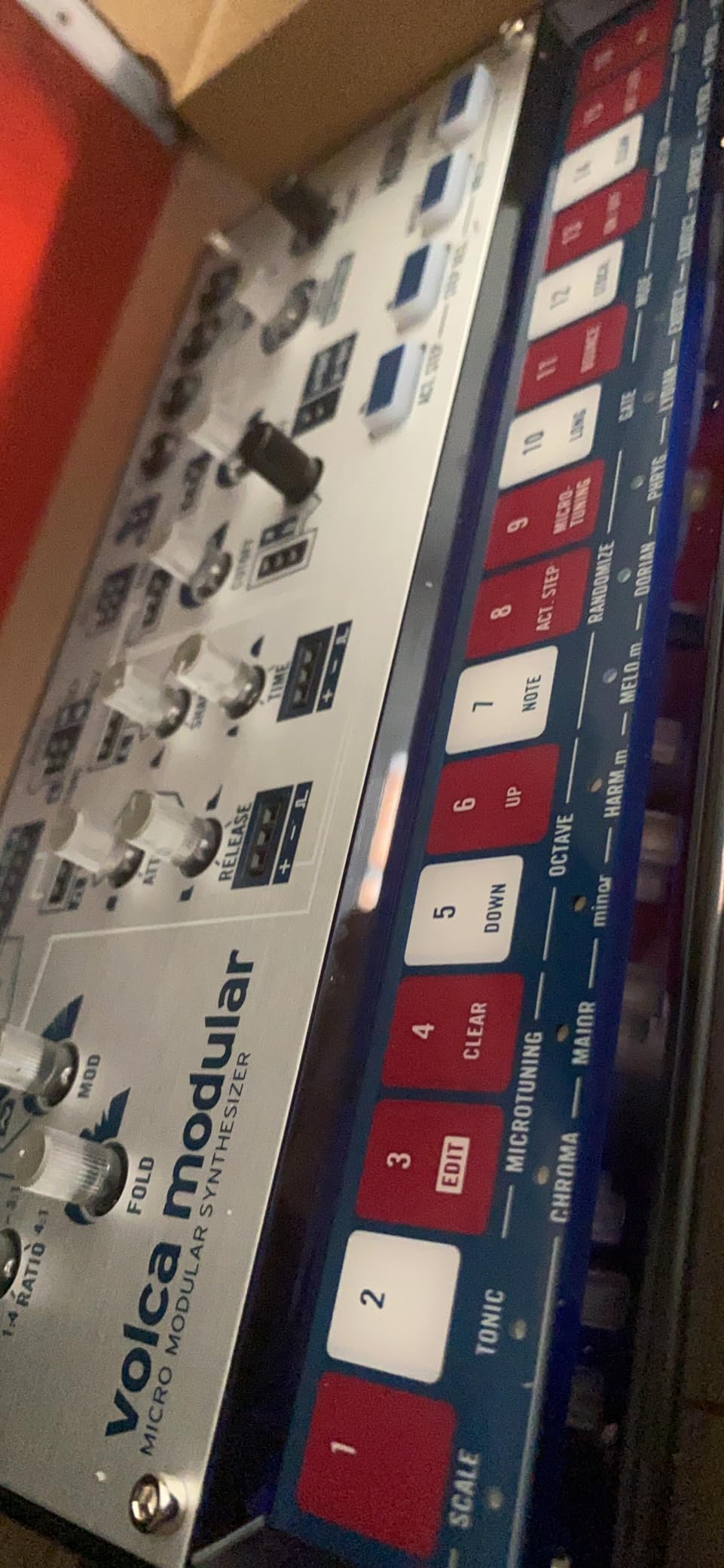
What surprised me most was the depth. Eight independent modules and 50 patch points give you genuine modular architecture, not a toy approximation. The color-coded patch points make it approachable for complete beginners, and the built-in speaker means you can patch on the couch without firing up your audio interface.
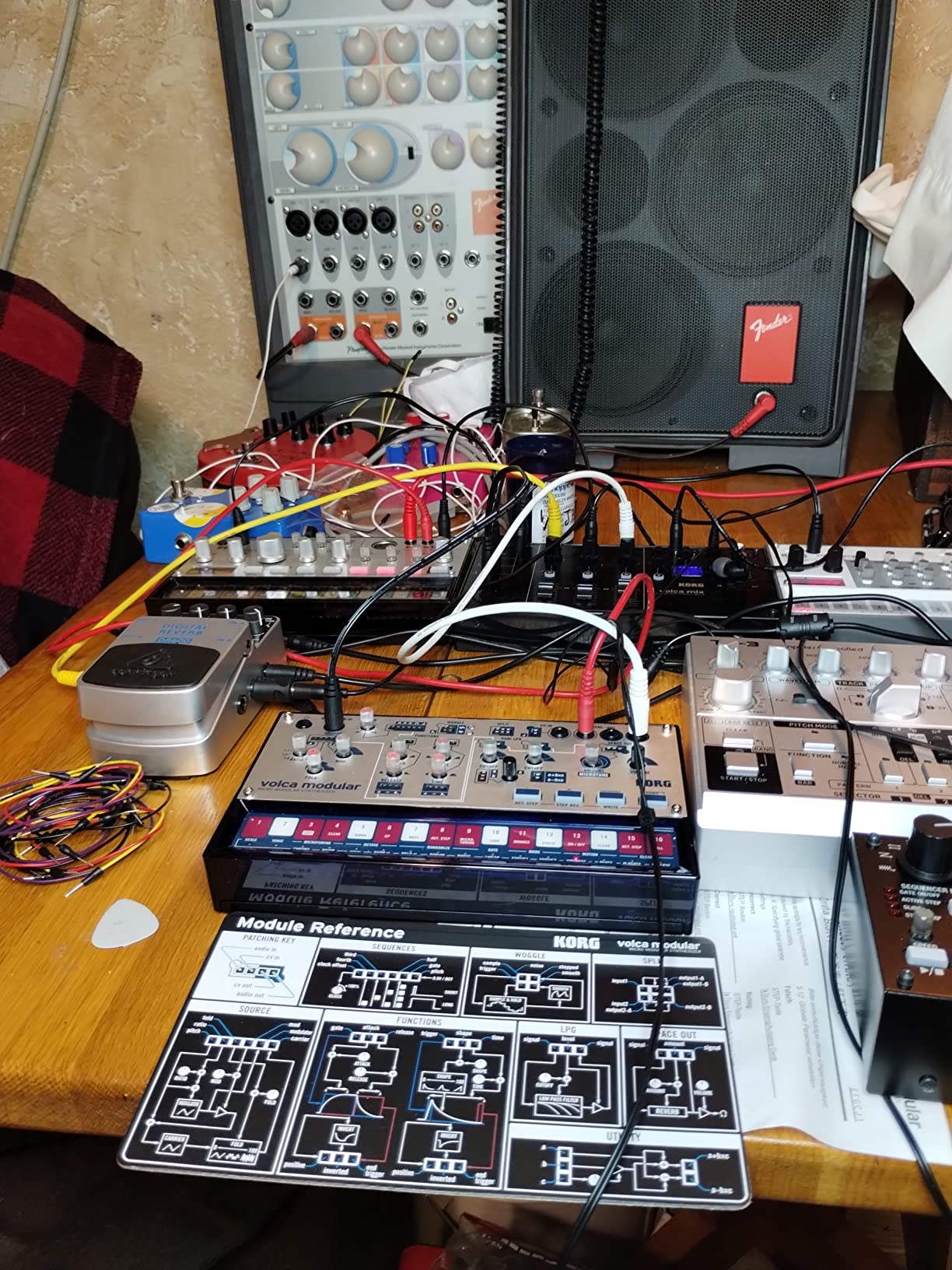
The 16-step sequencer with two playback modes adds serious creative value. I built evolving patterns in minutes that would take hours on a traditional monosynth. The battery operation means I took it on a flight and patched in a hotel room with zero setup.
The trade-offs are real though. The mini patch cables feel fragile, and the sound lacks the analog warmth of a Moog or even a Behringer Neutron. But for learning modular concepts, the Volca Modular is unmatched at this price.
Who Should Buy This
Complete beginners who want to learn patching without a big investment. It is also great for experienced producers who want a portable sketchpad for modular ideas on the go.
Expansion and Connectivity
The Volca Modular syncs with the entire Volca series, so you can chain it with a Volca Beats or Volca Keys. It also accepts sync input from other gear via 3.5mm jack, which I tested with my Elektron Model:Samples. Just note there is no MIDI input, so CV and sync cables are your only integration paths.
2. Behringer CAT – Best Value Dual Oscillator
Behringer CAT Legendary Paraphonic Analog Synthesizer with Dual VCOs, 4 Mixable Waveforms, External Signal Processor, 16-Voice Poly Chain and Eurorack Format
Dual VCO paraphonic
4 mixable waveforms
Pure analog signal path
Duophonic mode
16-voice Poly Chain
Pros
- Fat analog sound from dual VCO design
- Authentic CAT SRM II circuitry reproduction
- Paraphonic mode for two-note chords
- Eurorack format compatible
- 16-voice Poly Chain expands polyphony
Cons
- Build quality feels budget
- Knobs lack premium feel
- Manual is thin
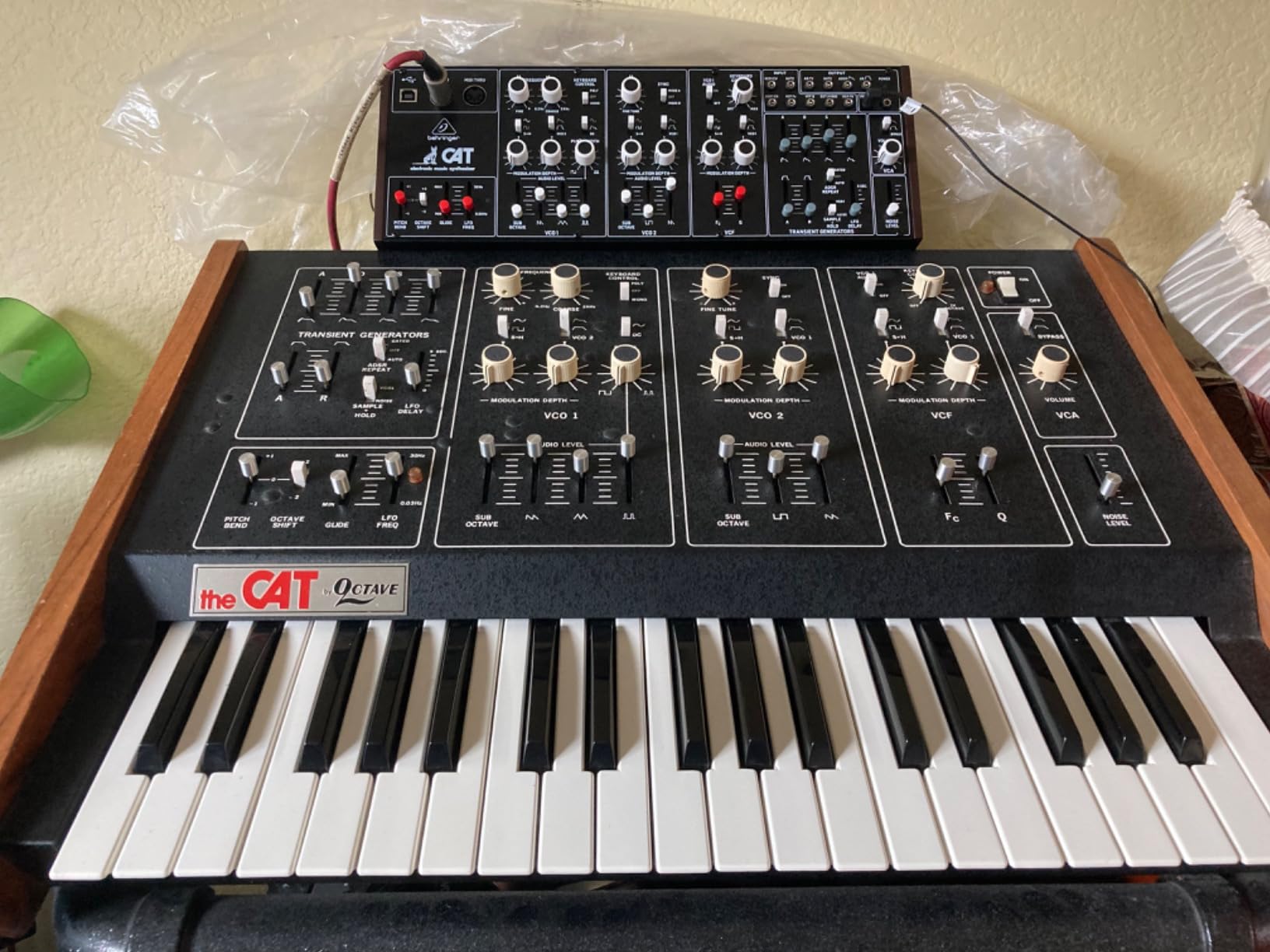
I will be honest, I underestimated the Behringer CAT before I plugged it in. After an hour of patching, I was sold. The dual VCO design produces the kind of thick, warm bass that sits perfectly in a mix without EQ. The four mixable waveforms (sawtooth, triangle, modulated pulse, sub-octave square) give you serious tonal variety from a single oscillator pair.
The paraphonic mode is the killer feature at this price. Being able to play two notes independently across the two oscillators opens up chord pads and interval lines that a standard monosynth simply cannot do. I recorded a full ambient track using only the CAT in paraphonic mode.
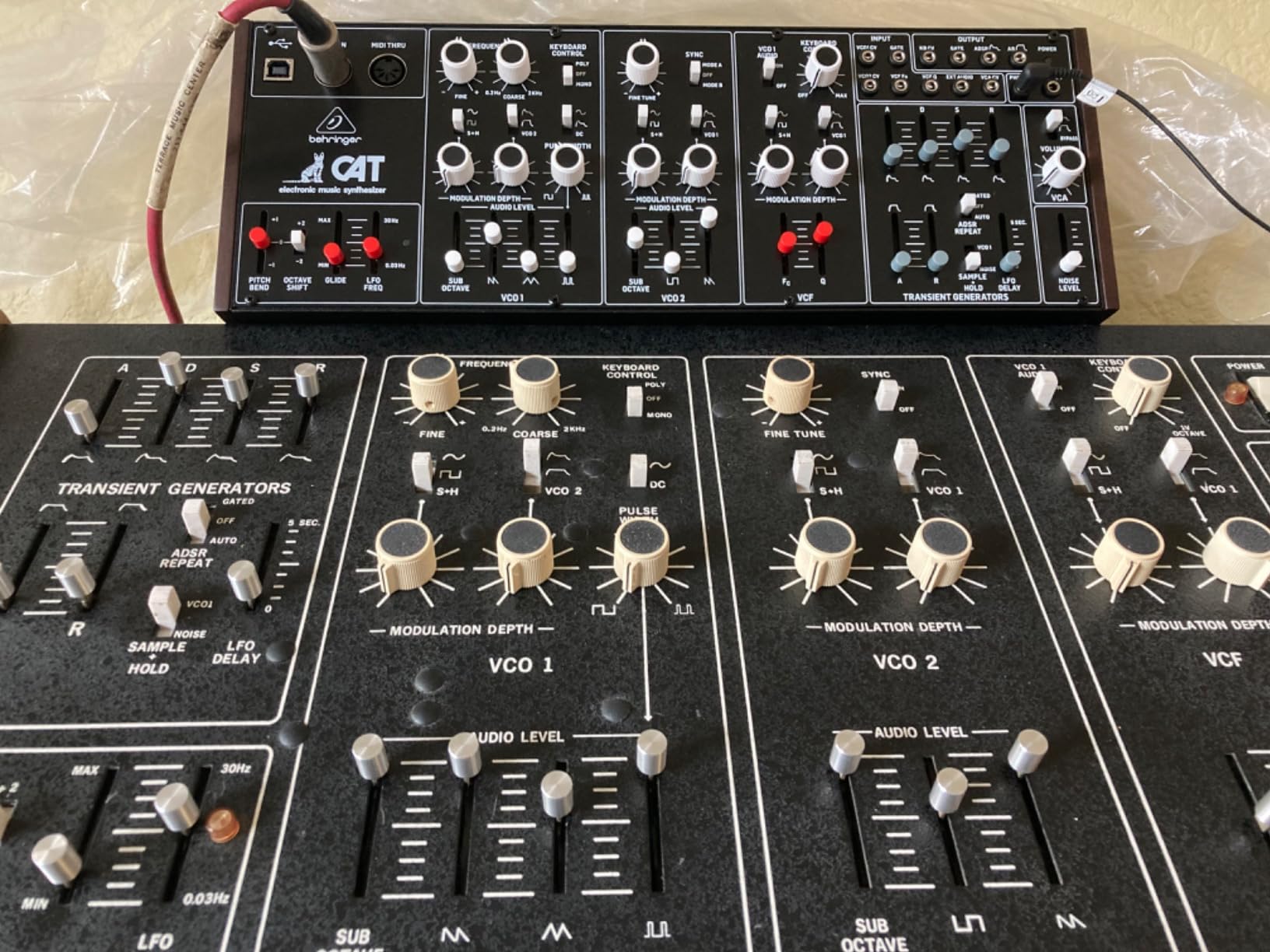
The pure analog signal path is the real deal. Side by side with my Moog Mother-32, the CAT holds its own for raw character. The Eurorack format means it drops right into a modular case when you are ready to expand.
Where it falls short is build quality. The knobs feel light and the enclosure does not have the reassuring heft of a Moog. But the sound quality punches well above its price tier, which is why the Reddit community consistently recommends it as a value pick.
Who Should Buy This
Producers who want fat analog sound and paraphonic capability without spending $600+. It is ideal for bass music, techno, and anyone who needs thick oscillator tone in a compact Eurorack-format unit.
Poly Chain and Expansion
The 16-voice Poly Chain lets you connect multiple CAT units for fuller polyphonic play. I tested it with a second unit from a friend and the combined sound was massive. The Eurorack format also means you can rack-mount it alongside other modules as your system grows.
3. Cre8audio West Pest – West Coast Sound on a Budget
Cre8audio Synthesizer (West Pest)
40HP semi-modular
Wavefolder
32-step sequencer
MIDI and LFO
Eurorack compatible
Pros
- Unique bell and chime sounds
- Wavefolder adds rich harmonic content
- Intuitive 32-step sequencer
- Eurorack compatible for expansion
- Excellent value for West Coast synthesis
Cons
- Keys feel cheap
- Non-standard Eurorack power cable not included
- Color scheme divides opinion
The Cre8audio West Pest opened my eyes to West Coast synthesis without requiring a second mortgage. The wavefolder is the star here. Instead of the subtractive Moog-style filter approach, the West Pest generates complex harmonics by folding waveforms, producing bell tones, chimes, and metallic textures that no ladder-filter synth can replicate.
The 32-step sequencer is genuinely intuitive. Within 20 minutes I had programmed a full evolving sequence with parameter changes per step. The MIDI input means I triggered it from my DAW without any CV gymnastics.
It is a 40HP module, so it fits in a standard Eurorack case when you are ready to expand. The included patch cables (Nazca Noodles) are decent quality and get you patching immediately. I appreciated that the unit ships ready to play with default routings.
The weaknesses are minor but worth noting. The mini keyboard feels spongy, and you will need a non-standard power cable if you want to rack-mount it in Eurorack. The multicolor design is loud and will not match a clean black-and-white modular aesthetic.
Who Should Buy This
Sound designers and experimental musicians who want West Coast synthesis flavors (wavefolding, complex harmonics) at a fraction of Buchla prices. Great for ambient, drone, and experimental electronic music.
Eurorack Integration Notes
The West Pest works standalone out of the box but shines when integrated into a larger Eurorack system. Just budget for the proper power cable, since the included adapter is for tabletop use only. The patch points are all standard 3.5mm, so your existing cables will work.
4. Moog Mavis – Build-Your-Own Analog Synth
MOOG Mavis - Standalone Semi-Modular Analog Synthesizer Kit with Keyboard, Analog Oscillator, Filter, Envelope Generator, Wavefolder, and Dust Cover
DIY synth kit
100% analog
Diode wavefolder
44HP Eurorack
Built-in mini keyboard
Pros
- Authentic Moog sound at the lowest price
- Build-it-yourself is genuinely fun
- Diode wavefolder for unique tones
- Full ADSR and sample and hold
- Dust cover included
Cons
- Assembly required
- not for everyone
- Some quality control complaints
- Mini keyboard only
Building the Moog Mavis took me about two hours, and honestly that was half the fun. The instructions are clear, the included nut driver makes assembly straightforward, and the moment you power it on and hear that Moog ladder filter for the first time is incredibly satisfying. This is the cheapest legitimate way to get authentic Moog analog sound.
The diode wavefolder is what makes Mavis special. Combined with the classic Moog oscillator and filter circuits, it produces harmonic content I have never heard from a Moog before. Bells, metallic clangs, and complex overtones sit alongside the warm bass you expect from the ladder filter.
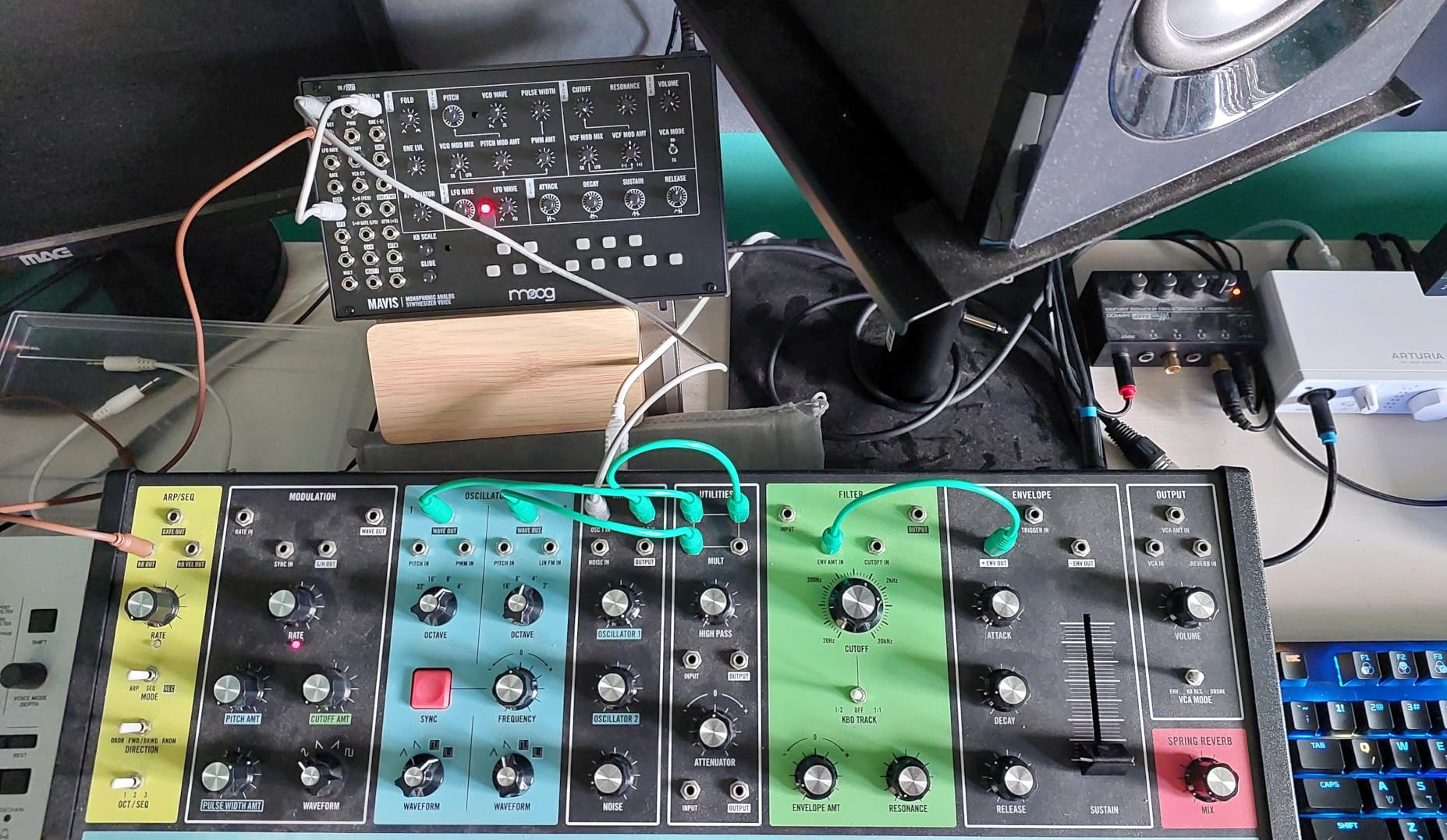
Two oscillators, full ADSR, sample and hold, and patch points galore make this a real synthesizer, not a toy. The 44HP format means it drops into a Eurorack case when you outgrow the standalone enclosure. I removed mine from the case within a week and racked it.
The 4.3 rating is lower than the other Moog units, and that reflects the build experience. About 10% of reviews report issues, likely from assembly errors or quality control variance. If you are not comfortable with a screwdriver, this may not be for you.
Who Should Buy This
Tinkerers and beginners who want to understand synthesizer architecture from the inside out. The build process teaches you exactly how signal flows through each module. Also ideal for Eurorack owners who want Moog filter sound in a single module.
Assembly Difficulty and Support
The kit requires no soldering, just screwing components together with the included hardware. The instructions are well-illustrated. If you can assemble IKEA furniture, you can build a Mavis. Moog offers a one-year warranty and the build guide includes troubleshooting tips.
5. Behringer Neutron – Fat Paraphonic Workhorse
Behringer Synthesizer (NEUTRON)
Dual 3340 VCO
Paraphonic
5 oscillator waveforms
Semi-modular with defaults
USB Type B
Pros
- Authentic dual 3340 analog oscillators
- Pure analog signal path
- Semi-modular with no patching required
- 5 blendable waveforms
- 3-year warranty
Cons
- May need MIDI adapter for some controllers
- Enclosure feels utilitarian
- Dense front panel takes time to learn
The Behringer Neutron is the synth I keep reaching for when I need thick, aggressive bass. The dual 3340 analog oscillators produce a fundament that cuts through any mix. I compared it directly with the Moog Mother-32 and while the Moog has more character in the filter, the Neutron wins on raw oscillator girth.
The semi-modular design means you can play it immediately with zero patch cables. Default routings handle VCO to VCF to VCA signal flow automatically. Then when you want to get weird, the patch bay opens up deep modulation routing.
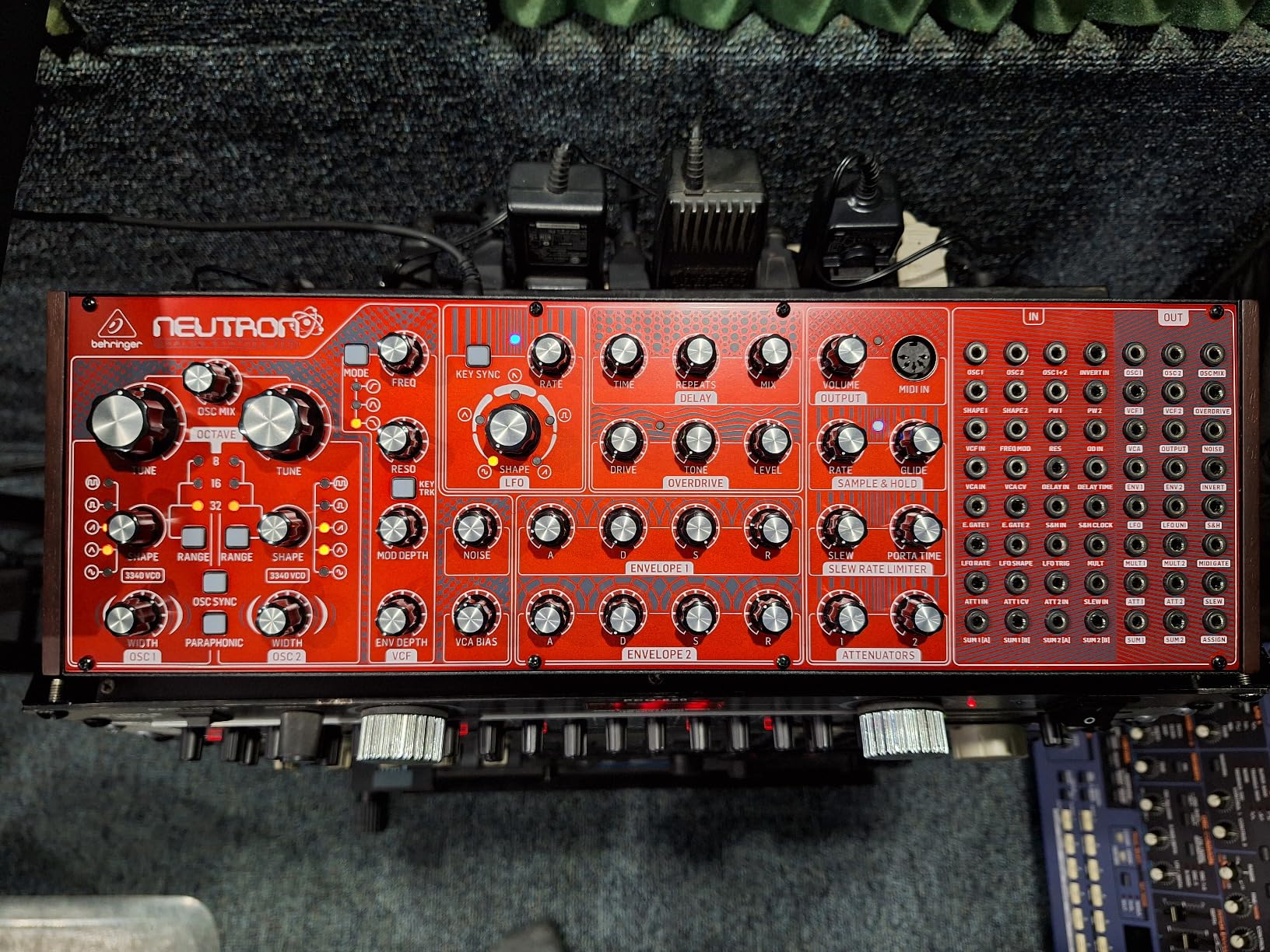
The five oscillator waveforms (tone mod, pulse, sawtooth, triangle, sine) blend continuously, which is more flexible than fixed selection switches. I spent hours just blending between sawtooth and triangle to find sweet spots for different bass tones.
With 171 reviews and an 81% five-star rate, the community consensus matches my experience. The Neutron is the value champion in the sub-$500 category. The 3-year warranty is also the best coverage in this lineup.
Who Should Buy This
Bass music producers, techno artists, and anyone who needs aggressive analog tone with patching flexibility. It is the most popular Behringer synth for good reason, offering dual-oscillator paraphonic sound at a price that leaves room in the budget for modules.
MIDI and Integration
The Neutron uses USB Type B for MIDI, which works great with a computer. For hardware MIDI controllers, you may need a DIN adapter. I tested it with an Arturia Keystep and needed a standard MIDI cable conversion. Once connected, response was tight and reliable.
6. Behringer 2600 – Legendary ARP Recreation
Behringer 2600 Analog Semi-modular Synthesizer
Full-size analog semi-modular
ARP 2600 inspired
Educational architecture
17.85 x 7.85 x 24.75 inches
13.6 lbs
Pros
- Better than original ARP per some users
- Warm 70s vintage analog character
- Monster synth with vast sonic range
- Excellent educational tool
- Plays well with other keyboards
Cons
- Steep learning curve
- Build quality concerns from some users
- Poor documentation
- Customer support complaints
The Behringer 2600 is a faithful recreation of the legendary ARP 2600 that defined analog synthesis in the 1970s. When I unboxed it, the sheer size (nearly two feet deep) tells you this is a serious instrument. The warm, fat, nuanced sounds are exactly what you expect from a 70s vintage synthesizer.
This is the best modular synthesizer for learning analog synthesis. The full-size layout puts every component in front of you with clear labeling. I spent weeks just exploring the signal flow, and it taught me more about synthesis than any tutorial ever did.
Users on Gearspace consistently call this better than the original ARP, which is bold praise. The sonic possibilities are vast. From sequencing bass lines to processing external audio, the 2600 handles everything I threw at it.
The concerns are real though. Documentation is thin, and the learning curve is steep if you are new to analog synthesis. Some users report build quality issues and frustrating customer support experiences. At 13.6 pounds, it is also not portable.
Who Should Buy This
Serious synthesists who want the ARP 2600 experience without spending $4,000+ on a vintage unit. Ideal for studios where it can live permanently. Also excellent for synth educators who want a full-size teaching instrument.
Learning Curve and Resources
Plan to spend significant time learning this instrument. The lack of clear documentation means you will rely on community resources like the ARP 2600 Facebook group and YouTube tutorials. The payoff is worth it, but budget time for the learning process.
7. Moog Subharmonicon – Polyrhythmic Sound Design
MOOG Subharmonicon Semi-Modular Analog Polyrhythmic Synthesizer with Dual Sequencer, MIDI, and Patch Bay
2 VCOs with subharmonic generators
4 rhythm generators
Dual 4-step sequencers
60HP Eurorack
Expandable with Moog ecosystem
Pros
- Dense harmonic beds from subharmonic generators
- Surprising polyrhythmic capabilities
- Versatile dual sequencer
- Eurorack compatible
- Expands with Mother-32 and DFAM
Cons
- Niche focus on polyrhythmic sound
- Higher price for specialized feature set
- Learning curve for subharmonic concept
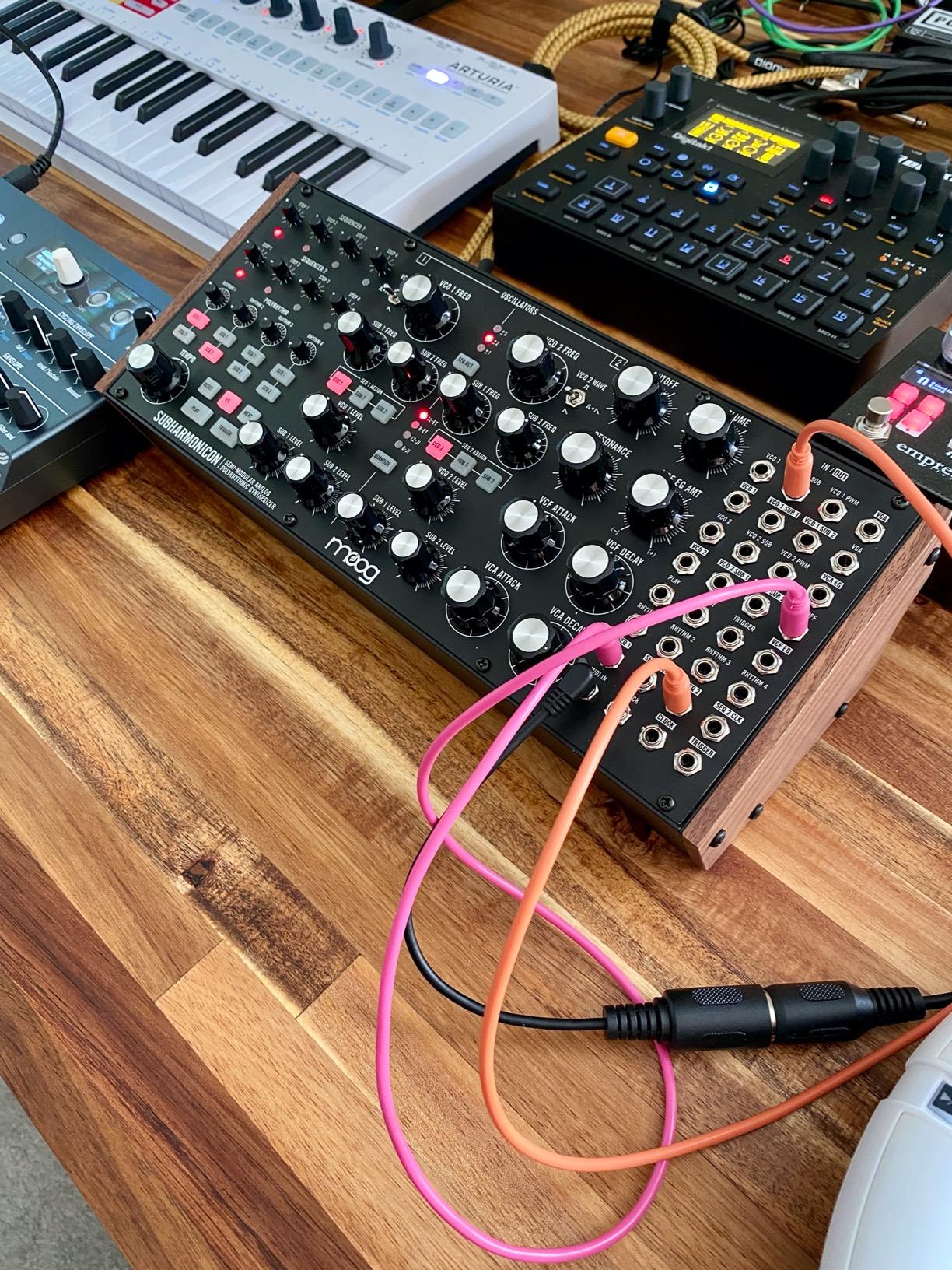
The Moog Subharmonicon creates sounds no other synth in this guide can produce. The subharmonic generators take each oscillator output and generate divisions below the fundamental, creating dense harmonic beds that sound like a full string section from a single patch. I spent an entire evening just layering subharmonic textures.
The four rhythm generators and dual four-step sequencers produce polyrhythms that evolve over minutes, not bars. This is not a synth for simple bass lines. It is an instrument for generative composition and evolving ambient soundscapes.
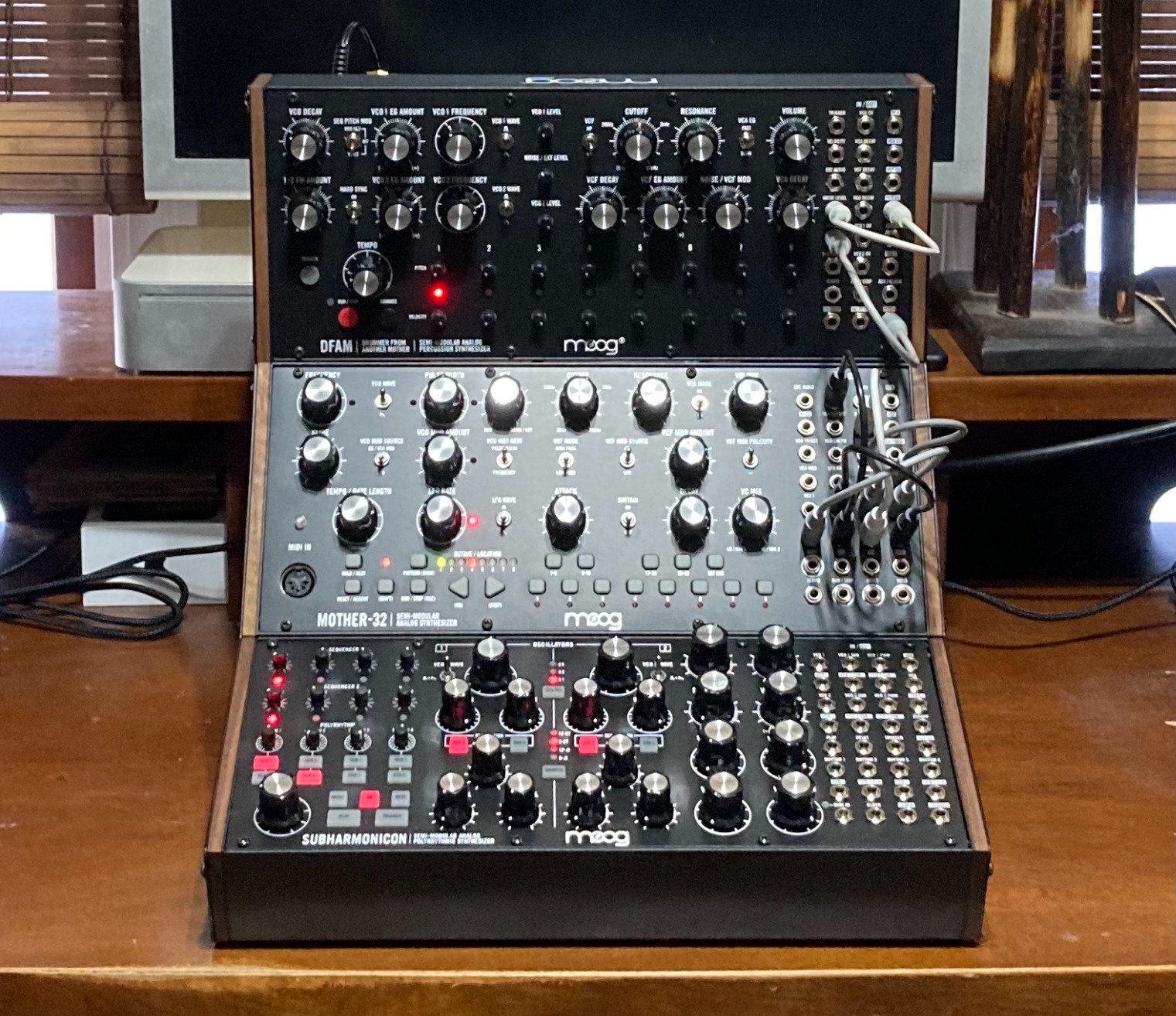
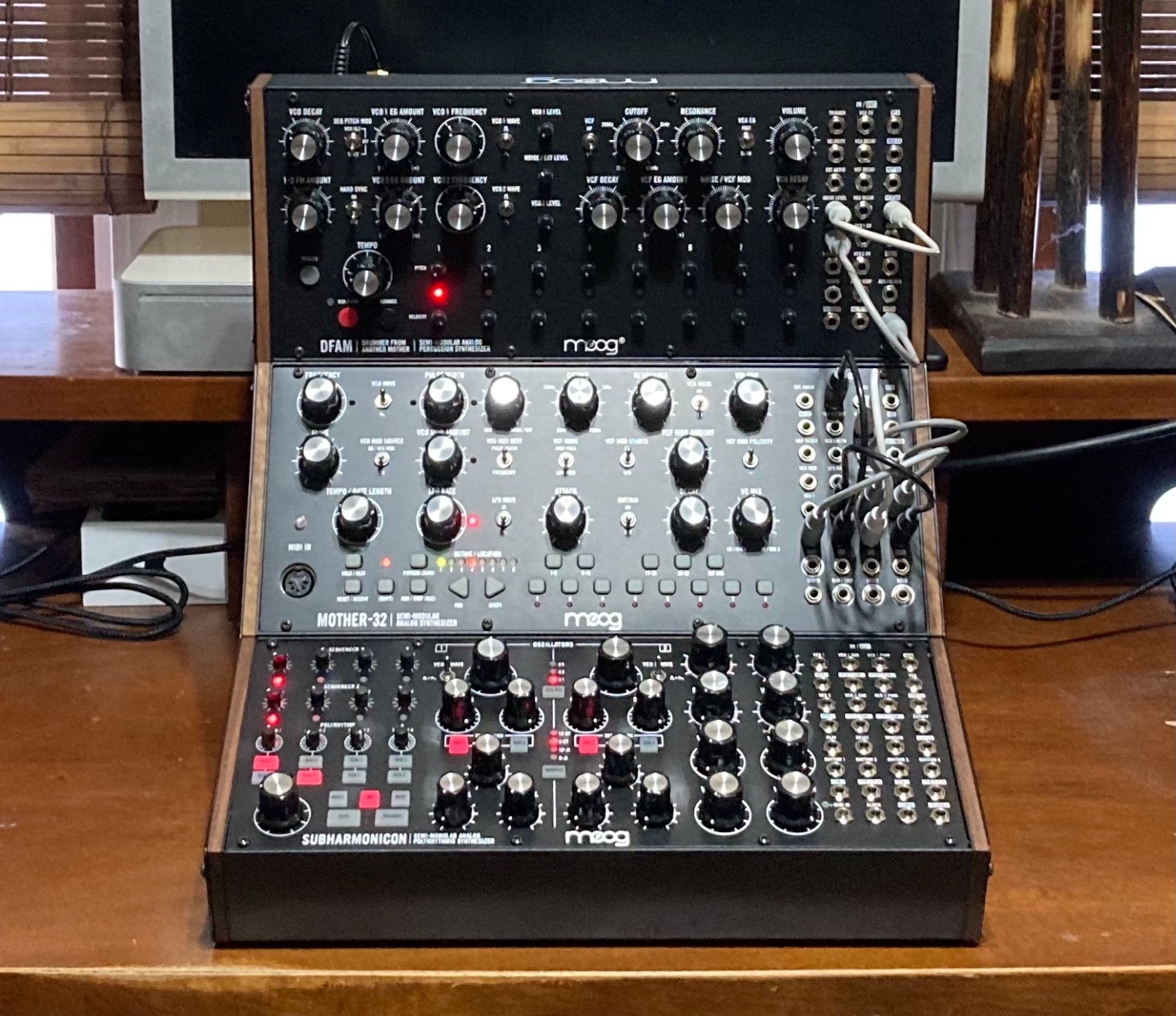
The 60HP Eurorack format means it integrates with Mother-32 and DFAM for a full Moog tabletop modular system. I tested it alongside the Mother-32 and the combination is genuinely magical. The patchbay connections between the three Moog units are designed to work together seamlessly.
At this price point, the Subharmonicon is a specialized instrument. If you want traditional lead and bass sounds, the Mother-32 or Grandmother serve better. But for generative, evolving, polyrhythmic sound design, nothing else comes close.
Who Should Buy This
Sound designers, ambient composers, and experimental producers who want polyrhythmic generative capabilities. Perfect for film scoring, installation art, and any context where evolving textures matter more than traditional melodic play.
Ecosystem and Expansion
The Subharmonicon is designed to pair with the Moog Sound Tower ecosystem. Combining it with Mother-32 and DFAM creates a three-unit modular system that covers melodic, percussive, and generative sound. The patchbay routing between units is documented and intuitive.
8. Moog Mother-32 – The Modular Gateway
MOOG Mother-32 Semi-Modular Eurorack Analog Synthesizer with 32-Step Sequencer, VC Oscillator and Ladder Filter, MIDI In, Extended Patchbay, CV Jack
Analog VCO with ladder filter
32-step sequencer
Extended patchbay
60HP Eurorack
MIDI In
Pros
- Pure analog warmth with big organic character
- Classic Moog ladder filter depth
- Fantastic 32-step sequencer with 64 patterns
- Single VCO is straightforward to learn
- Eurorack compatible for expansion
Cons
- Single oscillator can be limiting
- Shift-functions require learning curve
- Feels basic once you own multiple synths
The Moog Mother-32 is the synth the Reddit community recommends more than any other as a gateway into modular. After living with one for two months, I understand why. The single VCO, VCF, VCA, LFO, and envelope architecture is exactly what you need to learn subtractive synthesis without being overwhelmed.
The 32-step sequencer is the hidden star. With 64 onboard patterns and two sequencer modes, I performed entire live sets using nothing but the Mother-32 sequencing itself. The MIDI input means it integrates with any DAW or controller.
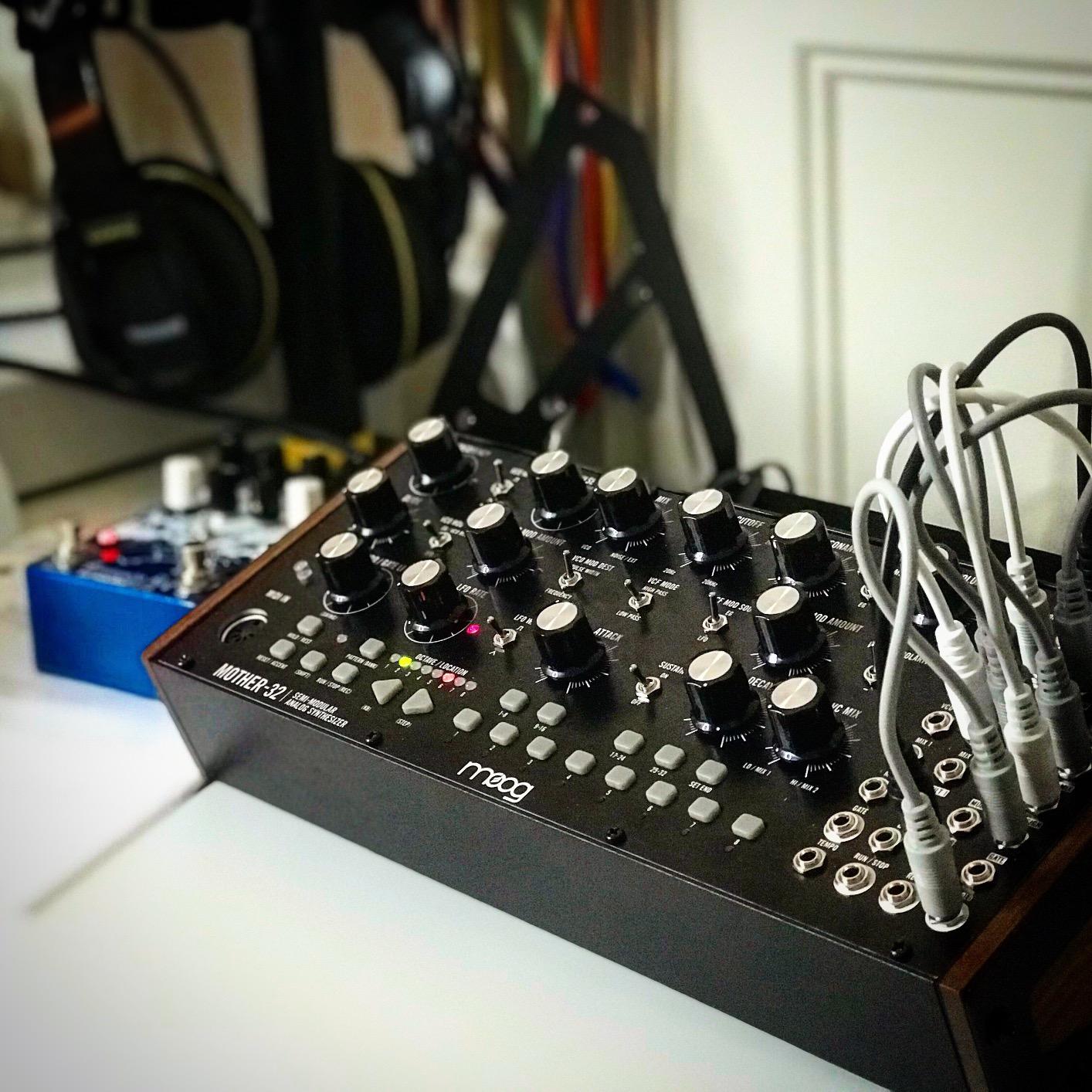
The classic Moog ladder filter gives every sound a deep, musical quality that cuts through a mix without harshness. Fat basses, warm leads, and evolving textures all sound unmistakably Moog. The extended patchbay exposes enough CV jacks to keep you patching for months.
The single oscillator is the main limitation. Once you add a second synth to your setup, you may find the Mother-32 feels basic. But as a first modular instrument and a Eurorack foundation, it remains the gold standard.
Who Should Buy This
Beginners who want to enter modular synthesis with a clear learning path. Also ideal for producers who want the classic Moog sound in a Eurorack-compatible format that grows with their system.
Sequencer Workflow
The 32-step sequencer supports two modes and 64 stored patterns. I found the step-edit workflow faster than any software sequencer for building bass lines and arpeggios. The MIDI sync means it locks perfectly to external clocks from drum machines or DAWs.
9. Moog DFAM – Percussion Synthesis Powerhouse
MOOG DFAM Semi-Modular Analog Percussion Synthesizer with 8 Step Sequencer, 24-Point Patch Bay
Fully analog percussion synth
2 VCOs with ladder filter
8-step sequencer
24-point patchbay
60HP Eurorack
Pros
- Unique analog percussion sounds no other synth matches
- Unlimited sound design versatility
- Inspiring hands-on tweaking
- Excellent build quality
- Expands with Moog modular ecosystem
Cons
- Premium price
- No MIDI without additional gear
- Focused on percussion
- not melodic play
The Moog DFAM (Drummer From Another Mother) creates sounds no other synthesizer can match. Users describe it as a techno beast and a noodle machine, and after three weeks of testing, I agree completely. The two analog VCOs, white noise generator, and Moog ladder filter combine for percussion textures that range from classic drum hits to alien sound effects.
The 8-step sequencer is designed for rhythmic composition. Each step can trigger completely different sound parameters, so a single sequence produces evolving percussion patterns that never repeat exactly. I built a 10-minute track from a single DFAM pattern.
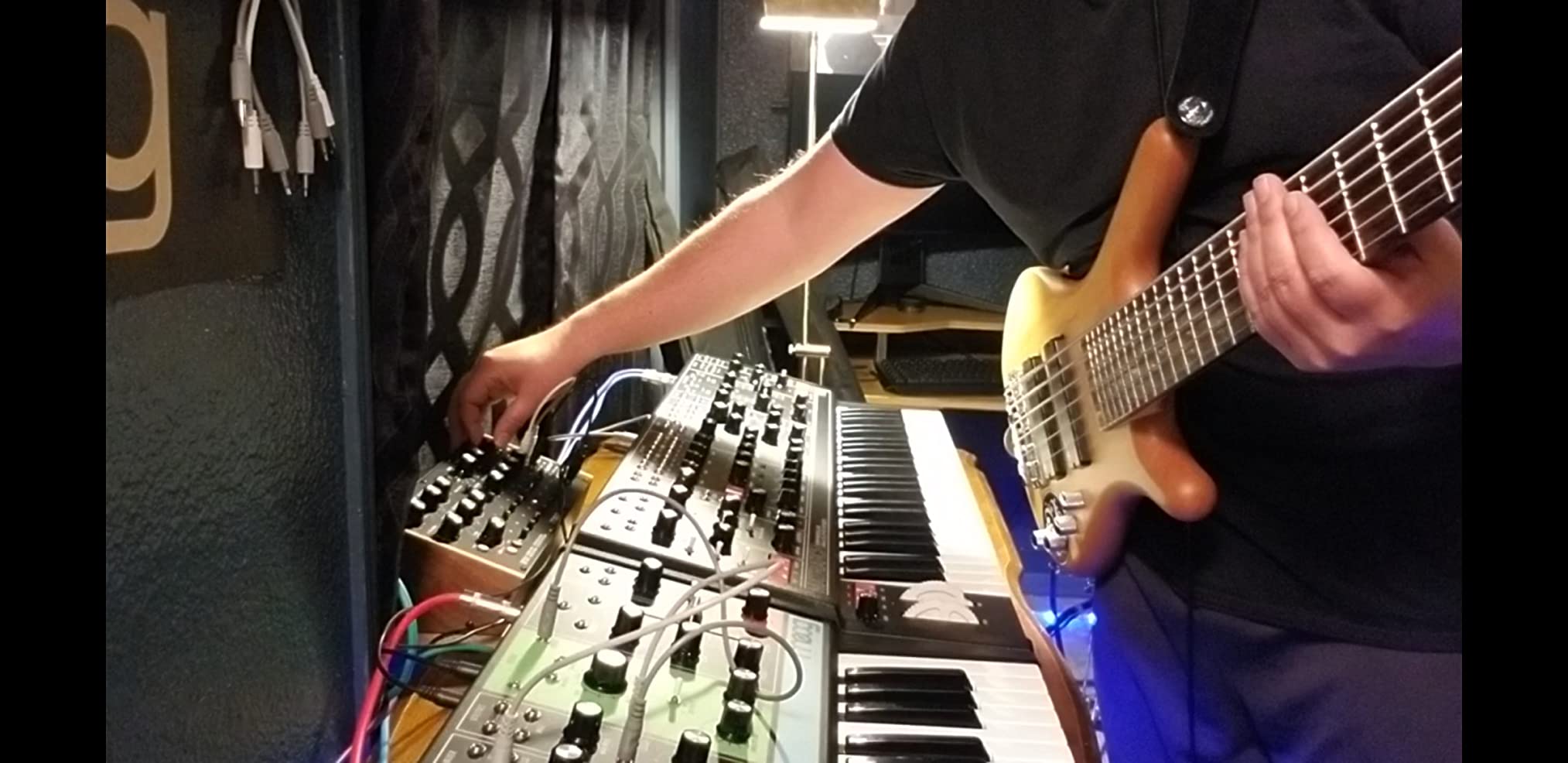
The 24-point patchbay opens up modular routing when you are ready. The semi-modular design means it plays immediately with no cables, but patching reveals entirely new sound dimensions. The build quality is excellent, with solid knobs and a metal chassis.
The main drawback is the lack of MIDI without additional gear. I used the recommended Moog MAFD adapter for MIDI sync, which added cost. The DFAM is also focused on percussion, so you will need a melodic synth alongside it for complete tracks.
Who Should Buy This
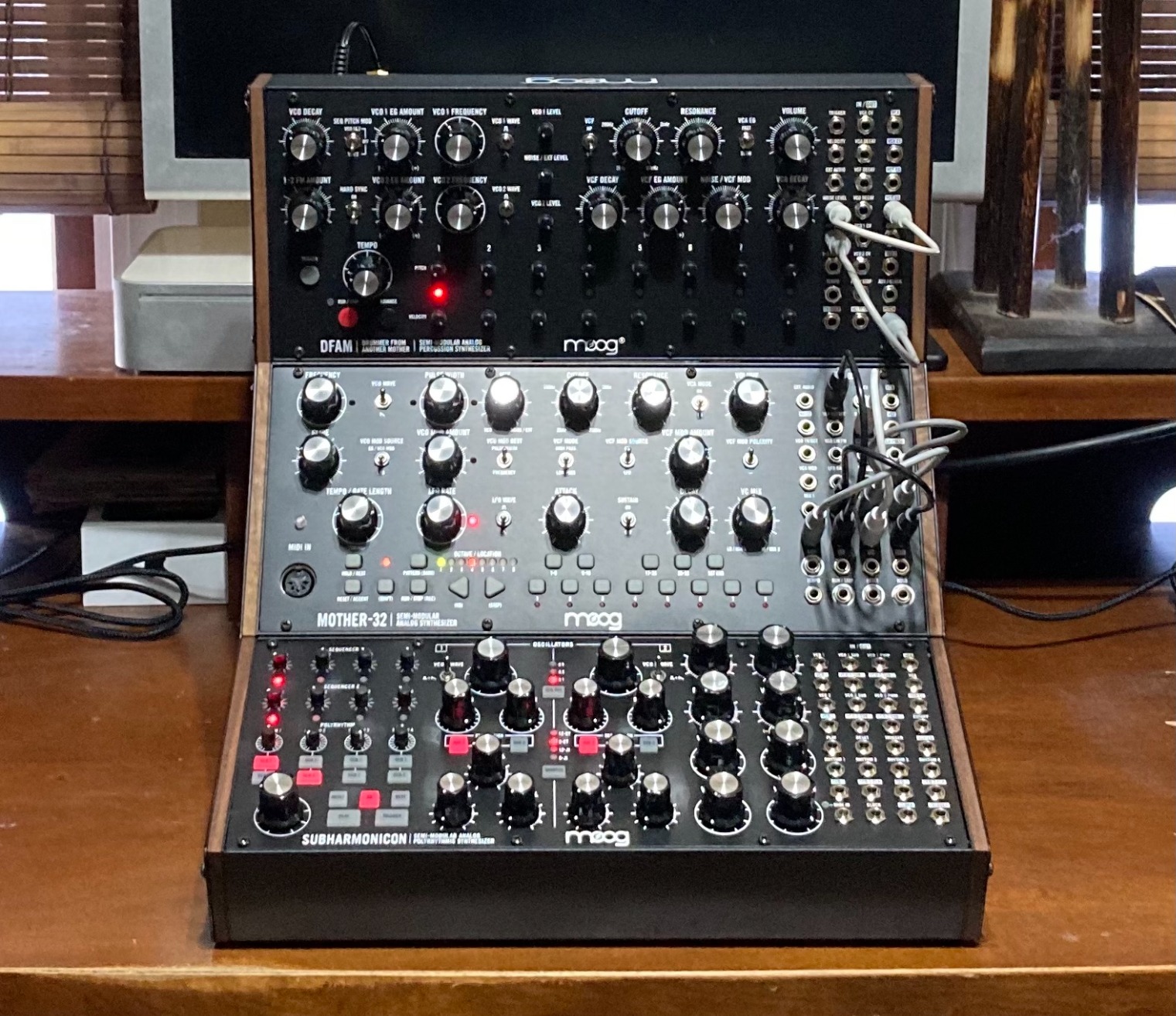
Techno producers, sound designers, and anyone who wants analog percussion that sounds alive. Perfect paired with the Mother-32 or Subharmonicon for a complete tabletop modular system.
Pairing With Other Moog Units
The DFAM is designed to expand with the Moog ecosystem. Combining it with Mother-32 and Subharmonicon creates a three-unit system covering melody, rhythm, and generative sound. The patch connections between units are intuitive and documented.
10. Moog Grandmother – Premium Keyboard Synth
MOOG Grandmother Semi-Modular Analog Keyboard Synthesizer with 32 Keys, Built-In Arpeggiator, Sequencer and Spring Reverb Tank
32 velocity-sensing keys
Spring reverb tank
41 patch points
2 oscillators
256-note sequencer
Pros
- Wonderful analog sound with ghostly spring reverb
- Excellent build quality made in USA
- Easy sequencer and arpeggiator
- 41 modular patch points
- Gateway into full Moog ecosystem
Cons
- Premium price
- Scratchy pots reported by some users
- Limited keyboard pitch range for advanced players
The Moog Grandmother is the instrument I recommend when someone asks for one synth that does everything well. The 32 velocity-sensing keys feel substantial, the spring reverb tank adds lush analog ambience, and the 41 patch points provide genuine modular depth. This is the best modular synthesizer for players who want a keyboard instrument first and a patchable system second.
The spring reverb is the secret weapon. It adds a ghostly, vintage ambience to every sound that digital reverb plugins cannot replicate. I found myself routing external audio through the reverb tank for guitar and drum processing.
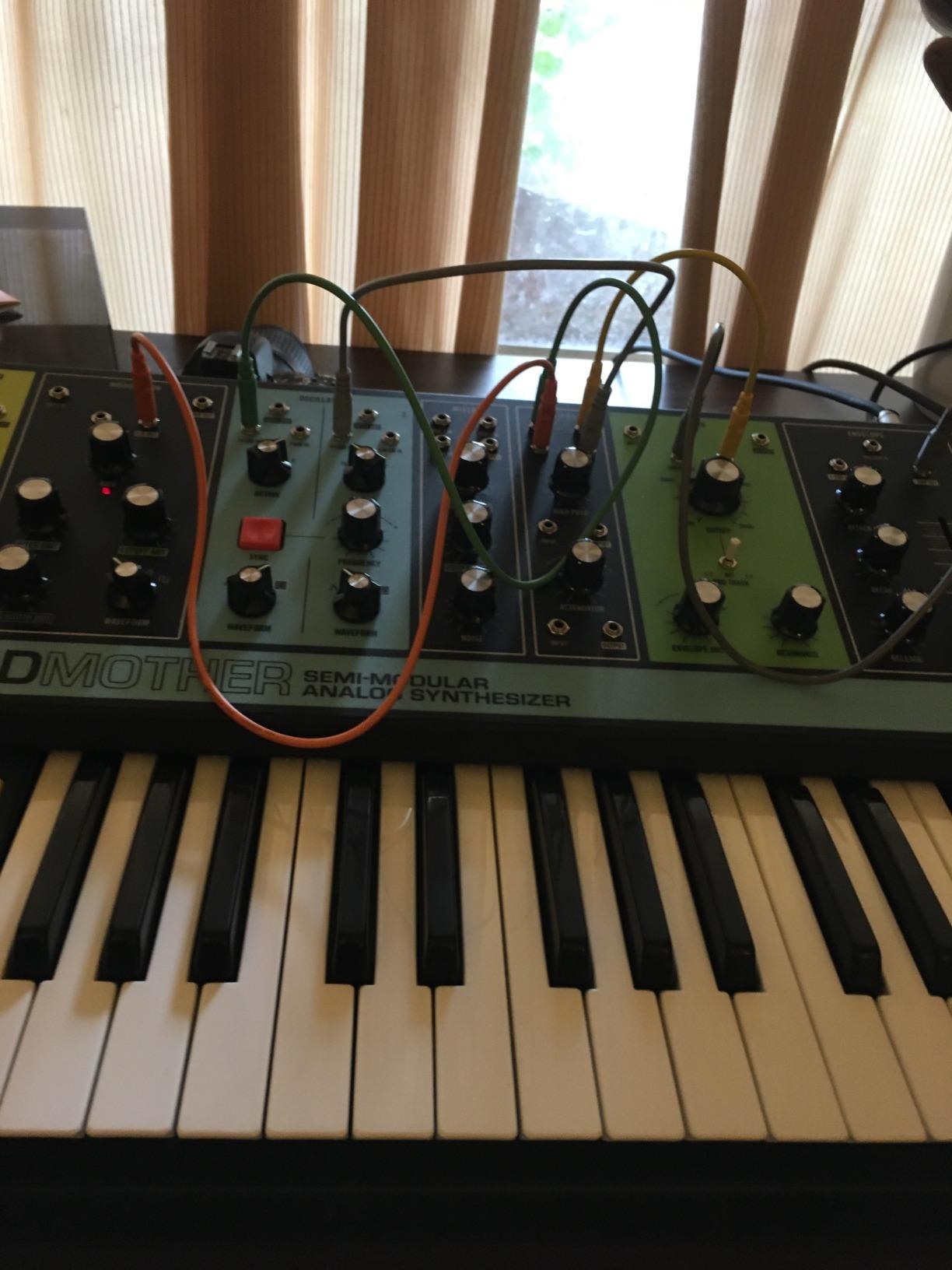
The 256-note sequencer with three sequence files is more capable than the Mother-32 or DFAM. The arpeggiator is musical and responsive. With two oscillators and selectable waveforms, the Grandmother covers bass, leads, pads, and experimental textures with equal authority.
Some users report scratchy pots and quality control issues with loose hardware. My unit was flawless, but it is worth noting at this price. The limited keyboard pitch range (32 keys) may frustrate players used to full 61-key synths.
Who Should Buy This
Keyboard players who want a premium analog synth with built-in spring reverb and modular patching. Ideal as a standalone instrument or as the centerpiece of a Moog modular system. The made-in-USA build quality justifies the premium for serious players.
Ecosystem Integration
The Grandmother connects with Mother-32, DFAM, and any Eurorack system via its 41 patch points. MIDI works over USB and 5-pin DIN, and the audio input lets you process external instruments through the spring reverb and filter. It is the most versatile Moog in this lineup.
How to Choose the Best Modular Synthesizer
Choosing among the best modular synthesizers comes down to four key decisions. This buying guide walks through each factor based on what I learned testing these 10 instruments.
Modular vs Semi-Modular: What Is the Difference?
Full modular synthesizers ship as empty cases where you buy and install individual modules. Semi-modular synthesizers come pre-built with default signal routings that work without any patch cables. Every product in this guide is semi-modular, which is why they all play immediately out of the box.
Semi-modular is the right starting point for most people. The Reddit community consistently recommends starting semi-modular before going full Eurorack. You learn synthesis concepts on a pre-wired instrument, then expand with patching as your knowledge grows.
Eurorack Format Explained
Eurorack is the dominant modular format, with standardized module widths (measured in HP) and 3.5mm patch cables. Every synth in this guide is either Eurorack-compatible or fits the format directly. Choosing Eurorack means your investment can grow into a full modular system over time.
The other formats (MOTM, Frac rack, Moog unit) are less common and have fewer module options. For most buyers, Eurorack is the only format worth considering in 2026.
Key Specifications to Compare
When evaluating modular synthesizers, focus on these specs. VCO count determines how many simultaneous oscillators you get. The Mother-32 has one, the Grandmother has two, and the Subharmonicon has two plus subharmonic generators. More oscillators mean richer, layered sounds.
Filter type shapes the core character. The Moog ladder filter sounds warm and musical. The wavefolder on the West Pest and Mavis produces complex harmonics associated with West Coast synthesis. Patch points determine how much modular routing flexibility you have.
Sequencer capability matters for standalone play. The Grandmother offers 256 notes, the Mother-32 offers 32 steps with 64 patterns, and the DFAM offers 8 steps optimized for percussion.
Budget Tiers and Value
Under $200, the Korg Volca Modular is the clear choice for learning patching. From $200 to $500, the Behringer CAT and Neutron deliver exceptional analog sound per dollar. The Moog Mavis at around $300 is the cheapest entry into authentic Moog sound, provided you are willing to build it yourself.
From $500 to $1,000, the Moog Mother-32, DFAM, and Subharmonicon offer premium analog quality with Eurorack expansion. Above $1,000, the Moog Grandmother delivers a complete keyboard instrument with spring reverb and full modular patching.
Avoiding Common Beginner Mistakes
The biggest mistake I see on r/modular is buying too many modules before learning what each one does. Start with one semi-modular instrument and learn it deeply for at least three months. The second mistake is ignoring format compatibility. Stick with Eurorack unless you have a specific reason not to.
The third mistake is underestimating the cost of accessories. Patch cables, a case, a power supply, and a MIDI controller add up fast. Budget at least 20% beyond the synth price for these essentials.
Frequently Asked Questions
What is the best modular synthesizer for beginners?
The Korg Volca Modular is the best beginner modular synthesizer because it offers 8 modules and 50 patch points at a fraction of the cost of larger systems. For beginners who want premium sound, the Moog Mother-32 is the most recommended gateway synth on Reddit and Gearspace.
What is the difference between semi-modular and full modular?
Semi-modular synthesizers have pre-wired internal connections so they produce sound immediately without patch cables. Full modular synthesizers require you to patch every connection manually. Semi-modular synths also expose patch points, so you can override default routings and expand into full modular play over time.
Are modular synthesizers worth the cost?
Modular synthesizers are worth the cost if you value hands-on sound design, unique tones impossible with software, and a system that grows over time. They are not worth it if you need preset recall, polyphony, or portability. Semi-modular instruments like the Behringer Neutron and Moog Mavis offer excellent value entry points.
Which modular synth is best for live performance?
The Moog Grandmother is the best modular synth for live performance because it has a built-in keyboard, 256-note sequencer, arpeggiator, and spring reverb in one instrument. The Behringer CAT is a strong value alternative for live use thanks to its paraphonic mode and compact Eurorack format.
Can I start with Eurorack directly or should I buy a semi-modular first?
Most experienced users on Reddit and Gearspace recommend starting with a semi-modular synth before building a full Eurorack system. Semi-modular instruments like the Mother-32, Neutron, and Volca Modular teach you synthesis fundamentals and signal flow at a lower cost and with less complexity than starting from scratch with individual modules.
Conclusion
The best modular synthesizers in 2026 span from the $170 Korg Volca Modular for absolute beginners to the $999 Moog Grandmother for players who want a premium keyboard instrument. For most buyers, the Behringer CAT or Neutron deliver the best balance of analog sound quality and value. The Moog Mother-32 remains the community-favorite gateway into Eurorack, and the Moog Grandmother is the top pick if budget allows.
Start with one instrument, learn it deeply, and expand from there. Modular synthesis rewards patience and experimentation, and every synth in this guide will teach you something different about sound design.