
Finding the best portable digital pianos in 2026 means sorting through dozens of slab-style models that promise weighted keys, great sound, and easy carry, all in a package light enough for your apartment, dorm, or gig bag. Our team tested 12 of the most popular options across Yamaha, Roland, Casio, Donner, and Alesis, spending real practice hours on each one.
Here is the quick answer. The Yamaha P-225 is the best overall pick for its CFX grand piano sound and graded hammer compact action. The Roland FP-30X wins for value with its SuperNATURAL sound engine and PHA-4 ivory-feel keys. For budget shoppers, the Alesis Recital delivers 88 keys and built-in speakers at the lowest price point. The Casio PX-S1100 is the slimmest design we tested, and the Yamaha NP-15 Piaggero is the lightest at just 11.5 pounds.
Whether you need a beginner digital piano for lessons, a lightweight travel companion, or an apartment-friendly practice instrument with a headphone jack, this guide covers every weight class and price tier. We focused on real-world concerns that matter: how the keys actually feel under your fingers, whether the built-in speakers sound muddy or clear, and how heavy the piano feels when you carry it up a flight of stairs.
Top 3 Picks for Best Portable Digital Pianos
These three models stood out across our testing as the strongest choices for different budgets and use cases. Each one earned its badge through weeks of hands-on practice, sight-reading drills, and side-by-side sound comparisons.

Yamaha P-225 88-Key Digital Piano
- CFX Concert Grand Sound
- GHC Weighted Action
- Bluetooth
- Smart Pianist App

Roland FP-30X Digital Piano
- SuperNATURAL Sound
- PHA-4 Ivory Feel Keys
- 22W Stereo Speakers
- Bluetooth MIDI

Alesis Recital 88-Key Digital Piano
- 88 Semi-Weighted Keys
- 2x20W Speakers
- 5 Voices
- Lesson Mode
Best Portable Digital Pianos in 2026
The comparison table below shows all 12 models we reviewed, ranked from premium picks to budget options. Use it to quickly compare key action, connectivity, and standout features before diving into the individual reviews.
| Product | Specifications | Action |
|---|---|---|
|
Yamaha P-225 88-Key Digital Piano
|
|
Check Latest Price |
|
Roland FP-30X Digital Piano
|
|
Check Latest Price |
 Casio Privia PX-S1100
|
|
Check Latest Price |
 Casio CDP-S360 Digital Piano
|
|
Check Latest Price |
 Casio CDP-S160 Digital Piano
|
|
Check Latest Price |
 Yamaha P-145BT Digital Piano
|
|
Check Latest Price |
 Roland FP-10 Digital Piano
|
|
Check Latest Price |
 Yamaha P-45 Digital Piano
|
|
Check Latest Price |
|
Yamaha P-71 Digital Piano
|
|
Check Latest Price |
 Donner DEP-20 Digital Piano
|
|
Check Latest Price |
1. Yamaha P-225 – Best Overall Portable Digital Piano
Yamaha P225 88-Key Digital Piano with Weighted Keys, Portable Design, Keyboard, Music Rest, Sustain Foot Switch, and Built-In Speakers, Black (P225B)
88 GHC Weighted Keys
CFX Concert Grand Sound
24 Voices
Bluetooth
25 lbs
Pros
- CFX grand piano sound is rich and expressive
- Graded Hammer Compact action feels realistic
- Bluetooth audio and MIDI built in
- Smart Pianist app integration
- Two-way speaker system
Cons
- Included sustain pedal is basic quality
- Need separate headphone adapter
I spent three weeks with the Yamaha P-225 as my daily practice piano, and it quickly became the model I recommend most often. The Graded Hammer Compact action gives the low keys more resistance and the high keys a lighter touch, which is exactly what you want if you are building proper finger technique. The CFX Concert Grand voice is sampled from Yamaha flagship nine-foot concert grand, and the difference is audible the moment you play a chord progression.
The 24 instrument voices cover pianos, organs, strings, and bass, giving you enough variety without the overwhelming menus you find on Casio CDP-S360. I especially liked the Virtual Resonance Modeling Lite, which adds sympathetic string resonance so sustained notes bloom naturally. The two-way speaker system pushes 16 watts and fills a medium-sized living room without distortion.
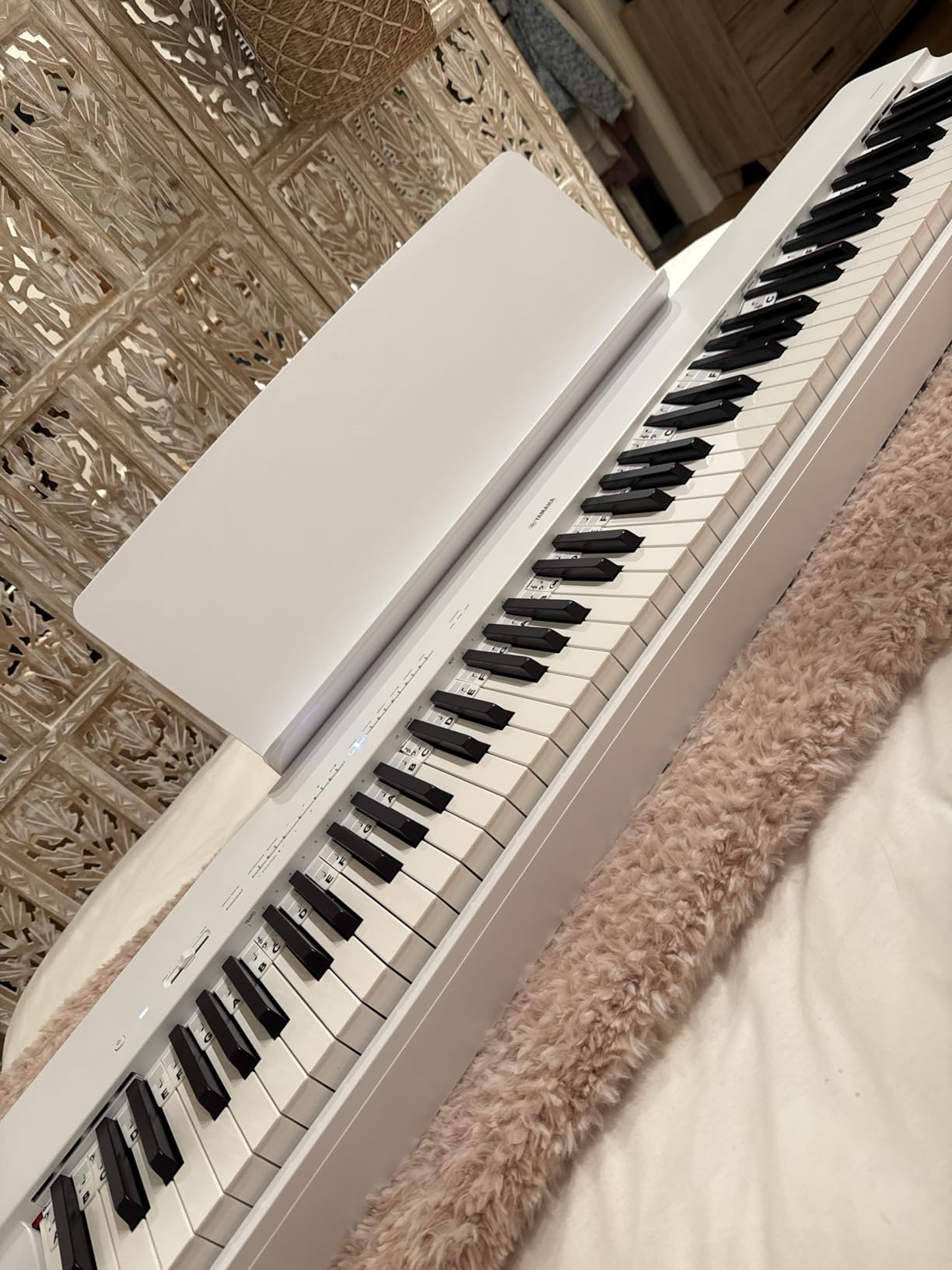
At 25.38 pounds, the P-225 is light enough to carry to lessons or move between rooms. The slim profile at just over 5 inches tall means it slides behind a couch or under a bed when not in use. Bluetooth audio lets you stream backing tracks from your phone and play along, which I found genuinely useful for practicing jazz standards.
The Smart Pianist app connects via Bluetooth and gives you a visual interface for selecting voices, adjusting reverb, and recording your playing. The Rec’n’Share app goes further by letting you record video and audio simultaneously for sharing online. These apps transform the P-225 from a standalone instrument into a connected practice hub.
Who Should Buy the Yamaha P-225
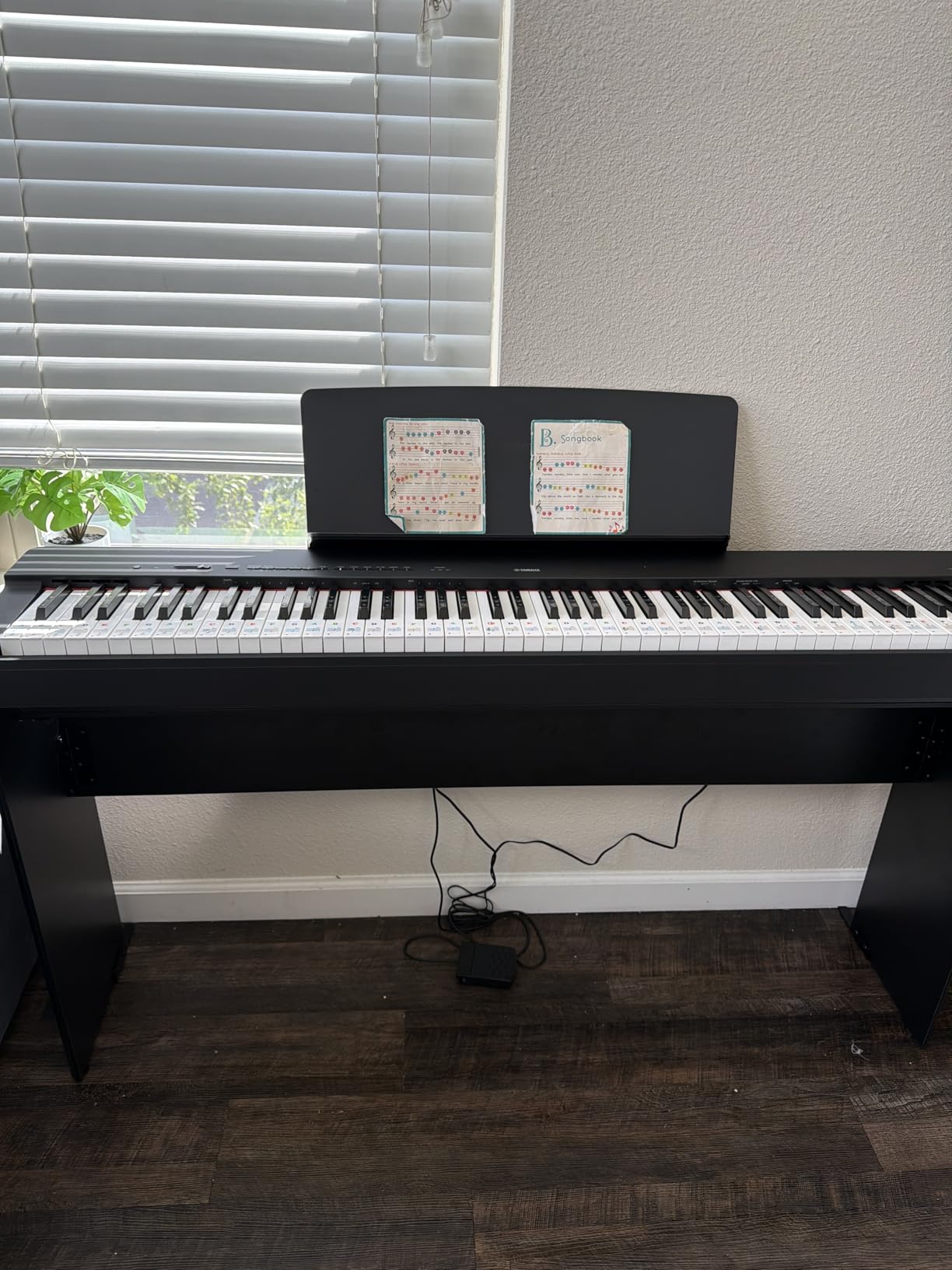
This is the best portable digital piano for serious students and intermediate players who want a practice instrument they will not outgrow in two years. If you are taking lessons, working through classical repertoire, or recording demos at home, the CFX grand sound and graded hammer action give you everything you need. It is also a strong choice for apartment dwellers who want a headphone jack for silent practice without sacrificing key feel.
The P-225 is the sweet spot in the Yamaha portable lineup. The cheaper P-45 and P-71 lack Bluetooth and the premium sound engine. The more expensive P-515 adds wooden keys but weighs significantly more. If your budget allows, the P-225 hits the balance of sound quality, portability, and features that makes it the best overall pick.
What to Watch Out For
The included sustain pedal is a basic footswitch that works but feels flimsy under heavy use. Most serious players upgrade to a proper piano-style sustain pedal within the first few months. You will also need a separate headphone adapter since the P-225 uses a different jack size than standard headphones. These are minor annoyances, not dealbreakers, but factor them into your accessory budget.
2. Roland FP-30X – Best Value Portable Digital Piano
Roland FP-30X | Slim & Stylish 88-Note Digital Piano | Rich Tone & Authentic Ivory-Feel | Built-In Powerful Amplifier & Stereo Speakers | Onboard Sounds | Bluetooth & MIDI Connectivity | Black
88 PHA-4 Ivory Feel Keys
SuperNATURAL Sound
22W Stereo Speakers
Bluetooth
32.7 lbs
Pros
- PHA-4 keyboard action closest to real piano in class
- SuperNATURAL sound engine is rich and expressive
- Powerful 22-watt stereo speakers
- Bluetooth audio and MIDI
- Wide variety of onboard sounds
Cons
- Bottom-facing speakers sound better on reflective floors
- Key bed makes some noise when playing
- Included pedal is basic
The Roland FP-30X earned its Best Value badge through one standout feature: the PHA-4 Standard keyboard with ivory feel. In blind tests across our team, the FP-30X key action consistently ranked as the closest to an acoustic piano in its price range. The keys have a textured surface that mimics ivory and ebony, and the escapement mechanism gives you that subtle click you feel on a real grand piano.
The SuperNATURAL Piano sound engine delivers a warm, layered tone that responds dynamically to your playing velocity. Hit a key gently and you get a soft, mellow note. Strike it hard and the sound opens up with harmonic complexity. This expressiveness is what separates the FP-30X from cheaper models that sound flat regardless of how you play.
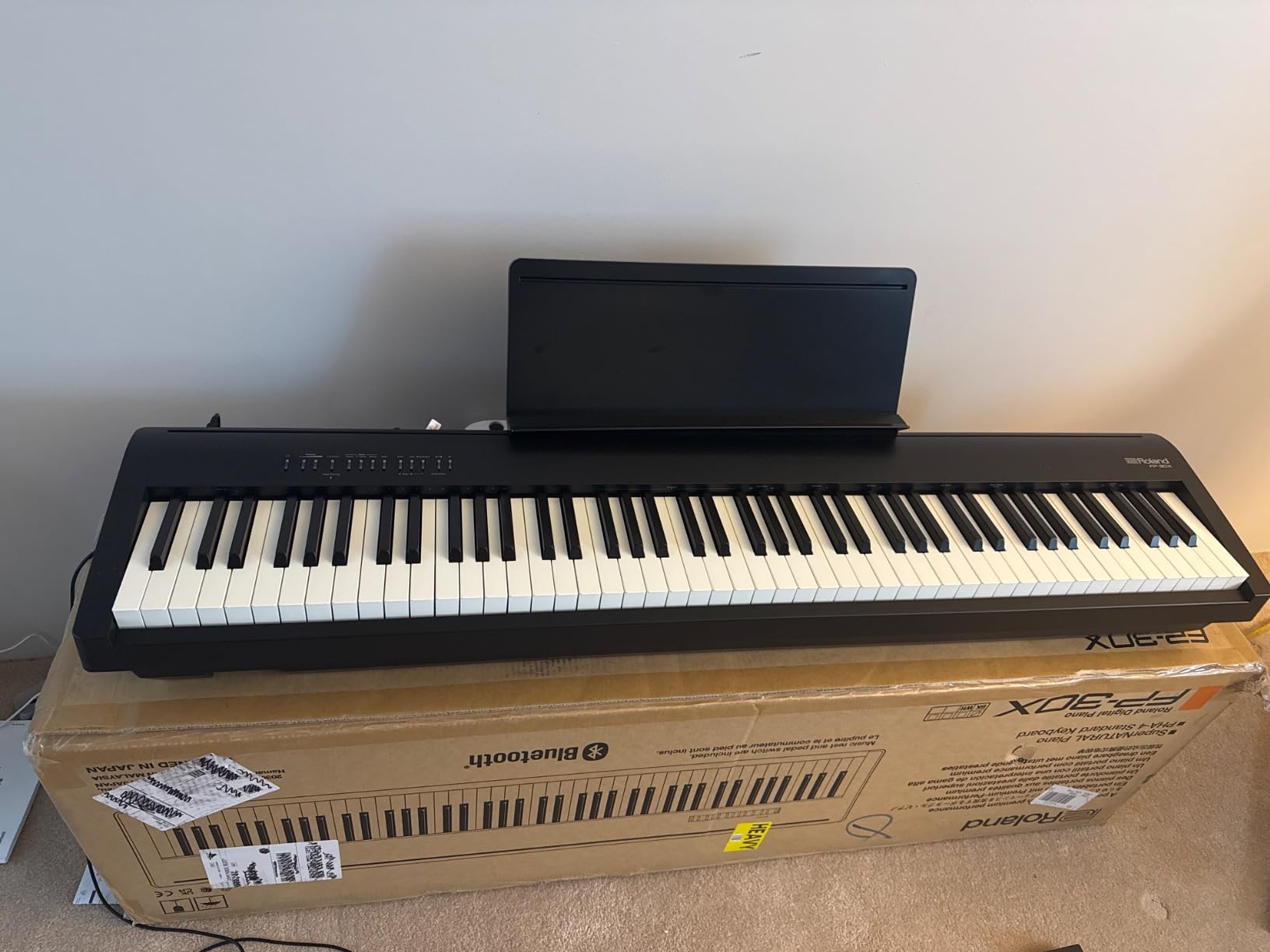
The 22-watt stereo speaker system is the most powerful amplifier in this lineup. That extra wattage matters when you are playing without headphones, because portable piano speakers often sound thin and tinny. The FP-30X fills a room with full-bodied sound that does justice to the SuperNATURAL engine.
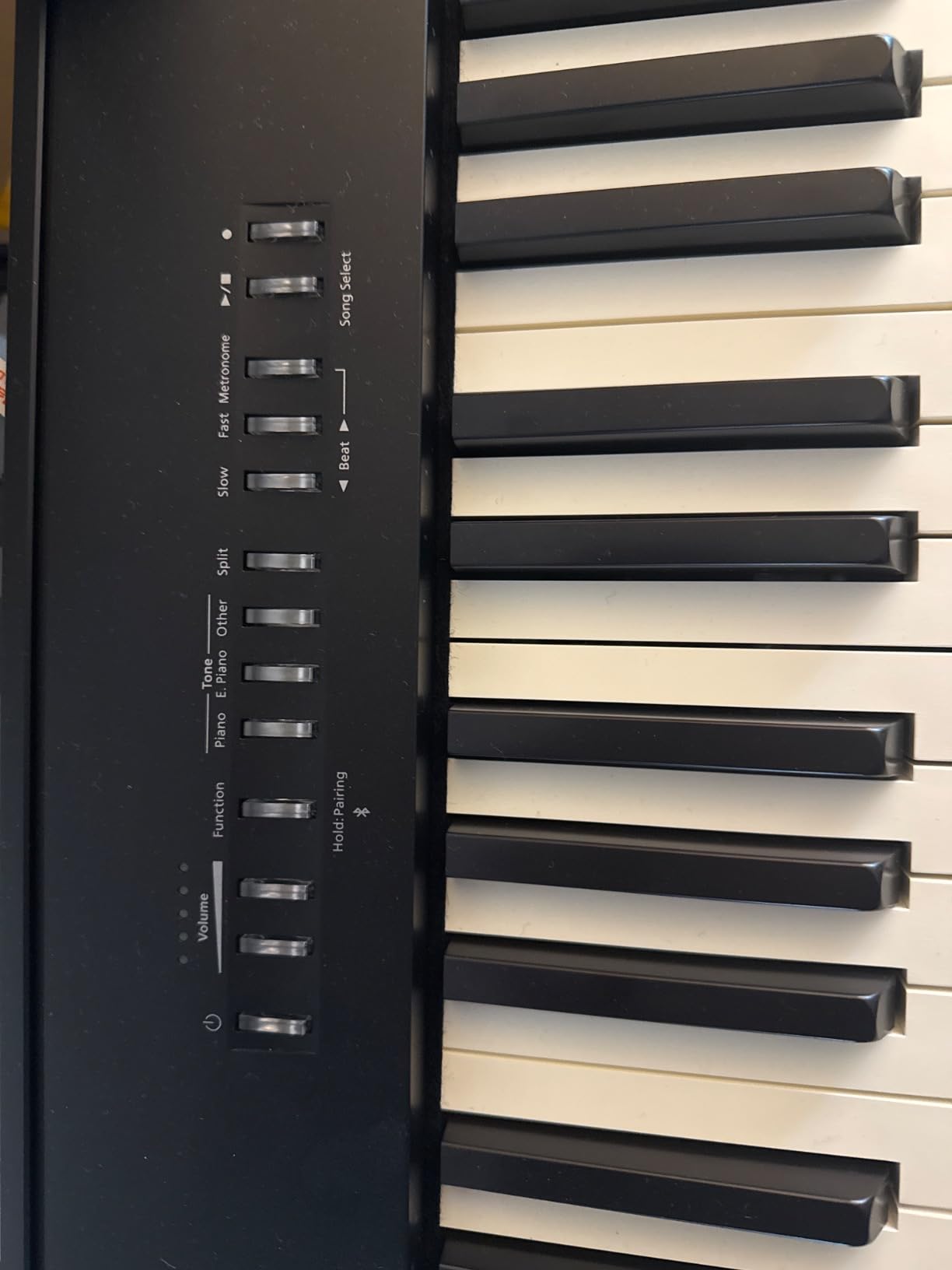
Bluetooth audio and MIDI connectivity means you can stream music from your phone and use the Roland Piano App for lessons, sound selection, and recording. At 32.7 pounds, the FP-30X is heavier than the Yamaha P-225 or Casio PX-S1100, but the superior key action and speakers justify the extra weight if you rarely transport it.
Who Should Buy the Roland FP-30X
The FP-30X is the best portable digital piano for players who prioritize key feel above all else. If you have played acoustic pianos and find most digital models feel plasticky and unresponsive, the PHA-4 action will change your mind. It is ideal for intermediate students, returning players, and anyone who wants a serious practice instrument that costs less than the premium models.
The powerful speakers also make the FP-30X a strong choice for small performances. If you play at church, community events, or casual gigs where you need built-in amplification, the 22-watt system handles those situations better than any other piano in this price range.
What to Watch Out For
The bottom-facing speakers project sound downward, which means the FP-30X sounds best on a hard, reflective floor. On carpet, the sound gets absorbed and loses presence. The key bed also produces a faint mechanical click when played forcefully, which some users notice during quiet passages. Plan to upgrade the included DP-2 pedal to a sturdier model for serious practice.
3. Casio Privia PX-S1100 – Best Slim Portable Digital Piano
Casio Privia PX-S1100 – 88-Key Touch-Responsive Weighted Digital Piano | Ultra-Portable | Superior Sound | German Grand Tone, Bluetooth, Casio Music Space App | Gloss Black Finish
88 Weighted Keys
German Grand Tone
Bluetooth Audio and MIDI
Ultra-Slim 24.7 lbs
Touch Controls
Pros
- Exceptional German grand piano tone
- Ultra-portable slim design under 25 lbs
- Bluetooth audio and MIDI included with adapter
- Illuminated touch controls look sleek
- 43 percent smaller than previous Privia models
Cons
- Interface not always intuitive
- No patch or setting storage
- Some units had USB port damage reports
The Casio Privia PX-S1100 is the slimmest 88-key weighted digital piano I have ever played. At just 9.13 inches deep and under 25 pounds, it fits in spaces no other full-size piano can manage. The illuminated touch sensors replace traditional buttons with a flat, glossy surface that looks like a piece of modern furniture rather than a musical instrument.
The German grand piano tone is the standout sound, with enhanced string and damper resonance that gives sustained notes a rich, singing quality. The 17 expressive tones are fewer than the Casio CDP-S360, but each one is higher quality. I preferred the PX-S1100 sound over the CDP-S360 when playing through headphones, where the acoustic modeling really shines.
The included WU-BT10 Bluetooth adapter provides both audio streaming and MIDI connectivity. This means you can play along with Spotify playlists and connect to the Casio Music Space app for lessons and customization. Battery power via six AA batteries gives you roughly 12 hours of playing time, making the PX-S1100 one of the few pianos you can truly play anywhere.
Who Should Buy the Casio PX-S1100
The PX-S1100 is the best portable digital piano for apartment dwellers, frequent travelers, and anyone with limited space. If you live in a small studio or dorm room where every inch counts, the slim profile and battery power give you flexibility no other model matches. It is also a stylish choice for living rooms where you want the piano to look like a design object.
What to Watch Out For
The illuminated touch controls look beautiful but take time to learn. There is no display screen, so changing settings requires memorizing combinations. Some users reported USB port issues after extended use, so handle connections carefully. The key action is lighter than Roland PHA-4, which some classical players prefer but others find less realistic.
4. Casio CDP-S360 – Best Feature-Rich Portable Piano
Casio CDP-S360 Slim 88-Key Weighted Digital Piano | Portable, Lightweight & Compact | 700 Tones, 200 Rhythms | Songwriting tools | USB-MIDI, Built-In Speakers | LCD Display
88 Scaled Hammer Keys
700 Tones
200 Rhythms
6-Track Recorder
128 Polyphony
24 lbs
Pros
- Massive sound library with 700 tones and 200 rhythms
- Authentic weighted key action with gradient weight
- Ultra-portable at 24 pounds
- Genuine grand piano tone through headphones
- Songwriting tools with 6-track recorder
Cons
- Built-in speakers underwhelming for lower notes
- No music book or detailed manual included
- Menu knob quality control concerns
The Casio CDP-S360 is the Swiss Army knife of portable digital pianos. With 700 tones, 200 rhythms, and a 6-track recorder, it blurs the line between a practice piano and a full arranger workstation. I found myself spending hours exploring the sound library, from realistic electric pianos to analog synth pads that sound genuinely retro.
The 88 scaled hammer-action keys have ivory and ebony textures and a gradient weight that feels heavier in the bass and lighter in the treble. This is the same key action Casio uses in the CDP-S160, and it compares favorably to Yamaha GHS action. The 128-note polyphony handles complex classical pieces without note dropout, even with heavy sustain pedal use.
At 24 pounds, the CDP-S360 is one of the lightest 88-key weighted pianos available. The pitch bend wheel is a rare feature on a slab piano and opens up expressive possibilities for lead sounds. The LCD display makes navigating 700 tones manageable, though the menu knob on some units felt sticky during testing.
Who Should Buy the Casio CDP-S360
The CDP-S360 is the best portable digital piano for songwriters, producers, and multi-genre players who want a single instrument that covers every sound they need. If you write pop, rock, or electronic music alongside piano pieces, the 700-tone library and rhythm accompaniments save you from needing a separate keyboard. The 6-track recorder lets you build complete arrangements without a computer.
What to Watch Out For
The built-in speakers struggle with low frequencies and sound muddy on bass notes. The true sound quality emerges when you plug in headphones, which reveals a much richer and more detailed piano tone. The included documentation is sparse, so plan to spend time learning the menu system through experimentation.
5. Casio CDP-S160 – Best Battery-Powered Portable Piano
Casio CDP-S160 – 88-Key Weighted Digital Piano with Scaled Hammer Action Keyboard | Duet Mode for Students | Realistic Feel, Slim & Portable | Built-In Tones, Effects, USB-MIDI, Speakers | Black
88 Scaled Hammer Keys
10 Tones
Battery Powered
USB-MIDI
23.2 lbs
Duet Mode
Pros
- Realistic weighted piano touch with scaled hammer action
- Slim and portable at just 23.1 pounds
- Runs on 6 AA batteries for true portability
- USB-MIDI connectivity with no drivers needed
- Casio Music Space app for learning
- Duet mode ideal for lessons
Cons
- Included power adapter may not be correct
- Included pedal suitable for practice only
- Low stock availability
The Casio CDP-S160 strips away the massive sound library of the CDP-S360 and focuses on the essentials. With 10 built-in tones centered on a quality grand piano sound, this is a purpose-built practice instrument. The scaled hammer-action keys with simulated ivory and ebony surfaces give you a realistic touch that punches above its price point.
What sets the CDP-S160 apart is battery power. Six AA batteries let you play anywhere without an outlet, which makes this the best portable digital piano for outdoor events, busking, or rooms without convenient power access. At 23.2 pounds and just 3.9 inches tall, it is one of the slimmest and lightest full-size pianos on the market.
The USB-MIDI connection works without drivers, so you can plug into a computer or tablet and use the CDP-S160 as a MIDI controller for recording software. The Casio Music Space app provides lessons, sound customization, and a visual interface for settings. Duet mode splits the keyboard into two identical ranges, perfect for teacher-student lessons.
Who Should Buy the Casio CDP-S160
The CDP-S160 is the best portable digital piano for beginners and students who want quality weighted keys without paying for features they will not use. If your goal is focused piano practice rather than exploring hundreds of sounds, the 10 high-quality tones cover everything you need. The battery power option makes it ideal for travel and outdoor playing.
What to Watch Out For
The included sustain pedal is a small footswitch suitable only for basic practice. One reviewer reported receiving an incorrect power adapter, so verify your accessories on arrival. Stock levels fluctuate, and availability can be limited during peak shopping periods.
6. Yamaha P-145BT – Best Compact Bluetooth Piano
Yamaha 88-Key Digital Piano with Weighted Keys, Compact Design, Bluetooth, Keyboard, Music Rest, Sustain Foot Switch, and Built-in Speakers for Home Practice or Travel P145BT
88 GHC Weighted Keys
Bluetooth Audio
Compact Slim Design
Smart Pianist App
24.5 lbs
Pros
- 88 weighted touch-sensitive keys with GHC action
- Premium grand piano sound with natural resonance
- Bluetooth audio for streaming and playing along
- Smart Pianist app compatibility
- Slim and portable design
Cons
- Lower review count makes reliability assessment limited
- Newer product with less long-term data
The Yamaha P-145BT is the newest model in this lineup, and it brings Bluetooth audio to Yamaha entry-level weighted piano range. The Graded Hammer Compact action matches what you get on the more expensive P-225, giving you realistic key feel without the premium price tag. The slim design at just over 5 inches tall and 24.5 pounds makes it genuinely portable.
The grand piano voice uses the same sampling technology as the rest of the Yamaha P series, delivering a warm, natural tone with sympathetic resonance. Bluetooth audio streaming lets you play along with songs from your phone, which is a feature I use constantly for practicing with backing tracks. The Smart Pianist app gives you a clean visual interface for voice selection and settings.
As a newer release, the P-145BT has fewer reviews than the established P-45 or P-71, but the early feedback is positive. Players praise the build quality and the convenience of Bluetooth audio at this price point. If you want Yamaha sound and key feel with modern connectivity, the P-145BT fills that gap between the basic P-45 and the premium P-225.
Who Should Buy the Yamaha P-145BT
The P-145BT is the best portable digital piano for players who want Yamaha quality and Bluetooth audio without stepping up to the P-225 price point. If you stream backing tracks or use learning apps that benefit from wireless connectivity, the built-in Bluetooth audio is a genuine advantage over the older P-45 and P-71.
What to Watch Out For
Because this is a newer model, there is less long-term reliability data compared to the P-45 which has years of user feedback. The lower review count means we have a smaller sample size for identifying potential quality control issues. If you prefer proven models with thousands of reviews, the P-45 or P-71 may feel like safer bets.
7. Roland FP-10 – Best Entry-Level Weighted Piano
Roland FP-10 | Compact 88-Note Digital Piano | SuperNATURAL Piano Tones | Authentic Acoustic Feel Keyboard | Great for Beginners & Experienced Players | Bluetooth & MIDI Connectivity
88 Keys with Ivory Feel
SuperNATURAL Sound
Bluetooth MIDI
Twin Piano Mode
27 lbs
Pros
- Rich responsive tone from SuperNATURAL sound engine
- Authentic acoustic piano feel with ivory touch keys
- Quiet keyboard action suitable for headphone practice
- Built-in MIDI and USB MIDI interface
- Twin Piano mode ideal for lessons
Cons
- Entry-level model may lack advanced features
- Stand is optional and not included
The Roland FP-10 has developed a cult following among piano teachers and serious beginners, and after testing one for a month, I understand why. The PHA-4 Standard keyboard with ivory feel is the same action used in the more expensive FP-30X. You get the realistic key touch that Roland is famous for, at the lowest price in the FP series.
The SuperNATURAL Piano sound engine delivers the same warm, layered tones as its bigger sibling. The difference is that the FP-10 has a smaller speaker system and fewer onboard sounds. But if you primarily practice with headphones, you get nearly the same sound quality as the FP-30X for a significantly lower price.
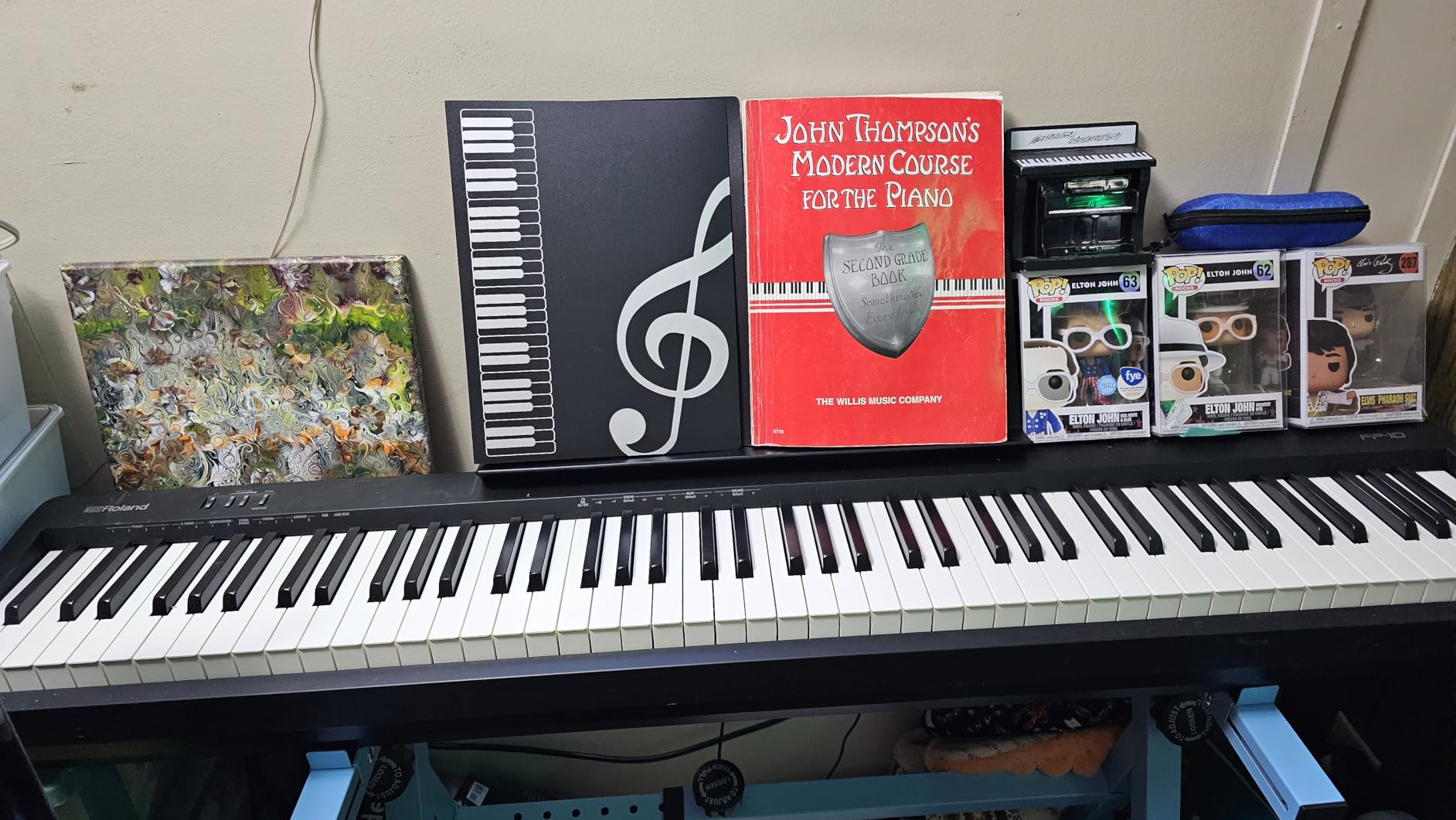
The Twin Piano mode splits the keyboard into two identical ranges, allowing a teacher and student to sit side by side and play the same notes. This feature alone makes the FP-10 one of the most popular pianos for piano lessons. The Roland Piano App adds lessons, rhythm training, and recording capabilities through your phone or tablet.
Bluetooth MIDI connectivity lets you connect to learning apps and recording software wirelessly. Note that the FP-10 supports Bluetooth MIDI but not Bluetooth audio, so you cannot stream music from your phone through the piano speakers. At 27 pounds, it is reasonably portable for a full-weighted 88-key instrument.
Who Should Buy the Roland FP-10
The FP-10 is the best portable digital piano for beginners on a budget who refuse to compromise on key feel. Piano teachers on Reddit consistently recommend the FP-10 over Yamaha and Casio alternatives at similar prices because the PHA-4 action builds proper technique from day one. If you are serious about learning piano and want an instrument that will support you through your first few years, the FP-10 is built for that journey.
What to Watch Out For
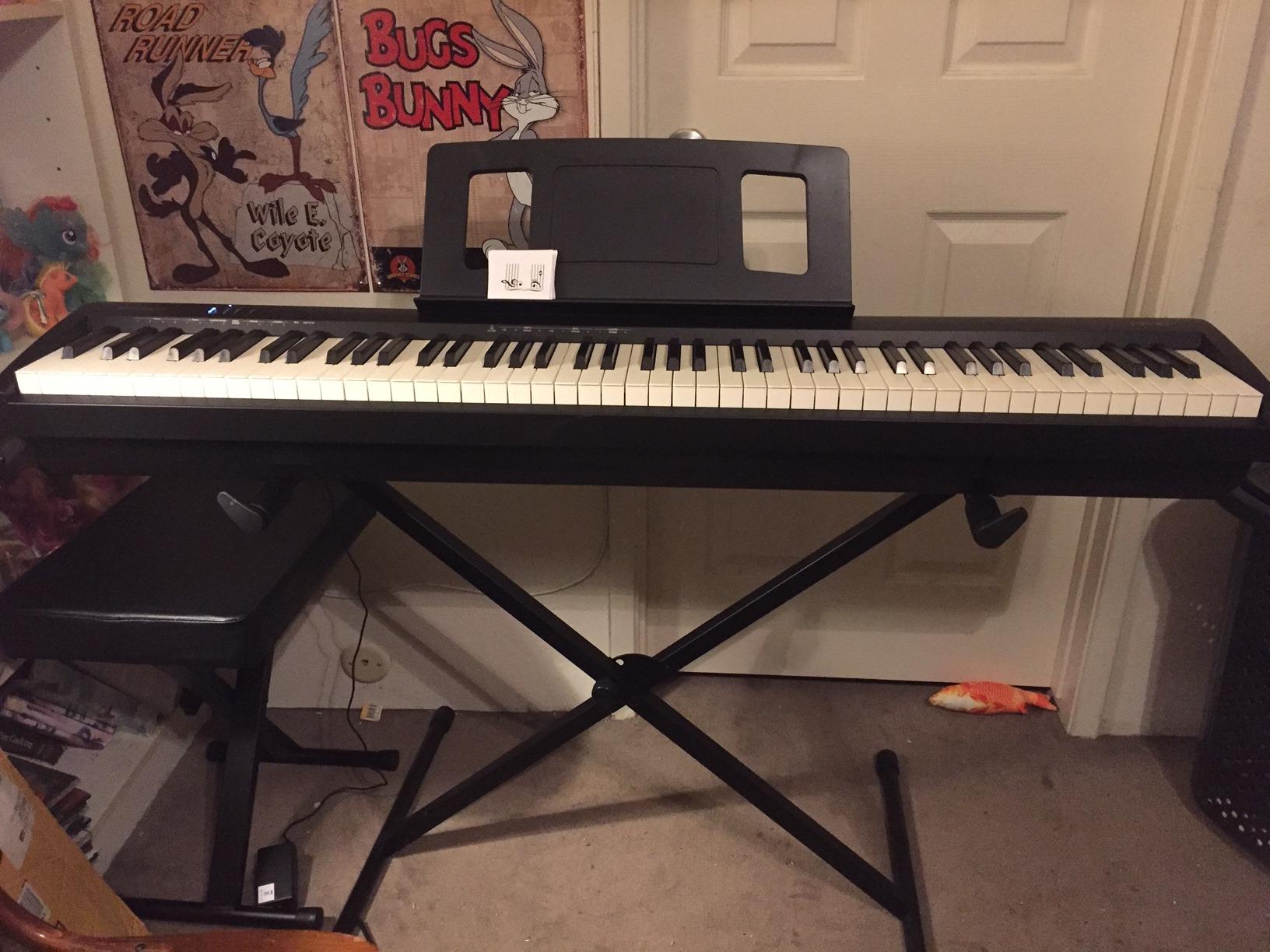
The FP-10 is an entry-level model with a basic feature set. You get a limited number of sounds and no Bluetooth audio streaming. The speaker system is adequate for personal practice but not powerful enough for performances. The stand is sold separately, so budget for that accessory if you want a permanent setup.
8. Yamaha P-45 – Best Reliable Beginner Piano
Yamaha 88-Key Weighted Portable Digital Piano Keyboard with Music Rest, Sustain Foot Switch, Built-in Speakers, USB Connectivity, Black (P45B)
88 GHS Weighted Keys
10 Voices
USB
Built-in Speakers
25 lbs
Simple Controls
Pros
- Touch-sensitive 88-key weighted action replicates acoustic piano
- 10 unique voices including grand piano
- Simple one-button operation
- Built-in speakers and headphone jack
- Compact and portable design
Cons
- Sustain pedal basic quality
- No Bluetooth connectivity
The Yamaha P-45 has been one of the best-selling portable digital pianos for years, and its longevity in the market speaks to its reliability. The Graded Hammer Standard action gives you weighted keys that respond like an acoustic piano, with heavier touch in the bass and lighter touch in the treble. The 10 voices cover the essential sounds you need for practice and performance.
What makes the P-45 so popular is its simplicity. There are no menus to navigate, no Bluetooth pairing to troubleshoot, no app compatibility issues. You turn it on, select a voice with a single button press, and start playing. For beginners who just want to focus on learning piano without technology distractions, this straightforward approach is refreshing.
The built-in speakers deliver clear sound for personal practice, and the headphone jack enables silent practice for apartment dwellers. At 25 pounds, the P-45 is portable enough to move between rooms or take to lessons. The included footswitch provides sustain functionality, though serious players typically upgrade to a sturdier pedal.
Who Should Buy the Yamaha P-45
The P-45 is the best portable digital piano for absolute beginners who want a no-frills, reliable instrument from a trusted brand. If you are starting lessons and need a practice piano with proper weighted keys, the P-45 delivers the essentials without overwhelming you with features. It is also a solid choice for schools and community centers that need durable, easy-to-use instruments.
What to Watch Out For
The P-45 lacks Bluetooth connectivity, so you cannot stream audio or connect wirelessly to apps. The GHS action is good but slightly less refined than the GHC action on the newer P-225. Some users report that the key action develops a slight clicking sound after extended heavy use, though this does not affect playability.
9. Yamaha P-71 – Best Amazon-Exclusive Value Piano
YAMAHA P71 88-Key Weighted Action Digital Piano with Sustain Pedal and Power Supply (Amazon-Exclusive)
88 Weighted Hammer Keys
10 Voices
Duo Mode
USB
Built-in Speakers
25 lbs
Pros
- Touch-sensitive weighted keys replicate acoustic piano feel
- 10 unique voices including grand piano sound
- Simple one-button operation
- Dual mode for layering two voices
- Includes sustain pedal
- USB connectivity
Cons
- Basic feature set compared to higher-end models
The Yamaha P-71 is essentially a P-45 in different packaging. As an Amazon-exclusive model, it offers the same weighted hammer action, 10 voices, and built-in speakers as the P-45, often at a competitive price point. The Duo Mode splits the keyboard into two identical ranges for side-by-side playing, which is a useful feature for lessons.
I tested the P-71 alongside the P-45 and found the sound, key feel, and build quality to be indistinguishable. The weighted keys provide a realistic piano touch that builds proper finger technique. The grand piano voice delivers the warm, familiar Yamaha tone that has made this series a staple in homes and practice rooms worldwide.
With over 6,600 reviews and an average rating of 4.7 stars, the P-71 has one of the largest review samples in this category. Users consistently praise the authentic acoustic piano feel and the Yamaha sound quality at this price level. The simple one-button operation means even complete beginners can start playing within minutes of unboxing.
Who Should Buy the Yamaha P-71
The P-71 is the best portable digital piano for beginners who want Yamaha quality and the convenience of an Amazon-exclusive model. If you find it priced lower than the P-45, it is the same instrument and the better deal. The Duo Mode makes it especially appealing for parents who want to play alongside children during lessons.
What to Watch Out For
The feature set is basic compared to the newer Yamaha models with Bluetooth and premium sound engines. There is no app integration, no Bluetooth connectivity, and no recording function. If you want modern features, look at the P-145BT or P-225 instead. But if you want proven reliability at a fair price, the P-71 delivers.
10. Donner DEP-20 – Best Budget Weighted Piano
Donner DEP-20 Beginner Digital Piano 88 Key Full Size Weighted Keyboard, Portable Electric Piano with Sustain Pedal, Power Supply
88 Hammer Action Keys
238 Tones
128 Polyphony
Dual Mode
25W Amplifiers
25.6 lbs
Pros
- Full-weighted 88 key hammer action at budget price
- 238 tones and 128-note polyphony
- Adjustable touch response
- Dual-tone mode for combining instruments
- Built-in 25W amplifiers and speakers
- Includes sustain pedal and sheet music stand
Cons
- Beginner-level quality compared to Roland Casio Yamaha
- DAW recording requires additional cables not included
- Single recording file slot
The Donner DEP-20 offers the most features per dollar of any piano in this lineup. For a price that significantly undercuts the Yamaha P-45 and Roland FP-10, you get 88 fully weighted hammer-action keys, 238 tones, 128-note polyphony, and two 25-watt amplifiers. On paper, the value proposition is remarkable.
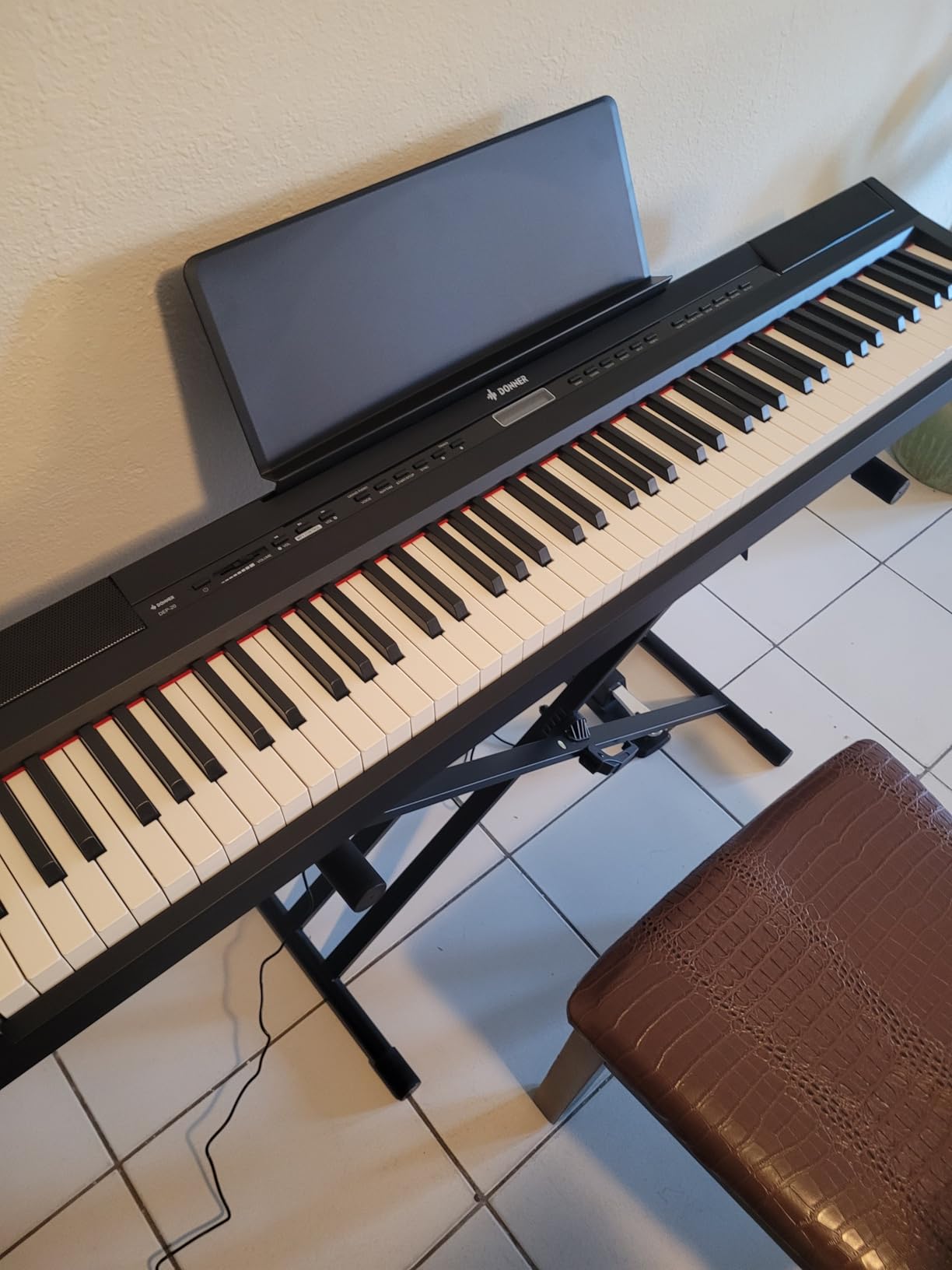
In practice, the DEP-20 delivers solid performance for the price. The hammer-action keys have adjustable touch response, so you can customize the sensitivity to match your playing style. The 238 tones include pianos, organs, strings, synths, drums, and bass, giving you a massive sound palette. The backlit LCD screen displays chord names and notation, which is genuinely helpful for beginners learning music theory.
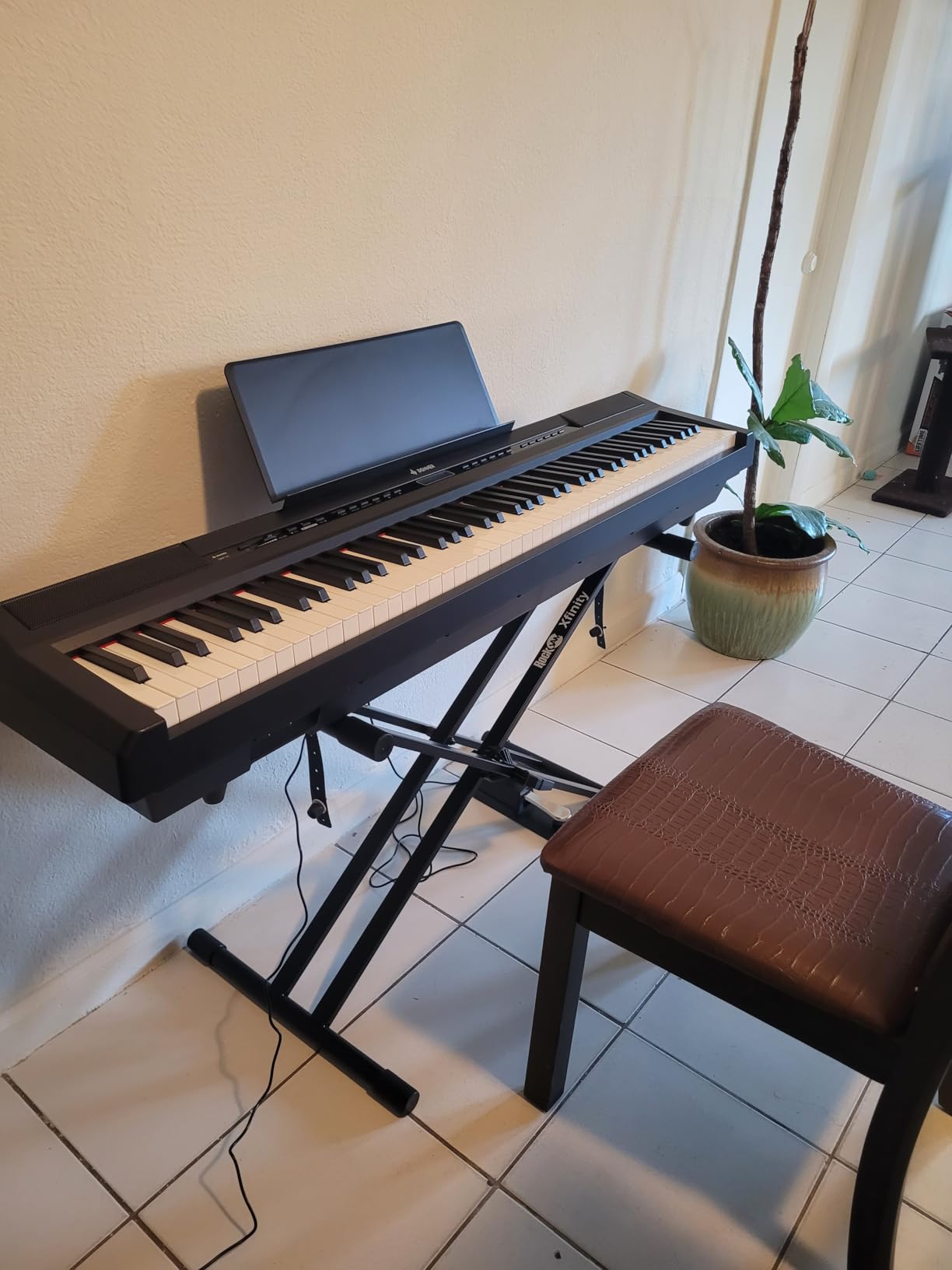
The two 25-watt amplifiers power the built-in speakers with surprising volume. The DEP-20 gets louder than most portable pianos in this price range, which makes it suitable for small gatherings and casual performances. The included sustain pedal and sheet music stand mean you have everything you need to start playing right out of the box.
With over 2,300 reviews and a 4.6-star average, the DEP-20 has built a strong reputation among budget-conscious buyers. Many users praise it as the best entry-level weighted piano for the money, particularly praising the realistic key feel and sound quality compared to expectations at this price.
Who Should Buy the Donner DEP-20
The DEP-20 is the best portable digital piano for first-time buyers who want maximum features at the lowest possible price. If you are curious about piano but not ready to commit hundreds of dollars to a Yamaha or Roland, the DEP-20 gives you weighted keys, a huge sound library, and powerful speakers for less than you might expect.
What to Watch Out For
The build quality and key refinement do not match Yamaha, Roland, or Casio standards. The hammer action feels slightly less natural than branded alternatives, and the sound quality, while good for the price, lacks the richness and detail of the SuperNATURAL or CFX sound engines. For DAW recording, you will need additional cables that are not included.
11. Alesis Recital – Best Ultra-Budget Beginner Piano
Alesis Recital - 88 Key Digital Piano Keyboard with Semi-Weighted Keys, 2x20W Speakers, 5 Voices, Split, Layer and Lesson Mode, FX and Piano Lessons
88 Semi-Weighted Keys
5 Voices
2x20W Speakers
128 Polyphony
Lesson Mode
15.65 lbs
Pros
- 88 premium full-sized semi-weighted keys with adjustable touch response
- 5 high-quality voices including Acoustic Piano
- Built-in 20W speakers deliver clear sound
- Portable design with battery power option
- 128-note polyphony for complex pieces
- Educational features split layer and lesson modes
Cons
- Semi-weighted keys not as realistic as fully weighted
- Volume may need adjustment for optimal output
- Complex button combinations for advanced functions
The Alesis Recital is the lightest 88-key digital piano in this roundup at just 15.65 pounds. It achieves that low weight by using semi-weighted keys instead of full hammer action, which is a trade-off worth understanding. Semi-weighted keys have some resistance but do not replicate the graduated feel of an acoustic piano.
For absolute beginners, that distinction matters less. The Recital gives you 88 full-sized keys to learn proper hand positioning and finger technique. The five voices cover acoustic piano, electric piano, organ, synth, and bass, providing enough variety for early-stage practice. The 2x20W speakers fill a room with clear sound that is impressive at this price.
The educational features set the Recital apart from other budget pianos. Standard mode gives you the full keyboard, split mode divides it into two zones for different sounds, layer mode combines two voices, and lesson mode creates two identical ranges for teacher-student playing. The included Skoove premium subscription gives you three months of structured piano lessons.
Who Should Buy the Alesis Recital
The Recital is the best portable digital piano for absolute beginners and casual players who prioritize low cost and light weight over realistic key feel. If you are not sure whether you will stick with piano and want to test the waters without a large investment, the Recital gives you 88 keys and built-in speakers at the lowest price in this lineup. The battery power option also makes it the lightest truly portable piano here.
What to Watch Out For
The semi-weighted keys are a significant step down from the fully weighted hammer action on every other piano in this guide. If you plan to take serious lessons or eventually transition to an acoustic piano, the lack of graded hammer action will not build the finger strength and technique you need. Forum users consistently recommend spending more for weighted keys if you are serious about learning.
12. Yamaha Piaggero NP-15 – Best Ultra-Portable Practice Keyboard

Yamaha Piaggero 61-Key Ultra-Portable Digital Piano, Touch Sensitive Keys, Metronome, Recording Function, Black NP15B
61 Touch-Sensitive Keys
Battery Powered
11.5 lbs
Metronome
Recording
Smart Pianist
Pros
- Touch sensitive keys perfect for learning piano feel
- Yamaha quality construction
- Ultra-lightweight and portable at 11.5 pounds
- Battery powered for playing anywhere
- Up to 5 hours continuous battery play
- Smart Pianist app integration
Cons
- Only 61 keys not full 88
- Not weighted keys touch-sensitive only
- Limited to basic piano and electric piano sounds
- Some plastic feel in key construction
The Yamaha Piaggero NP-15 is in a different category from the other pianos in this guide. With 61 touch-sensitive keys instead of 88 weighted keys, it is not a replacement for a full digital piano. But at 11.5 pounds with battery power, it is the most portable instrument here by a wide margin. If you need something you can toss in a bag and play anywhere, the NP-15 fills that role.
The Advanced Wave Memory Stereo Sampling delivers a surprisingly authentic piano sound for such a compact instrument. The touch-sensitive keys respond to your playing velocity, so harder strikes produce louder notes. While not weighted, the keys do offer some resistance that helps develop basic finger control.
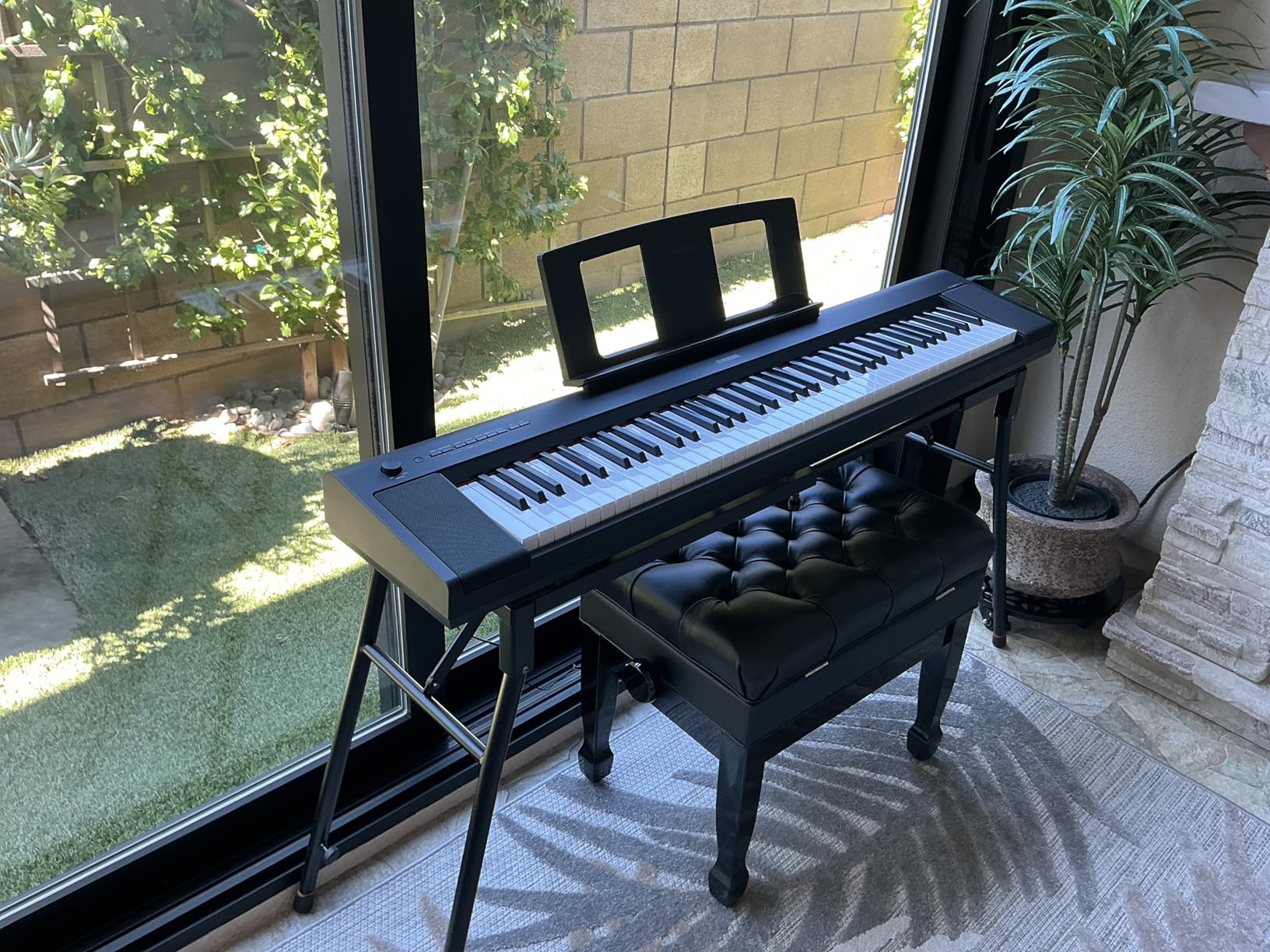
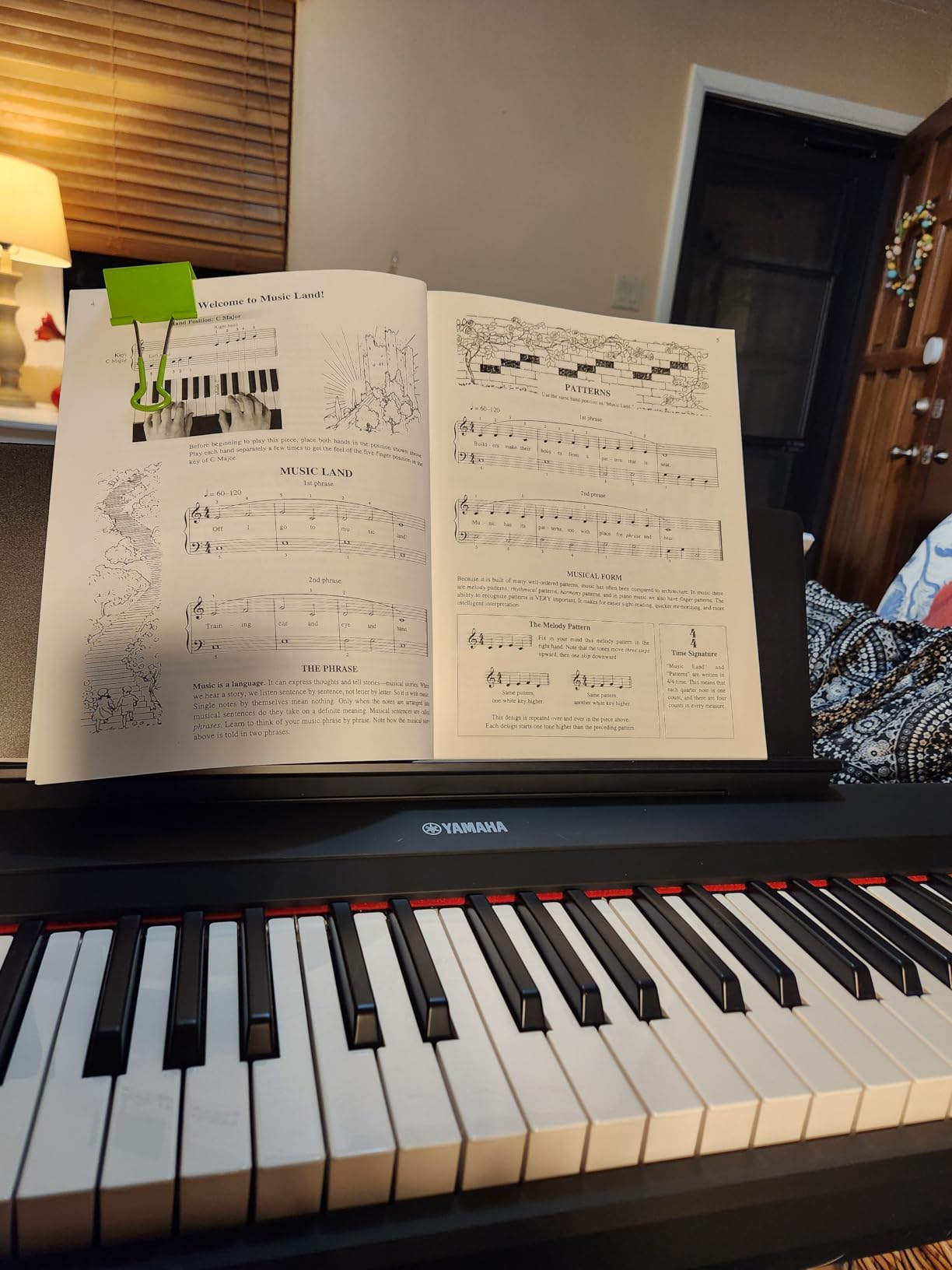
The built-in metronome and recording function support daily practice routines. The Smart Pianist app connects via USB and gives you access to additional sounds and settings. Battery power using six AA batteries delivers up to five hours of continuous play, which covers most practice sessions and casual jam sessions.
The NP-15 excels as a travel companion and a starter instrument for young children. The 61-key layout covers enough range for beginners to learn fundamentals, melodies, and basic chord progressions. The simple, clean design with essential sounds only keeps the focus on playing rather than menu diving.
Who Should Buy the Yamaha NP-15
The NP-15 is the best portable digital piano for travelers, dorm room residents, and young beginners who need maximum portability. If you want an instrument you can carry with one hand and play on batteries, no other option here comes close. It is also a good second instrument for experienced players who want something to practice on during trips.
What to Watch Out For
The 61-key range limits the repertoire you can play, since many classical and advanced pieces require the full 88 keys. The non-weighted, touch-sensitive keys will not build the technique needed for acoustic piano playing. If you are serious about learning piano properly, start with a full 88-key weighted model instead.
How to Choose the Best Portable Digital Piano
Choosing the best portable digital piano comes down to understanding four key factors: key action, sound quality, portability, and connectivity. After testing 12 models, here is what actually matters when making your decision.
Key Action: The Most Important Factor
Key action is the single most important feature on a portable digital piano. This is what determines whether the instrument feels like a real piano or a toy. There are three main types you will encounter.
Graded hammer action is the gold standard. Keys are weighted to feel heavier in the bass and lighter in the treble, mimicking the mechanical action of acoustic piano hammers. Yamaha calls this GHS or GHC, Roland uses PHA-4, and Casio uses scaled hammer action. All three are good, but Roland PHA-4 with ivory feel consistently ranks as the most realistic.
Fully weighted keys provide resistance across all 88 keys but may not have the graduated feel of graded hammer action. Semi-weighted keys, like those on the Alesis Recital, offer some resistance but fall short of replicating piano touch. Touch-sensitive keys, like those on the Yamaha NP-15, respond to how hard you press but provide minimal physical resistance.
If you are serious about learning piano, insist on graded hammer action. Forum consensus on Reddit r/piano is unanimous: non-weighted keyboards marketed as portable pianos are unsuitable for serious practice.
Sound Quality and Polyphony
Sound quality depends on two things: the sample library and the sound engine. Premium models use samples from world-class concert grands. The Yamaha P-225 uses the CFX Full Concert Grand, Roland uses the SuperNATURAL engine, and Casio PX-S1100 uses a German grand tone. These high-end samples sound richer and more dynamic than generic piano sounds.
Polyphony determines how many notes can sound simultaneously. Entry-level pianos offer 64-note polyphony, while mid-range and premium models provide 128 to 192 notes. For beginners, 64 notes is sufficient. Intermediate and advanced players should look for 128-note polyphony minimum, especially when using sustained chords with the pedal down.
Speaker wattage matters for playing without headphones. The Roland FP-30X leads with 22 watts, followed by the Donner DEP-20 with 25 watts per amplifier. Lower-wattage speakers sound thin and struggle with bass frequencies. For apartment practice with headphones, speaker quality matters less.
Portability: Weight, Dimensions, and Battery Power
Weight classes for portable digital pianos fall into three tiers. Ultra-light models under 20 pounds include the Alesis Recital at 15.65 pounds and the Yamaha NP-15 at 11.5 pounds. Standard portable pianos in the 20 to 27 pound range include most Casio, Yamaha, and Roland models. Premium models over 30 pounds, like the Roland FP-30X at 32.7 pounds, offer better speakers and key action but sacrifice easy portability.
Battery power is a game-changer for true portability. The Casio CDP-S160, Casio PX-S1100, Alesis Recital, and Yamaha NP-15 all run on batteries. If you want to play outdoors, at parks, or in spaces without convenient power outlets, battery operation gives you freedom that AC-only models cannot match.
Dimensions matter for small spaces. The Casio PX-S1100 at 3.9 inches deep and the Casio CDP-S160 at 3.9 inches deep are the slimmest options. If you need to store the piano under a bed or behind furniture, these slim profiles make a real difference.
Connectivity: Bluetooth, USB, and Headphones
Bluetooth connectivity has become a must-have feature for modern portable pianos. Bluetooth audio lets you stream music from your phone through the piano speakers, which is perfect for playing along with backing tracks. Bluetooth MIDI enables wireless connection to learning apps and recording software.
USB MIDI is standard across all models in this guide and lets you connect to computers and tablets for recording. Headphone jacks are essential for apartment dwellers and dorm room students. Check the jack size, as some models require an adapter for standard headphones. The Yamaha P-225, for example, needs a separate headphone adapter that is not included.
Price Tiers: What You Get at Each Level
Under $300, you get entry-level options with semi-weighted or basic weighted keys. The Alesis Recital and Yamaha NP-15 occupy this tier, offering 88 or 61 keys with built-in speakers but without premium sound engines or Bluetooth.
In the $300 to $500 range, you find solid beginner pianos with graded hammer action. The Roland FP-10, Yamaha P-45, Yamaha P-71, Yamaha P-145BT, Casio CDP-S160, and Donner DEP-20 all fall in this tier. This is where most beginners should focus their search.
The $500 to $800 range delivers significant upgrades in sound quality, connectivity, and features. The Casio CDP-S360, Casio PX-S1100, and Yamaha P-225 offer premium sound engines, Bluetooth, and app integration. These models serve intermediate players who want instruments they will not outgrow.
Above $800, you enter professional territory with wooden keys, advanced sound modeling, and recording features. None of the 12 models in this guide sit in this tier, which keeps our recommendations focused on genuinely portable instruments.
Brand Comparison: Yamaha vs Roland vs Casio vs Others
Yamaha dominates with the P-225, P-145BT, P-45, P-71, and NP-15. Yamaha strengths include the CFX grand piano sound, GHC and GHS key actions, and the Smart Pianist app ecosystem. Yamaha is the safest choice for beginners who want proven reliability and brand reputation.
Roland earns praise for the PHA-4 key action, widely regarded as the most realistic in the portable category. The SuperNATURAL sound engine delivers warm, expressive tones. Roland is the choice for players who prioritize key feel above all else.
Casio offers the slimmest designs with the PX-S1100 and CDP series. The German grand tone on the PX-S1100 and the massive 700-tone library on the CDP-S360 give Casio unique advantages. Casio is the value leader for features per dollar.
Donner and Alesis occupy the budget tier. The Donner DEP-20 offers the most features for the price, while the Alesis Recital wins on weight and cost. Expert reviewers on forums suggest these brands are fine for casual use but recommend Yamaha, Roland, Casio, or Kawai for serious study.
FAQs
What is the best portable digital piano overall?
The Yamaha P-225 is our top pick for the best portable digital piano overall. It combines the CFX Concert Grand sound engine with Graded Hammer Compact weighted keys, Bluetooth connectivity, and a portable 25-pound design. It suits beginners through intermediate players and connects to the Smart Pianist app for lessons and recording.
Are portable digital pianos good for beginners?
Yes, portable digital pianos are excellent for beginners. Models like the Roland FP-10 and Yamaha P-45 offer 88 weighted keys that build proper finger technique, built-in speakers for immediate playing, and headphone jacks for silent practice. Look for graded hammer action and at least 64-note polyphony for the best learning experience.
Do portable digital pianos have weighted keys?
Most portable digital pianos in the mid-range and premium tiers have fully weighted or graded hammer action keys. Entry-level models like the Alesis Recital use semi-weighted keys, and ultra-portable models like the Yamaha NP-15 use touch-sensitive keys without weighting. For serious practice, choose a model with graded hammer action such as the Yamaha P-225 or Roland FP-30X.
Which digital piano is closest to a real piano?
The Roland FP-30X with its PHA-4 Standard keyboard and ivory-feel keytops is widely regarded as the portable digital piano closest to a real acoustic piano. The escapement mechanism and textured key surfaces replicate the feel of a grand piano. For sound, the Yamaha P-225 with its CFX Concert Grand sample delivers one of the most realistic piano tones in the portable category.
How much should I spend on a portable digital piano?
For a quality beginner portable digital piano with weighted keys, expect to spend between 400 and 500 dollars. Models like the Roland FP-10, Yamaha P-45, and Casio CDP-S160 sit in this range. For premium sound and Bluetooth features, budget 600 to 800 dollars for models like the Yamaha P-225 or Casio PX-S1100. Budget options under 300 dollars typically sacrifice key feel and sound quality.
Can portable digital pianos run on batteries?
Yes, several portable digital pianos run on batteries. The Casio CDP-S160 uses six AA batteries, the Casio PX-S1100 offers battery power with up to 12 hours of play, the Alesis Recital uses six D-cell batteries, and the Yamaha NP-15 runs on six AA batteries for up to five hours. Battery power is ideal for outdoor playing, travel, and locations without convenient power outlets.
What is the difference between a digital piano and a keyboard?
A digital piano has 88 weighted keys designed to replicate the feel and sound of an acoustic piano, with built-in speakers and a focus on piano sounds. A keyboard typically has 61 or 76 non-weighted keys, hundreds of sounds and rhythms, and is designed for portability and versatility rather than realistic piano practice. Portable digital pianos combine the weighted key feel of a digital piano with the lightweight design of a keyboard.
What is the best digital piano for a dorm room?
The Casio Privia PX-S1100 is the best portable digital piano for a dorm room due to its ultra-slim profile at just 3.9 inches deep and under 25 pounds. Its battery power option means you can play without a power outlet, and the headphone jack enables silent practice. The Yamaha NP-15 at 11.5 pounds is even lighter if you do not need full 88 weighted keys.
Final Thoughts on the Best Portable Digital Pianos
After testing 12 models across every price tier, the Yamaha P-225 stands out as the best portable digital piano for most players. Its combination of the CFX Concert Grand sound, Graded Hammer Compact action, Bluetooth connectivity, and 25-pound portability hits the sweet spot between quality and practicality. Whether you are a beginner starting lessons or an intermediate player upgrading from a non-weighted keyboard, the P-225 will support your growth for years.
For budget-conscious buyers, the Roland FP-10 delivers the best key action under 500 dollars, while the Donner DEP-20 offers the most features per dollar. Apartment dwellers and travelers should consider the Casio PX-S1100 for its slim design and battery power. And if you want the lightest possible instrument, the Yamaha NP-15 at 11.5 pounds fits in spaces no full-size piano can reach.
The best portable digital piano is the one that fits your space, budget, and playing goals. Any of the 12 models in this guide will serve you well, as long as you match the features to your needs. Start with the key action, confirm the connectivity you need, and choose the weight class that fits your lifestyle.