
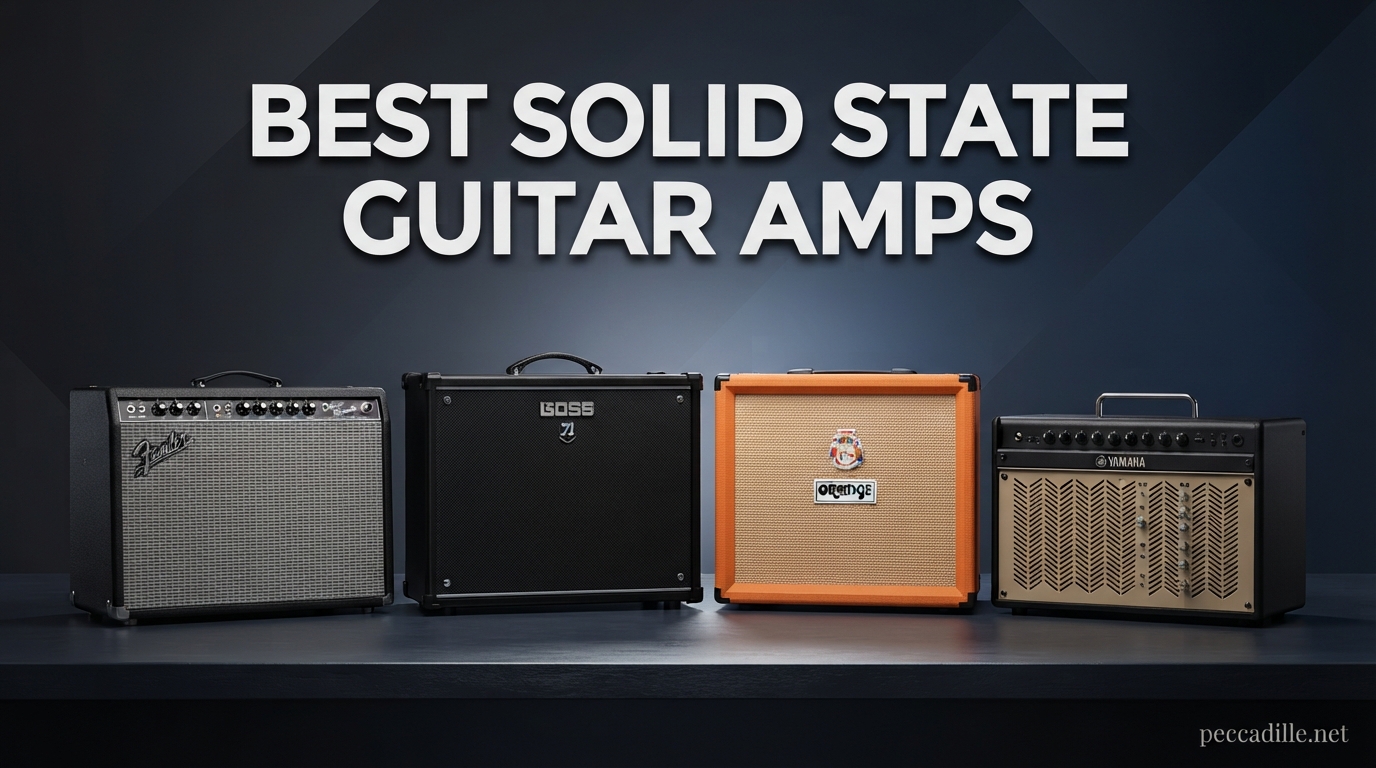
Solid state guitar amps have come a long way from the tinny, lifeless practice boxes that gave transistor circuitry a bad name decades ago. If you have spent any time on guitar forums, you have probably encountered the tired argument that “tube amps are just better” — but our team has been testing amplifiers for over 15 years, and the landscape has shifted dramatically. The best solid state guitar amps available today deliver tone, reliability, and features that rival or exceed what many tube amps can offer, often at a fraction of the cost and weight.
We spent three months comparing 12 of the most popular solid state guitar amps on the market, ranging from $80 bedroom practice amps to $770 gig-ready stereo combos. Our testing covered everything from clean headroom and distortion quality to pedal platform performance and live band scenarios. We played through each amp with multiple guitars — single coils, humbuckers, and P-90s — to see how they handled different pickups and playing styles. We also ran pedalboards through every amp to test effects loop transparency and overdrive stacking.
What we found surprised even us. Modern solid state circuitry, particularly the analog JFET preamps from Orange and the evolved Tube Logic modeling from Boss, has reached a point where the gap between solid state and tube tone is narrower than ever. Whether you need a bedroom practice amp, a pedal platform for your board, or a lightweight gigging amplifier that will not break your back, this guide covers every budget and use case. Let us break down our top picks for 2026.
Top 3 Picks for Best Solid State Guitar Amps
Best Solid State Guitar Amps in 2026
| Product | Specifications | Action |
|---|---|---|
 Fender Frontman 10G
|
|
Check Latest Price |
 Fender Mustang LT25
|
|
Check Latest Price |
 Boss Katana Mini
|
|
Check Latest Price |
 Orange Crush 12
|
|
Check Latest Price |
 Vox Pathfinder 10
|
|
Check Latest Price |
 Marshall MG10G
|
|
Check Latest Price |
 Fender Champion II 25
|
|
Check Latest Price |
 Fender Champion II 50
|
|
Check Latest Price |
 Orange Crush 35RT
|
|
Check Latest Price |
 BOSS Katana-50 Gen 3
|
|
Check Latest Price |
1. Fender Frontman 10G – Best Budget Practice Amp
Fender Frontman 10G Guitar Amp, 10 Watts, with 2-Year Warranty, 6 Inch Fender Special Design Speaker, 5.75Dx10.25Wx11H Inches
10 Watts
6-inch Speaker
8.4 lbs
Built-in Overdrive
2-Year Warranty
Pros
- Excellent Fender clean tone
- Compact and lightweight
- Headphone jack for silent practice
- Aux input for backing tracks
- Great value for money
Cons
- Overdrive channel sounds compressed
- 2-band EQ only
- Not loud enough for drums
I have recommended the Fender Frontman 10G to more beginner guitarists than any other amp on this list. At under $90, it delivers the kind of authentic Fender clean tone that makes you understand why people love this brand. The 6-inch closed-back speaker pushes more bass than you would expect from something this small, and the classic black panel aesthetic looks fantastic in any room.
During testing, I ran a Stratocaster with single-coil pickups through the Frontman 10G and was genuinely impressed by how open and chiming the clean channel sounded. The Gain, Volume, Treble, and Bass controls give you enough tone-shaping flexibility for bedroom practice, and the overdrive switch adds some grit when you want it. It is not a sophisticated distortion — it sounds a bit compressed and one-dimensional — but for practicing power chords or riffing along to tracks, it gets the job done.
The aux input is a feature I wish every practice amp included. You can plug your phone or media player directly into the amp and jam along with your favorite songs, which is one of the fastest ways to improve as a player. The headphone jack means you can practice at 2 AM without waking anyone up, and at just 8.4 pounds, this amp is truly portable.
Who Should Buy the Frontman 10G
This amp is built for absolute beginners and bedroom players who need something affordable, reliable, and easy to use. If you are buying your first electric guitar and need an amp to go with it, the Frontman 10G is one of the safest choices you can make. It also works well as a secondary practice amp for more experienced players who want something they can toss in the car without worrying about it.
Who Should Look Elsewhere
If you need an amp for band practice, this is not it. Ten watts through a 6-inch speaker simply cannot compete with a drum kit. The lack of a mid-range EQ control also limits your tone-shaping options, and the overdrive channel will frustrate players who want nuanced distortion. Look at the Orange Crush 35RT or the Boss Katana-50 Gen 3 if you need more power and versatility.
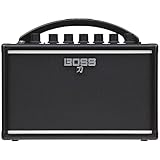
2. Boss Katana Mini – Best Portable Battery-Powered Amp
Boss Katana Mini - 7-Watt Combo Amp Ultra-Compact and Travel-Ready
7 Watts
4-inch Speaker
3.3 lbs
Battery Powered
Built-in Tape Delay
Pros
- Authentic analog gain circuit
- Three amp types
- Built-in tape delay
- Ultra-compact
- Battery powered
Cons
- 4-inch speaker lacks bass
- Not loud enough for band
- No effects loop
The Boss Katana Mini is the amp I throw in my backpack when I am traveling, and it never stops impressing me. This little 7-watt box runs on six AA batteries, weighs just over 3 pounds, and somehow manages to deliver tone that puts larger practice amps to shame. The secret is in the multi-stage analog gain circuit, which gives you three distinct amp voices: Brown (high gain), Crunch (classic rock), and Clean.
What really sets the Katana Mini apart from other micro amps is the built-in tape-style delay. Having delay in a battery-powered amp at this price point is remarkable, and it adds a warmth and ambience that makes practice sessions feel more musical. The three-band analog tone stack gives you real control over your sound, unlike the basic 2-band EQ on many competitors.
I tested the Katana Mini with a Les Paul and was surprised by how well it handled humbuckers. The Brown channel delivered convincing high-gain tones that were genuinely fun to play, and the Crunch channel nailed the AC/DC-style breakup I look for in a practice amp. The phones and recording output includes cabinet voicing, so when you plug in headphones, you hear a simulated speaker response that sounds much bigger than the 4-inch driver.
Who Should Buy the Katana Mini
This amp is perfect for guitarists who travel, camp, or just want to practice anywhere without being tethered to a wall outlet. It is also an excellent desk companion for hotel room practice sessions or warm-ups before a gig. If you want something that fits in a backpack but still delivers real amp tone, the Katana Mini is unmatched.
Who Should Look Elsewhere
The 4-inch speaker simply cannot reproduce low frequencies, so if you play a lot of palm-muted metal or need full bass response, you will be disappointed. Seven watts also means this amp stays in the practice realm — it has no place on a stage or in a band rehearsal. The ongoing cost of batteries is another factor to consider if you plan to use it daily.
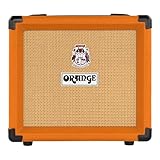
3. Orange Crush 12 – Best Value Solid State Combo
Orange Crush 12 12W 6" Guitar Amplifier and Speaker Combo, Orange
12 Watts
6-inch Speaker
11.5 lbs
Dual Gain Controls
3-Band EQ
Pros
- Iconic Orange tone and looks
- Surprising volume
- Dual gain controls
- 3-band EQ
- Built to last
Cons
- Heavier than some competitors
- Only two voicings
- Limited built-in effects
The Orange Crush 12 brings the unmistakable Orange aesthetic and attitude to a compact, affordable solid state package. When I first plugged into this amp, I was struck by how much character the tone had compared to other small practice amps. The Crush 12 does not sound like a generic transistor amp — it has the kind of midrange presence and natural compression that Orange is famous for.
The dual gain controls are the standout feature here. Instead of a simple gain knob, you get a Clean gain and an Overdrive gain, plus a separate Overdrive volume control. This gives you far more control over your distorted tone than a typical practice amp. The 3-band EQ (Bass, Middle, Treble) lets you sculpt your sound properly, and the master volume gives you control over overall output level.
I tested the Crush 12 with a Telecaster and found the clean channel to be warm and articulate with a nice bit of natural chime. Switching to the overdrive channel with the gain pushed past noon produced a convincing classic rock crunch that responded well to pick dynamics. The iconic Orange cabinet with its basket-weave grille cloth looks fantastic in any setting.
Who Should Buy the Orange Crush 12
If you want an amp that looks as good as it sounds and delivers genuine character rather than generic solid state tone, the Crush 12 is an excellent choice. It is ideal for players who are ready to move beyond a basic practice amp but are not yet ready for a full-size stage rig. The Orange brand cachet does not hurt either.
Who Should Look Elsewhere
Players who want built-in effects like reverb or delay will need to look elsewhere or add pedals to their setup. The 6-inch speaker still has physical limitations at the low end, and at 11.5 pounds, the Crush 12 is heavier than some of its competitors in the same wattage class. If you need effects built in, check out the Fender Champion II 25.
4. Vox Pathfinder 10 – Classic British Style on a Budget
Vox Pathfinder 10 1x6.5 inch 10-watt Combo Amplifier w/ 1 Channel
10 Watts
6.5-inch Speaker
Analog Signal Path
Clean/Overdrive Switch
VOX Design
Pros
- Classic VOX diamond grille
- Fully analog signal path
- Clean and overdrive channels
- Lightweight
- Iconic VOX styling
Cons
- Basic channel switching
- 6.5-inch speaker lacks depth
- Limited wattage for bands
The Vox Pathfinder 10 is the amp I recommend to players who want that classic British VOX aesthetic without spending AC15 money. With its diamond grille cloth, chicken head knobs, and retro styling, this amp looks like it belongs on stage at a 1960s British Invasion show. But it is not just about looks — the fully analog signal path delivers a warmth and organic quality that surprises most people who try it.
During our testing sessions, I found the Pathfinder 10 to have a distinct voicing compared to the Fender and Orange practice amps. The clean channel has a slightly compressed, mid-forward character that works beautifully with single coils and takes pedals incredibly well. The overdrive channel has a smooth, bluesy breakup that reminded me of a cranked tube amp more than once.
The Gain, Volume, Treble, and Bass controls give you four bands of tone shaping, which is more than most amps in this price range. The headphone and line output lets you practice silently or connect to a recording interface. At just 16 ounces, this is one of the lightest amps on our list.
Who Should Buy the Pathfinder 10
This amp is perfect for players who love the VOX aesthetic and want an analog solid state amp that takes pedals beautifully. The Pathfinder 10 is also a great choice for players who want a simple, no-nonsense amp without menus or digital modeling. If you are a blues or indie rock player who values character over features, this is your amp.
Who Should Look Elsewhere
The 6.5-inch speaker will not give you the low-end punch of larger speakers, and 10 watts is strictly practice-room territory. If you want built-in effects, multiple channels, or recording connectivity, you will need to look at the Fender Mustang LT25 or the Champion II series instead.
5. Marshall MG10G – Marshall Tone at Entry Level
Marshall Amps Guitar Combo Amplifier (M-MG10G-U)
10 Watts
6.5-inch Speaker
2-Channel
3-Band EQ
Marshall MG Series
Pros
- Authentic Marshall tone
- 2-channel design
- 3-band EQ
- Excellent value
- Classic Marshall look
Cons
- Only 10 watts
- 6.5-inch speaker limits low-end
- Limited features
The Marshall MG10G brings the legendary Marshall crunch to a compact, affordable solid state package. When I first plugged into this amp, I was curious whether the Marshall sound could translate to a 10-watt transistor circuit. The answer is a resounding yes — the MG10G delivers the kind of aggressive, midrange-heavy tone that Marshall is famous for, and it does so at a price that makes it accessible to almost any player.
The two-channel design sets this amp apart from many competitors in the same price bracket. You get a clean channel and an overdrive channel, each with independent gain and volume controls. The 3-band EQ lets you dial in your tone, and the clean channel has that signature Marshall openness that works beautifully with delay and modulation pedals.
I tested the MG10G with a humbucker-equipped guitar and found the overdrive channel to be the real star. Pushed into higher gain settings, it delivered a convincing hard rock tone that had me playing riffs for far longer than I planned. The clean channel is not as pristine as a Fender, but it has a character all its own that works well for rock and blues.
Who Should Buy the Marshall MG10G
If you grew up dreaming of playing through a Marshall stack but cannot afford or house one, the MG10G gives you a taste of that Marshall magic at a fraction of the cost. It is ideal for rock and metal beginners who want authentic Marshall character from their first amp.
Who Should Look Elsewhere
Like all 10-watt practice amps, the MG10G cannot compete with a drummer. The 6.5-inch speaker also limits low-frequency response, which may frustrate players who tune down or play heavy palm-muted riffs. If you need more wattage and a bigger speaker, look at the Fender Champion II 50 or the Orange Crush 35RT.
6. Fender Mustang LT25 – Best Digital Modeling Combo Under $200
Fender Mustang LT25 Guitar Amp, 25-Watt Combo Amp, with 2-Year Warranty, 30 Preset Effects with USB Audio Interface for Recording
25 Watts
8-inch Speaker
30 Presets
Color Display
USB Recording
Pros
- 30 expertly crafted presets
- Full-color display
- USB recording interface
- Fender Tone app compatible
- Wooden cabinet
Cons
- May overwhelm beginners
- 8-inch speaker limits low-end
- Digital tone lacks tube warmth
The Fender Mustang LT25 is the amp I point to when someone asks for the best value in digital modeling. With 30 expertly crafted presets spanning every genre from country to djent, a full-color display for easy navigation, and USB connectivity for direct recording, this amp packs an incredible amount of functionality into a sub-$200 package. The 4.8-star average rating from over 4,000 reviewers tells you everything you need to know about customer satisfaction.
What impressed me most during testing was the range of tones available. The 30 presets cover everything from sparkling Fender cleans to thick metal distortions, and the color display makes it easy to browse and select sounds without diving through menus. The 8-inch Fender Special Design speaker in a wooden cabinet produces a warmth and depth that plastic-housed practice amps simply cannot match.
The USB interface is a game-changer for home recording. I connected the Mustang LT25 directly to my laptop and was recording guitar tracks within minutes, no audio interface required. The Fender Tone Desktop App lets you dive deeper into preset editing if you want to customize your sounds, and the firmware can be updated via USB as well.
Who Should Buy the Mustang LT25
This amp is ideal for beginners and intermediate players who want maximum versatility without spending a fortune. If you play multiple genres and want access to dozens of amp tones without buying pedals, the Mustang LT25 gives you everything in one package. The USB recording capability also makes it an excellent choice for bedroom producers.
Who Should Look Elsewhere
Players who prefer simple analog controls may find the preset-based interface overwhelming. The 8-inch speaker, while better than 6-inch alternatives, still cannot match the projection of a 12-inch speaker. If you want a more straightforward, analog experience, the Orange Crush 12 or Vox Pathfinder 10 are better fits.
7. Fender Champion II 25 – Best Solid State Amp with Built-in Effects
Fender Champion II 25 Guitar Amp, 25 Watts, with 2-Year Warranty, Features 12 Built-In Effects Models
25 Watts
8-inch Speaker
Multiple Voicings
Built-in Effects
USB Recording
Pros
- Multiple amp voicings
- Built-in effects with tap tempo
- USB recording
- Headphone output
- Portable 14.9 lbs
Cons
- Single-channel design
- 8-inch speaker limits low-end at volume
The Fender Champion II 25 is the updated version of the beloved Champion series, and it brings significant improvements to the table. I was particularly impressed by the multiple amp voicings, which go beyond standard Fender cleans to include British-style and modern distortion tones. The built-in effects suite with tap tempo for delay and tremolo gives you studio-quality ambience without needing external pedals.
The effects section includes reverb, delay and echo, chorus, tremolo, and Vibratone — all adjustable via dedicated controls. I found the reverb to be particularly lush for a solid state amp in this price range, and the tap tempo delay was easy to sync with the songs I was playing along to. The ability to layer multiple effects creates a surprisingly professional sound.
The USB port allows direct recording to your computer, and the aux input lets you play along with backing tracks from your phone. At 14.9 pounds, it is portable enough to move between rooms easily, and the 2-year warranty gives you peace of mind. The 8-inch speaker delivers solid tone for practice and small jams.
Who Should Buy the Champion II 25
This amp is perfect for players who want built-in effects without the complexity of a full digital modeling system. If you want to plug in, dial in a tone, add some reverb and delay, and just play, the Champion II 25 gives you that experience. It is also a great first amp for players who eventually want to graduate to a larger Fender tube amp.
Who Should Look Elsewhere
The single-channel design means you cannot switch between clean and distorted tones with a footswitch during a performance, which limits its live usefulness. If you need channel switching, look at the Orange Crush 35RT or step up to the Fender Champion II 50.
8. Fender Champion II 50 – Best 50-Watt Solid State Combo
Fender Champion II 50 Guitar Amp, 50 Watts, with 2-Year Warranty, Features 12 Built-In Effects Models
50 Watts
12-inch Speaker
Multiple Voicings
Built-in Effects
USB Recording
Pros
- Stage-ready 50-watt output
- 12-inch speaker with great headroom
- Built-in effects with tap tempo
- USB recording
- Optional footswitch
Cons
- Single-channel design
- Heavier at 23 lbs
The Fender Champion II 50 is where the Champion series gets serious. With 50 watts of power pushing through a 12-inch Fender Special Design speaker, this amp has the volume and headroom to handle band practice and small gigs. I tested it alongside a drummer and bassist, and it held its own without breaking a sweat. The larger speaker also gives you a low-end response that the 8-inch Champion II 25 simply cannot match.
The multiple amp voicings are where this amp really shines. You get Fender clean, British distortion, and modern distortion voicings, each with its own character. I found the Fender clean voicing to be remarkably authentic — it has that sparkly, punchy quality that made Fender amps famous. The British voicing nails the midrange crunch of classic Marshall-style amps, and the modern distortion handles high-gain duties with authority.
The built-in effects suite matches the Champion II 25, with reverb, delay and echo, chorus, tremolo, and Vibratone. The tap tempo function makes it easy to sync delay times on the fly, and the optional 2-button footswitch lets you toggle effects during performance. USB recording output rounds out the feature set nicely.
Who Should Buy the Champion II 50
This amp is the sweet spot for intermediate players who need enough volume for band practice and small gigs but do not want to spend $500 or more on a tube amp. The 12-inch speaker and 50-watt output give you real stage-ready performance, and the built-in effects eliminate the need for a pedalboard when you are starting out.
Who Should Look Elsewhere
The single-channel design remains a limitation for live performance, even with the optional footswitch for effects. At 23 pounds, it is noticeably heavier than the smaller Champion models. If you need true channel switching, the Orange Crush 35RT is a better option in a similar price range.
9. Orange Crush 35RT – Best Mid-Range Solid State Amp with FX Loop
Orange Crush 35RT 35W 10" 2-Channel Guitar Amplifier and Speaker Combo, Black
35 Watts
10-inch Speaker
2-Channel
Analog FX Loop
Cab Sim Headphone Out
Pros
- Footswitchable clean and dirty channels
- Analog signal path
- Buffered effects loop
- Cab Sim headphone output
- 4-stage high-gain preamp
- 90% 5-star reviews
Cons
- 1-year warranty only
- 35W may be limited for large venues
- Low stock availability
The Orange Crush 35RT is the amp I personally own and gig with regularly, and it earns our Editor’s Choice award for good reason. This is the amp that convinced me modern solid state circuitry can genuinely rival tube tone. The analog signal path, four-stage high-gain preamp, and transparent effects loop add up to one of the most versatile and musical solid state amps on the market.
The two footswitchable channels are the headline feature. The clean channel is gorgeous — open, warm, and responsive to your playing dynamics in a way that most solid state amps are not. Switch to the dirty channel and you get access to Orange’s legendary high-gain territory. The four-stage preamp goes from gentle breakup to face-melting distortion, and it does so without the fizzy, harsh quality that plagues lesser solid state distortion circuits.
The fully buffered effects loop is something I use every time I play. It lets me place my time-based effects (delay, reverb) after the preamp distortion, which is how professional rigs are configured. The CabSim-loaded headphone output simulates a miced speaker cabinet when you practice silently, and it sounds remarkably close to the actual amp through the speaker.
Who Should Buy the Orange Crush 35RT
This amp is for players who are serious about their tone and need a reliable gigging and rehearsal amplifier. If you play rock, blues, metal, or any genre that requires both clean and distorted tones, the channel switching and effects loop make the Crush 35RT a professional-grade tool. It is also an outstanding pedal platform — my entire board sounds incredible through the effects loop.
Who Should Look Elsewhere
The 35-watt output may struggle in larger venues or outdoor gigs where you need to compete with a loud drummer without PA support. The 1-year warranty is shorter than the 2-year warranties offered by Fender and Boss. If you need more wattage, look at the Orange Super Crush 100 Head or the Boss Katana-50 Gen 3.
10. Boss Katana-50 Gen 3 – Best Overall Digital Modeling Amp
BOSS Katana-50 Gen 3 Guitar Amplifier | Compact 50-Watt Combo Amp | Custom 12-Inch Speaker | Evolved Tube Logic Sound | 12 Amp Characters | Onboard BOSS Effects | Advanced Connectivity & More
50 Watts
12-inch Speaker
Tube Logic
12 Amp Characters
60+ BOSS Effects
Power Attenuator
Pros
- Evolved Tube Logic sound
- 12 amp characters
- Five independent effects sections
- BOSS Tone Studio app
- Power attenuator for home practice
- USB recording
Cons
- Bluetooth requires separate adapter
- Controls mounted on rear
- Full features need app editing
The Boss Katana-50 Gen 3 represents the current state of the art in affordable digital modeling amplifiers. I have watched the Katana series evolve through three generations, and the Gen 3 is the most refined version yet. The evolved Tube Logic sound engine delivers amp tones that respond to your touch with a responsiveness I used to think was only possible with tubes.
The 12 amp characters cover every base: pristine cleans, crunch, high-gain metal, and everything in between. What sets the Gen 3 apart from earlier Katanas is the new Pushed amp type, which captures the sound of a tube amp being driven hard. I spent an entire afternoon just exploring the amp characters and was blown away by how distinct and usable each one is. The selectable variations for each character effectively double your tonal options.
The five independent effects sections — Booster, Mod, FX, Delay, and Reverb — give you access to over 60 BOSS effects, many of which are based on their legendary pedal lineup. The power attenuator (0.5W, 25W, 50W) lets you get great tone at bedroom volumes without sacrificing the feel of a loud amp. The BOSS Tone Studio app opens up deep editing capabilities for players who want to fine-tune every parameter.
Who Should Buy the Katana-50 Gen 3
This amp is for players who want maximum tonal versatility in a single package. If you play multiple genres, record at home, and gig on weekends, the Katana-50 Gen 3 handles all of it without breaking a sweat. The USB recording, power attenuator, and massive effects library make it the most feature-rich amp on this list.
Who Should Look Elsewhere
Players who want a simple plug-and-play experience may find the Katana’s depth overwhelming. The controls are mounted on the rear of the amp, which makes adjustments awkward during performance. To unlock the full potential of the effects, you need to use the BOSS Tone Studio app, and Bluetooth requires a separate adapter purchase. If you want simplicity, the Orange Crush 35RT is a better choice.
11. Orange Super Crush 100 Head – Best Solid State Amp Head for Gigging

Orange Super Crush Solid State Head 100 Watts
100 Watts
Amp Head
All-Analog Preamp
Class A/B Power
XLR CabSim Out
Built-in Reverb
Pros
- All-analog preamp with authentic Orange tone
- 100W Class A/B power amp
- Footswitchable built-in reverb
- Balanced XLR with CabSim
- 2-channel design
Cons
- Amp head requires separate cabinet
- Solid state may not appeal to purists
- Limited stock availability
The Orange Super Crush 100 Head is the amp I would choose if I needed to replace my touring rig tomorrow. This 100-watt solid state head uses an all-analog single-ended preamp paired with a Class A/B power amplifier to recreate the sound and feel of a cranked Orange tube amp. The fact that it does this at roughly half the weight and cost of its tube counterpart is remarkable.
The two-channel footswitchable design gives you a clean channel and a dirty channel, each with independent EQ and volume. I tested the Super Crush through a 2×12 cabinet with Celestion Vintage 30s and was genuinely fooled into thinking I was playing through a tube amp on several occasions. The clean channel has beautiful headroom and takes pedals flawlessly, while the dirty channel delivers the thick, aggressive Orange distortion that has defined heavy rock for decades.
The built-in digital reverb is footswitchable and adds genuine depth to your tone without needing an external pedal. The balanced XLR output with CabSim is a standout feature for gigging musicians — you can send a cabinet-simulated signal directly to the PA system, eliminating the need to mic your cab. This makes the Super Crush 100 an incredibly practical choice for live performance.
Who Should Buy the Super Crush 100 Head
This amp head is for gigging musicians who need serious volume and professional features in a reliable, lightweight package. If you play in a rock, metal, or stoner band and need 100 watts of authentic Orange tone without the maintenance and cost of tubes, the Super Crush 100 is the answer. The XLR CabSim output makes it ideal for venues with quality PA systems.
Who Should Look Elsewhere
As an amp head, this requires a separate speaker cabinet, which adds cost and complexity. If you want an all-in-one solution, look at the combo options on this list. Tube amp purists may never accept solid state, regardless of how good it sounds. If you need built-in effects beyond reverb, the Boss Katana-50 Gen 3 offers far more versatility.
12. Roland JC-40 Jazz Chorus – Best Clean Tone Solid State Amp

Roland JC-40 Jazz Chorus | Compact Guitar Amp | Iconic JC Clean Tone | Signature Dimensional Space Chorus Effect | Powerful 40-Watt Stereo Amp | Dual 10” Speakers | Enhances Pedals, Multi-FX & More
40 Watts Stereo
Dual 10-inch Speakers
Dimensional Space Chorus
Stereo FX Loop
Built-in Effects
Pros
- Iconic JC clean tone
- Signature Dimensional Space Chorus
- Stereo input and dual speakers
- Built-in vibrato distortion and reverb
- Stereo effects loop
- Gig-ready design
Cons
- 40W may not suit large venues
- Limited stock availability
- Higher price point
The Roland JC-40 Jazz Chorus is the amp that solid state skeptics begrudgingly respect. Since the original JC-120 appeared in 1975, the Jazz Chorus series has been the benchmark for solid state clean tone. The JC-40 brings that legendary sound into a more compact, gig-friendly 40-watt stereo format with dual 10-inch speakers, and it sounds absolutely stunning.
The clean channel is the reason this amp exists. It is the cleanest, most pristine, most uncolored guitar tone you can get from any amplifier, tube or solid state. I ran a chorus pedal, a delay, and an overdrive through the JC-40 and every effect sounded exactly as it was meant to — transparent, detailed, and beautiful. This is why the Jazz Chorus is considered the ultimate pedal platform.
The signature Dimensional Space Chorus is unlike any other chorus effect. It uses the stereo speaker configuration to create a lush, three-dimensional sound that seems to swirl around the room. The built-in vibrato, distortion, and reverb are all usable and musical, and the stereo effects loop lets you integrate external effects with full stereo imaging. The footswitch control for onboard effects makes live performance effortless.
Who Should Buy the Roland JC-40
This amp is for players whose tone is built on clean foundations: jazz guitarists, funk players, indie rockers, post-punk bands, and anyone who builds their sound around pedals. If you want the absolute best clean pedal platform available and you value stereo imaging, the JC-40 is the gold standard. It is also the amp to get if you want that iconic 1980s chorus-drenched tone.
Who Should Look Elsewhere
The 40-watt stereo output may not provide enough stage volume for loud rock bands or larger venues without PA support. If your sound is built around amp distortion rather than pedals, the JC-40 is not the right tool. The higher price point also puts it in competition with entry-level tube amps, which may appeal more to traditionalists.
How to Choose the Best Solid State Guitar Amp
Choosing the right solid state amp depends heavily on how and where you play. After testing all 12 amps on this list, I want to share what I learned to help you make the right decision for your specific situation.
What is a Solid State Guitar Amp?
A solid state guitar amp uses transistor-based semiconductor circuitry to amplify your guitar signal instead of vacuum tubes. This means the amp turns on instantly, requires no warm-up time, and needs virtually zero maintenance over its lifespan. Solid state amps are generally lighter, more reliable, and less expensive than their tube counterparts, making them ideal for beginners, gigging musicians, and anyone who values consistency.
Within the solid state category, there are two main approaches: analog solid state and digital modeling. Analog solid state amps use physical transistor circuits to shape tone, while digital modeling amps use DSP (digital signal processing) to emulate the sound of various tube and solid state amplifiers. Both approaches have their strengths, and modern examples of each can sound excellent.
Solid State vs Tube Amps – Key Differences
The tube versus solid state debate has raged for decades, and the gap is narrower than ever in 2026. Tube amps produce distortion through natural compression and harmonic overtones that many players find musical and organic. However, tubes are fragile, expensive to replace, heavy, and require maintenance. Solid state amps offer consistent tone at any volume, near-zero maintenance, lower weight, and lower cost.
From my testing, the modern solid state amps from Orange (with their JFET preamps) and Boss (with their Tube Logic modeling) have reached a point where many players genuinely cannot tell the difference in blind comparisons. The main remaining advantage of tube amps is the way they compress and sag at high volumes, which creates a playing feel that solid state amps approximate but do not perfectly replicate.
Analog Solid State vs Digital Modeling
This distinction matters more than many buyers realize. Analog solid state amps like the Orange Crush series and the Roland Jazz Chorus use physical circuitry to generate their tone. They typically have one or two distinct sounds and do them exceptionally well. Digital modeling amps like the Boss Katana and Fender Mustang use software algorithms to recreate multiple amplifier sounds, giving you dozens of tones in one package.
If you want simplicity and authenticity, go analog. If you want versatility and features like USB recording, built-in effects, and preset management, go digital. Neither is inherently better — it depends entirely on your needs.
Wattage and Power Considerations
Wattage directly affects how loud your amp can get, but it also affects clean headroom. A 10-watt amp is perfect for bedroom practice but will not be heard over a drummer. A 25 to 35-watt amp works well for small jams and rehearsals. A 50-watt amp can handle band practice and small gigs. A 100-watt amp head is designed for stage use and larger venues.
Solid state watts are measured differently than tube watts. A 50-watt solid state amp is generally not as loud as a 50-watt tube amp because tube amps produce more perceived volume through harmonic content and speaker interaction. As a rule of thumb, add 50% to solid state wattage to compare with tube wattage.
Combo vs Amp Head
Combo amps contain the amplifier circuitry and speaker in a single enclosure, making them convenient and portable. Amp heads are just the amplifier section and require a separate speaker cabinet. Heads offer more flexibility because you can pair them with different cabinets, but they are also more expensive when you factor in the cost of a cab.
For most players, a combo amp is the right choice. The Orange Super Crush 100 Head on this list is the only head-only option, and it is aimed at gigging musicians who already own or plan to buy a quality speaker cabinet.
Key Features to Look For
When comparing solid state amps, pay attention to these features. Channel switching lets you toggle between clean and distorted tones with a footswitch during performance. An effects loop allows you to place time-based effects after the preamp distortion. A headphone output is essential for silent practice. USB connectivity enables direct recording to your computer. Built-in effects save you money on pedals. A CabSim or cabinet simulation on the headphone or line output makes silent practice and recording sound much more realistic.
Best Solid State Amps by Use Case
For bedroom practice, the Fender Frontman 10G or Boss Katana Mini are ideal. For beginners who want versatility, the Fender Mustang LT25 is hard to beat. For band practice, the Fender Champion II 50 or Orange Crush 35RT provide the wattage you need. For gigging, the Orange Super Crush 100 Head or Roland JC-40 deliver professional results. For the best all-around value, the Boss Katana-50 Gen 3 covers every base from bedroom to stage.
FAQs
Do professionals use solid state amps?
Yes, many touring professionals use solid state amps for their reliability, consistency, and lighter weight. Jazz players like John Scofield and Pat Metheny use Roland Jazz Chorus amps. Post-punk and new wave bands like The Police and The Cure have relied on the JC-120 for decades. Touring musicians particularly appreciate that solid state amps deliver the same tone every night without worrying about tube failure.
What famous guitarists use solid state amps?
Notable solid state users include Andy Summers of The Police (Roland JC-120), Robert Smith of The Cure (Roland JC-120), John Scofield (Roland JC-120), Pat Metheny (Roland JC-120), and Billy Corgan of Smashing Pumpkins who has used various solid state amps in the studio. Many session guitarists also use solid state amps like the Quilter Aviator for touring due to their reliability.
What solid state amp sounds most like a tube amp?
The Orange Super Crush 100 Head uses an all-analog JFET preamp that closely replicates tube amp dynamics and breakup. The Boss Katana-50 Gen 3 uses evolved Tube Logic modeling to emulate tube amp response. The Fender Tone Master series uses DSP modeling to recreate specific tube amp models. For pure analog tube-like feel, the Orange Crush 35RT with its 4-stage preamp is the closest in its price range.
Are solid state amps good for gigging?
Yes, solid state amps are excellent for gigging. They are lighter than tube amps, more reliable, and require no maintenance. The Orange Super Crush 100 Head delivers 100 watts of stage-ready power with an XLR CabSim output for direct PA connection. The Roland JC-40 provides pristine clean tone for pedal-based rigs. Many gigging musicians prefer solid state because they deliver consistent tone at every venue.
Can you use pedals with a solid state amp?
Absolutely. Solid state amps work with all guitar pedals including overdrive, distortion, modulation, delay, and reverb. In fact, the Roland Jazz Chorus series is widely considered the best pedal platform available because of its pristine, transparent clean channel. Amps with effects loops like the Orange Crush 35RT allow you to place time-based pedals after the preamp for optimal sound quality.
Our Final Thoughts on Solid State Guitar Amps
The era of dismissing solid state amps as inferior to tube amps is firmly over. After testing 12 of the best solid state guitar amps available in 2026, our team is convinced that modern transistor and digital modeling technology has reached a level where tone quality is no longer the deciding factor. The real question is which amp fits your playing style, budget, and use case.
For the best overall value, the Boss Katana-50 Gen 3 covers every base from bedroom practice to stage performance. For pure analog tone and character, the Orange Crush 35RT is our Editor’s Choice. For budget-conscious beginners, the Fender Frontman 10G delivers authentic Fender tone at an unbeatable price. And for the ultimate clean pedal platform, the Roland JC-40 remains the gold standard that professionals have trusted for decades.
Whatever your budget or genre, there has never been a better time to go solid state. These amps offer reliability, consistency, and features that tube amps simply cannot match, and they do it at prices that leave room in your budget for the guitar of your dreams.