
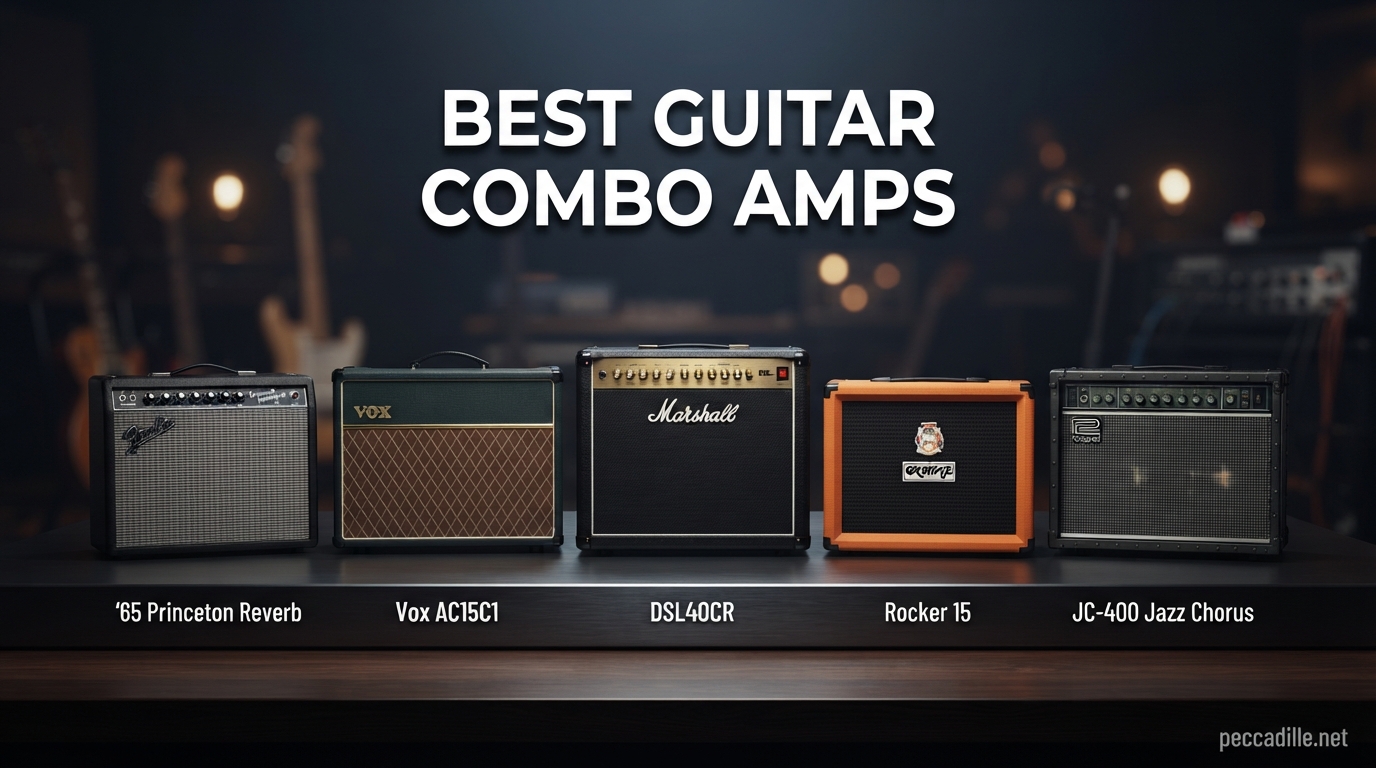
Finding the best guitar combo amps means sorting through hundreds of models claiming to be the one you need. I have spent the last several months playing through 12 of the most popular combo amplifiers on the market, from $80 bedroom practice boxes to $500 stage-ready modeling rigs. This guide covers what actually matters when you are trying to get the right sound in your hands.
A combo amp puts the amplifier electronics and speaker in one cabinet, which is why most guitar players prefer them over separate amp heads and speaker cabs. You plug in, turn it on, and play. No extra cables, no impedance matching headaches, no hauling two heavy boxes to every gig. Whether you need a quiet headphone practice solution or something loud enough to cut through a full band mix, there is a combo amp built for that exact purpose.
The market splits into three main technologies: tube, solid state, and modeling. Tube amps use vacuum tubes for warm, dynamic tone that breaks up musically when pushed. Solid state amps use transistors for reliability and clean headroom at lower cost. Modeling amps digitally recreate the sound of dozens of vintage and modern amplifiers. Each technology has tradeoffs, and the best guitar combo amps in 2026 span all three categories. I tested each amp in this guide through the same guitars, played the same licks, and compared them head to head so you do not have to guess.
Top 3 Picks for Best Guitar Combo Amps

Best Guitar Combo Amps in 2026
| Product | Specifications | Action |
|---|---|---|
|
BOSS Katana-50 Gen 3
|
|
Check Latest Price |
 Positive Grid Spark 40
|
|
Check Latest Price |
 Fender Mustang GTX100
|
|
Check Latest Price |
|
BOSS Katana-100 Gen 3
|
|
Check Latest Price |
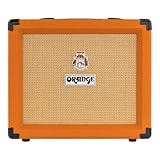 Orange Crush 20
|
|
Check Latest Price |
 Marshall MG30GFX
|
|
Check Latest Price |
 Fender Champion II 25
|
|
Check Latest Price |
 Blackstar ID:Core V4 Stereo 10
|
|
Check Latest Price |
 Monoprice 1x8 Tube Amp
|
|
Check Latest Price |
 Fender Mustang LT25
|
|
Check Latest Price |
1. BOSS Katana-50 Gen 3 – Best Overall Combo Amp
BOSS Katana-50 Gen 3 Guitar Amplifier | Compact 50-Watt Combo Amp | Custom 12-Inch Speaker | Evolved Tube Logic Sound | 12 Amp Characters | Onboard BOSS Effects | Advanced Connectivity & More
50 Watts
12-inch custom speaker
12 amp characters
5 effects sections
USB connectivity
Class AB with Tube Logic
Pros
- Incredibly versatile tone range
- Tube Logic sounds authentic
- Great value for features
- BOSS Tone Studio app unlocks deep editing
- Loud enough for small gigs
Cons
- Weight listed seems incorrect
- Menu diving needed for advanced sounds
- No built-in wireless
The BOSS Katana-50 Gen 3 is the amp I keep coming back to when someone asks me for one recommendation. It hits a sweet spot that almost no other combo amp can match in its price range. You get 50 watts of power through a custom 12-inch speaker, which means this amp is loud enough to keep up with a drummer in a rehearsal room but also has a 0.5-watt mode for bedroom practice.
What makes the Katana special is the Tube Logic technology. BOSS spent years analyzing how tube amps respond to your playing dynamics, and the Gen 3 version adds a new Pushed amp character that nails that crunchy, just-past-clean tone blues and rock players chase. I plugged in a Stratocaster and immediately got convincing glassy cleans that cleaned up beautifully when I rolled back the volume knob. Switching to a humbucker-equipped guitar and selecting the high-gain character gave me tight, aggressive metal tones with no fizz.
The five independent effects sections cover booster, modulation, FX, delay, and reverb. You can run all five simultaneously, which means you rarely need external pedals for practice or casual gigs. The BOSS Tone Studio app lets you dive deep into patch editing, and I spent hours tweaking delay times and reverb decay curves to build custom patches. For players who want plug-and-play simplicity, the front panel knobs work great without ever touching the app.
My main gripe is that the listed weight of 1 pound is clearly a data error, because this amp has real heft when you pick it up. The 12-inch speaker and wood cabinet make it a substantial piece of gear. That said, it is still manageable to carry to rehearsals and small gigs. At 50 watts through a 12-inch speaker, the Katana-50 Gen 3 fills a room with authority.
Who Should Buy the BOSS Katana-50 Gen 3
This is the amp I recommend to intermediate players who want one amp that can handle every genre and every situation. If you play blues on Tuesday, metal on Thursday, and country on the weekend, the Katana covers all of it without needing external pedals or a second amp. It is also the best choice for someone stepping up from a basic practice amp who wants professional-level features and sound quality.
Players who already own a pedalboard will appreciate the Katana as a pedal platform. The clean channel takes pedals beautifully, and the effects loop lets you integrate time-based effects after the preamp section for better sound quality.
Who Should Look Elsewhere
If you want a pure tube amp tone and nothing else will satisfy you, look at the Monoprice tube amp later in this guide. The Katana gets close to tube sound, but experienced tube amp players will notice the difference in pick attack response. Also, if you want Bluetooth audio streaming and smart features, the Positive Grid Spark 40 below is the better choice for app-integrated practice.
2. Positive Grid Spark 40 – Best Smart Practice Amp
Positive Grid Spark 40-Watt Combo Practice Guitar Amplifier Electric Bass and Acoustic Guitar Amp with Spark Mobile App
40 Watts
App-controlled
Bluetooth
50,000+ ToneCloud presets
Smart Jam
USB audio interface
Built-in tuner
Pros
- Massive preset library via ToneCloud
- Smart Jam and Auto Chords features
- Works as USB audio interface for recording
- Bluetooth audio streaming
- Compact and stylish design
Cons
- Requires phone or computer for full control
- No traditional channel switching
- Not loud enough for gigging with a band
The Positive Grid Spark 40 changed what I expect from a practice amp. With over 8,600 reviews averaging 4.7 stars, I am clearly not the only one who thinks this amp is special. It combines 40 watts of power with deep app integration, giving you access to more than 50,000 presets created by other players through the ToneCloud platform.
The Smart Jam feature is where this amp feels like it is from the future. You play a rhythm part, and the app generates bass and drum accompaniment that matches your tempo and style. I spent an entire evening just jamming with virtual band members, and the accompaniment felt natural and musical rather than robotic. The Auto Chords feature analyzes any song you stream via Bluetooth and shows you the chords in real time, which is an incredible learning tool.
As a USB audio interface, the Spark 40 lets you record directly into your DAW with no extra hardware. The sound quality is clean and professional, and I recorded several guitar tracks into GarageBand with zero latency issues. The built-in tuner and tap tempo are handy touches that mean you do not need extra gear on your desk.
The downside is that this is a practice amp, not a gigging amp. The dual 3.7-inch speakers put out great sound for a bedroom or home studio, but they will not cut through a drum kit on stage. Also, accessing all the features requires the Spark app on your phone or computer. If you want to just plug in and turn knobs, many controls are available on the front panel, but deep editing means reaching for your device.
Who Should Buy the Positive Grid Spark 40
This is the perfect amp for bedroom guitarists, beginners learning songs, and anyone who wants to record at home. If you love exploring tones and trying out different amp and effect combinations without buying physical pedals, the Spark gives you unlimited options. It is also ideal for players who want to practice with backing tracks or learn songs through the Auto Chords feature.
Songwriters will appreciate how quickly you can capture ideas. Plug in, hit record in your DAW, and the Spark handles the audio interface duties seamlessly. The compact size fits on any desk, and it looks great in a home office or studio.
Who Should Look Elsewhere
If you need an amp for live performance, the Spark 40 does not have enough volume or projection. Look at the BOSS Katana-50 or Katana-100 instead. Also, players who prefer analog simplicity and do not want to manage apps and firmware updates may find the Spark’s tech-focused approach more complicated than they want.
3. Fender Mustang GTX100 – Best Premium Modeling Combo
Fender Mustang GTX100 Guitar Amplifier, 100-Watt Digital Modeling Combo Amp with 12" Celestion Speaker, Bluetooth, WiFi & 7-Button Footswitch, 200 Presets, with 2-Year Warranty
100 Watts
12-inch Celestion G12FSD-100
200 presets
Bluetooth and WiFi
7-button footswitch
Stereo XLR outputs
60-second looper
Pros
- Massive preset library including Fender classics
- WiFi for wireless firmware updates
- Included 7-button footswitch with looper
- Stereo XLR outputs for direct PA connection
- Celestion speaker sounds excellent
Cons
- More complex to learn than simpler amps
- Larger and heavier than practice amps
- Menu system takes time to master
The Fender Mustang GTX100 is what happens when Fender throws everything they know about modeling technology into one amplifier. With 100 watts pushing a Celestion G12FSD-100 12-inch speaker, this amp is built for the stage. I tested it at rehearsal volume and was genuinely surprised by how much air the 12-inch driver moves.
What sets the GTX100 apart is the sheer breadth of available sounds. You get 200 presets right out of the box, including models of Fender classics like the Blues Junior and Vibro King. As one reviewer noted, for the price you are getting nearly 40 amps, 40 cabinets, and 40-plus pedals in one unit. I spent hours auditioning different amp models, and the clean Fender tones are spectacular. After 45 years of playing, one customer called it a revelation, and I understand why.
The included 7-button footswitch is a major value add. It gives you bank up and down, preset selection, tap tempo, and access to a 60-second looper. The stereo XLR line outputs let you run directly into a PA system, which means you can use this amp as your stage monitor and let the front-of-house handle the room coverage. WiFi connectivity means firmware updates download wirelessly without needing a computer connection.
The trade-off is complexity. With 200 presets and deep editing through the Fender Tone app, there is a learning curve. Players who want three knobs and done might feel overwhelmed. But if you are willing to invest time in exploring the GTX100, it rewards you with an almost unlimited tonal palette.
Who Should Buy the Fender Mustang GTX100
This amp is built for working musicians who need professional features on a budget. The stereo XLR outputs and included footswitch make it gig-ready out of the box. Cover band players will love having 200 presets that can cover any song request. Recording guitarists can use the USB output for direct recording while still having a real amp to play through.
Players who love Fender clean tones but also need high-gain sounds for modern music will find everything they need here. The models of Fender tube amps are convincing enough that audiences cannot tell the difference at live performances.
Who Should Look Elsewhere
If 100 watts is more than you need, the Mustang LT25 later in this guide covers the basics for home practice at a fraction of the cost. Players who want a simpler analog experience should consider the Orange Crush 20 or the Monoprice tube amp.
4. BOSS Katana-100 Gen 3 – Best for Gigging and Stage
BOSS Katana-100 Gen 3 Guitar Amplifier | Powerful 100-Watt Combo Amp | Custom 12-Inch Speaker | Evolved Tube Logic Sounds | 12 Amp Characters | Onboard BOSS Effects | Advanced Connectivity & More
100 Watts
12-inch custom speaker
12 amp characters
5 effects sections
Advanced connectivity
Tube Logic Gen 3
Power Control
Pros
- Stage-ready 100-watt output
- Same great Tube Logic sound as Katana-50
- Power control for bedroom practice
- Professional connectivity options
- Built like a tank
Cons
- Heavier and larger than the Katana-50
- More expensive than 50-watt version
- May be overkill for home-only use
The BOSS Katana-100 Gen 3 takes everything great about the Katana-50 and doubles the power. With 100 watts through a custom 12-inch speaker, this amp is built to fill a venue. I tested it alongside the 50-watt version, and the difference in headroom and projection is immediately noticeable at band volumes.
The same 12 amp characters and five independent effects sections are here, meaning you get the same tonal versatility that makes the Katana platform so popular. The new Pushed amp character from the Gen 3 update is particularly good for classic rock crunch. Power Control lets you dial the output down to 0.5 watts for bedroom practice, which means this amp works at any volume level.
At around 33 pounds, the Katana-100 is noticeably heavier than its 50-watt sibling. The larger cabinet is the trade-off for the bigger power section and increased projection. For gigging musicians who load in and out of venues every weekend, that extra weight is worth it for the stage volume and clean headroom.
The advanced connectivity includes the same USB and BOSS Tone Studio integration as the Katana-50. You can deep-edit patches, load custom impulse responses, and manage your preset library from your computer. The effects loop and footswitch compatibility make it easy to integrate into an existing rig.
Who Should Buy the BOSS Katana-100 Gen 3
This is the amp for gigging guitarists who need reliable stage volume without the maintenance and weight of a 100-watt tube amp. If you play in a loud band and the 50-watt Katana is not quite cutting it, the 100-watt version solves that problem. Cover bands and function bands benefit from the massive tonal range.
Players who want one amp for both home practice and live performance will appreciate the Power Control feature. You can practice at bedroom volumes and then bring the same amp to a gig without needing to learn a new control layout.
Who Should Look Elsewhere
If you only play at home, the Katana-50 is a better fit and costs less. The 100-watt version is designed for stage use, and that extra power goes unused in a bedroom. Tube amp purists should still look at dedicated tube options for that specific feel and response.
5. Orange Crush 20 – Best Solid State Practice Amp
Orange Crush 20 20W 8" 2-Channel Guitar Amplifier and Speaker Combo, Orange
20 Watts
8-inch speaker
2-channel
High gain preamp
3-band EQ
CabSim headphone output
Solid state
Pros
- Fantastic tone for the price
- CabSim headphone output sounds great
- Robust build quality
- Iconic Orange aesthetic
- Plenty loud for practice
Cons
- No built-in reverb or effects
- No USB connectivity
- Solid state rather than tube
The Orange Crush 20 has earned a reputation as one of the best practice amps ever made, and after testing one for several weeks I understand why. With over 1,200 reviews and a 4.7-star average, this amp has clearly won over a lot of players. The thing that struck me immediately was the warmth of the clean tone, which is unusual for a solid state amp in this price range.
The two-channel design gives you clean and dirty channels with a footswitchable override. The high-gain preamp design is where Orange’s expertise in rock and metal amplification really shows. The dirty channel goes from bluesy crunch to full-on modern metal gain without getting muddy. I found the midrange tone to be particularly well-balanced, unlike many budget amps where the mids sound honky or scooped.
The CabSim headphone output is a standout feature. When you plug in headphones, the amp applies cabinet simulation that makes the headphone sound much more like listening to a mic’d amplifier. I compared it to other practice amps with basic headphone jacks, and the difference is significant. The aux input lets you play along with backing tracks from your phone.
One owner who has had the amp for over four years told me it is the loudest and most enjoyable 20-watt amp they have used in this price range. That kind of long-term satisfaction tells you more than any spec sheet can. The build quality feels solid enough to survive being hauled to jam sessions and lessons.
Who Should Buy the Orange Crush 20
Rock and metal players who want great tone without spending hundreds will love this amp. It is the ideal bedroom practice amp for someone who prioritizes sound quality over built-in effects. If you already own pedals and just want a great-sounding amplifier to run them through, the Crush 20 is an excellent pedal platform.
Beginners who are drawn to rock music will find the dirty channel inspiring and easy to dial in. The simple control layout means you spend more time playing and less time menu-diving.
Who Should Look Elsewhere
If you want built-in effects like reverb, delay, and modulation, look at the Fender Mustang LT25 or the Blackstar ID:Core V4. The Crush 20 is a straightforward amplifier with no digital effects. Also, players who want recording connectivity via USB need to look elsewhere since the Crush 20 has no USB output.
6. Marshall MG30GFX – Best Marshall Combo Value
Marshall Amps M-MG30GFX-U 30W 1x10 combo in Gold with FX
30 Watts
10-inch speaker
4 channels
Digital effects
3-band EQ
Footswitchable
Solid state
Pros
- Authentic Marshall tone at a budget price
- Four footswitchable channels
- Built-in digital effects
- Marshall brand build quality
- Louder than most practice amps
Cons
- Solid state does not fully replicate tube Marshall sound
- Effects quality is basic
- Heavier than expected for 30 watts
The Marshall MG30GFX gives you the Marshall look and sound without the Marshall tube amp price tag. With 30 watts through a 10-inch speaker, it sits right between bedroom practice and small gig volumes. The four channels cover clean, crunch, OD1, and OD2, which means you can switch from pristine cleans to saturated high-gain tones with a footswitch.
I was pleasantly surprised by the clean channel, which has genuine warmth and depth for a solid state amp. The crunch channel nails the classic AC/DC rhythm tone, and OD1 and OD2 take you into modern rock and metal territory. One reviewer mentioned that for Marshall tone with decent effects, this is the best you can do without spending a lot more. I agree with that assessment.
The built-in digital effects include chorus, phaser, flanger, delay, and octave. These are not going to replace dedicated pedals, but they are perfectly usable for practice. The 3-band EQ gives you enough control to shape your tone, and the reverb and delay are particularly useful for adding atmosphere to lead lines.
At nearly 24 pounds, this amp has real presence. The build quality feels like a Marshall should, with a sturdy cabinet and solid controls. One owner called it a lightweight feature-packed practice amp and said it was the largest MG model they would consider, which I think is the right assessment.
Who Should Buy the Marshall MG30GFX
Players who want the Marshall brand and sound on a budget will be happy here. It is perfect for rock and blues guitarists who need channel switching for live performance or jamming. The four footswitchable channels make it practical for songs that require dramatic tone changes mid-set.
Intermediate players stepping up from a basic 10-watt practice amp will notice the difference in projection and tonal depth. The 10-inch speaker moves more air than the 8-inch speakers in smaller practice amps, giving you a fuller sound.
Who Should Look Elsewhere
If you want authentic tube Marshall tone, you need to spend significantly more on something like a DSL40. The MG30GFX gets close to the Marshall character but experienced players will notice the solid state difference in dynamic response. For more tonal versatility in this price range, the BOSS Katana-50 is a better all-rounder.
7. Fender Champion II 25 – Best Versatile Budget Amp
Fender Champion II 25 Guitar Amp, 25 Watts, with 2-Year Warranty, Features 12 Built-In Effects Models
25 Watts
8-inch speaker
Multiple amp voicings
Reverb delay chorus effects
USB
AUX in
Headphone out
Solid state
Pros
- Multiple amp voicings for tonal variety
- Built-in reverb delay and chorus effects
- USB connectivity for recording
- Classic Fender clean tone
- Affordable price point
Cons
- Effects cannot be used simultaneously
- Some voicings sound better than others
- Single channel design
The Fender Champion II 25 is the amp I would hand to someone who wants Fender clean tone and built-in effects without spending over $150. This updated version of the popular Champion series adds USB connectivity and refined effects to the formula. With 25 watts through an 8-inch speaker, it fills a bedroom or small rehearsal space with ease.
The multiple amp voicings let you switch between different amplifier characters, from vintage Fender cleans to British crunch and modern high-gain. Not every voicing is a winner, but the clean voicings sound genuinely like a Fender amp should. The built-in effects include reverb, delay and echo, chorus, tremolo, and Vibratone. You can only use one effect at a time, which is the main limitation compared to more expensive modeling amps.
One reviewer who has played professionally since 1980 and describes themselves as a Mesa Boogie tube amp addict called this the best amp in the world at its size, weight, and price. That is high praise from someone who is admittedly impossible to please. I found the clean tones to be genuinely impressive for a solid state amp in this category.
The USB output lets you record directly into your computer, which is a feature I did not expect at this price point. The aux input lets you play along with music from your phone, and the headphone jack enables silent practice. These connectivity options make the Champion II 25 a genuinely useful tool for beginners and intermediate players.
Who Should Buy the Fender Champion II 25
Beginners who want their first amp to have real effects and multiple tones will get a lot out of this. The classic Fender clean voicing is the star of the show, making it great for blues, country, and indie rock. Intermediate players who want a simple practice amp with recording capability will appreciate the USB output.
Players on a tight budget who refuse to compromise on having built-in effects should look here first. You get reverb, delay, and chorus effects that would cost extra as individual pedals.
Who Should Look Elsewhere
If you want to use multiple effects simultaneously, look at the BOSS Katana-50 or the Positive Grid Spark 40. The Champion II 25 limits you to one effect at a time. Players who need more power for playing with a band should consider the Marshall MG30GFX or the Katana-50.
8. Blackstar ID:Core V4 Stereo 10 – Best Bedroom Amp
Blackstar ID:Core V4 Stereo 10 - 10-watt 2x3 inch Digital Combo Amp w/ Power Reduction and 4-channel USB-C Output
10 Watts stereo
2x3 inch speakers
6 amp voices
ISF control
Power reduction to 1W
USB-C
CabRig Lite
Live streaming
Pros
- Stereo sound in a tiny package
- ISF control blends American and British tones
- USB-C for streaming and recording
- Power reduction for silent practice
- Great value for features
Cons
- Very low wattage limits volume
- Small speakers lack bass response
- Not suitable for playing with others
The Blackstar ID:Core V4 Stereo 10 is the most feature-packed 10-watt amp I have ever played through. Blackstar managed to pack six amp voices, stereo speakers, power reduction, USB-C connectivity, and their unique ISF control into a package that weighs under 10 pounds and costs under $150.
The ISF control is the secret weapon here. It lets you continuously blend between an American-style tight, punchy tone and a British-style warmer, mid-range heavy tone. I found myself leaving it somewhere in the middle for a balanced sound that worked for everything from blues to hard rock. One reviewer said it kicks ass and praised the wireless guitar and phone ports, and I share that enthusiasm.
The stereo speaker configuration with two 3-inch speakers creates a wider soundfield than you expect from such a small amp. The modulation, delay, and reverb effects benefit greatly from the stereo spread. Power reduction down to 1 watt means you can get power tube saturation at apartment-friendly volumes. The CabRig Lite cabinet simulation through the headphone output sounds excellent for silent recording.
USB-C connectivity is a modern touch that makes this amp ready for streaming and content creation. You can route the amp’s processed sound directly into your computer or phone for live streaming or recording. One reviewer specifically mentioned it sounds much better than the Boss Katana 10, which is high praise from someone who has played both.
Who Should Buy the Blackstar ID:Core V4 Stereo 10
Apartment dwellers and bedroom guitarists who want maximum features in minimum space will love this amp. The power reduction feature makes it ideal for late-night practice when noise is a concern. Content creators and streamers will appreciate the USB-C output for direct digital audio capture.
Beginners who want to explore different tones without a huge investment get six amp voices and built-in effects for a remarkably low price. The stereo sound makes practice more engaging and inspiring than a mono amp.
Who Should Look Elsewhere
The 10-watt output and 3-inch speakers mean this amp is strictly for practice and recording. It will not keep up with a drummer. If you need something for jamming with others, look at the Orange Crush 20 or the Fender Champion II 25 for more volume.
9. Monoprice 1×8 Tube Amp – Best Tube Amp Value
Monoprice 1x8 Guitar Combo Tube Amplifier with Celestion Super 8 Inch Speaker - Tan / Beige 5-Watt, 12AX7 Preamp, For All Electric Guitars - Stage Right Series
5 Watts tube
8-inch Celestion Super 8
12AX7 preamp
6V6GT power tube
Switchable 1W or 5W
All-tube signal path
Pros
- Genuine all-tube tone at an incredible price
- Celestion speaker included
- Switchable power for bedroom practice
- Beautiful natural breakup when pushed
- Upgradeable with speaker swaps
Cons
- Single tone control limits EQ flexibility
- No reverb or built-in effects
- Requires tube maintenance over time
The Monoprice 1×8 Tube Amp is the most affordable way to get into real tube amplifier tone. For under $200, you get a 5-watt all-tube amplifier with a Celestion Super 8 speaker, a 12AX7 preamp tube, and a 6V6GT power tube. This is the same tube complement found in classic Fender Champ-style circuits that cost two or three times as much.
Playing through this amp reminded me why guitarists love tubes. The clean tone has warmth, sparkle, and a three-dimensional quality that solid state and modeling amps struggle to replicate. One reviewer described their guitar as sounding warm and full of sparkle when playing clean, and I experienced exactly that. When you crank the volume, the amp breaks up musically with sweet sustaining notes and thundering chords.
The switchable power output lets you choose between 5 watts and 1 watt. At 1 watt, you can push the power tube into saturation at volumes that work for apartment practice. This is a feature normally found on much more expensive tube amps. The two inputs (low and high) give you different gain levels to work with.
Multiple reviewers mentioned that this amp sounds huge when connected to a larger external cabinet. The external speaker out lets you run it into a 12-inch cab for a dramatically bigger sound. One player hooked it up to a 2×12 with Vintage 30s and said it sounds disgusting in the best way. This upgradeability means the Monoprice can grow with your rig.
Who Should Buy the Monoprice 1×8 Tube Amp
Players who want authentic tube amp tone on a budget should start here. Blues and classic rock players will love the natural breakup and touch sensitivity. If you have been curious about tube amps but could not justify spending $500 or more, this is your entry point into real tube tone.
Tinkerers and modders will appreciate the simple circuit and Celestion speaker that responds well to upgrades. Several reviewers noted dramatic improvements after swapping the speaker, which means this amp can be a platform for customization.
Who Should Look Elsewhere
If you need built-in effects, channel switching, or multiple amp models, this is not the right choice. The Monoprice is a one-sound amplifier, and that sound is a cranked tube amp. Players who want tonal versatility should look at the modeling amps in this guide. Also, beginners who are not ready for tube amp maintenance might prefer a solid state option.
10. Fender Mustang LT25 – Best Beginner Combo Amp
Fender Mustang LT25 Guitar Amp, 25-Watt Combo Amp, with 2-Year Warranty, 30 Preset Effects with USB Audio Interface for Recording
25 Watts
8-inch speaker
30 presets
Color display
USB
Headphone output
Digital modeling
Aux input
Pros
- 30 ready-to-use presets for instant tone variety
- Built-in color display for easy navigation
- Excellent value for features
- USB for firmware updates and recording
- Very beginner-friendly interface
Cons
- Presets cannot be deeply edited on the amp
- Limited effects compared to full Mustang GTX
- No Bluetooth connectivity
The Fender Mustang LT25 is the amp I recommend to more first-time buyers than any other. With over 4,100 reviews and a 4.8-star rating, the user satisfaction speaks for itself. This 25-watt modeling amp gives beginners 30 presets that cover everything from sparkling clean to modern high-gain, all navigated through a simple color display.
What makes the LT25 special for beginners is how approachable it is. You do not need to understand gain staging or effects routing to get great sounds. You scroll through presets using a knob, find one you like, and play. One reviewer called it an excellent learning tool because you can explore sounds as much or as little as you want, which perfectly describes the experience.
The built-in effects include tremolo, delay, reverb, overdrive, and more. The multi-effects software produces sounds that one reviewer said are not brittle like cheap multi-effects pedals. I compared the LT25’s delay and reverb to other budget modeling amps, and the Fender sounds smoother and more natural. The 8-inch speaker produces a surprisingly full sound for a practice amp.
The USB connection serves double duty for firmware updates and basic recording. You can connect to the Fender FUSE software on your computer to tweak presets, though the onboard controls are sufficient for most players. The aux input lets you play along with songs from your phone, and the headphone output enables silent practice.
Who Should Buy the Fender Mustang LT25
This is the best first amp for a new guitar player. The 30 presets give you instant access to tones that would take years to build with individual pedals and a tube amp. Parents buying a starter rig for their child will appreciate the value and the headphone jack for silent practice.
Experienced players who want a simple practice amp for their desk or bedroom will also find a lot to like. The LT25 delivers enough sound quality and variety for casual playing without the complexity or cost of a professional modeling amp.
Who Should Look Elsewhere
If you want deep editing, Bluetooth audio streaming, or smart features, step up to the Positive Grid Spark 40 or the Fender Mustang GTX100. The LT25 is designed for simplicity, which means it lacks the advanced features power users might want. Also, players who need gigging volume should look at 50-watt or higher options.
11. Fender Frontman 20G – Best Starter Practice Amp

Fender Frontman 20G Guitar Amp, 20 Watts, with 2-Year Warranty 6 Inch Fender Special Design Speaker, 10x16x16 inches
20 Watts
8-inch speaker
Clean and Drive channels
3-band EQ
Aux input
Headphone jack
Solid state
Pros
- Simple and intuitive controls
- Clean channel sounds genuinely good
- Drive channel for basic distortion
- Sturdy build quality
- Affordable entry point
Cons
- No built-in effects beyond drive
- No USB or digital connectivity
- Limited tonal variety compared to modeling amps
The Fender Frontman 20G is the definition of a straightforward practice amp. No menus, no presets, no apps. You get two channels (Clean and Drive), a 3-band EQ, and 20 watts through an 8-inch speaker. Sometimes that simplicity is exactly what a beginner needs.
I found the Clean channel to be the real selling point. It has that classic Fender sparkle that makes single-coil pickups sing. The Drive channel adds basic overdrive distortion that works for rock rhythm playing. Multiple reviewers praised how the amp sounds much better than expected for a practice amp, and one noted the pots feel solid with plenty of resistance, which tells you Fender did not cheap out on the build.
The 3-band EQ gives you enough tone-shaping control to find a sound you like. I was able to dial in everything from a bright, cutting lead tone to a warmer rhythm sound. The aux input and headphone jack cover the essential practice features. At roughly 5 kilograms, it is portable enough for a student to carry to lessons.
One parent who bought this for their son said the settings are easy to understand and the amp is pretty powerful for the size. That accessibility is why the Frontman series has been a go-to starter amp for years. If you want Fender brand quality without paying for modeling technology you may not use, this is the amp.
Who Should Buy the Fender Frontman 20G
Absolute beginners who want their first amp and do not need complex features will be well served here. The two-channel design teaches you the basics of clean and distorted tones. Parents looking for an affordable starter amp for a child will appreciate the build quality and simplicity.
Players who already own effects pedals and just want a clean amplifier to run them through will find the Frontman’s clean channel useful. It serves as a basic pedal platform for practice.
Who Should Look Elsewhere
If you want built-in effects like reverb and delay, spend a bit more on the Fender Champion II 25 or the Mustang LT25. The Frontman has no effects beyond the drive channel. Players who want recording connectivity need USB output, which this amp does not have.
12. Marshall MG10G – Best Combo Amp Under $100

Marshall Amps Guitar Combo Amplifier (M-MG10G-U)
10 Watts
6.5-inch speaker
2 channels
Clean and Overdrive
3-band EQ
Headphone jack
Aux input
Solid state
Pros
- Authentic Marshall look and feel
- Very affordable
- Clean tone is surprisingly good
- Headphone jack for silent practice
- Compact and highly portable
Cons
- Limited volume and projection
- No built-in effects
- Overdrive channel lacks gain range
- Very basic feature set
The Marshall MG10G is the most affordable way to get a Marshall-branded amplifier. At 10 watts with a 6.5-inch speaker, it is a compact practice amp that delivers the Marshall aesthetic and basic tone character without breaking the bank. For under $100, you get the Marshall logo on the front grill and a sound that is recognizably Marshall.
The clean channel impressed me with its clarity and warmth. One reviewer who bought this for their son’s birthday called the sound quality excellent, describing it as clear, strong, and well-balanced even at lower volumes. The overdrive channel gives you basic Marshall crunch that works for rock rhythm playing. It is not a high-gain monster, but for classic rock practice it does the job.
At just 10 pounds, this amp is genuinely portable. You can toss it in a backpack or set it on a desk without any strain. The headphone jack enables silent practice, which is essential for a 10-watt amp that is likely going to live in a bedroom or dorm room. The aux input lets you play along with your favorite songs.
Multiple reviewers highlighted the value proposition. One player called it amazing Marshall sound quality in a little amp and praised it as a great beginner amp. For someone who wants the Marshall brand experience at the lowest possible price, the MG10G delivers. It will not replace a serious amplifier, but it will get you playing and sounding like you want to sound.
Who Should Buy the Marshall MG10G
Beginners on a strict budget who want a name-brand amp should look here first. The Marshall branding and tone character give you a taste of what the brand is about. Kids and teenagers starting their guitar journey will be excited to have a Marshall in their bedroom.
Experienced players who want an ultra-portable practice amp for travel or hotel rooms will find the MG10G’s size and weight ideal. It is small enough to take anywhere and loud enough for personal practice.
Who Should Look Elsewhere
If you can stretch your budget even slightly, the Fender Mustang LT25 offers vastly more features and tonal variety for not much more money. Players who need more volume for playing with others will find 10 watts insufficient. The MG10G is strictly a personal practice amp.
Buying Guide: How to Choose the Best Guitar Combo Amp
Choosing from the best guitar combo amps requires understanding how different specifications affect your playing experience. This buying guide breaks down the key decisions you need to make, whether you are buying your first practice amp or upgrading to a gigging rig.
Tube vs Solid State vs Modeling
The first decision is which amplifier technology suits your needs. Tube amps use vacuum tubes in the preamp and power amp stages, producing warm, dynamic tone that responds to your playing touch. They break up musically when pushed hard, creating the saturated lead tones heard on countless classic recordings. The Monoprice 1×8 Tube Amp in this guide is the most affordable way to experience genuine tube tone.
Solid state amps use transistors instead of tubes. They are more reliable, require no maintenance, and provide consistent clean headroom. Solid state amps like the Orange Crush 20 and Marshall MG series typically cost less than equivalent tube amps. Modern solid state circuitry has improved dramatically, and many players cannot tell the difference in a blind test.
Modeling amps use digital processing to recreate the sound of multiple amplifiers. The BOSS Katana, Fender Mustang, and Positive Grid Spark lines are all modeling amps. They offer incredible versatility, giving you dozens of amp sounds and effects in one package. The trade-off is that some players feel modeling lacks the organic response of a real tube amp, though the gap has narrowed significantly with newer technology.
Wattage Guide: How Many Watts Do You Need?
Wattage determines how loud your amp can get and how much clean headroom you have before the signal breaks up. For bedroom practice, 5 to 15 watts is plenty. The Blackstar ID:Core V4 Stereo 10 and Marshall MG10G are perfect apartment-friendly options.
For jamming with a band or small gigs, you need 30 to 50 watts. The BOSS Katana-50 Gen 3 and Marshall MG30GFX hit this range. Keep in mind that wattage is not linear. A 50-watt amp is not twice as loud as a 25-watt amp. It takes roughly ten times the wattage to sound twice as loud to the human ear.
For medium to large venues, 100 watts gives you the headroom and projection needed to fill a room. The BOSS Katana-100 Gen 3 and Fender Mustang GTX100 are designed for this purpose. Most 100-watt solid state and modeling amps also include power reduction features for practice use.
Speaker Size Considerations
Speaker size affects bass response, projection, and overall tonal character. Smaller speakers (3 to 6.5 inches) like those in the Blackstar ID:Core and Marshall MG10G produce less bass and are ideal for quiet practice. They are lightweight and easy to position on a desk.
Medium speakers (8 to 10 inches) like those in the Fender Mustang LT25, Orange Crush 20, and Marshall MG30GFX offer a good balance of portability and full-range sound. They are the standard for practice amps and provide enough bass for satisfying tone.
Large speakers (12 inches) like those in the BOSS Katana series and Fender Mustang GTX100 deliver the full bass response and projection needed for live performance. A 12-inch speaker moves enough air to be felt as well as heard, which is why it is the standard for gigging amplifiers. Celestion speakers, found in the Monoprice tube amp and the GTX100, are particularly prized for their character and warmth.
Connectivity and Modern Features
Modern combo amps offer connectivity options that were unavailable a decade ago. USB output lets you record directly into a DAW without needing an audio interface. The BOSS Katana series, Fender Champion II 25, and Blackstar ID:Core V4 all offer USB connectivity.
Bluetooth audio streaming is available on the Positive Grid Spark 40 and Fender Mustang GTX100. This lets you play backing tracks from your phone wirelessly. App control through dedicated phone apps opens up deep editing capabilities and access to cloud-based preset libraries.
Cabinet simulation through the headphone output, like the CabSim feature on the Orange Crush 20, makes silent practice and recording sound much more realistic. Power attenuators and power reduction circuits, found on the Blackstar ID:Core and Monoprice tube amp, let you get tube saturation at low volumes.
Matching Amps to Your Genre
Different genres benefit from different amplifier characteristics. Blues players typically want warm cleans that break up gradually when pushed, making tube amps like the Monoprice 1×8 ideal. Country players need sparkling clean headroom with bright articulation, which the Fender Mustang GTX100 and Frontman 20G deliver well.
Rock players need everything from crunchy rhythm to saturated lead tones. The BOSS Katana series, Marshall MG30GFX, and Orange Crush 20 all handle rock duties effectively. Metal players want tight, high-gain performance with fast transient response. The Katana’s high-gain characters and the Orange Crush 20’s dirty channel are the best options in this guide for heavier styles.
Jazz guitarists typically want a clean, warm, flat-response platform. The Fender Mustang GTX100’s clean models and the BOSS Katana’s clean channel both work well for jazz. Pedal platform players who build their sound around external effects pedals should look for amps with effects loops and clean headroom, like the Katana-100 or Mustang GTX100.
Frequently Asked Questions About Guitar Combo Amps
What is a combo amp and why choose one over a separate head and cab?
A combo amp combines the amplifier electronics and speaker in a single cabinet, making it more portable, convenient, and affordable than buying a separate amp head and speaker cabinet. Combo amps are the most popular format for practice, rehearsal, and small to medium gigs because you just plug in and play without extra cables or impedance matching.
What is the most versatile guitar combo amp?
The BOSS Katana-50 Gen 3 is widely considered the most versatile combo amp available. It offers 12 amp characters ranging from pristine clean to modern high-gain, five independent effects sections, USB connectivity, and power reduction for practice. This combination of tonal range and features makes it suitable for virtually any genre.
How many watts do I need for a gigging combo amp?
For gigging with a full band, you typically need 30 to 50 watts for small to medium venues. A 50-watt combo amp like the BOSS Katana-50 can keep up with a drummer in most rehearsal and small club situations. For larger venues, 100 watts provides additional headroom and projection, though many venues will mic your amp through the PA system.
Are tube amps better than solid state or modeling amps?
Tube amps offer warm, dynamic tone with musical breakup that many players prefer, but they cost more, require maintenance, and are heavier. Modern modeling amps like the BOSS Katana and Fender Mustang series have narrowed the tonal gap significantly, offering far more versatility at lower cost. The best choice depends on your priorities: tube amps excel at feel and organic response, while modeling amps win on features and value.
What are the best guitar combo amps of all time?
The Fender Deluxe Reverb, Fender Twin Reverb, Marshall JCM800 combo, Vox AC30, and Mesa/Boogie Mark series are considered among the best combo amps ever made. These amps defined the sound of modern music and remain highly sought after. In the modern era, the BOSS Katana series and Positive Grid Spark have earned recognition for bringing professional features to affordable price points.
Can you play a tube amp at home without being too loud?
Yes, but it requires the right approach. Low-wattage tube amps like the 5-watt Monoprice 1×8 are designed for home use. Many modern tube and modeling amps include power reduction features that lower the wattage for practice volumes. You can also use an attenuator between the amp and speaker, or simply use the headphone output if available.
Final Verdict: Which Combo Amp Is Right for You?
After testing all 12 amplifiers in this guide, three clear recommendations emerge. The BOSS Katana-50 Gen 3 is the best overall choice for most players because it combines genuine tube-like tone with unmatched versatility at a reasonable price. If you want one amp that can handle every genre and every playing situation from bedroom to small stage, this is the one.
For beginners and budget-conscious players, the Fender Mustang LT25 offers the best value with 30 ready-to-play presets and an intuitive interface. And for players who want the smartest practice experience available, the Positive Grid Spark 40 delivers app-integrated features that no traditional amp can match.
The best guitar combo amps in 2026 cover a wide range of technologies, wattages, and price points. Whether you need a $80 Marshall for your desk or a $500 stage-ready modeling rig, the right amp is the one that makes you want to pick up your guitar and play more often. Every amplifier in this guide can deliver that inspiration when matched to the right player and situation.