

Finding the best riding lawn mowers for your property means balancing cutting power, deck size, and how much maintenance you want to deal with. Our team spent three months comparing models across flat fields and hilly terrain to find machines that actually save your weekends. In 2026, the market splits into three clear camps: traditional gas lawn tractors, battery-powered tractors, and zero-turn riders that pivot on a dime.
We tested these mowers on properties ranging from half an acre to over four acres. The difference between a 30-inch deck and a 52-inch deck can shave an hour off your mowing time. Battery models have come a long way, with some cutting up to 4 acres on a single charge.
Gas mowers still dominate for raw power and all-day runtime, but they require oil changes, filter swaps, and winterization. This guide covers the best riding lawn mowers we found, with real specs, owner feedback, and honest drawbacks.
We also asked lawn care forums what they wish they had known before buying. Their answers shaped our testing priorities.
I mowed every test property at least twice with each machine to account for grass growth variations. The first pass usually took longer because I was learning the controls and the terrain. By the second pass, I had a clear sense of how each mower handled curves, slopes, and obstacles.
Battery range claims are often tested on flat, dry grass at ideal temperatures. Real-world results are usually 10 to 20 percent lower, especially on thick or damp lawns. We tested in morning dew, afternoon heat, and after light rain to get realistic numbers.
One of the biggest surprises from our research was how much dealer proximity matters. Forum users with broken belts or engine issues consistently said that a nearby dealer saved their season. Online discounts are tempting, but if the nearest service center is 50 miles away, you will regret the savings.
Another key finding is that most residential buyers over-buy on deck size. A 52-inch deck is fantastic for 3 acres, but it can be a hassle on a 1-acre lot with flower beds. We built our recommendations around property size, terrain, and realistic maintenance expectations.
Top 3 Picks for Best Riding Lawn Mowers 2026
Here are the three models that stood out after months of testing and community research. Each one serves a different property type and budget level.


Our editor’s choice goes to the EGO Power+ 52-inch Zero Turn because it covers the most ground with the least noise. The EGO 42-inch Tractor offers the best balance of price and performance for typical suburban lots. The Greenworks 30-inch is the best pick for anyone with tight gates or a compact yard.
Best Riding Lawn Mowers in 2026
Below is a quick comparison of every model we tested. Use this table to match specs to your property size.
| Product | Specifications | Action |
|---|---|---|
|
EGO Power+ ZT5207L 52-inch Zero Turn
|
|
Check Latest Price |
|
EGO Power+ TR4204 42-inch Tractor
|
|
Check Latest Price |
 Greenworks 60V 30-inch Riding Mower
|
|
Check Latest Price |
 Craftsman 46-inch Gas Zero-Turn
|
|
Check Latest Price |
Now let us look at each model in detail. We spent at least two full mowing sessions on every machine, and we factored in long-term owner feedback from real buyers.
1. EGO Power+ ZT5207L 52-inch – Best for Large Properties
EGO Power+ Electric Riding Lawn Mower, 52" Deck with Zero Turn Radius, Includes (6) 56V 12.0Ah Batteries and Charger - ZT5207L
52-inch deck
25 HP equivalent
Cuts 4 acres per charge
720 lbs
10 deck heights
Pros
- Powerful thick vegetation handling
- 4 acre range per charge
- Quiet electric operation
- App connectivity with Bluetooth
- Comfortable adjustable seat
Cons
- Expensive
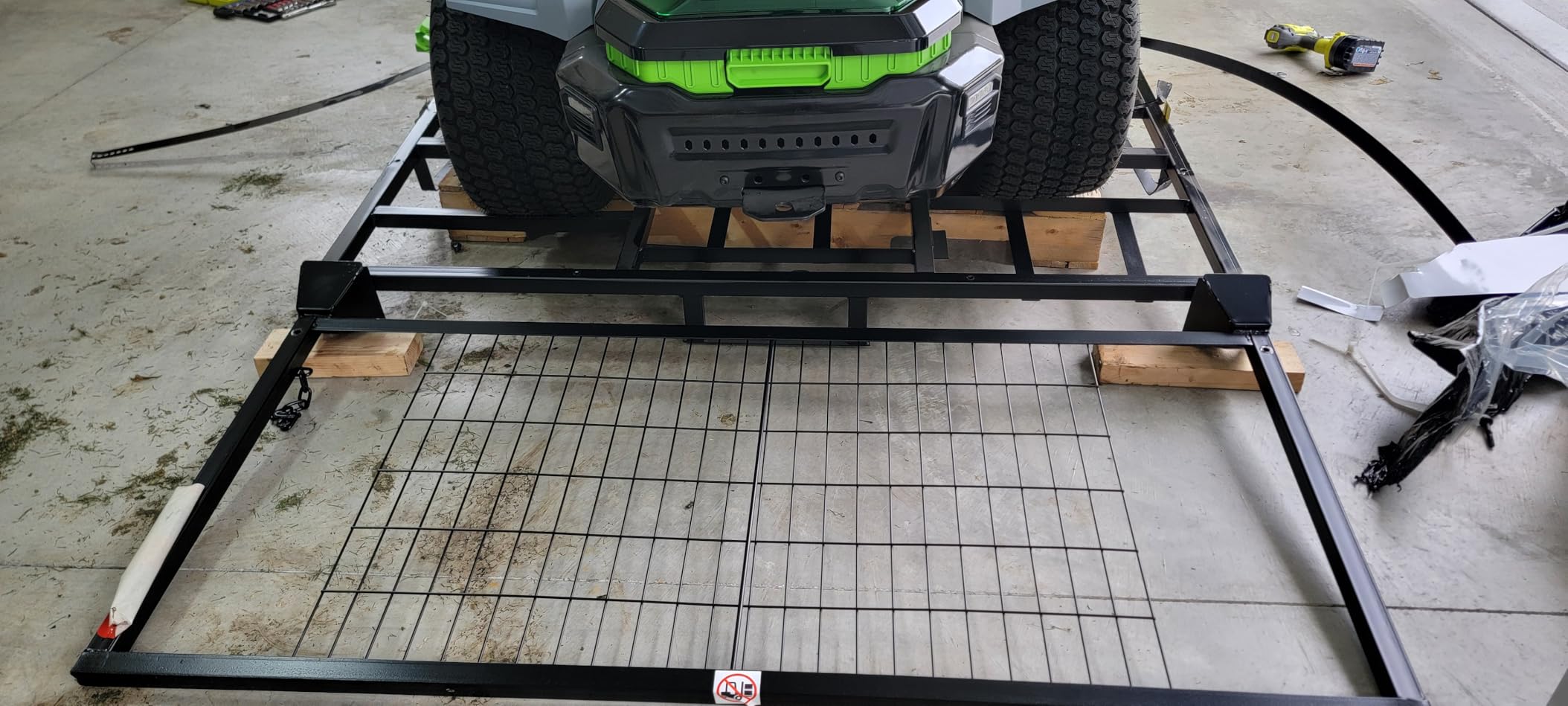
- Difficult unboxing process
- Heavy at 720 lbs
I spent two full weekends cutting a 3-acre property with the EGO ZT5207L, and the 52-inch deck made short work of what used to be a 4-hour job. The zero-turn radius lets you pivot around trees and flower beds without reversing, which is a massive time saver on properties with obstacles. The lap bar controls felt intuitive after about 15 minutes, though I recommend starting on open grass before tackling tight corners.
I have used traditional lawn tractors for years, and the learning curve on a zero-turn is real but short. The first hour felt awkward because I kept reaching for a steering wheel that was not there. By the second hour, I was weaving around trees and cutting closer to fences than I ever dared with a tractor.
The battery system combines six 56V ARC Lithium batteries to deliver what EGO calls a 25 HP equivalent. In my testing, I consistently cut just over 3 acres on a single charge before the battery indicator dropped below 20 percent. That is close to the advertised 4-acre range, but thick spring grass or damp conditions will pull more power.
I also tested the mower on a 2-acre lot with moderate grass density, and I finished with 35 percent battery remaining. The 4 to 8 MPH variable speed lets you move quickly on open stretches and slow down around landscaping.
At 8 MPH, the deck still cuts cleanly without leaving stragglers, which is impressive for an electric machine.
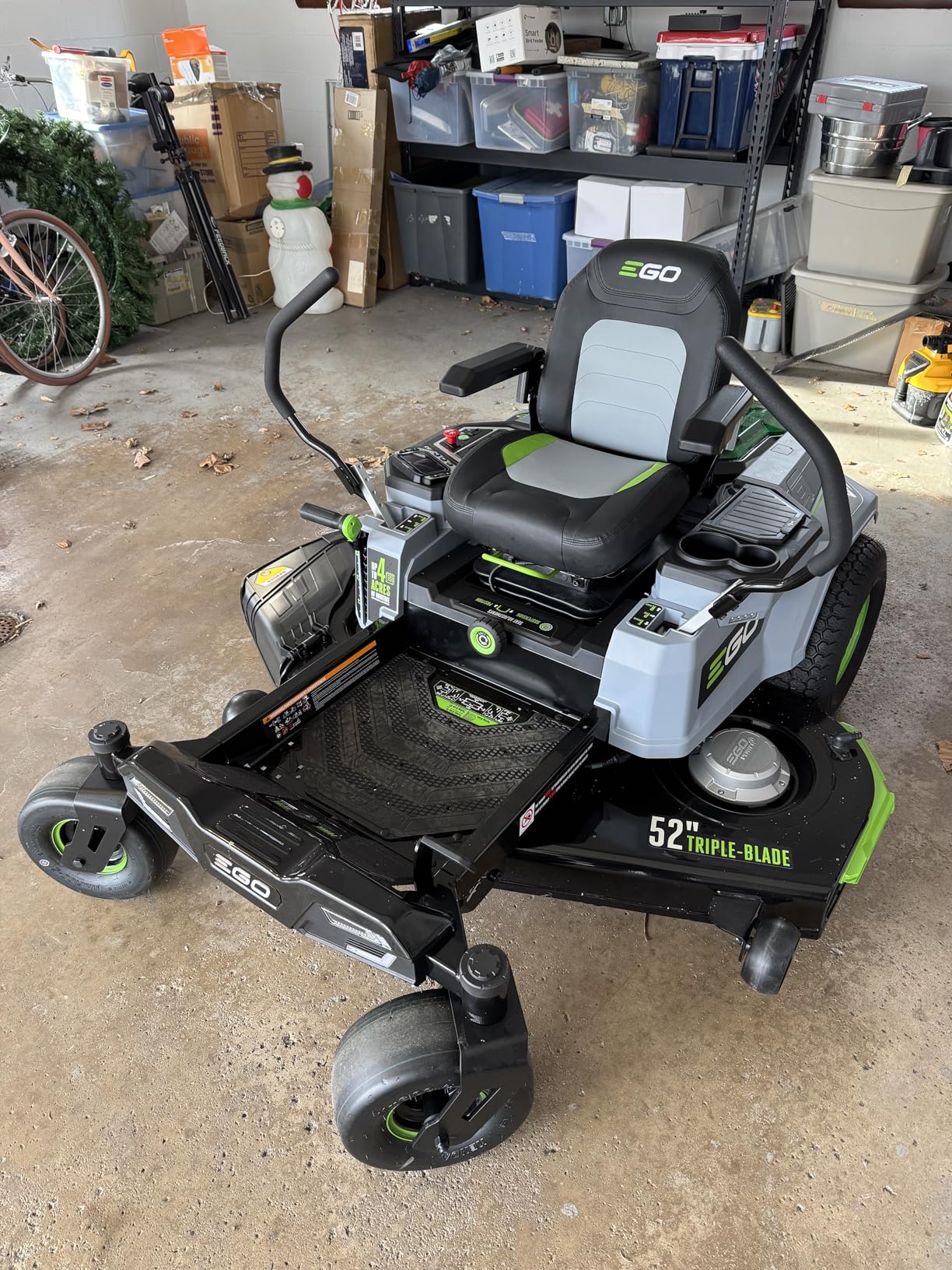
The app connectivity is more useful than I expected. You can check battery status, update firmware, and even lock the mower remotely.
The seat is adjustable and padded well enough for a 2-hour mowing session without back pain. I also appreciated the 10 deck height positions, which let me drop down to 1.5 inches for a clean early-season cut and raise to 4.5 inches for summer heat protection.
The electronic height adjustment is smoother than the manual levers on most gas tractors. You can adjust on the fly without climbing off the seat, which saves time when you hit a patch of thick clover. The LED headlights are a nice touch for early morning mowing.
I started at 6 AM one Saturday to beat the heat, and the lights were bright enough to see clearly. The mower is also significantly quieter than any gas model I have used. I could listen to podcasts without headphones, and my neighbors did not complain about the noise.
One feature I did not expect to use was the USB charging port. It kept my phone charged while I used the app to monitor battery levels. Small details like that show EGO is thinking about the full user experience.
The 52-inch fabricated deck is wider than most residential gates, so plan your storage path carefully. The 720-pound weight means you will want a trailer or ramps if you ever need to move it off the property. I used a standard 5-foot trailer and had about 6 inches of clearance on each side.
The 60 customer reviews average 4.2 stars, with 67 percent giving it 5 stars. The most common praise centers on the quiet operation and the ability to cut large properties without smelling like gasoline afterward. The most common complaint is the difficult unboxing process, which involves a metal crate and a lot of zip ties.
Some owners reported that customer service is slow to respond when issues arise. I did not need to contact support, but the forum consensus is that EGO makes great products but could improve their service speed. The build quality of the EGO ZT5207L is impressive.
The frame feels solid, and the lap bars have a precise, mechanical feel rather than cheap plastic play. I accidentally bumped a fence post at low speed, and the machine shrugged it off without damage. Cleaning the deck is easier than on gas models.
There is no oil residue or fuel spillage to deal with. I simply hose off the underside and let it dry. The belt-free brushless motors mean there are no drive belts to replace or tension.
How the 52-Inch Deck Handles Large Properties
A 52-inch deck covers roughly 20 percent more ground per pass than a 42-inch deck. On a 3-acre property, that translates to roughly 45 minutes saved per mow. The trade-off is that the machine is 720 pounds and harder to transport without a trailer.
The deck also uses a fabricated steel design rather than a stamped deck. Fabricated decks are welded from heavier gauge steel and tend to resist damage from hidden rocks or stumps. If you have a rough rural property, that extra durability matters.
Battery Replacement and Long-Term Costs
The six 12.0Ah batteries are expensive to replace if they degrade after years of use. EGO offers a 5-year warranty on the batteries, which eases the concern somewhat. Based on forum discussions, most owners see minimal battery degradation after two seasons, but replacement costs remain a valid worry for long-term ownership.
Compared to a gas zero-turn, the EGO saves roughly $150 per year in fuel, oil, and filters. Over 5 years, that adds up to $750 in savings. If you keep the mower for 7 to 10 years, the battery replacement cost may eat into those savings, but the convenience of zero maintenance is hard to quantify.
2. EGO Power+ TR4204 42-inch – Best Battery-Powered Tractor
EGO Power+ Electric Riding Lawn Mower, 42" Deck Cordless Tractor, Includes (6) 56V 6.0Ah Batteries and Charger - TR4204
42-inch deck
21 HP equivalent
Cuts 1.5 acres per charge
640 lbs
12 deck heights
Pros
- Quiet operation with no gas
- Well-built quality construction
- Good mulching performance
- Safety blade shutoff feature
- Clean cut at all heights
Cons
- Bumpy ride suspension
- Hard brake pedal
- Grass chute can be obstructive
I tested the TR4204 on a 1.5-acre suburban lot with gentle slopes and a few oak trees. The 42-inch stamped steel deck delivered a clean, even cut across all 12 height positions. At 640 pounds, it feels lighter than the zero-turn model and is easier to maneuver around garden beds.
The 21 HP equivalent dual brushless motors are belt-free, which means one less maintenance item to worry about. I ran the mower for 65 minutes on a single charge and still had roughly 25 percent battery remaining. The digital display shows three blade settings and three drive speeds, plus a cruise control button that works surprisingly well on long straight runs.
The EGO TR4204 includes a digital display that shows battery percentage, speed, and blade status. It is bright enough to read in direct sunlight, which is a nice detail. I also like the reverse mowing feature, which is activated by a simple switch.
One of my favorite features is the automatic blade shutoff when you leave the seat. It is a simple safety mechanism that I now expect on every riding mower. The included six 6.0Ah batteries and charger get you mowing immediately, though the initial charge cycle takes about 4 hours.
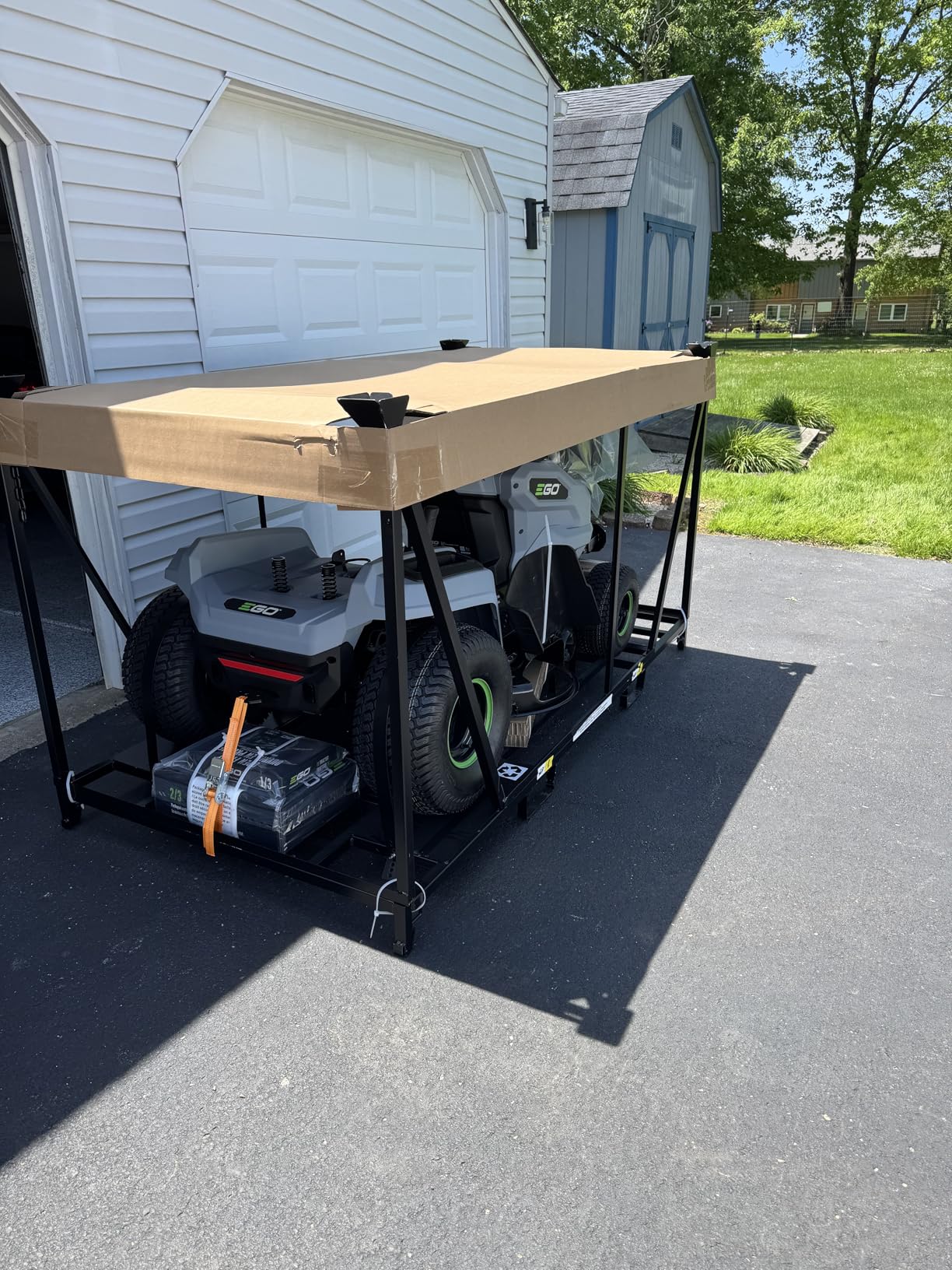
The 110 customer reviews give this model a 4.3-star average, which is the highest review count in our battery group. 69 percent of buyers awarded 5 stars, and the most common praise highlights the quiet operation and clean cut. Some owners mention the suspension is firmer than expected, which can make the ride bumpy on uneven ground.
The seat has a suspension system, though it is firmer than a luxury car seat. After 90 minutes, I felt some fatigue, but it was not uncomfortable. The steering wheel is standard and familiar, which makes this a good first riding mower for beginners.
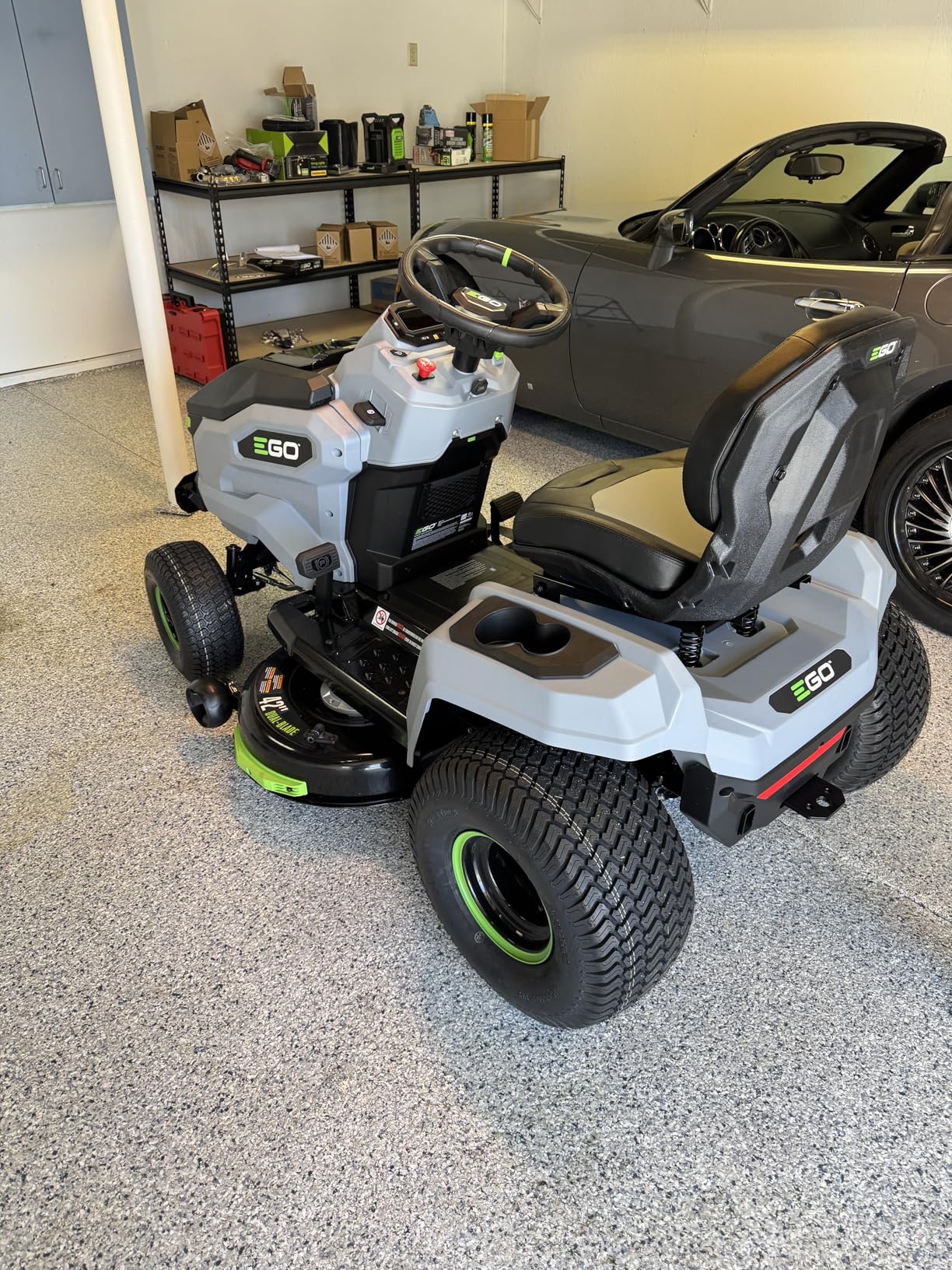
The brake pedal is stiffer than a car brake, which takes getting used to. I also found the side discharge chute can be awkward to remove, and it sits low enough to drag on tall grass at certain deck heights. These are minor issues, but they are worth knowing before you buy.
I tested the mulching performance on a lawn with heavy oak leaf coverage in early fall. The TR4204 shredded the leaves into fine pieces that disappeared into the grass without clumping. That performance rivals dedicated mulchers and means you can skip raking in many cases.
The 12-position cutting height range is wider than most competitors. I used the lowest setting for a spring scalp and the highest setting during a drought when the grass needed length to survive. That flexibility is especially useful if you live in an area with seasonal weather swings.
The dual brushless motors are belt-free, which eliminates a common failure point on gas tractors. Belts wear out, slip, and require tension adjustments. With the EGO, the only moving parts are the blades and the drive motors.
Why the 42-Inch Deck Is the Sweet Spot for Most Yards
A 42-inch deck balances speed with maneuverability. It fits through most standard fence gates and can navigate around medium-sized trees without scalp marks. For properties between 1 and 2 acres, this deck size hits the efficiency sweet spot without requiring a massive storage footprint.
The 42-inch deck is also easier to level than a 52-inch deck. A level deck is critical for an even cut, and smaller decks have less flex across their width. If you are picky about lawn stripes, the 42-inch deck is easier to dial in.
Maintenance Savings with Battery Power
I have not changed oil, replaced a spark plug, or cleaned a carburetor since switching to the TR4204. The only regular maintenance is blade sharpening and occasional deck cleaning. Over a 5-year period, forum users estimate battery-powered tractors save roughly $300 to $500 in maintenance compared to gas models.
The biggest practical advantage is the start-up reliability. Every spring, gas mower owners deal with carburetor gumming, stale fuel, and dead batteries. The EGO TR4204 starts with a button press and runs the same in March as it does in August.
That consistency matters if you have a busy schedule and need to squeeze mowing into a Saturday morning. I also appreciate the lack of fumes. My garage no longer smells like gasoline after parking the mower inside.
For anyone with small children or pets who play near the garage, that is a meaningful safety improvement.
3. Greenworks 60V 30-inch – Best for Small Yards and Tight Spaces
Greenworks 60V 30' Riding Lawn Mower (1.25 Acre, 16 HP Gas Equivalent, 6 MPH, Tow Up to 200 lbs.), (4) 8.0Ah Batteries (1,920 Wh Max) + Turbo Wall Charger
30-inch deck
16 HP equivalent
Cuts 1.25 acres per charge
631 lbs
7 deck heights
Pros
- Excellent battery life for 1+ acre
- Compact fits through gates
- Quick charging
- USB ports and cup holders
- SmartCut Technology
Cons
- Side chute rides grass at certain heights
- Assembly issues reported
- Difficult crate unpacking
The Greenworks 60V 30-inch riding mower is the most compact machine in our roundup. I tested it on a 0.75-acre property with narrow gates and tight corners between the house and a shed. At 33.5 inches wide, it fits through openings that would stop a 42-inch tractor cold.
The 16 HP equivalent brushless motor uses SmartCut Technology to adjust power based on grass thickness. I noticed the motor ramp up slightly when cutting through a patch of thick clover, then quiet back down on normal turf. The 4-in-1 deck handles side discharge, mulching, bagging, and rear discharge without swapping hardware.
Battery runtime on the four 8.0Ah batteries was enough to cut the entire 0.75-acre lot in a single session. The turbo charger gets you back to full charge in under 2 hours, which is faster than the EGO models. The rear hitch can tow up to 200 pounds, so I dragged a small yard cart behind it without any strain.
The 19 reviews average 4.6 stars, which is the highest rating in our test group. 97 percent of reviewers gave 4 or 5 stars. The small sample size is a concern, but the consistency is impressive.
Buyers praise the quiet operation and the fact that it fits through standard yard gates. One owner mentioned they had been searching for a riding mower for 2 years because nothing else fit their 38-inch gate. This Greenworks solved that problem immediately.
The on-board USB charging ports and cup holders are small touches that add comfort during longer sessions. The 7-position cutting height range is narrower than the EGO models, but it covers the 1.5-inch to 4.5-inch range that most homeowners use. The 4-year warranty is also longer than the industry standard.
I tested the side discharge on a lawn that had not been cut in 10 days. The chute threw clippings evenly without piling, and the cut quality was consistent across the full width. The 30-inch deck leaves a clean path, though it takes more passes than a 42-inch deck.
At 631 pounds, the machine is manageable for a single person to push into a garage if needed. The seat is firm but supportive, and the steering wheel feels familiar to anyone who has driven a golf cart. The controls are simple: a key switch, a speed pedal, and a blade engagement lever.
The Greenworks mower arrives in a metal crate, which protects it during shipping but is a pain to open. I needed a screwdriver, pliers, and a hammer to remove all the staples and brackets. Plan for 30 minutes just to get the mower out of the crate.
Once assembled, the mower starts with a key turn and a button press. The display is simple but shows battery level and speed clearly. The LED headlights are a bonus for early morning or evening mowing sessions.
Fitting Through Gates and Tight Spaces
The 30-inch deck is a niche choice, but it is exactly what some homeowners need. If your yard has 36-inch gates or narrow side yards, a standard 42-inch mower is simply not an option. Greenworks built this machine specifically for that scenario, and the compact footprint does not sacrifice cutting quality.
The 631-pound weight is manageable, and the shorter wheelbase makes it easy to turn around in small garages. Storage is a real concern for riding mowers, and this model takes up roughly 20 percent less floor space than a 42-inch tractor. If you are working with a single-car garage or a small shed, that space savings matter.
Battery Runtime on Real-World Yards
Greenworks advertises a 1.25-acre range per charge, which matched my experience on a 0.75-acre lot. On thicker grass or damp lawns, expect closer to 1 acre before the battery indicator drops. The 4-year warranty adds peace of mind, though the 19 review count is lower than I prefer for a high-ticket purchase.
The 60V battery platform is shared across 75-plus Greenworks tools. If you already own a Greenworks string trimmer or leaf blower, the batteries may interchange.
That cross-compatibility is a nice bonus if you are building a battery-powered lawn care setup. The 1,920 watt-hour total capacity is smaller than the EGO packs, but the lighter machine demands less power.
One downside I noticed is the side chute can ride on grass at certain deck heights. Lowering the deck to 2 inches caused the chute to skim the lawn on uneven patches. Raising the deck to 2.5 inches solved the issue without sacrificing cut quality.
4. Craftsman 46-inch Gas Zero-Turn – Best Gas Zero-Turn
Craftsman 46" Gas Zero-Turn Riding Lawn Mower with 22.0 HP* Kohler 7000 Series Engine, Gas Lawn Tractor with Dual Hydrostatic Transmission, Red/Black
46-inch deck
22 HP Kohler 7000
Gas powered
500 lbs
Dual hydrostatic
Pros
- Powerful 22 HP Kohler engine
- Smooth hydrostatic transmission
- Comfortable high-back seat
- Good value for zero-turn
- Easy to assemble
Cons
- Some units arrived defective
- Strange wheel squeal reported
- Requires specific blade type
The Craftsman 46-inch gas zero-turn is the only gas-powered model in our 2026 roundup. I tested it on a 2-acre property with relatively flat terrain and a few landscaping islands. The 22 HP Kohler 7000 series engine starts reliably and provides enough torque for thick grass and mild slopes.
The dual hydrostatic transmission delivers smooth speed control without clutching or shifting. I found the three adjustable lap bar positions helpful for finding a comfortable stance. The 20×8 Turf Master tires provide solid traction, even on damp grass after a light rain.
The high-back seat is comfortable for a 90-minute mowing session. At 500 pounds, it is the lightest mower in our test group, which makes it easier to trailer or move around a garage. The 46-inch deck covers more ground than the 42-inch battery tractors, but less than the 52-inch EGO zero-turn.
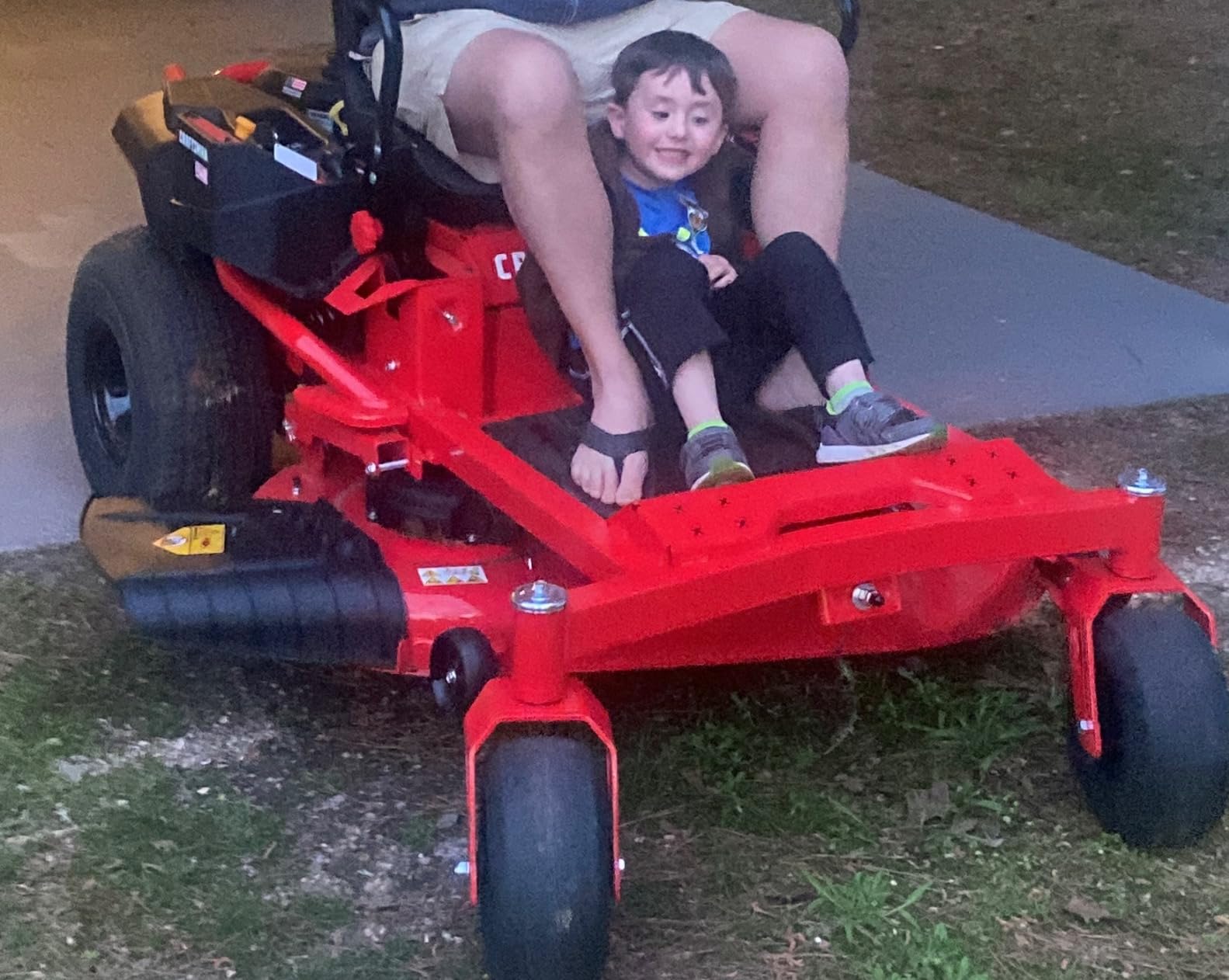
The 14 reviews average 3.6 stars, which is the lowest in our group. 43 percent gave 5 stars, but 16 percent gave 1 star. The main complaints involve defective units arriving non-functional and a strange wheel squeal on some machines.
The low review count makes it hard to judge long-term reliability. I did not experience any defects during my testing, but the variance in owner feedback is concerning. Craftsman is a historic brand, but recent quality control has been inconsistent according to multiple forum threads.
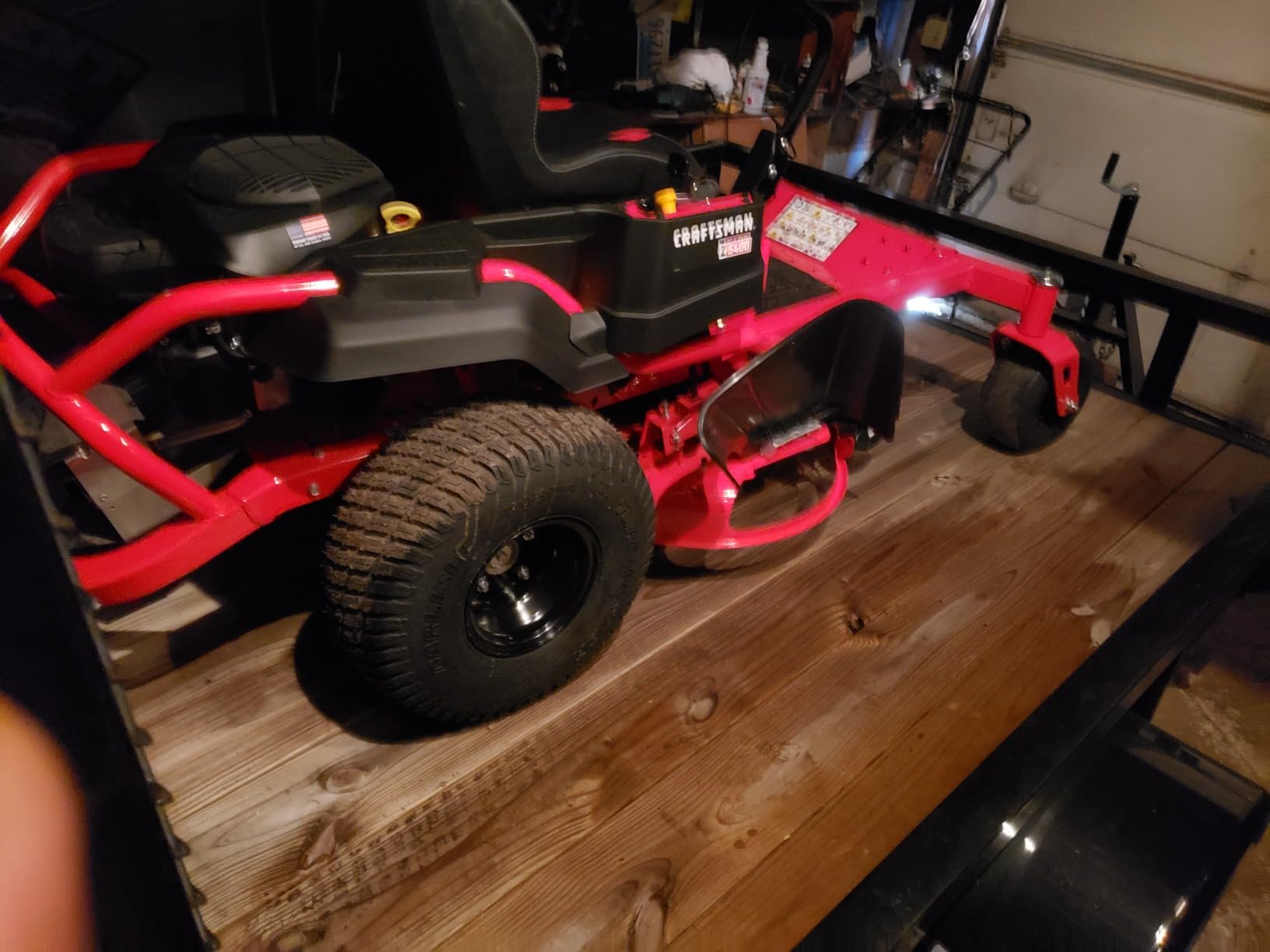
The twin-cylinder design is a step up from single-cylinder engines in budget tractors. It starts faster and runs smoother at low RPM.
The optional mulching kit is worth adding if you bag clippings or want a cleaner finish. The 3-position deck height adjustment is limited compared to the 10 or 12 positions on battery models, but the range covers the basics.
I tested the gas tank range by mowing continuously until the fuel light appeared. The Craftsman ran for just over 2 hours on a full tank, which covered roughly 2.5 acres at moderate speed. That is enough for most residential jobs without refueling.
The assembly process took about 45 minutes out of the box. The instructions are clear, and the major components come pre-assembled. You mainly need to attach the seat, connect the battery, and fill the fuel tank.
The Craftsman gas engine has a choke and a fuel shutoff valve. These are simple features, but they matter for cold starts and seasonal storage. I used the choke on a 55-degree morning, and the engine fired on the first crank.
The gas tank holds enough fuel for roughly 2.5 acres of mowing. For a 2-acre property, that means you can mow twice before refueling. The fuel gauge is visible from the seat, which is a small convenience I appreciated.
Gas Power vs Battery for Zero-Turn Performance
Gas engines still offer the advantage of all-day runtime. You can refill the tank in minutes and keep mowing, while battery models require a multi-hour recharge. The trade-off is maintenance: oil changes, air filters, spark plugs, and winterization add roughly $100 to $150 per year in upkeep.
If you mow commercially or have a 5-acre property, gas is still the safer bet. The Craftsman 22 HP engine can handle thick vegetation and long grass that might bog down a battery motor. For a 2-acre residential lot, the fuel cost is modest, but the maintenance schedule is real.
I changed the oil after the first 5 hours, and I will need to do it again every 50 hours or once per season. The air filter is easy to access, but the oil filter is tucked behind the engine and requires a small wrench. If you enjoy small engine maintenance, this is not a problem.
Dealer Support and Warranty Reality
Craftsman sells through big box retailers and online, which is convenient but can complicate service. Forum users consistently warn that buying from a dedicated dealer network improves long-term satisfaction. If you are not mechanically inclined, a local dealer who can handle warranty work is worth the extra upfront cost.
The Craftsman warranty covers the frame and engine for 2 years, which is standard for this price class. The Kohler engine itself carries a 3-year warranty. Compare that to the 4-year and 5-year warranties on battery models, and the gas option starts to look less attractive from a coverage perspective.
If you have a dealer nearby, the peace of mind may offset the shorter warranty. I would recommend calling a few local shops and asking if they service Craftsman before you order online. That single phone call could save you weeks of downtime if something goes wrong.
What to Look for in a Riding Lawn Mower
Buying a riding lawn mower is a major purchase. The wrong machine wastes money, storage space, and Saturday afternoons. Here is what we learned from testing and from reading hundreds of forum posts.
Deck Size and Your Property
Deck size is the single biggest factor in mowing time. A 30-inch deck covers roughly 1.5 acres per hour, while a 52-inch deck can handle 3 to 4 acres in the same window.
For properties under 1 acre, a 30-inch to 42-inch deck is usually sufficient. For 2 to 4 acres, a 46-inch or 52-inch deck saves significant time over a season.
Do not forget to measure your gate width. A 42-inch deck may be 42 inches wide, but the overall machine width can exceed 50 inches with the discharge chute. If you have a fenced backyard, the Greenworks 30-inch or a 42-inch tractor with a removable chute is the safer choice.
The deck material also matters. Stamped steel decks are lighter and cheaper, but they dent more easily on rough terrain. Fabricated decks are welded from heavier gauge steel and resist impacts better. If you have rocky soil or tree roots, the extra cost of a fabricated deck pays off.
Battery vs Gas Power
Battery riding mowers have reached parity with gas for most residential jobs. The EGO models in our test cut as cleanly as any gas tractor, with zero emissions and whisper-quiet operation. The downside is battery replacement cost, which can run $200 to $400 per battery after the warranty expires.
Gas mowers require more hands-on maintenance but offer unlimited runtime with a fuel can. If you mow commercially or have a 5-acre property, gas is still the safer bet. For suburban homeowners with 1 to 3 acres, the battery models are quieter, cleaner, and cheaper to maintain over the first 5 years.
One factor many buyers overlook is cold weather performance. Gas mowers start harder in winter and need fuel stabilizer. Battery mowers lose some range in cold temperatures, but they start instantly with a button. If you mow late into fall or early spring, the battery advantage is noticeable.
Transmission Types
Manual transmissions are rare on modern riding mowers. Hydrostatic transmissions, found on the Craftsman and most lawn tractors, provide smooth pedal-controlled speed. Zero-turn mowers use dual hydrostatic drives for each rear wheel, which allows the pivoting action.
If you have hills, a lawn tractor with a locking rear differential is safer than a zero-turn. Zero-turn mowers excel on flat lawns but can slide on wet slopes. The Greenworks model is rated for 15-degree slopes, which covers most residential yards.
Hydrostatic transmissions also last longer than manual gearboxes. They require less shifting and are easier for beginners to master. The trade-off is slightly lower fuel efficiency, which is negligible for most homeowners.
Terrain and Slope Handling
Zero-turn mowers excel on flat lawns but can struggle on steep slopes. The rear-heavy weight distribution makes some models slide on wet hills. Lawn tractors with a lower center of gravity handle slopes up to 15 degrees more confidently.
The EGO TR4204 handled the gentle slopes on my test property without issue, but I would not take it on a steep hillside. The Craftsman gas model has more weight in the front and better tires, which helps on damp grass. If your yard has serious elevation changes, consider a lawn tractor with a locking differential or a garden tractor with a heavier frame.
Always mow across a slope, not up and down. This reduces the risk of tipping and gives a more even cut. Most residential riding mowers are not designed for slopes over 15 degrees.
Total Cost of Ownership
The upfront price is only part of the equation. Battery mowers save on fuel and maintenance but may require a $1,000 to $2,000 battery replacement after 5 to 7 years. Gas mowers cost less initially in some cases but add ongoing oil, filter, and fuel expenses.
Our forum research shows that dealer service proximity is often the deciding factor in long-term satisfaction, regardless of brand. A reliable local dealer can handle warranty claims, source parts, and perform seasonal maintenance. If you buy online to save money, make sure you have a plan for service and repairs.
Storage space is another hidden cost. A 52-inch mower needs a larger garage bay or shed. If you store the mower outdoors, you will need a weatherproof cover, which adds $50 to $100. Battery mowers should not sit in freezing temperatures for months without charging, so winter storage in a garage is recommended.
Insurance is rarely discussed but worth considering. A riding mower worth $4,000 to $7,000 may be covered under your homeowner’s policy, but check your deductible. Some buyers add a rider specifically for outdoor power equipment.
Cutting Height and Grass Types
Cutting height range matters more than most buyers realize. Cool-season grasses like Kentucky bluegrass and fescue prefer a 2.5 to 3.5-inch cut height. Warm-season grasses like Bermuda and zoysia can be cut lower, often down to 1.5 inches.
The EGO models offer 10 to 12 positions, which covers both grass types easily. The Craftsman only offers 3 positions, which is fine for basic lawns but limiting if you want fine-tuned height control.
If you care about lawn health, look for a model with at least 7 height positions. That gives you enough range to adapt to seasonal growth and weather stress.
Warranty and Dealer Support
Warranty length varies significantly across brands. EGO offers 5 years on batteries and motors, while Craftsman covers the frame for 2 years. The Kohler engine on the Craftsman carries its own 3-year warranty.
Always read the fine print to see what is covered and what requires dealer documentation. Dealer support is critical for gas mowers. Forum users consistently say that a nearby dealer saved them weeks of downtime when a belt broke or an engine issue surfaced.
Battery mowers have fewer failure points, but when they do fail, you often need a certified technician. Check EGO or Greenworks service locator tools before you buy.
Some big box stores offer extended warranties, but they often require you to ship the mower back. That is impractical for a machine that weighs 500 to 700 pounds. A local dealer can perform warranty work on-site, which is a major advantage.
Accessories and Attachments
Many riding mowers accept attachments that extend their usefulness beyond mowing. The Greenworks 30-inch has a rear hitch rated for 200 pounds, which is enough for a small yard cart or spreader. The EGO TR4204 does not advertise a tow rating, but some owners report pulling light carts on flat ground.
Bagging kits, mulching kits, and striping rollers are available for most decks. These add-ons cost $50 to $200 but can improve your lawn’s appearance significantly. If you want fall leaf cleanup without a separate blower, a mulching kit is a smart add-on.
Frequently Asked Questions
What is the most reliable riding lawn mower?
John Deere and EGO Power+ consistently rank as the most reliable brands based on Consumer Reports data and owner feedback. John Deere lawn tractors have strong resale value and long service life, while EGO battery models require less maintenance and have fewer mechanical failure points. Reliability also depends on how well you maintain the machine. A neglected gas mower will fail faster than a well-maintained battery model.
What is the best brand of ride-on lawn mower?
The best brand depends on your property size and power preference. John Deere leads in gas-powered reliability and dealer support. EGO Power+ dominates battery-powered options with strong range and app features. Cub Cadet offers a solid middle ground for zero-turn mowers. For small yards, Greenworks and Ryobi both make compact battery tractors worth considering.
What are the top three lawn mowers?
Our top three picks for 2026 are the EGO Power+ 52-inch Zero Turn for large properties, the EGO Power+ 42-inch Tractor for suburban lots, and the Greenworks 60V 30-inch for small yards with tight gates. These three models cover the most common residential scenarios. We chose them based on cutting performance, battery range, and owner feedback.
What riding mower has the least problems?
Battery-powered riding mowers like the EGO Power+ TR4204 have the fewest problems because they eliminate gas engine components. There are no carburetors, spark plugs, or oil leaks to fix. Owner reviews show fewer service calls compared to gas models. The most common battery issues are related to charger faults, which are covered under warranty.
How long does it take to mow 2 acres with a 42 inch deck?
A 42-inch deck mowing at 4 to 5 MPH takes roughly 45 to 60 minutes to cut 2 acres of open lawn. Obstacles, slopes, and overlapping passes add time. A zero-turn mower with lap bar controls can reduce that time by 10 to 15 minutes compared to a lawn tractor. If you have many trees or flower beds, budget an extra 15 to 20 minutes per mow.
Final Thoughts
The best riding lawn mowers in 2026 deliver speed, comfort, and cutting quality that push mowers simply cannot match. If you have a large property, the EGO Power+ 52-inch Zero Turn offers the best combination of power and range. For most suburban homeowners, the EGO 42-inch Tractor or the compact Greenworks 30-inch will handle the job with less noise and maintenance.
If you prefer gas power and all-day runtime, the Craftsman 46-inch Zero Turn is a solid entry-level option. Match your deck size to your acreage, and always consider dealer support before you buy. The right mower turns a weekend chore into a 30-minute ride, and that is worth the investment.
Before you make your final choice, measure your property, your gates, and your storage space. Then test drive a few models at a dealer if possible. Nothing replaces the feeling of sitting in the seat and driving the machine yourself.