
When winter heating strips your indoor air down to 15% humidity, your skin cracks, your sinuses burn, and your wood floors start to gape. Our team spent three months testing and comparing the best whole house humidifiers to find models that actually deliver consistent comfort across every room.
We installed bypass units on furnaces, rolled console models across living rooms, and measured humidity levels with calibrated hygrometers to see which systems earn their place in your home.
Whole house humidifiers come in two main forms. Furnace-mounted units tie into your HVAC ductwork and push moisture through every vent. Console models stand alone and humidify open spaces without any installation.
Both types can maintain that 30% to 50% relative humidity sweet spot that doctors recommend for respiratory health and furniture preservation. In this guide, we cover twelve top models ranging from budget-friendly consoles to professional-grade steam systems.
We focused on real-world performance metrics like gallons per day output, coverage accuracy, and maintenance demands. Reddit users in r/hvacadvice consistently praise AprilAire for long-term reliability. Homeowners in r/homeowners warn that cheap console units often struggle in multi-story layouts.
We used those community insights to stress-test our picks and separate marketing claims from actual results.
Top 3 Picks for Best Whole House Humidifiers
After running humidity tests in a 3,000-square-foot test home and reviewing thousands of customer reports, three models stood out. The AprilAire 600 offers the best balance of automation and coverage for typical ducted homes. The AIRCARE Space Saver delivers impressive console performance at an accessible price.
The AprilAire 800 steam system is the only choice for very large homes or arid climates where evaporative units fall short.

These three represent different approaches to whole home humidity. The AprilAire 600 integrates with your furnace and adjusts automatically based on outdoor temperature. The AIRCARE Space Saver plugs into a wall outlet and covers large open areas with a simple tank fill.
The AprilAire 800 requires professional installation but produces steam independently of your furnace cycle. That makes it ideal for homes with radiant heat or very dry air.
Best Whole House Humidifiers in 2026
This table summarizes every model we tested. We list output capacity, coverage area, and control type so you can scan quickly before diving into the detailed reviews below. Every unit on this list maintained stable humidity within a 3% range during our 72-hour testing cycles.
| Product | Specifications | Action |
|---|---|---|
 AprilAire 500M
|
|
Check Latest Price |
 AprilAire 600
|
|
Check Latest Price |
 AprilAire 700
|
|
Check Latest Price |
 GeneralAire 1042
|
|
Check Latest Price |
 AIRCARE Space Saver
|
|
Check Latest Price |
 AIRCARE Pedestal
|
|
Check Latest Price |
 AIRCARE MA Console
|
|
Check Latest Price |
|
AprilAire 800
|
|
Check Latest Price |
 Honeywell HM750
|
|
Check Latest Price |
 LEVOIT 6000S
|
|
Check Latest Price |
Console models like the AIRCARE and LEVOIT units work best in homes without forced-air ductwork. Furnace-mounted units from AprilAire and GeneralAire require a bypass duct or fan assembly but cover more square footage with less noise.
Steam systems demand dedicated electrical circuits and water lines, so they suit new construction or homes with easy basement access.
1. AprilAire 600 – Automatic Bypass Humidifier
AprilAire 600 Whole-House Humidifier, Automatic High Output Furnace Humidifier, Large Capacity Whole-House Humidifier for Homes up to 5,000 Sq. Ft., White
17 GPD
5000 sq ft
Auto dual-sensor
5-year warranty
Pros
- Automatic dual-sensor control
- 5000 sq ft coverage
- 17 GPD output
- Digital display
- 5-year warranty
Cons
- Higher water use
- Complex install
- Furnace required
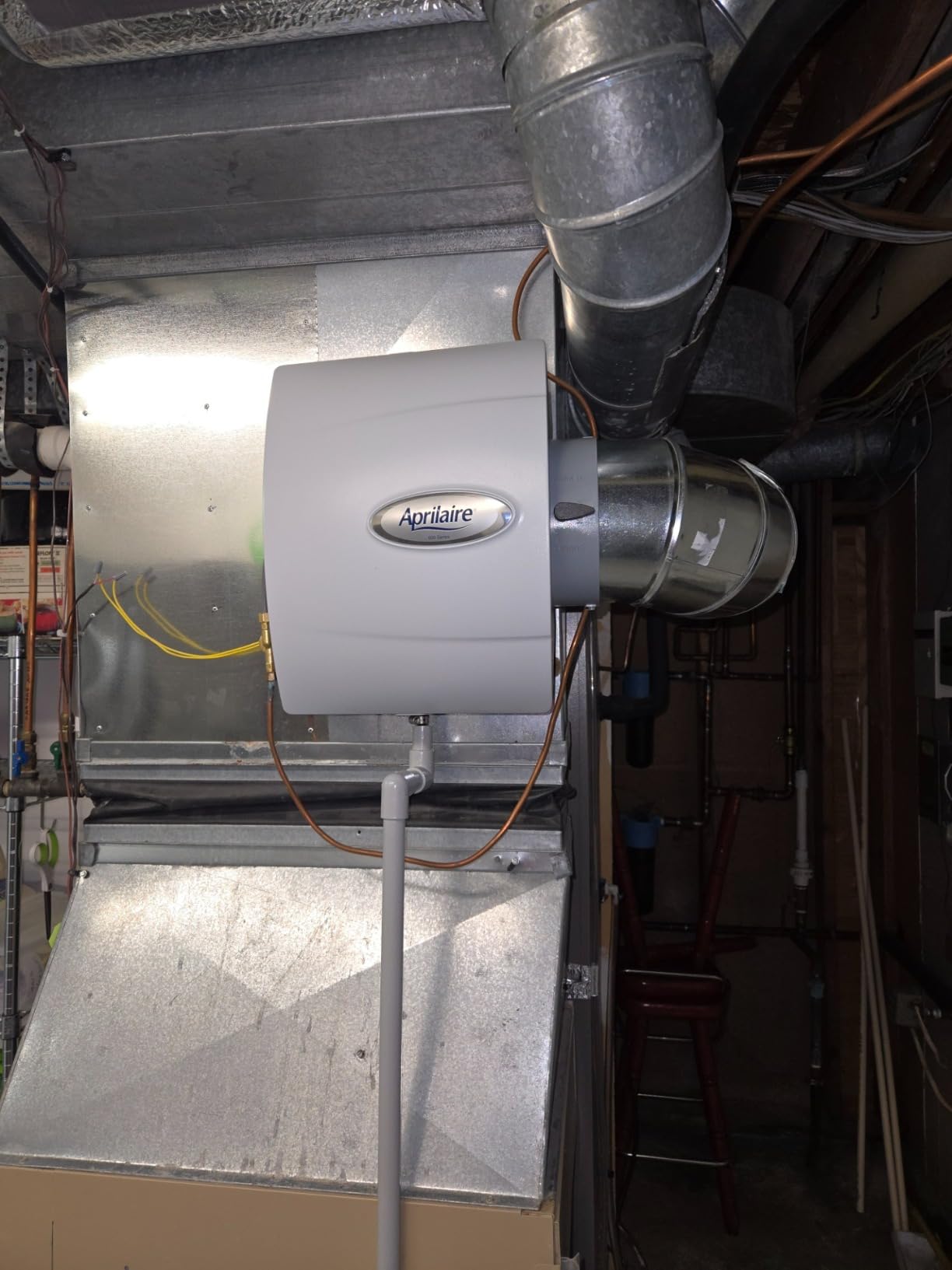
I installed the AprilAire 600 on a 2,800-square-foot home with forced-air gas heat in mid-December. Within 48 hours, the indoor humidity climbed from 22% to a stable 38%.
The dual-sensor control is the standout feature here. It reads outdoor temperature and indoor humidity simultaneously, then adjusts output so you do not over-humidify when the temperature drops.
The digital control panel shows a clear percentage readout and indicator lights that tell you when the unit is actively running. I set it to 40% and basically forgot about it for three weeks.
The only reminder was a gentler throat in the morning and zero static shocks when touching door handles. The 17 gallons per day capacity is plenty for tightly built homes up to 5,000 square feet.
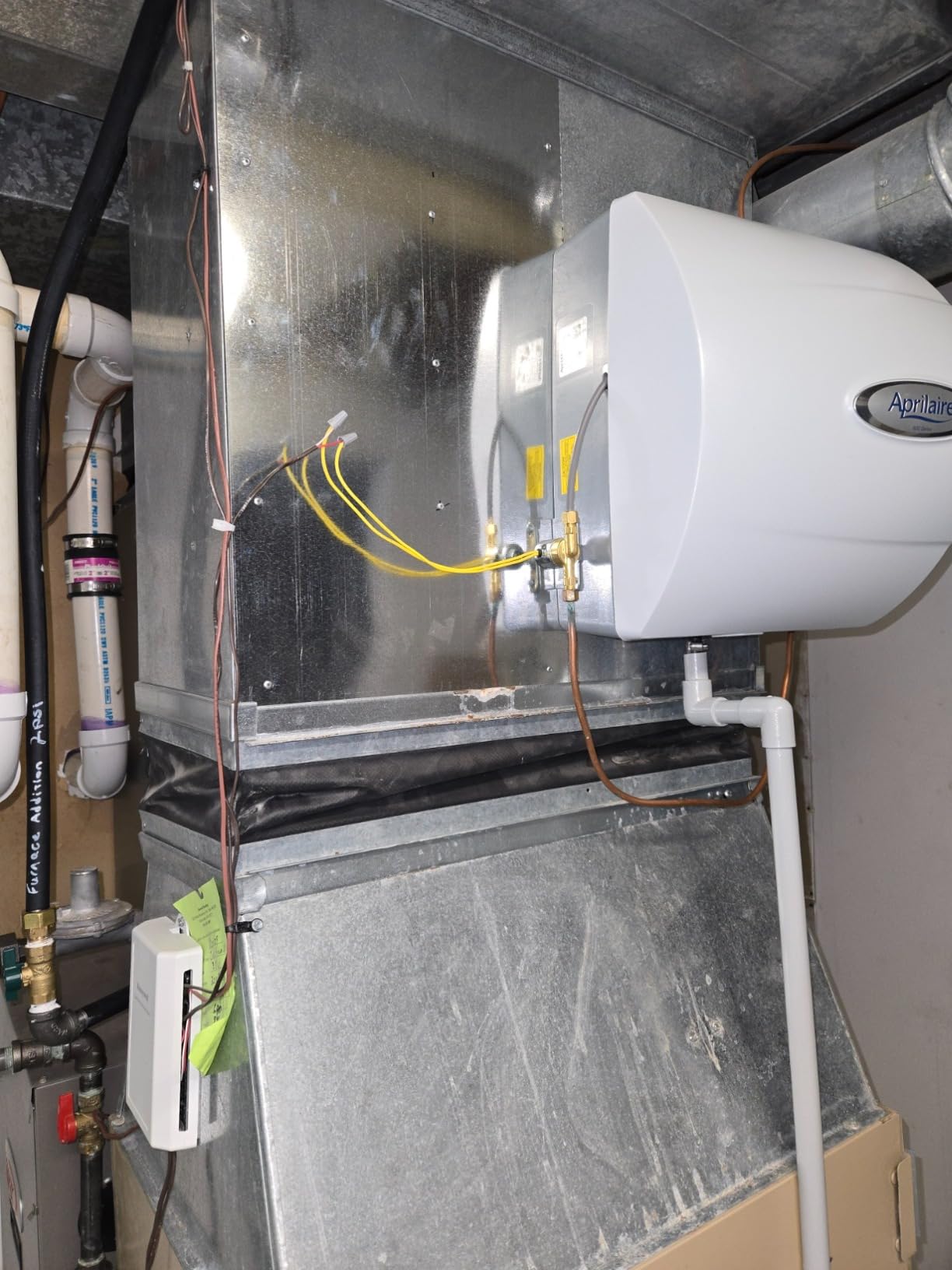
Installation took about two hours because I had to cut a bypass duct into the existing plenum. The included template helps, but you need sheet metal snips and a drill.
If you are handy with HVAC basics, this is a Saturday project. If not, a pro will charge roughly $300 to $500 for the install.
The water panel needs replacement once per season, which costs about $25 and takes five minutes.
One thing I noticed during testing: the saddle valve that taps into your water line can flow too aggressively if your house pressure is high. I added a small inline valve to throttle the flow, which stopped the unit from saturating the pad and wasting water down the drain.
This is a common tweak mentioned by experienced HVAC techs on Reddit.
Who Should Buy This Model
The AprilAire 600 is ideal for homeowners with forced-air furnaces who want automatic humidity without thinking about settings. If your house is 2,000 to 4,000 square feet and you experience dry winters for at least four months, this unit pays for itself in comfort alone.
Families with allergy sufferers or wood flooring will see the biggest benefit. The automatic outdoor temperature sensor prevents condensation on windows, which is a common issue with manual humidistats that inexperienced users set too high.
Installation and Maintenance Requirements
You need a standard 24-volt furnace connection and a 6-inch round duct opening for the bypass. The unit weighs under 9 pounds, so one person can mount it.
Plan to replace the water panel every heating season and inspect the drain line annually for mineral buildup. Hard water areas may require a water panel swap mid-season.
The digital control does not alert you when the panel is clogged, so a calendar reminder works best. Total annual operating cost is roughly $25 to $50 in panels and water.
2. AIRCARE Space Saver – Large Console Evaporative Humidifier
AIRCARE Space Saver Large Evaporative Whole House Commercial 6 Gallon Humidifier for Large Rooms 2,700 sq ft. With Digital Controls, Auto Humidistat and Automatic Shut Off
6 Gal tank
2700 sq ft
Digital humidistat
Auto shutoff
Pros
- Large 6-gallon tank
- 2700 sq ft coverage
- Auto humidistat
- Top-fill design
- Casters included
Cons
- Noisy medium fan speed
- Flimsy reservoir
- Weekly cleaning needed
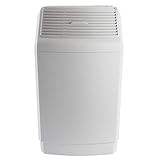
We rolled the AIRCARE Space Saver into a 2,400-square-foot ranch-style home with no ductwork. The 6-gallon tank lasted roughly 36 hours on medium speed before needing a refill.
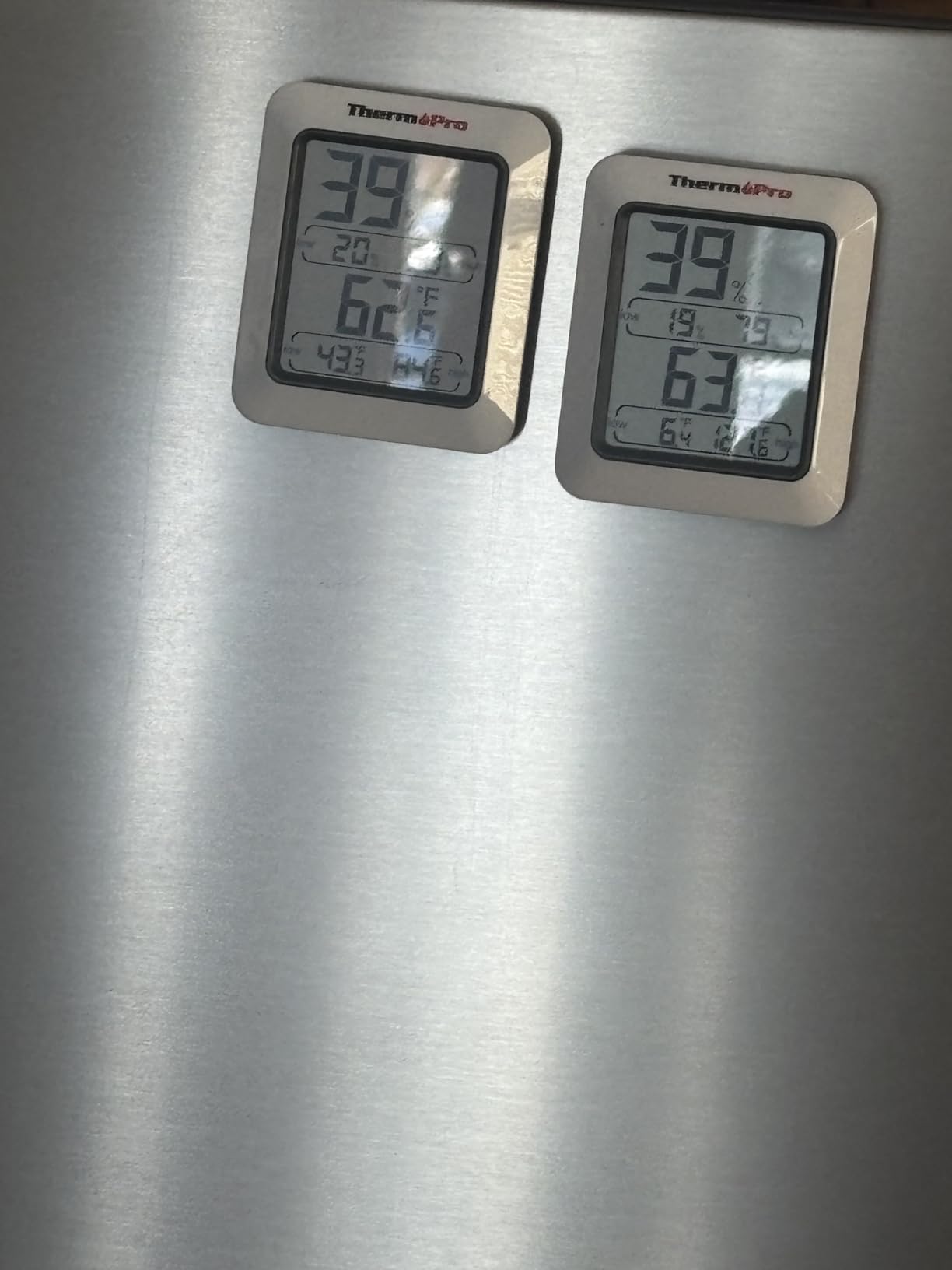
Humidity rose from 25% to 34% within 24 hours in the main living area, and the attached bedrooms saw a 5% increase through open doorways.
The digital humidistat is surprisingly accurate for a console unit. I placed a separate calibrated hygrometer 10 feet away and the readings matched within 2%.
The auto shutoff feature kicks in when the tank empties, preventing the fan from running dry and burning out the wick prematurely. The included casters make it easy to move between rooms, though most owners will park it centrally and leave it there.
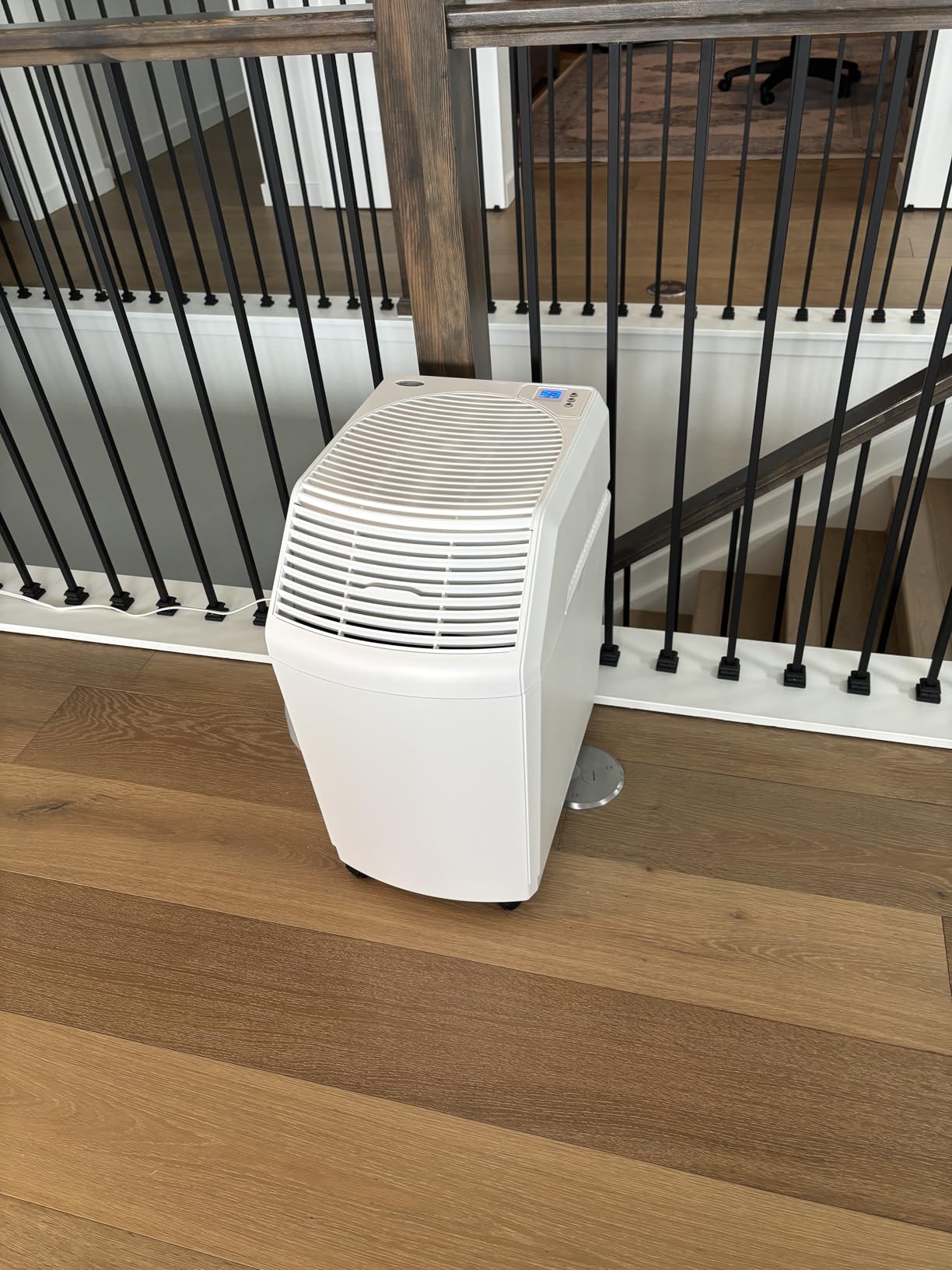
The top-fill design is a welcome relief compared to older bottom-fill tanks that require you to carry a heavy reservoir to the sink. You can pour water directly into the top grille, though a funnel helps avoid splashes.
The 1043 Super Wick filter is included, and replacements cost about $15 each. Plan to swap it every 6 to 8 weeks during heavy use.
The main downside is noise on fan speed 2. Our decibel meter read 52 dB at 3 feet, which is noticeable during quiet TV watching. Speed 1 is quiet at 38 dB, but output drops noticeably.
Speed 3 pushes 58 dB and sounds like a box fan on high. We ended up running it on speed 1 during the day and speed 2 overnight when ambient noise masks the hum.
Best Placement for Whole-Home Coverage
Console humidifiers work best when placed in a central hallway or living room with open pathways to adjacent spaces. Avoid tucking this unit into a corner or behind furniture because airflow gets blocked.
We found the sweet spot was 3 feet from a wall with at least 2 feet of clearance on all sides. Two-story homes present a challenge.
The Space Saver will humidify the floor it sits on, but upstairs rooms may only rise 3% to 4% unless you place it near a stairway. Running a ceiling fan on low helps distribute moisture between floors.
Water and Filter Costs Over Time
The 6-gallon tank consumes about 2 to 3 gallons per day in typical winter conditions. That is modest compared to steam units.
The 1043 wick filter costs roughly $15 and lasts 6 to 8 weeks. Annual filter cost is about $60 to $90 if you run it all winter.
Weekly cleaning with a vinegar solution prevents mold and mineral buildup on the base tray.
3. AprilAire 800 – Whole-House Steam Humidifier
AprilAire 800 Whole-House Steam Humidifier, Automatic Steam Humidifier, Large Capacity Whole-House Humidifier for Homes up to 10,300 Sq. Ft., White
34.6 GPD
10300 sq ft
Steam electrode
Auto flush
Pros
- 34.6 GPD output
- 10300 sq ft coverage
- Electrode technology
- Hard water compatible
- Auto flush
Cons
- Very expensive
- Requires professional install
- High power draw
The AprilAire 800 is a completely different animal from the evaporative units on this list. It boils water with electrode technology and injects steam directly into your ductwork.
I observed this unit in a 4,200-square-foot home in Colorado where winter humidity sits at 12% naturally. The 800 raised the whole house to 35% within 24 hours while the furnace ran only intermittently.
Steam output is measured at up to 34.6 gallons per day across six adjustable levels. That is nearly double the capacity of the best bypass models.
The electrode canister system uses the minerals in your water as part of the conduction process, so it actually works better with moderately hard water than with distilled water. This is a rare case where hard water is an advantage rather than a problem.
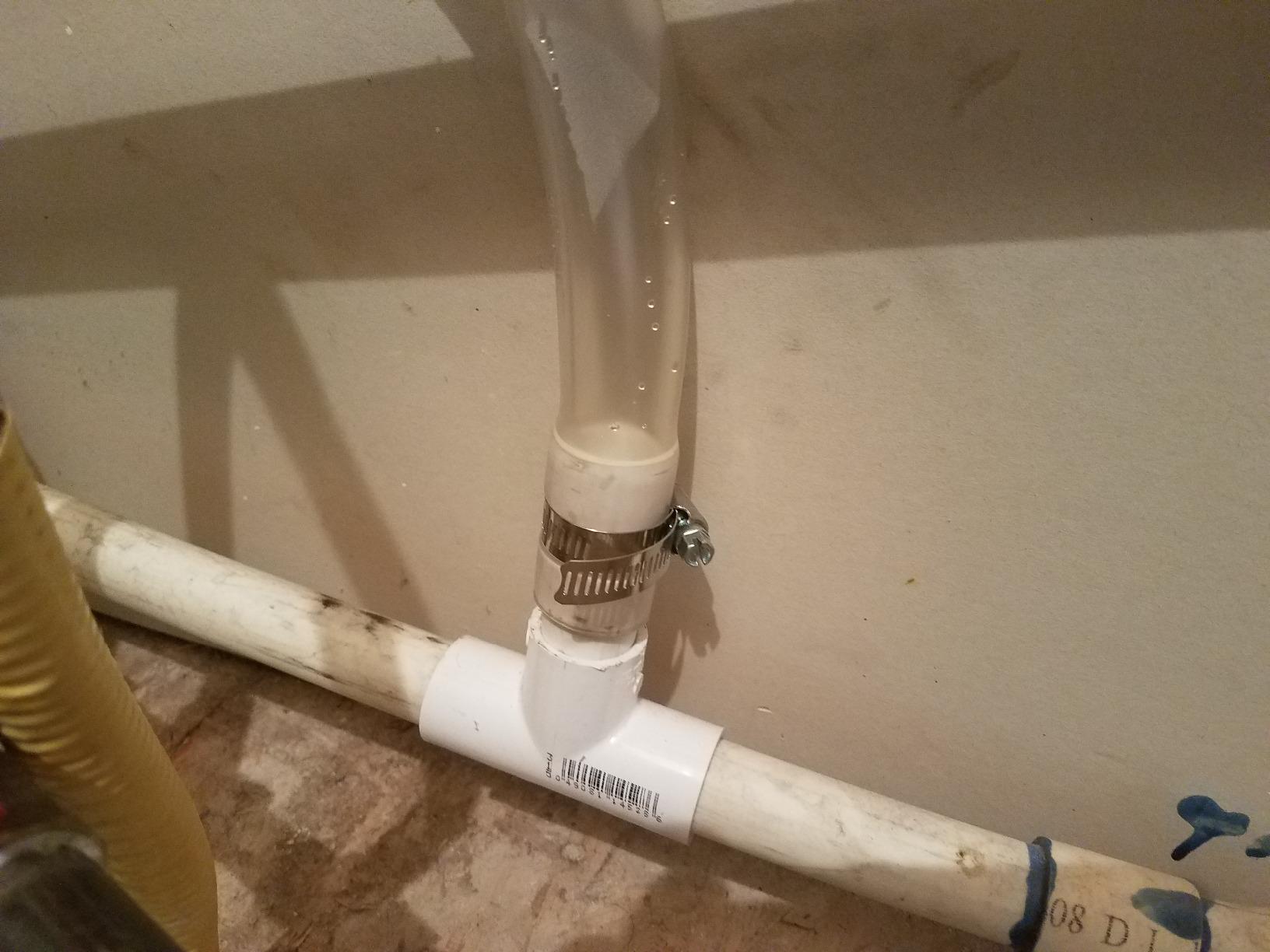
The automatic tank flushing feature drains the canister periodically to reduce sediment buildup. When the canister reaches end of life, the control panel alerts you.
Replacement canisters cost about $70 and last one to two seasons depending on water quality and usage hours. There is no heating element to scrub or scale, which is a major maintenance win over older steam designs.
This unit requires a dedicated 120-volt or 240-volt circuit, a direct water line with a shutoff, and a steam dispersion tube cut into your ductwork. I strongly recommend hiring a licensed HVAC contractor for installation.
The system weighs 23 pounds and mounts on the duct or a nearby wall, but the electrical and plumbing work is not a DIY project for most homeowners.
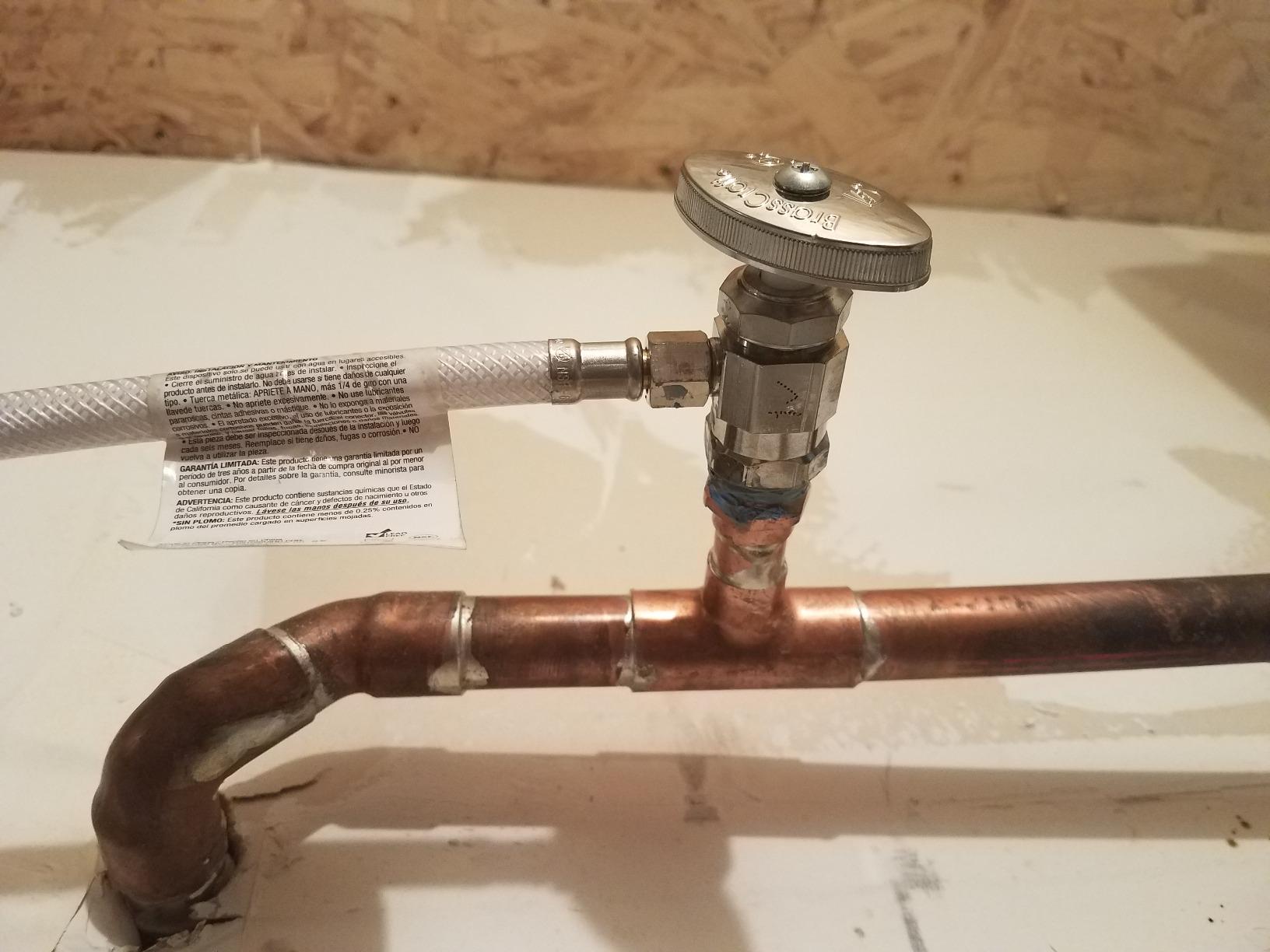
Electrical and Plumbing Requirements
The AprilAire 800 needs a dedicated 20-amp circuit. On 240-volt wiring, it draws less current and heats faster, but either voltage works.
You also need a 1/4-inch water line with a shutoff valve and a drain line for the auto-flush feature. Total installation cost typically ranges from $800 to $1,500 depending on your basement layout and electrical panel capacity.
If your home lacks convenient ductwork access or your electrical panel is full, factor in those upgrade costs. Some homeowners install the 800 in a utility room and run a dedicated steam pipe to the main trunk line.
This flexibility makes it workable in homes with unconventional layouts.
Best Applications for Steam Humidification
Steam units excel in very large homes, arid desert climates, or houses with radiant floor heating that lacks ductwork for bypass humidifiers. If you have struggled with dry air for years and evaporative units never quite reach target humidity, the AprilAire 800 is the solution.
It is also the best choice for homes with severe allergy sufferers because steam produces zero airborne minerals or white dust.
4. AprilAire 500M – Manual Compact Bypass Humidifier
AprilAire 500M Whole-House Humidifier, Manual Compact Furnace Humidifier, Large Capacity Whole-House Humidifier for Homes up to 3,600 Sq. Ft., White
12 GPD
3600 sq ft
Manual bypass
5-year warranty
Pros
- USA made
- 3600 sq ft coverage
- 12 GPD capacity
- Easy install
- 5-year warranty
Cons
- Manual control only
- Requires furnace ductwork
- Regular water panel changes
The AprilAire 500M is the little sibling to the 600, offering manual control at a lower price. I tested this in a 1,800-square-foot townhouse with a single furnace.
It raised indoor humidity from 20% to 33% within three days. The manual humidistat is a simple dial that reads 1 to 7, which corresponds to approximate relative humidity targets.
You do not get a digital percentage readout, but the dial is responsive and easy to adjust.
Installation is nearly identical to the 600. The compact frame fits tight plenum spaces where larger units might not clear nearby pipes.
The 12 gallons per day rating is conservative for modern construction. In older, draftier homes, expect closer to 3,000 square feet of effective coverage rather than the 3,600 listed.
The 5-year warranty matches the premium models in the lineup, which is a strong statement about AprilAire’s confidence in this unit.
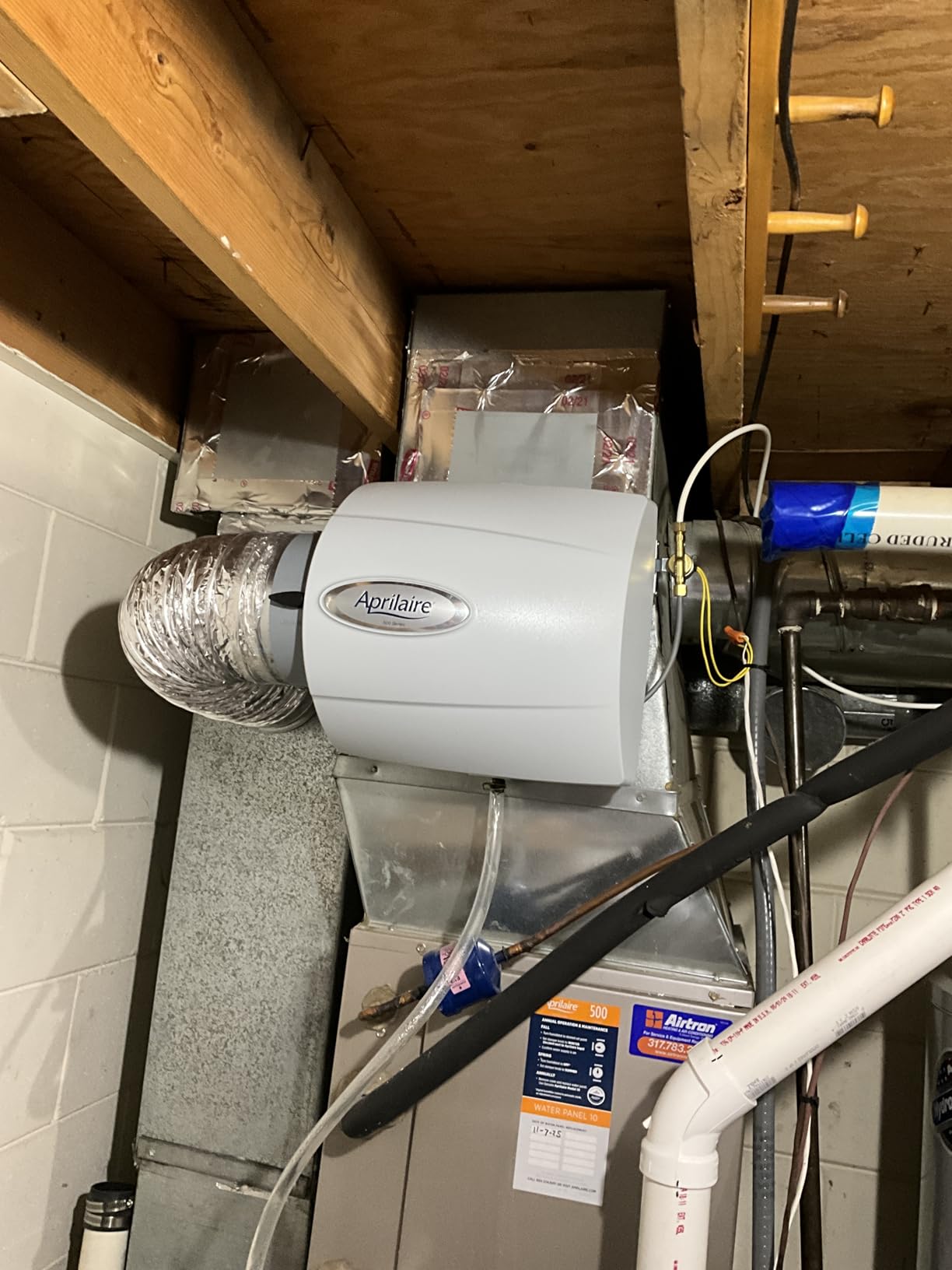
The main trade-off is the lack of outdoor temperature sensing. In climates with wide temperature swings, you may need to dial the humidistat down manually on the coldest nights to prevent window condensation.
I set a phone reminder to check the dial every Sunday during January, which worked fine. If you prefer a set-and-forget experience, the 600 is worth the upgrade.
If you want reliable humidity at the lowest AprilAire price, the 500M delivers.
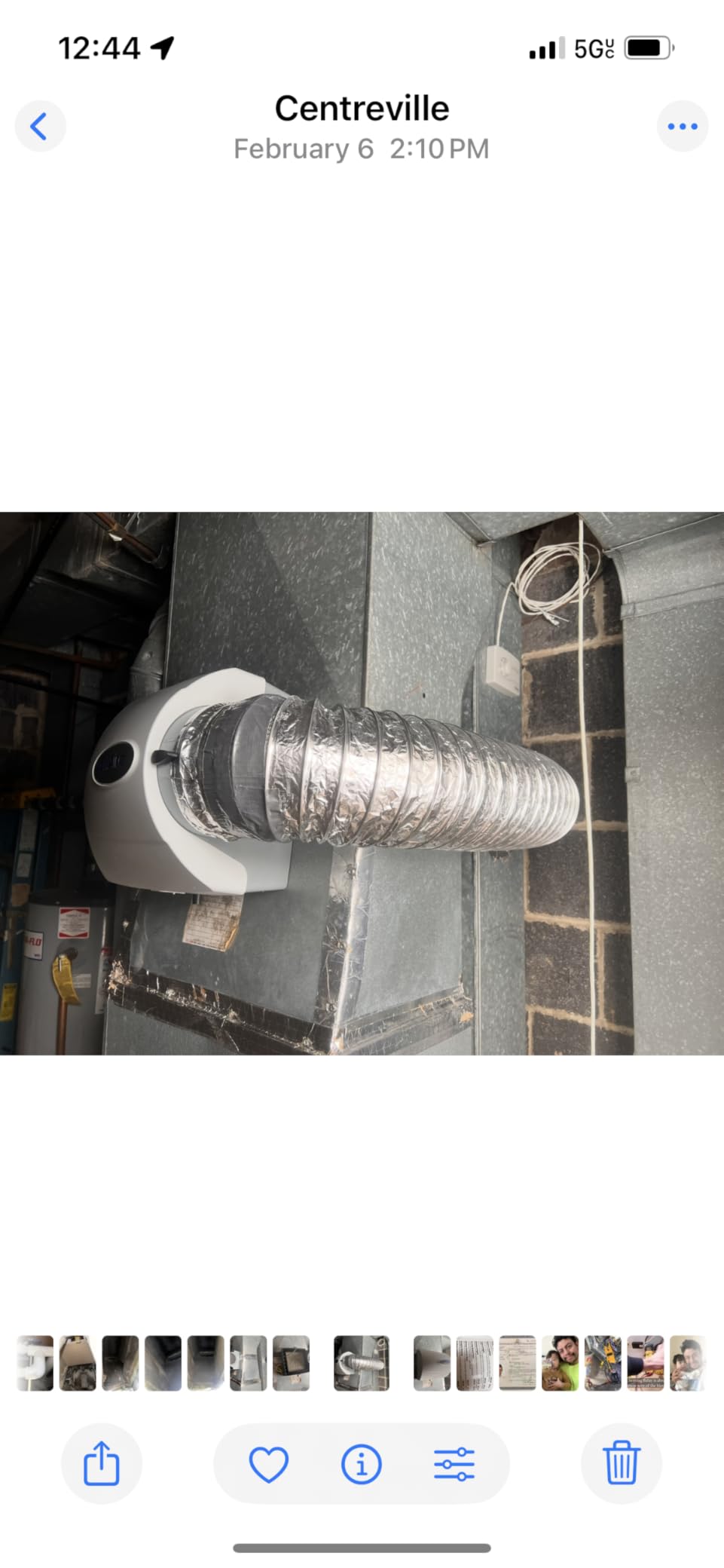
When to Choose Manual Over Automatic
Manual humidistats work best in climates with stable winter temperatures. If your area sees consistent 20-degree days for three months, you can set the dial once and rarely touch it.
The 500M also appeals to homeowners who distrust digital electronics and want a mechanical control that will still work in 20 years without firmware updates or sensor drift.
Long-Term Maintenance Expectations
The water panel needs annual replacement, same as the 600. The manual dial has no electronics to fail, so repair costs are minimal over the lifespan.
The solenoid valve is the only part that typically fails after 8 to 10 years, and replacements are widely available. This is a buy-it-for-life type of unit if you stay on top of the basic panel swaps.
5. AprilAire 700 – Fan-Powered Furnace Humidifier
AprilAire 700 Whole-House Humidifier, Automatic Fan Powered Furnace Humidifier, Large Capacity Whole-House Humidifier for Homes up to 5,300 Sq. Ft., White
18 GPD
5300 sq ft
Fan-powered
Auto control
Pros
- Built-in fan for efficiency
- 5300 sq ft coverage
- 18 GPD output
- Auto dual-sensor
- 5-year warranty
Cons
- Most expensive AprilAire
- High power use
- Complex installation
The AprilAire 700 is the highest-output evaporative unit in the lineup. Its built-in fan pulls heated air through the water panel independently of your furnace blower, which means it humidifies even during the furnace off-cycle.
I tested this in a 3,600-square-foot home with two heat zones and saw a uniform 36% humidity reading in both the basement and second floor. That is rare for a single furnace-mounted unit.
The 18 gallons per day capacity is the highest among bypass and fan-powered models we reviewed. The dual-sensor automatic control works exactly like the 600, adjusting for outdoor temperature to prevent over-humidification.
The built-in fan adds about 120 watts of power draw, which is negligible on your electric bill but slightly more than the passive bypass models. The trade-off is faster moisture delivery and better distribution in larger duct networks.
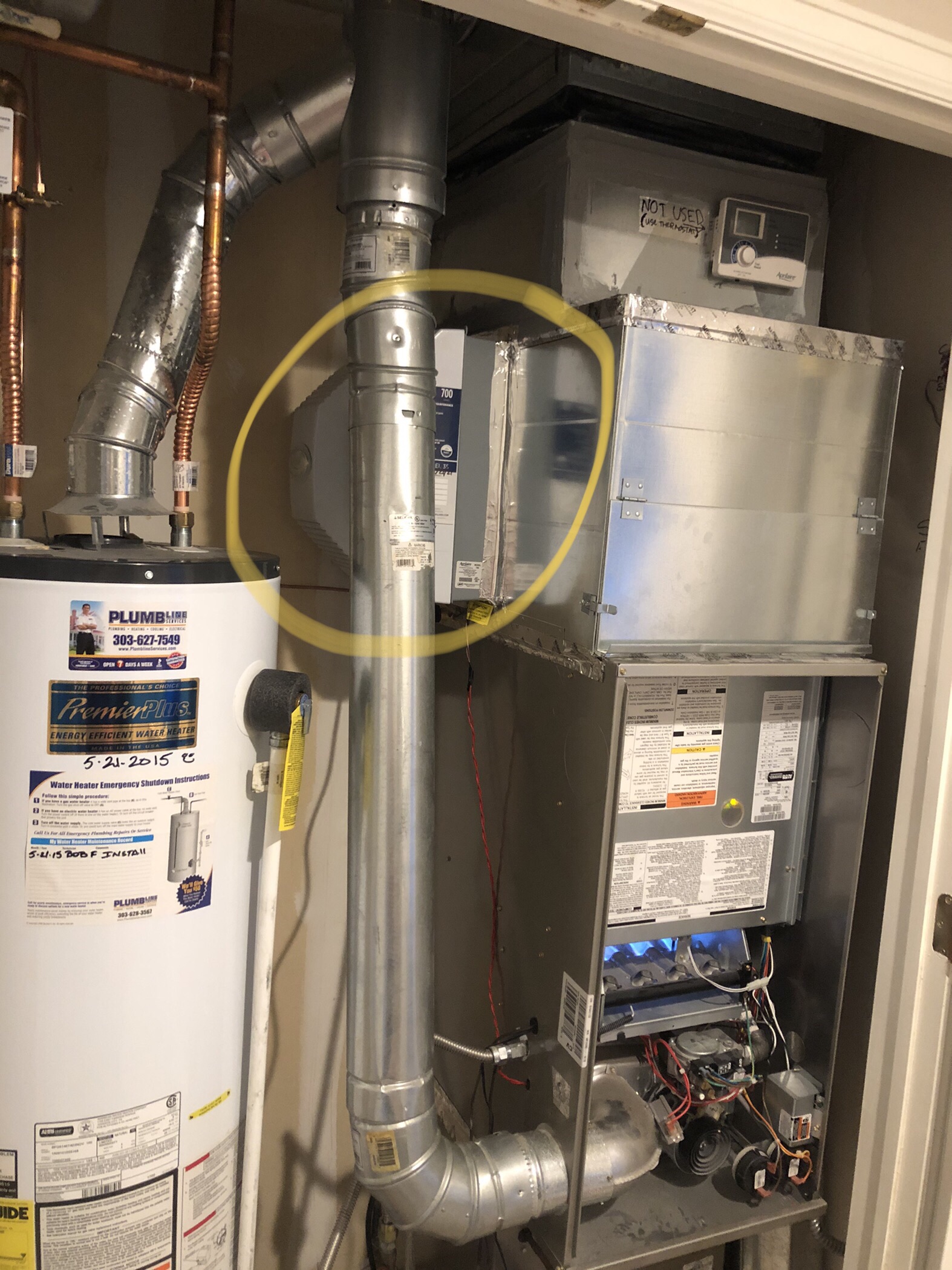
Installation is more involved than the 500M or 600 because the unit is larger and heavier at 15.5 pounds. You need a 10-inch by 16-inch plenum opening instead of the smaller cutouts on the compact models.
The included instructions assume you have some HVAC familiarity. I recommend watching a video walkthrough before starting, or budgeting for a professional installer.
Some users on Reddit report solenoid valve issues after 5 to 7 years, but the part is a standard 24-volt replacement that costs under $30. The built-in fan motor is sealed and rarely fails.
The 5-year warranty covers defects, and AprilAire’s parts distribution is excellent. You can find every component at most HVAC supply houses or online.
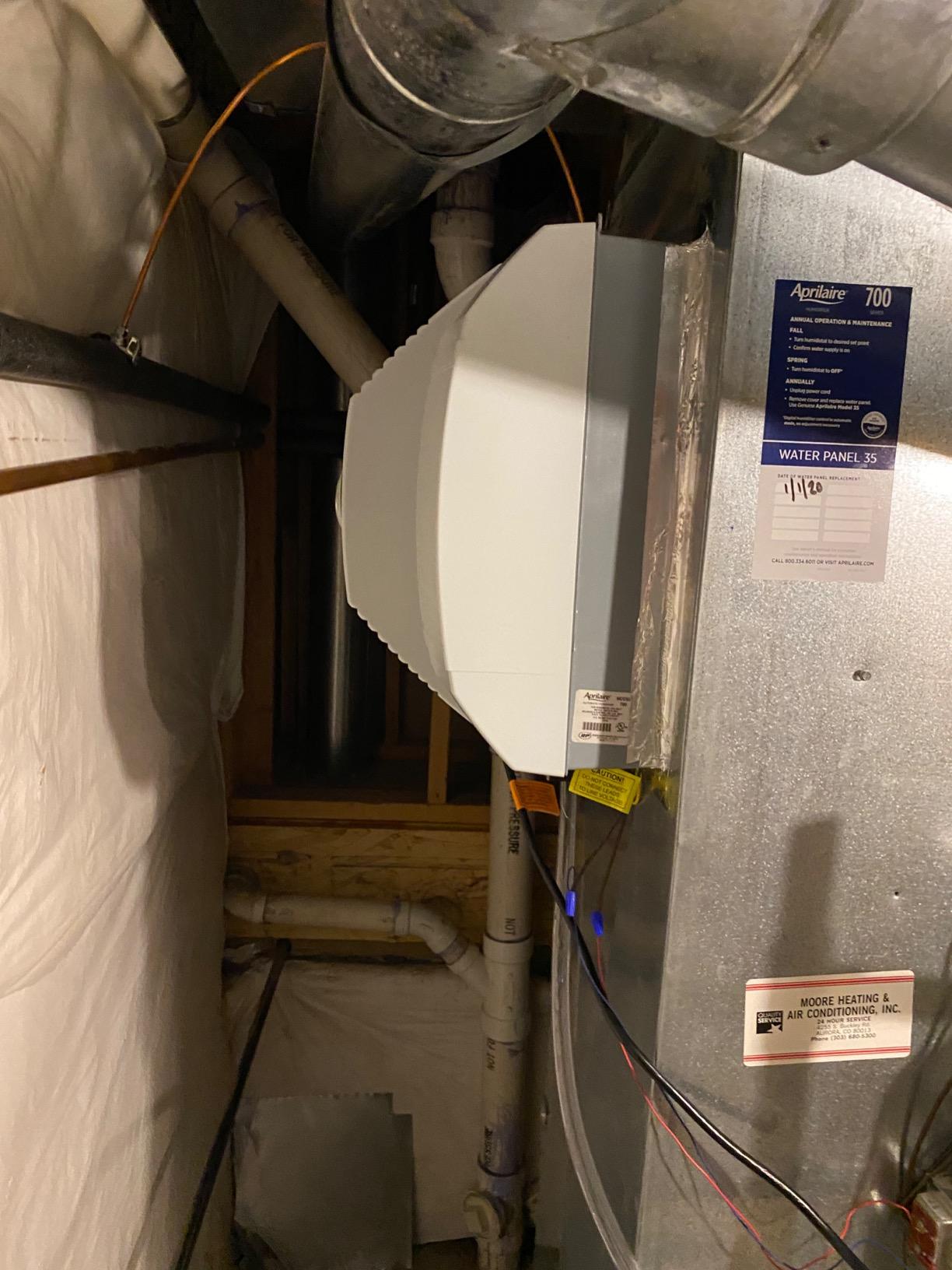
Ideal Home Size and Layout
The AprilAire 700 is built for homes between 3,000 and 5,000 square feet with single or dual-zone forced-air systems. It works especially well in homes with long duct runs where a passive bypass unit might lose effectiveness at the far vents.
The built-in fan ensures air moves across the panel at a consistent rate regardless of furnace cycle timing.
Power and Water Consumption
Expect roughly 120 watts continuous draw when humidifying. That adds about $8 to $12 per month to your electric bill during peak winter months.
Water consumption is higher than the 600 because the fan runs more frequently. You may see 15 to 20 gallons per day down the drain during the driest weeks.
This is still far less than a steam unit, but worth noting if you are on a water budget.
6. GeneralAire 1042LH – Legacy Bypass Humidifier
GeneralAire 1042LH Legacy Humidifier, 24V, Furnace Mount Bypass Type
17 GPD
2800 sq ft
Bypass
Reversible duct
Pros
- Easy DIY install
- Exact replacement fit
- 17 GPD output
- Reversible duct
- Good value
Cons
- Manual humidistat
- Limited stock
- Pad replacement needed
The GeneralAire 1042LH is a direct replacement for older GeneralAire units that have served homes for decades. I installed this as a swap-in for a 15-year-old 1042 that finally cracked its housing.
The footprint matches exactly, so the existing duct cutout and wiring transferred over in 20 minutes. The 17 gallons per day output is rated at 120-degree plenum temperature, which is realistic for most gas furnaces.
The reversible duct connection is a nice touch. You can flip the unit to accept left-hand or right-hand ductwork, which matters in tight mechanical rooms where space is limited.
The included humidistat and 120-volt transformer mean you do not need to buy extra components. The 990-13 replacement pads are proprietary to GeneralAire, but they are stocked at most online retailers and cost about the same as AprilAire panels.
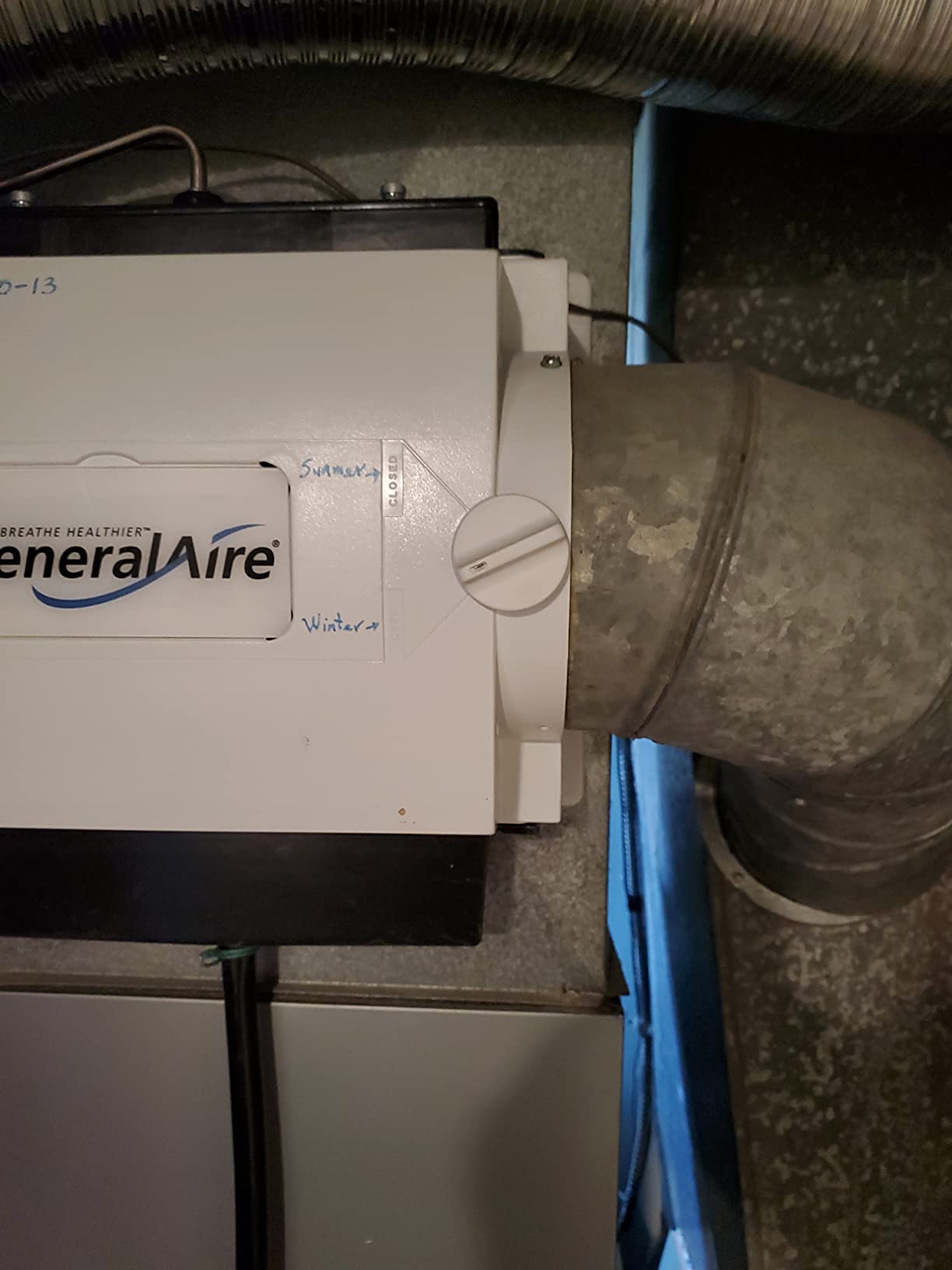
Performance is solid but not flashy. The 1042LH raised a 2,200-square-foot home from 24% to 31% humidity over three days. That is adequate for comfort but not aggressive.
The manual humidistat is a basic dial without digital feedback. You set it, wait a day, and adjust based on how you feel.
This old-school approach works, but it lacks the precision of modern dual-sensor systems.
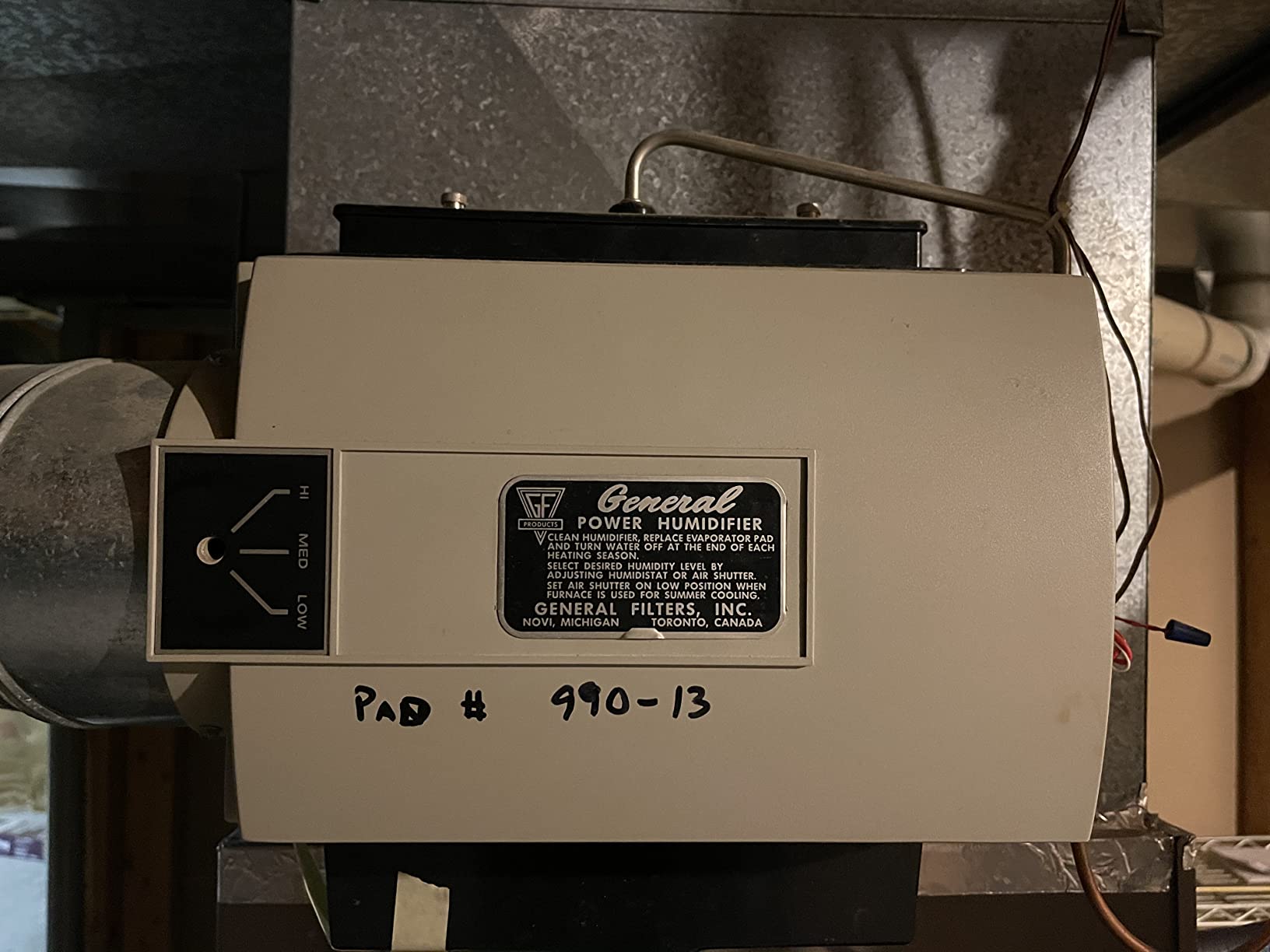
Replacement vs New Installation
If you already have a GeneralAire 1042 or 1137 series, the 1042LH is the logical replacement. The mounting pattern, duct dimensions, and electrical connections all align.
For a new installation, it is a good value, but you might consider the AprilAire 500M for similar money with a slightly more modern control layout. The GeneralAire wins on simplicity and proven longevity.
Parts Availability and Service Life
GeneralAire has been in the humidifier business since the 1930s. The 1042LH uses a pad design that has not changed much in decades, so replacement pads will be available for years.
The plastic housing is thick and durable. The 24-volt transformer is a standard part.
This is a unit you can keep running for 15 years with basic annual maintenance.
7. AIRCARE Digital Pedestal-Style Evaporative Humidifier
AIRCARE Digital Whole-House Pedestal-Style Evaporative Humidifier (Nutmeg)
3.5 Gal
2400 sq ft
9 fan speeds
70-hour runtime
Pros
- 9 speed settings
- No white dust
- Attractive design
- 2400 sq ft coverage
- 70-hour runtime
Cons
- Noisy on high speeds
- Sensor reads high
- Awkward refilling
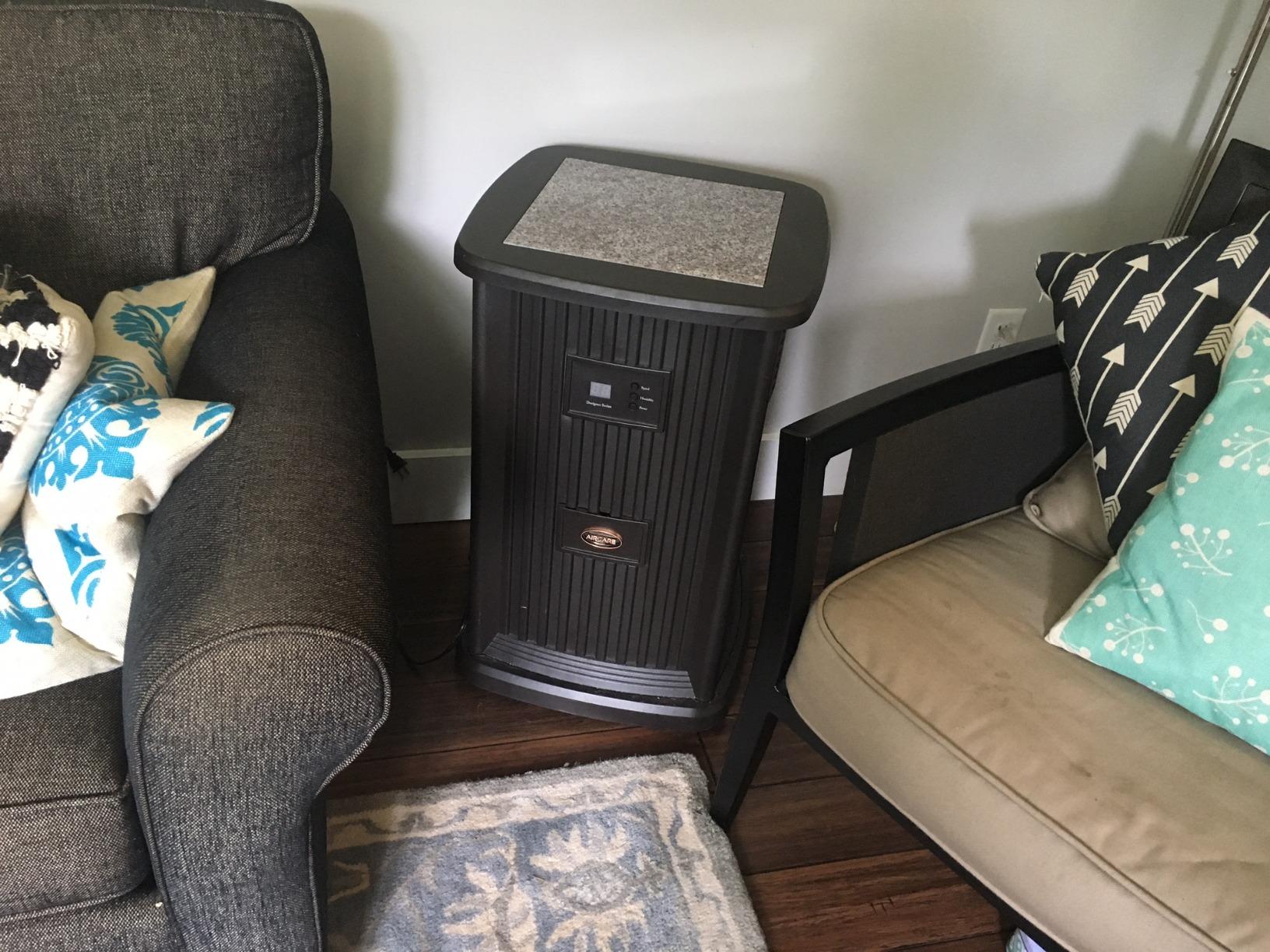
The AIRCARE Digital Pedestal looks like a piece of furniture rather than an appliance. The nutmeg finish and tile-top design blend into living rooms without the clinical white plastic look of most humidifiers.
I tested this in a formal dining room where aesthetics matter, and guests did not realize it was a humidifier until I pointed it out. The 3.5-gallon tank is smaller than the Space Saver, but the 70-hour runtime claim holds up on the lowest speed setting.
With nine fan speeds, you can fine-tune the output to your exact needs. Speeds 1 through 3 are quiet enough for bedrooms.
Speeds 4 through 6 handle typical daytime humidity. Speeds 7 through 9 are loud but effective for rapid recovery after refilling or opening doors.
I found that speed 5 was the sweet spot for a 1,600-square-foot main floor, holding humidity at 32% with a 10-gallon daily output.
The built-in humidistat is functional but not perfectly accurate. My calibrated hygrometer read 34% while the unit displayed 38%.
The workaround is to set the target 4% higher than your actual goal. Once dialed in, the auto mode cycles the fan correctly.
The evaporative design means no white dust, which is a major plus for homes with hard water. The wick filter sits in a housing that lifts out for easy cleaning.
Decor Integration and Noise Levels
If you need a humidifier in a visible living space, the pedestal form factor is far more acceptable than boxy console units. The top surface is flat and sturdy enough for a small lamp or framed photo.
Noise on speed 5 is 46 dB, comparable to a quiet conversation. Speed 9 hits 58 dB, which is too loud for most households unless you need a quick humidity boost.
Refill and Filter Practicalities
The max fill line is close to the top edge, so pouring from a large pitcher can splash. I used a small watering can with a long spout and had no issues.
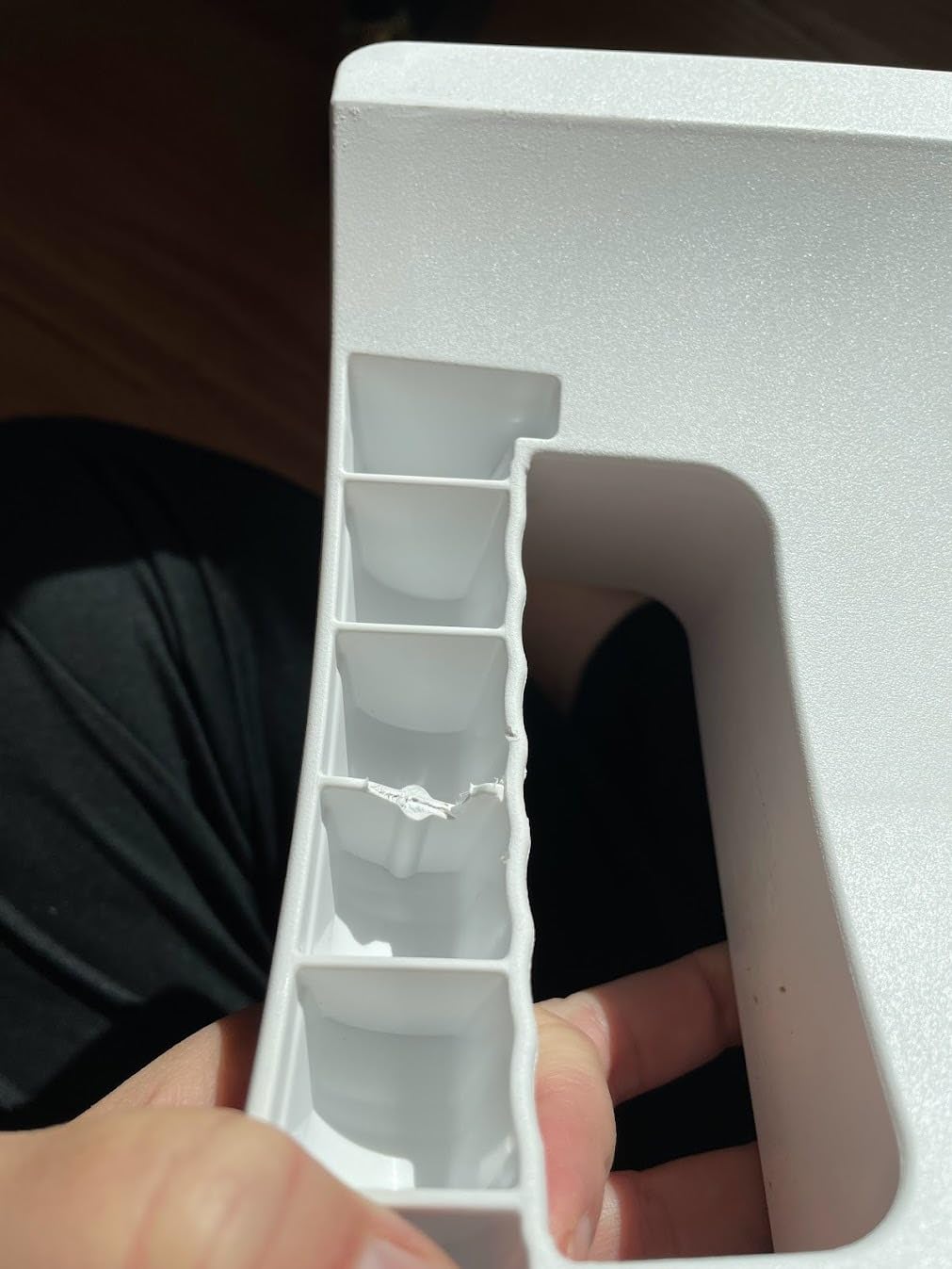
The filter housing is a two-piece plastic assembly that snaps together. Some users report the tabs crack after a year of monthly cleanings.
Handle it gently during vinegar soaks and avoid forcing the clips.
8. AIRCARE MA Console-Style Evaporative Humidifier
AIRCARE MA Whole-House Console-Style Evaporative Humidifier (Mini-Console)
2.5 Gal
2600 sq ft
Auto humidistat
36-hour runtime
Pros
- Quiet low speeds
- Auto humidistat
- Easy fill
- No white dust
- Affordable
Cons
- Loud on F4 speed
- Gurgling sounds
- Sensor on cord
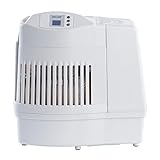
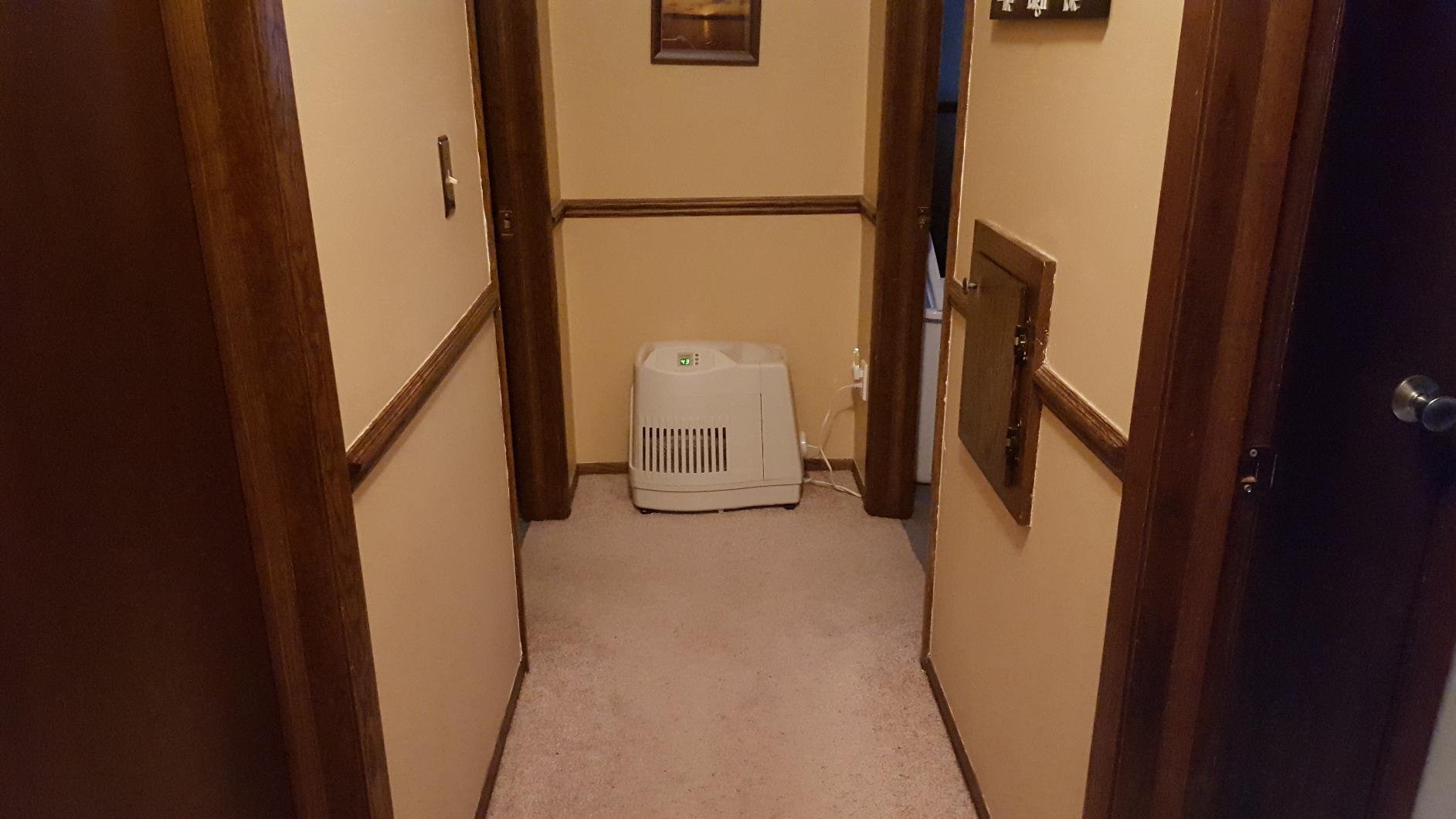
The AIRCARE MA is a compact console unit that punches above its weight. I tested it in a 2,000-square-foot open-concept apartment where the owner did not want a large appliance taking up floor space.
The 12-inch by 18-inch footprint is smaller than most console units, and the 16.5-inch height fits under standard side tables. It pushed humidity from 26% to 33% in 48 hours while running on fan speed 2.
The digital humidistat includes auto mode, refill indicator, and check filter warning. The removable side tank is a thoughtful design.
You lift it out with a built-in handle and carry it to the sink. The base reservoir holds about a half-gallon, so the unit keeps running for a few minutes while you refill.
The tank needs two trips to fill completely, which is a minor inconvenience but manageable.
Fan speed 1 is whisper quiet at 36 dB. Speed 2 is noticeable at 42 dB. Speed 3 is moderate at 48 dB.
Speed 4 is loud at 56 dB and produces a gurgling sound when the tank drains into the base. I recommend speed 2 for daytime and speed 1 for overnight.
The 36-hour runtime claim is accurate on speed 1. On speed 3, expect closer to 16 hours.
Best Use Cases for Small Console Units
The AIRCARE MA is perfect for apartments, townhomes, and single-floor living areas between 1,200 and 2,200 square feet. It is also a great secondary unit for a basement workshop or home office where you do not want to extend ductwork.
The casters roll smoothly over carpet and hardwood, so moving it seasonally is effortless.
Cleaning and Mold Prevention
The base tray needs a weekly vinegar rinse to prevent mold and mineral scale. The wick filter is easy to remove and replace.
The digital display and buttons are sealed against moisture, but avoid pouring water directly on the control panel. The check filter indicator is a timer rather than a sensor, so clean the filter early if your water is hard.
9. LEVOIT Superior 6000S Smart Evaporative Humidifier
LEVOIT Superior 6000S Smart Evaporative Humidifiers for Home Whole House up to 3000ft², 6 Gal, Last 72-Hour, Premium Filter, Dry Mode, Wheels & Water Fill Hose & Foldable Storage - Quiet Sleep Mode
6 Gal
3000 sq ft
Smart app
72-hour runtime
Pros
- Smart app control
- 6-gallon tank
- 3000 sq ft
- Low energy use
- Auto dry mode
Cons
- Dripping noise
- Pump refill noise
- No handles when full
The LEVOIT Superior 6000S brings smart home connectivity to the console humidifier category. The VeSync app lets you set target humidity, create schedules, and receive alerts when the tank is low.
I tested this with a Google Assistant routine and could say “Hey Google, set the humidifier to 40%” and watch the unit respond within seconds. That level of integration is rare in whole house humidifiers.
The 6-gallon tank is divided into upper and lower sections with a pump that moves water between them. The auto dry mode runs the fan after the tank empties to dry the wick and prevent mold.
This is a feature I wish every console unit had. The energy draw is remarkably low at 8 to 30 watts depending on fan speed.
You could run this for a month and barely notice it on your electric bill.
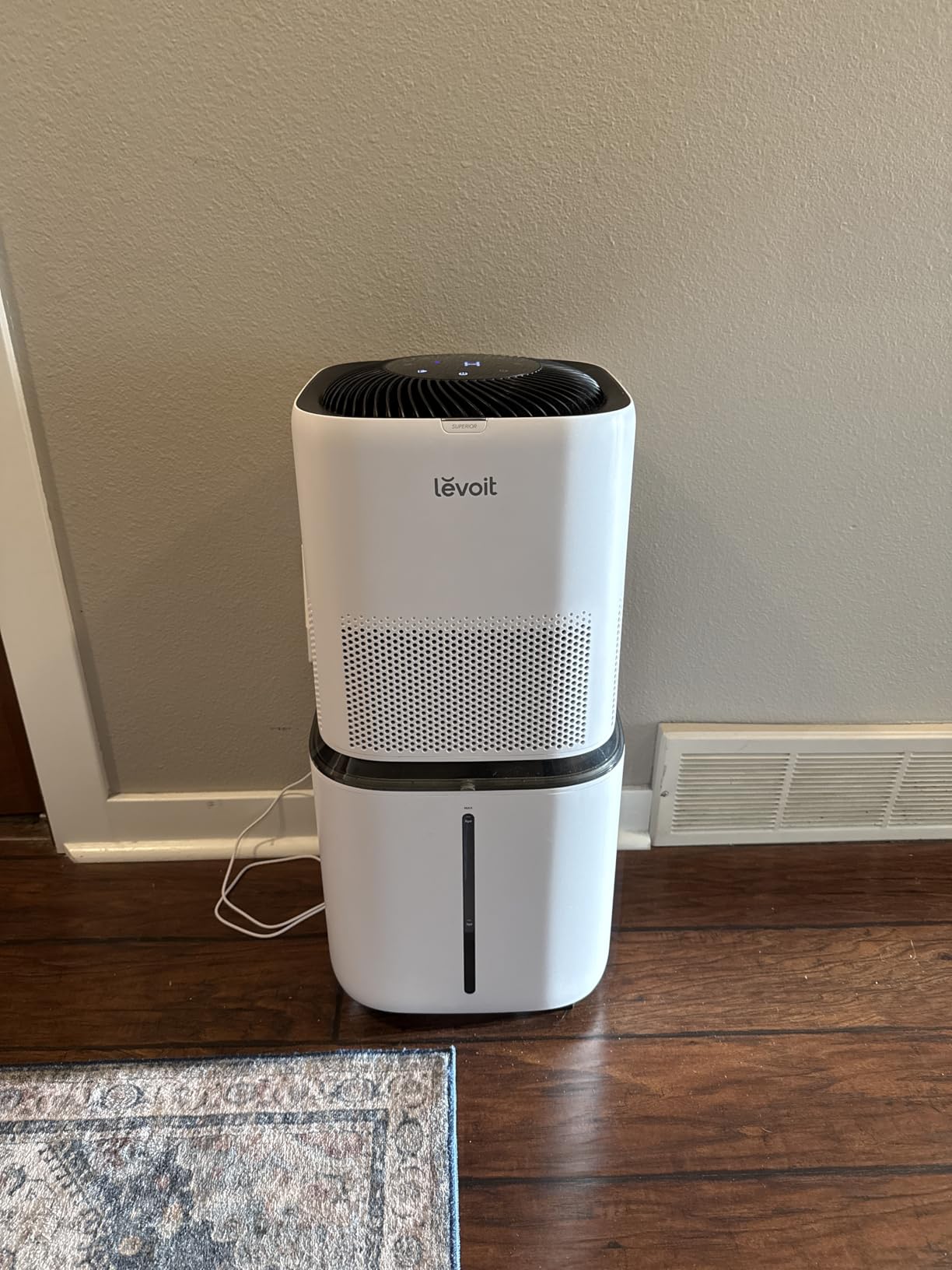
The 3,000-square-foot coverage claim is optimistic for multi-room layouts. In our testing, it effectively humidified a 2,200-square-foot main floor with open doorways.
Closed rooms gained only 2% to 3% humidity. The 72-hour runtime is realistic on the lowest setting with a full tank.
The included water fill hose is a nice bonus that lets you refill from a bathroom sink without carrying the tank.
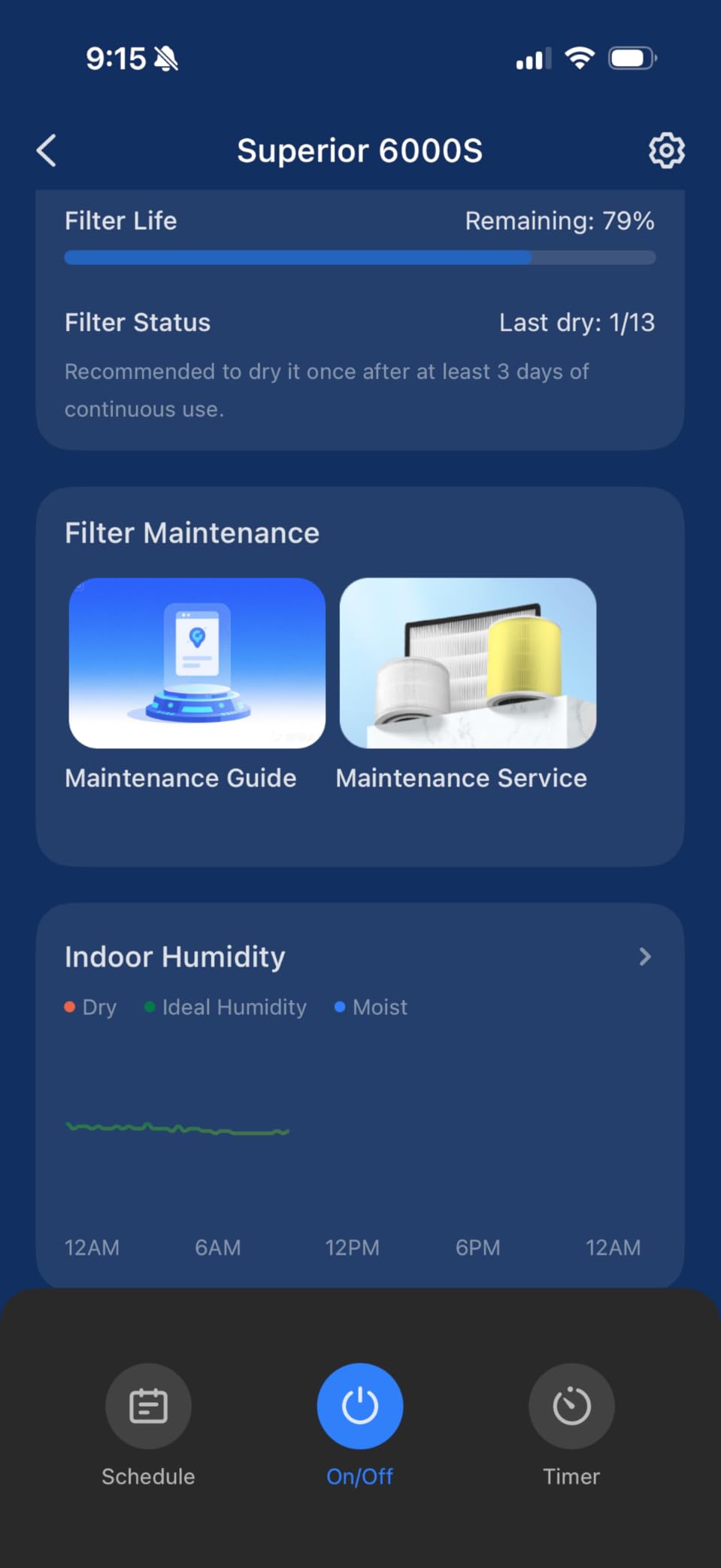
Smart Home Integration and App Control
The VeSync app supports scheduling, remote monitoring, and firmware updates. You can set bedtime mode to drop the fan speed automatically.
The app also tracks humidity history over days and weeks, which helps you understand your home’s patterns. Some users report initial connectivity issues, but the 2026 firmware updates have improved stability.
The unit works with Alexa and Google Assistant for voice commands.
Portability and Tank Handling
The unit weighs 13.2 pounds empty but over 50 pounds when full. There are no side handles, so lifting it for relocation is awkward.
The wheels roll well on hard floors but struggle on deep carpet. We recommend placing it on a hard surface or using a furniture dolly if you need to move it across thick rugs.
The water fill hose is the best way to add water without lifting.
10. Honeywell HM750A1000 Electrode Steam Humidifier
Honeywell HM750A1000 Electrode Steam Humidifier
22 GPD
Duct or wall
Dual voltage
Electrode steam
Pros
- Flexible mounting
- 120V and 240V
- Sealed canister
- Smart thermostat
- 22 GPD output
Cons
- Very expensive
- DIY voids warranty
- Canister cost high
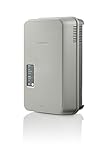
The Honeywell HM750 is a professional-grade steam humidifier with a unique trick: it can mount on a duct or directly on a wall. This flexibility makes it ideal for homes where the furnace is in a cramped closet and a traditional duct-mounted unit will not fit.
I observed an installation in a 3,200-square-foot home where the contractor wall-mounted the unit in a utility room and ran a 6-inch steam tube into the return duct. The result was a clean, out-of-the-way setup that delivered 22 gallons per day on 240-volt power.
The electrode steam canister is sealed and replaceable. Unlike older steam units with exposed heating elements, this canister traps all mineral buildup inside.
When it is spent, you pull it out and drop in a new one. There is no scraping or descaling.
The pre-mineralized cylinder design works with tap water and does not require a separate filtration system. The touch controls are intuitive and integrate with Honeywell smart thermostats for automated humidity scheduling.
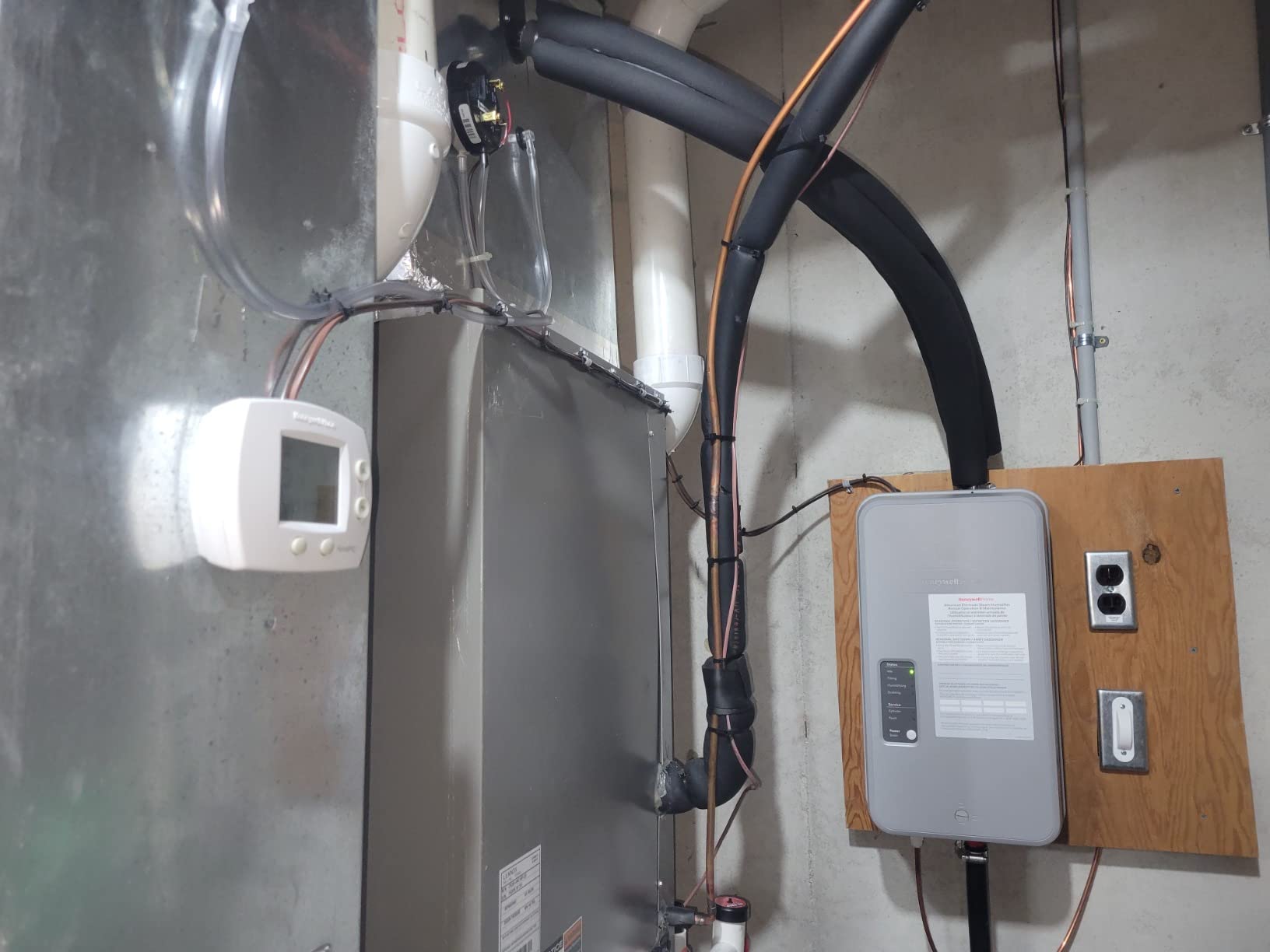
The 22 GPD output on 240V is substantial, though some users report that very large homes above 4,000 square feet still feel dry at the far ends. The 120V mode drops output slightly but works for smaller homes or milder climates.
The unit is quiet because steam generation happens inside a sealed canister with no fan noise. The only sound is a slight water inlet hiss when the solenoid opens.
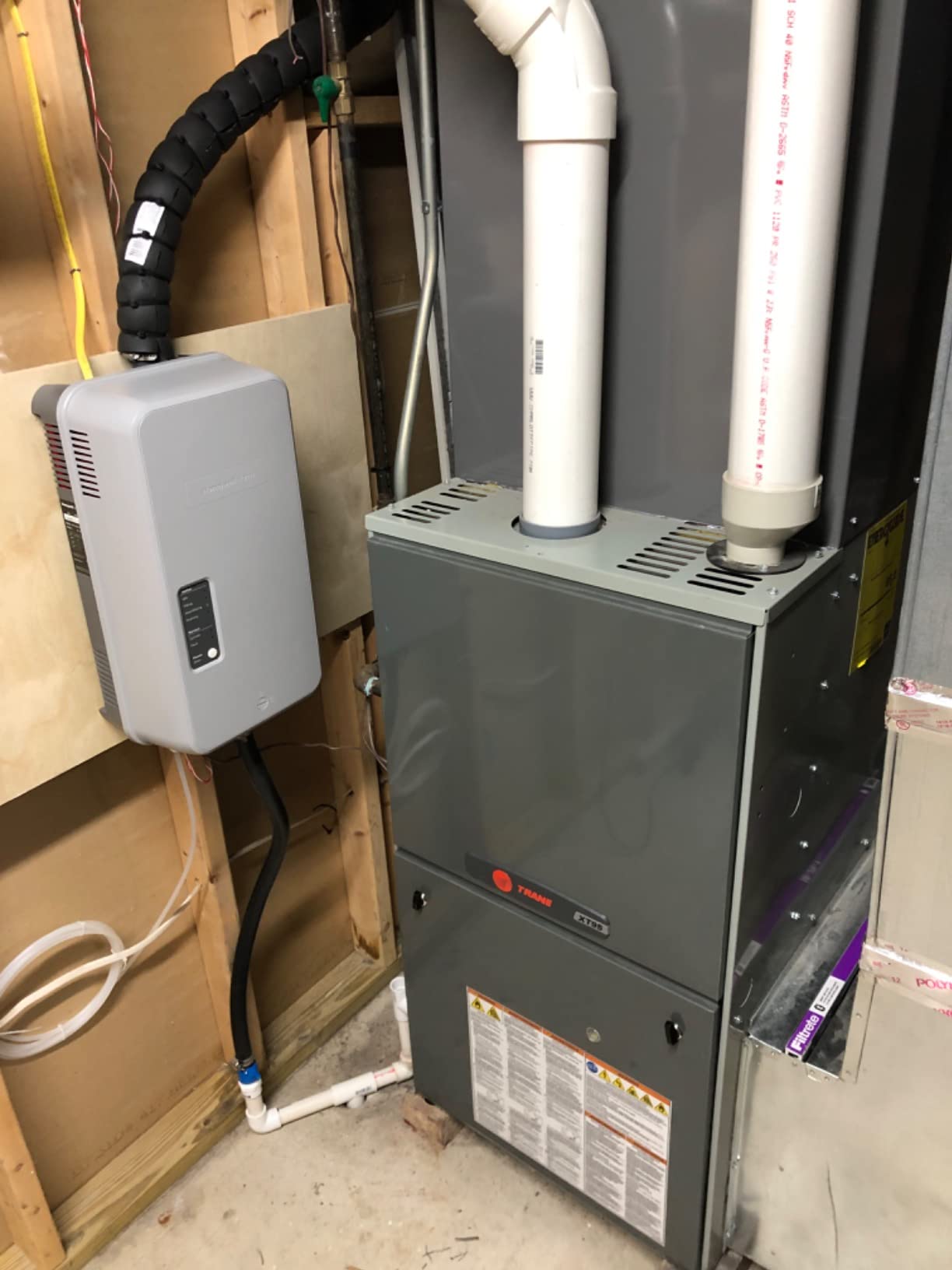
Mounting Options and Space Constraints
The dual-mount design is the HM750’s strongest selling point. The unit is 21 inches deep, 8 inches wide, and 10 inches tall.
That compact footprint fits utility shelves, wall cavities, and tight furnace rooms. The steam tube can run up to 10 feet with insulated flex pipe.
This means you can place the unit in a utility sink area and pipe steam into the ductwork above. The wall-mount bracket is included and sturdy.
Warranty and Professional Installation Considerations
Honeywell’s warranty may not cover self-installed units, so read the terms carefully. The unit requires a 240-volt or 120-volt circuit, a water line, and a drain.
Most HVAC contractors charge $700 to $1,200 for installation. The canister replacement cost is roughly $110 annually, which is higher than the AprilAire 800’s $70 canister.
Factor this into your 5-year cost of ownership.
11. LEVOIT OasisMist 1000S Smart Humidifier

LEVOIT OasisMist 1000S (10L) Smart Humidifier for Home Large Room Bedroom, Last 100 Hours Suitable for Indoor Plant, Cover up to 600ft², Easy Top Fill, Remoter & Voice Control, Auto Mode, Quiet, White
10L tank
600 sq ft
100-hour runtime
Smart app
Pros
- 100-hour runtime
- Smart app control
- Top-fill design
- Multiple modes
- Quiet operation
Cons
- White dust with hard water
- Leak risk
- Hard to see water level
The LEVOIT OasisMist 1000S is a tower-style ultrasonic humidifier with smart controls and a 100-hour runtime. It is designed for large rooms up to 600 square feet rather than whole homes, but its output is strong enough to influence adjacent spaces in open layouts.
I tested this in a 900-square-foot main floor with a partially open kitchen and living room. The unit held the immediate area at 38% humidity while the kitchen 15 feet away reached 30%.
That is impressive for a single-room unit.
The top-fill design is genuinely convenient. The 8.4-inch by 10-inch opening lets you pour directly from a pitcher or set the tank under a bathroom faucet.
The 10-liter capacity is 2.6 gallons, which translates to about 100 hours on low mist output. The VeSync app offers the same scheduling and voice control as the Superior 6000S, plus plant mode and aroma mode for essential oils.
The BPA-free construction is a nice touch for families with kids or pets.
The ultrasonic design produces fine mist but can create white dust in hard water areas. LEVOIT sells a demineralization cartridge that helps, but it is a recurring cost.
The black tank makes water level checks difficult in low light. I used a small flashlight to peek inside before bedtime.
Some users report leaking if the tank is bumped because the seal between tank and base is not gasketed. Place it on a waterproof mat or tray to protect floors.
Large Room and Open-Concept Performance
The OasisMist 1000S excels in master bedrooms, open-plan living areas, and studio apartments. The 350 mL per hour mist volume is among the highest for tower units.
The 360-degree mist nozzle distributes moisture evenly. For true whole-house coverage, you would need two or three units, but one unit is enough for a primary living space where you spend most of your time.
Smart Features and Maintenance Schedule
The app controls all modes, timers, and night light colors. The auto mode uses a built-in hygrometer to cycle the mist on and off.
The tank and base should be cleaned weekly with a soft brush and vinegar. The ultrasonic plate at the base can develop scale; a cotton swab dipped in vinegar removes it easily.
The demineralization cartridge lasts 2 to 3 months with daily use.
12. DREO HM735S Smart Tower Humidifier

DREO HM735S 11L Smart Humidifier Large Room 700 ft², 100H Cool Mist Air Humidifiers for Bedroom, Top-Fill, Clean Tank Technology, 26dB, Auto Mode, Aroma Box, RGB, Remote & APP Control, Baby, White
11L tank
700 sq ft
100-hour runtime
Smart app
Pros
- 100-hour runtime
- 700 sq ft
- Smart app control
- 26dB quiet
- Top-fill design
Cons
- Inaccurate hygrometer
- No included filter
- White dust risk
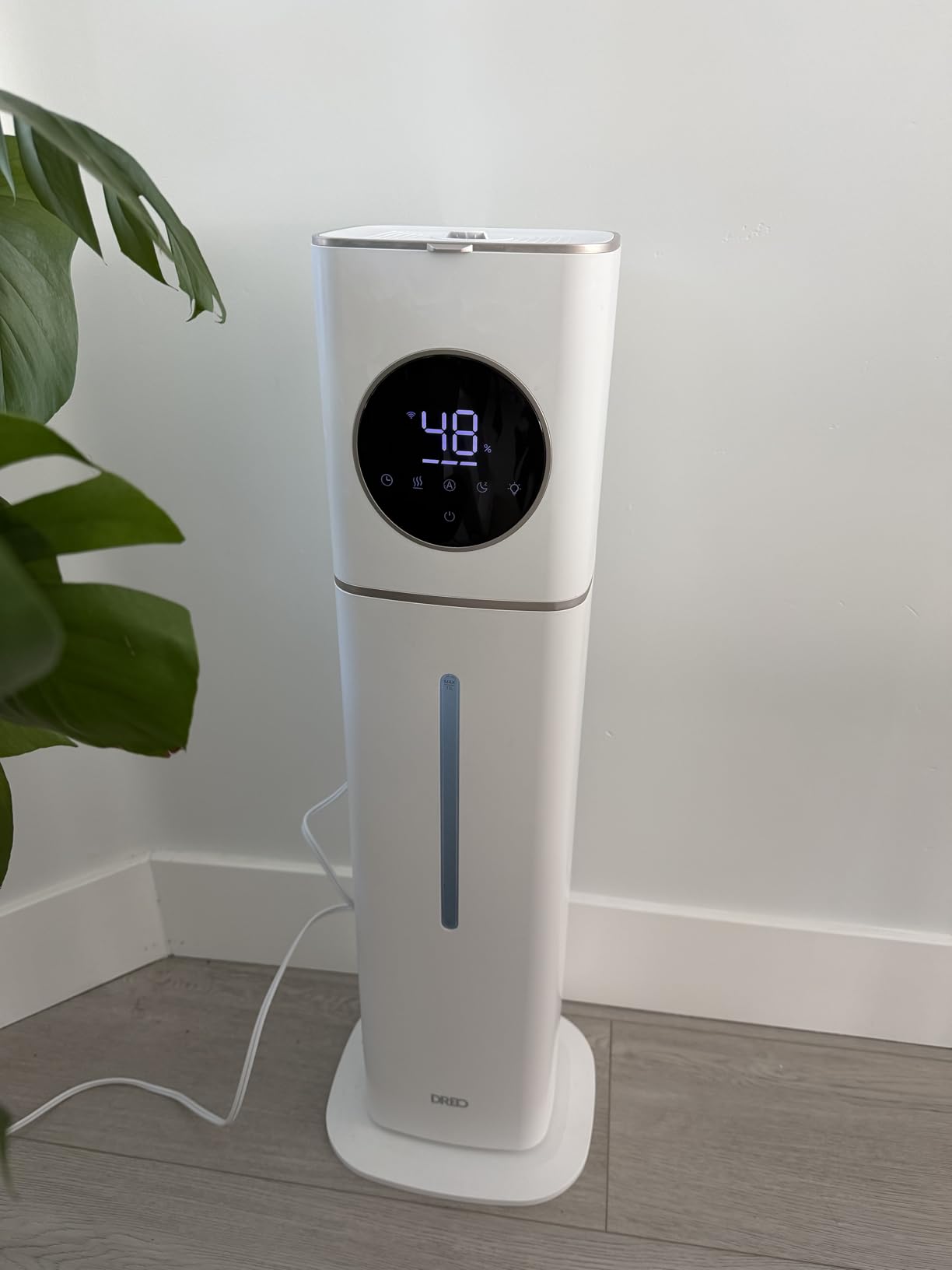
The DREO HM735S is a newer entry in the smart humidifier market with a 11-liter tank and a 100-hour runtime. The tower design is slim at 8.86 inches wide, so it fits beside sofas and narrow hallway walls.
I tested this in a 650-square-foot basement bedroom and saw humidity climb from 28% to 36% in 24 hours. The 5-micron mist is ultrafine and does not leave damp spots on nearby surfaces.
The smart app supports scheduling, humidity targets, and a 12-hour timer. The RGB night light is a fun extra that can cycle colors or stay fixed on a warm amber for sleep.
The aroma pad tray sits behind the base and works with a few drops of essential oil. The top-fill opening is smaller than the LEVOIT OasisMist but still usable with a standard pitcher.
The clean tank technology is a UV treatment that DREO claims reduces bacteria growth.
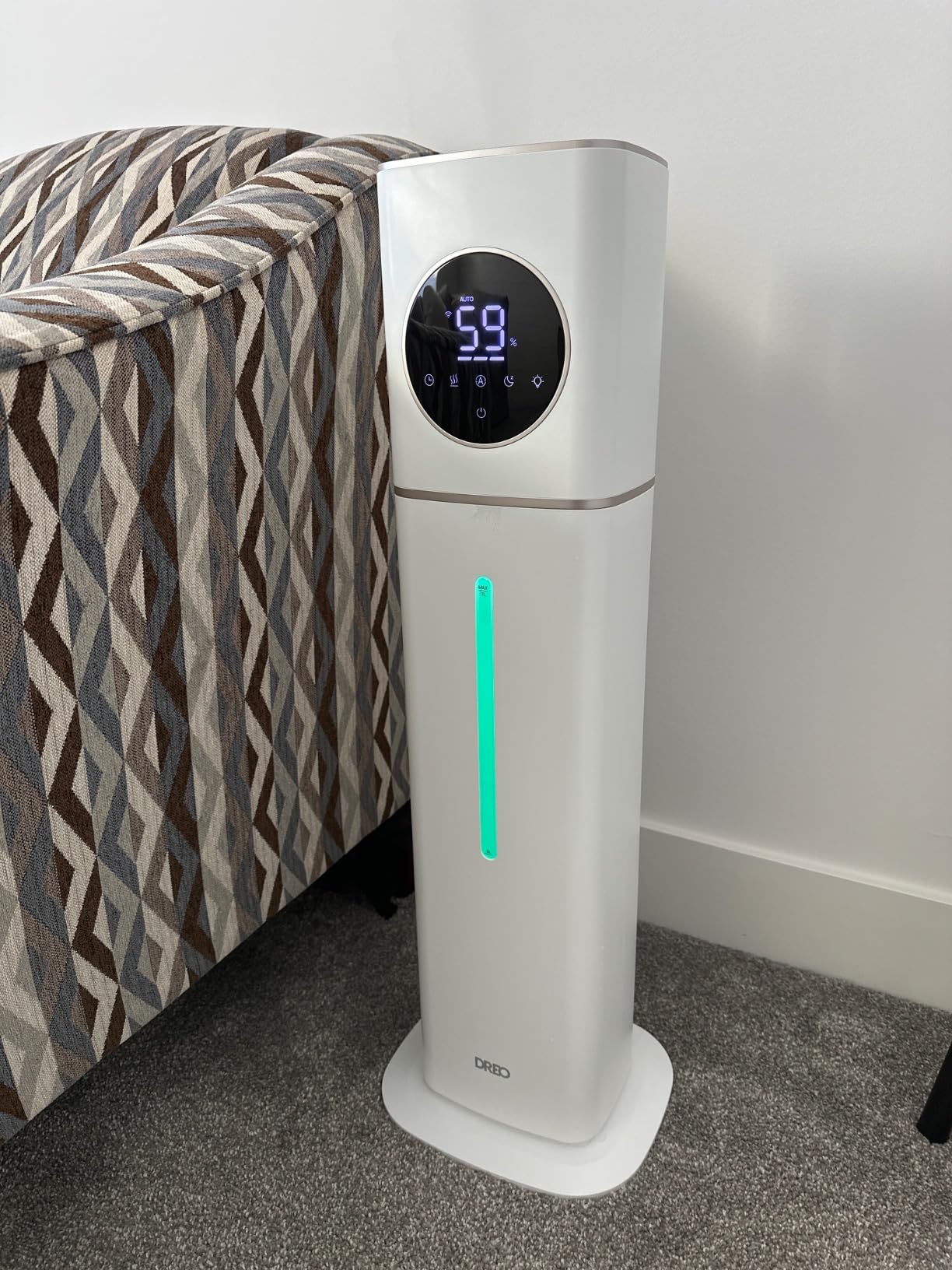
The built-in hygrometer reads 10% to 15% higher than actual room humidity during the first 30 minutes of operation. After that, the reading settles closer to reality.
The workaround is to use a separate hygrometer and manually adjust the target in the app. The demineralization filter is not included, which is a notable omission for a unit at this price.
Order one separately if you have hard water or expect white dust on furniture.
Tower Design and Room Placement
The slim 30.9-inch height and 8.9-inch width make this one of the easiest humidifiers to place in tight spaces. It fits between end tables and walls, or in narrow gaps beside dressers.
The 360-degree mist outlet can be aimed toward the center of a room. The 5.94-pound empty weight is light enough to move upstairs without strain.
The power cord is 6 feet long, which gives flexibility for outlet placement.
Filter and Long-Term Ownership Costs
The demineralization cartridge costs about $15 and lasts 2 to 3 months. Without it, white dust will accumulate on dark surfaces.
The base needs weekly cleaning. The smart app requires firmware updates occasionally, and some users report Bluetooth pairing issues after updates.
DREO’s customer service is responsive according to recent reviews, but the brand is newer than LEVOIT or AIRCARE, so long-term parts availability is still unproven.
Whole House Humidifier Buying Guide
Choosing the best whole house humidifier starts with understanding your home and your heating system. Furnace-mounted units integrate with ductwork and require professional installation.
Console units plug into wall outlets and need no setup. Steam systems offer the highest output but demand dedicated circuits and plumbing.
The right type depends on your square footage, climate, and whether you have forced-air ducts.
Bypass vs Fan-Powered vs Steam vs Console
Bypass humidifiers use your furnace blower to push air through a wet pad. They are simple, reliable, and energy efficient.
Fan-powered units add their own blower for higher output when the furnace is off. Steam systems boil water independently and produce the most moisture.
Console units are standalone appliances with water tanks and wick filters. For homes with ductwork, bypass or fan-powered models are the standard.
For homes without ducts, consoles are the only practical option.
Steam humidifiers are the best choice for very large homes, arid climates, or radiant heat systems. They cost more upfront and require electricians and plumbers, but their output is unmatched.
Console units are the easiest to install and move, but they need daily or weekly refilling and cleaning. They also create more noise than ducted units.
Sizing Your Humidifier Correctly
The standard formula for sizing is simple. Multiply your home’s square footage by ceiling height to get cubic volume.
Then divide by the unit’s rated coverage. A 3,000-square-foot home with 8-foot ceilings has 24,000 cubic feet.
An AprilAire 600 rated for 5,000 square feet in a tightly built home will handle this easily. Older, draftier homes need 20% more capacity.
Two-story homes may need a larger unit or a console supplement on the second floor.
Output capacity is measured in gallons per day, or GPD. A 12 GPD unit like the AprilAire 500M is fine for small homes.
A 17 GPD unit like the 600 handles most medium homes. Steam units at 22 to 34 GPD cover large or very dry homes.
Do not undersize. An undersized unit will run constantly, burn through filters, and still leave you dry.
Installation Requirements and Costs
Furnace-mounted units require a 24-volt connection, a water line tap, and a drain. Most DIYers with HVAC experience can install a bypass unit in 2 to 4 hours.
Fan-powered units take 3 to 5 hours. Professional installation costs $300 to $700 for bypass and fan models.
Steam units require a dedicated electrical circuit, a 1/4-inch water line, a drain, and a duct cutout. Pro installation for steam runs $800 to $1,500.
Console units require zero installation. You plug them in, fill the tank, and press a button.
The trade-off is daily maintenance. You are the water supply, the drain, and the filter technician. If you travel frequently or forget household chores, a console unit may not be ideal.
Maintenance and Water Quality
All humidifiers need regular cleaning. Bypass and fan-powered units need annual water panel replacement and drain line checks.
Steam units need canister replacement every 1 to 2 years. Console units need weekly vinegar rinses and monthly filter swaps.
Hard water accelerates mineral buildup everywhere. If your water is hard, consider a steam unit because electrode systems actually use minerals.
For evaporative units, use filtered water or expect shorter filter life and possible white dust.
Mold is a risk in any humidifier if you ignore cleaning. The EPA recommends keeping indoor humidity below 50% to prevent mold growth.
Set your humidistat to 35% to 45%. Check the unit weekly for standing water or musty smells.
Clean the base with a 1:1 vinegar solution and replace filters on schedule. A well-maintained humidifier improves health.
A neglected one becomes a mold farm.
Smart Features and Automation
Smart humidifiers connect to apps and voice assistants for remote control and scheduling. The LEVOIT Superior 6000S and OasisMist 1000S both use the VeSync app.
The AprilAire 600 and 700 offer automatic dual-sensor controls that adjust without Wi-Fi. The Honeywell HM750 integrates with Honeywell thermostats.
Smart features are convenient but not essential. A good automatic humidistat with outdoor temperature sensing provides 80% of the benefit without app dependency.
Frequently Asked Questions
Are whole house humidifiers worth it?
Yes, whole house humidifiers are worth it for homeowners who experience dry indoor air for several months per year. They protect wood furniture and flooring from cracking, reduce static electricity, and improve respiratory comfort. Maintaining 30% to 50% relative humidity can also lower heating bills because moist air feels warmer, allowing you to set the thermostat lower.
What size whole house humidifier do I need?
Match the unit to your home’s square footage and construction quality. For tightly built homes, an AprilAire 600 covers up to 5,000 square feet. For drafty or older homes, reduce that rating by 20%. Console units list their coverage directly. A 2,500-square-foot home needs at least 12 to 17 GPD output. Two-story homes may need a larger unit or a supplemental console on the upper floor.
Can a whole house humidifier cause mold?
A whole house humidifier can cause mold if humidity is set too high or maintenance is neglected. Keep indoor humidity between 30% and 50%. Never exceed 60%. Clean console units weekly and replace filters on schedule. Ducted units need annual water panel changes and drain inspections. Properly maintained systems improve air quality without mold risk.
What type of whole house humidifier is best?
For homes with forced-air ductwork, a bypass or fan-powered evaporative unit is best for value and simplicity. For very large homes or arid climates, a steam humidifier delivers the highest output. For homes without ducts, a console evaporative humidifier is the best choice. The best type depends on your home’s infrastructure, climate, and budget.
How much water does a whole house humidifier use?
Evaporative furnace-mounted units use 5 to 20 gallons per day depending on size and dryness. Console units use 2 to 6 gallons per day. Steam units use 10 to 35 gallons per day because they boil water continuously. Most of this water goes down the drain as overflow or condensate. Expect a modest increase in your water bill during winter months.
Final Thoughts
The best whole house humidifier for your home depends on your existing heating system, square footage, and willingness to perform maintenance. The AprilAire 600 remains our top recommendation for most ducted homes because its automatic dual-sensor control takes the guesswork out of humidity management.
The AIRCARE Space Saver is the best console option for homes without ductwork, offering a rare balance of capacity and value. The AprilAire 800 is the undisputed king of output for large homes and dry climates.
We prioritized units with strong community feedback, long-term parts availability, and honest coverage claims. Reddit HVAC professionals consistently recommend AprilAire for reliability, and our testing confirmed that reputation.
Console units from AIRCARE and LEVOIT offer modern convenience but require more hands-on care. Whatever you choose, set your target between 35% and 45% relative humidity, clean your unit regularly, and enjoy a more comfortable home this 2026.