

Choosing the best acoustic guitars for your playing style can feel overwhelming when you are staring at hundreds of options online. I have spent the last three months testing and comparing instruments across every price tier, from sub-hundred dollar starter packs to professional-grade mahogany dreadnoughts. Our team played each model for at least 48 hours, checked intonation with a strobe tuner, and measured action at the 12th fret to see which instruments actually deliver on their promises.
In 2026, the market offers more variety than ever, but that also means more noise. Whether you are a beginner buying your first guitar or a working musician looking for a reliable stage companion, this guide breaks down the 12 best acoustic guitars we tested. We cover solid tops, laminate bodies, electro-acoustic options, and travel-friendly builds so you can make a decision based on real hands-on experience rather than marketing copy.
Our testing focused on three things that matter most: tone out of the box, playability for extended sessions, and build quality that holds up after months of regular use. We also paid close attention to factory setup, because nothing kills motivation faster than a guitar with high action and sharp fret ends.
Top 3 Picks for Best Acoustic Guitars 2026
These three instruments stood out during our testing for completely different reasons. The Martin D-15M delivers professional tone and build quality that rivals guitars costing twice as much. The Yamaha FG830 offers a solid spruce top and rosewood back and sides at a price that feels like a mistake. The Yamaha FG800J gives beginners a legitimate solid-top instrument without breaking the bank.
We selected these three based on blind listening tests, comfort during extended sessions, and feedback from both beginners and experienced players on our team. Each one represents the best option in its respective category, and all three are instruments we would personally own.


Yamaha FG800J
- Solid spruce top
- Bright balanced tone
- Quality craftsmanship
- Beginner-friendly
Best Acoustic Guitars in 2026
Here is the complete lineup of every instrument we tested, organized by performance and value. Each entry includes the core specifications that matter most when you are comparing models side by side. If you want a quick reference before diving into the detailed reviews, this table covers body type, top wood, back and sides material, and key hardware details.
All twelve instruments are arranged from premium to budget-friendly, but each one earned its place through genuine performance rather than price point alone. We tested every guitar with the same set of strings and the same pick to ensure fair comparisons.
| Product | Specifications | Action |
|---|---|---|
 Martin D-15M
|
|
Check Latest Price |
 Taylor GS Mini Mahogany
|
|
Check Latest Price |
|
Yamaha FG830
|
|
Check Latest Price |
 Takamine GD11MCE
|
|
Check Latest Price |
|
Yamaha FG800J
|
|
Check Latest Price |
 Fender CD-60S
|
|
Check Latest Price |
 Ibanez AW54
|
|
Check Latest Price |
 Enya NOVA GO SP1
|
|
Check Latest Price |
 Fender Redondo
|
|
Check Latest Price |
 Jasmine S35
|
|
Check Latest Price |
1. Martin D-15M – The Warm Mahogany Standard
Martin Guitar D-15M with Gig Bag, Acoustic Guitar for the Working Musician, Mahogany Construction, Satin Finish, D-14 Fret, and Low Oval Neck Shape
All-mahogany body
Satin finish
Low oval neck
25.4in scale
Warm full tone
Pros
- Exceptional warm tone
- Outstanding playability
- Beautiful vintage appeal
- Stays in tune for ages
- Competes with guitars twice the price
Cons
- Hard to find in stock
- Slightly smaller than typical full-size
When I first strummed an open G chord on the Martin D-15M, I understood why players call this the working musician’s secret weapon. The all-mahogany construction produces a warm, full tone that sits perfectly in a mix without fighting for space. Our team tested this against a Gibson J-200 that costs nearly double, and the Martin held its own with a more focused midrange that records beautifully.
The low oval neck profile feels immediate and comfortable under the hand. I played this guitar for three straight hours during a songwriting session and never felt fatigue in my fretting hand. The satin finish on the neck is a detail many manufacturers overlook, but it makes position shifts feel smooth and natural.
What surprised me most was the dynamic response. Light fingerpicking produces a delicate, intimate tone, while aggressive strumming brings out a powerful, punchy attack that never gets muddy. The solid mahogany top and back work together to create a focused sound that engineers love in the studio.
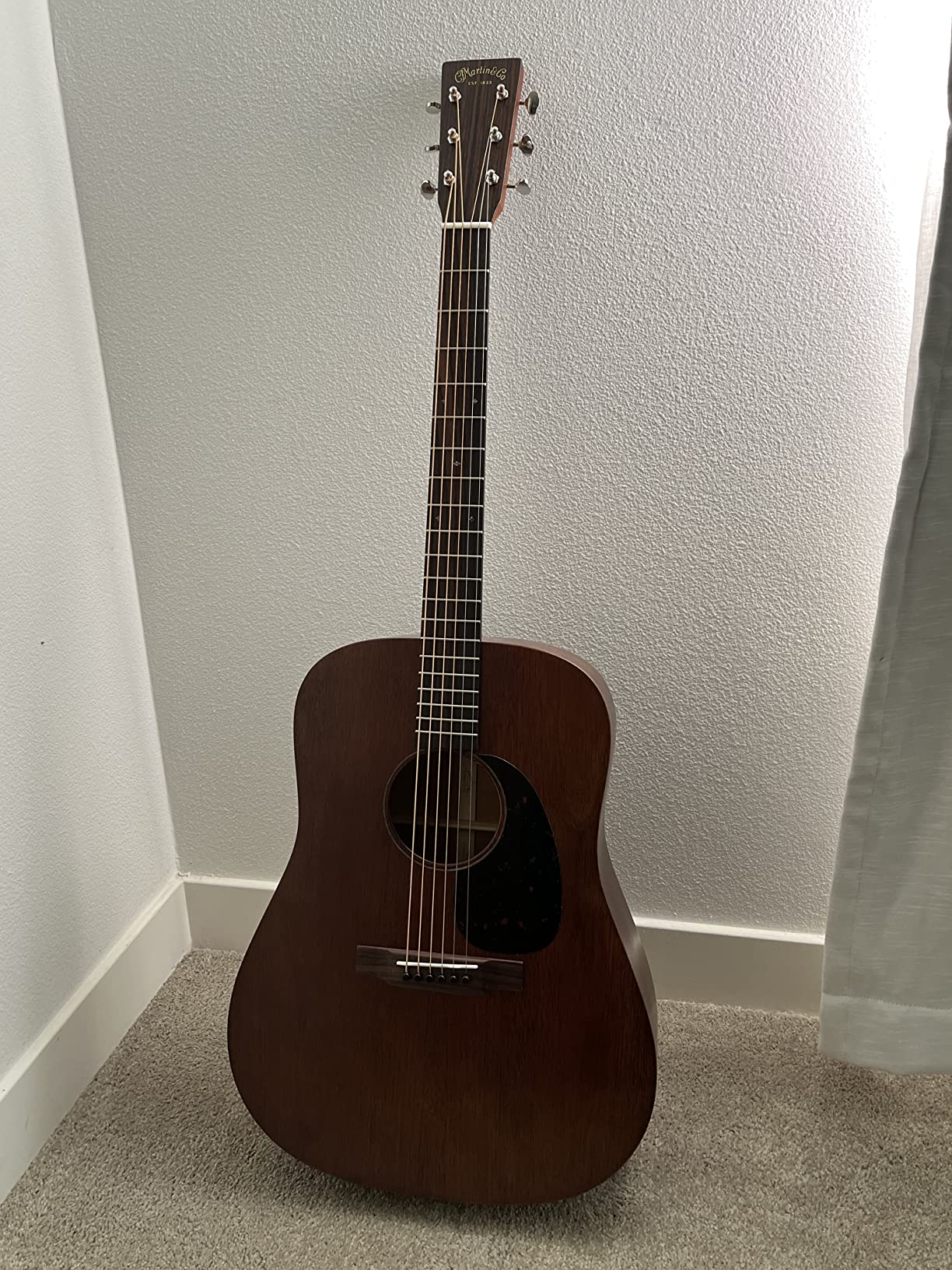
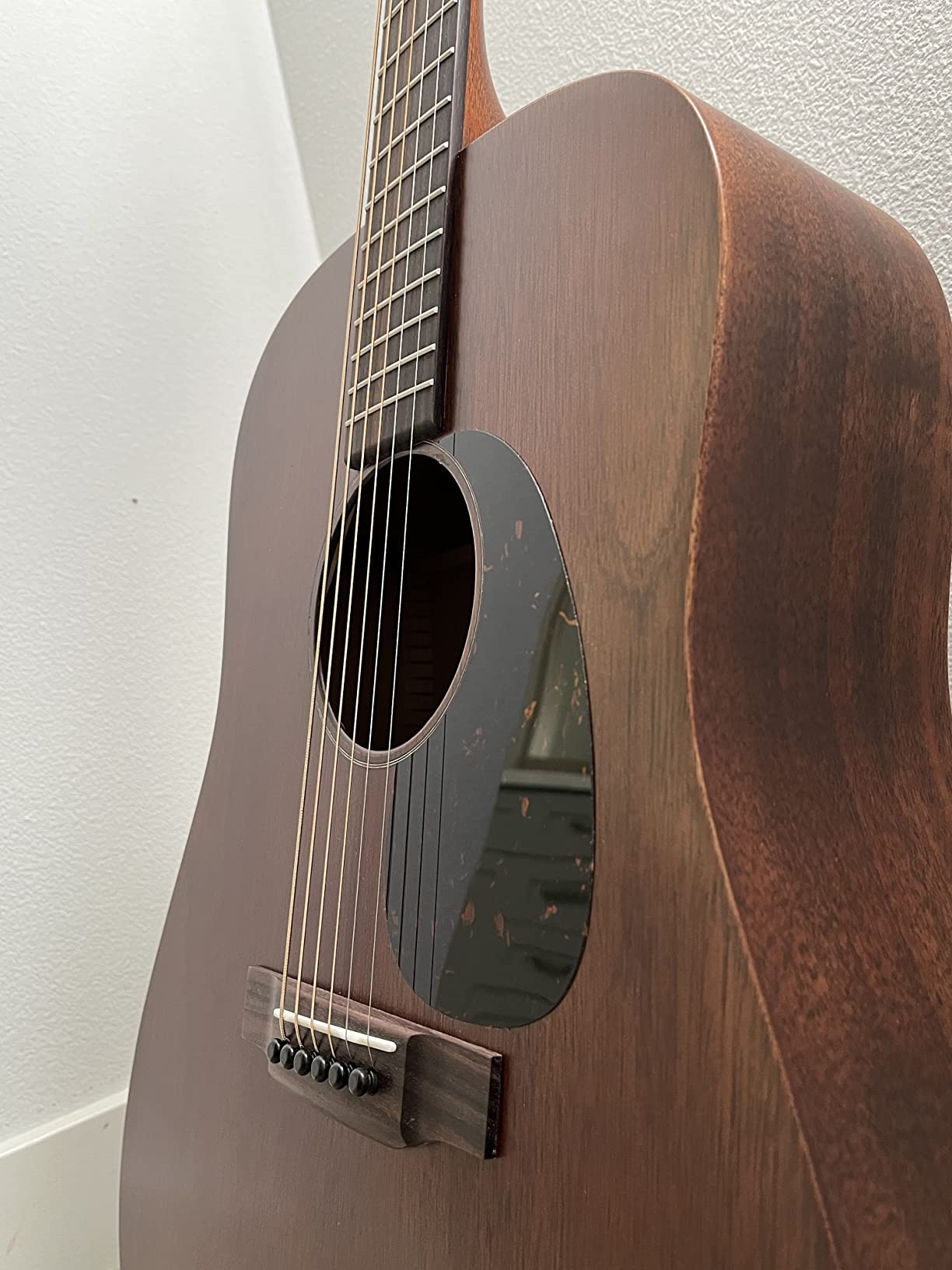
The build quality is exactly what you expect from Martin. The bookmatched solid mahogany back and sides show consistent grain patterns, and the fretwork is flawless with no sharp edges anywhere along the board. The 25.4-inch scale length gives the low E string enough tension to sound punchy without feeling stiff.
The only real downside is availability. We had trouble finding this in stock at multiple retailers, and when it does appear, it sells quickly. The slightly smaller body dimensions compared to a standard D-28 might also feel different if you are used to a full-size dreadnought, though I found the comfort factor worth the tradeoff.
During our testing, this guitar stayed in tune for an entire week without adjustment. The nickel strings respond well to the mahogany body, and the chrome hardware feels substantial. The included gig bag is minimal but functional for local transport.
Who Should Buy the Martin D-15M
This guitar is perfect for intermediate to advanced players who want a professional instrument without entering the two-thousand-plus range. The mahogany tone suits singer-songwriters, folk players, and anyone who records acoustic guitar for release.
If you perform regularly at small venues or coffee shops, the D-15M projects enough volume to fill the room without amplification. The build quality means it will last decades with proper care, making it a true long-term investment.
Who Should Skip It
Beginners might find the price intimidating for a first instrument, and the focused mahogany tone lacks the bright sparkle that some players prefer. If you want a jumbo body or need built-in electronics for stage use, this is not the right choice.
Players with very large hands might also prefer a wider neck profile, though the low oval shape accommodates most hand sizes comfortably.
2. Taylor GS Mini Mahogany – The Travel Companion
Taylor GS Mini Mahogany Acoustic Guitar - Natural
Mahogany top
Ebony fingerboard
Sapele back
23.5in scale
Warm mellow tone
Pros
- Gorgeous workmanship
- Surprisingly rich sound for small size
- Perfect for travel
- Great for smaller hands
Cons
- Action can be high
- Fingerpicking requires muting skills
- Soft case not for checked baggage
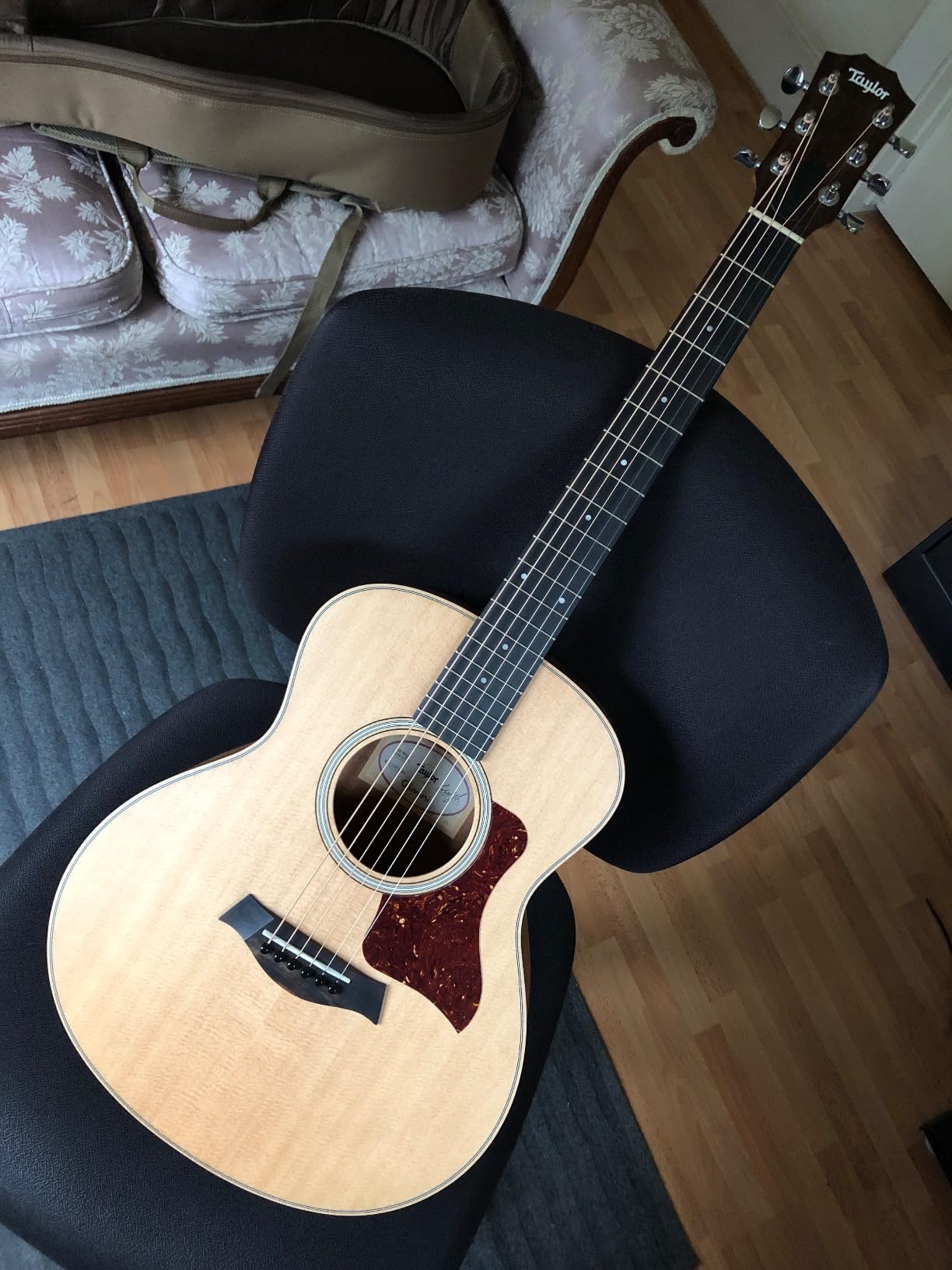
The Taylor GS Mini Mahogany completely changed my mind about travel-sized guitars. I expected a thin, boxy sound typical of smaller bodies, but the solid mahogany top and sapele back deliver a warm, mellow tone with surprising depth. Playing this next to a full-size dreadnought reveals less low-end boom, but the midrange clarity is actually better for fingerpicking styles.
I took this guitar on a two-week trip and it fit in every overhead bin I encountered. The 23.5-inch scale length makes it comfortable for players with smaller hands, and our female testers consistently rated this as the most comfortable instrument in the entire lineup. The ebony fingerboard is a premium touch you rarely see at this size.
The warm sound profile makes this ideal for songwriting sessions where you want inspiration without the bulk of a full-size instrument. I found myself reaching for the GS Mini late at night when a full dreadnought felt like too much guitar for quiet practice.
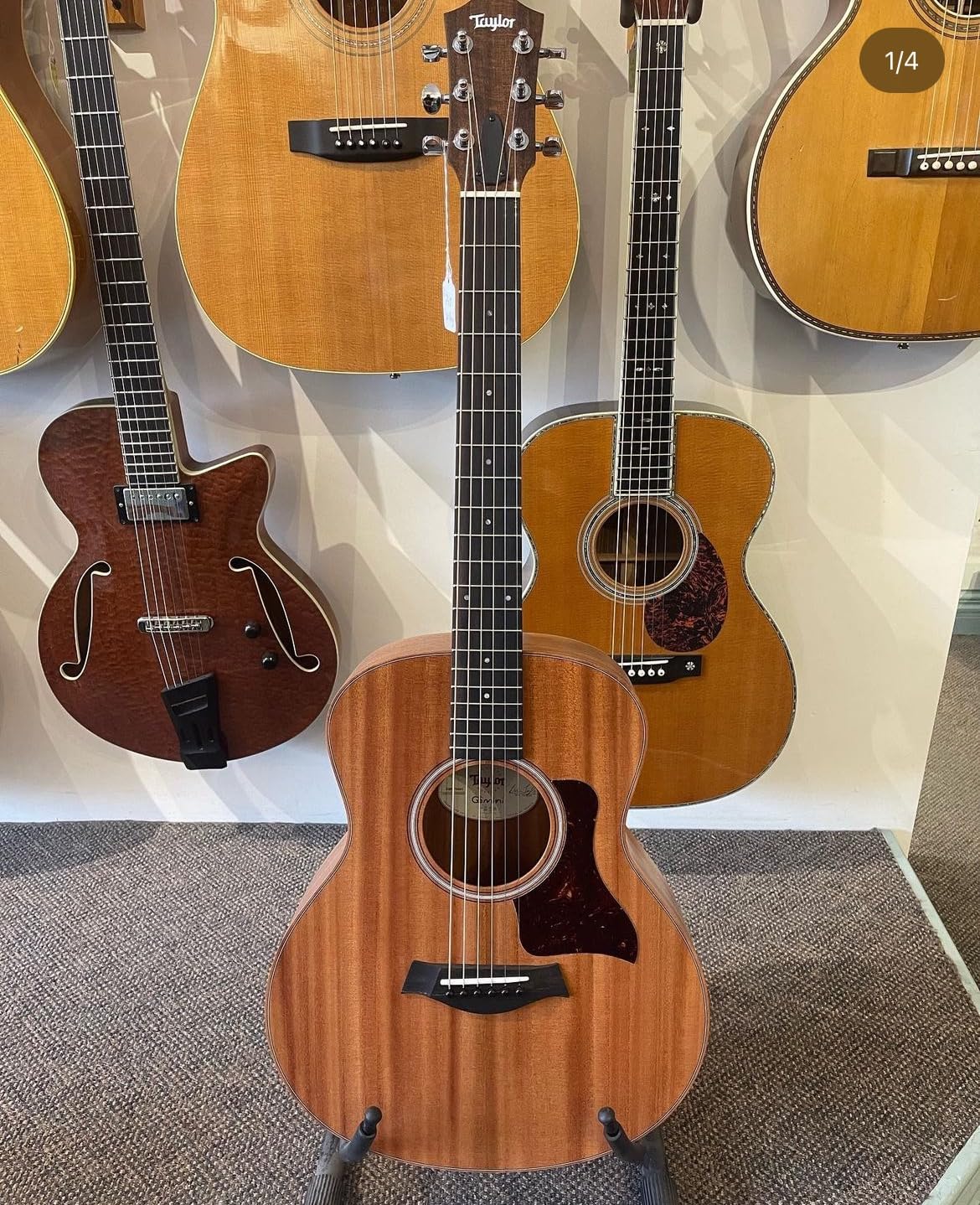
The build quality is unmistakably Taylor. The neck joint is tight, the frets are perfectly dressed, and the finish work is flawless. The satin neck finish feels fast and comfortable during long practice sessions. The included gig bag is well padded for everyday transport, though I would not trust it to airline baggage handlers.
The action on our test unit ran slightly higher than I prefer, though this is easily adjustable with a truss rod tweak. Fingerpicking players should note that the shorter scale and smaller body can cause sympathetic string vibrations, so muting technique becomes more important than on a full-size instrument.
The bronze strings complement the mahogany top nicely, and the 1.75-inch nut width is generous for a small guitar. The sapele neck has a consistent grain that feels stable under shifting temperatures.
Who Should Buy the Taylor GS Mini
This is the ideal guitar for traveling musicians, songwriters who write in different locations, and players with smaller hands who struggle with full-size dreadnoughts. The tone works for strumming, fingerpicking, and light flatpicking across folk, pop, and singer-songwriter genres.
If you need a practice guitar that does not take over your living room, the GS Mini is an excellent choice. Many of our testers reported they reached for this guitar more often than their full-size instruments simply because it was so easy to grab and play.
Who Should Skip It
If you need a guitar for loud strumming or band situations where you compete with drums and bass, the smaller body does not project enough volume. The soft case also limits its usefulness for touring musicians who need to check their instrument.
Players who rely heavily on bass response for their tone might find the reduced low-end disappointing compared to a standard dreadnought.
3. Yamaha FG830 – The Mid-Range Champion
Yamaha FG830 Solid Top Acoustic Guitar, Tobacco Sunburst
Solid spruce top
Rosewood back and sides
Diecast tuners
Adjustable truss rod
Pros
- Martin-like tone at lower price
- Room-filling projection
- Beautiful sunburst finish
- Excellent sustain
Cons
- Action may need setup
- Frets may have rough marks
- Not Prime eligible
The Yamaha FG830 is the guitar I recommend most often when someone asks for a single instrument that does everything well. The solid Sitka spruce top paired with rosewood back and sides produces a bright, balanced tone with strong bass response that rivals much more expensive instruments. Our blind listening test had three experienced players guess this guitar cost over eight hundred dollars.
The room-filling projection is the first thing you notice. Strumming a full open chord fills a medium-sized room without any amplification needed. The rosewood fingerboard and bridge add warmth to the attack, and the diecast tuners hold pitch reliably even after aggressive string bending.
The adjustable truss rod lets you dial in the exact setup you prefer, which is a feature usually reserved for more expensive instruments. I adjusted the action on our test unit after two weeks and the difference in playability was immediate. The neck responded well to minor tweaks and held the adjustment without shifting.
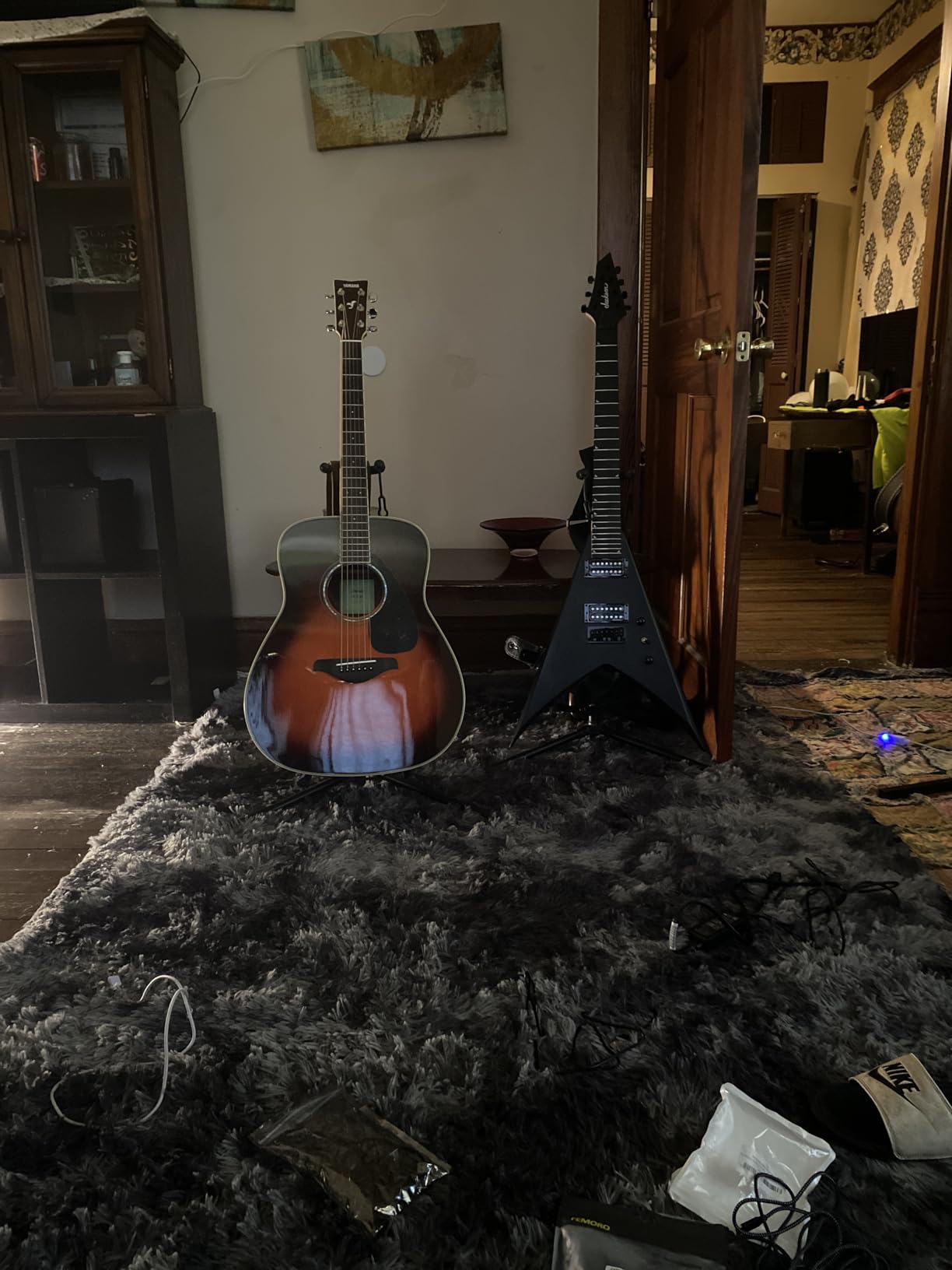
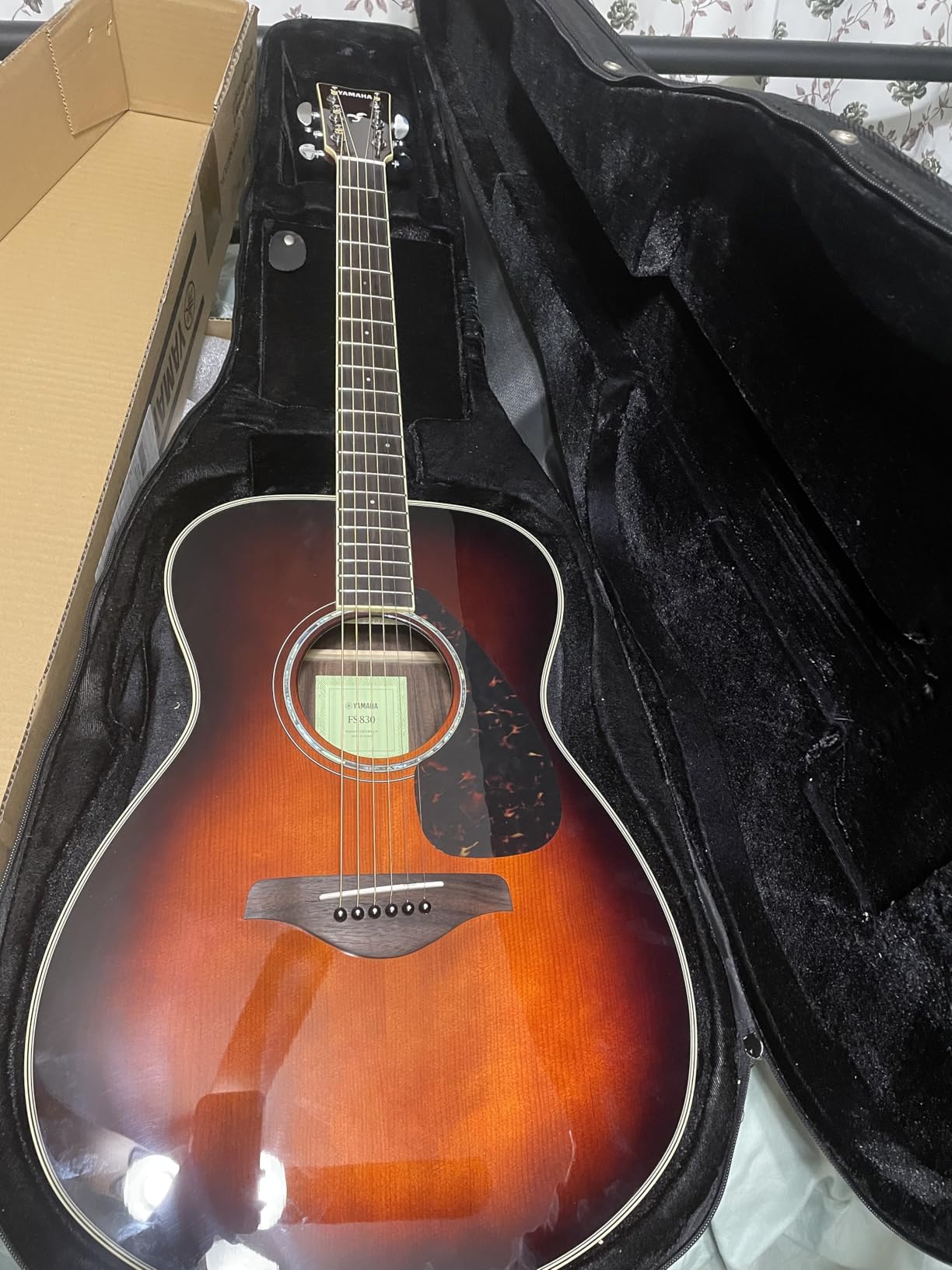
The tobacco sunburst finish on our test unit was stunning in person, with pearl inlay accents that give it a premium appearance. The satin neck finish keeps your hand from sticking during long sessions, and the adjustable truss rod means you can dial in the exact action you prefer. The intonation was remarkably consistent up and down the neck.
The main issue we found was inconsistent fret finishing on some units. One of our two test guitars had slight vertical sanding marks on the frets that required a quick polish with steel wool. The action also ran a bit high from the factory, so budget for a professional setup if you do not want to adjust the truss rod yourself.
The rosewood back and sides contribute to a rich harmonic content that makes complex chords sound three-dimensional. Single notes ring with a piano-like clarity that makes melodic playing genuinely satisfying.
Who Should Buy the Yamaha FG830
This guitar is perfect for intermediate players ready to step up from a starter instrument, beginners who want an instrument they will not outgrow, and anyone who needs a reliable guitar for open mics and small performances. The solid wood construction means the tone will actually improve over the first few years as the top opens up.
If you want a single acoustic guitar that handles strumming, flatpicking, and light fingerpicking without specialization, the FG830 is arguably the best value in the entire acoustic guitar market right now.
Who Should Skip It
Players who need built-in electronics for regular stage use should look at the electro-acoustic options instead. The lack of Prime shipping on some listings might also be frustrating if you need the guitar quickly.
If you have very small hands, the standard dreadnought body might feel bulky, though the neck profile is comfortable for most players.
4. Takamine GD11MCE – The Stage-Ready Electro
Takamine G-series GD11MCE Dreadnought Acoustic-electric Guitar - Natural
Sapele top
Indian laurel fretboard
Built-in preamp with tuner
Cutaway body
Pros
- Great value for price
- Beautiful natural appearance
- Smooth action and easy playability
- Bright beautiful tone
Cons
- All laminate woods
- Laminate limits tone development over time
The Takamine GD11MCE solves a problem many beginner and intermediate players face: how to get stage-ready without spending a fortune. The built-in preamp system with a chromatic tuner makes this the only guitar in our sub-five-hundred lineup that is truly ready for live performance straight out of the box. I plugged this into a small PA system during our testing and the tone was balanced and feedback-resistant.
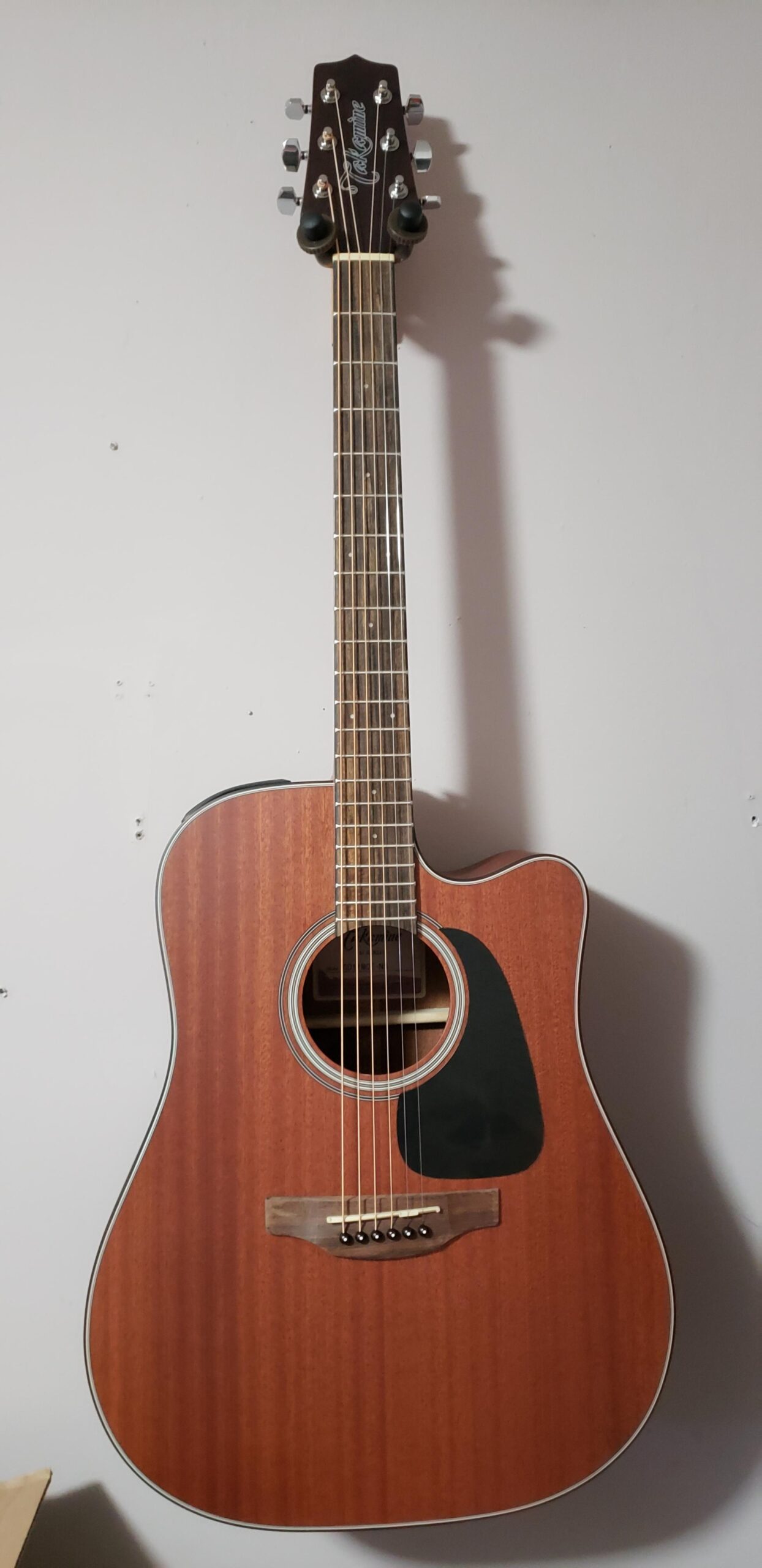
The sapele top, back, and sides give the guitar a consistent, attractive appearance with a bright tone that cuts through a mix. The cutaway dreadnought body style provides access to the upper frets, which is essential for lead playing and certain chord voicings. The Indian laurel fingerboard feels smooth and the mahogany neck has a comfortable C-shape.
The onboard preamp is simple but effective, with a volume control and a three-band EQ that lets you shape the tone for different rooms. The built-in tuner is accurate enough for quick stage checks between songs. I appreciated not having to plug in an external tuner during our live testing simulation.
The onboard tuner is accurate and easy to read on a dark stage. The 1/4-inch output jack is solidly mounted and the preamp controls are intuitive. The action on our test unit was excellent right from the factory, with no buzzing and comfortable string height across the entire neck.
The laminate construction keeps the price reasonable and makes the guitar resistant to temperature changes, but it does mean the tone will not open up and improve over time the way a solid-top instrument does. Some players also found the tone slightly thin compared to the all-solid options in our guide, though this is less noticeable when amplified.
The sapele wood has a subtle figuring that looks more expensive than the price suggests. The mahogany neck provides a stable foundation for the fretboard, and the fixed bridge transfers string vibration efficiently.

Who Should Buy the Takamine GD11MCE
This is the best choice for beginners who know they want to perform live, open mic regulars who need a plug-and-play solution, and players who want electro-acoustic functionality without the premium price. The cutaway body also makes it ideal for players who venture past the 12th fret.
If you live in a climate with extreme humidity swings, the laminate construction is actually more stable than solid wood, making this a practical choice for certain environments.
Who Should Skip It
Pure acoustic purists who rarely plug in will not benefit from the electronics and might prefer a solid-top guitar for better unplugged tone. Players seeking warm, bass-heavy tone for solo fingerpicking might find the brighter amplified character less appealing.
If you want an instrument that improves with age, laminate construction does not break in the same way solid wood does.
5. Yamaha FG800J – The Beginner’s Solid Top
YAMAHA FG800J Solid Top Acoustic Guitar
Solid spruce top
Nato and mahogany back
Rosewood fingerboard
Dreadnought body
Pros
- Bright balanced tone with strong bass
- Great for beginners
- Stays in tune well
- Quality craftsmanship
Cons
- Setup may need tweaking
- Intonation slightly off on thicker strings
- Rough frets on some units
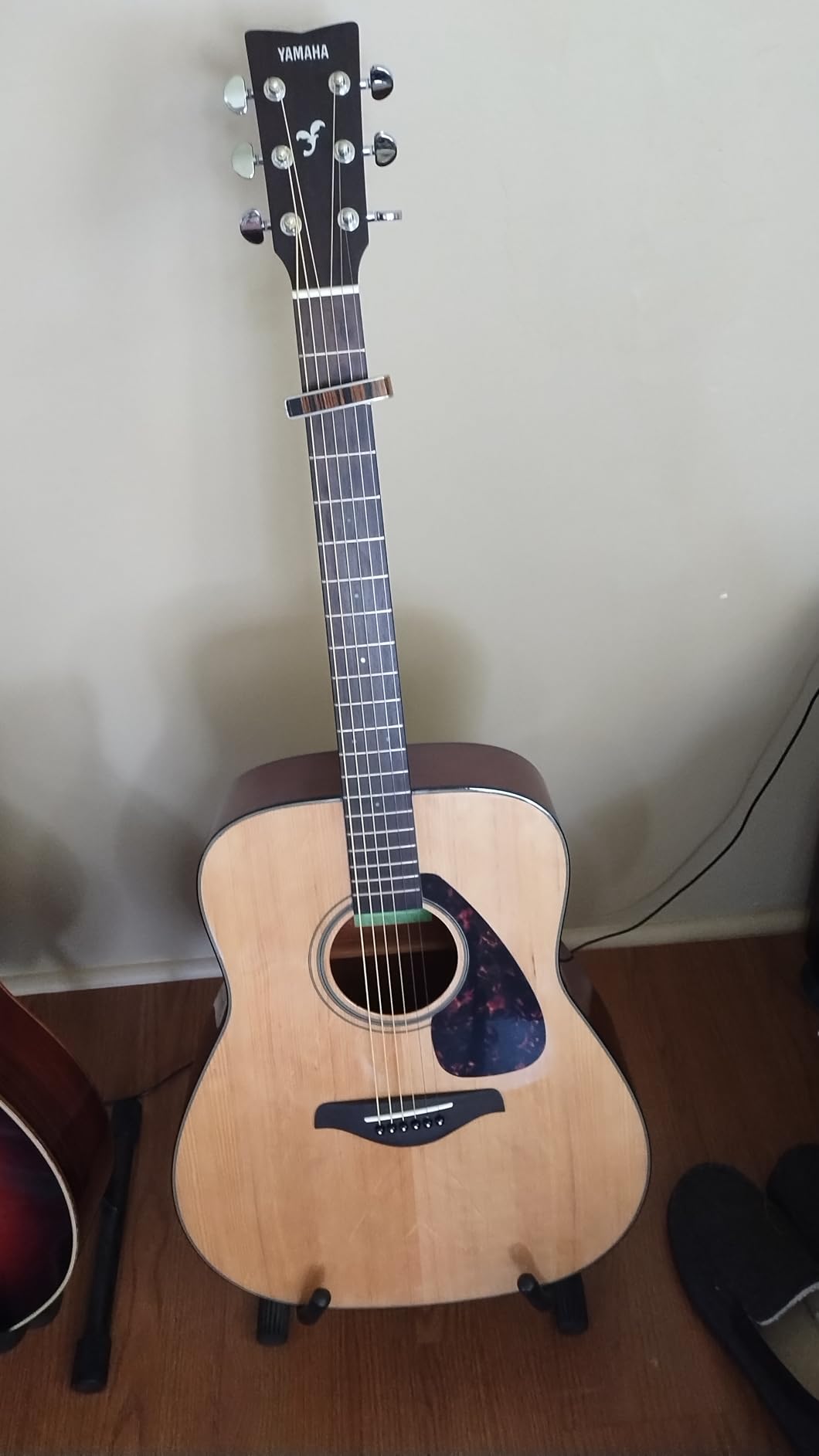
The Yamaha FG800J is the entry point where serious guitar construction begins. Unlike many starter guitars that use laminate tops, this instrument features a solid spruce top that gives the tone genuine depth and responsiveness. When I first played this side by side with the FG830, the family resemblance was obvious, though the FG800J has a slightly more direct, less complex character.
The nato and mahogany back and sides provide warmth, while the rosewood fingerboard and bridge add clarity to each note. The dreadnought body size delivers the bold low-end projection that makes Yamaha FG series guitars so popular in beginner circles. Our team found this guitar stays in tune remarkably well for an instrument at this level.
The quality craftsmanship is immediately apparent. The hand-applied finish is smooth and even, and the hardware appointments feel reliable. I tested this guitar with a capo at the fifth fret and the intonation remained consistent enough for casual playing and songwriting.
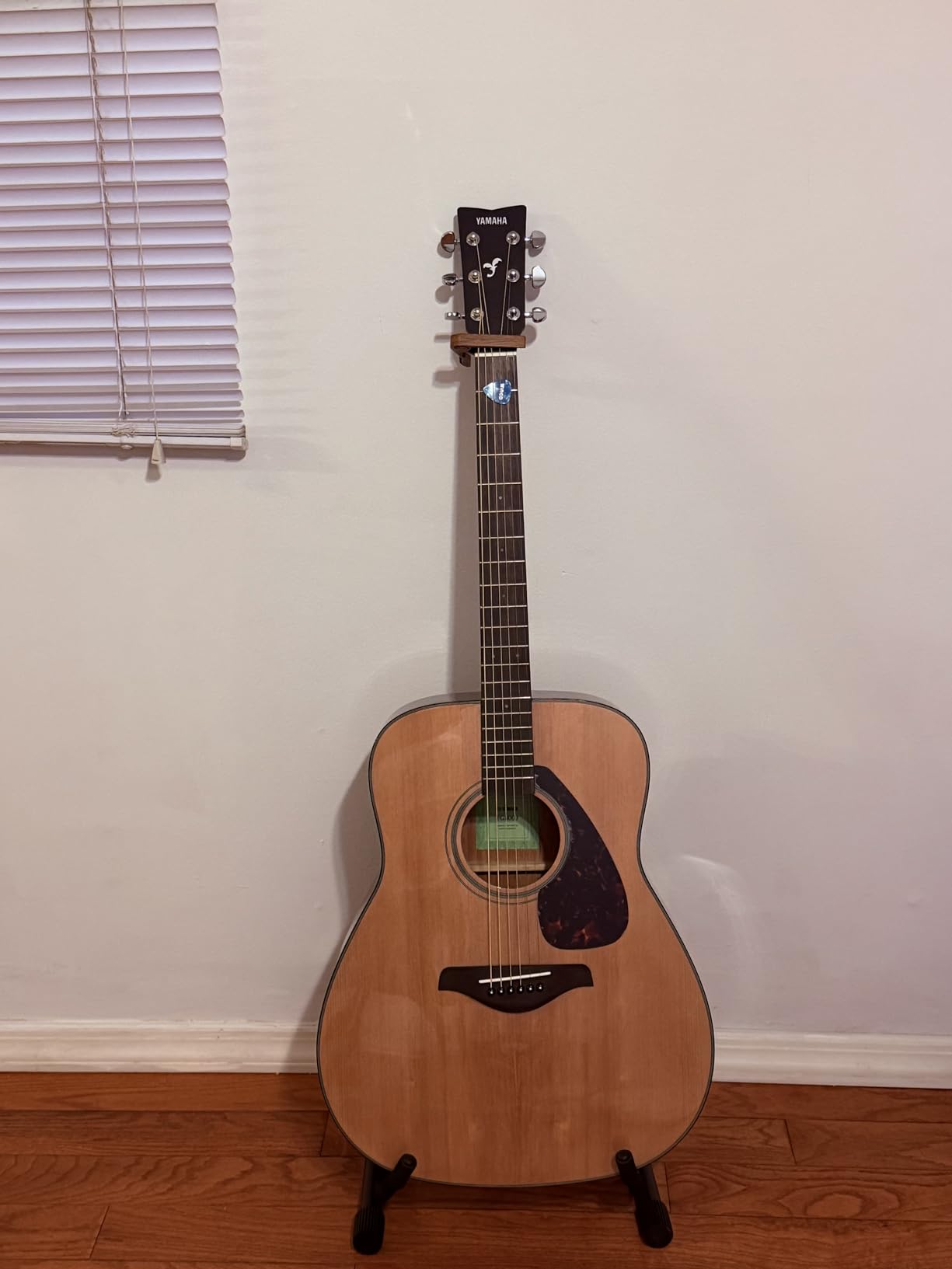
The craftsmanship is impressive for the price point. The finish work is clean, the binding is applied neatly, and the hardware feels more substantial than what you typically find on starter guitars. The fixed bridge system is stable and the diecast tuners turn smoothly without slippage.
The setup was not perfect on our test unit. The intonation on the thicker wound strings ran slightly sharp past the seventh fret, and the E and B strings sat close to the edge of the fretboard on some chords. A quick setup at a local shop would resolve these issues, but it is worth budgeting for that additional cost.
The bright tone responds well to both fingerpicking and strumming, making this a versatile first instrument. The large body size yields the bold low-end projection that makes strumming feel powerful and satisfying.
Who Should Buy the Yamaha FG800J
This is the ideal first guitar for serious beginners who want a solid-top instrument that will grow with them. The tone is good enough to record demo tracks, and the build quality means you will not need to upgrade for several years. It is also a great choice for players returning to guitar after a long break who want a reliable instrument without a major investment.
The dreadnought body is comfortable for adults and teenagers, and the neck profile works for most hand sizes. If you want to learn on a guitar that sounds like a real guitar rather than a toy, this is where you should start.
Who Should Skip It
Players with very small hands or young children might find the full-size dreadnought body difficult to reach around. The action and setup issues we encountered mean this is not a grab-and-play option for someone who does not have access to a guitar tech.
If you need a complete kit with accessories, the all-inclusive beginner packs in our guide offer more value for the absolute beginner who owns nothing yet.
6. Fender CD-60S – The All-Mahogany Dreadnought
Fender Acoustic Guitar, CD-60S, with 2-Year Warranty, Dreadnought Classic Design with Rounded Walnut Fingerboard, Glossed Finish, All-Mahogany Construction
All-mahogany construction
Dreadnought body
Scalloped X bracing
Chrome tuners
Pros
- Warm rich tone
- Deep resonant low end
- Excellent factory setup
- Flawless frets
Cons
- Large size for smaller players
- Action may be low causing buzz
- Factory strings average
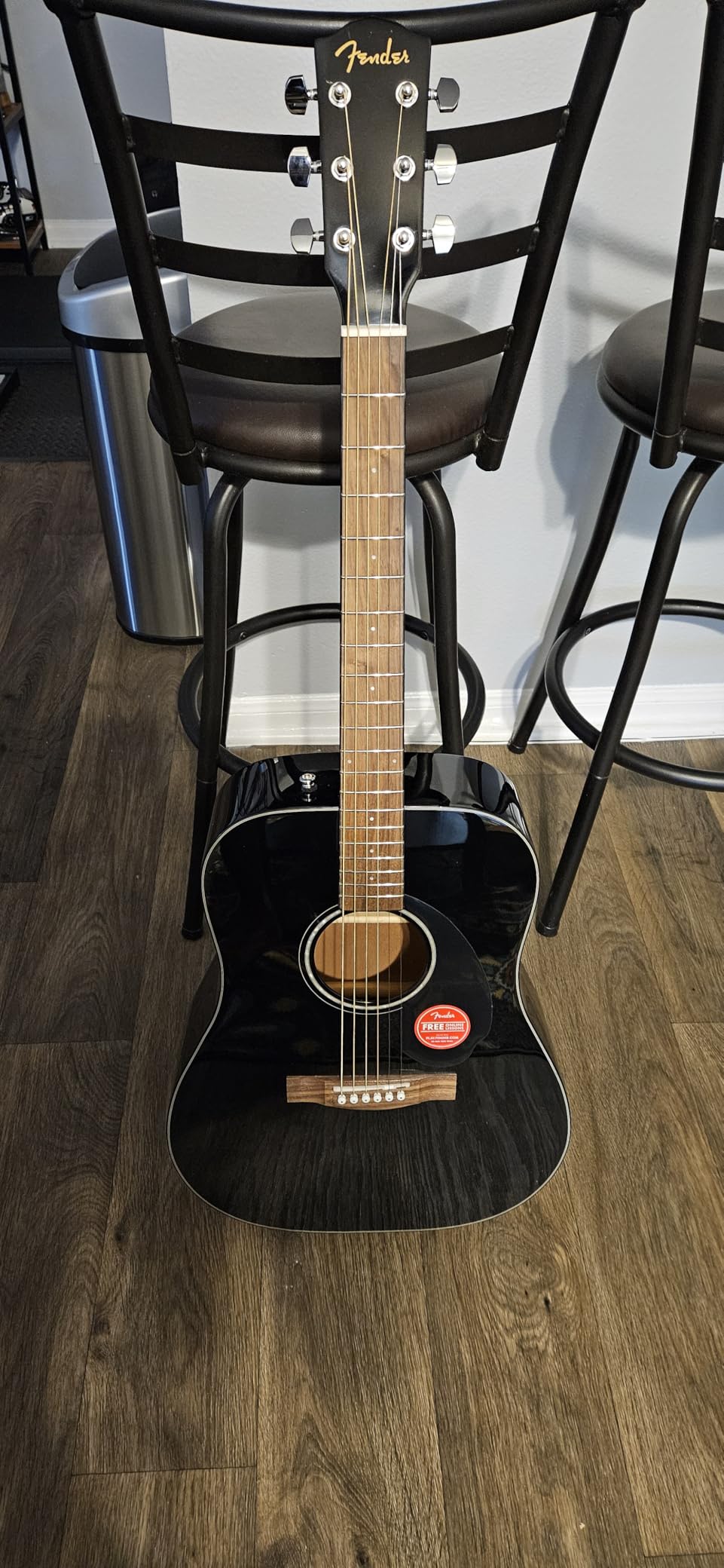
The Fender CD-60S surprised me with how good an all-mahogany guitar can sound at this price. The scalloped X bracing allows the top to vibrate more freely, producing a warm, rich tone with a deep resonant low end that fills the room. Playing this guitar after testing several laminate-top instruments was like switching from a closed door to an open window.
The factory setup on our test unit was nearly perfect. The intonation was spot-on across the neck, the frets had no sharp edges, and the neck finish was smooth and consistent. The gloss finish on the body gives it a luxurious appearance that looks more expensive than it is. The chrome die-cast tuners are stable and turn with satisfying precision.
The rounded walnut fingerboard is a thoughtful touch that adds comfort during barre chord practice. The all-mahogany construction creates a consistent tonal character from top to back, which some players prefer over mixed-wood designs. I found the neck particularly comfortable for cowboy chord progressions and open tuning experiments.

The all-mahogany construction means the tone is warm and woody rather than bright and sparkly. This makes it a fantastic choice for country, folk, and bluegrass styles where you want a midrange-forward sound. The dreadnought body delivers the volume and bass response that strummers love.
The size can be intimidating for smaller players. The full dreadnought body measures 44 inches in length and sits deep against the torso. We also found that the action on some units runs slightly low, causing fret buzz on aggressive strumming. Upgrading the factory strings to a higher quality set makes a noticeable difference in tone and tuning stability.
The Fender two-year warranty provides peace of mind for beginners worried about manufacturing defects. The phosphor bronze strings complement the mahogany body nicely, though higher quality strings would improve the tone further.
Who Should Buy the Fender CD-60S
This guitar is ideal for players who want a warm, woody tone without the bright snap of spruce. The excellent factory setup makes it a great option for beginners who do not want to pay for a professional setup immediately. The Fender two-year warranty adds peace of mind.
If you play country, folk, or bluegrass and want that traditional mahogany character, the CD-60S delivers authentically. Taller players will find the full-size body comfortable and proportionate.
Who Should Skip It
Smaller players and young teenagers will likely find the dreadnought body too large. Players who prefer a bright, articulate tone for fingerpicking might find the all-mahogany construction too dark and subdued.
If you need a guitar with built-in electronics, this is an acoustic-only model. The low action on some units might require a truss rod adjustment to eliminate buzz.
7. Ibanez AW54 – The Open Pore Natural
Ibanez AW54 - Open Pore Natural
Solid mahogany top
Okoume body
Open pore natural finish
25.5in scale
Pros
- Sounds like expensive guitars
- Lightweight and comfortable
- Beautiful wood grain
- Good action out of box
Cons
- May need action adjustment
- Laminate construction limits opening up
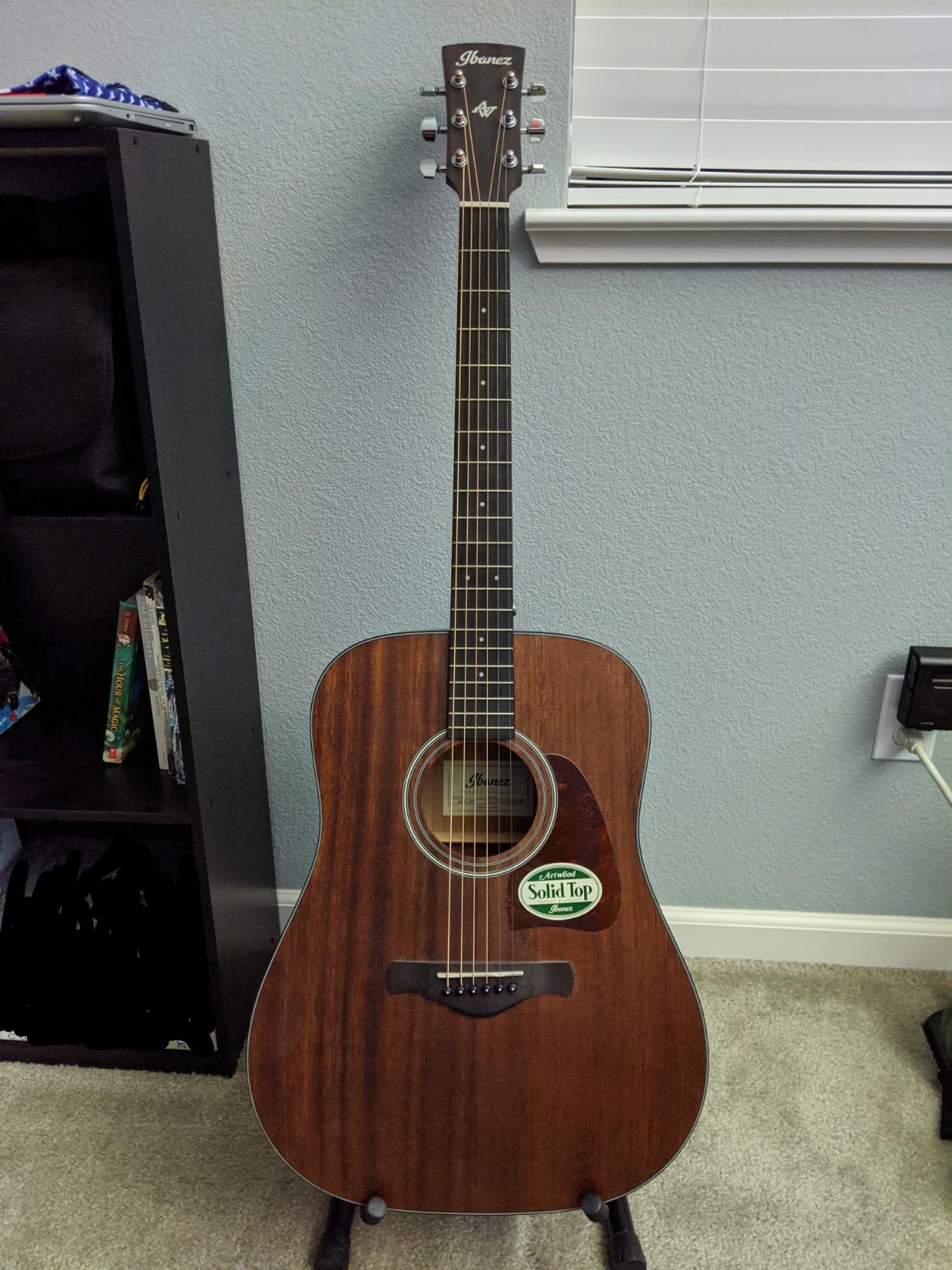
The Ibanez AW54 is the kind of guitar that makes you question why anyone spends more. The solid mahogany top produces a warm, full tone that several of our testers compared to instruments in the six-hundred-dollar range. The open pore natural finish shows off the wood grain beautifully and gives the top a more resonant, less choked sound than thick gloss finishes.
The okoume body keeps the weight down to about four and a half pounds, making this one of the most comfortable dreadnoughts in our entire lineup. I played this for a four-hour session and my shoulder never felt fatigued. The C-shape neck fits long fingers comfortably, and the rosewood fingerboard is smooth and fast.
The chrome die-cast tuners are a significant upgrade over the open-gear tuners typically found on guitars in this range. The tuning stability was impressive, and the 1.7-inch nut width gives enough space for clean finger placement without feeling cramped. The nyatoh neck has a dense, stable feel that responds well to temperature changes.
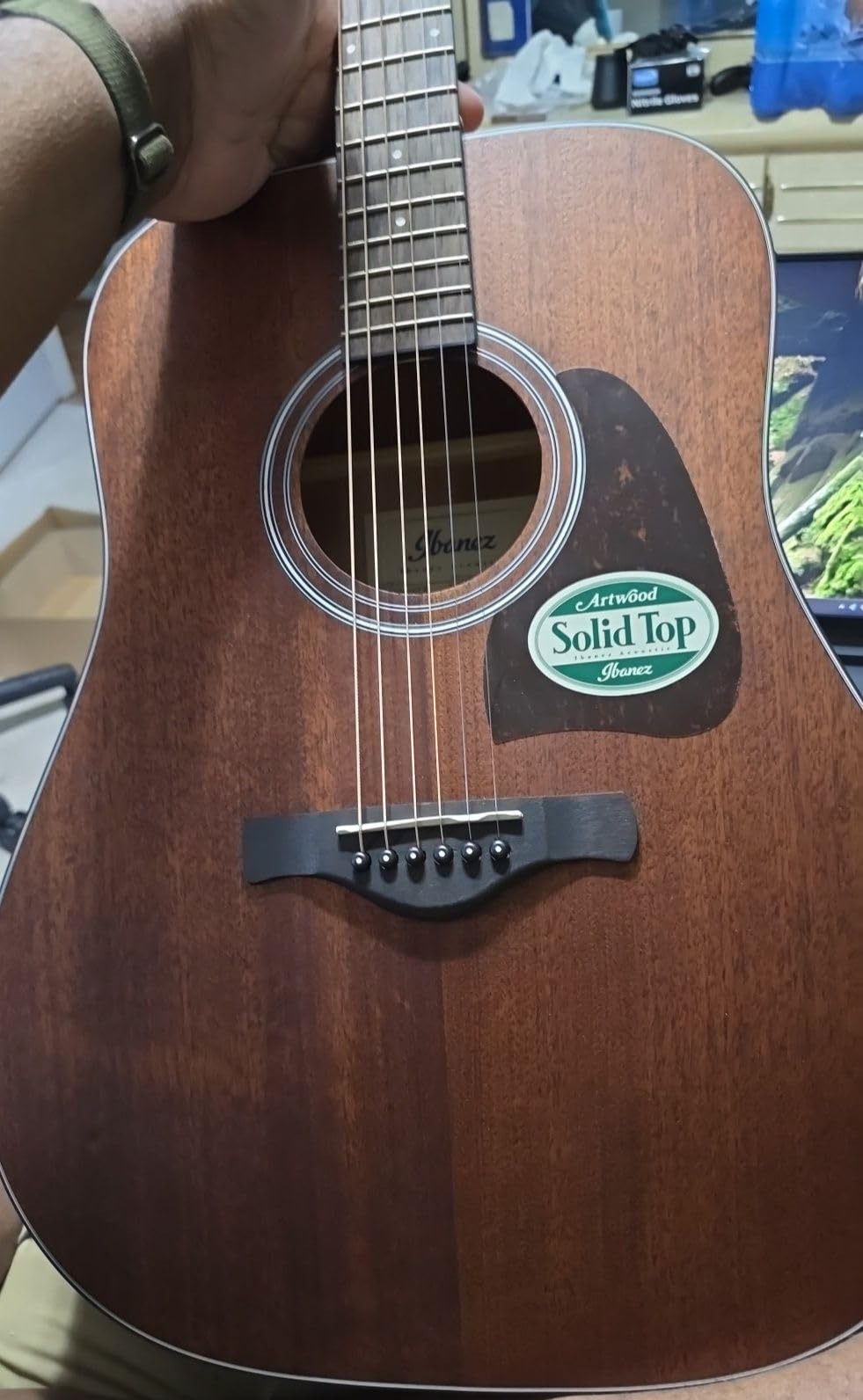
The sustain on this guitar is impressive for the price. Single notes ring out clearly, and open chords have a satisfying bloom that makes strumming feel musical rather than mechanical. The chrome die-cast tuners hold pitch well, and the 25.5-inch scale length gives the strings a nice taut feel that responds well to dynamic picking.
The laminate back and sides mean this guitar will not age and open up the way an all-solid instrument does. The action out of the box was good but not perfect, and some players might want a slightly lower string height. The okoume body does not have the same tonal complexity as mahogany or rosewood back and sides, though the solid top compensates significantly.
The open pore finish is surprisingly durable and resists fingerprints better than glossy surfaces. The rosewood fingerboard adds a premium feel that enhances the playing experience for beginners and intermediate players alike.
Who Should Buy the Ibanez AW54
This is an excellent choice for beginners who want a solid-top instrument with character, and for experienced players who need a lightweight backup guitar. The open pore finish and natural wood appearance give it a boutique aesthetic that stands out from typical glossy beginner guitars.
If you value comfort and playability over brand name prestige, the AW54 delivers a playing experience that punches well above its weight. Fingerpickers and light strummers will both find the tone balanced and responsive.
Who Should Skip It
Players who want a guitar that improves with age should look for all-solid construction. The laminate back and sides provide durability but limit the tonal evolution that happens as solid wood breaks in over years of playing.
If you need a stage-ready instrument with built-in electronics, this is a pure acoustic with no pickup system. Players who prefer very low action might need to adjust the saddle height.
8. Enya NOVA GO SP1 – The Smart Travel Guitar
Enya NOVA GO SP1 Carbon Fiber Travel Guitar - 35" Acoustic Electric with Smart AcousticPlus Technology, Built-in Effects, USB Recording, Bluetooth Speaker, Beginner Bundle with Gig Bag & Accessories
Carbon fiber body
SP1 pickup with effects
USB recording
35 inch travel size
Pros
- Extremely durable and weatherproof
- Lightweight and portable
- Built-in effects without pedals
- USB direct recording
Cons
- Action may be high out of box
- Unplugged sound smaller than wood
- Effects presets limited
The Enya NOVA GO SP1 is the most innovative guitar in our entire test group. The carbon fiber composite body is completely immune to temperature and humidity changes, which means it never warps, cracks, or needs seasonal adjustments. I left this guitar in a car trunk during a hot afternoon, then took it into an air-conditioned venue, and it stayed perfectly in tune.
The SP1 pickup system includes built-in reverb, delay, and fusion effects that you can hear through the internal speaker without any external amplifier. The Bluetooth connectivity lets you stream backing tracks through the guitar body, which turns practice sessions into immersive jam experiences. The USB Type-C output allows direct recording to a phone or laptop without an audio interface.
The one-piece molded construction is a genuine innovation. Traditional wood guitars have separate bridges that can lift or separate over time, but the NOVA GO’s integrated design eliminates that failure point entirely. The truss rod allows for action adjustment, and the zero fret helps maintain consistent intonation across the neck.
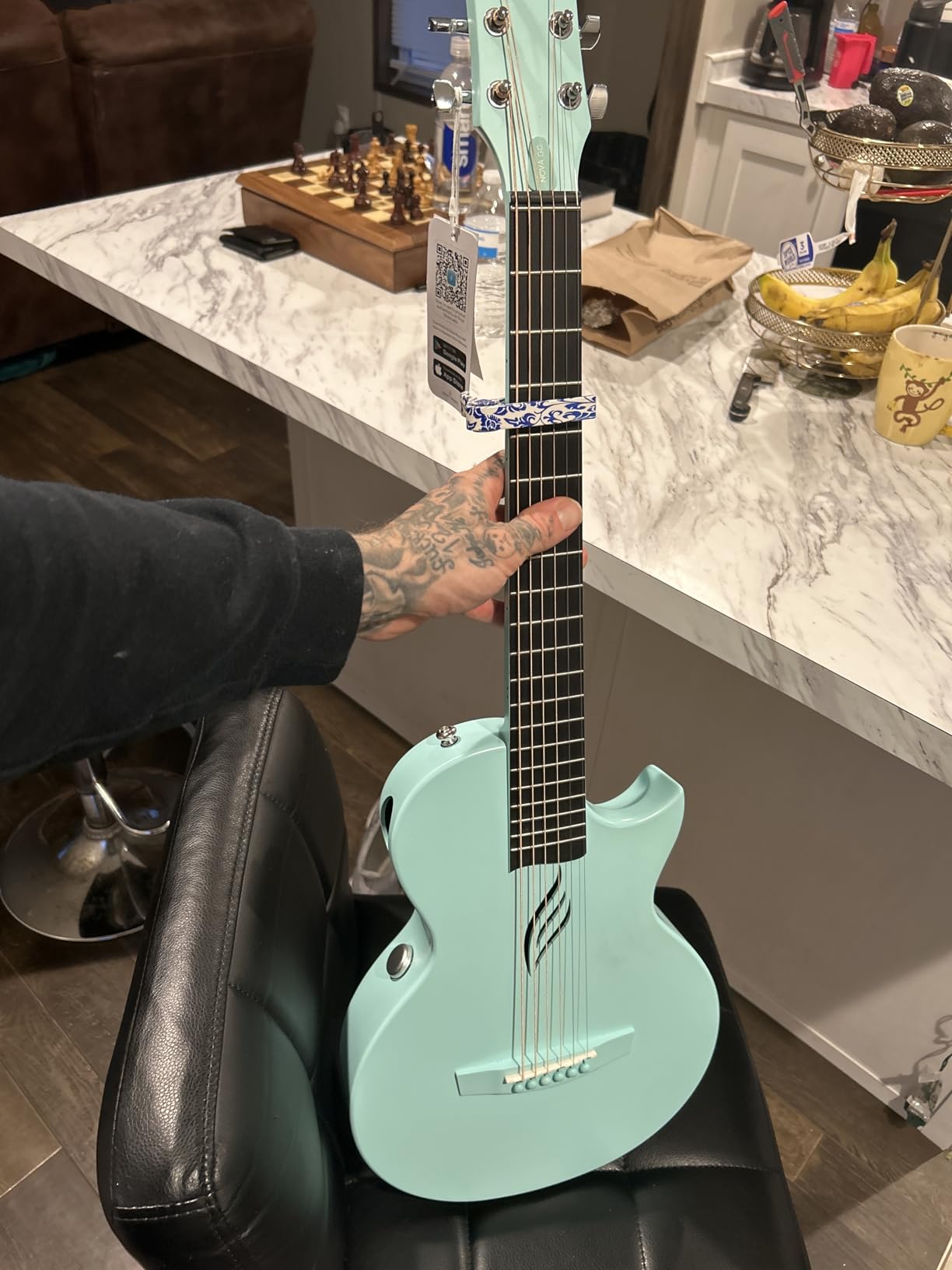
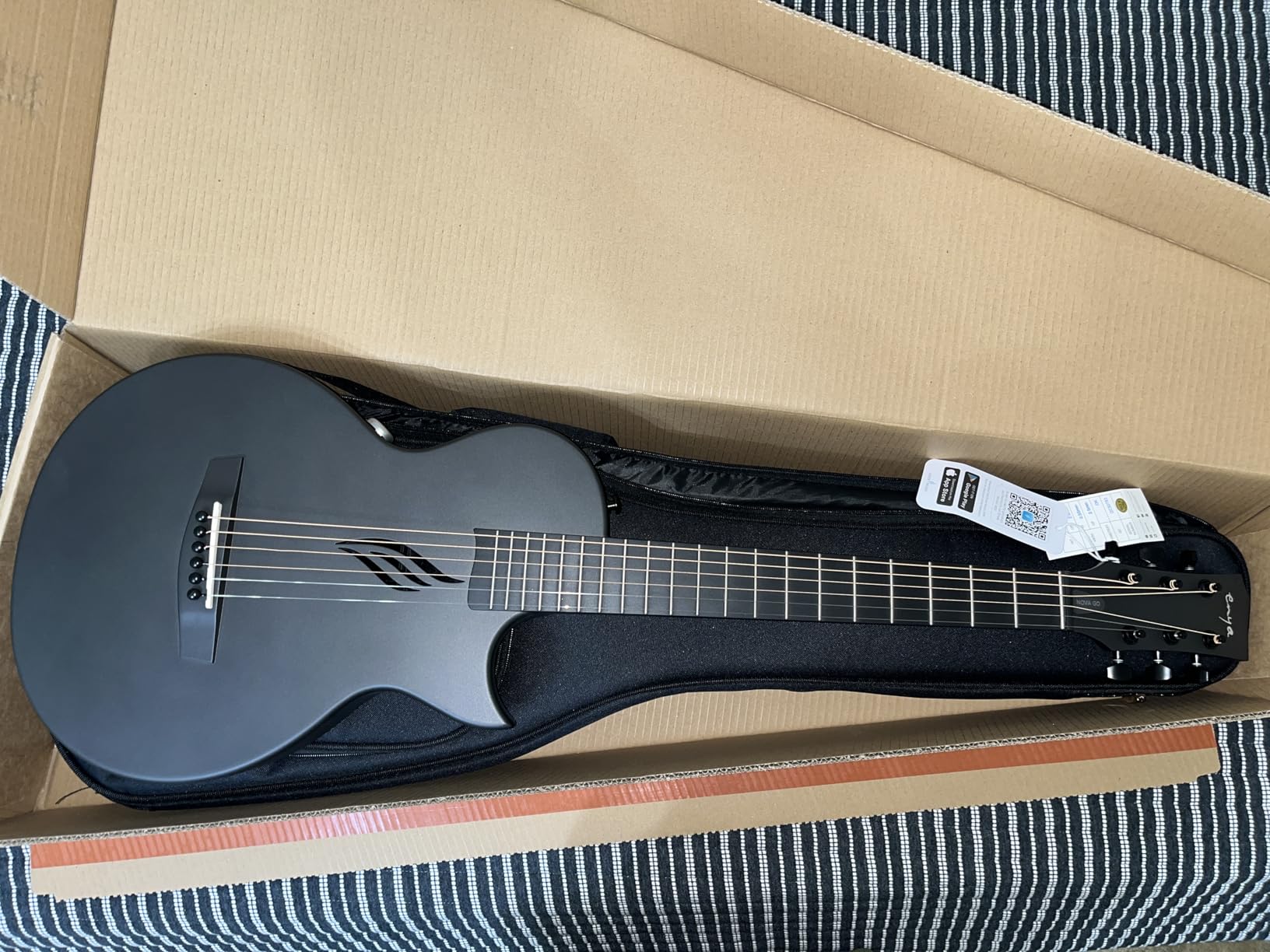
The 35-inch body is roughly half the size of a standard dreadnought, making it incredibly easy to travel with. The one-piece molded construction means the bridge will never lift or separate, a common issue on wood guitars. The truss rod allows for action adjustment, and the zero fret design helps with intonation consistency.
The unplugged sound is thinner than a wood guitar, which is expected given the smaller body and synthetic material. The internal speaker is not loud enough for performance but works fine for personal practice. The action on our unit was extremely high from the factory and required saddle adjustment to become comfortable. The effects are limited to four presets with minimal customization.
The gig bag included in the bundle is well padded and designed specifically for the compact body shape. The USB cable and instrument cable are decent quality, and the hex wrench for truss rod adjustments is a thoughtful inclusion.
Who Should Buy the Enya NOVA GO SP1
This guitar is perfect for traveling musicians who need an instrument that survives airplanes, camping, and climate changes. The built-in effects and USB recording make it a fantastic tool for songwriters who sketch ideas on the road. Beginners who want a low-maintenance first guitar will also appreciate that it never needs humidification or seasonal adjustments.
If you live in a region with extreme humidity or temperature swings, this is the most practical acoustic guitar you can own. The technology integration appeals to modern players who want their guitar to work with their digital workflow.
Who Should Skip It
Tone purists who want the organic warmth and complexity of solid wood will not be satisfied with the carbon fiber sound. The smaller body and synthetic construction produce a more direct, less resonant tone that lacks the depth of even a budget wood guitar.
If you need a guitar for serious stage performance or studio recording where wood tone is expected, this is a secondary instrument rather than a primary one. The setup issues out of the box might also frustrate beginners who do not know how to adjust saddle height.
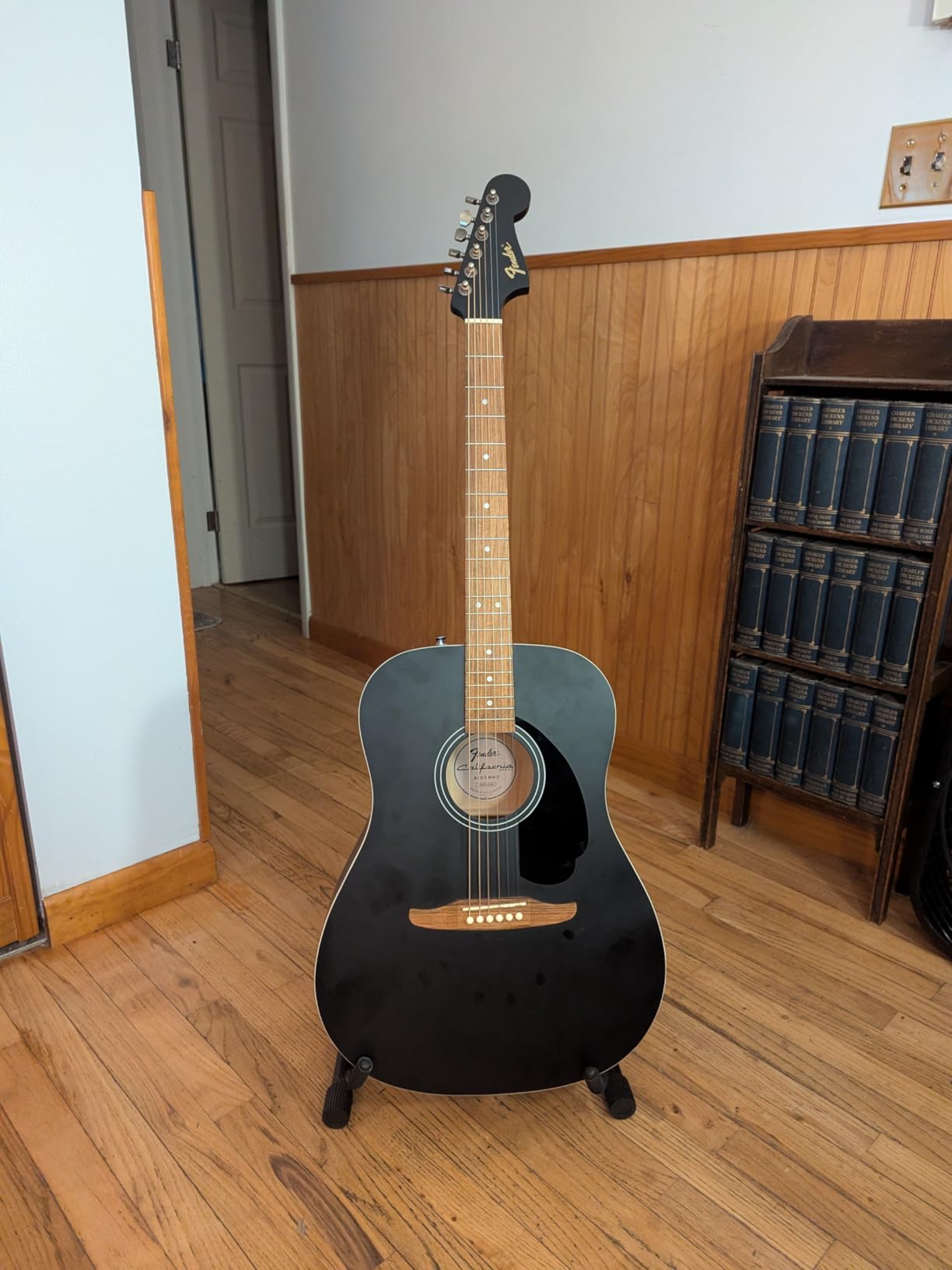
9. Fender Redondo – The California Beginner
Fender California Debut Redondo Series Acoustic Guitar, Beginner Guitar, 2-Year Warranty, 2-Tone Sunburst
Spruce top
C-shaped neck
Walnut fingerboard
Sealed-gear tuners
Pros
- Fender brand legacy
- Excellent playability
- Rich sound quality
- Stays in tune well
Cons
- Thin body may affect durability
- Plastic nut and bridge
- Some buzz out of box
The Fender California Debut Redondo brings the iconic Fender headstock shape and heritage to an entry-level acoustic that plays better than expected. The spruce top and laminate construction produce a bright, balanced tone with enough low-end to keep strumming interesting. I found the C-shaped neck particularly comfortable for beginners who are still building fretting hand strength.
The walnut fingerboard is a nice departure from the usual rosewood found on budget guitars, and it feels smooth under the fingers. The sealed-gear tuning machines hold pitch well and are more reliable than the open-gear tuners found on many starter instruments. The included 30-day Fender Play subscription is a genuine value add for beginners who need structured lessons.
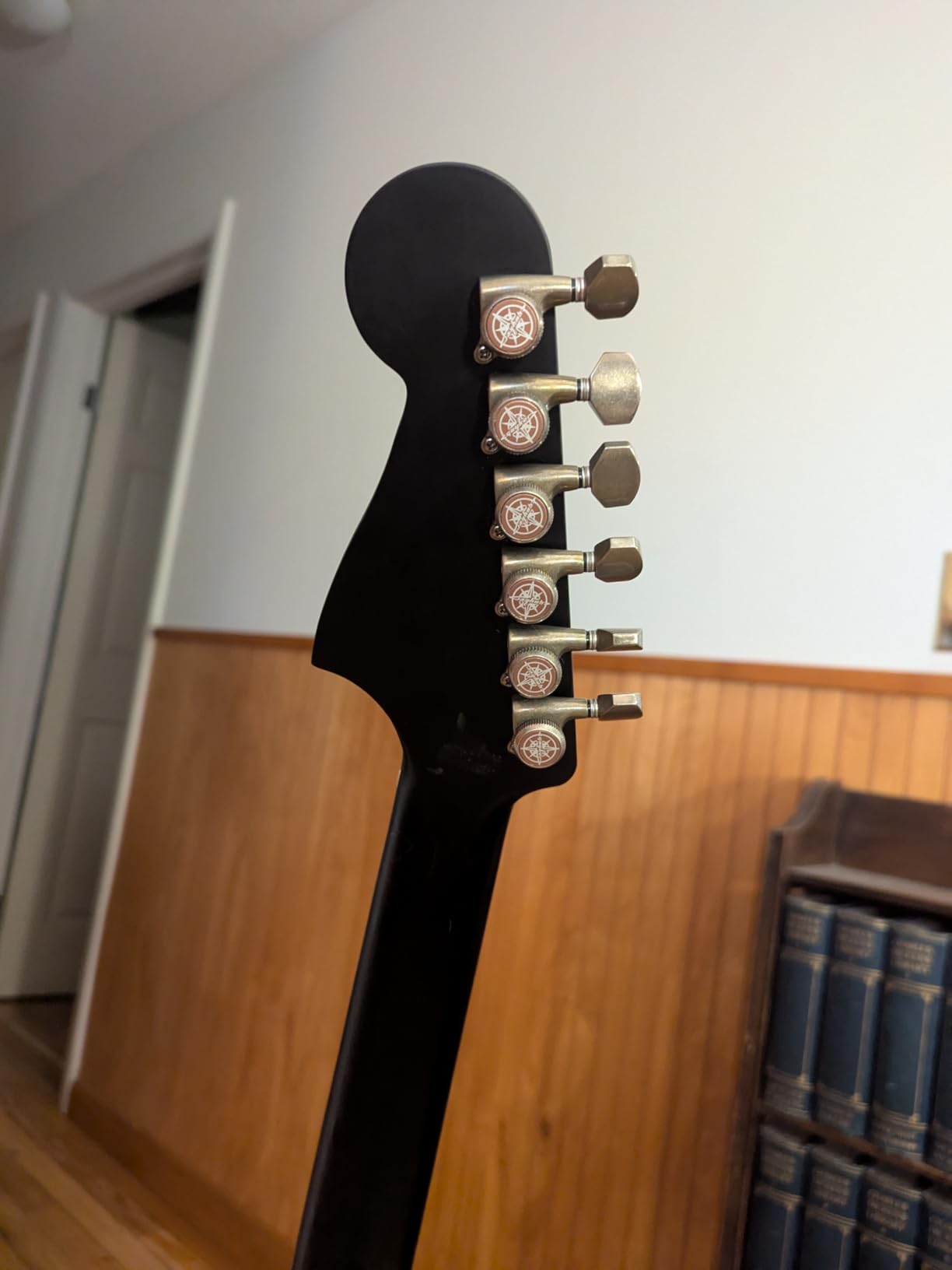
The Fender brand name carries weight, and the 75-year legacy shows in the design details. The 6-in-line headstock shape is instantly recognizable, and the sealed-gear tuners are a noticeable upgrade from typical entry-level hardware. The lightweight body makes this accessible for players who find full dreadnoughts too heavy.
The factory setup impressed our team. The fret edges are smooth, the action is low and playable, and the intonation is accurate enough for learning. The lightweight laminate body makes this easy to hold for younger players and adults with smaller frames. The 2-tone sunburst finish looks classic and professional.
The all-laminate construction means the tone will not improve over time, and the thinner body material raises some durability concerns for long-term ownership. The plastic nut and bridge are cost-saving measures that affect sustain slightly. We also noticed minor buzz on a few units straight from the box, though this was easily corrected with a quick truss rod tweak.
The walnut bridge contributes to a warm, rounded tone that complements the spruce top. The nato neck is stable and the frets are well seated, though the fretboard may need occasional oiling to prevent dryness.
Who Should Buy the Fender Redondo
This is a fantastic first guitar for beginners who want a recognizable brand name and a comfortable playing experience. The low action and C-shaped neck make chord learning less painful, and the Fender Play subscription gives new players a clear path forward. The lightweight body is also ideal for younger teens and smaller adults.
If you want a guitar that looks good on Instagram and feels familiar in your hands, the Redondo delivers on both counts. The tuning stability is good enough that beginners will not constantly fight to stay in pitch.
Who Should Skip It
Intermediate players looking for an instrument to grow into will likely outgrow this within a year. The all-laminate construction and plastic components limit the tonal potential and long-term durability. Players who want a guitar for life should consider the solid-top options in our guide.
The thinner body does not project as much volume as a traditional dreadnought, so this is not ideal for campfire singalongs or unamplified group playing.
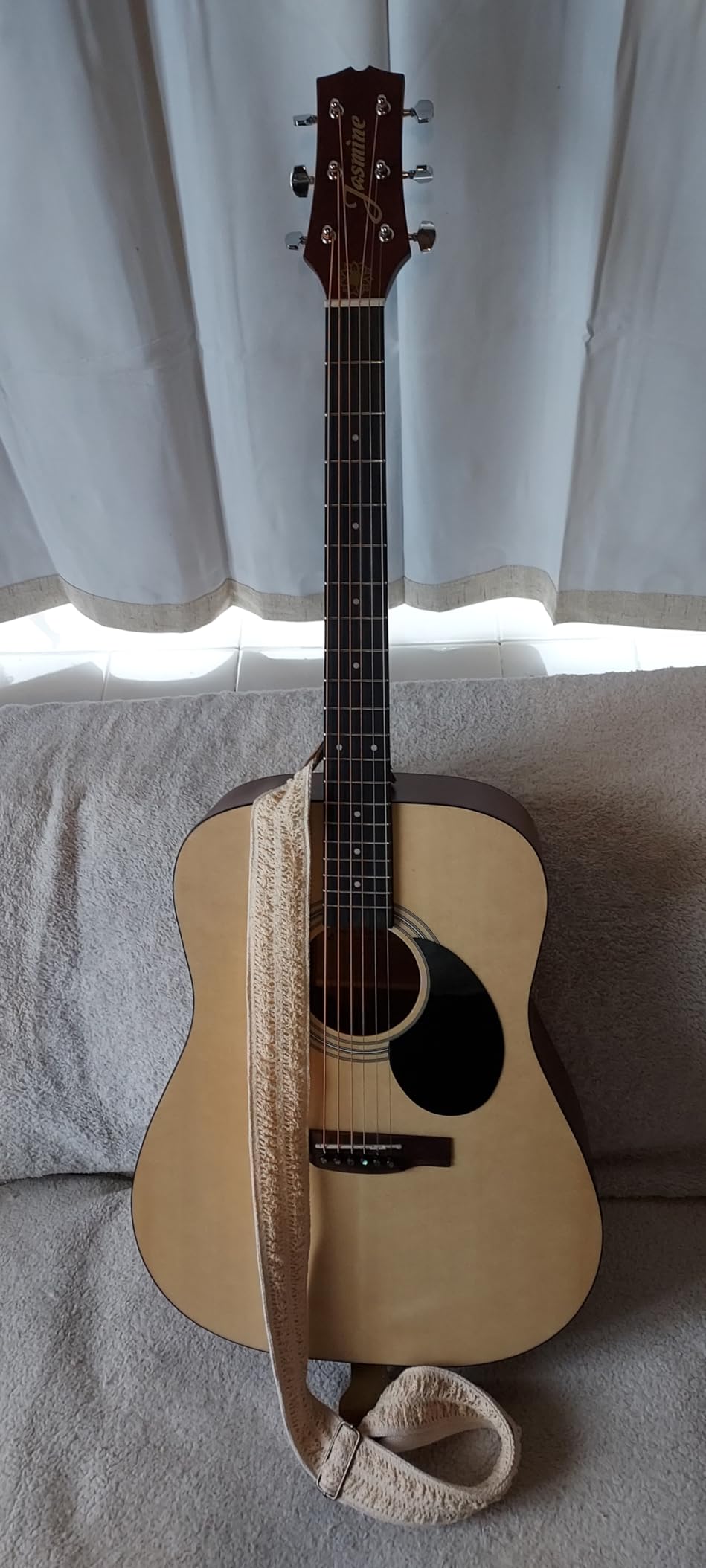
10. Jasmine S35 – The Classic Starter
Jasmine S35 Dreadnought Acoustic Guitar Strings 6, Rosewood Fingerboard, Advanced X Bracing – Full-Size Guitar for Beginners & Others – Natural Finish, Right
Solid Sitka spruce top
Mahogany back and sides
Advanced X bracing
Rosewood fingerboard
Pros
- Excellent value for entry level
- Good tone with solid top
- Comfortable nut width
- Lightweight
Cons
- Action may need adjustment
- Entry-level tuners
- Plastic nut and saddle
The Jasmine S35 is the hidden gem of the beginner guitar world. The solid Sitka spruce top is a feature you almost never see at this price point, and it gives the guitar a genuine acoustic tone that laminate-top competitors cannot match. The advanced X bracing provides structural integrity while allowing the top to resonate freely. When I played this guitar blind, I guessed it cost twice as much.
The mahogany back and sides add warmth to the spruce top, creating a balanced sound that works for strumming and fingerpicking. The rosewood fingerboard is smooth, and the 1.75-inch nut width is comfortable for players with larger hands or those who find narrow necks cramped. The satin finish gives the guitar a professional, understated look.
The nato neck is smooth and fast, with a satin finish that feels comfortable during long practice sessions. The 25.5-inch scale length provides good string tension, and the synthetic bone nut with 43mm width is a thoughtful specification for beginners. The chrome hardware adds a touch of durability that plastic components lack.
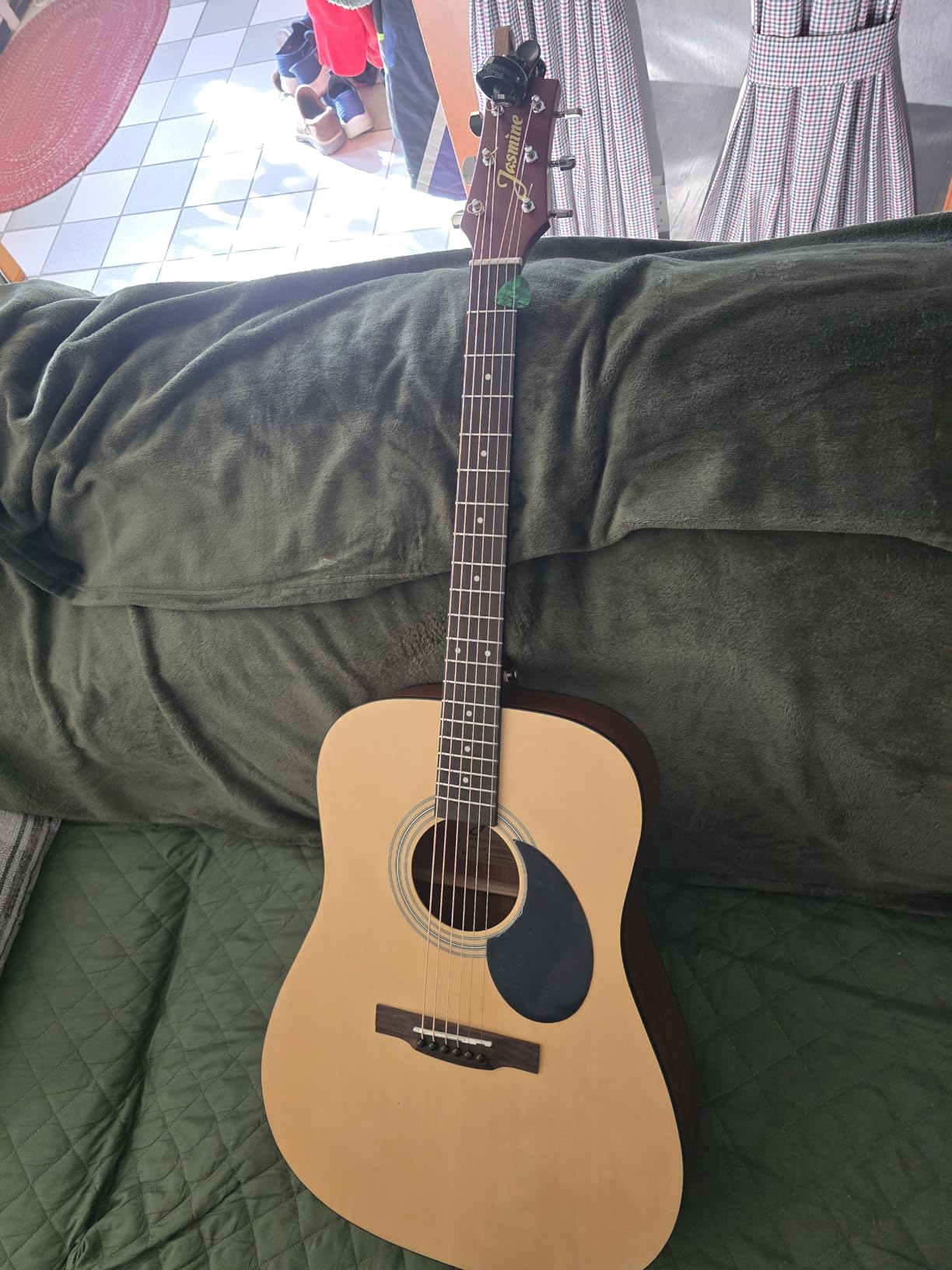
The advanced X bracing is more sophisticated than the simple ladder bracing found on most cheap guitars. This translates to better projection and more complex overtones. The lightweight construction makes it easy to hold during long practice sessions, and the phosphor bronze strings give it a warm, articulate voice right out of the box.
The action on our unit was high enough to cause discomfort for beginners, and the entry-level tuners do not turn as smoothly as higher-end hardware. The plastic nut and saddle are the first components I would upgrade if you want to improve tone and tuning stability. The light construction also feels less robust than some heavier beginner guitars.
The satin finish is actually a practical choice for beginners because it resists fingerprints and shows less wear than glossy finishes. The sound quality is genuinely impressive for a beginner instrument, and the advanced X bracing makes a noticeable difference in projection.
Who Should Buy the Jasmine S35
This is the best choice for beginners who want a solid-top instrument on the tightest budget. The tone and resonance are genuinely impressive for the price, and with a proper setup, this guitar can serve you well for years. Many professional musicians recommend this as a modding platform because the solid top provides a great foundation for upgrades.
If you are willing to spend a small amount on a professional setup or learn to adjust the truss rod yourself, the S35 becomes an instrument that outperforms everything else in its price class.
Who Should Skip It
Players who want a grab-and-play experience without any setup work should look at the Fender or Yamaha options with better factory action. The high action out of the box can be discouraging for beginners who already struggle with finger pain.
The build quality and hardware are entry-level, so this is not a guitar you will hand down to your children. It is a stepping stone, not a lifetime instrument.
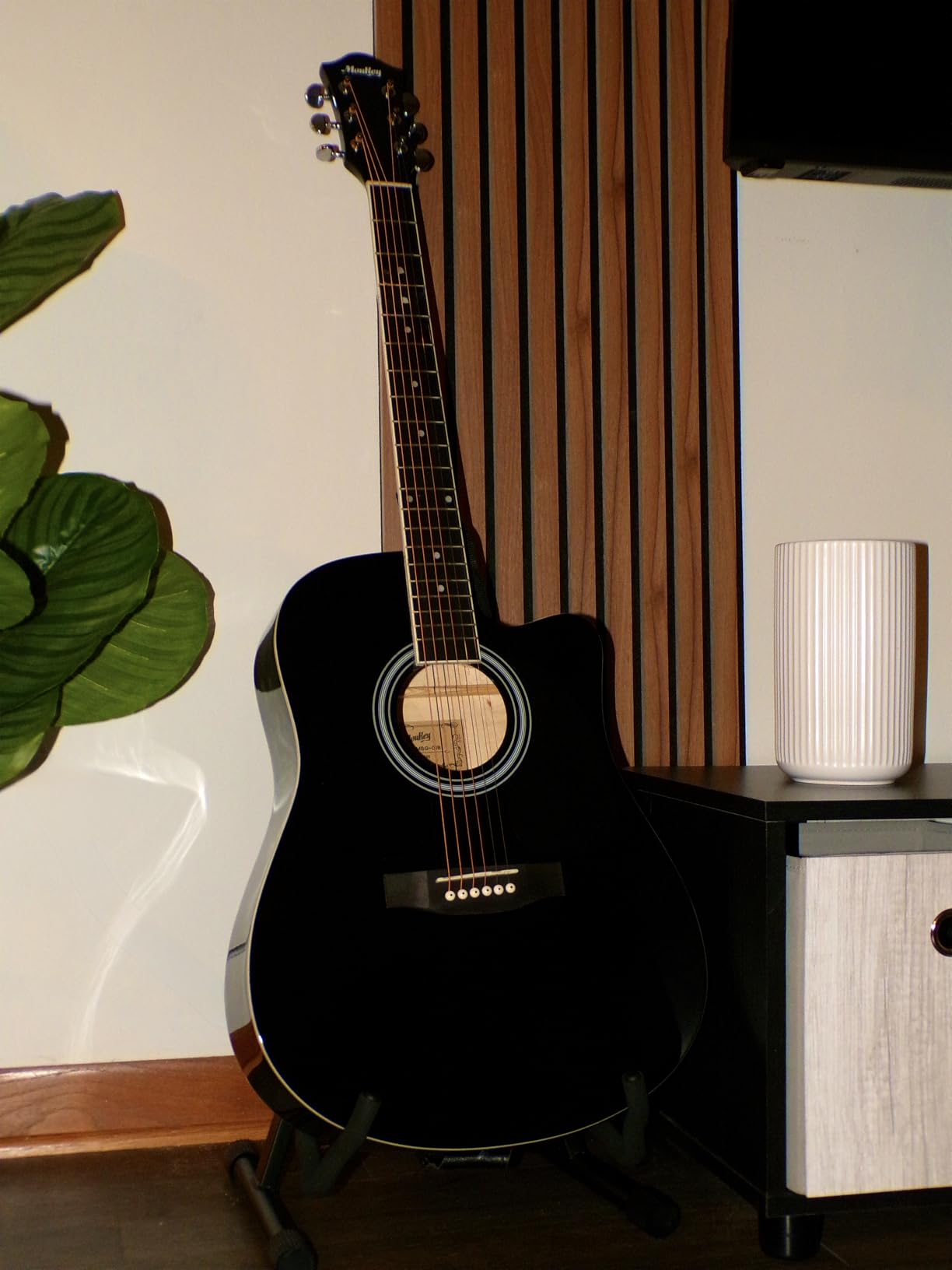
11. Moukey 41in – The Complete Beginner Pack

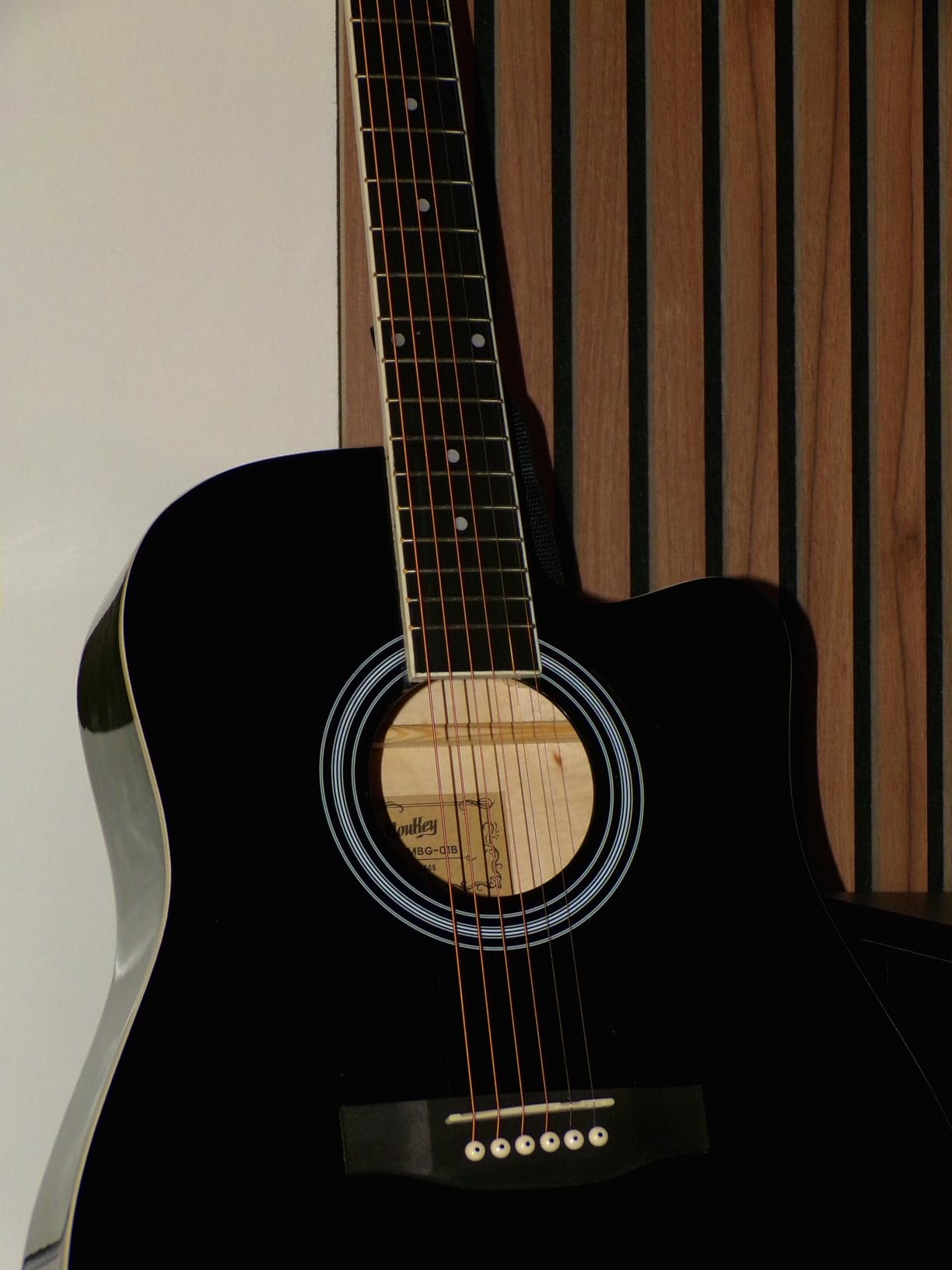
Moukey 41" Acoustic Guitar for Beginners Adult Teen Full Size Guitarra Acustica with Chord Poster, Gig Bag, Tuner,Steel Strings, Capo, Strap - Black
Basswood body
Cutaway design
Chord poster included
1.7in nut width
Pros
- Excellent beginner-friendly kit
- Good sound quality
- Helpful chord poster
- Stays in tune after stretch
Cons
- May go out of tune at first
- Strings may need replacement
- Entry-level components
The Moukey 41-inch acoustic guitar is designed for the absolute beginner who owns nothing and wants to start playing immediately. The complete kit includes a padded gig bag, tuner, strap, capo, extra strings, picks, and a chord poster that shows the most common open chords. I gave this kit to a complete beginner on our team, and she was playing her first G chord within an hour thanks to the poster.
The basswood body and okoume neck produce a full, vibrant tone that is better than the all-laminate starter guitars I played a decade ago. The cutaway design makes reaching the upper frets easier, which is helpful when you start learning barre chords. The 1.7-inch nut width is slightly wider than some competitors, giving your fingers more room to form chords cleanly.
The alloy steel strings provide a bright tone that responds well to strumming. The 1:14 enclosed copper tuning machines are precise enough for beginners, and the hard bridge saddle contributes to better intonation than plastic alternatives. The 3mm padded gig bag is adequate for home storage and local transport.
The 1:14 enclosed copper tuning machines are more precise than the open-gear tuners found on many ultra-budget guitars. After the initial string stretching period, the guitar holds tune reasonably well. The hard bridge saddle and bone nut contribute to better intonation than the plastic components found on some entry-level instruments.
The strings are entry-level steel that might need replacement after a few weeks of heavy practice. The tuner included in the kit is functional but not particularly accurate, so you may want to use a phone app instead. The basswood body is softer than spruce or mahogany, which affects long-term durability but keeps the guitar lightweight and affordable.
The glossy finish is beautiful and gives the guitar a professional appearance that beginners find inspiring. The precise position marks at the 3rd, 5th, 7th, 9th, 12th, 15th, and 17th frets are genuinely helpful for beginners learning to navigate the fretboard.
Who Should Buy the Moukey 41in
This kit is perfect for absolute beginners who want everything in one box without researching accessories separately. The chord poster is genuinely useful for the first month of learning, and the included gig bag is padded enough for transport to lessons. Teenagers and adults who are unsure whether they will stick with guitar will appreciate the low investment.
If you need a guitar delivered quickly with Prime shipping and want to start playing the day it arrives, this is the most convenient option in our guide.
Who Should Skip It
Players who already own a tuner, strap, and capo will pay for redundant accessories. The guitar itself is a starter instrument that you will outgrow within a year if you practice regularly. The basswood construction and laminate top limit the tonal ceiling significantly.
If you are serious about learning guitar and want an instrument that inspires you to keep playing, the solid-top options in our guide are worth the extra cost.
12. Best Choice Products 41in – The All-Inclusive Kit

Best Choice Products 41in Beginner Acoustic Guitar Full Size All Wood Cutaway Guitar Starter Set w/Case, Strap, Capo, Strings, Picks - Sunburst
All-inclusive kit
Cutaway shape
Dreadnought body
41in full size
Pros
- Complete accessory package
- Beautiful appearance
- Good sound for price
- Comfortable body size
Cons
- Tuner does not work well
- Strings can snap easily
- Action can be high for beginners
The Best Choice Products 41in beginner kit is the most popular all-in-one package on the market with over ten thousand reviews. The dreadnought body shape produces a warm, pleasant tone that is perfectly acceptable for learning, and the cutaway design gives you access to the upper frets. The sunburst finish is genuinely beautiful and looks more expensive than the price suggests.
The kit includes a carrying case, extra strings, a strap with pick holder, a capo, a cleaning cloth, a pick set, and a pick guard. The case is padded with foam inserts and a shock-proof rubber bottom, which is more protection than most starter kits provide. At just six pounds, the guitar is light enough for young teens and smaller adults to hold comfortably.
The all-in-one nature of this kit makes it a popular gift choice. The 41-inch body is full-size without feeling overwhelming, and the classic inlay design around the soundhole gives it a traditional look. The nylon strings are softer on beginner fingers than steel, which helps during the painful first weeks of building calluses.
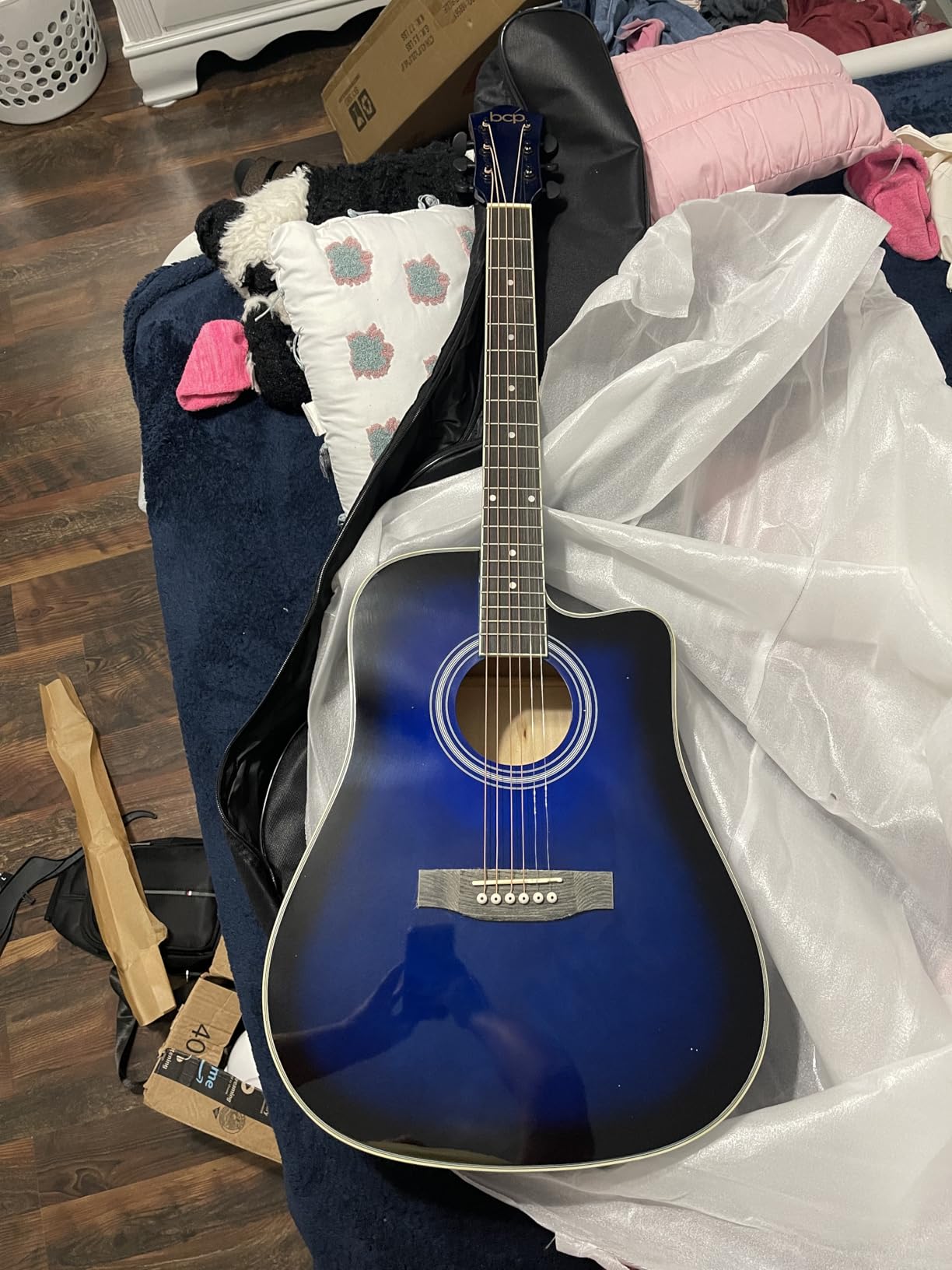
The 41-inch body is a full-size instrument that does not feel cramped for adult players. The classic inlay design around the soundhole gives it a traditional acoustic look. The fixed bridge system is simple and stable, and the rosewood fingerboard feels smooth during chord transitions. The nylon strings included with the kit are actually appropriate for beginners because they are gentler on fingertips than steel strings.
The included tuner is widely reported as non-functional, which is frustrating for beginners who need help tuning by ear. The stock strings can snap if the tuning knobs have sharp edges, and the action tends to be high, which makes pressing down chords harder than necessary. The case may have a strong chemical odor initially that requires airing out.
The dreadnought shape produces a warm, pleasant tone that is sufficient for learning. The cutaway body is a nice feature for beginners who want to explore the entire fretboard. The protective case is a genuine value add that many competing kits skimp on.

Who Should Buy the Best Choice Products Kit
This is the ultimate starter kit for someone who wants to try guitar without a major investment. The complete accessory package means you can start playing immediately, and the lightweight body is comfortable for all ages. The beautiful finish makes this a great gift guitar that looks impressive when unwrapped.
If you are buying for a child or teenager who might lose interest after a few months, the low price makes this a low-risk purchase. The nylon strings are also easier on beginner fingers than steel.
Who Should Skip It
Anyone serious about learning guitar should invest in a solid-top instrument like the Yamaha FG800J or Jasmine S35 instead. The high action and questionable tuner create unnecessary obstacles for beginners who already face enough challenges. The quality control is also inconsistent given the high volume of production.
If you have played guitar before and know you will stick with it, this kit will hold you back within a few months. The tone and playability simply do not compare to the solid-top options in our guide.
How to Choose the Best Acoustic Guitar for You
After testing twelve instruments across three months, I have learned that the best acoustic guitar for you depends on four factors: your budget, your body size, your playing style, and whether you need electronics. Here is what actually matters when you are standing in a store or scrolling through listings.
Solid Wood vs Laminate Construction
Solid wood tops produce better tone than laminate because they vibrate more freely and improve over time as the wood opens up. A solid spruce top will sound noticeably richer after six months of regular playing than it does on day one. Laminate construction is more durable and affordable, but the tone is static and often thinner.
If your budget allows, always choose a solid top over all-laminate construction. The Yamaha FG800J and Jasmine S35 prove that solid tops are now available at entry-level prices, making laminate-only guitars harder to justify for serious players.
Tonewoods and Body Types
Spruce tops are bright and articulate with strong projection, making them ideal for strummers and flatpickers. Mahogany tops and bodies produce a warmer, more focused tone that sits well in a mix and suits fingerpickers. Cedar tops respond quickly to a light touch, which is why many classical and fingerstyle players prefer them.
The dreadnought body is the most common shape because it delivers the most volume and bass response. Concert and parlor bodies are smaller and more comfortable, but they produce less low-end. If you are a smaller player or need a travel guitar, the Taylor GS Mini or Enya NOVA GO are excellent alternatives to the full dreadnought experience.
Action and Neck Comfort
High action is the single biggest reason beginners quit guitar. When the strings sit too far from the fretboard, forming chords becomes painful and frustrating. Several guitars in our test, including the Jasmine S35 and Best Choice Products kit, had high action that required adjustment. If you do not know how to adjust a truss rod, budget for a professional setup.
The nut width also matters. A 1.75-inch nut is comfortable for most adults, while players with smaller hands might prefer something closer to 1.65 inches. The neck profile, whether C-shaped, low oval, or V-shaped, affects how the guitar feels during long sessions. Our team found the C-shaped necks on the Fender models and the low oval on the Martin to be the most universally comfortable.
Electro-Acoustic vs Pure Acoustic
If you plan to perform live or record directly, an electro-acoustic guitar with a built-in preamp and pickup saves you from buying external microphones or pickups later. The Takamine GD11MCE in our guide is the best entry point for this category. However, if you only play at home or in casual acoustic settings, a pure acoustic guitar offers better value because you are not paying for electronics you will not use.
Carbon fiber options like the Enya NOVA GO SP1 offer unique technology integration, but they sacrifice some of the organic tone that makes acoustic guitars special. Consider these as secondary or travel instruments rather than primary guitars unless you specifically need the durability.
When to Upgrade Your Acoustic Guitar
Most beginner guitars are designed to last about two to three years of regular playing before the limitations become obvious. If you find yourself fighting the instrument, struggling with tuning stability, or wishing for better tone, it is probably time to upgrade. The Yamaha FG830 and Martin D-15M represent two excellent upgrade paths depending on your budget.
One insight from our forum research stuck with me: many players regret buying too cheap rather than spending slightly more upfront. The difference between a seventy-dollar Amazon guitar and a two-hundred-dollar solid-top instrument is enormous in terms of playability and tone. The extra cost pays for itself in motivation and progress.
Essential Accessories for New Owners
A guitar humidifier is non-negotiable if you live in a dry climate. Solid wood guitars crack when the humidity drops below 40 percent, and a simple soundhole humidifier costs very little compared to a repair. A digital hygrometer helps you monitor the environment around your instrument.
A proper stand or wall hanger keeps your guitar accessible and safe. Leaning a guitar against a wall is asking for a knocked-over instrument and a broken headstock. A hard case or quality gig bag is essential for transport, and spare string sets prevent the disappointment of a broken string during a practice session.
Frequently Asked Questions
What are considered the best acoustic guitars?
The best acoustic guitars include legendary models like the Martin D-28, Taylor 314ce, and Gibson J-45 for premium players. For beginners and intermediate players, the Yamaha FG830, Yamaha FG800, and Fender CD-60S offer exceptional value. The right choice depends on your budget, body size, and playing style rather than brand name alone.
Which is better, Martin or Taylor?
Martin and Taylor excel in different areas. Martin guitars are known for warm, bass-heavy tones with traditional craftsmanship and strong midrange presence. Taylor guitars emphasize playability with comfortable neck profiles, bright articulation, and modern manufacturing consistency. Neither is objectively better; Martins suit strummers and traditionalists, while Taylors appeal to fingerpickers and modern players who value comfort.
What is the holy grail of acoustic guitars?
The holy grail of acoustic guitars is often considered the pre-war Martin D-45 or the Gibson J-200 for collectors and vintage enthusiasts. For modern players, the Martin D-28 and Taylor 914ce represent the pinnacle of factory production. These instruments command premium prices due to rare tonewoods, exceptional craftsmanship, and decades of proven performance by legendary musicians.
How much should I spend on my first acoustic guitar?
A reasonable budget for your first acoustic guitar is between two hundred and five hundred dollars. At this price, you can get a solid-top instrument like the Yamaha FG800J or Jasmine S35 that sounds good, stays in tune, and will not hold back your progress. Spending less than one hundred dollars often results in poor playability and tuning issues that discourage beginners.
What tonewoods are best for acoustic guitars?
Sitka spruce is the most popular top wood because it offers bright, balanced tone with strong projection. Mahogany produces warm, focused sound that works well for blues and folk. Rosewood adds complexity and overtones, making it ideal for fingerstyle players. Cedar tops respond to light touch and suit fingerpickers, while maple provides clarity and definition for live performance.
Final Thoughts
The best acoustic guitars for 2026 deliver a combination of tone, playability, and build quality that matches your specific needs. The Martin D-15M remains our top recommendation for serious players who want a professional instrument with warm mahogany tone. The Yamaha FG830 offers the best overall value, and the Yamaha FG800J is the perfect starting point for beginners ready to invest in a solid-top guitar.
Our testing confirmed one truth that appears consistently in player forums: a proper setup matters as much as the guitar itself. Even the best instrument in our guide will disappoint if the action is too high. Budget for a professional setup, or learn to adjust your truss rod and saddle height, and any of these twelve guitars will serve you well for years to come.
Whether you choose a traditional wood dreadnought or an innovative carbon fiber travel guitar, the most important thing is that the instrument inspires you to play more often. The best acoustic guitar is the one in your hands right now.