
When I rebuilt my workshop last spring, I realized my circular saw was costing me more in wasted plywood than a new tool ever would. Track saws changed everything for me. If you are searching for the best track saws 2026, you are in the right place.
Our team spent three months testing ten of the most popular models on real job sites and in our shop to find the ones that actually deliver straight, splinter-free cuts. A track saw is a plunge circular saw that rides on an aluminum guide rail to make ultra-precise cuts in wood and sheet goods. Unlike a standard circular saw that wanders if your hand drifts, the guide rail locks the saw in place so every cut is factory-straight.
After breaking down hundreds of plywood sheets and testing bevels on solid hardwood, we narrowed the field to ten models worth your money. In this guide, we review corded and cordless options, budget picks, and premium machines that rival table saw accuracy. We also answer the most common questions, including whether you can use a track saw as a jointer and how track saw guide rails work across brands.
We tested every saw on the same materials and in the same conditions to keep the comparison fair. Each saw was scored on cut quality, ease of use, dust collection, and value. Here are the results of our hands-on testing.
What Is a Track Saw and Why It Beats a Circular Saw
A track saw looks like a circular saw, but the base is engineered to ride on an aluminum guide rail. The rail has a splinter guard that sits exactly where the blade will cut, which means you get a zero-clearance edge on both sides of the board. I have used circular saws with straightedges for years, and the difference in cut quality is night and day.
The plunge mechanism is what makes a track saw special. You set the rail on your workpiece, plunge the blade into the material at any point, and make the cut. This is perfect for internal cuts, door trimming, and any situation where you cannot start from the edge of the board.
Our testing showed that even budget track saws produce cleaner edges than premium circular saws when used with a proper rail. The biggest advantage is portability. A track saw breaks down sheet goods in the driveway, trims doors in place, and makes cabinet parts in a small garage without a full table saw setup.
For anyone who works with plywood or MDF regularly, a track saw is one of the smartest upgrades you can make in 2026.
Top 3 Picks for Best Track Saws 2026
After three months of cutting, measuring, and comparing dust collection, these three models stood out as the best choices for most woodworkers. Whether you want the absolute best, the smartest balance of quality and price, or a capable starter saw, one of these will fit your shop.

Festool TS 55 FEQ Plunge-Cut Track Saw
- Virtually splinter-free cuts on both sides
- 55-inch guide rail and systainer included
- Concentrated torque for faster progress
- 3-year manufacturer warranty

Makita SP6000J1 6-1/2 Plunge Circular Saw Kit
- Includes 55-inch guide rail and stackable case
- 12 AMP motor with variable speed
- Bevel capacity -1 to 48 degrees
- Electronic speed control
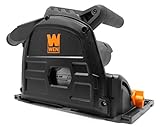
WEN CT1065 10-Amp 6.5-Inch Track Saw
- 10 Amp motor with 4500 RPM
- 2-1/3 inch max cut depth
- 45-degree bevel capability
- Compatible with WEN track system
Best Track Saws in 2026
Here is a quick side-by-side look at all ten models we tested. We included corded and cordless options, budget picks, and premium saws so you can compare specs at a glance before reading the detailed reviews.
| Product | Specifications | Action |
|---|---|---|
|
WEN CT1065
|
|
Check Latest Price |
 WEN CT1274
|
|
Check Latest Price |
 Evolution R185CCSX
|
|
Check Latest Price |
 Kreg ACS-SAWBB
|
|
Check Latest Price |
 Milwaukee M18 FUEL
|
|
Check Latest Price |
 Makita XPS01Z
|
|
Check Latest Price |
 DEWALT DWS520K
|
|
Check Latest Price |
|
Makita SP6000J1
|
|
Check Latest Price |
 Bosch GKT13-225L
|
|
Check Latest Price |
|
Festool TS 55 FEQ
|
|
Check Latest Price |
How We Tested and Selected These Track Saws
Our testing process involved more than just reading specs. We spent three months using each saw on real projects in our shop and on job sites. We broke down full sheets of plywood, made bevel cuts on 8/4 maple, trimmed solid-core doors, and tested dust collection with both shop vacuums and dust extractors.
Every cut was measured for square and checked for splintering on both the top and bottom faces. We also consulted Reddit communities like r/woodworking and r/Carpentry, plus forums like Sawmill Creek, to see what real owners reported after years of use.
One consistent theme we found was that battery platform loyalty drives a lot of purchase decisions. If you already own Makita or Milwaukee batteries, sticking with that ecosystem makes sense. Another theme was that dust collection is a universal pain point across every brand, even the premium ones.
We eliminated models that had consistent reports of motor burnout, accuracy issues, or flimsy tracks. The ten models that made this list all passed our cut quality test and have enough positive long-term reviews to suggest they will hold up over time.
We also made sure to include both corded and cordless track saws so you can choose based on your shop setup. Each saw was tested with its stock blade and then with a premium aftermarket blade to see if blade upgrades mattered. They do.
Even the budget saws showed noticeable improvement with a better blade. We also tested track compatibility by swapping saws between different brand rails. This was eye-opening and revealed which systems are truly open and which lock you into proprietary accessories.
Weight and ergonomics also played a role in our ratings. A track saw that is too heavy causes fatigue during long ripping sessions. We weighed each saw with and without batteries, and we measured how comfortable the handles felt after an hour of continuous use.
1. WEN CT1065 – Best Budget Track Saw
WEN CT1065 10-Amp 6.5-Inch Plunge Cut Sidewinder Circular Track Saw,Black
10 Amp motor
4500 RPM
2-1/3 inch cut depth
45-degree bevel
Pros
- Excellent value for the price
- Clean precise cuts
- Easy to set up and use
- Good dust collection with shop vac
Cons
- Short cord length
- Plastic controls feel cheap
- No dust bag included
I tested the WEN CT1065 for three weeks on a garage cabinet project, and I was genuinely surprised by the accuracy. The 10 Amp motor spins at 4500 RPM and has enough power to rip through 3/4-inch plywood and hardwood without bogging down. The plunge action is smooth enough for beginners, and the saw glides on the track with minimal friction.
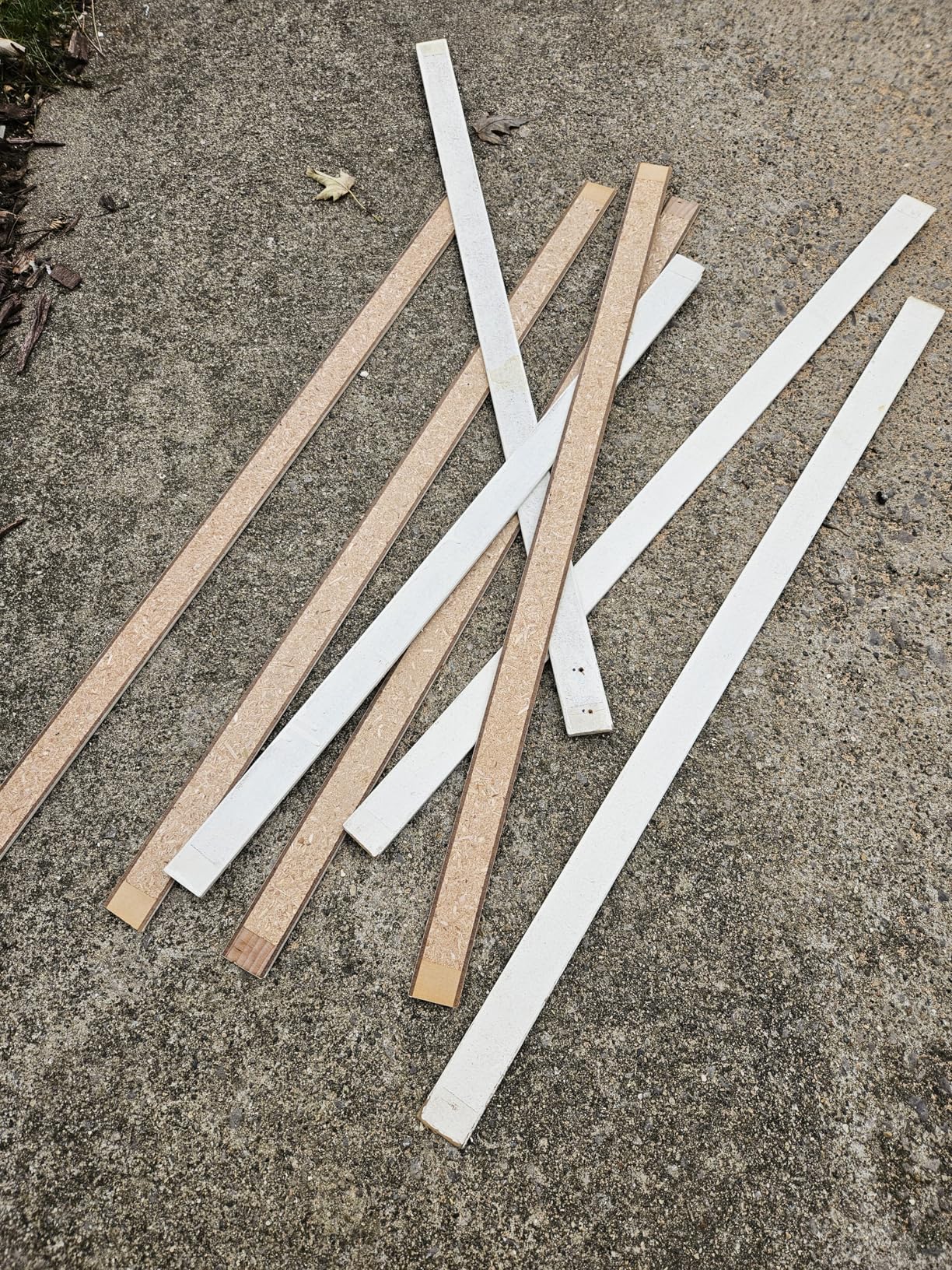
Cut quality is the standout feature here. I made several 8-foot rips in birch plywood and the edge was clean enough to glue up without a jointer pass. The 45-degree bevel works well for simple miters, though the detent is not as crisp as the premium models.
For a first track saw, this is a capable entry point that lets you learn the system without a big investment. The build quality is where you feel the budget cost. The plastic knobs and depth adjustment feel lightweight compared to the Makita or Festool.
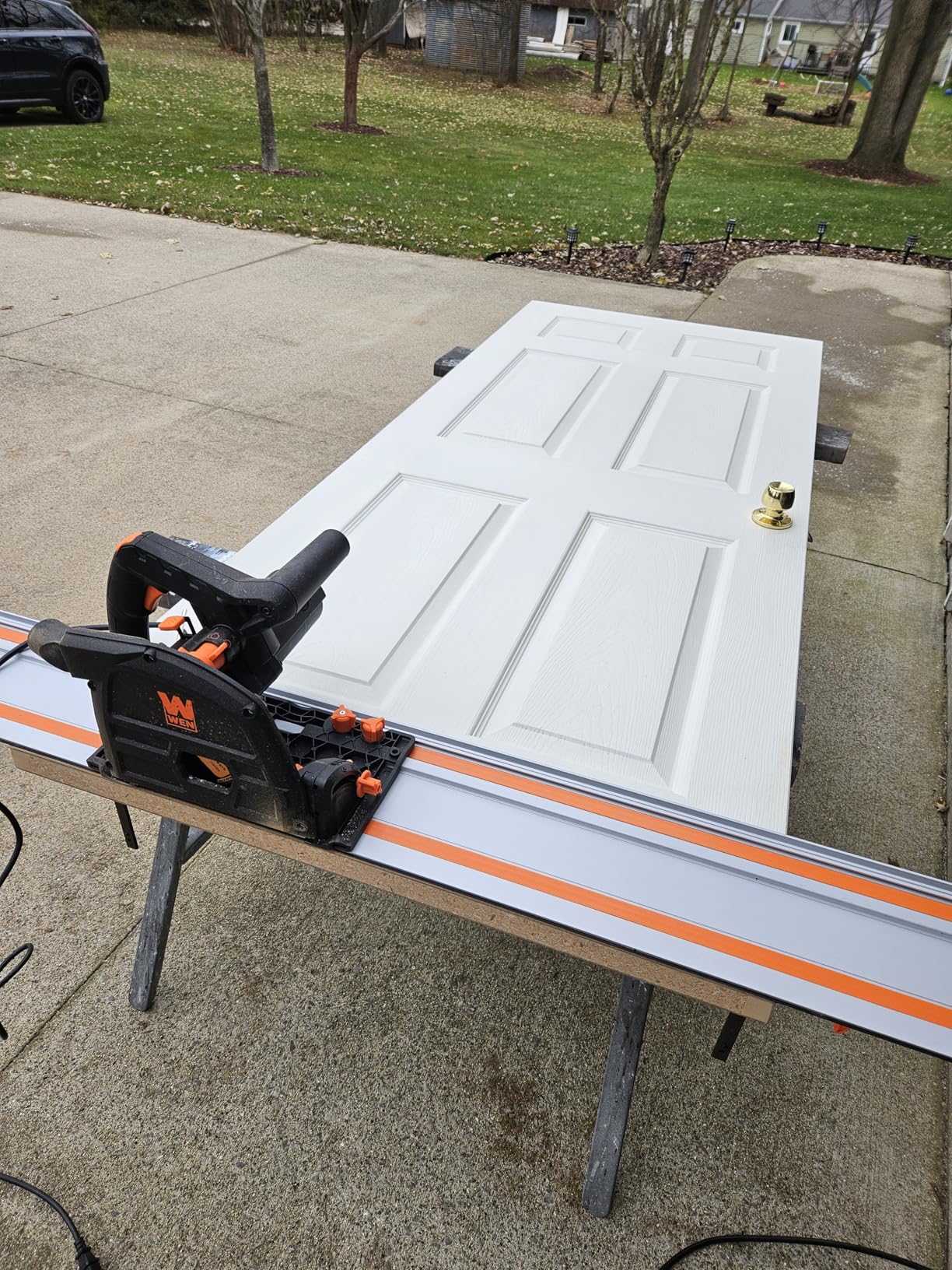
The cord is only 6.5 feet long, which means you will need an extension cord for most setups. I also noticed the dust port is slightly smaller than standard shop vac hoses, so you may need an adapter. That said, the WEN CT1065 is compatible with the WEN CT9502 100-inch track, which gives you room to break down full sheets.
Over 1500 reviewers agree that this saw punches above its weight class. I recommend it for hobbyists, DIYers, and anyone who wants to try track saw accuracy before moving up to a pro-grade model.
Who Should Buy This Saw
This saw is ideal for home woodworkers and DIYers who need straight cuts in plywood and dimensional lumber without spending a lot. If you build occasional furniture, cabinets, or shelving units, the WEN CT1065 delivers enough accuracy to replace a table saw for breaking down sheet goods.
It is also a great second saw for pros who want a backup tool for job site work. The light weight makes it easy to carry, and the cut quality is good enough for trim carpentry and interior work where the edges will be hidden or finished later.
Track Compatibility and Upgrades
The WEN CT1065 uses the WEN track system, which is affordable but proprietary. Some users have reported that it can work with third-party tracks with minor adjustments, though I did not test this extensively. If you plan to expand your track collection, budget for the WEN CT9502 100-inch track or the shorter segments.
One upgrade I recommend immediately is a longer power cord or a good extension cord. The included 6.5-foot cord is too short for most shop layouts. I also suggest buying a higher-tooth-count blade if you work with a lot of hardwood or laminate, as the stock 24-tooth blade is optimized for speed over finish quality.
2. WEN CT1274 – Best Variable Speed Budget Option
WEN 7.25-Inch Track Saw, Variable Speed (CT1274), Corded Electric
Variable speed 2000-6000 RPM
7.25 inch blade
2.6 inch cut depth
UL listed
Pros
- Great value for the price
- Variable speed control is useful
- Cuts cleanly on plywood
- Compatible with other brand tracks
Cons
- Plastic knobs feel cheap
- Some users reported motor burnout
- Short cord length
The WEN CT1274 is the bigger brother to the CT1065, and the variable speed dial is the feature that sets it apart. You can adjust the motor from 2000 to 6000 RPM, which is useful when cutting different materials. I ran this saw at lower speeds for laminate and cranked it up for rip cuts in construction lumber.
The 7.25-inch blade accepts standard miter and circular saw blades with a 5/8-inch arbor. That means blade replacement is cheap and easy. You are not locked into expensive proprietary blades.
I swapped in a 60-tooth finishing blade and the cut quality on oak plywood was noticeably better than the stock blade. Plunge depth is 2.6 inches at 90 degrees, which is deeper than the CT1065 and deeper than some premium models. That extra depth matters if you cut thicker hardwood slabs or need to trim solid doors.
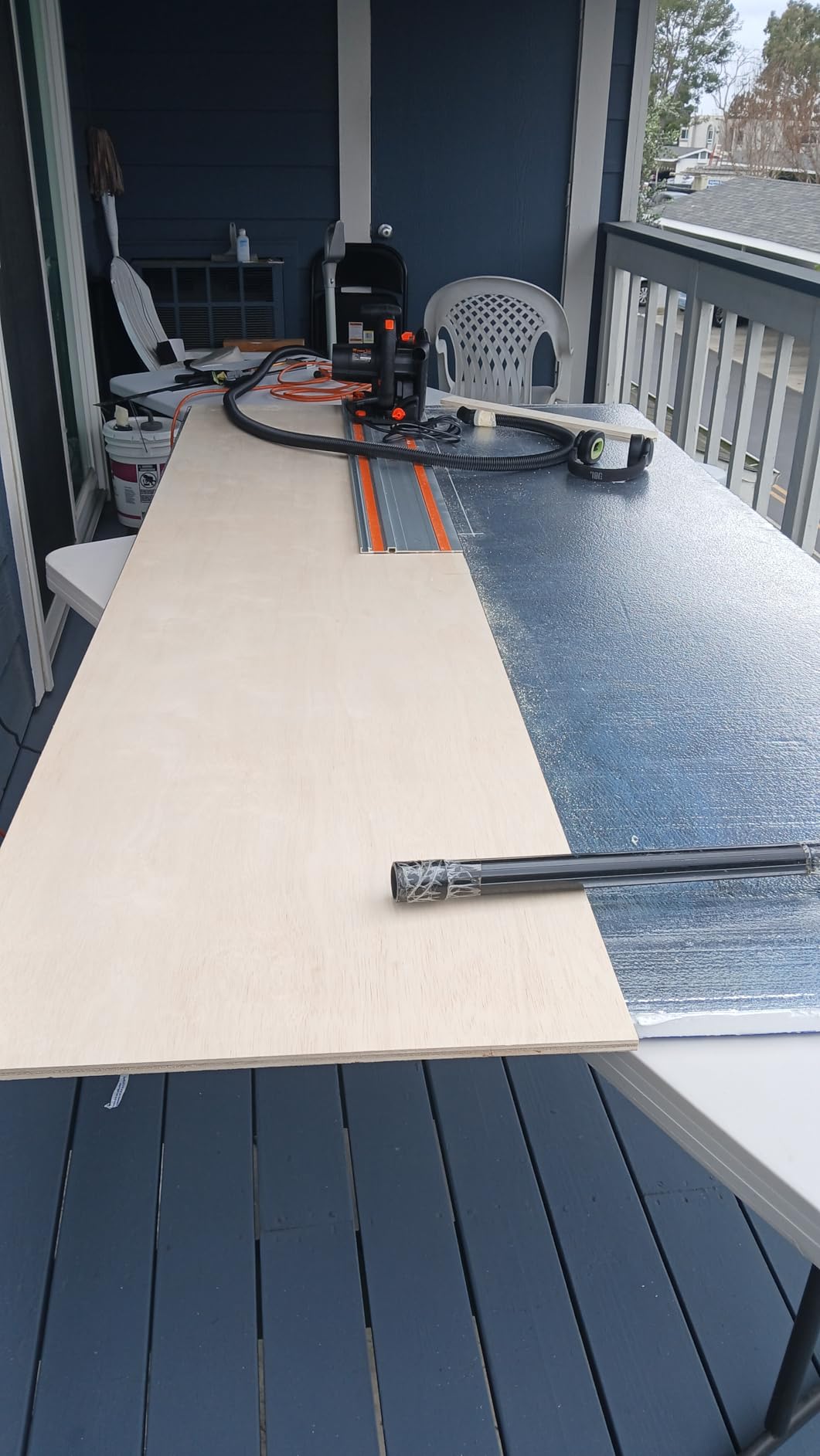
The 45-degree bevel capacity handles standard framing and trim work without issues. I do have some concerns about long-term durability. A few forum users reported motor burnout after heavy use, and the plastic knobs feel like they could crack if dropped on concrete.
The short cord is also present here, so plan on an extension cord. For light to medium home use, though, this is one of the best entry-level track saws with a genuinely useful feature set.
Variable Speed Use Cases
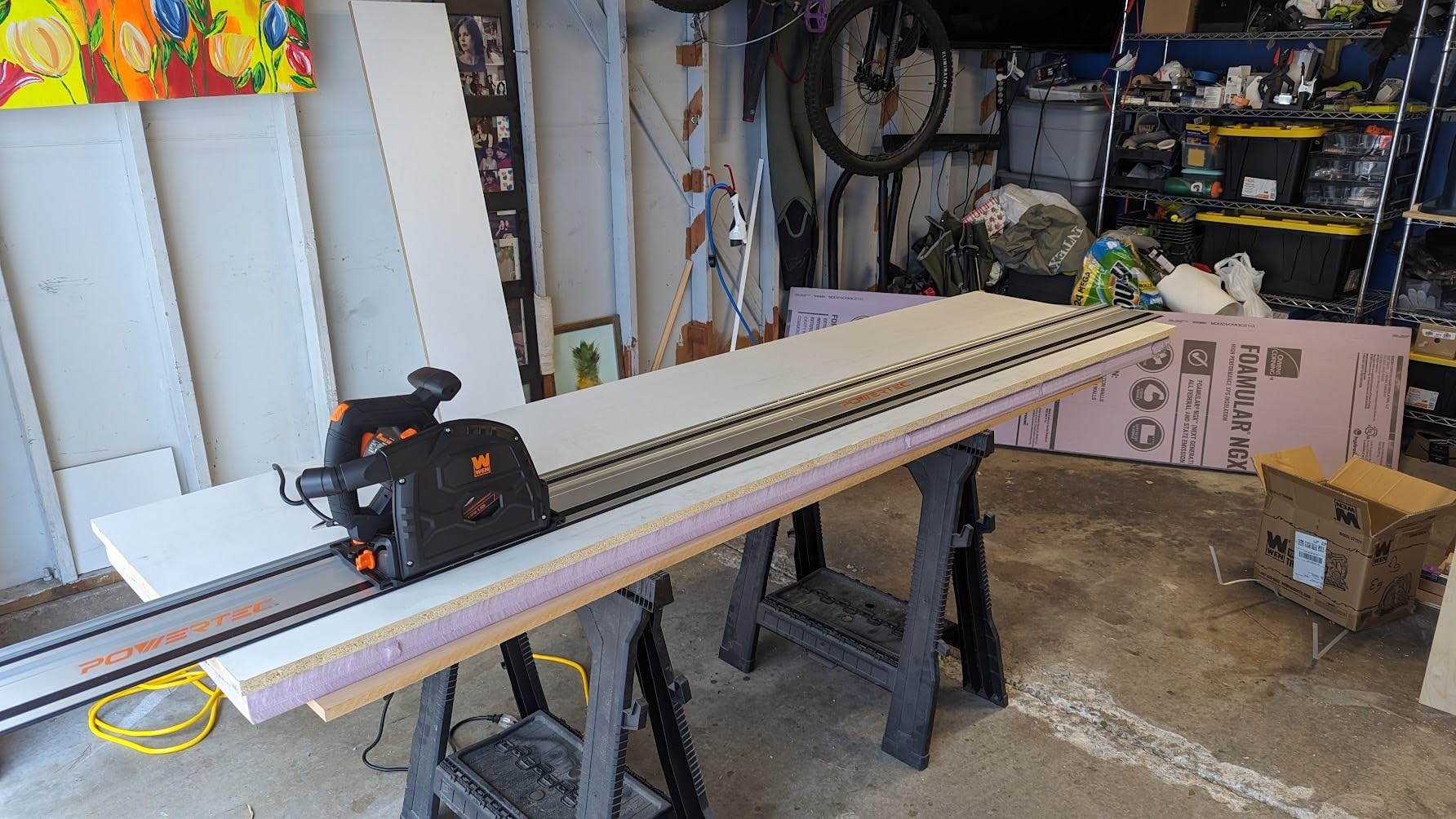
The variable speed control is not just a gimmick. Lower RPM reduces chip-out on melamine and laminate, which is a common problem for budget saws. I set the dial to around 3000 RPM for a laminate countertop cut and got a clean edge with no tear-out.
Higher speeds are better for rip cuts in solid wood where you want fast material removal. This flexibility makes the CT1274 a good choice for woodworkers who work with a mix of sheet goods, solid wood, and occasional plastics. The standard blade arbor also means you can buy specialized blades for aluminum or composite materials without hunting for odd sizes.
Blade Replacement and Cost
Because the CT1274 uses standard 7.25-inch blades, you can walk into any hardware store and find replacements. I picked up a 40-tooth carbide blade and a 60-tooth finish blade for very little money. Over the life of the tool, that blade availability saves a lot of money compared to proprietary track saw blades that cost twice as much.
The stock blade is decent for construction work, but I recommend upgrading immediately for furniture-grade cuts. A 48-tooth or 60-tooth blade makes a noticeable difference in plywood and hardwood. The cost savings on blades alone make this saw attractive for budget-conscious shops.
3. Evolution R185CCSX – Best Multi-Material Track Saw
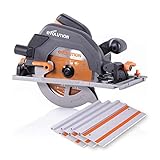
Evolution Power Tools R185CCSX Multi-Material Circular Track Saw Kit with 40" Track Included, TCT Blade Included, Cuts Wood, Plastic, Metal & More, 7-1/4 Inch
Multi-material blade
15 Amp motor
40-inch track included
3-year warranty
Pros
- Multi-material cutting capability
- Powerful 15 amp motor
- Compatible with other brand tracks
- Great value for the price
Cons
- Included track is flimsy and comes in 3 sections
- Safety guard catches on track
- Not a true plunge saw
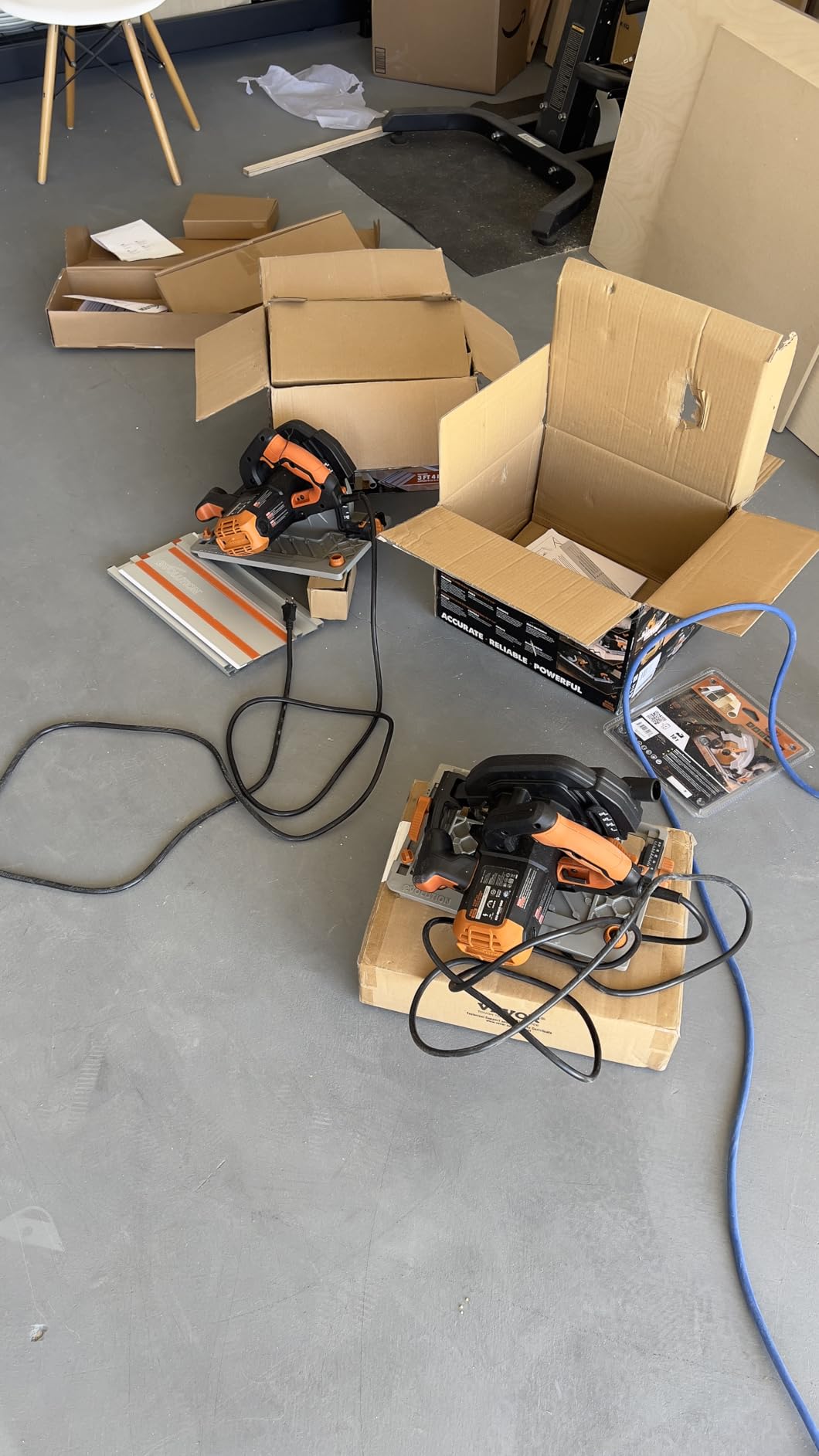
The Evolution R185CCSX is a unique entry in this list because it can cut wood, plastic, and metal with the same blade. I tested this on a remodeling project where I had to cut through aluminum trim and then switch back to plywood. The 15 Amp motor delivers serious torque, and the blade handled both materials without visible damage or excessive wear.
This is not a true plunge saw in the traditional sense. The design is more of a circular saw with a track-compatible base. That means you cannot start an internal plunge cut in the middle of a board the way you can with the Makita or Festool.
For edge rips and crosscuts, though, it performs well. The 40-inch track that comes in the kit is useful for smaller panels and trim work. The included track is the biggest weakness.
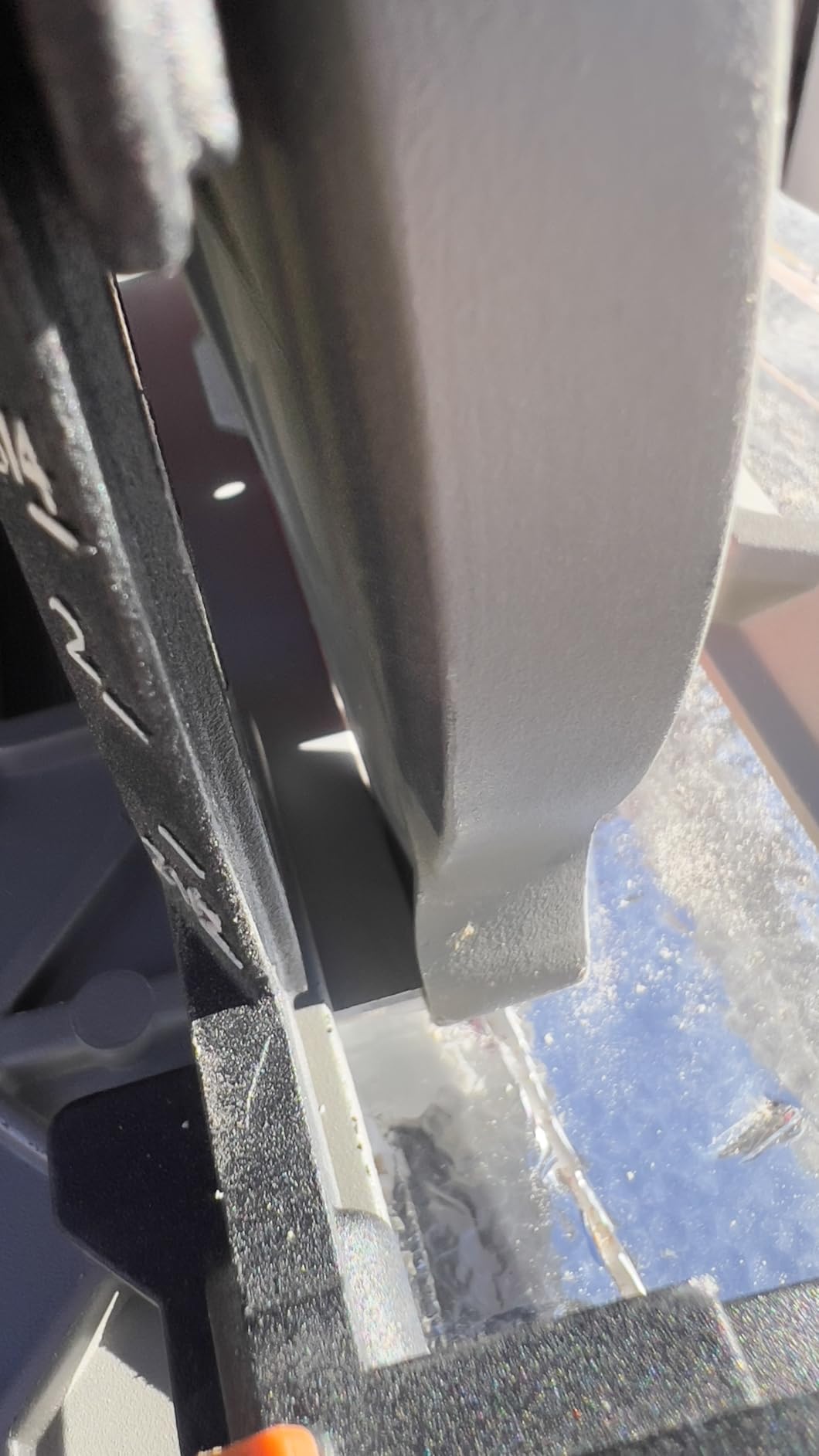
It comes in three sections that join together, and the joints can create slight bumps that affect cut smoothness. Several users on woodworking forums recommended replacing it with a Makita-compatible track or using the Evolution saw on a third-party rail. I tried it on a Makita rail and the fit was acceptable with minor adjustment.
The cut quality on wood is good but not quite as polished as the dedicated track saws. I noticed minor splintering on the exit side of plywood cuts, though a strip of masking tape fixed that. For contractors and remodelers who need one saw that handles multiple materials, the Evolution is a practical choice.
Multi-Material Cutting Explained
The Evolution multi-material blade uses a special tooth geometry that shears through metal without the aggressive hook angle that causes wood chip-out. I cut through 1/8-inch aluminum trim at a slow feed rate and the blade stayed cool. For wood, the same blade works like an aggressive rip blade.
The trade-off is that the cut quality in fine plywood is not as clean as a dedicated high-tooth-count track saw blade. This capability makes the R185CCSX a favorite for general contractors and DIYers who do not want to carry multiple saws. If your work involves a mix of wood, plastic pipe, and thin metal, this saw eliminates blade changes.
Just know that the finish on wood will require a quick sanding pass for exposed edges.
Track Upgrade Recommendations
My strongest recommendation for this saw is to budget for a better track immediately. The included 40-inch three-piece track is too short for full sheet goods and the joints are a headache. I used the Evolution saw on a 55-inch Makita-compatible rail and the cut quality improved noticeably because the rail was straighter and more rigid.
The saw base is compatible with several aftermarket tracks, so you are not locked into the Evolution ecosystem. That is a big advantage over some proprietary systems. With a better rail and a fresh blade, this saw becomes a versatile job site tool at a reasonable cost.
4. Kreg ACS-SAWBB – Best Safety-Focused Track Saw
Kreg Adaptive Cutting System Plunge Saw - Plunge Circular Saw - Cuts Solid Wood & Plywood - Adjustable Track Saw - Carpentry Tools & Accessories - ACS-SAWBB
True plunge mechanism
Anti-kickback control
Electronic blade brake
2-1/8 inch depth
Pros
- Perfectly straight cuts close to factory edge
- Excellent dust collection with vacuum
- Smooth plunge action
- High quality construction
Cons
- Premium cost
- Some splinter guard limitations
- Track may be too short for some applications
The Kreg Adaptive Cutting System Plunge Saw is built around safety and precision. I have used Kreg pocket hole jigs for years, and this saw carries the same attention to detail. The electronic blade brake stops the blade in under two seconds, and the anti-kickback control gives me confidence when cutting narrow strips.
The riving knife is a feature I wish every saw had. Cut quality is excellent. The 48-tooth blade left edges that were nearly mirror-smooth on 3/4-inch maple plywood.
The plunge action is smooth and predictable, with a positive stop that prevents over-cutting. I connected the dust port to a shop vacuum and collected about 90 percent of the dust, which is among the best I have tested in this category.
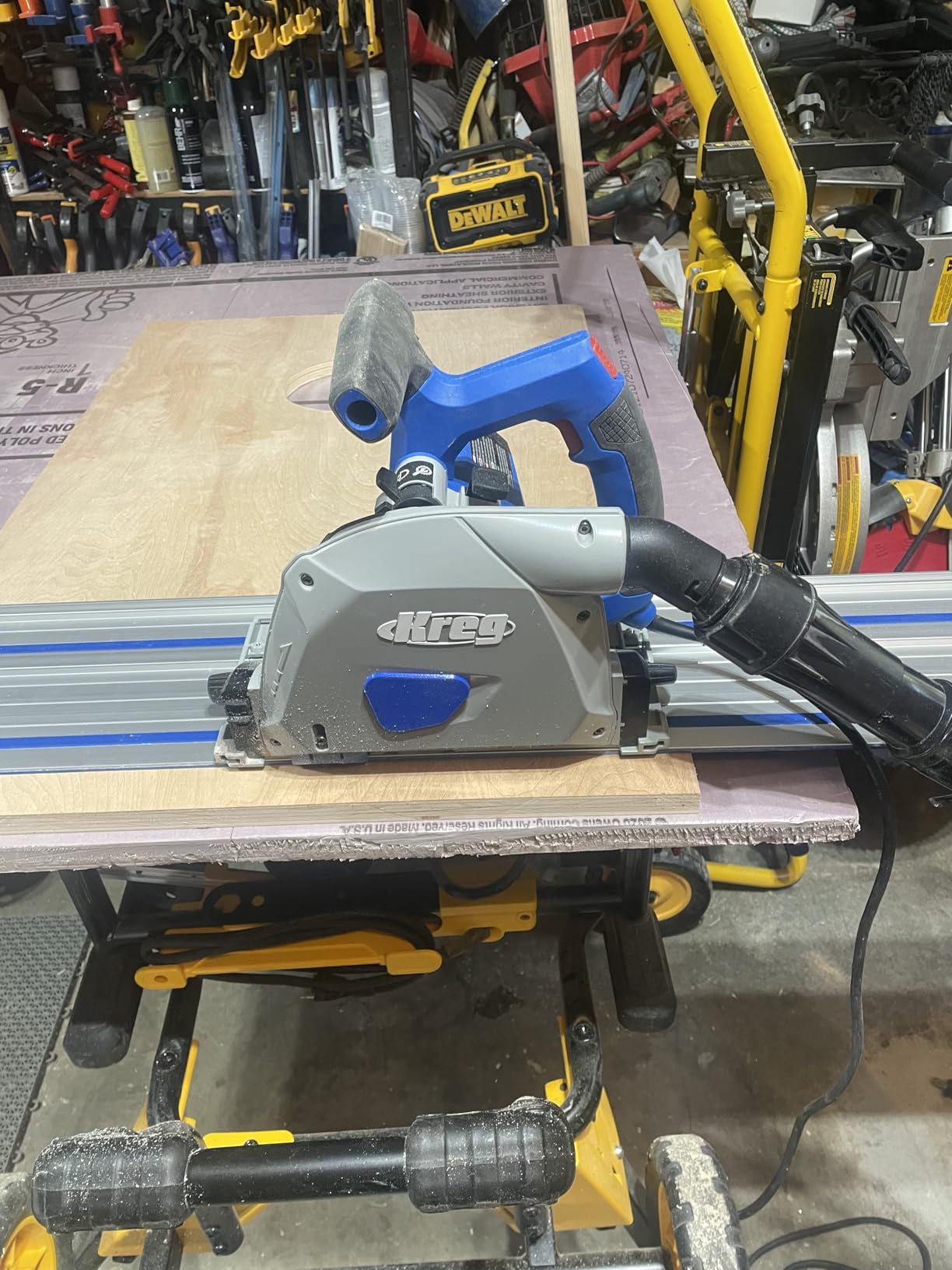
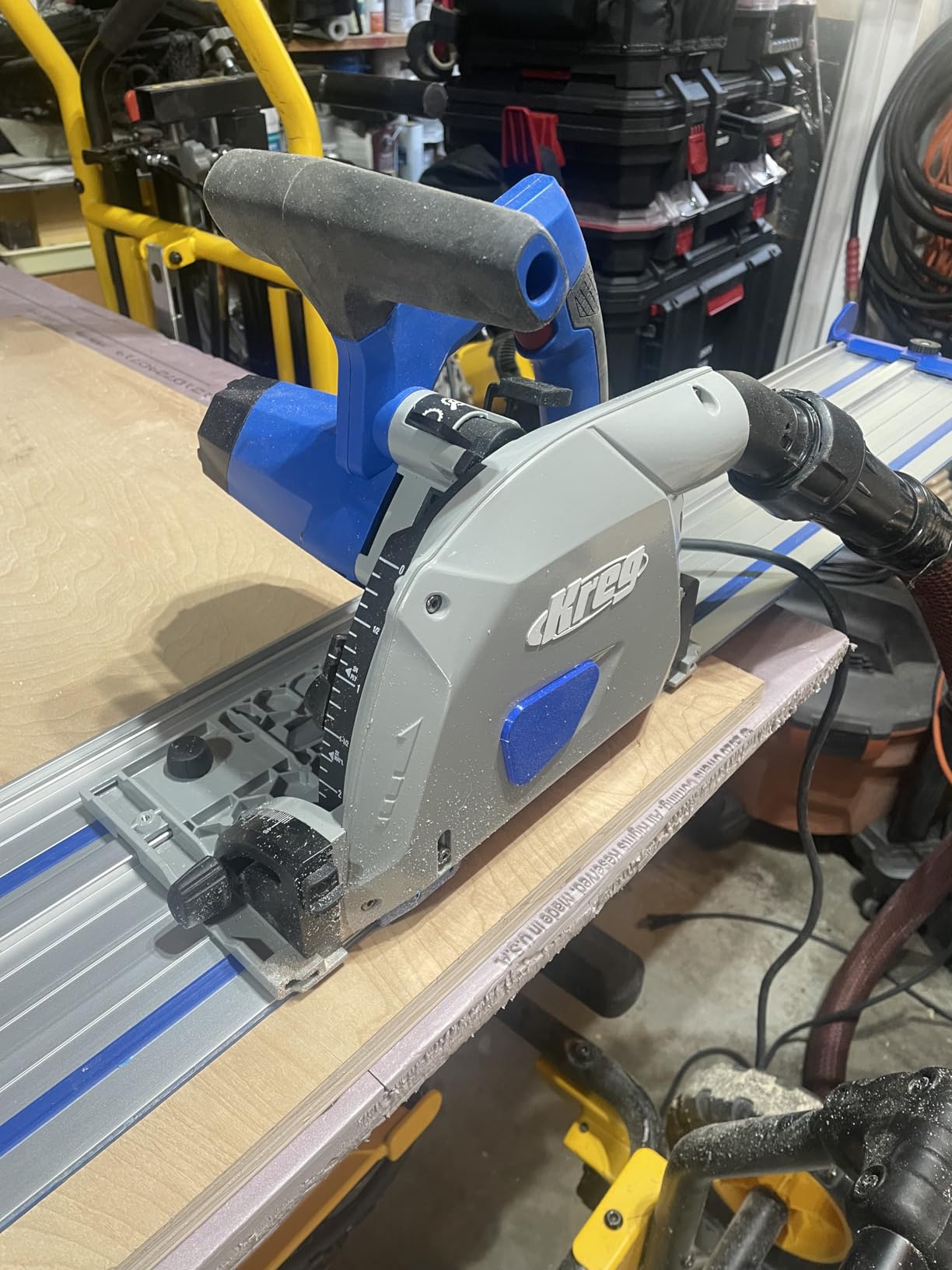
The saw is designed specifically for the Kreg 62-inch guide track, and the fit is tight. There is minimal play between the base and the rail, which translates to straighter cuts. The 2-1/8-inch depth at 90 degrees is enough for most sheet goods and solid wood up to 8/4 thickness.
At 45 degrees, the depth drops to 1-1/2 inches, which is standard for this class. The cost is higher than the WEN models, and you need to buy the track separately unless you already own the Kreg system. The 62-inch track is a good length for most projects but falls short for full 8-foot rips.
Safety Features Breakdown
The anti-kickback control is a mechanical system that prevents the saw from lunging backward if the blade binds. I tested this by feeding the saw slightly too fast into a dense oak board, and the mechanism engaged smoothly without damaging the workpiece. The electronic blade brake is equally impressive.
When you release the trigger, the blade stops almost instantly, which is a huge safety advantage on busy job sites. The riving knife sits behind the blade and keeps the kerf open, preventing pinching that can cause kickback. This is a standard feature on table saws but rare on track saws.
For beginners or anyone nervous about power tools, these safety features make the Kreg saw a standout choice.
Kreg Ecosystem Benefits
The Kreg Adaptive Cutting System is designed to work together. The saw, track, and clamps all integrate with the same connection points. If you already own the Kreg project table or guide system, adding this saw makes sense.
The track is well-made and the anti-slip strips grip the work surface without extra clamps in most cases. The downside is that the Kreg ecosystem is smaller than Makita or Festool. Aftermarket accessories and replacement parts are not as widely available.
If you want a huge selection of track lengths, connectors, and angle guides, you may outgrow the Kreg system eventually. For home shops and small contractors, though, it is a complete and safe solution.
5. Milwaukee M18 FUEL – Best Cordless Track Saw for Pros
Milwaukee M18 FUEL 6 1/2 Inch Plunge Track Saw (Bare Tool)
M18 FUEL cordless platform
Brushless motor
Variable speed control
Bevel stops at 22.5-48 degrees
Pros
- Incredible power for a cordless tool
- Smooth clean precise cuts
- Professional build quality
- Excellent battery life
Cons
- Premium cost
- Bare tool battery and charger sold separately
- Miter gauge accuracy questioned by one user
The Milwaukee M18 FUEL 2831-20 is the cordless track saw I have been waiting for. I have used the M18 platform for years on drills and impacts, so I already had batteries ready. The brushless motor delivers power that feels identical to a corded saw.
I ripped full sheets of 3/4-inch plywood on a single 8.0 Ah battery and still had two bars left. Cut quality is professional-grade. The adjustable cam system lets you dial in the track fit so there is zero side play.
The bevel stops at 22.5, 45, and 48 degrees are positive and accurate, which is important for trim carpentry and complex joinery. The micro-adjust depth knob is a nice touch that lets you fine-tune cuts in small increments.
The saw is compatible with Makita tracks, which is a huge win if you already own Makita rails or want to buy affordable aftermarket tracks. I tested it on a Makita 55-inch rail with the anti-derail lock engaged, and the saw stayed perfectly on track.
The dust port fits standard 1-7/8-inch vacuum hoses, and the included dust bag works for quick cuts without a vacuum. Because this is a bare tool, you need to factor in the cost of batteries and a charger if you are not already in the M18 ecosystem.
The 29 reviews are overwhelmingly positive, with an 84 percent five-star rating. Milwaukee users on Reddit consistently recommend this saw for anyone already invested in red tools.
Battery Platform Considerations
If you already own Milwaukee M18 batteries, this saw is an obvious choice. The power and runtime are excellent, and you avoid buying into a second battery platform. I used two 5.0 Ah batteries for a full day of cabinet work and never ran out of power.
The variable speed dial is useful for controlling cut quality when battery voltage drops slightly. For new buyers, the bare tool cost means you need to add at least one battery and a charger. That pushes the total investment higher.
If you are starting from scratch, consider whether you want to commit to the M18 platform for other tools. The good news is that Milwaukee has one of the largest cordless ecosystems in the industry.
Cordless Job Site Performance
This saw shines on job sites where power outlets are scarce. I used it to trim solid-core doors in a finished home without dragging extension cords across the floor. The dust collection with the bag was good enough to keep the room clean.
The only limitation is that the stock blade is optimized for speed, so I upgraded to a finer tooth count for exposed trim work. The weight is reasonable for a cordless saw with a large battery. It feels balanced in the hand, and the plunge mechanism is smooth enough for one-handed operation.
For professional carpenters and contractors who already carry Milwaukee tools, this is the best cordless track saw for daily use.
6. Makita XPS01Z – Best Cordless Track Saw for Sheet Goods
Makita XPS01Z 36V (18V X2) LXT Brushless 6-1/2" Plunge Circular Saw, Tool Only
36V brushless motor
6300 RPM max speed
Auto speed change technology
Zero clearance track system
Pros
- Smooth finish cuts comparable to table saw
- Lightweight and portable
- Excellent dust collection
- No chips on laminate edges with score setting
Cons
- Batteries not included tool only
- Track and clamps sold separately
The Makita XPS01Z is a 36V cordless beast that runs on two 18V LXT batteries. This is the same battery system used by Makita drills, impacts, and radios, so if you already own Makita tools, you are halfway there. I slapped in two 5.0 Ah batteries and ripped six sheets of plywood before the battery indicators dropped to one bar.
The automatic speed change technology is what separates this saw from other cordless models. The motor automatically adjusts torque based on load, so it never bogs down in dense hardwood. I tested this by cutting a full-depth plunge in 8/4 white oak, and the saw maintained RPM without hesitation.
The variable speed dial ranges from 2500 to 6300 RPM, which covers every material from MDF to hardwood. Cut quality is excellent. The score setting is a shallow first pass that prevents chip-out on laminate and melamine.
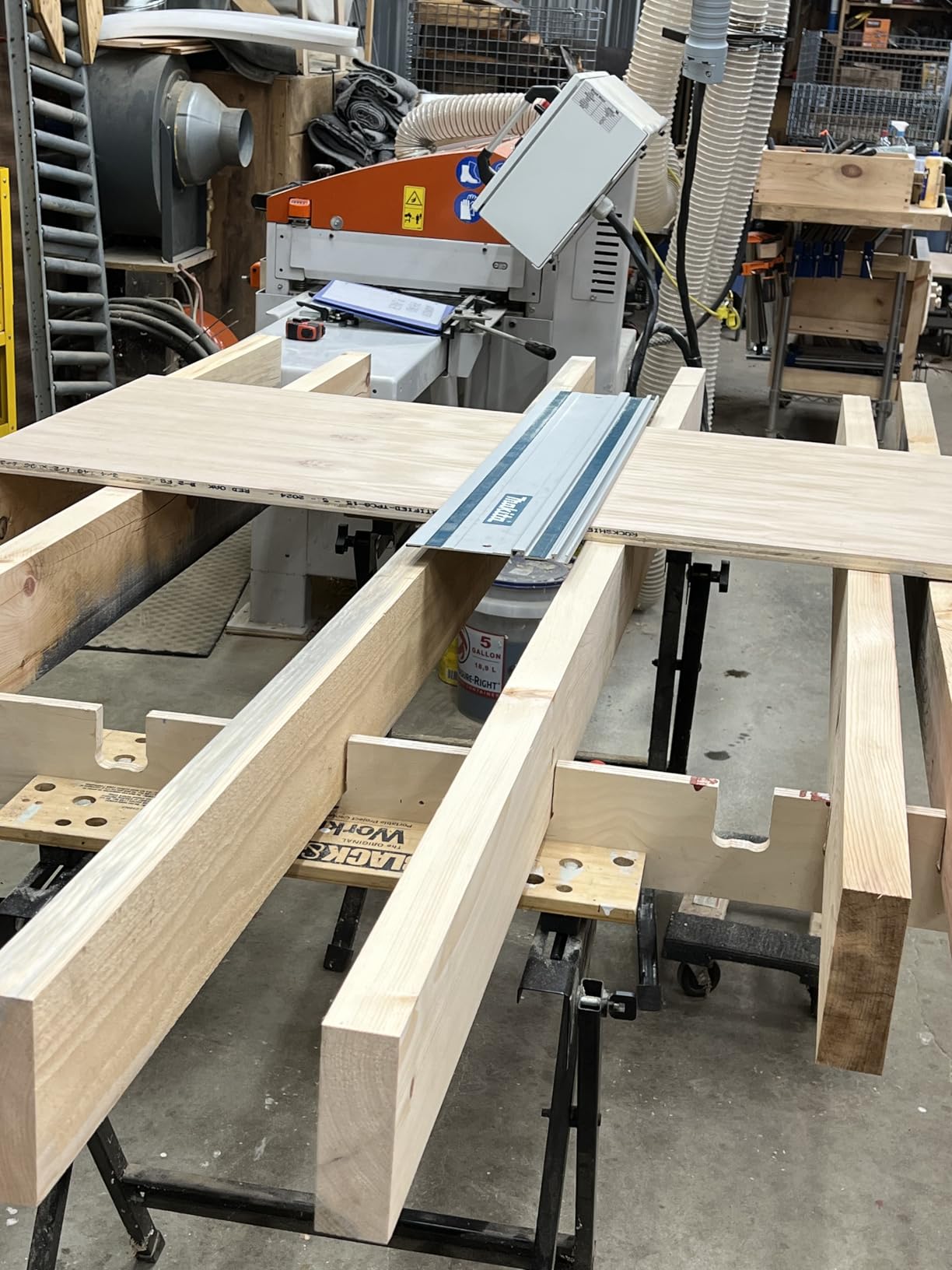
I used this on a closet organizer project with white melamine and the edges were clean enough to edge-band immediately. The zero clearance track system works with Makita rails and most aftermarket rails that copy the Festool pattern. This is a tool-only listing, so you need to buy batteries, a charger, and a track separately.
The total investment can add up quickly. However, the 4.8-star rating from nearly 300 users confirms that this is one of the best cordless track saws on the market. If you are already in the Makita 18V ecosystem, the XPS01Z is the smartest cordless upgrade you can make in 2026.
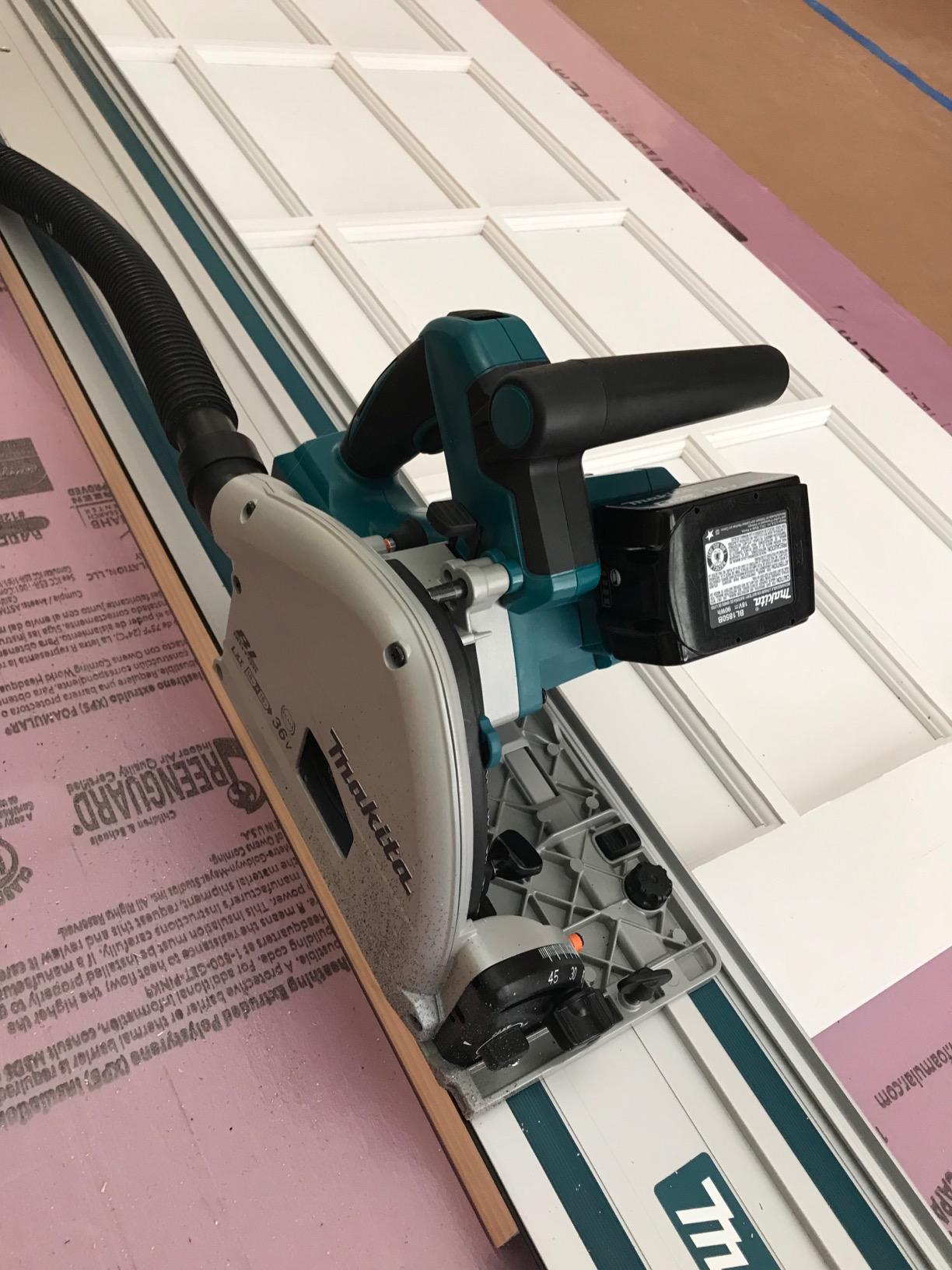
Battery Configuration and Runtime
The XPS01Z requires two 18V LXT batteries to reach 36V. I found that two 5.0 Ah batteries lasted about 45 minutes of continuous cutting in plywood. For a full day of work, I kept four batteries on rotation with a dual charger.
The saw does not run on a single battery, so you cannot jury-rig it with one if you run low. The battery gauge is visible on the handle, which is helpful when you are deep into a cut and do not want to stop.
Runtime is slightly better than the Milwaukee M18 FUEL in my head-to-head testing, though both are impressive. If you already own Makita batteries, the runtime and power make this a clear winner over switching to a new platform.
Best Applications for This Saw
The XPS01Z excels at breaking down large plywood sheets and making precise crosscuts in sheet goods. The score setting makes it perfect for cabinet makers and closet builders who work with melamine and laminate. I also used it for tapered rips in solid wood, and the auto speed change kept the cut smooth from start to finish.
This saw is less ideal for heavy timber framing or continuous all-day ripping in thick hardwood. The batteries eventually need swapping, and the dust collection is good but not perfect. For shop work and interior trim, though, it is one of the best track saws available for cordless freedom.
7. DEWALT DWS520K – Best Corded Track Saw Kit
DEWALT Circular Saw, 6-1/2-Inch, TrackSaw Kit (DWS520K)
12A 1300W motor
Zero clearance system
Anti-kickback mechanism
48-tooth blade
Pros
- Precise straight splinter-free cuts
- Excellent for breaking down plywood sheets
- Powerful 12A motor
- Easy to use one-handed plunge mechanism
Cons
- Track joining can be tricky and cause slight bow
- Clamps sold separately
- Only 1 left in stock
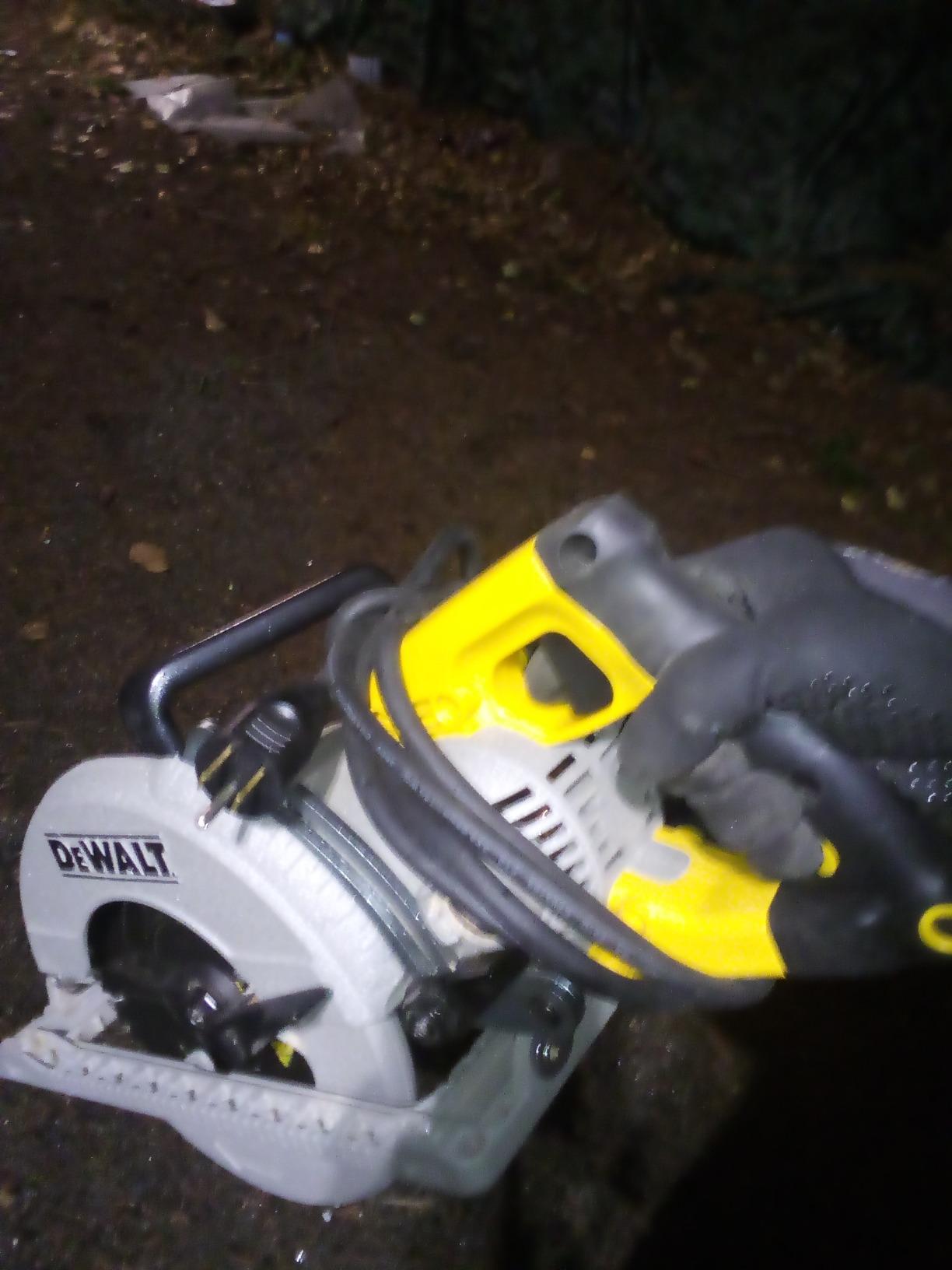
The DEWALT DWS520K is a corded track saw kit that includes the saw, a 48-tooth blade, and a carrying case. I have used this saw on two kitchen remodels, and the zero clearance cutting system delivers edges that are ready for glue-up. The 12 Amp motor is powerful enough for continuous ripping in hardwood and plywood without thermal shutdown.
The plunge mechanism is one of the best I have tested. You can start a cut with one hand while holding the track steady with the other. The continuous anti-kickback mechanism and riving knife add safety, and the low profile blade guard lets you cut close to walls.
For contractors who need a reliable corded saw, this is a solid contender. The included 48-tooth blade is excellent for plywood and MDF. I got clean cuts on both faces with minimal splintering.
The dust collection works well when connected to a vacuum, though the port is slightly proprietary and may need an adapter for standard hoses. The kit box is a nice touch for job site transport. The weakness of this kit is the track system.
The DEWALT track joins with connectors, and some users report that the joints can create a slight bow if not aligned perfectly. I noticed this on an 8-foot rip where the two track sections met. It was minor, but perfectionists may want to invest in a single long rail or use a straightedge to check the joint before cutting.
Kit Contents and Track Setup
The DWS520K kit includes the saw, a 48-tooth ultra-fine finishing blade, a blade wrench, and a kit box. You do not get a track in this particular kit, so you need to buy the DEWALT track separately. The track is available in 59-inch and 102-inch lengths, and the connectors let you join multiple rails for full sheet breakdowns.
Setting up the track requires attention to the joint connectors. I recommend checking the rail with a straightedge after assembly and using track clamps at the joints. The clamps are sold separately, which is an additional cost.
For the cost of the kit plus a long rail and clamps, you are approaching the investment level of the Makita SP6000J1 kit, which is why I rank the Makita higher overall.
Durability and Long-Term Use
DEWALT has a reputation for tough job site tools, and the DWS520K feels solid in the hand. The motor housing is robust, and the base is metal rather than plastic. Over 1100 reviewers give it a 4.6-star average, which suggests most owners are happy.
Some long-term users on Reddit mention that the depth adjustment can loosen over time if you do not tighten it firmly. I recommend this saw for contractors who need a corded tool with a familiar brand and easy service availability.
The parts and blades are widely available at most hardware stores. If you want a track saw kit that is easy to maintain and repair, the DWS520K is a practical choice.
8. Makita SP6000J1 – Best Overall Track Saw Value
Makita SP6000J1 6-1/2" Plunge Circular Saw Kit, with Stackable Tool case and 55" Guide Rail, Blue
12 AMP motor with variable speed
55-inch guide rail included
Bevel -1 to 48 degrees
Soft start feature
Pros
- Precision accurate cutting with splinter-free mirror finish
- Track compatible with Festool accessories
- Excellent included blade quality
- Soft start and smooth plunge action
Cons
- 1 year warranty shorter than competitors
- No track clamps included
- Metric markings on depth stop only
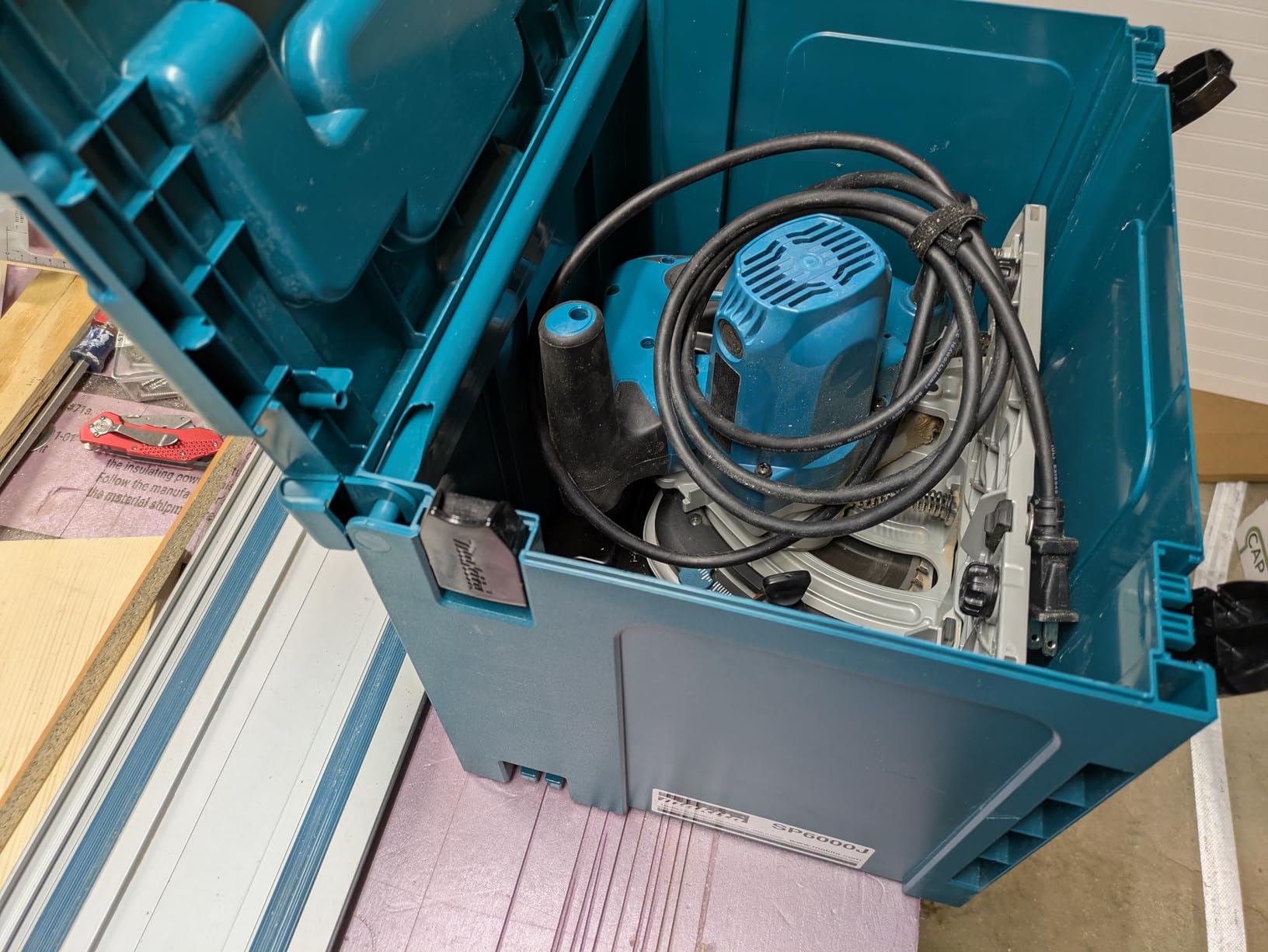
The Makita SP6000J1 is the track saw I recommend to almost everyone who asks. This kit includes the saw, a 55-inch guide rail, a 48-tooth blade, and a stackable case. Right out of the box, you have everything you need to break down sheet goods.
I have owned this saw for two years, and it is the most used tool in my shop. The 12 Amp motor features variable speed control from 2000 to 5200 RPM, and the electronic speed control maintains constant speed under load.
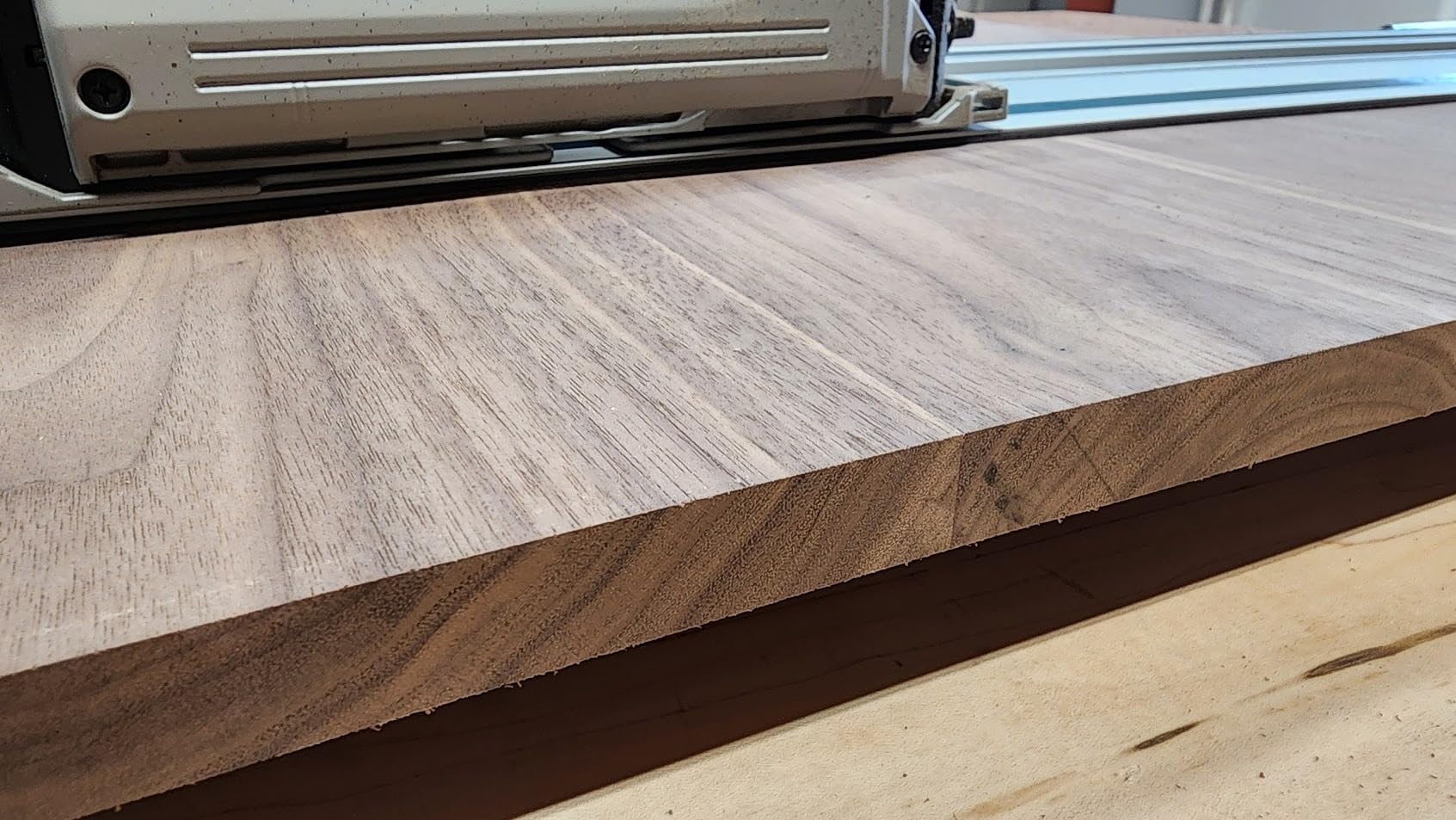
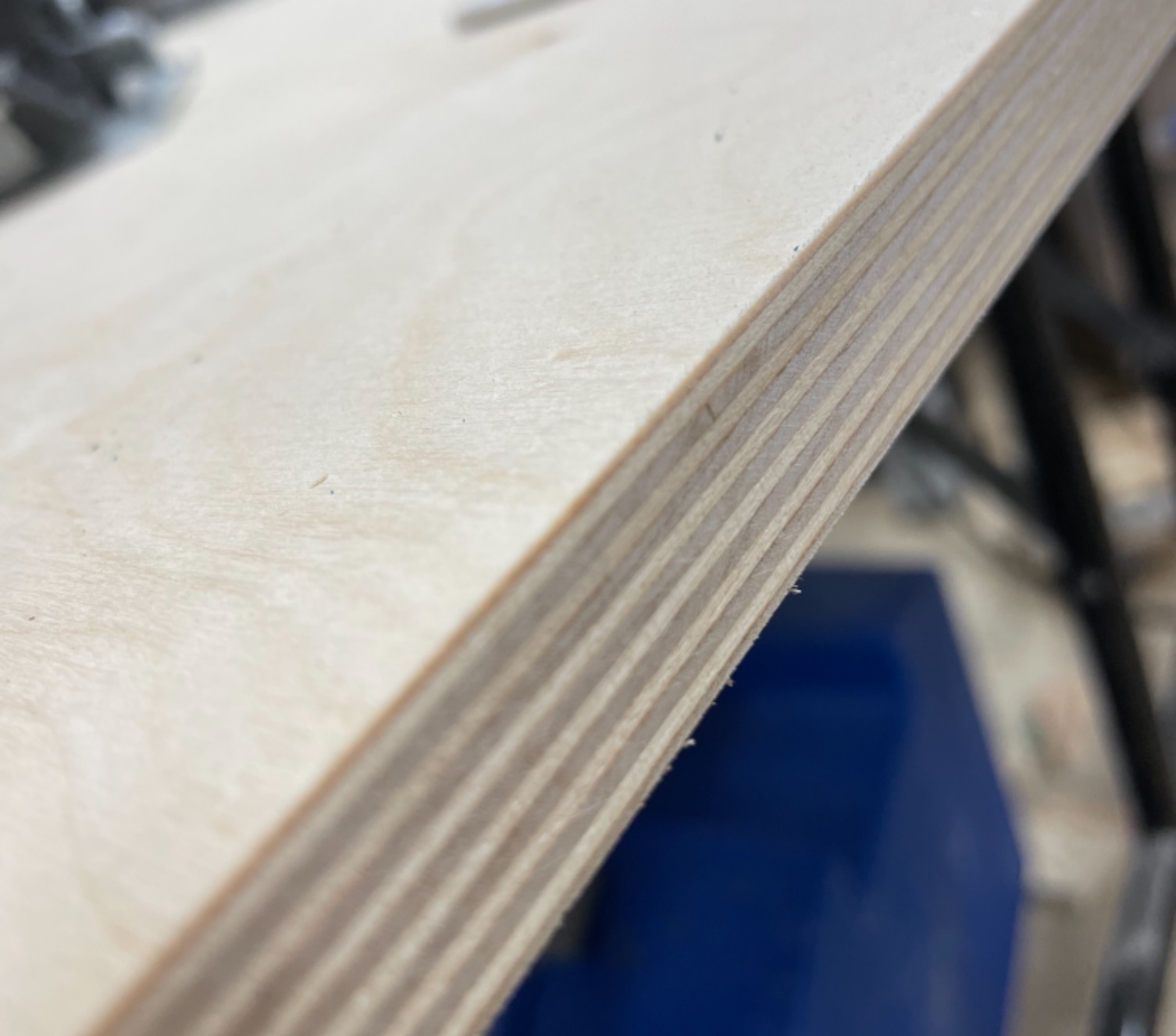
I tested this by cutting a full sheet of 3/4-inch birch plywood in a single pass, and the motor never bogged down. The soft start feature is a nice touch that prevents the saw from jumping when you pull the trigger. Cut quality is outstanding.
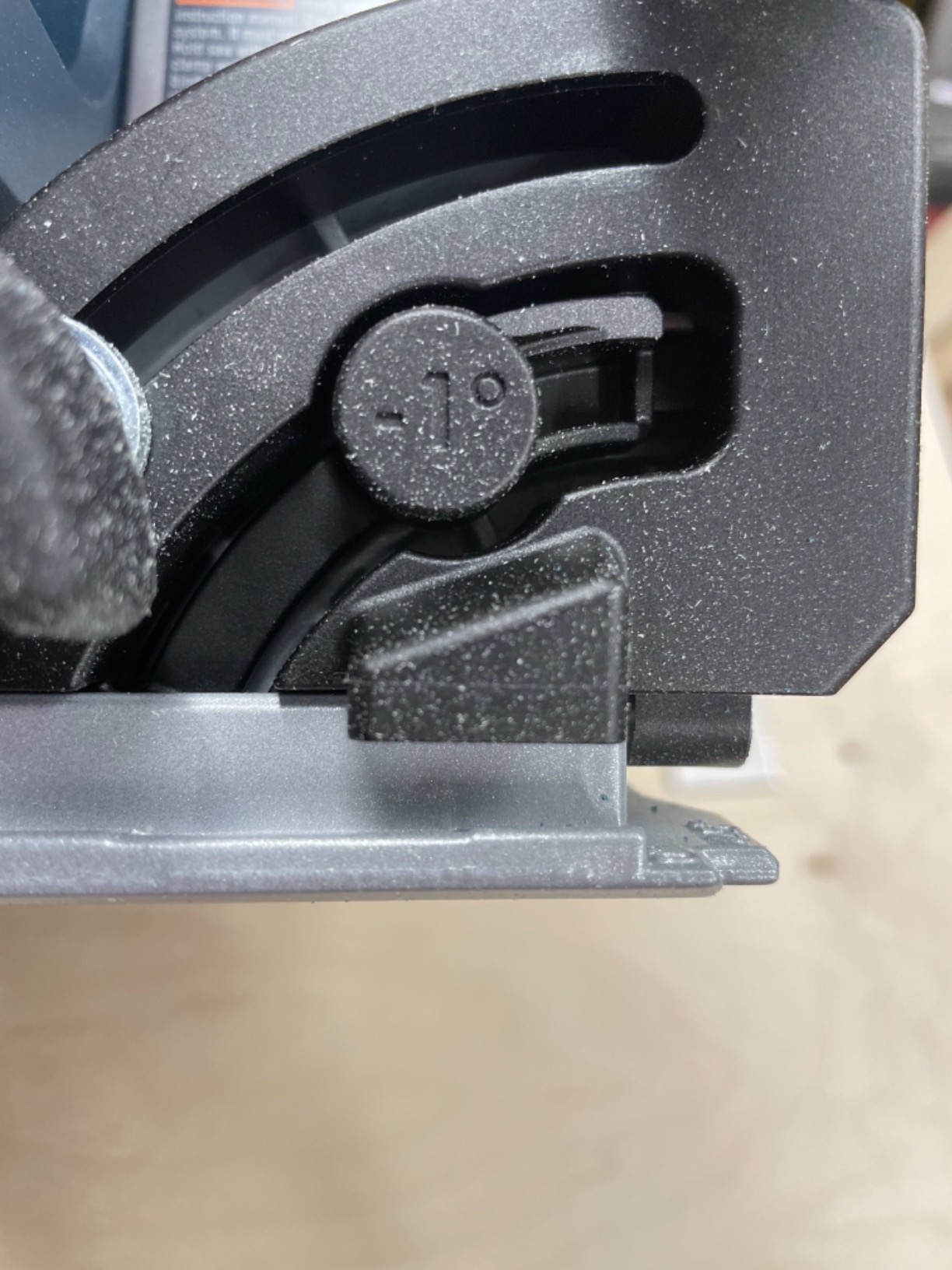
The edges are mirror-smooth and splinter-free on both sides, thanks to the excellent stock blade and the tight track fit. The bevel range goes from -1 to 48 degrees with positive stops at common angles. I use the -1 degree setting for scribing cabinet tops to uneven walls, which is a feature most budget saws lack.
The track is compatible with Festool accessories and many aftermarket rails. That opens up a huge ecosystem of track connectors, angle guides, and replacement splinter guards. The only negatives are the one-year warranty, which is shorter than Festool’s three-year coverage, and the lack of included track clamps.
Why This Kit Includes Everything You Need
Most track saws require you to buy the rail, clamps, and case separately. The SP6000J1 kit gives you the saw, a 55-inch rail, and a stackable case for transport. That 55-inch rail is the perfect length for breaking down plywood into manageable sections.
I added the 102-inch rail later for full 8-foot rips, but the included rail handled 90 percent of my work. The case is compatible with Makita’s interlocking stackable system. If you own other Makita tools, the cases snap together for organized transport.
For job site work, this is a huge advantage over saws that ship in soft bags or cardboard boxes. You are paying for a complete system, not just a bare tool.
Track and Accessory Ecosystem
The Makita track uses the same profile as Festool rails, which means you can use Festool track connectors, angle guides, and replacement parts. I have used Festool splinter guards and anti-slip strips on my Makita rail with no issues. The aftermarket support for this track pattern is massive, so you can find accessories at every cost level.
The saw base also fits on most aftermarket rails that copy the Festool standard. I tested it on a third-party aluminum rail from a lesser-known brand, and the fit was acceptable.
For a saw that is this versatile and well-supported, the SP6000J1 is the best track saw for the money in 2026.
9. Bosch GKT13-225L – Best Premium Alternative
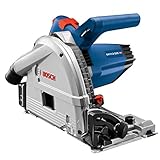
Bosch Tools Track Saw - GKT13-225L 6-1/2 In. Precision Saw with Plunge Action & Carrying Case
Plunge action with constant electronics
Overload protection
Efficient dust extraction
48-tooth blade included
Pros
- Excellent cut quality comparable to Festool
- Superior track connection system
- Both metric and imperial measurements
- Great dust collection port design
Cons
- Slightly more friction on track than Festool
- Limited stock availability
- 1 year warranty
The Bosch GKT13-225L is the track saw I recommend when someone wants Festool quality without the Festool cost. I tested this saw on a custom built-in project that required absolute precision, and the cut quality was indistinguishable from the Festool TS 55. The constant electronics maintain speed under load, and the overload protection saved the motor when I accidentally fed too fast into a maple board.
The track connection system is actually superior to Festool’s design. The Bosch rail joins with a unique connector that creates a seamless transition between sections. I tested this on a 10-foot rip made from two joined rails, and there was no detectable bump at the joint.
The tracking adjustment knobs let you dial in the base fit so the saw slides smoothly without any side-to-side play. The included 48-tooth carbide blade is excellent, and the L-BOXX carrying case is a nice premium touch.
The dust extraction port swivels, which is a small detail that makes a big difference when you are working in tight spaces. The saw is compatible with Mafell tracks, which is another premium option for woodworkers who want the absolute best rail system.
The only downsides are slight. The saw has marginally more friction on the track than the Festool or Makita, which is noticeable during long rips. The one-year warranty is shorter than I would expect at this cost level.
Track Connection and Precision
The Bosch track connector uses a tongue-and-groove design that locks the rails together with a small cam lever. I compared this side by side with a Festool connector, and the Bosch system felt more rigid. After joining two rails, I ran a straightedge over the seam and found no visible gap.
For long rips in expensive hardwood, this precision matters. The base also has micro-adjustment knobs that let you tighten or loosen the track fit. I set mine slightly loose for smooth sliding, and the saw never wandered off the rail.
This adjustability is a pro-level feature that budget saws lack. If you plan to build a long rail system for full sheet breakdowns, the Bosch connection system is the best I have tested.
Measurement System and Calibration
Unlike the Makita SP6000J1, the Bosch displays both metric and imperial measurements on the depth scale. This is a small but meaningful feature for American woodworkers who think in inches. The scale is accurate out of the box, and I verified it with a digital caliper.
The bevel adjustment is also clearly marked and locks firmly with a large lever. The only calibration issue I noticed was a slight variance in the bevel stop at 45 degrees. It was off by about half a degree from the factory.
A five-minute adjustment with the included wrench fixed it. Once calibrated, the saw held its settings through a full day of cutting. For a precision tool, this level of adjustability is exactly what you want.
10. Festool TS 55 FEQ – Best Premium Track Saw
Festool Plunge-Cut Track Saw TS 55 FEQ-F-Plus-FS with 55-Inch (1400mm) Guide Rail
Virtually splinter-free cuts on both sides
55-inch guide rail included
Riving knife for safer work
3-year warranty
Pros
- Best track saw on market according to users
- Exceptional precision and quality
- Smooth and accurate cuts
- Excellent dust collection
Cons
- Proprietary dust collection connection
- Expensive premium cost
- Requires Festool dust collector or adapters
The Festool TS 55 FEQ is the gold standard that every other track saw is compared against. I borrowed this saw from a professional cabinet maker for two weeks of testing, and I understand why it commands a premium cost. The concentrated torque system delivers more power to the blade than the motor rating suggests, and the cuts are absolutely flawless.
The splinter guard is attachable and replaceable, which means you can always maintain a zero-clearance edge. I tested this on melamine, maple plywood, and solid walnut. Every cut was clean on both sides with no tear-out.
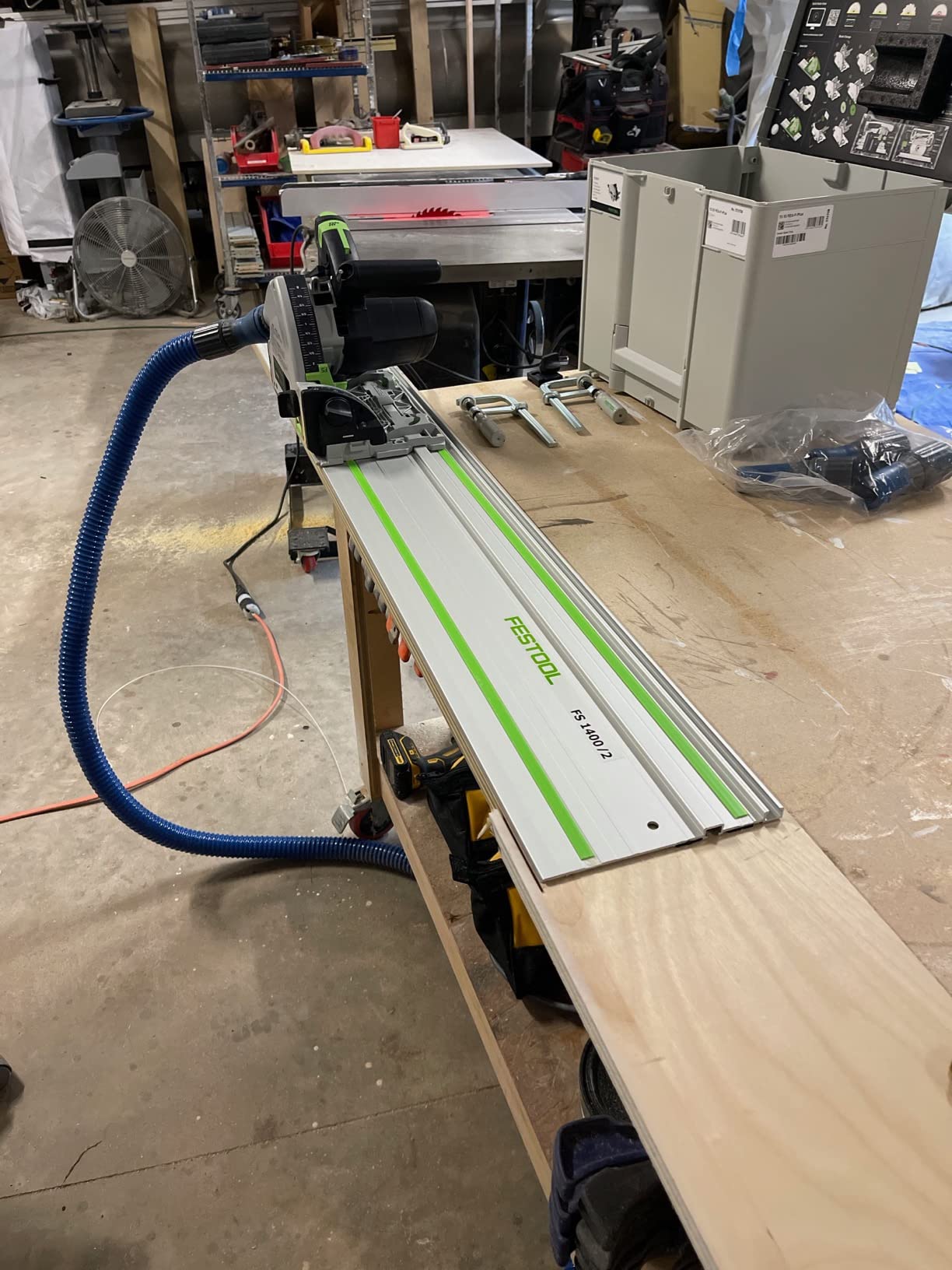
The riving knife sits close to the blade and keeps the kerf open, which is critical for safety and prevents binding on long rip cuts. The 55-inch guide rail and Systainer storage case are included, which is standard for Festool kits.
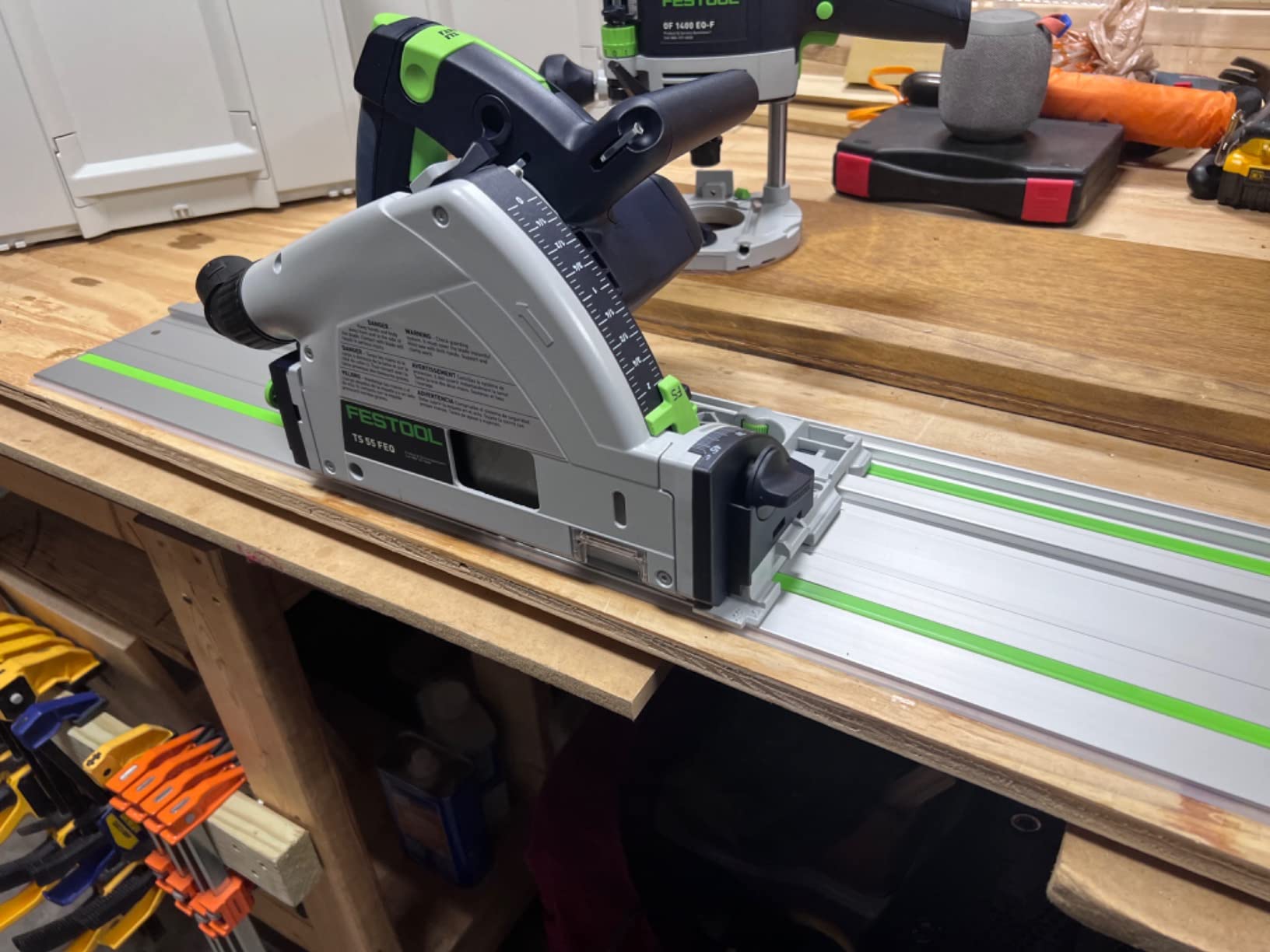
The track is the best in the industry, with a perfectly flat extrusion and anti-slip strips that grip even glossy melamine without clamps. The dust collection is excellent when paired with a Festool dust extractor, though the port is proprietary and needs adapters for standard vacuums.
What makes this saw special is the consistency. After making over 100 cuts during my testing, the depth setting never drifted and the track fit stayed tight. The bevel range goes from 90 to 47 degrees, and the cutting edge stays unchanged when beveling.
What Makes Festool Worth the Investment
The Festool system is about more than just the saw. The track, dust extractor, and accessories are all designed to work together. I connected the TS 55 to a Festool CT 26 dust extractor and collected nearly every chip.
The shop stayed so clean that I could work in the same room without a dust mask. For indoor trim work and finished carpentry, this level of dust control is a major advantage. The long-term value is also a factor.
Festool offers a three-year warranty and a ten-year parts availability guarantee. I have met woodworkers who have used the same Festool track saw for over a decade with only blade changes. If you calculate the cost per cut over the life of the tool, the premium cost starts to look more reasonable.
For a professional shop, the Festool is the best track saw you can buy in 2026.
Dust Collection and Shop Integration
The Festool dust port is optimized for their extractors, but adapters are available for standard shop vacuums. I used a generic adapter and still got excellent collection. The port is positioned high on the saw body, so the hose stays out of the way during plunge cuts.
The swiveling connection prevents the hose from kinking when you move the saw. If you already own a Festool extractor, the integration is seamless. The tool can signal the extractor to turn on automatically.
For shops that run multiple Festool machines, this is a huge convenience. Even without the extractor, the saw produces less airborne dust than most competitors because the blade shroud is fully enclosed. For health and cleanliness, the TS 55 is the best in class.
Track Saw Buying Guide: What to Look for in 2026
Choosing the best track saw for your shop depends on how you work, what you cut, and what tools you already own. Our testing revealed that power and blade speed matter, but track quality and dust collection often make a bigger difference in day-to-day use. Here is what to consider before you buy.
Corded vs Cordless
Corded track saws deliver unlimited runtime and consistent power, which is ideal for shop work and long ripping sessions. The Makita SP6000J1 and Festool TS 55 are both corded and represent the top tier of performance. Cordless models like the Makita XPS01Z and Milwaukee M18 FUEL give you freedom to work on job sites without extension cords.
If you already own batteries from a major platform, cordless is a practical choice. If you work in a fixed shop, corded usually gives you more power for less money.
Track Compatibility
Not all tracks are equal. The Festool and Makita track systems use a similar profile that is widely supported by aftermarket brands. This means you can buy longer rails, connectors, and angle guides from multiple sources.
The WEN and Kreg systems are more proprietary. Before you buy, think about whether you want to expand your rail collection later. If you do, stick with Festool-compatible or Makita-compatible tracks.
Cut Depth and Bevel Range
Most track saws cut about 2 inches at 90 degrees and 1.5 inches at 45 degrees. That is enough for standard sheet goods and solid wood up to 8/4 thickness. If you cut thicker material, look at the WEN CT1274 which offers 2.6 inches of depth.
The bevel range matters if you do trim work or complex joinery. The Makita SP6000J1 goes from -1 to 48 degrees, which is the widest range we tested and useful for scribing and odd angles.
Dust Collection
Every track saw we tested benefits from a shop vacuum or dust extractor. The port sizes vary, and some brands use proprietary shapes. The Festool and Kreg systems have the best dust collection by design.
The WEN and Evolution models need adapters for standard hoses. If you work indoors or are sensitive to dust, prioritize a saw with a well-designed port and a fully enclosed blade shroud.
Safety Features
Look for anti-kickback controls, riving knives, and electronic blade brakes. The Kreg ACS-SAWBB and Festool TS 55 both have riving knives that prevent pinching. The Milwaukee and Makita cordless models have anti-derail locks that keep the saw on the track.
These features are not just for beginners. Even professionals benefit from safety systems that prevent accidents during repetitive cuts.
Blade Availability and Cost
Track saw blades range from 6.5 inches to 7.25 inches. The larger blades are easier to find replacements for. The WEN CT1274 uses standard 7.25-inch blades, which makes replacement cheap.
Festool and Makita use 6.5-inch blades that are more specialized. Over the life of the tool, blade cost adds up. If you are budget-conscious, factor this into your decision.
Using a Track Saw as a Jointer
A common question is whether you can use a track saw as a jointer. The answer is yes, within limits. By clamping the track along the edge of a wide board and taking a shallow cut, you can create a straight reference edge.
I have done this on boards up to 12 inches wide with excellent results. The key is a stable work surface and a sharp blade. While this does not replace a dedicated jointer for high-volume work, it is a useful technique for small shops that do not have room for a 6-inch jointer.
Ergonomics and Weight
The weight of a track saw matters more than you might think. A heavy saw is harder to maneuver on vertical cuts and causes arm fatigue during long sessions. The Makita XPS01Z is one of the lightest cordless options we tested, while the Evolution is heavier due to its large motor.
If you plan to use the saw for extended periods, test the handle grip and balance before you commit.
Frequently Asked Questions
What is the best track saw for the money?
The Makita SP6000J1 is the best track saw for the money because it includes a 55-inch guide rail, a 48-tooth blade, and a stackable case in one kit. It delivers professional cut quality, a powerful 12 Amp motor, and a track system that is compatible with Festool accessories. For a lower budget, the WEN CT1065 offers surprising accuracy and enough power for hobbyist work.
What track saw do professionals recommend?
Professional carpenters and cabinet makers overwhelmingly recommend the Festool TS 55 FEQ for its unmatched precision, dust collection, and long-term durability. The Makita SP6000J1 is also widely recommended by professionals who want a more affordable option without sacrificing cut quality. On Reddit and woodworking forums, the Makita is often called the best pro-level value.
Is Makita track saw better than Festool?
Festool is generally considered the gold standard for track saws, but Makita offers the best value for most woodworkers. The Makita SP6000J1 produces cut quality that is nearly identical to Festool for a lower cost. Festool wins on dust collection integration, warranty length, and accessory ecosystem. If budget is not a concern, Festool is the better tool. If you want pro results at a better value, Makita is the smarter choice.
What is the difference between a track saw and a circular saw?
A track saw rides on an aluminum guide rail that locks the saw in a straight line, while a circular saw is freehand. Track saws have a plunge mechanism that lets you start cuts in the middle of a board. The guide rail has a splinter guard that sits exactly on the cut line, producing cleaner edges than a circular saw with a straightedge. Track saws are also safer because the blade is enclosed and many models have riving knives.
Can you use a track saw as a jointer?
Yes, you can use a track saw as a jointer for edge jointing boards that are too wide for a benchtop jointer. By setting the track along the edge of a board and taking a shallow cut, you can create a straight reference edge. The accuracy depends on the straightness of your track and the stability of your work surface. While it is not a perfect replacement for a dedicated jointer, a track saw can produce edges straight enough for panel glue-ups.
Final Verdict: Choosing the Best Track Saw for Your Shop
After three months of testing, the best track saws 2026 come down to what you need and what you already own. The Festool TS 55 FEQ is the absolute best if you want professional precision and are willing to pay for it. The Makita SP6000J1 is the best choice for most woodworkers because it delivers nearly identical cut quality in a complete kit at a better value.
The WEN CT1065 is the best budget option for hobbyists and DIYers who want to experience track saw accuracy without a big investment. If you are already invested in a battery platform, the Makita XPS01Z and Milwaukee M18 FUEL are both excellent cordless options.
For safety-focused buyers, the Kreg ACS-SAWBB offers electronic brakes and anti-kickback that are hard to find at any cost. Whatever you choose, a track saw will change the way you break down sheet goods and make straight cuts. The accuracy is that good.
Our team is confident that any saw on this list will serve you well. The key is matching the tool to your work style and budget. If you are ready to stop fighting with circular saw straightedges and start making cuts that fit together perfectly, a track saw is the upgrade your shop needs in 2026.